


African Marsh Harrier
Ranivorus Harrier · Circus ranivorus
By the Birdfact teamChecked by Nathan Cope
On this page12 sections
How to recognise it
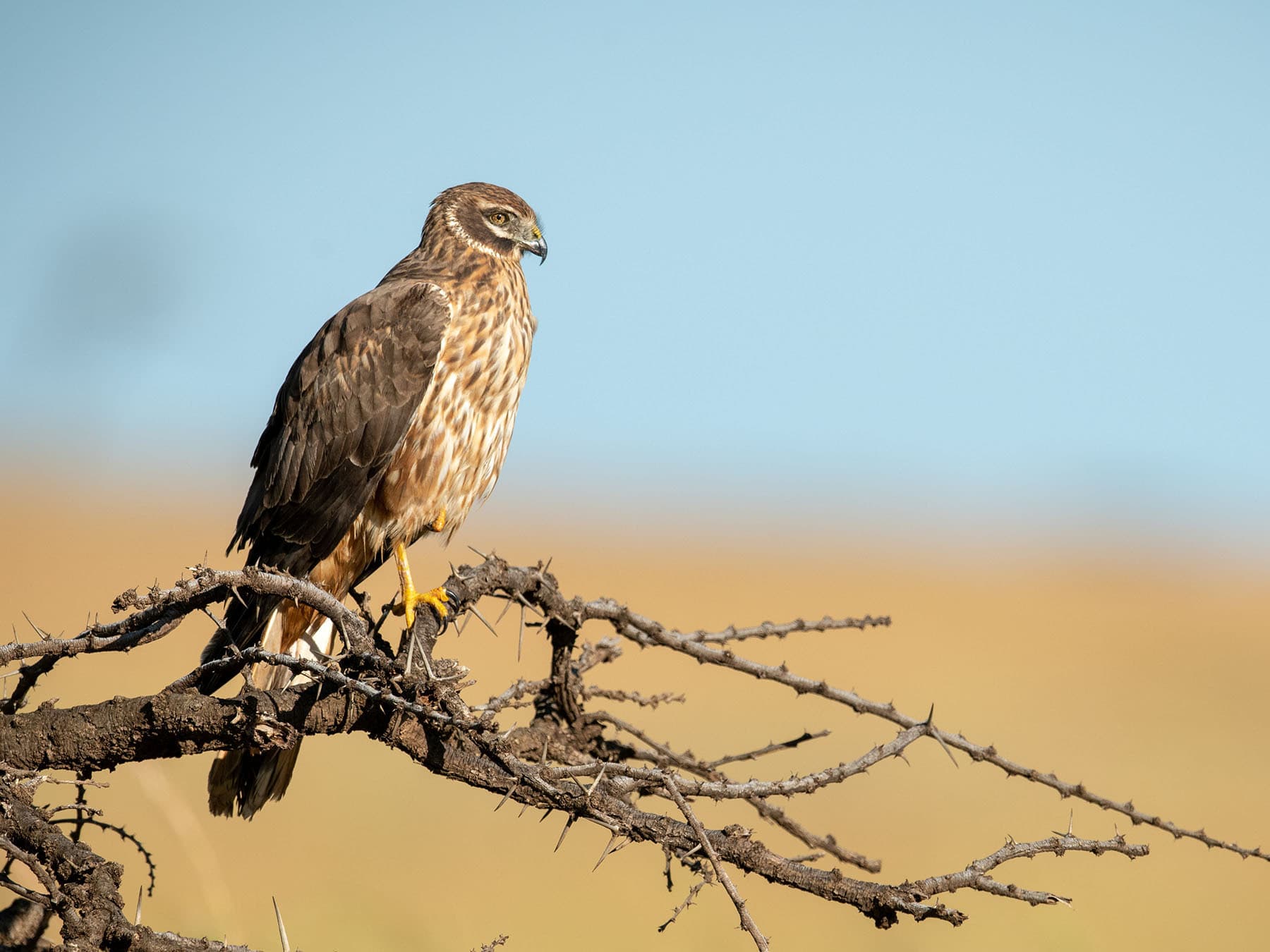
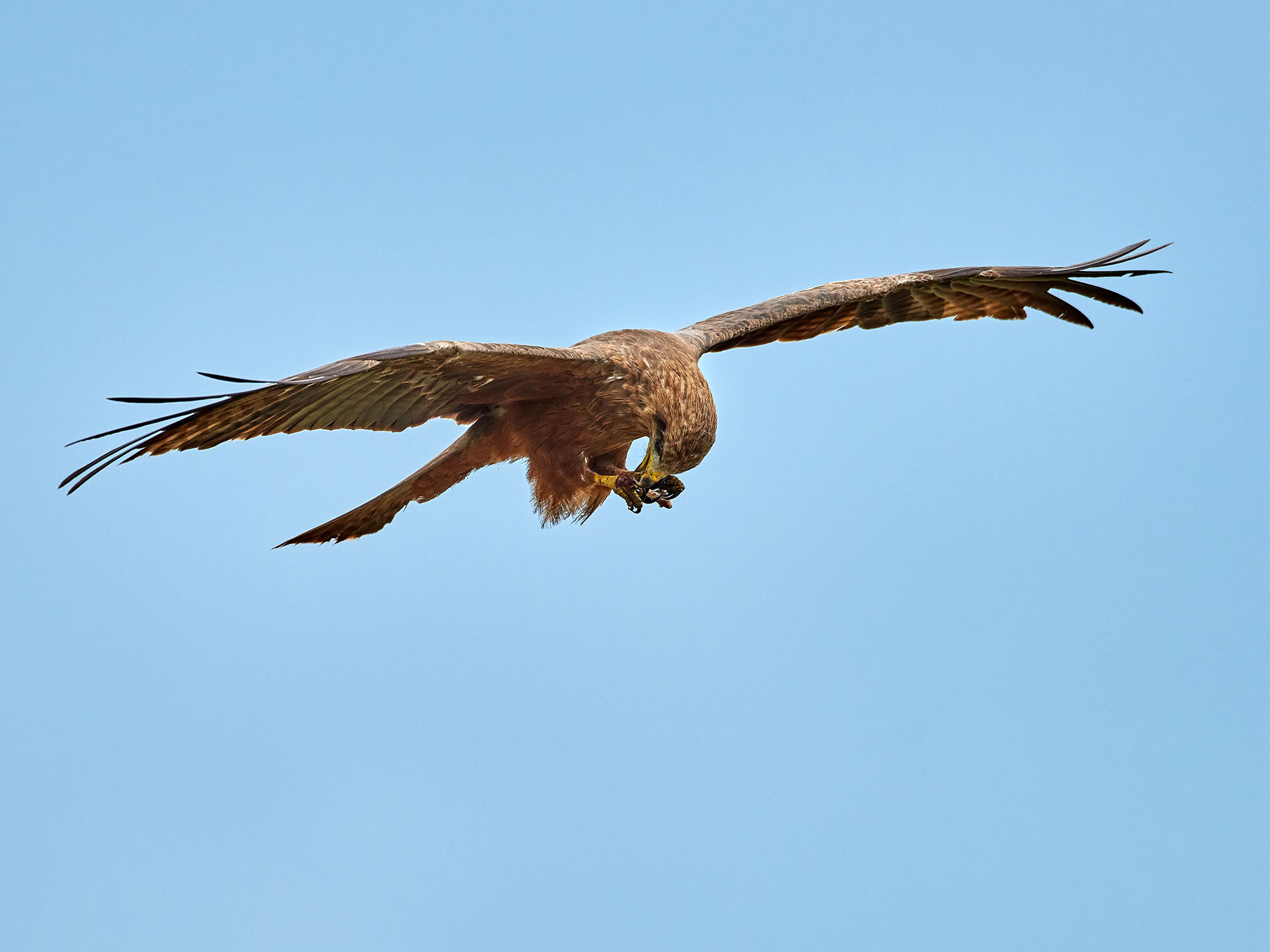
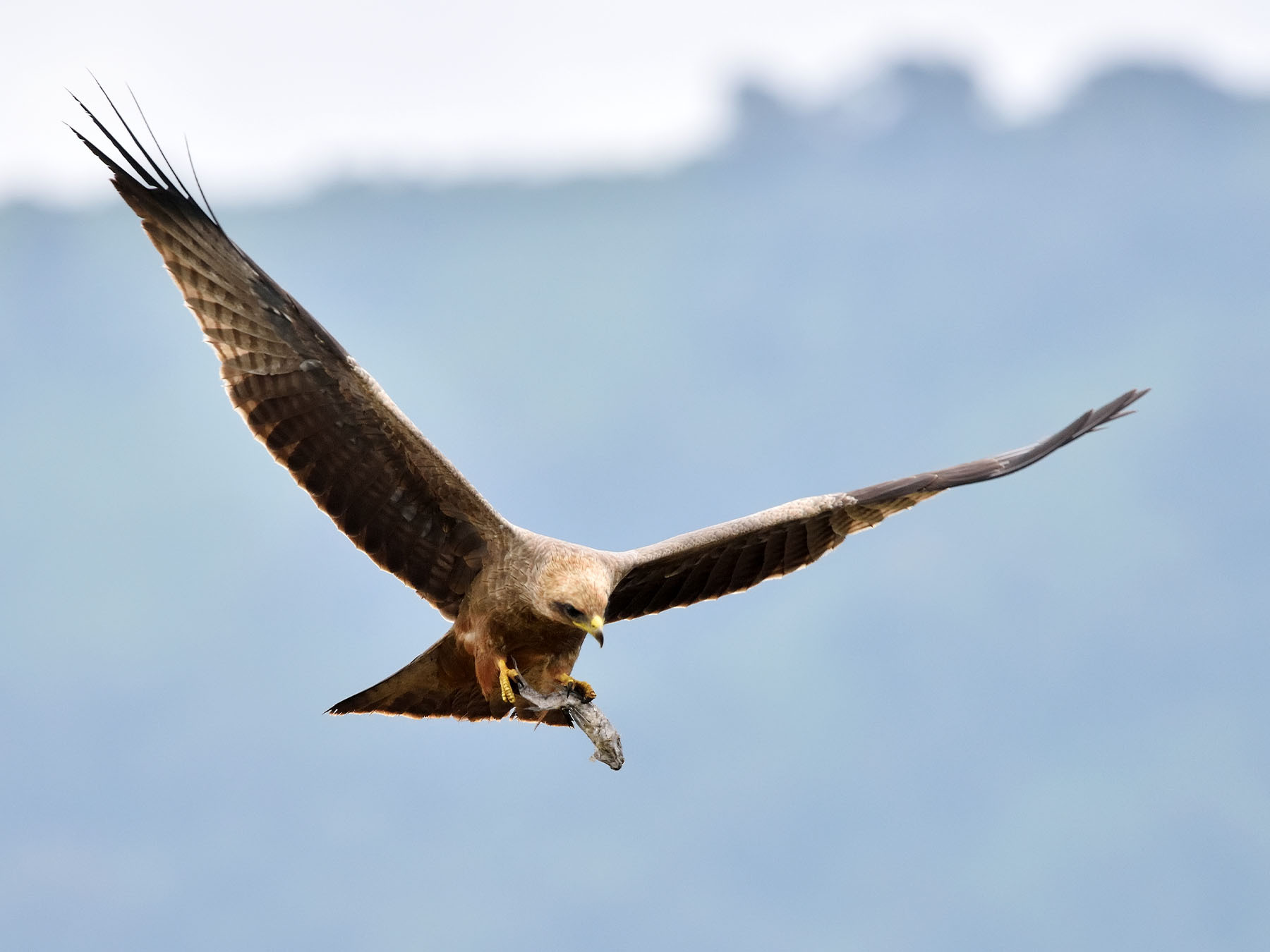
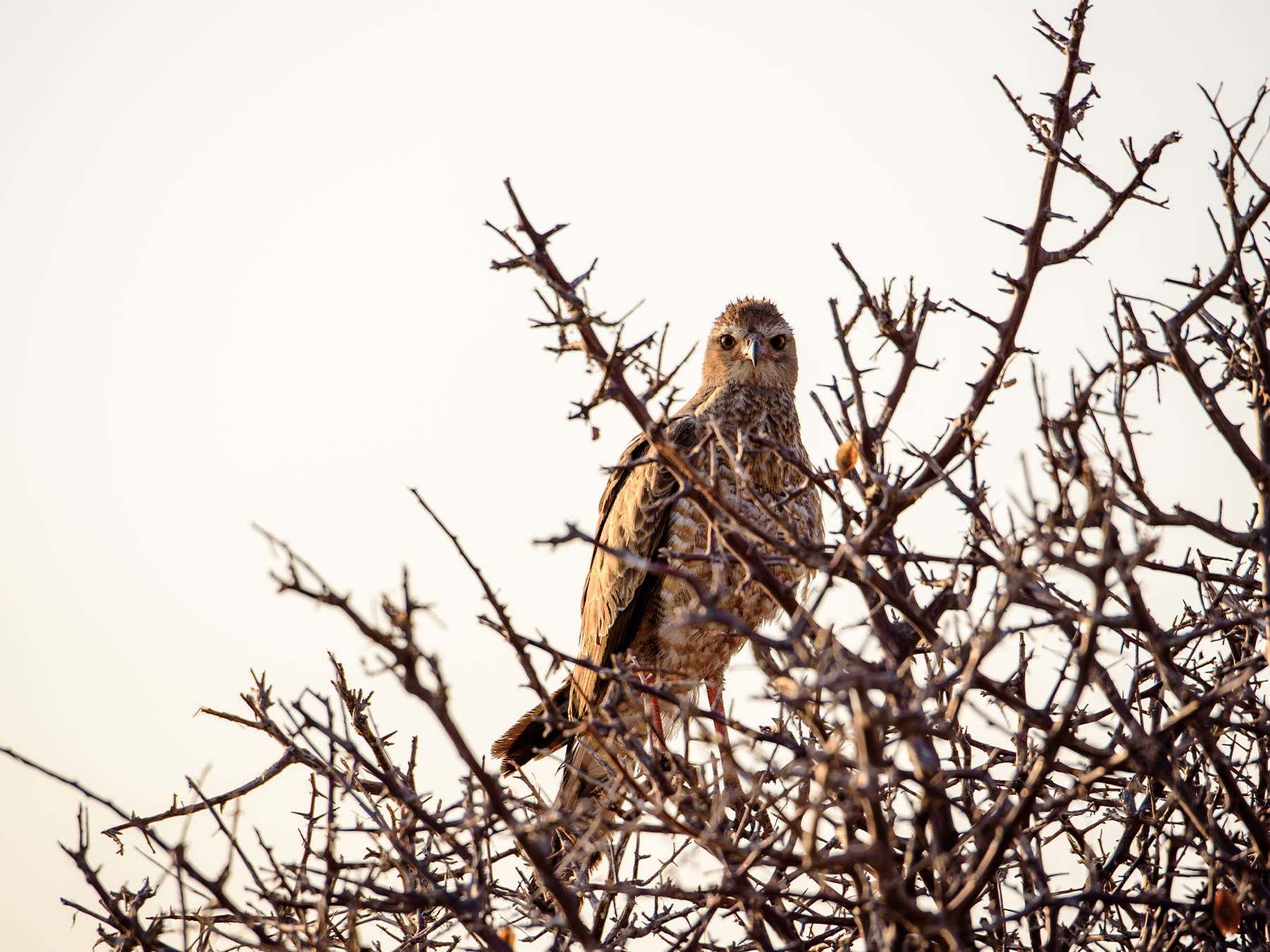
The African Marsh Harrier is a medium-sized raptor with a distinctive owl-like facial disc. Adults have rich brown plumage, black wing tips and a pale rump patch. The tail is barred with dark bands, and the legs are long and yellow.
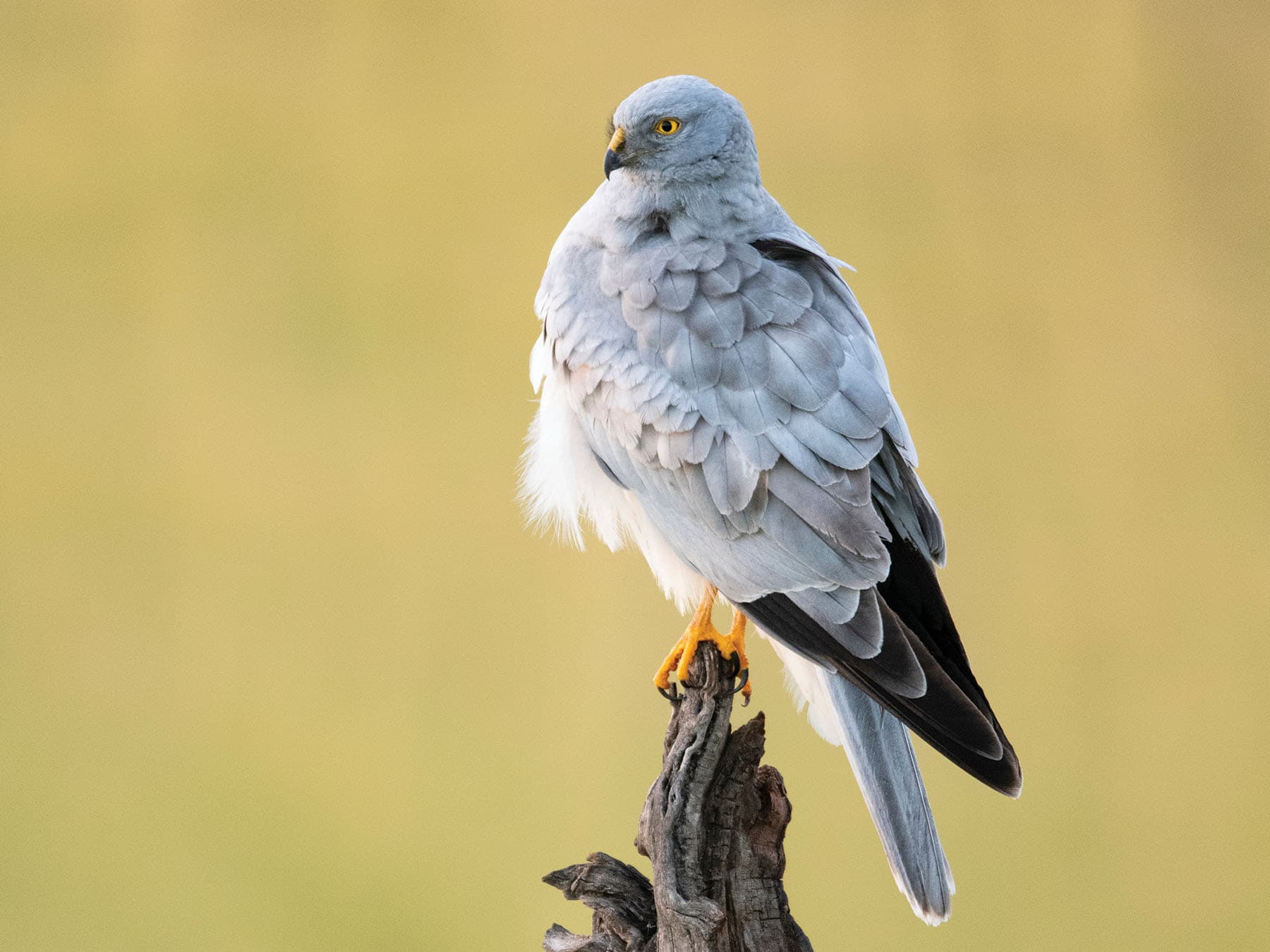
Males are generally lighter in colour than females, with more distinct pale streaking on the breast and underwings. Juveniles resemble females but have a more uniform brown colouration and lack the barred tail of adults.
Its size
Adults- Length
- 44–52 cm
- Wingspan
- 100–120 cm
- Weight
- 400–600 g
Its song and calls
The African Marsh Harrier is generally silent outside of the breeding season. During courtship and territorial displays, males produce a series of sharp, repetitive 'kek-kek-kek' calls. Females may respond with a softer, mewing sound.
When alarmed, both sexes emit a harsh, grating 'kraaak' call.
When and where to see it
The African Marsh Harrier is not recorded regularly in the UK, Ireland, the United States or Canada.
Worldwide: recorded regularly in 13 countries
Countries where it was recorded in at least 3 of the 6 years 2019–2024. Linked countries have their own bird list.
Africa (13)
- Angola
- Botswana
- Eswatini
- Kenya
- Malawi
- Mozambique
- Namibia
- Rwanda
- South Africa
- Tanzania
- Uganda
- Zambia
- Zimbabwe
Data: EOD – eBird Observation Dataset (Cornell Lab of Ornithology), accessed via GBIF.org, CC BY 4.0. Records from 2019–2024, aggregated and filtered by Birdfact. How these lists are made
Tips for seeing it
- Look for their characteristic low, wavering flight over wetlands and grasslands
- Listen for their distinctive 'kek-kek-kek' call during breeding season
- Observe them in early morning or late afternoon when they are most active
- Check for their roosting sites in tall reeds or grasses
What it eats
The African Marsh Harrier is a versatile predator, feeding primarily on small mammals, birds, and reptiles.
They are particularly adept at catching frogs and fish, swooping down to snatch prey from the water's surface or vegetation. When other food sources are scarce, their diet may also include insects and carrion.
Nesting and breeding
Breeding season for African Marsh Harriers typically occurs from July to December, varying slightly across their range. Males perform elaborate sky-dancing displays to attract females, involving steep climbs and dives accompanied by calls.
Nests are built on the ground or in dense vegetation over water, constructed of reeds, grasses, and small sticks. Females lay 3-5 pale blue eggs, which may be speckled with brown.
Incubation lasts about 30-34 days, primarily by the female. Chicks fledge after 35-40 days but remain dependent on their parents for several more weeks as they learn to hunt.
Behaviour
African Marsh Harriers are known for their low, slow flight pattern. They quarter over marshes and grasslands in search of prey.
They are often solitary but may gather in loose groups during the non-breeding season. These harriers are territorial during breeding, with males performing spectacular aerial displays to attract mates.
Conservation
While currently listed as Least Concern, the African Marsh Harrier faces threats from habitat loss due to drainage of wetlands and agricultural expansion.
Conservation efforts focus on protecting and restoring wetland habitats across its range to ensure the species' long-term survival.
Similar birds
Often mistaken for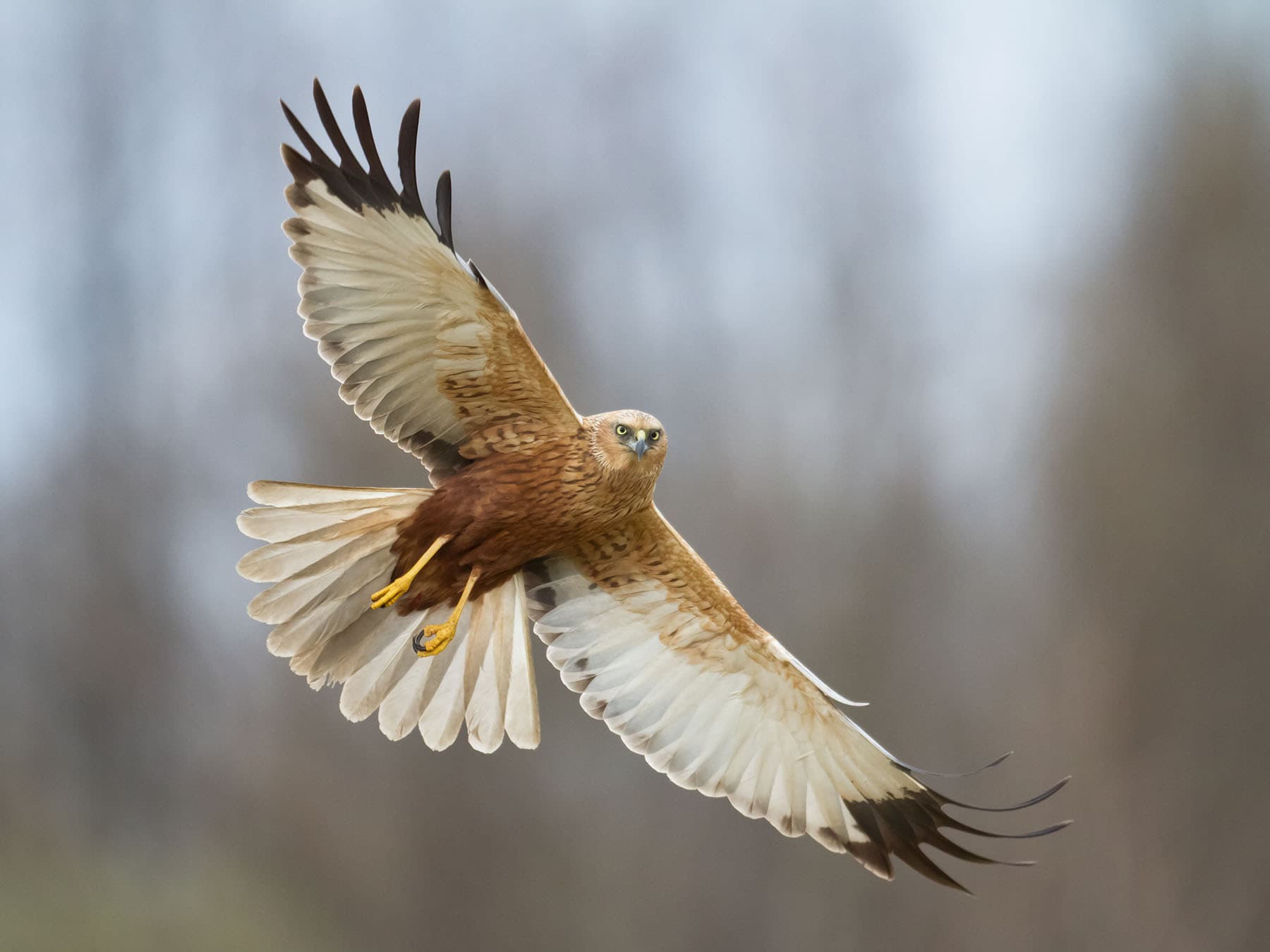
More photos
4 photos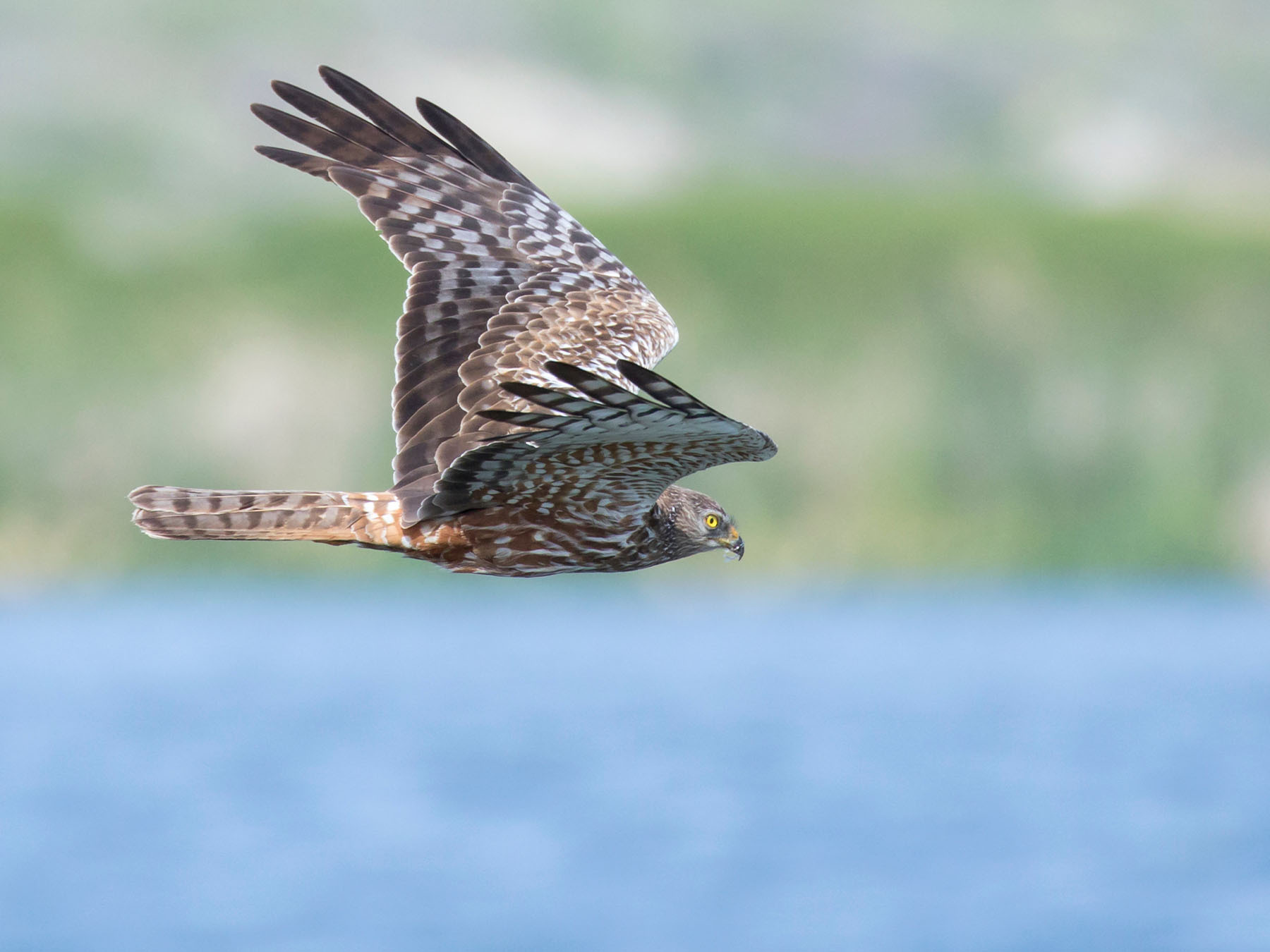
Quick facts
- Length
- 44–52 cm
- Wingspan
- 100–120 cm
- Weight
- 400–600 g
- Lifespan
- 10–15 years
- Family
- Hawks & Eagles
- Migration
- Resident
- Global status (IUCN)
- Least Concern
- World population
- Unknown
- Population trend
- Decline due to habitat loss and other factors
- Also called
- Ranivorus Harrier
- Scientific name
- Circus ranivorus
Sources
2- 1BirdLife International. 2016. Circus ranivorus. The IUCN Red List of Threatened Species 2016: e.T22695352A93504602. Accessed on 30 August 2024. Source (opens in a new tab)
- 2BirdLife International. 2016. Circus ranivorus. The IUCN Red List of Threatened Species 2016: e.T22695352A93504602. Accessed on 30 August 2024. Source (opens in a new tab)

Checked by
Nathan Cope, founder and editor
Nathan founded Birdfact and leads its writers and contributors in the UK, the US and Canada. He has watched and studied birds for more than ten years, and checks every article and species guide before it’s published.