


Yellow-browed Warbler
Phylloscopus inornatus
By the Birdfact teamChecked by Nathan Cope
On this page12 sections
How to recognise it
What do Yellow-browed Warblers look like?
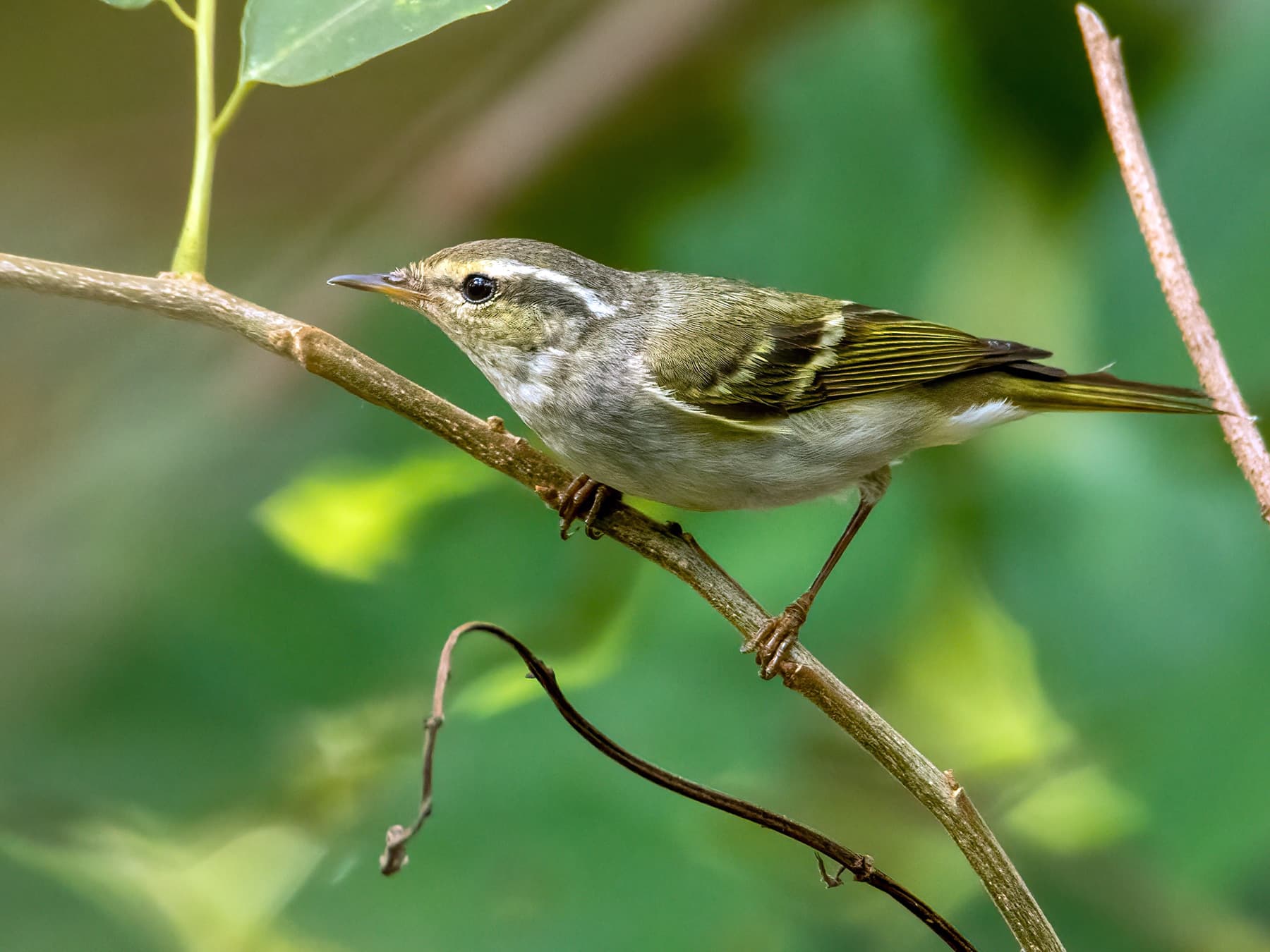
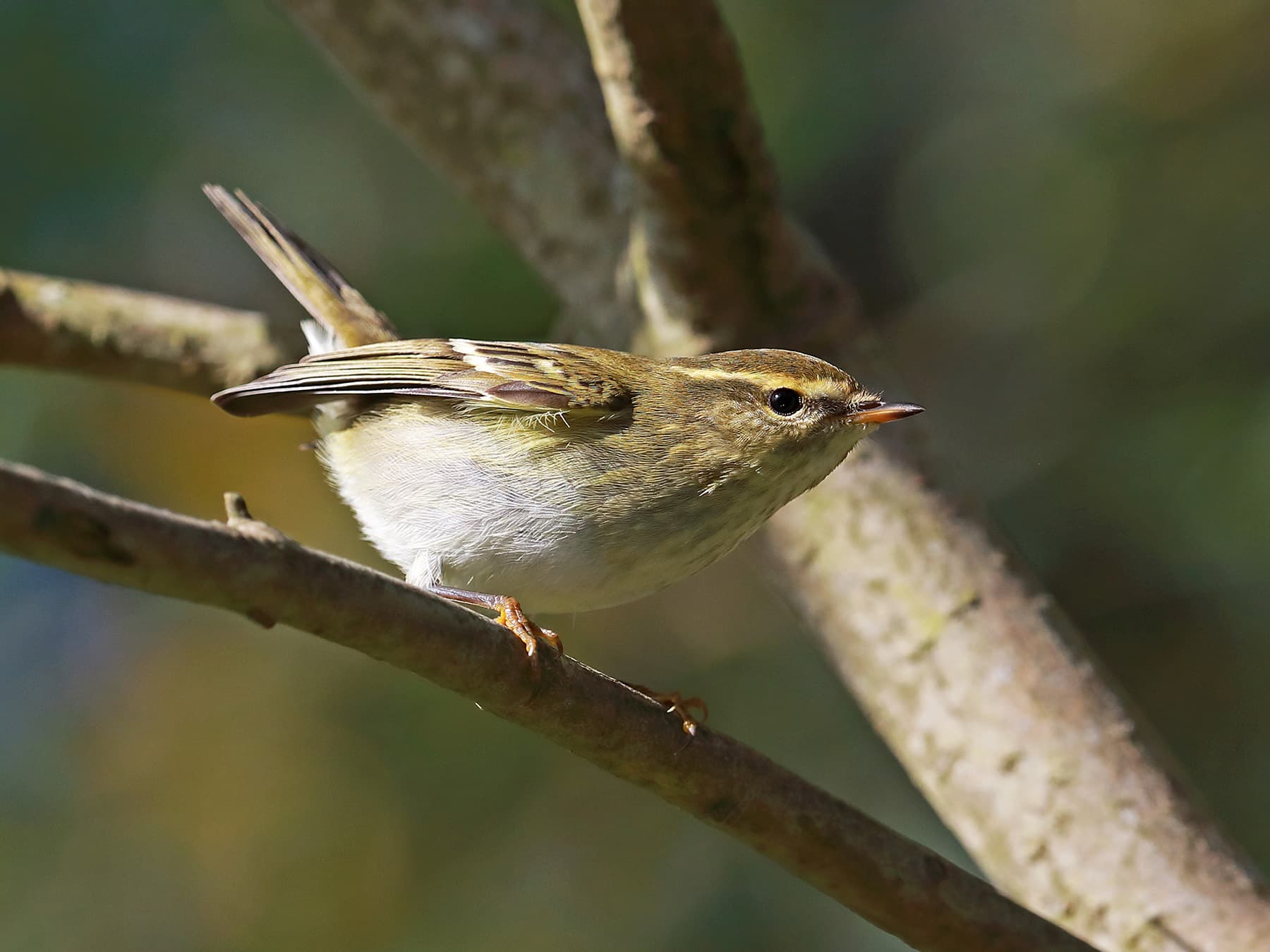
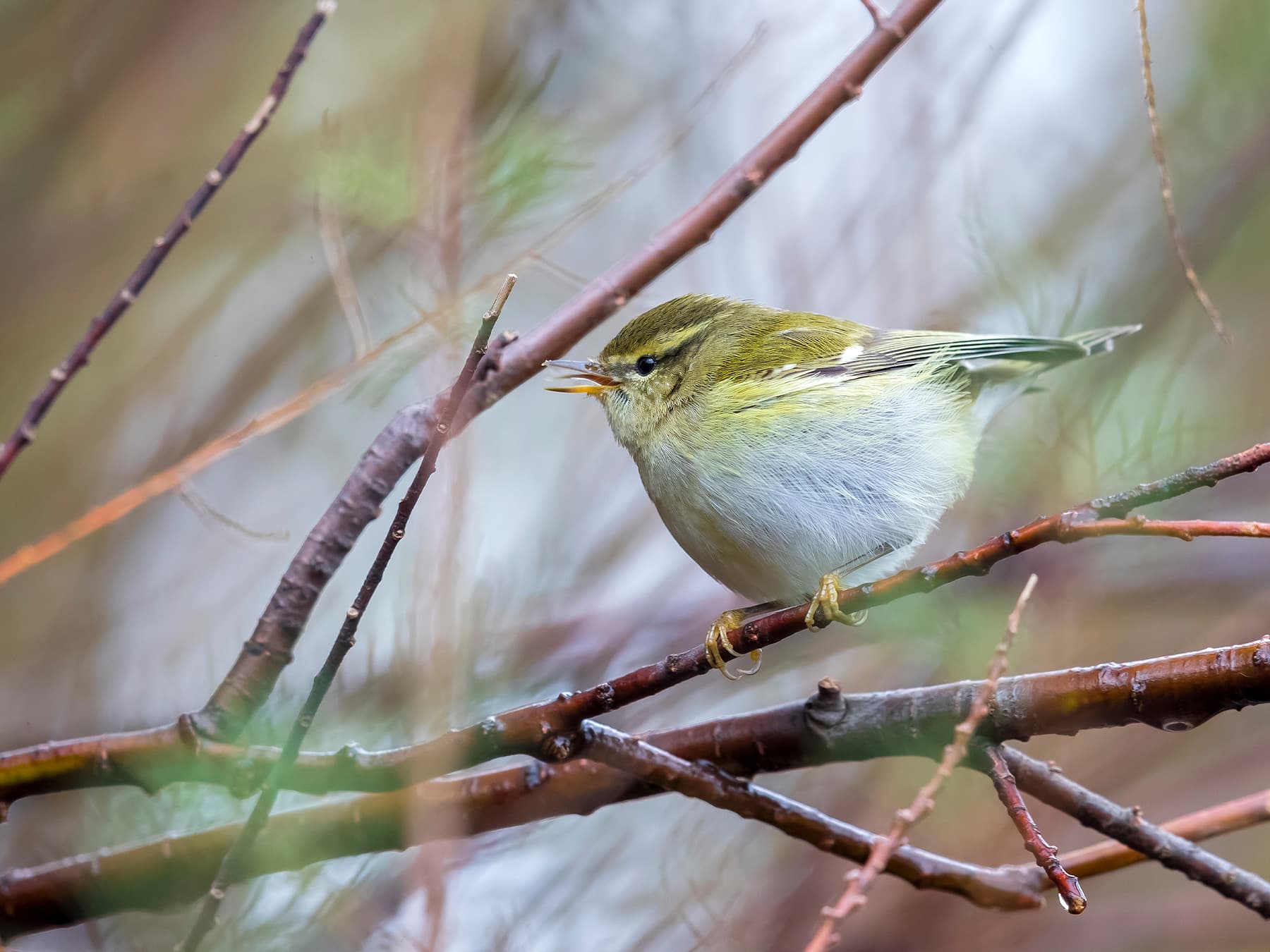
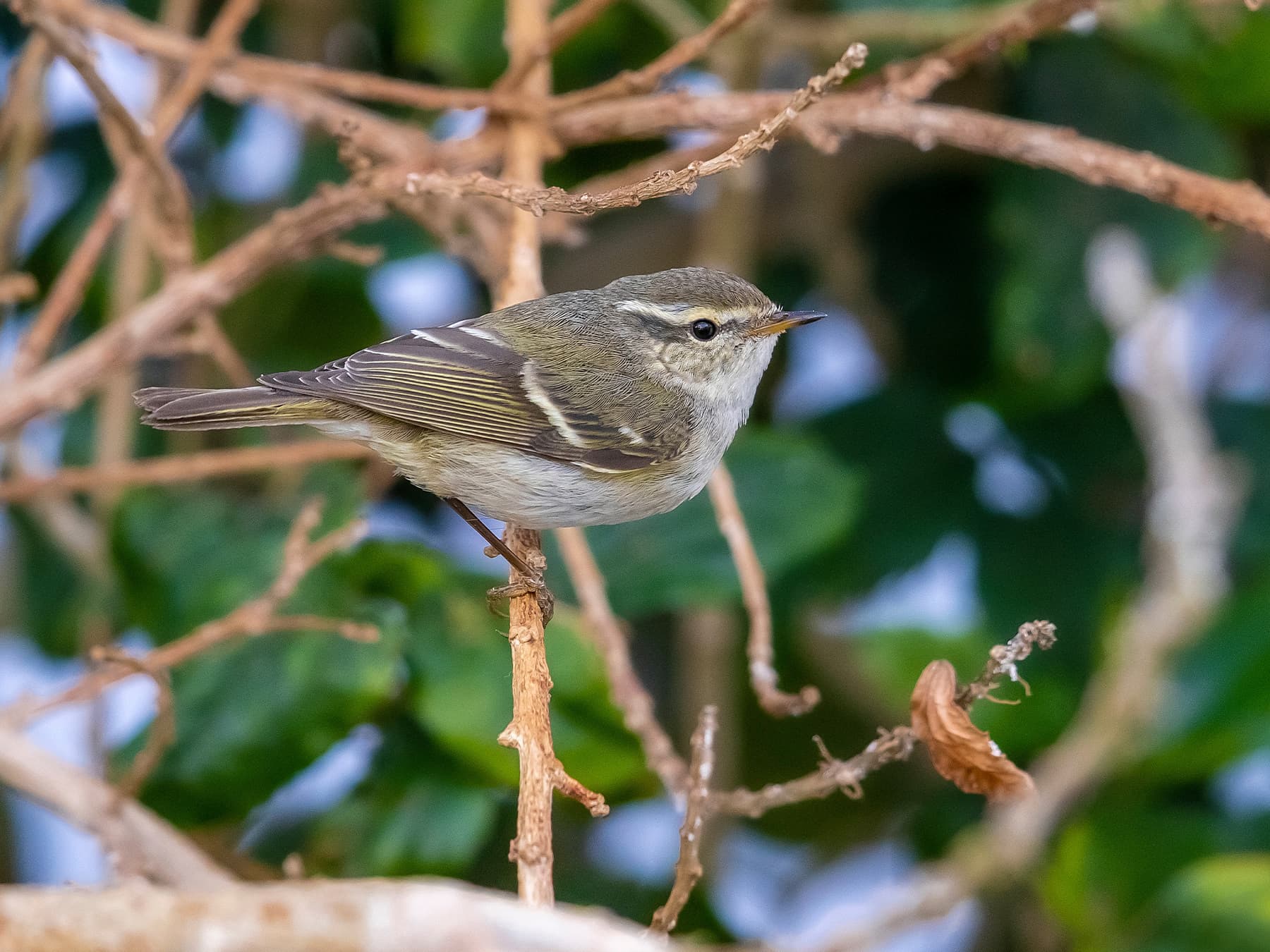
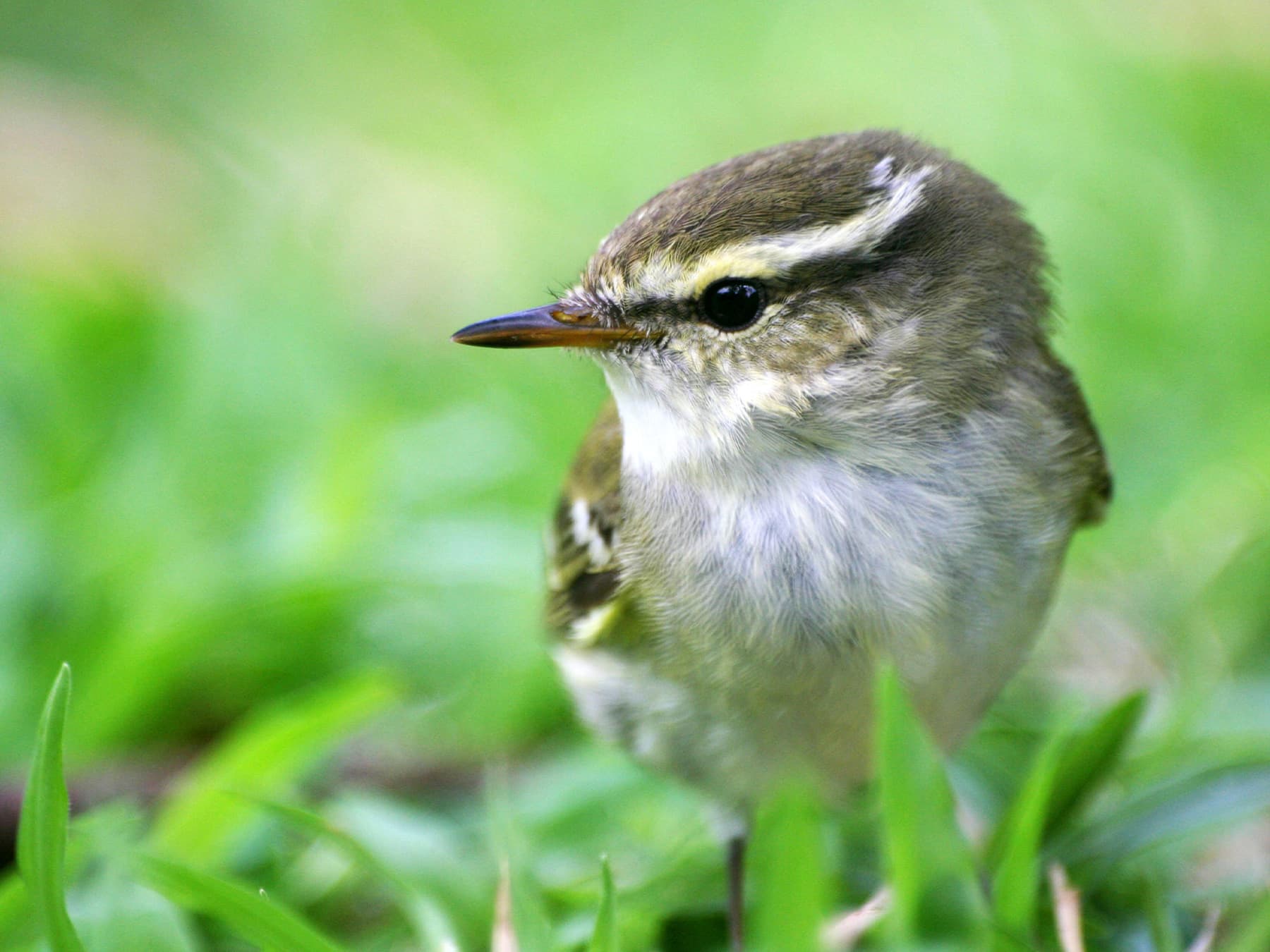
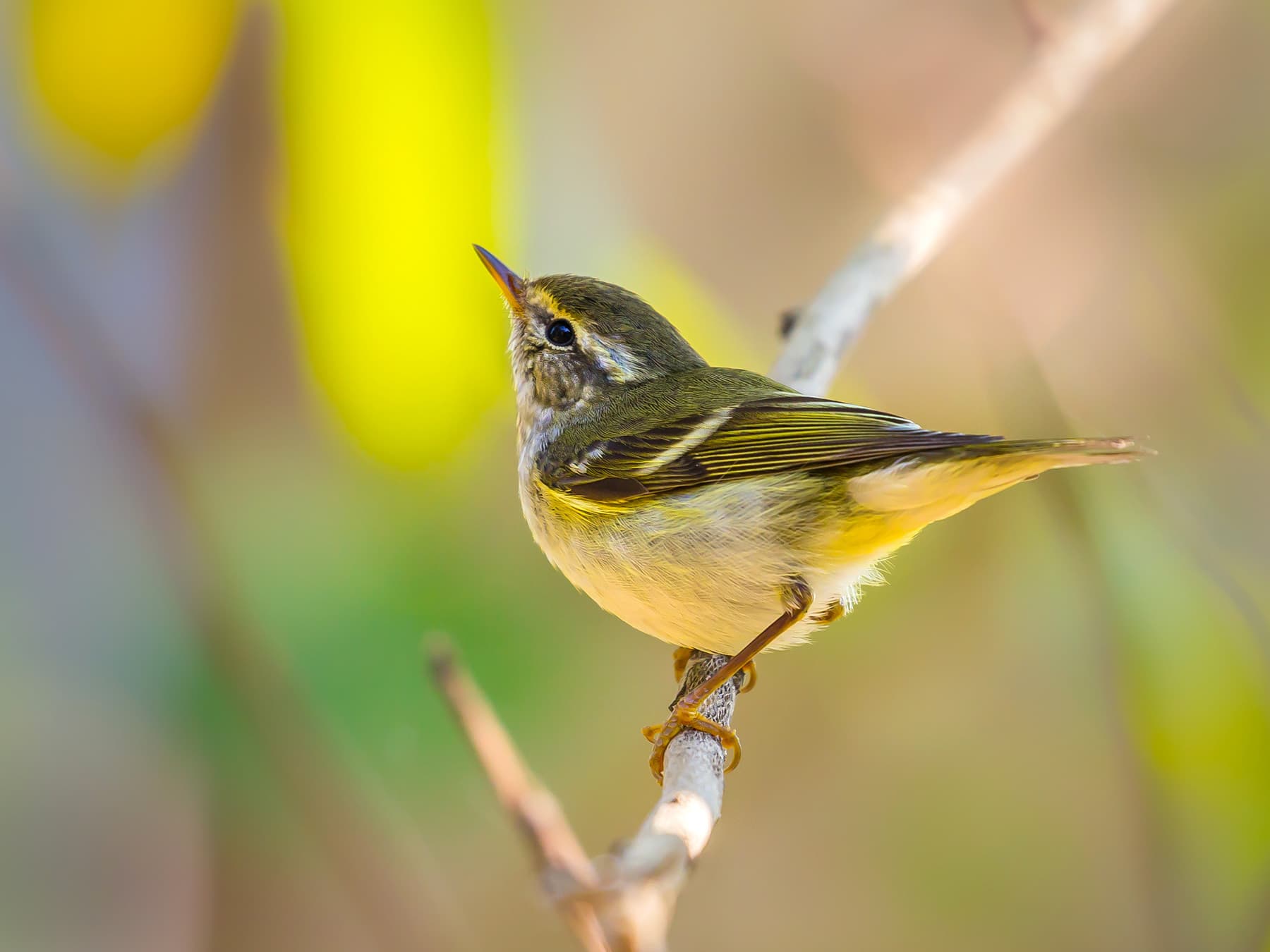
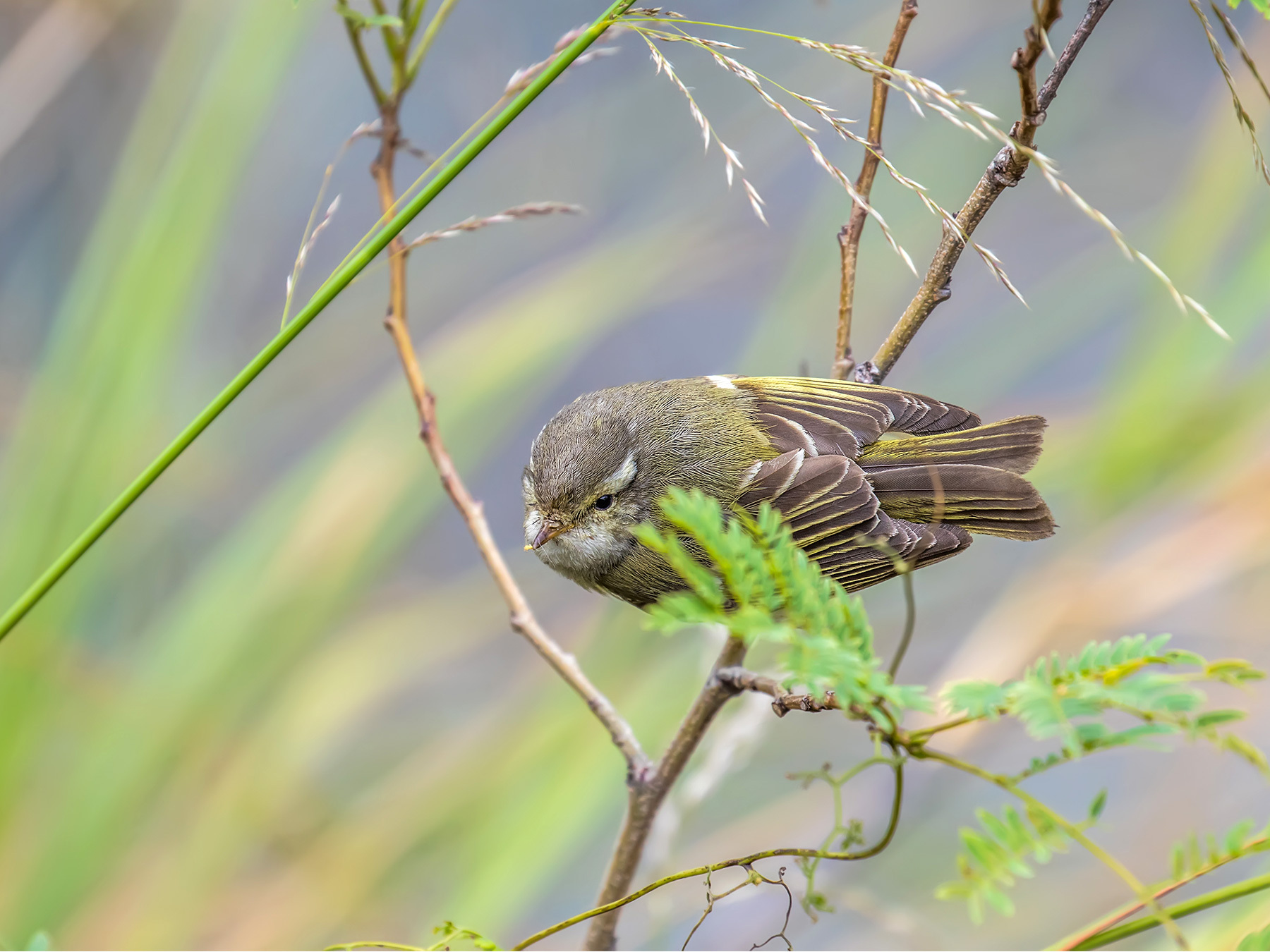
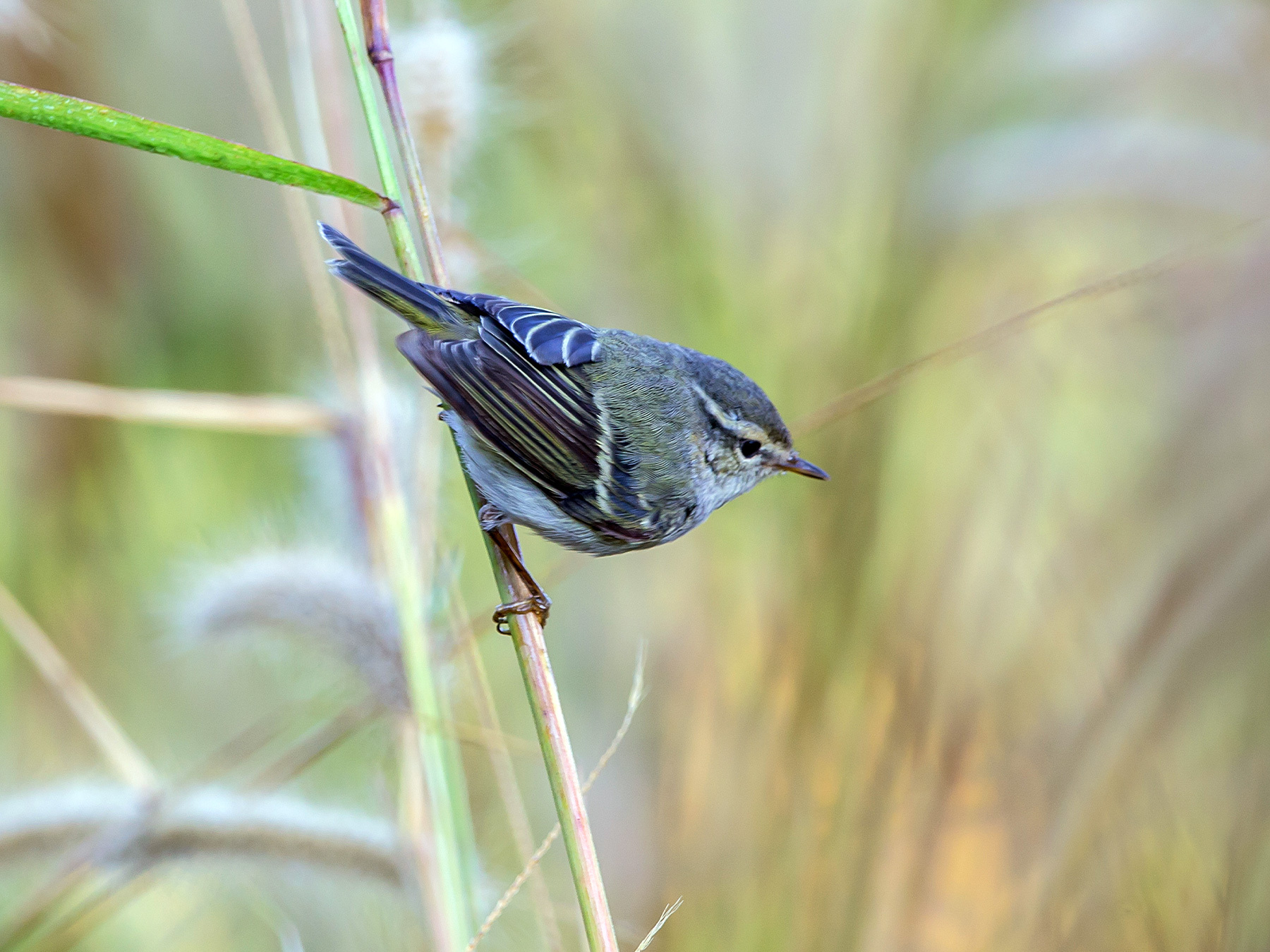
Yellow-browed warblers are small, olive-green songbirds, with a long, distinctive yellow eyebrow, which gives the species its name. The crown is dark olive green, with a brighter green neck and back, Wings and tail are darker, edged with brighter green, and they have two light yellow wing bars. The throat, breast, and belly are whitish, with a yellowish wash around the flanks.
Males and females are alike, and there is no way of telling the sexes apart by sight alone.
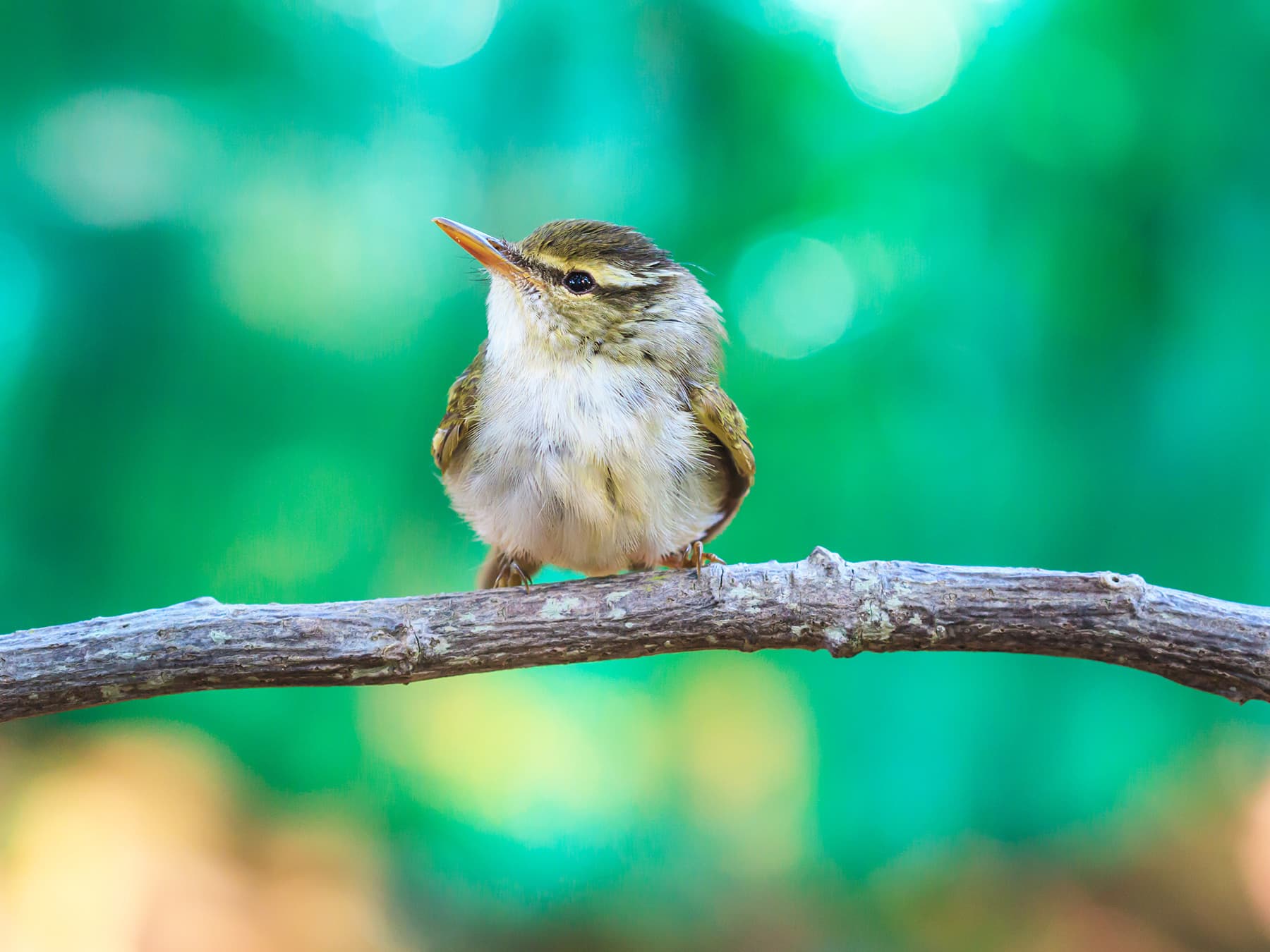
Juveniles are also similar to adults but have olive-brown markings on their upper parts and a darker brown crown. Their tail and wings are dark brown, with lighter, olive-brown edges, and their underparts have a yellowish tinge.
How big are Yellow-browed Warblers?
Yellow-browed warblers are tiny, smaller than a chiffchaff and around the same size as a goldcrest. There is no difference in size or weight between males and females.
- Length: 9.5 cm to 11 cm (3.7 in to 4.3 in)
- Wingspan: 13 cm to 16 cm (5.1 in to 6.3 in)
- Weight: 4·3 g to 6·5 g (0.2 oz)
Its size
Adults- Length
- 10–11 cm
- Wingspan
- 15–18 cm
- Weight
- 5–9 g
Its song and calls
What sound does a Yellow-browed Warbler make?
The yellow-browed warbler’s most familiar call is similar to the call of a coal tit and has rising ‘see-wit, see-wit’ notes. Its song is a series of short, rapid, high-pitched notes, and is heard between April and August.
- Call0:00 / 0:55
Recorded in Nouvelle-Aquitaine, France · November 2020
When and where to see it
OctoberIn season
Most recorded in October
- 1. Shetland Islands1.4%
- 2. Cornwall0.63%
- 3. Scottish Borders0.59%
- 4. East Riding of Yorkshire0.57%
- 5. Antrim0.45%
Each dot is a county, state or province: the bigger and darker, the larger the bird’s share of that place’s bird records that month. Grey dots: no regular records. The ringed point is the centre of the bird’s records this month; the arrow shows how it moved since last month, and the dashed loop its path through the year. “Arrivals” colours places where it becomes regular this month (orange) or is in its last regular month (grey). GBIF eBird Observation Dataset, 2019–2024. Map data: Natural Earth, US Census Bureau; place centres © OpenStreetMap contributors.
In your area
See when the Yellow-browed Warbler is recorded in your county, state or province.
How often the Yellow-browed Warbler turns up in the UK and Ireland through the year, from birdwatchers' records.
United Kingdom
Passage migrant · regularly Sep–Jan · most records in October
Ireland
Passage migrant · regularly Oct–Nov · most records in October
Show as a table
| Month | United Kingdom | Ireland |
|---|---|---|
| January | 0.010% (regular) | – |
| February | 0.003% | 0.003% |
| March | 0.003% | <0.001% |
| April | <0.001% | 0.002% |
| May | <0.001% | – |
| June | – | – |
| July | – | – |
| August | – | – |
| September | 0.073% (regular) | 0.008% |
| October | 0.17% (regular) | 0.14% (regular) |
| November | 0.015% (regular) | 0.012% (regular) |
| December | 0.009% (regular) | 0.001% |
Recorded regularly in
Worldwide: recorded regularly in 52 countries
Countries where it was recorded in at least 3 of the 6 years 2019–2024. Linked countries have their own bird list.
Europe (24)
Data: EOD – eBird Observation Dataset (Cornell Lab of Ornithology), accessed via GBIF.org, CC BY 4.0. Records from 2019–2024, aggregated and filtered by Birdfact. How these lists are made
What is the habitat of a Yellow-browed Warbler?
Preferred breeding habitats of yellow-browed warbler are found in deciduous, mixed and coniferous mountain forests, at altitudes of between 1000 m and 2400 m (3300 ft and 7900 ft) above sea level. Popular tree and shrub species include larch, alder, birch, juniper, rhododendron and spruce.
After the breeding, yellow-browed warblers initially head to dwarf and stunted shrubbery before migrating to regions of open deciduous forest, coniferous plantations, parks, gardens, scrubland and mangroves.
What is the range of a Yellow-browed Warbler?
The breeding range of yellow-browed warblers is mainly concentrated in Russia, from the Ural Mountains in the west, as far east as eastern Siberia and the Sea of Okhotsk. To the south, the range extends into northern Mongolia, north-eastern China, and occasionally into North Korea.
The main wintering grounds of yellow-browed warblers are found in South Asia, spreading from eastern India through Bangladesh and across South East Asia, southern China and as far east as Taiwan.
Where do Yellow-browed Warblers live?
The vast majority of yellow-browed warblers breed in Russia, particularly in the far eastern Siberian region. Breeding grounds extend over the border into Mongolia and north-eastern China.
How rare are Yellow-browed Warblers?
The global population of yellow-browed warblers has not been verified, but in European Russia, there are estimated to be between 45,000 to 46,000 breeding pairs and the species is said to be common, widespread and locally abundant. In the UK, sightings are particularly rare, with only around 25 individuals arriving to spend winter in Britain each year, and a further 320 reports of passage sightings.
Where can you see Yellow-browed Warblers in the UK?
Sightings of yellow-browed warblers are mainly concentrated along the east coast of Scotland and England, with coastal scrubland habitats offering the most suitable habitats. Some individuals do regularly end up further afield, as far as the coast of Devon and Cornwall in the south-west.
Migration
Do Yellow-browed Warblers migrate?
A fully migratory species, yellow-browed warblers breed in eastern Russia, northern Mongolia and north-eastern China, before returning to wintering grounds further south, across south and south-east Asia. Occasionally vagrant birds end up further afield each autumn, in the British Isles, Faroe Isles, Iceland, Portugal and the Netherlands.
Are Yellow-browed Warblers native to the UK?
While they are not native to the UK, yellow-browed warblers do visit the British Isles each winter, mainly as passage migrants, with a handful of individuals remaining until they return to their breeding grounds each spring. No yellow-browed warblers breed in the UK.
Tips for seeing it
- Look for quick movements in the canopy of deciduous and mixed forests
- Listen for their distinctive 'tsweest' call, which often gives away their presence
- Pay attention to mixed feeding flocks, especially during autumn migration
- In the UK, check coastal areas and islands during fall migration for rare sightings
What it eats
What do Yellow-browed Warblers eat?
The diet of yellow-browed warblers is primarily insect-based. Flying insects, including dragonflies, damselflies and mayflies, are among the chief prey, and bugs, cockroaches, ants, wasps and beetles and their larvae are also eaten. Occasionally, they will also eat molluscs, crustaceans, spiders, and sometimes seeds.
What do Yellow-browed Warbler chicks eat?
Young yellow-browed warblers are fed on small insects and larvae by both parents. Parental feeding continues for up to 13 days after leaving the nest, after which they become independent and forage for their own food, both in tree foliage and in the undergrowth, as well as occasionally on the ground.
Nesting and breeding
Where do Yellow-browed Warblers nest?
Yellow-browed warblers build their nests at ground level, under tree roots, bushes, and fallen branches, or tucked underneath grasses against a tree stump. The nest itself, constructed by the female, is made from grasses, pine needles, decaying wood, moss and animal hair.
When do Yellow-browed Warblers nest?
Yellow-browed warblers arrive on their breeding grounds from mid-April to mid-May, and breeding is usually underway by late May or early June. Eggs may be laid as late as mid-July in the far northern regions of their range. Incubation, by the female alone, takes between 11 and 14 days, and pairs raise one brood together in a season.
What do Yellow-browed Warbler eggs look like?
Eggs laid by yellow-browed warblers measure 14 mm by 11 mm (0.6 in by 0.4 in). A typical clutch contains between 2 and 4 eggs, which are creamy white in colour and marked with reddish brown blotches.
Do Yellow-browed Warblers mate for life?
Yellow-browed warbler pairs are believed to be monogamous for the duration of a single breeding season, raising one brood together.
Behaviour
Are Yellow-browed Warblers aggressive?
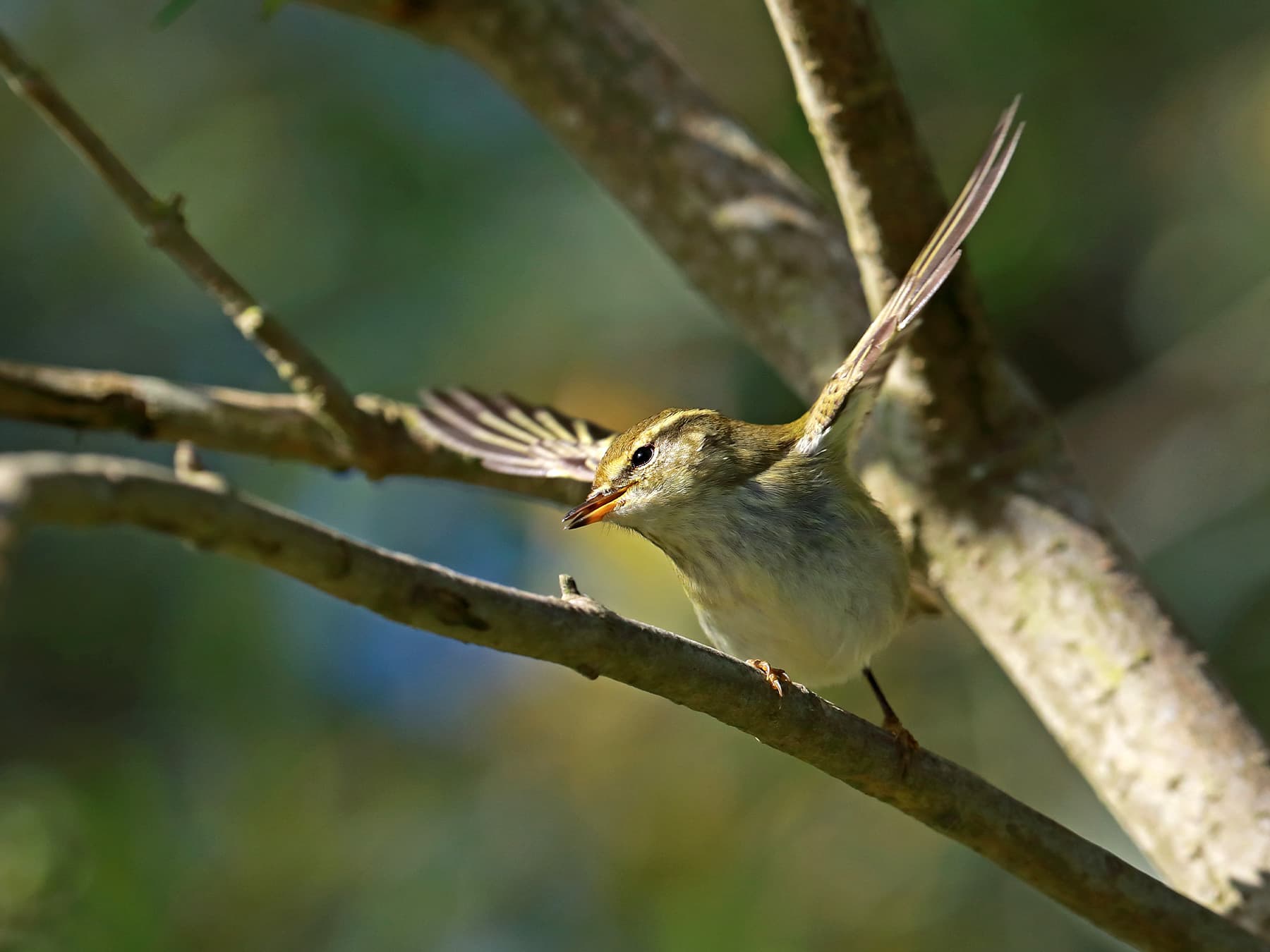
While not especially physically aggressive, male yellow-browed warblers do defend their territories in quite a vocal manner, singing loudly from a high perch and rapidly flicking their wings to assert their claim to a particular patch.
Lifespan and predators
How long do Yellow-browed Warblers live?
Up to four years is around the average life expectancy for a yellow-browed warbler. No ringing records are available for older individual birds at this time. Breeding is thought to occur for the first time at one year.
What are the predators of Yellow-browed Warblers?
The eggs and young of yellow-browed warblers are particularly at risk from predators that raid their nests. These predators include crows, snakes, weasels and foxes.
Are Yellow-browed Warblers protected?
Migrant yellow-browed warblers that visit the UK are protected under the Wildlife and Countryside Act, 1981, which makes it an offence to knowingly kill, injure or take one into captivity.
Are Yellow-browed Warblers endangered?
Globally, yellow-browed warblers are classified as a species of least concern, and there are no indications that they are endangered or declining. In the UK, they have Amber status on the British Birds of Conservation Concern list, due to the low number of birds that are reported there each year.
Conservation
The Yellow-browed Warbler is currently listed as Least Concern by the IUCN due to its large range and stable population.
However, like many migratory species, it faces threats from habitat loss in both breeding and wintering grounds, as well as climate change impacts on migration patterns.
More photos
3 photos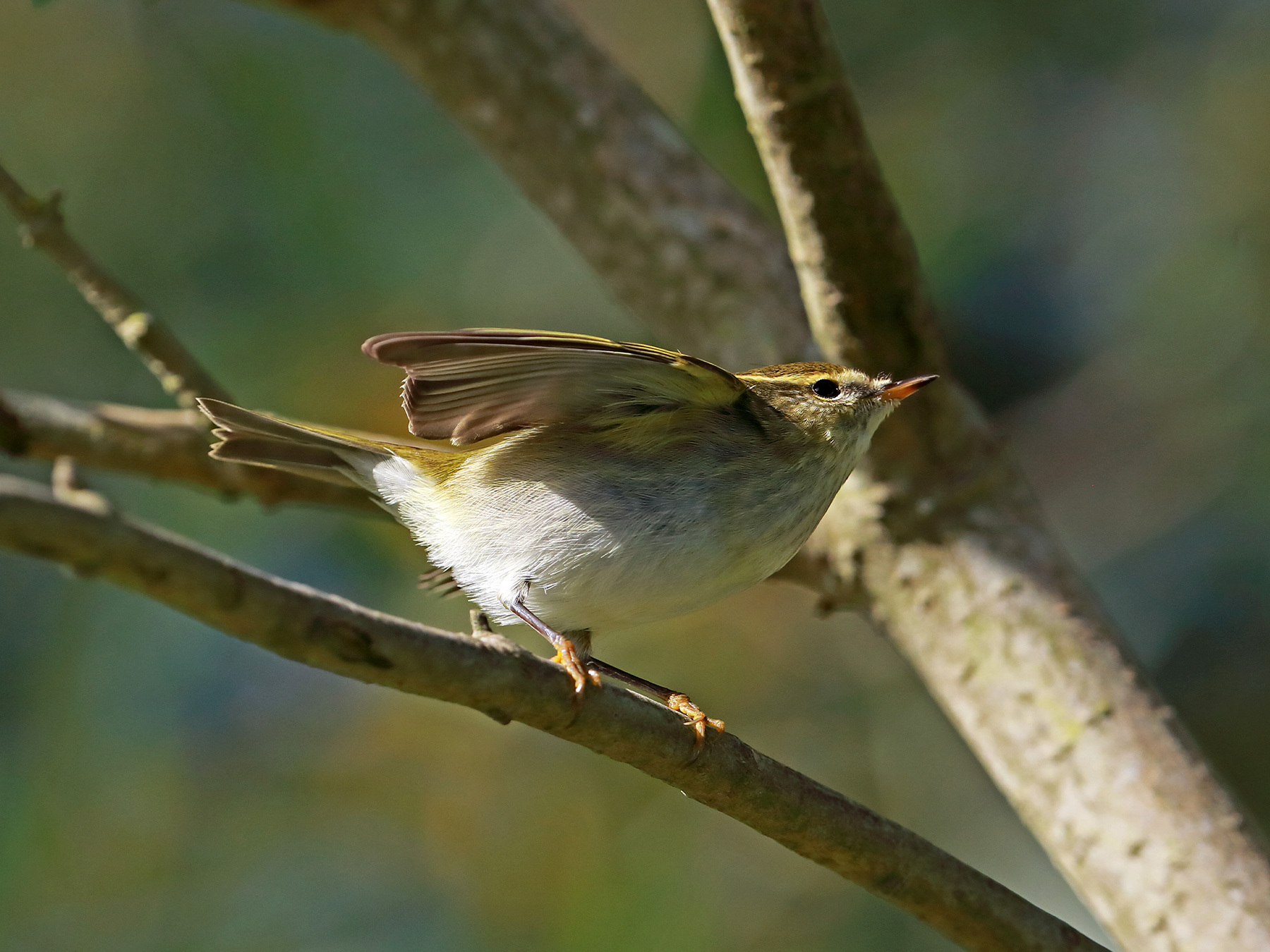
Quick facts
- Length
- 10–11 cm
- Wingspan
- 15–18 cm
- Weight
- 5–9 g
- Lifespan
- 2–4 years
- Family
- Leaf Warblers
- Migration
- Long-distance Migrant
- Global status (IUCN)
- Least Concern
- World population
- Not quantified globally, but 10,000 - 40,000 mature individuals in Europe
- Population trend
- Stable
- Scientific name
- Phylloscopus inornatus
Sources
2- 1BirdLife International. 2019. Phylloscopus inornatus. The IUCN Red List of Threatened Species 2019: e.T22715310A146638886. Source (opens in a new tab)
- 2BirdLife International. 2019. Phylloscopus inornatus. The IUCN Red List of Threatened Species 2019: e.T22715310A146638886. Source (opens in a new tab)

Checked by
Nathan Cope, founder and editor
Nathan founded Birdfact and leads its writers and contributors in the UK, the US and Canada. He has watched and studied birds for more than ten years, and checks every article and species guide before it’s published.