


Woodchat Shrike
Rufous-backed Shrike · Lanius senator
By the Birdfact teamChecked by Nathan Cope
On this page13 sections
How to recognise it
The Woodchat Shrike is an attractively marked bird, unlikely to be confused with other species in the UK. Males and females can be distinguished by the markings on their faces.
What do Woodchat Shrikes look like?
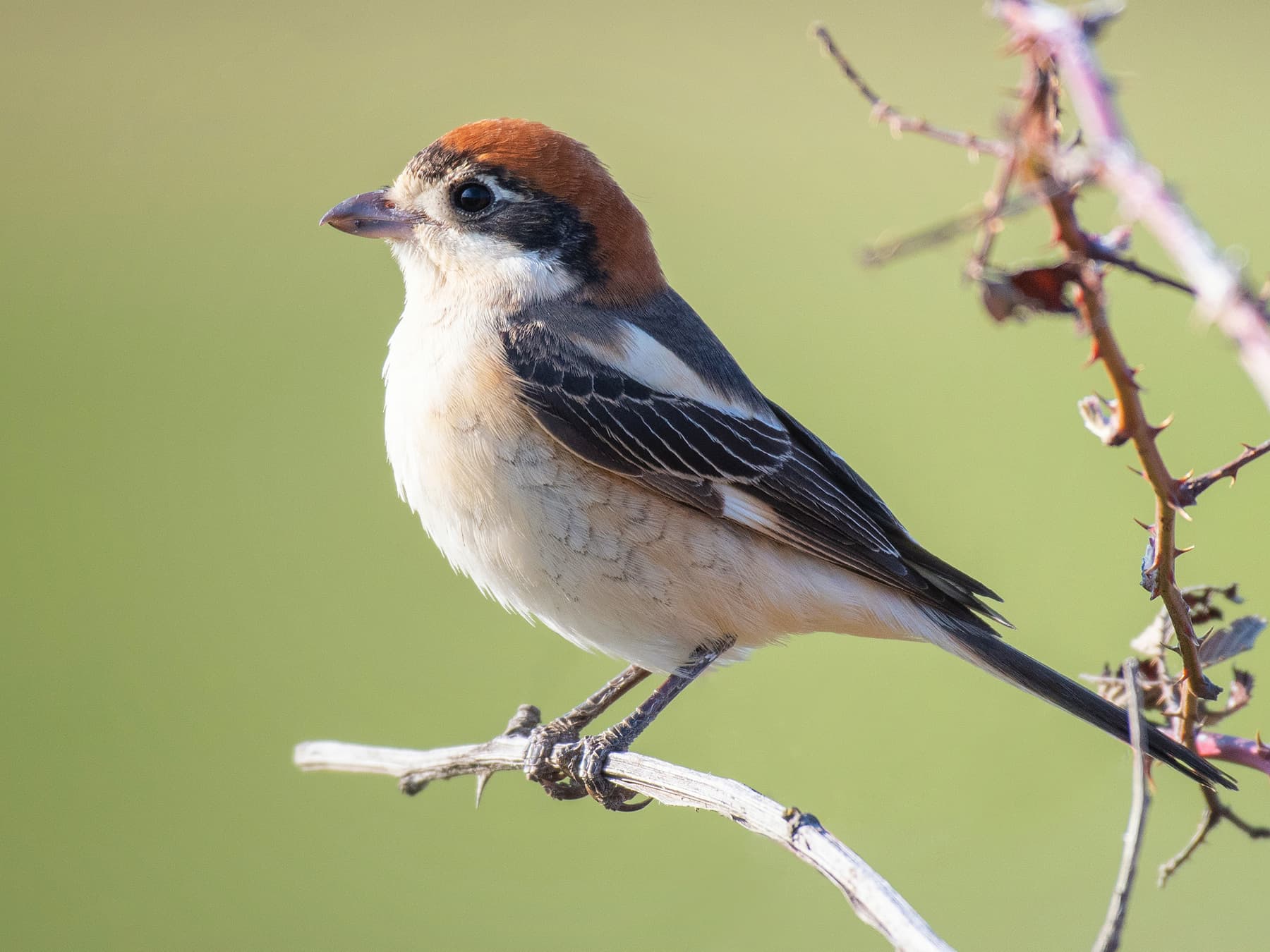
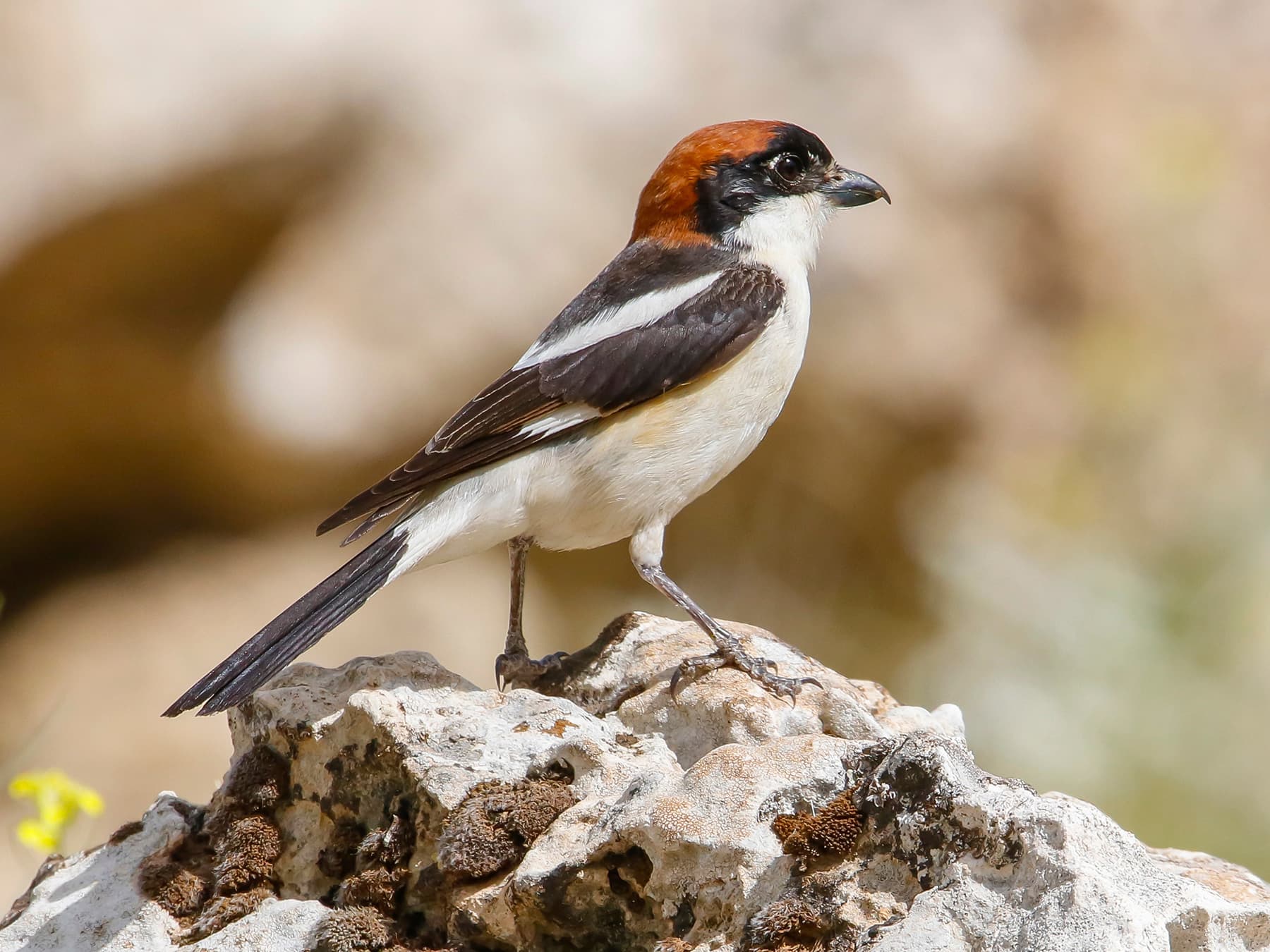
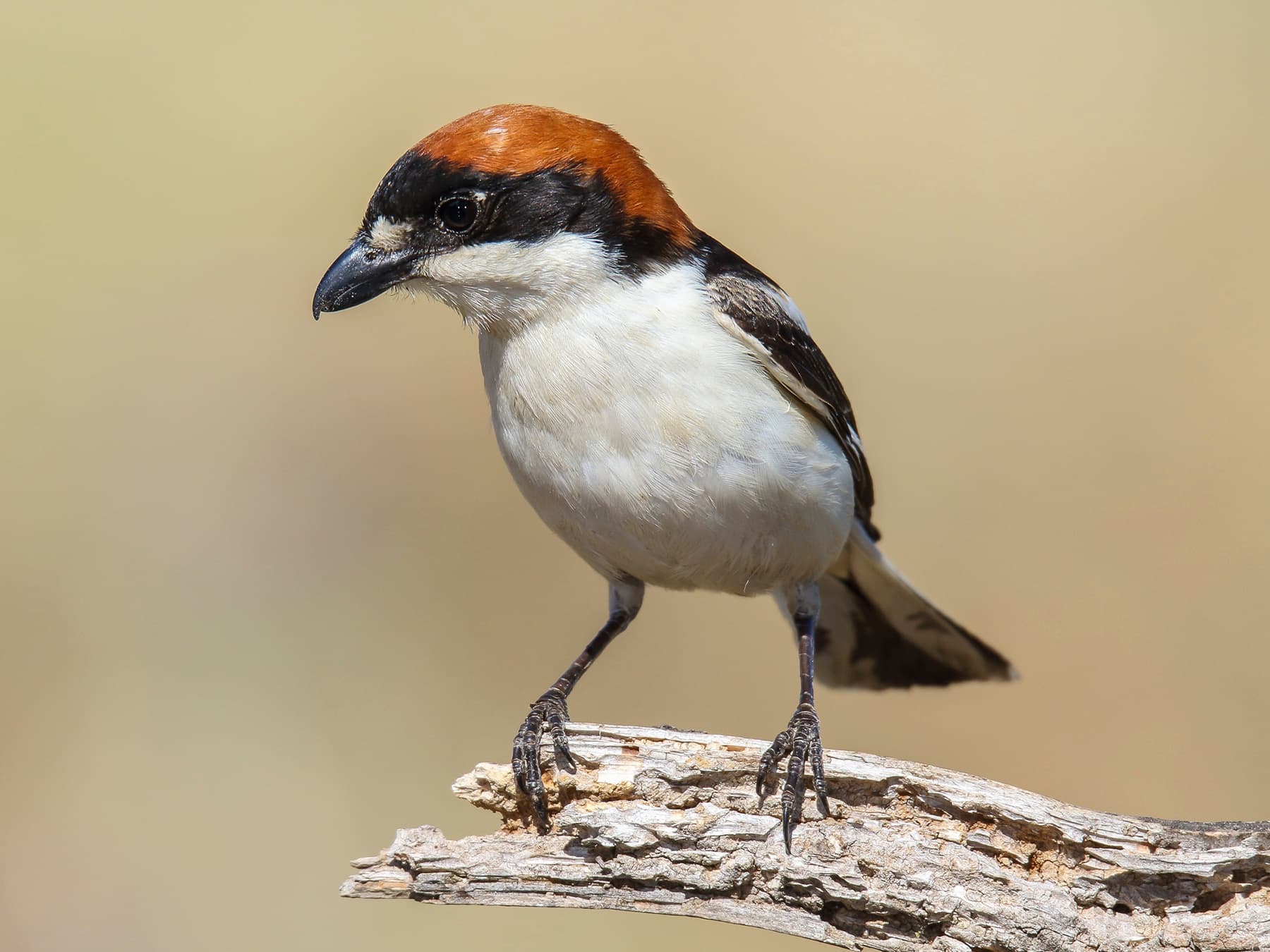
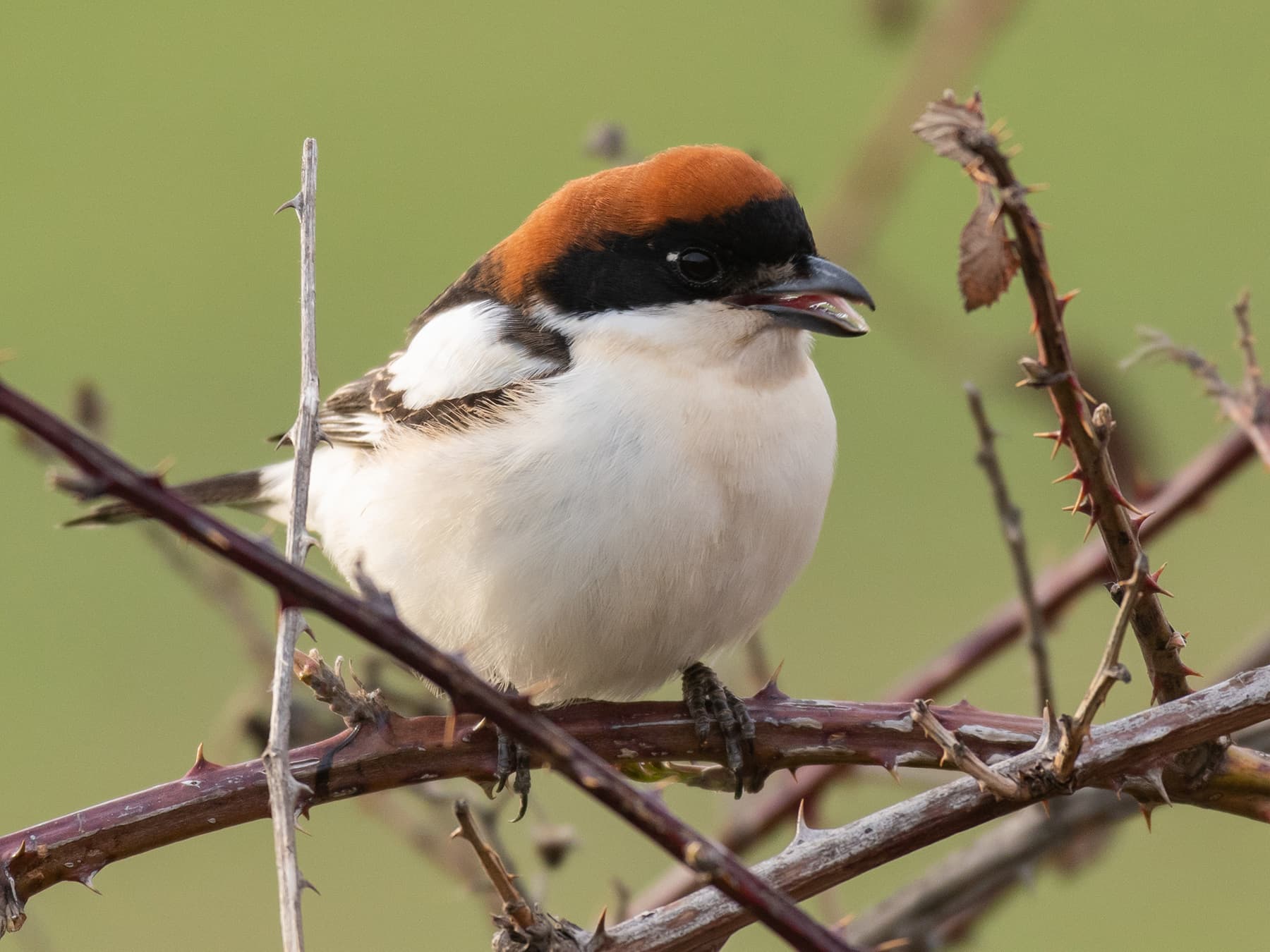
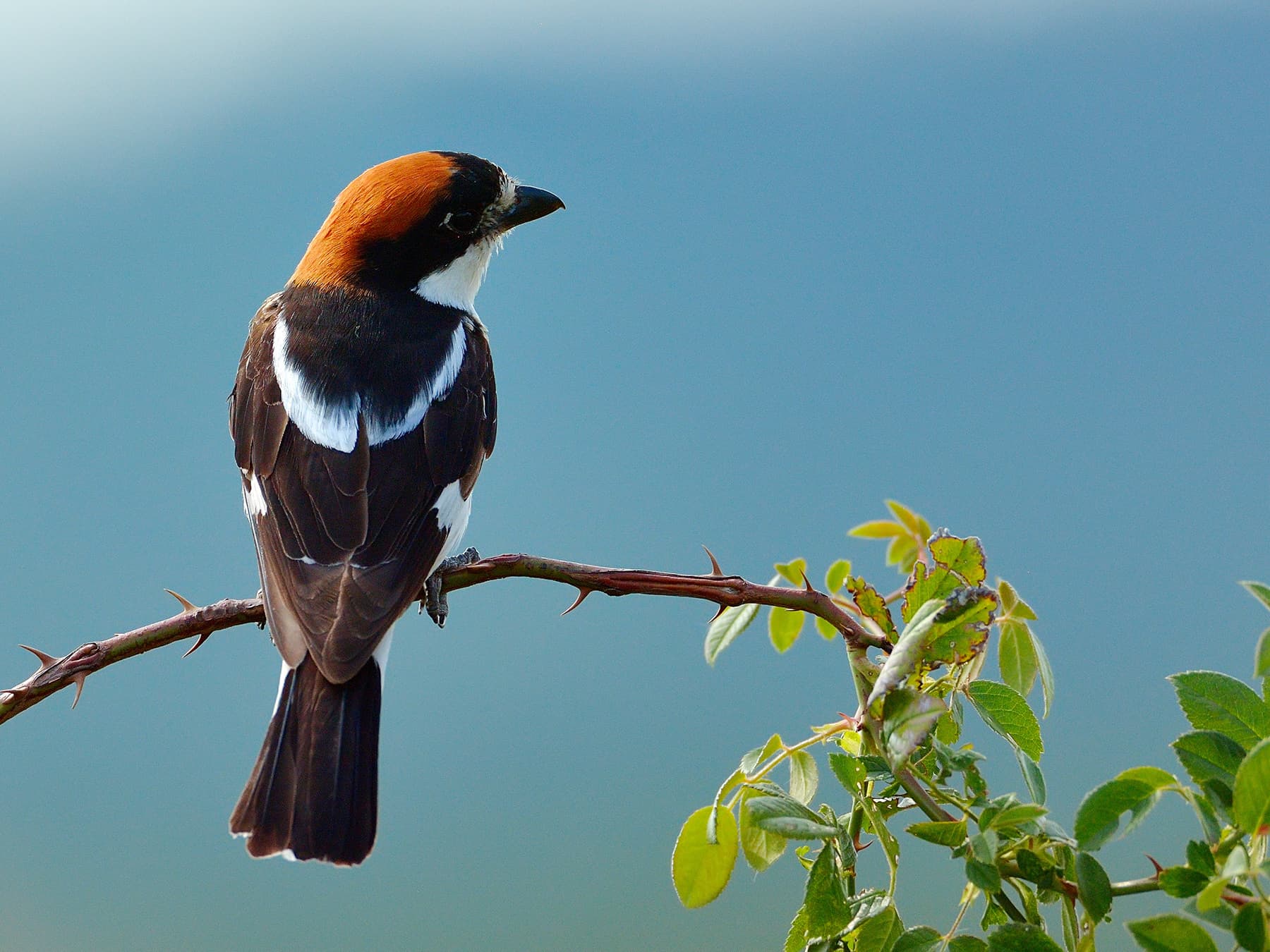
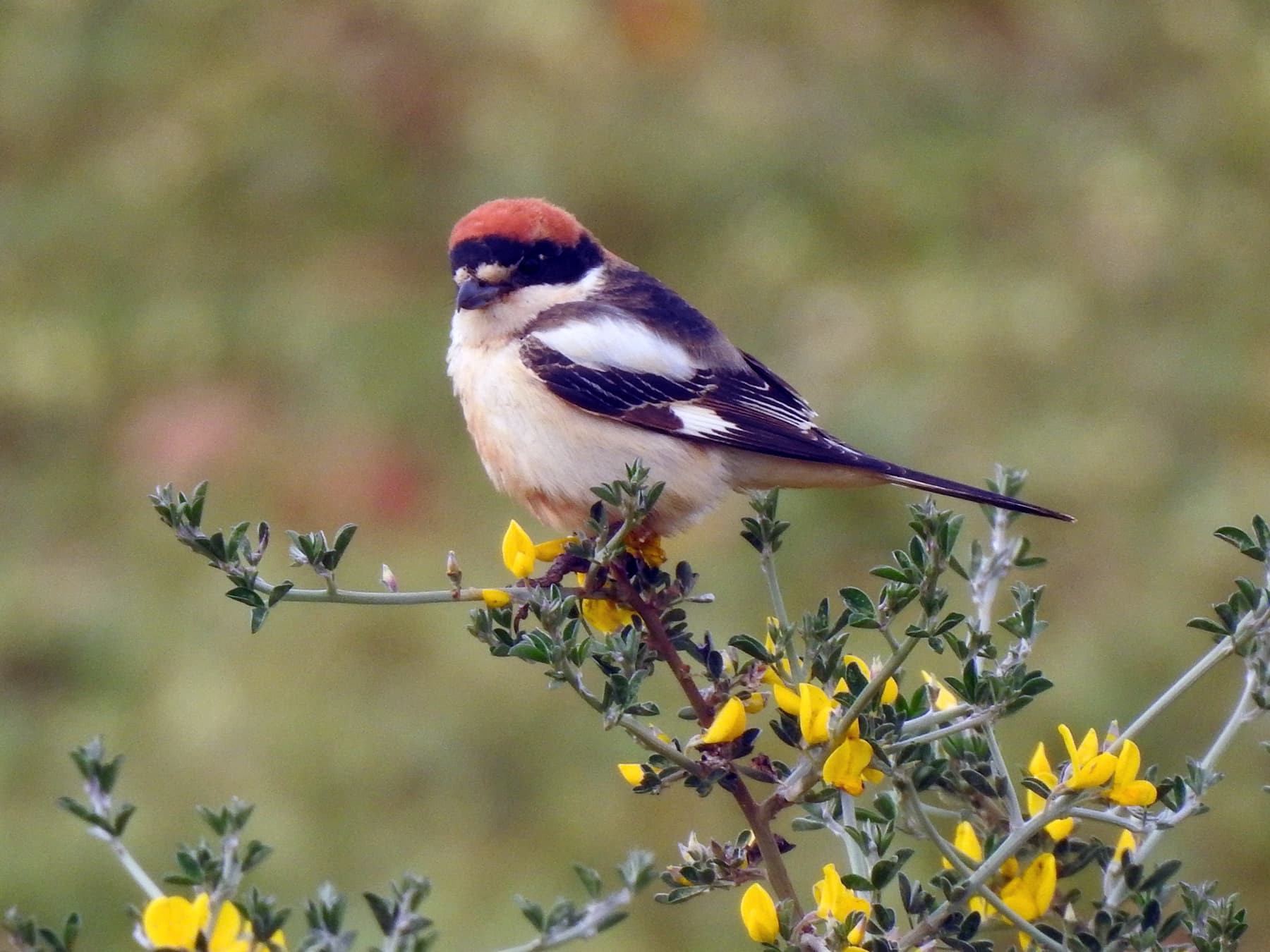
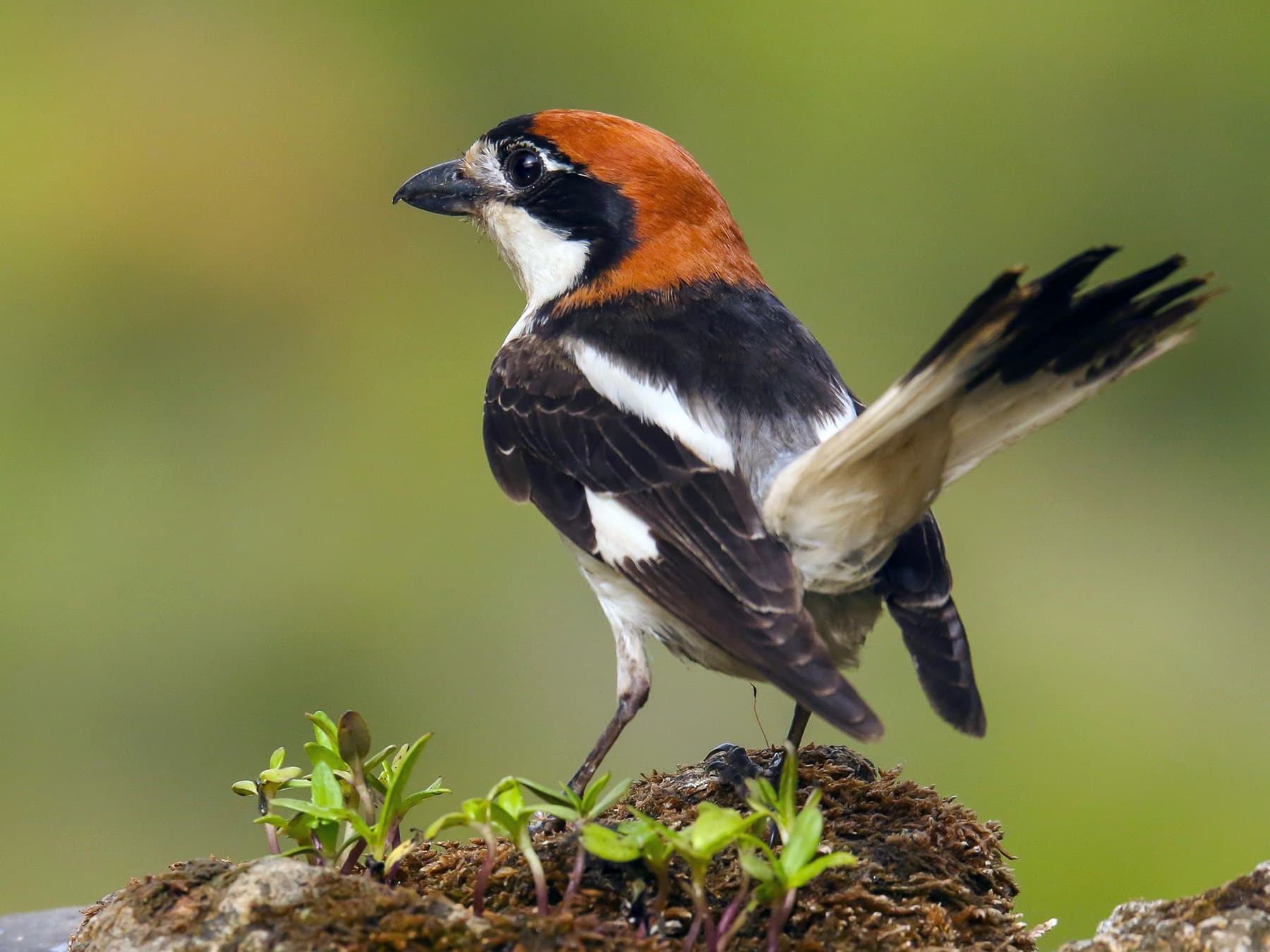
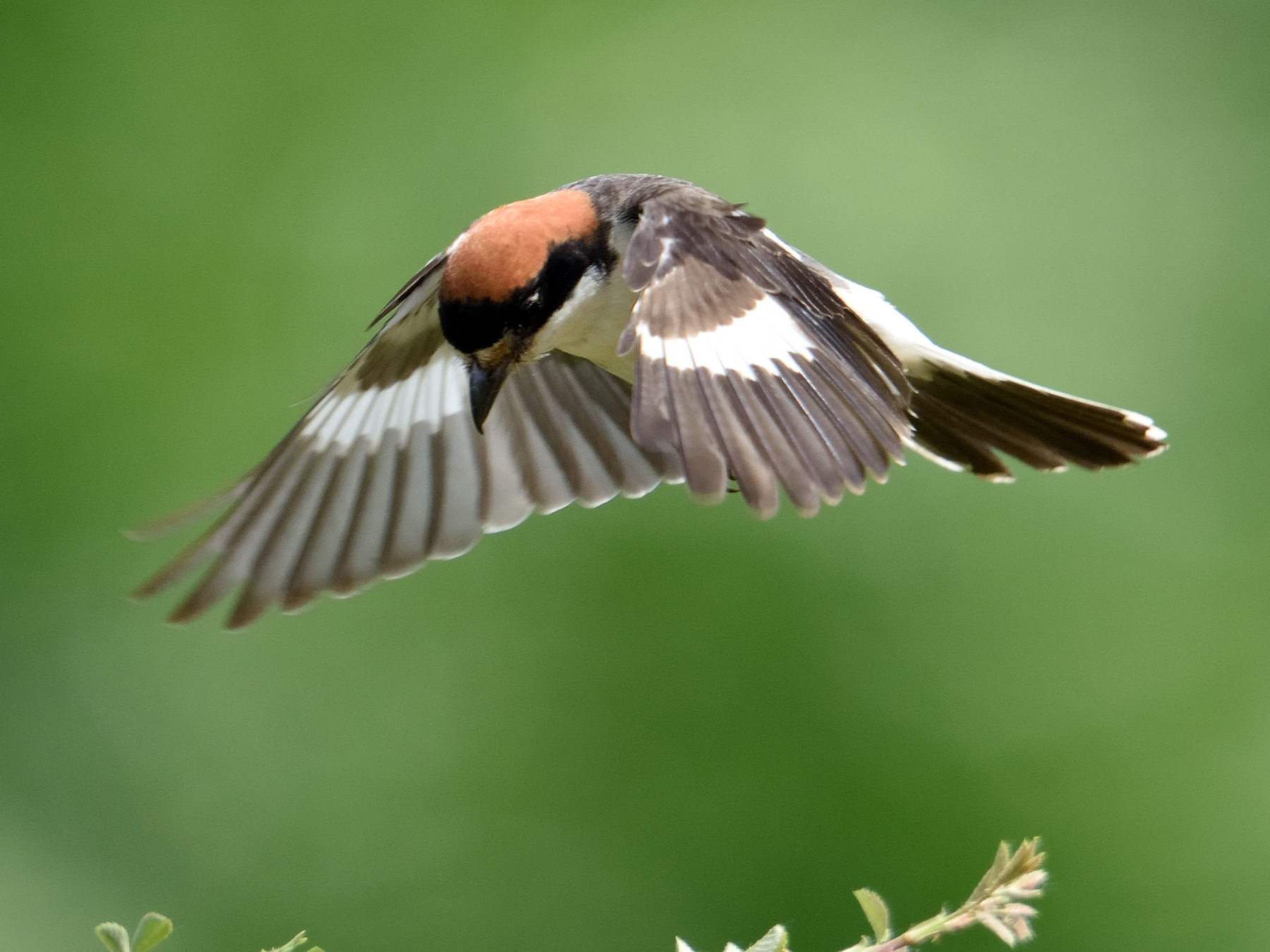
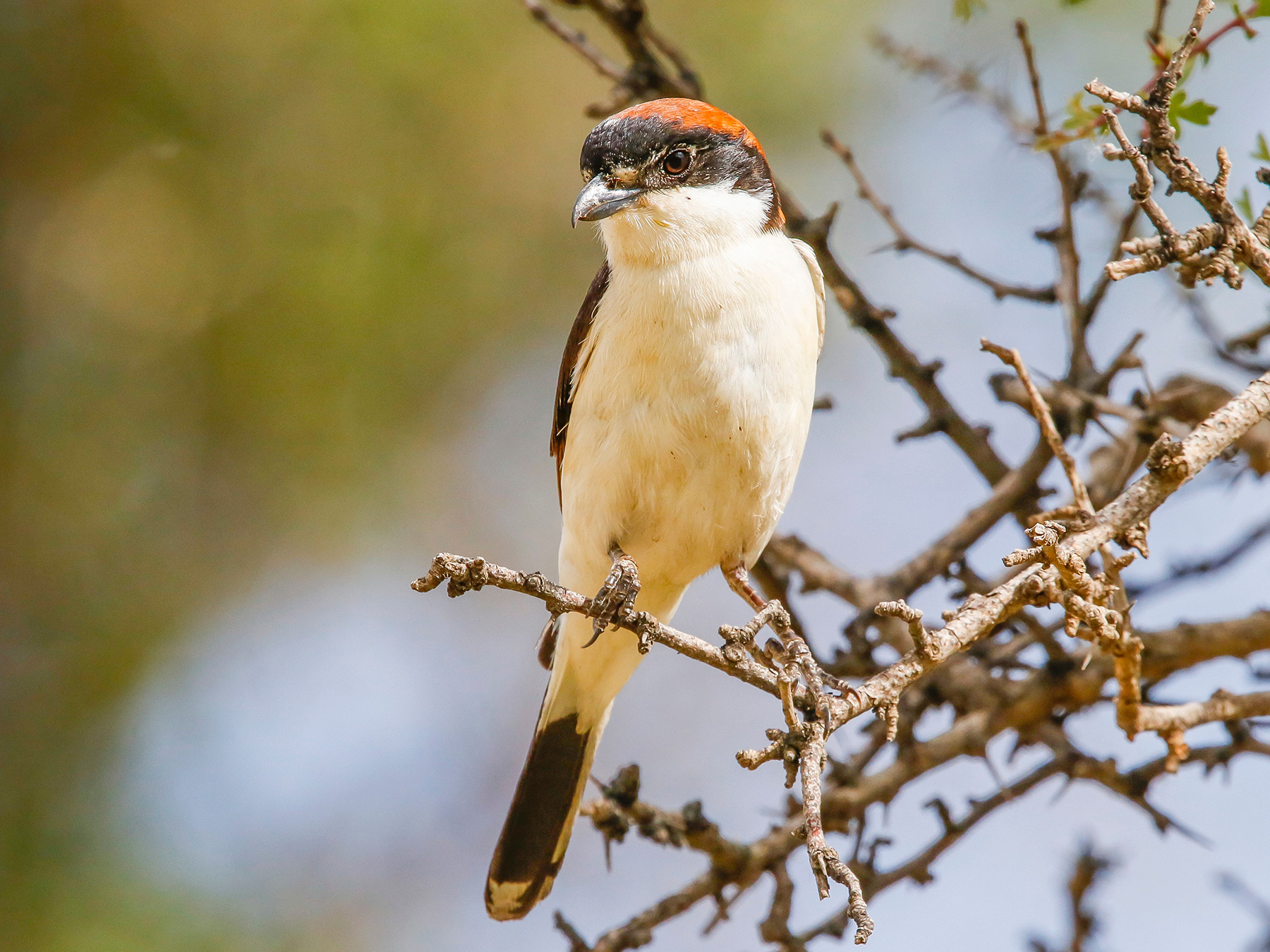
Woodchat Shrikes are small birds with stout, hooked bills. They are predominantly black above, although they have a prominent white wing bar and rump. The crown and nape are a rich red-brown shade, and the underparts are cream-white.
These birds are sexually dimorphic. Females differ in having duller plumage and a white face that may include a white eyering and a streak extending behind the eye.
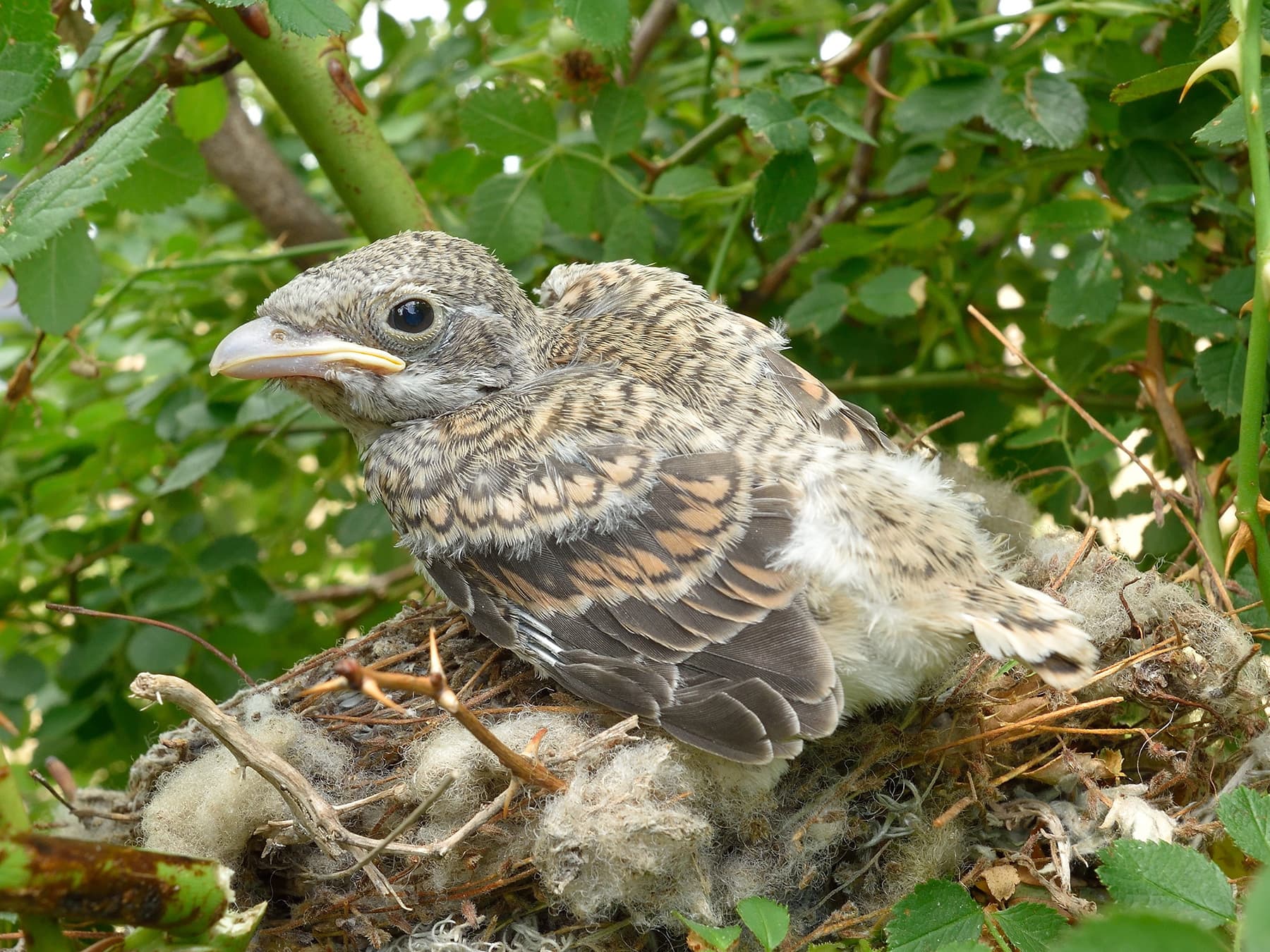
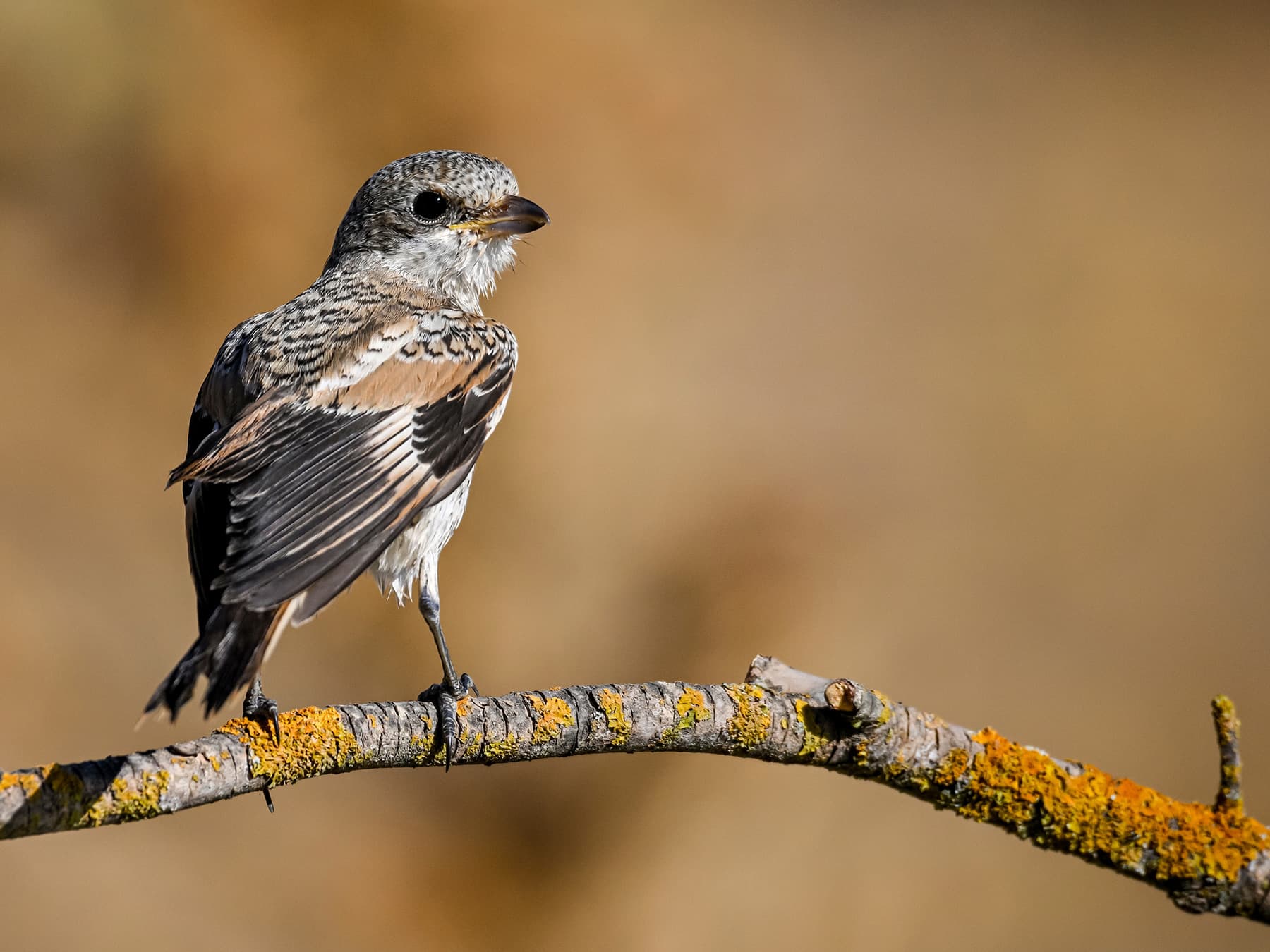
Juveniles are distinctly paler than adults. They have grey-brown upperparts with a scaled appearance and off-white bellies with fine grey barring.
How big are Woodchat Shrikes?
The Woodchat Shrike is a medium-sized Lanius shrike, intermediate between the Red-backed and Great Grey Shrikes.
Length
The Woodchat Shrike has a total body length of 18 to 19 centimetres.
Weight
They are fairly stocky birds with body weights between 21 and 59 grams.
Wingspan
These birds have a wingspan of approximately 27 centimetres.
Its size
Adults- Length
- 17–19 cm
- Wingspan
- 28–32 cm
- Weight
- 25–40 g
Its song and calls
Woodchat Shrikes produce a wide range of sounds, from grating notes to musical warbling.
What sound does a Woodchat Shrike make?
Both male and female Woodchat Shrikes sing, possibly to advertise their territory. Their song includes mimicry of other local bird species, warbling notes, and various harsh sounds. They also produce a variety of sharp contact and alarm calls.
When and where to see it
OctoberLeaving
Most recorded in October
- 1. Shetland Islandsunder 0.1%
- 2. Cornwallunder 0.1%
Each dot is a county, state or province: the bigger and darker, the larger the bird’s share of that place’s bird records that month. Grey dots: no regular records. The ringed point is the centre of the bird’s records this month; the arrow shows how it moved since last month, and the dashed loop its path through the year. “Arrivals” colours places where it becomes regular this month (orange) or is in its last regular month (grey). GBIF eBird Observation Dataset, 2019–2024. Map data: Natural Earth, US Census Bureau; place centres © OpenStreetMap contributors.
In your area
See when the Woodchat Shrike is recorded in your county, state or province.
How often the Woodchat Shrike turns up in the UK through the year, from birdwatchers' records.
United Kingdom
Passage migrant · regularly Apr–Oct · most records in May
Show as a table
| Month | United Kingdom |
|---|---|
| January | – |
| February | – |
| March | – |
| April | 0.005% (regular) |
| May | 0.005% (regular) |
| June | 0.003% (regular) |
| July | <0.001% |
| August | <0.001% (regular) |
| September | 0.003% (regular) |
| October | 0.003% (regular) |
| November | – |
| December | – |
Recorded regularly in
Worldwide: recorded regularly in 59 countries
Countries where it was recorded in at least 3 of the 6 years 2019–2024. Linked countries have their own bird list.
Europe (28)
- Albania
- Austria
- Belgium
- Bosnia & Herzegovina
- Bulgaria
- Croatia
- Czechia
- France
- Germany
- Gibraltar
- Greece
- Italy
- Kosovo
- Malta
- Montenegro
- Netherlands
- North Macedonia
- Norway
- Portugal
- Romania
- Russia
- Serbia
- Slovenia
- Spain
- Sweden
- Switzerland
- Ukraine
- United Kingdom
Africa (15)
- Algeria
- Burkina Faso
- Chad
- Egypt
- Ethiopia
- Gambia
- Ghana
- Guinea-Bissau
- Mauritania
- Morocco
- Nigeria
- Senegal
- Tunisia
- Uganda
- Western Sahara
Data: EOD – eBird Observation Dataset (Cornell Lab of Ornithology), accessed via GBIF.org, CC BY 4.0. Records from 2019–2024, aggregated and filtered by Birdfact. How these lists are made
Woodchat Shrikes require a specific habitat structure for their hunting technique. Continue reading to learn where these migratory birds live in the breeding and non-breeding seasons.
What is the habitat of a Woodchat Shrike?
Woodchat Shrikes prefer open woodlands, savanna, and desert edge habitats. They require large shrubs or trees for perching and open areas for hunting.
What is the range of a Woodchat Shrike?
Woodchat Shrikes occur in Europe, Asia, and Africa. They have a patchy breeding range from North Africa and Portugal, east to Iran. Their non-breeding range includes a wide belt of Central Africa to the south of the Sahara desert.
There are three recognised subspecies of the Woodchat Shrike, each with different breeding and overwintering ranges.
- The Balearic Woodchat Shrike (Lanius senator badius) nests in Corsica and other islands of the western Mediterranean Sea. This subspecies overwinters in West Africa.
- The Western Woodchat Shrike (L. s. senator) nests in North Africa and Southern Europe from Spain to Turkey. These birds spend the non-breeding season in Central Africa.
- The Caucasian Woodchat Shrike (L. s. niloticus) nests in the Middle East and overwinters in East Africa.
Where do Woodchat Shrikes live?
Woodchat Shrikes spend most of their lives in trees and large shrubs. They are sit-and-wait predators that choose a perch with a good view over open areas where insects abound. Although territorial in the breeding season, these birds migrate long distances, selecting habitats with the same general characteristics throughout the year.
How rare are Woodchat Shrikes?
Woodchat Shrikes are very rare in the UK, although they remain common in much of their breeding and overwintering range.
Where can you see Woodchat Shrikes in the UK?
Woodchat Shrikes are rare vagrants to the United Kingdom, although they have been seen in many locations. Recent sightings have been made on the Isles of Scilly, Cornwall, and Somerset. The closest reliable venues where UK birders can spot this species are in France.
Migration
Do Woodchat Shrikes migrate?
Woodchat Shrikes are highly migratory, with slight differences in timing depending on subspecies and location. These birds breed in Europe, Asia, and North Africa in the spring and summer and depart for Central Africa in August/September, arriving in September/October. They begin their return migration between February and April, and most have reached their breeding grounds by May.
Are Woodchat Shrikes native to the UK?
Woodchat Shrikes are vagrants to the United Kingdom. They were not introduced but rather arrive as over-eager migrants that continue further north of their regular breeding grounds in Southern Europe.
Tips for seeing it
- Look for Woodchat Shrikes perched prominently on fence posts or treetops
- Listen for their harsh, chattering calls
- Check thorny bushes or barbed wire for impaled prey
- In the UK, search coastal areas during spring and autumn migration
What it eats
The Woodchat Shrike’s sturdy hooked bill reveals its predatory nature.
What do Woodchat Shrikes eat?
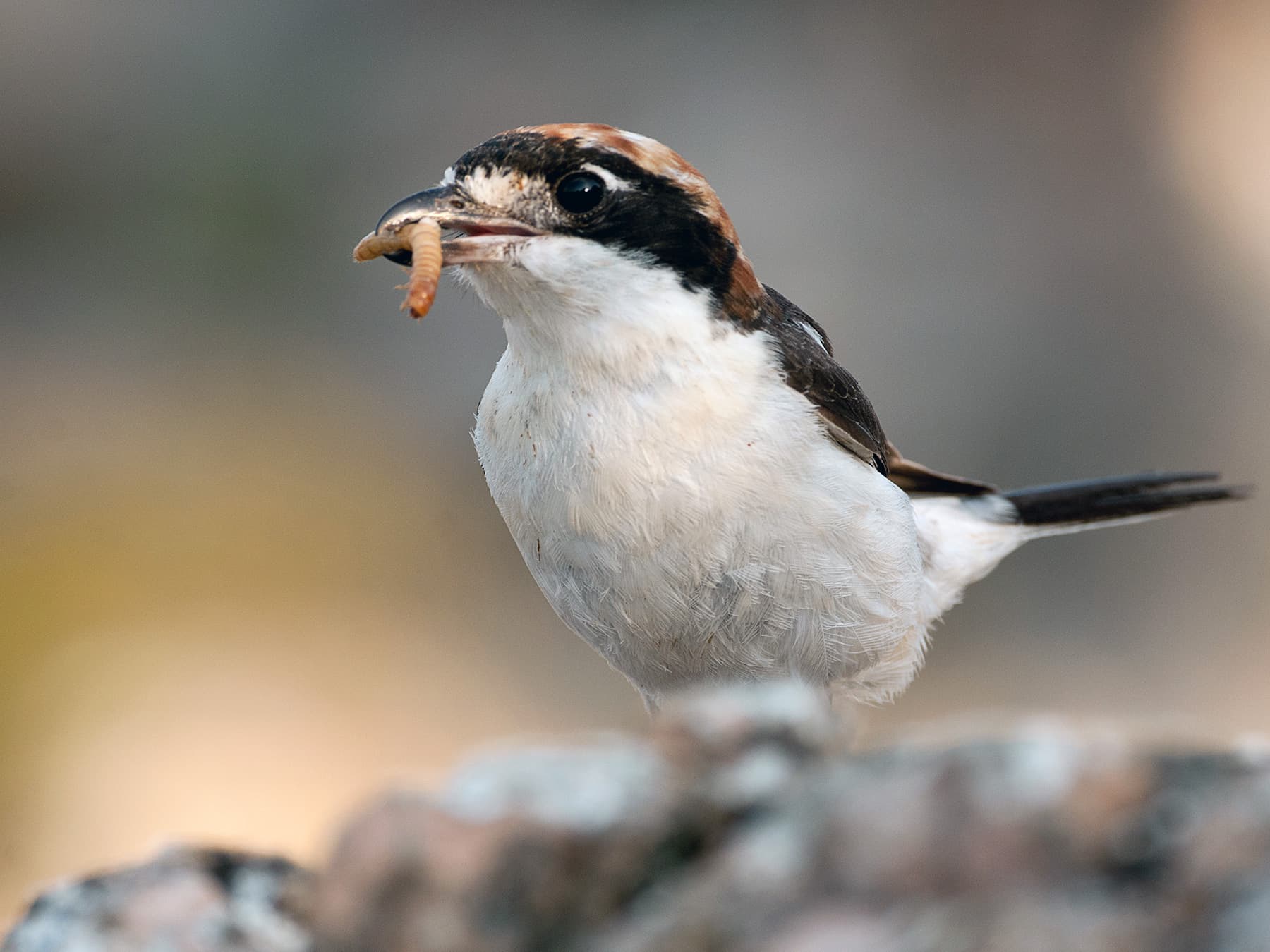
Woodchat Shrikes hunt a variety of invertebrates, both on the ground and in the air. They occasionally take larger prey like small reptiles, although insects are their primary target. These birds hunt from a perch, looking for the movement of their prey before dashing out to catch it.
Common Woodchat Shrike prey items:
- Beetles
- Ants
- Grasshoppers
- Spiders
- Snails
What do baby Woodchat Shrikes eat?
Baby Woodchat Shrikes eat insects provided by both parents. The young spend up to 18 days in the nest and are fed for up to six weeks after fledging.
Nesting and breeding
Woodchat Shrikes breed in the Northern Hemisphere’s spring and summer. Egg laying begins as early as March in the south of their breeding range and May in Central Europe.
Where do Woodchat Shrikes nest?
Woodchat Shrikes nest in Southern Europe, North Africa, and the Middle East. Both sexes build the nest, which is usually placed one to twenty meters high on a tree branch. The nest is a small cup of twigs and other plant matter lined with softer materials like wool and spider webs.
What do Woodchat Shrike eggs look like?
Woodchat Shrikes lay four to eight eggs per clutch. Their colour varies from green/olive to grey/yellow, and each measures approximately 23 millimetres long and 17 millimetres wide.
Do Woodchat Shrikes mate for life?
Woodchat Shrikes are monogamous in the breeding season, although they are unlikely to reunite in consecutive years.
Behaviour
Woodchat Shrikes are patient hunters, most often seen scanning their surroundings for their next meal. They are solitary birds outside of the breeding season.
Are Woodchat Shrikes aggressive?
Woodchat Shrikes are highly territorial when breeding and will behave aggressively towards intruders. However, they are not aggressive towards others when on migration.
Where do Woodchat Shrikes sleep at night?
Woodchat Shrikes roost in trees and shrubs. They will enter dense vegetation to shelter for the night rather than remain on their exposed hunting perches.
Lifespan and predators
How long do Woodchat Shrikes live?
Woodchat Shrikes can live for over five years, although the average specimen has a life expectancy closer to three years.
What are the predators of Woodchat Shrikes?
Woodchat Shrike predators have yet to be studied in detail, although these small birds could fall prey to various birds of prey, mammals, and reptiles.
Are Woodchat Shrikes protected?
Woodchat Shrikes are legally protected in most of their breeding range.
Are Woodchat Shrikes endangered?
Woodchat Shrikes are in decline due to farming and forestry, habitat destruction, climate change, and even hunting. They are assessed as Near Threatened on the IUCN Red List but are considered endangered in some countries.
Conservation
Woodchat Shrikes are listed globally as Near Threatened and face threats from habitat loss due to agricultural intensification and climate change.
Conservation efforts focus on maintaining suitable breeding habitats and protecting stopover sites along migration routes.
Similar birds
Often mistaken for
More photos
3 photos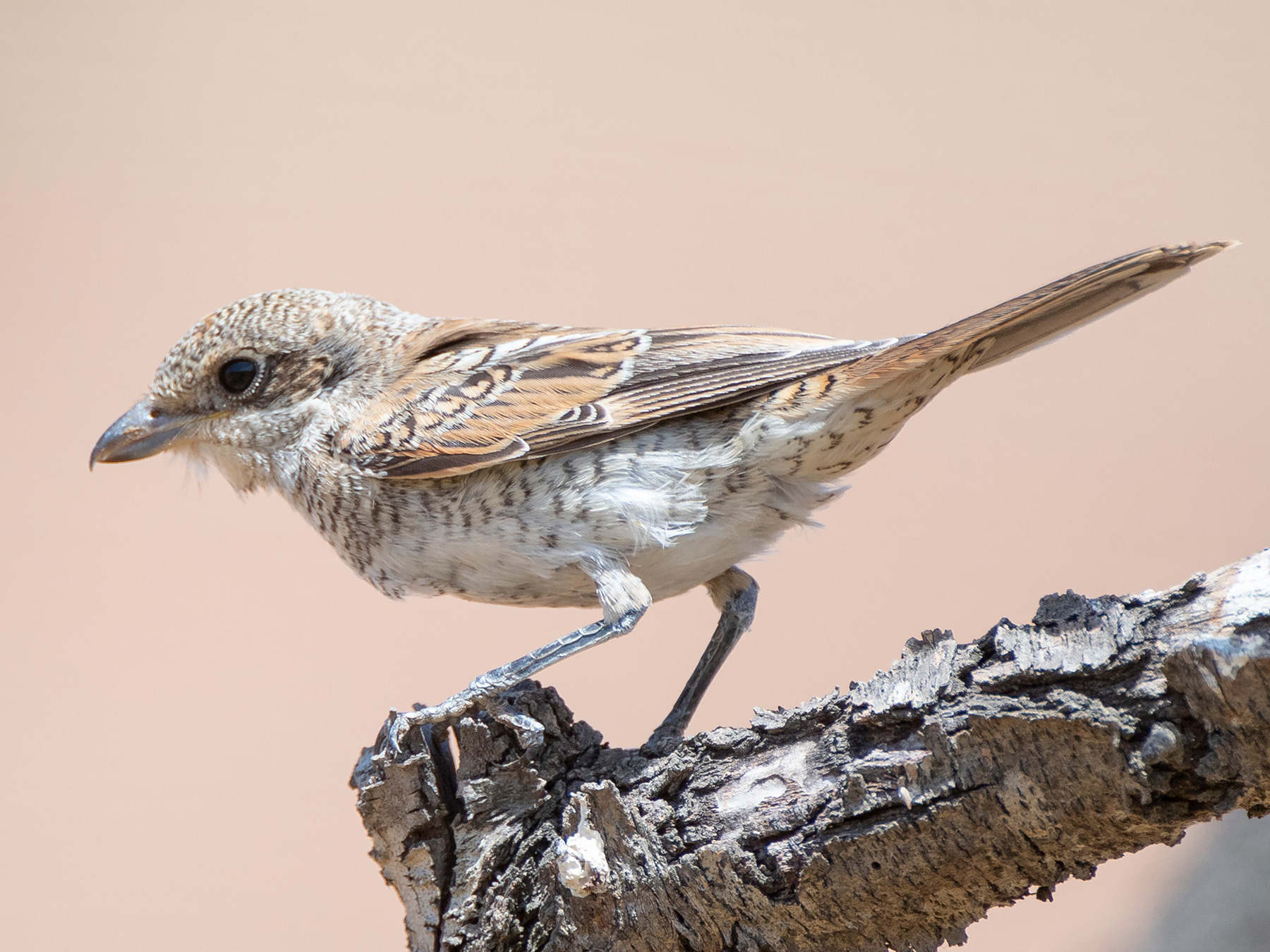
Quick facts
- Length
- 17–19 cm
- Wingspan
- 28–32 cm
- Weight
- 25–40 g
- Lifespan
- 3 years · oldest recorded 5.7 years
- Family
- Shrikes
- Migration
- Long-distance Migrant
- Global status (IUCN)
- Near Threatened
- World population
- 5,940,000 - 9,610,000 mature individuals
- Population trend
- Decreasing
- Also called
- Rufous-backed Shrike
- Scientific name
- Lanius senator
Sources
4- 1BirdLife International. 2022. Lanius senator. The IUCN Red List of Threatened Species 2022: e.T22705095A209744544. Source (opens in a new tab)
- 2BirdLife International. 2022. Lanius senator. The IUCN Red List of Threatened Species 2022: e.T22705095A209744544. Source (opens in a new tab)
- 3BirdLife International. 2022. Lanius senator. The IUCN Red List of Threatened Species 2022: e.T22705095A209744544. Source (opens in a new tab)
- 4Fransson et al., EURING list of longevity records for European birds (2010) Source (opens in a new tab)

Checked by
Nathan Cope, founder and editor
Nathan founded Birdfact and leads its writers and contributors in the UK, the US and Canada. He has watched and studied birds for more than ten years, and checks every article and species guide before it’s published.