


Red-backed Shrike
Butcher bird · Lanius collurio
By the Birdfact teamChecked by Nathan Cope
On this page13 sections
How to recognise it
What do Red-backed Shrikes look like?
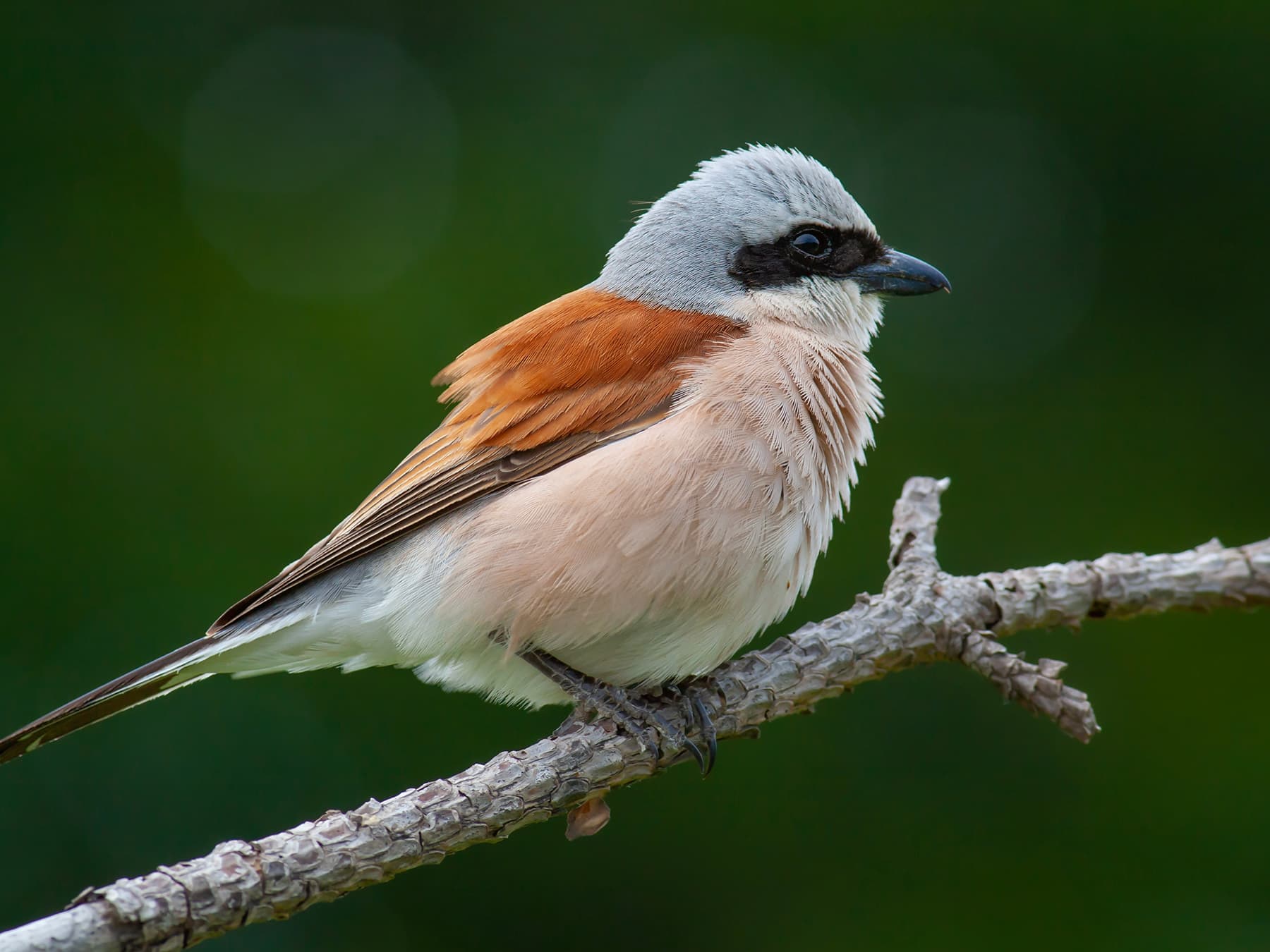
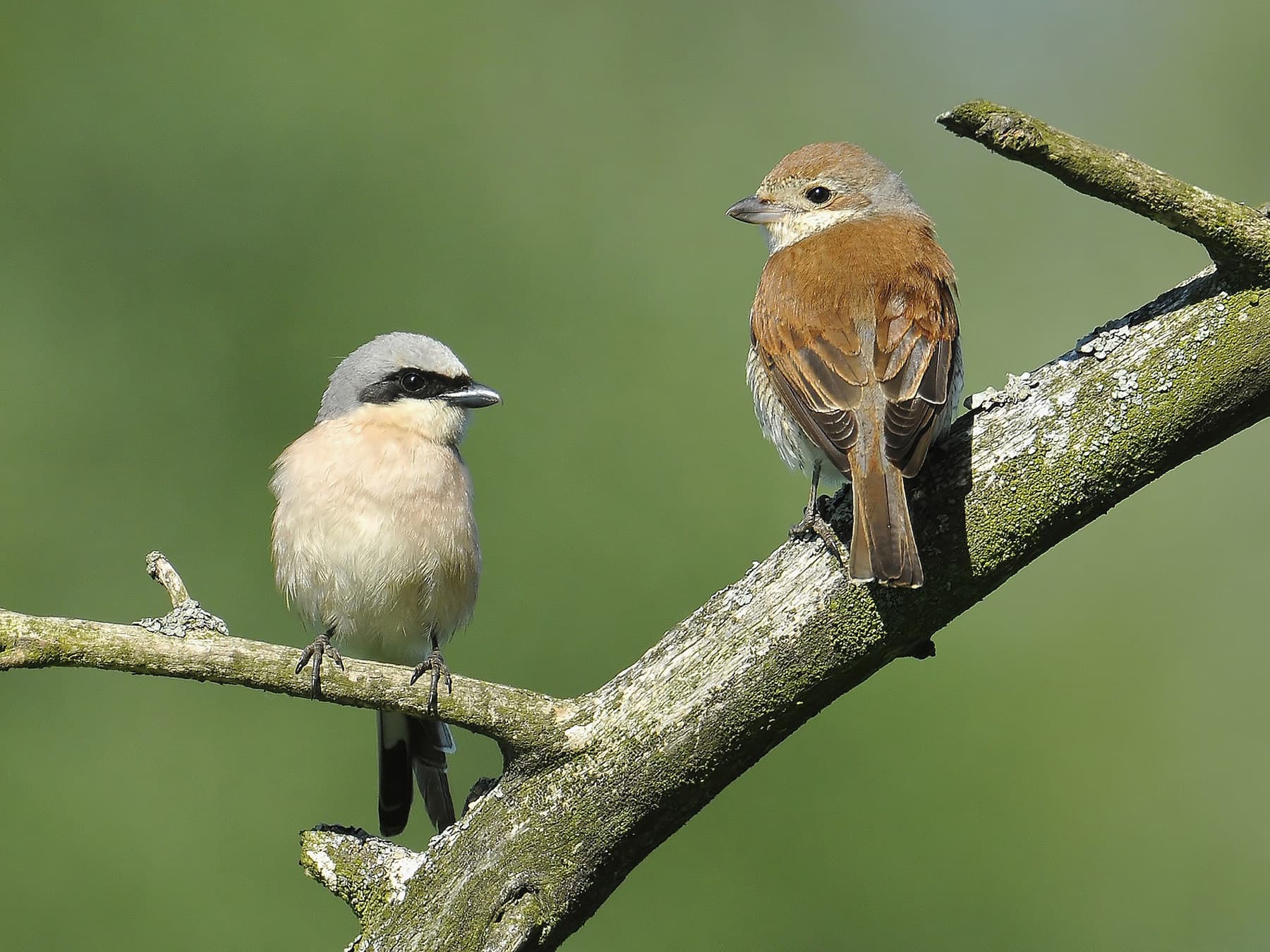
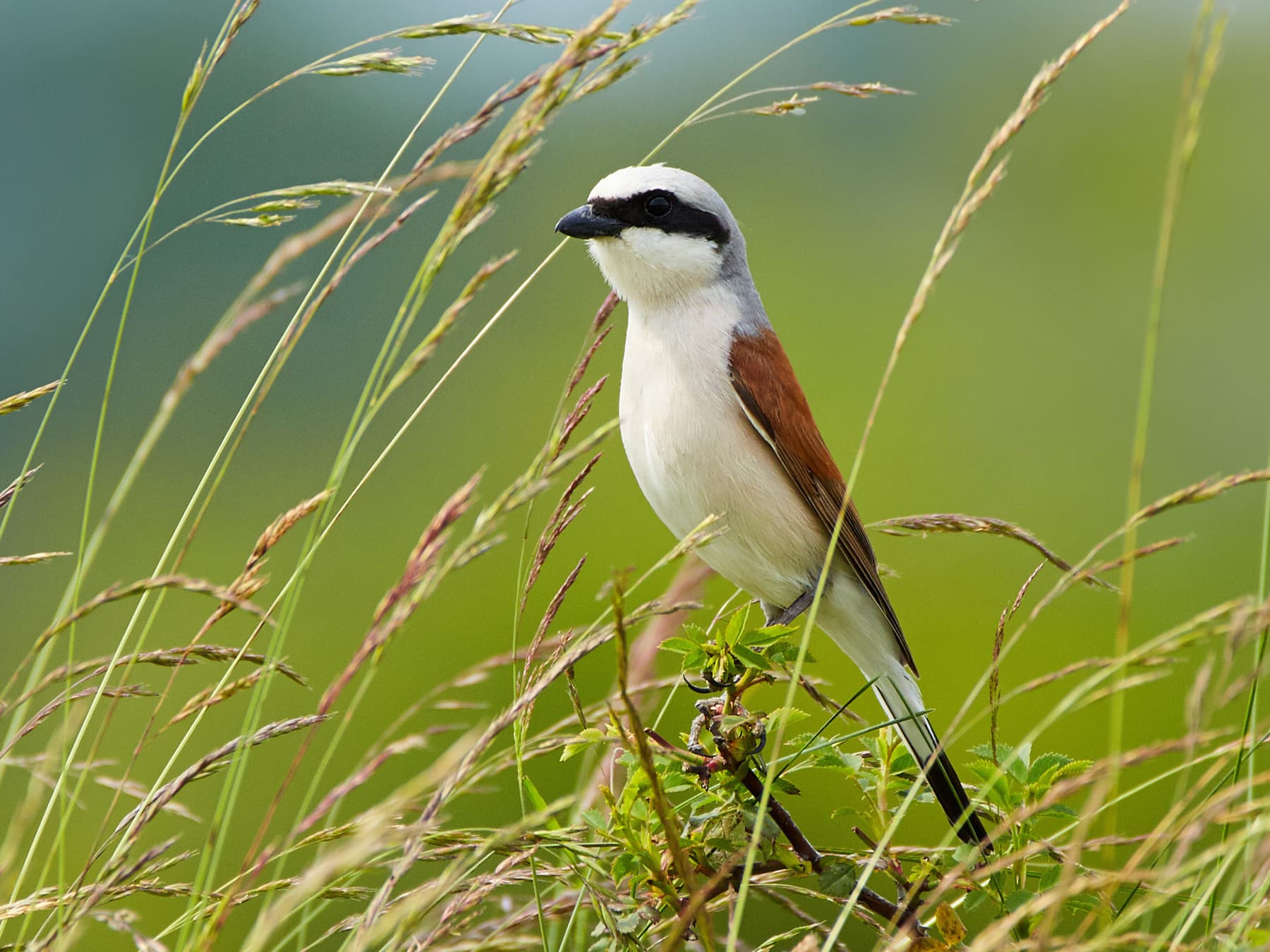
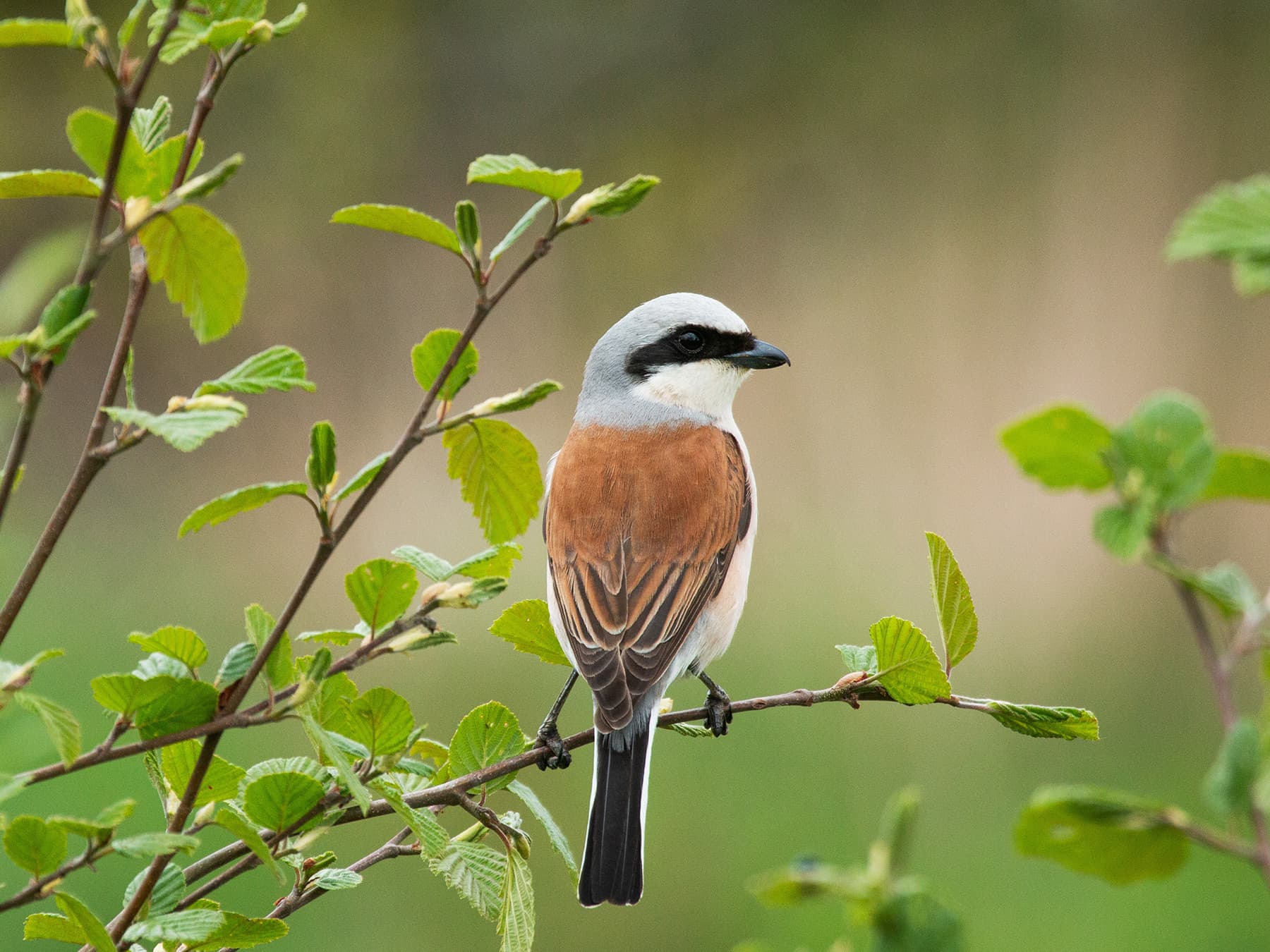
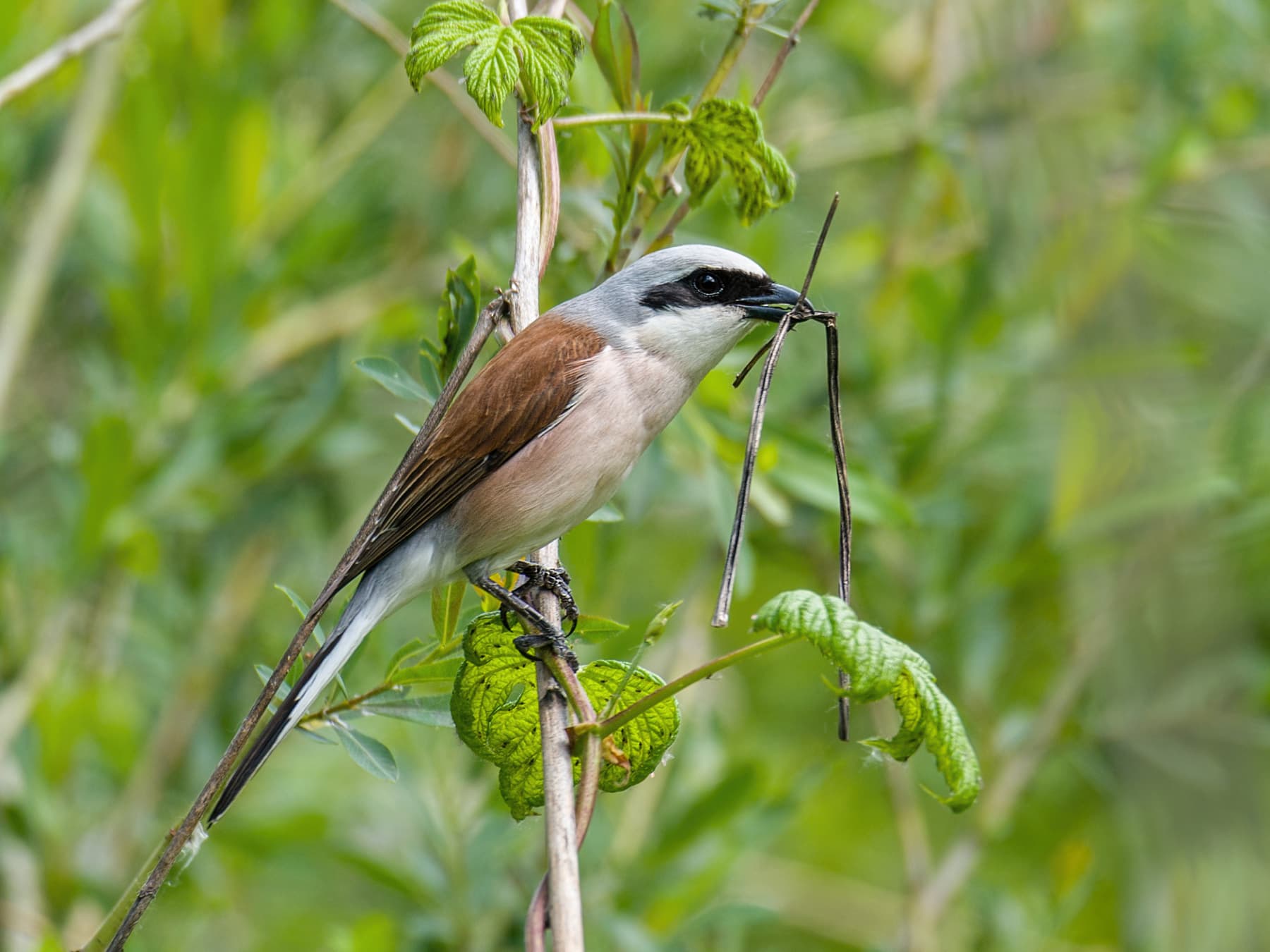
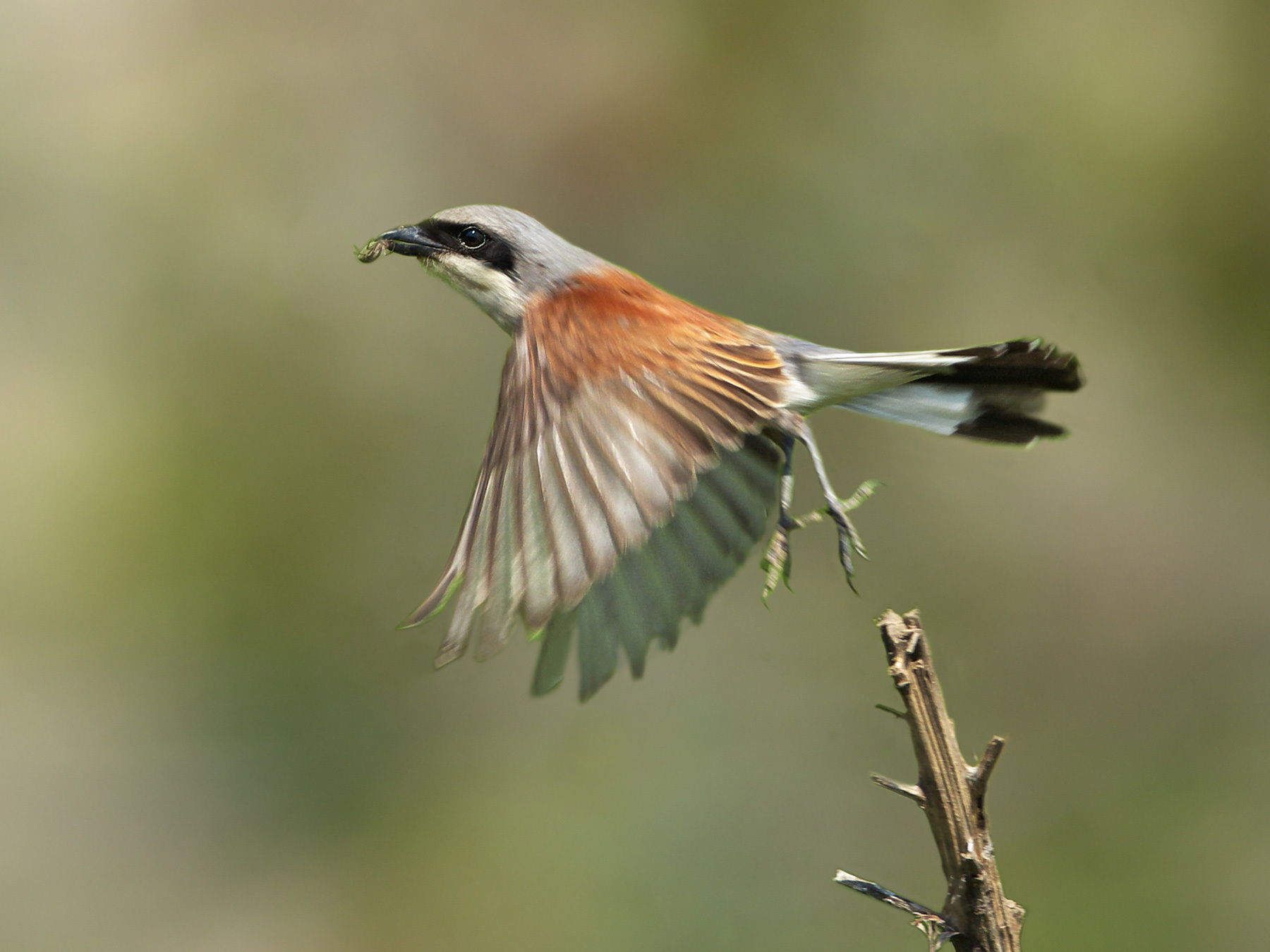
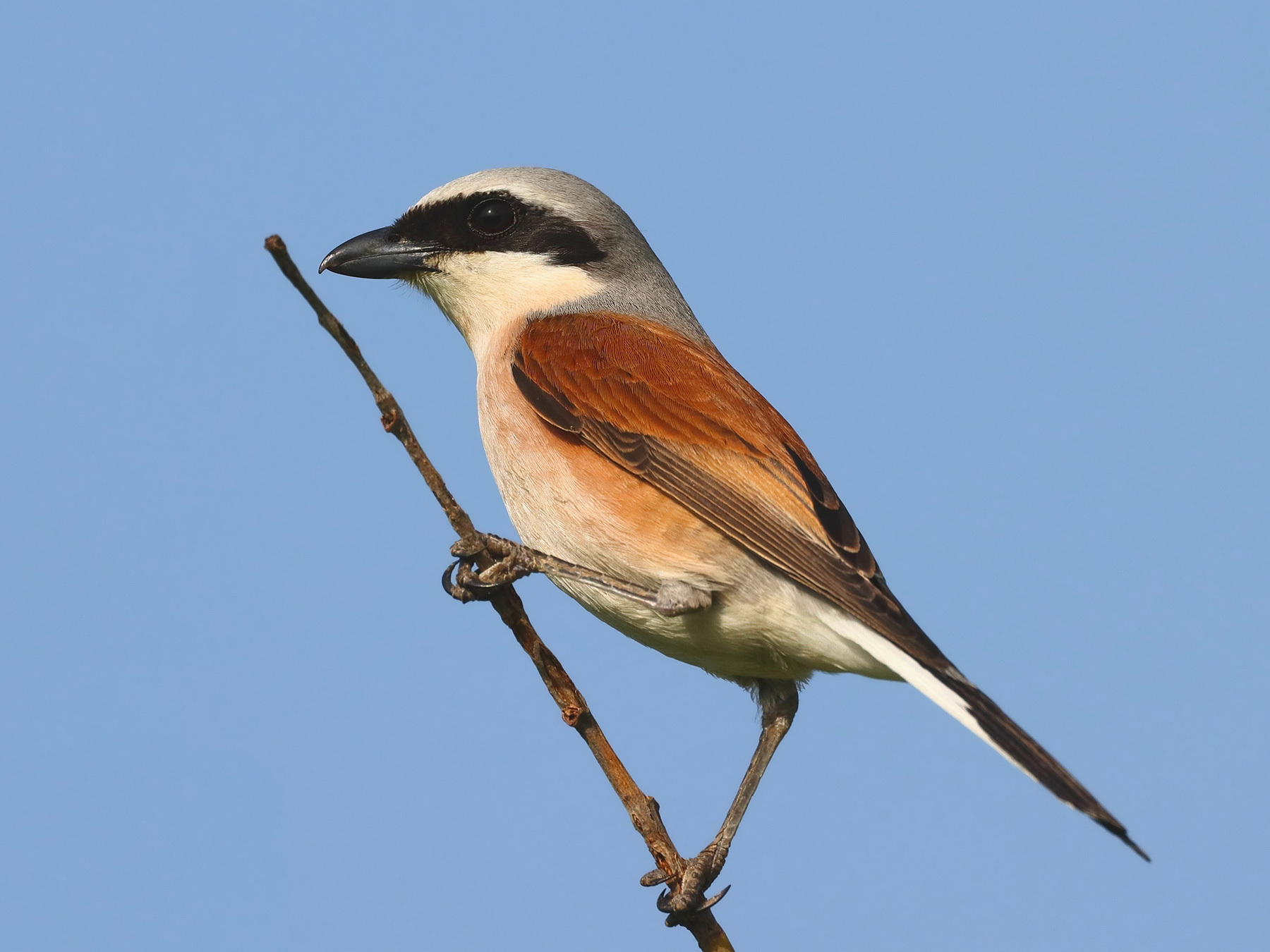
Male and female red-backed shrikes have different colouring, with males being far more distinctive and easy to identify. Male red-backed shrikes have a bluish-grey head, a wide black mask around their eyes, a white chin and throat and a bright chestnut back. Their tail is black and they have creamy underparts. Their black bill is thick and sharply hooked.
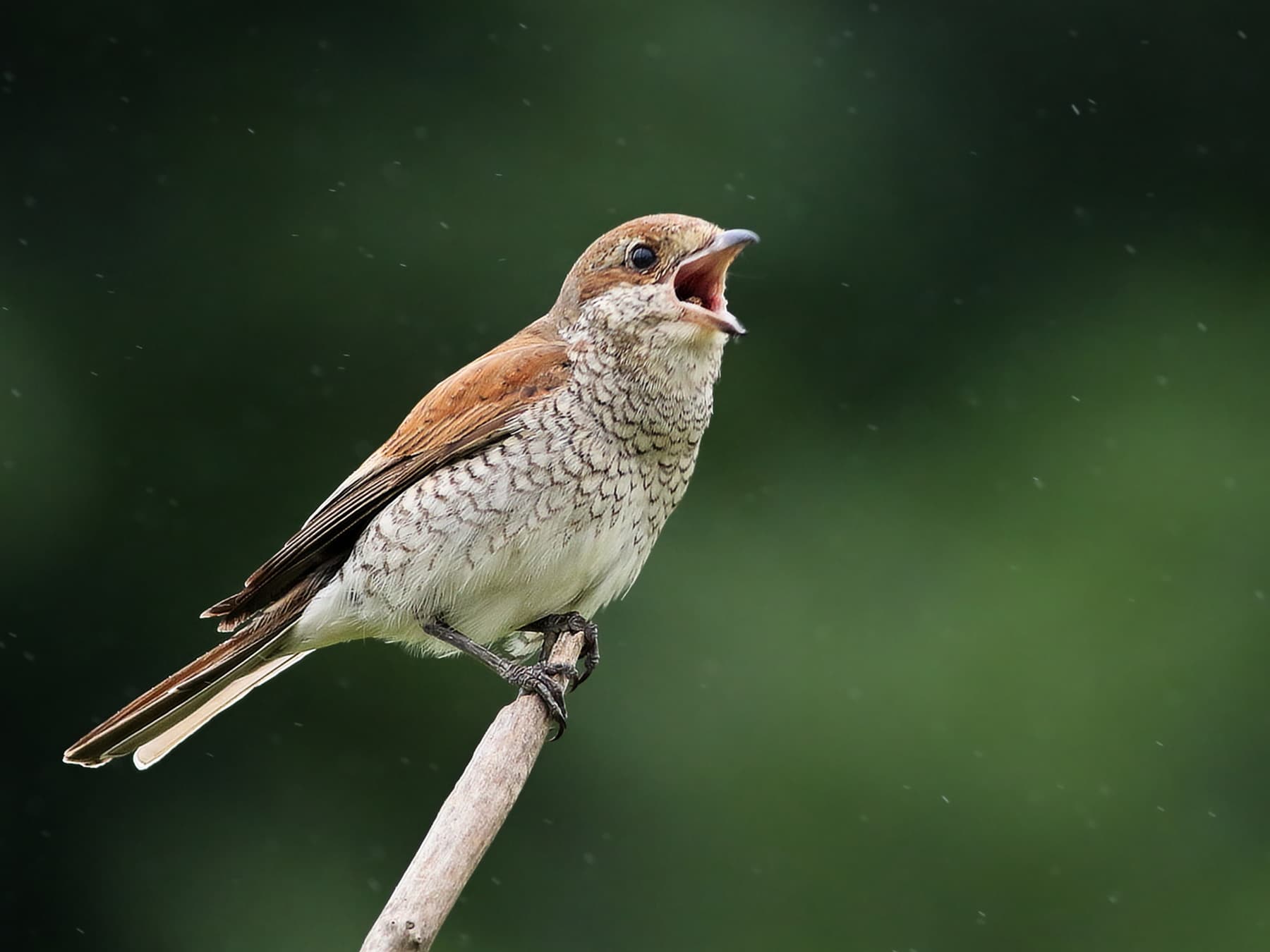
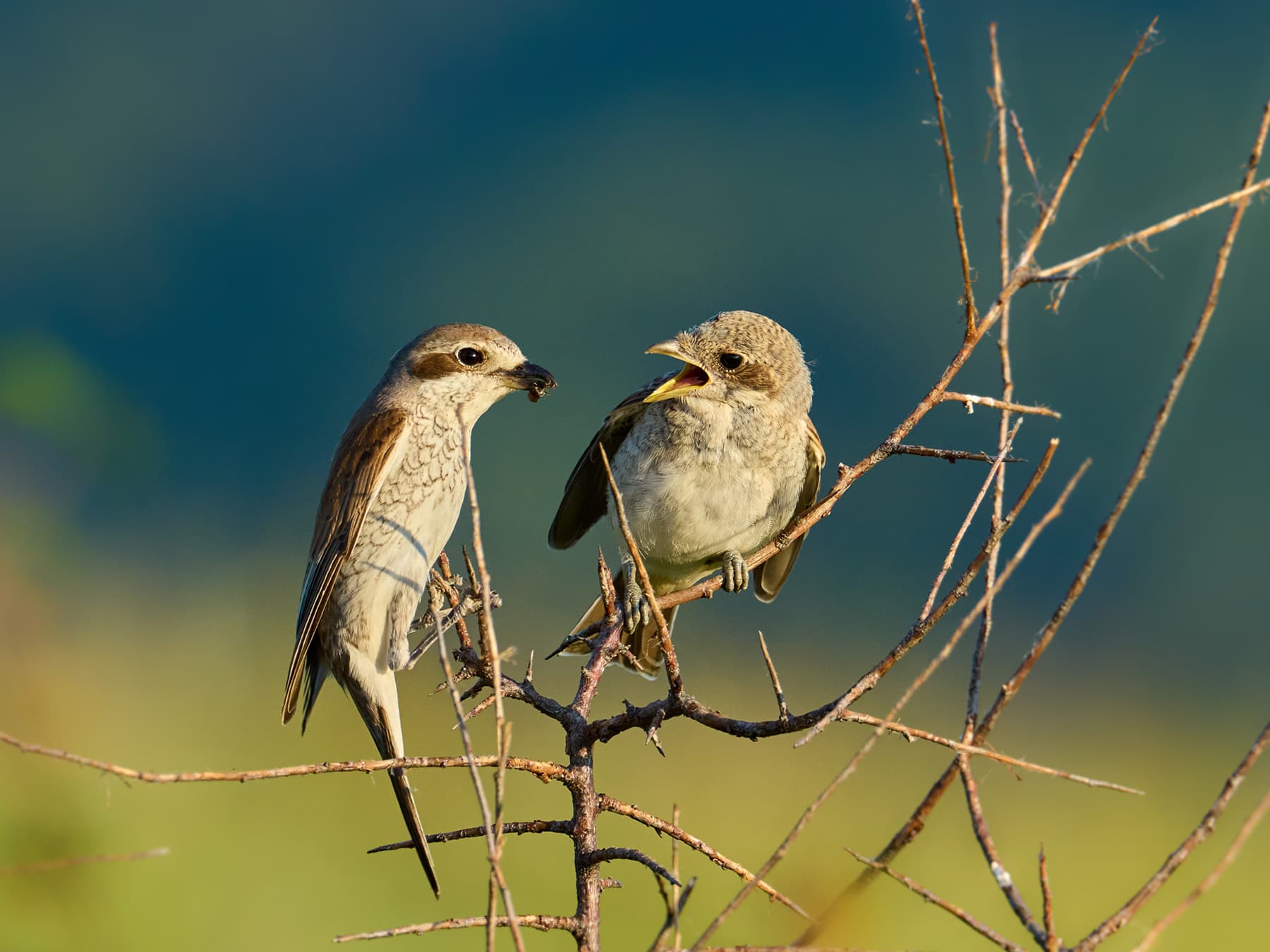
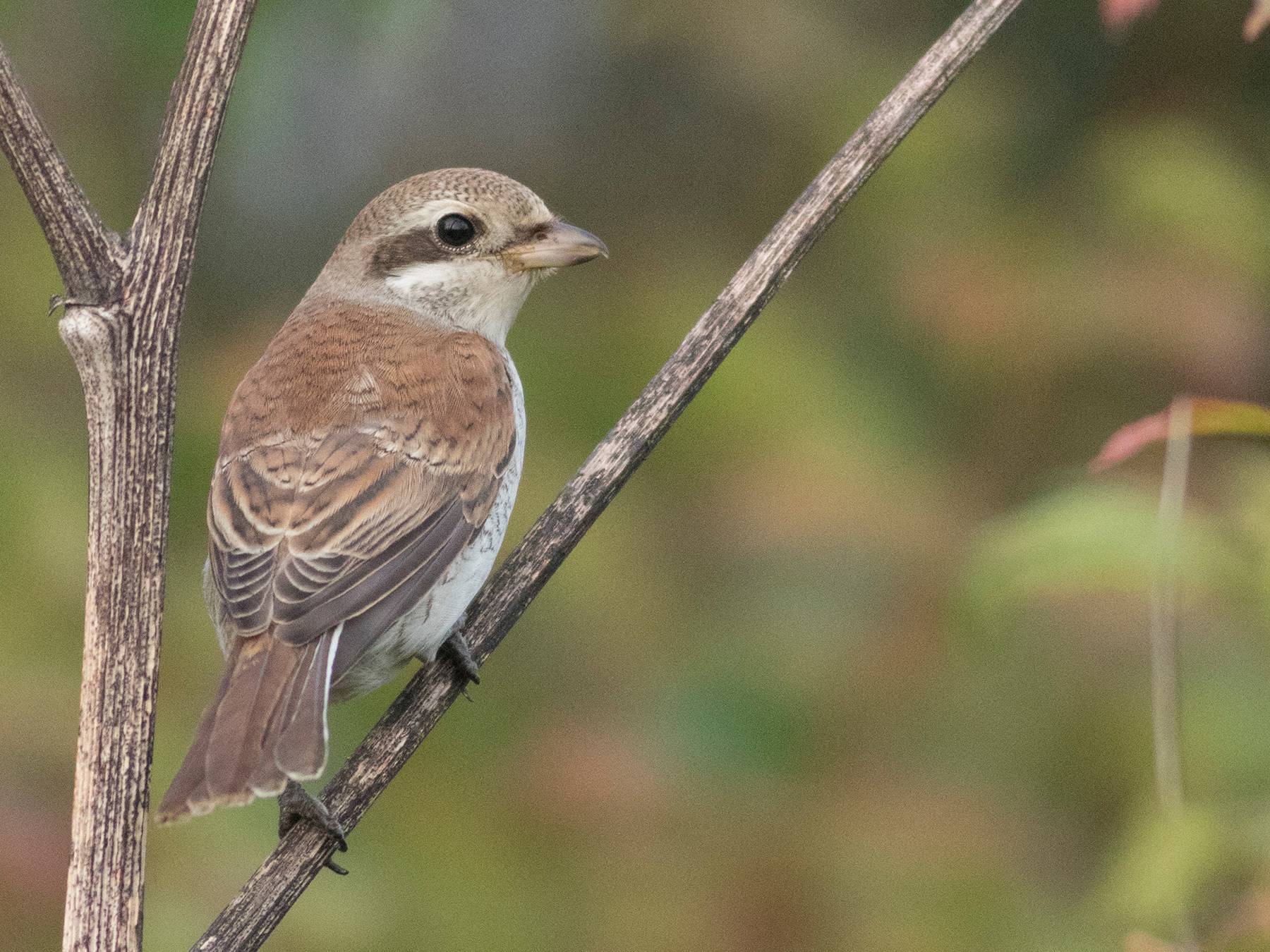
Females have similar markings, but their colours are not as vibrant or remarkable, with more muted tones of brownish-grey replacing the bold black and chestnut plumage of the male. Females have a pale eye stripe above a brownish band across their cheek. Their flanks have a pinkish-buff wash and are lightly flecked with black. Their bill is similar in shape to the male’s but lighter in colour.
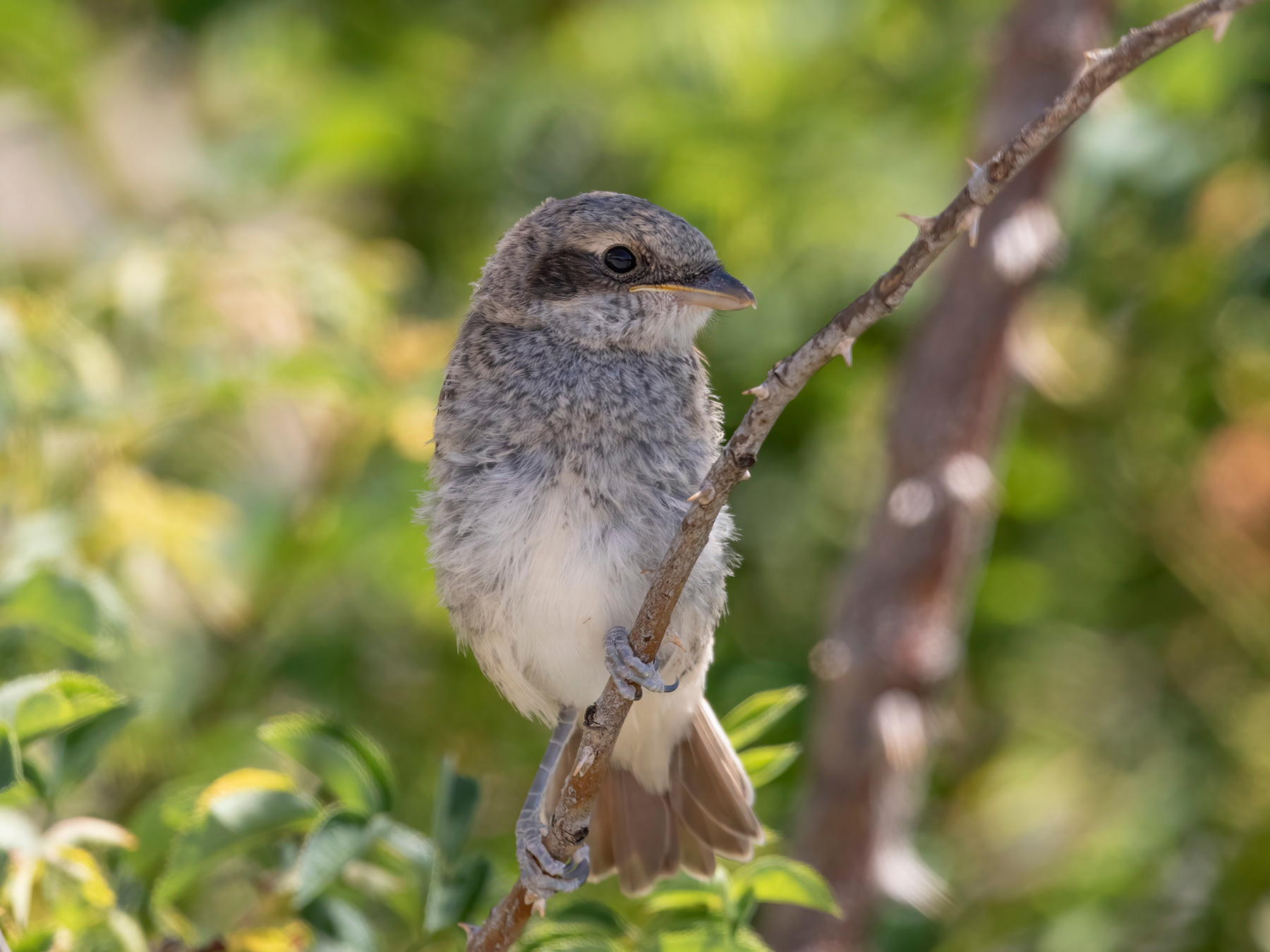
Juvenile red-backed shrikes are similar in colouring to females, but are overall more brown and mottled in appearance, with less clear markings and more speckled barring visible across their entire bodies.
How big are Red-backed Shrikes?
Red-backed shrikes are larger than house sparrows but are more slender. Males and females are the same size, falling into the range below:
- Length: 17 cm to 19 cm (6.7 in to 7.5 in)
- Wingspan: 24 cm to 27 cm (9.4 in to 10.6 in)
- Weight: 25 g to 35 g (0.9 oz to 1.2 oz)
Its size
Adults- Length
- 16–18 cm
- Wingspan
- 24–27 cm
- Weight
- 25–36 g
Its song and calls
What sound does a Red-backed Shrike make?
Male red-backed shrikes can be heard making a hoarse ‘tschack’ call to mark their territory and to attract females early in the breeding season.
Skilled mimics, red-backed shrikes’ song repertoire expands to include snippets from songs heard from other birds on their breeding grounds, such as chaffinches, starlings, blackbirds and great tits.
- Song0:00 / 0:44
Recorded in Kalmar County, Sweden · May 2024
- Alarm call0:00 / 0:26
Recorded in Fribourg, Switzerland · July 2026
When and where to see it
OctoberLeaving
Most recorded in October
- 1. Bridgend0.39%
- 2. Waterford0.11%
- 3. Cornwallunder 0.1%
- 4. Bedfordshireunder 0.1%
- 5. Shetland Islandsunder 0.1%
Each dot is a county, state or province: the bigger and darker, the larger the bird’s share of that place’s bird records that month. Grey dots: no regular records. The ringed point is the centre of the bird’s records this month; the arrow shows how it moved since last month, and the dashed loop its path through the year. “Arrivals” colours places where it becomes regular this month (orange) or is in its last regular month (grey). GBIF eBird Observation Dataset, 2019–2024. Map data: Natural Earth, US Census Bureau; place centres © OpenStreetMap contributors.
In your area
See when the Red-backed Shrike is recorded in your county, state or province.
How often the Red-backed Shrike turns up in the UK through the year, from birdwatchers' records.
United Kingdom
Summer visitor · regularly May–Oct · most records in September
Show as a table
| Month | United Kingdom |
|---|---|
| January | – |
| February | – |
| March | – |
| April | <0.001% |
| May | 0.015% (regular) |
| June | 0.011% (regular) |
| July | 0.003% (regular) |
| August | 0.012% (regular) |
| September | 0.031% (regular) |
| October | 0.012% (regular) |
| November | <0.001% |
| December | – |
Recorded regularly in
Worldwide: recorded regularly in 82 countries
Countries where it was recorded in at least 3 of the 6 years 2019–2024. Linked countries have their own bird list.
Europe (41)
- Åland Islands
- Albania
- Andorra
- Austria
- Belarus
- Belgium
- Bosnia & Herzegovina
- Bulgaria
- Croatia
- Czechia
- Denmark
- Estonia
- Faroe Islands
- Finland
- France
- Germany
- Greece
- Hungary
- Italy
- Kosovo
- Latvia
- Liechtenstein
- Lithuania
- Luxembourg
- Moldova
- Montenegro
- Netherlands
- North Macedonia
- Norway
- Poland
- Portugal
- Romania
- Russia
- Serbia
- Slovakia
- Slovenia
- Spain
- Sweden
- Switzerland
- Ukraine
- United Kingdom
Africa (17)
Asia (24)
- Armenia
- Azerbaijan
- Bahrain
- China
- Cyprus
- Georgia
- India
- Iran
- Iraq
- Israel
- Jordan
- Kazakhstan
- Kuwait
- Kyrgyzstan
- Lebanon
- Oman
- Pakistan
- Palestinian Territories
- Qatar
- Saudi Arabia
- Taiwan
- Turkey
- United Arab Emirates
- Uzbekistan
Data: EOD – eBird Observation Dataset (Cornell Lab of Ornithology), accessed via GBIF.org, CC BY 4.0. Records from 2019–2024, aggregated and filtered by Birdfact. How these lists are made
What is the habitat of a Red-backed Shrike?
Red-backed shrikes thrive in sunny habitats, with open terrain for hunting interspersed with higher lookout perches and thorny trees.
Bare earth and short grassy landscapes are optimal for seeking rodent and reptile prey. Mountain slopes are favoured environments, as well as heathland and neglected swathes of agricultural land.
What is the range of a Red-backed Shrike?
The widest breeding range of red-backed shrikes extends from the British Isles in the west, across Europe and into Asia as far as Siberia to the east, south as far as Italy, Sicily and the Balkan States, and across Turkey into north-west Iran.
Red-backed shrikes leave their breeding grounds by October each year, heading to winter territories in south and east Africa, from Somalia and south-east Kenya to South Africa.
Where do Red-backed Shrikes live?
With an estimated global population of 6.3 million breeding pairs across Europe, the outlook is not as bleak for red-backed shrikes elsewhere as it is in the UK. The species range has contracted in other parts of Europe too, notably Spain, Belgium, Denmark and the Netherlands, but numbers are increasing in Norway.
How rare are Red-backed Shrikes?
In the UK, red-backed shrikes now rank as one of the rarest breeding birds, with a maximum of three pairs nesting each year.
Across their wider range, they are more widespread and common, however in the UK sightings are almost unheard of, apart from during migration passage, when numbers may temporarily increase to up to 250 individuals.
Where can you see Red-backed Shrikes in the UK?
Red-backed shrikes are now extremely rare as breeding birds in the UK with a maximum of three pairs raising their young there each season. Isolated reports of breeding have been recorded in the Shetland Isles, Wales and in south-west England in recent years.
Chances of a sighting improve during spring and autumn migration, with reports along the eastern and southern coast of Scotland and England, particularly during May to June and August to October.
Migration
Do Red-backed Shrikes migrate?
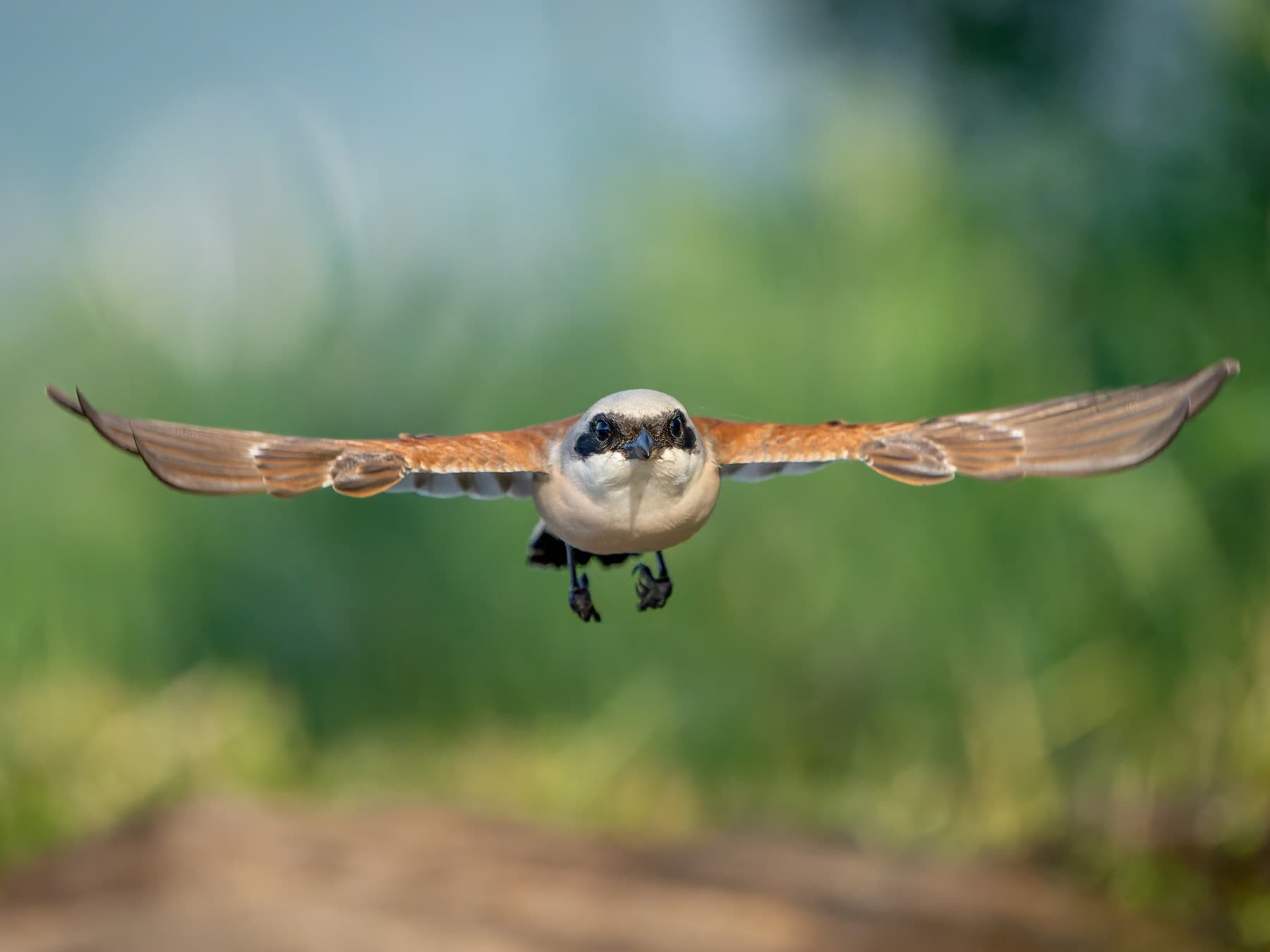
Red-backed shrikes are a fully migratory species, breeding across Europe and Central Asia, and spending winters in southern and eastern Africa.
Migration takes place from May to June and August to October, with all red-backed shrikes on their wintering grounds between November and April.
Are Red-backed Shrikes native to the UK?
Red-backed shrikes do occasionally breed in the UK, but occurrences are becoming increasingly rare. As migratory birds, no red-backed shrikes remain in the UK beyond the end of the breeding season, with migration passage to their wintering grounds in southern and eastern Africa underway from August to October.
Tips for seeing it
- Look for Red-backed Shrikes perched prominently on fence posts or outer branches of bushes
- Listen for their harsh 'chack' call, which can help locate them
- Search for their 'larders' - insects or small animals impaled on thorns
- In the UK, visit eastern England during late spring and summer for the best chance of spotting them
What it eats
What do Red-backed Shrikes eat?
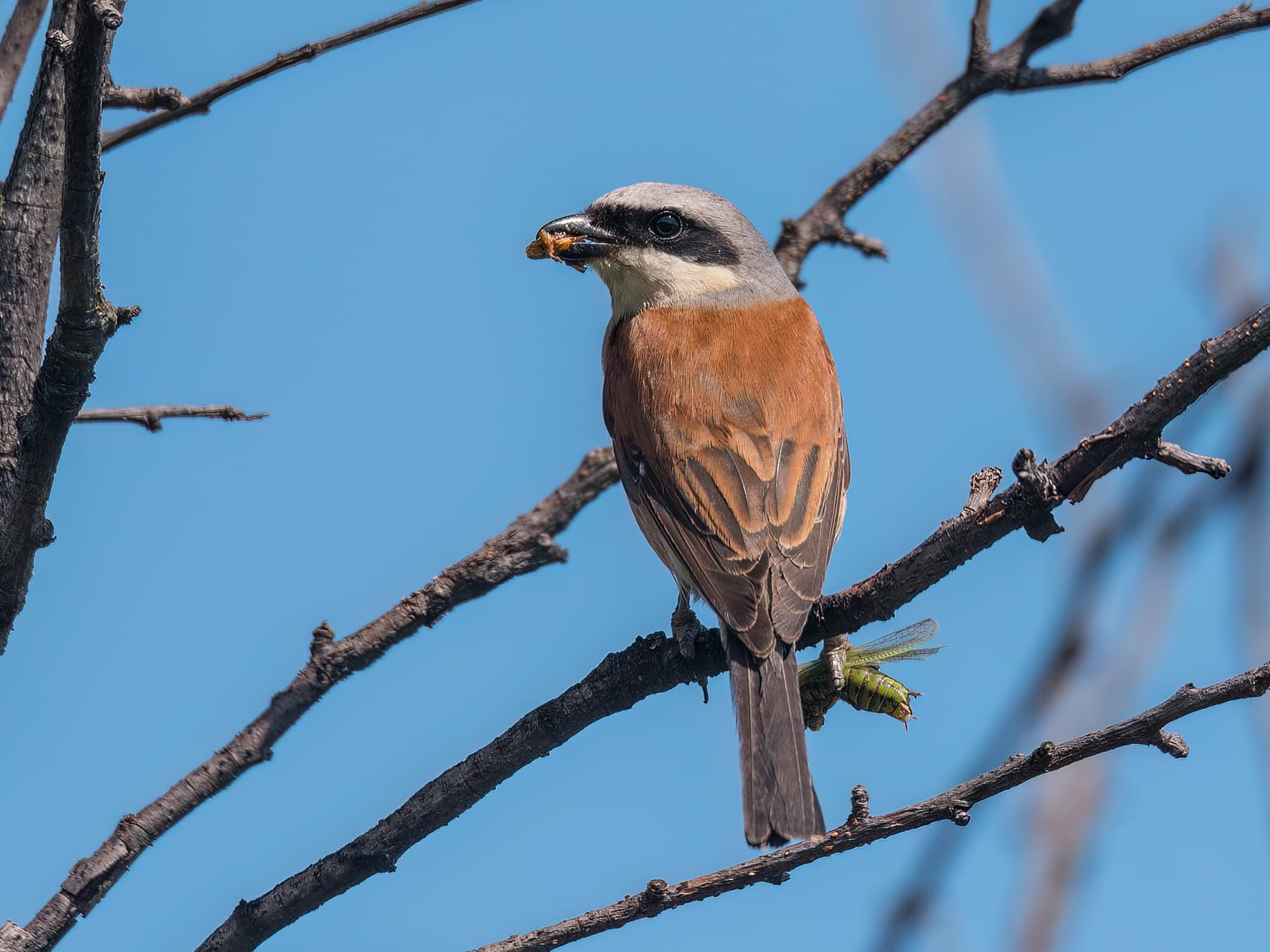
Red-backed shrikes have a rather brutal approach to handling their prey, catching anything from insects to small mammals (particularly voles), birds, and reptiles, and skillfully dismembering it before eating.
They hunt from perches, swooping to catch their prey and killing it by either beating it on the ground and decapitating it. It is then carried to a sharp ‘butchering’ thorn or twig, where it is impaled and cached ahead of being picked apart and eaten.
Some berries and fruit may also be eaten later in the autumn, during migration.
What do Red-backed Shrike chicks eat?
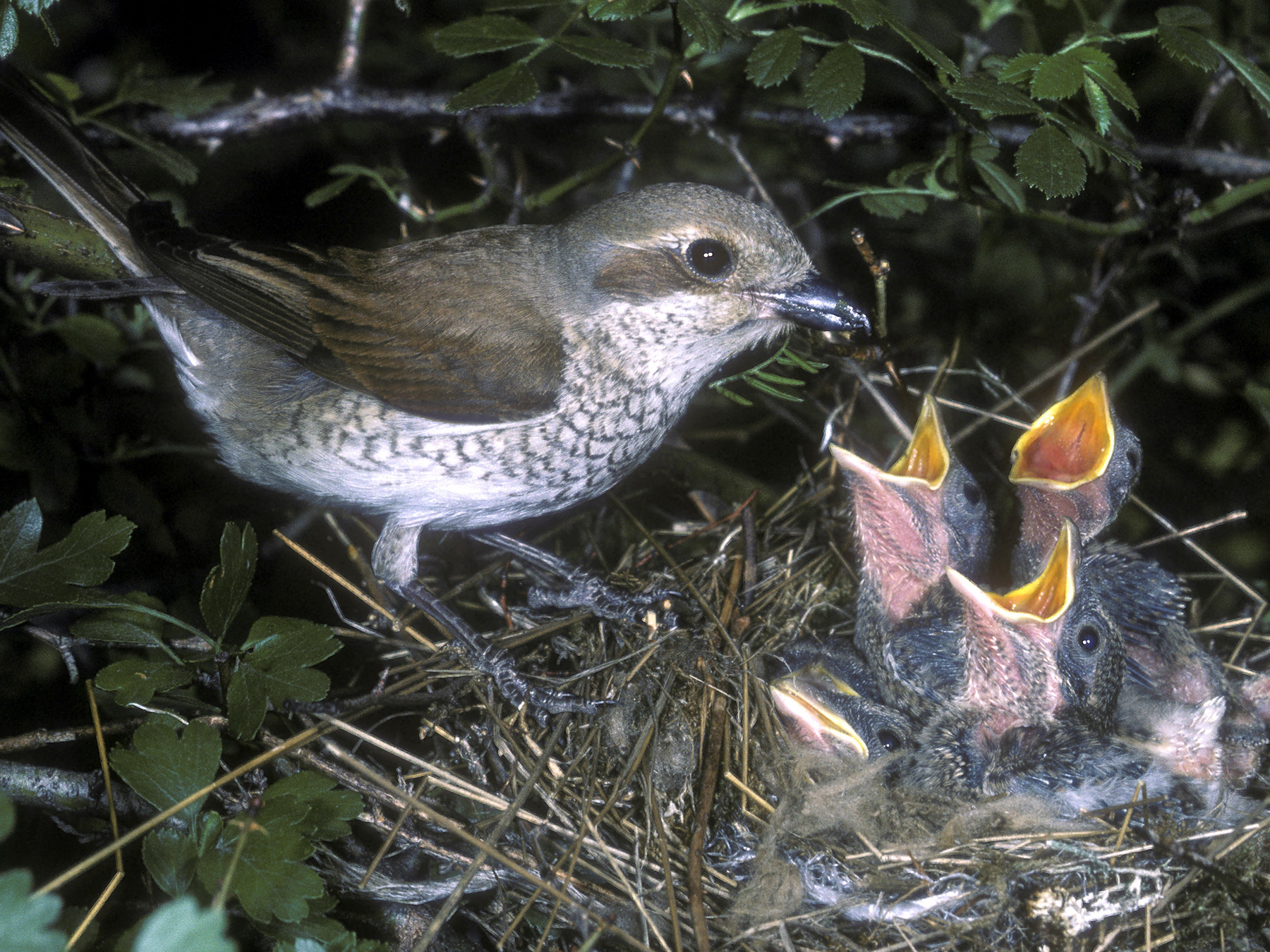
Baby red-backed shrikes are fed small and soft prey by their parents, caught and prepared in their trademark style of impaling and ‘butchering’ into manageable chunks.
Nesting and breeding
Where do Red-backed Shrikes nest?
Typical nesting sites chosen by red-backed shrikes are found low down in dense thorny shrubs and trees, such as hawthorn, bramble and blackthorn.
A loose platform nest is crafted from grasses, stems, roots and lichen, lined with softer grasses, hair, fur and reeds.
When do Red-backed Shrikes nest?
Nesting takes place from mid-May until July, when red-backed shrikes usually lay one clutch of between 4 and 6 eggs. Second clutches are less common, and if they are attempted, typically contain fewer eggs.
What do Red-backed Shrike eggs look like?
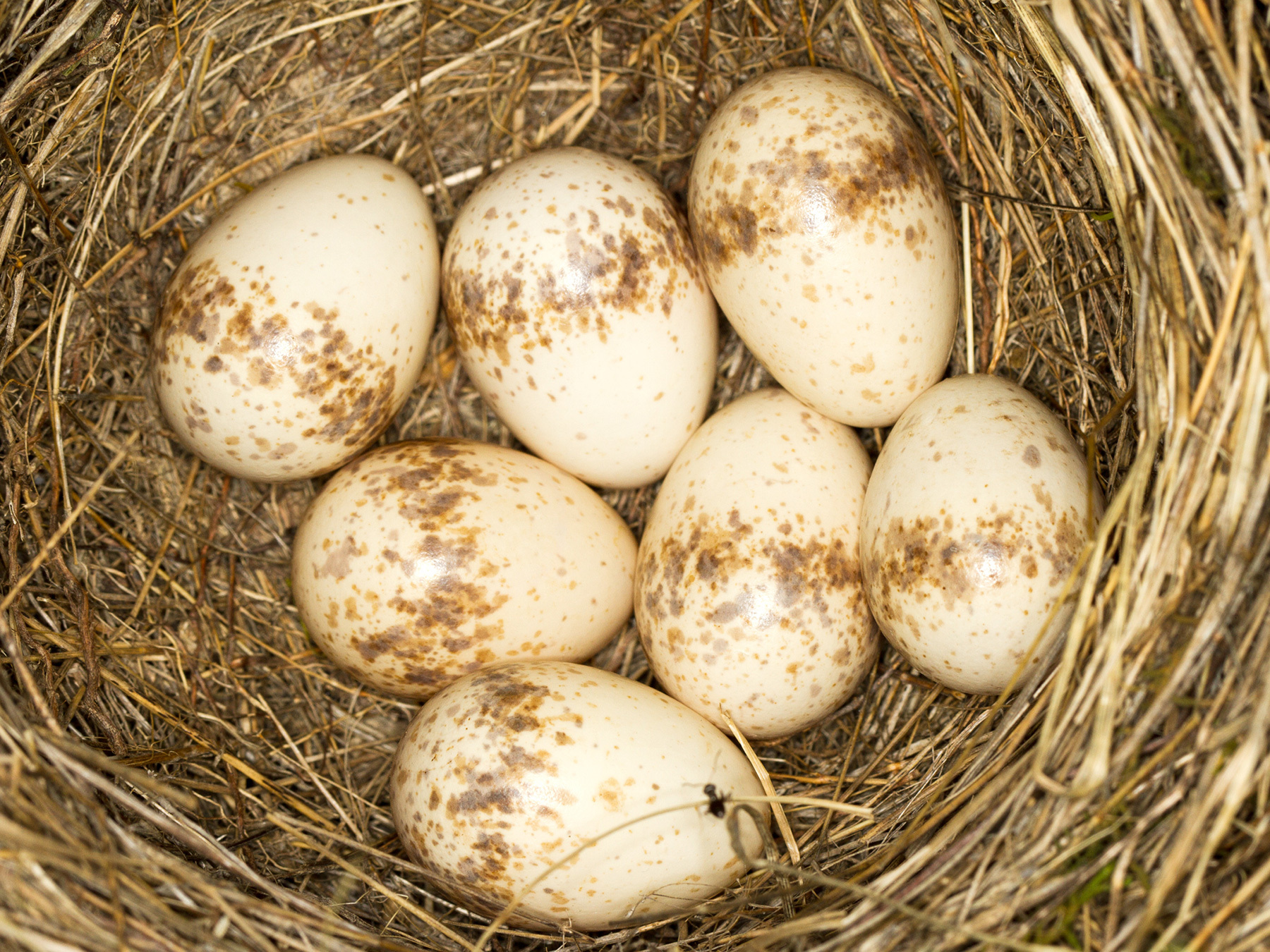
Red-backed shrike eggs vary in colour, from pale pink to light green, marked heavily with olive green, brown or reddish-purple speckles.
Eggs measure 22 mm by 17 mm (0.9 in by 0.7 in), and are incubated mostly by the female with occasional assistance from the male, for 12 to 16 days.
Do Red-backed Shrikes mate for life?
Red-backed shrike pairs form on breeding grounds in late spring, although occasionally may form during spring migration. Pairs remain together for the duration of a single breeding season, raising a maximum of two broods.
Behaviour
Are Red-backed Shrikes aggressive?
Aggressive behaviour is common ahead of the nesting period, with males becoming physically threatening towards other males that approach their territory or their mate.
Aggressive displays may also be shown towards potential nest predators, however this seems to vary between different species, with research showing that red-backed shrikes attacked intruding jays but remained passive when magpies approached.
Lifespan and predators
How long do Red-backed Shrikes live?
Little data is available about how long red-backed shrikes live, but their average life expectancy is thought to be between three and five years. The oldest ringed individual lived to 10.1 years. Breeding occurs for the first time at one year of age.
What are the predators of Red-backed Shrikes?
Common nest predators of red-backed shrikes include jays and magpies, while birds of prey such as kestrels and sparrowhawks target adult birds as well as nestlings.
Are Red-backed Shrikes protected?
Red-backed shrikes are listed as Schedule 1 birds under the Wildlife and Countryside Act, 1981, which offers additional protection to their eggs, young and nests from being disturbed or destroyed, as well as safeguarding the birds themselves against being killed, injured or taken into captivity.
Are Red-backed Shrikes endangered?
Due to the species’ numbers falling to a dangerous level in the UK, red-backed shrikes are classified with Red status on the British Birds of Conservation Concern list, and are close to extinction levels.
Numbers of breeding red-backed shrikes in Britain fell dramatically, by 88.3 percent between 1968 and 2011. Habitat loss due to changes in agricultural practice and increased use of pesticides which impacts the availability of suitable prey, are thought to be a major factor in this steep decline.
Conservation
While globally listed as Least Concern, Red-backed Shrikes have experienced significant declines in parts of their range, particularly in Western Europe.
In the UK, they are now rare breeding birds. Habitat loss and agricultural intensification are primary threats, prompting conservation efforts to restore suitable breeding habitats.
More photos
7 photos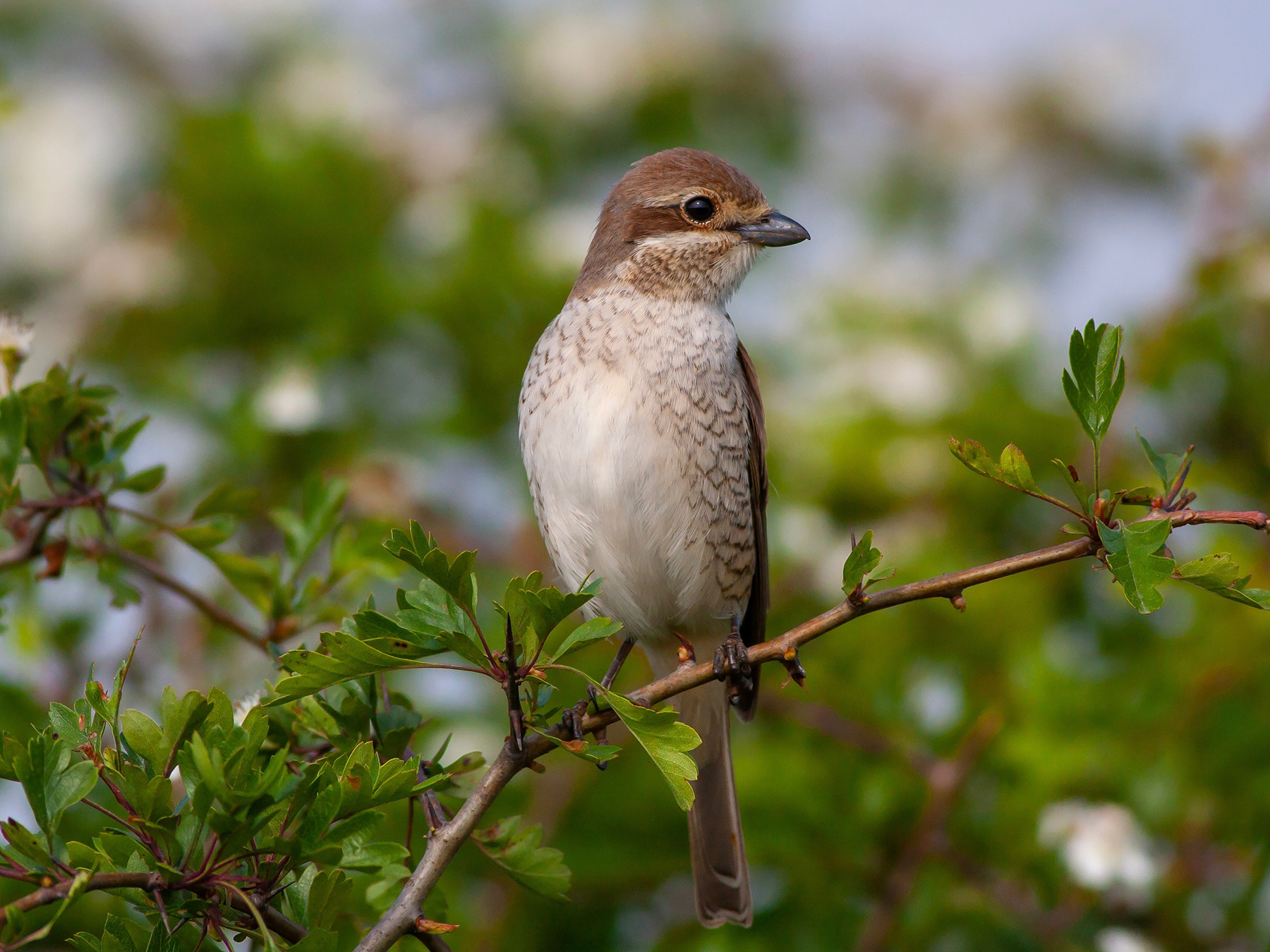
Quick facts
- Length
- 16–18 cm
- Wingspan
- 24–27 cm
- Weight
- 25–36 g
- Lifespan
- 3–5 years · oldest recorded 10 years
- Family
- Shrikes
- Migration
- Long-distance Migrant
- Global status (IUCN)
- Least Concern
- World population
- 24,800,000 - 47,700,000 mature individuals
- Population trend
- Decreasing
- Also called
- Butcher bird
- Scientific name
- Lanius collurio
Questions
1Is a Red-backed Shrike a bird of prey?
Red-backed shrikes are not birds of prey, in the same sense as kestrels, hawks or eagles but they are active predators who hunt and kill prey to eat, including small mammals, reptiles and other birds. They belong to a family of passerine birds called shrikes.
Sources
4- 1BirdLife International. 2017. Lanius collurio (amended version of 2016 assessment). The IUCN Red List of Threatened Species 2017: e.T22705001A110988087. Source (opens in a new tab)
- 2BirdLife International. 2017. Lanius collurio (amended version of 2016 assessment). The IUCN Red List of Threatened Species 2017: e.T22705001A110988087. Source (opens in a new tab)
- 3EBCC (2015)
- 4Fransson et al., EURING list of longevity records for European birds (2010) Source (opens in a new tab)

Checked by
Nathan Cope, founder and editor
Nathan founded Birdfact and leads its writers and contributors in the UK, the US and Canada. He has watched and studied birds for more than ten years, and checks every article and species guide before it’s published.