
Western Capercaillie
Wood Grouse, Capercaillie · Tetrao urogallus
By the Birdfact teamChecked by Nathan Cope
On this page14 sections
How to recognise it
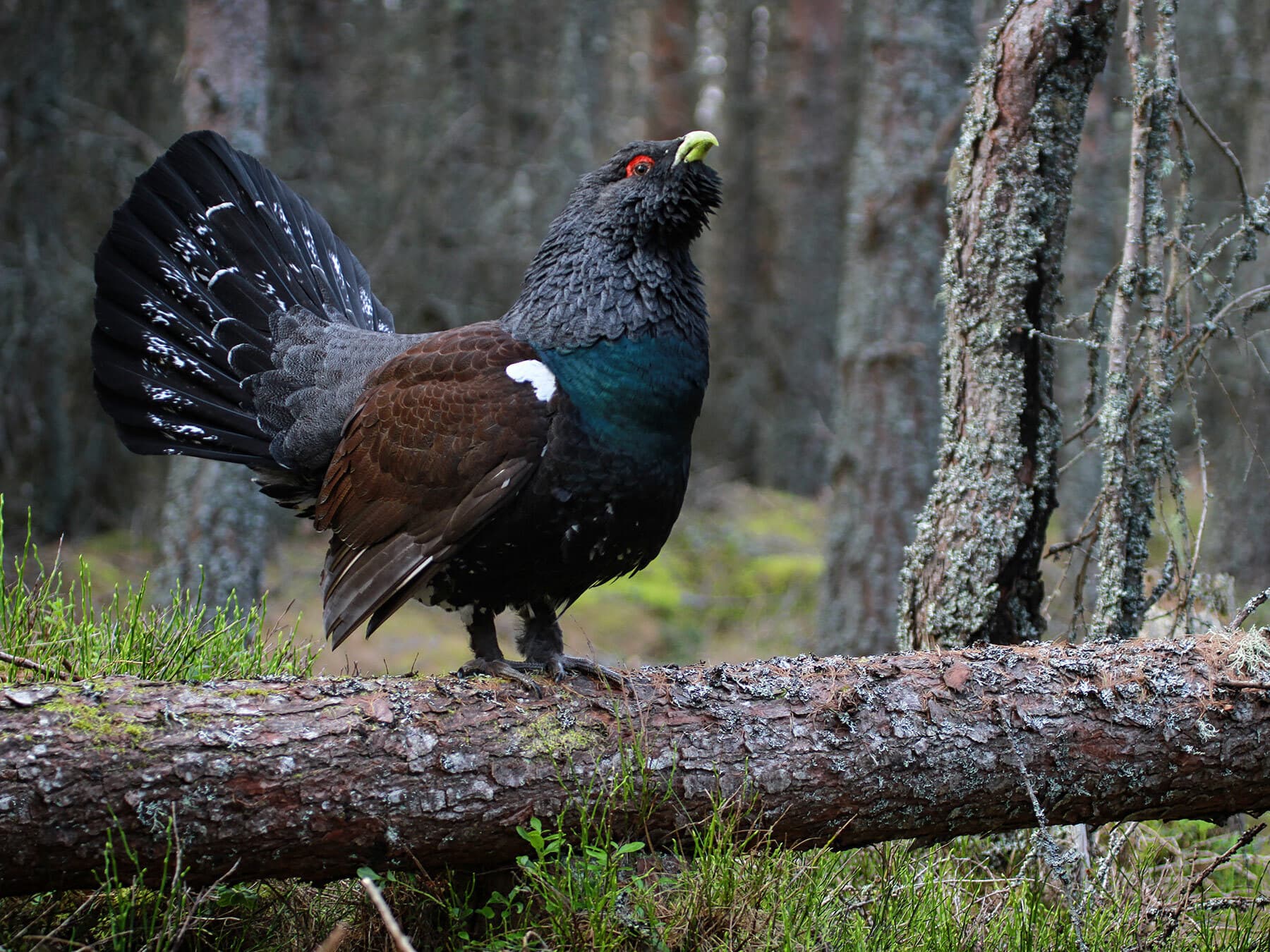
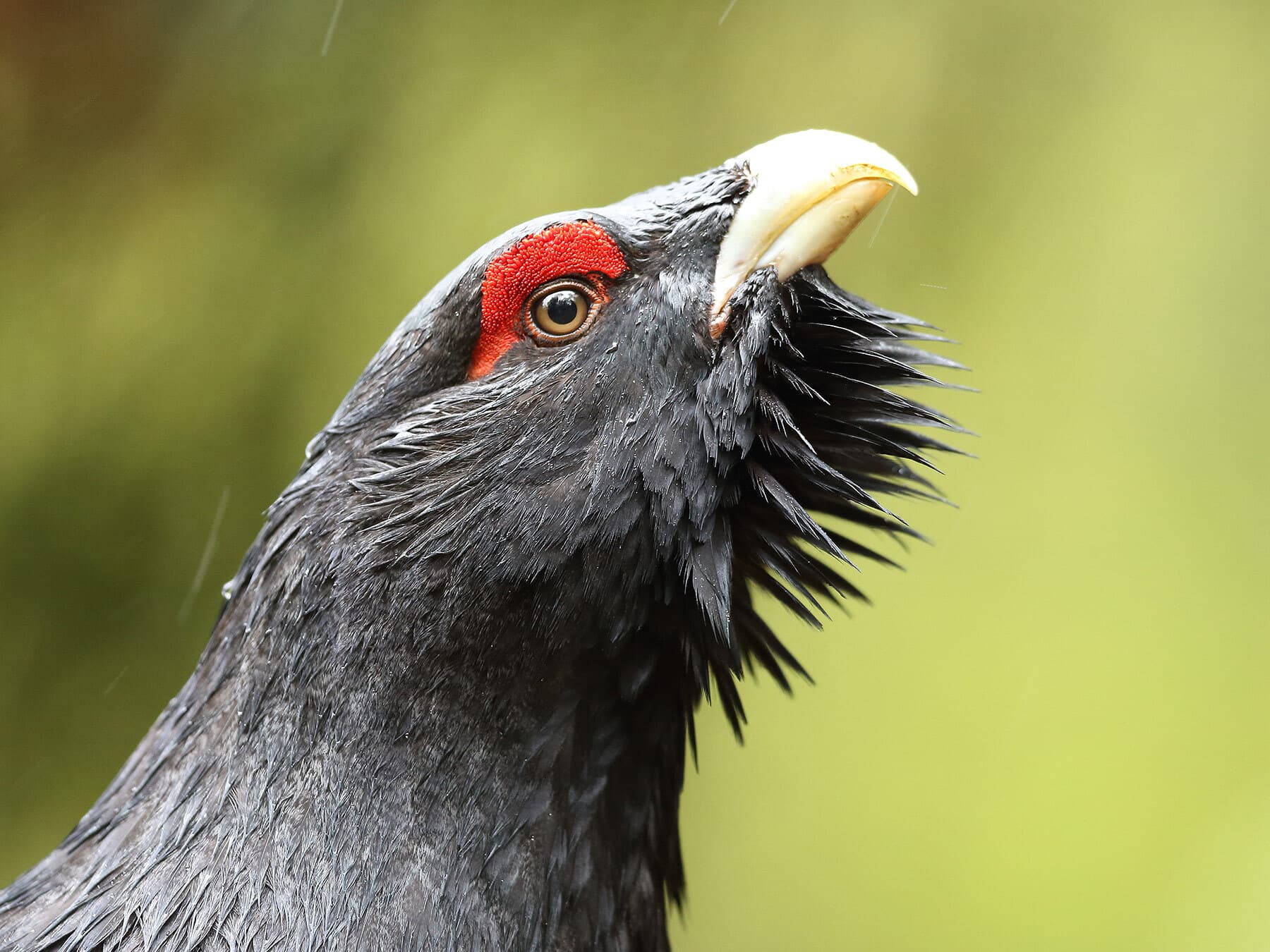
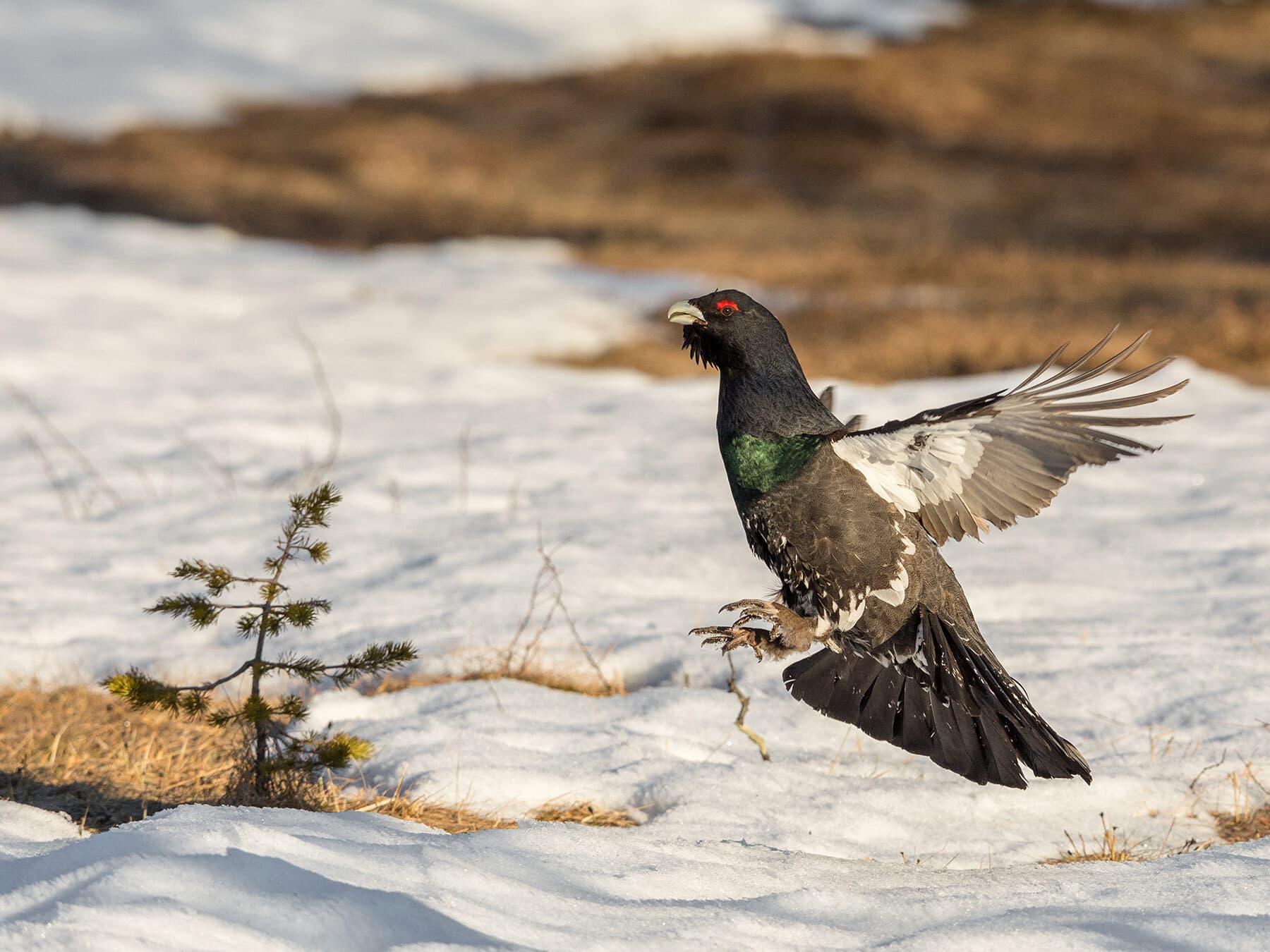
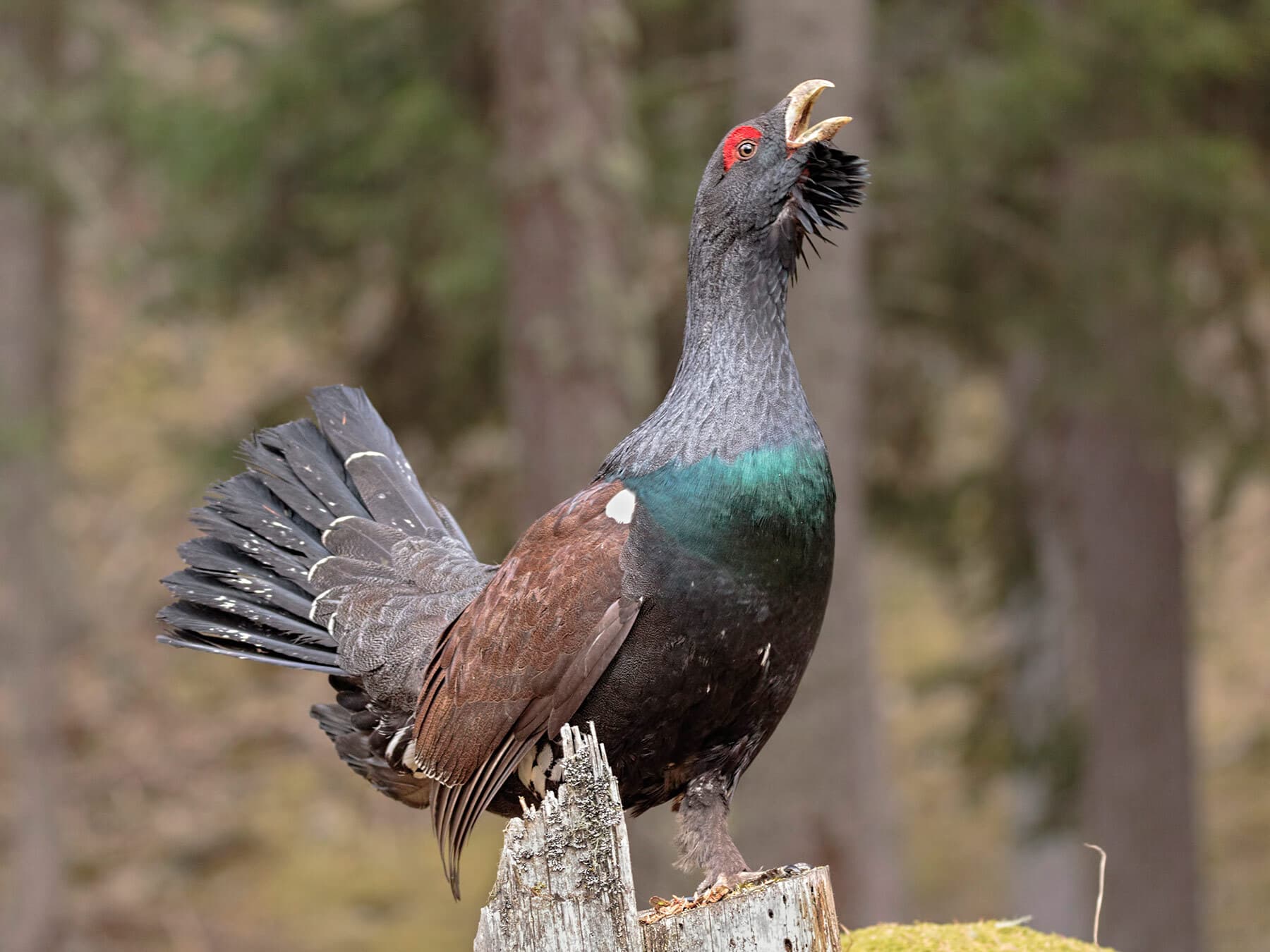
The Western Capercaillie is a large, ground-dwelling grouse with striking sexual dimorphism. Males are predominantly black with a glossy blue-green sheen on the chest, a distinctive red eyebrow, and a large, fan-shaped tail. On the chin and throat area, spiky black feathers give the appearance of a beard.
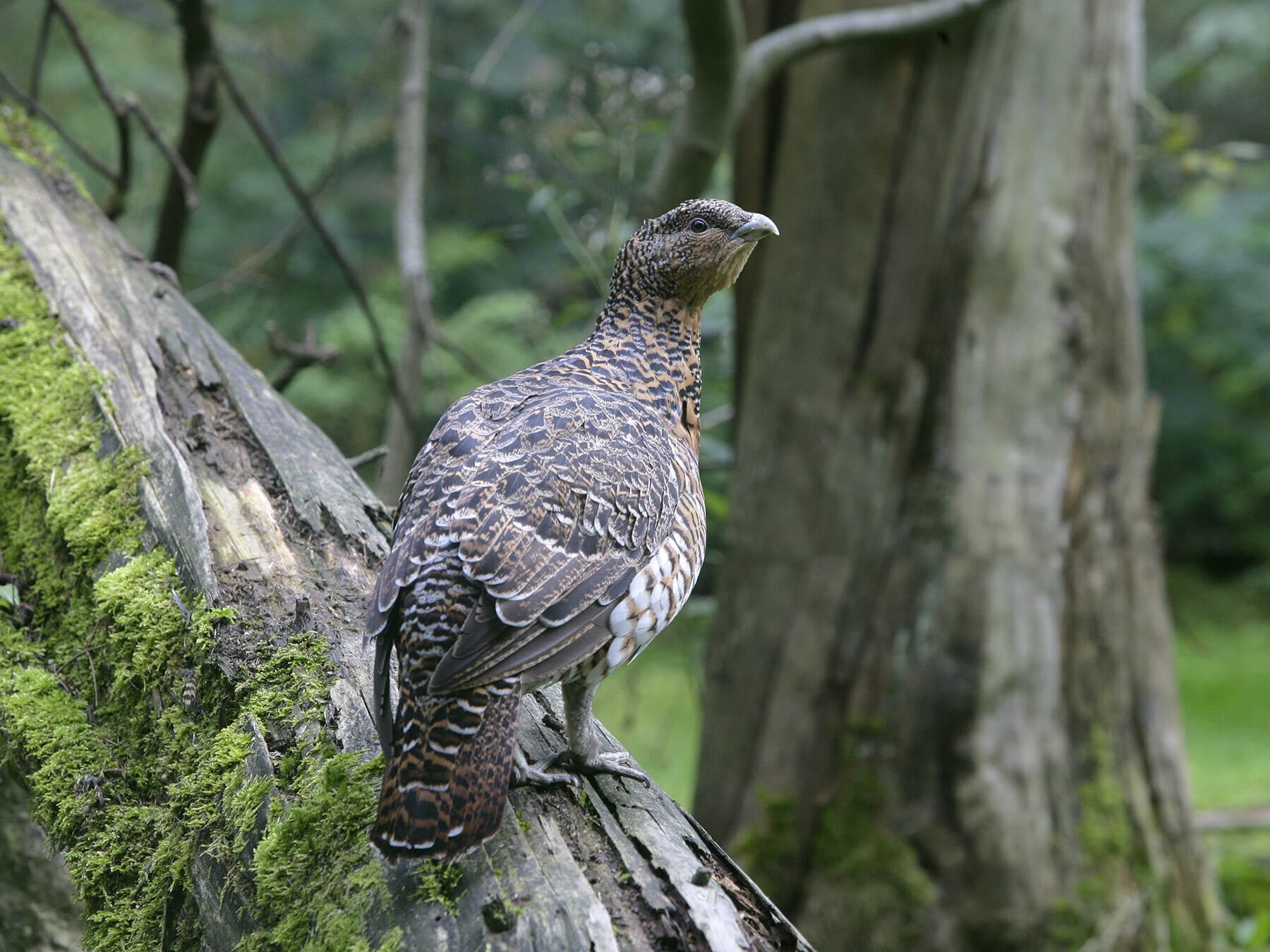
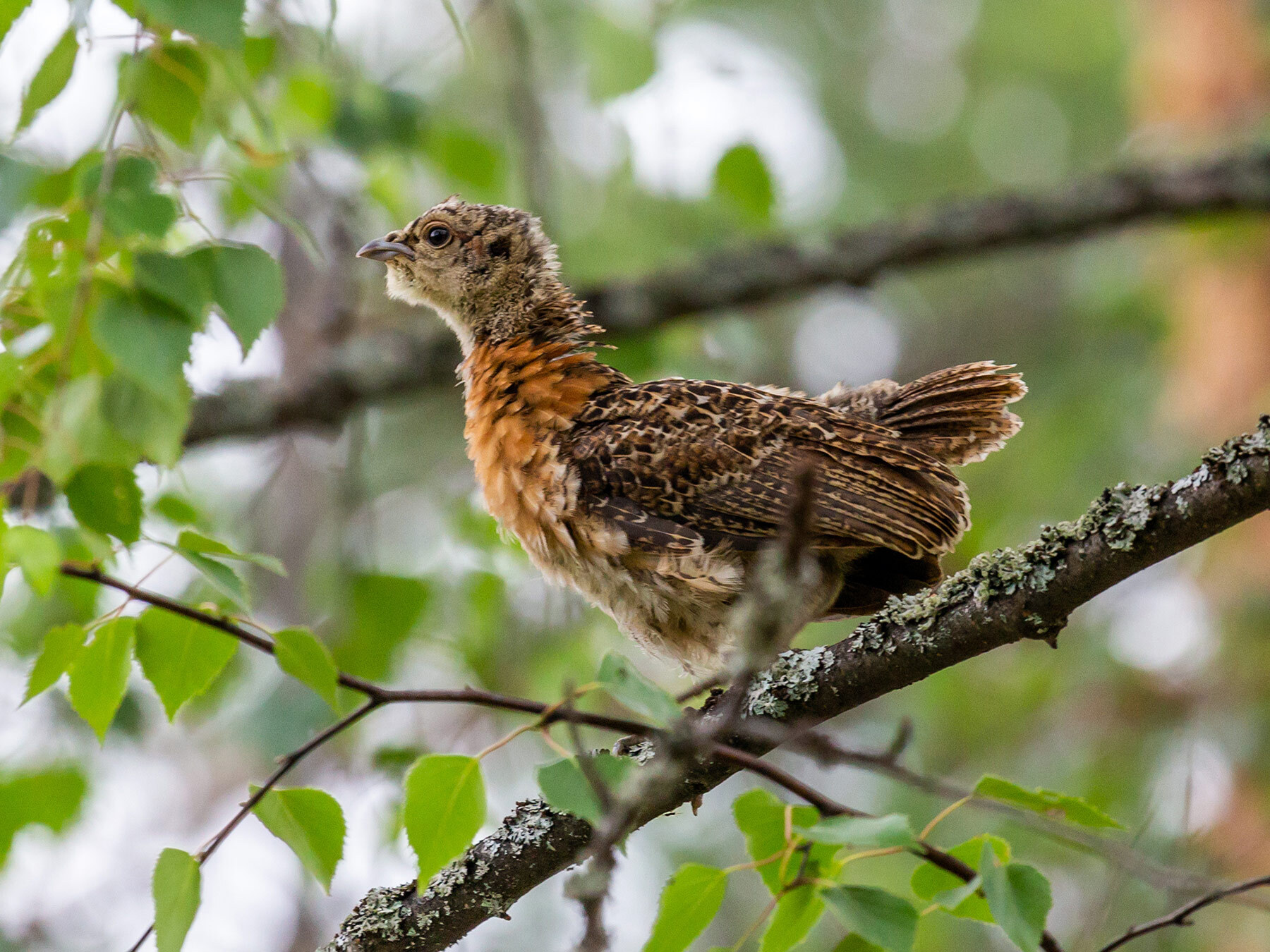
Females are significantly smaller and sport mottled brown plumage with barring, providing excellent camouflage. Both sexes have feathered legs and feet, an adaptation to their cold habitat, and short, thick, hooked bills.
Its size
Adults- Length
- 60–87 cm
- Wingspan
- 87–125 cm
- Weight
- 1500–6500 g
Its song and calls
During the breeding season, particularly whilst males are lekking (engaged in displays with which to attract females) the male makes a loud croaking and clicking sound, frequently repeated and finished with a pop reminiscent of a champagne cork leaving a bottle! At other times the males can be heard to crow in a pheasant like fashion similar to ‘coorcok – coorcok’.
- Call0:00 / 1:05
Recorded in Scotland
Lawrence Shove / The British Library Board · Wikimedia Commons · CC BY-SA 4.0
When and where to see it
How often the Western Capercaillie turns up in the UK through the year, from birdwatchers' records.
Recorded in United Kingdom, but eBird withholds many records of this sensitive species to protect it, so no months are shown.
Worldwide: recorded regularly in 17 countries
Countries where it was recorded in at least 3 of the 6 years 2019–2024. Linked countries have their own bird list.
Data: EOD – eBird Observation Dataset (Cornell Lab of Ornithology), accessed via GBIF.org, CC BY 4.0. Records from 2019–2024, aggregated and filtered by Birdfact. How these lists are made
This is basically a sedentary and resident bird with small numbers overwintering in the south of their regions. There are eight subspecies of the western capercaillie with marginal differences between each, mainly confined to size and subtle changes in plumage. The bird is found from Scandinavia and Finland in the west of Europe, south to Scotland and Spain then eastwards through France, Germany, Austria, Poland, Belarus, Ukraine, Kazakhstan and western and central Russia.
Signs and Spotting tips
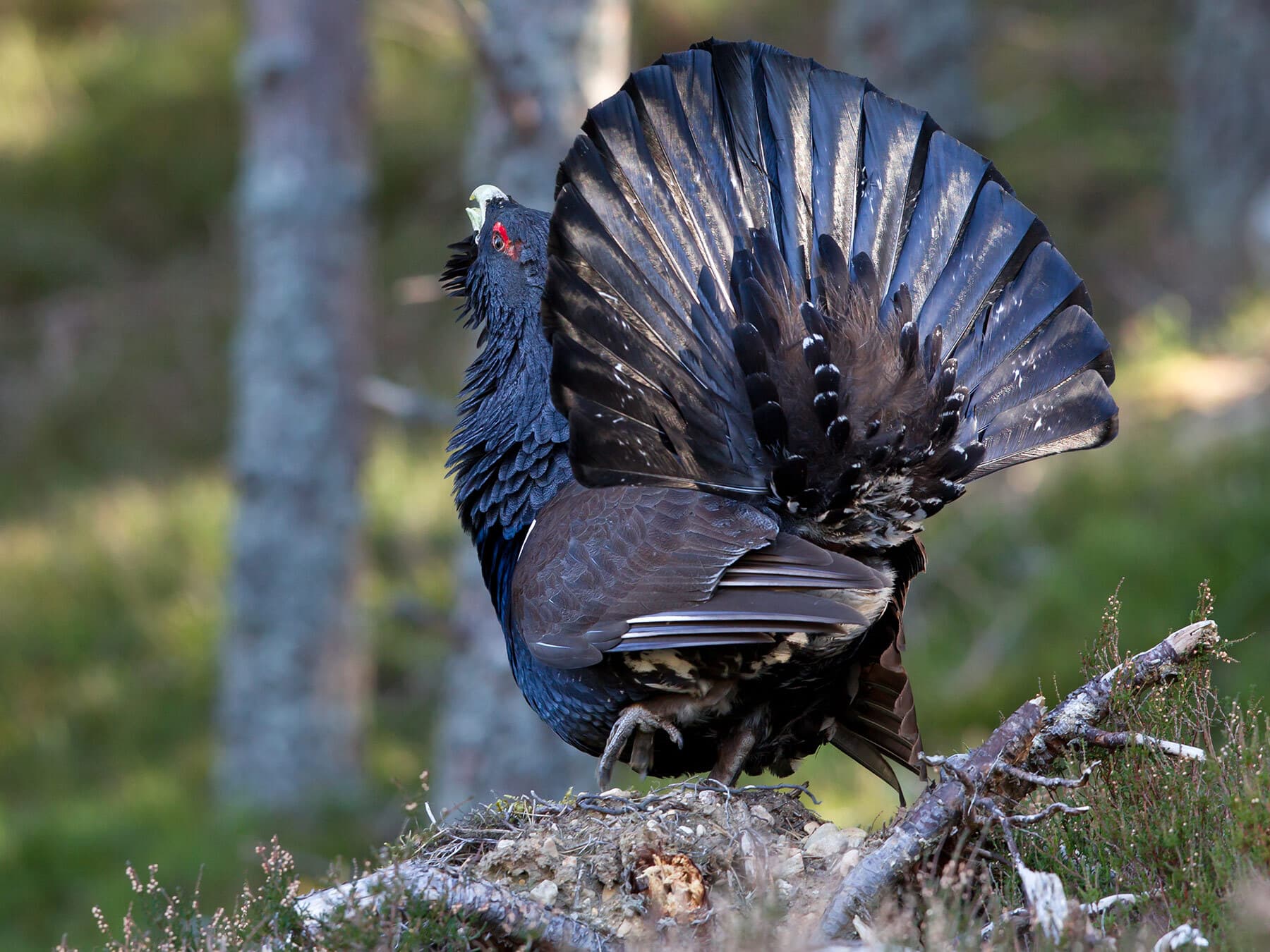
Generally resident in old pine forests or plantations, the capercaillie feeds from the treetops during the winter, foraging on the ground for the rest of the year commonly in open areas of marshland. During the Spring season males will display in front of gathering females in a ‘lek’ where they strut about calling and fanning their large tails. Although smaller but similar in appearance to the black-billed capercaillie they generally only share areas of occupation within eastern and central Siberia. In any event, the western capercaillie is easy to identify due to its size, plumage and call, each one of which is sufficient on its own.
What it eats
Western capercaillies feed on pines needles and berries, particularly juniper, bilberry and blackberry. They also take herbs, grasses, leaves and shoots and occasionally insects.
Nesting and breeding
Females choose a partner following a successful display or lek by a male. Leks are held in woodland glades or clearings where generally a small number of around six to a dozen male birds will perform and display from dawn onwards in order to attract a mate. Gatherings of over seventy cock birds, all displaying, are not unknown. Males may choose more than one mate and nests are usually hollows in the ground in dense cover constructed by the female. Between April to June, one clutch averaging 5 – 9 pale yellow eggs with rufous spots, is produced annually with one egg being laid every other day. Incubation commences prior to all eggs being laid and is undertaken by the female alone. The incubation period for each egg is up to twenty nine days. The young fledge at three weeks.
Behaviour
Western Capercaillies are known for their elaborate courtship displays. Males perform a complex ritual on traditional leks, fanning their tails and making distinctive clicking and popping sounds.
They are generally solitary outside the breeding season, foraging on the ground and roosting in trees at night.
Lifespan and predators
The average lifespan for a western capercaillie is up to ten years whilst those held in captivity may survive for substantially longer.
Conservation
While globally listed as Least Concern, Western Capercaillies face regional declines due to habitat loss and fragmentation.
In the UK, they are critically endangered, with conservation efforts focused on habitat management and predator control in Scotland.
What does a Western Capercaillie look like?
The adult male is a large, predominantly black and dark grey coloured member of the grouse family. The head and neck are black vermiculated with a mid grey colour and the back and rump is a dark grey. Upperwings are brown and the tail is black with white speckles. The upper breast is a dark green gloss over black and there is a conspicuous bold white spot on the shoulder. A prominent bright red wattle surrounds the sides and top of each eye. On the chin and throat area there are spiky black feathers giving the appearance of a beard. The lower chest, belly area and vent are mainly white, dependent on sub-species, with black splashes and the underwings are white. Legs are feathered and mid brown in colour. The bill is white, short and thick, with the upper mandible hooked over the lower. Adult females are much smaller than males with a broad ginger orange chest and upper body, the latter being barred with dark brown markings. There are white patches on the flanks and belly accompanied by brown and black bars. The tail is orange crossed with dark bars. There is a thin red ‘eyebrow’ above each eye.
Similar birds
Often mistaken for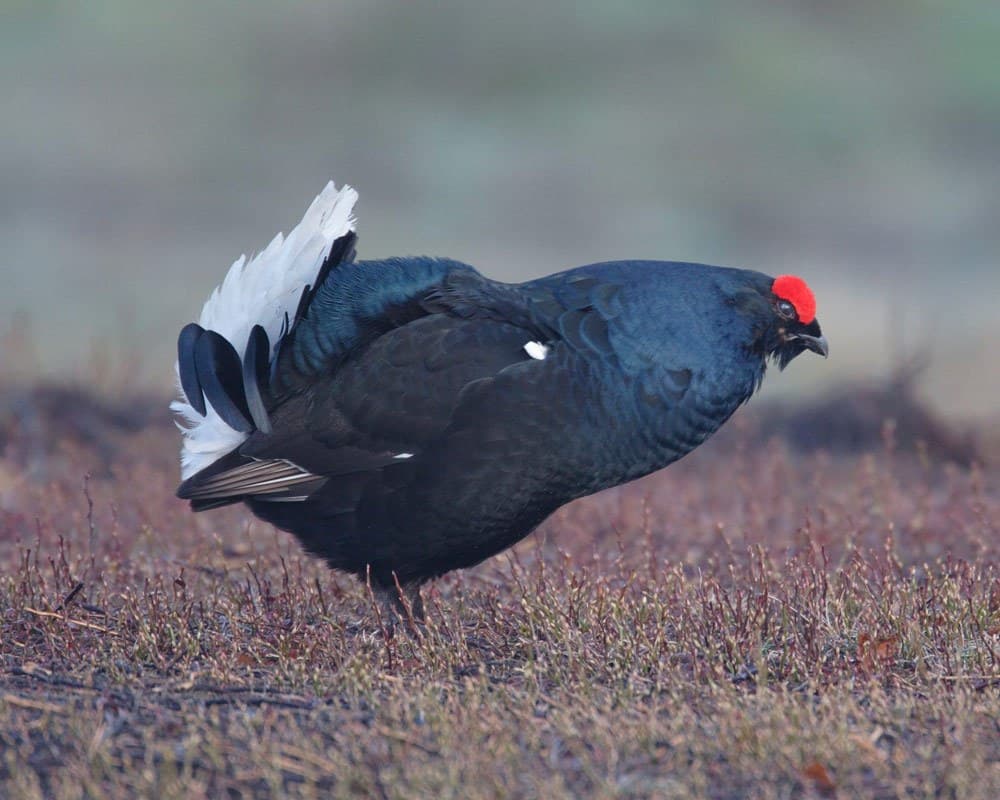
More photos
2 photos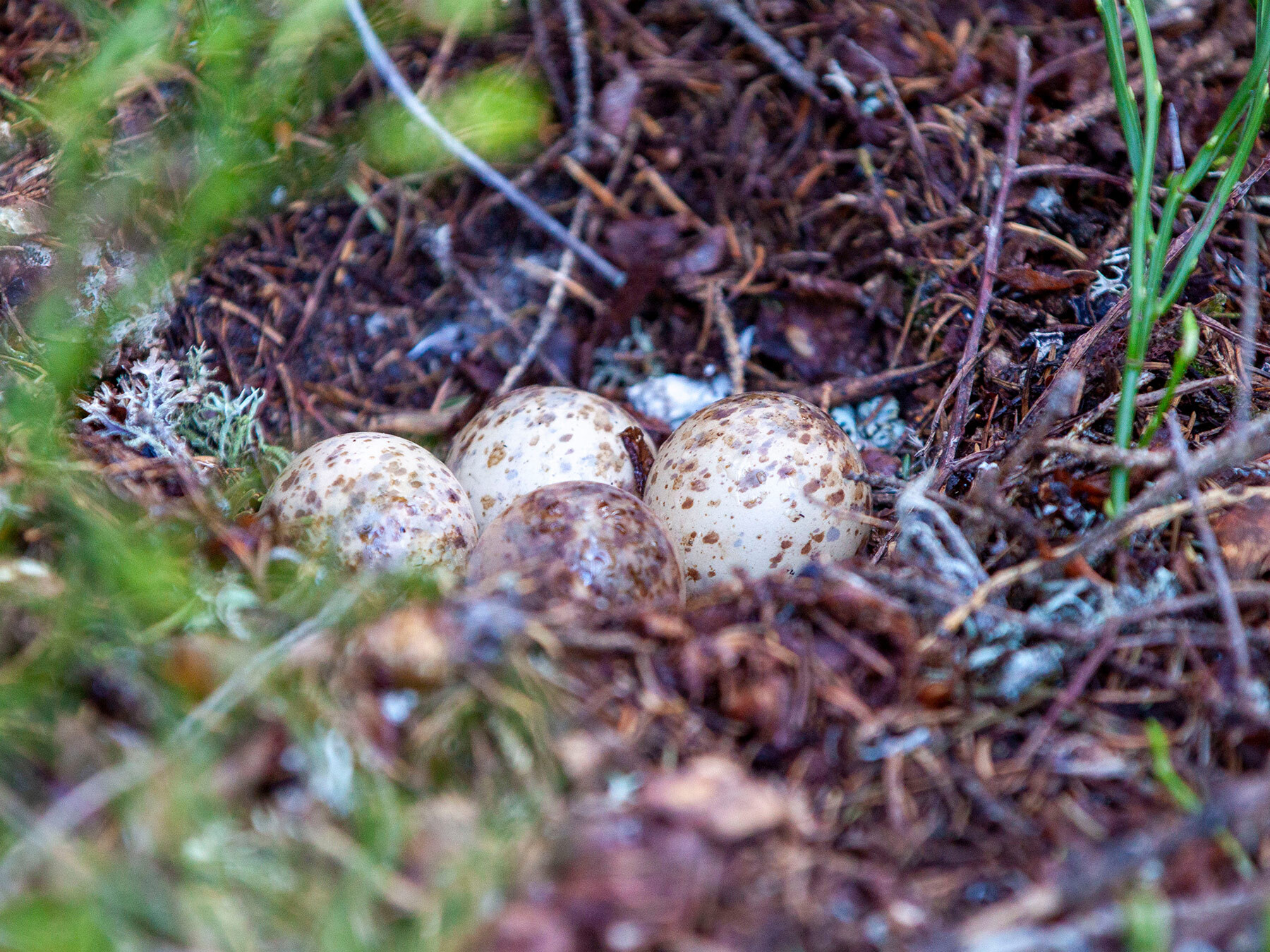
Quick facts
- Length
- 60–87 cm
- Wingspan
- 87–125 cm
- Weight
- 1500–6500 g
- Lifespan
- 6 years · oldest recorded 18 years
- Family
- Pheasants & Grouse
- Migration
- Resident
- Global status (IUCN)
- Least Concern
- World population
- 3,325,000 - 5,275,000 mature individuals
- Population trend
- Decreasing
- Also called
- Wood Grouse, Capercaillie
- Scientific name
- Tetrao urogallus
Sources
4- 1BirdLife International. 2016. Tetrao urogallus. The IUCN Red List of Threatened Species 2016: e.T22679487A85942729. Source (opens in a new tab)
- 2Madge and McGowan (2002)
- 3BirdLife International. 2016. Tetrao urogallus. The IUCN Red List of Threatened Species 2016: e.T22679487A85942729. Source (opens in a new tab)
- 4Carey and Judge, Longevity Records: Life Spans of Mammals, Birds, Amphibians, Reptiles, and Fish (2000) Source (opens in a new tab)

Checked by
Nathan Cope, founder and editor
Nathan founded Birdfact and leads its writers and contributors in the UK, the US and Canada. He has watched and studied birds for more than ten years, and checks every article and species guide before it’s published.