


Black Grouse
Blackcock, Blackgame, Eurasian Black Grouse, Northern Black Grouse · Lyrurus tetrix
By the Birdfact teamChecked by Nathan Cope
On this page13 sections
How to recognise it
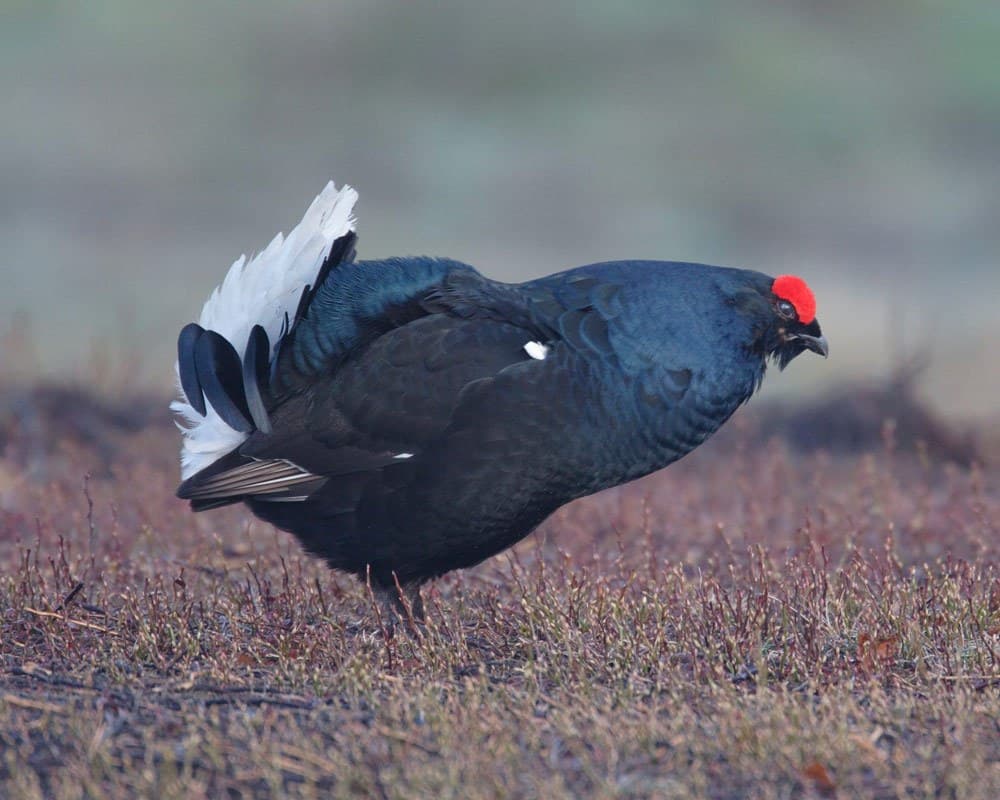
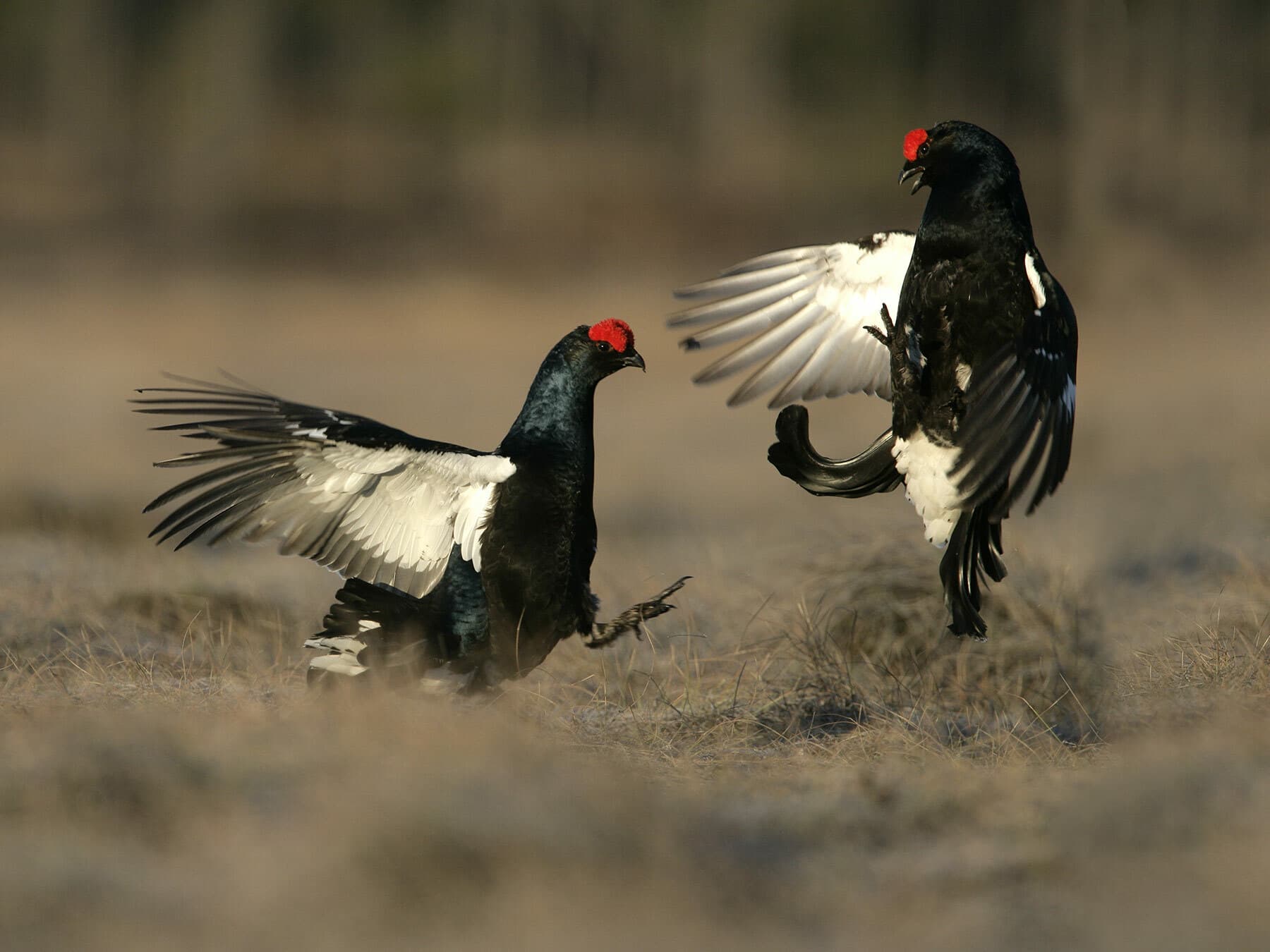
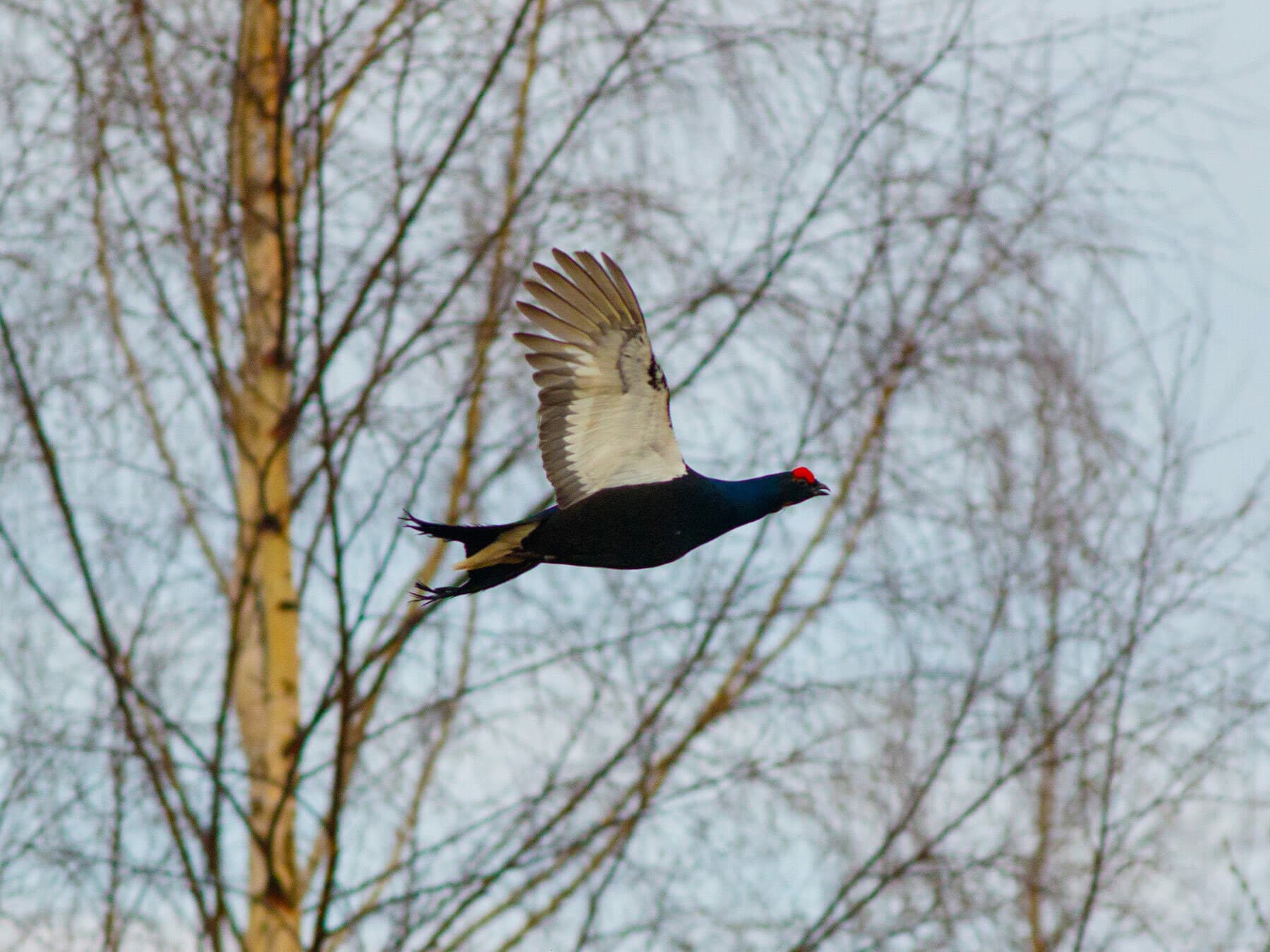
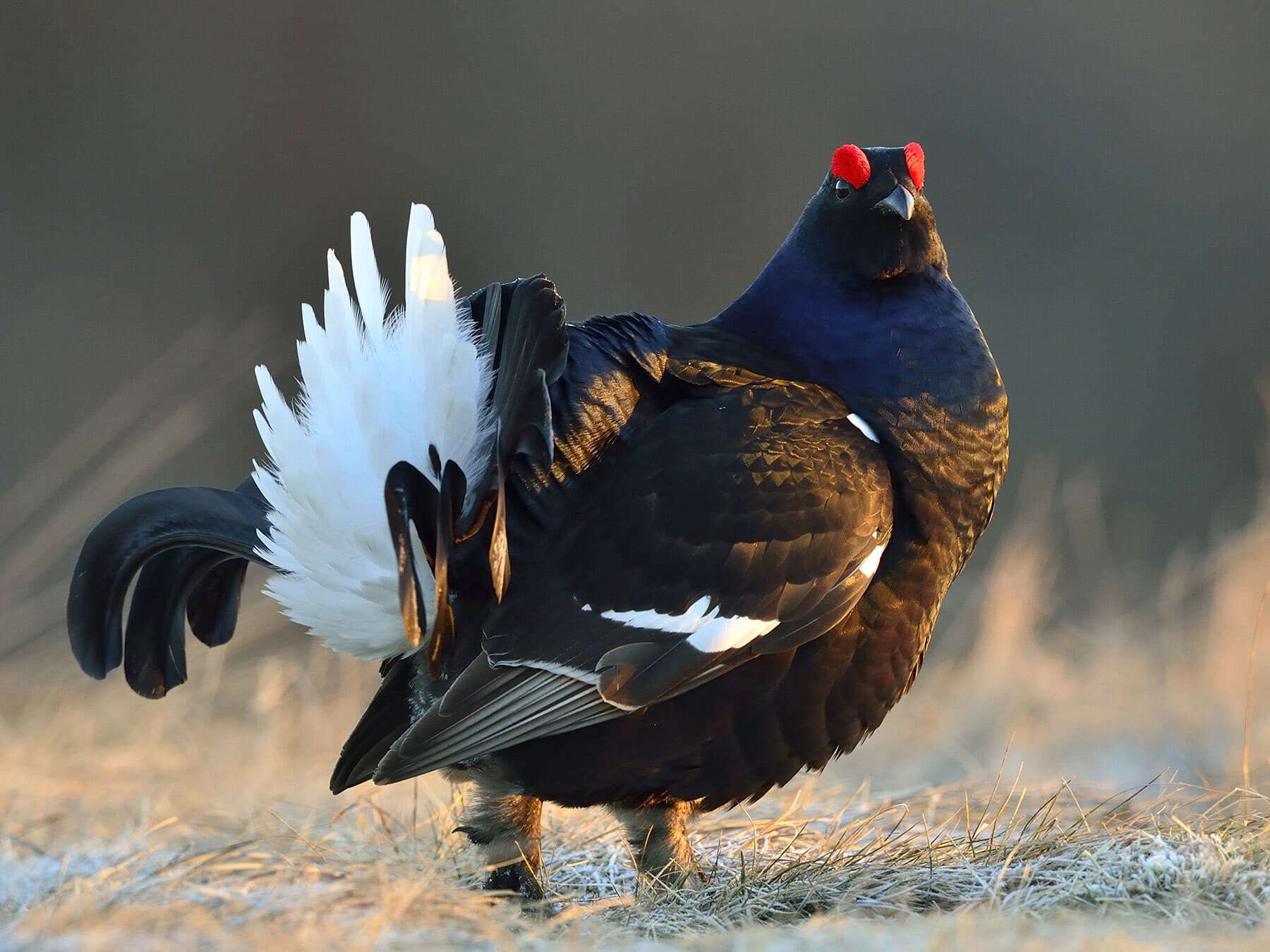
The Black Grouse exhibits striking sexual dimorphism. Males, known as blackcocks, boast glossy blue-black plumage with white wing bars and undertail coverts. Their most distinctive feature is the lyre-shaped tail, which fans out during displays.
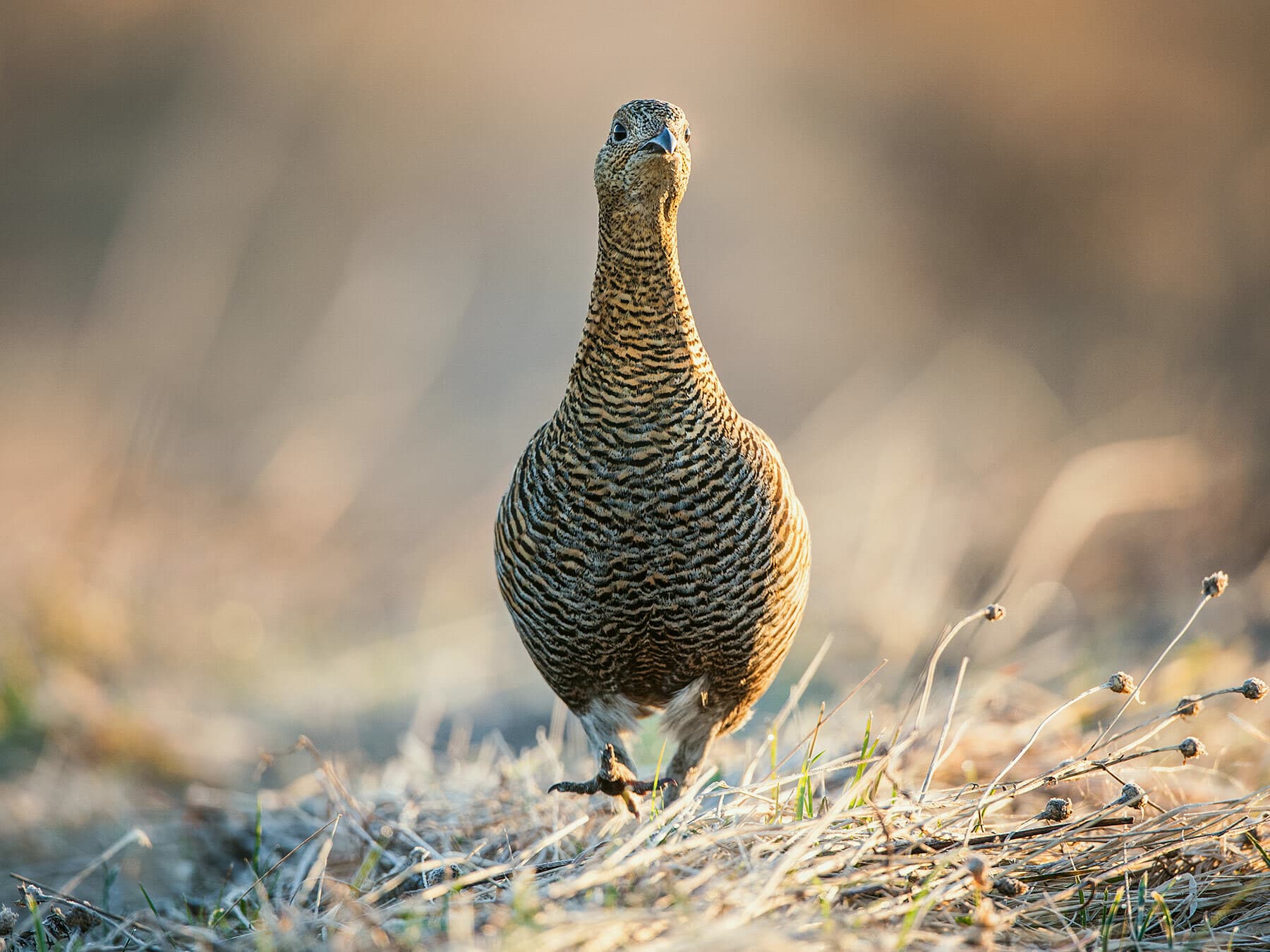
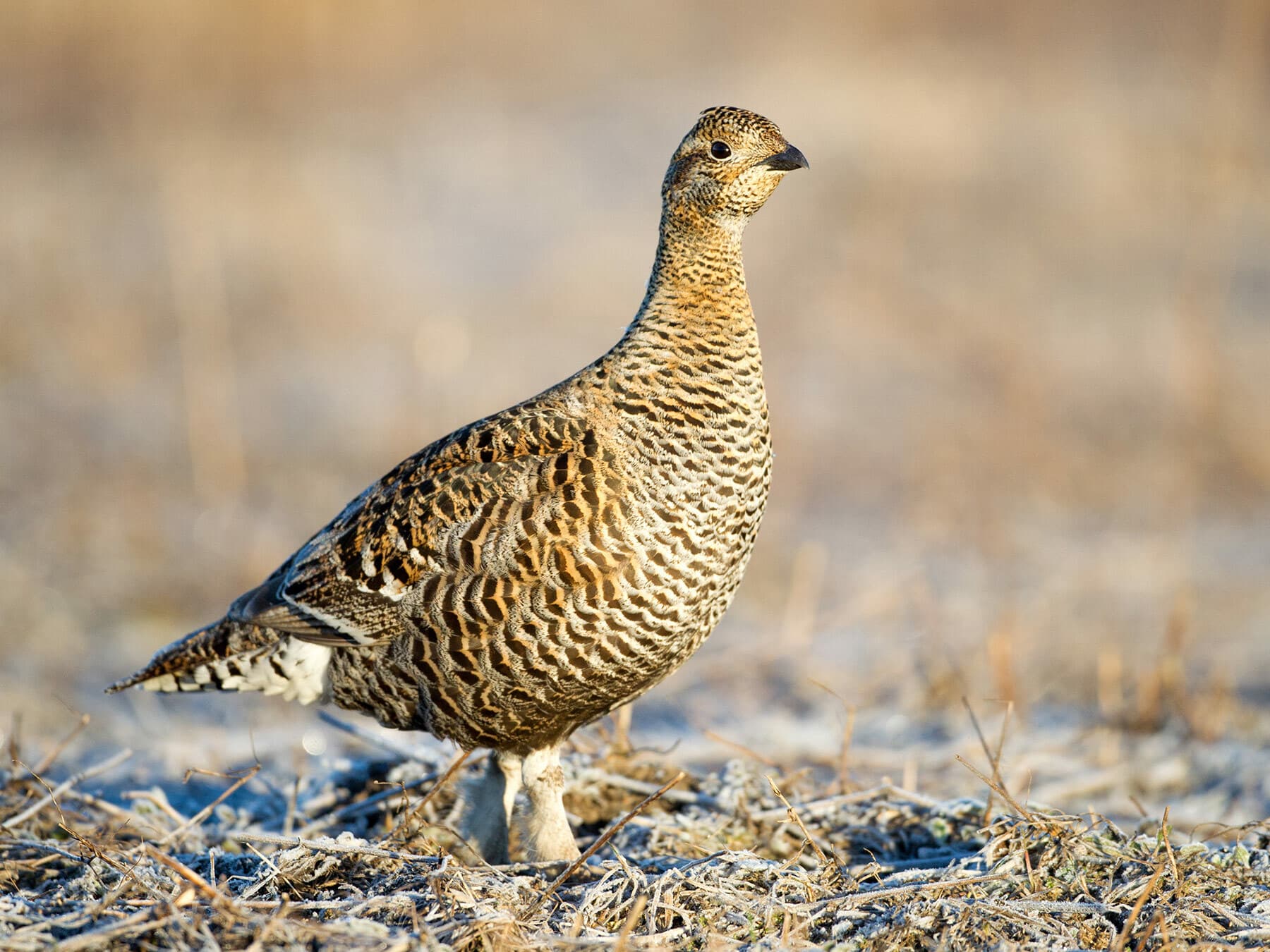
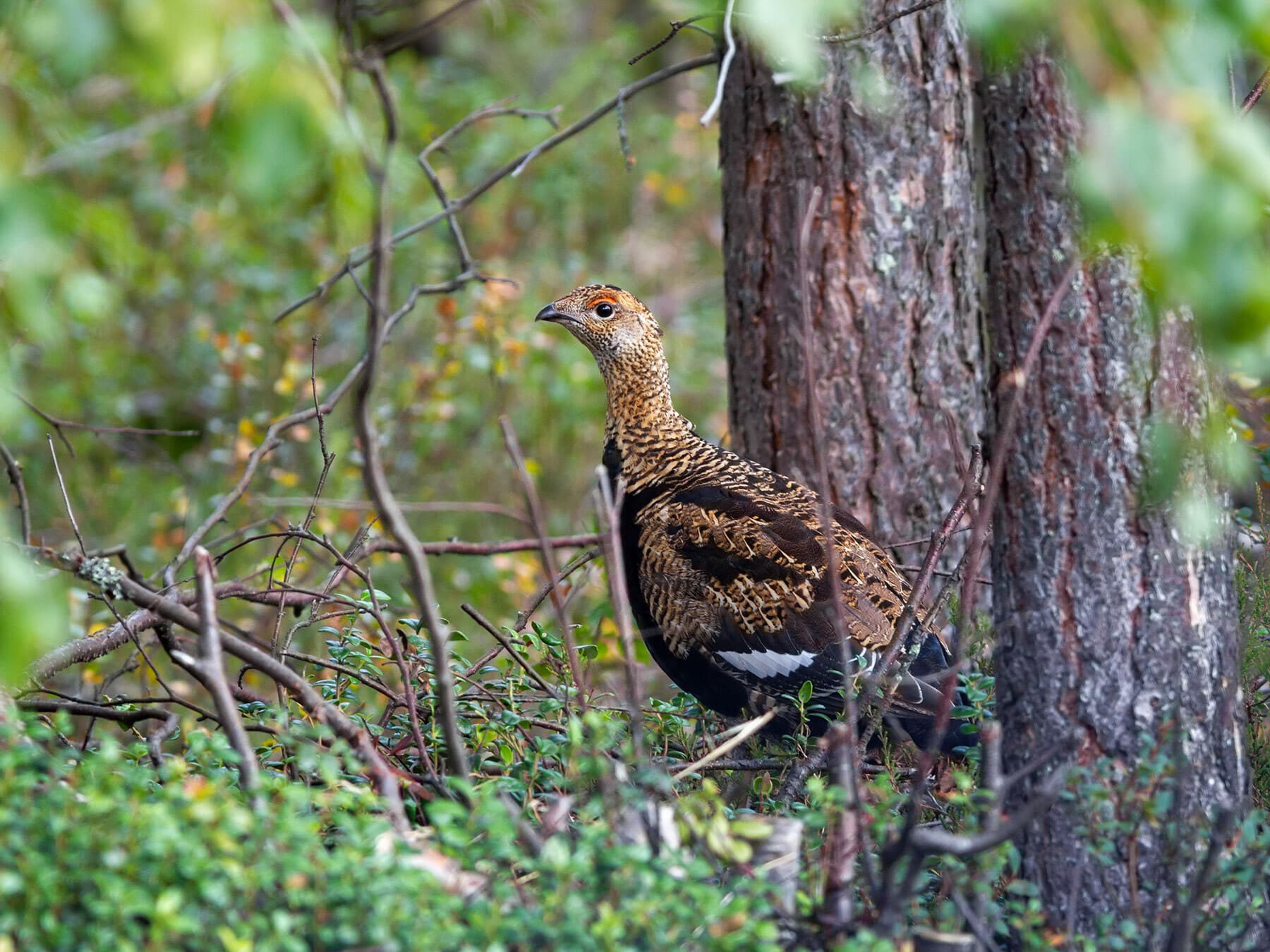
Females, called greyhens, are mottled brown with black barring, providing excellent camouflage. Both sexes have a red wattle above the eye, more prominent in males, especially during the breeding season.
Its size
Adults- Length
- 40–55 cm
- Wingspan
- 65–80 cm
- Weight
- 750–1400 g
Its song and calls
During courtship rituals the male issues a rhythmic cooing noise which is repeated frequently and can be heard at a distance of over two miles. The female is mainly confined to a clucking sound similar to ‘kwuk – kwuk – kwuk’ or a gruff barking noise.
- Call0:00 / 1:18
Recorded in the moorland at Banchory, Scotland
Lawrence Shove / The British Library Board · Wikimedia Commons · CC BY-SA 4.0
When and where to see it
How often the Black Grouse turns up in the UK through the year, from birdwatchers' records.
Recorded in United Kingdom, but eBird withholds many records of this sensitive species to protect it, so no months are shown.
Worldwide: recorded regularly in 21 countries
Countries where it was recorded in at least 3 of the 6 years 2019–2024. Linked countries have their own bird list.
Europe (18)
Asia (3)
Data: EOD – eBird Observation Dataset (Cornell Lab of Ornithology), accessed via GBIF.org, CC BY 4.0. Records from 2019–2024, aggregated and filtered by Birdfact. How these lists are made
Black grouse are mainly sedentary and are found across Northern Eurasia from Norway south to the United Kingdom and central Europe, eastwards into Southeast Siberia, Mongolia and China and south to Kyrgyzstan and North Korea.
Signs and Spotting tips
Mainly found on moorland or heaths and on the edges of woodland, at a distance the male can be mistaken for a Capercaillie although on closer inspection the latter is a much larger bird that lacks the grouse’s tail configuration, white wing bar and prominent over eye combs. The female is more difficult to distinguish from not only the capercaillie but also other species of grouse. At the start of the breeding season when lekking commences, males will often congregate in numbers from dawn and their mating calls can easily guide observers from some distance away.
What it eats
While chicks eat insects, adult birds feed on a variety of shrubs, flowers, berries, shoots, tree buds, catkins, grasses, pine needles, leaves and seeds.
Nesting and breeding
A hollow or scrape in the ground, often under bracken, heather, or at the fringes of forests, frequently with minimal lining, is used where a single clutch of 4 – 12 eggs is produced annually between April to July. The eggs are cream in colour with red brown spots and incubated for a period of up to four weeks by the female alone, before hatching. Chicks fledge after two weeks.
Behaviour
Black Grouse are famous for their 'lekking' behavior, where males gather at traditional sites to perform elaborate courtship displays. These displays involve strutting, wing-flapping, and making distinctive bubbling and cooing sounds.
They are generally shy and secretive outside the breeding season, often feeding in small groups.
Lifespan and predators
One of the main causes of death for the black grouse is predation. Their lifespan is up to five years.
Conservation
While listed as Least Concern globally, Black Grouse populations have declined in many parts of their range due to habitat loss and fragmentation.
Conservation efforts focus on maintaining and restoring suitable habitats, particularly in the UK, where it is a priority species for conservation action.
What does a Black Grouse look like?
The adult male black grouse is a large gamebird with a cockerel shaped body, stout legs and a prominent bright red comb above each eye. The body of the male is a glossy black with a blue green sheen particularly on the neck and back. The black upperwing has a broad white contrasting wing bar extending from the tips of the primary coverts to the body. Undertail coverts are white with upper tail feathers black and curved outwards which are splayed further during courtship displays, exposing a large lyre shaped tail. The underwing area is mainly white and there is a prominent bold white spot on the shoulder. The adult female is a smaller build than the male and is mainly mid brown in colour with dark bars on the back, upperwings and tail. Upper wing flight feathers are dark brown with a white narrow wing bar and the end of the tail is ‘notched’ in the middle. The breast, belly and vent are a lighter brown with dark brown and white bars and the undertail is predominantly white. The head of the female is small and the bill short and slightly hooked.
Similar birds
Often mistaken for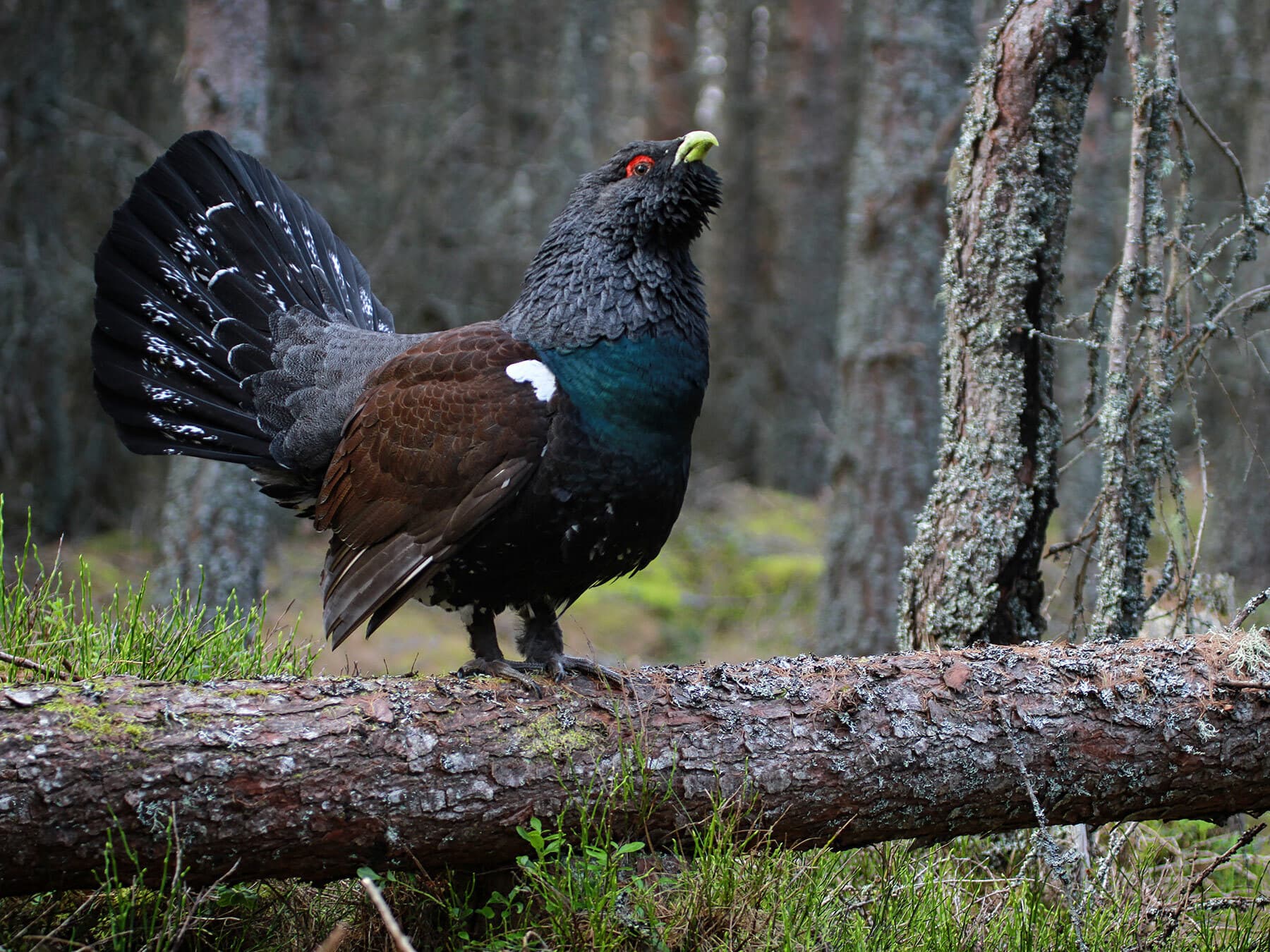
Quick facts
- Length
- 40–55 cm
- Wingspan
- 65–80 cm
- Weight
- 750–1400 g
- Lifespan
- 3–5 years · oldest recorded 12.2 years
- Family
- Pheasants & Grouse
- Migration
- Resident
- Global status (IUCN)
- Least Concern
- World population
- 8,000,000 - 14,000,000 mature individuals
- Population trend
- Decreasing
- Also called
- Blackcock, Blackgame, Eurasian Black Grouse, Northern Black Grouse
- Scientific name
- Lyrurus tetrix
Sources
4- 1BirdLife International (2015) Source (opens in a new tab)
- 2BirdLife International. 2016. Lyrurus tetrix. The IUCN Red List of Threatened Species 2016: e.T22679480A85944601. Source (opens in a new tab)
- 3BirdLife International. 2016. Lyrurus tetrix. The IUCN Red List of Threatened Species 2016: e.T22679480A85944601. Source (opens in a new tab)
- 4Fransson et al., EURING list of longevity records for European birds (2010) Source (opens in a new tab)

Checked by
Nathan Cope, founder and editor
Nathan founded Birdfact and leads its writers and contributors in the UK, the US and Canada. He has watched and studied birds for more than ten years, and checks every article and species guide before it’s published.