


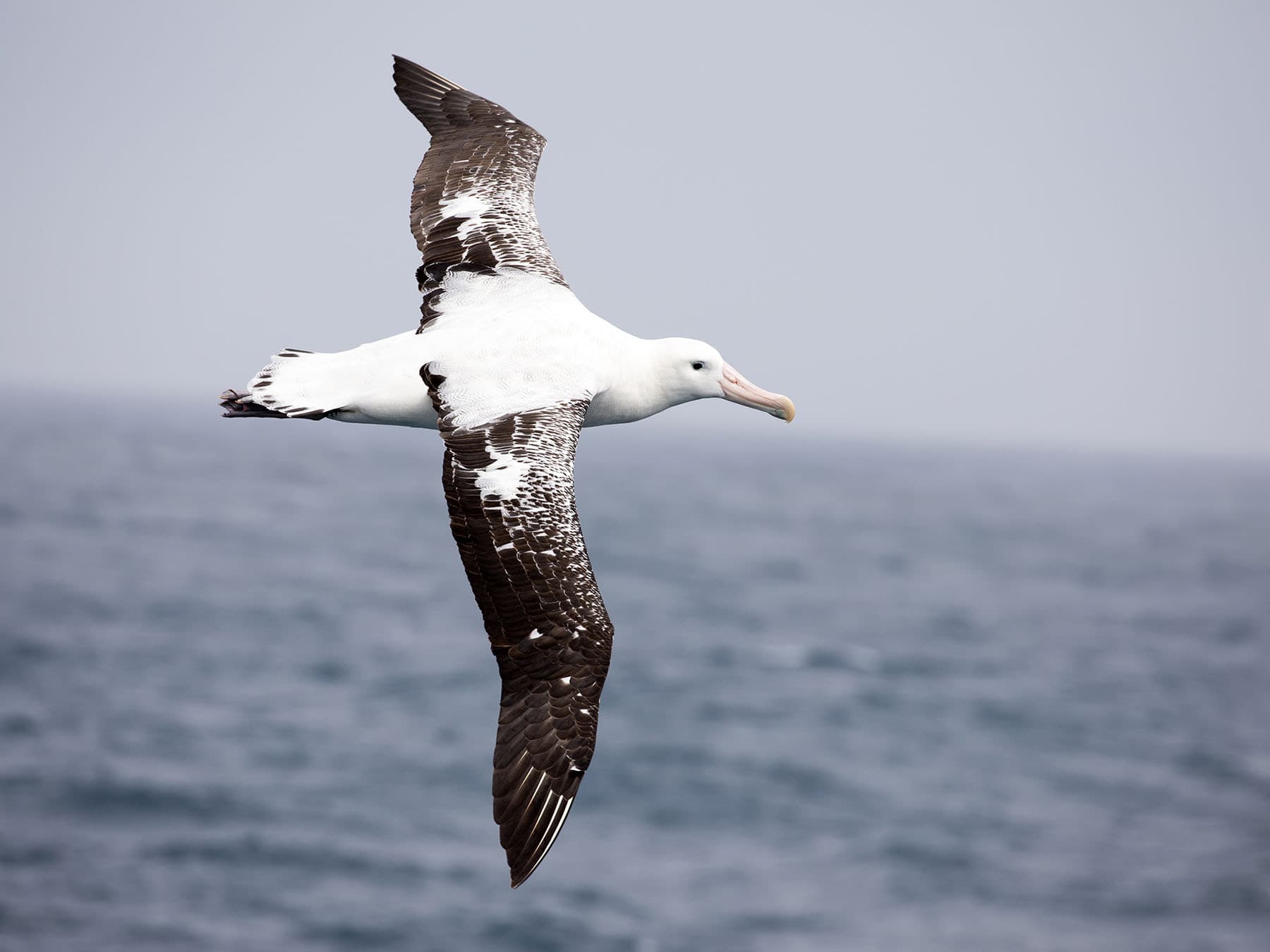
Wandering Albatross
Snowy Albatross, White-winged Albatross · Diomedea exulans
By the Birdfact teamChecked by Nathan Cope
On this page12 sections
How to recognise it
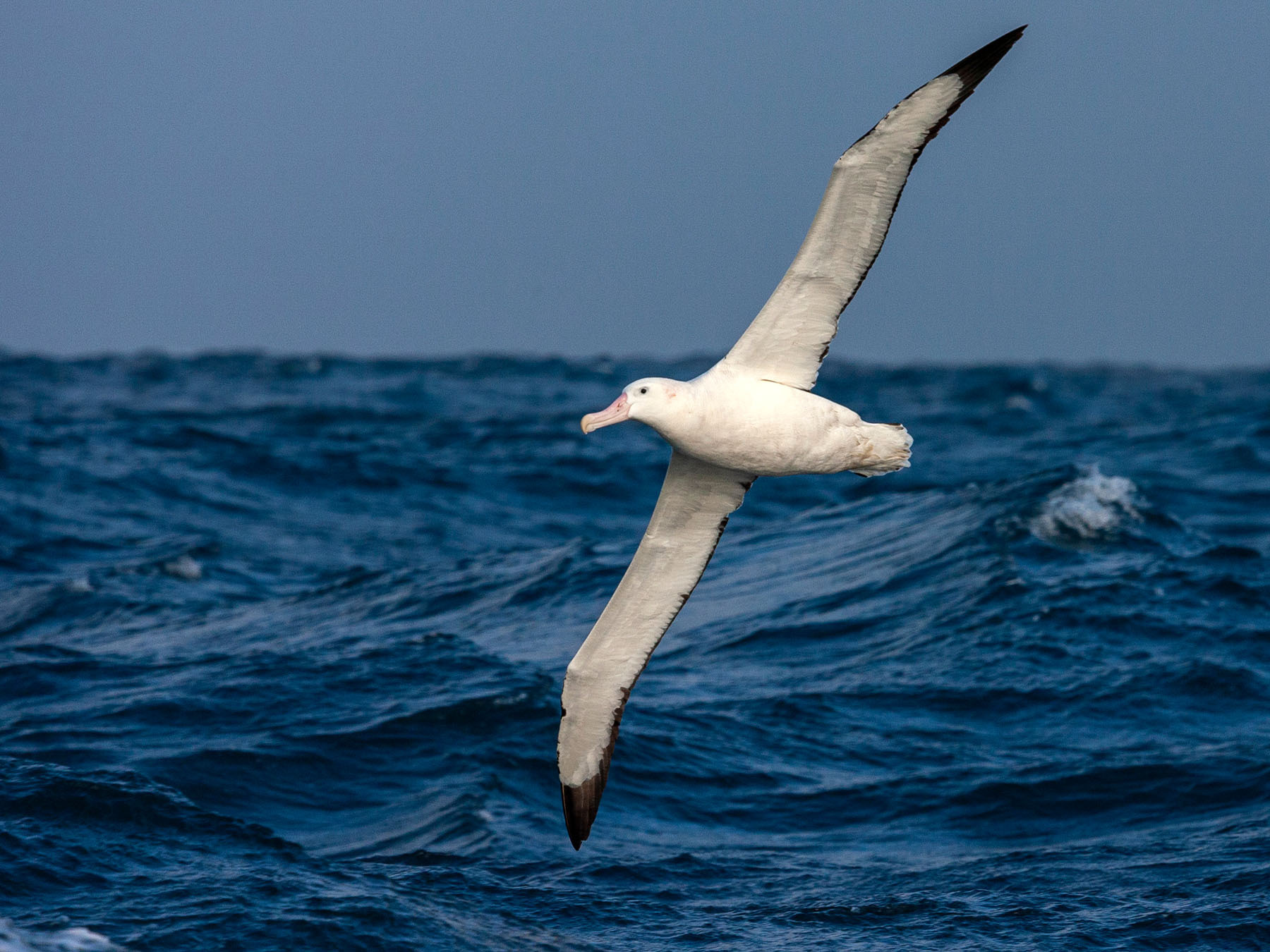
The Wandering Albatross is renowned for its massive wingspan, the largest of any living bird.
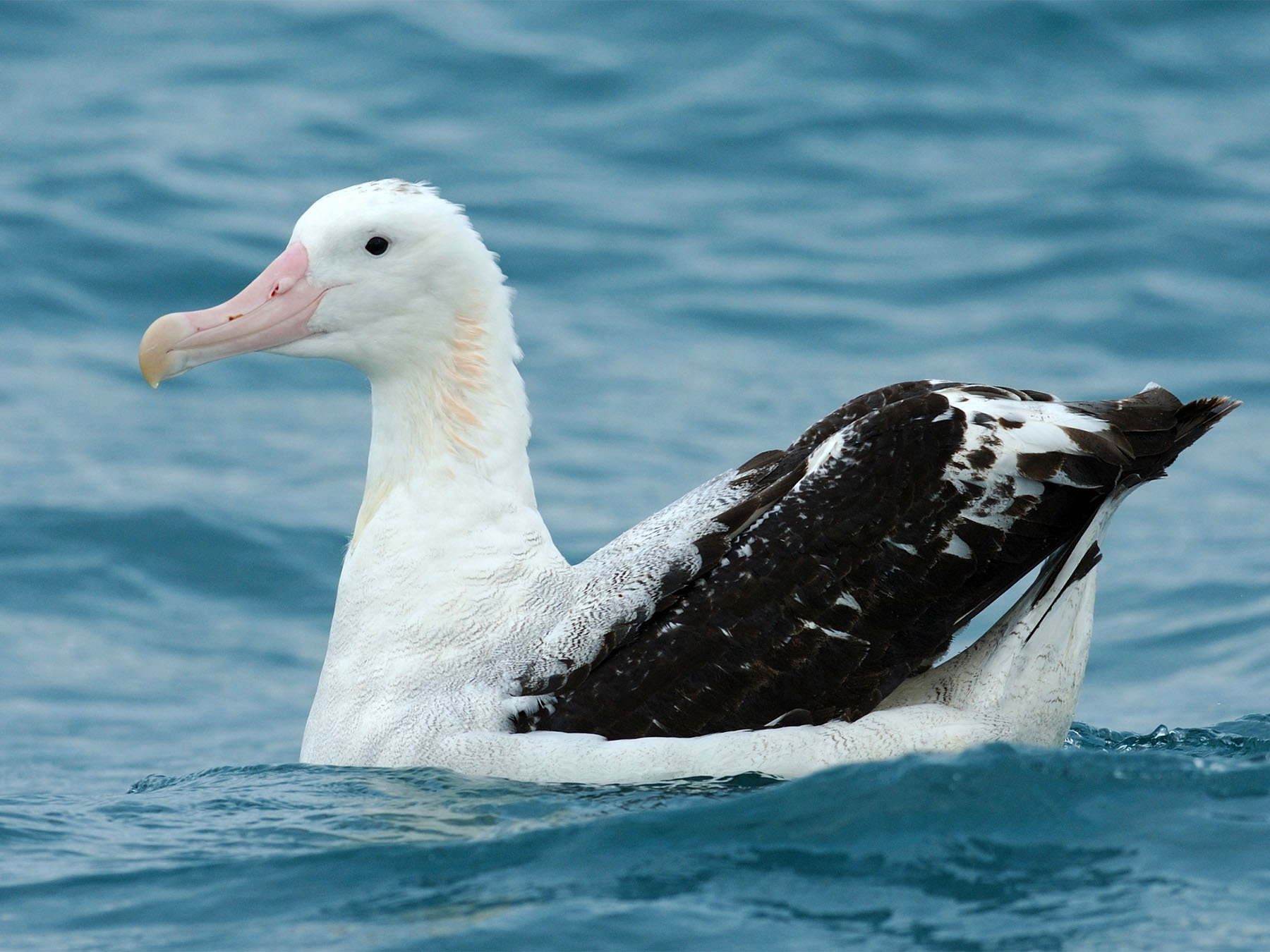
Adults have predominantly white plumage with black wing tips and trailing edges. The face is white with a pink bill tipped yellow.
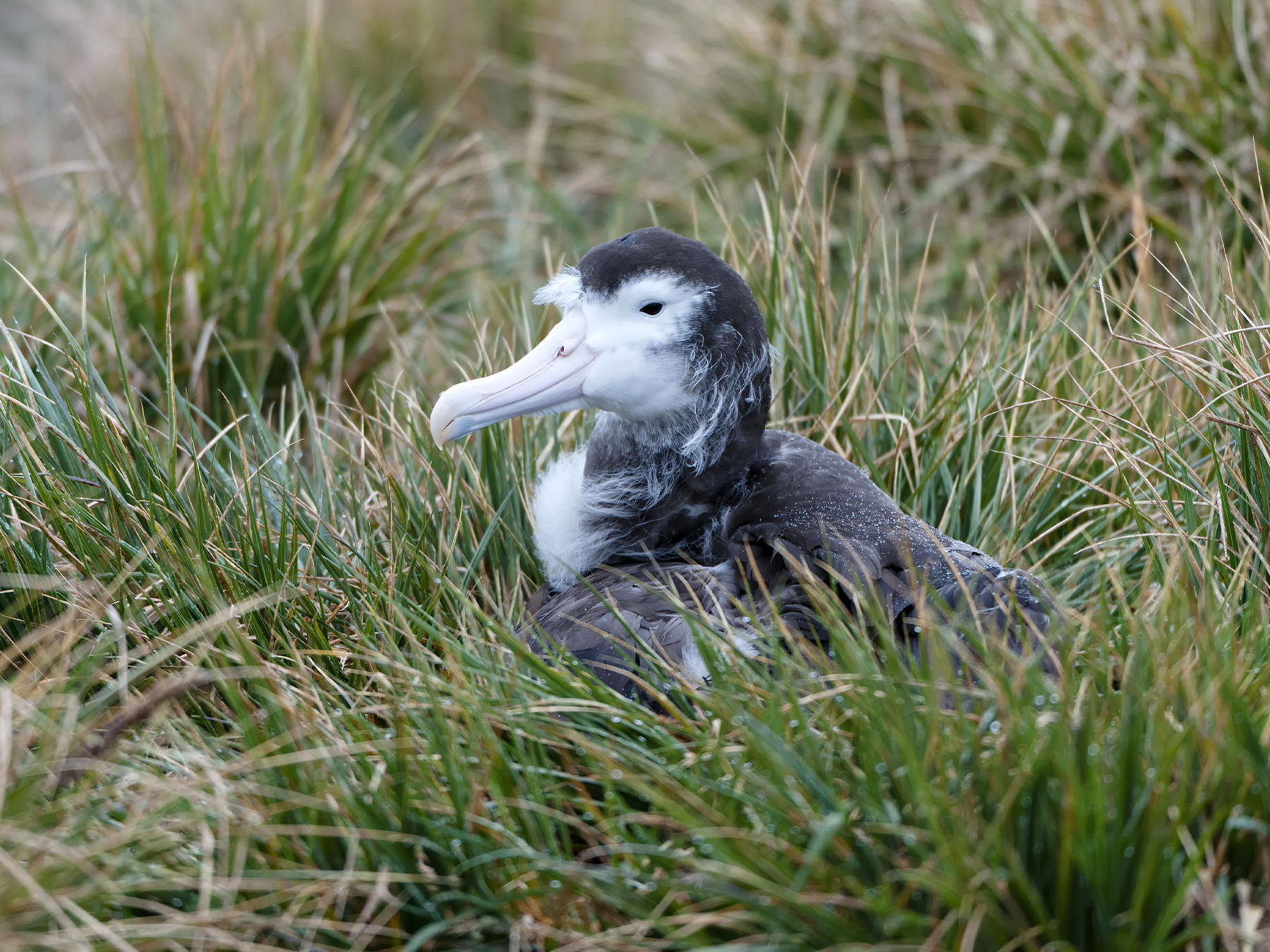
Males are generally whiter than females, who retain more brown plumage throughout adulthood. Juveniles are dark brown, gradually whitening with age. The species exhibits slight seasonal variation in bill colour.
Its size
Adults- Length
- 107–135 cm
- Wingspan
- 251–351 cm
- Weight
- 6100–11900 g
Its song and calls
Wandering Albatrosses are generally silent at sea but vocal on breeding grounds. Their calls include a variety of croaks, whistles, and grunts.
During courtship, they produce a distinctive 'sky-call' - a loud, trumpet-like sound often accompanied by bill-clapping. Chicks emit high-pitched begging calls.
When and where to see it
The Wandering Albatross is not recorded regularly in the UK, Ireland, the United States or Canada.
Worldwide: recorded regularly in 9 countries
Countries where it was recorded in at least 3 of the 6 years 2019–2024. Linked countries have their own bird list.
Africa (1)
South America (3)
- Argentina
- Chile
- Falkland Islands
Oceania (2)
Antarctica (3)
- Antarctica
- French Southern Territories
- South Georgia & South Sandwich Islands
Data: EOD – eBird Observation Dataset (Cornell Lab of Ornithology), accessed via GBIF.org, CC BY 4.0. Records from 2019–2024, aggregated and filtered by Birdfact. How these lists are made
Tips for seeing it
- Look for them in the Southern Ocean, particularly around subantarctic islands
- Observe their distinctive gliding flight pattern with wings held stiff
- Watch for their impressive courtship displays during the breeding season
- Join pelagic birding trips for the best chances of sighting
- Use powerful binoculars or a spotting scope for distant identification
What it eats
Wandering Albatrosses primarily feed on squid, fish, and crustaceans. They often follow ships to scavenge discarded fish and offal.
These birds are known to dive up to 1 meter below the surface to catch prey but mostly seize food items from the ocean's surface during long foraging trips that can last several days.
Nesting and breeding
Breeding occurs biennially on isolated subantarctic islands. Pairs engage in elaborate courtship rituals, including sky-calling and synchronised walking, before mating. The breeding season typically begins in December.
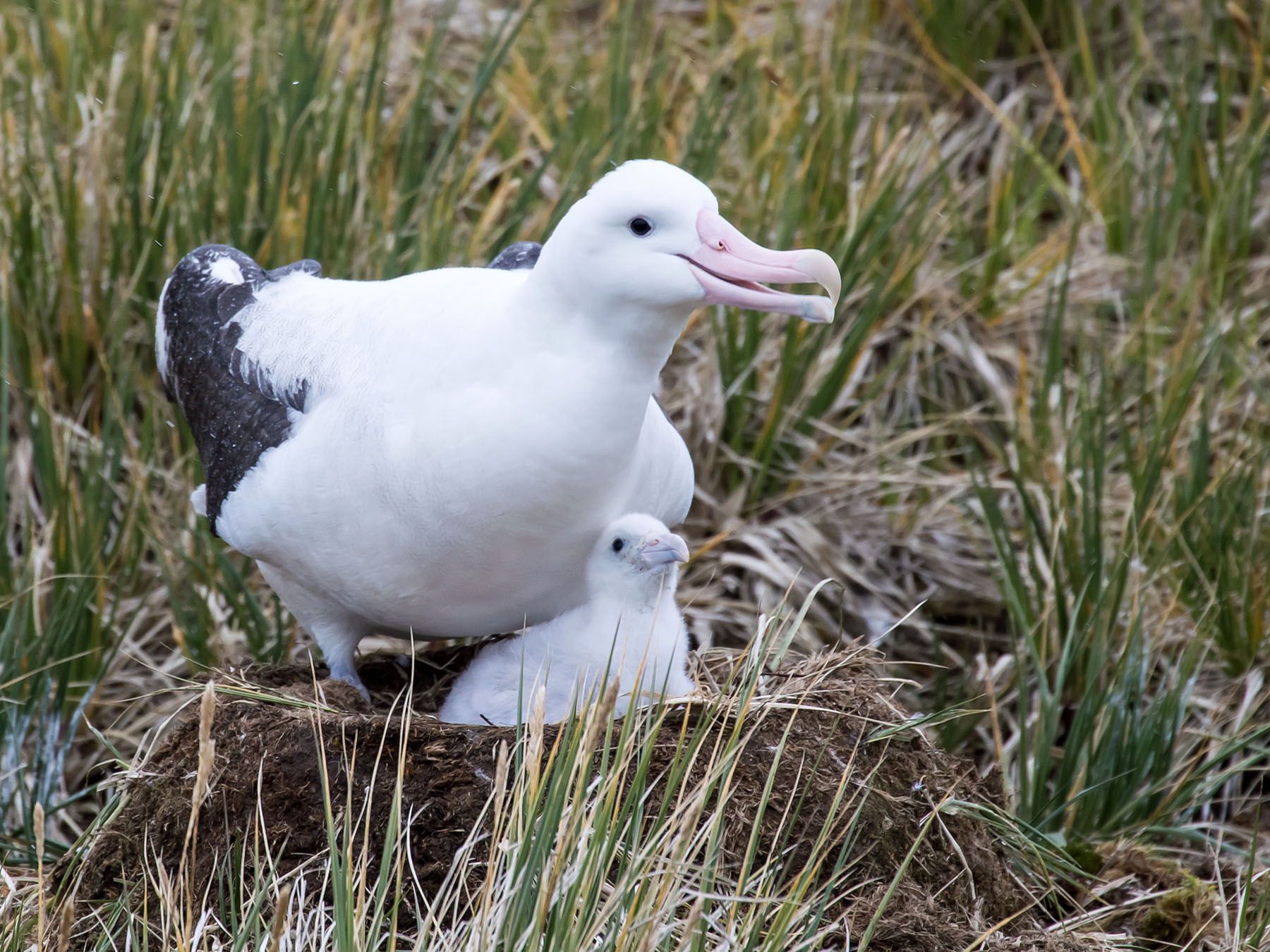
Nests are large, cone-shaped mounds of mud, vegetation, and feathers built on exposed ridges or slopes. Females lay a single white egg with reddish-brown spots.
Both parents share incubation duties for about 78 days. Chicks fledge after 278 days, one of the longest fledging periods of any bird species.
Behaviour
Wandering Albatrosses are masters of dynamic soaring, using wind currents to glide for hours without flapping their wings. They are known for their elaborate courtship displays, involving sky-calling, bill-clapping, and synchronised walking.
These birds form long-term pair bonds and often return to the same nesting sites year after year.
Conservation
The Wandering Albatross is classified as Vulnerable due to long-term population declines. Major threats include longline fishing, where birds are accidentally caught on baited hooks and plastic pollution in the oceans.
Conservation efforts focus on implementing bird-friendly fishing practices and reducing marine debris.
Similar birds
Often mistaken for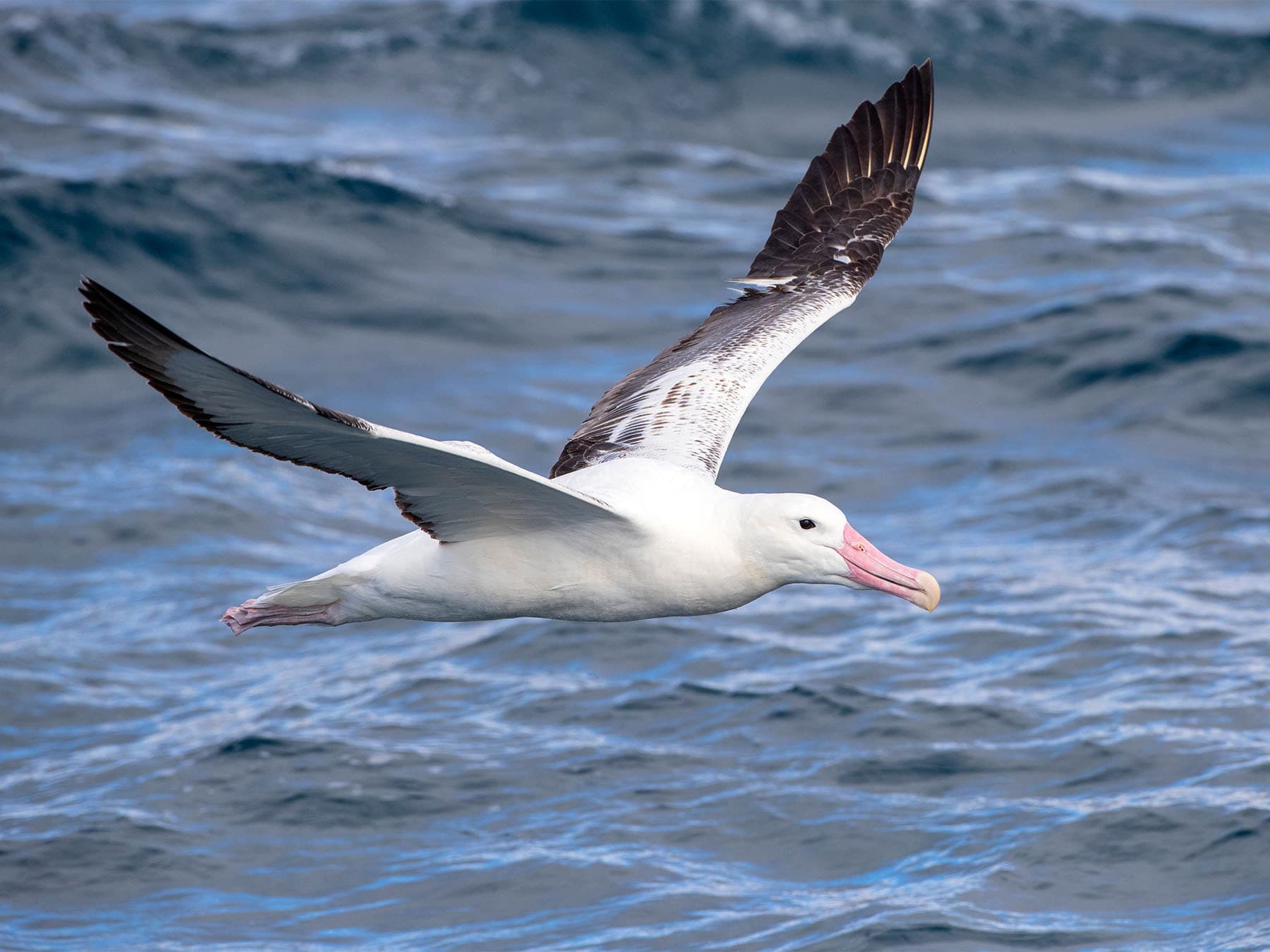
More photos
5 photos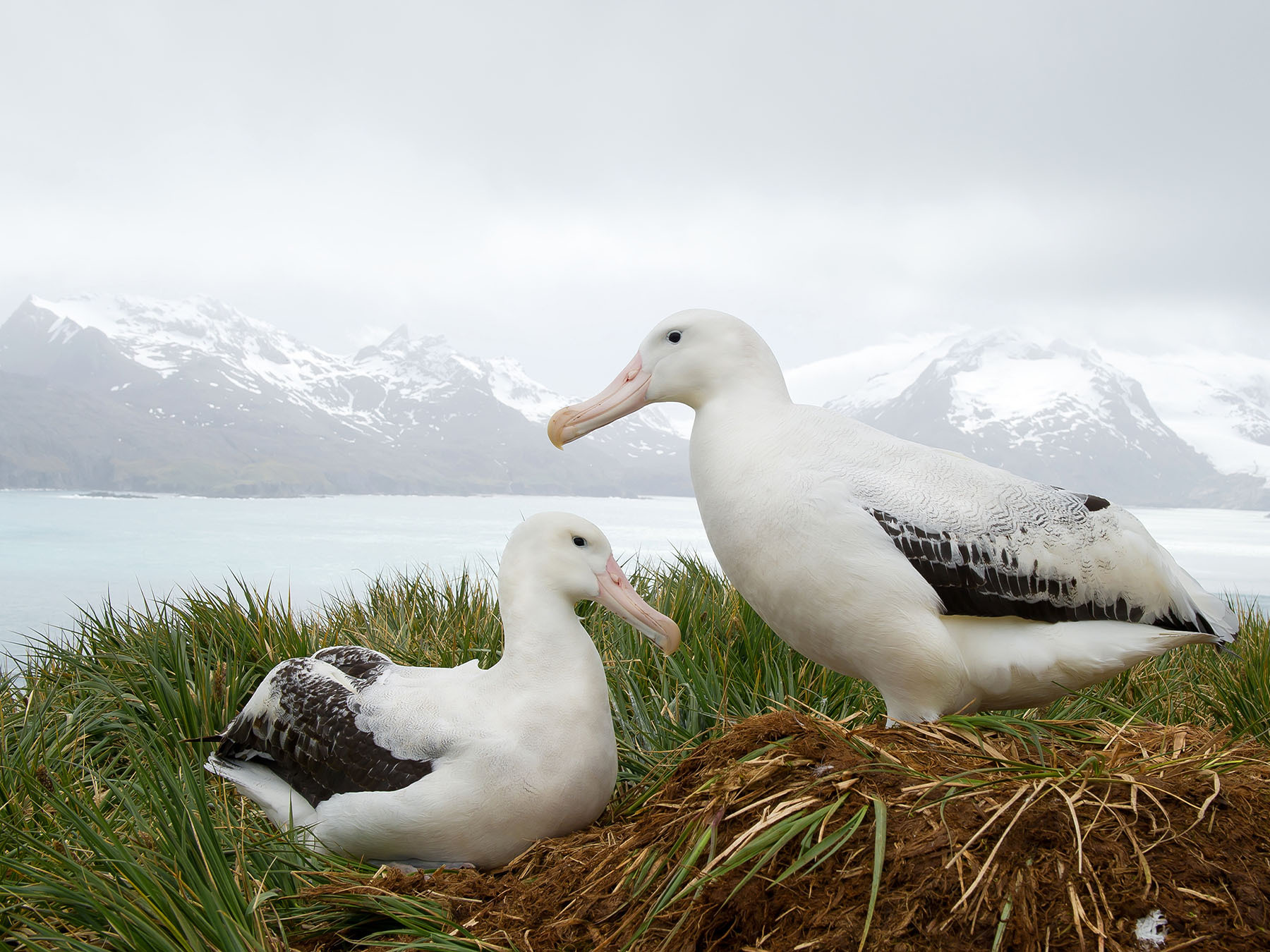
Quick facts
- Length
- 107–135 cm
- Wingspan
- 251–351 cm
- Weight
- 6100–11900 g
- Lifespan
- 40 years · oldest recorded 50 years
- Family
- Albatrosses
- Migration
- Long-distance Migrant
- Global status (IUCN)
- Vulnerable
- World population
- 20,100 mature individuals
- Population trend
- Slow but steady population decrease due to threats
- Also called
- Snowy Albatross, White-winged Albatross
- Scientific name
- Diomedea exulans
Sources
4- 1BirdLife International. 2018. Diomedea exulans. The IUCN Red List of Threatened Species 2018: e.T22698305A132640680. Source (opens in a new tab)
- 2Poncet et al. (2006)
- 3BirdLife International. 2018. Diomedea exulans. The IUCN Red List of Threatened Species 2018: e.T22698305A132640680. Source (opens in a new tab)
- 4Buttemer et al., Fowl play and the price of petrel: long-living Procellariiformes have peroxidation-resistant membrane composition compared with short-living Galliformes, Biol Lett, 4:351-354 (2008) Source (opens in a new tab)

Checked by
Nathan Cope, founder and editor
Nathan founded Birdfact and leads its writers and contributors in the UK, the US and Canada. He has watched and studied birds for more than ten years, and checks every article and species guide before it’s published.