
Southern Royal Albatross
Toroa · Diomedea epomophora
By the Birdfact teamChecked by Nathan Cope
On this page12 sections
How to recognise it
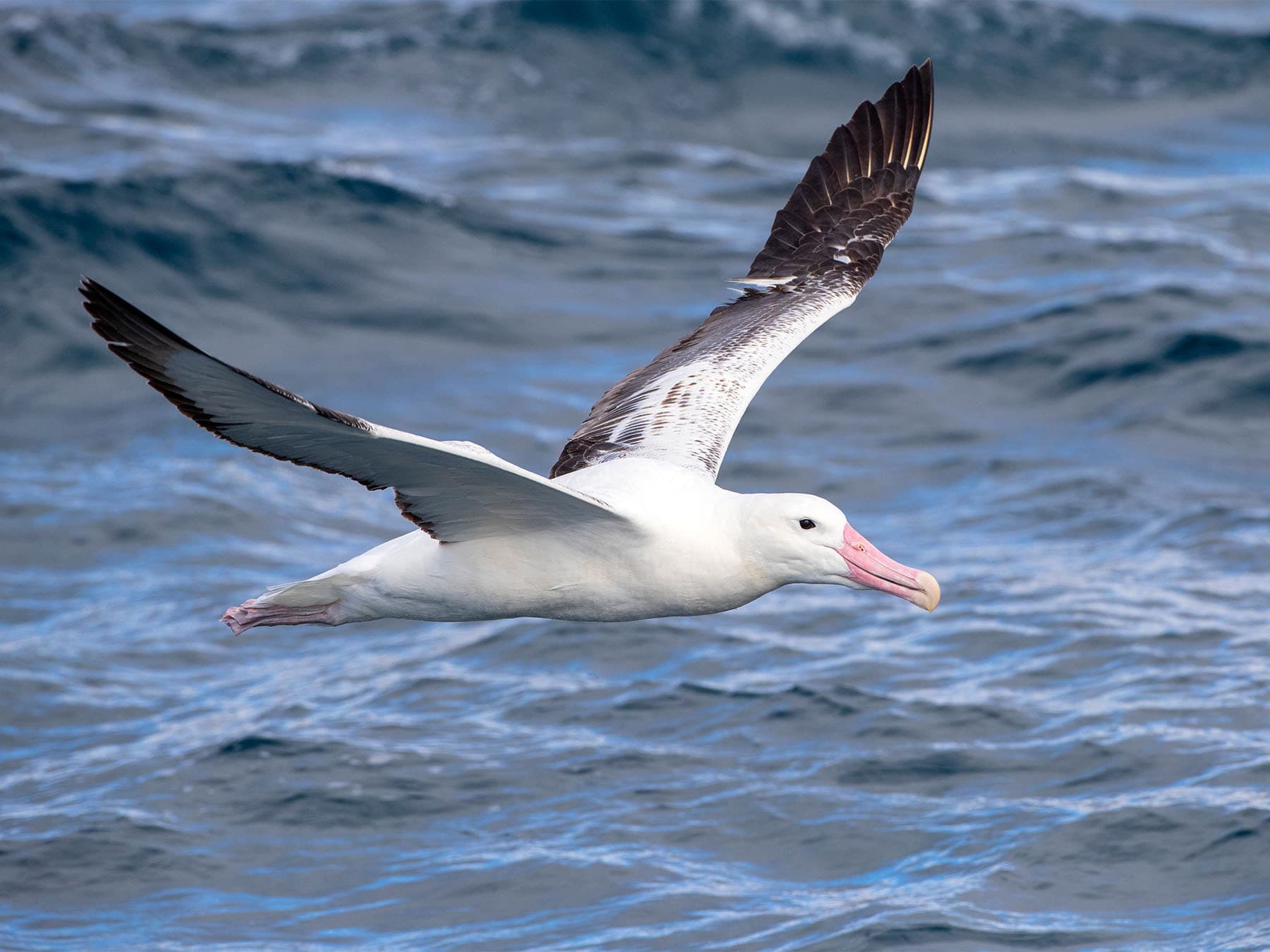
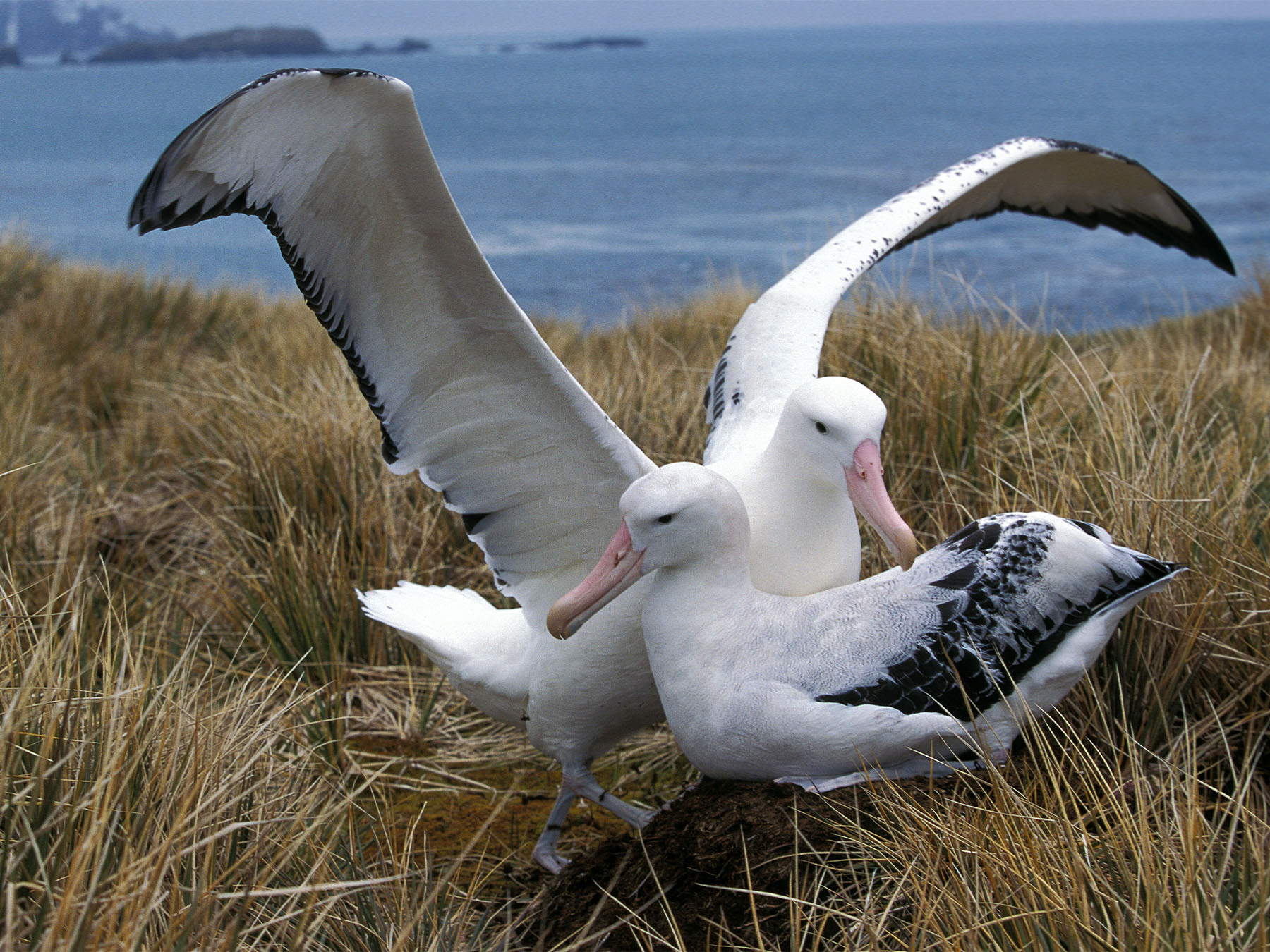
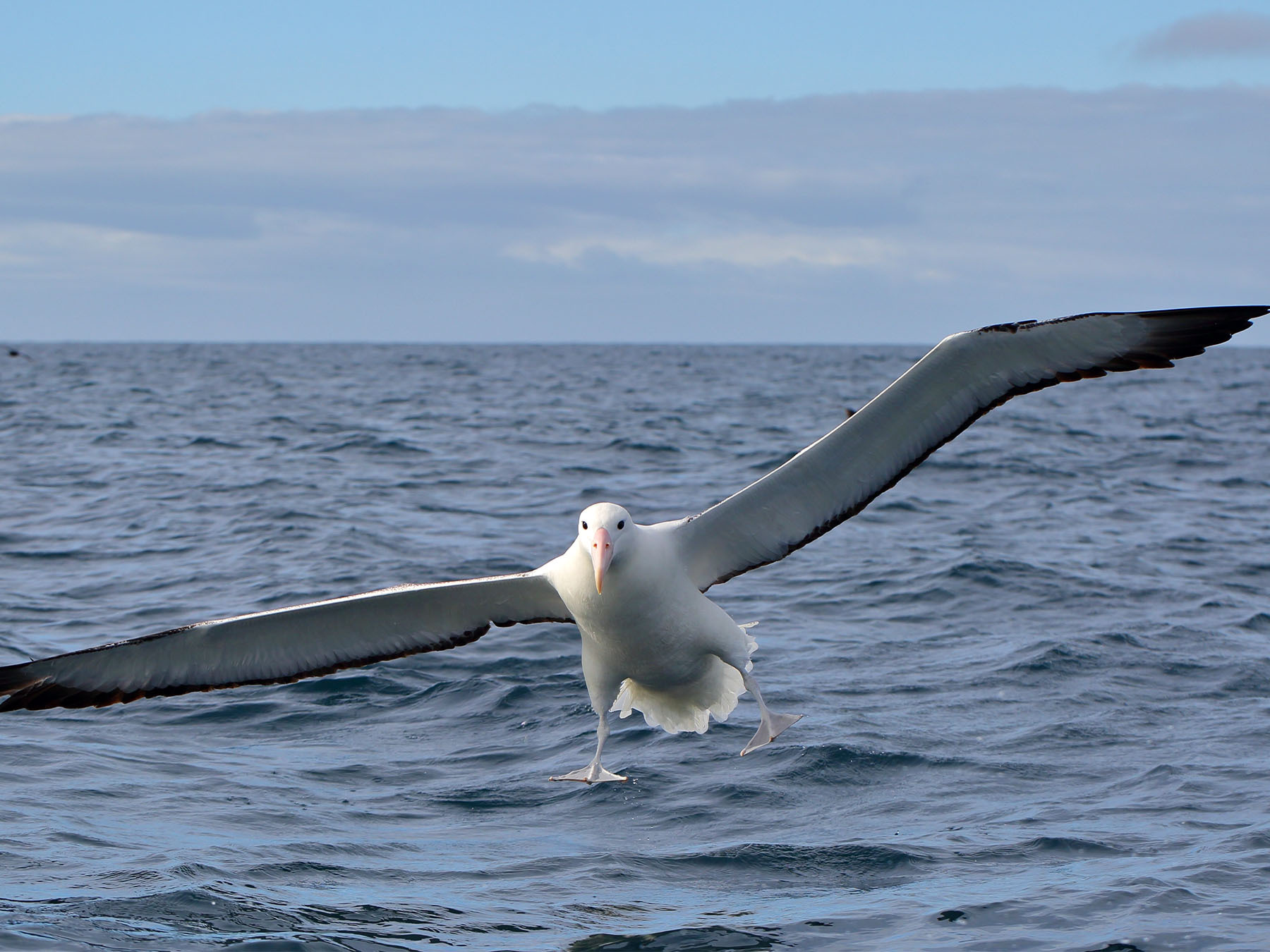
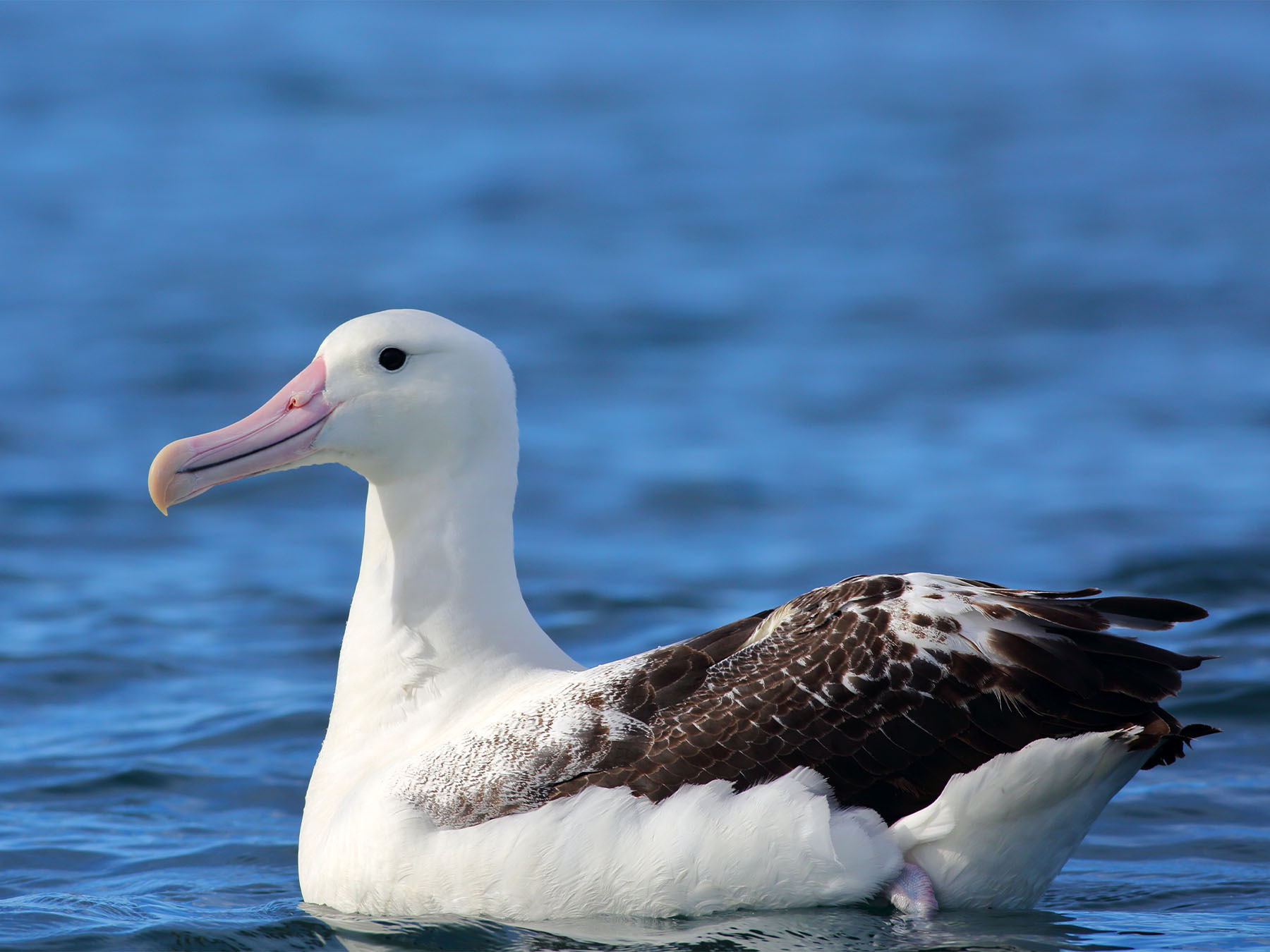
The Southern Royal Albatross is a majestic seabird with predominantly white plumage and black upper wings. Its massive wingspan, reaching up to 3.5 meters, makes it one of the largest flying birds in the world. The bird's head often shows a golden-yellow wash.
Juveniles have more extensive black on their wings and back, gradually becoming whiter with age. Adults have a large pink bill with a yellowish tip, while their feet are pale pink. There is little difference between male and female plumage.
Its size
Adults- Length
- 115–123 cm
- Wingspan
- 290–350 cm
- Weight
- 6500–10500 g
Its song and calls
Southern Royal Albatrosses are generally silent at sea but become more vocal during breeding season. Their calls include a variety of croaks, whistles, and grunts.
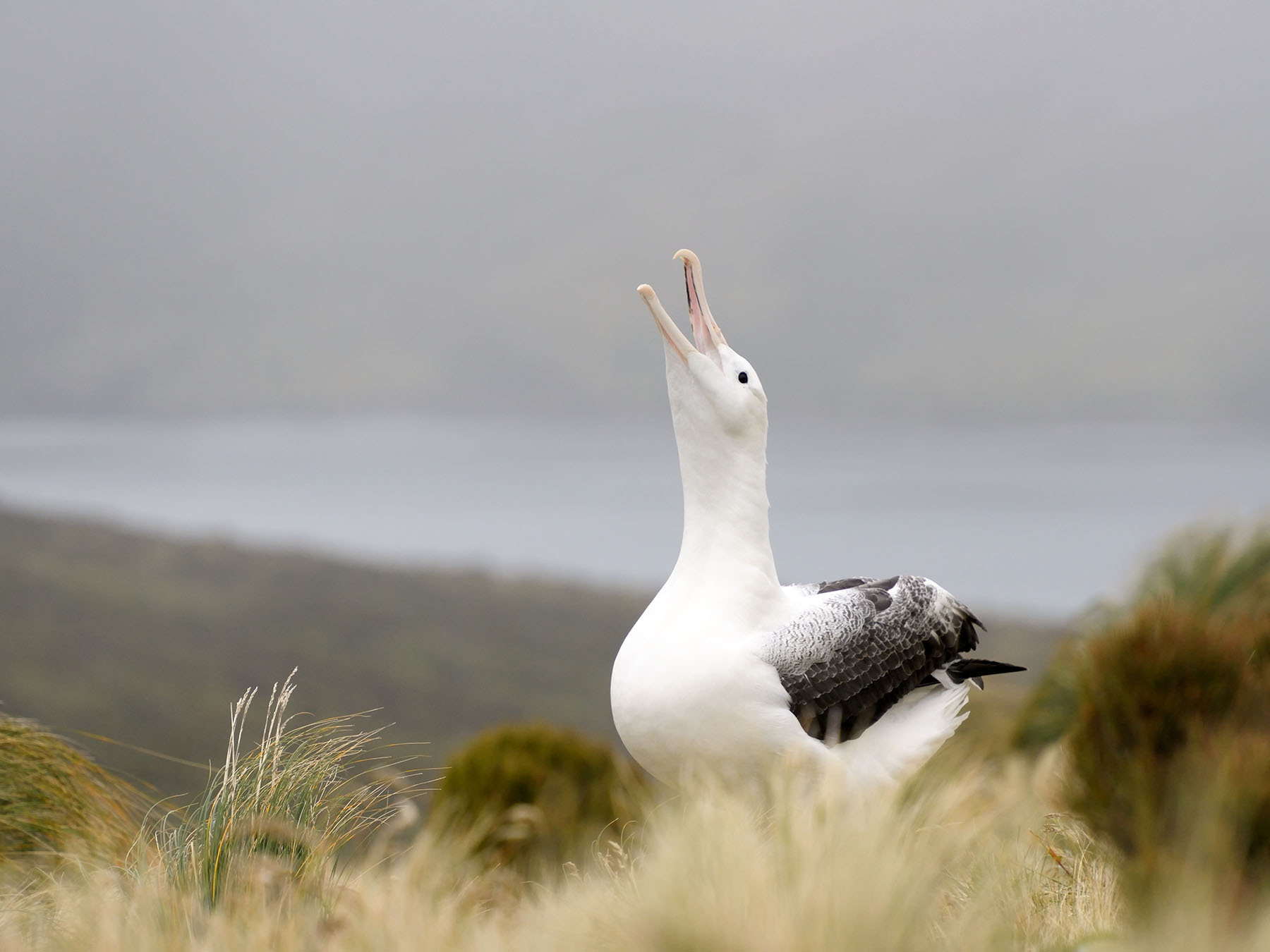
During courtship, they produce a distinctive 'trumpeting' call, often described as a loud, resonant 'aarrrah'. Chicks emit high-pitched begging calls when soliciting food from parents.
When and where to see it
The Southern Royal Albatross is not recorded regularly in the UK, Ireland, the United States or Canada.
Worldwide: recorded regularly in 9 countries
Countries where it was recorded in at least 3 of the 6 years 2019–2024. Linked countries have their own bird list.
Africa (1)
South America (3)
- Argentina
- Chile
- Falkland Islands
Oceania (2)
Antarctica (3)
- Antarctica
- French Southern Territories
- South Georgia & South Sandwich Islands
Data: EOD – eBird Observation Dataset (Cornell Lab of Ornithology), accessed via GBIF.org, CC BY 4.0. Records from 2019–2024, aggregated and filtered by Birdfact. How these lists are made
Tips for seeing it
- Look for them in the southern oceans, particularly around New Zealand's subantarctic islands
- Observe their distinctive gliding flight pattern with long periods without flapping
- Use their large size and predominantly white plumage for identification
- Join a pelagic birding trip for the best chance of spotting them at sea
- Visit breeding colonies on Campbell Island during the austral summer
What it eats
Southern Royal Albatrosses primarily feed on squid, fish, and crustaceans. They often follow ships to scavenge discarded fish and offal.
These birds are known to dive up to 5 meters below the surface to catch prey, using their keen eyesight to spot food from great distances.
Nesting and breeding
Breeding occurs biennially, with pairs reuniting at nesting sites from October to November. Southern Royal Albatrosses form long-term monogamous partnerships, often lasting for decades. They perform elaborate courtship displays, including bill-clapping and sky-calling.
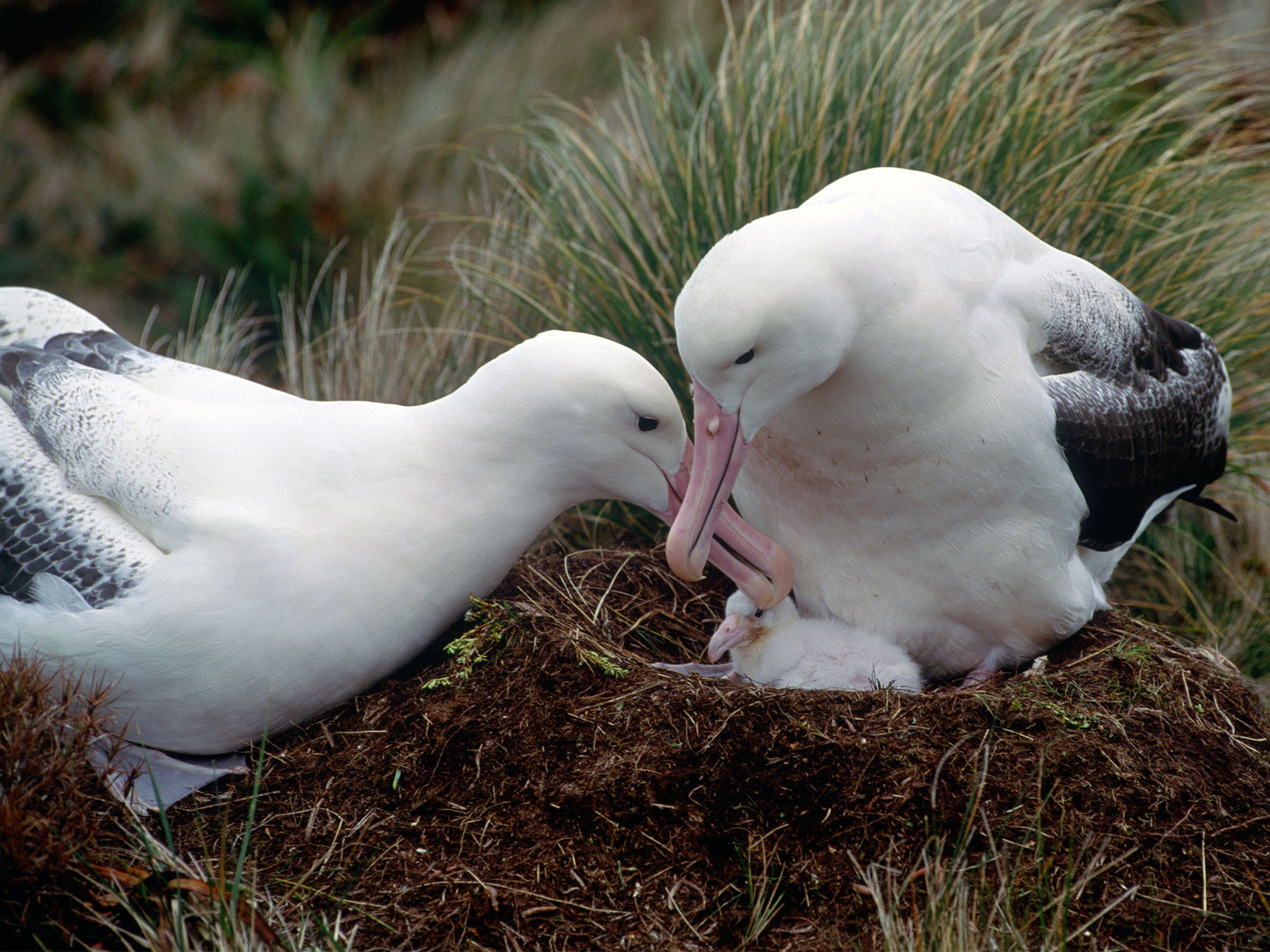
Nests are made of grass, soil, and feathers and built on exposed ridges or slopes. Females lay a single large white egg with brown speckles. Both parents share incubation duties, which last around 79 days.
Chicks are brooded for about a month and fledge after approximately 240 days. Young birds spend 3-7 years at sea before returning to their natal colonies to breed, typically starting at 6-12 years old.
Behaviour
Southern Royal Albatrosses are known for their incredible long-distance flights, often covering thousands of kilometres in a single foraging trip. They are primarily solitary at sea but form strong pair bonds during the breeding season.
These birds are excellent gliders, using dynamic soaring to effortlessly ride wind currents over vast ocean expanses.
Conservation
The Southern Royal Albatross is classified as Vulnerable due to its restricted breeding range and threats from longline fishing.
Conservation efforts focus on reducing bycatch in fisheries, controlling invasive species on breeding islands, and monitoring population trends. Climate change poses an additional threat to their breeding habitats.
Similar birds
Often mistaken for
More photos
6 photos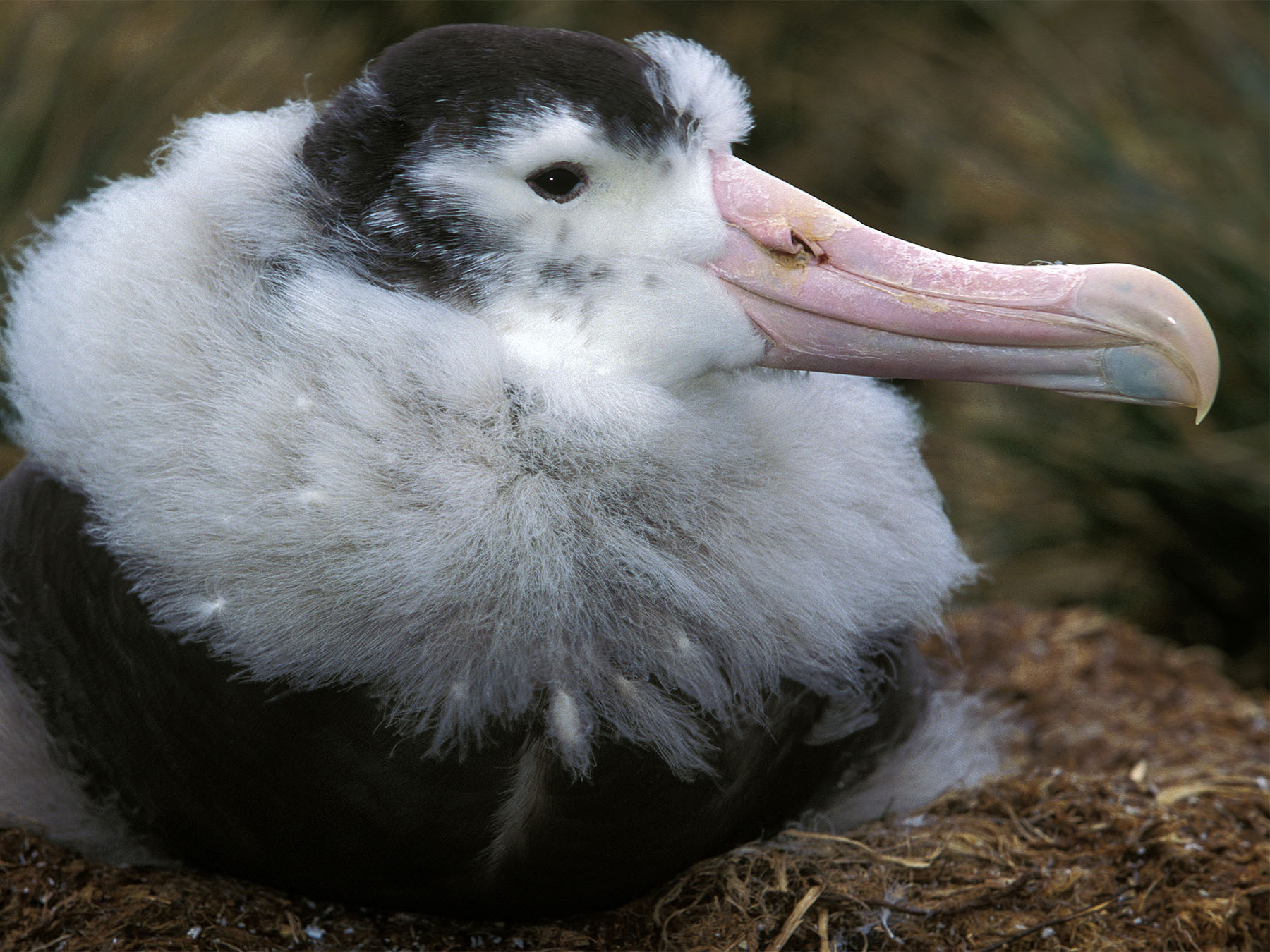
Quick facts
- Length
- 115–123 cm
- Wingspan
- 290–350 cm
- Weight
- 6500–10500 g
- Lifespan
- 28–50 years · oldest recorded 58 years
- Family
- Albatrosses
- Migration
- Long-distance Migrant
- Global status (IUCN)
- Vulnerable
- World population
- 27,200 mature individuals
- Population trend
- Population decreasing due to threats faced
- Also called
- Toroa
- Scientific name
- Diomedea epomophora
Sources
4- 1BirdLife International. 2018. Diomedea epomophora. The IUCN Red List of Threatened Species 2018: e.T22698314A132641187. Source (opens in a new tab)
- 2Moore et al. (1997)
- 3Croxall and Gales (1998)
- 4Carey and Judge, Longevity Records: Life Spans of Mammals, Birds, Amphibians, Reptiles, and Fish (2000) Source (opens in a new tab)

Checked by
Nathan Cope, founder and editor
Nathan founded Birdfact and leads its writers and contributors in the UK, the US and Canada. He has watched and studied birds for more than ten years, and checks every article and species guide before it’s published.