


Tundra Bean Goose
Eastern Bean Goose · Anser serrirostris
By the Birdfact teamChecked by Nathan Cope
On this page13 sections
How to recognise it
What do Tundra Bean Geese look like?
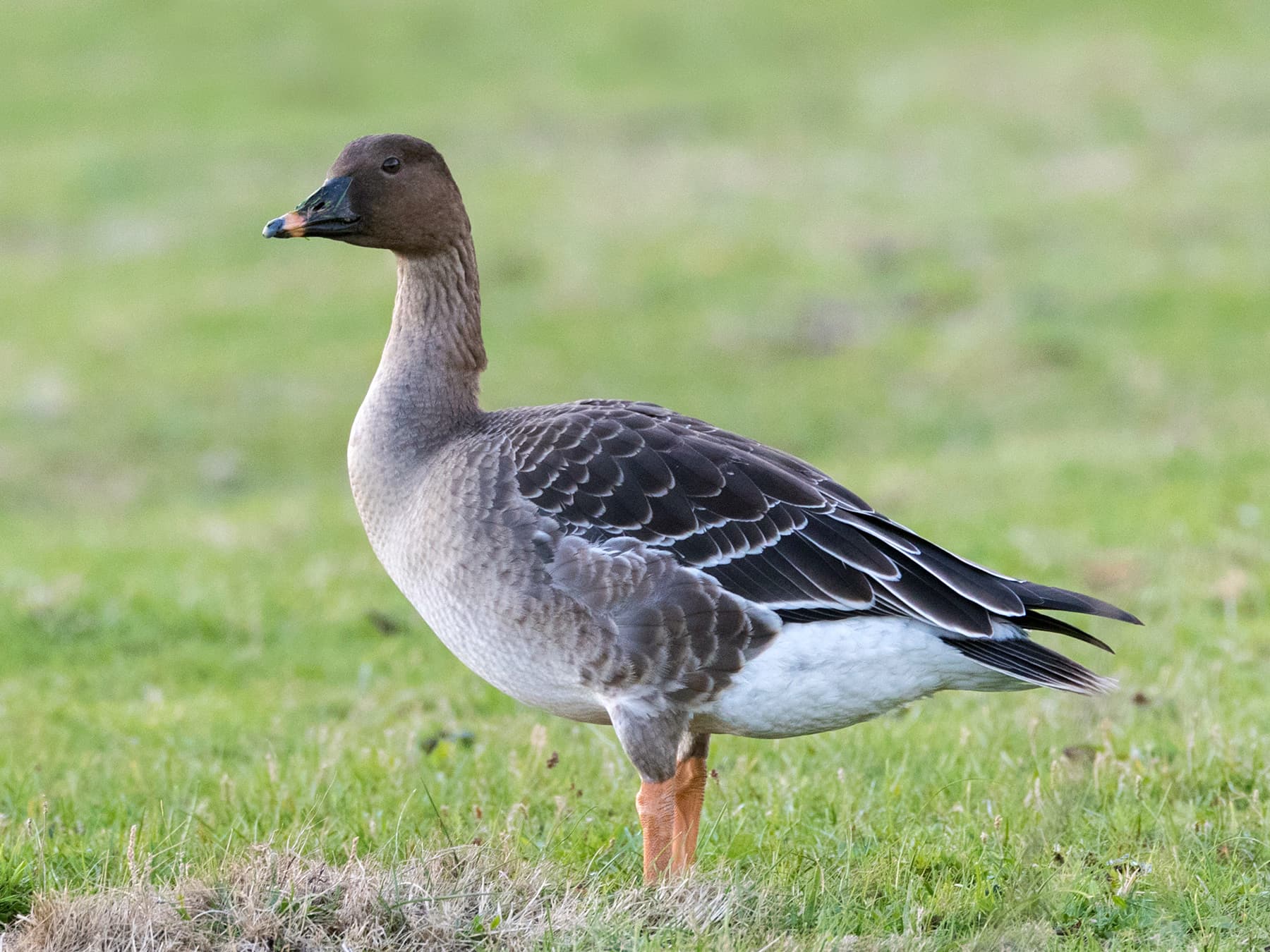
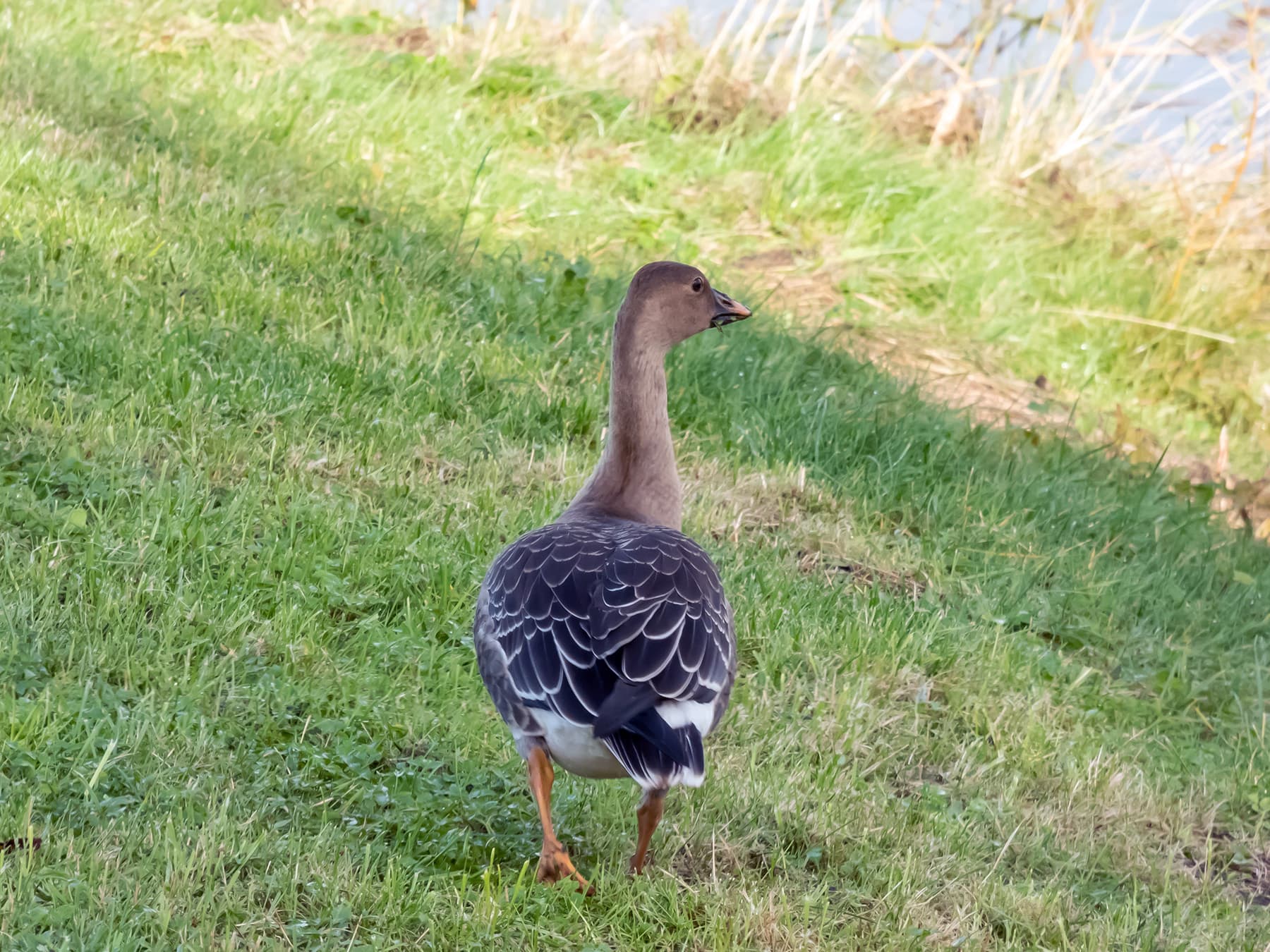
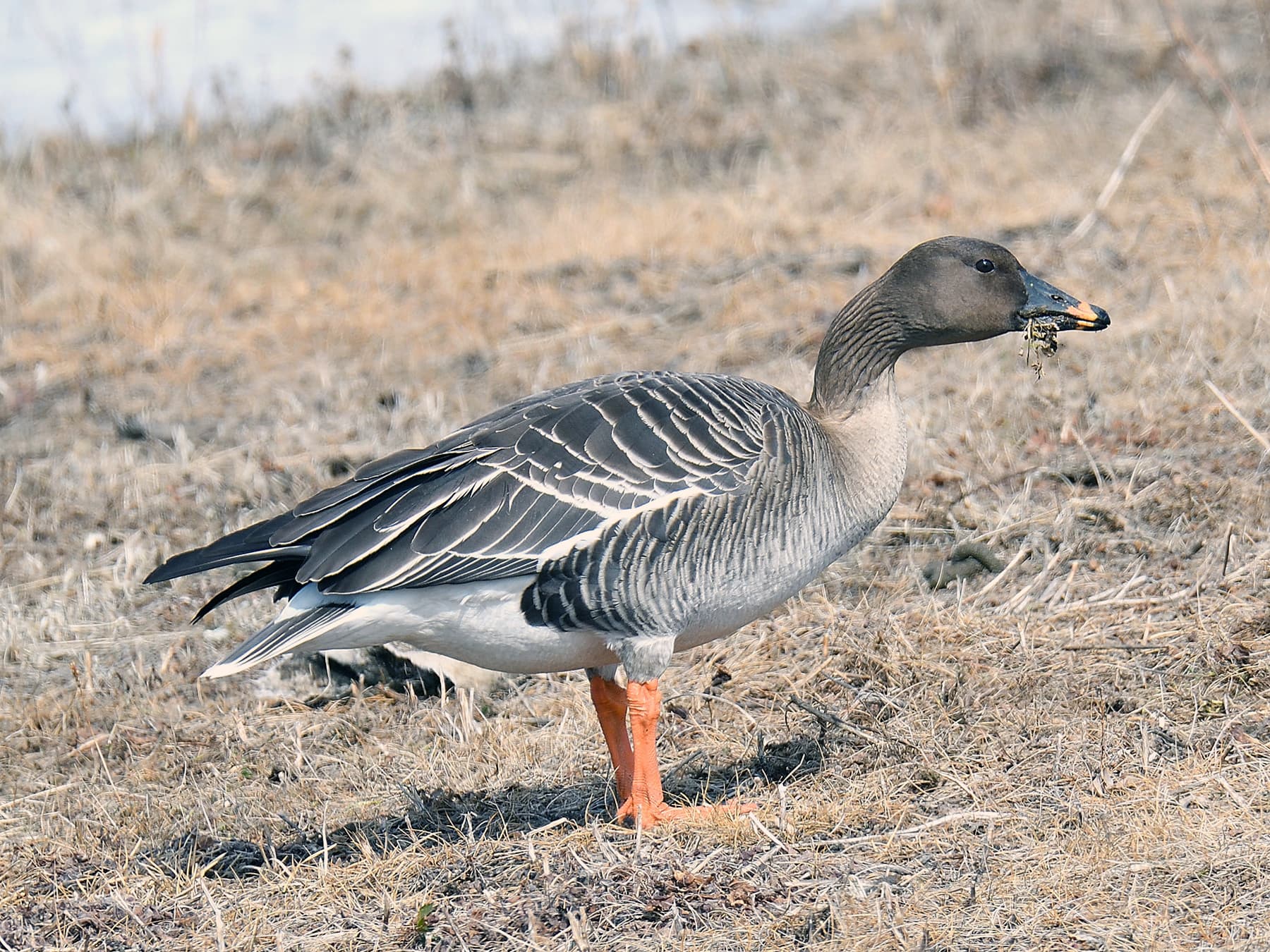
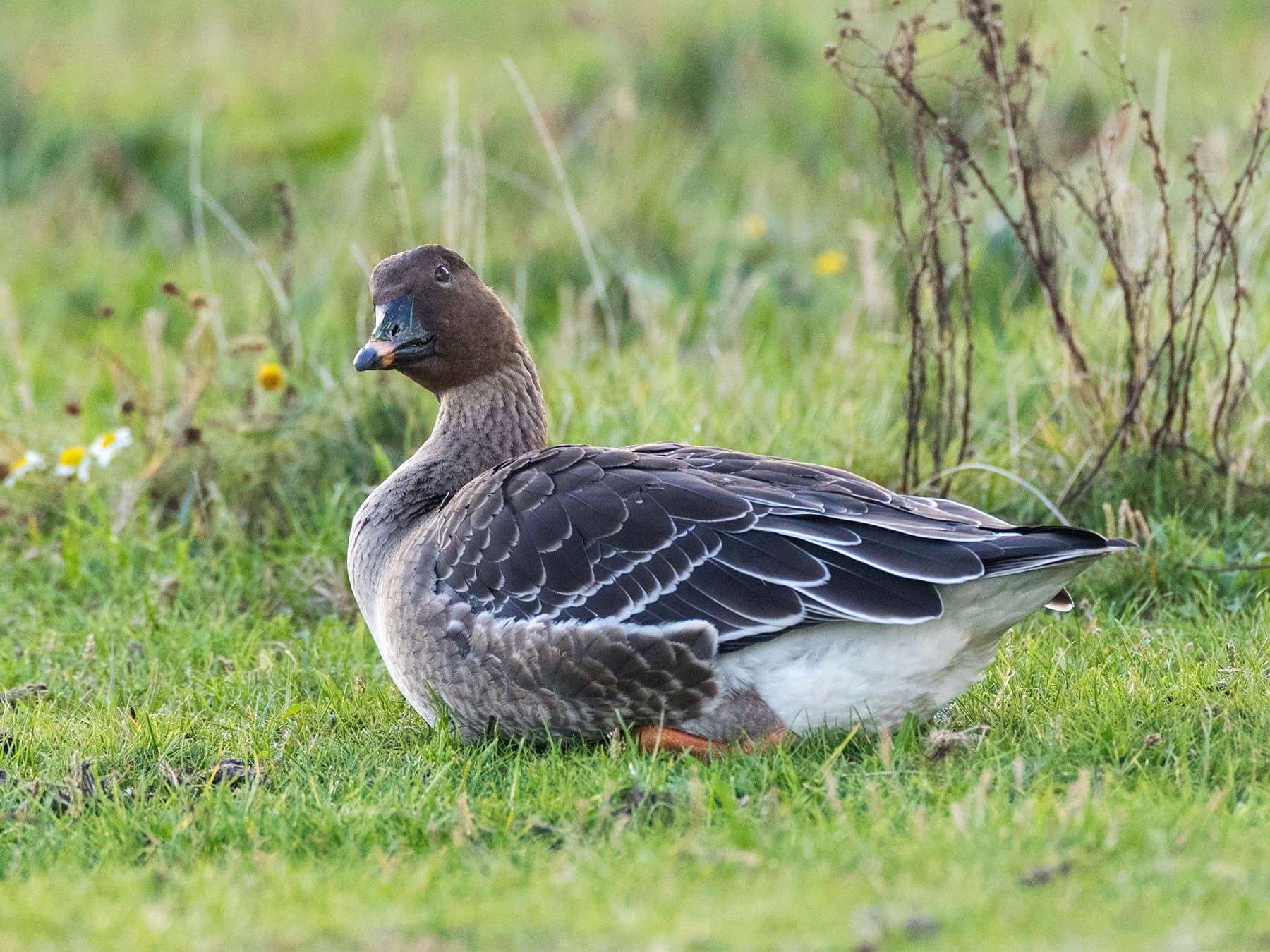
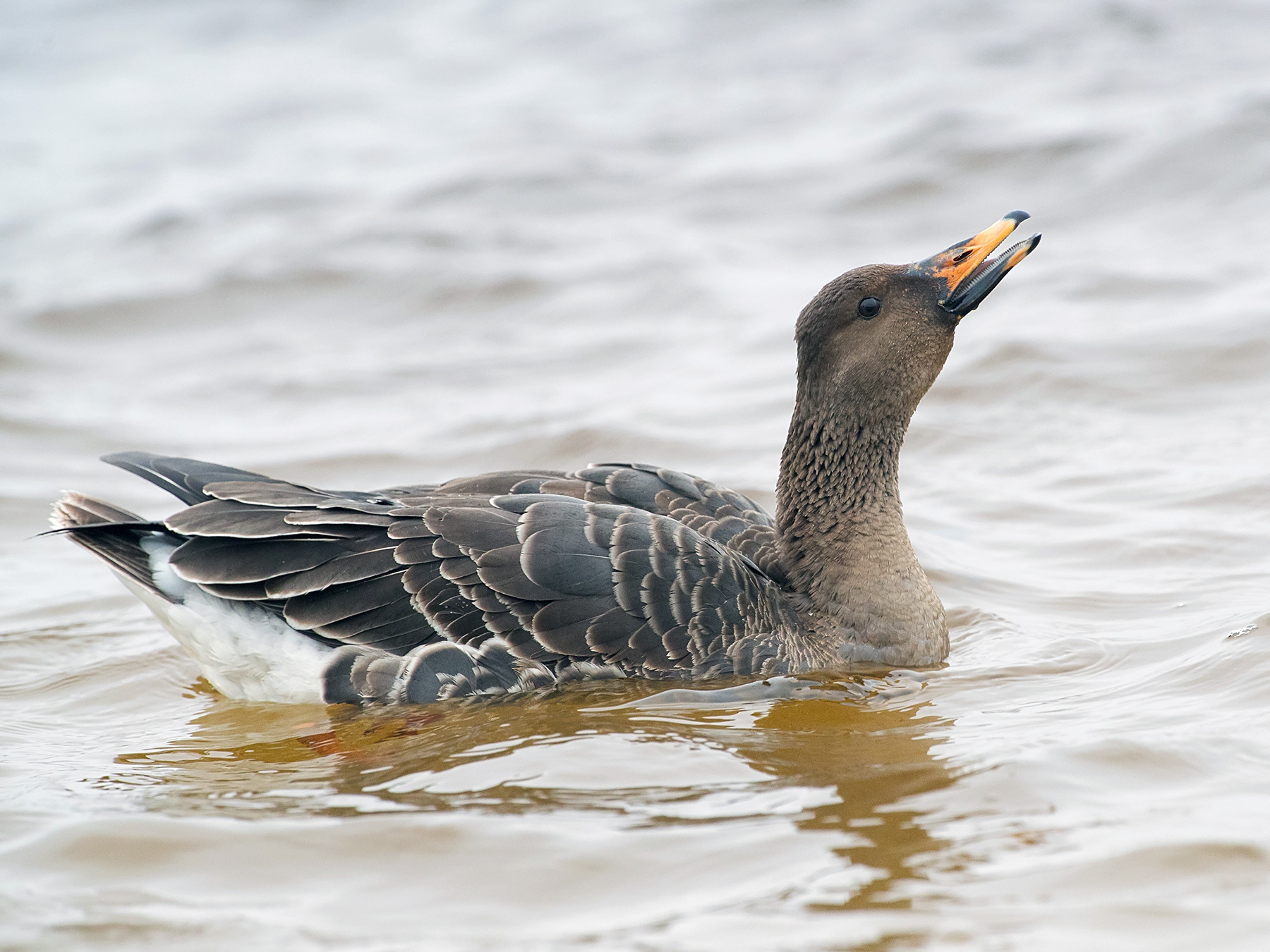
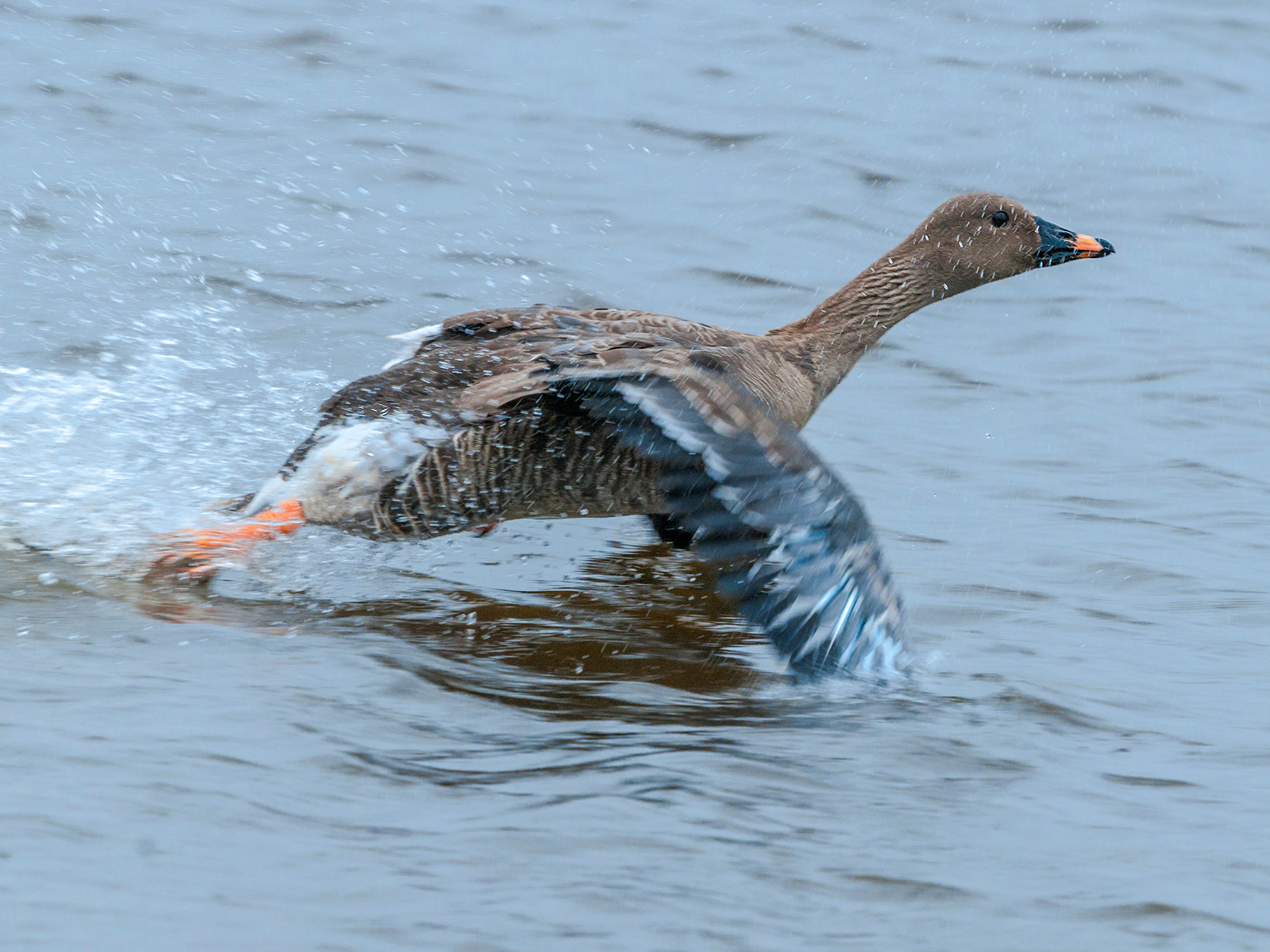
Tundra bean geese are medium-sized brown-grey geese, similar in appearance to the greylag goose and taiga bean goose. Males and females are alike in colouring, with both sexes having a dark brownish head and neck, lighter brownish grey breast, upper body and wings, and a white undertail. Wing feathers have pale fringes, giving the appearance of scaling on their backs.
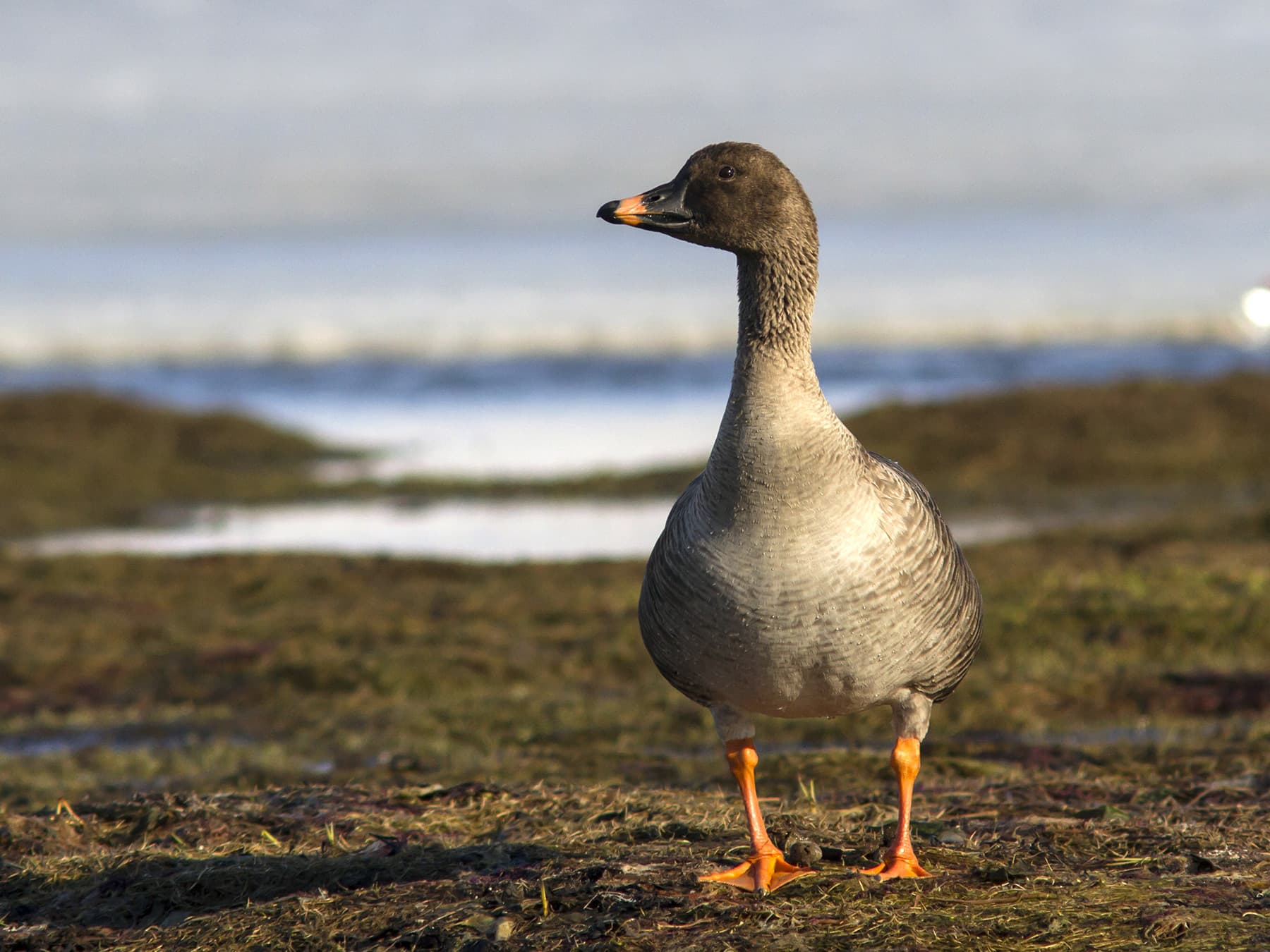
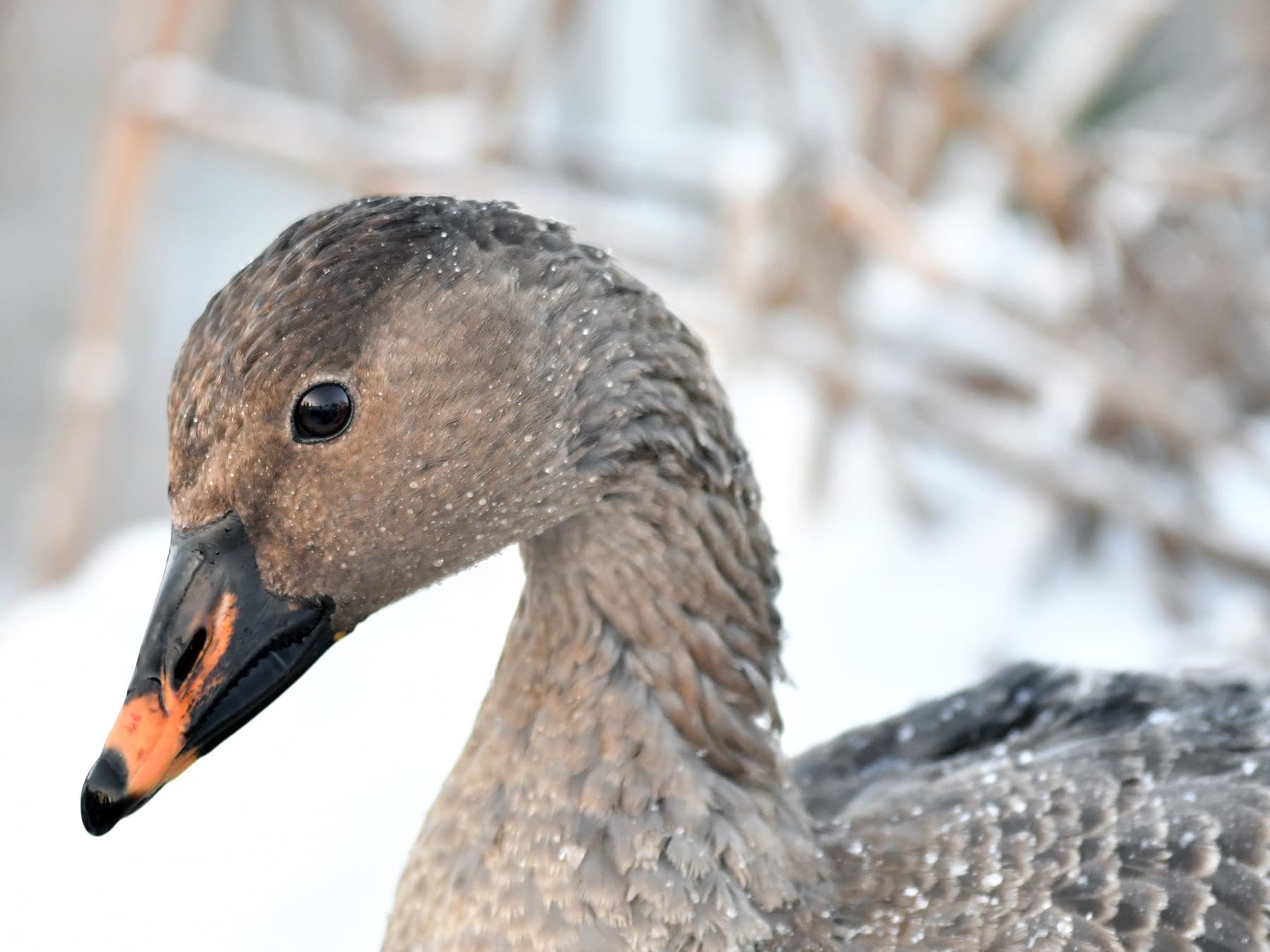
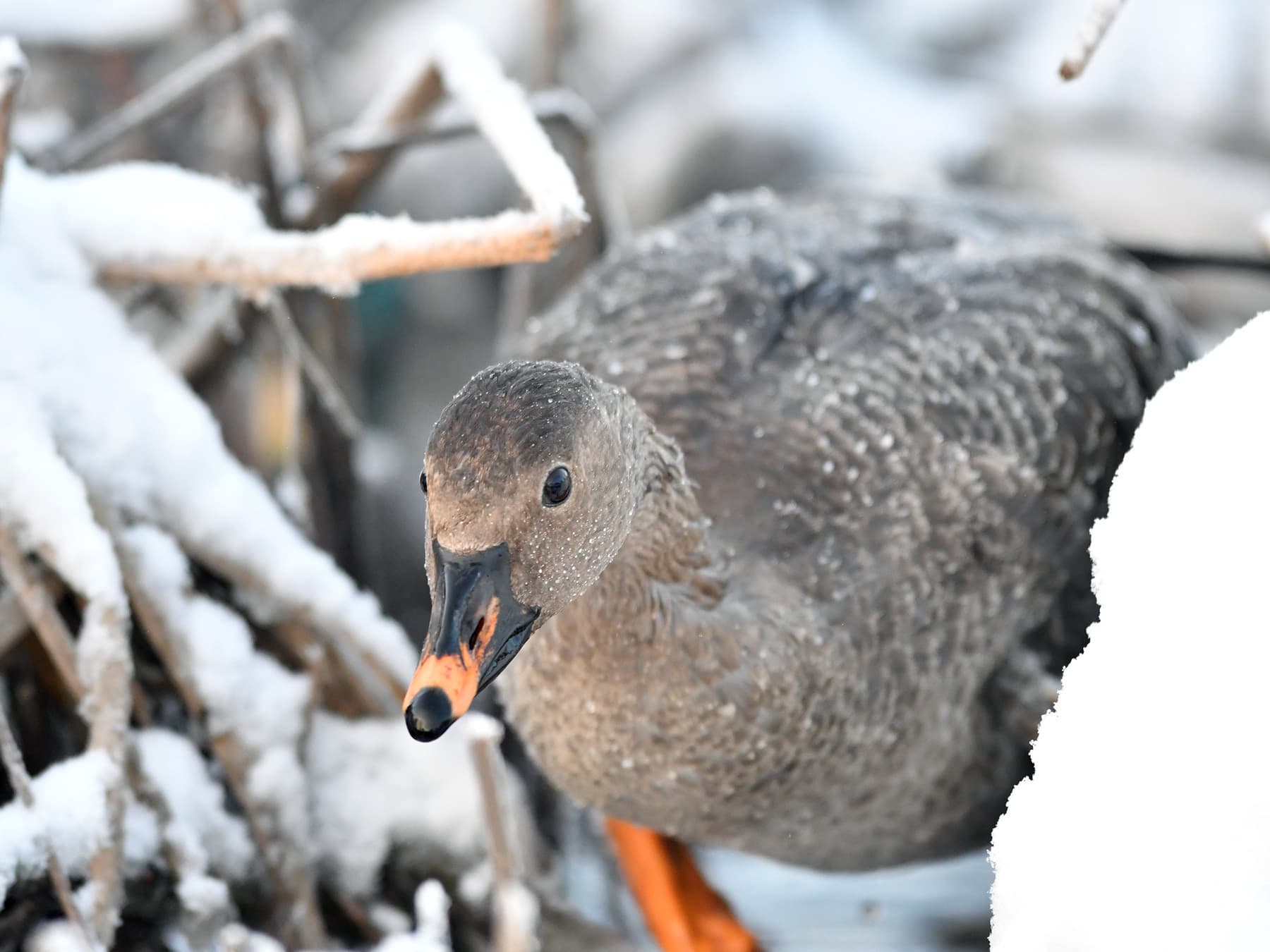
Tundra bean geese have orange legs and feet and their eyes are dark brown. One particularly distinguishing feature is their bill, which is black at the base and the tip, but has a wide orange band across the middle.
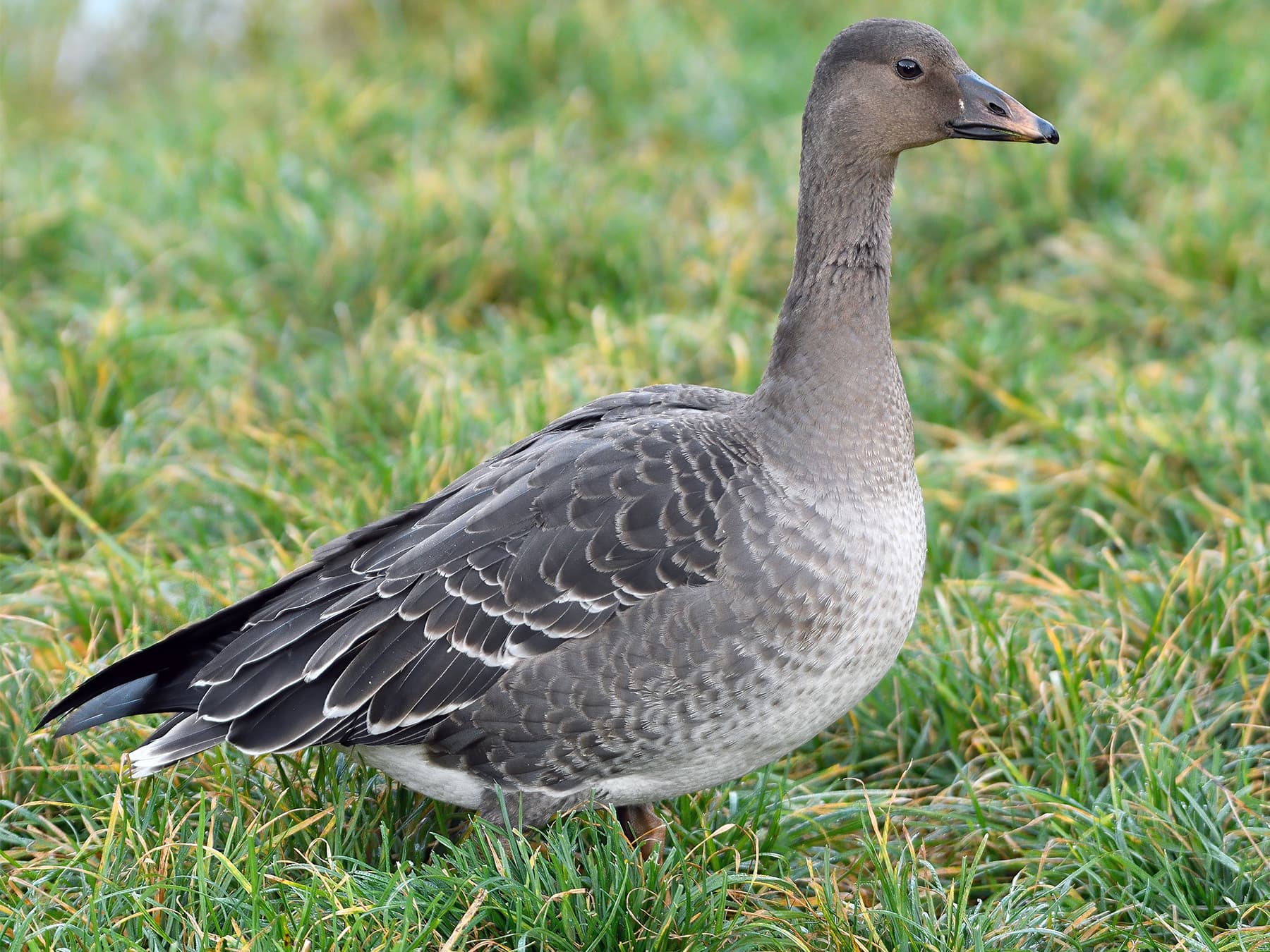
Juvenile tundra bean geese are duller in colour than adults, and their heads and necks are a lighter shade of brown. Upper back feathers have pale edges, which gives them an overall marbled appearance. Their legs are not as vibrant an orange as those of adult tundra bean geese, and their bills are entirely orange rather than banded with black.
How big are Tundra Bean Geese?
Male tundra bean geese are slightly heavier than females. They are classed as medium geese, and are usually significantly smaller than greylag geese.
- Length: 53 cm to 70 cm (20.9 in to 27.6 in)
- Wingspan: 118 cm to 140 cm (46.5 in to 55.1 in)
- Weight Male: 1.9 kg to 3.3 kg (4.2 lb to 7.3 kg)
- Weight Female: 2 kg to 2.8 kg (4.4 lb to 6.2 lb)
Its size
Adults- Length
- 66–84 cm
- Wingspan
- 140–174 cm
- Weight
- 1900–3300 g
Its song and calls
What sound does a Tundra Bean Goose make?
Compared to other geese species, tundra bean geese are relatively quiet, and can be heard making a two-note ‘honk-hank’ flight call. The call of a female tundra bean goose is higher in pitch than that of the male.
- Flight call0:00 / 0:03
Recorded in Normandie, France · January 2024
When and where to see it
OctoberArriving
Most recorded in October
- 1. Shropshireunder 0.1%
- 2. Shetland Islandsunder 0.1%
- 3. Highlandunder 0.1%
- 4. Worcestershireunder 0.1%
- 5. Lincolnshireunder 0.1%
Each dot is a county, state or province: the bigger and darker, the larger the bird’s share of that place’s bird records that month. Grey dots: no regular records. The ringed point is the centre of the bird’s records this month; the arrow shows how it moved since last month, and the dashed loop its path through the year. “Arrivals” colours places where it becomes regular this month (orange) or is in its last regular month (grey). GBIF eBird Observation Dataset, 2019–2024. Map data: Natural Earth, US Census Bureau; place centres © OpenStreetMap contributors.
In your area
See when the Tundra Bean Goose is recorded in your county, state or province.
How often the Tundra Bean Goose turns up in the UK, Ireland, the United States and Canada through the year, from birdwatchers' records.
United Kingdom
Winter visitor · regularly Oct–Apr · most records in January
Ireland
Scarce · most records in March
United States
Passage migrant · regularly Nov–May · most records in December
Canada
Passage migrant · regularly Nov · most records in November
Show as a table
| Month | United Kingdom | Ireland | United States | Canada |
|---|---|---|---|---|
| January | 0.019% (regular) | 0.003% | <0.001% | <0.001% |
| February | 0.014% (regular) | 0.004% | <0.001% | <0.001% |
| March | 0.005% (regular) | 0.005% | <0.001% (regular) | <0.001% |
| April | 0.002% (regular) | – | <0.001% | – |
| May | <0.001% | – | <0.001% (regular) | <0.001% |
| June | <0.001% | – | <0.001% | – |
| July | <0.001% | – | <0.001% | – |
| August | <0.001% | – | <0.001% | – |
| September | <0.001% | – | <0.001% | – |
| October | 0.003% (regular) | – | <0.001% | 0.002% |
| November | 0.005% (regular) | 0.002% | <0.001% (regular) | 0.011% (regular) |
| December | 0.014% (regular) | – | 0.002% (regular) | <0.001% |
Recorded regularly in
Worldwide: recorded regularly in 34 countries
Countries where it was recorded in at least 3 of the 6 years 2019–2024. Linked countries have their own bird list.
Data: EOD – eBird Observation Dataset (Cornell Lab of Ornithology), accessed via GBIF.org, CC BY 4.0. Records from 2019–2024, aggregated and filtered by Birdfact. How these lists are made
What is the habitat of a Tundra Bean Goose?
Breeding grounds of tundra bean geese are found across the sparsely vegetated tundra landscapes of northern Russia, and into taiga zones, where it nests close to lakes, pools and rivers.
Coastal settings become more important in winter months, with inland fields and pasturelands, marshlands and open country among the chief non-breeding habitats.
What is the range of a Tundra Bean Goose?
Tundra bean geese breed across northern Russia and northwestern Siberia, heading south in winter to either north-central and north-western Europe or south-east, towards East China, Korea and Japan.
Winter sightings are generally limited to the northern half of Europe, with Britain and France forming the western extent. Occasionally individuals may reach as far south as Switzerland, although Germany, Poland and Hungary form the usual southern limits to their migratory range.
Where do Tundra Bean Geese live?
Summer breeding populations of tundra bean geese live exclusively on the tundra landscapes of northern Russia and north-western Siberia.
The largest winter populations are traditionally found in regions around the North Sea, as well as substantial numbers in Germany, Poland, France and Italy. To the east, around 30,000 tundra bean geese migrate to South Korea each winter, with a further 20,000 arriving in China and 6,000 in Japan.
How rare are Tundra Bean Geese?
Tundra bean geese are the most common species of bean goose, and more numerous than the similar-looking taiga bean goose. Europe’s winter population is estimated at 550,000 individuals, with around 300 birds arriving in the UK post-breeding.
Where can you see Tundra Bean Geese in North America?
Tundra bean geese have only ever been recorded as accidental vagrants in the United States, with rare sightings reported in Canada in Quebec, Yukon and Nova Scotia, and Alaska, and in the US in Washington, California, Iowa and Nebraska.
Where can you see Tundra Bean Geese in the UK?
Although each year up to around 300 tundra bean geese spend winters in the UK, arrivals are sporadic and unpredictable and there doesn’t seem to be any affiliation to previously used wintering grounds.
Sightings are most common along the eastern and southeastern coasts of England, and at Gloucestershire’s WWT Slimbridge reserve and Holkham Marshes in Norfolk.
Although arrivals are possible from October onwards, sightings are most common later in winter, in December and January, as it’s believed that prior to this, tundra bean geese may spend time at intermediate moulting grounds in southern Scandinavia.
Migrating birds are regularly seen in passage along stretches of Scotland’s eastern coast.
Migration
Do Tundra Bean Geese migrate?
Tundra bean geese are fully migratory, breeding in the tundra landscapes of northern Russia and Siberia, before returning to wintering grounds across western and central Europe and isolated regions of Asia, including Korea, Japan and north-western China.
Are Tundra Bean Geese native to North America?
Tundra bean geese are extremely rare vagrant visitors to North America, and no established breeding records exist.
Are Tundra Bean Geese native to the UK?
Sightings of around 300 tundra bean geese are reported each year in the UK, most frequently in eastern and southern England. No breeding takes place in Britain, and visiting birds can crop up in different regions each year with no predictable pattern.
Tips for seeing it
- Look for large flocks in wetlands and agricultural fields during migration seasons
- Observe the distinctive orange band on the bill to differentiate it from other goose species
- Listen for their characteristic honking calls, especially in flight
- In the UK, best spotted in eastern England during winter months
What it eats
What do Tundra Bean Geese eat?
Grains, potatoes, grass, cereals and other crops are the main foods in a tundra bean goose’s diet. During winter, they forage on agricultural land, where beans and carrots seem to be favourites.
In Korea, East China and Japan, rice paddies offer attractive foraging grounds. On their tundra breeding landscapes, some small mammals and insects, particularly midges and mosquitoes, may occasionally be eaten.
What do Tundra Bean Goose chicks eat?
As soon as they hatch, young tundra bean geese accompany their parents to forage for their own food, grazing on grasslands and fields for seeds, grain and some small terrestrial insects and mosquitos.
Nesting and breeding
Where do Tundra Bean Geese nest?
Tundra bean geese choose nest sites on the Arctic tundra, creating shallow scrapes among the tussocks and rocky and moss-covered ground. Vegetation is used to build up the sides of their nest scrape, and then the interior is lined with lichen and moss, as well as some soft down.
When do Tundra Bean Geese nest?
Tundra bean geese typically nest between May and June, although laying of eggs may be delayed by poor weather. One brood per year is usual, and family groups remain together until the following spring. Only females sit on the eggs, and the incubation period lasts for between 24 and 29 days.
What do Tundra Bean Goose eggs look like?
Eggs laid by tundra bean geese are cream to strawlike in colour and have no surface markings or streaks. A typical clutch contains 4 to 6 eggs, which measure up to 90 mm by 59 mm (3.5 in by 2.3 in).
Do Tundra Bean Geese mate for life?
Long-term pair bonds are formed between tundra bean geese from the age of two or three years. Pairs then remain together until one mate dies.
Behaviour
Are Tundra Bean Geese aggressive?
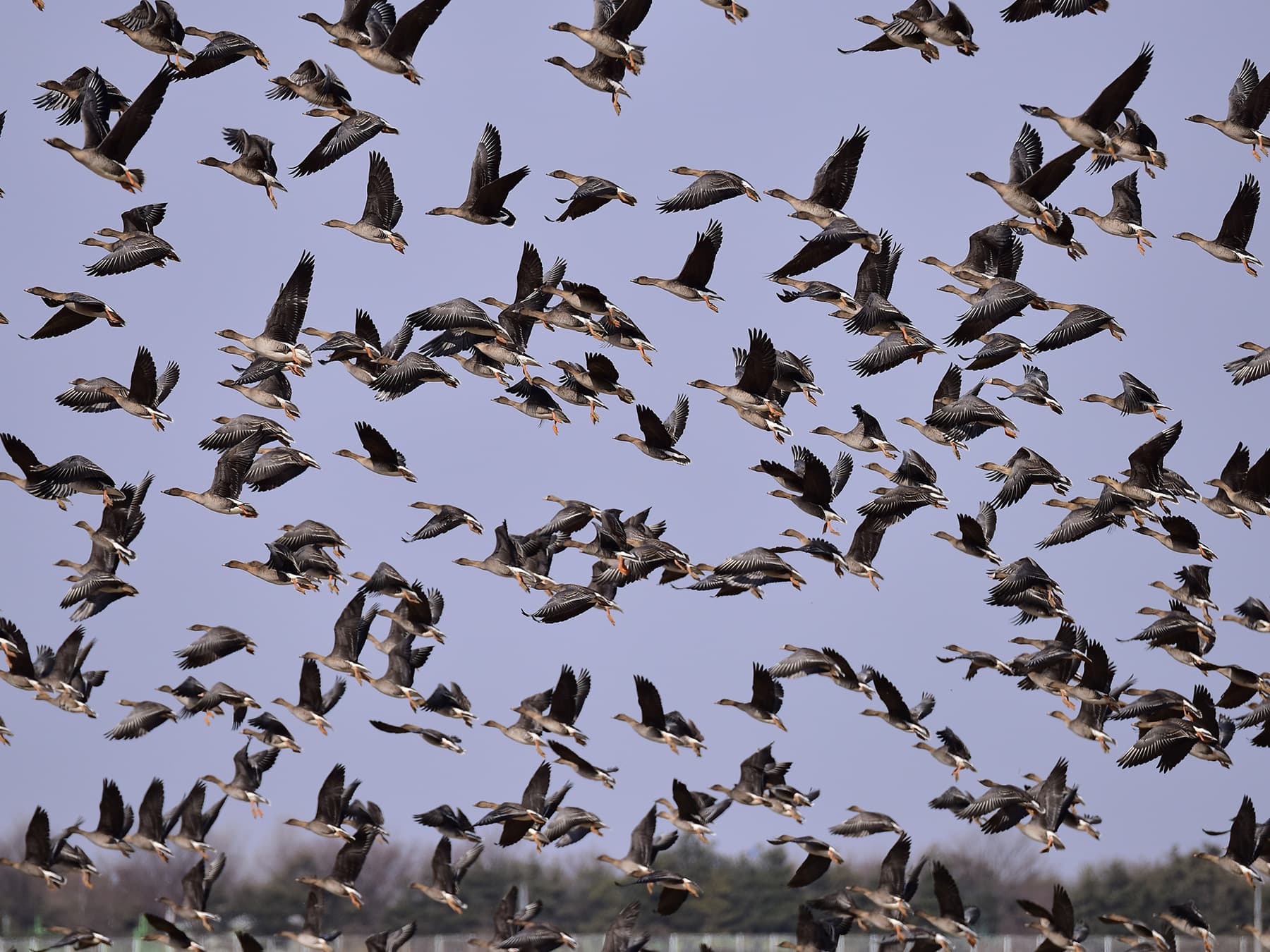
Tundra bean geese are a highly aggressive species, and do not tolerate approaches to their eggs or young. Such encounters are usually met with a noisy and physical defence, including flapping and attempting to chase off the threat hissing, honking and snapping.
Lifespan and predators
How long do Tundra Bean Geese live?
There are no reliable records for the maximum or average life expectancy of the tundra bean goose, although they are thought to have a similar lifespan to the closely related taiga bean goose, which lives for around 7 years and breeds for the first time at the age of two to three years.
What are the predators of Tundra Bean Geese?
In years when lemming populations are high across Arctic tundra landscapes, tundra bean geese experience lower rates of predation by Arctic foxes – a major predator of the species during the breeding season. They may also occasionally be preyed on by wolves, polar bears and owls.
Are Tundra Bean Geese protected?
The Wildlife and Countryside Act, 1981 prohibits the deliberate killing, injuring or taking into captivity of tundra bean geese in the UK.
Are Tundra Bean Geese endangered?
Tundra bean geese are considered a species of least concern across much of their European range.
Decreases in numbers have been noted in parts of eastern Europe, in particular Hungary. The population of tundra bean geese that winter in East China, Korea and Japan have witnessed noticeable declines in recent decades and are now classed as a Vulnerable species.
In the UK, they are classified as an Amber species on the British Birds of Conservation Concern list.
Conservation
While currently listed as Least Concern, Tundra Bean Geese face threats from habitat loss in their breeding and wintering grounds. Climate change impacts on Arctic tundra habitats are a growing concern.
Conservation efforts focus on protecting key wetland areas along their migration routes.
Similar birds
Often mistaken for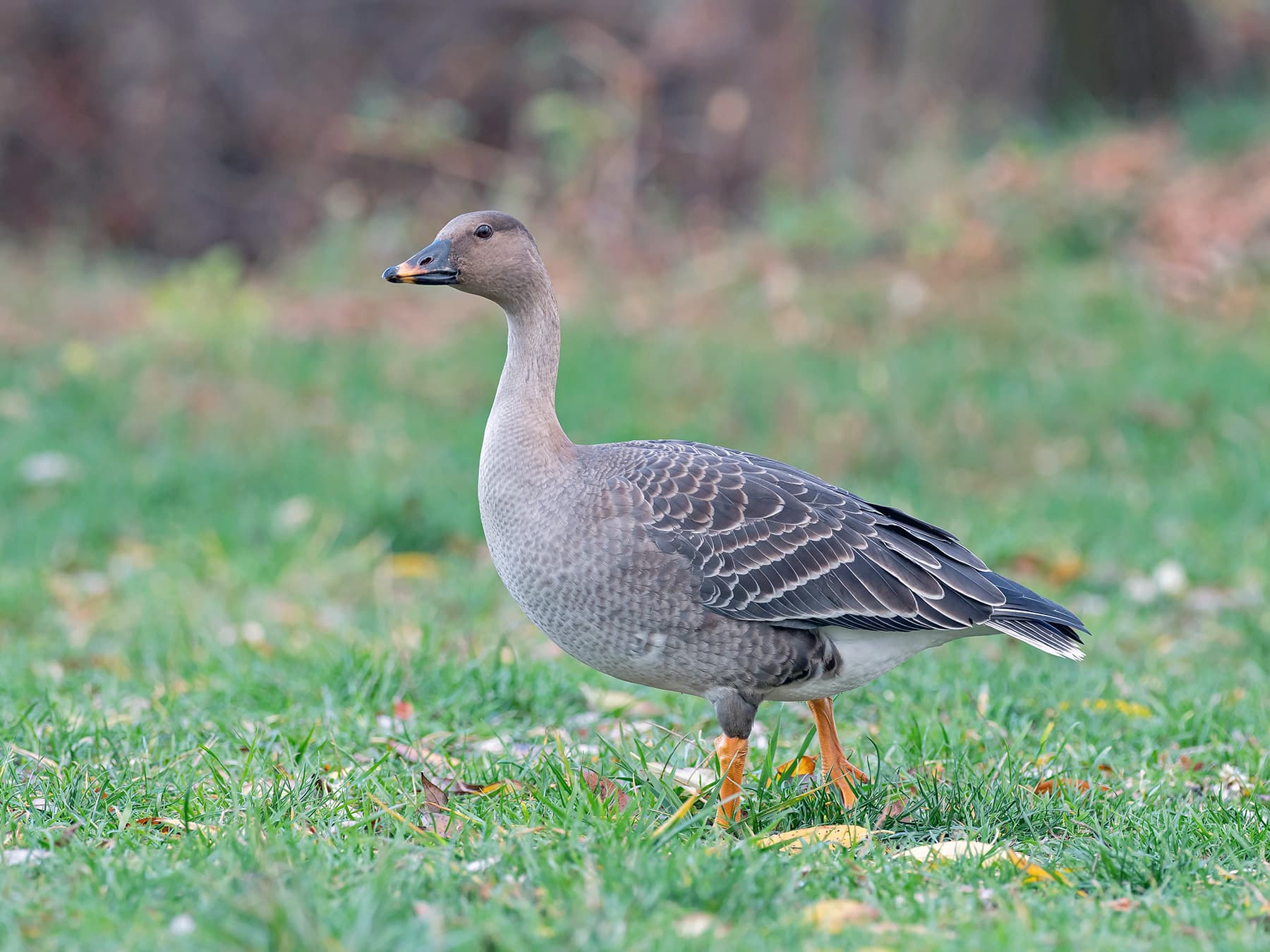
More photos
3 photos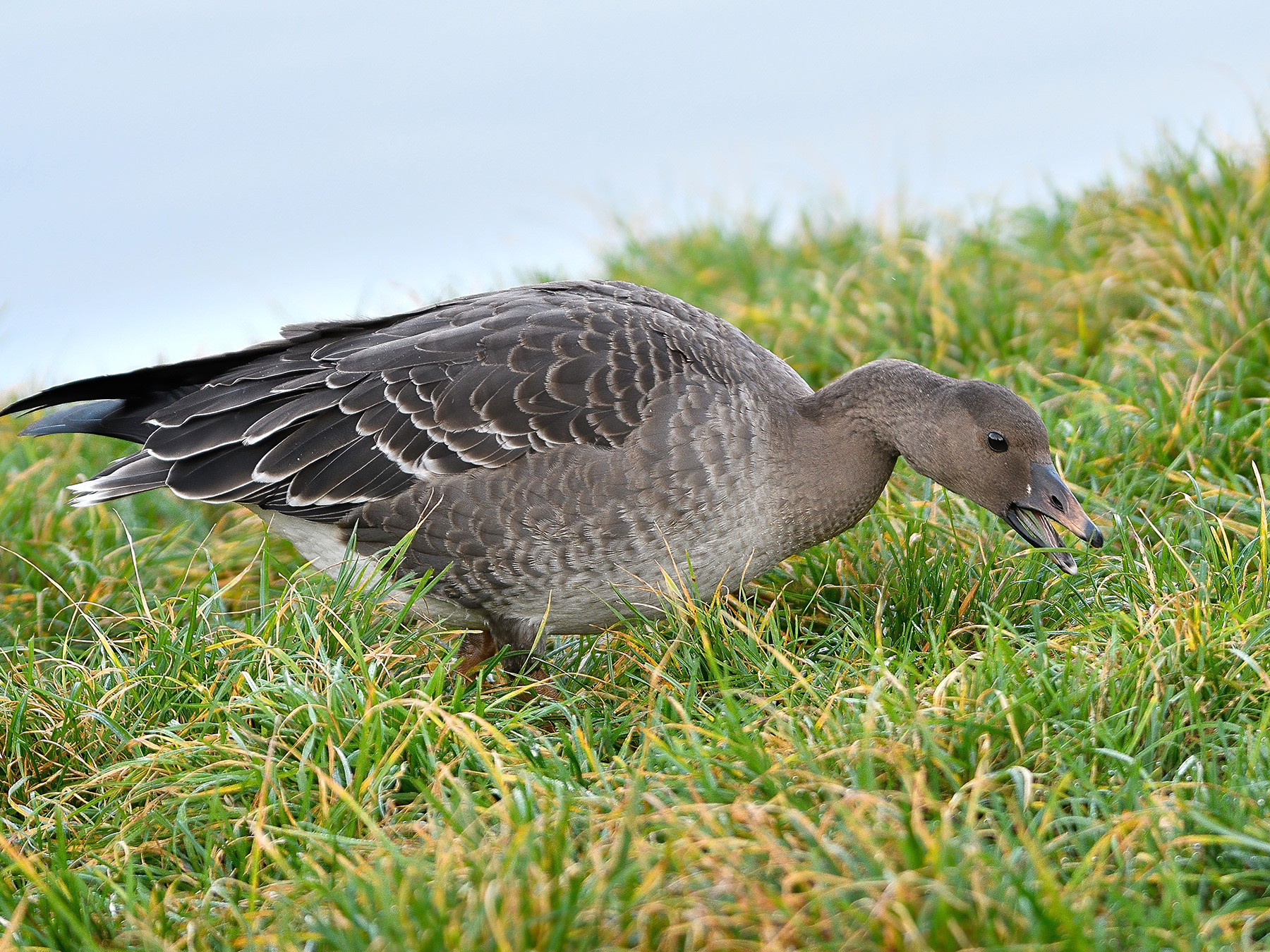
Tundra Bean Goose guides
4 guidesQuick facts
- Length
- 66–84 cm
- Wingspan
- 140–174 cm
- Weight
- 1900–3300 g
- Lifespan
- 7 years
- Family
- Ducks, Geese & Swans
- Migration
- Long-distance Migrant
- Global status (IUCN)
- Least Concern
- World population
- Unknown
- Population trend
- Stable
- Also called
- Eastern Bean Goose
- Scientific name
- Anser serrirostris

Checked by
Nathan Cope, founder and editor
Nathan founded Birdfact and leads its writers and contributors in the UK, the US and Canada. He has watched and studied birds for more than ten years, and checks every article and species guide before it’s published.