


Taiga Bean Goose
Bean Goose · Anser fabalis
By the Birdfact teamChecked by Nathan Cope
On this page14 sections
How to recognise it
What do Taiga Bean Geese look like?
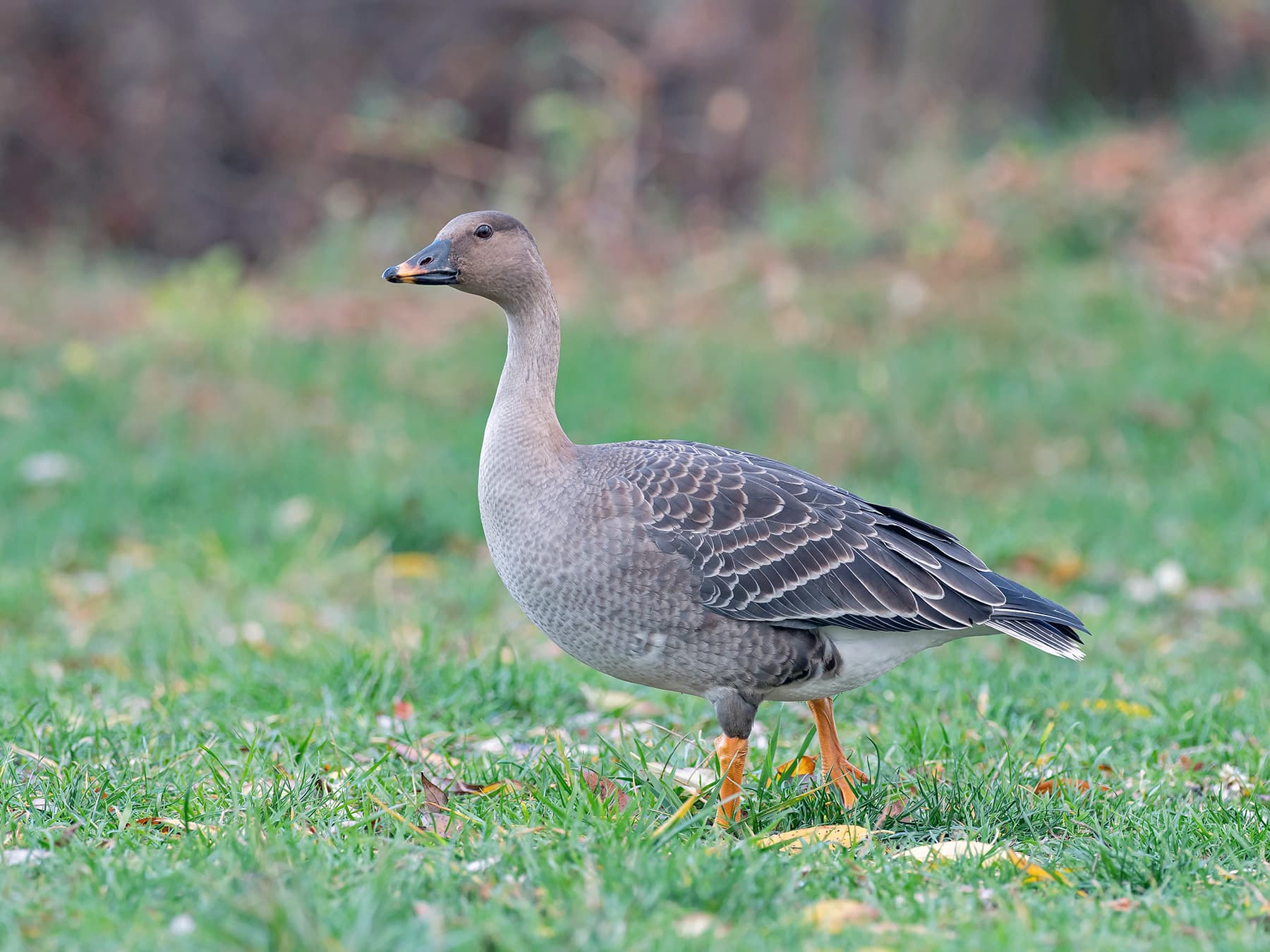
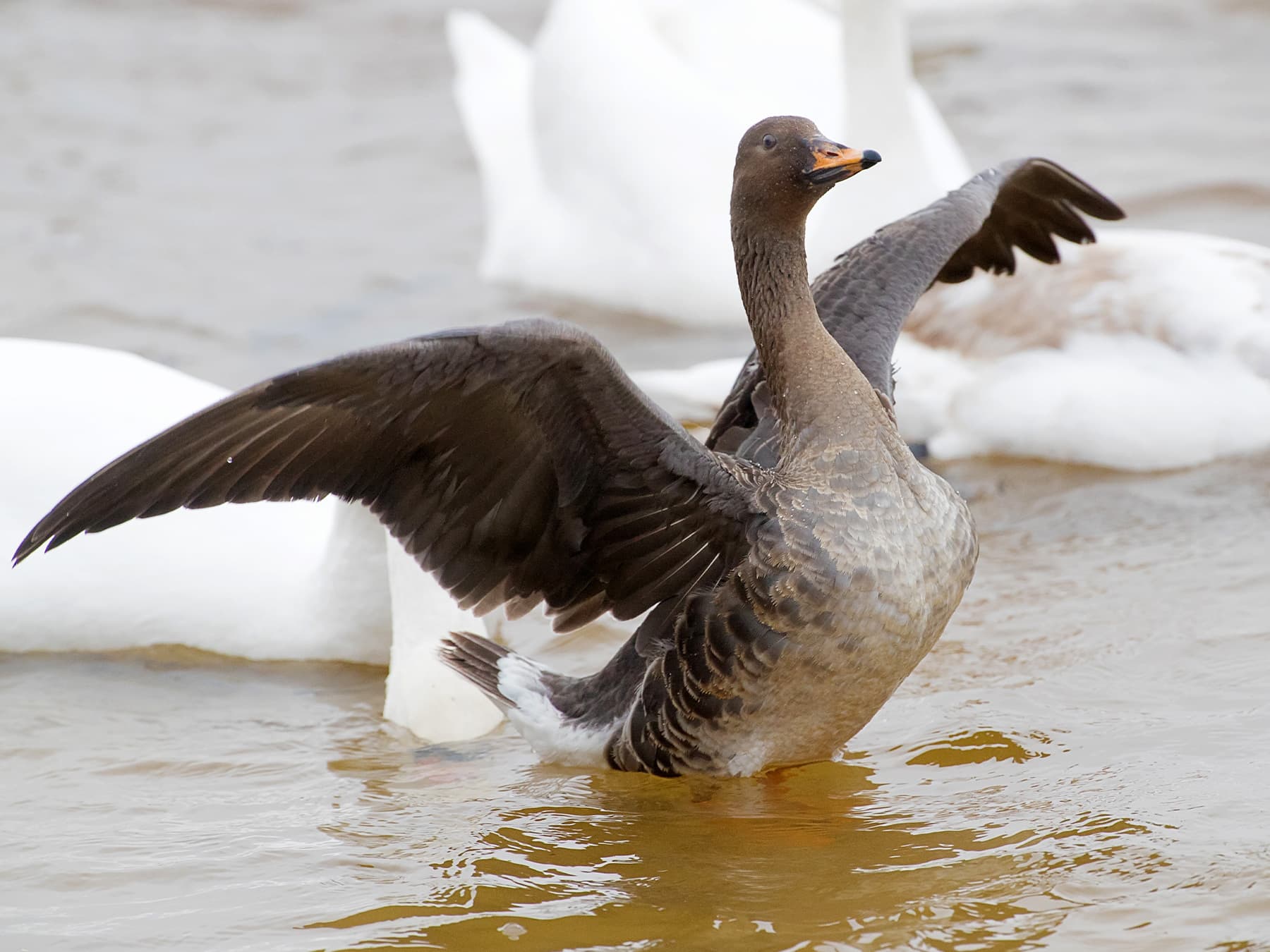
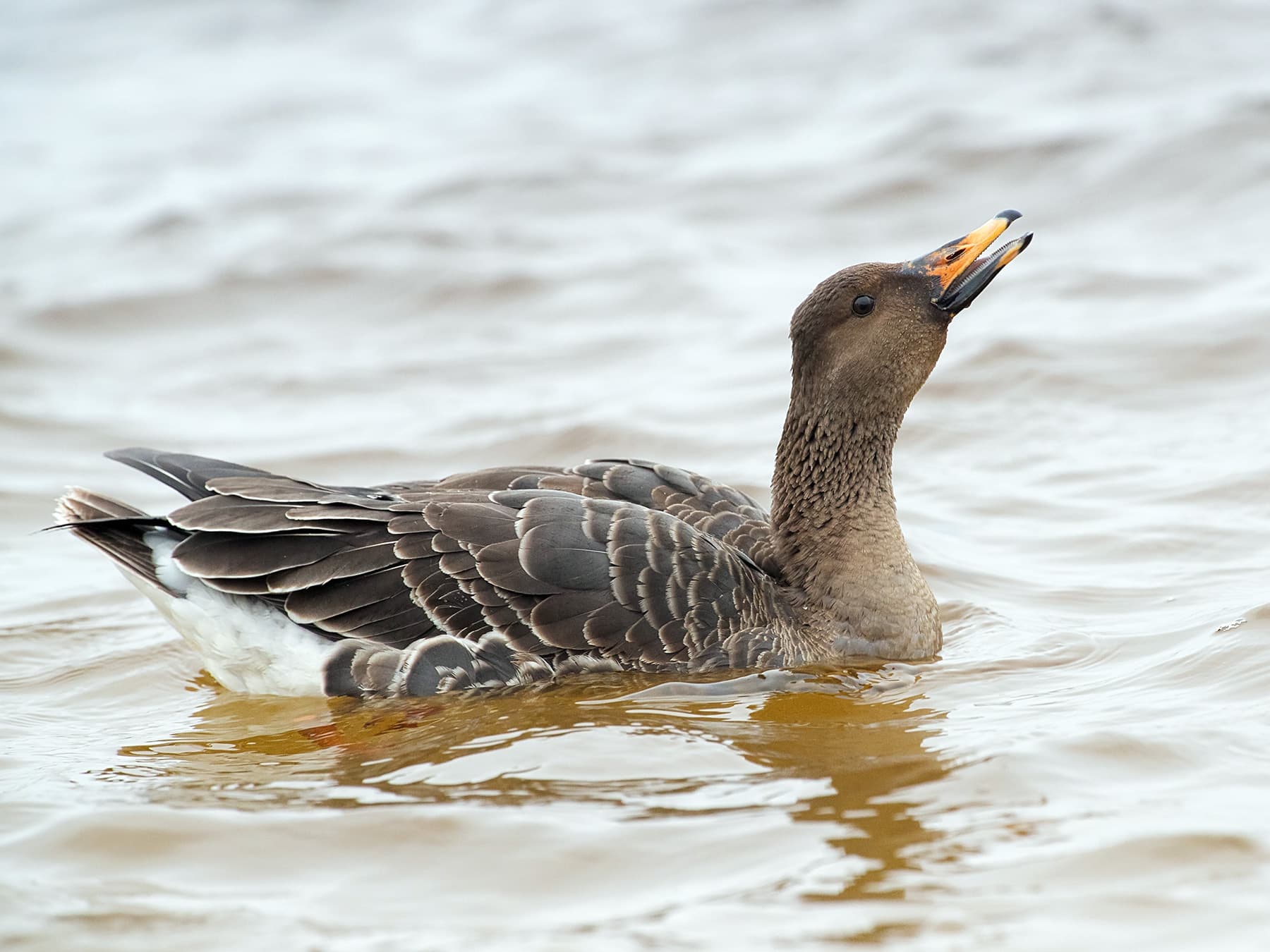
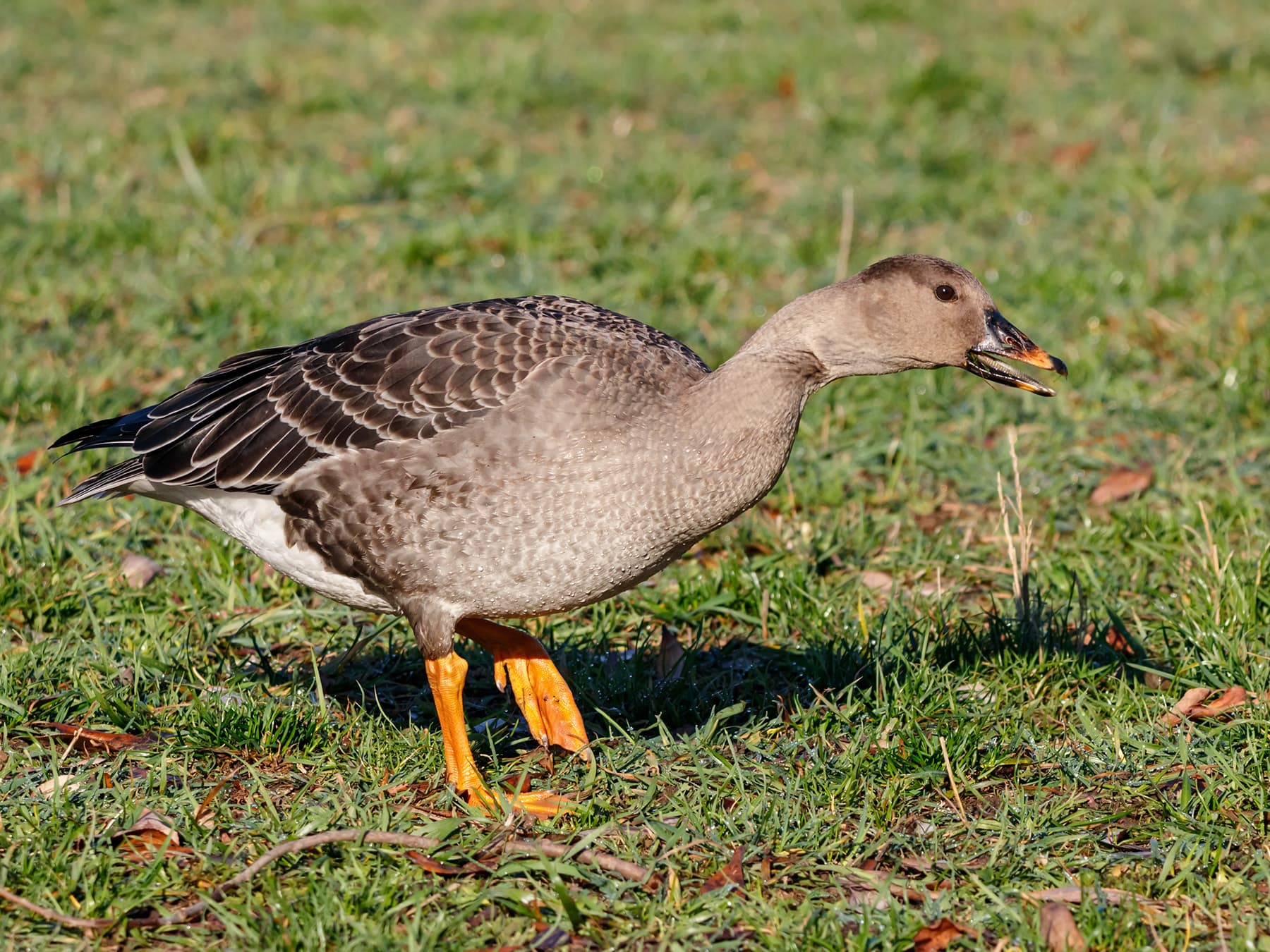
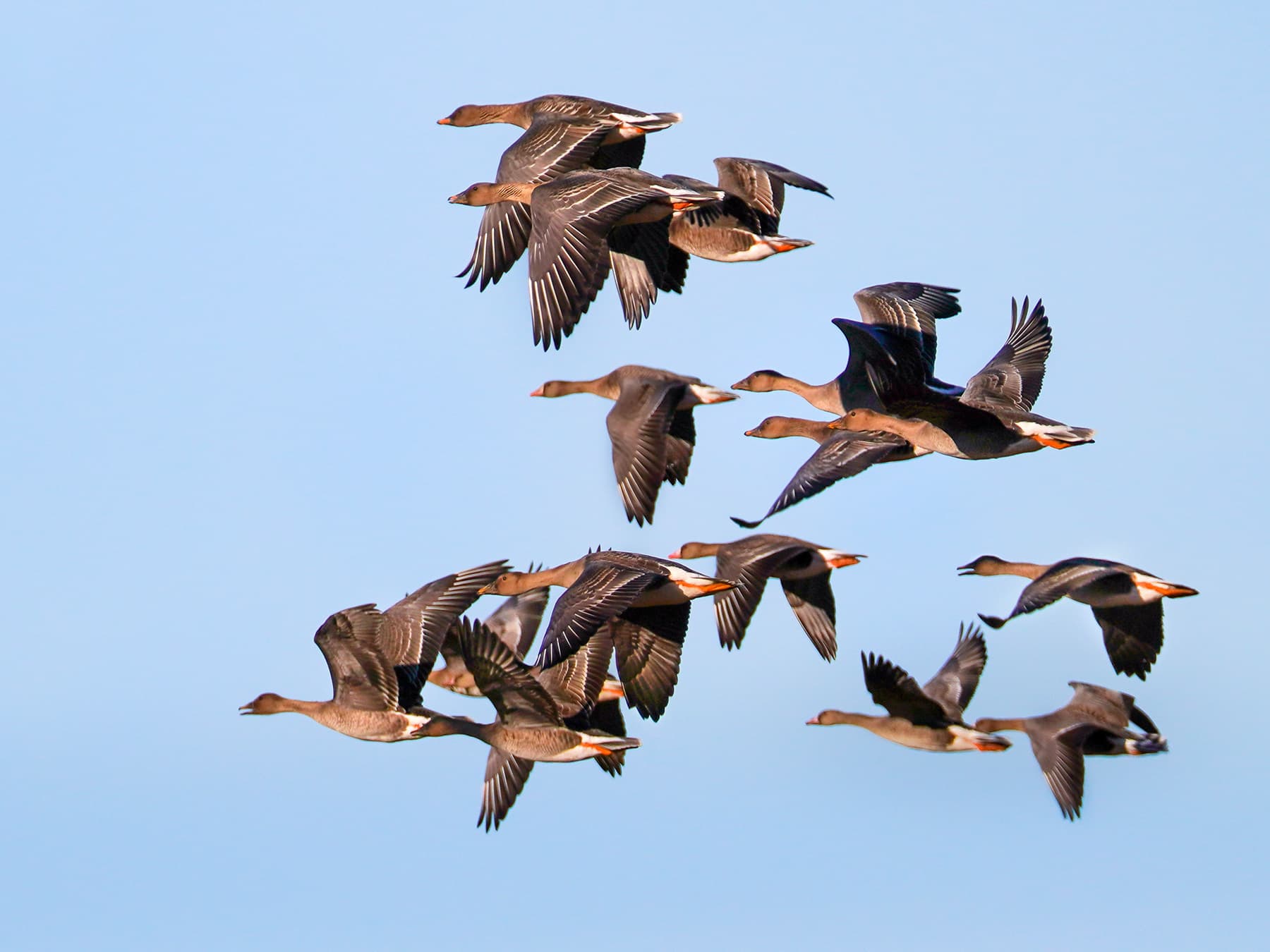
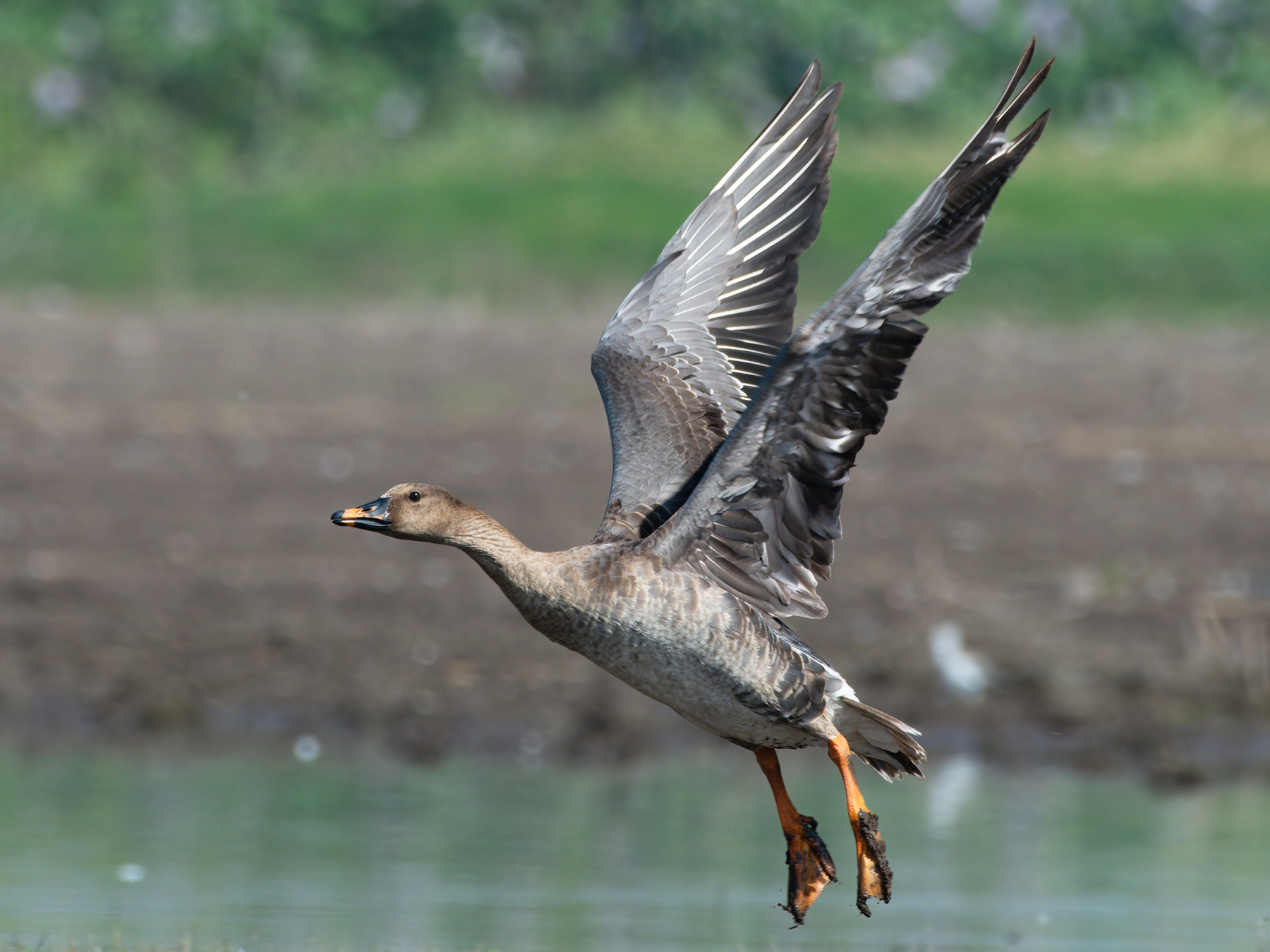
Taiga bean geese are medium-sized geese, similar in appearance to several other species of grey geese. Their upperparts are mid-brown, with white edges to feathers, giving a streaked effect that is particularly visible on the wings, which appear grey when folded and a darker charcoal black in flight. The lower belly and undertail are bright white.
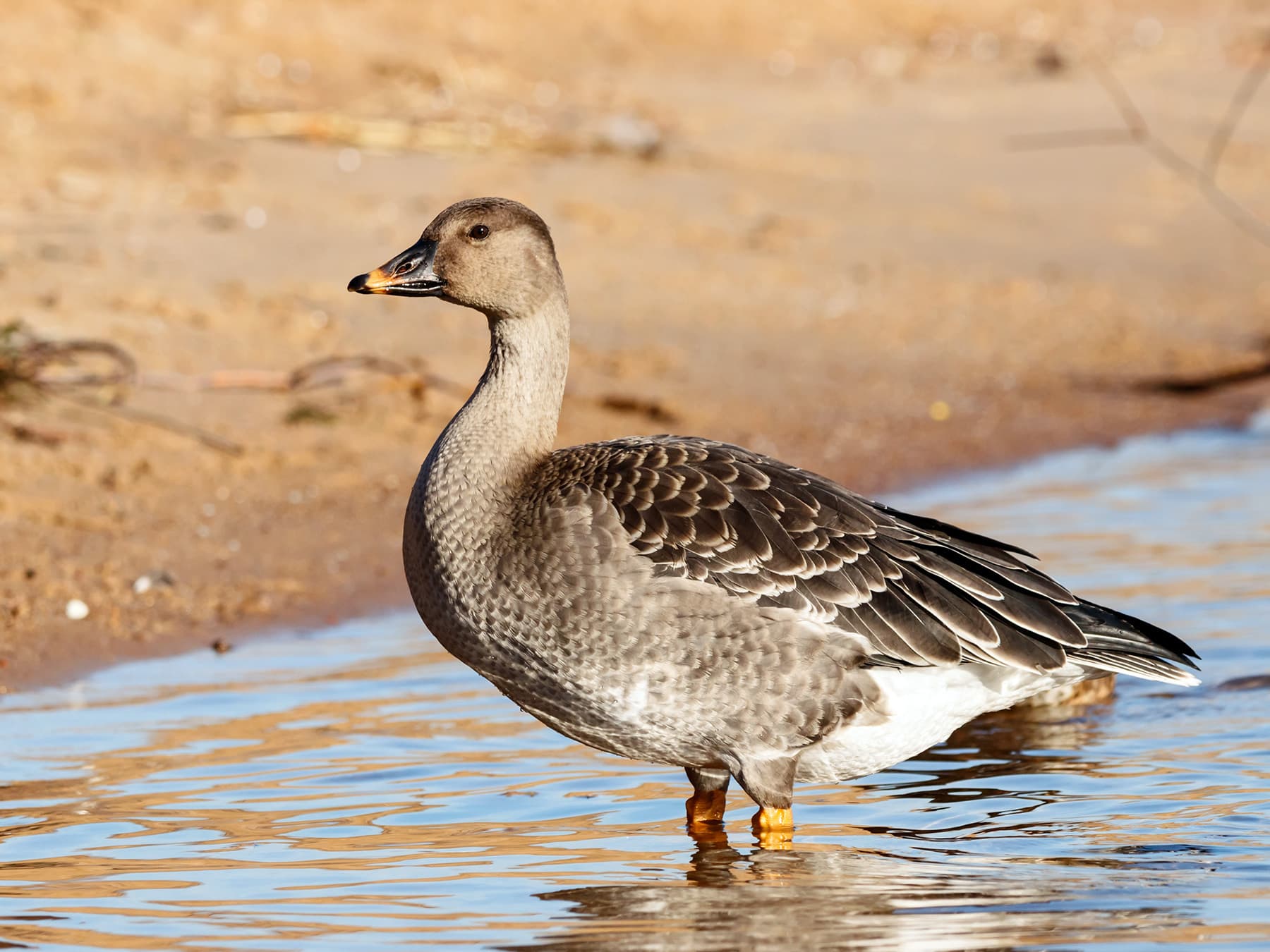
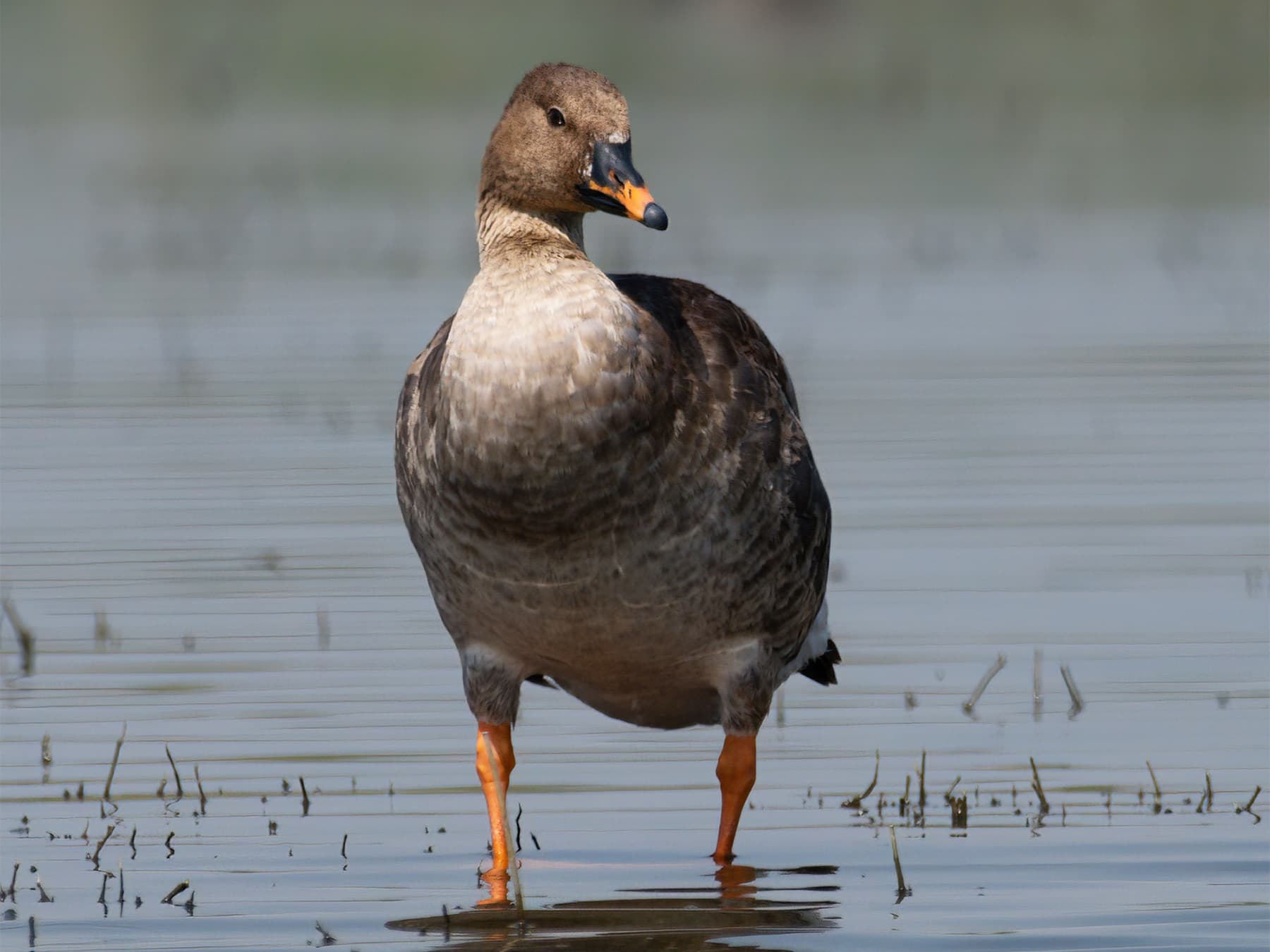
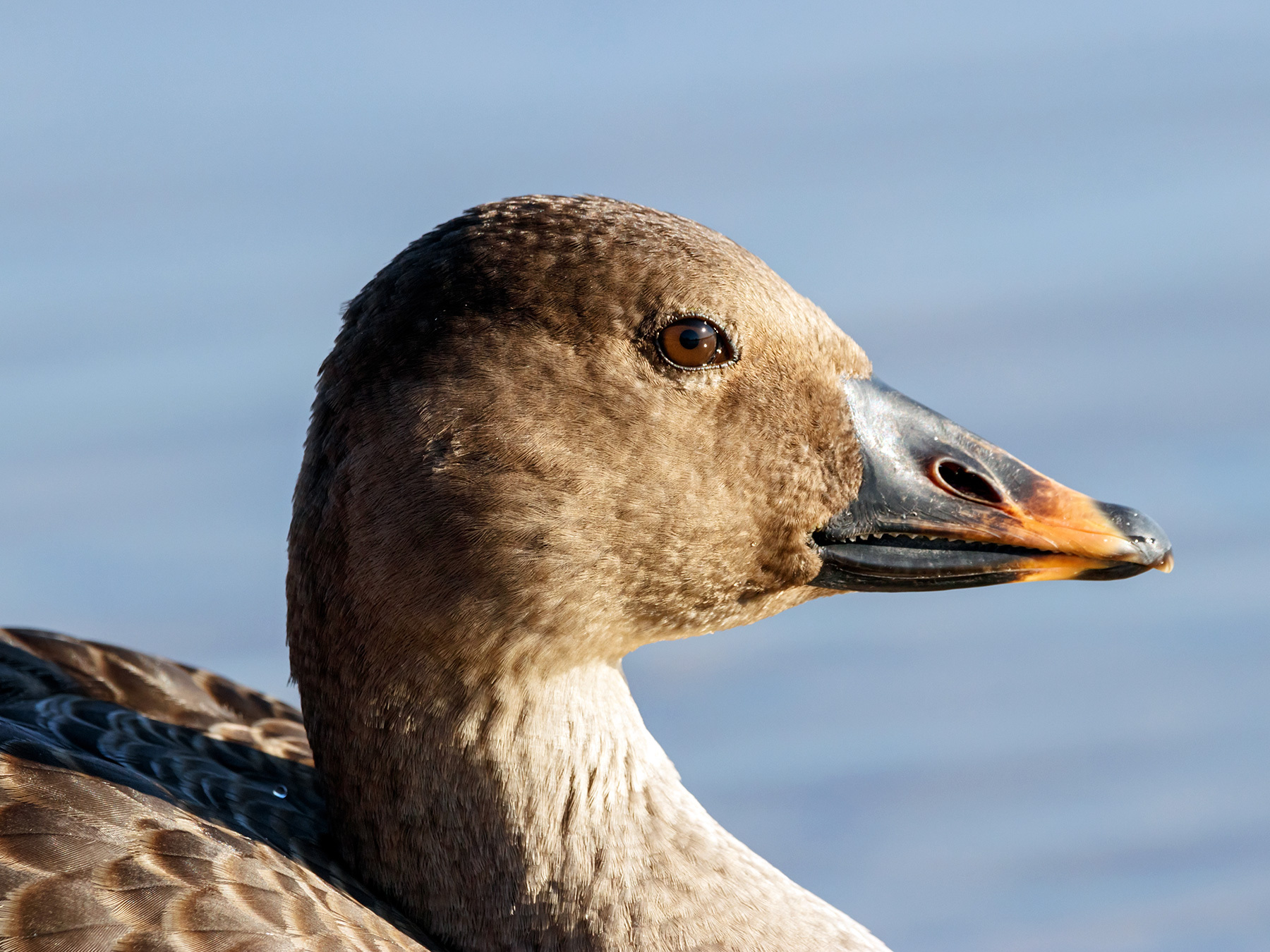
The taiga bean goose has a brownish-grey neck, with a darker brown face and neck. The bill has a wide orange band across it, contrasting with a black base and tip. Legs and feet are also orange.
Female and male taiga bean geese are alike in colouring, although females are slightly smaller than males.
Young taiga bean geese are also fairly similar to adults, although duller in plumage and more marked fringing to the edges of feathers on the upper body. The patterning on the wings is less defined and more mottled until they mature. Legs, feet, and bill are a less vibrant shade of orange.
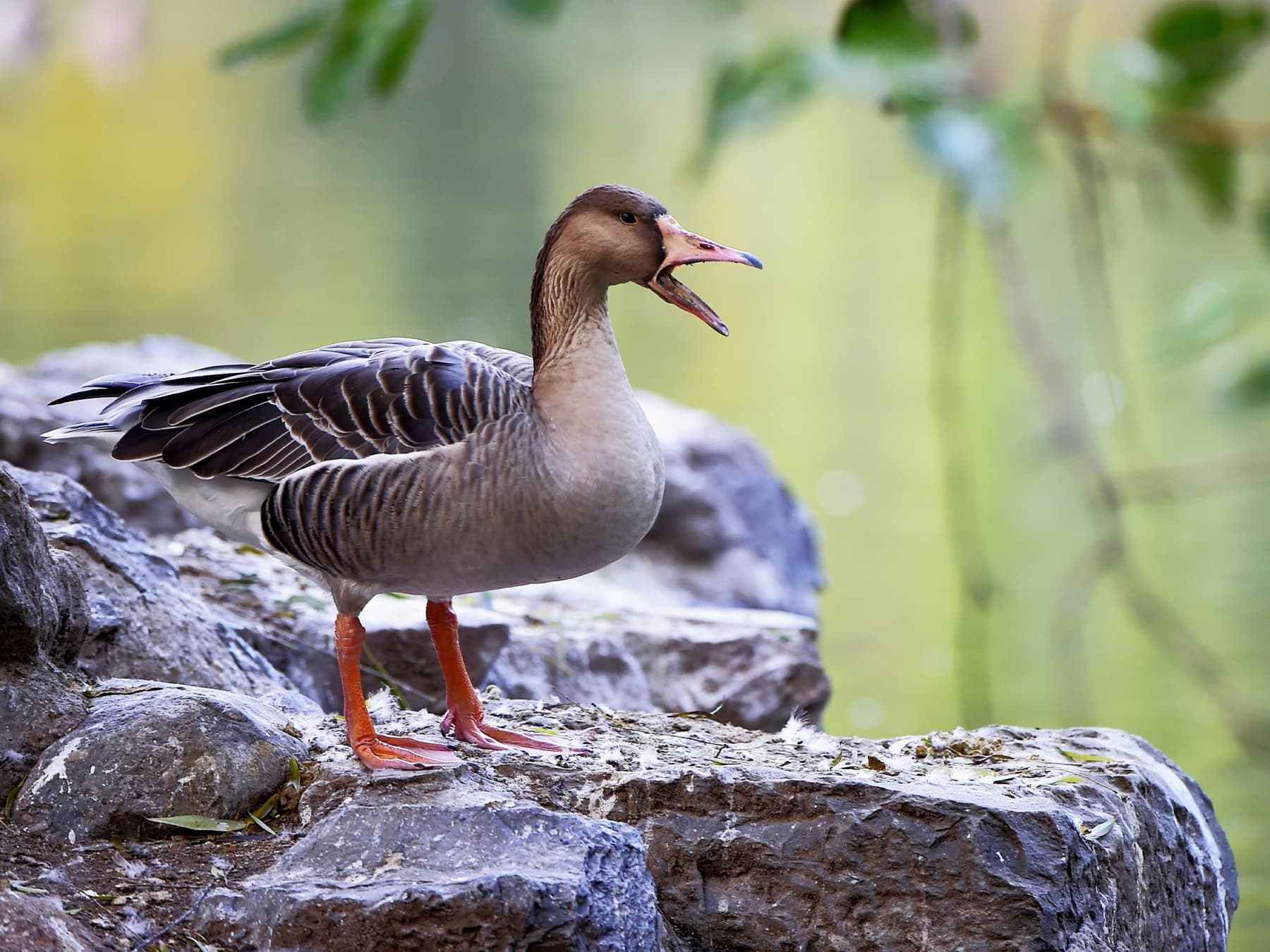
Taiga bean geese can be distinguished from tundra bean geese as they are slightly larger, darker, and sleeker than the tundra species, with a longer neck and more orange on their bill.
How big are Taiga Bean Geese?
Taiga bean geese are slightly larger than the very similar related species the tundra bean goose. Males are larger and heavier than females.
- Length: 66 cm to 88 cm (30 in to 35 in)
- Wingspan: 147 cm to 175 cm (4 ft 10 in to 5 ft 8 in)
- Weight Male: 2.6 kg to 4.0 kg (5.7 oz to 7.9 oz)
- Weight Female: 2.2 kg to 3.4 kg (4.9 lb oz to 7.5 oz)
Its size
Adults- Length
- 68–88 cm
- Wingspan
- 140–174 cm
- Weight
- 2000–4100 g
Its song and calls
What sound does a Taiga Bean Goose make?
Not one of the noisiest goose species, the taiga bean goose has a low-pitched honking call, heard in flight and on the water as a contact call, which sounds like ‘hank-hunk’.
When and where to see it
OctoberArriving
Most recorded in October
- 1. Falkirk0.43%
- 2. Perthshire and Kinrossunder 0.1%
Each dot is a county, state or province: the bigger and darker, the larger the bird’s share of that place’s bird records that month. Grey dots: no regular records. The ringed point is the centre of the bird’s records this month; the arrow shows how it moved since last month, and the dashed loop its path through the year. “Arrivals” colours places where it becomes regular this month (orange) or is in its last regular month (grey). GBIF eBird Observation Dataset, 2019–2024. Map data: Natural Earth, US Census Bureau; place centres © OpenStreetMap contributors.
In your area
See when the Taiga Bean Goose is recorded in your county, state or province.
How often the Taiga Bean Goose turns up in the UK through the year, from birdwatchers' records.
United Kingdom
Winter visitor · regularly Oct–Apr · most records in January
Show as a table
| Month | United Kingdom |
|---|---|
| January | 0.005% (regular) |
| February | 0.003% (regular) |
| March | <0.001% (regular) |
| April | <0.001% (regular) |
| May | <0.001% |
| June | – |
| July | – |
| August | – |
| September | <0.001% |
| October | <0.001% (regular) |
| November | 0.001% (regular) |
| December | 0.004% (regular) |
Recorded regularly in
Worldwide: recorded regularly in 22 countries
Countries where it was recorded in at least 3 of the 6 years 2019–2024. Linked countries have their own bird list.
Data: EOD – eBird Observation Dataset (Cornell Lab of Ornithology), accessed via GBIF.org, CC BY 4.0. Records from 2019–2024, aggregated and filtered by Birdfact. How these lists are made
What is the habitat of a Taiga Bean Goose?
Taiga bean geese breed in taiga habitats, finding lakes, pools and marshy boglands or rivers in which to nest and forage. The species also nest in the wooded tundra zone.
Winter habitats include open country, and grazing areas around agricultural land, as well as low-lying wetlands, particularly marshes.
What is the range of a Taiga Bean Goose?
Three distinct populations of breeding taiga bean geese exist. The furthest east is found from eastern Scandinavia to the Ural Mountains. Individuals from this population spend winters in western, central, and southern Europe, particularly the Netherlands and Germany.
Further east, from the Ural Mountains to Lake Baikal, taiga bean geese are present, heading to Turkmenistan, Iran, and western China once breeding is complete.
A third population breeds in Siberia, heading south to eastern China and Japan each autumn.
The range of all three populations of taiga bean geese is located to the south of that of the related species, the tundra bean goose.
Where do Taiga Bean Geese live?
Worldwide, there are an estimated 680,000 to 800,000 taiga bean geese, although numbers are in decline. Between 63,000 and 85,000 individuals are thought to breed in Sweden, with a further 23,000 pairs in Russia. In winter, the Netherlands and Germany welcome the highest numbers of migrating taiga bean geese.
How rare are Taiga Bean Geese?
In the UK, taiga bean geese are more common than the similar tundra bean goose, although neither species is particularly common in the British Isles. Only around 230 taiga bean geese arrive in Britain in the post-breeding season before returning to Scandinavia or Siberia the following spring.
Where can you see Taiga Bean Geese in North America?
Taiga bean geese are exceptionally rare vagrant visitors to North America, with occasional sightings reported in Canada and the US, but no regular established breeding or wintering sites.
Reports of taiga bean geese have been recorded in Quebec, Yukon, and Nova Scotia in Canada, and in Alaska, Washington, California, Iowa, and Nebraska, in the United States.
Where can you see Taiga Bean Geese in the UK?
During the spring and summer, taiga bean geese are not found in the wild in the United Kingdom. Arrivals begin in October, with migrating birds arriving from Scandinavia and settling for up to five or six months.
Passage sightings of taiga bean geese are regularly reported in north-east Scotland, but two established sites may offer the best chance of spotting one. These include the Yare Valley in Norfolk and the Avon Valley in Falkirk, south-central Scotland.
Migration
Do Taiga Bean Geese migrate?
Taiga bean geese are relatively short-distance migrants, breeding in the sub-Arctic taiga regions of northern Europe and moving southwards into central and southern Europe, Iran, parts of China, Japan, the Korean peninsula, and South East Asia.
Migration south begins from October and November onwards, with the return trip starting in February each year.
Are Taiga Bean Geese native to North America?
Taiga bean geese are only very rare and occasional vagrants to North America, with their native range occurring in northern Europe and parts of Central Asia.
Are Taiga Bean Geese native to the UK?
No taiga bean geese breed in the UK, but two regular sites welcome winter migrants each year, one in Scotland and one in Norfolk. Only around 230 individuals arrive in the UK after the breeding season ends and depart the following spring.
Tips for seeing it
- Look for large flocks in wetlands and agricultural fields during migration seasons
- Observe the distinctive orange and black bill pattern to distinguish it from other goose species
- Listen for their characteristic honking calls, especially in flight
- In the UK, focus on eastern coastal areas during the winter months
What it eats
What do Taiga Bean Geese eat?
As their names suggest, taiga bean geese follow a diet in which beans feature heavily. Grasses, cereal crops, potatoes, and other agricultural crops are among the main foods eaten. Leaves, roots, tubers, seeds, grains and nuts are also popular.
What do Taiga Bean Goose chicks eat?
Young taiga bean geese are led to grazing grounds shortly after hatching, where they forage for grass and seeds alongside their parents.
Nesting and breeding
Where do Taiga Bean Geese nest?
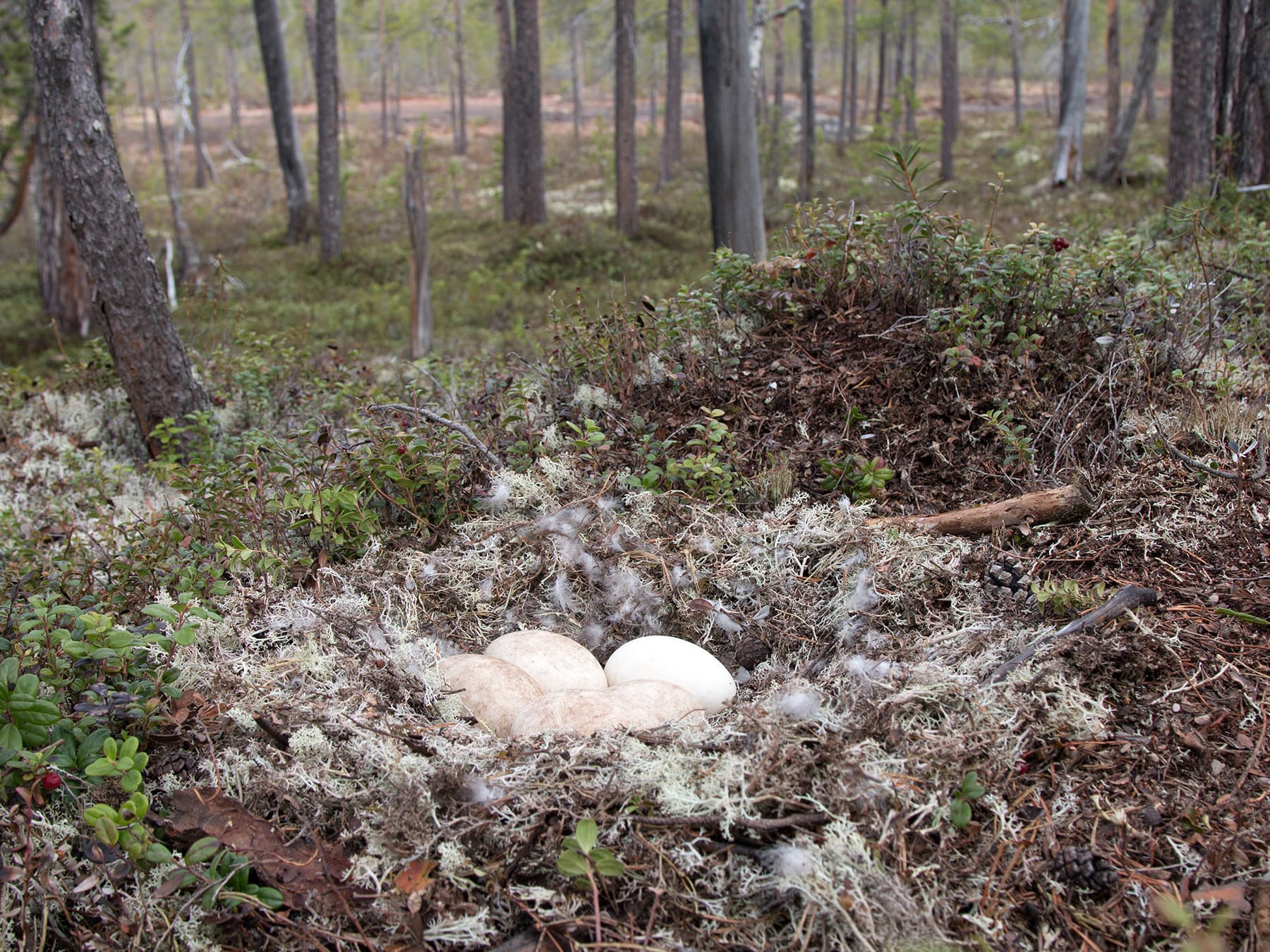
Taiga bean geese nest on boggy ground, choosing raised spots such as hummocks at least 50 cm above the bog’s surface to ensure they are safe from flooding or rising water levels. Nests are built from aquatic vegetation found nearby.
When do Taiga Bean Geese nest?
Taiga bean geese begin to arrive on breeding grounds from April onwards, with laying reaching a peak in May although it may be delayed depending on weather conditions.
After an incubation period of 25 to 29 days, by the female alone, the eggs hatch, and young taiga bean goose goslings are able to swim and forage for their own food almost immediately.
What do Taiga Bean Goose eggs look like?
Between four and six pale, unmarked eggs are laid by taiga bean geese. Eggs are large, measuring 84 mm by 56 mm (3.3 in by 2.2 in) and weighing approximately 146 g (5.2 oz).
Do Taiga Bean Geese mate for life?
Strong, long-term monogamous pair bonds are formed between taiga bean geese mates, which are only broken on the death of one partner. Pairs raise one brood together each year
Behaviour
Are Taiga Bean Geese aggressive?
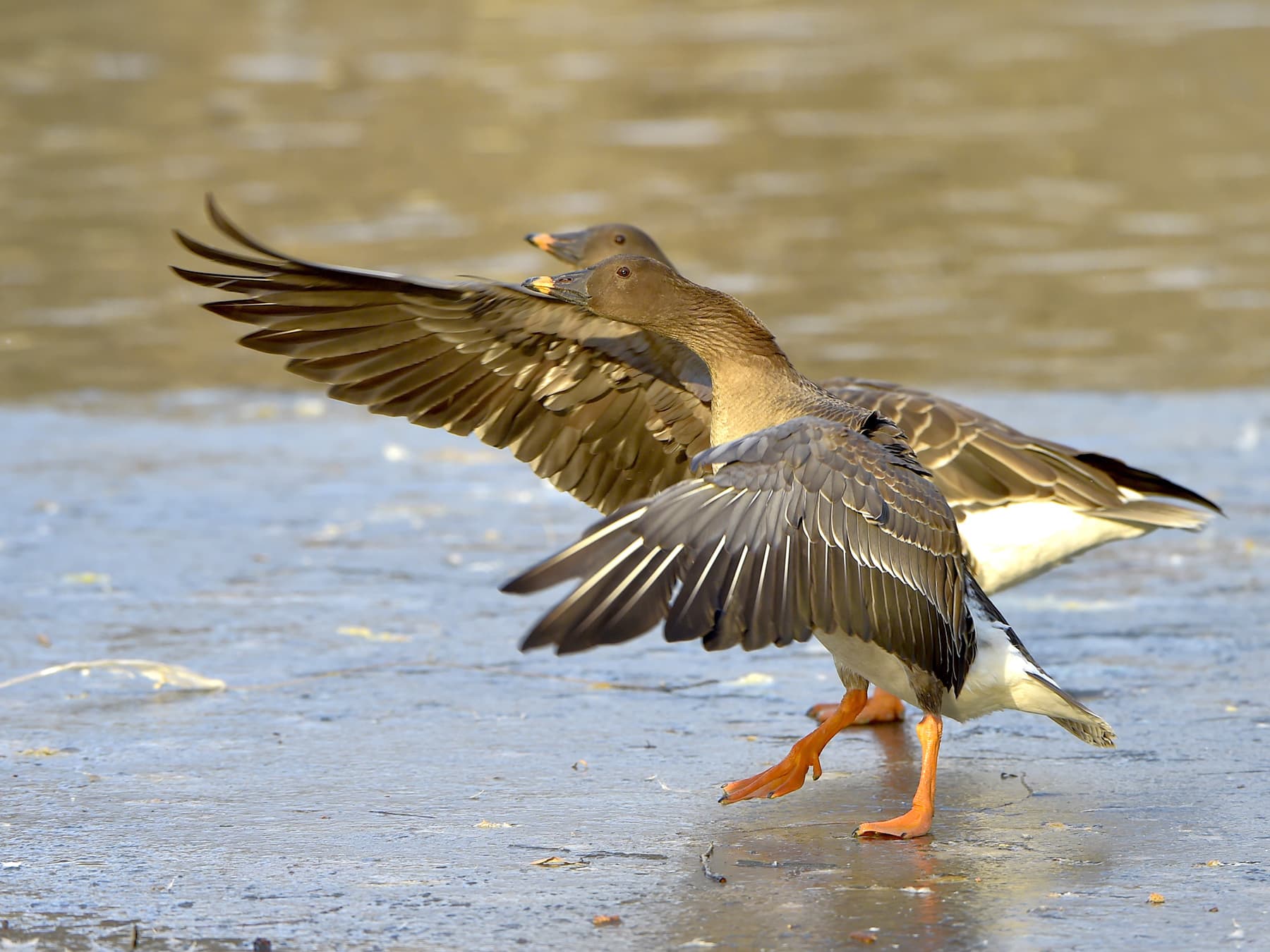
Taiga bean geese are notoriously aggressive when they sense a threat to their territory, their mate, or their young. Physical aggression and vocal assertion are used to drive off any approaching humans, animals, or other birds. They are relatively social among other geese outside of the breeding season, migrating and foraging together without conflicts.
Lifespan and predators
How long do Taiga Bean Geese live?
Taiga bean geese are thought to breed for the first time at three years and have an expected lifespan of around 7 years. According to ringing records, the oldest known taiga bean goose reached 25 years and 7 months.
What are the predators of Taiga Bean Geese?
Foxes and raptors may attack taiga bean geese and raid their nests for eggs. However, due to their aggressive nature and vigilant nest defense, they are not a common target for predators.
Humans do pose a significant threat, in particular in parts of Scandinavia where hunters kill large numbers of taiga bean geese each year.
Are Taiga Bean Geese protected?
As wild birds and migratory visitors to the UK, taiga bean geese have protected status under the Wildlife and Countryside Act, 1981, which makes it an offence to kill, injure or take them into captivity.
Are Taiga Bean Geese endangered?
Although taiga bean geese are considered a species of least concern globally, numbers are believed to be in decline across much of their range. Habitat degradation, poisoning by pesticides and the effect of climate change on northern breeding grounds are all threats to the future survival of the species.
Hunting is also a threat in Sweden and Norway. In Britain, taiga bean geese have Amber status on the British Birds of Conservation Concern list.
Conservation
While currently listed as Least Concern globally, some populations of Taiga Bean Geese face localised threats.
Conservation efforts focus on protecting key wetland habitats and managing hunting pressures, particularly in Europe, where some populations are declining.
Similar birds
Often mistaken for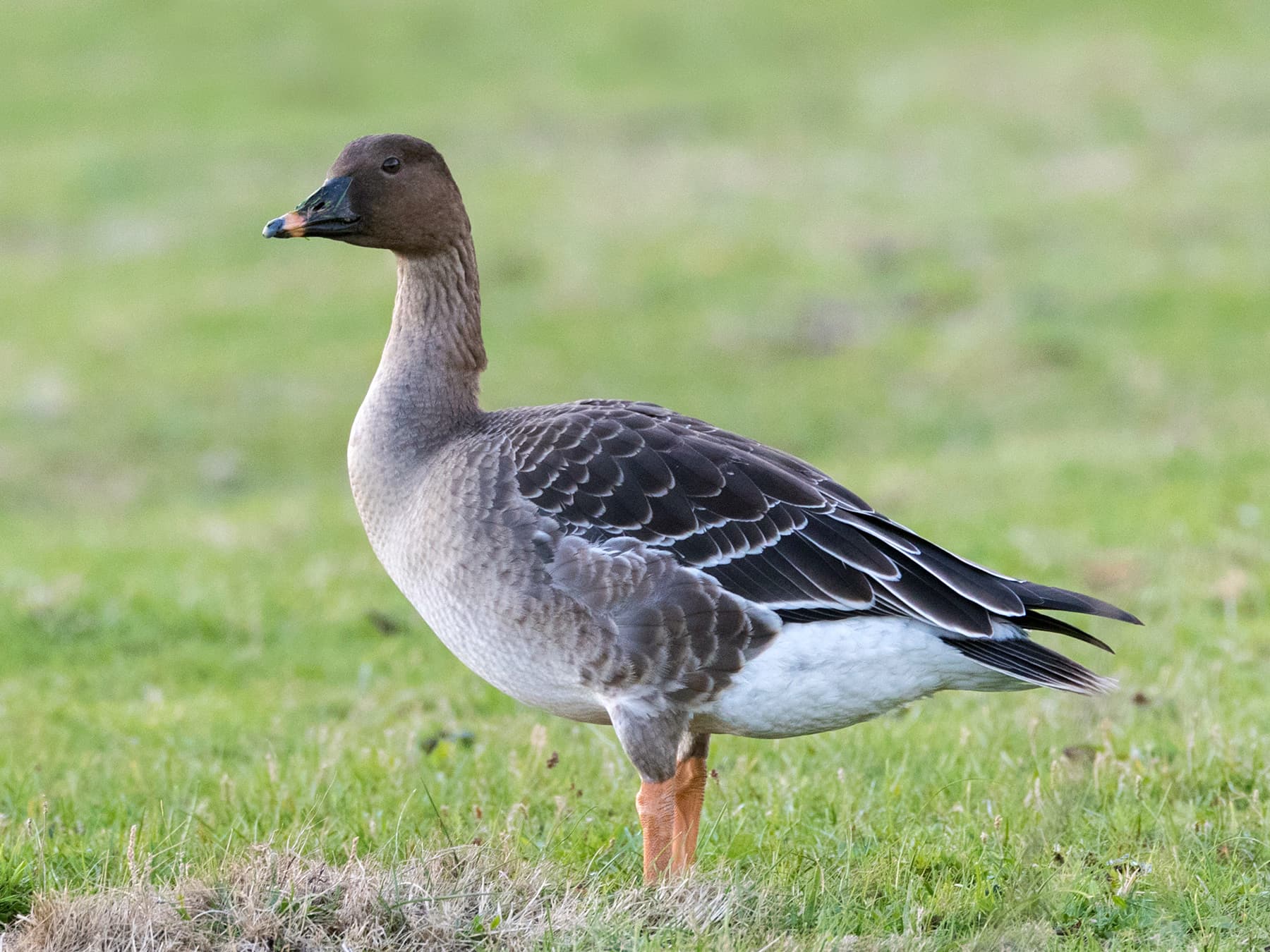
More photos
3 photos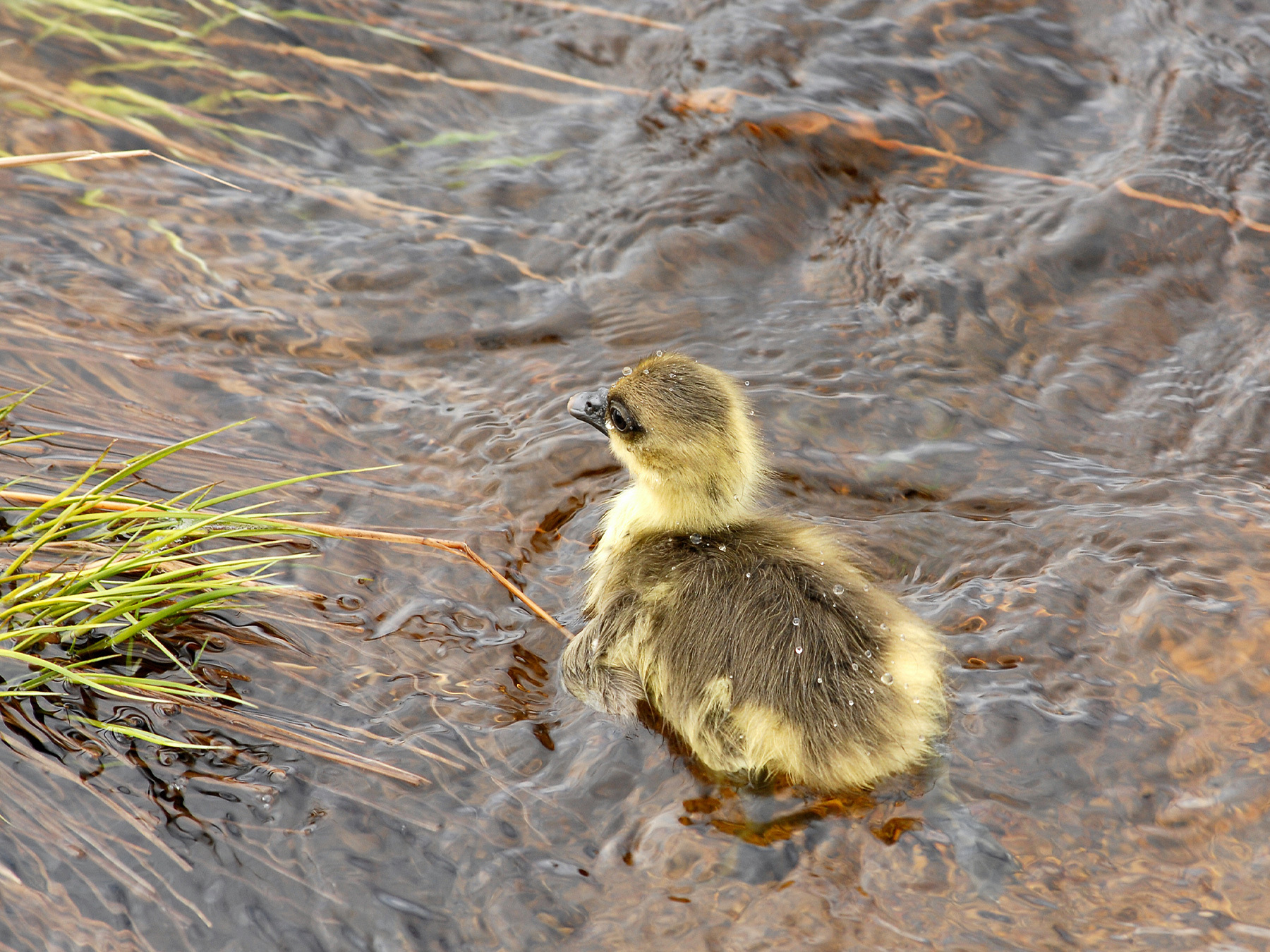
Taiga Bean Goose guides
4 guidesQuick facts
- Length
- 68–88 cm
- Wingspan
- 140–174 cm
- Weight
- 2000–4100 g
- Lifespan
- 7 years · oldest recorded 25.6 years
- Family
- Ducks, Geese & Swans
- Migration
- Long-distance Migrant
- Global status (IUCN)
- Least Concern
- World population
- 680,000 - 800,000 individuals
- Population trend
- Decreasing
- Also called
- Bean Goose
- Scientific name
- Anser fabalis
Sources
4- 1BirdLife International. 2018. Anser fabalis. The IUCN Red List of Threatened Species 2018: e.T22679875A132302864. Source (opens in a new tab)
- 2BirdLife International; Wetlands International (2015)
- 3Wetlands International (2015)
- 4Fransson et al., EURING list of longevity records for European birds (2010) Source (opens in a new tab)

Checked by
Nathan Cope, founder and editor
Nathan founded Birdfact and leads its writers and contributors in the UK, the US and Canada. He has watched and studied birds for more than ten years, and checks every article and species guide before it’s published.