


Sooty Shearwater
Tītī, Muttonbird · Ardenna grisea
By the Birdfact teamChecked by Nathan Cope
On this page13 sections
How to recognise it
What do Sooty Shearwaters look like?
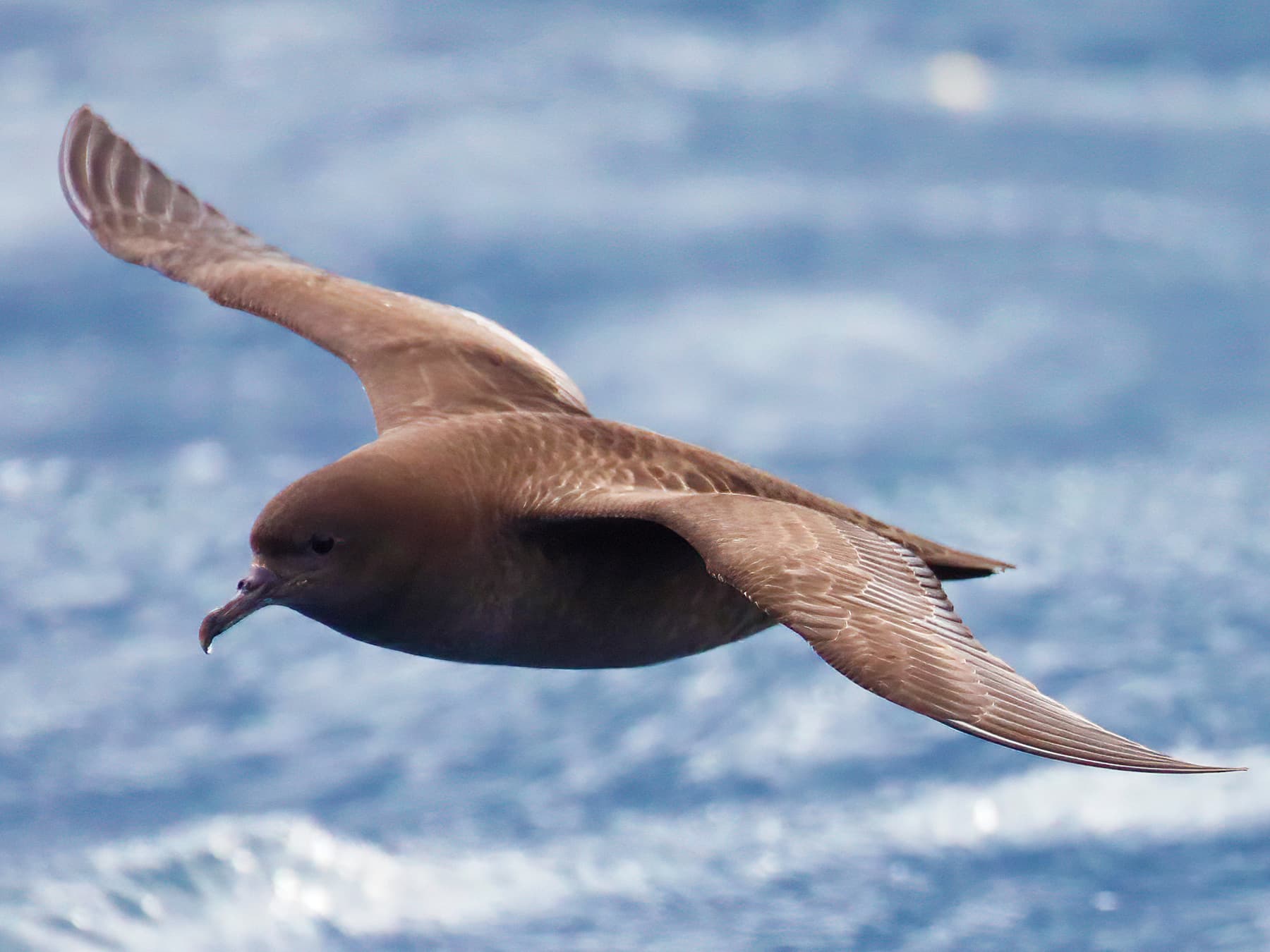
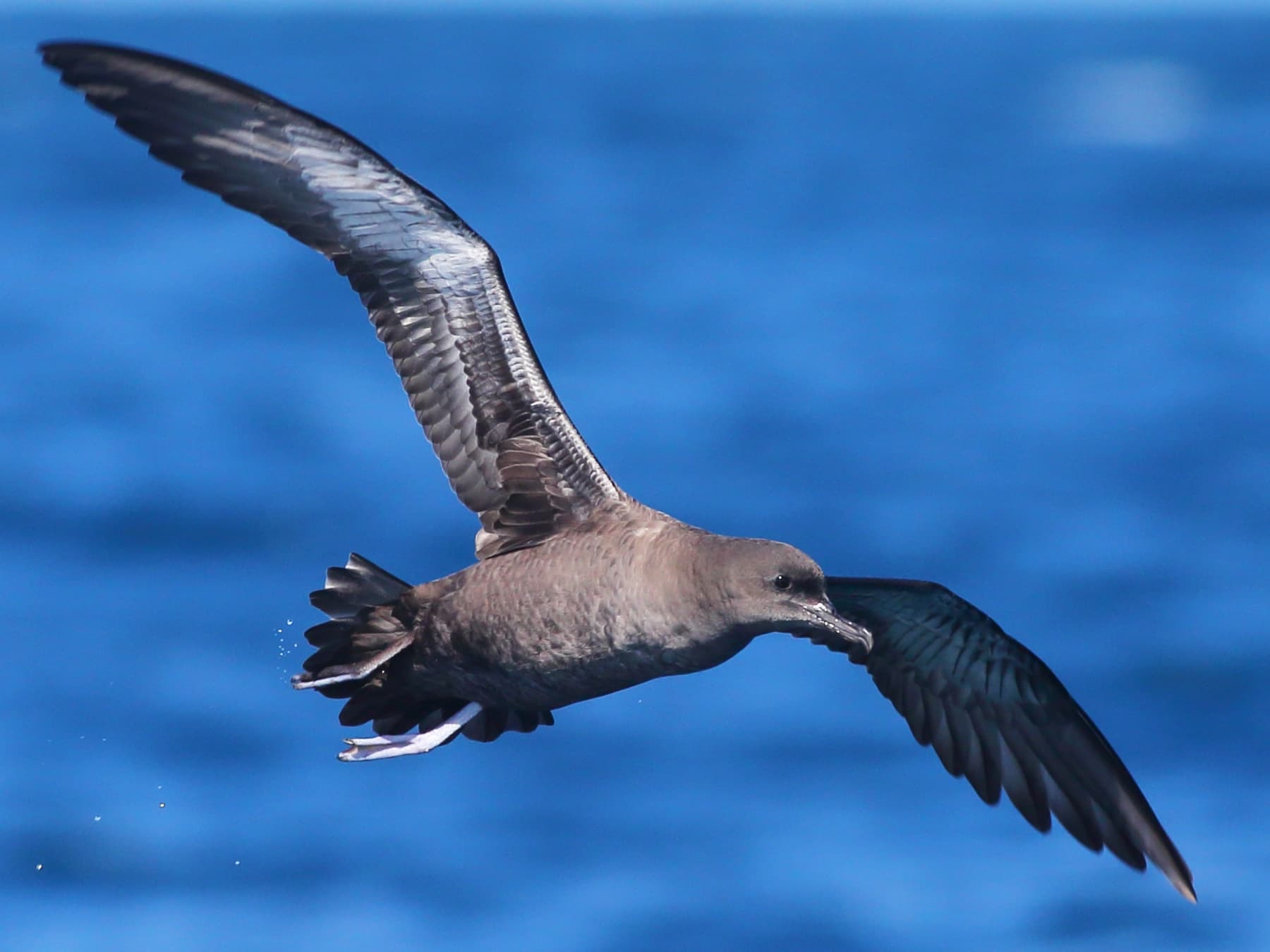
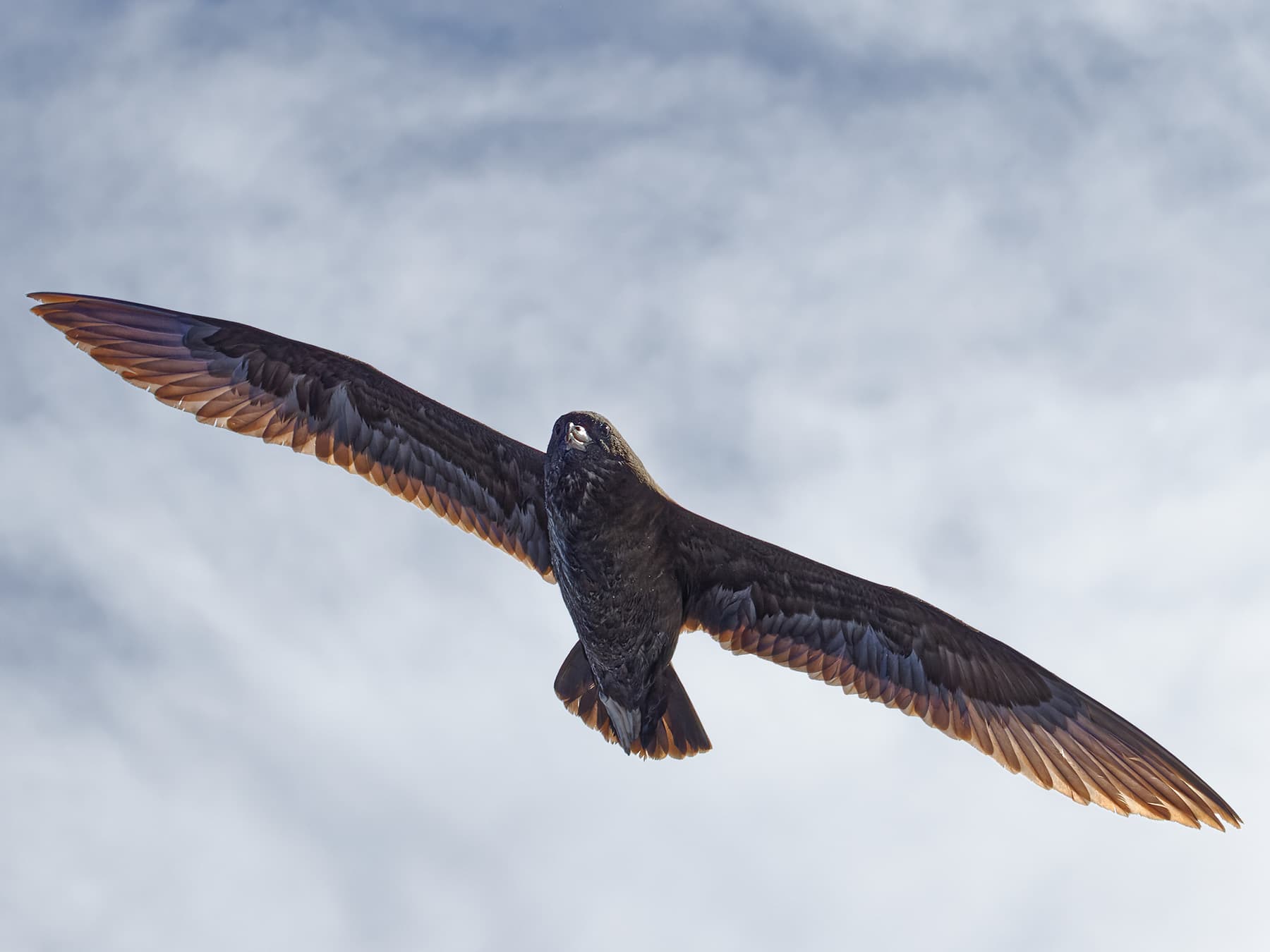
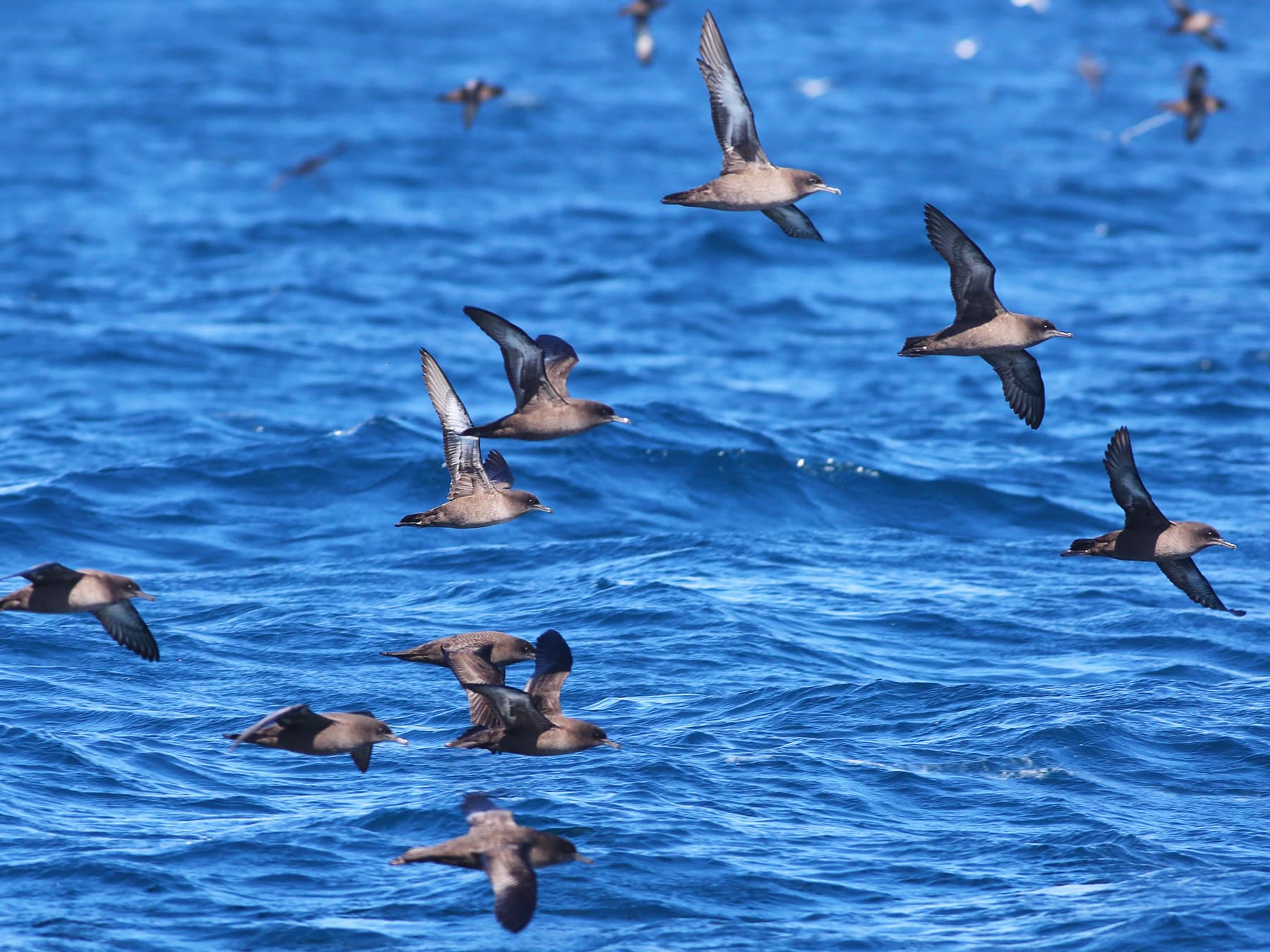
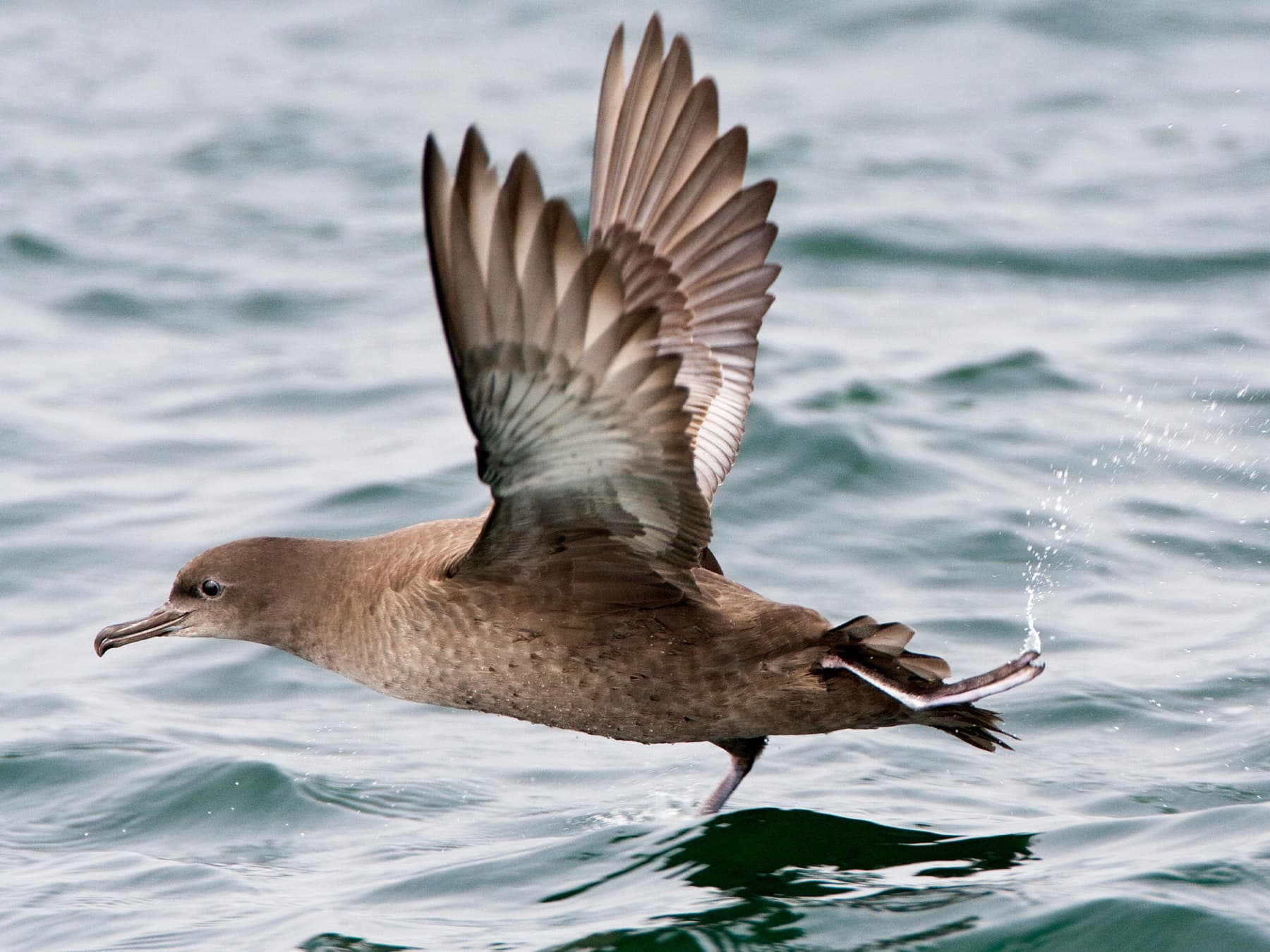
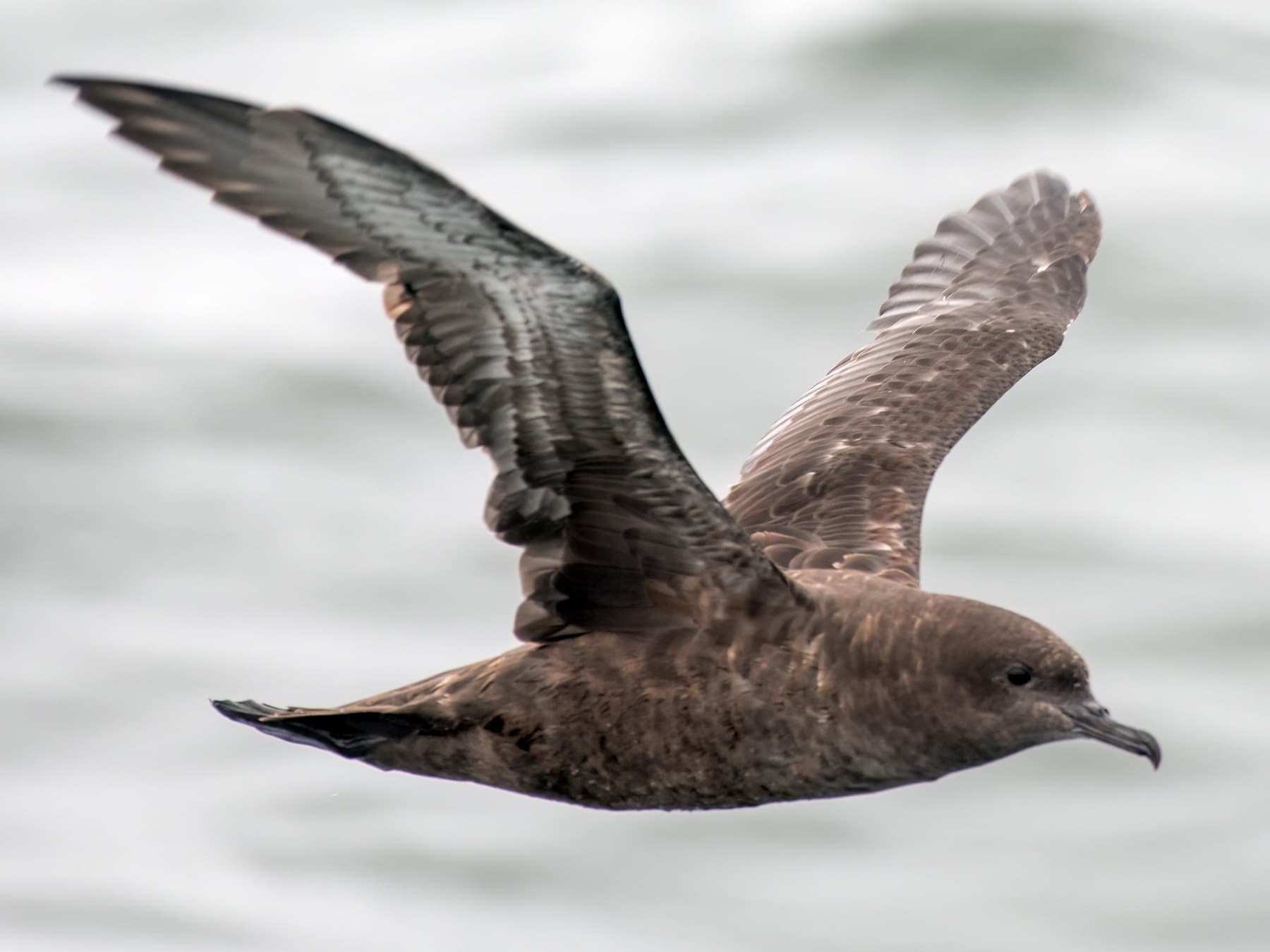
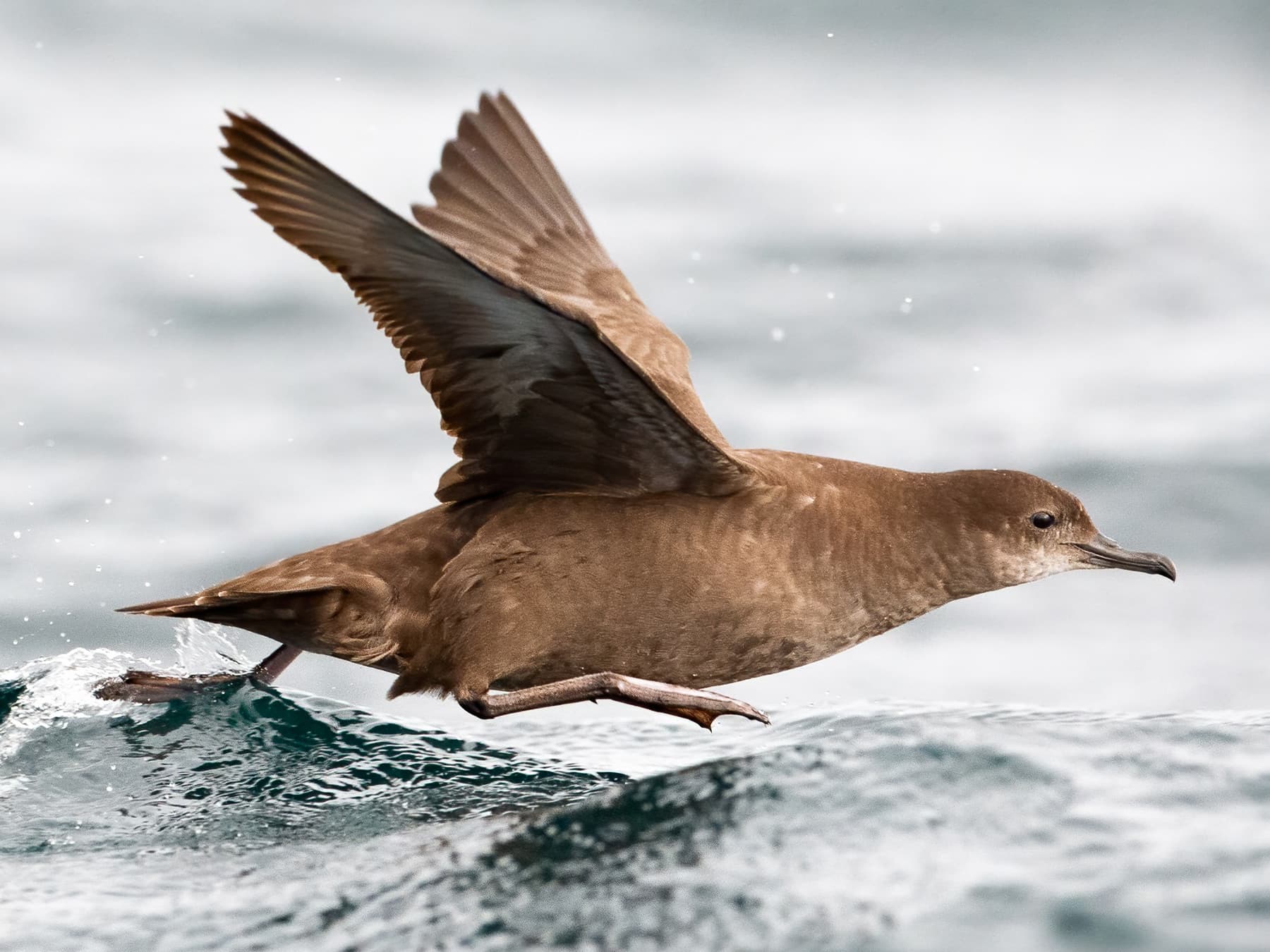
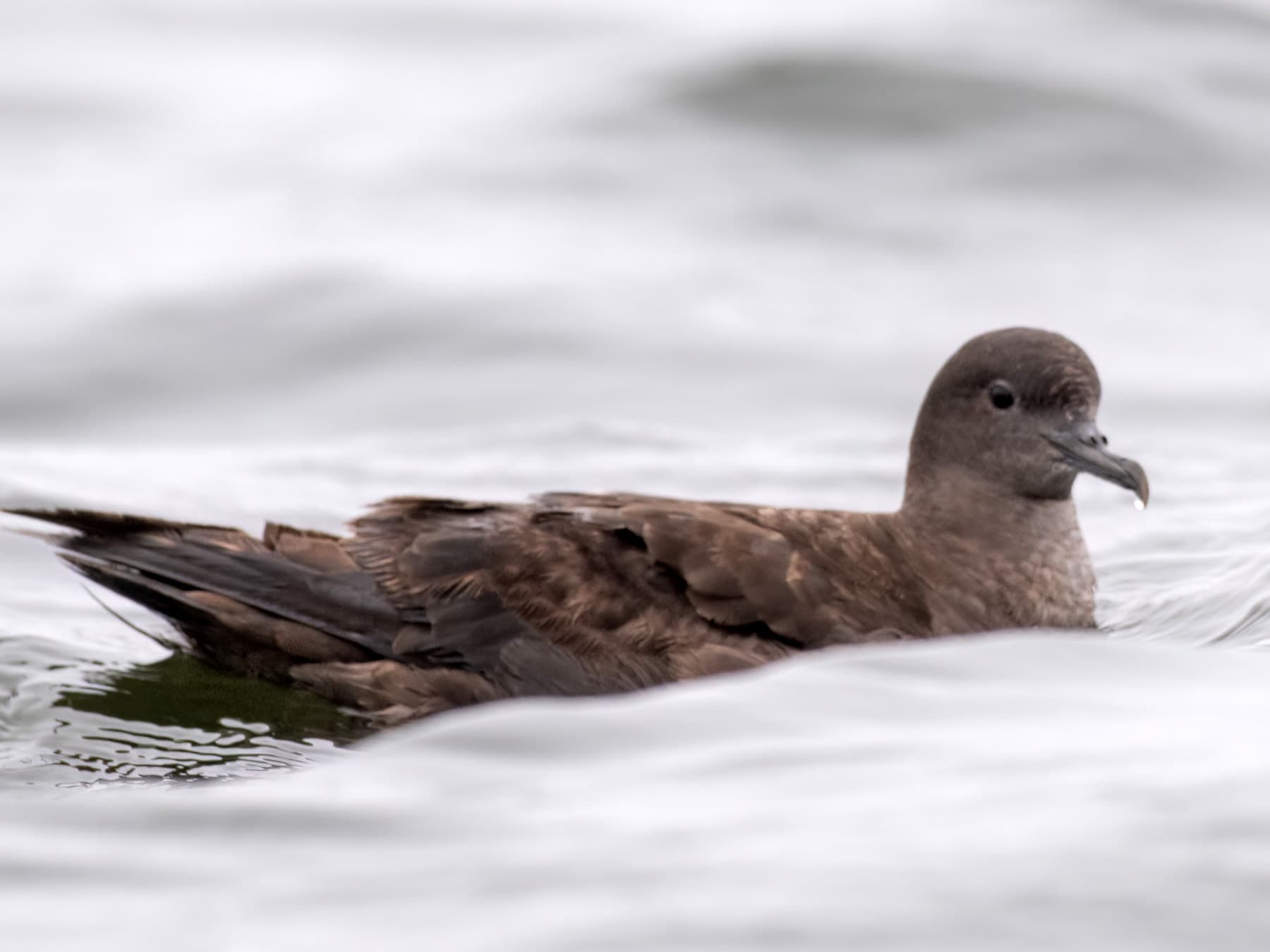
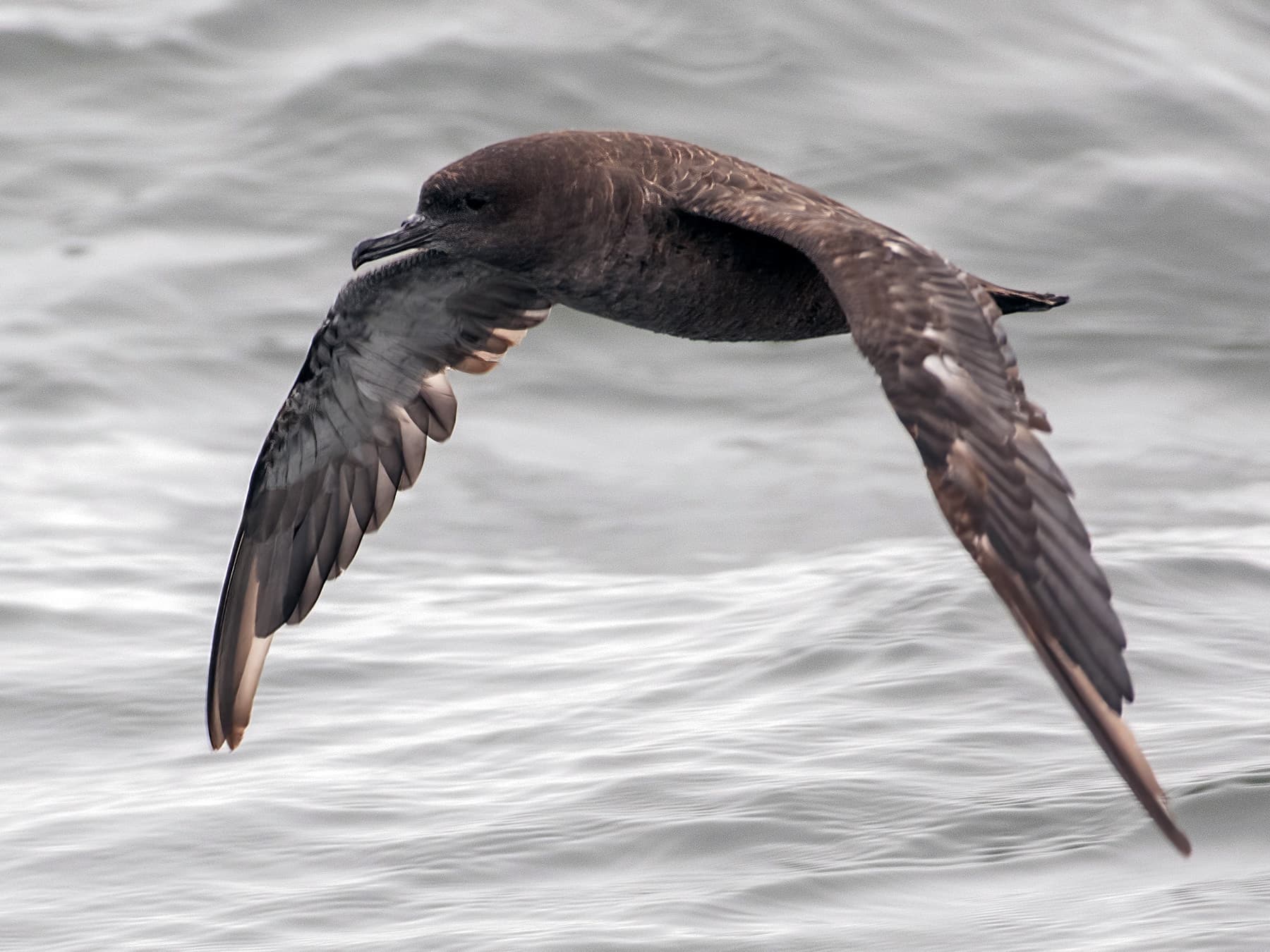
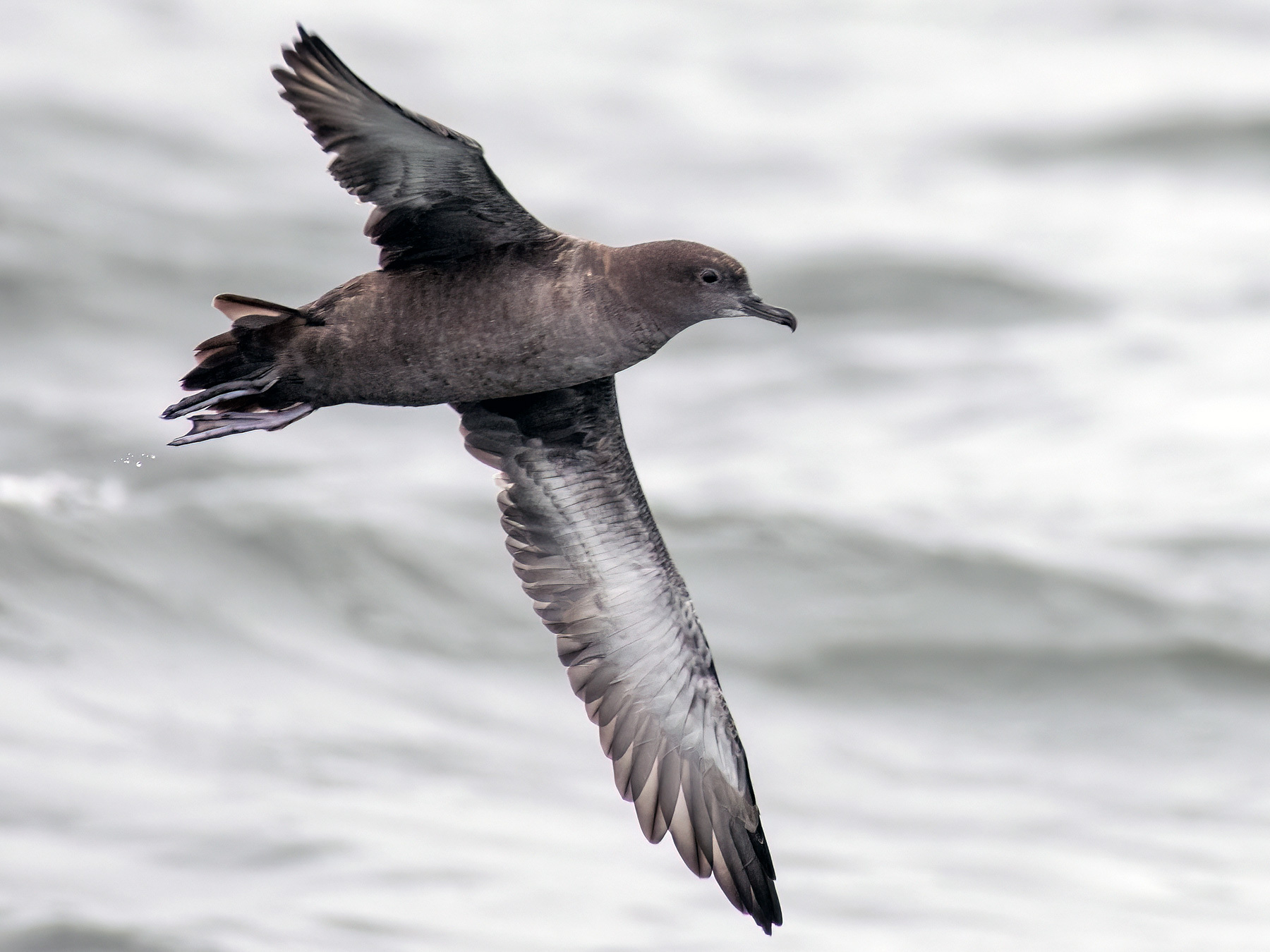
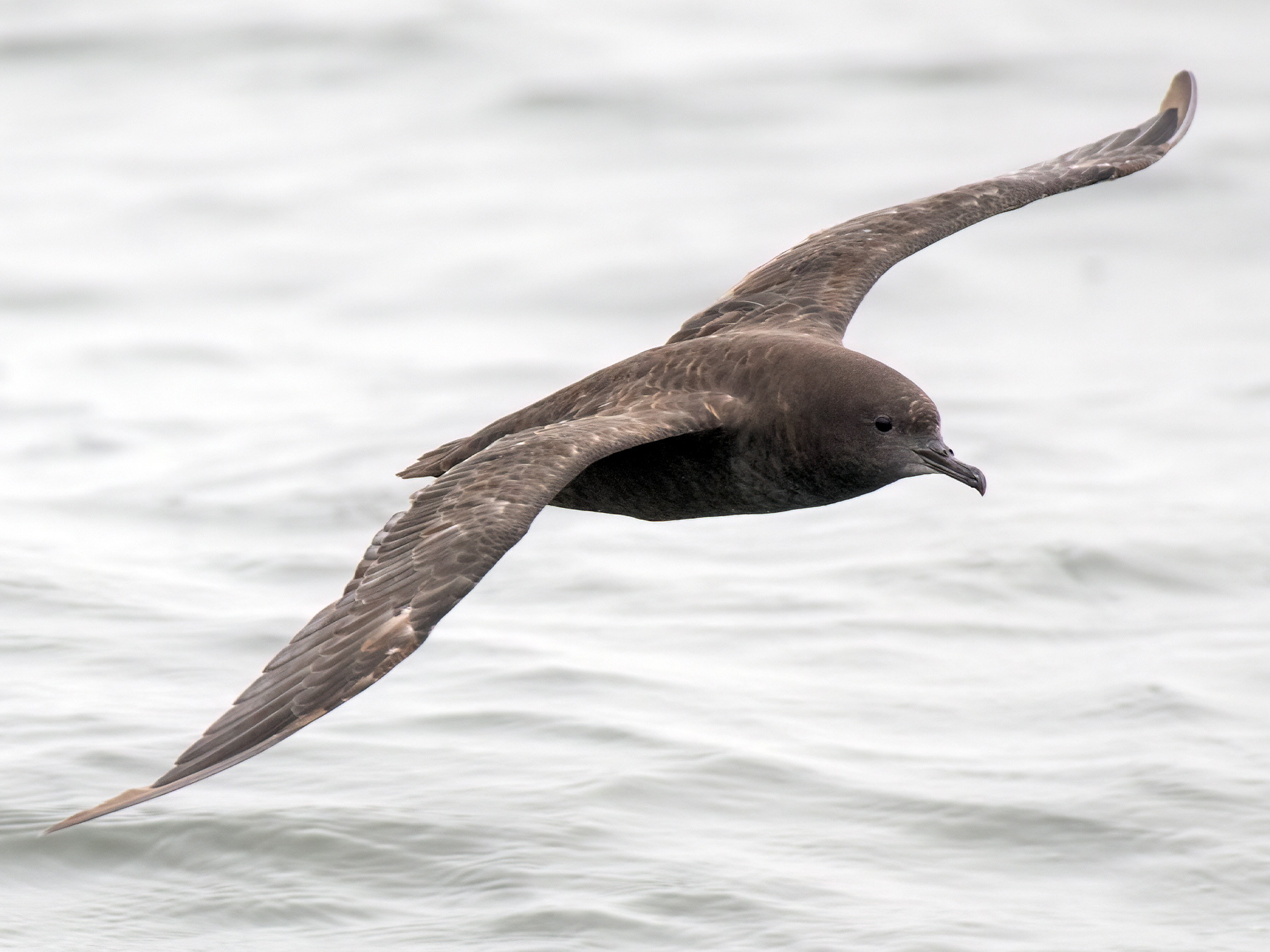
Adult sooty shearwaters are dark sooty brown to dark grey birds, with a darker head, wings, and tail. Slight scaling is shown on the upper wings, and a wide white bar is visible on the underside of the wings, which are narrow and pointed.
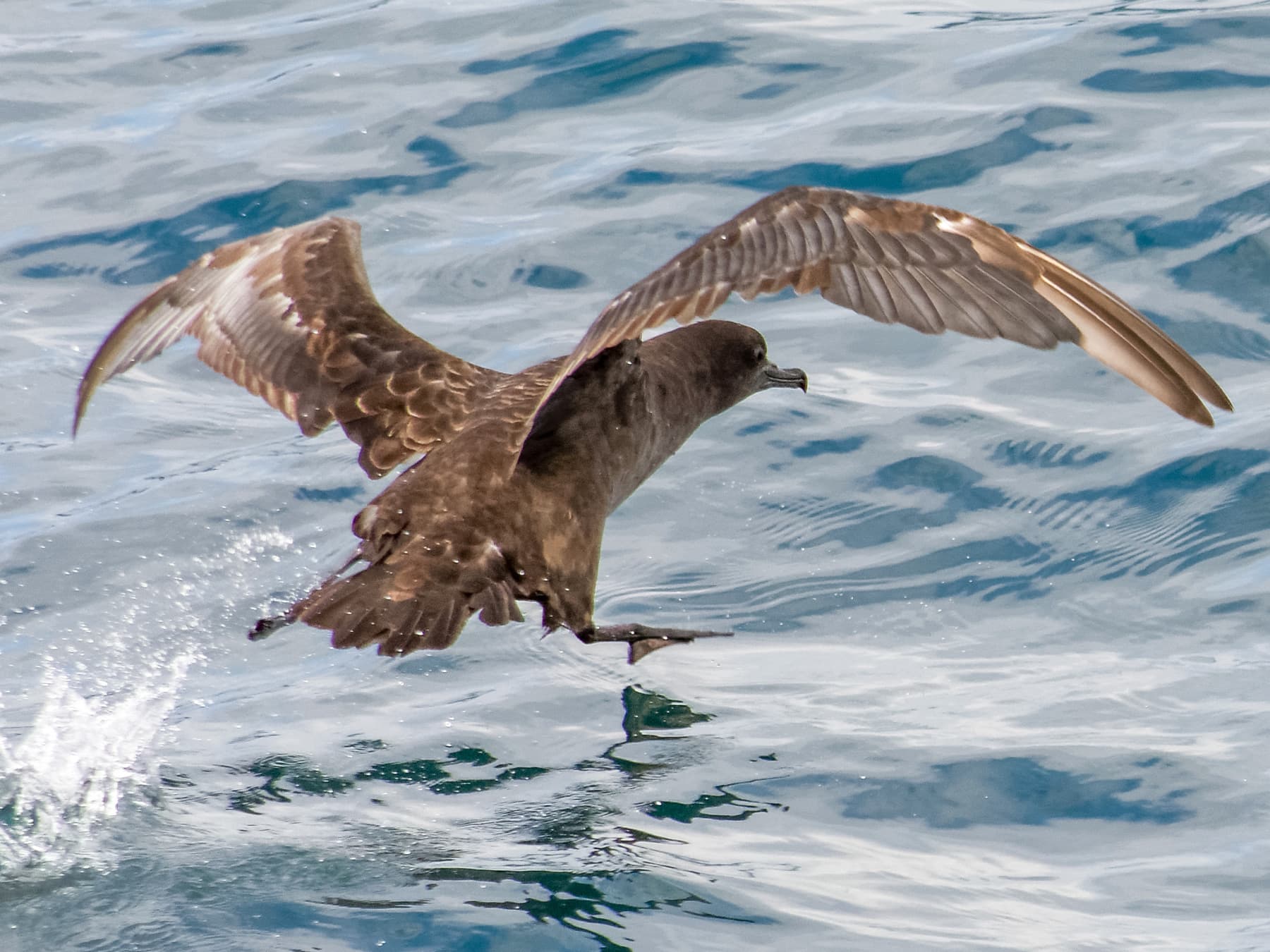
The sooty shearwater’s bill is brownish-gray to dark gray, its eyes are dark brown, and its legs and webbed feet are dull pink to gray in colour. Males and females are alike in both appearance and size.
Juvenile sooty shearwaters resemble mature adults from an early stage, although they may appear a lighter gray-brown before their initial plumage has had a chance to become worn.
How big are Sooty Shearwaters?
Sooty shearwaters are large members of the shearwater family, smaller in size than herring gulls. Females and males are the same size.
- Length: 40 cm to 51 cm (15.7 in to 20.1 in)
- Wingspan: 94 cm to 109 cm (37 to 40 in)
- Weight: 650 g to 950 g (29 oz to 34 oz)
Its size
Adults- Length
- 40–51 cm
- Wingspan
- 95–110 cm
- Weight
- 650–1000 g
Its song and calls
What sound does a Sooty Shearwater make?
On nesting grounds, sooty shearwaters are a highly vocal species, with males advertising at the start of the breeding season with piercing catlike howling calls, which can also be from within their underground nesting burrows during incubation or nest defense. At sea, there is less need for a noisy call, and they are believed to become silent when hunting.
When and where to see it
OctoberIn season
Most recorded in October
- 1. Sligo0.82%
- 2. Waterford0.46%
- 3. Orkney Islands0.35%
- 4. Cork0.29%
- 5. Clare0.22%
Each dot is a county, state or province: the bigger and darker, the larger the bird’s share of that place’s bird records that month. Grey dots: no regular records. The ringed point is the centre of the bird’s records this month; the arrow shows how it moved since last month, and the dashed loop its path through the year. “Arrivals” colours places where it becomes regular this month (orange) or is in its last regular month (grey). GBIF eBird Observation Dataset, 2019–2024. Map data: Natural Earth, US Census Bureau; place centres © OpenStreetMap contributors.
In your area
See when the Sooty Shearwater is recorded in your county, state or province.
How often the Sooty Shearwater turns up in the UK, Ireland, the United States and Canada through the year, from birdwatchers' records.
United Kingdom
Passage migrant · regularly Jul–Nov · most records in August
Ireland
Passage migrant · regularly Jul–Oct · most records in August
United States
Summer visitor · regularly Apr–Nov · most records in September
Canada
Summer visitor · regularly May–Nov · most records in August
Show as a table
| Month | United Kingdom | Ireland | United States | Canada |
|---|---|---|---|---|
| January | <0.001% | – | 0.001% | <0.001% |
| February | <0.001% | – | 0.002% | <0.001% |
| March | <0.001% | – | 0.002% | <0.001% |
| April | <0.001% | – | 0.010% (regular) | <0.001% |
| May | <0.001% | 0.002% | 0.015% (regular) | 0.002% (regular) |
| June | 0.002% | 0.002% | 0.014% (regular) | 0.005% (regular) |
| July | 0.013% (regular) | 0.075% (regular) | 0.031% (regular) | 0.022% (regular) |
| August | 0.068% (regular) | 0.36% (regular) | 0.069% (regular) | 0.024% (regular) |
| September | 0.061% (regular) | 0.14% (regular) | 0.070% (regular) | 0.018% (regular) |
| October | 0.024% (regular) | 0.083% (regular) | 0.031% (regular) | 0.004% (regular) |
| November | 0.011% (regular) | 0.012% | 0.009% (regular) | 0.002% (regular) |
| December | 0.002% | – | 0.002% | <0.001% |
Recorded regularly in
Worldwide: recorded regularly in 47 countries
Countries where it was recorded in at least 3 of the 6 years 2019–2024. Linked countries have their own bird list.
Europe (15)
Africa (5)
- Morocco
- Namibia
- Senegal
- South Africa
- St Helena
North America (8)
Oceania (6)
- Australia
- Cook Islands
- Fiji
- French Polynesia
- New Zealand
- Norfolk Island
Antarctica (2)
- Antarctica
- South Georgia & South Sandwich Islands
Data: EOD – eBird Observation Dataset (Cornell Lab of Ornithology), accessed via GBIF.org, CC BY 4.0. Records from 2019–2024, aggregated and filtered by Birdfact. How these lists are made
What is the habitat of a Sooty Shearwater?
Breeding occurs on forested or densely vegetated slopes on islands or rocky coastal headlands. Colonial nest sites are established, with hundreds of thousands of pairs close together in some locations.
Breeding is limited to the Southern Hemisphere, within easy reach of foraging grounds in marine waters.
Once breeding ends, sooty shearwaters spend several months at sea, with around 50 percent of their time flying over pelagic waters, particularly over the continental slope. They spend the other half of their time feeding over shallower waters off the continental shelf.
What is the range of a Sooty Shearwater?
Sooty shearwaters breed in enormous nesting colonies in the South Pacific and Atlantic oceans, as well as on islands off southeast Australia, New Zealand, and Tierra del Fuego, the extreme southern region of South America. Breeding grounds regularly host more than 2.5 million pairs each year.
Between breeding seasons, the species undertakes an epic circular migration, with South American breeders moving up the western Atlantic coast in spring to spend the northern summer in the North Atlantic. Later that summer and into the autumn they move around the coast of West Africa, via UK waters on their return to the southern Atlantic Ocean to breed.
Similar clockwise migrations occur for sooty shearwaters that breed in the Pacific Ocean, around Australia and New Zealand.
Once breeding is complete, movement upwards through the Pacific occurs, reaching Japan and Russia between June and August, before heading south along the Pacific coast of the western United States, along the South American coast until they return once more to their breeding grounds at the southernmost tip of the continent.
Where do Sooty Shearwaters live?
New Zealand, where the species is commonly known as the muttonbird, has the largest breeding population of sooty shearwaters, with one particular colony on Snares Island estimated to host more than 2 million pairs annually. The Australian population is smaller, with 17 island breeding sites, each with fewer than 1,000 pairs.
Across the Atlantic Ocean, the South American breeding populations are mainly concentrated on the Chilean island of Isla Guafo (with an estimated 4 million individual birds), and in the Falklands, where between 10,000 and 20,000 pairs nest annually.
How rare are Sooty Shearwaters?
Sooty shearwaters have a huge and diverse distribution range, but as they only come inland to breed (at nesting colonies on isolated islands in extreme southern regions), sightings are rare as they spend much of their lives out at sea.
The global population is estimated at over 4.4 million pairs, which equates to between 19 and 23.6 million individuals.
Where can you see Sooty Shearwaters in North America?
Sightings of sooty shearwaters are regularly reported during the species’ lengthy migrations, with birds that breed in southern Pacific waters following the west coast of the US during their annual return migrations to their nesting colonies.
On the east coast of the US, sightings are also possible, as sooty shearwaters that breed in the extreme south of South America begin their post-breeding migrations along the Atlantic coast of South and North America before crossing Atlantic waters to reach Europe.
Where can you see Sooty Shearwaters in the UK?
Sightings of sooty shearwaters in coastal areas of the UK are possible between July and September -October, as they head back to their breeding grounds in southern South America.
Where can you see Sooty Shearwaters in New Zealand?
Breeding colonies of sooty shearwaters can be found on several islands around New Zealand, extending from the Three Kings in the north and southwards to the islands around Stewart Island.
The Snares, the Chatham Islands, the Auckland Islands archipelago, Campbell Island, and the Antipodes Islands all have sizeable colonies, while a few smaller colonies exist on rocky headlands of the South Island mainland.
Migration
Do Sooty Shearwaters migrate?
Sooty shearwaters undertake a particularly unique long-distance migration each year, moving clockwise from their southern breeding grounds, northwards along the coast of the Atlantic or Pacific Oceans, before heading east and then south again to return to their original breeding grounds in the southern Atlantic of Pacific to breed again the following November.
Why do Sooty Shearwaters migrate?
Once breeding finishes, sooty shearwater head north from their Southern Hemisphere nesting colonies in search of better-stocked feeding grounds in the North Pacific and North Atlantic.
How far do Sooty Shearwaters migrate?
Sooty shearwaters undertake mammoth circular migrations each year, racking up around 64,000 km (40,000 mi) during the course of their trip.
Tips for seeing it
- Look for Sooty Shearwaters from coastal headlands during their migration periods
- Observe their characteristic low, gliding flight just above the waves
- Join pelagic birding trips for the best chances of close-up views
- In New Zealand, visit breeding colonies on offshore islands during the nesting season
What it eats
What do Sooty Shearwaters eat?
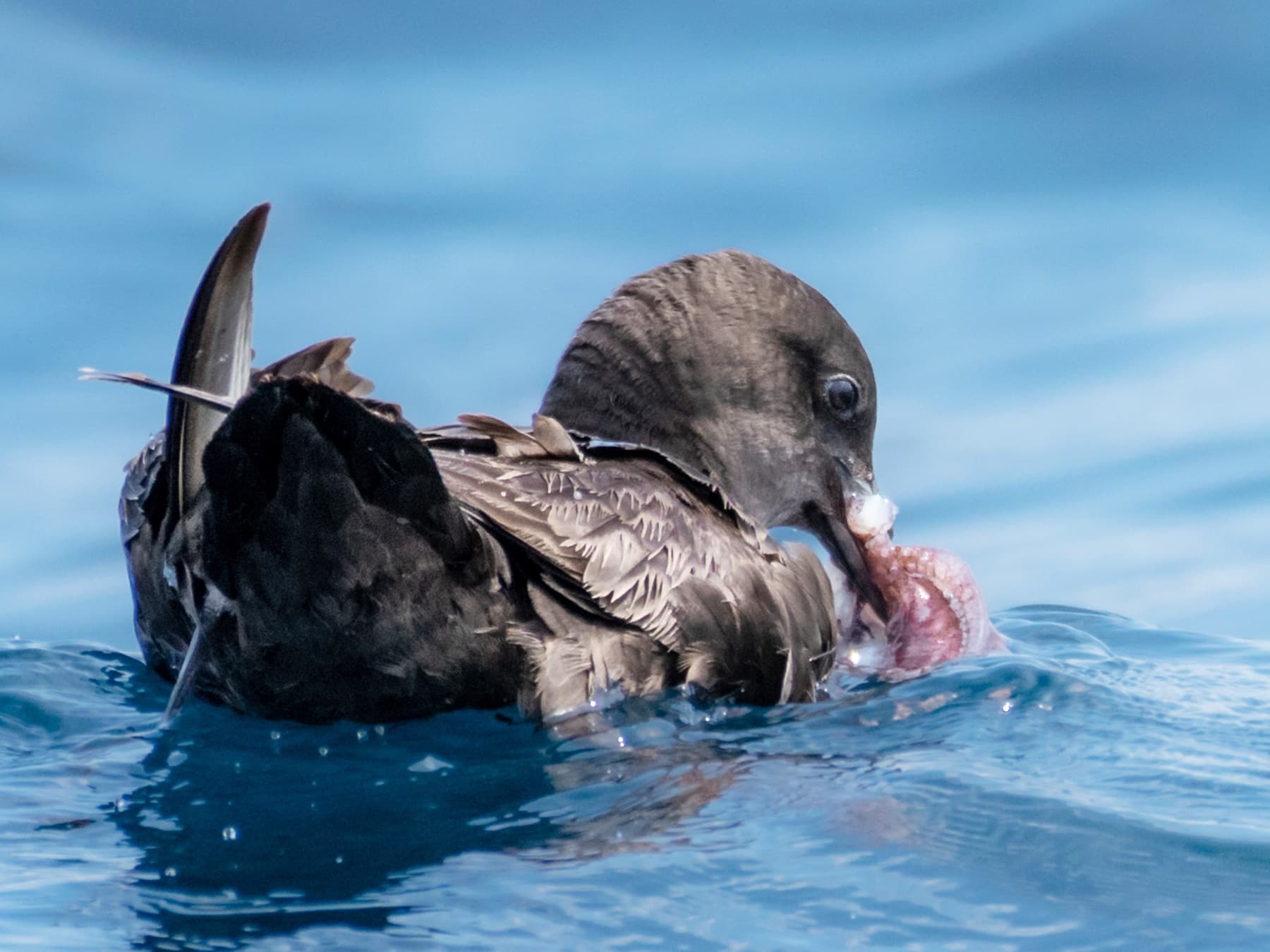
Sooty shearwaters spend the vast majority of their lives over open ocean waters and survive on a diet of fish, squid, and crustaceans.
Various techniques are used including shallow dives and plunge dives of up to 68 m (225 ft) below the ocean’s surface, and occasionally large flocks of sooty shearwater gather in the wake of trawlers to forage for offal.
What do Sooty Shearwater chicks eat?
In their first few weeks of life, sooty shearwater chicks are fed on an oily substance regurgitated from the stomach of their parents, which is produced by the digestion process as adult birds eat fish and squid.
Young sooty shearwaters are fed irregularly and can survive for long periods without food.
Nesting and breeding
Where do Sooty Shearwaters nest?
Nest sites used by sooty shearwaters are found on densely vegetated slopes, which are usually located near the sea but may also be established a short distance inland. Colonies are established up to 1,500 m (5,000 ft) above sea level. Island sites offer the best protection against predators, although mainland headlands are also used.
Burrows are dug into grassy or forested slope landscapes, with tunnels reaching a length of up to 3 m (10 ft). The inner chamber of the burrow may be lined with grasses and feathers.
When do Sooty Shearwaters nest?
Nesting in both South Atlantic and South Pacific locations takes place between October and May. Eggs are usually laid in late November to early December, with chicks hatching in January and fledging by April.
Each May, sooty shearwaters leave their breeding sites and head north, towards Arctic waters, before returning to their breeding grounds in October, having covered vast distances at sea during their five-month absence.
What do Sooty Shearwater eggs look like?
The eggs of a sooty shearwater are plain white and measure 77 mm by 48 mm (3 in by 1.9 in).
Incubation, shared between both parents, lasts for 52 to 56 days, with each parent taking a shift on the nest of between 4 and 9 days before switching places. Only one brood, containing a single egg, is raised each season.
Do Sooty Shearwaters mate for life?
Sooty shearwaters are believed to be seasonally monogamous, with their pair bond lasting for the duration of the breeding season. Some evidence exists to suggest that pairs migrate together or reunite on breeding grounds and reuse their previous nest.
Behaviour
Are Sooty Shearwaters aggressive?
Sooty shearwaters are a non-aggressive species that feed over oceans and do not defend territories on land or at sea. They nest communally, with some colonies as large as 2.5 million birds raising their young in burrows in close proximity to one another.
Where do Sooty Shearwaters sleep?
Sooty shearwaters only come on to land during the breeding season, spending several months at sea after raising their young. After hunting and feeding, large rafts of sooty shearwaters gather on the waves of the ocean surface to rest before continuing with their daily flights.
Lifespan and predators
How long do Sooty Shearwaters live?
The average lifespan of a sooty shearwater is believed to be around 18 to 20 years, with first-time breeding not occurring until 5 to 9 years of age. The maximum recorded age for a sooty shearwater is 34 years.
What are the predators of Sooty Shearwaters?
Predation by introduced species, such as cats, rats, pigs, and the flightless Weka (woodhen) is a major threat to the Australian and New Zealand populations. Natural predators include peregrine falcons and stoats.
Sooty shearwaters visit and emerge from their nests at night, so the cover of darkness offers additional protection from alerting predators.
Manmade threats are a major concern, with thousands of sooty shearwaters drawing each year after becoming caught up in fishing nets in Pacific waters.
Are Sooty Shearwaters protected?
In parts of their range, breeding sites used by sooty shearwaters have enjoyed extensive conservation efforts to eradicate predators from island breeding sites used by the species. Efforts are continuing to reduce the number of sooty shearwaters that die at sea from becoming entangled in nets.
Are Sooty Shearwaters endangered?
Globally, sooty shearwaters are considered a Near Threatened species by the IUCN, due to a concerning decline in numbers.
In New Zealand, up to 250,000 sooty shearwater chicks are harvested for oil and food each year by Māori.
Conservation
Sooty Shearwaters face threats from climate change, ocean pollution, and accidental bycatch in fishing gear.
Conservation efforts focus on protecting breeding sites, reducing plastic pollution in oceans, and implementing seabird-friendly fishing practices to minimise bycatch incidents.
More photos
3 photos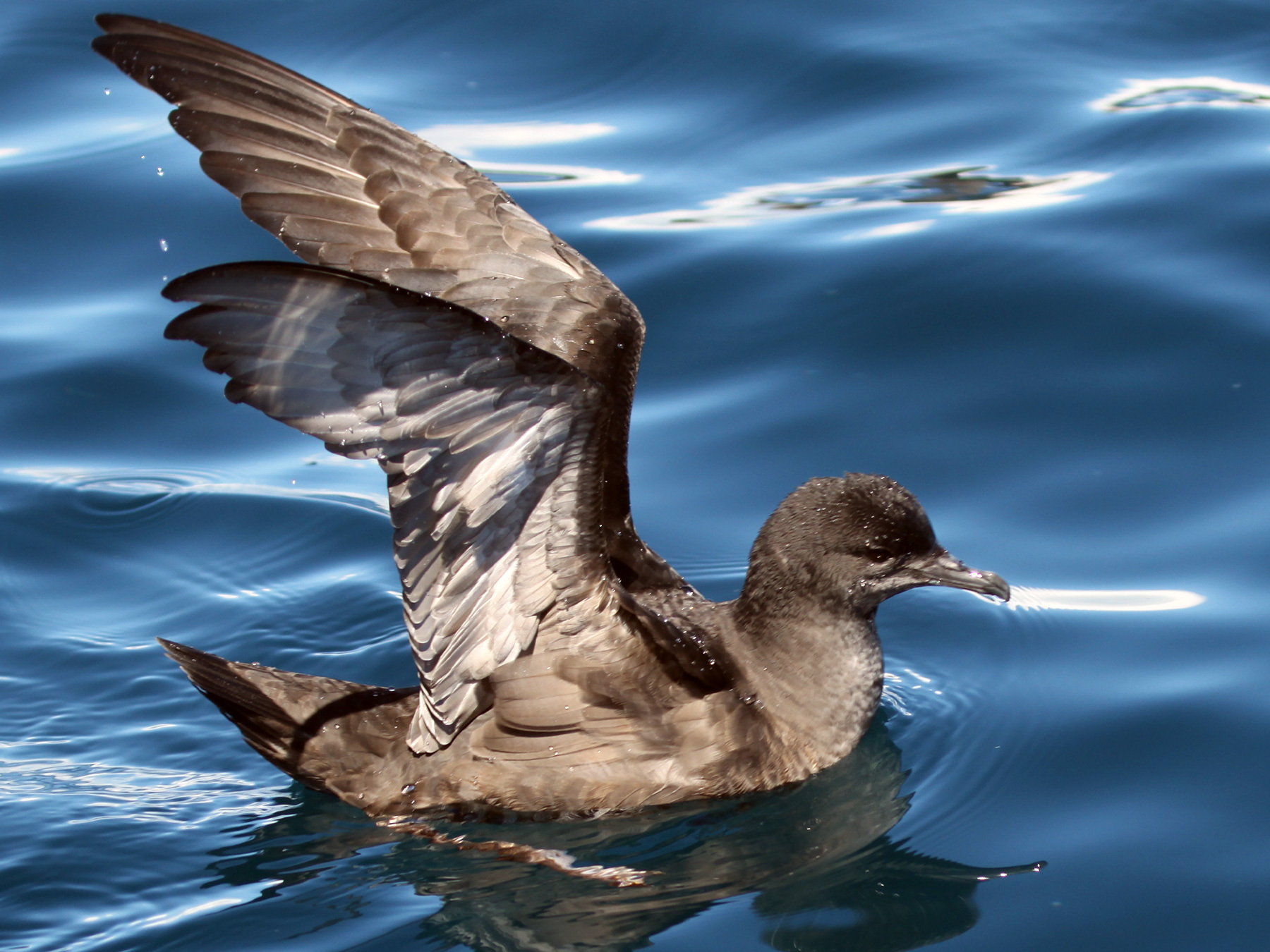
Quick facts
- Length
- 40–51 cm
- Wingspan
- 95–110 cm
- Weight
- 650–1000 g
- Lifespan
- 18–20 years · oldest recorded 34 years
- Family
- Petrels & Shearwaters
- Migration
- Long-distance Migrant
- Global status (IUCN)
- Near Threatened
- World population
- 19,000,000 - 23,600,000 mature individuals
- Population trend
- Decreasing
- Also called
- Tītī, Muttonbird
- Scientific name
- Ardenna grisea
Questions
1What is the Sooty Shearwater best known for?
Sooty shearwaters are known as one of the most prolific migratory species of the natural world, undertaking well-planned circular migration flights that cover a distance of around 64,000 km (40,000 mi) annually.
Sources
4- 1BirdLife International. 2019. Ardenna grisea. The IUCN Red List of Threatened Species 2019: e.T22698209A154440143. Source (opens in a new tab)
- 2Butcher and Niven 2007, Clucas et al. 2008, Scott et al. 2008
- 3Newman et al. 2009, Waugh et al. 2013
- 4Buttemer et al., Fowl play and the price of petrel: long-living Procellariiformes have peroxidation-resistant membrane composition compared with short-living Galliformes, Biol Lett, 4:351-354 (2008) Source (opens in a new tab)

Checked by
Nathan Cope, founder and editor
Nathan founded Birdfact and leads its writers and contributors in the UK, the US and Canada. He has watched and studied birds for more than ten years, and checks every article and species guide before it’s published.