


Smew
White Nun · Mergellus albellus
By the Birdfact teamChecked by Nathan Cope
On this page13 sections
How to recognise it
What do Smews look like?
Male and female smews are completely unalike in appearance, but both are equally striking and immediately recognizable.
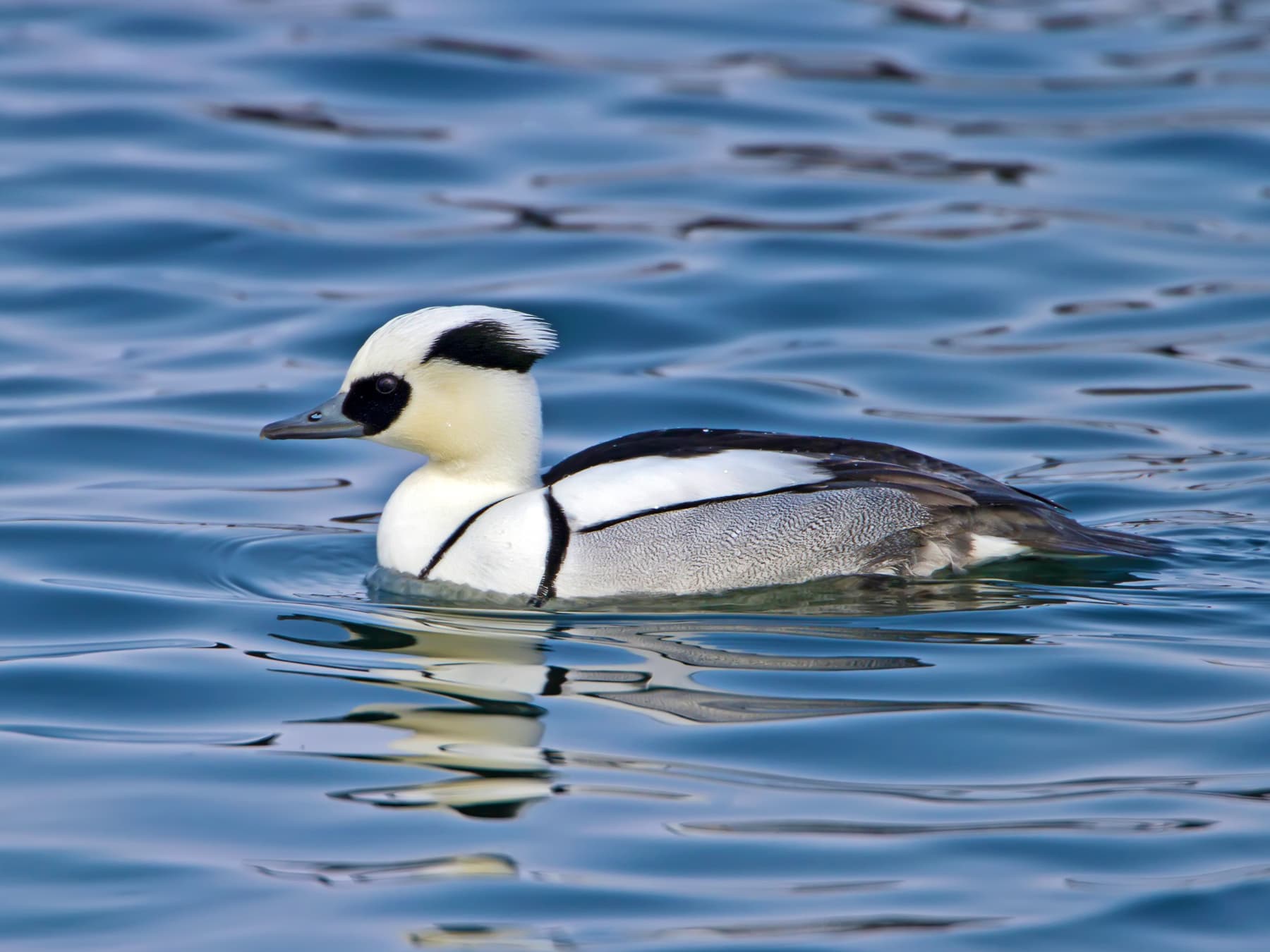
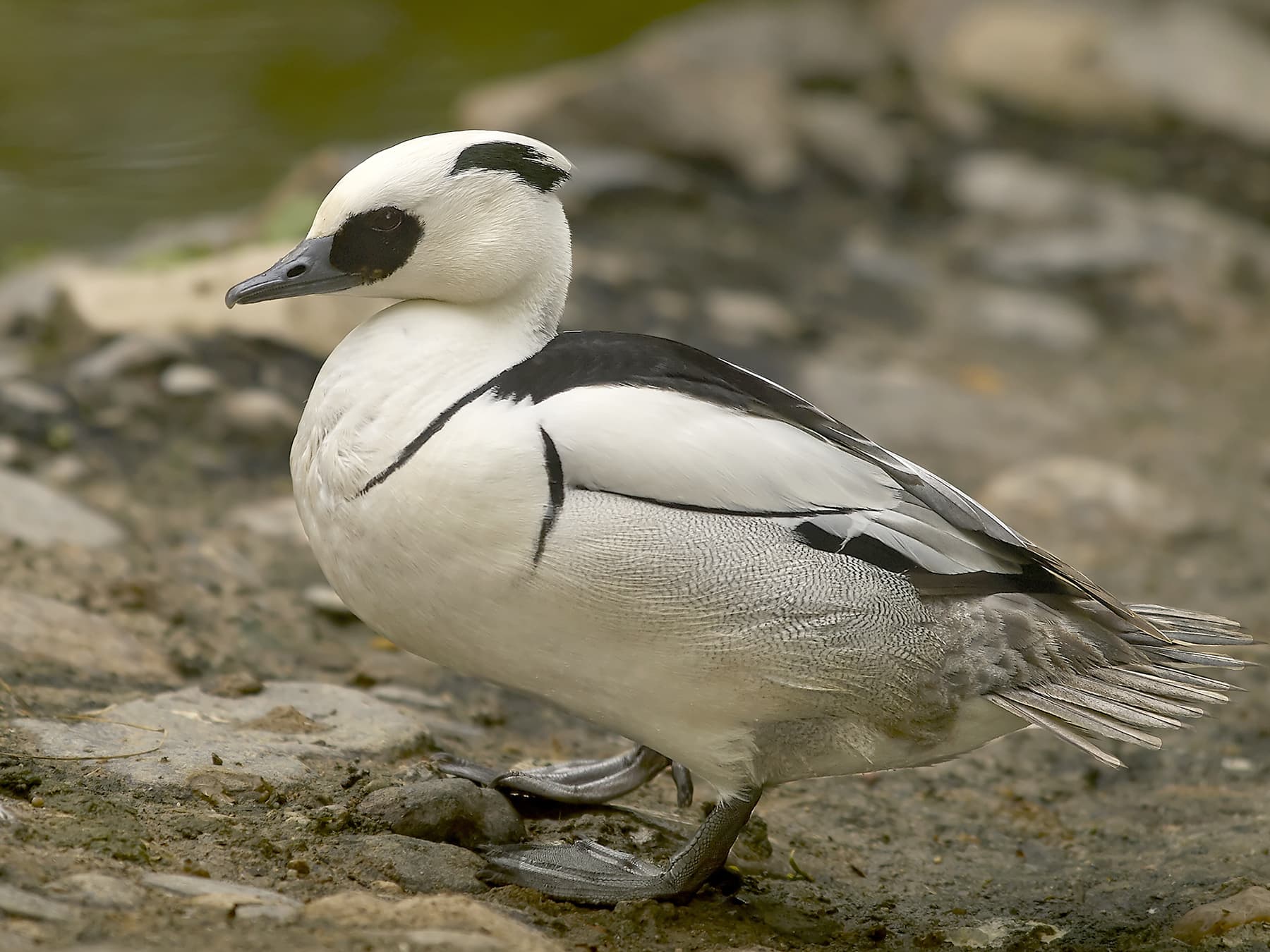
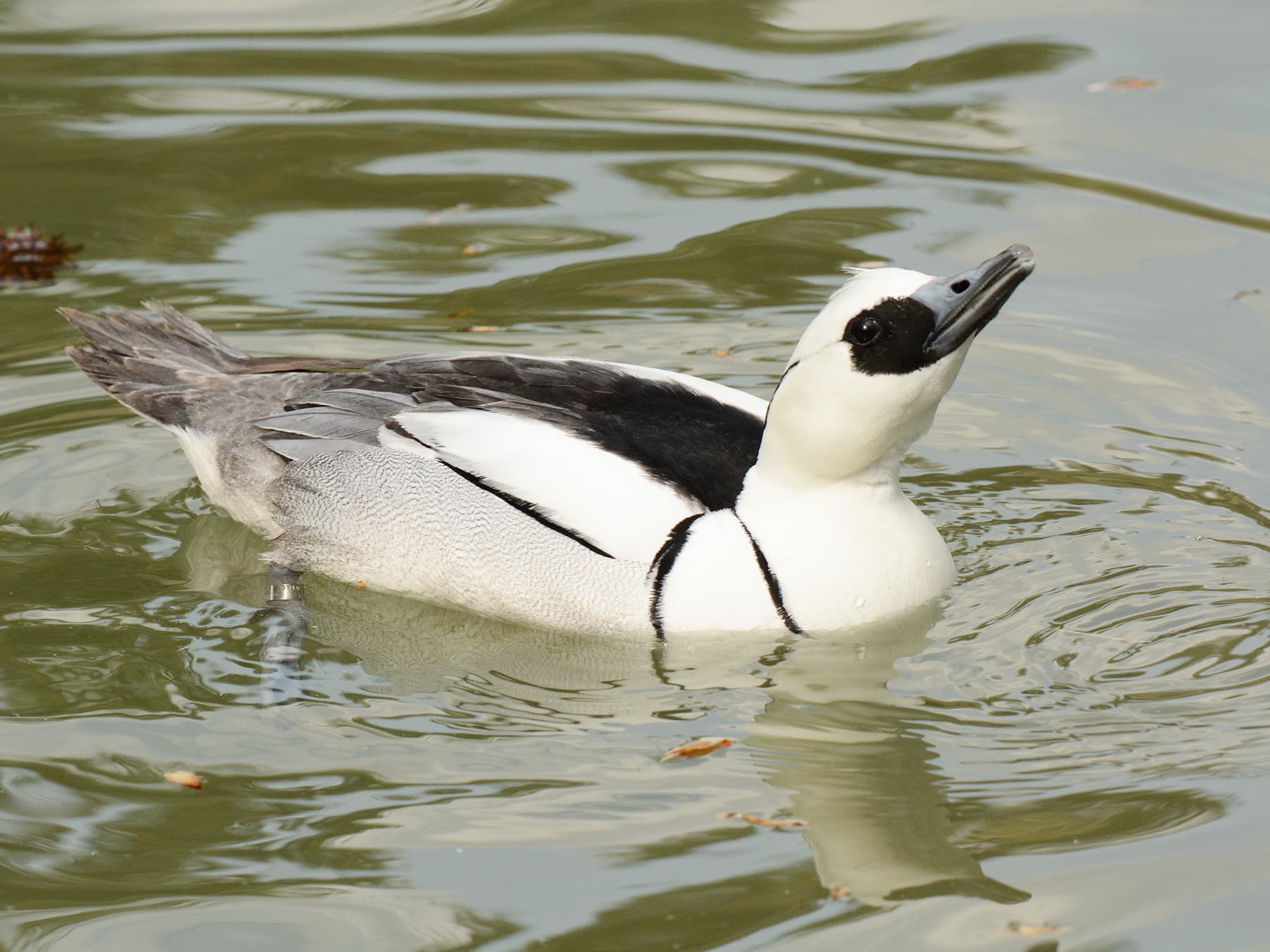
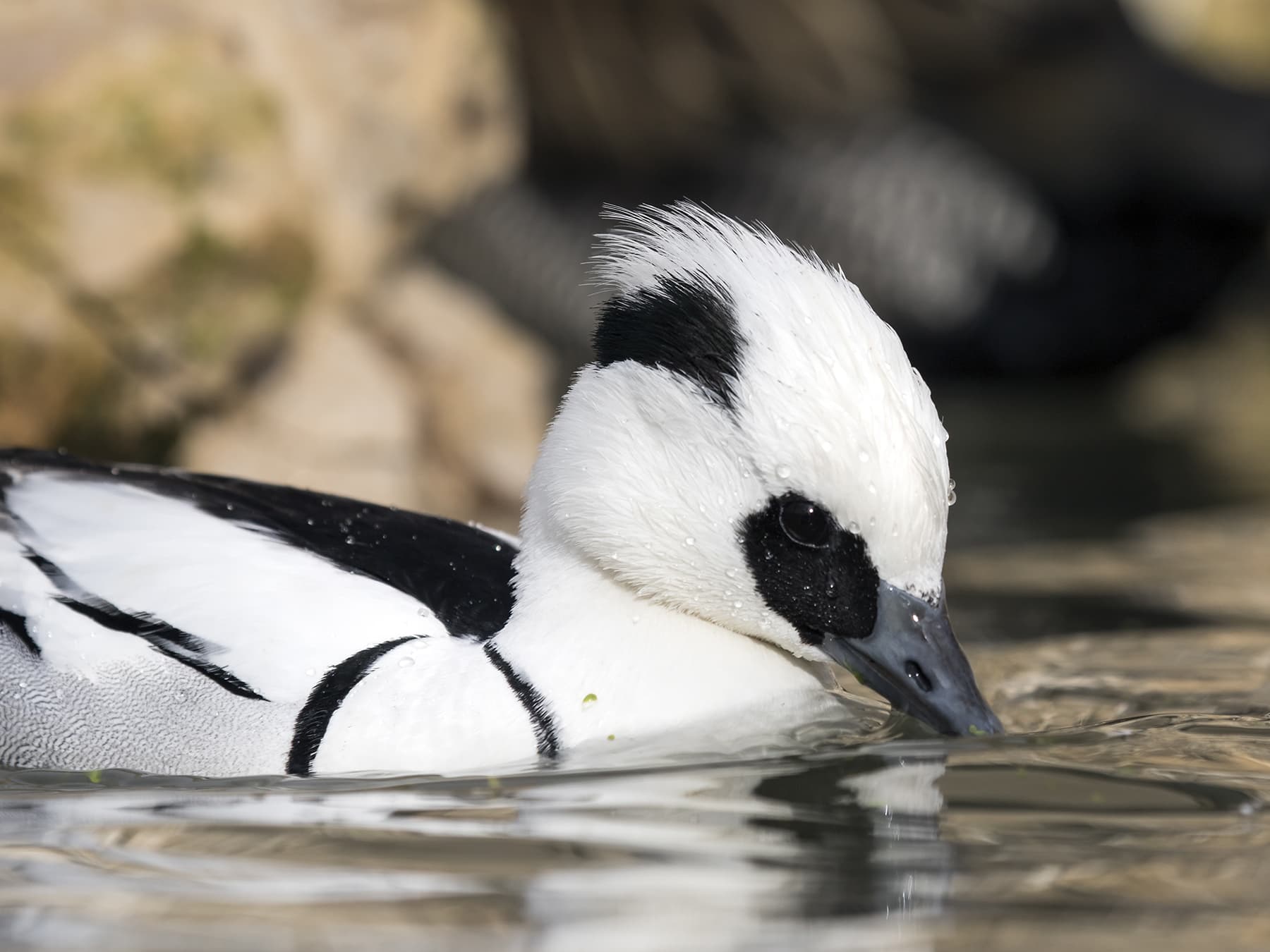
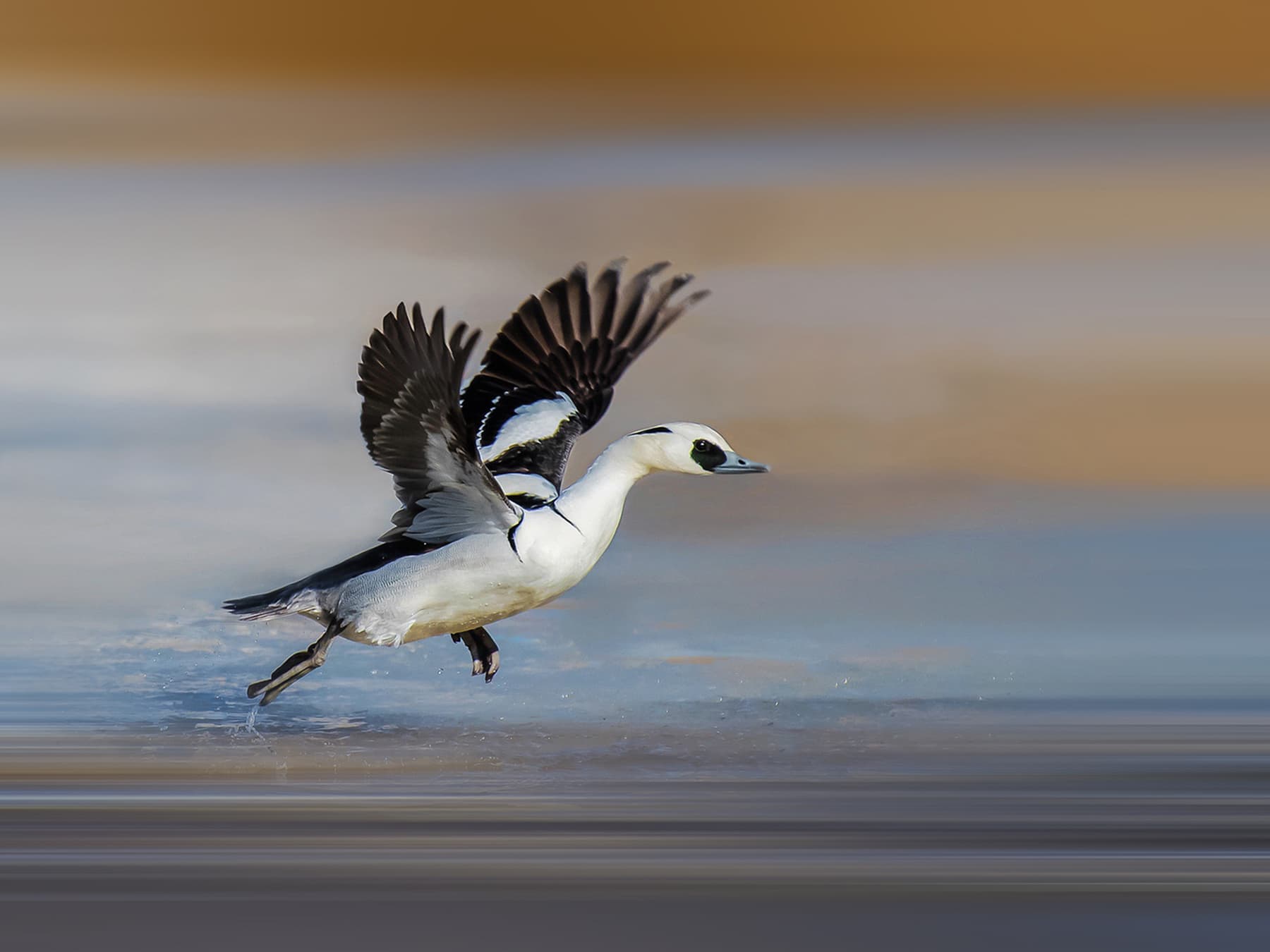
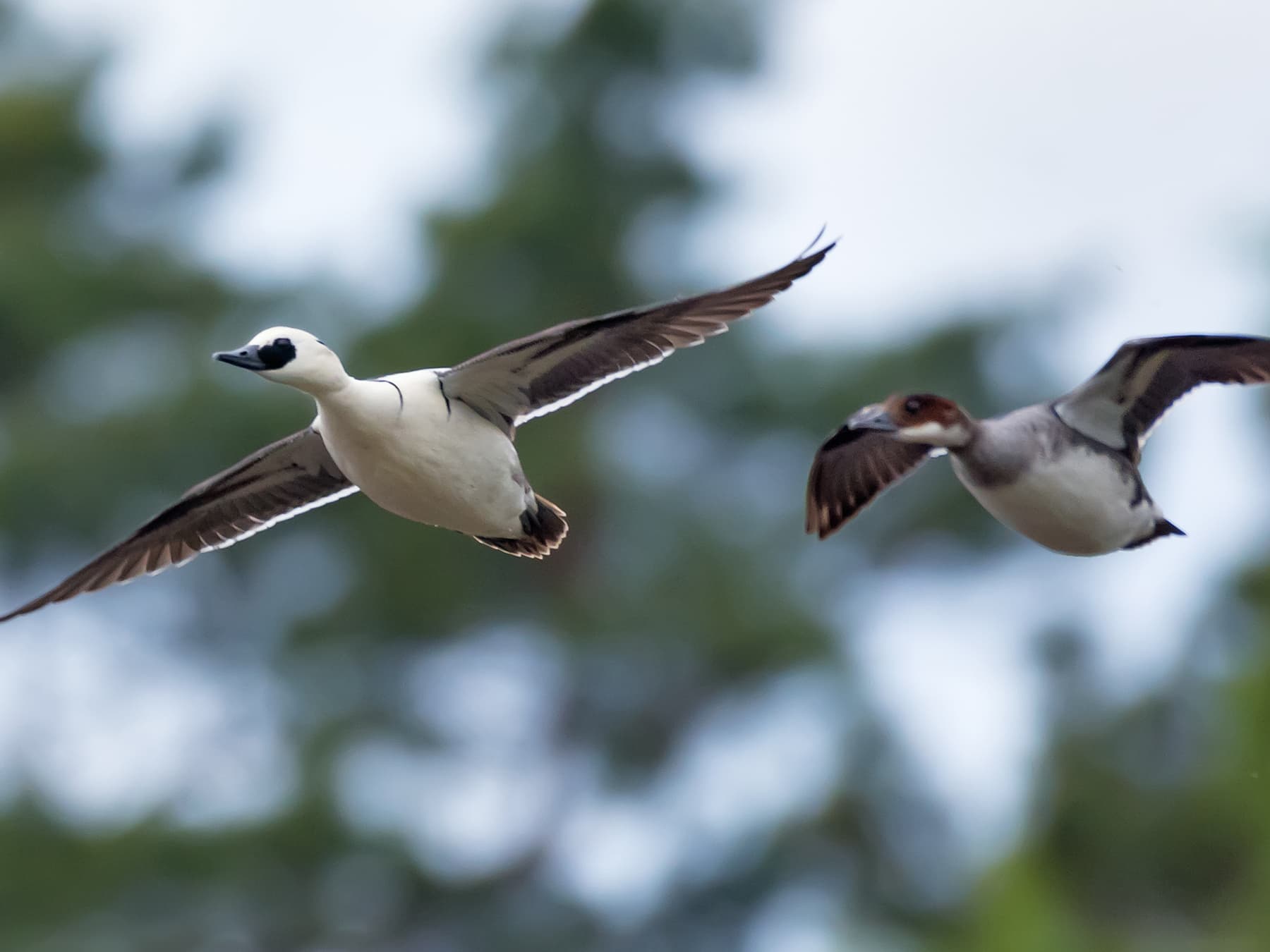
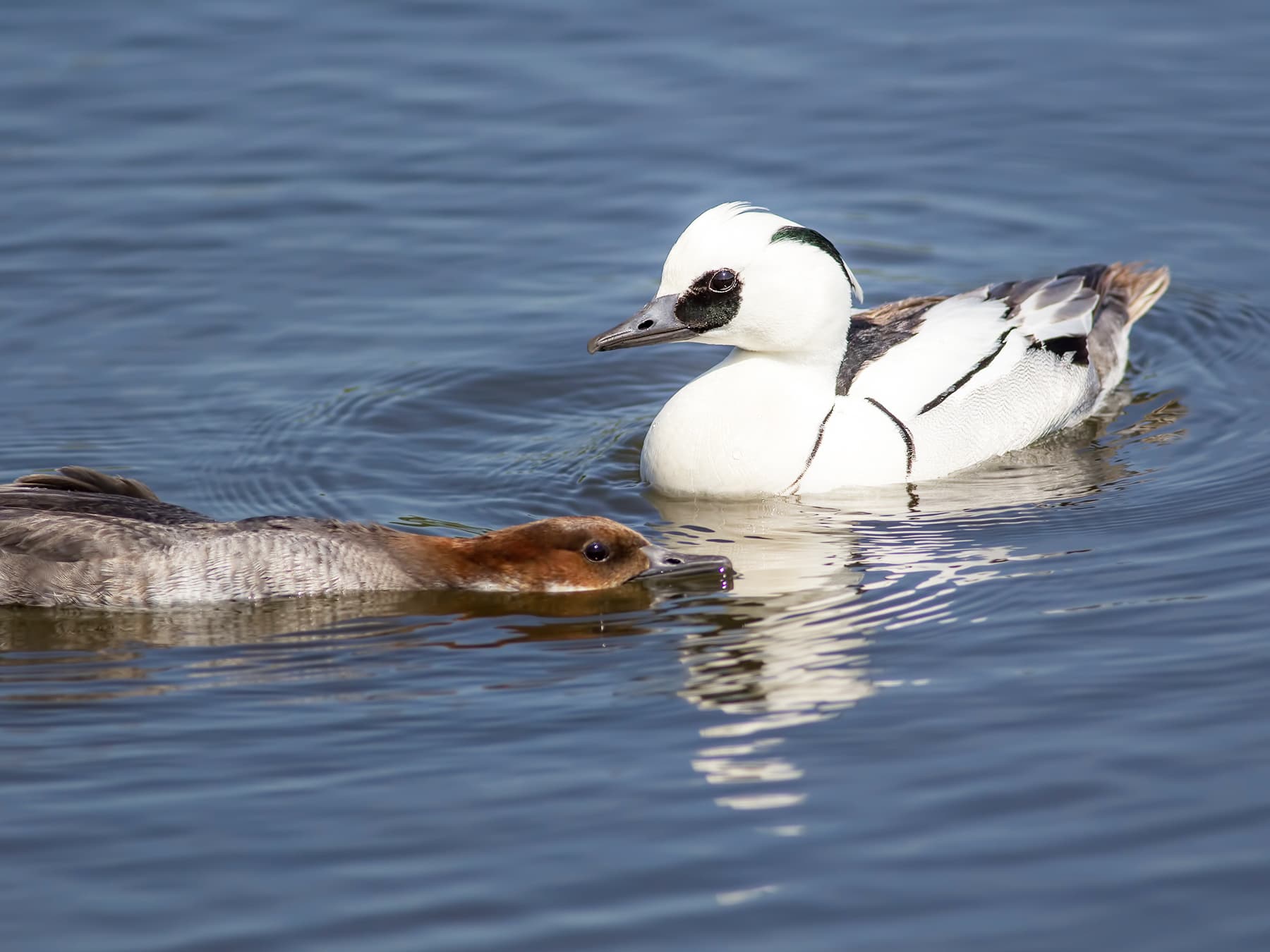
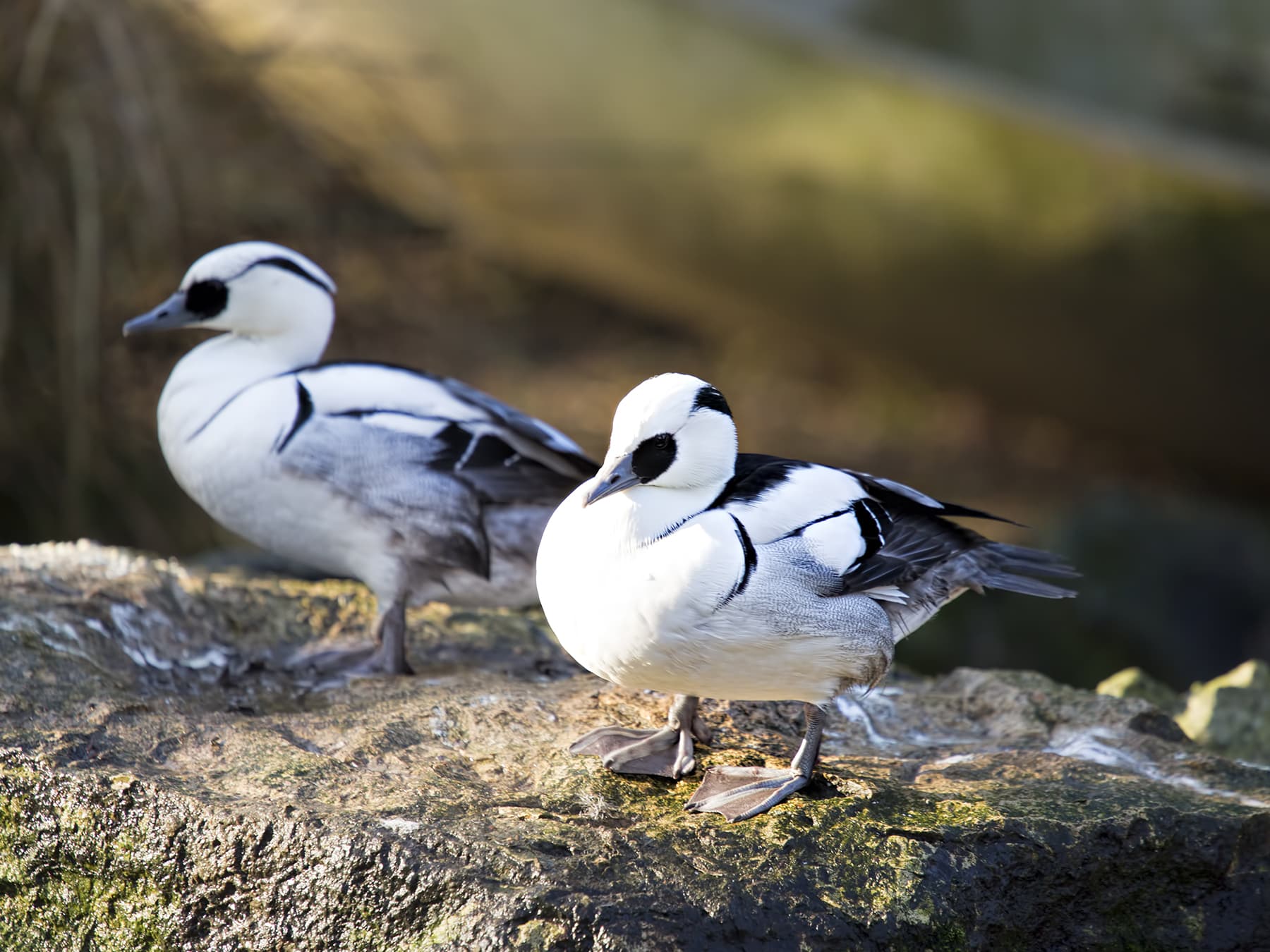
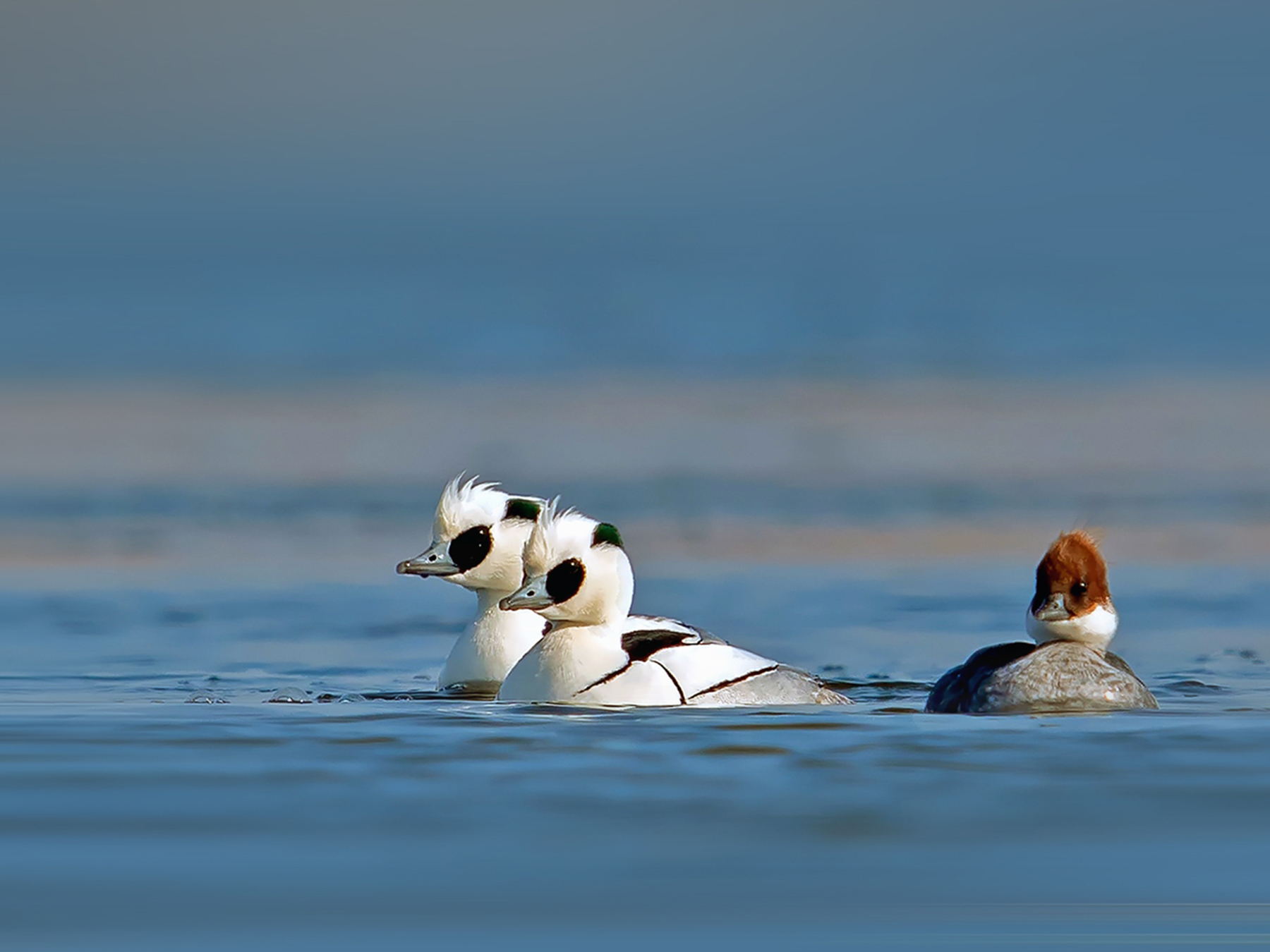
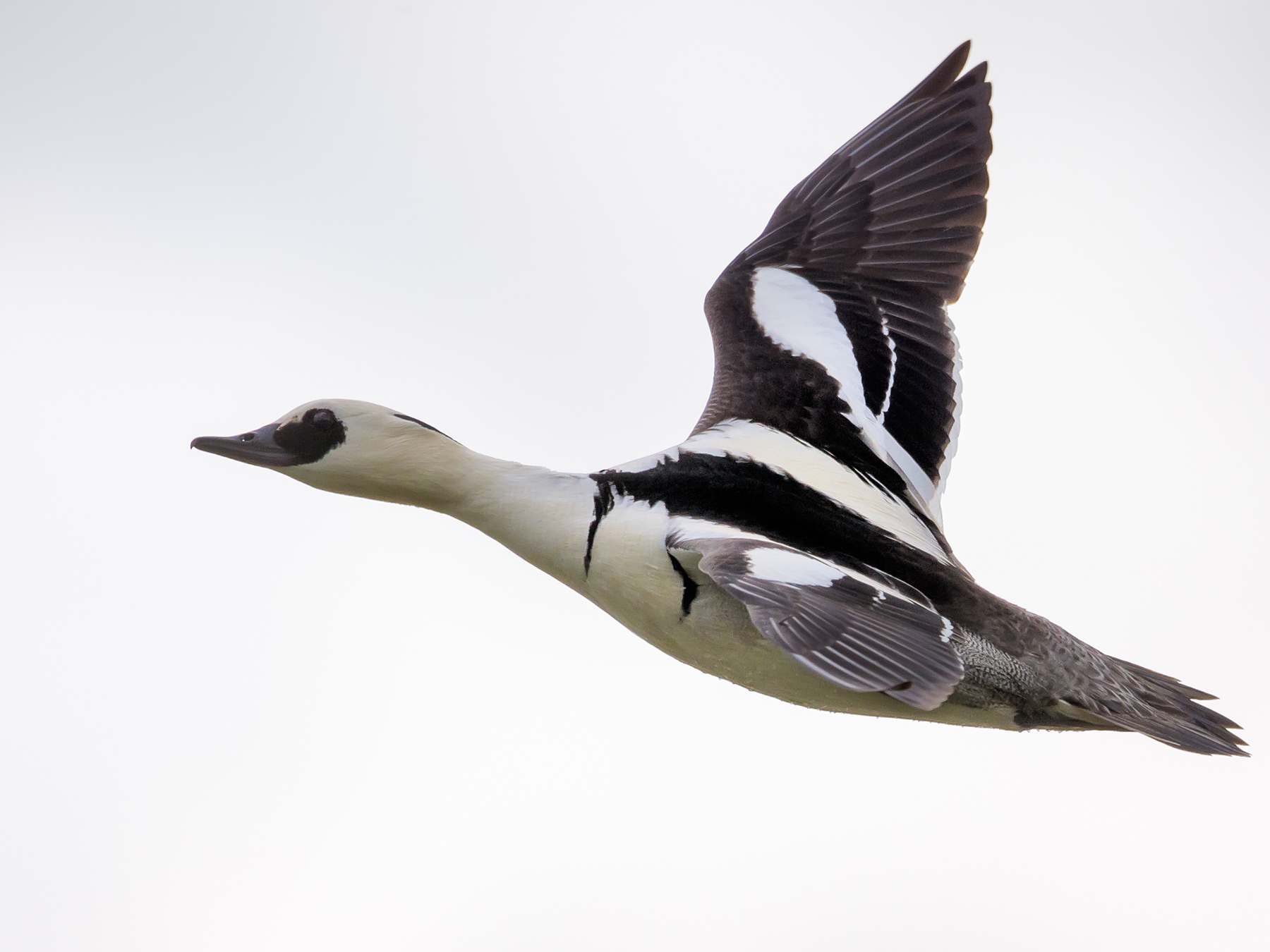
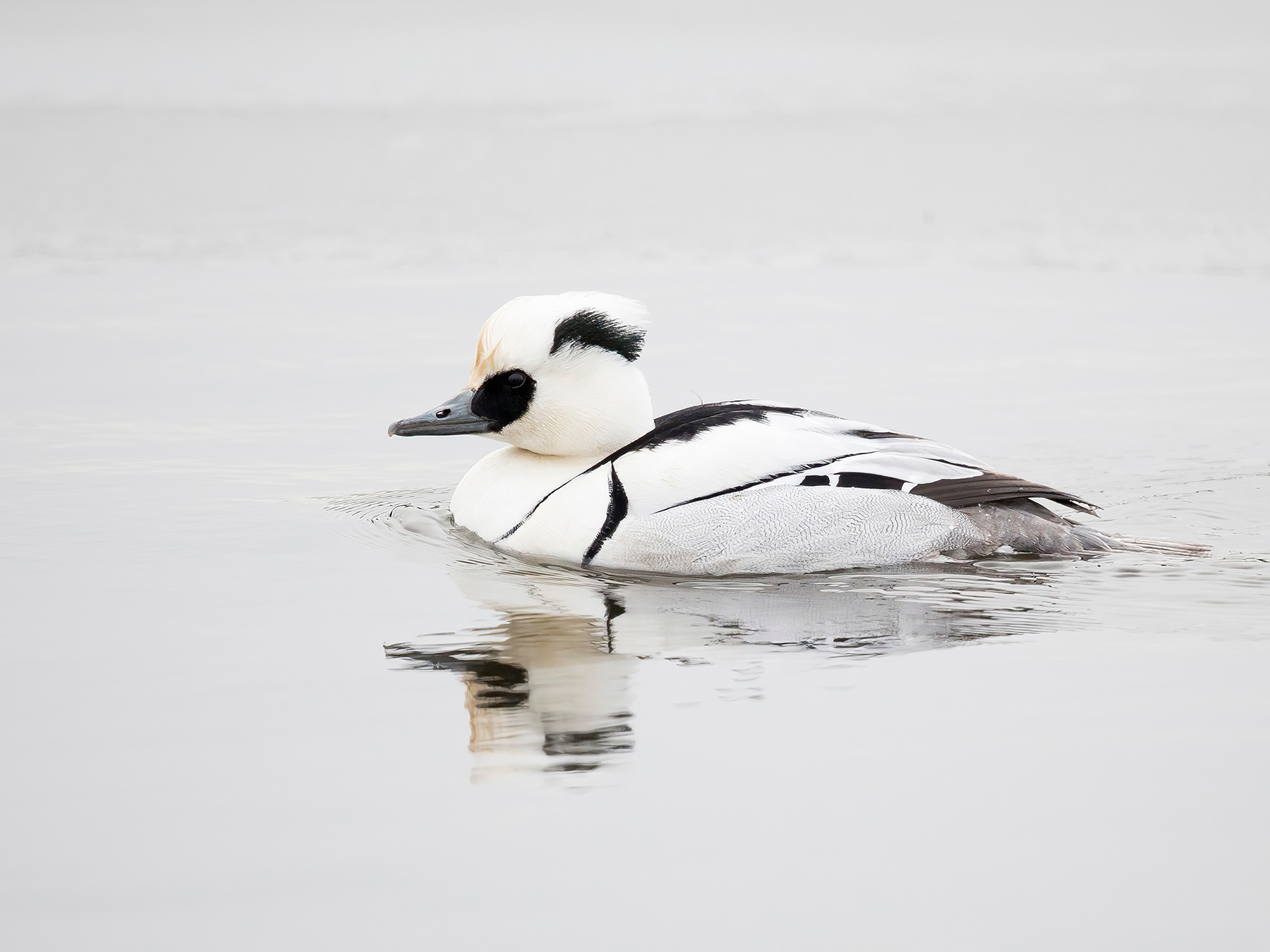
Male smews are mainly white, but have a black eye mask, black patch on the rear of the head, a black back, and two narrow black lines from the upper back to the breast. Wings are black, but patterned with grey and black.
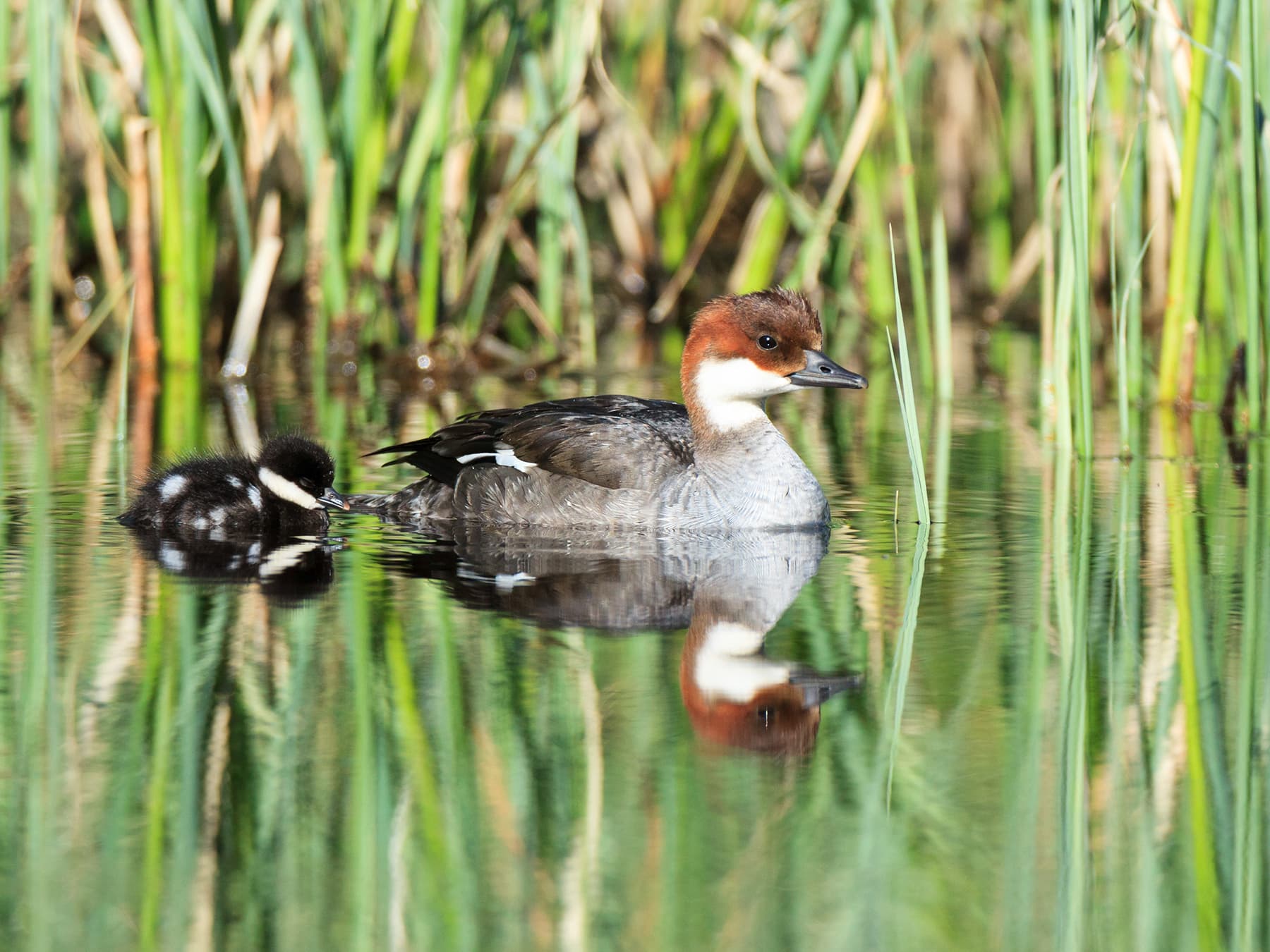
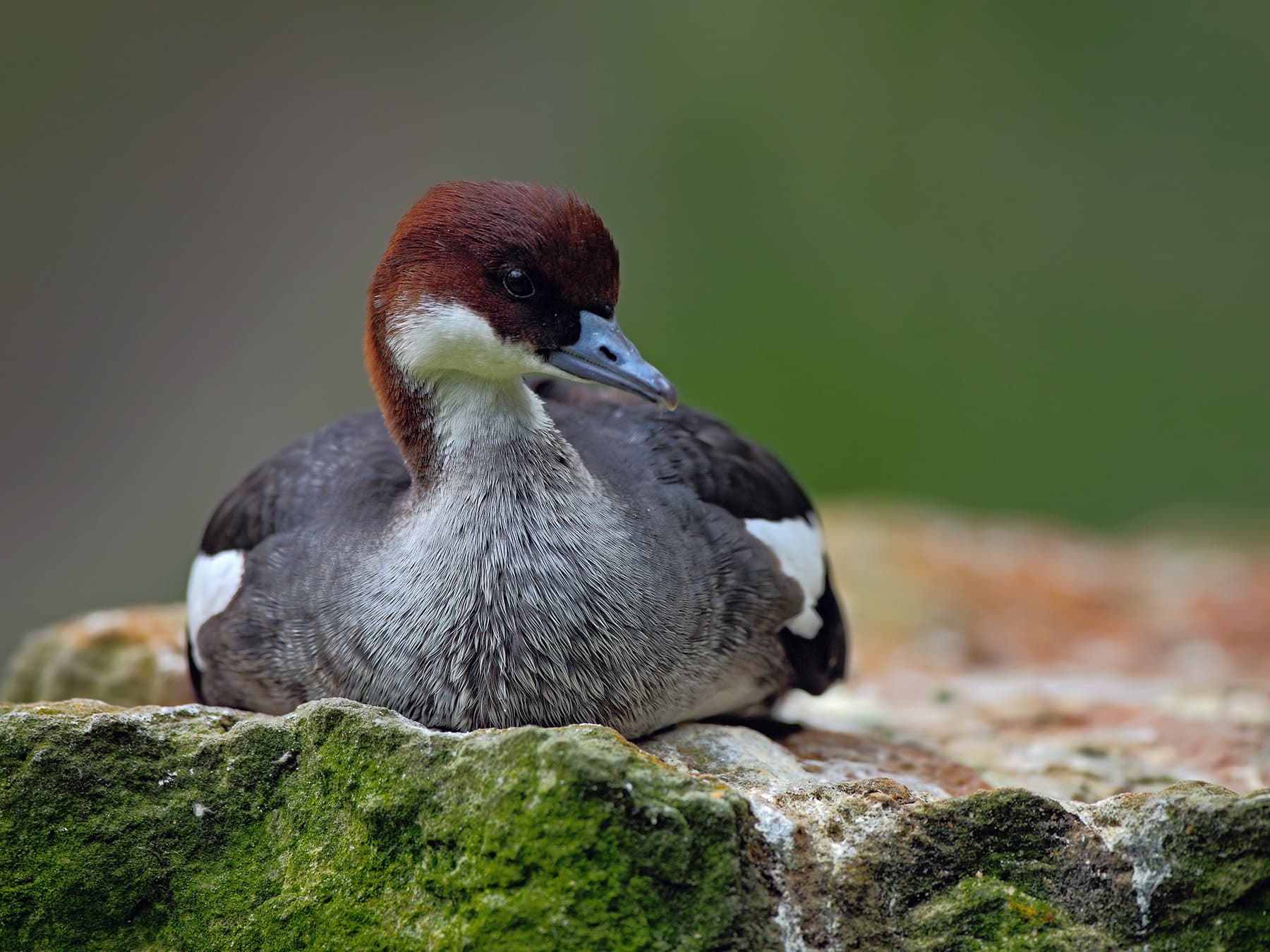
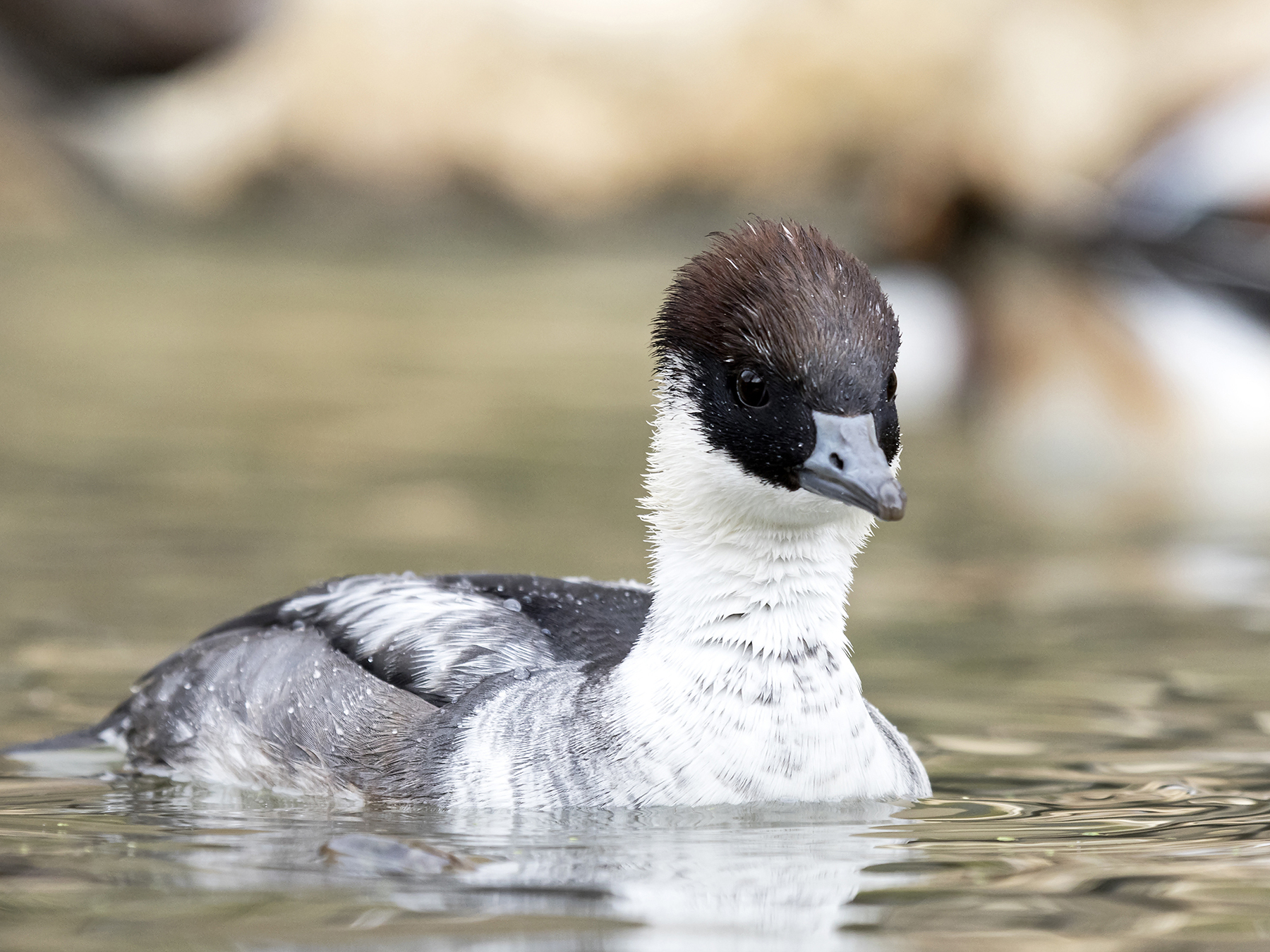
Females have a white lower face and throat, chestnut-red crown, nape and upper neck, and dusky grey wings and back. Its flanks and lower belly are mottled grey-white.
Both males and females have grey legs and feet, a short grey bill, and a vague crest on the back of their head.
Non-breeding males moult into an eclipse plumage that is fairly similar to the colouring of a female smew, but retain their black backs and white wing patches.
Juvenile smews are also similar in appearance to females, but are browner instead of grey-black.
How big are Smews?
Compact diving ducks, smews are the smallest member of the typical mergansers, with males larger in size and weight than females.
- Length: 36 cm to 44 cm (14.2 in to 17.3 in)
- Wingspan: 55 cm to 69 cm (21.7 in to 27.2 in)
- Weight: 500 g to 800 g (17.6 oz to 28.2 oz)
Its size
Adults- Length
- 38–44 cm
- Wingspan
- 55–69 cm
- Weight
- 450–650 g
Its song and calls
What sound does a Smew make?
Not the most vocal of waterbirds, a smew’s call is usually heard only during courtship or alarm. Male smews make a mechanical-sounding ‘kurr-ik kurr-ik’ rattle, while the alarm call of female smews is a harsher ‘krrrrr’.
When and where to see it
OctoberMostly absent
Most recorded in October
- 1. Rutlandunder 0.1%
- 2. Berkshireunder 0.1%
- 3. Stockton-on-Teesunder 0.1%
- 4. Buckinghamshireunder 0.1%
- 5. East Riding of Yorkshireunder 0.1%
Each dot is a county, state or province: the bigger and darker, the larger the bird’s share of that place’s bird records that month. Grey dots: no regular records. The ringed point is the centre of the bird’s records this month; the arrow shows how it moved since last month, and the dashed loop its path through the year. “Arrivals” colours places where it becomes regular this month (orange) or is in its last regular month (grey). GBIF eBird Observation Dataset, 2019–2024. Map data: Natural Earth, US Census Bureau; place centres © OpenStreetMap contributors.
In your area
See when the Smew is recorded in your county, state or province.
How often the Smew turns up in the UK through the year, from birdwatchers' records.
United Kingdom
Winter visitor · regularly Nov–Mar · most records in January
Show as a table
| Month | United Kingdom |
|---|---|
| January | 0.062% (regular) |
| February | 0.050% (regular) |
| March | 0.026% (regular) |
| April | 0.003% |
| May | <0.001% |
| June | <0.001% |
| July | <0.001% |
| August | – |
| September | <0.001% |
| October | 0.002% |
| November | 0.009% (regular) |
| December | 0.035% (regular) |
Recorded regularly in
Worldwide: recorded regularly in 44 countries
Countries where it was recorded in at least 3 of the 6 years 2019–2024. Linked countries have their own bird list.
Europe (31)
Asia (13)
- Azerbaijan
- China
- Georgia
- India
- Iran
- Japan
- Kazakhstan
- Kyrgyzstan
- Mongolia
- South Korea
- Taiwan
- Turkey
- Uzbekistan
Data: EOD – eBird Observation Dataset (Cornell Lab of Ornithology), accessed via GBIF.org, CC BY 4.0. Records from 2019–2024, aggregated and filtered by Birdfact. How these lists are made
What is the habitat of a Smew?
During the breeding season, habitats preferred by smews include freshwater lakes, pools, slow-flowing rivers and lowland oxbow lakes.
Winter habitats include large lakes, coastal lagoons and estuaries, and ice-free slow-flowing rivers.
What is the range of a Smew?
The breeding range of smews extends from Scandinavia in the east, across Russia into eastern Siberia in the west, reaching as far north as the Arctic Circle.
The species’ winter range includes the North and Baltic seas to the east, and from central and eastern Europe to the Black and Caspian seas, as far east as Japan, the Korean peninsula and eastern China.
Where do Smews live?
The leading European countries with the highest breeding populations include Finland and Russia, while little is known about the species on breeding grounds outside of Europe.
Winter visitors to western Europe are concentrated around the Netherlands and Denmark.
How rare are Smews?
Only around 125 smews visit the UK each winter, with no breeding recorded in the British Isles, so they can certainly be considered a rare visitor.
Where can you see Smews in the UK?
Small numbers of smews arrive in the UK each winter from Russia and Scandinavia, and arrivals are mainly spotted in coastal regions from Lincolnshire to the Severn estuary. However, they are frequently spotted on inland lakes and ponds too, rather than being purely limited to coastal waters.
Migration
Do Smews migrate?
Smews are a fully migratory species, breeding in the extreme northern regions of Scandinavia, and Russia, and moving south once winter approaches.
Winter populations are found across central and western Europe, as well as in south-west Asia, particularly Iran and Uzbekistan.
Are Smews native to the UK?
Smews are winter visitors to the UK but do not breed anywhere in the British Isles. They arrive from November onwards, when conditions in their Scandinavian and Russian breeding grounds become too harsh to survive, and have all departed by early the following spring.
Tips for seeing it
- Look for Smews on lakes, reservoirs, and coastal bays during winter months
- Scan for the striking white plumage of males, which stands out among other waterfowl
- Observe their diving behaviour, as they frequently submerge in search of food
- In the UK, check well-known wintering sites like Dungeness in Kent or Rutland Water
What it eats
What do Smews eat?
Smews feed by diving underwater to search for prey, finding aquatic insects and fish, larvae, amphibians, and some plant matter.
Water beetles and dragonflies are the main insects eaten, although crustaceans and molluscs also feature, particularly in summer.
In winter, more fish, including salmon, trout, gudgeon, herring, eels, and carp, are caught, depending on location, with both freshwater and saltwater species eaten.
Despite their small size, smews are able to catch relatively large fish, with eels up to 29 cm not posing much of a problem! Their serrated bills have a sharp, hooked end, which allows them to firmly grip hold of their prey.
What do baby Smews eat?
Baby smews initially feed mainly on small aquatic invertebrates and their larvae, particularly dragonflies and caddisflies.
Nesting and breeding
Where do Smews nest?
Smews are cavity nesters, and frequently use abandoned hollows excavated by black woodpeckers or artificial nest boxes.
A sparse lining of feathers is added to the bottom of the hollow, but no other nesting materials are used. Nests are generally located no more than 10 m (33 ft) above ground level.
When do Smews nest?
The breeding season for smews begins from April onwards, and can be delayed until June in the more northerly regions of their range. One brood is laid per season.
What do Smew eggs look like?
Smews’ eggs measure 53 mm by 38 mm (2.1 in by 1.5 in) and are cream to pale buff in colour. A typical clutch consists of between 7 and 9 eggs, which are incubated by the female alone for 26 to 28 days.
The male initially stands guard nearby, but as the incubation period progresses, leaves the breeding grounds and plays no active part in raising the ducklings once they hatch.
Do Smews mate for life?
A seasonally monogamous species, smew pairs form on wintering grounds or during migration and remain together until the female is partway through incubating her eggs.
Males depart for moulting grounds before the young hatch, and play no active role in raising their ducklings.
Behaviour
Are Smews aggressive?
It’s not thought that smews are an especially aggressive species, and do not show signs of territorial behaviour, even during the breeding season.
The male defends his mate during the early incubation period, but do not defend a particular territory
Lifespan and predators
How long do Smews live?
Little information is available about the average expected lifespan of a smew. First-time breeding is thought to occur at 2 years of age.
What are the predators of Smews?
Natural predators of smews across their distribution range include American mink, long-legged buzzards, rough-legged buzzards, peregrine falcons, merlins and hen harriers. In some parts of Europe, smews are shot in substantial numbers by recreational hunters.
Are Smews protected?
Smews are protected by the Wildlife and Countryside Act, of 1981, which makes it an offence to knowingly kill, injure or take one into captivity.
Are Smews endangered?
Smews are categorised with Red status on the British Birds of Conservation Concern list, due to a 66 percent decline in numbers from 1993 to 2018.
It is considered a vulnerable species in parts of its European range, with population declines linked to habitat loss and degradation, and predation, particularly by American mink.
Conservation
While currently listed as Least Concern, Smews face threats from habitat loss and degradation of breeding areas. Climate change may also impact their distribution and migration patterns.
Conservation efforts focus on protecting wetland habitats and monitoring population trends across their range.
More photos
5 photos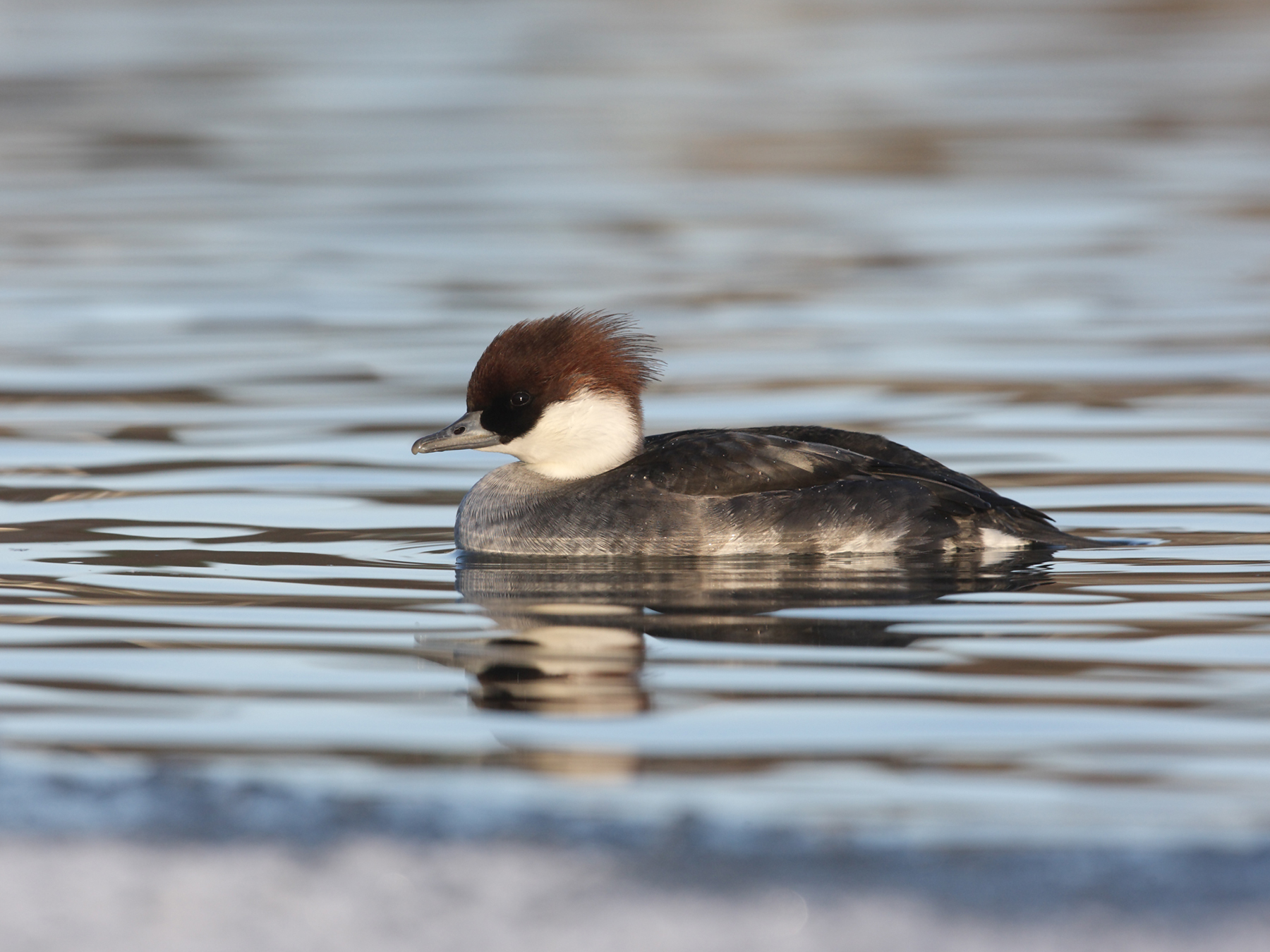
Quick facts
- Length
- 38–44 cm
- Wingspan
- 55–69 cm
- Weight
- 450–650 g
- Lifespan
- 8–10 years · oldest recorded 10 years
- Family
- Ducks, Geese & Swans
- Migration
- Long-distance Migrant
- Global status (IUCN)
- Least Concern
- World population
- 130,000 individuals
- Population trend
- Decreasing
- Also called
- White Nun
- Scientific name
- Mergellus albellus
Questions
2Is a Smew a sea duck?
The Smew is a sea duck. It is a small diving duck belonging to the family Anatidae.
How do you pronounce Smew?
Smew is pronounced as it is written ‘S-mew’, to rhyme with ‘new’.
Sources
4- 1BirdLife International. 2016. Mergellus albellus. The IUCN Red List of Threatened Species 2016: e.T22680465A85991357. Source (opens in a new tab)
- 2Wetlands International (2015)
- 3Wetlands International (2015)
- 4Fransson et al., EURING list of longevity records for European birds (2010) Source (opens in a new tab)

Checked by
Nathan Cope, founder and editor
Nathan founded Birdfact and leads its writers and contributors in the UK, the US and Canada. He has watched and studied birds for more than ten years, and checks every article and species guide before it’s published.