


Savi's Warbler
Savi's Grasshopper Warbler · Locustella luscinioides
By the Birdfact teamChecked by Nathan Cope
On this page13 sections
How to recognise it
What do Savi's Warblers look like?
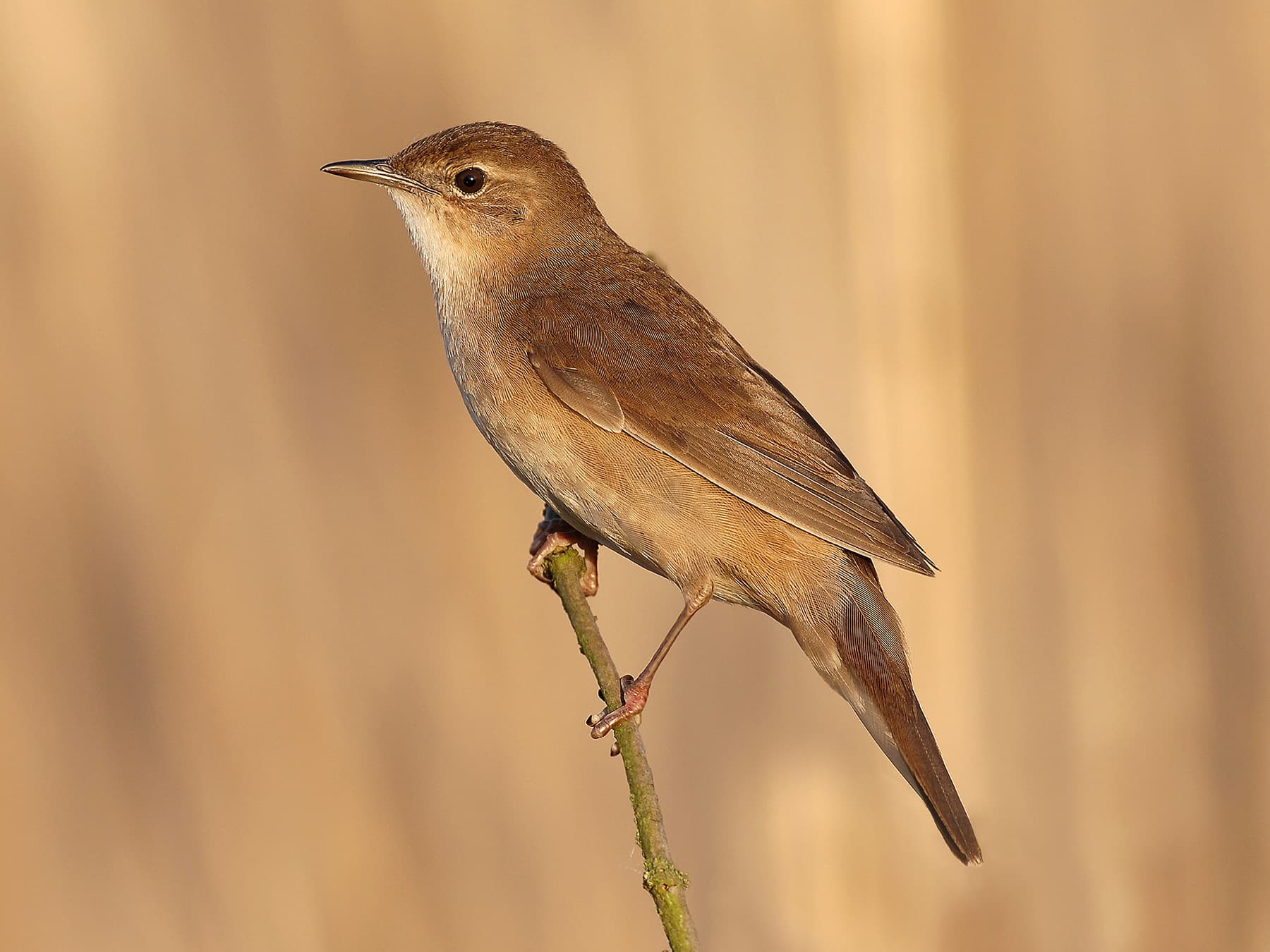
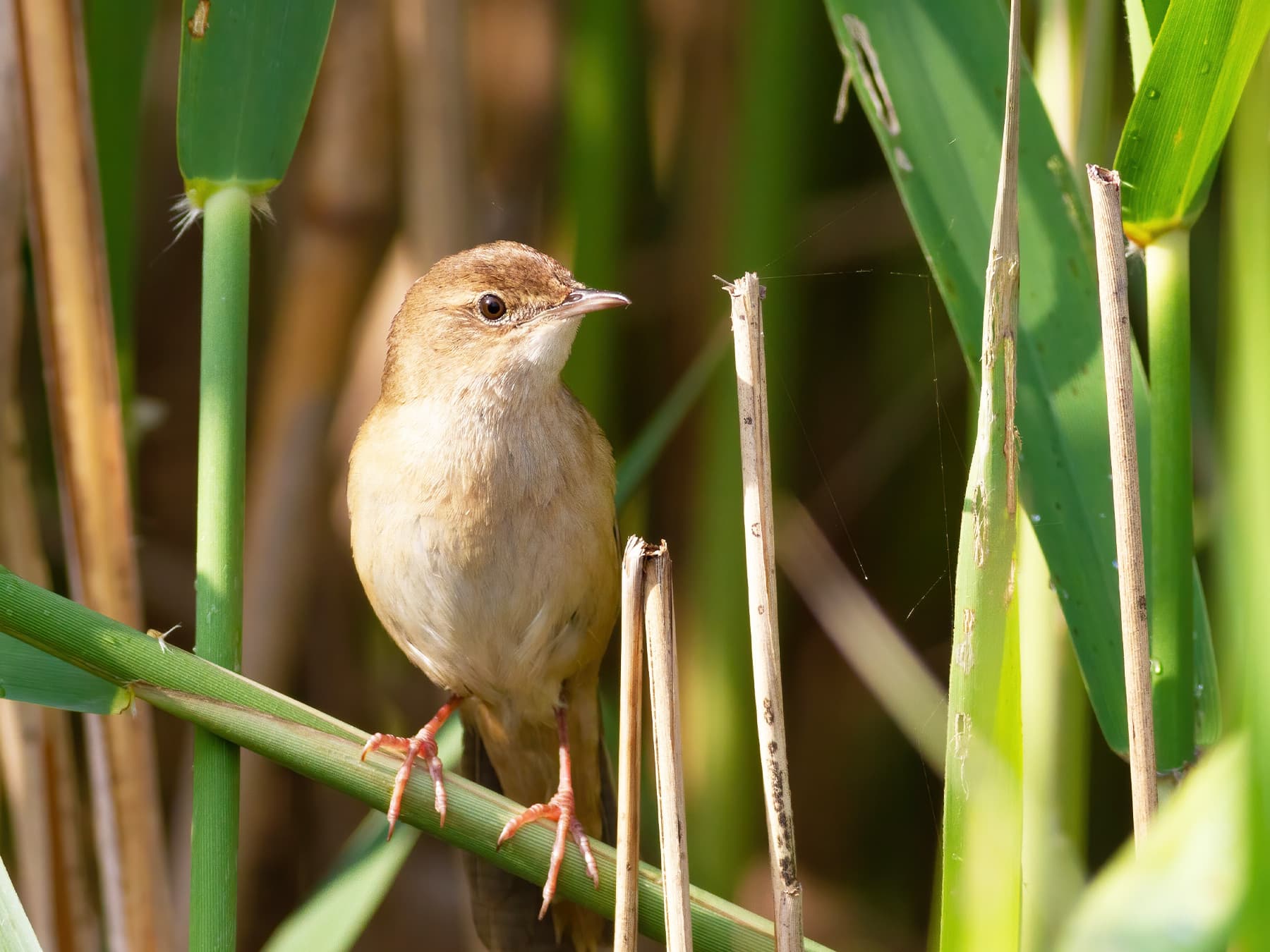
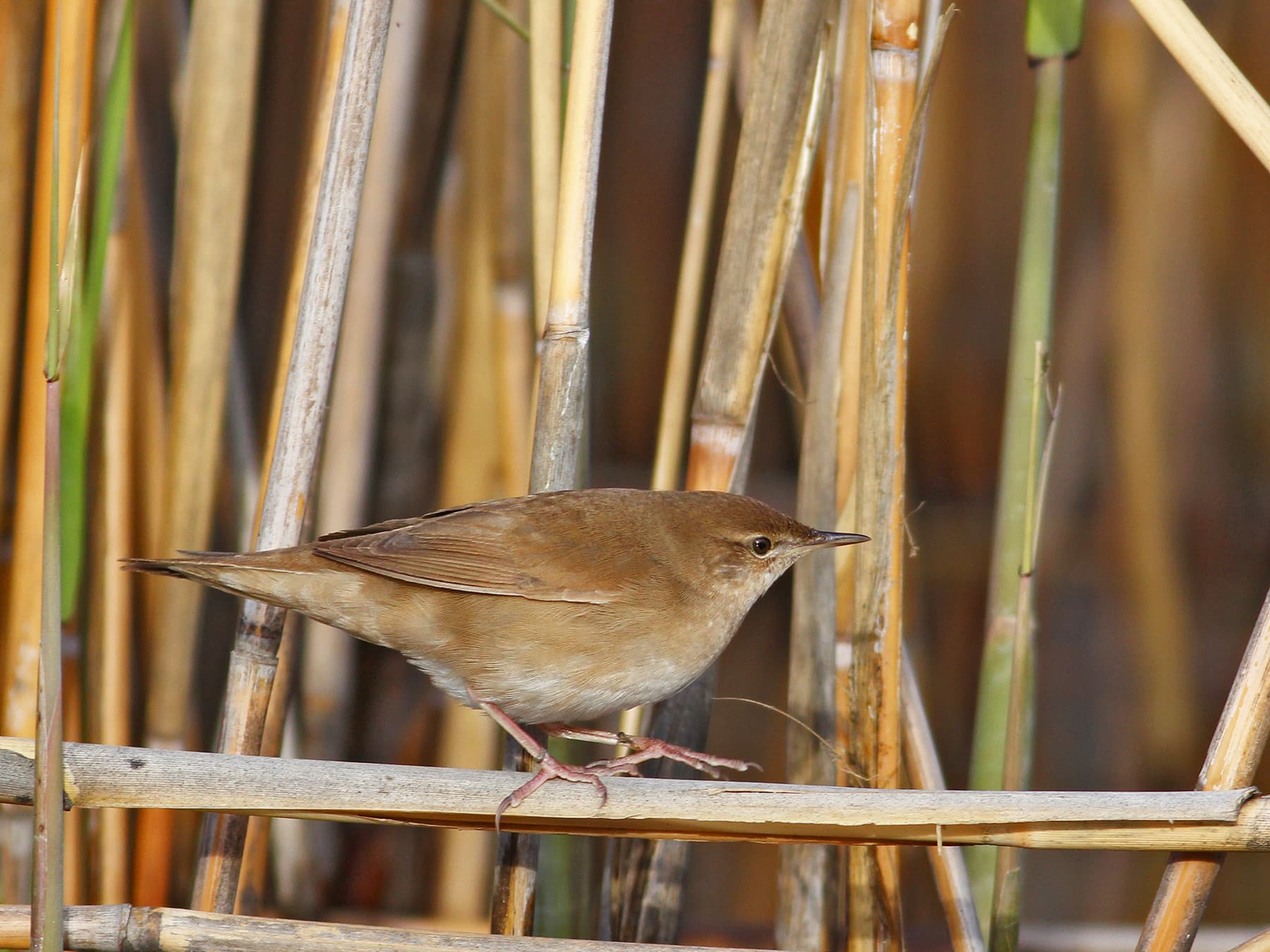
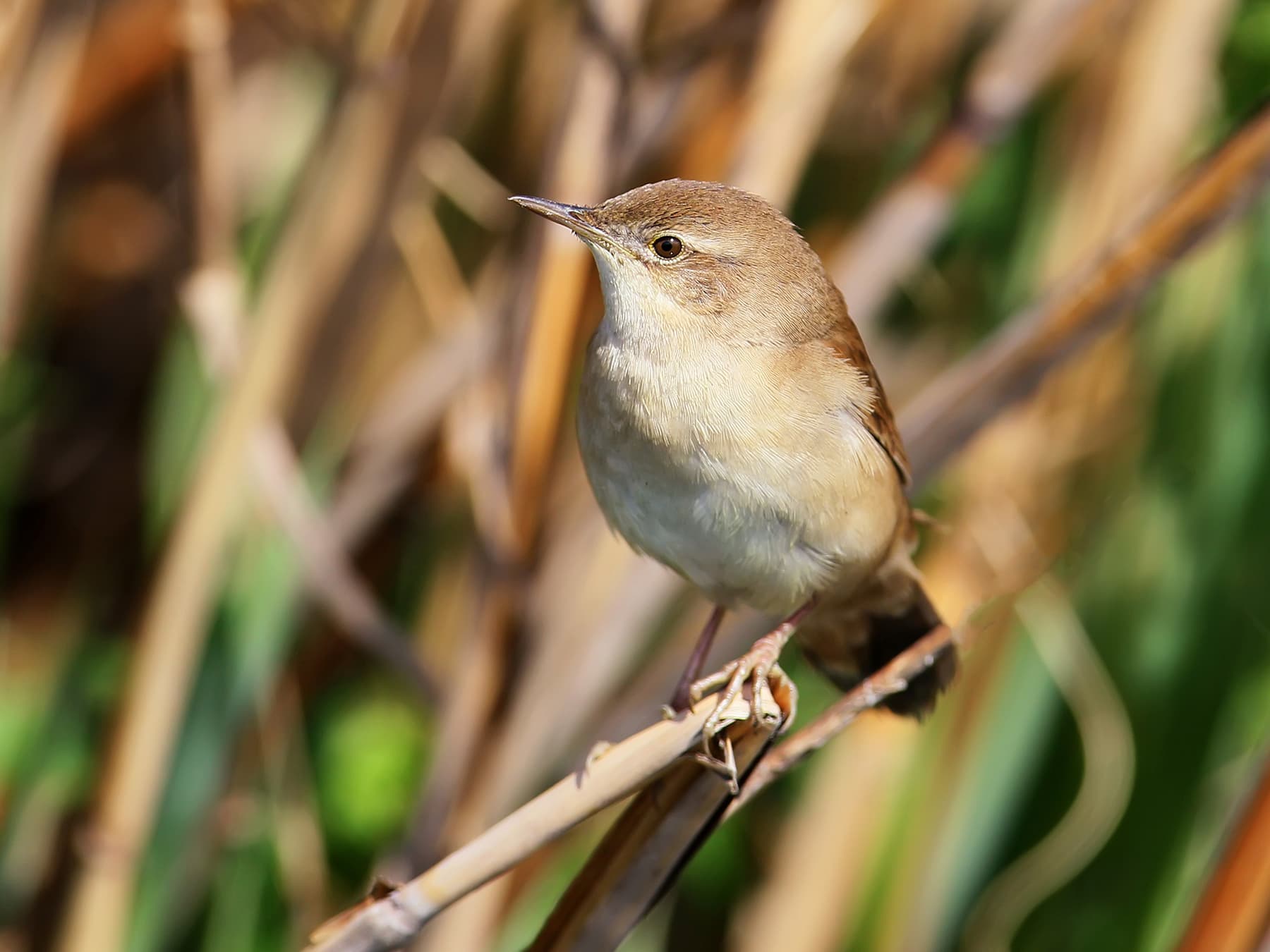
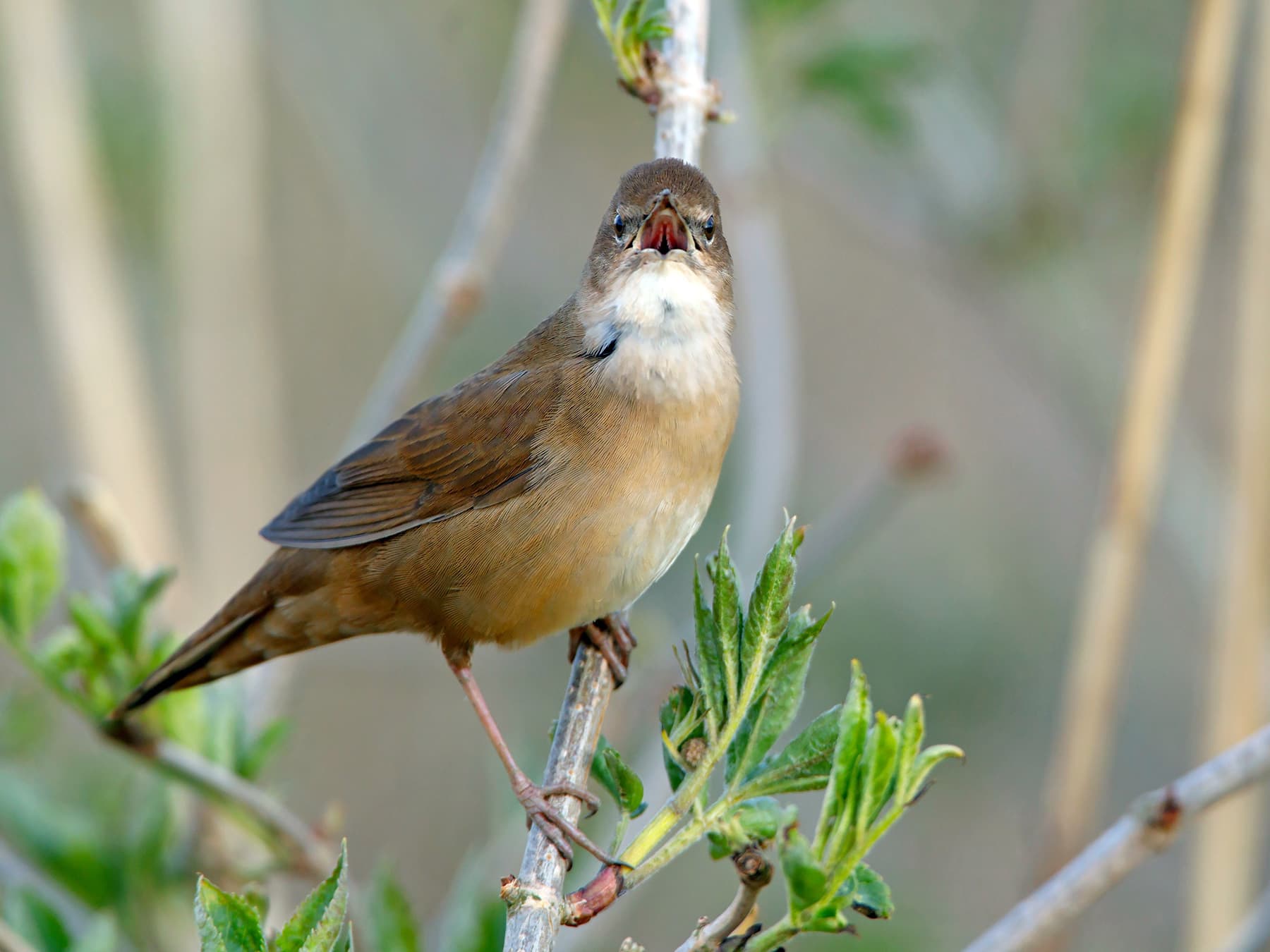
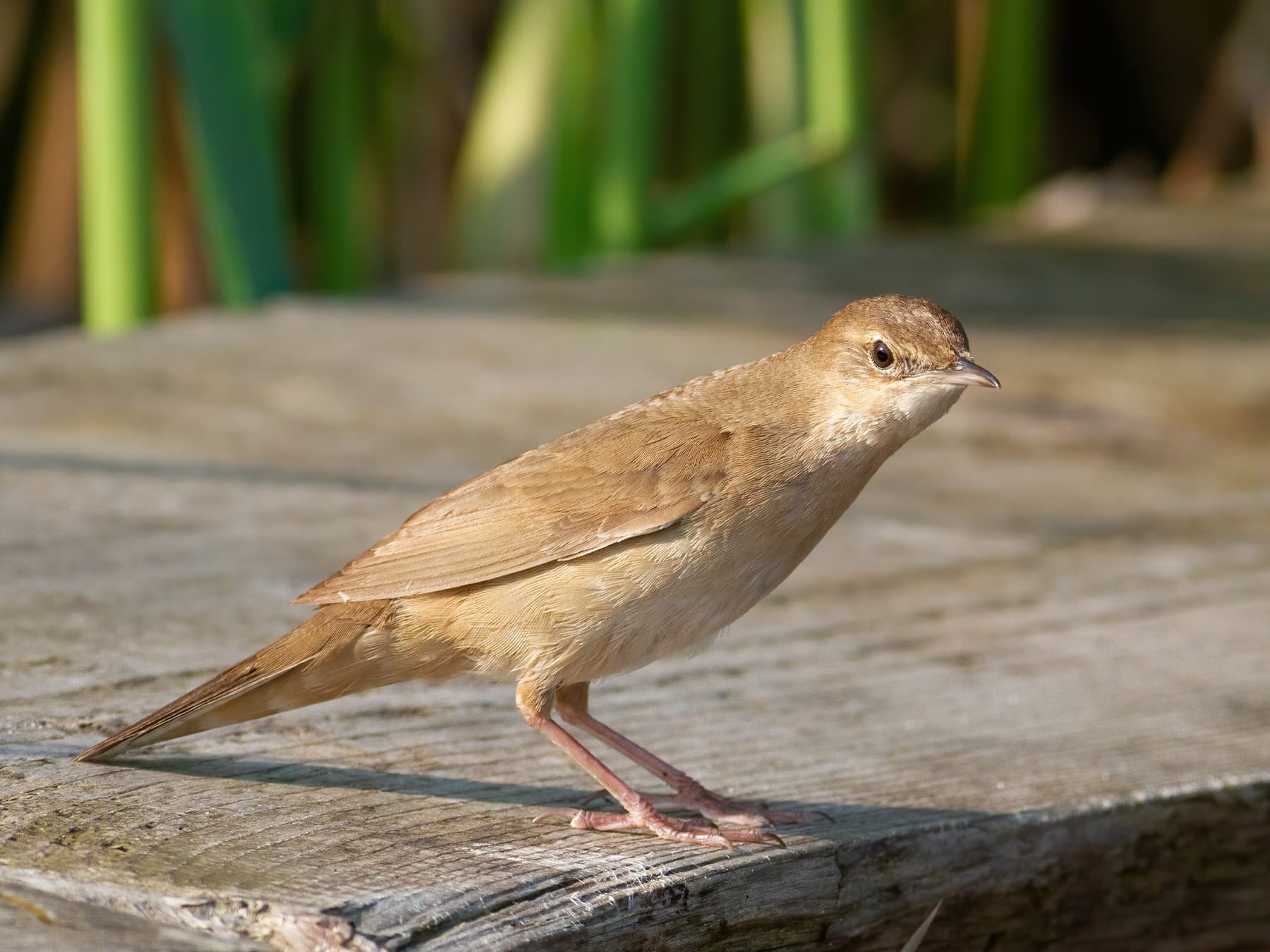
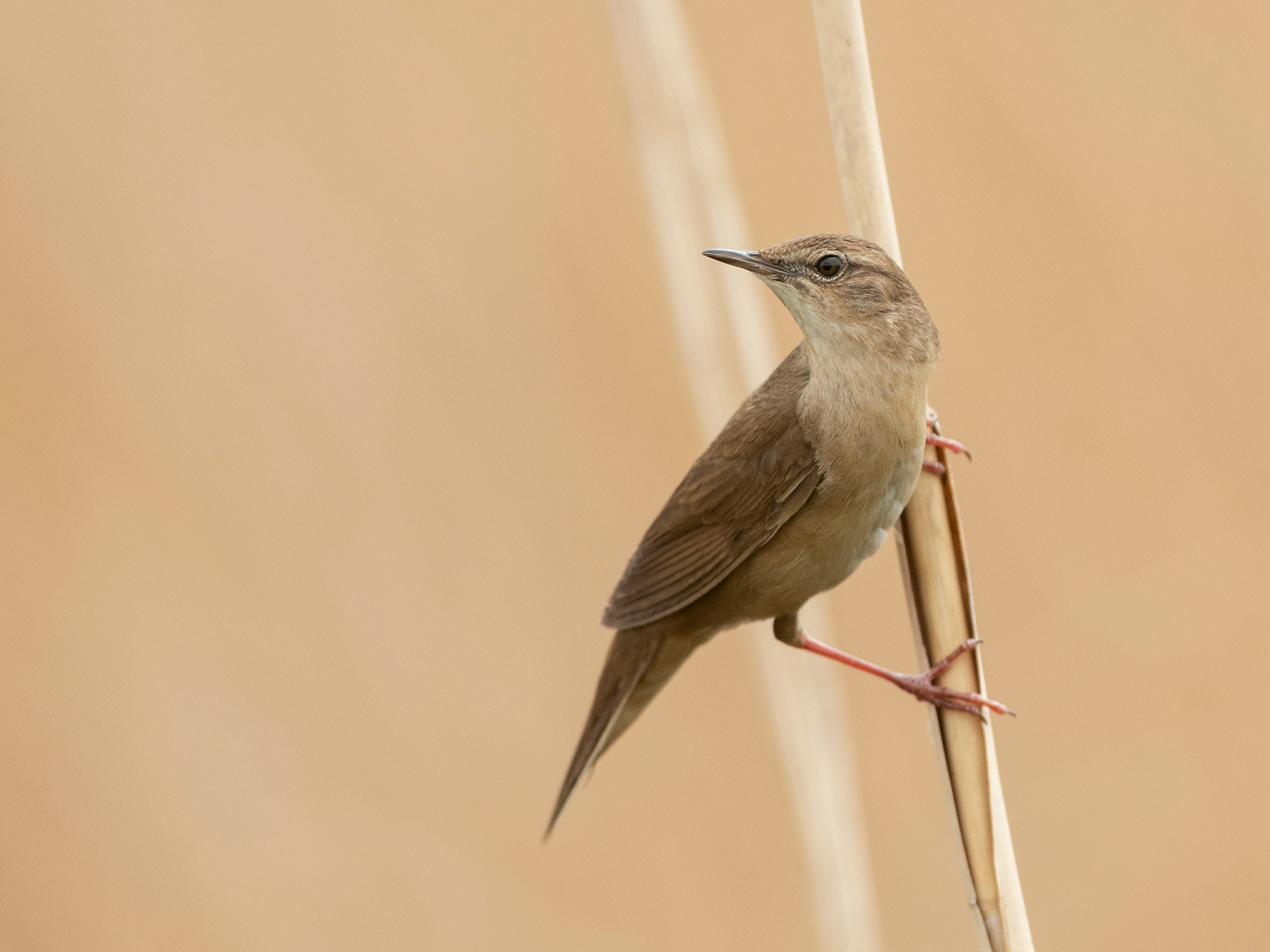
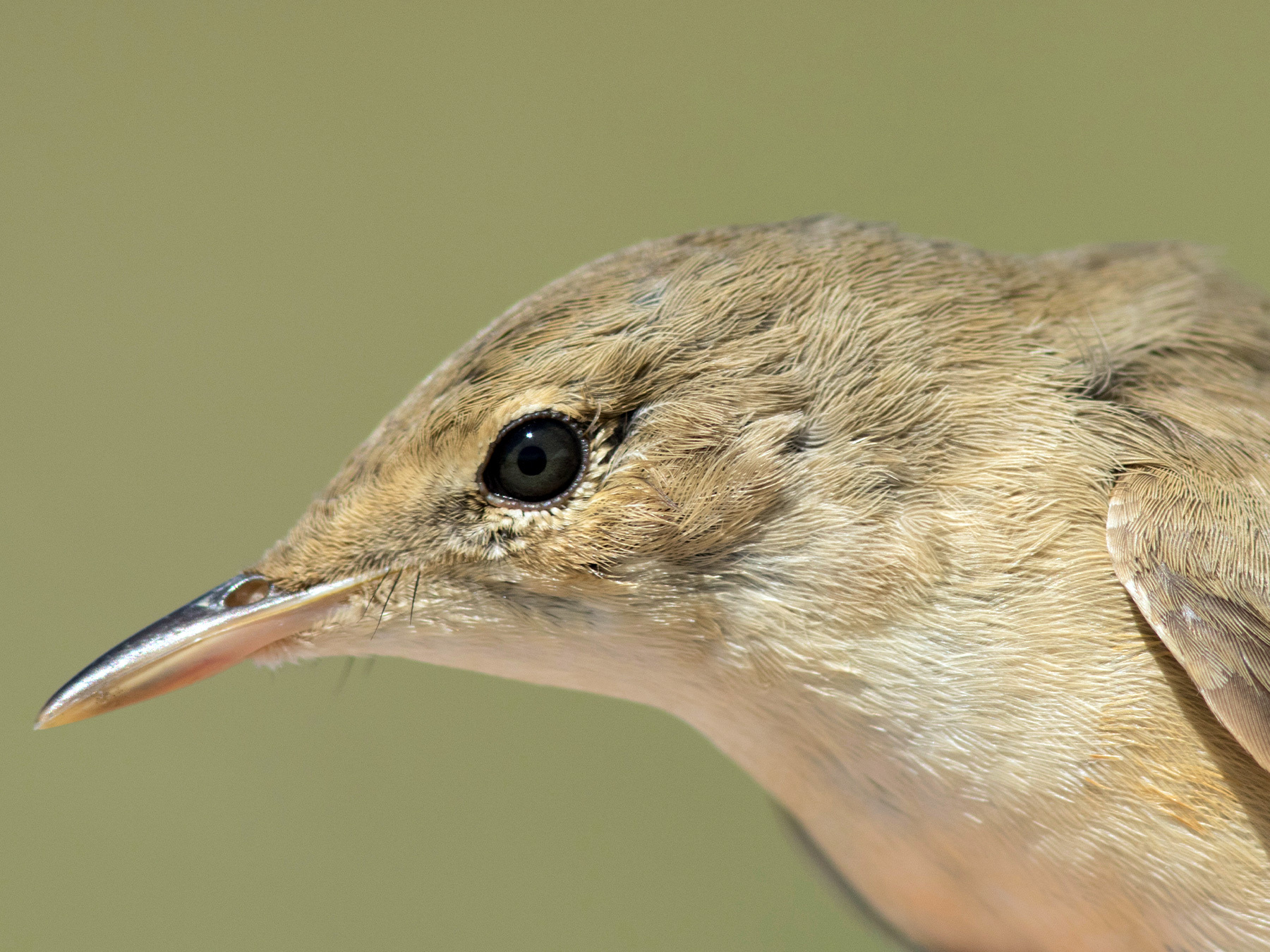
Savi’s warblers have a warm brownish-grey back, nape, and crown and a paler greyish-white belly, breast, throat and chin. They have a darker brown tail, which is a duller brown underneath. A Savi’s warbler’s throat is not streaked, a characteristic that allows them to be told apart from the very similar river warbler.
Male and female Savi’s warblers are identical in colouring and size. Both have pale brown to pinkish-brown legs, olive-brown irises and a horn-grey bill.
Young Savi’s warblers are also similar to mature birds but have an overall more rufous or yellow wash.
How big are Savi's Warblers?
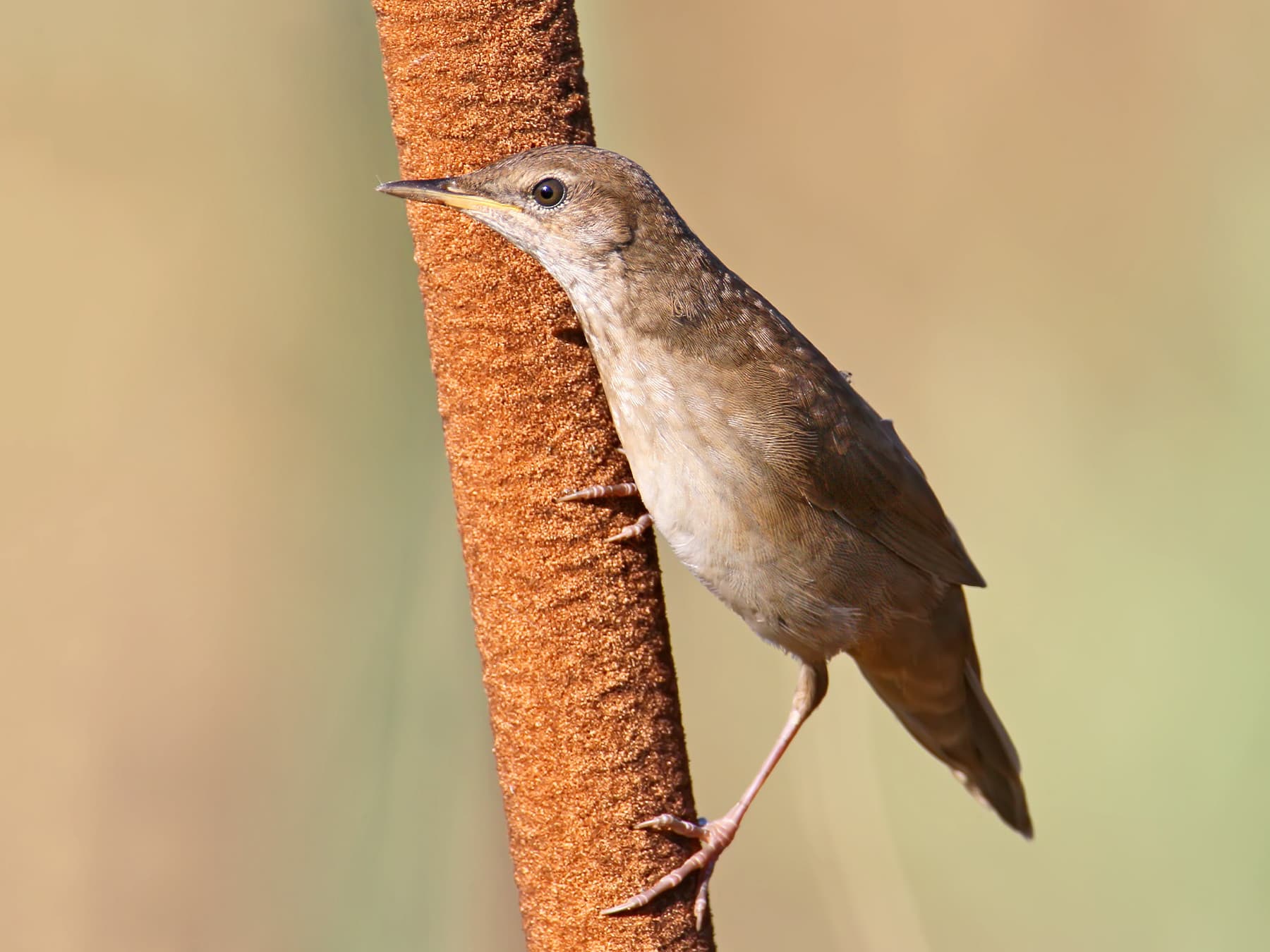
Savi’s warblers are medium-sized members of the warbler family and are around the same size as a chaffinch. There’s no difference in size between males and females in this species.
- Length: 14 cm to 15 cm (5.5 in to 5.9 in)
- Wingspan: 15 cm to 20 cm (5.9 in to 7.9 in)
- Weight: 14.5 g to 16.5 g (0.5 oz to 0.6 oz)
Its size
Adults- Length
- 13–14 cm
- Wingspan
- 18–20 cm
- Weight
- 12–16 g
Its song and calls
What sound does a Savi's Warbler make?
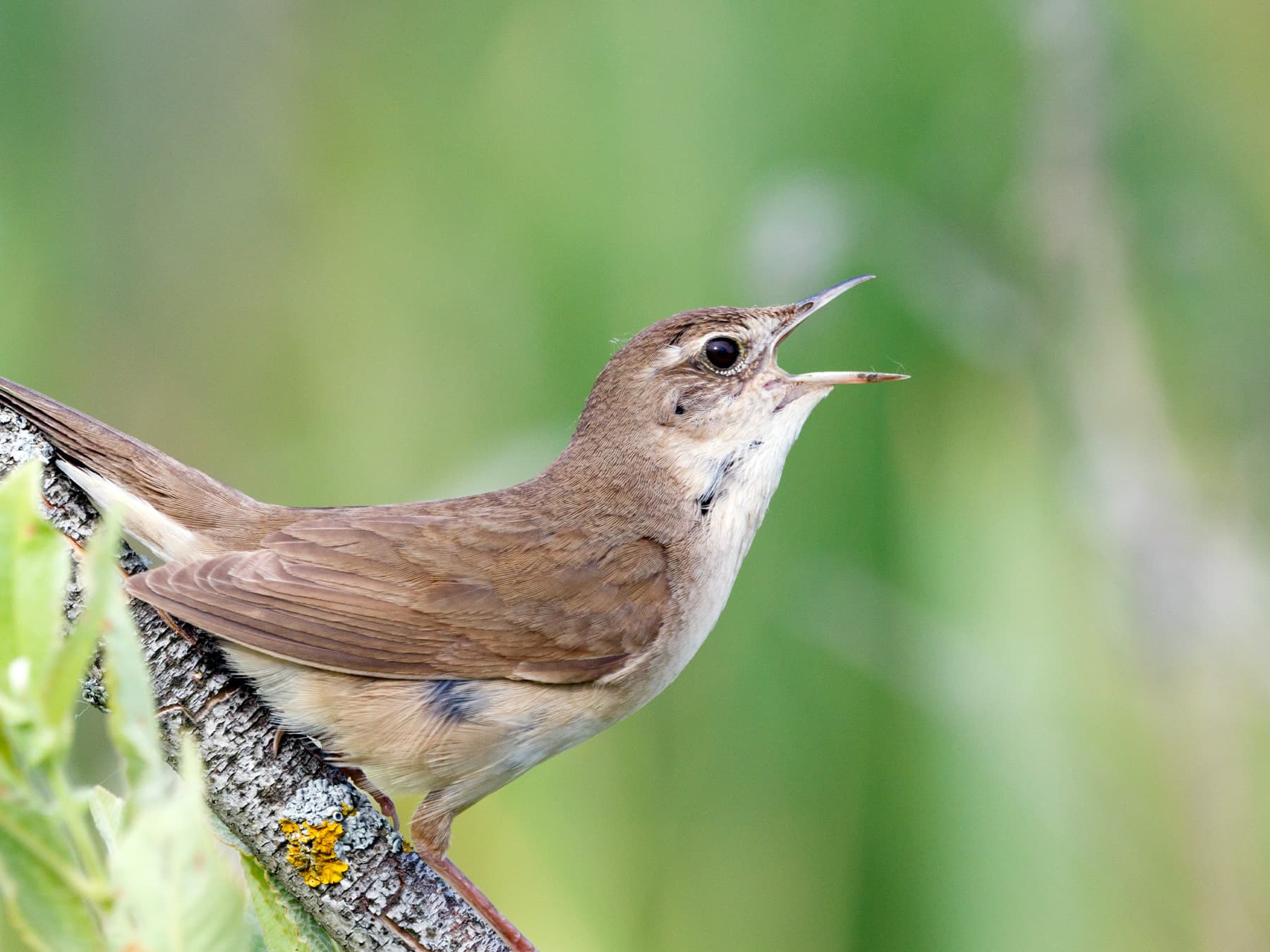
Savi’s warblers have a distinctive, continuous insect-like reeling song, similar to that of a grasshopper warbler. The song is loud and carries over a long distance, and provides a good guide to identifying the species – perhaps more so than a visual identification, as they are notoriously elusive when it comes to sightings.
- Song0:00 / 0:57
Recorded in Wallonie, Belgium · April 2019
- Alarm call0:00 / 0:20
Recorded in Normandy, France · July 2026
When and where to see it
How often the Savi's Warbler turns up in the UK through the year, from birdwatchers' records.
Recorded in United Kingdom, but eBird withholds many records of this sensitive species to protect it, so no months are shown.
Worldwide: recorded regularly in 53 countries
Countries where it was recorded in at least 3 of the 6 years 2019–2024. Linked countries have their own bird list.
Europe (34)
Asia (16)
- Armenia
- China
- Cyprus
- Georgia
- Iran
- Israel
- Jordan
- Kazakhstan
- Kuwait
- Mongolia
- Oman
- Palestinian Territories
- Saudi Arabia
- Turkey
- United Arab Emirates
- Uzbekistan
Data: EOD – eBird Observation Dataset (Cornell Lab of Ornithology), accessed via GBIF.org, CC BY 4.0. Records from 2019–2024, aggregated and filtered by Birdfact. How these lists are made
What is the habitat of a Savi's Warbler?
Habitats preferred by Savi’s warblers include marshes, fens and reedbeds, next to shallow water and surrounded by rushes, sedge, and other aquatic vegetation cover.
Non-breeding habitats include marshes and swamps, as well as fields cultivated for rice and sugar cane.
What is the range of a Savi's Warbler?
The British Isles form the extreme western edge of the breeding range of Savi’s warblers. The species has a patchy distribution across northern France, Spain and Portugal, and becomes more widespread across central and eastern Europe, as far north as the Baltic states, and through Poland, Belarus, Ukraine, and into south-western Russia.
The species is widespread in Afghanistan and Kazakhstan and is also an established breeding bird in Morocco, Algeria and Tunisia.
European populations of Savi’s warblers spend winters in West Africa, from Senegal to Lake Chad and as far south as north Ghana. Some migration to South Sudan and Ethiopia also takes place, particularly from Savi’s warblers that breed further east into Turkey and central Asia.
Where do Savi's Warblers live?
The European population of Savi’s warblers was estimated in 2015 at between 281,000 and 474,000 pairs. Europe represents around 65 percent of the world population, estimated at almost 1.5 million individuals. In Europe, Romania, Hungary, Russia and Turkey have the highest numbers of breeding Savi’s warblers.
How rare are Savi's Warblers?
With only around 5 pairs nesting in the UK each year, Savi’s warblers are an extremely rare breeding bird species in Britain. Sightings are scarce, due to the low numbers, but also thanks to the secretive nature of the species, which prefers to remain hidden out of sight in dense reedbed environments. Its distinctive, insect-like song is often the first clue to its presence.
Where can you see Savi's Warblers in the UK?
With such a tiny breeding population of only 5 birds a year, sightings of Savi’s warblers in the UK are exceptionally rare. Most observations in Britain have been reported at marshy reedbeds in the south and south-east of England, in Kent, Suffolk and Norfolk.
Migration
Do Savi's Warblers migrate?
Savi’s warblers are a fully migratory species, breeding in Europe and Central Asia, and spending winter months in West Africa and north-east Africa. No Savi’s warblers remain in Europe once the breeding season ends, departing south in late August or early September.
Are Savi's Warblers native to the UK?
In the UK, Savi’s warblers are an incredibly rare breeding bird, with only up to 5 pairs raising young in Britain each year. No individuals are residents all year round, and summer arrivals are never guaranteed.
Tips for seeing it
- Listen for the distinctive, prolonged reeling song, especially at dawn and dusk
- Search in dense reedbeds and wetland vegetation
- Look for movement low in the vegetation rather than expecting clear views
- Be patient, as these birds often remain hidden for long periods
What it eats
What do Savi's Warblers eat?
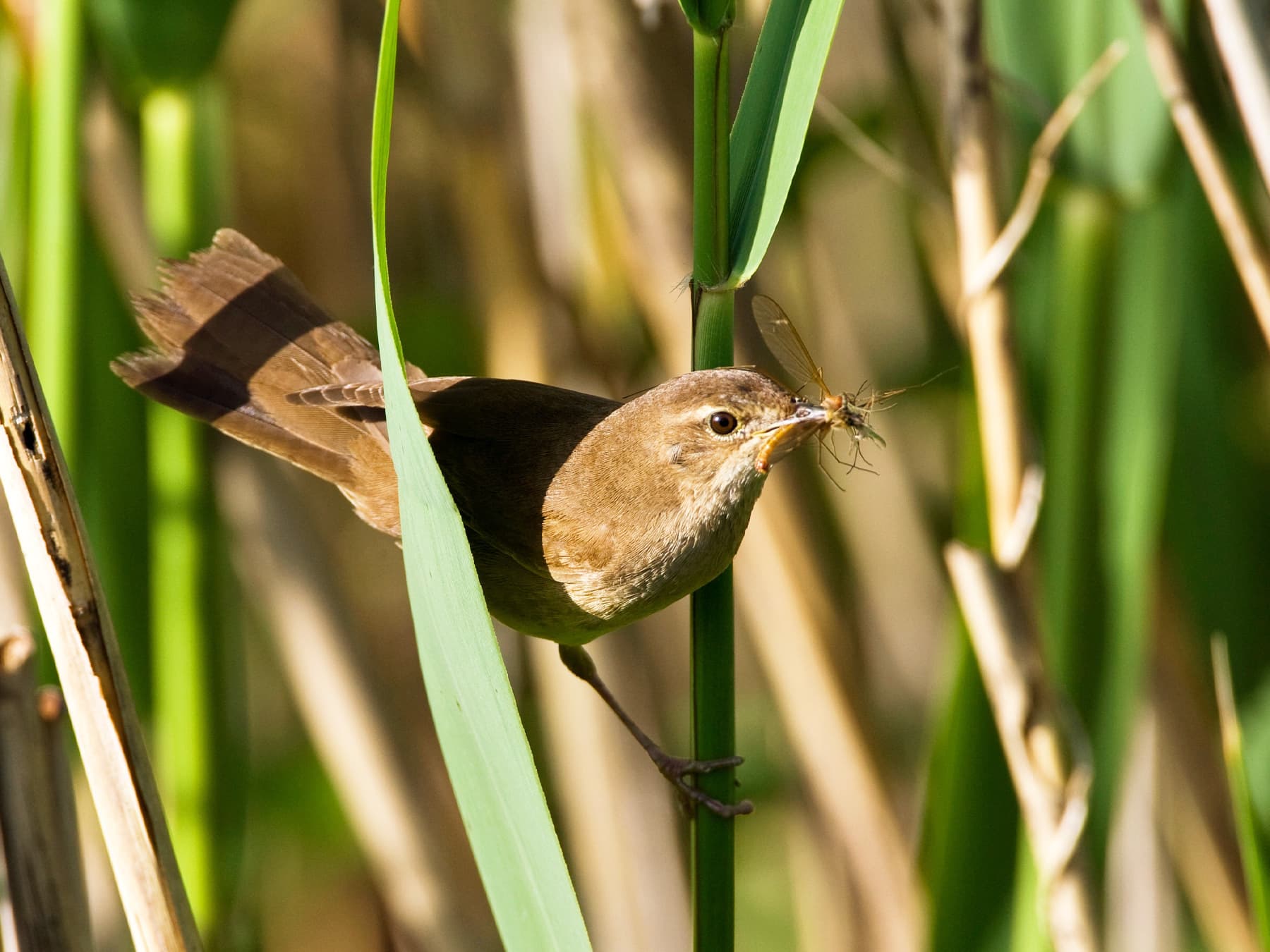
The diet of a Savi’s warbler is almost exclusively insect-based, with mayflies, dragonflies, and damselflies and their larvae, grasshoppers, flies, and beetles among the leading prey. Spiders and some water snails are also eaten.
What do Savi's Warbler chicks eat?
Savi’s warblers are fed by both parents, with larvae and soft insects brought to the nest.
Nesting and breeding
Where do Savi's Warblers nest?
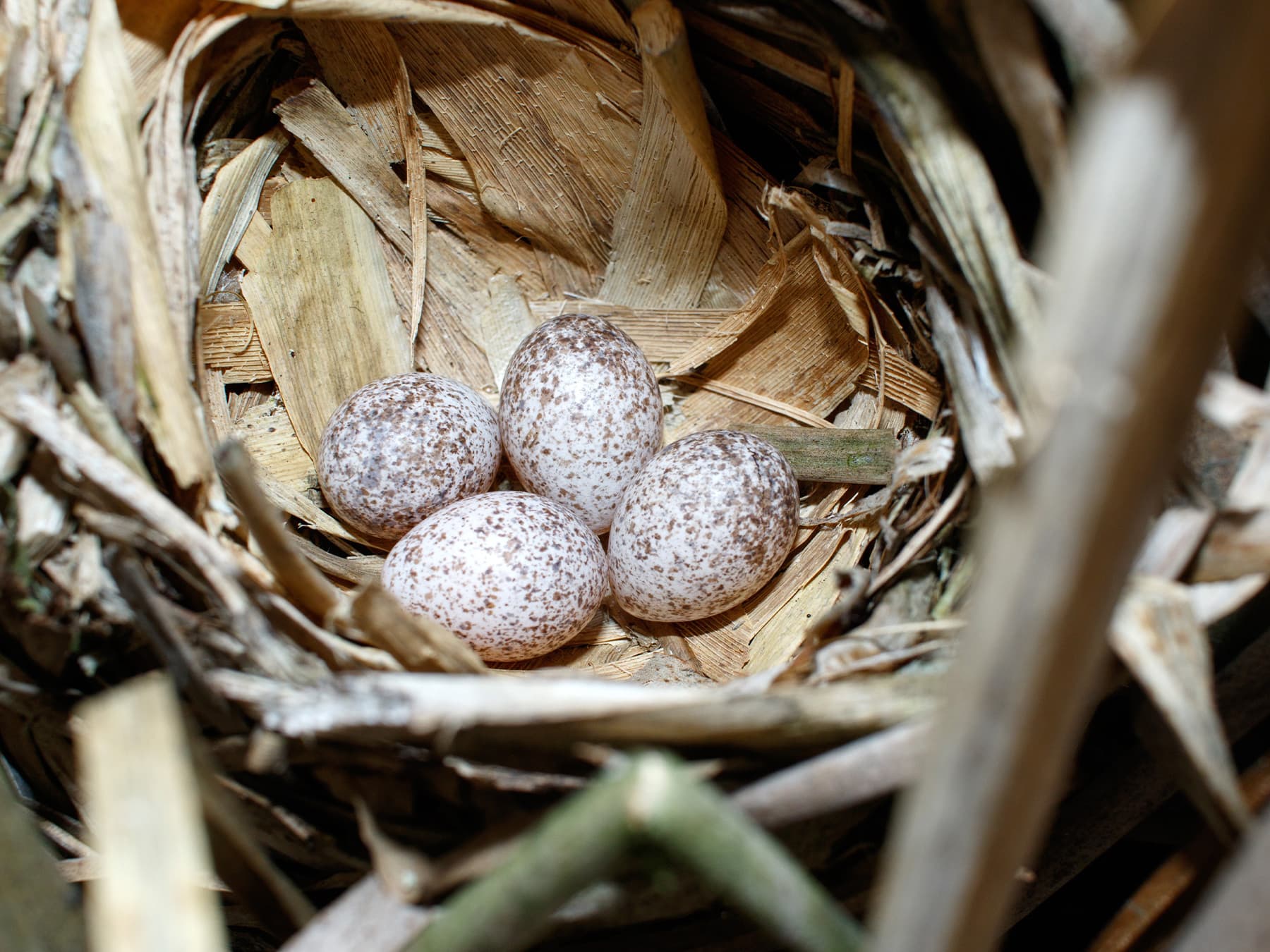
Savi’s warblers build their nests in dense reedbeds, directly above water or swampy ground. Nests are concealed within reeds and other waterside vegetation, up to 50 cm (20 in) off the ground. A deep cup is constructed from stems and leaves of aquatic plants, and lined with leaves and other plant parts.
When do Savi's Warblers nest?
Savi’s warblers arrive on their breeding grounds from early April onwards and laying begins in late April in western and central Europe and from mid-April for populations further south, with May to June being the peak months for eggs to be laid. Incubation lasts for 10 to 12 days, by the female alone.
What do Savi's Warbler eggs look like?
Savi’s warblers’ eggs are pale greyish-blue, densely marked with dark reddish-brown speckles. A typical clutch contains 2 to 6 eggs, which measure 20 mm by 14 mm (0.8 in by 0.6 in).
Do Savi's Warblers mate for life?
Savi’s warblers are monogamous for the duration of a single breeding season, raising either one or two broods together before pairs separate ahead of winter migration.
Behaviour
Are Savi's Warblers aggressive?
Savi’s warblers are highly territorial, particularly males during the breeding season, and nest sites and mates will be defended vocally with intense bursts of song.
Lifespan and predators
How long do Savi's Warblers live?
The average lifespan for Savi’s warblers is between two and five years. Occasionally older birds are recorded, through ringing records, including an individual that reached 9 years and 9 months. First-time breeding is thought to occur at one year of age.
What are the predators of Savi's Warblers?
Female Savi’s warblers are vulnerable to predation when brooding eggs and nestlings and eggs are frequently attacked. The main threats to both nests and adult birds are brown rats, water voles, foxes, bitterns and occasionally moorhens.
Are Savi's Warblers protected?
Savi’s warblers are listed as a Schedule I bird under the Wildlife and Countryside Act, 1981, legislation that protects them from being killed, injured, or taken into captivity, as well as offering additional protection for their nest sites, eggs and young from being destroyed or damaged.
Are Savi's Warblers endangered?
Across their wider range, Savi’s warblers are classified as a species of least concern, with population numbers showing increases in parts of central and eastern Europe.
However, in much of the southern western parts of its range, the numbers of Savi’s warblers are in decline. In the UK, it is exceptionally rare, with only 5 pairs arriving to breed each year, which justifies the species’ Red status on the British Birds of Conservation Concern list.
In the Netherlands, a decline of between 50 and 75 percent of Savi’s warblers was recorded between 1965 and 1993.
Why is the Savi's Warbler endangered?
Drainage of wetlands in both breeding and wintering territories used by Savi’s warblers is a key factor that has led to the decline in population. Natural changes, caused by weather and rises in water levels, can also threaten the future survival of the species.
Conservation
While currently listed as Least Concern, Savi's Warblers face threats from habitat loss due to drainage of wetlands and changes in water management practices.
Conservation efforts focus on protecting and maintaining suitable wetland habitats across their range.
Similar birds
Often mistaken for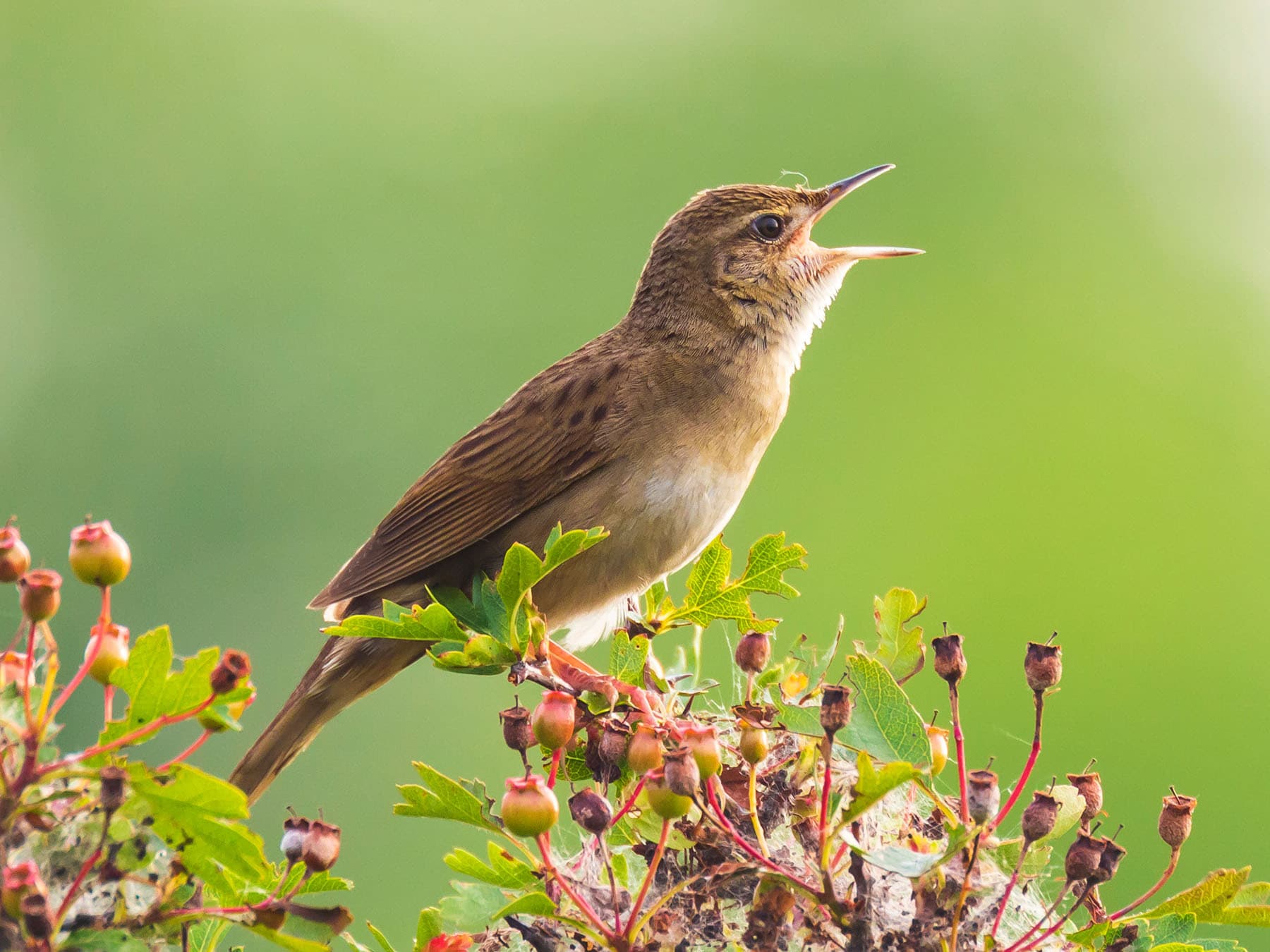
More photos
3 photos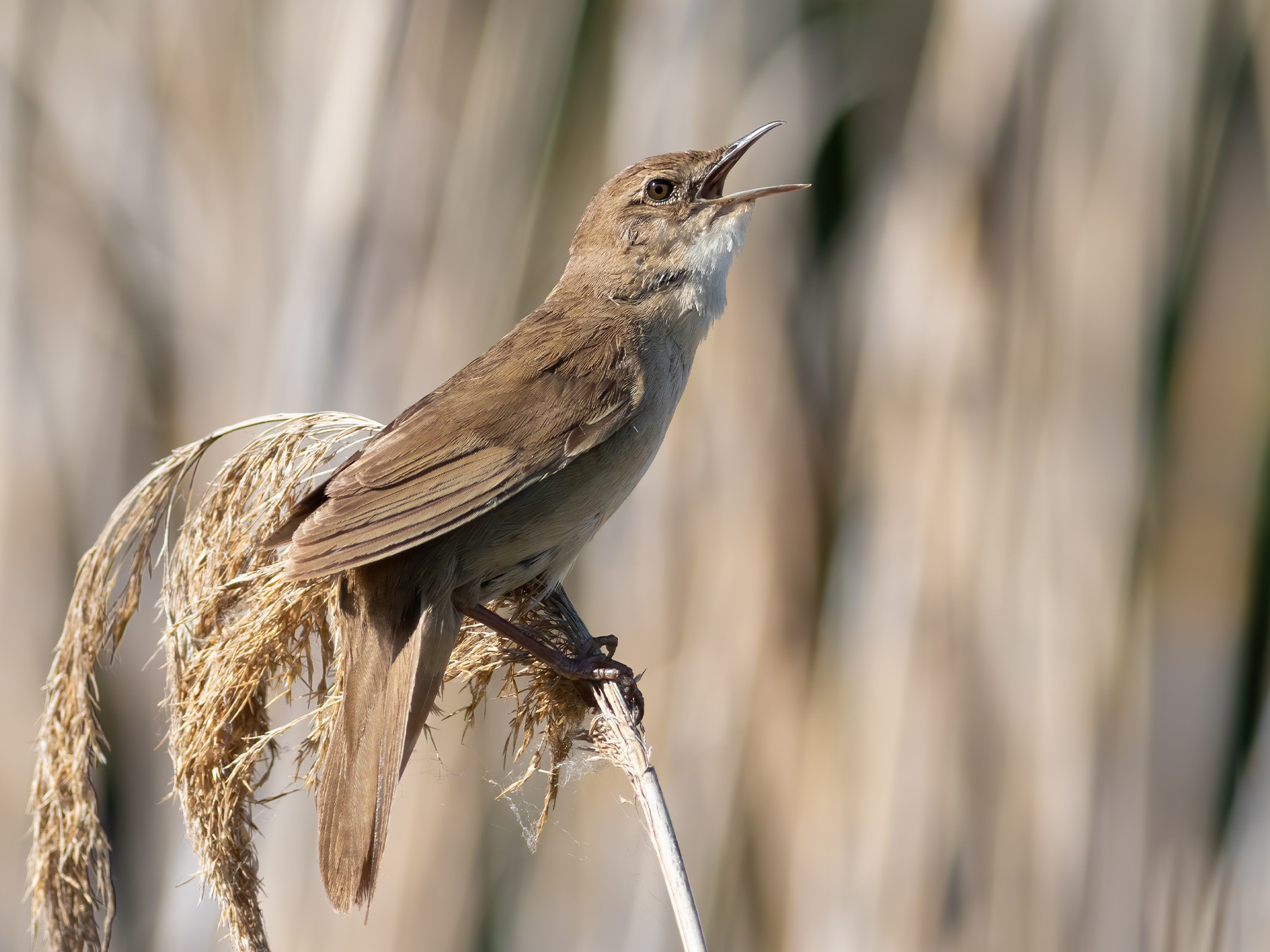
Quick facts
- Length
- 13–14 cm
- Wingspan
- 18–20 cm
- Weight
- 12–16 g
- Lifespan
- 2–5 years · oldest recorded 9.8 years
- Family
- Grasshopper Warblers
- Migration
- Long-distance Migrant
- Global status (IUCN)
- Least Concern
- World population
- 860,000 - 1,460,000 mature individuals
- Population trend
- Stable
- Also called
- Savi's Grasshopper Warbler
- Scientific name
- Locustella luscinioides
Sources
4- 1BirdLife International. 2016. Locustella luscinioides. The IUCN Red List of Threatened Species 2016: e.T22714684A87560838. Source (opens in a new tab)
- 2BirdLife International. 2016. Locustella luscinioides. The IUCN Red List of Threatened Species 2016: e.T22714684A87560838. Source (opens in a new tab)
- 3EBCC/RSPB/BirdLife/Statistics Netherlands (2011)
- 4Fransson et al., EURING list of longevity records for European birds (2010) Source (opens in a new tab)

Checked by
Nathan Cope, founder and editor
Nathan founded Birdfact and leads its writers and contributors in the UK, the US and Canada. He has watched and studied birds for more than ten years, and checks every article and species guide before it’s published.