


Rufous-tailed Rock-thrush
Rock Thrush, Common Rock Thrush · Monticola saxatilis
By the Birdfact teamChecked by Nathan Cope
On this page12 sections
How to recognise it
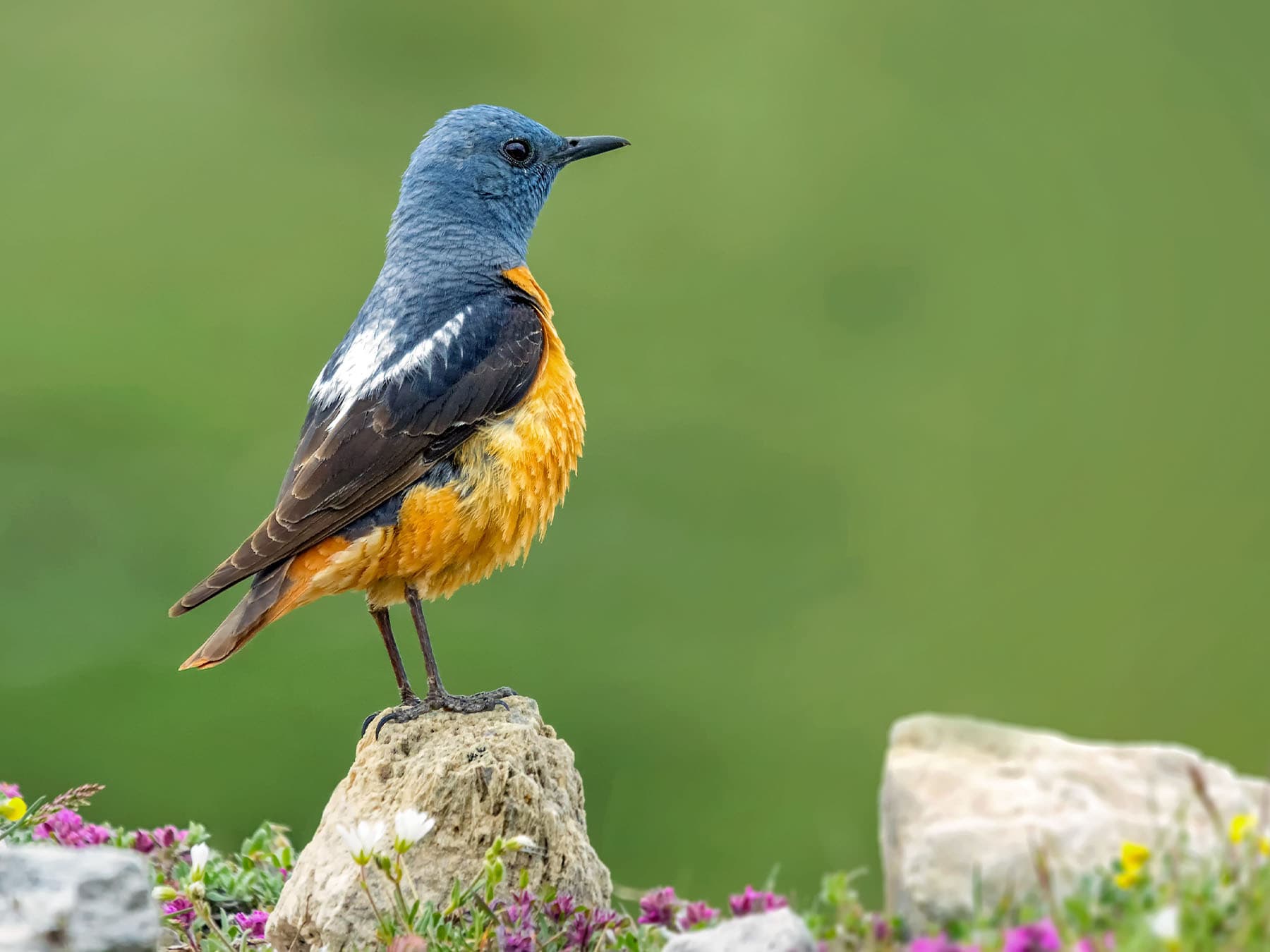
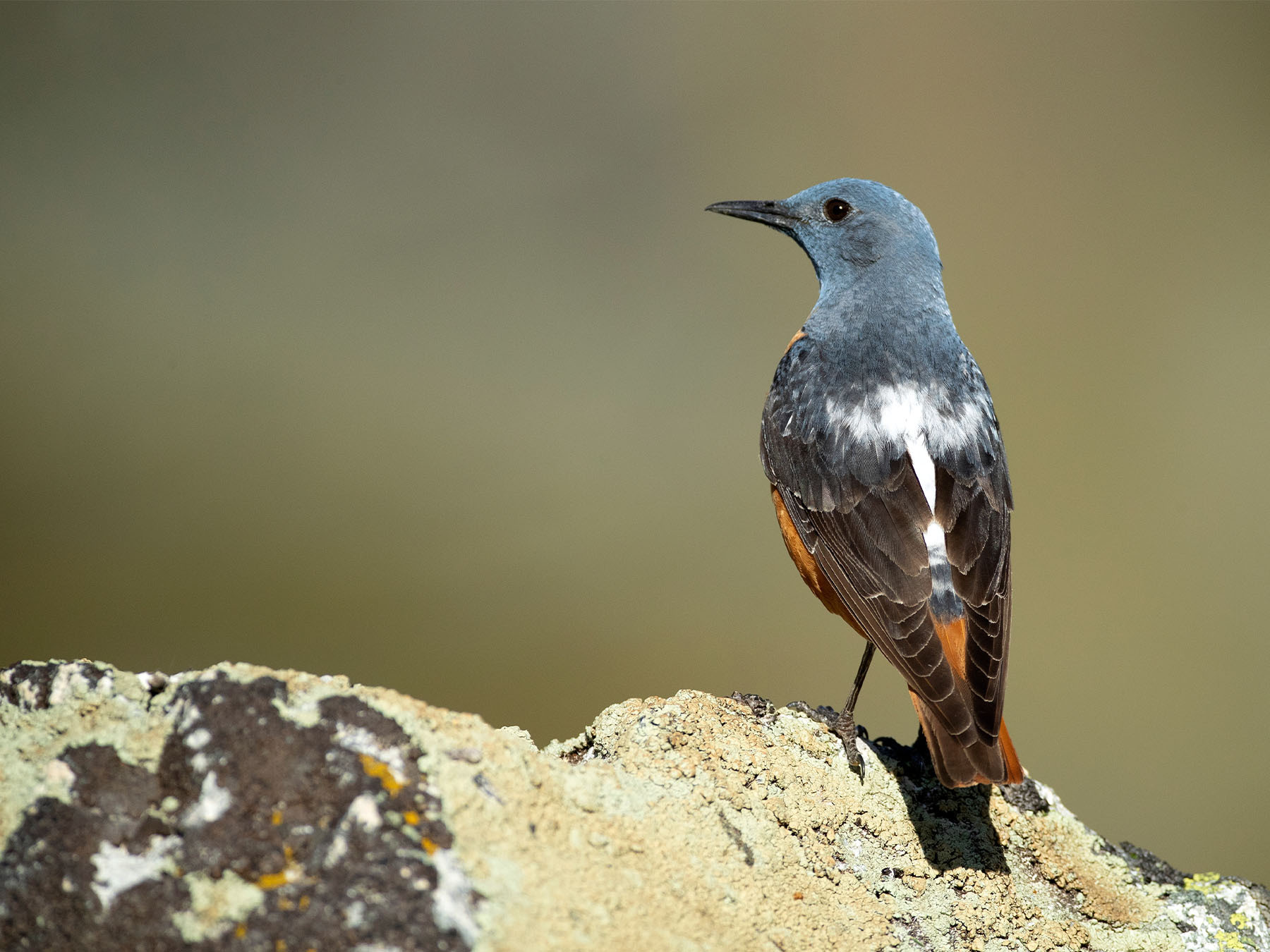
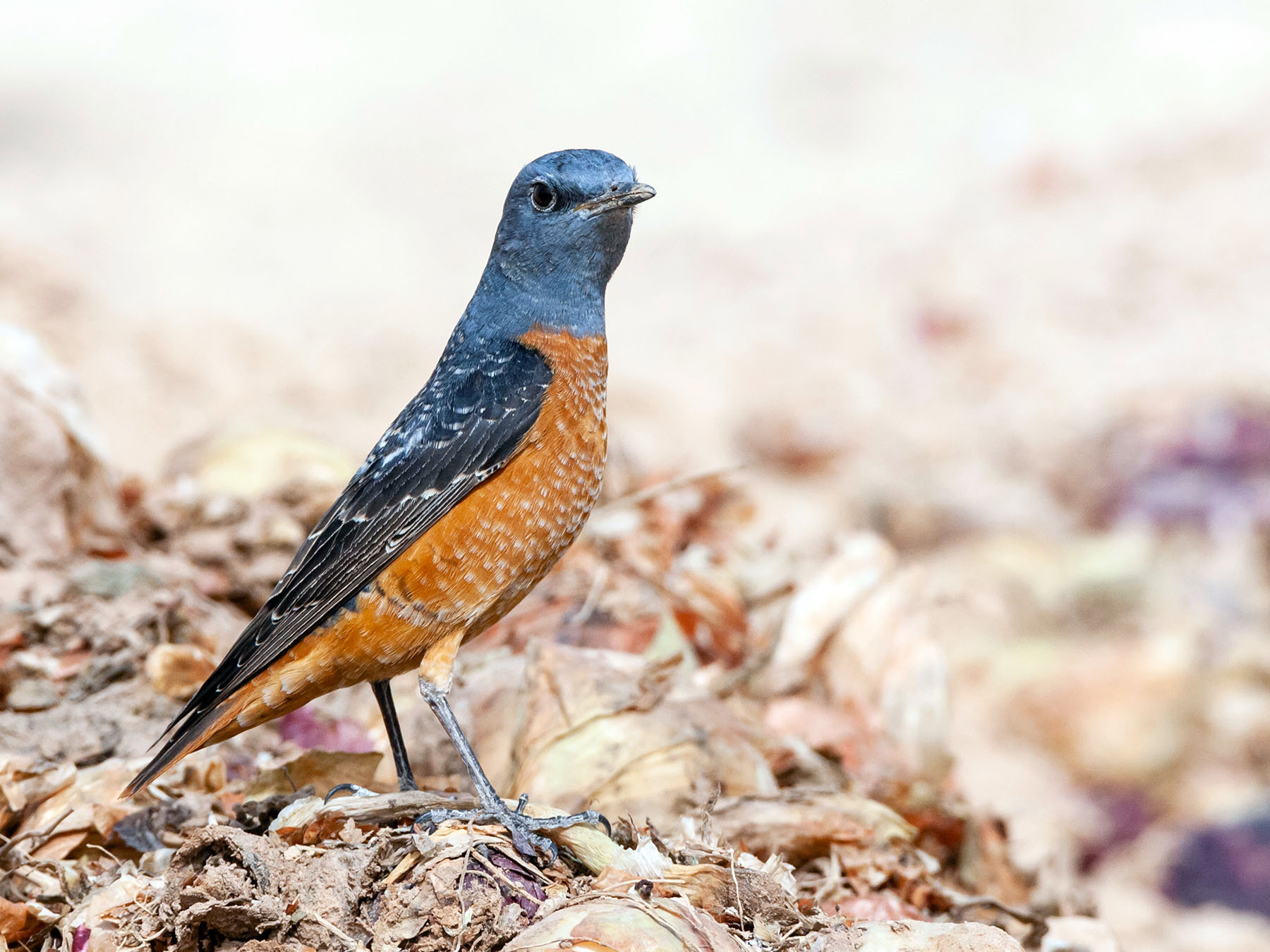
The Rufous-tailed Rock-thrush is a striking bird with distinct sexual dimorphism. Males display a blue-grey head and upper mantle, contrasting with orange underparts and a rufous tail. The wings are brownish-grey with a distinctive white back patch.
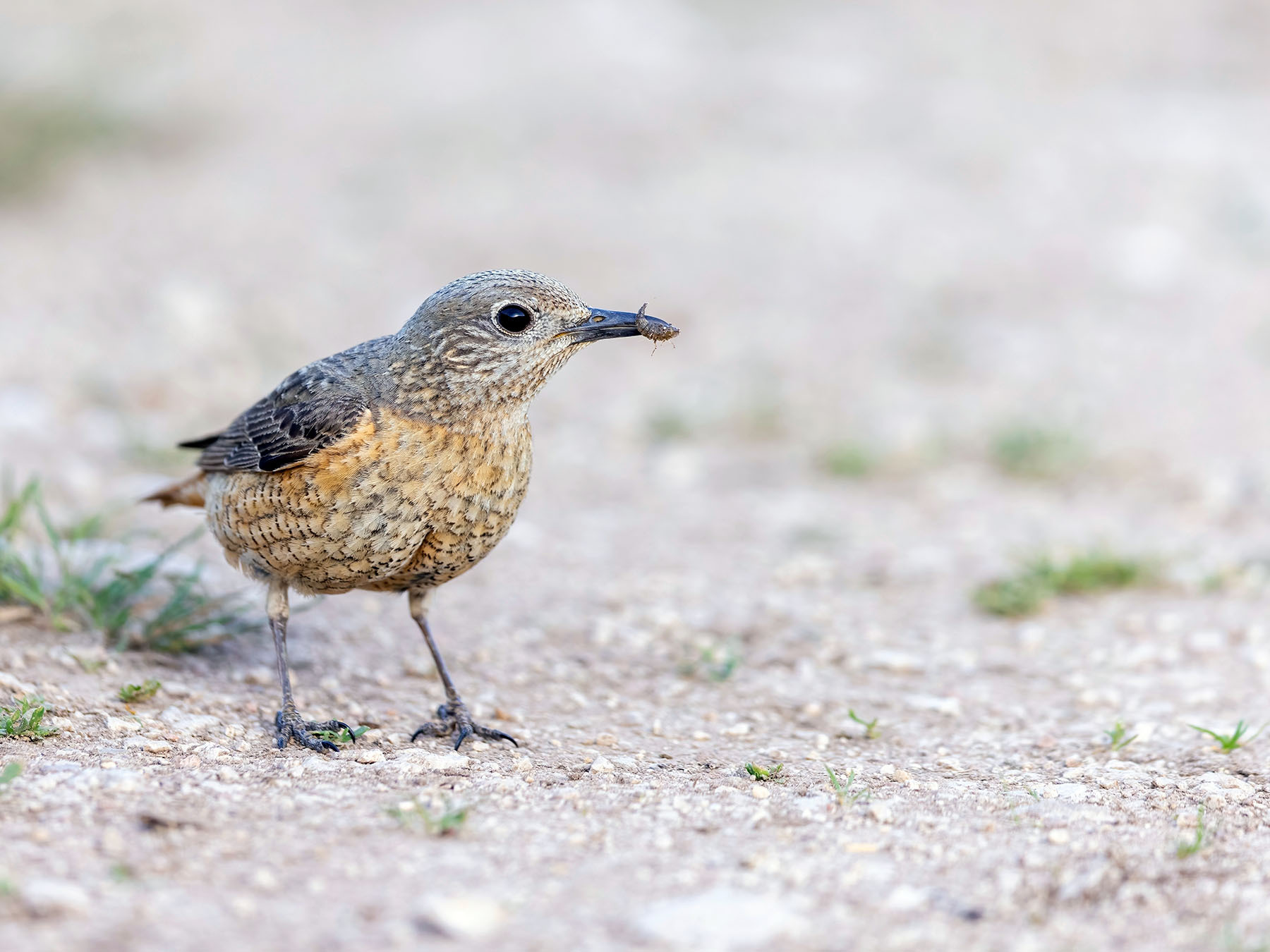
Females are more subdued, with greyish-brown plumage and buff scaling, featuring orange-buff underparts with grey-brown barring and a whitish chin. Both sexes share similar tail colouring.
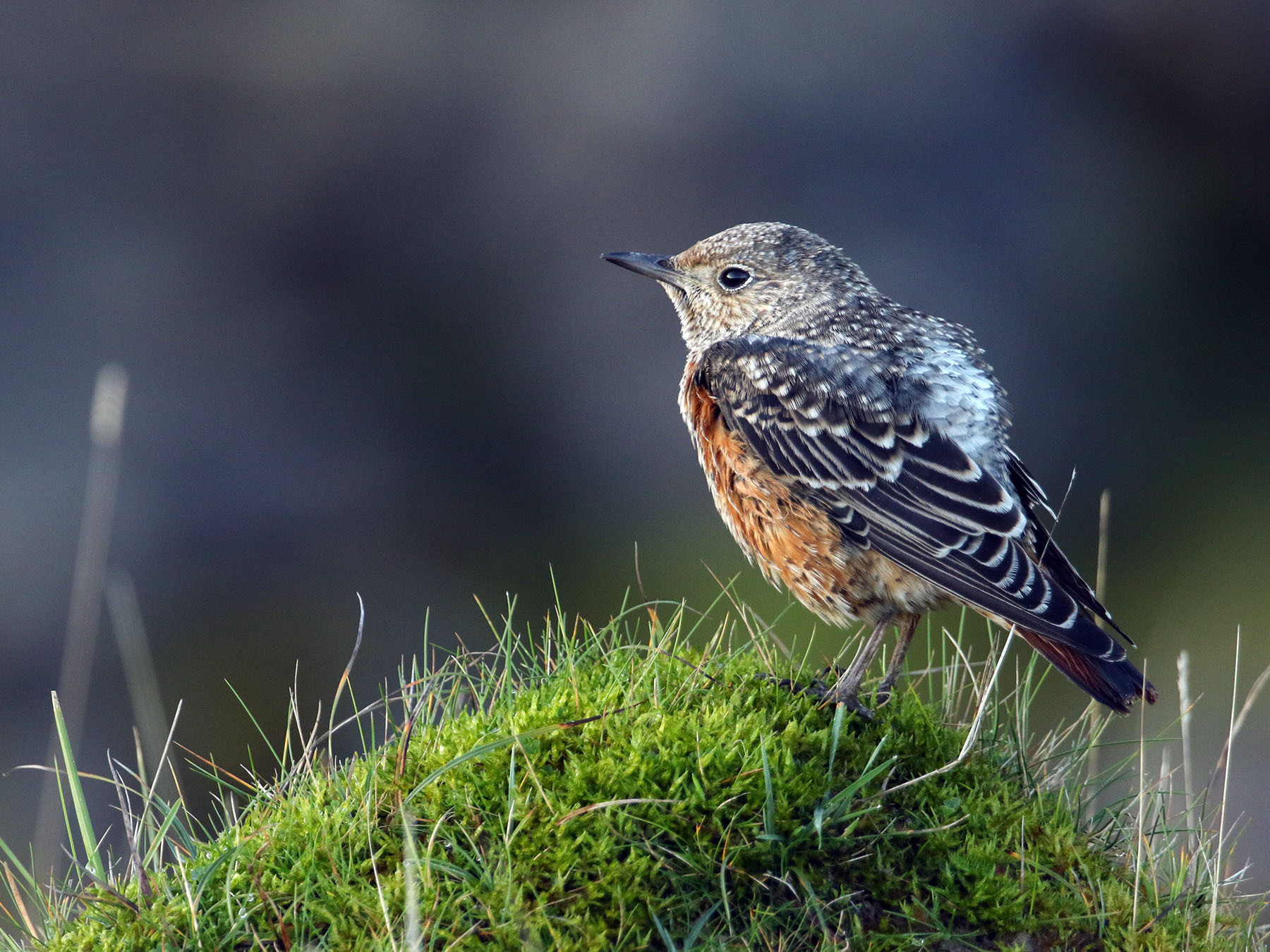
Juveniles resemble females but show heavier marking above and broader buff wing edges. Young males in their first summer show some residual scaling both above and below.
Its size
Adults- Length
- 16–19 cm
- Wingspan
- 33–37 cm
- Weight
- 40–65 g
Its song and calls
The Rufous-tailed Rock-thrush's song is a series of clear, flute-like whistles interspersed with softer warbling notes. It often includes mimicry of other bird species. The call is a sharp, metallic 'chack' or 'tack', sometimes given in rapid succession when alarmed.
- Song0:00 / 0:33
Recorded in Occitanie, France · May 2024
When and where to see it
The Rufous-tailed Rock-thrush is not recorded regularly in the UK, Ireland, the United States or Canada.
United States: recorded in 1 of the 6 years; United Kingdom: recorded in 1 of the 6 years. Too few years to count as a regular visitor.
Worldwide: recorded regularly in 51 countries
Countries where it was recorded in at least 3 of the 6 years 2019–2024. Linked countries have their own bird list.
Europe (19)
Asia (24)
- Armenia
- Azerbaijan
- Bahrain
- China
- Cyprus
- Georgia
- India
- Iran
- Israel
- Jordan
- Kazakhstan
- Kuwait
- Kyrgyzstan
- Lebanon
- Mongolia
- Oman
- Pakistan
- Palestinian Territories
- Qatar
- Saudi Arabia
- Tajikistan
- Turkey
- United Arab Emirates
- Uzbekistan
Data: EOD – eBird Observation Dataset (Cornell Lab of Ornithology), accessed via GBIF.org, CC BY 4.0. Records from 2019–2024, aggregated and filtered by Birdfact. How these lists are made
Tips for seeing it
- Look for them in rocky, open habitats at higher elevations
- Listen for their melodious song, especially during the breeding season
- Observe their habit of perching on prominent rocks or posts
- Visit breeding grounds in spring and summer for the best chance of sightings
What it eats
The Rufous-tailed Rock-thrush primarily feeds on insects, including beetles, grasshoppers, and caterpillars. They supplement their diet with small berries and fruits, especially during autumn migration. These birds often hunt by pouncing on prey from an elevated perch.
Nesting and breeding
Breeding occurs from May to July. Males establish territories and attract females with their melodious songs and aerial displays. Pairs are monogamous for the breeding season.
Nests are built in rock crevices or under boulders, constructed primarily by the female using grass, moss, and small roots. The clutch typically consists of 4-5 pale blue eggs with fine reddish-brown speckles.
Incubation lasts about 13-14 days, primarily by the female. Both parents feed the chicks, which fledge after 14-16 days but remain dependent on adults for several more weeks.
Behaviour
Rufous-tailed Rock-thrushes are often seen perched prominently on rocks or low bushes, scanning for prey. They exhibit a distinctive bobbing motion when alert.
During courtship, males perform elaborate aerial displays, singing while flying upwards before gliding back down.
Conservation
While currently listed as Least Concern, the Rufous-tailed Rock-thrush faces localised threats from habitat loss due to changes in land use and agricultural practices.
Climate change may also impact their high-altitude habitats in the long term.
Similar birds
Often mistaken for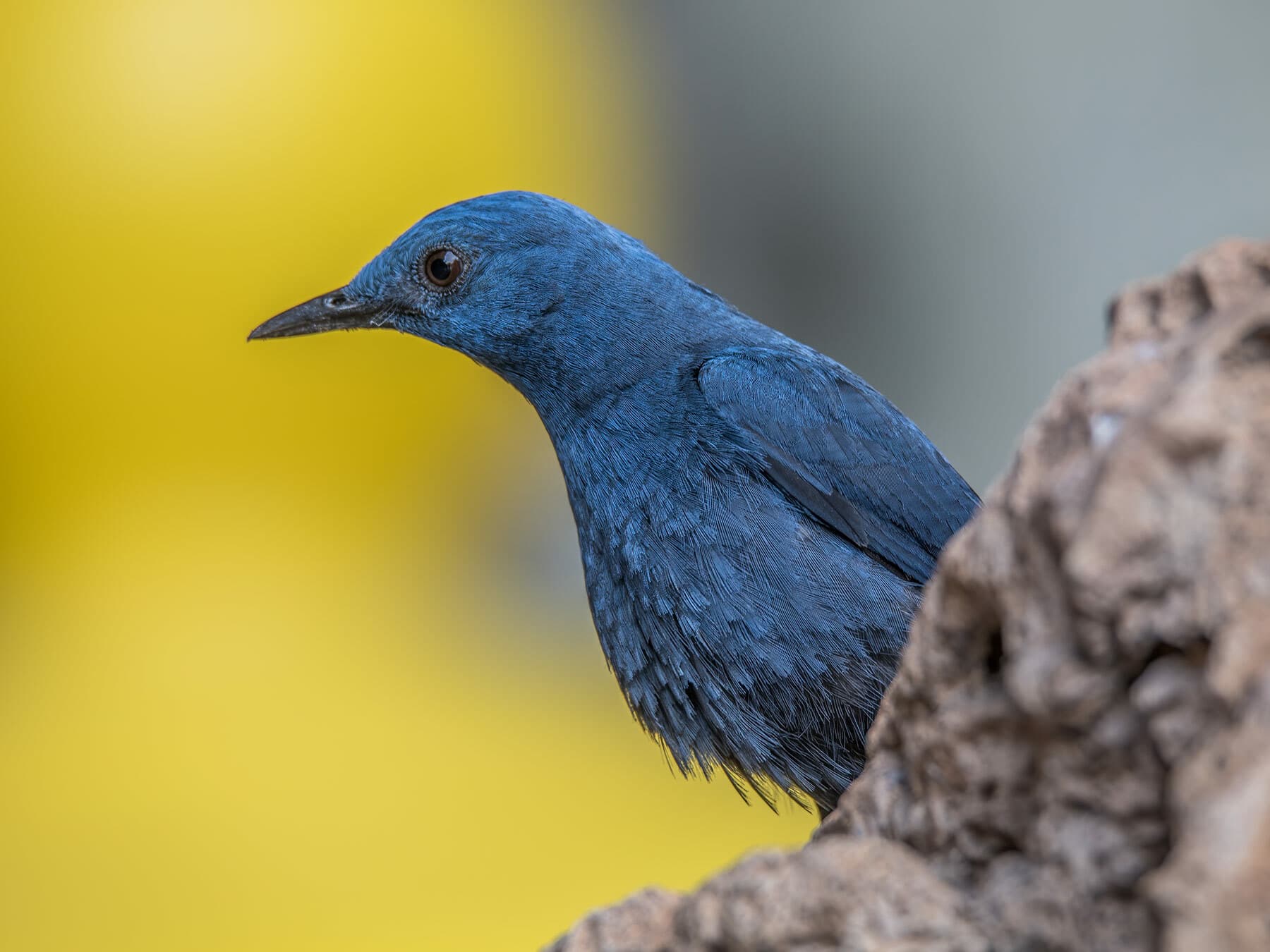
More photos
5 photos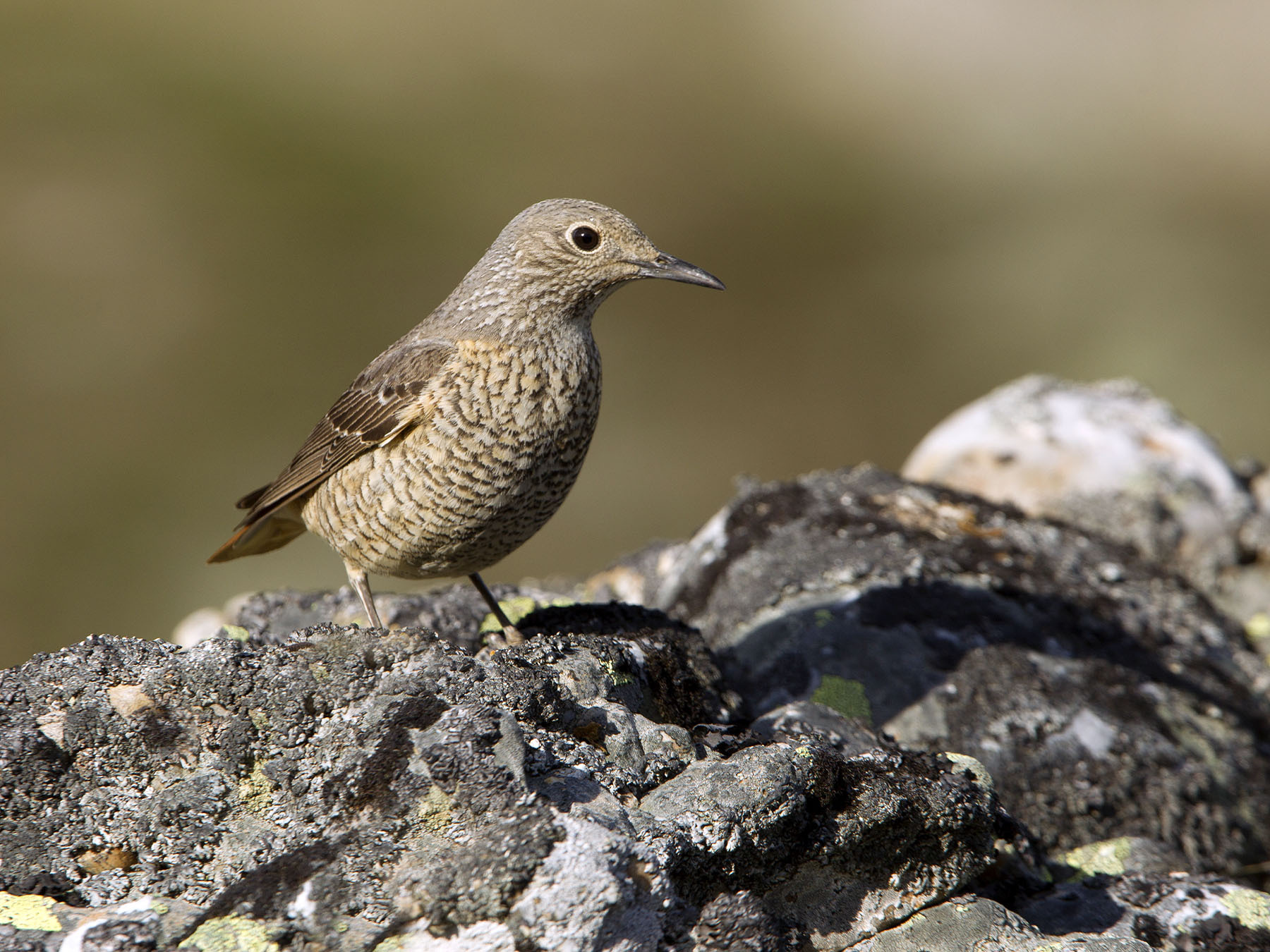
Quick facts
- Length
- 16–19 cm
- Wingspan
- 33–37 cm
- Weight
- 40–65 g
- Family
- Old World Flycatchers
- Migration
- Long-distance Migrant
- Global status (IUCN)
- Least Concern
- World population
- 895,000 - 2,860,000 mature individuals
- Population trend
- Unknown
- Also called
- Rock Thrush, Common Rock Thrush
- Scientific name
- Monticola saxatilis
Sources
2- 1BirdLife International. 2024. Monticola saxatilis. The IUCN Red List of Threatened Species 2024: e.T22708257A264537355. Source (opens in a new tab)
- 2BirdLife International. 2024. Monticola saxatilis. The IUCN Red List of Threatened Species 2024: e.T22708257A264537355. Source (opens in a new tab)

Checked by
Nathan Cope, founder and editor
Nathan founded Birdfact and leads its writers and contributors in the UK, the US and Canada. He has watched and studied birds for more than ten years, and checks every article and species guide before it’s published.