


Blue Rock-thrush
Blue Rock Thrush, Blue Thrush · Monticola solitarius
By the Birdfact teamChecked by Nathan Cope
On this page12 sections
How to recognise it
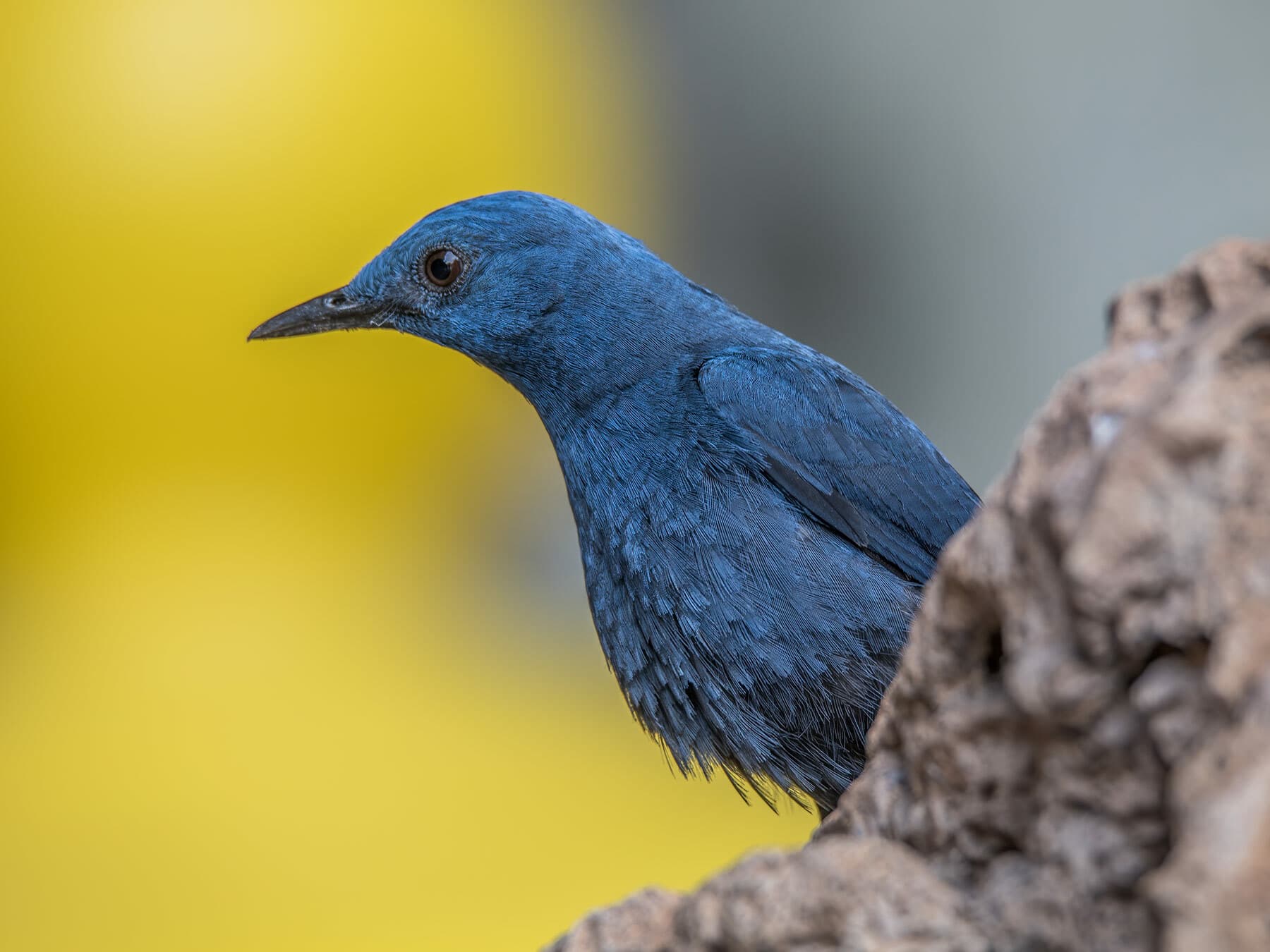
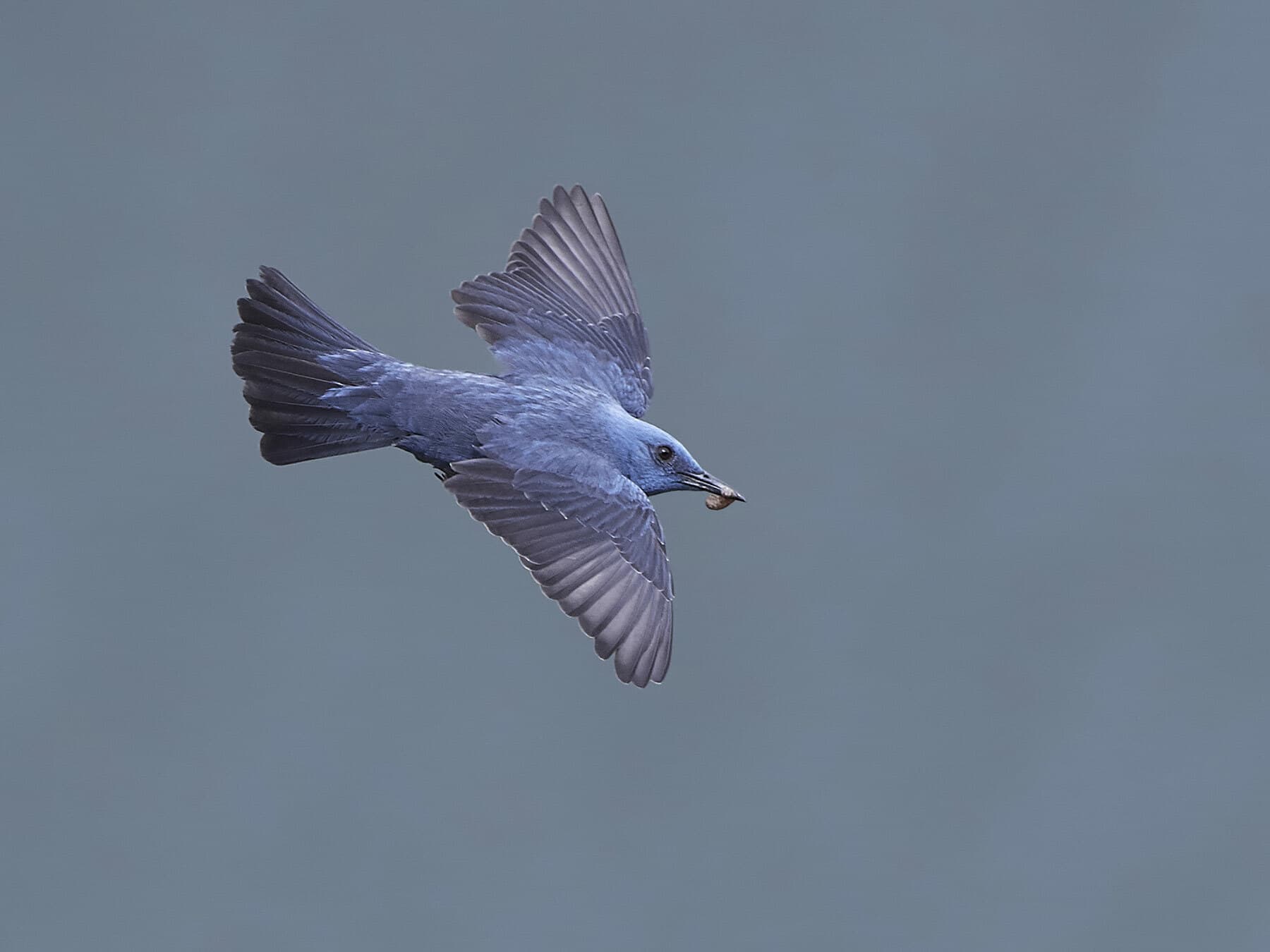
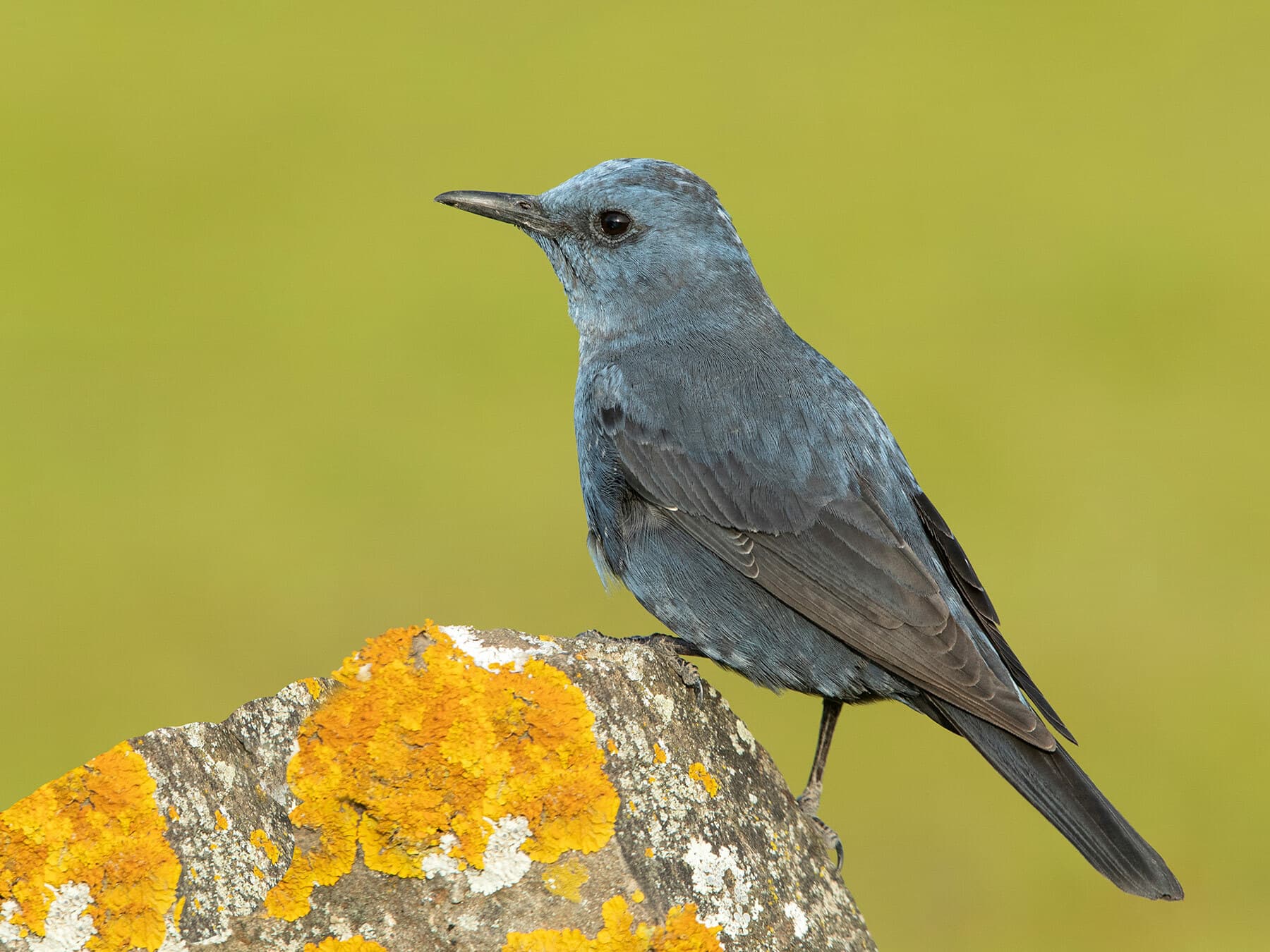
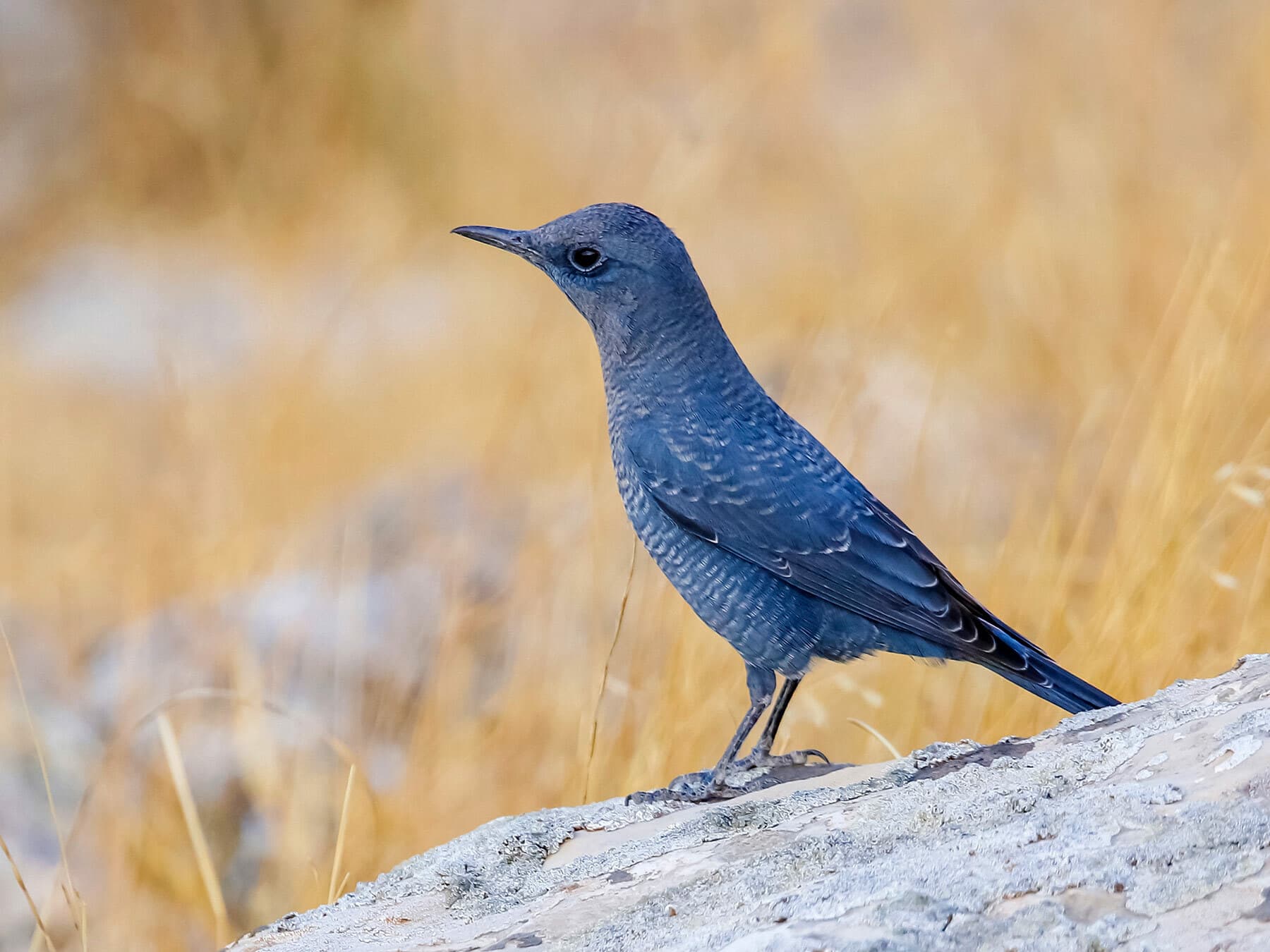
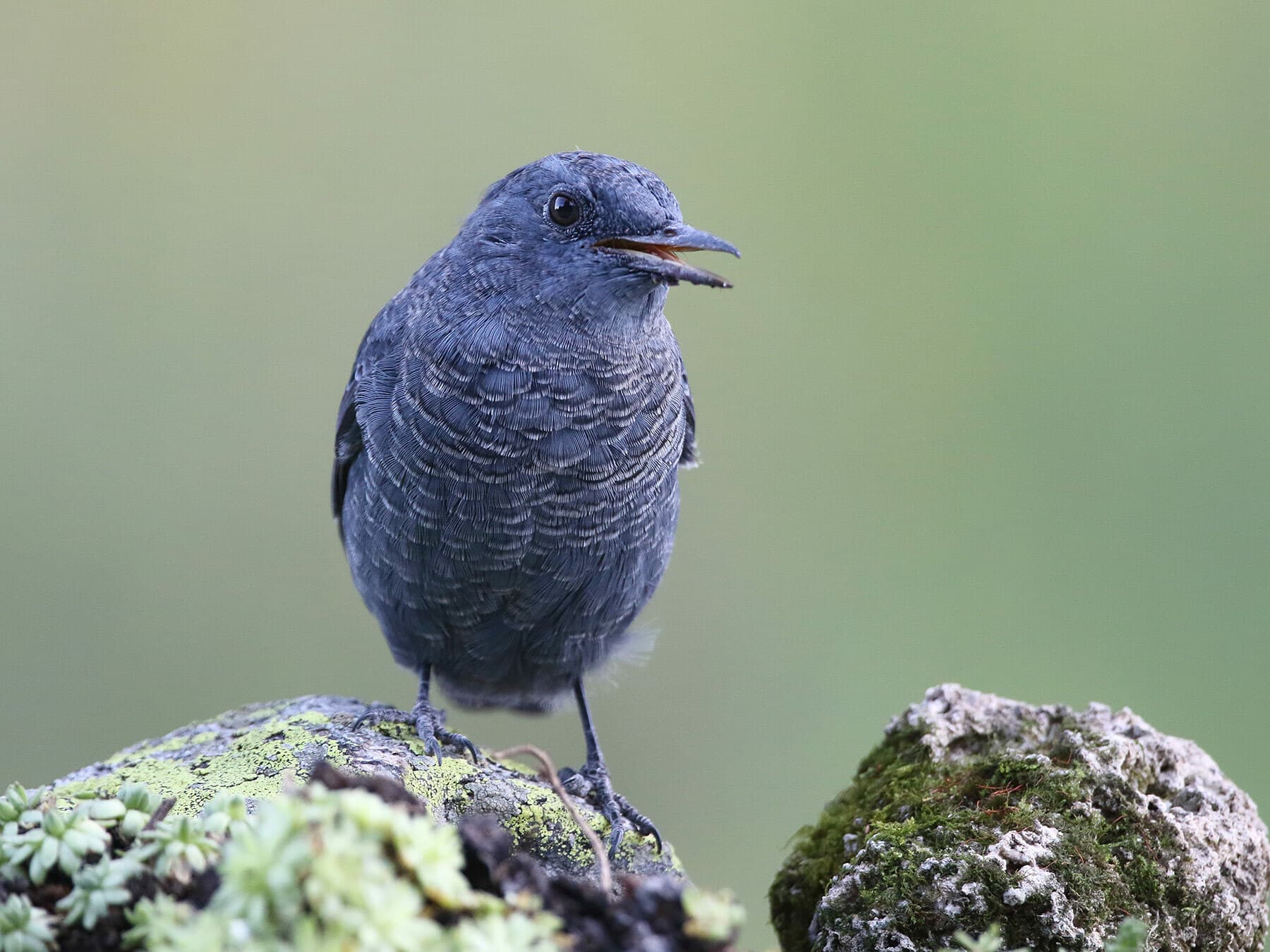
The Blue Rock-thrush is a small thrush with a distinctive appearance. Males boast a striking, deep blue plumage covering most of their body, with slightly darker wings and tails. Their slender black bill and legs contrast sharply with their vibrant feathers.
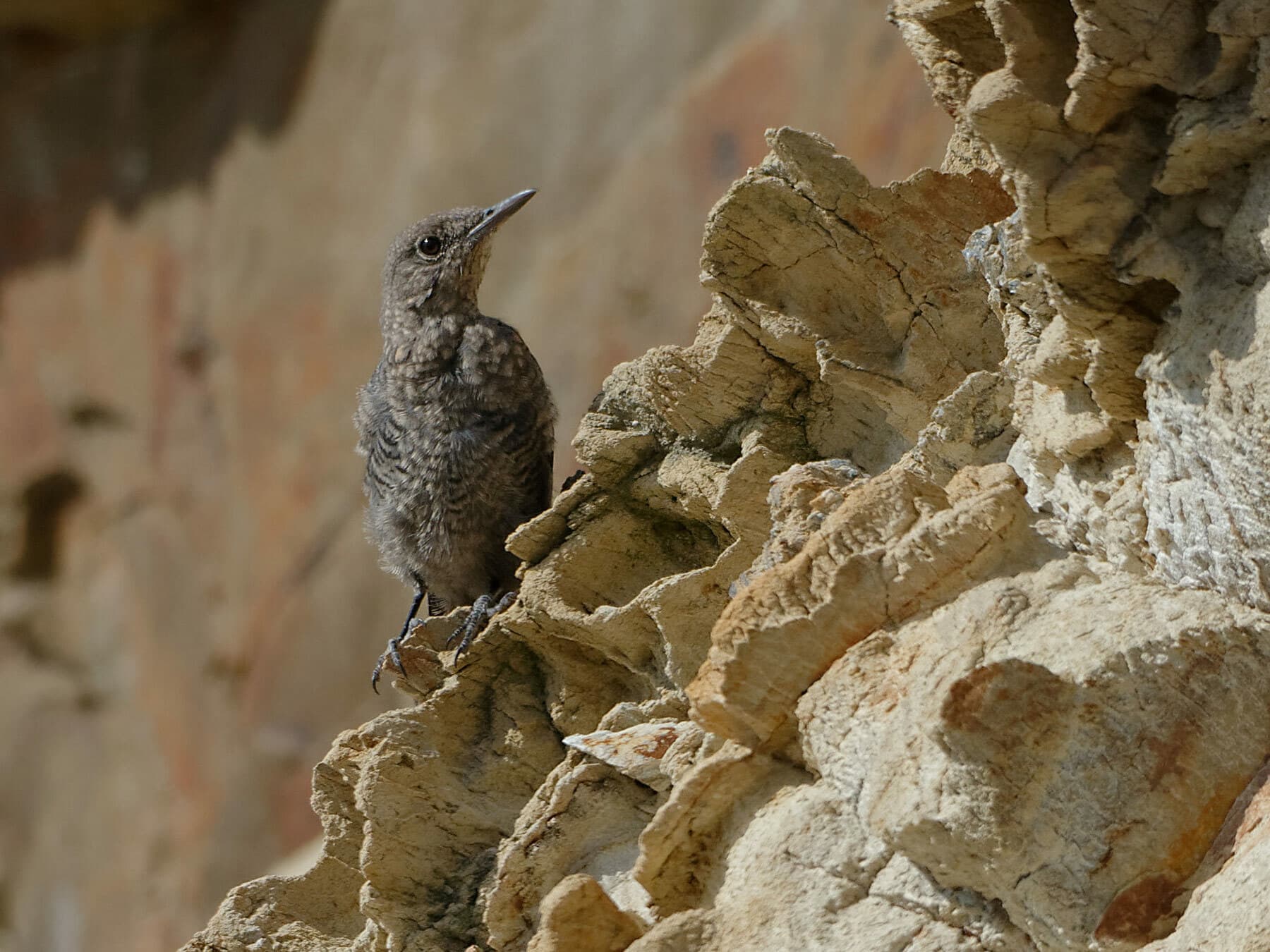
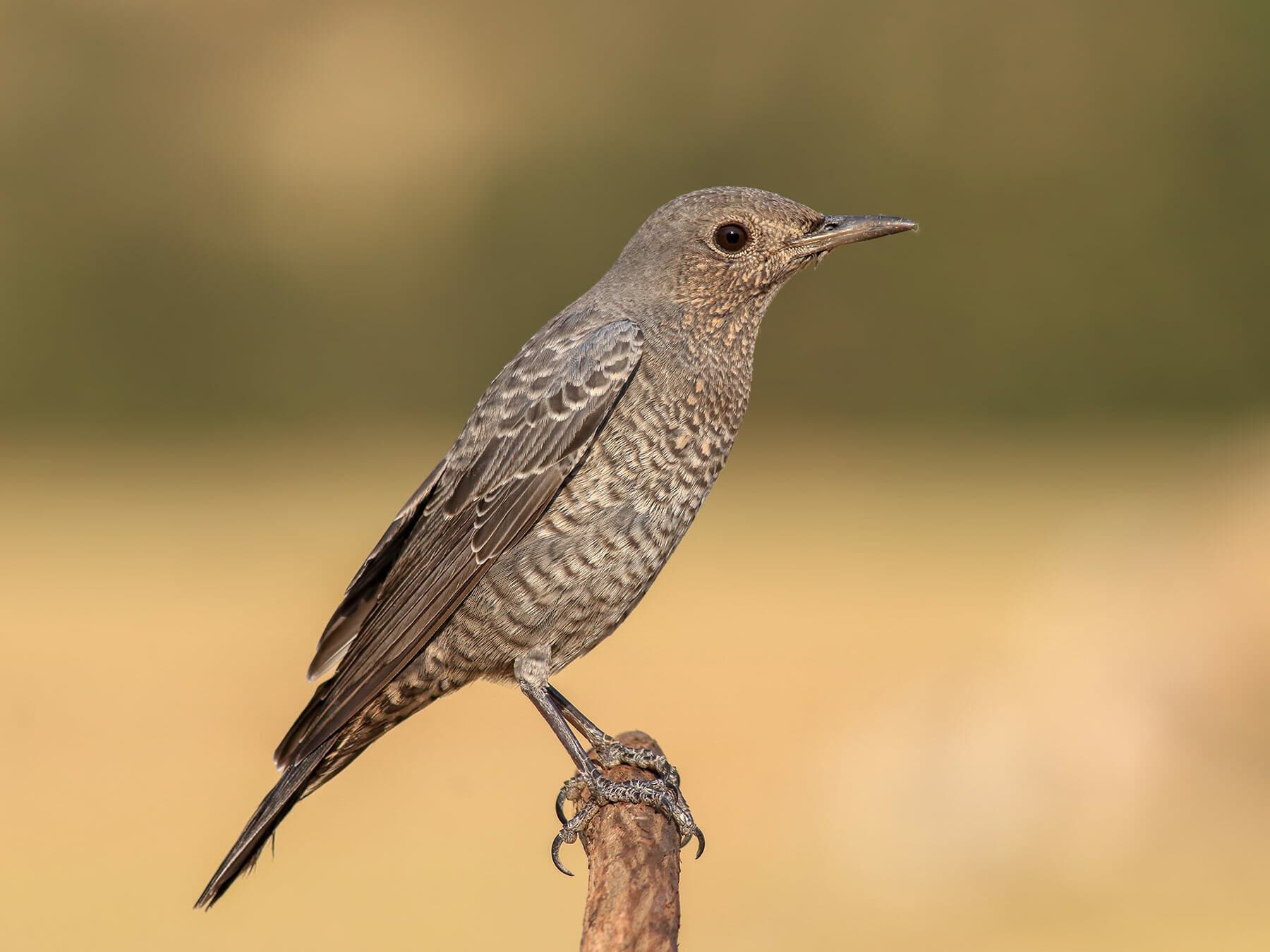
Females and juveniles differ significantly from males, with a mottled brown plumage with subtle barring. This dimorphism aids in camouflage during nesting.
Its size
Adults- Length
- 21–23 cm
- Wingspan
- 33–37 cm
- Weight
- 40–70 g
Its song and calls
Both sexes vocalise using a melody of high pitched warbling whistles or a deeper ‘chook – chook’ sound. The song can be is similar to that of a blackbird and the blue rock will frequently mimic the calls of other bird species.
- Song0:00 / 1:16
Recorded in Corsica, France · June 2024
When and where to see it
The Blue Rock-thrush is not recorded regularly in the UK, Ireland, the United States or Canada.
United States: recorded in 1 of the 6 years; United Kingdom: recorded in 2 of the 6 years. Too few years to count as a regular visitor.
Worldwide: recorded regularly in 65 countries
Countries where it was recorded in at least 3 of the 6 years 2019–2024. Linked countries have their own bird list.
Europe (18)
- Albania
- Bosnia & Herzegovina
- Bulgaria
- Croatia
- France
- Gibraltar
- Greece
- Italy
- Malta
- Montenegro
- North Macedonia
- Portugal
- Russia
- San Marino
- Serbia
- Slovenia
- Spain
- Switzerland
Asia (41)
- Armenia
- Azerbaijan
- Bangladesh
- Bhutan
- Cambodia
- China
- Cyprus
- Georgia
- Hong Kong SAR China
- India
- Indonesia
- Iran
- Iraq
- Israel
- Japan
- Jordan
- Kazakhstan
- Kuwait
- Kyrgyzstan
- Laos
- Lebanon
- Macao SAR China
- Malaysia
- Myanmar (Burma)
- Nepal
- Oman
- Pakistan
- Palestinian Territories
- Philippines
- Qatar
- Saudi Arabia
- Singapore
- South Korea
- Sri Lanka
- Taiwan
- Tajikistan
- Thailand
- Turkey
- United Arab Emirates
- Uzbekistan
- Vietnam
Data: EOD – eBird Observation Dataset (Cornell Lab of Ornithology), accessed via GBIF.org, CC BY 4.0. Records from 2019–2024, aggregated and filtered by Birdfact. How these lists are made
The blue rock thrush is widespread across Southern Europe, Africa and Asia from the shores of the Atlantic coast to islands of the Pacific. Sub-species are generally found in specific geographical regions as follows:
- Monticola solitarius solitarius
Breeding in North West Africa, Southern Europe and east through the Mediterranean (including the Balearics, Corsica, Malta and the Dodecanese) to Turkey and the Caucasus, non breeding, migratory birds, are also found in North Africa and Arabia.
- Monticola solitarius longirostris
This is smaller than the nominate and both adult males and females are paler in colour. They occupy the Eastern Mediterranean through Turkey, Afghanistan, Pakistan and Kashmir and some migrate south to North East Africa, Arabia and North West India.
- Monticola solitarius pandoo
Again this sub-species is smaller than the nominate and breeds in central and eastern Asia from the Himalayas through China into North Vietnam migrating south during the winter into South East Asia, Indonesia and Borneo.
- Monticola solitarius philippensis
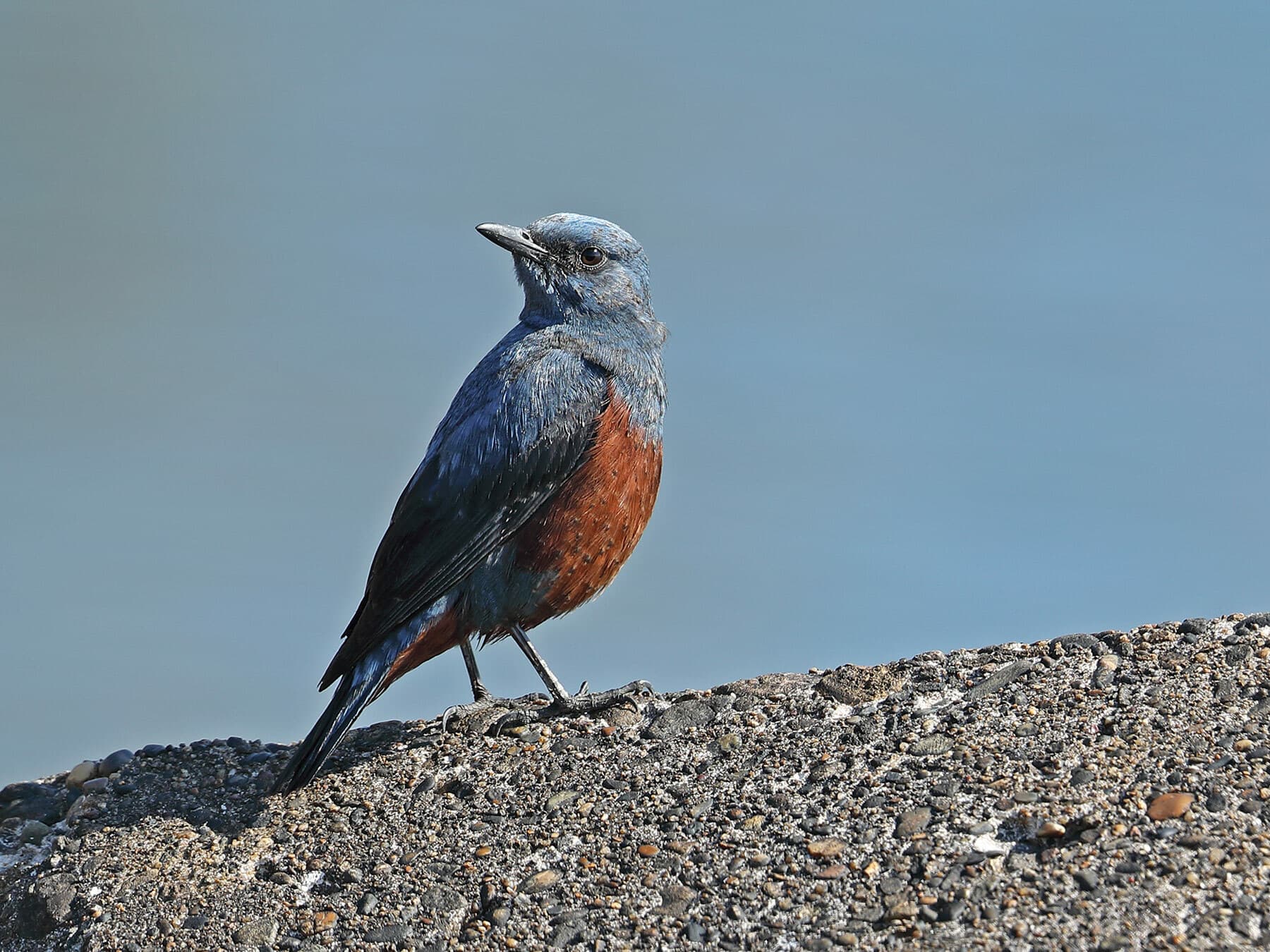
Confined to the Far East regions of Asia this bird breeds from Mongolia across to North East China, Korea, Japan and islands to its north within the Japanese archipelago and South to the Ryukyu archipelago, Taiwan and the Northern Philippines migrating south to South East China, Taiwan, the Philippines and the western Pacific islands of Micronesia.
- Monticola solitarius madoci
Finally, the smallest of the sub-species inhabits the Malay Peninsula, Northern Sumatra and the far south of Thailand.
Signs and Spotting tips
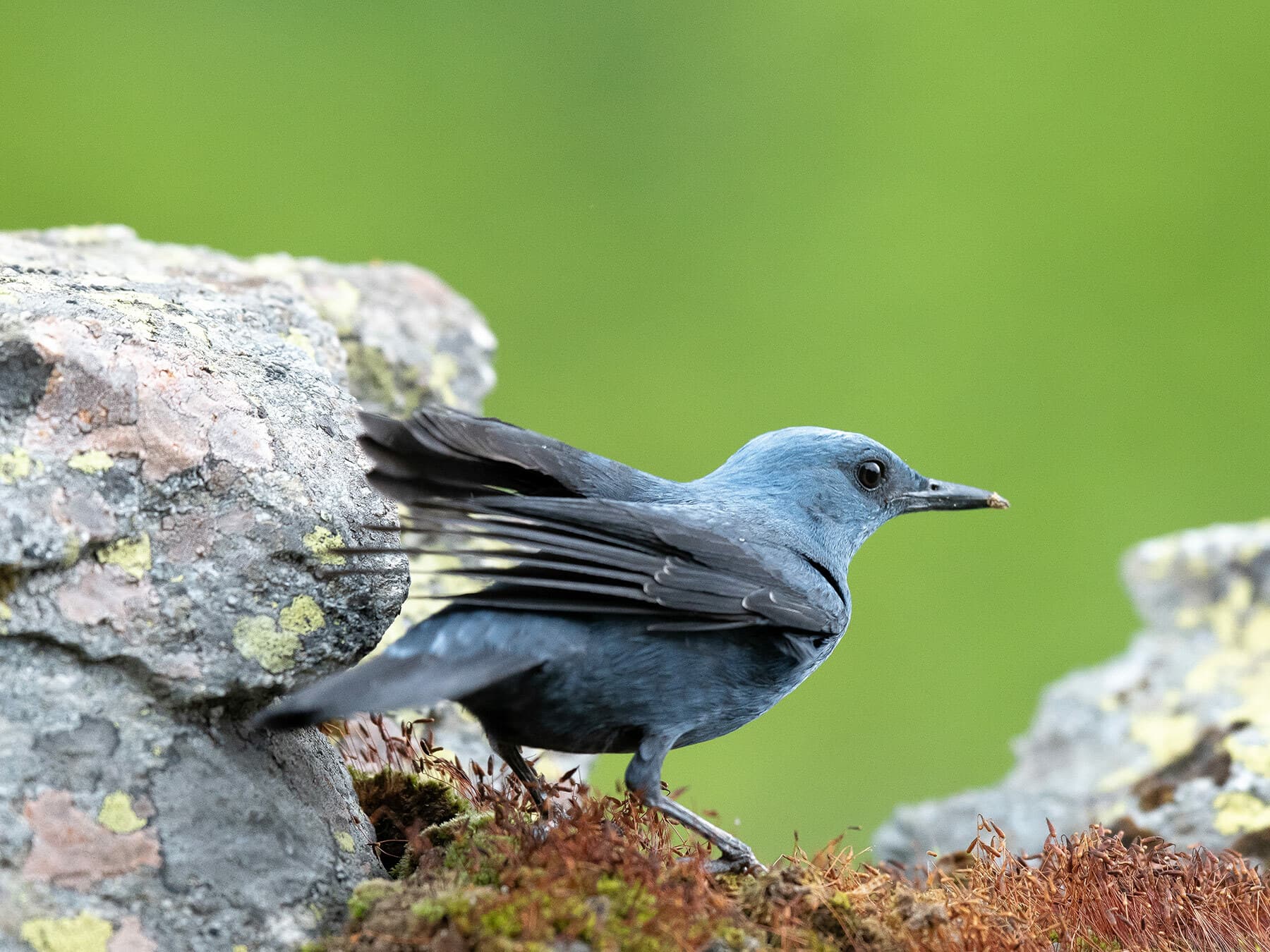
The blue rock thrush prefers open mountainous areas and cliff tops, particularly sea cliffs, rocky slopes, crags and deep valleys. In more urban environments it will choose tall buildings and churches and can often be spotted perching on rooftops or telephone wires. Its loud song can often give away its location, as the male in particular, is well camouflaged within rocky environments.
What it eats
In the main the bird is a ground feeder, foraging for berries, seeds, snails, insects, locusts, worms and spiders. Dependant upon location it will also take lizards, mice and snakes.
Nesting and breeding
During the breeding season the female will construct a cup shaped nest using dried grasses which is usually located under a rocky overhang or in a crack or crevice. Breeding occurs at different times dependant upon geographical location but mainly falls between the months of April to July. Within the bird’s northern range usually one brood is produced whereas in the more southerly regions two or even three clutches may be laid annually. Each clutch consists of between 3 – 7 pale blue green, dark spotted, eggs which are incubated for an average of two weeks. The young fledge at around sixteen days and may continue to be fed by the parents for a further two weeks.
Behaviour
Blue Rock-thrushes are known for their solitary nature and preference for high perches. They often stand upright on rocks or buildings, scanning for prey.
During courtship, males perform impressive aerial displays, singing while flying upwards before gliding back down to their perch.
Lifespan and predators
The expected lifespan for a blue rock thrush is from five to ten years.
Conservation
While the Blue Rock-thrush is listed as Least Concern by the IUCN, it faces localised threats from habitat loss due to coastal development and climate change.
Conservation efforts focus on preserving rocky habitats and monitoring population trends across its range.
What does a Blue Rock Thrush look like?
Although named as a thrush this bird is actually a chat. The adult male of the nominate race has a dark blue body with darker brown coloured wings and tail. It is the same size as a starling and has a long thick spiky slate grey bill. From a distance the male can appear to be black although the head is a bright blue. The adult female is a dull browny blue grey on the upperparts extending from the forehead, across the crown and down the back. The face is pale and mottled with thin brown markings almost with the appearance of scales, which run down to the mid chest area. From the mid chest to the lower belly the body is pale with horizontal dark brown bars across the belly from flank to flank. Juveniles are similar to females but slighter darker with bolder underpart markings, although there is no blue colouration or shading on the plumage whatsoever. There are a total of five sub-species of blue rock thrush. The colour and patternation differences from the nominate of four of the sub-species are subtle, however the adult male of the sub-species Monticola solitarius philippensis is strikingly different, in that whilst the body of the bird is predominantly a bold blue, the breast, belly and undertail areas are a contrasting rufous to chestnut brown shade.
Quick facts
- Length
- 21–23 cm
- Wingspan
- 33–37 cm
- Weight
- 40–70 g
- Lifespan
- 5–10 years
- Family
- Old World Flycatchers
- Migration
- Partial migrant
- Global status (IUCN)
- Least Concern
- World population
- 1,000,000 - 3,999,999 mature individuals
- Population trend
- Stable
- Also called
- Blue Rock Thrush, Blue Thrush
- Scientific name
- Monticola solitarius
Sources
3- 1BirdLife International. 2016. Monticola solitarius. The IUCN Red List of Threatened Species 2016: e.T22708286A87933903. Source (opens in a new tab)
- 2BirdLife International. 2016. Monticola solitarius. The IUCN Red List of Threatened Species 2016: e.T22708286A87933903. Source (opens in a new tab)
- 3BirdLife International. 2016. Monticola solitarius. The IUCN Red List of Threatened Species 2016: e.T22708286A87933903. Source (opens in a new tab)

Checked by
Nathan Cope, founder and editor
Nathan founded Birdfact and leads its writers and contributors in the UK, the US and Canada. He has watched and studied birds for more than ten years, and checks every article and species guide before it’s published.