


Ruff
Reeve (female) · Calidris pugnax
By the Birdfact teamChecked by Nathan Cope
On this page13 sections
How to recognise it
What do Ruffs look like?
Ruffs are unusual among bird species in that there are three distinct types of male, each with its own easily identified plumage, markings and behaviour.
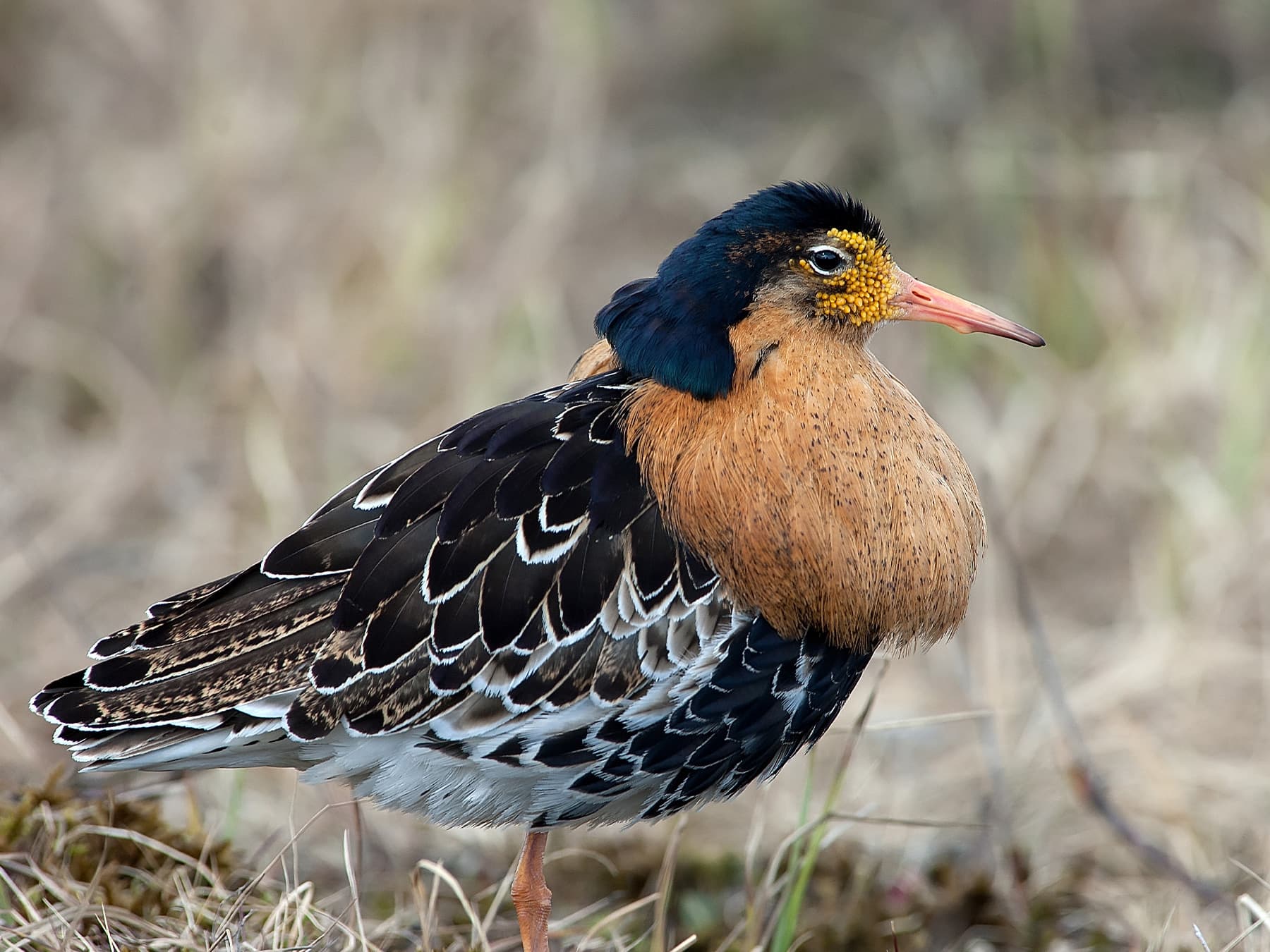
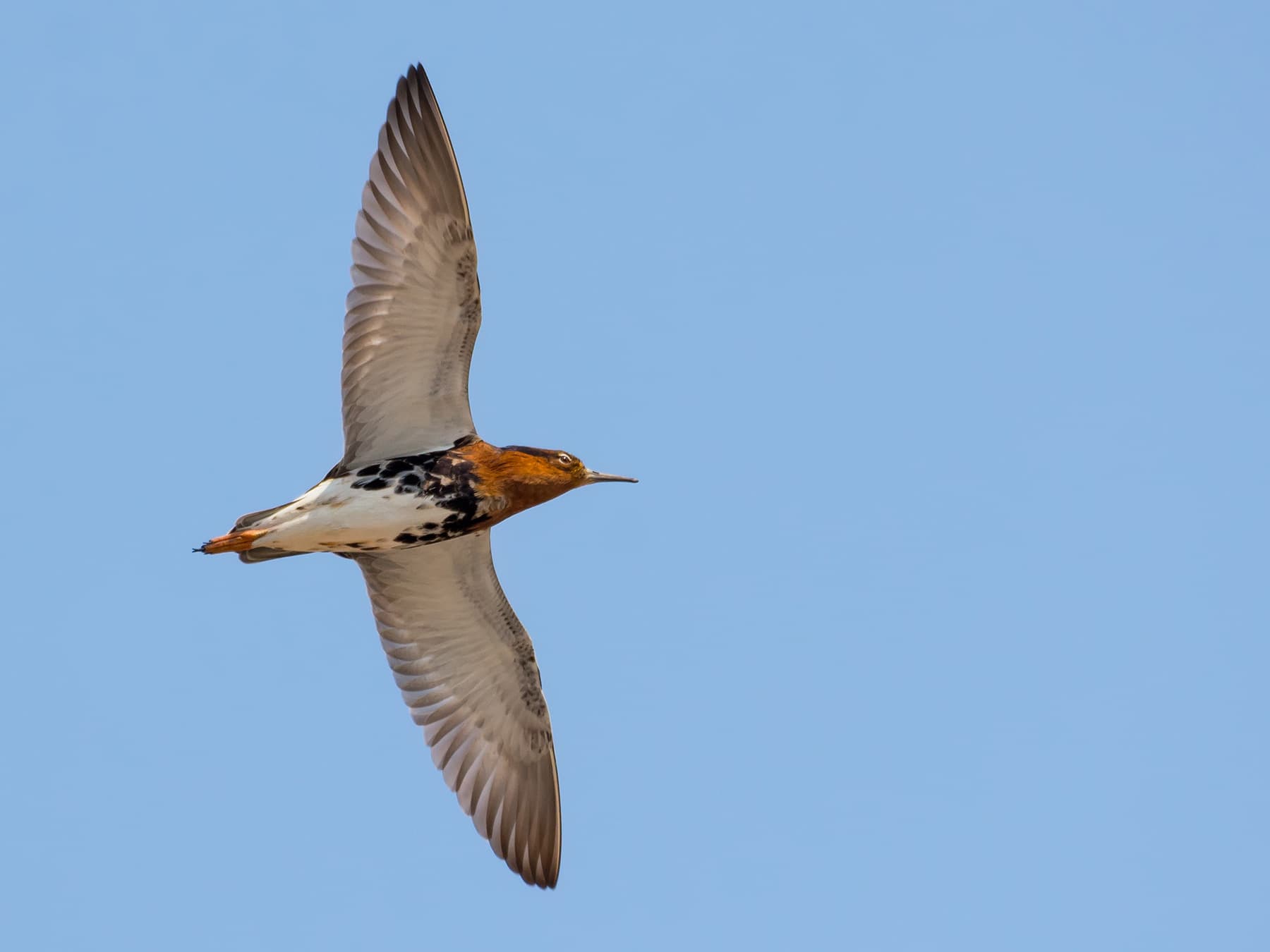
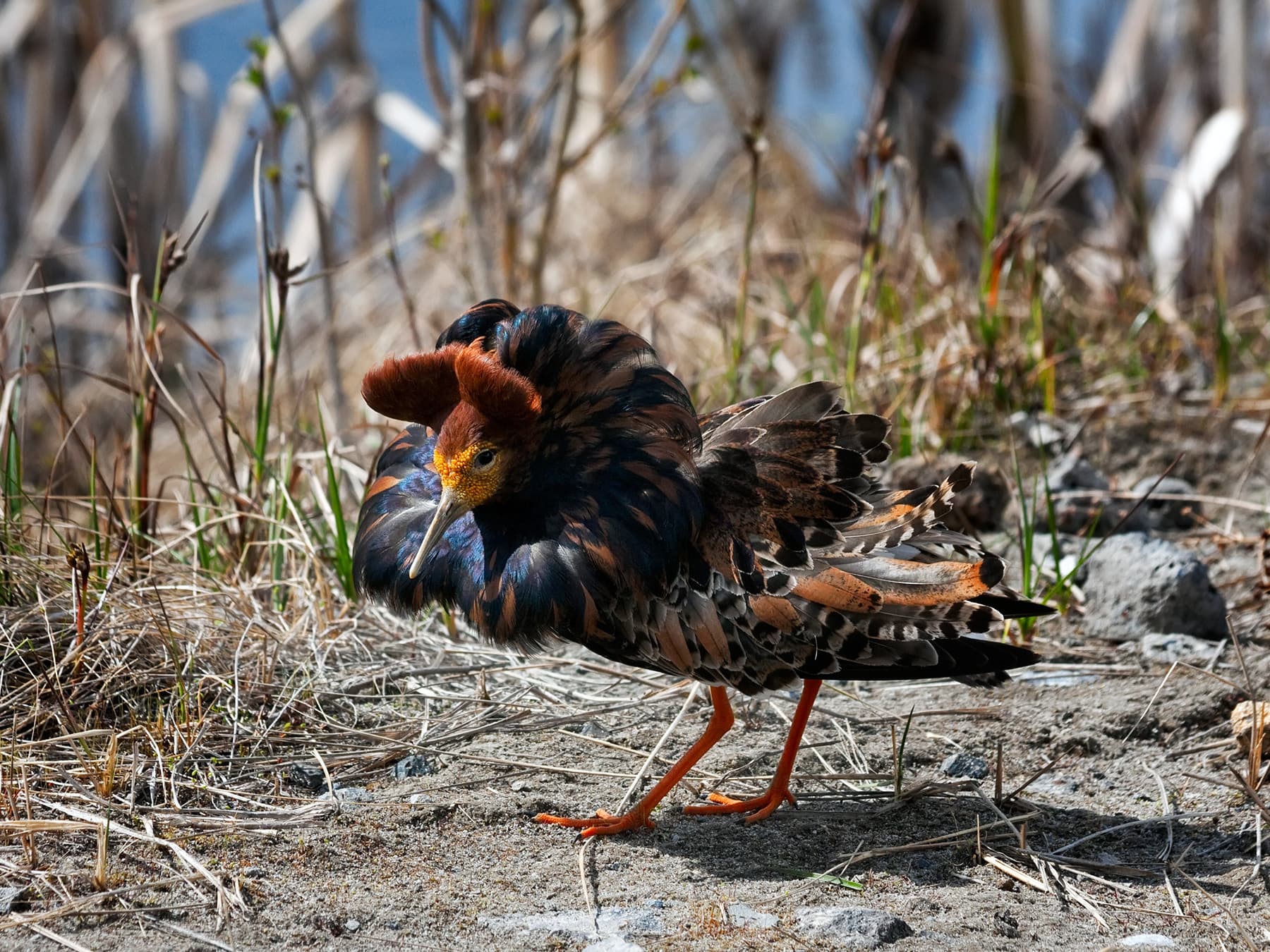
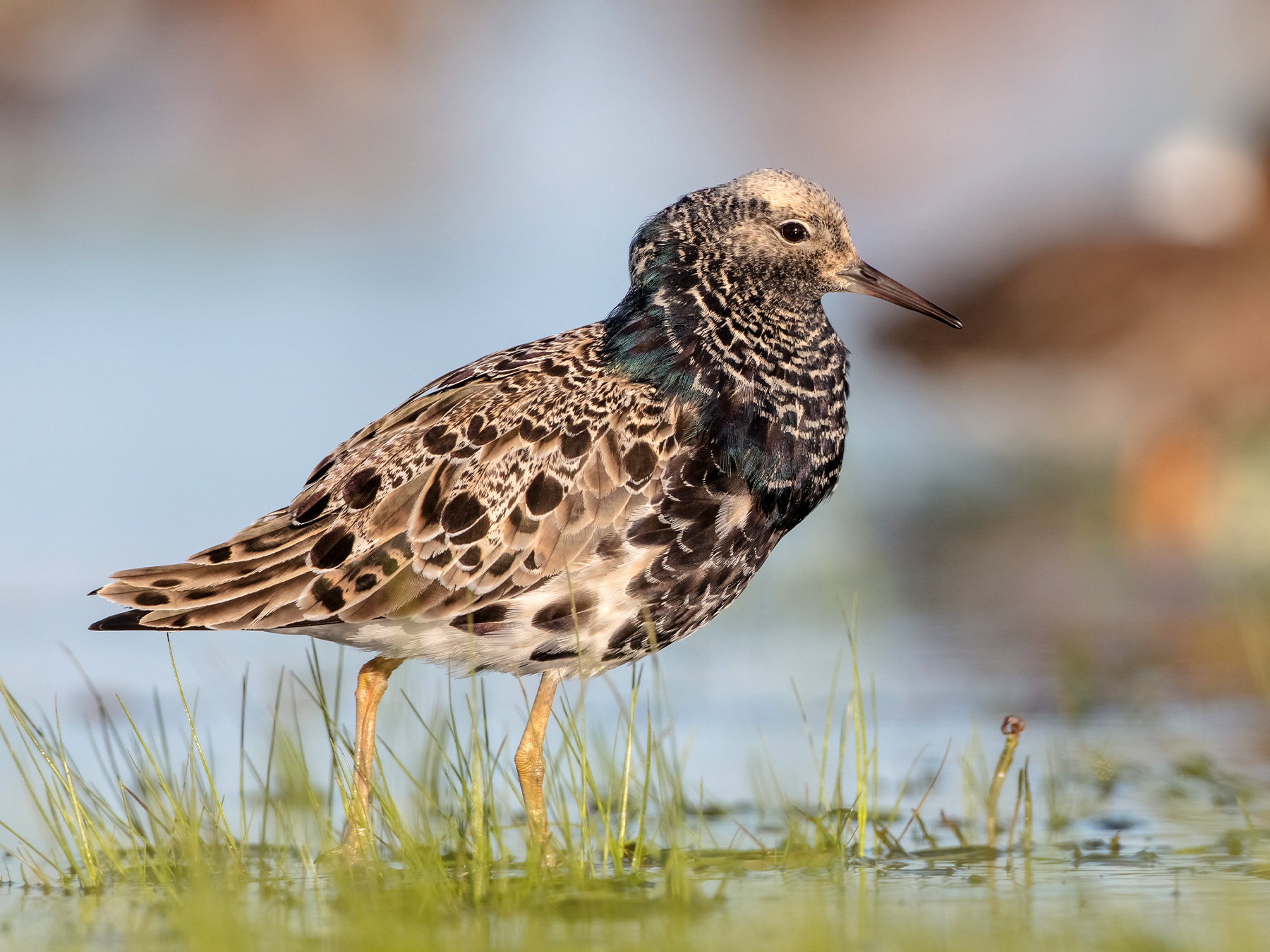
Territorial males are the most common type, with up to 84 percent of ruff males being this type. They are long-necked round-bellied wading birds, but their most notable feature is a flamboyant ruff of neck feathers, which can be brightly coloured, especially buff, chestnut, black, or rich purple. The upper back also varies in colour and can be buff, chestnut, sandy yellow or white and their underparts are dark, often black, and frequently speckled with lighter markings. In contrast, their belly and undertail are pale.
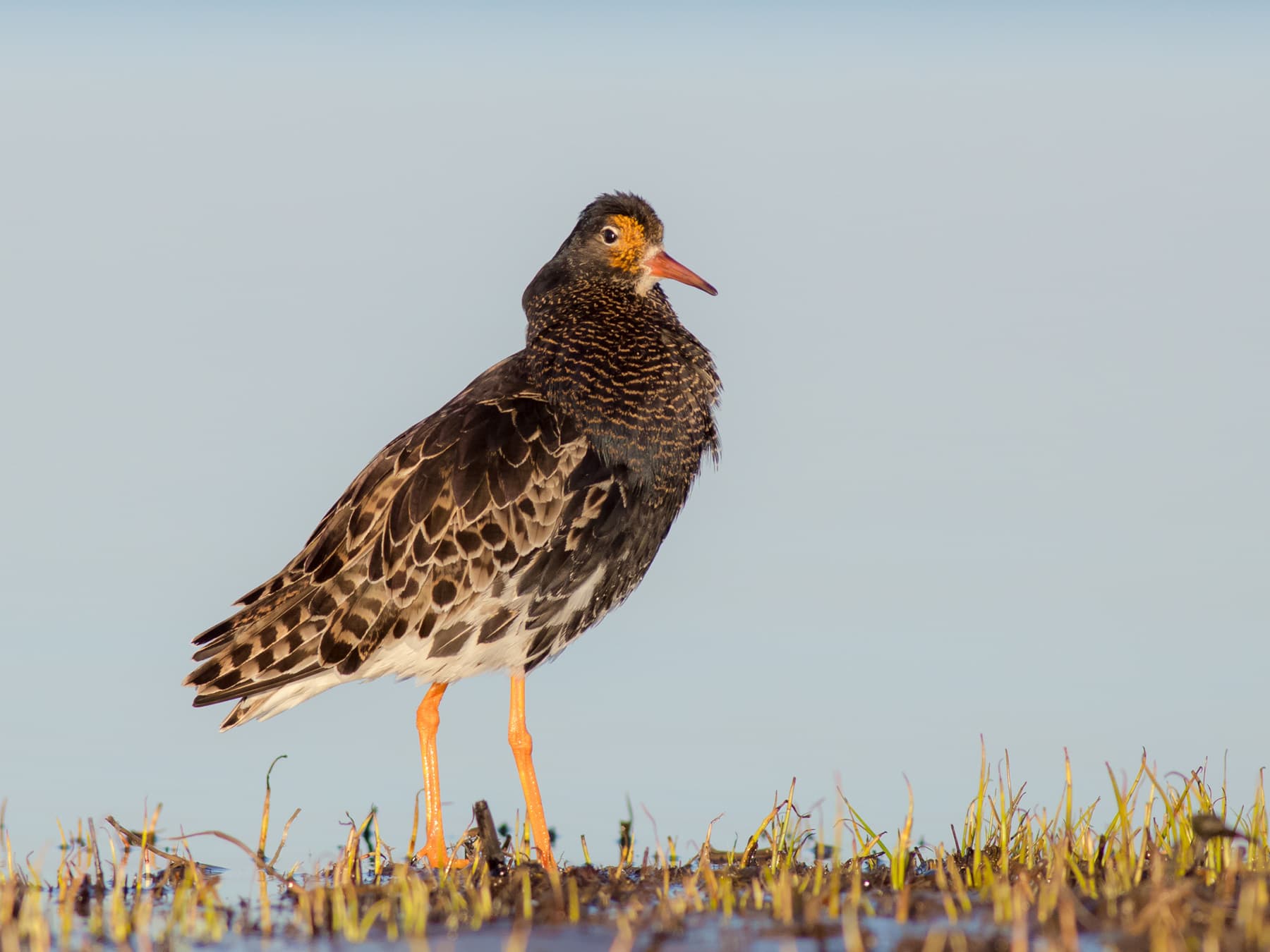
The territorial male’s face features some large, brownish-yellow knobbly facial warts from the base of their bill to around their eyes. Its bill is brownish-orange and its legs can be any shade from greenish-yellow to dark orange.
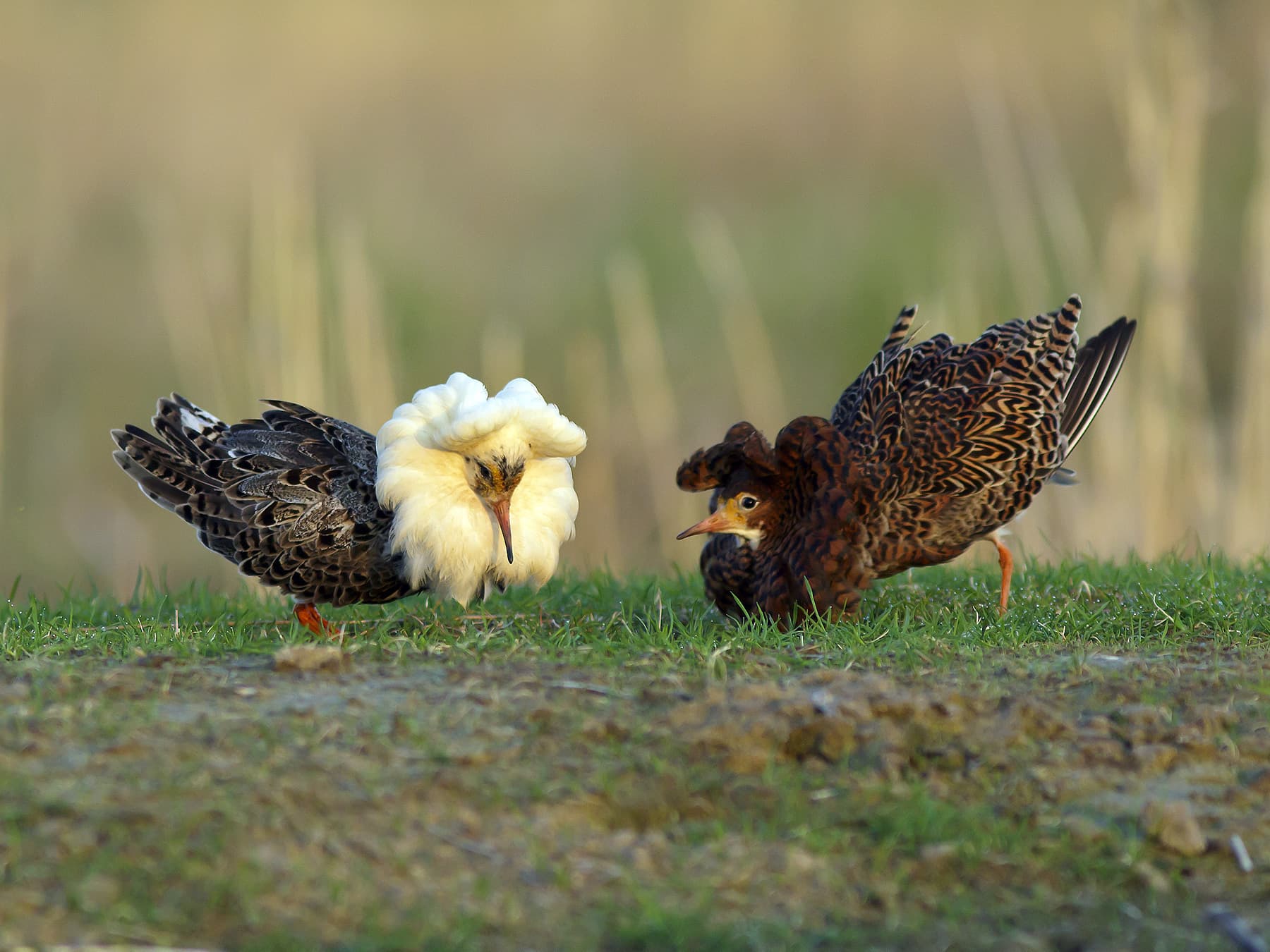
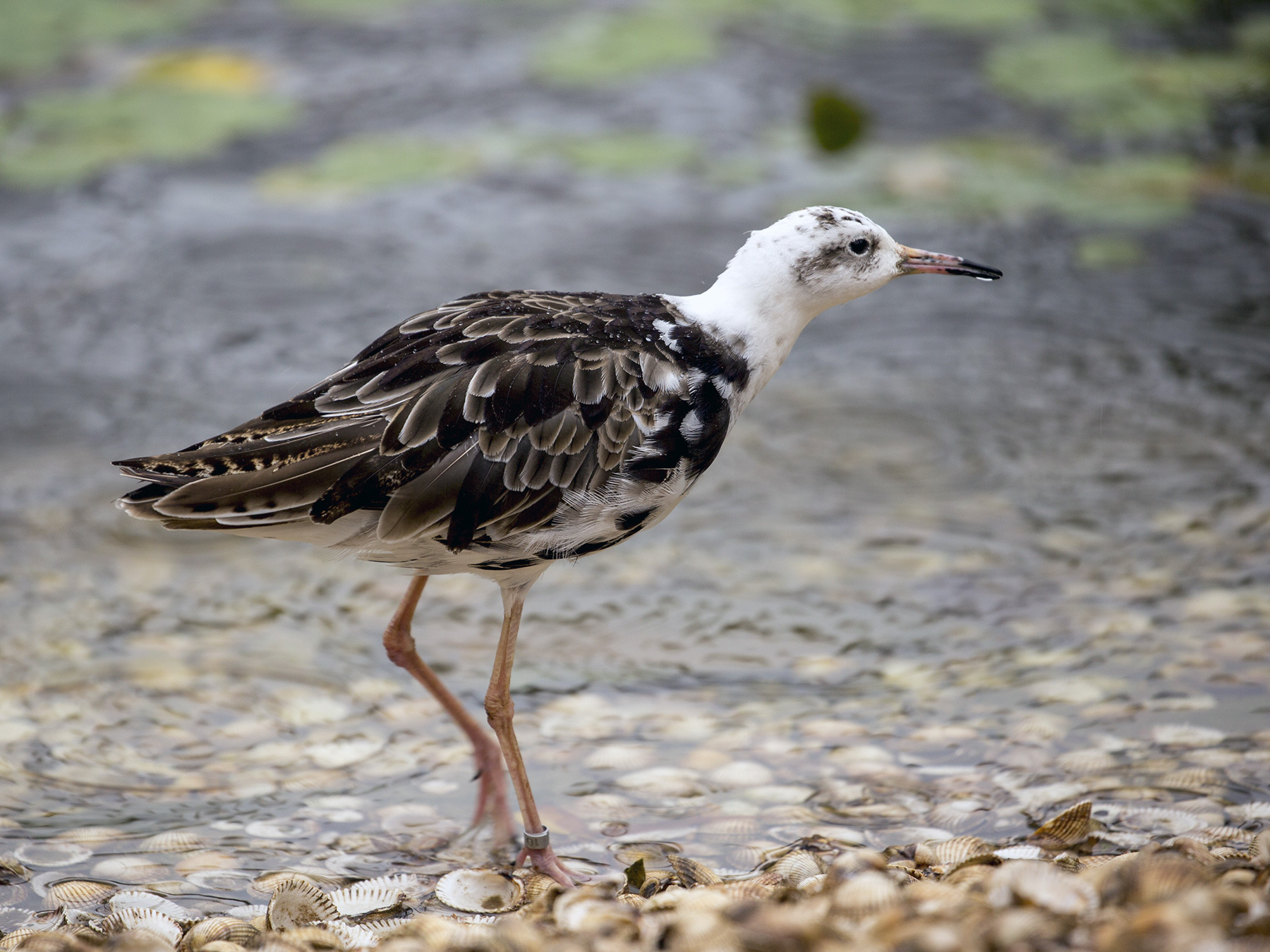
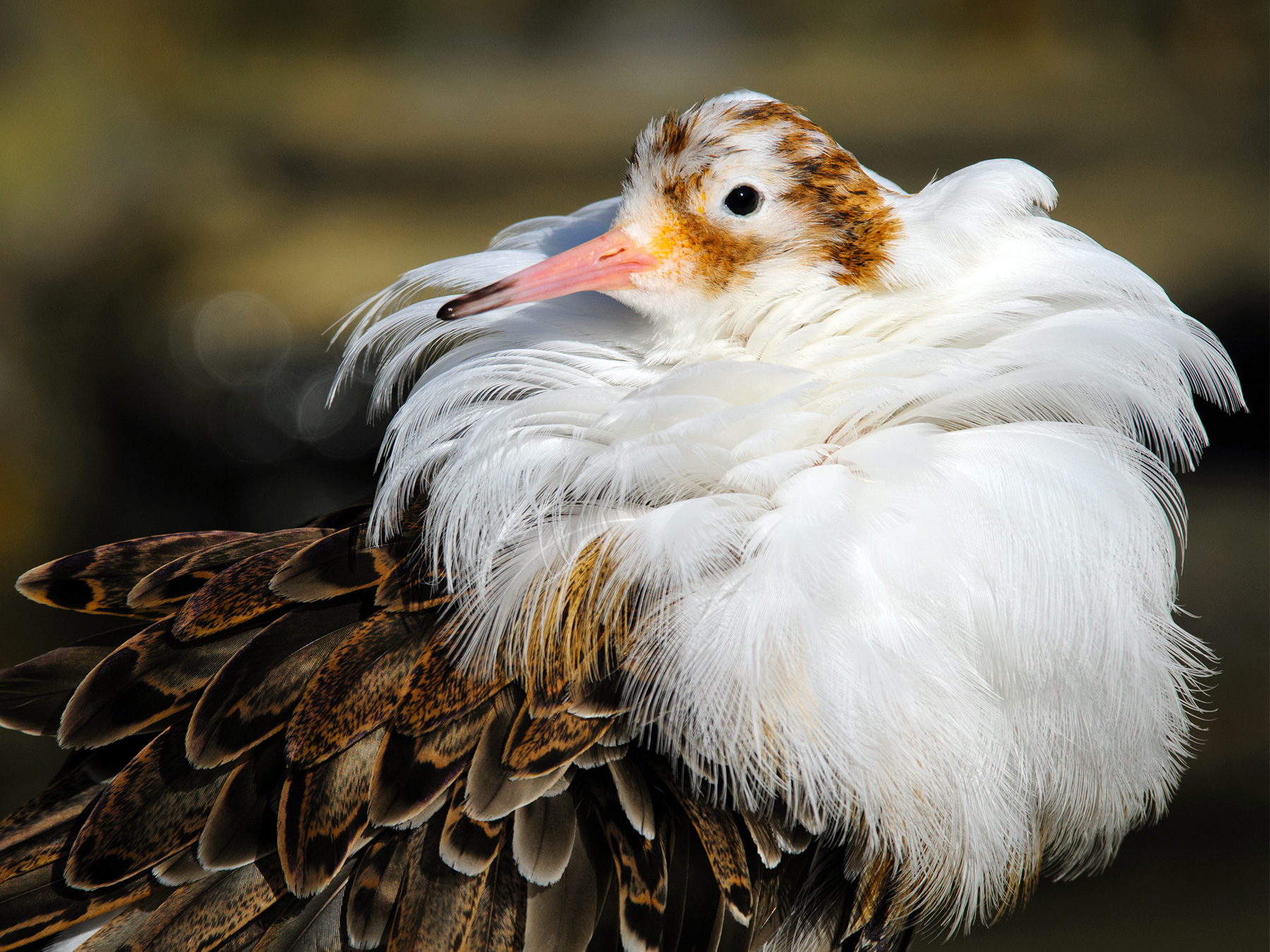
“Satellite” males account for around 16 percent of all ruff males. They have a distinctive white neck ruff and head tufts, and can easily be told apart from the bolder and more colourful territorial males. Satellite males do not have their territories, but are tolerated within the ‘lek’ (breeding territory) as their presence attracts females in search of a mate, which in turn maximises the chances of mating for the territorial ruffs.
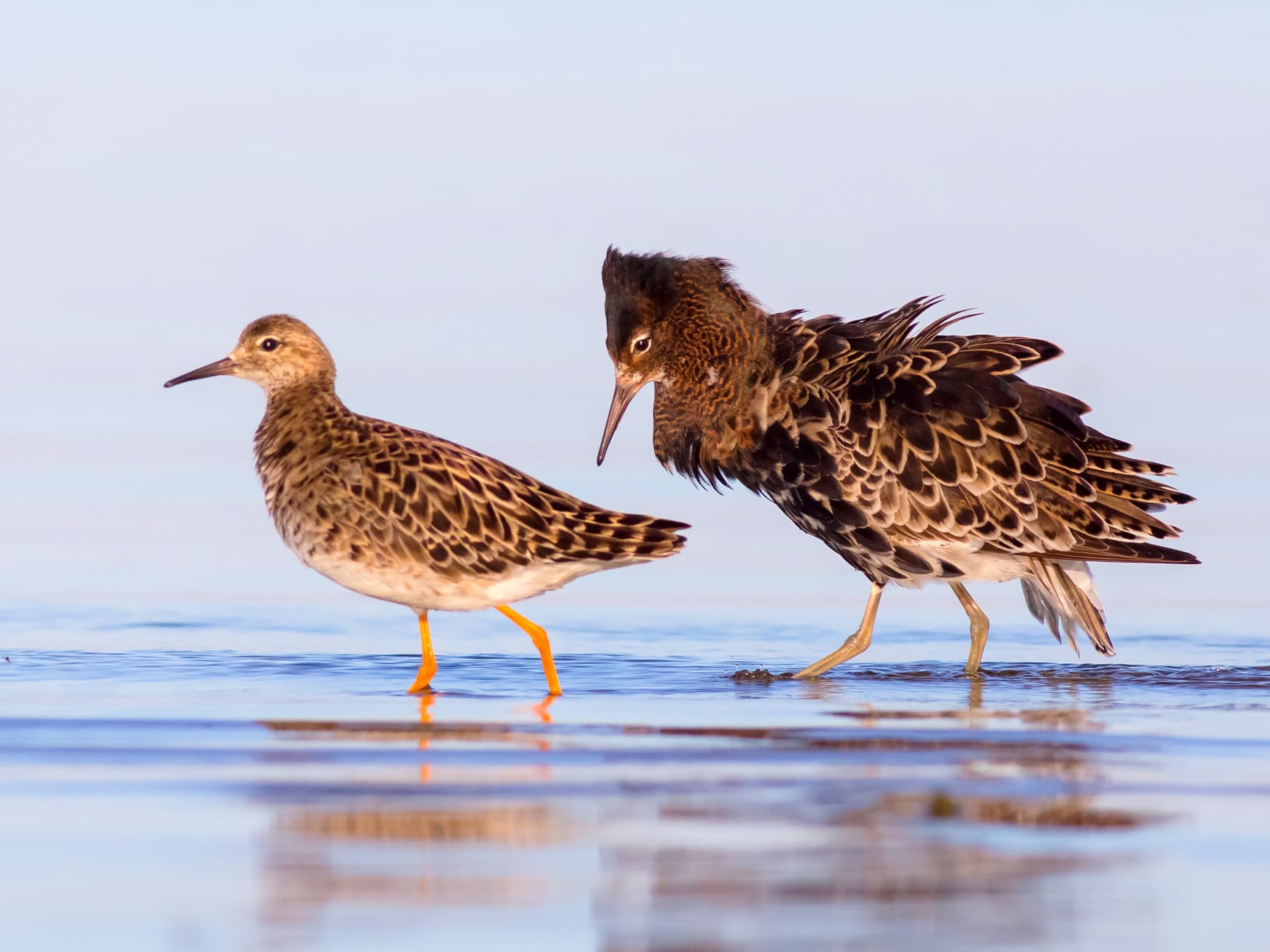
Third is the much rarer faeder males, which resemble female ruffs (or reeves, as they are known) in both size and plumage and represent only around 1 percent of males of this species. Their cryptic plumage allows them to avoid aggressive confrontations with territorial males and go almost unnoticed in the mating territories.
Ruffs are one of the bird species that show the greatest degree of difference in appearance between breeding males and females, even so far as the two sexes have different names. Males are called ruffs, while females are often referred to as reeves.
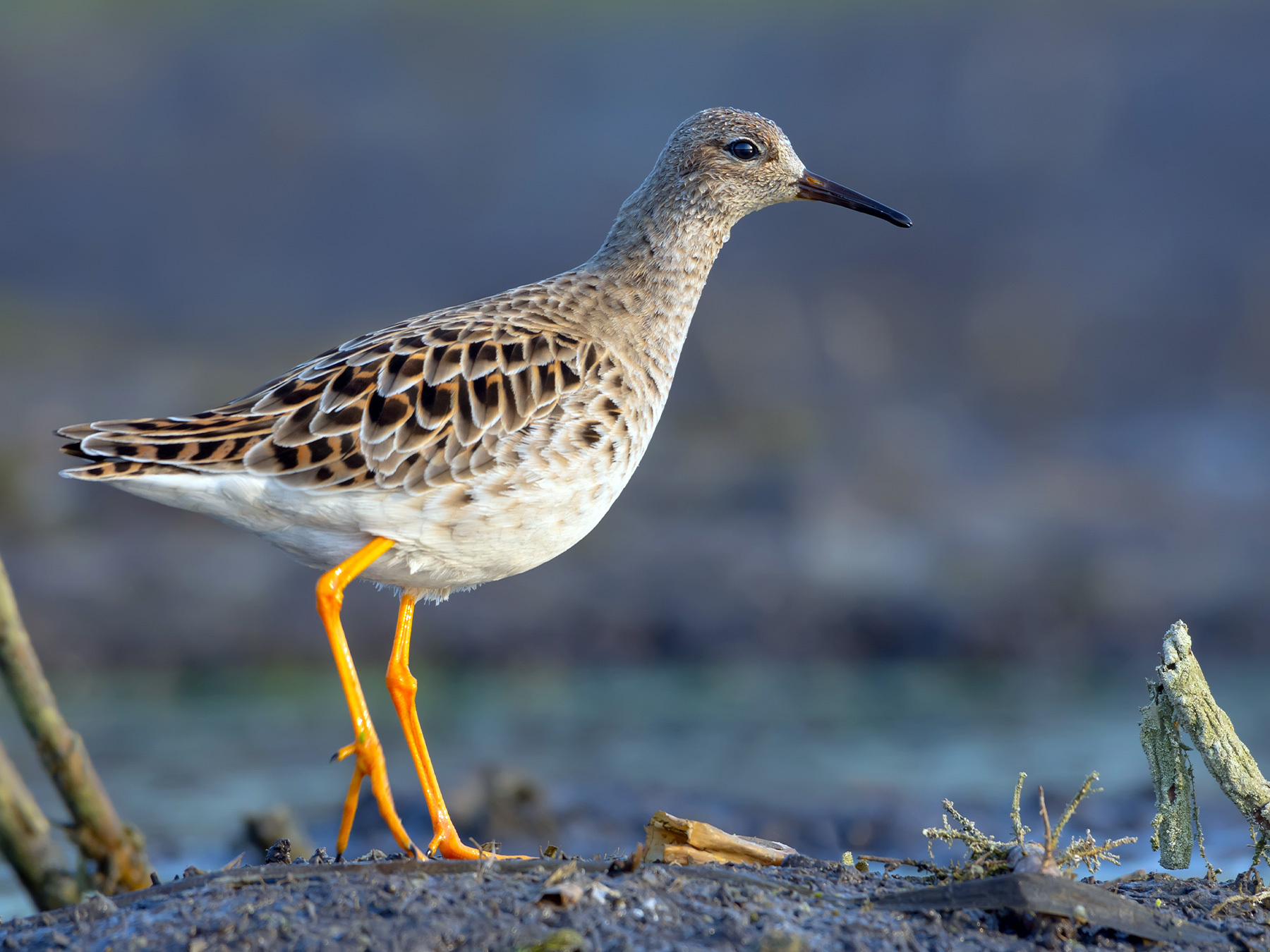
Females are most similar to the faeder variety of male ruff, with greyish-brown upperparts and a large amount of white on their belly, breast and neck, which are usually streaked with darker brown. Females are much smaller than breeding males and lack any of the identifying head tufts and ruffled neck feathers seen in displaying males.
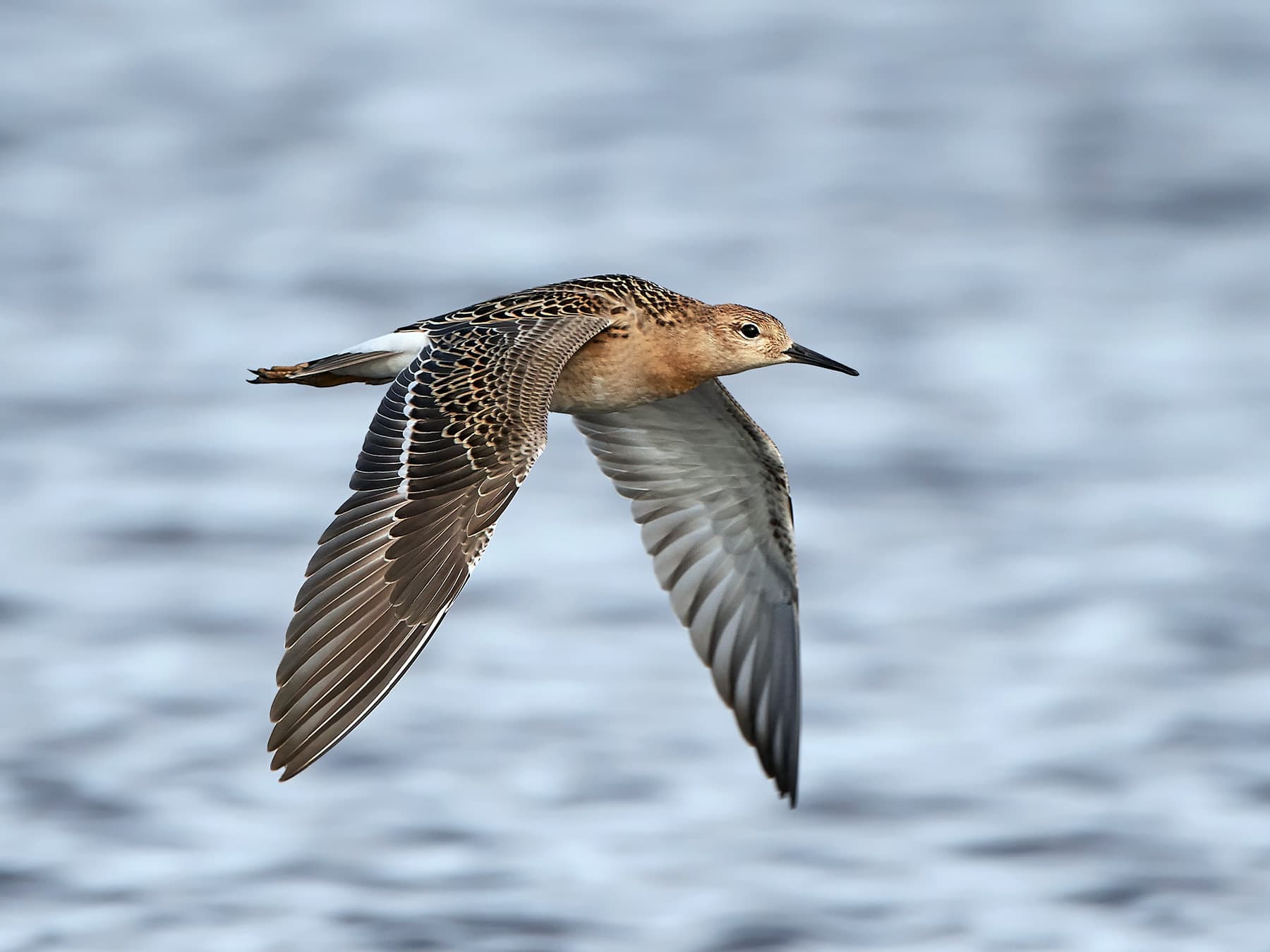
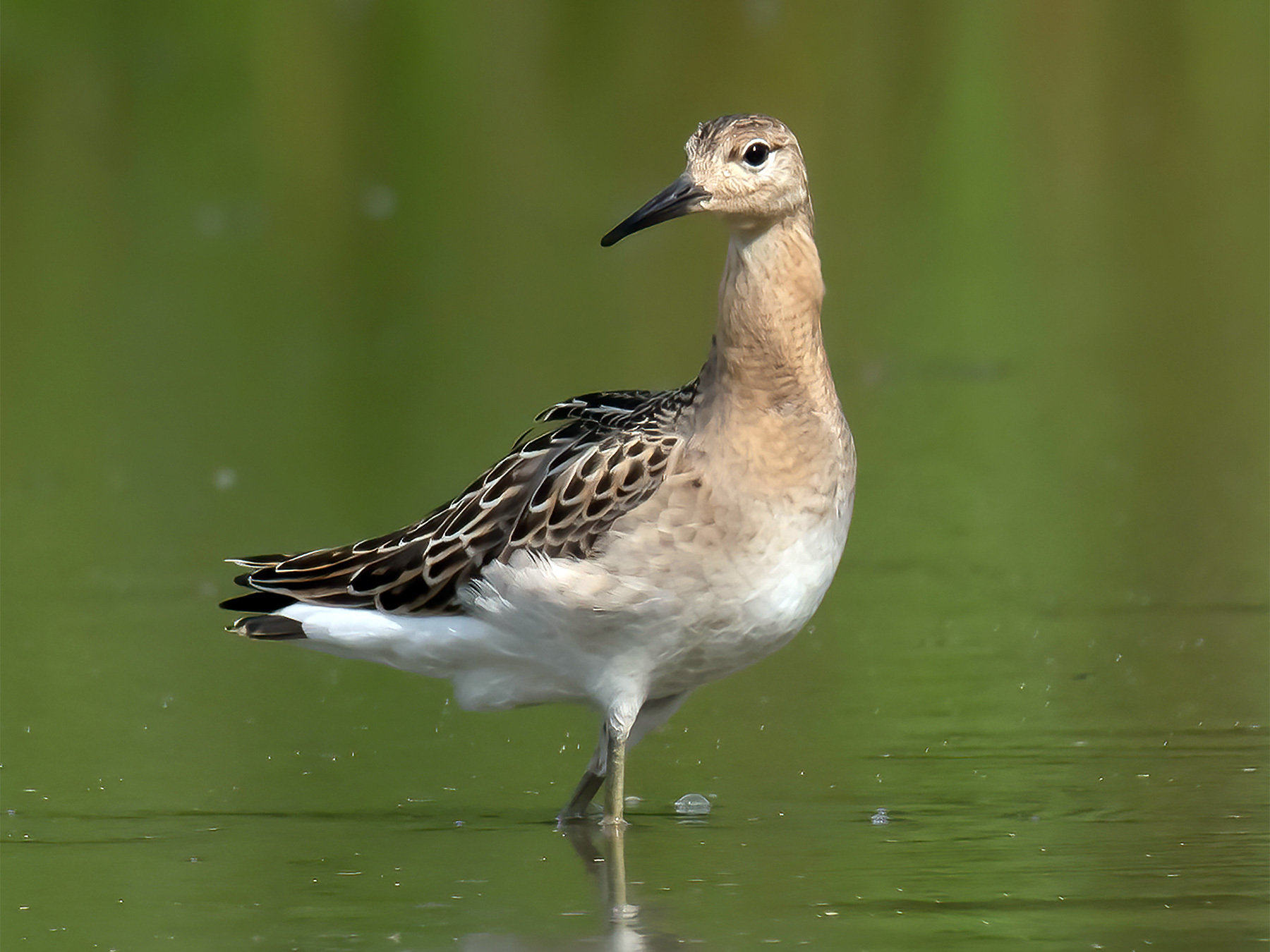
Juveniles have dark brown upperparts, edged with buff. Their neck, breast and belly are reddish-brown and their face is lighter, with a pale, streaked throat. The bill is black and the legs and feet can be pink, grey or greenish.
How big are Ruffs?
There is a vast range in size and weight between male ruffs and female reeves. Males are significantly heavier and larger, with the exception of the smaller and very rare faeder males, which are more similar in size to females but slightly larger and with longer wingspans.
- Length: 20 cm to 32 cm (7.9 in to 12.6 in)
- Wingspan: 46 cm to 58cm (18 in to 23 in)
- Weight: 70 g to 150 g (2.5 oz to 5.3 oz)
Its size
Adults- Length
- 20–32 cm
- Wingspan
- 46–60 cm
- Weight
- 70–200 g
Its song and calls
What sound does a Ruff make?
Ruffs are a relatively silent species and even on their displaying lek arenas at the height of the breeding season, they can barely be heard beyond occasional low-pitched guttural sounds.
When and where to see it
OctoberLeaving
Most recorded in October
- 1. Louth1.1%
- 2. Stockton-on-Tees0.70%
- 3. Lincolnshire0.51%
- 4. Gloucestershire0.49%
- 5. Wexford0.49%
Each dot is a county, state or province: the bigger and darker, the larger the bird’s share of that place’s bird records that month. Grey dots: no regular records. The ringed point is the centre of the bird’s records this month; the arrow shows how it moved since last month, and the dashed loop its path through the year. “Arrivals” colours places where it becomes regular this month (orange) or is in its last regular month (grey). GBIF eBird Observation Dataset, 2019–2024. Map data: Natural Earth, US Census Bureau; place centres © OpenStreetMap contributors.
In your area
See when the Ruff is recorded in your county, state or province.
How often the Ruff turns up in the UK, Ireland, the United States and Canada through the year, from birdwatchers' records.
United Kingdom
Summer visitor · all year · most records in September
Ireland
Winter visitor · regularly Jul–Apr · most records in September
United States
Summer visitor · all year · most records in August
Canada
Summer visitor · regularly Apr–Oct · most records in September
Show as a table
| Month | United Kingdom | Ireland | United States | Canada |
|---|---|---|---|---|
| January | 0.069% (regular) | 0.052% (regular) | 0.001% (regular) | 0.003% |
| February | 0.073% (regular) | 0.088% (regular) | <0.001% (regular) | <0.001% |
| March | 0.074% (regular) | 0.074% (regular) | <0.001% (regular) | <0.001% |
| April | 0.088% (regular) | 0.046% (regular) | 0.002% (regular) | 0.003% (regular) |
| May | 0.043% (regular) | 0.009% | 0.001% (regular) | 0.002% (regular) |
| June | 0.027% (regular) | 0.006% | <0.001% (regular) | 0.001% (regular) |
| July | 0.15% (regular) | 0.054% (regular) | 0.002% (regular) | <0.001% (regular) |
| August | 0.29% (regular) | 0.17% (regular) | 0.004% (regular) | 0.001% (regular) |
| September | 0.32% (regular) | 0.21% (regular) | 0.003% (regular) | 0.004% (regular) |
| October | 0.15% (regular) | 0.10% (regular) | 0.001% (regular) | <0.001% (regular) |
| November | 0.066% (regular) | 0.074% (regular) | <0.001% (regular) | 0.002% |
| December | 0.048% (regular) | 0.043% (regular) | <0.001% (regular) | 0.002% |
Recorded regularly in
Worldwide: recorded regularly in 116 countries
Countries where it was recorded in at least 3 of the 6 years 2019–2024. Linked countries have their own bird list.
Europe (42)
- Åland Islands
- Albania
- Austria
- Belarus
- Belgium
- Bosnia & Herzegovina
- Bulgaria
- Croatia
- Czechia
- Denmark
- Estonia
- Faroe Islands
- Finland
- France
- Germany
- Greece
- Hungary
- Iceland
- Ireland
- Isle of Man
- Italy
- Kosovo
- Latvia
- Lithuania
- Malta
- Moldova
- Montenegro
- Netherlands
- North Macedonia
- Norway
- Poland
- Portugal
- Romania
- Russia
- Serbia
- Slovakia
- Slovenia
- Spain
- Sweden
- Switzerland
- Ukraine
- United Kingdom
Africa (26)
Asia (37)
- Armenia
- Azerbaijan
- Bahrain
- Bangladesh
- Cambodia
- China
- Cyprus
- Georgia
- Hong Kong SAR China
- India
- Indonesia
- Iran
- Israel
- Japan
- Jordan
- Kazakhstan
- Kuwait
- Kyrgyzstan
- Lebanon
- Malaysia
- Mongolia
- Myanmar (Burma)
- Nepal
- Oman
- Pakistan
- Palestinian Territories
- Philippines
- Qatar
- Saudi Arabia
- South Korea
- Sri Lanka
- Taiwan
- Tajikistan
- Thailand
- Turkey
- United Arab Emirates
- Uzbekistan
North America (7)
Oceania (4)
- Australia
- Northern Mariana Islands
- Palau
- US Outlying Islands
Data: EOD – eBird Observation Dataset (Cornell Lab of Ornithology), accessed via GBIF.org, CC BY 4.0. Records from 2019–2024, aggregated and filtered by Birdfact. How these lists are made
What is the habitat of a Ruff?
Ruffs have some rather specific habitat demands during the breeding season, requiring landscapes that offer feeding and nesting habitats alongside areas in which they can engage in their lekking breeding practice, which is typically scrubland with some slopes and mounds.
Preferred environments include coastal and forest tundra, near small lakes, swampland and marshes with shallow ditches, and scrubby grasslands with patchy vegetation cover.
During the non-breeding season, the muddy edges of wetlands offer ideal wintering sites, with lagoons, pools, rivers, marshes, agricultural land, and flooded grasslands all popular foraging spots.
What is the range of a Ruff?
Ruffs breed from eastern England eastward across north-western and northern Europe, through northern Russia into Siberia. Most ruffs are migratory, with the majority leaving Europe for sub-Saharan Africa, the Middle East, India, and South East Asia, as far as the Philippines.
In Europe, some young birds remain in the UK over winter, having been born in Scandinavia earlier that year. Others reach as far as the Mediterranean Sea and remain there for the duration of the colder winter months.
Where do Ruffs live?
Within Europe, the population of ruffs has been placed at between 265,000 and 1.65 million breeding males, giving a total European estimate of 797,000 to 4.97 million individuals. Of these, there are between 60,000 and 95,000 ‘pairs’ in Norway and Sweden and a further 30,000 to 50,000 in Finland.
How rare are Ruffs?
Globally ruffs are not uncommon birds, with a worldwide population of up to 9.9 million individuals. However, in the UK, breeding is rare, with only around 13 females laying each year. Up to 920 birds arrive from Scandinavia to spend winter months in British wetlands, particularly young birds that remain in Europe rather than embarking on the long migration to Africa in their first winter.
Where can you see Ruffs in the UK?
Ruffs only breed in a very limited region of East Anglia, where on average 13 females raise young each year. Norfolk’s Titchwell Reserve is one site where breeding ruffs have regularly been spotted, around the lagoon and low-lying wetland landscape.
Passage migrants can be seen around the east and south coasts of England in spring and autumn, and many winter visitors gather around the wetlands of Norfolk and Suffolk before returning to Scandinavia in the spring.
Migration
Do Ruffs migrate?
Ruffs migrate over land, leaving northern breeding grounds from June and July onwards and the majority head to sub-Saharan Africa, beginning their return north the following March. Migration, which can cover distances of up to 30,000 km (19,000 mi), also takes place to parts of south and south-east Asia and Australia, while some may remain in Western Europe.
Why do Ruffs migrate?
Ruffs seek different foods depending on the time of year, and once they no longer require a protein-heavy diet, they migrate to warmer climates in the south where they take advantage of the abundance of wet rice fields and forage there while the cultivated land dries out.
Are Ruffs native to the UK?
Although ruffs are rare breeding birds in the UK, a handful do remain in the country all year round and are joined each winter by migrants making brief stopovers en route to Africa, as well as others that remain on British wetlands until the following spring.
Tips for seeing it
- Look for Ruffs in shallow wetlands and coastal areas during migration
- Observe lekking behaviour in breeding grounds during spring
- Pay attention to size and bill shape to distinguish from similar waders
- Check for the distinctive 'scaly' pattern on the back in non-breeding plumage
What it eats
What do Ruffs eat?
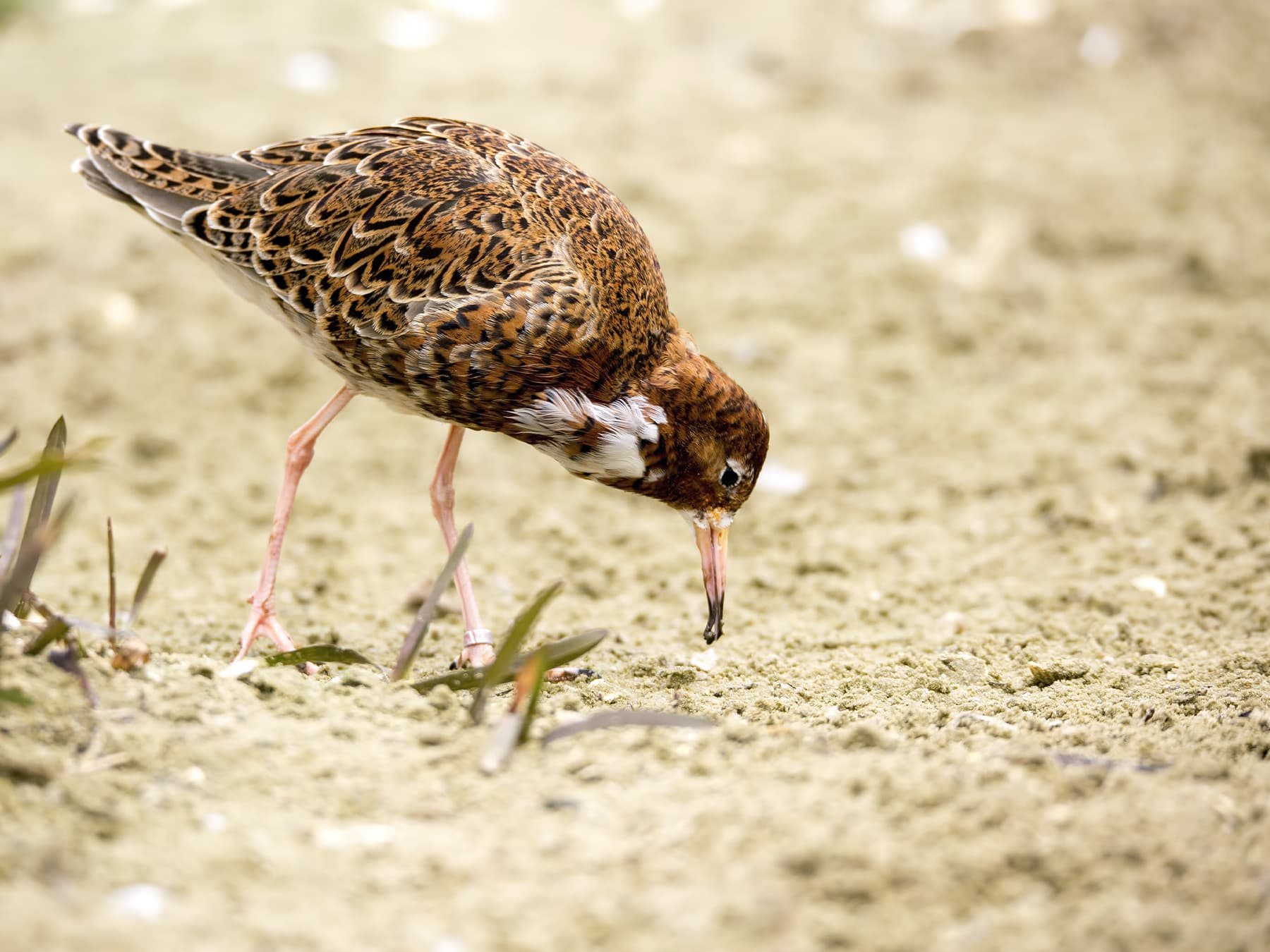
During the breeding season, aquatic insects and their larvae are the chief foods in a ruff’s diet. Later in the year, in preparation for migration and en route to wintering grounds, their diet broadens to include grasshoppers, caddisflies, mayflies, crustaceans, worms, fish and frogs. They feed both during the day and night, plucking prey from the muddy wetlands or probing beneath the surface with their elongated bills.
In winter, seeds, grains, and aquatic plants become more important in a ruff’s diet. In Africa, rice fields are a major source of food during winter months.
What do Ruff chicks eat?
Young ruffs are fed by the female for the first few days, on a diet of larvae and small insects. Foraging skills are soon mastered with juveniles feeding on beetles, flies, and their larvae alongside adult birds.
Nesting and breeding
Where do Ruffs nest?
Reeves lay their eggs in shallow scrapes on the ground, lined with twigs and leaves and usually concealed by marshland plants or tall clumps of grass. Nests are built either on the site of the lek grounds on which males gather to display their showy summer plumage, or a short distance away.
When do Ruffs nest?
Reeves lay their eggs from early May to early June. A single brood is laid each year, incubated by the female alone for between 20 and 23 days.
What do Ruff eggs look like?
Ruffs eggs’ have a base colour of olive green to buff-brown, and are heavily marked with dark brown splodges. Eggs measure 44 mm by 31 mm (1.7 in to 1.2 in) and are pointed in shape. There are usually four eggs in a clutch.
Do Ruffs mate for life?
Ruffs are not a monogamous species and breeding with multiple mates is typical. It’s not uncommon for a single clutch of eggs laid by a female to have been fertilised by several different males.
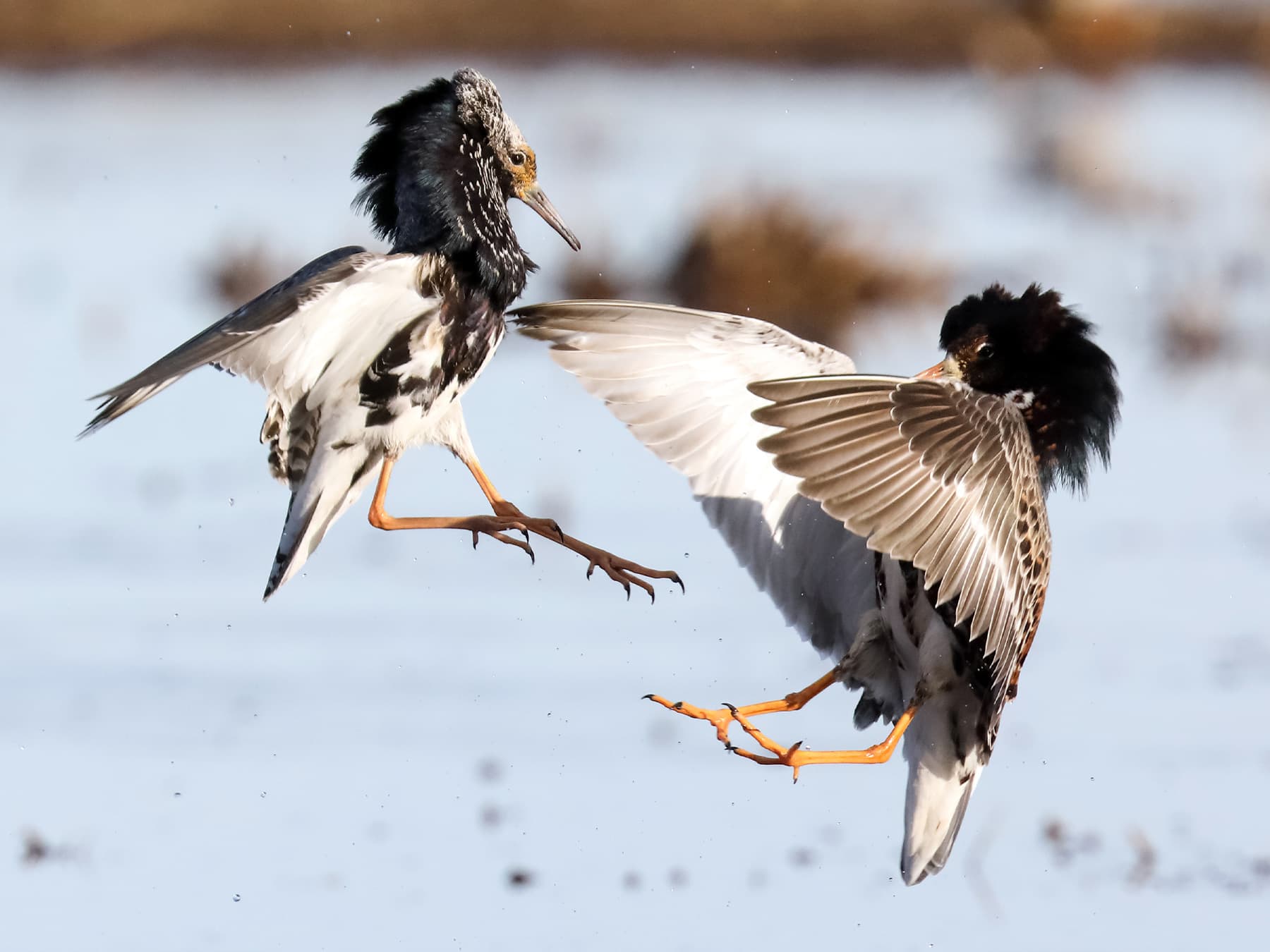
Ruffs are a “lekking” species, using open grassy areas known as leks as arenas to display their eye-catching plumage alongside other territorial males. Female ruffs visit the leks and mate with any number of territorial males, as well as any satellite males that may be present. No pair bonds form and males play no role in incubating the eggs or raising the chicks.
Behaviour
Are Ruffs aggressive?
The aggression of male ruffs reaches a peak during the lekking period, with competing males physically challenging each other when attempting to secure a mate. As males do not have any attachment to the mate they breed with, no protective behaviour is shown towards the female, the nest site, or any young.
Lifespan and predators
How long do Ruffs live?
Once ruffs are fully grown, their average lifespan is around 4.4 years, with the oldest individual recorded to be 13 years 11 months. Breeding begins at 2 years for females, and often later for males.
What are the predators of Ruffs?
Common predators of ruff eggs and young birds include foxes, stoats, and feral cats. Avian predators include crows, skuas, ravens and gulls.
Are Ruffs protected?
In the UK, ruffs are listed as a Schedule I species under the Wildlife and Countryside Act, 1981, which offers protection to breeding birds and their nest site, eggs, and young against being destroyed or interfered with. In addition, the legislation makes it an offence to kill, injure or take a ruff into captivity.
Are Ruffs endangered?
Globally, ruffs are considered a species of least concern, with an estimated population of around 2 million birds. Locally, declines are evident, with only 13 females recorded annually in recent breeding seasons in the UK. In the Netherlands, a 90 percent decline has also been reported, with habitat loss and drainage of wetlands thought to be the leading factor.
In the UK, ruffs have Red status on the British Birds of Conservation Concern list.
Conservation
While globally listed as Least Concern, Ruff populations have declined in parts of their range due to habitat loss and degradation.
Conservation efforts focus on protecting wetland habitats and managing water levels in key breeding and stopover sites.
More photos
6 photos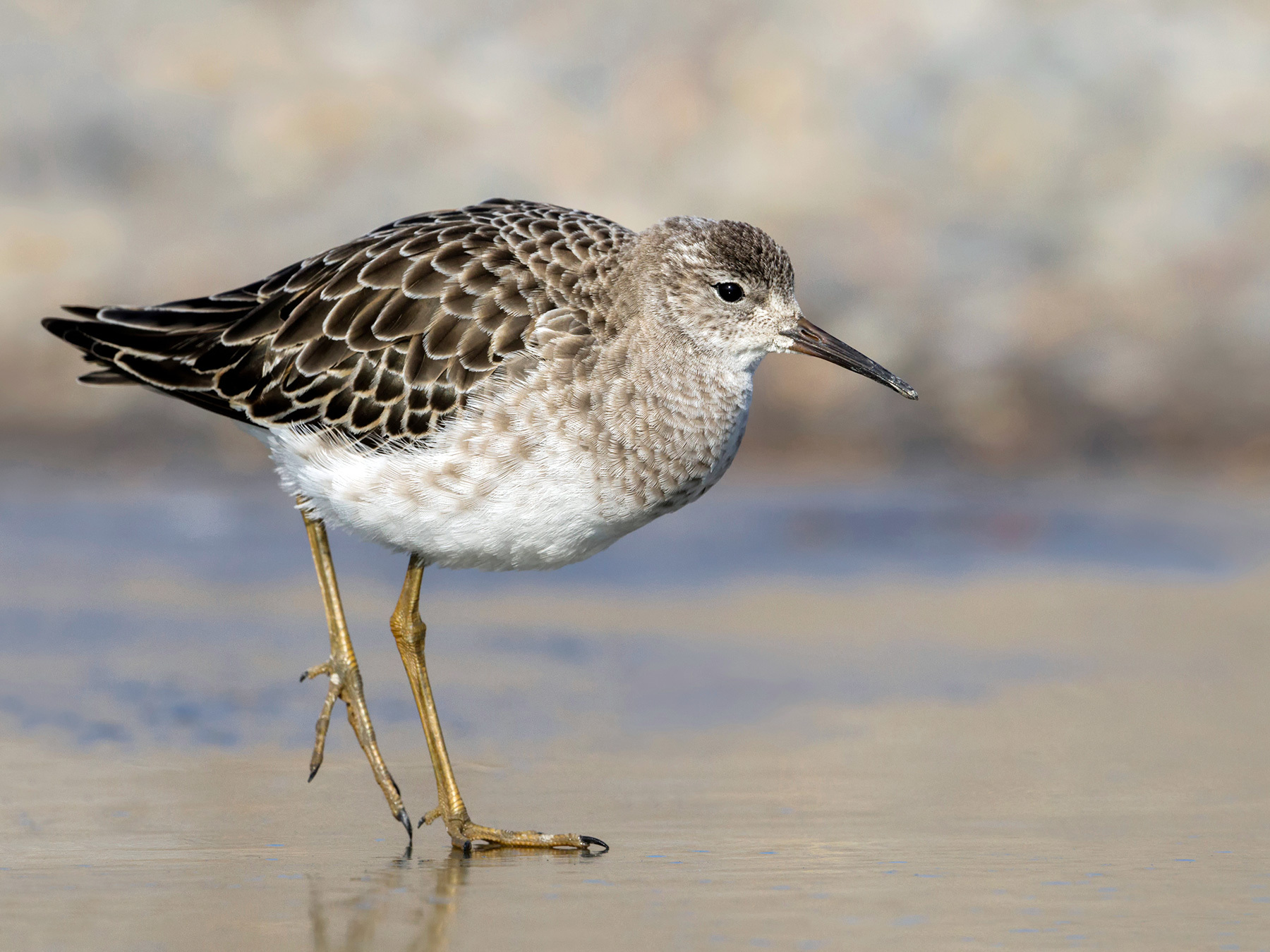
Quick facts
- Length
- 20–32 cm
- Wingspan
- 46–60 cm
- Weight
- 70–200 g
- Lifespan
- 4–5 years · oldest recorded 13.9 years
- Family
- Sandpipers & Snipes
- Migration
- Long-distance Migrant
- Global status (IUCN)
- Least Concern
- World population
- 1,594,000 - 9,940,000 individuals
- Population trend
- Decreasing
- Also called
- Reeve (female)
- Scientific name
- Calidris pugnax
Questions
1Why are they called Ruffs?
Ruffs are named after the ostentatious ruffle of feathers around the neck of a breeding male of the species.
Sources
4- 1BirdLife International. 2016. Calidris pugnax. The IUCN Red List of Threatened Species 2016: e.T22693468A86591264. Source (opens in a new tab)
- 2BirdLife International. 2016. Calidris pugnax. The IUCN Red List of Threatened Species 2016: e.T22693468A86591264. Source (opens in a new tab)
- 3Wetlands International (2015)
- 4Fransson et al., EURING list of longevity records for European birds (2010) Source (opens in a new tab)

Checked by
Nathan Cope, founder and editor
Nathan founded Birdfact and leads its writers and contributors in the UK, the US and Canada. He has watched and studied birds for more than ten years, and checks every article and species guide before it’s published.