


Red Grouse
Moorcock, Moorfowl · Lagopus scotica
By the Birdfact teamChecked by Nathan Cope
On this page12 sections
How to recognise it
What do Red Grouse look like?
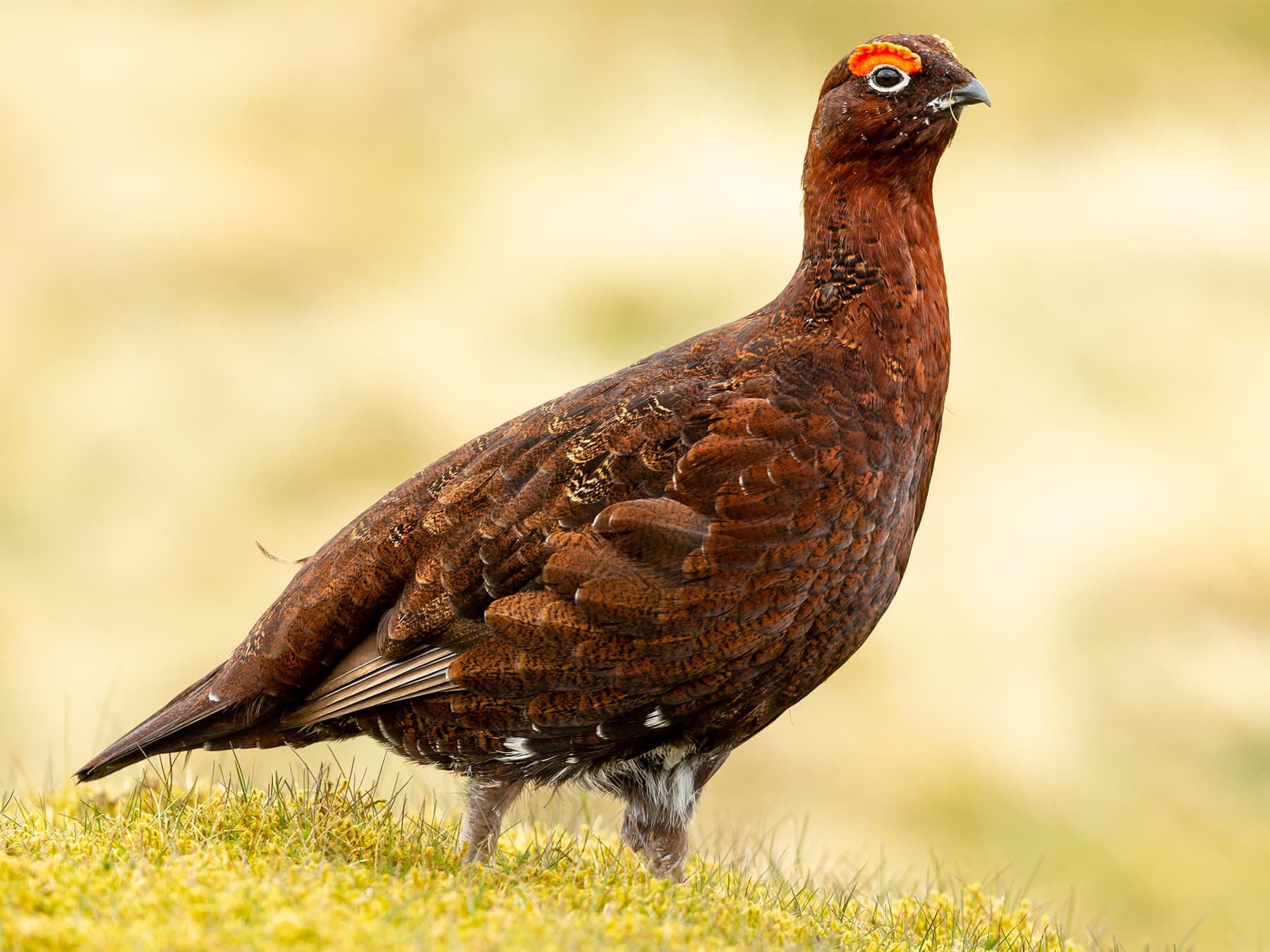
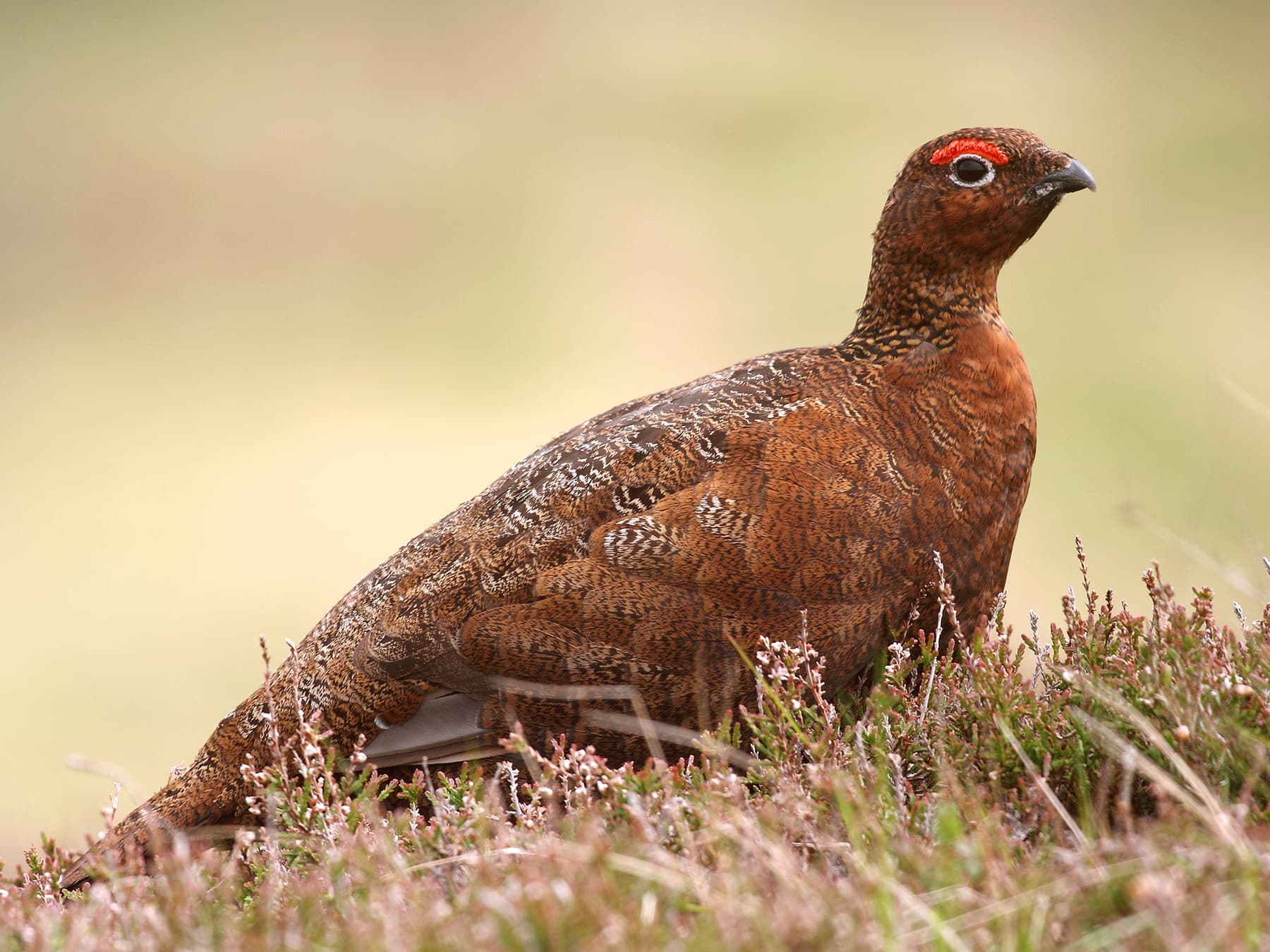
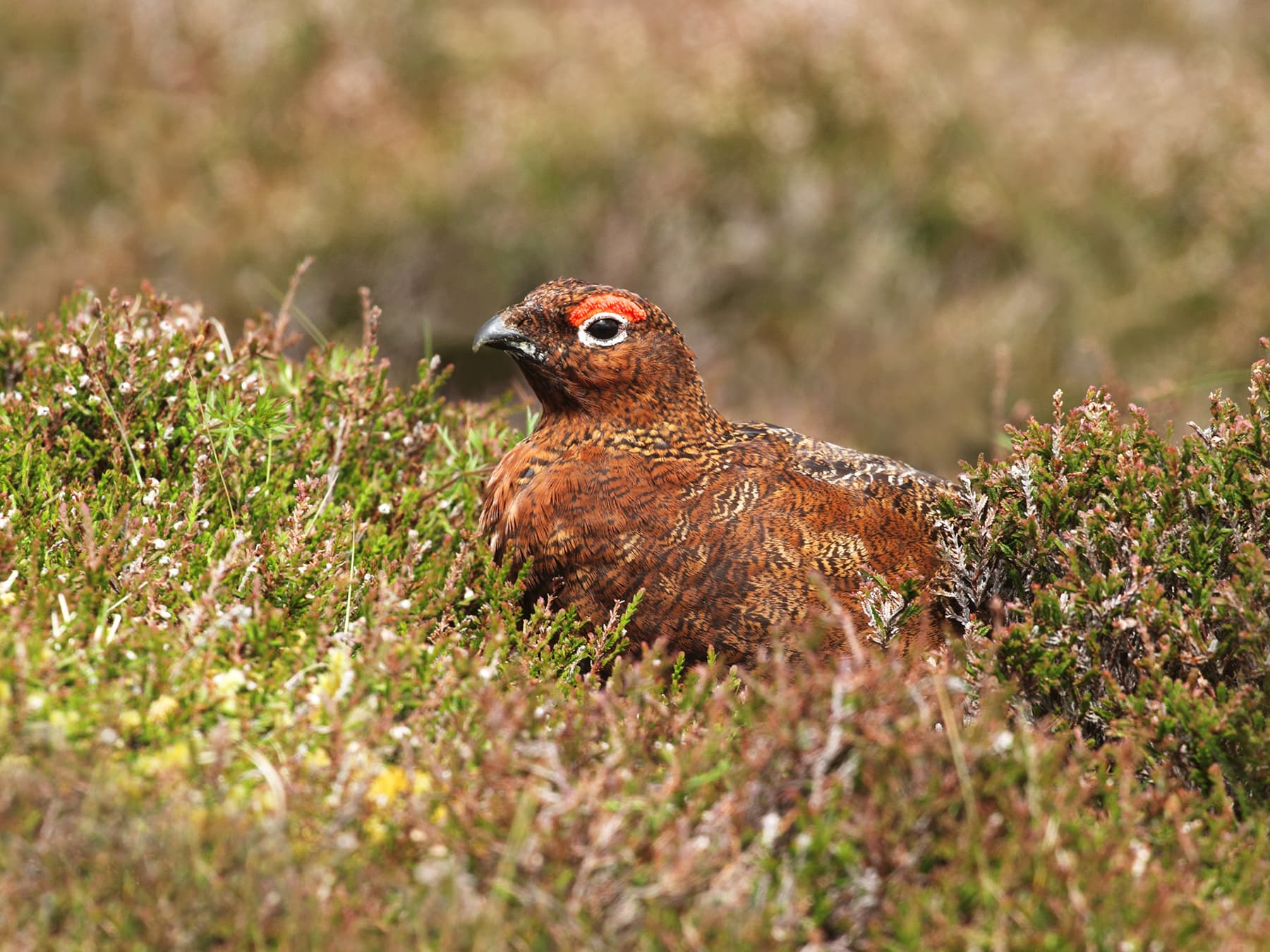
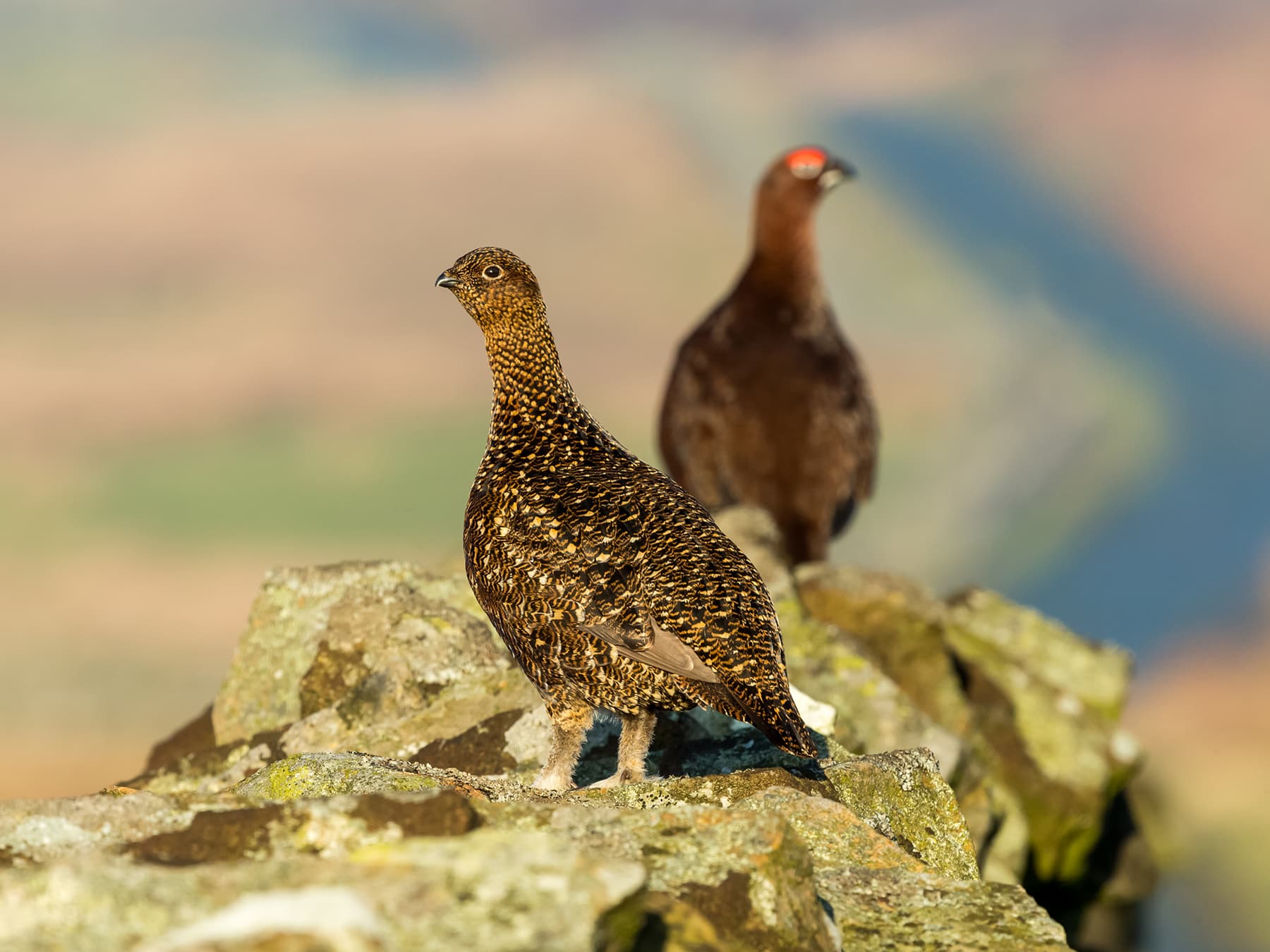
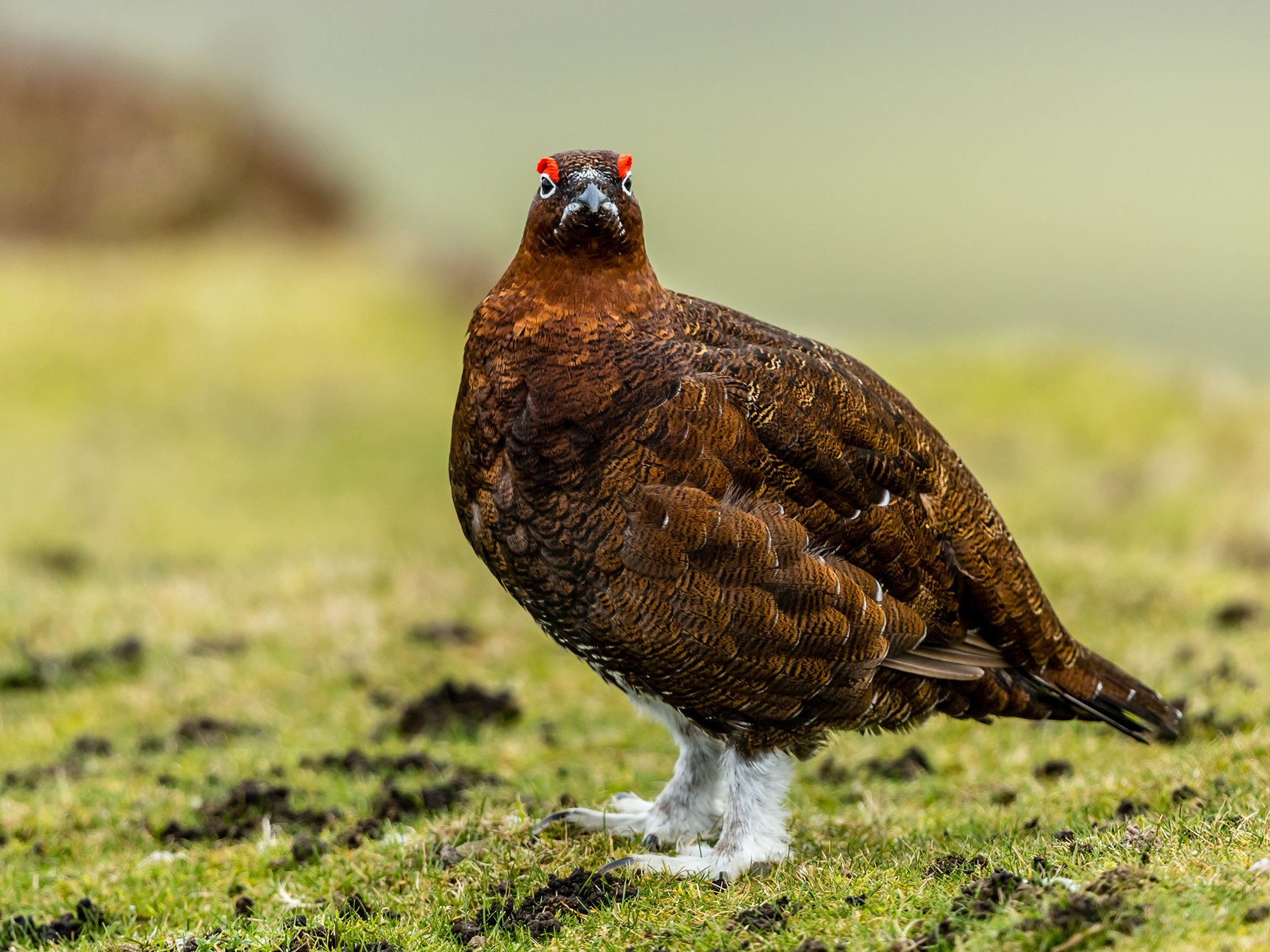
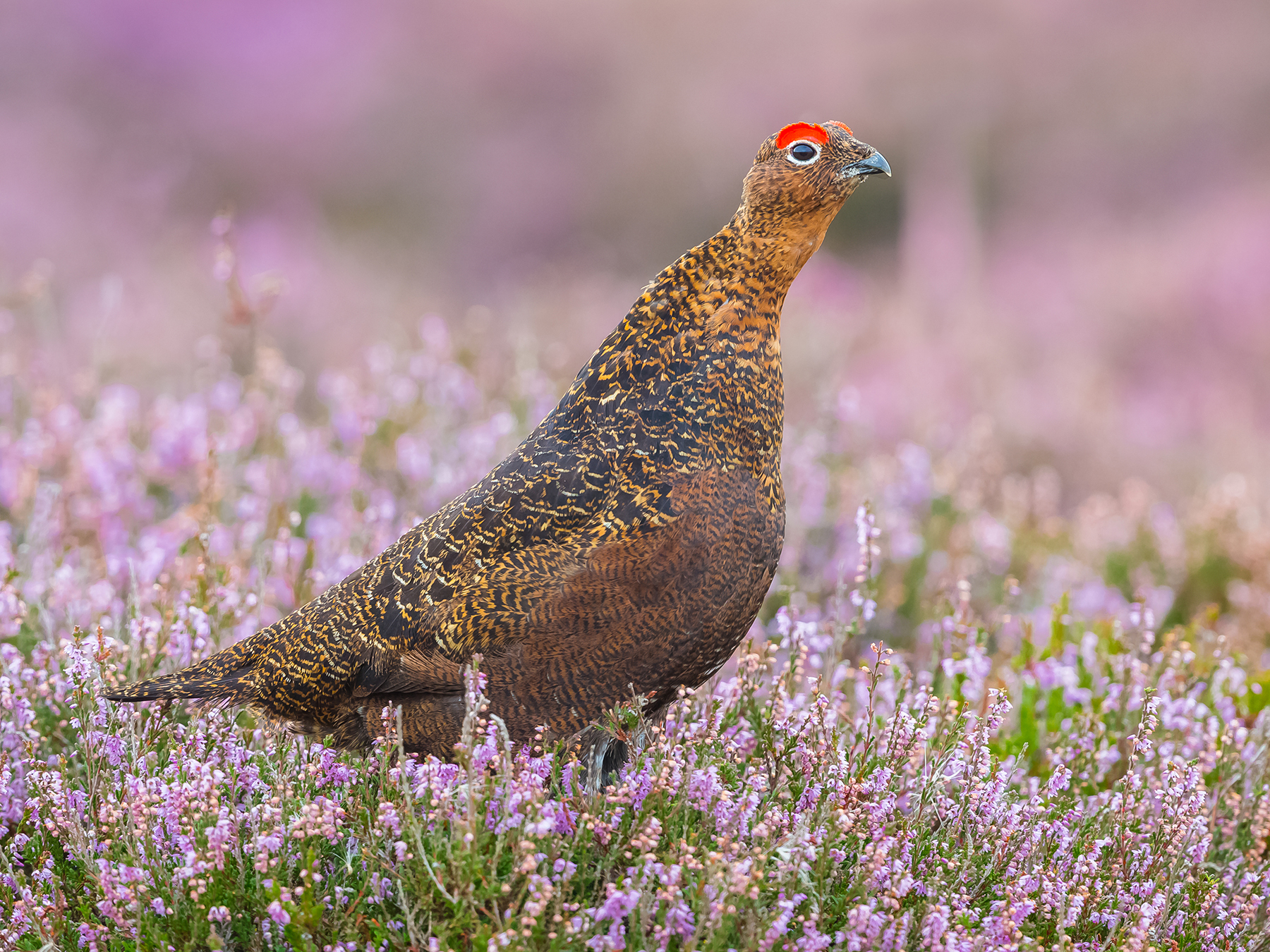
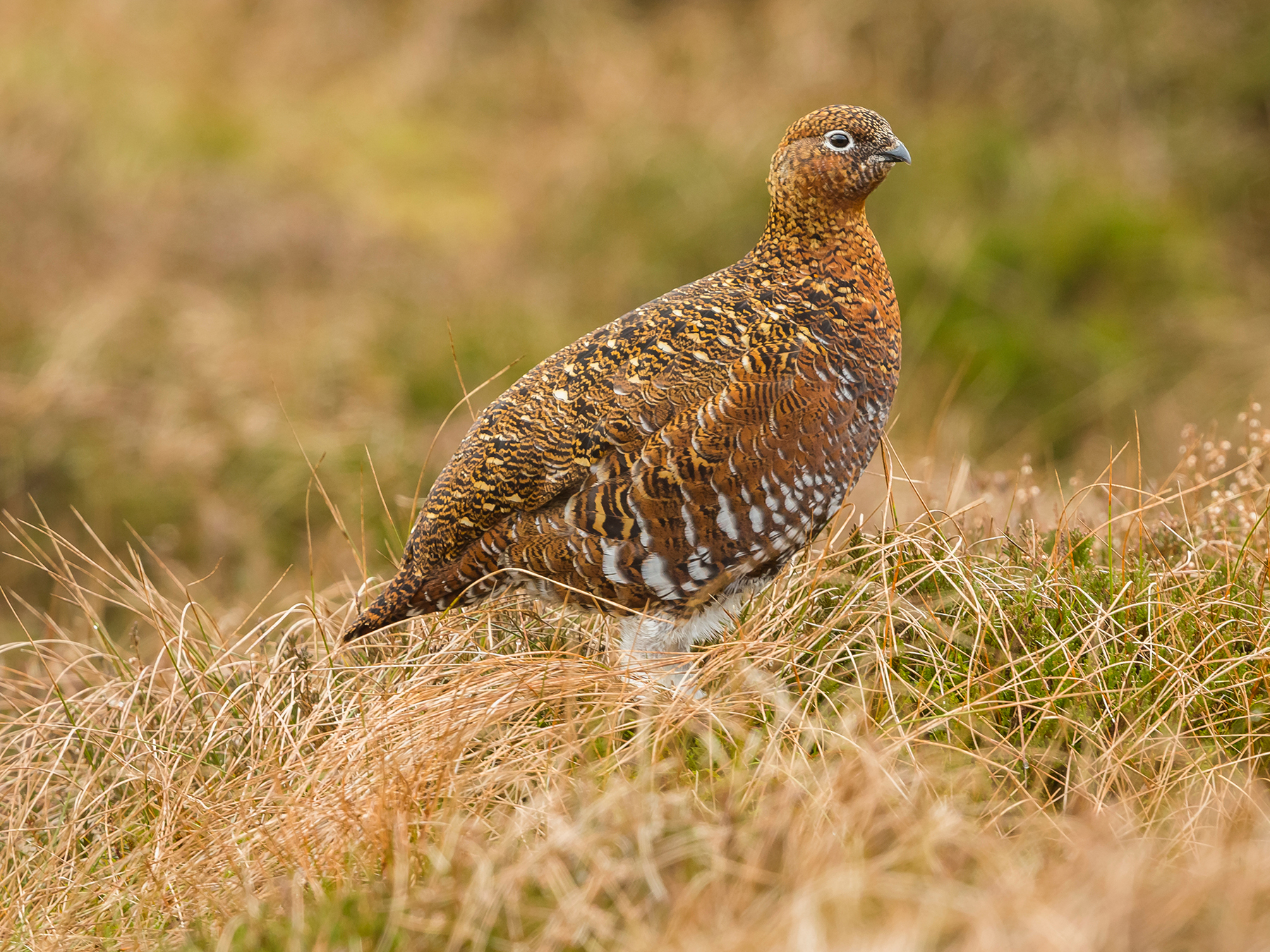
Red grouse are plump and rounded brownish-red game birds. Their plumage consists of mottled dark reddish-brown feathers which allow them to camouflage themselves among the vegetation on their heathland habitats, and their short tails are black. Their legs are covered in pale off-white feathers, which provide extra insulation in winter months.
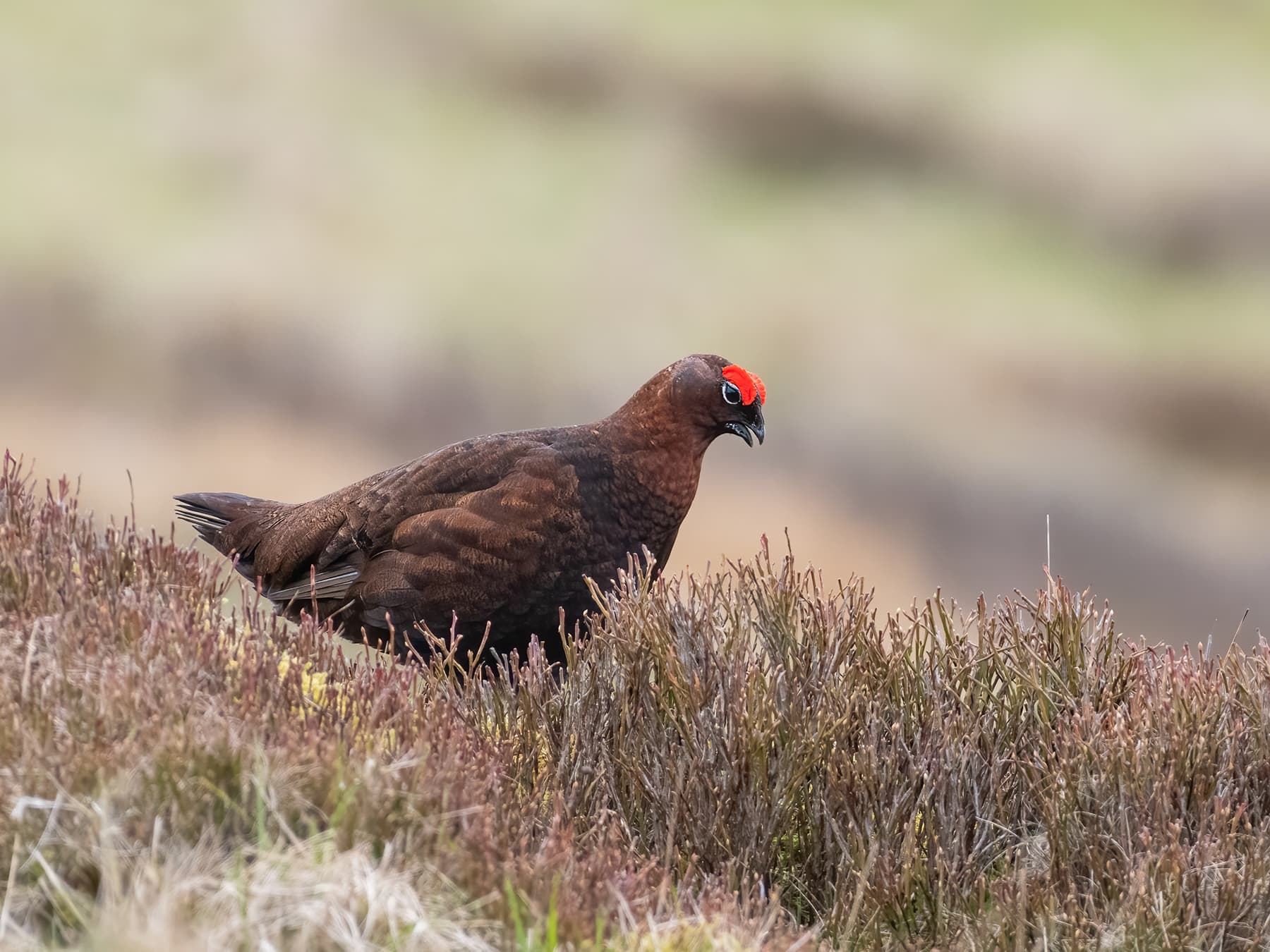
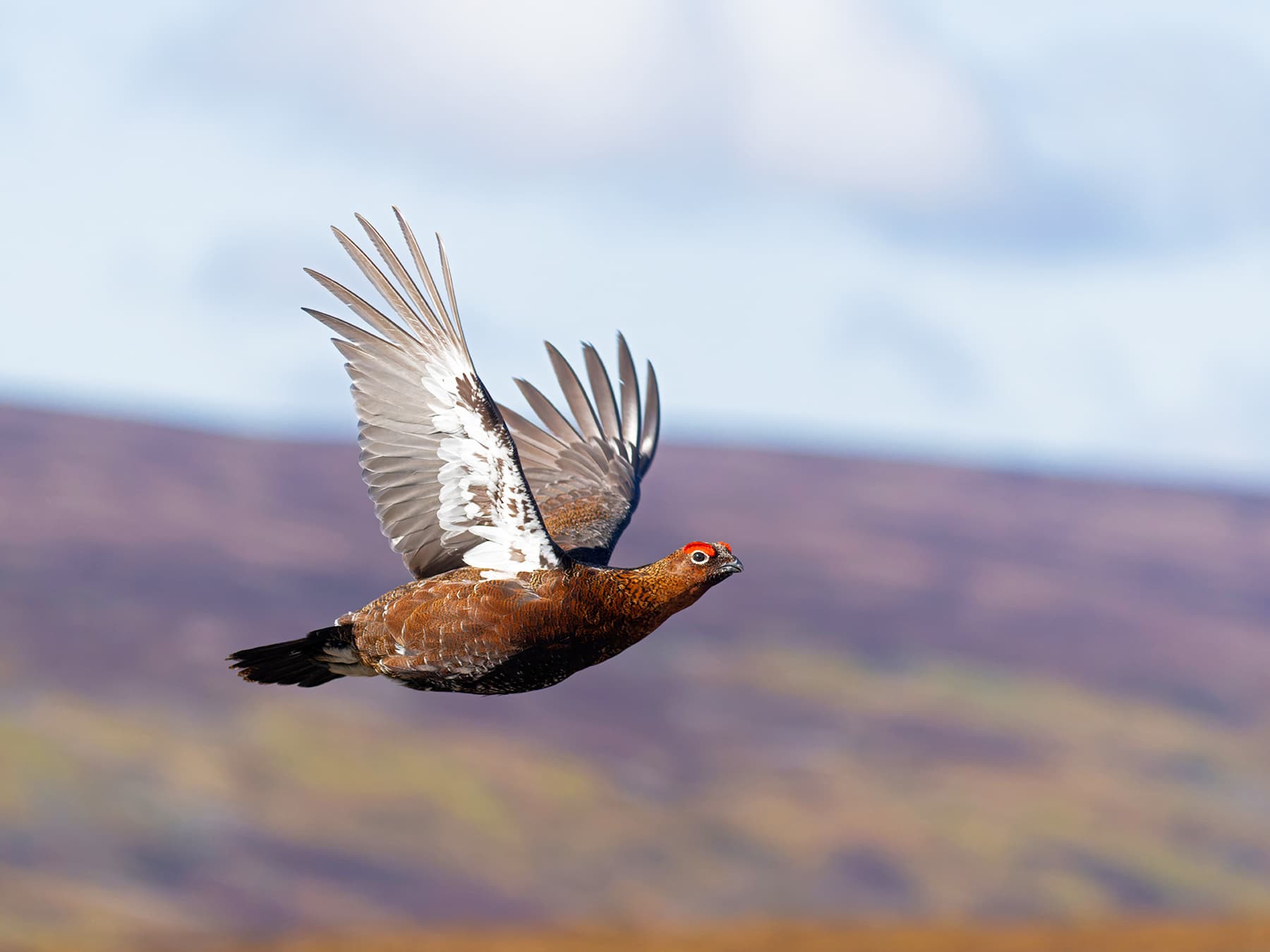
Male red grouse have a distinctive bright red comb above their eyes, which they are able to expand to attract females ahead of the breeding season. The eye itself is surrounded by a white ring. Their black beaks are sharp, short and are hooked downwards, perfectly suited to their seed-based diet.
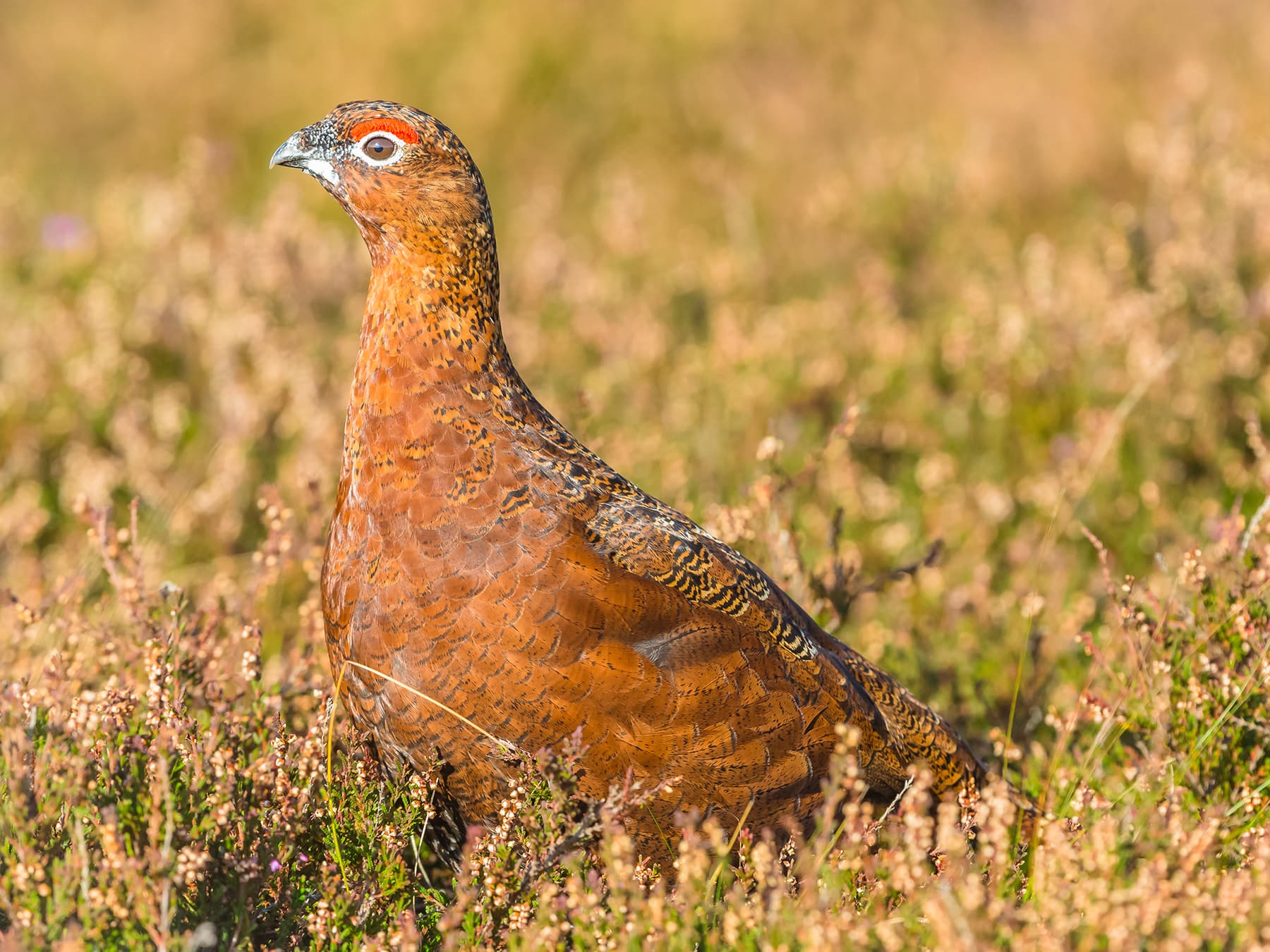
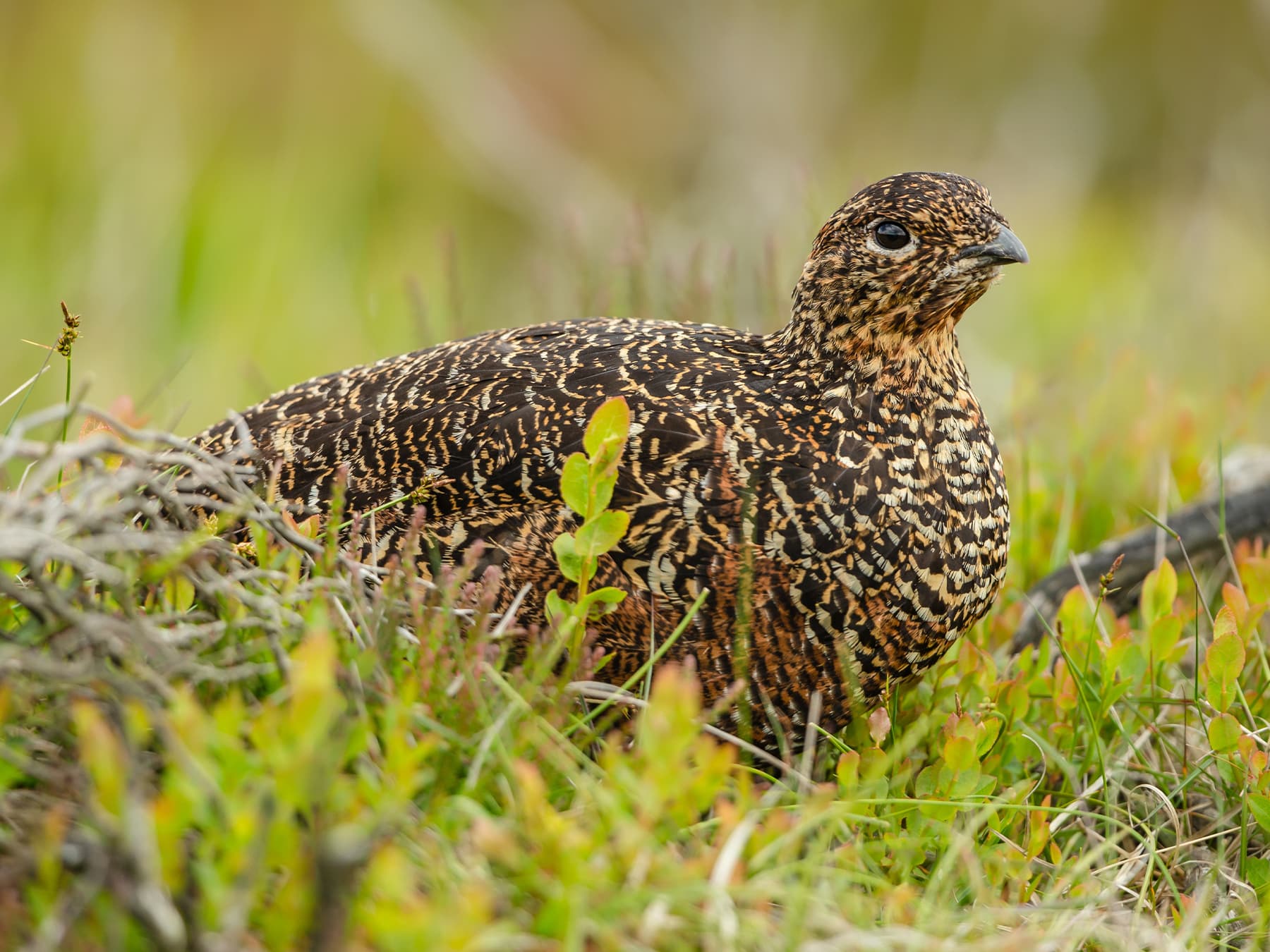
Female red grouse are generally paler all over and show more mottling, with yellowish feathers on their breast. Their eye combs are paler and barely visible in some birds, especially in winter months.
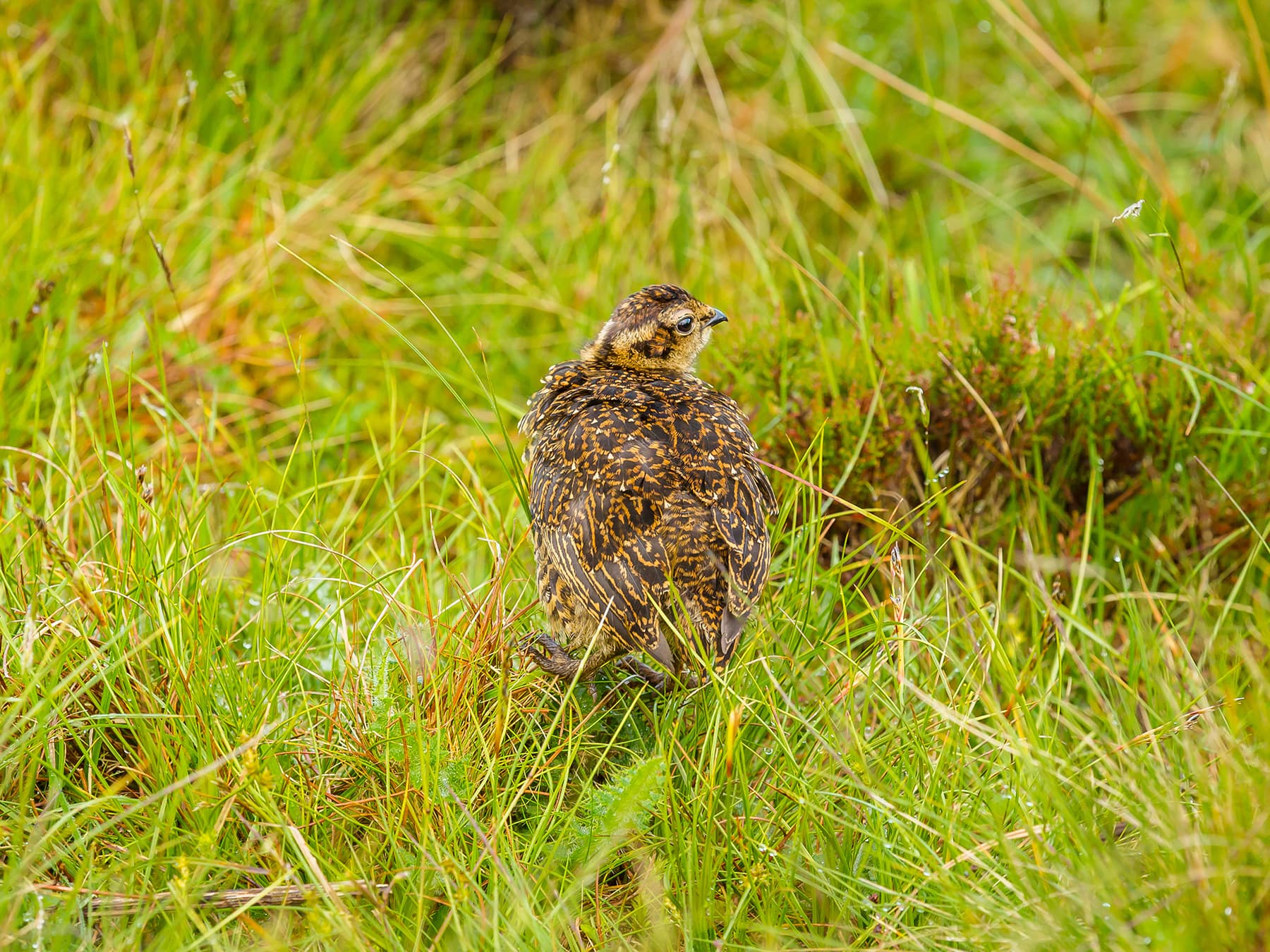
Juveniles are duller than females, with an indistinct brownish plumage. They do not have a visible eye comb.
How big are Red Grouse?
Red grouse are plump and round, around the same size as a small chicken. Males and females are roughly the same size.
- Length: 37 cm to 42 cm (14.5 in to 16.5 in)
- Wingspan: 55 cm to 66 cm (21.7 in to 27 in)
- Weight: 650 g to 750 g (22.9 oz to 26.5 oz)
Its size
Adults- Length
- 37–42 cm
- Wingspan
- 55–66 cm
- Weight
- 550–750 g
Its song and calls
What sound does a Red Grouse make?
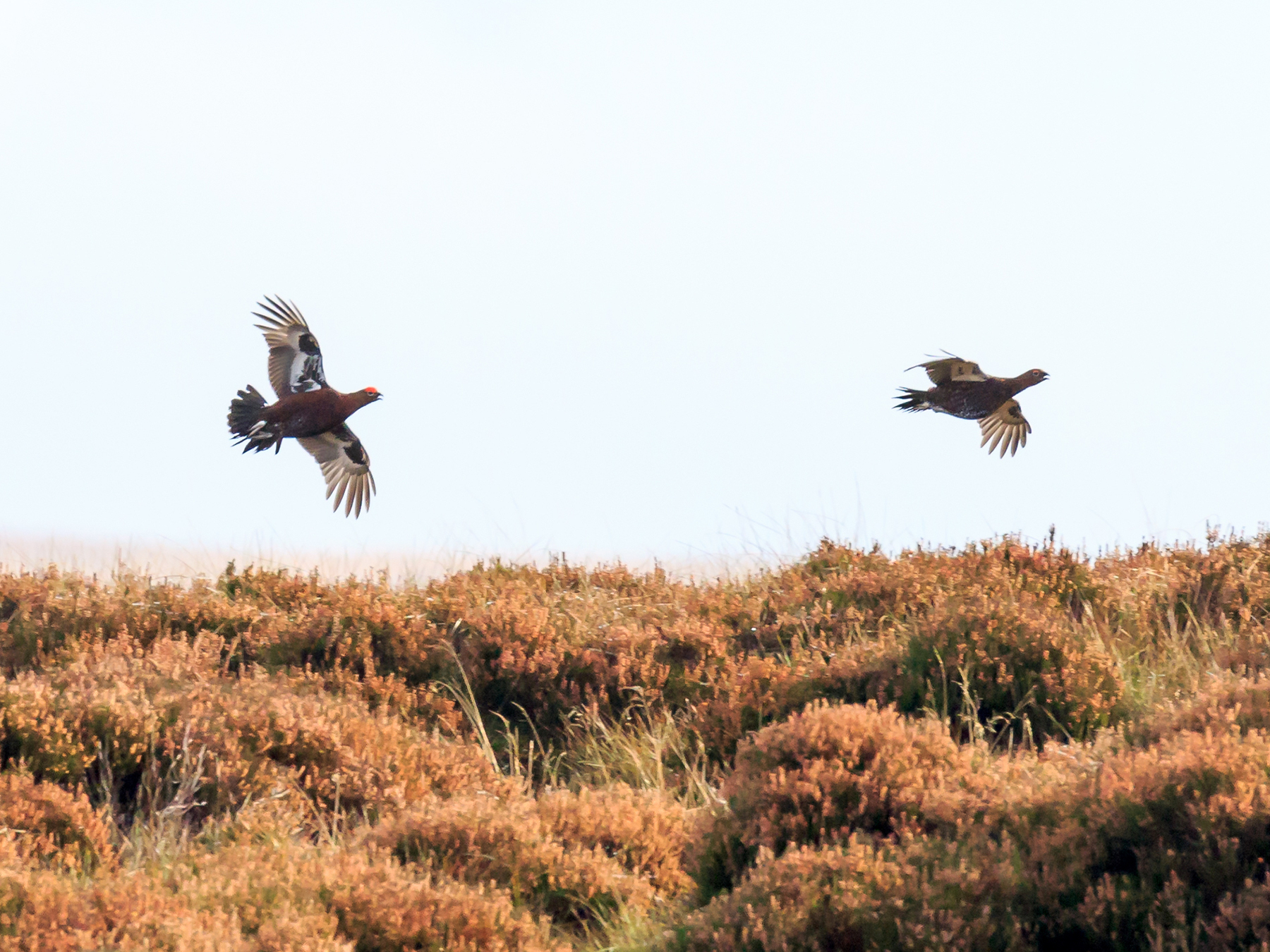
Red grouse have a wide repertoire of 16 different calls. However, the most distinctive is their barking call heard in flight, which sounds like they are saying “go back, go back”.
Another commonly heard grouse call is an urgent “chut, chut, chut, chut, chuttt”.
A heavy, whirring wingbeat can be heard when they take off suddenly when flushed.
- Song and calls0:00 / 1:05
Recorded in United Kingdom
Lawrence Shove / The British Library Board · Wikimedia Commons · CC BY-SA 4.0
When and where to see it
OctoberIn season
Most recorded in October
- 1. Denbighshire0.51%
- 2. Derbyshire0.50%
- 3. South Lanarkshire0.40%
- 4. Highland0.23%
- 5. Midlothian0.22%
Each dot is a county, state or province: the bigger and darker, the larger the bird’s share of that place’s bird records that month. Grey dots: no regular records. The ringed point is the centre of the bird’s records this month; the arrow shows how it moved since last month, and the dashed loop its path through the year. “Arrivals” colours places where it becomes regular this month (orange) or is in its last regular month (grey). GBIF eBird Observation Dataset, 2019–2024. Map data: Natural Earth, US Census Bureau; place centres © OpenStreetMap contributors.
In your area
See when the Red Grouse is recorded in your county, state or province.
How often the Red Grouse turns up in the UK and Ireland through the year, from birdwatchers' records.
United Kingdom
Resident · all year · most records in April
Ireland
Resident · all year · most records in May
Show as a table
| Month | United Kingdom | Ireland |
|---|---|---|
| January | 0.029% (regular) | 0.012% (regular) |
| February | 0.031% (regular) | 0.017% (regular) |
| March | 0.035% (regular) | 0.015% (regular) |
| April | 0.045% (regular) | 0.027% (regular) |
| May | 0.045% (regular) | 0.028% (regular) |
| June | 0.036% (regular) | 0.010% (regular) |
| July | 0.027% (regular) | 0.010% (regular) |
| August | 0.026% (regular) | 0.012% (regular) |
| September | 0.029% (regular) | 0.009% (regular) |
| October | 0.028% (regular) | 0.010% (regular) |
| November | 0.025% (regular) | 0.010% (regular) |
| December | 0.023% (regular) | 0.008% (regular) |
Recorded regularly in
Worldwide: recorded regularly in 2 countries
Countries where it was recorded in at least 3 of the 6 years 2019–2024. Linked countries have their own bird list.
Europe (2)
Data: EOD – eBird Observation Dataset (Cornell Lab of Ornithology), accessed via GBIF.org, CC BY 4.0. Records from 2019–2024, aggregated and filtered by Birdfact. How these lists are made
What is the habitat of a Red Grouse?
Red grouse live exclusively on moorlands, with low-level heather cover and without any trees. Marshy boglands may also feature, and in winter, they may be seen grazing on farmland.
New shoots from young heather offer the optimum habitat, and gamekeepers can promote red grouse populations by razing heathlands with controlled fires to encourage new growth.
What is the range of a Red Grouse?
Red grouse are only found in the United Kingdom and Ireland, and are not present in any other countries.
They live in upland regions across Wales and throughout much of Scotland, and are found in upland regions of northern England, as well as in isolated parts of south-west England.
Where do Red Grouse live?
There are an estimated 4,200 red grouse in Ireland and around 200 pairs in Northern Ireland. The UK population is estimated at around 265,000 pairs, including between 70 and 100 pairs on Dartmoor.
Large areas of the North York Moors and the Yorkshire Dales national parks offer protected moorlands populated by red grouse.
How rare are Red Grouse?
In their upland moorland habitats across their range, red grouse are relatively common birds and as they tolerate human presence relatively well, sightings are almost guaranteed in these areas, especially in late summer when the chicks have grown and are becoming more independent among the flowering heather.
Where can you see Red Grouse in the UK?
In Wales, top locations for red grouse-spotting include Snowdonia, Lake Vyrnwy and the Brecon Beacons, while in Scotland, the best spots include the Lammermuir Hills and Borders regions, and throughout the Cairngorms.
In England, several northern national parks offer a good chance of spotting red grouse, in particular the North York Moors, Yorkshire Dales, Peak District and Northumberland National Park.
Migration
Do Red Grouse migrate?
Red grouse are a non-migratory species, and move only short distances from their home territories.
Their range is limited to upland moors and heathland across the north and west of Briatin, and they invariably spend their entire lives within a very small area, with males typically travelling no more than 1.5 km (1 mi) in their lifetime, while female may cover slightly wider areas of up to 8 km (5 mi) from their original hatch site.
Are Red Grouse native to the UK?
Red grouse are native to the UK and Ireland and are not found anywhere else in the world. They are closely related to another species of game bird, the willow ptarmigan (Lagopus lagopus), which is found across Europe, Asia and North America.
Tips for seeing it
- Look for Red Grouse in heather moorlands, especially in upland areas of the UK.
- Listen for their distinctive 'go-back, go-back' call, particularly at dawn and dusk.
- Observe from a distance using binoculars to avoid disturbing these shy birds.
- Visit managed grouse moors during late summer for increased sighting opportunities.
What it eats
What do Red Grouse eat?
Red grouse eat mainly shoots, seeds and flowers of young heather plants, and will also eat fruit and berries from plants found in their moorland habitats, including bilberry, cranberry and cotton grass.
Some insects may also be eaten, particularly in the summer, including crane flies and flies.
What do Red Grouse chicks eat?
Red grouse chicks’ initial diet consists of insects, particularly flies, and they are led to foraging grounds in boggy marshlands during their first few weeks of life.
Shoots, seeds and heather buds are introduced as they become more independent and berries are also eaten.
Nesting and breeding
Where do Red Grouse nest?
Red grouse nest at ground level, using hollows and scrapes that are roughly lined with grass and concealed by vegetation, such as heather clumps or bilberry thickets.
A typical clutch contains between 6 and 12 eggs, which are then incubated by the female alone. The peak laying months for red grouse are April and May, and typically only one brood is raised in a season.
What do Red Grouse eggs look like?
Red grouse eggs are light brownish-cream and are heavily mottled with dark brown streaks and spotting, which allows them to blend in well to the surrounding heathland vegetation. Eggs measure 42 mm by 31 mm (1.7 in by 1.2 in) and are incubated for 16 to 19 days.
Young red grouse develop rapidly and are able to fly at around 2 weeks of age, but remain with their parents in family groups into their first autumn.
Do Red Grouse mate for life?
Red grouse are monogamous for the duration of a breeding season, forming pairs in the winter ahead of breeding the following spring.
Although they do not travel far and tend to remain in the same area for their entire lives, red grouse pair bonds dissolve in the autumn after successfully raising their young together, and males seek a new mate to raise the subsequent season’s brood with.
Behaviour
Are Red Grouse aggressive?
While breeding is underway, male red grouse are highly territorial and fiercely protective of their mate and nest site. They will usually quickly retreat if disturbed by nearby humans, but will stand their ground and violently attack any birds that encroach on their territory.
Where do Red Grouse sleep at night?
As the typical habitat of red grouse is usually treeless, it’s normal for overnight roosting to take place on the ground.
Outside of the breeding season, large groups of red grouse roost together, with communal roosting spots identifiable from the collections of droppings left by the birds.
Lifespan and predators
How long do Red Grouse live?
The estimated average lifespan of a red grouse is around 2 to 3 years, with individuals occasionally reaching 7 years. Breeding occurs for the first time at one year of age.
What are the predators of Red Grouse?
Due to their vulnerabilities from spending much of their life on the ground, red grouse have developed some specific survival techniques to avoid being targeted, including crouching as low to the heather as possible, and remaining as still as they can until the danger passes.
To avoid their nests being raided, adult red grouse have been observed to fake a broken wing injury to distract predators away from their eggs and young.
Chief predators include foxes, stoats, badgers, weasels, peregrine falcons, skuas and carrion crows.
Are Red Grouse protected?
Red grouse are listed as a priority species under the UK Post-2010 Biodiversity Framework, and are also protected during certain times of the year by the Wildlife and Countryside Act, 1981 against being shot, injured, killed or captured.
Between August 12th and December 10th (November 30th in Northern Ireland), it is legal to shoot red grouse under the Game Act, 1831, although no shooting is permitted on Sundays.
Are Red Grouse endangered?
Around 265,000 pairs of red grouse are estimated to breed on moorland across northern and western Britain.
Management of their native heathland habitat and population numbers is required to ensure the species does not slip into decline, with numbers dipping in the early 21st century, but have since recovered enough to be downgraded to a Green species from Amber on the British Birds of Conservation Concern list in 2021.
Conservation
While listed as Least Concern globally, Red Grouse face localised threats from habitat loss and fragmentation.
Conservation efforts focus on maintaining healthy heather moorlands through controlled burning and grazing. Climate change and disease also pose potential long-term challenges to their populations.
More photos
5 photos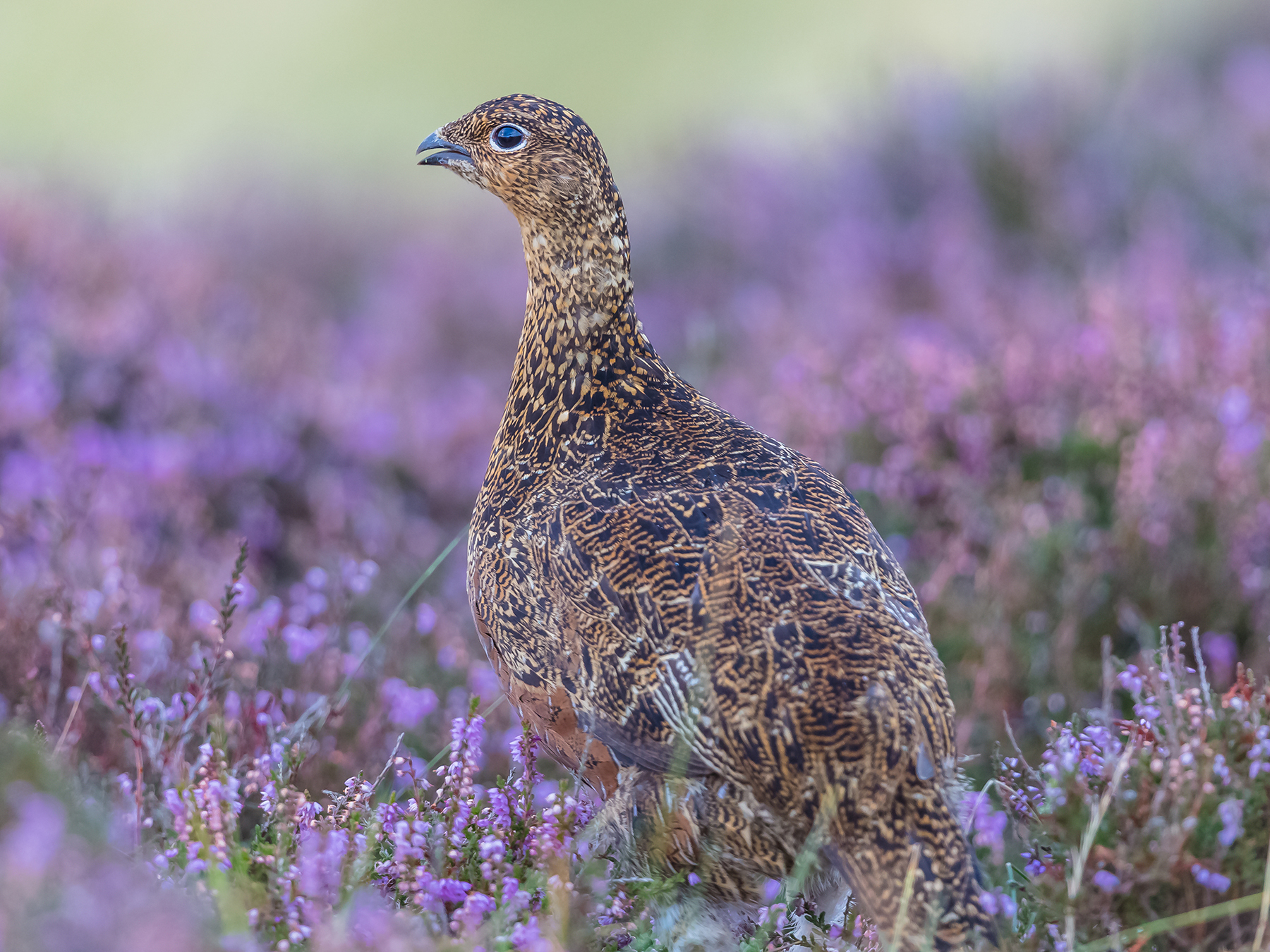
Quick facts
- Length
- 37–42 cm
- Wingspan
- 55–66 cm
- Weight
- 550–750 g
- Lifespan
- 2–3 years · oldest recorded 7 years
- Family
- Pheasants & Grouse
- Migration
- Resident
- Global status (IUCN)
- Least Concern
- World population
- 530,000 mature individuals
- Population trend
- Stable
- Also called
- Moorcock, Moorfowl
- Scientific name
- Lagopus scotica
Questions
2Can Red Grouse fly?
Red grouse are the fastest-flying of all game bird species in the UK, and can reach speeds of up to 70 miles per hour.
Flight is usually at a low altitude, skimming the top of the heathland vegetation, and only over relatively short distances. If disturbed, red grouse can be observed to shoot up into the sky and quickly change direction to avoid being hunted.
Can you eat Red Grouse?
Red grouse is classed as a game bird, and can be eaten. However, fresh red grouse is only available between August 12th and December 10th (November 30th in Northern Ireland) during the open grouse shooting season.

Checked by
Nathan Cope, founder and editor
Nathan founded Birdfact and leads its writers and contributors in the UK, the US and Canada. He has watched and studied birds for more than ten years, and checks every article and species guide before it’s published.