


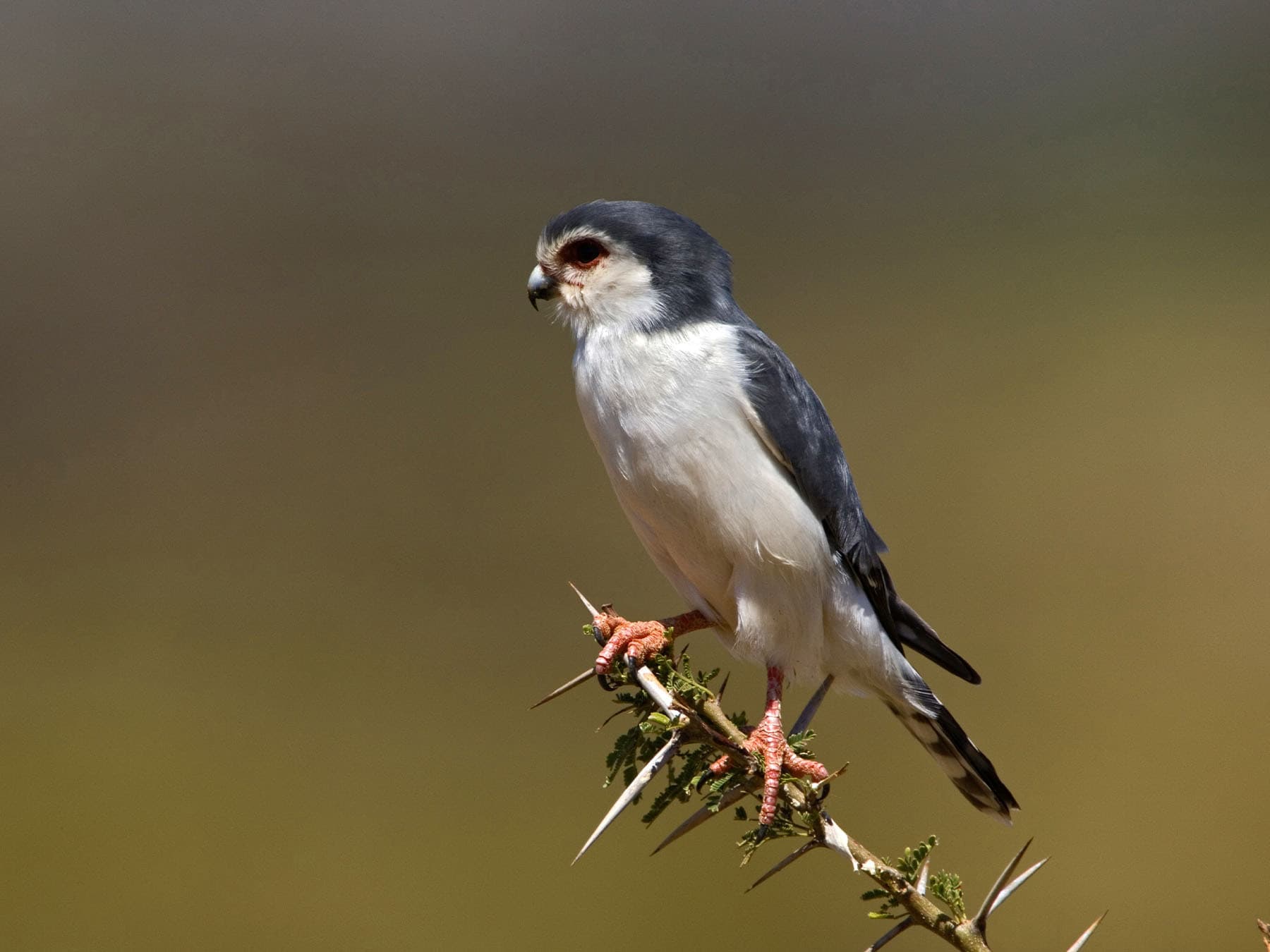
African Pygmy-falcon
Polihierax semitorquatus
By the Birdfact teamChecked by Nathan Cope
On this page12 sections
How to recognise it
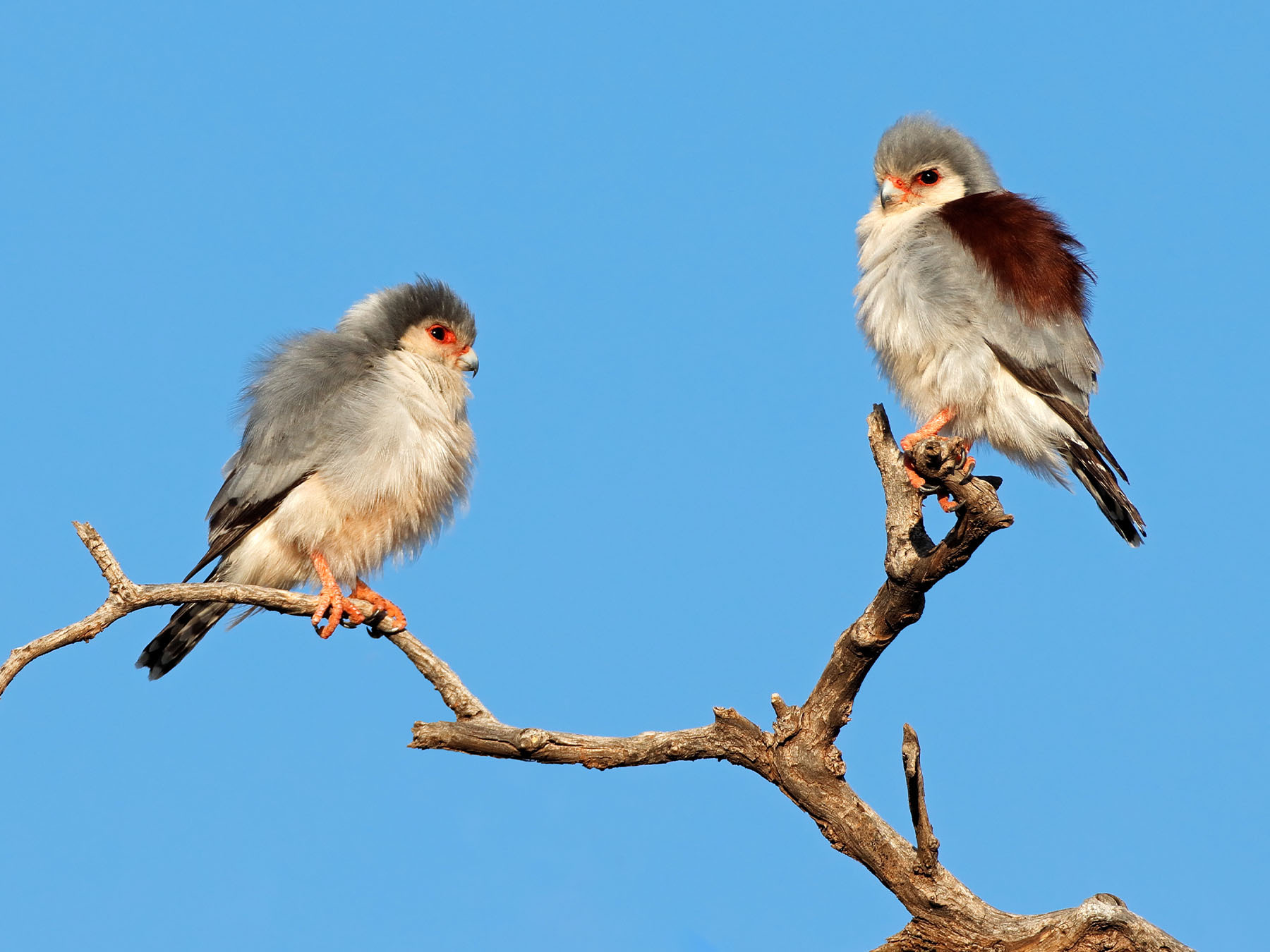
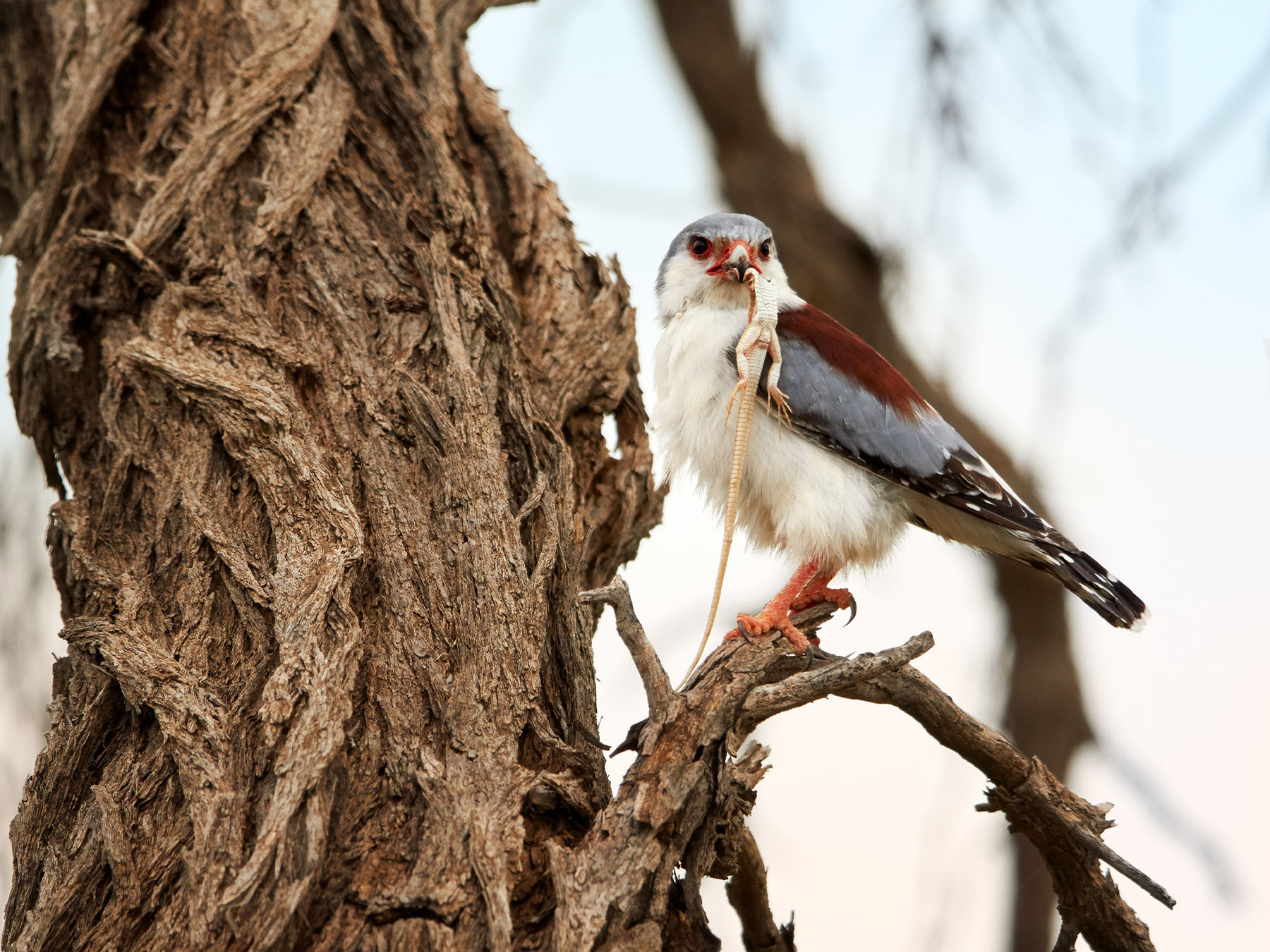
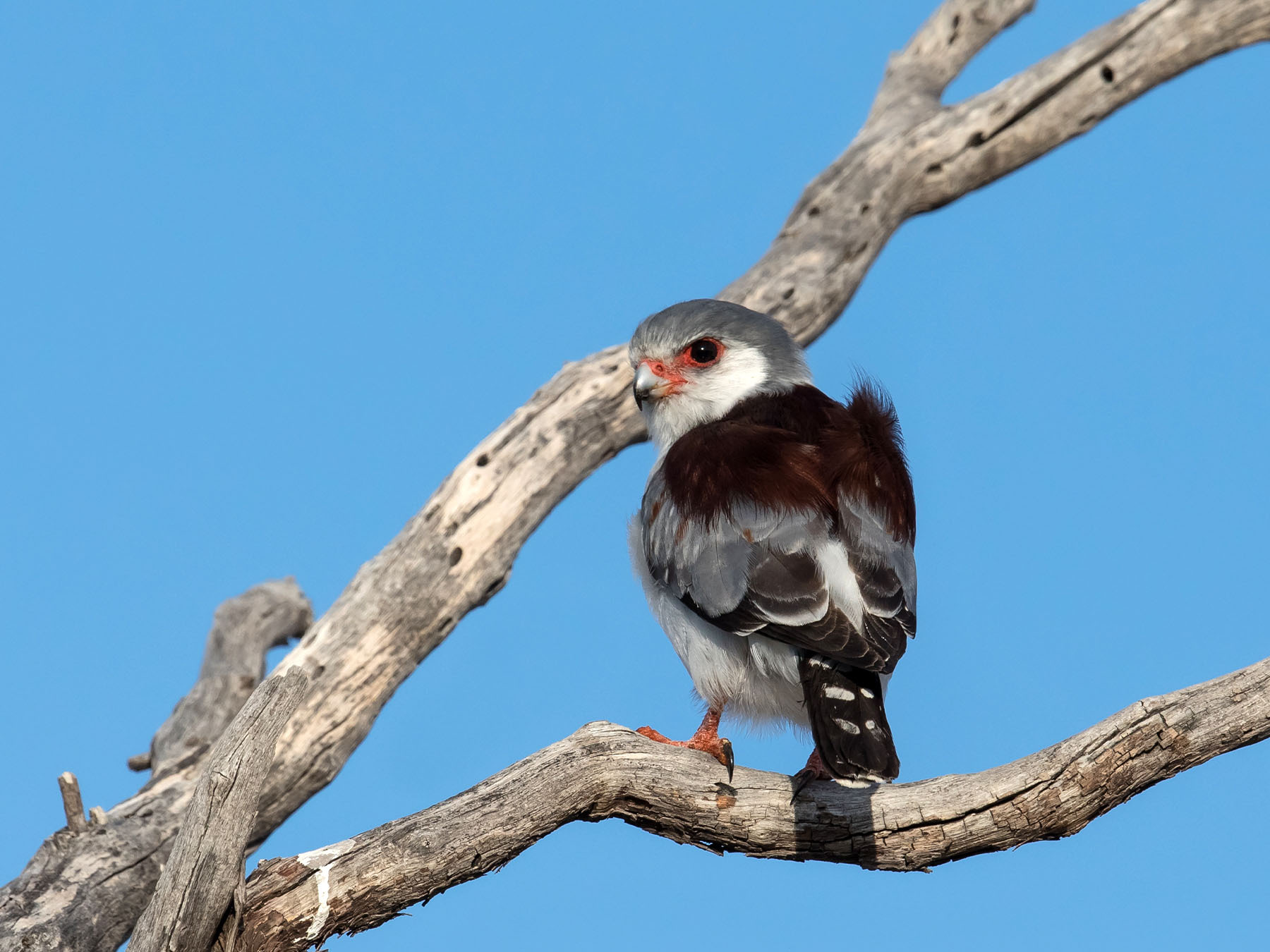
The African Pygmy-falcon is a tiny raptor, measuring just 19-20 cm long. Males are predominantly pale grey on the head and back, with white underparts and a distinctive black 'mask' around the eyes. The wings are grey with black primary feathers, creating a striking contrast in flight.
Females are different to males, with brown backs and wings instead of grey. Both sexes have bright yellow legs and feet and a small, sharp, grey beak. Juveniles resemble females but may have a more mottled appearance on their backs.
Its size
Adults- Length
- 19–20 cm
- Wingspan
- 35–40 cm
- Weight
- 50–70 g
Its song and calls
The African Pygmy-falcon's call is a high-pitched, rapid series of 'kik-kik-kik' or 'kyu-kyu-kyu' notes.
During courtship or territorial displays, they may produce a more prolonged, trilling 'krrrrrrr' sound. Their vocalisations, while not loud, are distinctive in their arid habitats.
When and where to see it
The African Pygmy-falcon is not recorded regularly in the UK, Ireland, the United States or Canada.
Worldwide: recorded regularly in 7 countries
Countries where it was recorded in at least 3 of the 6 years 2019–2024. Linked countries have their own bird list.
Data: EOD – eBird Observation Dataset (Cornell Lab of Ornithology), accessed via GBIF.org, CC BY 4.0. Records from 2019–2024, aggregated and filtered by Birdfact. How these lists are made
Tips for seeing it
- Look for them perched on top of large, sociable weaver nests
- Scan acacia trees and termite mounds in open savanna habitats
- Listen for their high-pitched, repeated 'kik-kik-kik' calls
- Observe early morning or late afternoon when they are most active
What it eats
African Pygmy-falcons primarily feed on insects, particularly locusts, grasshoppers, and beetles. They also prey on small lizards, rodents, and occasionally small birds.
Their hunting strategy involves swift aerial pursuits or dropping onto unsuspecting prey from elevated perches.
Nesting and breeding
African Pygmy-falcons have a unique breeding strategy. They typically nest within the massive communal nests of sociable weavers. The breeding season varies geographically but often coincides with the end of the dry season or the beginning of rains.
They do not build their own nests but instead occupy a chamber within the weaver's nest structure. Females lay 2-4 white eggs, which both parents incubate for about 28-30 days.
Chicks fledge after approximately 27-30 days but may remain with their parents for several weeks after leaving the nest. This association with weaver colonies provides protection and a stable nesting environment.
Behaviour
African Pygmy-falcons are often seen perched conspicuously on treetops or termite mounds, scanning for prey. They hunt with swift, direct flights, catching insects in mid-air or pouncing on small vertebrates on the ground.
These falcons are typically found in pairs or small family groups, exhibiting strong pair bonds.
Conservation
While the African Pygmy-falcon is currently listed as Least Concern, habitat loss and degradation pose potential threats.
Conservation efforts focus on preserving their savanna and desert habitats, particularly areas with large, sociable weaver colonies, which are crucial for their nesting.
Similar birds
Often mistaken for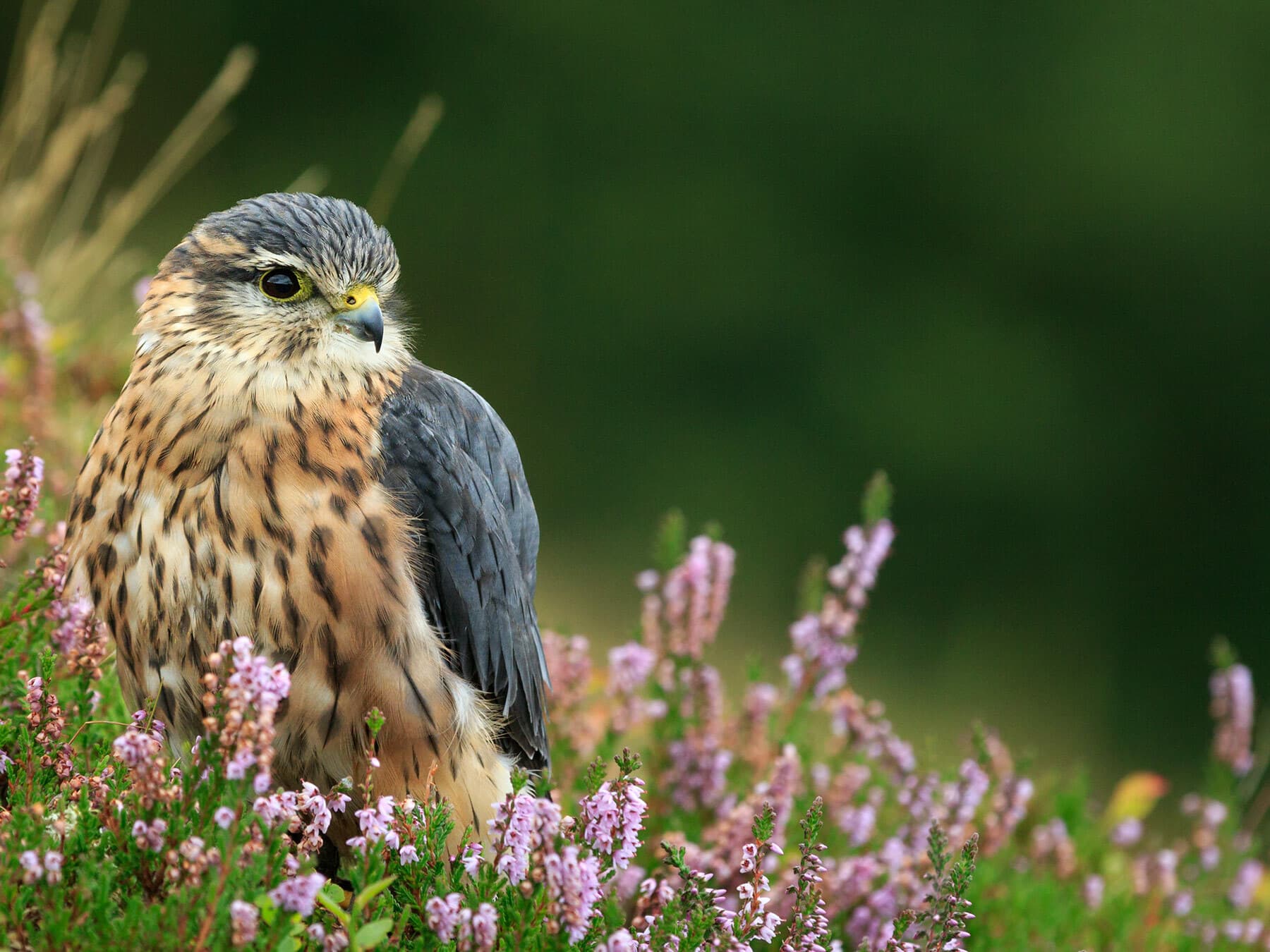
More photos
4 photos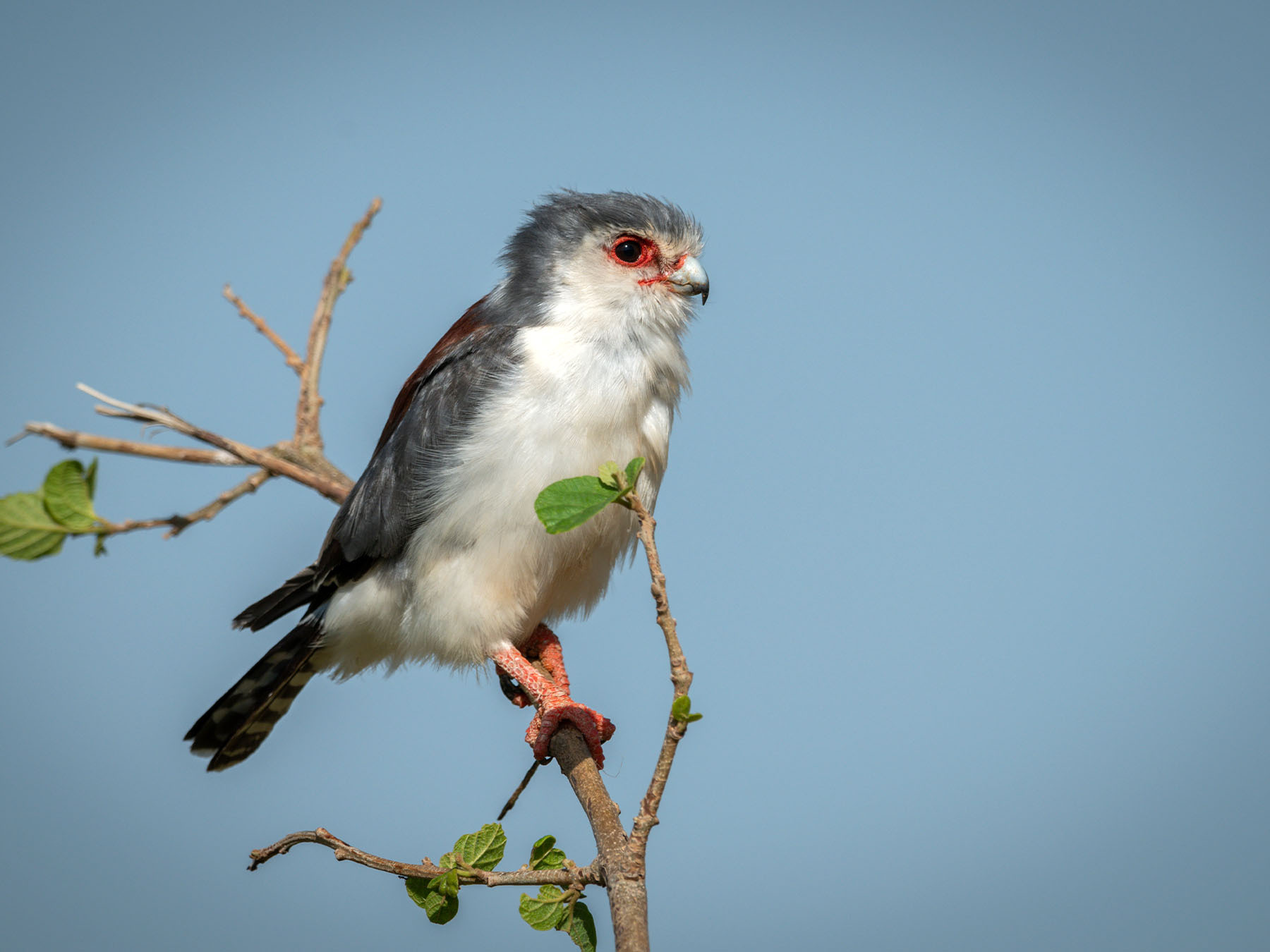
Quick facts
- Length
- 19–20 cm
- Wingspan
- 35–40 cm
- Weight
- 50–70 g
- Lifespan
- 5–8 years
- Family
- Falcons
- Migration
- Resident
- Global status (IUCN)
- Least Concern
- World population
- Unknown
- Population trend
- Stable
- Scientific name
- Polihierax semitorquatus
Sources
2- 1BirdLife International. 2016. Polihierax semitorquatus. The IUCN Red List of Threatened Species 2016: e.T22696313A93554647. Source (opens in a new tab)
- 2BirdLife International. 2016. Polihierax semitorquatus. The IUCN Red List of Threatened Species 2016: e.T22696313A93554647. Source (opens in a new tab)

Checked by
Nathan Cope, founder and editor
Nathan founded Birdfact and leads its writers and contributors in the UK, the US and Canada. He has watched and studied birds for more than ten years, and checks every article and species guide before it’s published.