


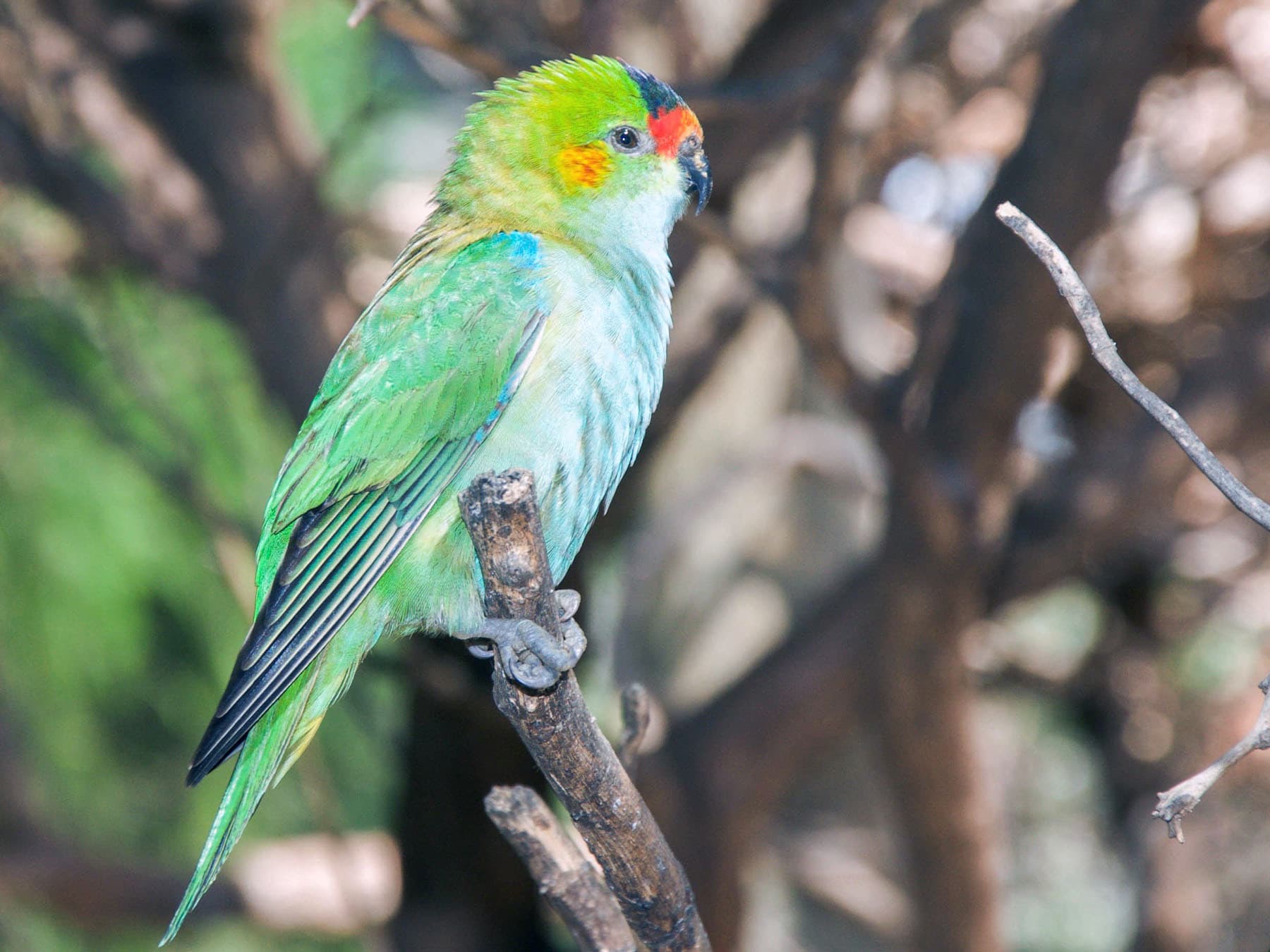
Purple-crowned Lorikeet
Purple-capped Lorikeet · Glossopsitta porphyrocephala
By the Birdfact teamChecked by Nathan Cope
On this page12 sections
How to recognise it
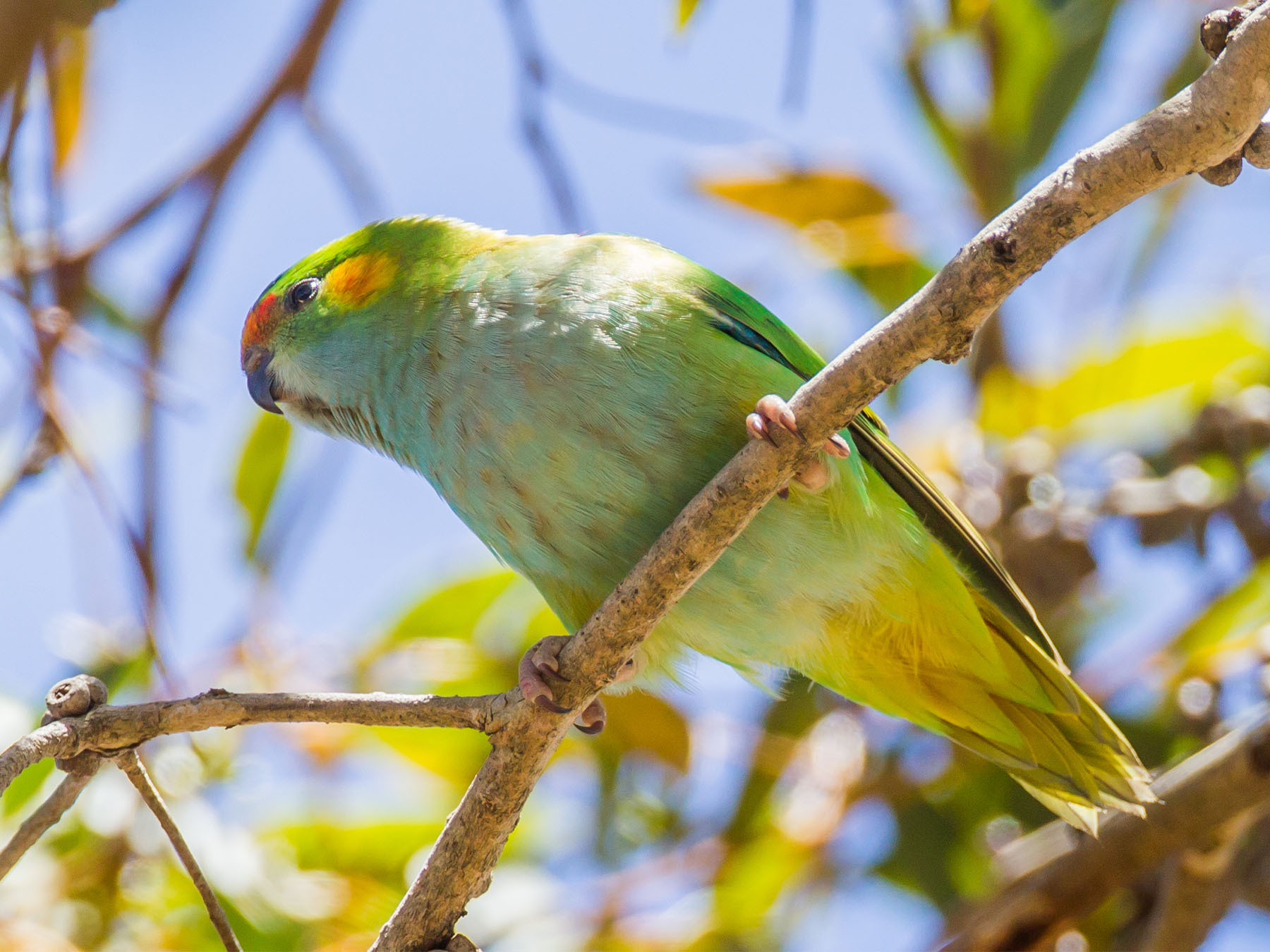
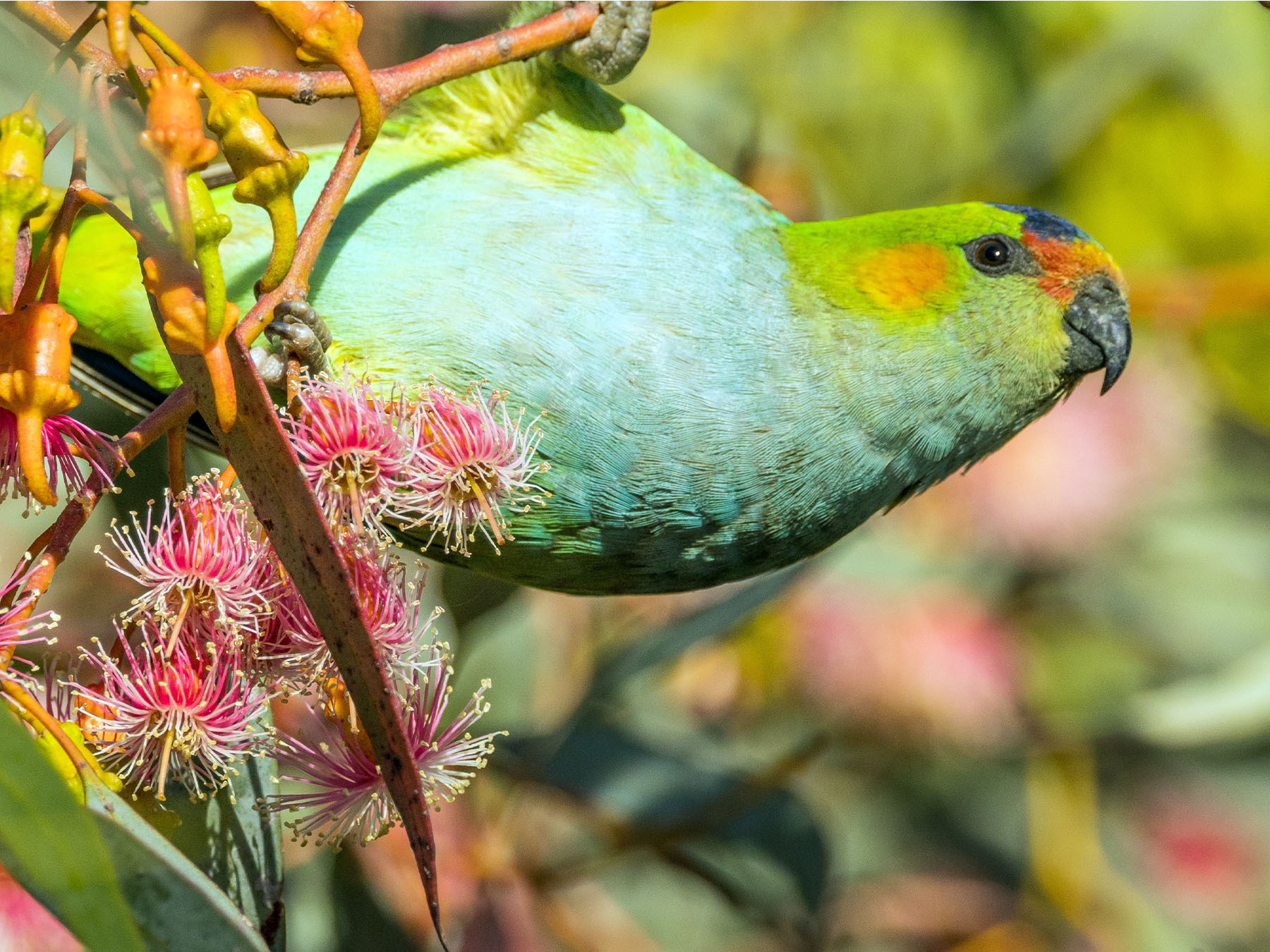
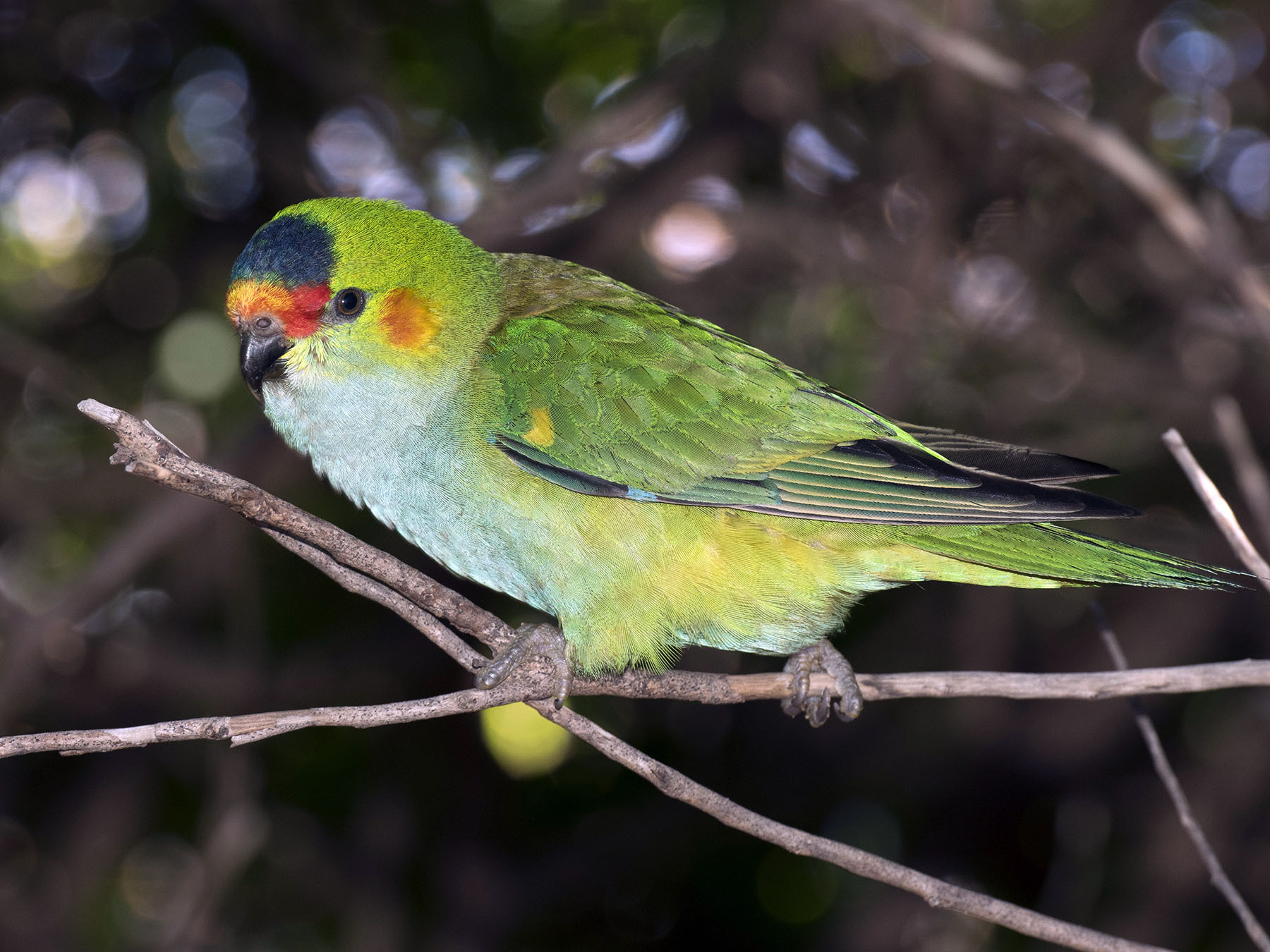
The Purple-crowned Lorikeet is a small, vibrant parrot with predominantly bright green plumage. Its most distinctive feature is the purple crown, which contrasts beautifully with its green body. The bird also displays a fiery-orange band across its forehead and yellow-orange cheek patches.
The chest and belly show a mix of blue and light green hues, while the wings have red underwing coverts. Both males and females appear mostly similar, although females have darker irises, paler ear coverts and lack the crimson patches.
Juveniles have duller plumage overall, with reduced head colours.
Its size
Adults- Length
- 15–17 cm
- Wingspan
- 30–35 cm
- Weight
- 40–55 g
Its song and calls
Purple-crowned Lorikeets are known for their high-pitched, screeching calls. Their vocalisations include a sharp 'zit-zit' or 'tsit-tsit' sound when in flight.
During feeding or social interactions, they produce a series of rapid, chattering notes that sound like 'zik-zik-zik' or 'tik-tik-tik'.
When and where to see it
The Purple-crowned Lorikeet is not recorded regularly in the UK, Ireland, the United States or Canada.
Worldwide: recorded regularly in 1 country
Countries where it was recorded in at least 3 of the 6 years 2019–2024. Linked countries have their own bird list.
Oceania (1)
Data: EOD – eBird Observation Dataset (Cornell Lab of Ornithology), accessed via GBIF.org, CC BY 4.0. Records from 2019–2024, aggregated and filtered by Birdfact. How these lists are made
Tips for seeing it
- Look for these lorikeets in flowering eucalyptus trees, especially during blooming seasons
- Listen for their high-pitched, screeching calls as they fly or feed
- Observe their quick, darting movements as they forage for nectar
- In urban areas, check parks and gardens with native Australian plants
What it eats
Purple-crowned Lorikeets primarily feed on nectar from eucalyptus and other native Australian flowers. They supplement their diet with pollen, fruits, and occasionally insects.
Their specialised brush-tipped tongue is perfectly adapted for extracting nectar from deep within blossoms.
Nesting and breeding
Breeding typically occurs between July and January, with peak activity in spring. Purple-crowned Lorikeets form monogamous pairs and often return to the same nesting sites year after year.
Nests are usually located in tree hollows, often in eucalyptus trees. The female lays a clutch of 2-4 white, rounded eggs. Both parents take turns incubating the eggs.
Incubation lasts about 25 days, and the chicks fledge after approximately 7-8 weeks. Parents continue to feed the young for several weeks after they leave the nest.
Behaviour
Purple-crowned Lorikeets are highly social birds, often seen in small flocks or pairs. They are known for their swift, direct flight patterns and their agility in navigating through tree canopies.
These lorikeets are particularly active during feeding, using their specialised brush-tipped tongues to extract nectar from flowers.
Conservation
While currently listed as Least Concern, Purple-crowned Lorikeets face threats from habitat loss due to land clearing and urbanisation. Climate change may also impact their food sources by altering flowering patterns of native plants.
Conservation efforts focus on preserving and restoring native eucalyptus forests.
Similar birds
Often mistaken for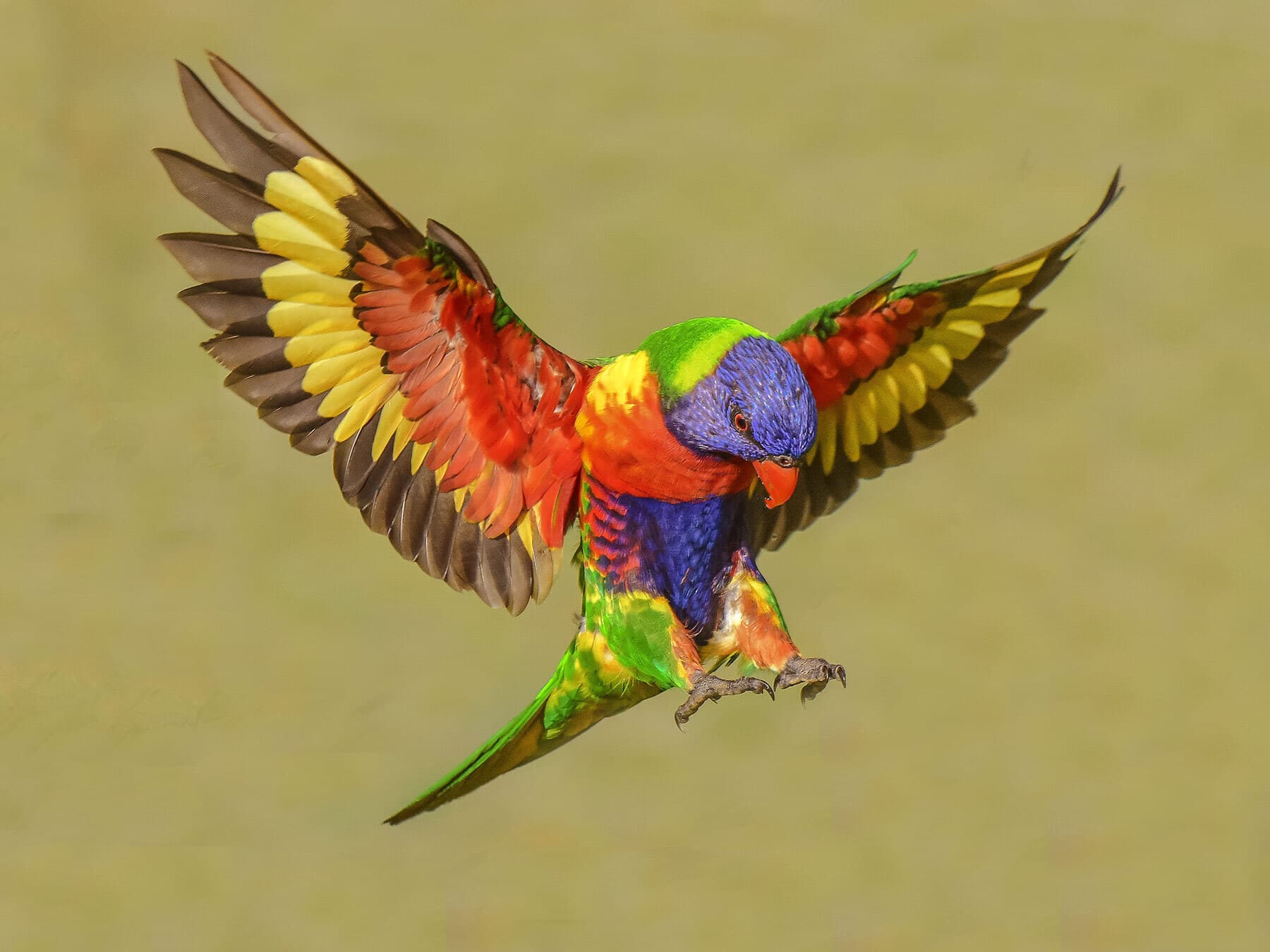
More photos
4 photos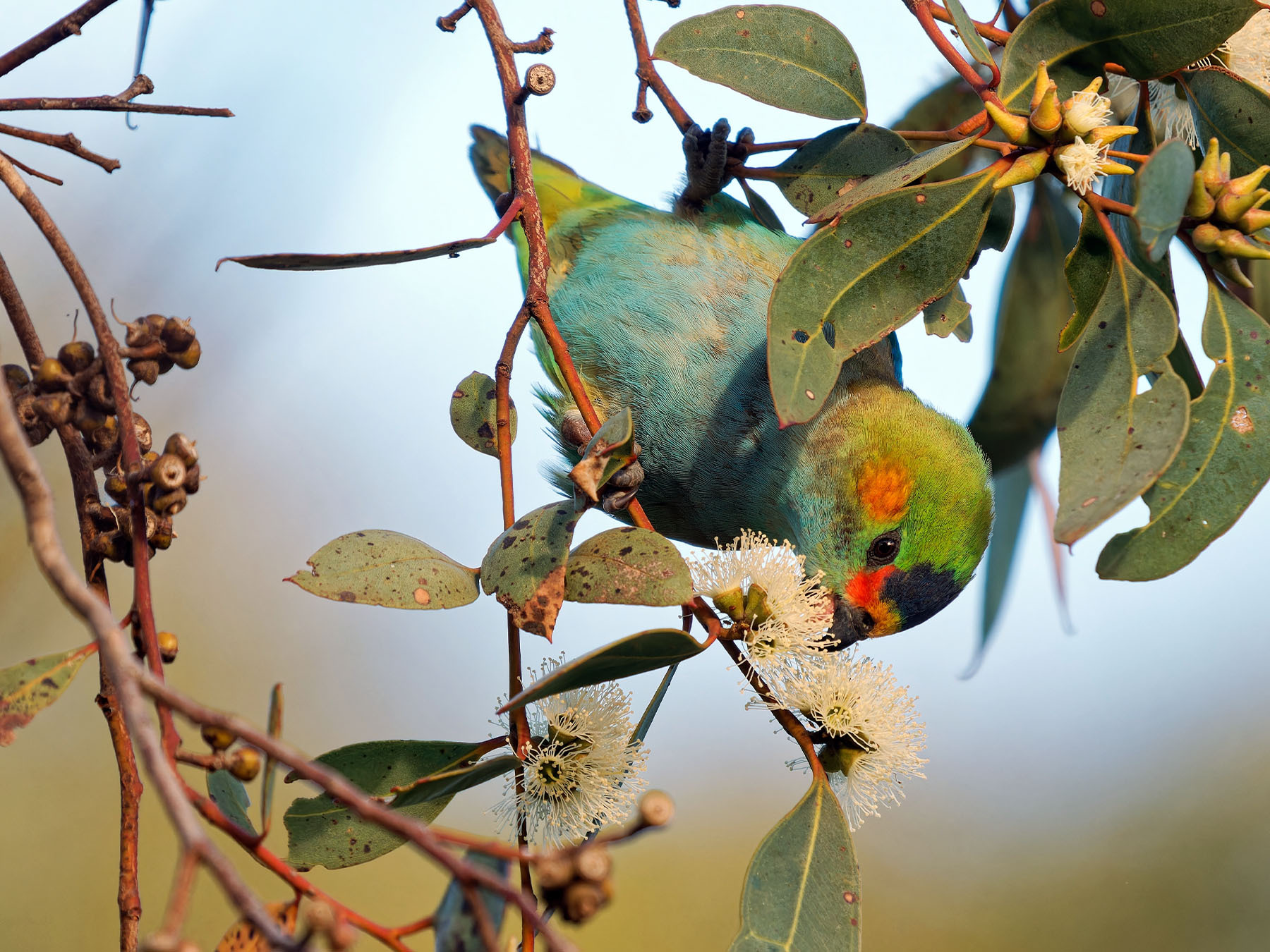
Quick facts
- Length
- 15–17 cm
- Wingspan
- 30–35 cm
- Weight
- 40–55 g
- Lifespan
- 7–10 years · oldest recorded 12 years
- Family
- Old World Parrots
- Migration
- Nomadic
- Global status (IUCN)
- Least Concern
- World population
- Not quantified, but common across its range
- Population trend
- Decreasing
- Also called
- Purple-capped Lorikeet
- Scientific name
- Glossopsitta porphyrocephala
Sources
4- 1BirdLife International. 2024. Glossopsitta porphyrocephala. The IUCN Red List of Threatened Species 2024: e.T22684658A254009173. Source (opens in a new tab)
- 2BirdLife International. 2024. Glossopsitta porphyrocephala. The IUCN Red List of Threatened Species 2024: e.T22684658A254009173. Source (opens in a new tab)
- 3del Hoyo et al. (1997)
- 4Brouwer et al., Longevity records for Psittaciformes in captivity, Int Zoo Yb, 37:299-316 (2000)

Checked by
Nathan Cope, founder and editor
Nathan founded Birdfact and leads its writers and contributors in the UK, the US and Canada. He has watched and studied birds for more than ten years, and checks every article and species guide before it’s published.