


Piping Plover
Belted Piping Plover · Charadrius melodus
By the Birdfact teamChecked by Nathan Cope
On this page11 sections
How to recognise it
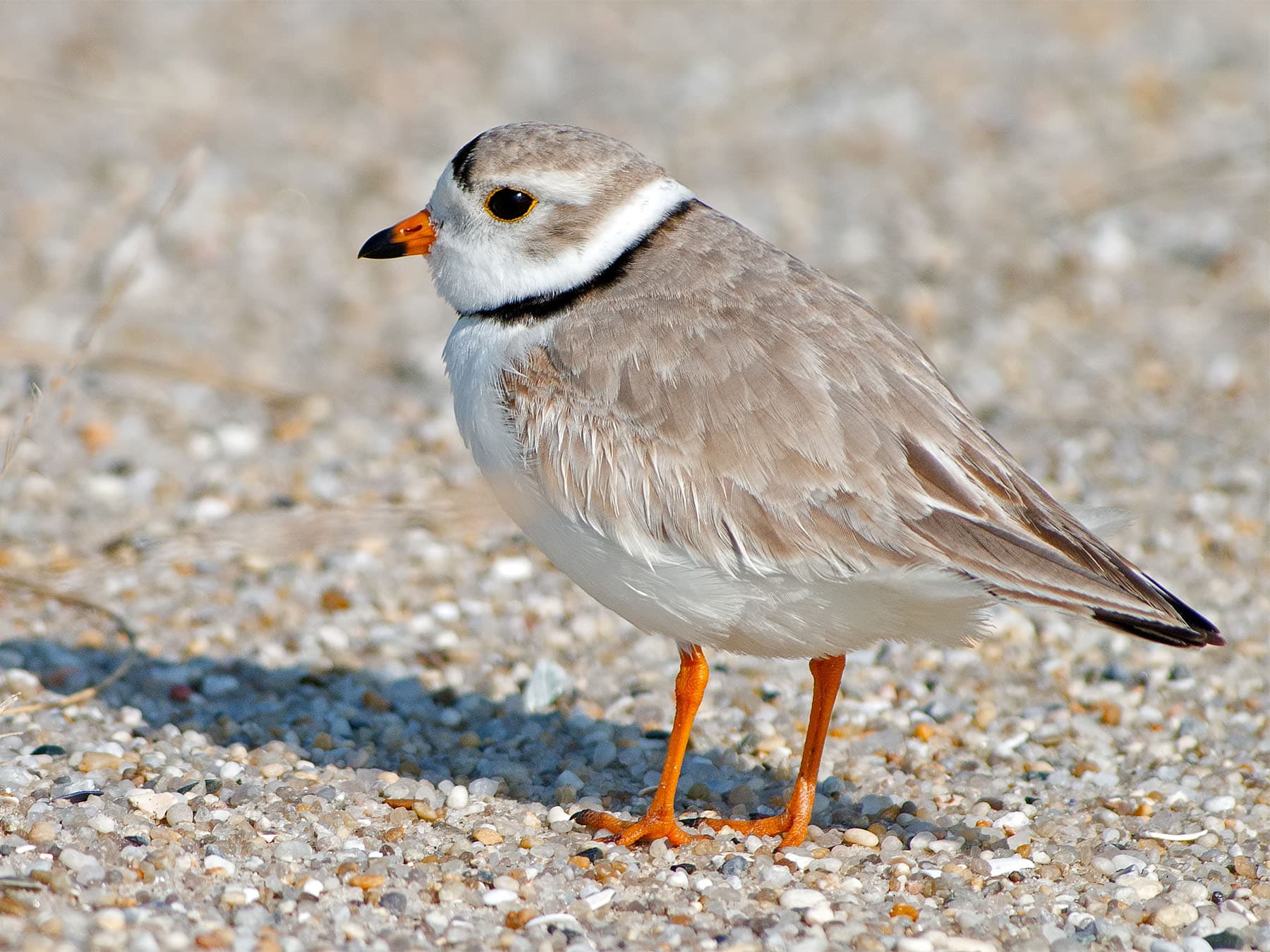
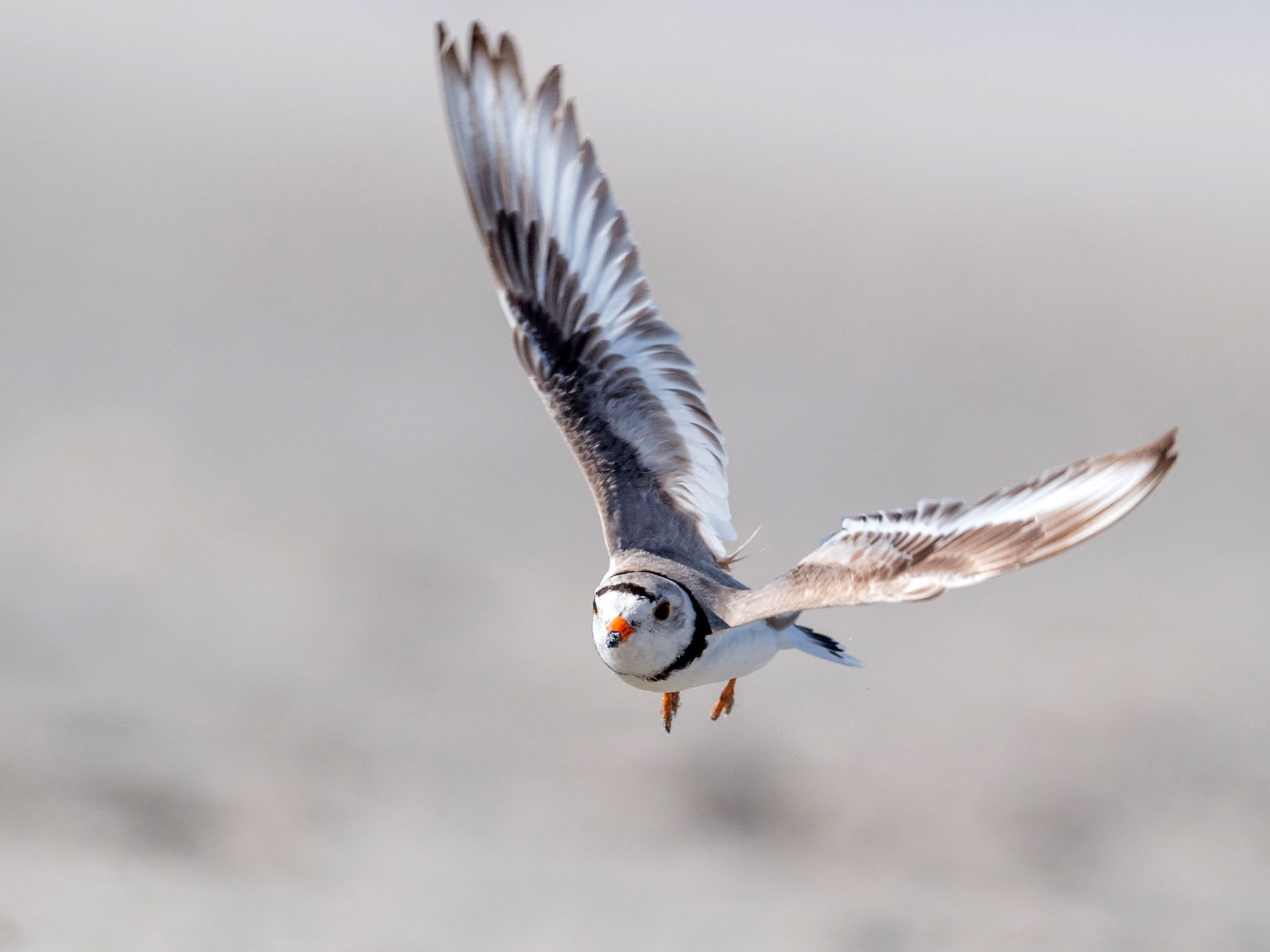
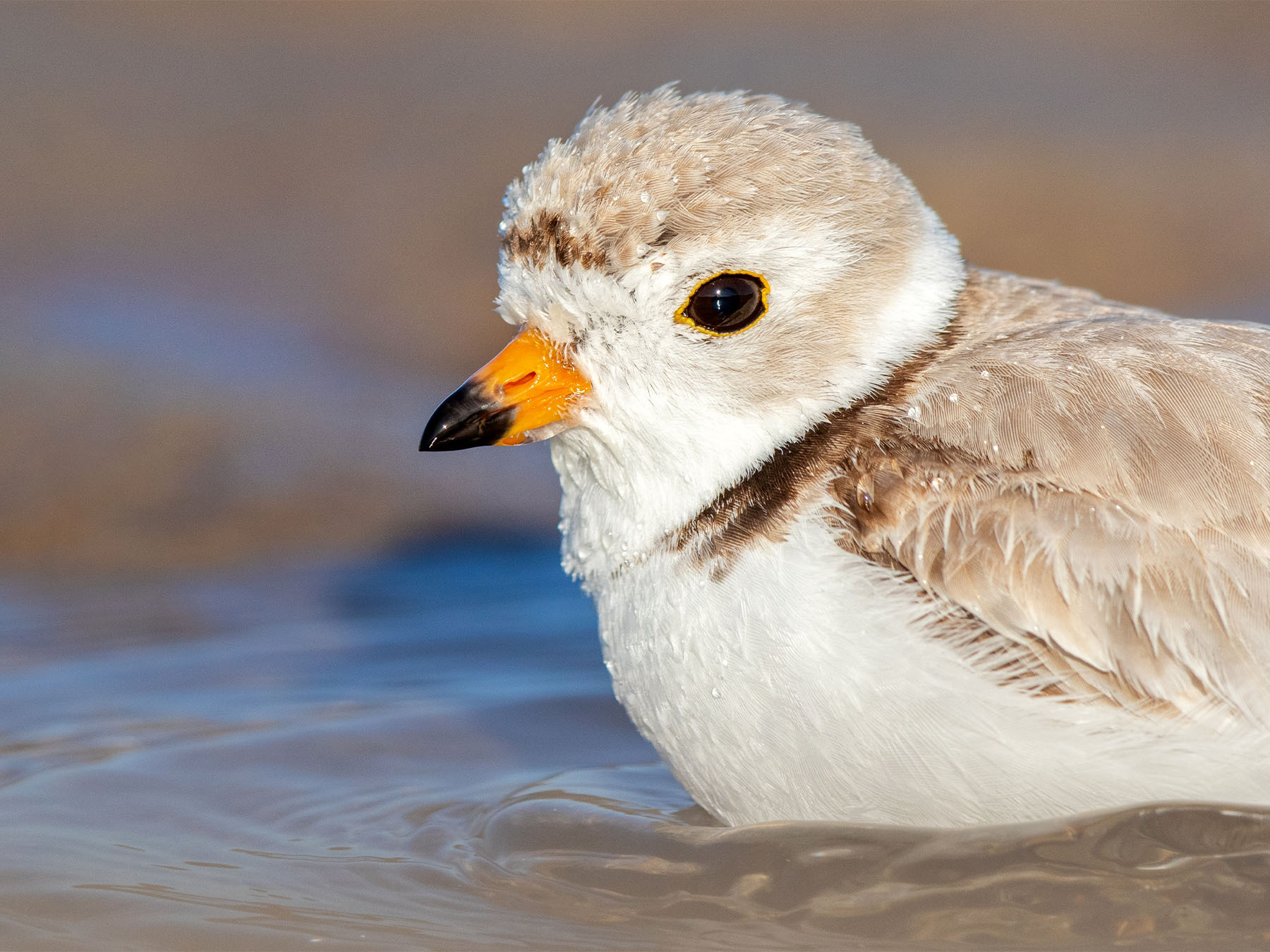
The Piping Plover is a small shorebird with pale gray upperparts, white underparts, and a white rump. It has a short, stout orange bill with a black tip and bright orange legs. During the breeding season, adults display a distinctive black band across the forehead and a black breast band.
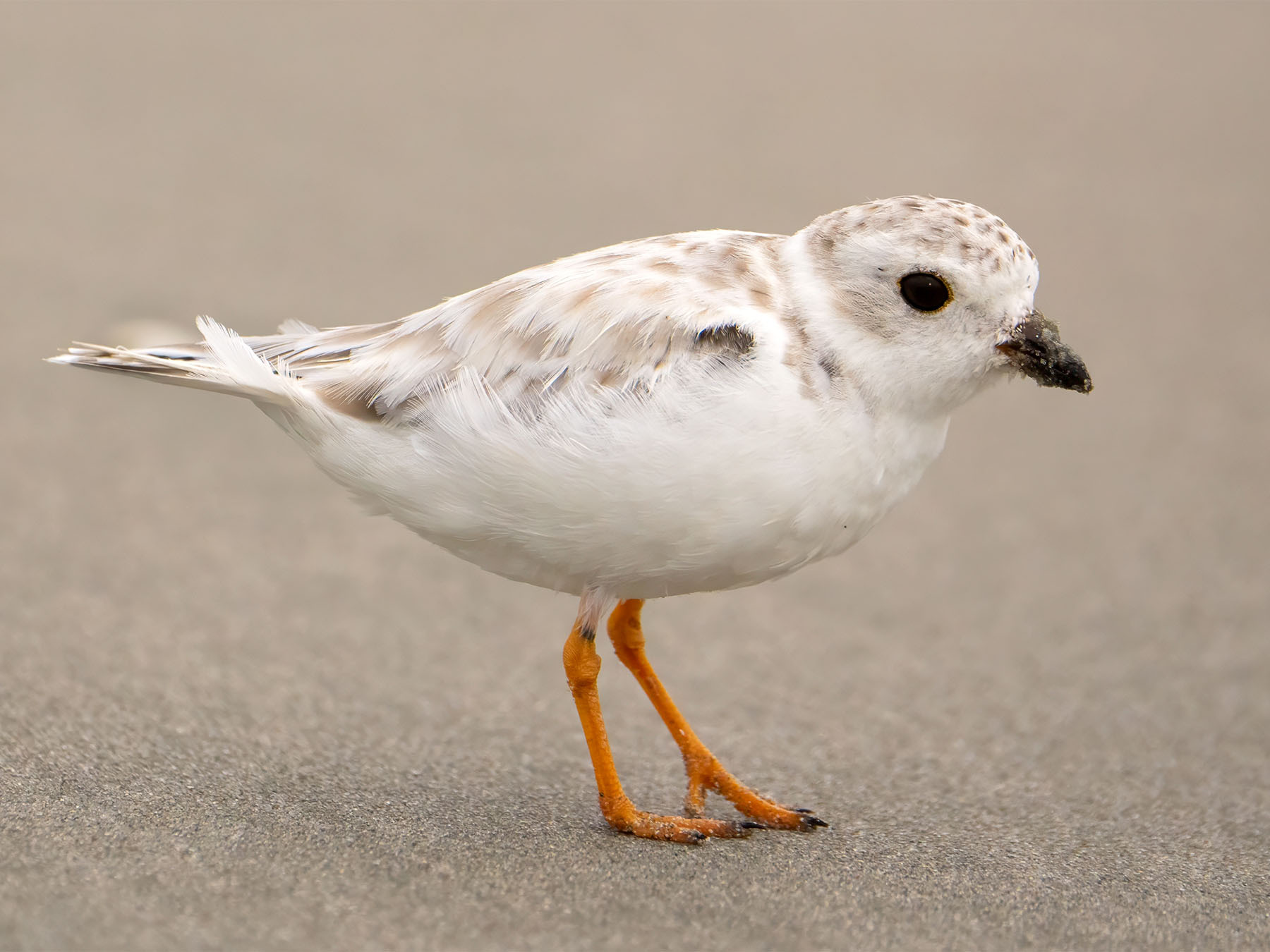
Non-breeding adults and juveniles have a less pronounced breast band and may lack the black forehead marking. The plumage becomes slightly duller in winter, but the overall appearance remains similar year-round.
Its size
Adults- Length
- 17–18 cm
- Wingspan
- 35–39 cm
- Weight
- 43–63 g
Its song and calls
The Piping Plover's name comes from its melodious, flute-like call. Their most common vocalization is a clear, whistled 'peep-lo' or 'peep-peep-lo'.
During courtship or when alarmed, they may produce a rapid series of 'pip-pip-pip' notes. These calls are often heard before the bird is seen.
- Recording0:00 / 2:33
When and where to see it
OctoberLeaving
Most recorded in October
- 1. Mississippi0.12%
- 2. South Carolinaunder 0.1%
- 3. Louisianaunder 0.1%
- 4. Texasunder 0.1%
- 5. Georgiaunder 0.1%
Each dot is a county, state or province: the bigger and darker, the larger the bird’s share of that place’s bird records that month. Grey dots: no regular records. The ringed point is the centre of the bird’s records this month; the arrow shows how it moved since last month, and the dashed loop its path through the year. “Arrivals” colours places where it becomes regular this month (orange) or is in its last regular month (grey). GBIF eBird Observation Dataset, 2019–2024. Map data: Natural Earth, US Census Bureau; place centres © OpenStreetMap contributors.
In your area
See when the Piping Plover is recorded in your county, state or province.
How often the Piping Plover turns up in the United States and Canada through the year, from birdwatchers' records.
United States
Summer visitor · all year · most records in July
Canada
Summer visitor · regularly Apr–Sep · most records in July
Show as a table
| Month | United States | Canada |
|---|---|---|
| January | 0.013% (regular) | – |
| February | 0.010% (regular) | – |
| March | 0.018% (regular) | <0.001% |
| April | 0.024% (regular) | 0.004% (regular) |
| May | 0.022% (regular) | 0.011% (regular) |
| June | 0.034% (regular) | 0.016% (regular) |
| July | 0.050% (regular) | 0.019% (regular) |
| August | 0.048% (regular) | 0.009% (regular) |
| September | 0.019% (regular) | 0.003% (regular) |
| October | 0.015% (regular) | <0.001% |
| November | 0.018% (regular) | <0.001% |
| December | 0.012% (regular) | <0.001% |
Worldwide: recorded regularly in 10 countries
Countries where it was recorded in at least 3 of the 6 years 2019–2024. Linked countries have their own bird list.
North America (10)
- Bahamas
- Bermuda
- Canada
- Cuba
- Dominican Republic
- Mexico
- Puerto Rico
- St Pierre & Miquelon
- Turks & Caicos Islands
- United States
Data: EOD – eBird Observation Dataset (Cornell Lab of Ornithology), accessed via GBIF.org, CC BY 4.0. Records from 2019–2024, aggregated and filtered by Birdfact. How these lists are made
Tips for seeing it
- Look for Piping Plovers on sandy beaches and tidal flats
- Listen for their distinctive 'peep-lo' call
- Observe their quick, stop-and-go running pattern while foraging
- Use binoculars to spot the black bands on breeding adults
- Respect closed nesting areas and maintain a safe distance
What it eats
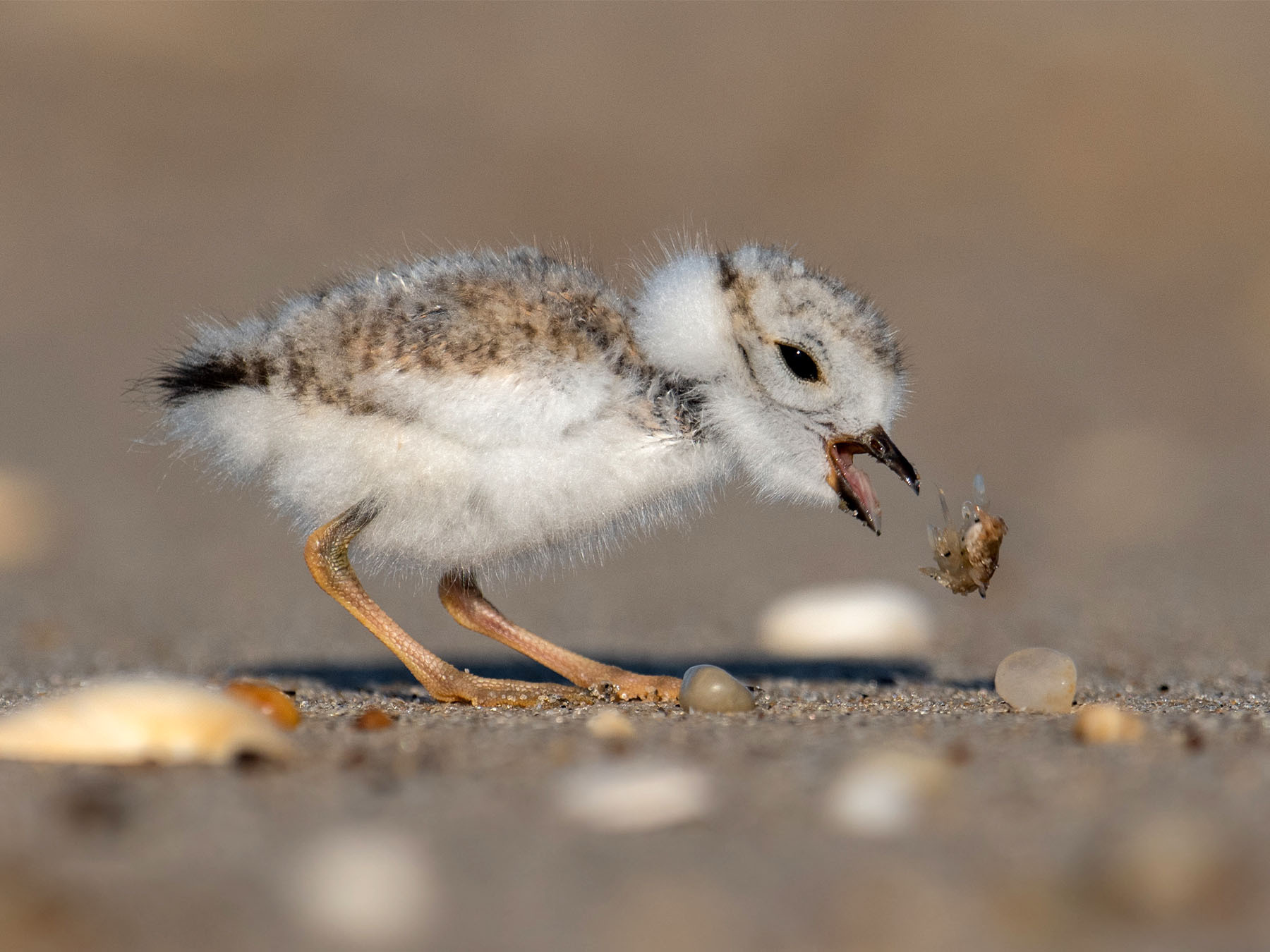
Piping Plovers primarily feed on marine worms, small crustaceans, and insects. They forage visually, running short distances and pecking at prey items on the sand or in shallow water.
Their diet may vary seasonally, with more insects consumed during the breeding season.
Nesting and breeding
Piping Plovers form monogamous pairs during the breeding season, typically from April to August. Males perform elaborate aerial displays and create several scrapes in the sand, from which the female selects a nesting site.
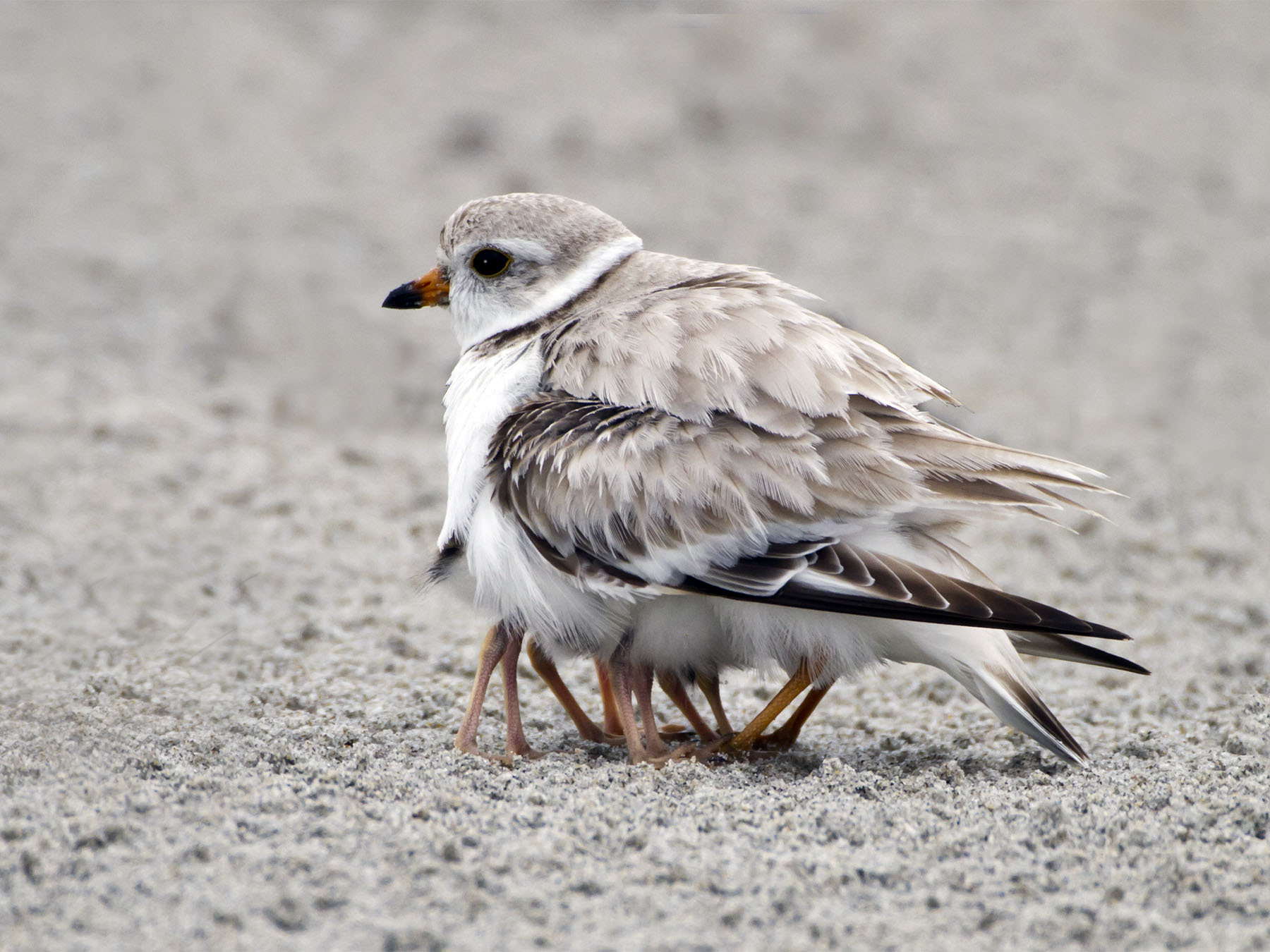
The nest is a shallow depression in the sand, often lined with small pebbles or shell fragments. Females usually lay a clutch of four eggs, which are buff-colored and speckled with dark markings, providing excellent camouflage.
Both parents incubate the eggs for about 28 days. Chicks are precocial, leaving the nest within hours of hatching. They fledge after 21-35 days but remain dependent on their parents for several more weeks.
Behaviour
Piping Plovers are known for their distinctive 'piping' call and rapid running behavior along shorelines. They often employ a 'broken-wing' display to lure predators away from nests or chicks.
These birds are typically seen foraging in small groups or pairs, probing the sand for invertebrates with their bills.
Conservation
Piping Plovers face significant conservation challenges due to habitat loss and human disturbance. Beach development, recreational activities, and climate change-induced sea-level rise threaten their nesting grounds.
Intensive conservation efforts, including habitat protection and public education, are ongoing to support population recovery.
More photos
6 photos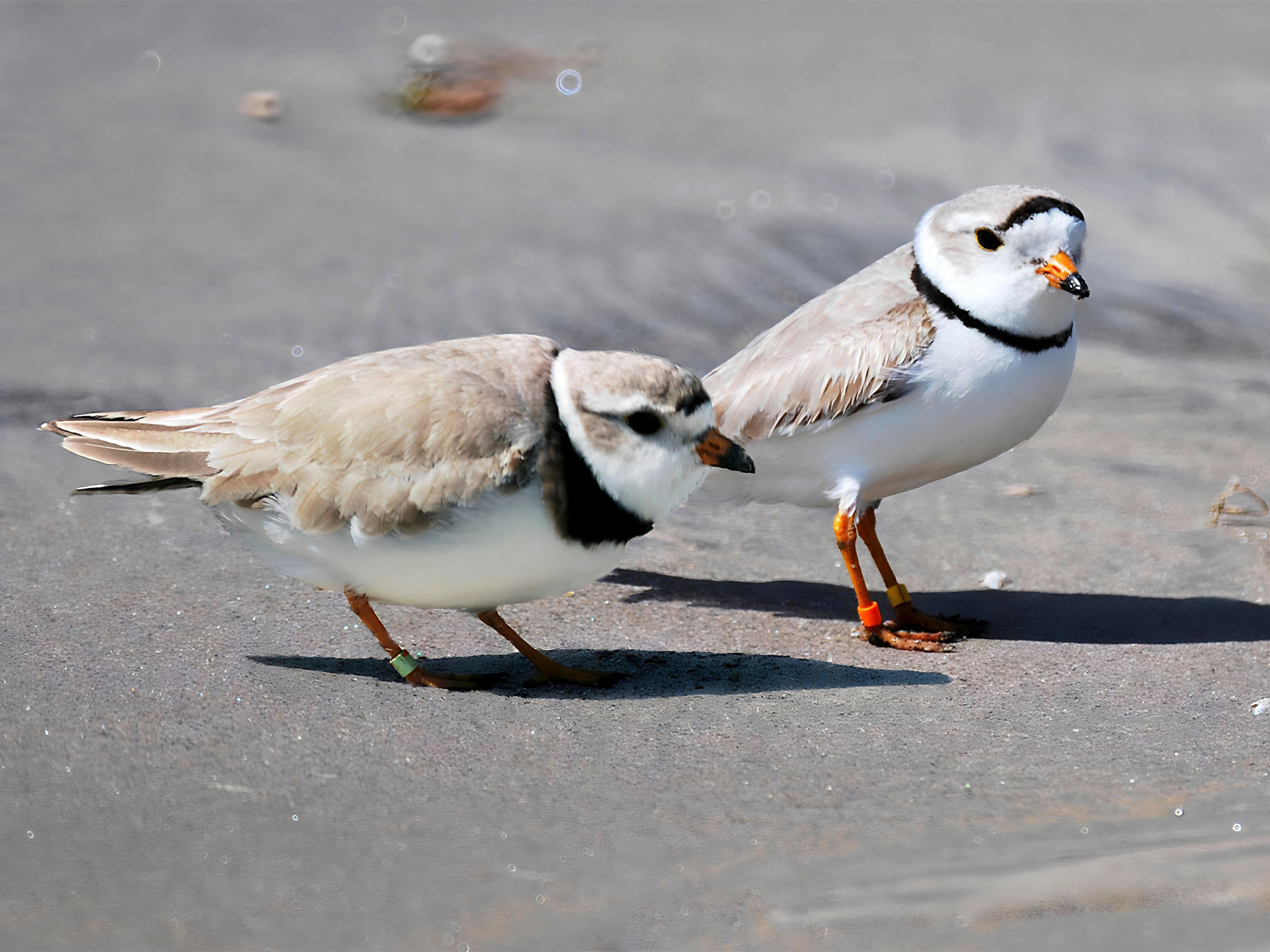
Quick facts
- Length
- 17–18 cm
- Wingspan
- 35–39 cm
- Weight
- 43–63 g
- Lifespan
- 8–12 years · oldest recorded 14 years
- Family
- Plovers & Lapwings
- Migration
- Long-distance Migrant
- Global status (IUCN)
- Near Threatened
- World population
- 8,400 mature individuals
- Population trend
- Population thought to be growing at a slow rate, due to intensive conservation efforts.
- Also called
- Belted Piping Plover
- Scientific name
- Charadrius melodus
Sources
4- 1BirdLife International. 2020. Charadrius melodus. The IUCN Red List of Threatened Species 2020: e.T22693811A182083944. Source (opens in a new tab)
- 2BirdLife International. 2020. Charadrius melodus. The IUCN Red List of Threatened Species 2020: e.T22693811A182083944. Source (opens in a new tab)
- 3Partners in Flight (2019) Source (opens in a new tab)
- 4Clapp et al., Longevity records of North American birds: Gaviidae through Alcidae, J Field Ornithol, 53:81-124 (1982)

Checked by
Nathan Cope, founder and editor
Nathan founded Birdfact and leads its writers and contributors in the UK, the US and Canada. He has watched and studied birds for more than ten years, and checks every article and species guide before it’s published.