


Parrot Crossbill
Loxia pytyopsittacus
By the Birdfact teamChecked by Nathan Cope
On this page14 sections
How to recognise it
What do Parrot Crossbills look like?
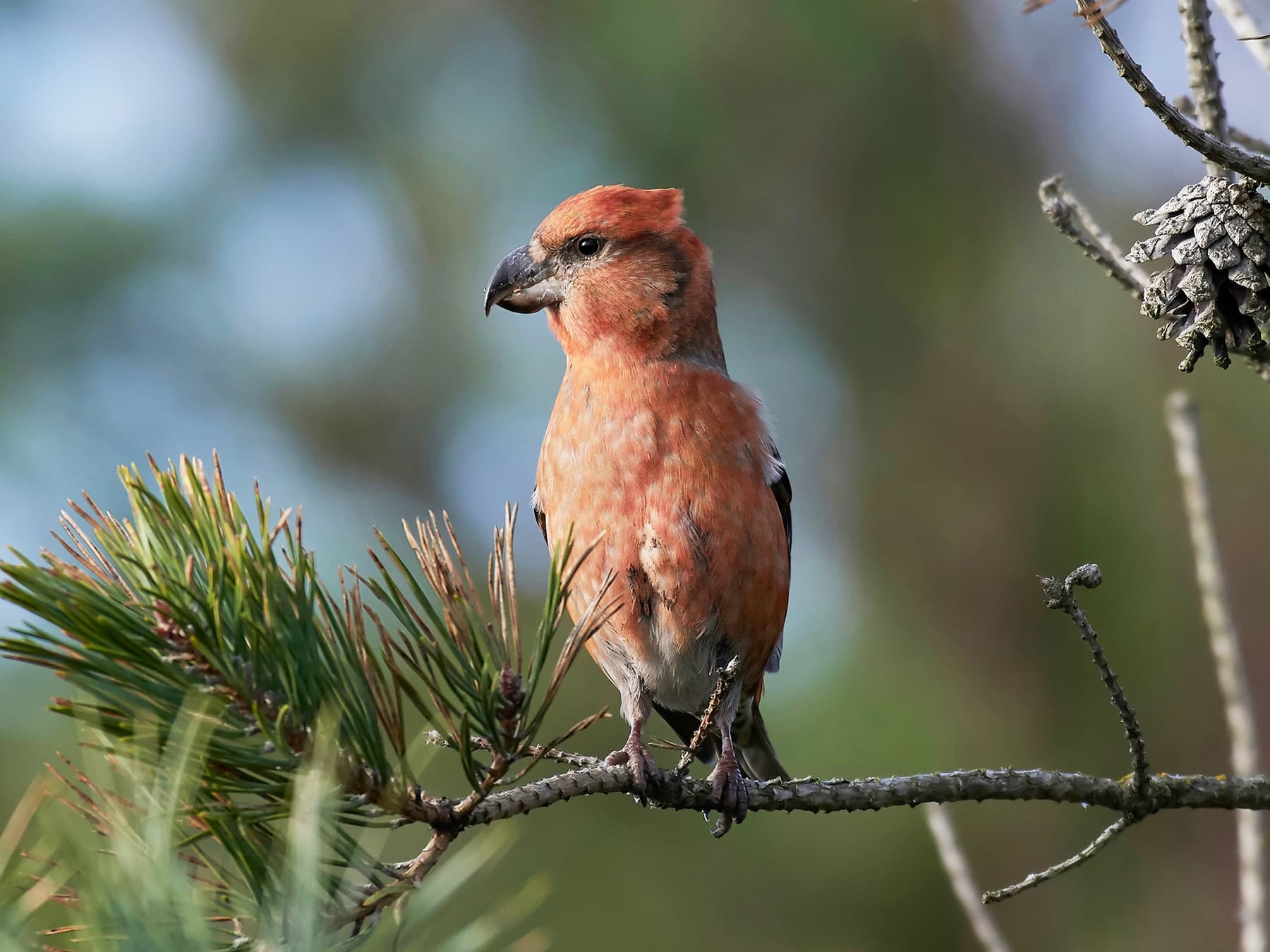
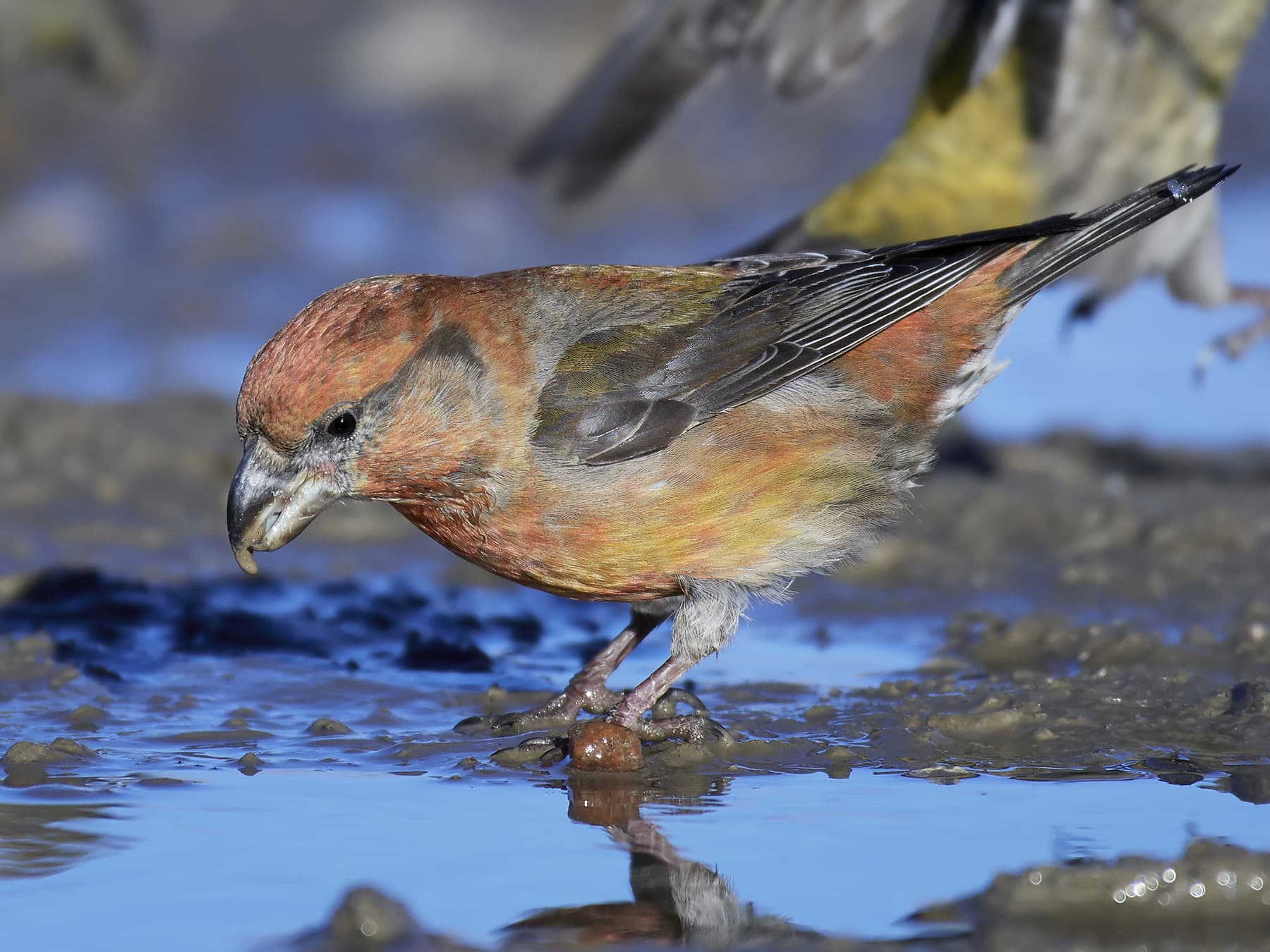
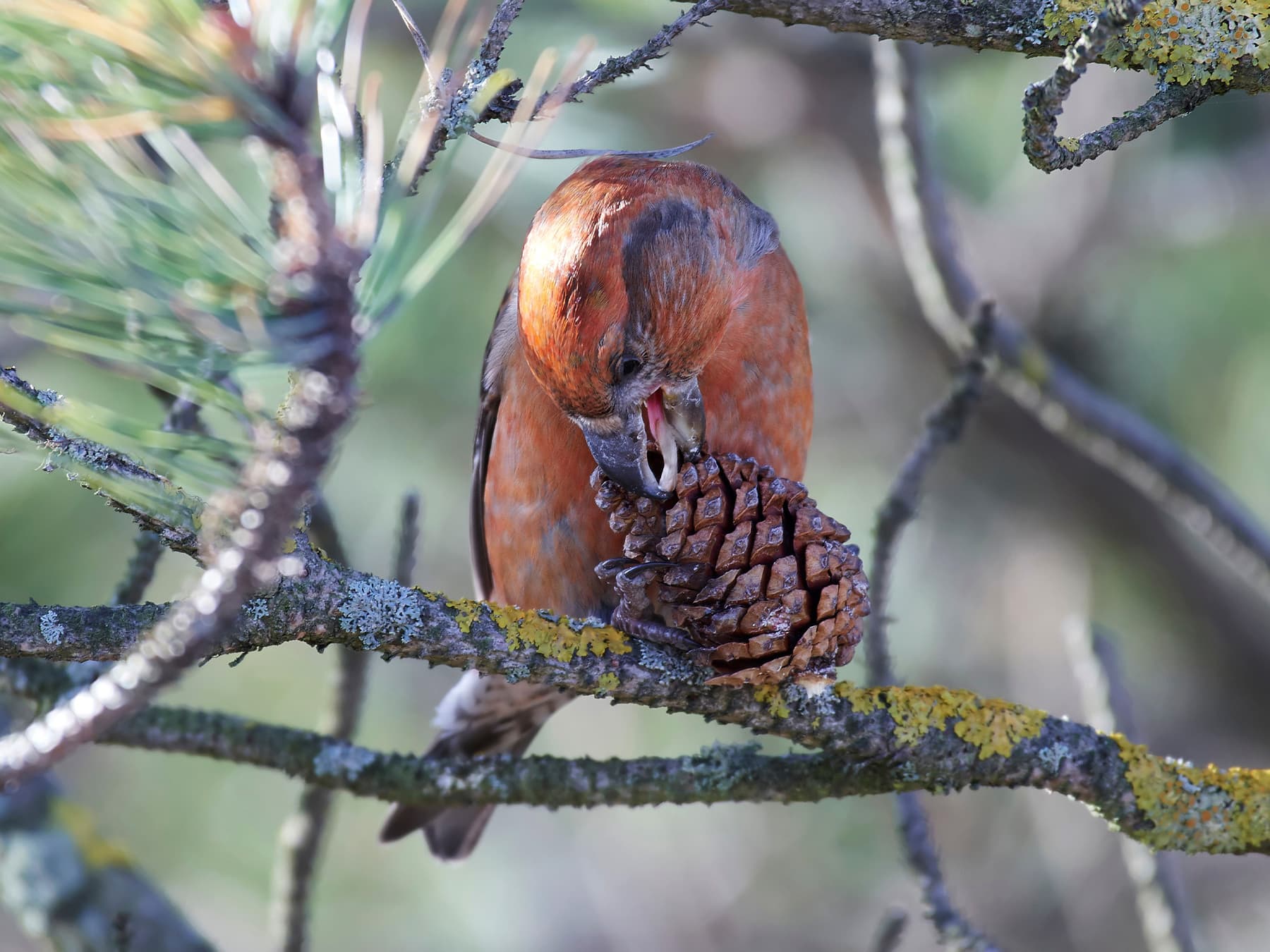
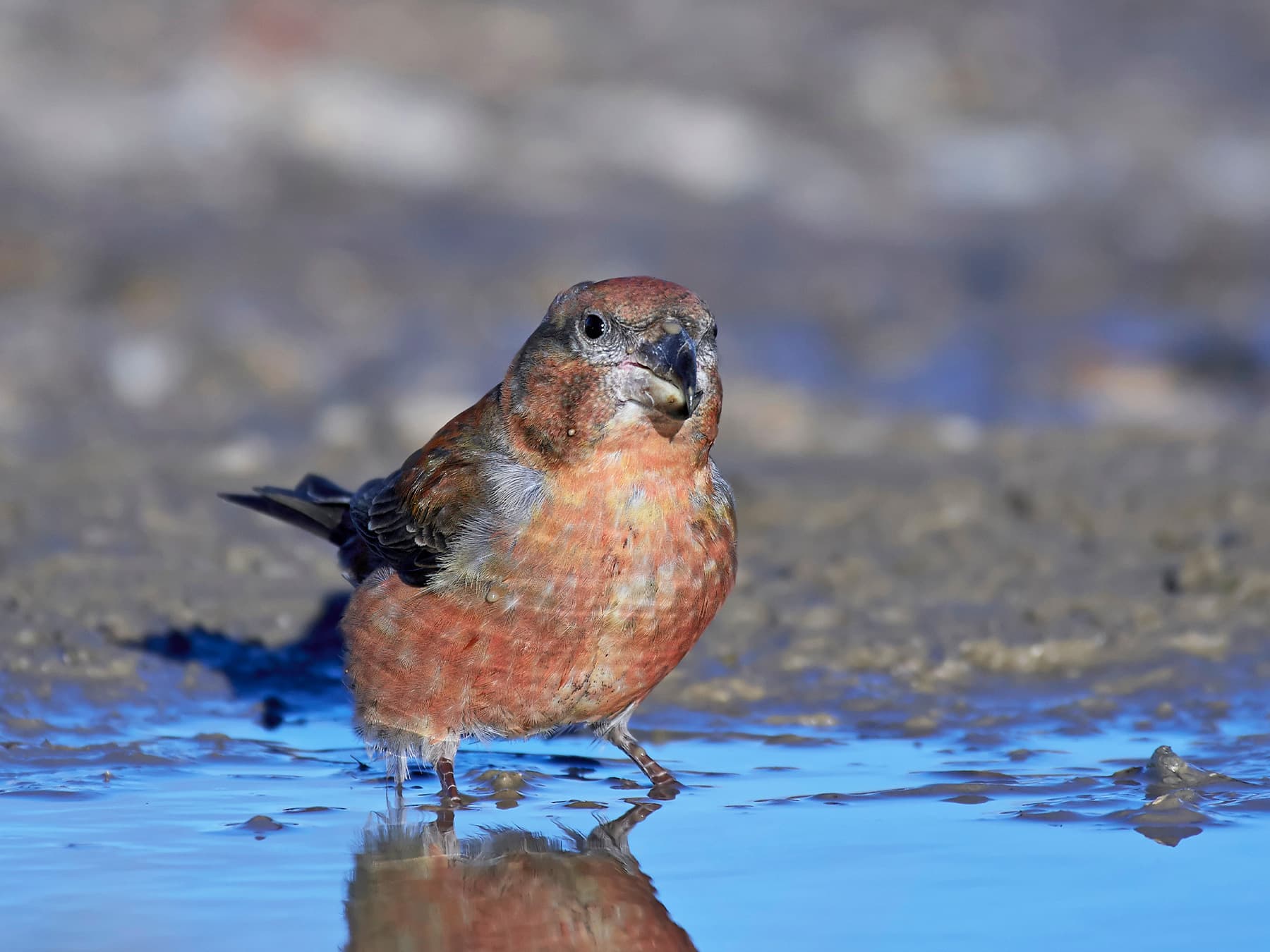
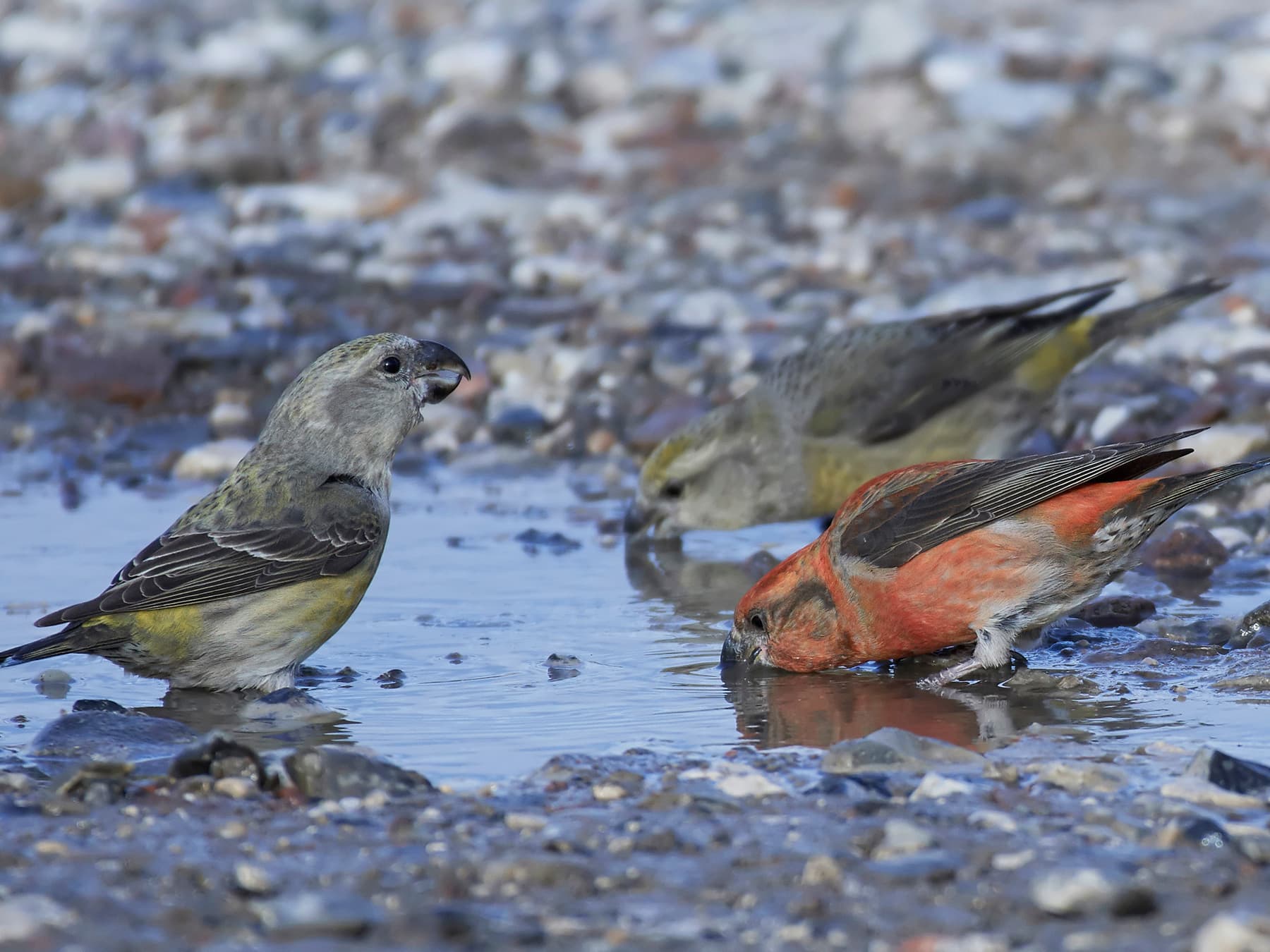
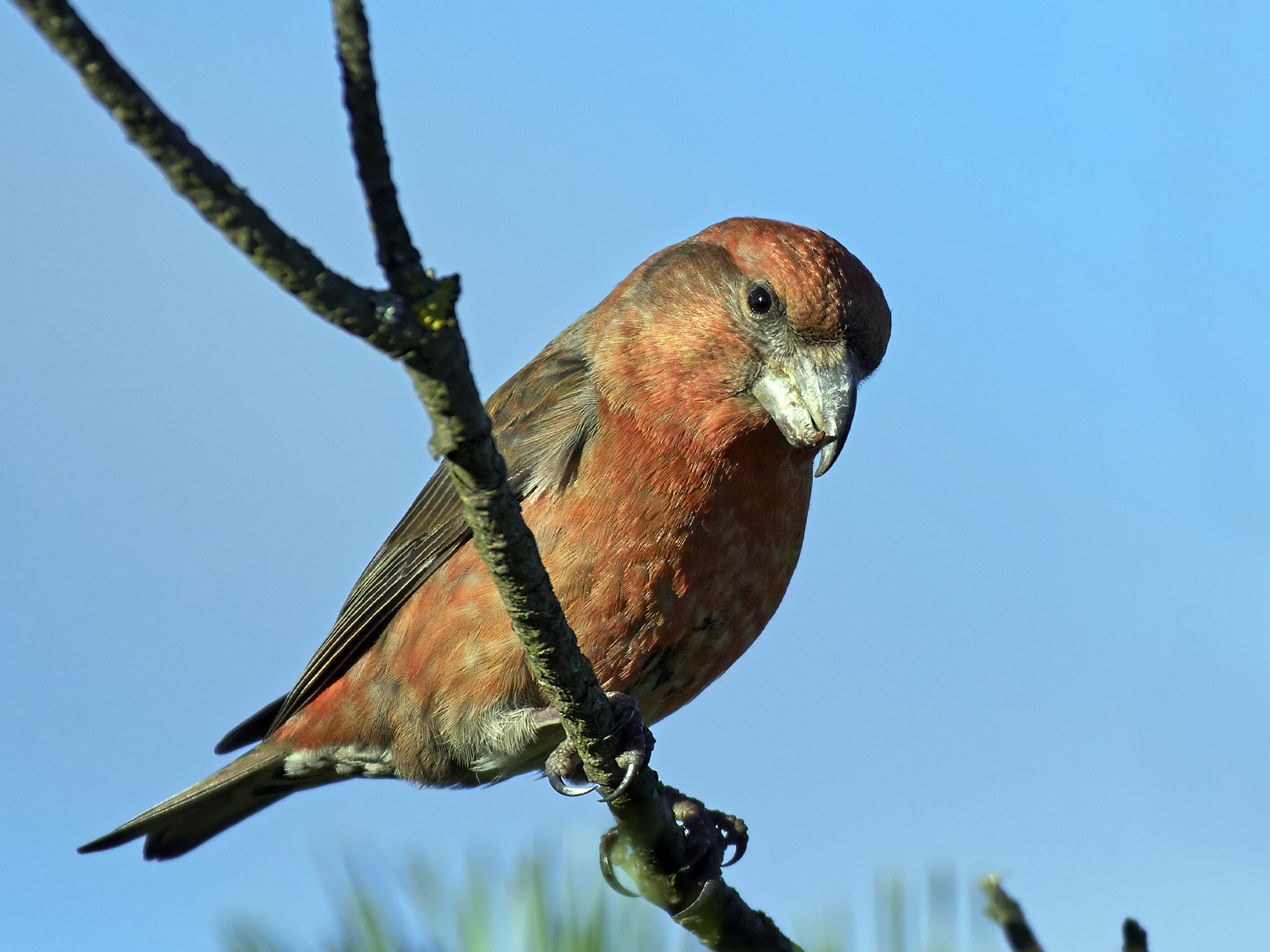
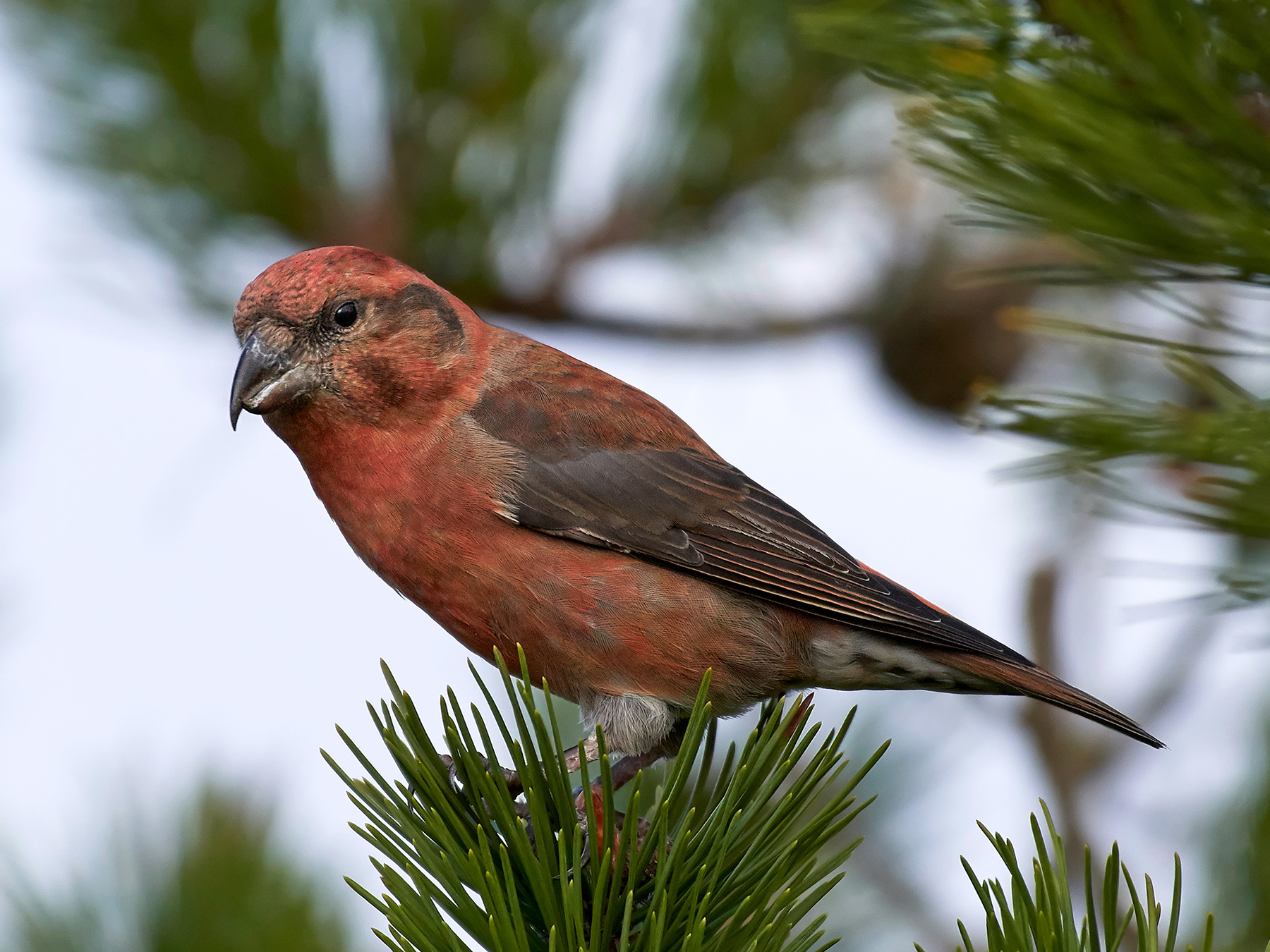
Male and female parrot crossbills are unalike in plumage, although both sexes share the distinctive thick parrot-like bill that crosses over at the tip, which gives the species its name. Males are mostly deep brick-red, with a crimson crown and face, and orange-red breast and belly. Their wings are olive-brown, and their forked tail is dark brown, edged with reddish brown.
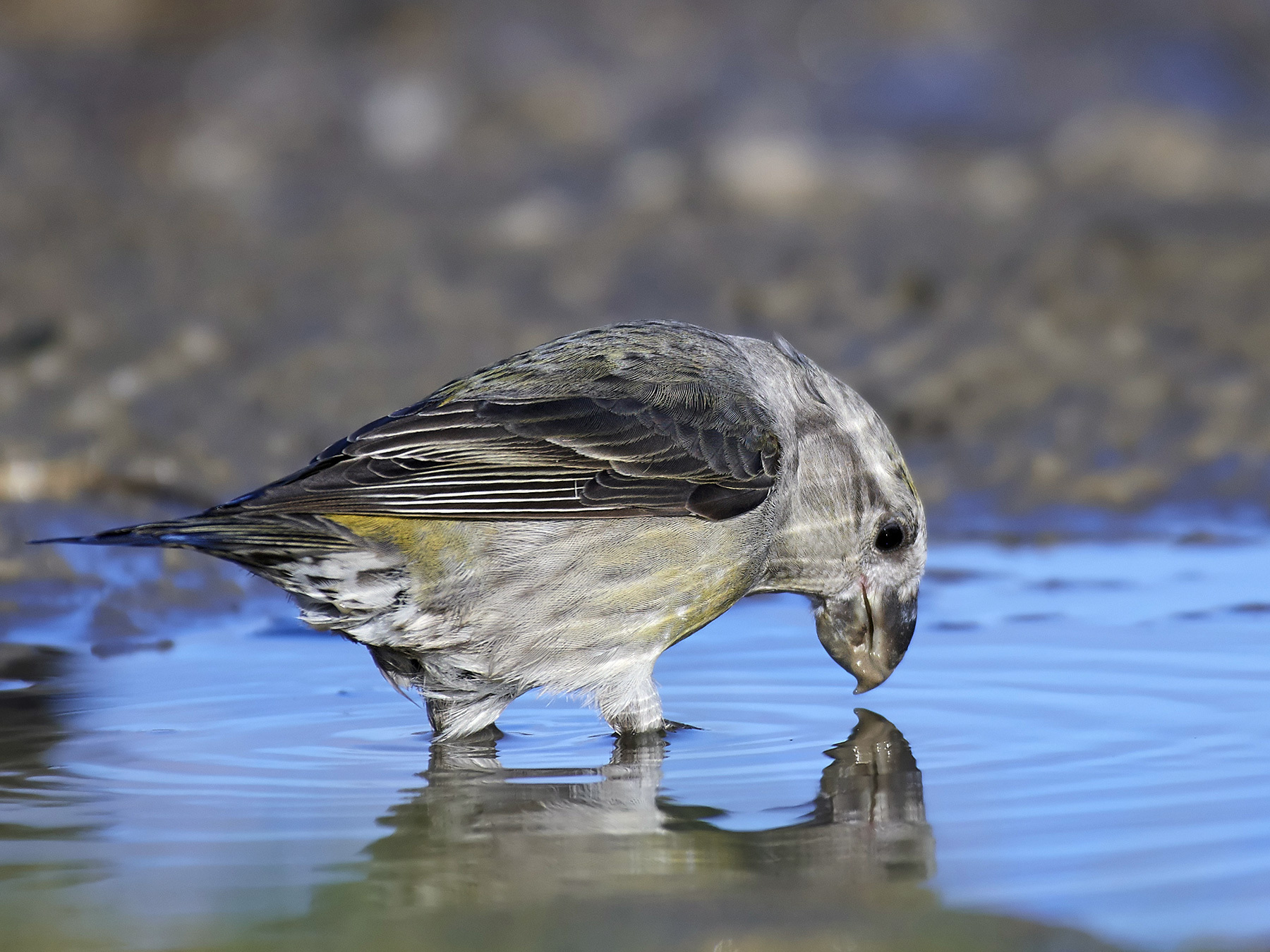
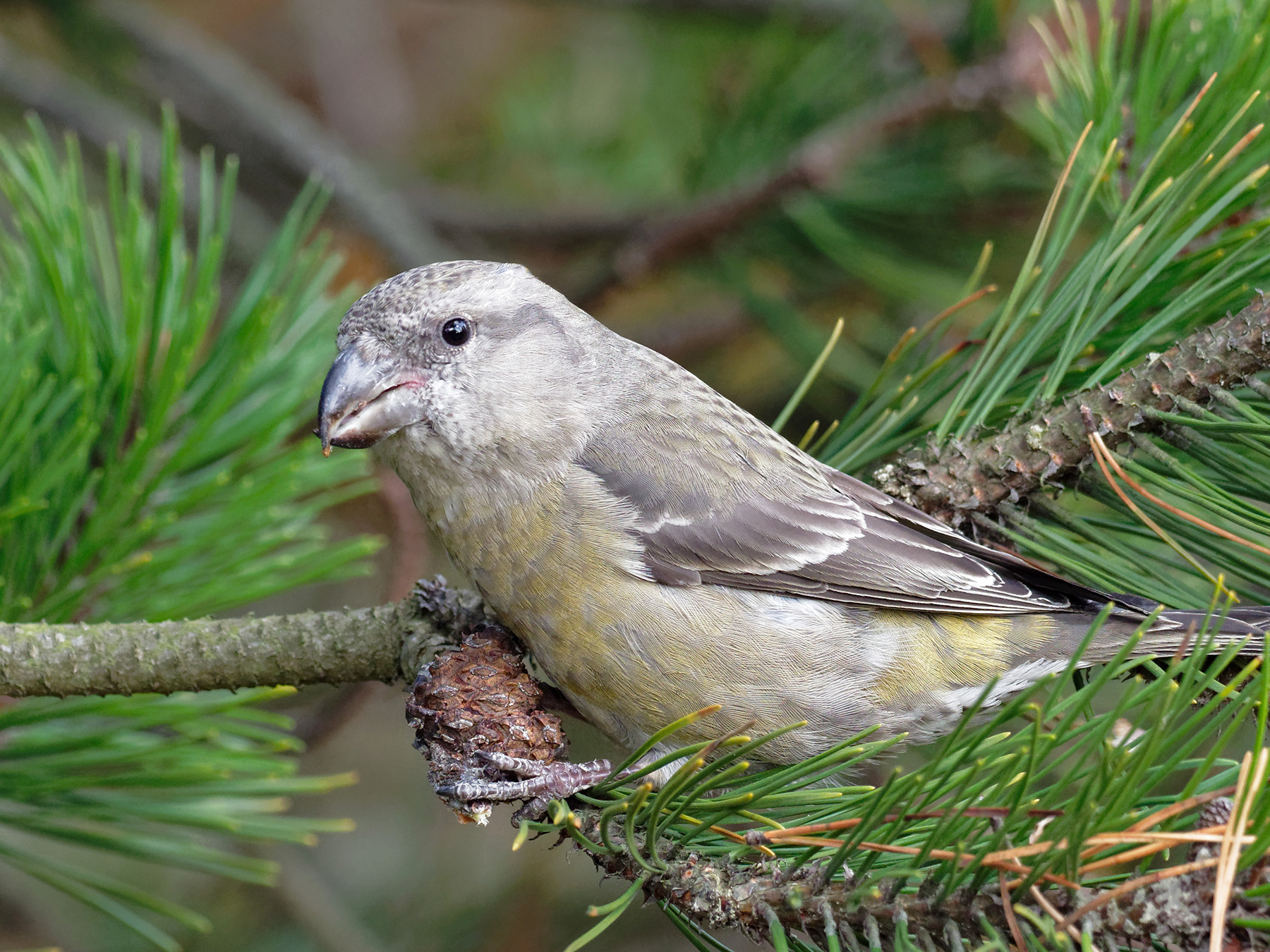
The parrot crossbill’s thick, almost square-shaped head and neck are a key distinguishing feature that helps tell the species apart from other types of crossbill.
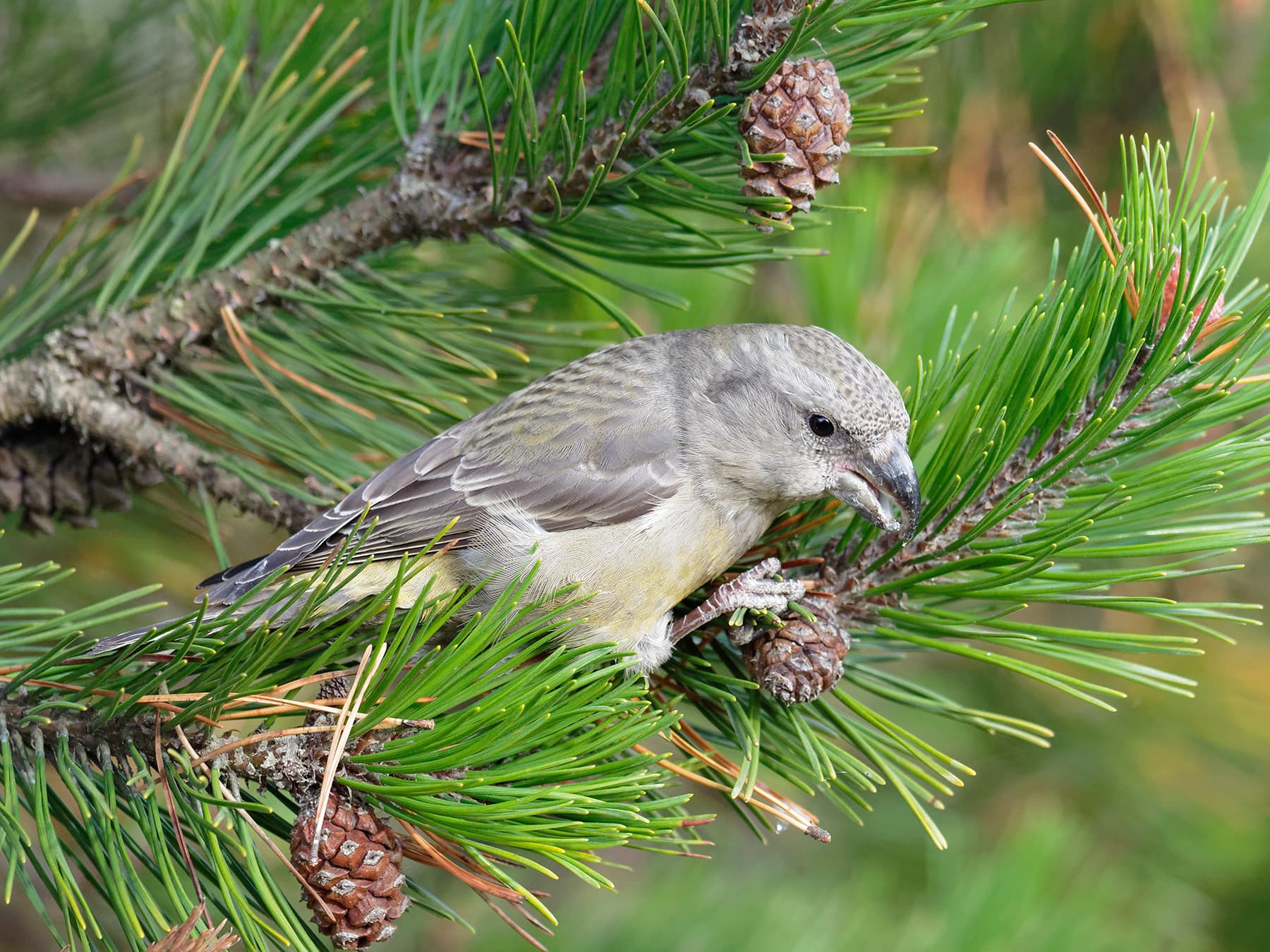
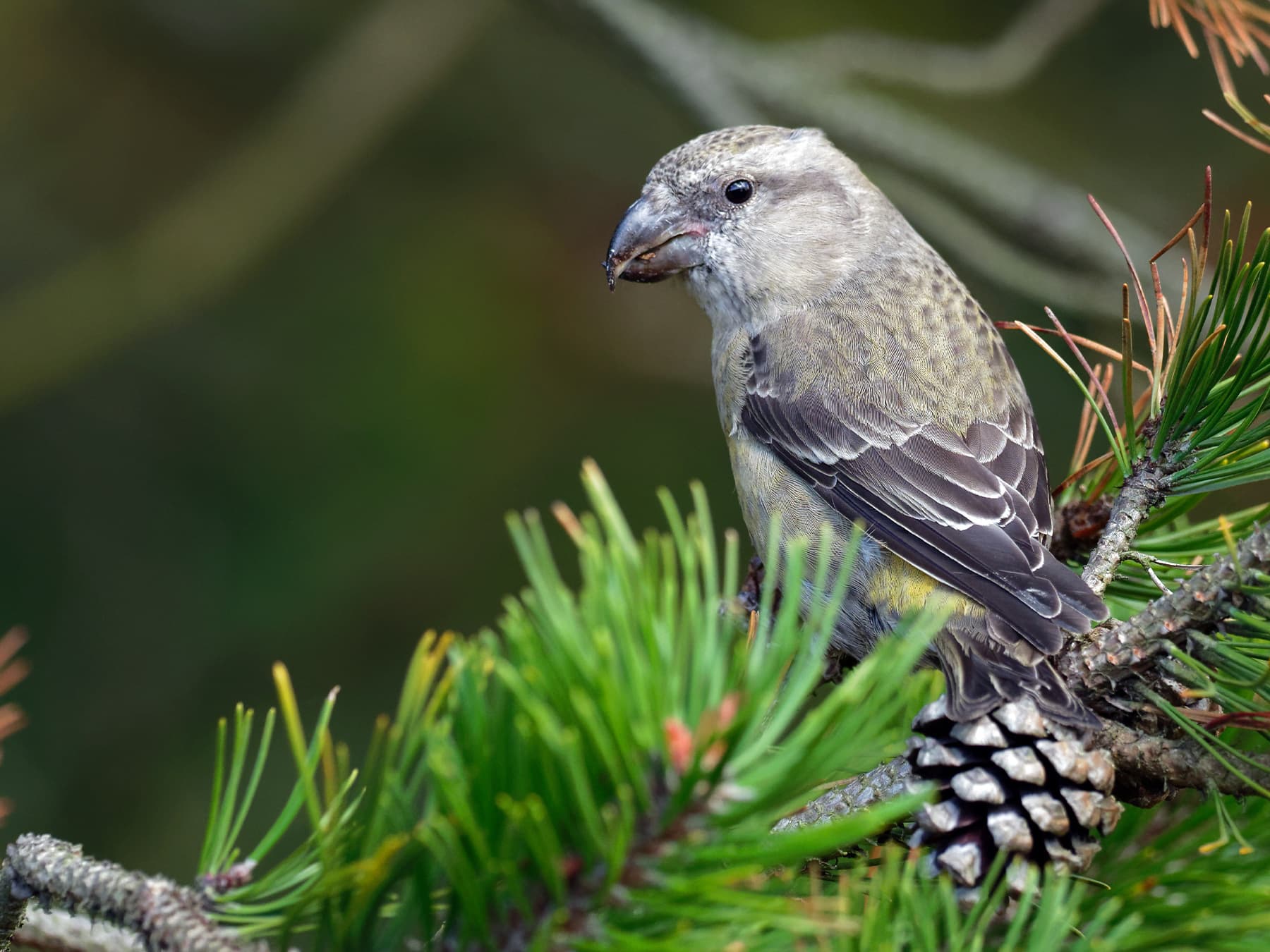
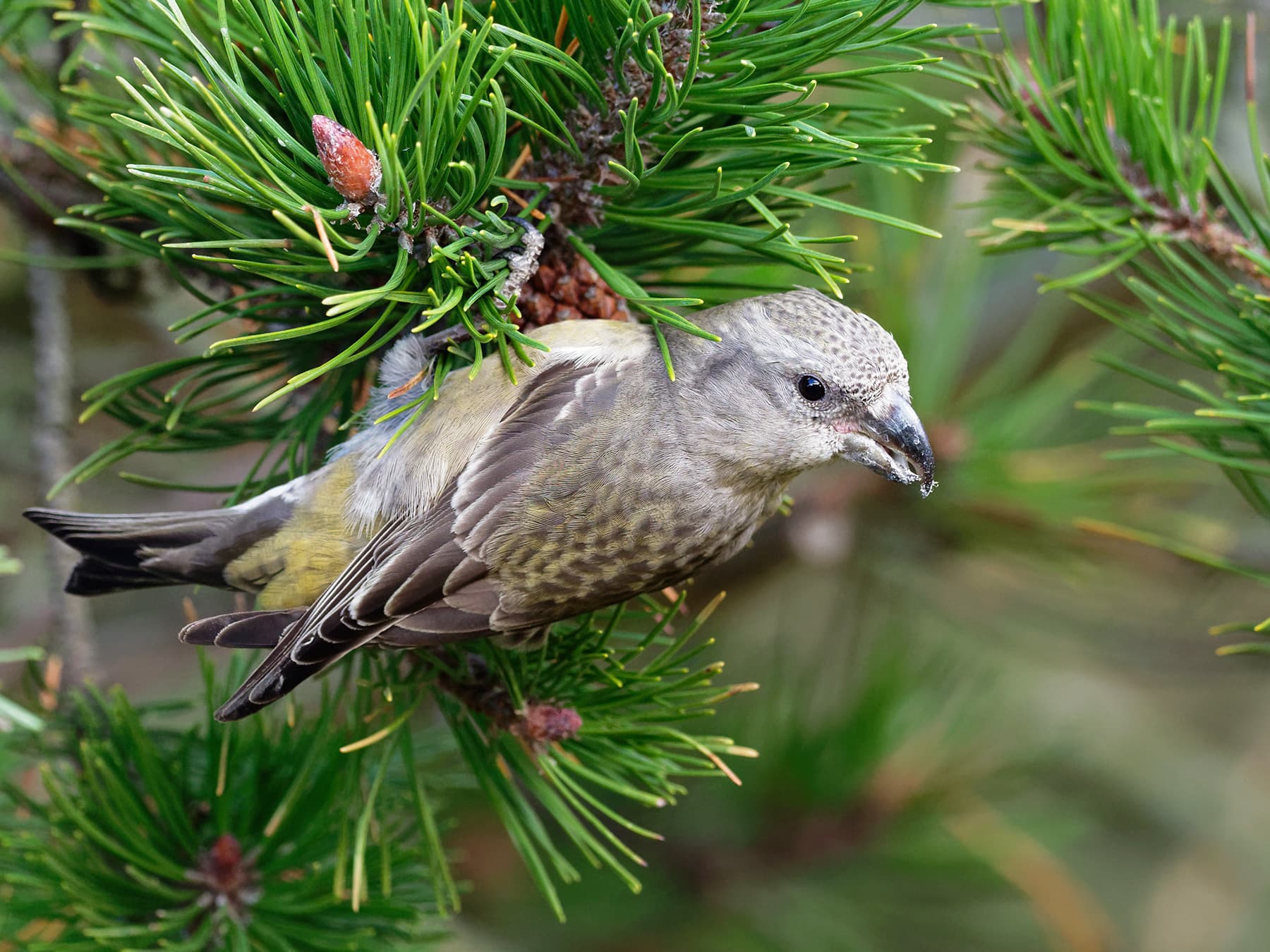
Female parrot crossbills are mostly olive-green and grey, with a greenish head, nape, breast and belly, dark grey wings, and a dusky grey-brown tail. Their wing and tail feathers are edged with a lighter olive, and their underparts are yellowish-grey.
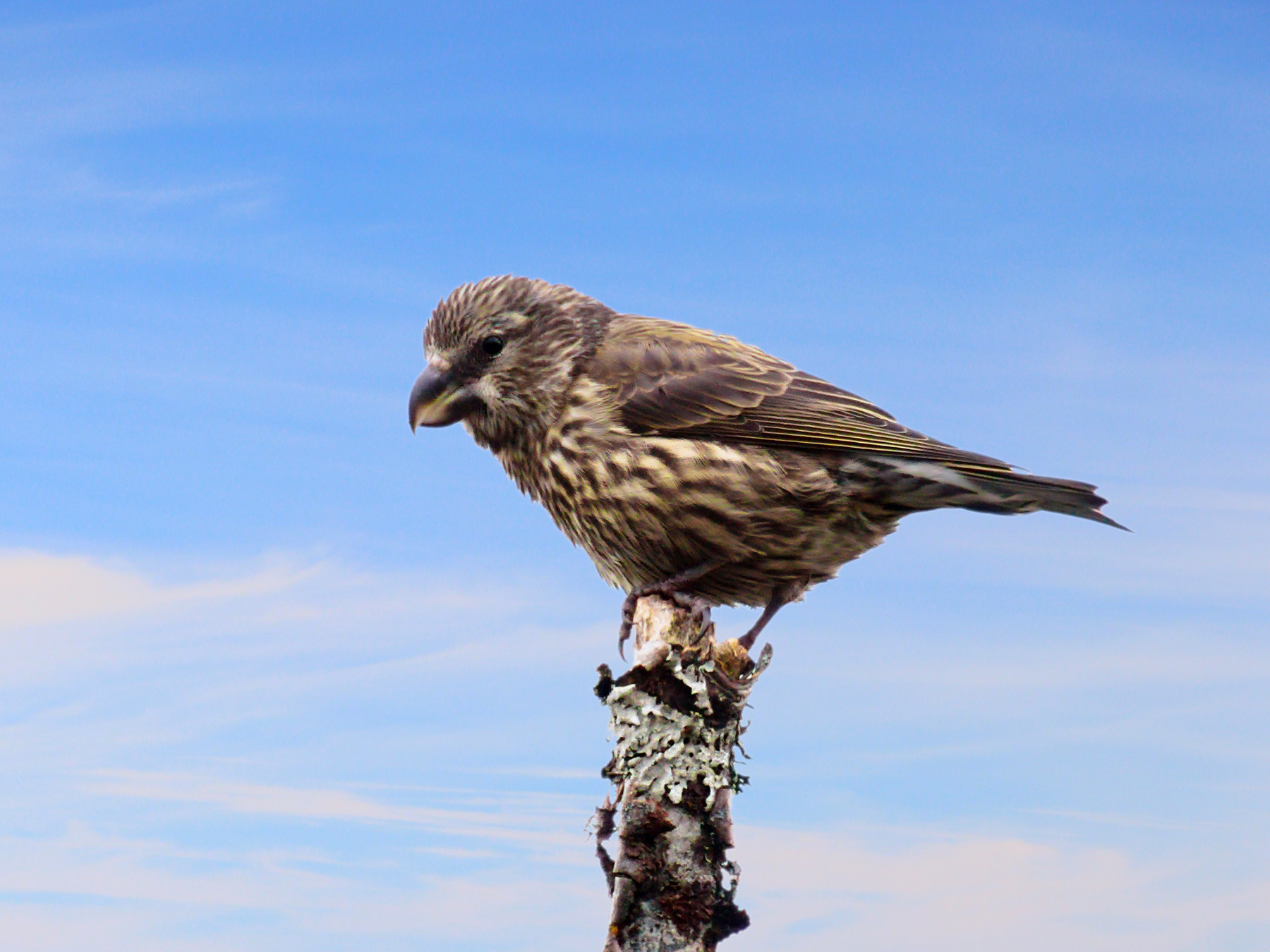
Juvenile Scottish crossbills are olive green to grey, streaked with darker greenish-grey markings. Facial markings include yellowish cheeks and a yellowish-grey crown.
After their first winter and into their first summer, the red colouring of juvenile males begins to become more apparent, and they fully acquire adult plumage by their second summer.
How big are Parrot Crossbills?
Parrot crossbills are the largest and heaviest of the three crossbill species found in the UK – the Scottish crossbill and the common crossbill. Male and female parrot crossbills are the same size.
- Length: 16 cm to 18 cm (6.2 in to 7.1 in)
- Wingspan: 30 cm to 34 cm (11.8 in to 13.4 in)
- Weight: 48 g to 61 g (1.7 oz to 2.2 oz)
Its size
Adults- Length
- 16–18 cm
- Wingspan
- 27–30 cm
- Weight
- 40–53 g
Its song and calls
What sound does a Parrot Crossbill make?
Parrot crossbills have similar calls to the more common red crossbill, although there are subtle differences between vocalizations made by the two species, with parrot crossbills’ calls being much deeper in pitch and more metallic sounding.
Commonly heard are a ‘chop, chop, chop’ contact call, and a loud ‘gop’ sound used as an alarm call when a predator approaches.
- Song and calls0:00 / 0:22
Recorded in Stockholms län, Sweden · July 2021
- Call0:00 / 1:17
Recorded in South Holland, Netherlands · October 2022
When and where to see it
The Parrot Crossbill is not recorded regularly in the UK, Ireland, the United States or Canada.
United Kingdom: recorded in 6 of the 6 years. Too few years to count as a regular visitor.
Recorded regularly in
Worldwide: recorded regularly in 10 countries
Countries where it was recorded in at least 3 of the 6 years 2019–2024. Linked countries have their own bird list.
Data: EOD – eBird Observation Dataset (Cornell Lab of Ornithology), accessed via GBIF.org, CC BY 4.0. Records from 2019–2024, aggregated and filtered by Birdfact. How these lists are made
What is the habitat of a Parrot Crossbill?
The preferred habitats of parrot crossbills are lowland pine forests and woodlands, particularly tall, mature and open woodlands dominated by Scots pine as well as mixed forests with larch, rowan and spruce.
What is the range of a Parrot Crossbill?
Parrot crossbills are breeding residents across the extreme north of Europe, from north-east Scotland, coastal Norway, throughout Sweden, Finland and Estonia, into Latvia as far south as parts of Lithuania and eastern Poland. To the east, the species is found across west-central Russia to south-west Siberia.
Where do Parrot Crossbills live?
Of the European population of between 424,000 and 1,560,000 pairs, the vast majority live in Sweden, Finland and Norway. More than 10,000 pairs live in Russia.
How rare are Parrot Crossbills?
With up to 1.5 million pairs across northern Eurasia, parrot crossbills are not especially rare across their wider range. However, a sighting in the UK would definitely be considered noteworthy, with less than 100 breeding pairs present in Britain.
Where can you see Parrot Crossbills in the UK?
The UK hotspot for parrot crossbills is Abernethy Forest, in the Highland region of north-eastern Scotland. This population is thought to vary between 30 and 100 pairs in an average year. Slightly further afield, sightings across Inverness-shire and Aberdeenshire are also increasingly common.
Migration
Do Parrot Crossbills migrate?
While parrot crossbills are usually year-round residents in their breeding range, some occasional irruptions may occur, at any time of the year, with small numbers of birds appearing en-masse in locations where they would not normally be spotted in search of pine seeds.
After such irruption events, it’s not uncommon for birds to remain in their new locations to breed, before moving on again.
Are Parrot Crossbills native to the UK?
A very small number of parrot crossbills are native to the UK, with 65 or more pairs breeding in the British Isles. Breeding is typically located in the Scottish Highlands, centred on Abernethy Forest.
Tips for seeing it
- Look for Parrot Crossbills in mature pine forests, especially Scots pine.
- Listen for their distinctive 'chup-chup' call as they fly overhead.
- Observe their unique feeding behaviour, watching for birds hanging upside down on pine cones.
- In the UK, focus on Scottish pine forests, where they are most likely to be found.
What it eats
What do Parrot Crossbills eat?
Parrot crossbills are seed eaters, with their crossed-over bill particularly adapted for extracting tiny conifer seeds. Seeds from pine, spruce, larch, poplar and alder are the most popular sources of food. Some insects and larvae are also eaten.
What do Parrot Crossbill chicks eat?
Young parrot crossbills are initially fed on small seeds by their parents, with regurgitated seeds fed directly into the nestlings’ beaks.
Nesting and breeding
Where do Parrot Crossbills nest?
Parrot crossbills build their nests in Scot's pine trees, usually around 14 m above ground level and close to the trunk or inner upper branches of a tree. A base of pine twigs is used as a platform, which is then lined with lichens, moss, grass, bark and pine needles. All construction work is undertaken by the female.
When do Parrot Crossbills nest?
Nesting behaviour may begin as early as December and lasts until June. The first brood is usually laid between late February and early April. The female alone incubates the eggs, for between 14 and 16 days, but is fed on the nest by the male during this time.
What do Parrot Crossbill eggs look like?
Parrot crossbills’ eggs can vary in colour from shades of yellowish-white to pale green and are marked with rust-coloured or purple-brown splodges. A typical clutch consists of three to four eggs, which measure 23 mm by 17 mm (0.9 in by 0.7 in).
Do Parrot Crossbills mate for life?
Pairs usually form in winter, and remain together for the duration of a single breeding season, raising one or occasionally two broods together in a typical year.
Behaviour
Are Parrot Crossbills aggressive?
Not known as an especially aggressive species, parrot crossbills are largely solitary birds but may nest in loose colonies with other pairs a short distance away. Outside of the breeding season, parrot crossbills may form larger flocks, or join mixed species flocks with other finches.
Lifespan and predators
How long do Parrot Crossbills live?
The expected lifespan of a parrot crossbill is between 2 and 5 years, with breeding for the first time at one year of age. The oldest parrot crossbill, identified through a ringing programme in Sweden, reached 6 years.
What are the predators of Parrot Crossbills?
Predation of parrot crossbills seems to be relatively rare, with occasional reports of unsuccessful raids on nests by sparrowhawks and merlins. Pygmy owls, woodpeckers, red squirrels, pine martens, and corvids are all common predators in pine forest habitats and may attempt to target eggs and young parrot crossbills.
Are Parrot Crossbills protected?
As a Schedule I species on the Wildlife and Countryside Act, 1981, parrot crossbills’ eggs and young are protected from being destroyed or damaged, and the birds themselves cannot be knowingly killed, injured, or taken into captivity.
Are Parrot Crossbills endangered?
Globally parrot crossbills are classified as a species of least concern. However, in parts of their range, for example across Finland and Sweden, local declines are evident, especially in forests and plantations where extensive management of conifers for commercial use has been carried out.
In the UK, parrot crossbills are classed as an Amber species on the British Birds of Conservation Concern list.
Why is the Parrot Crossbill endangered?
Deforestation and fragmentation of habitat are leading causes for a decline in parrot crossbill numbers across their range.
Conservation
While currently listed as Least Concern, Parrot Crossbills face threats from habitat loss due to deforestation and climate change.
Conservation efforts focus on protecting mature pine forests, particularly in northern Europe, to maintain suitable breeding and feeding habitats for these specialised birds.
Similar birds
Often mistaken for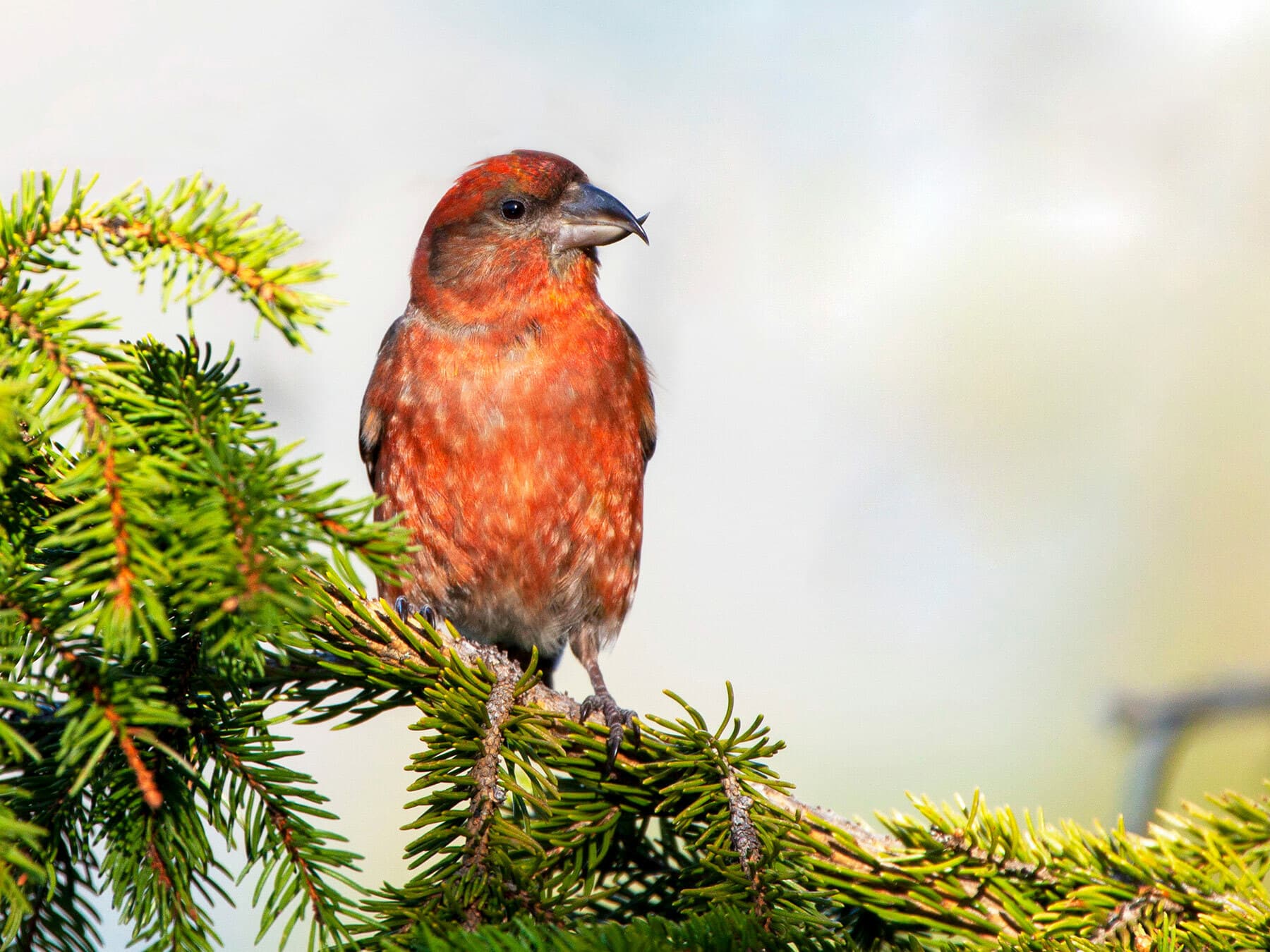
More photos
6 photos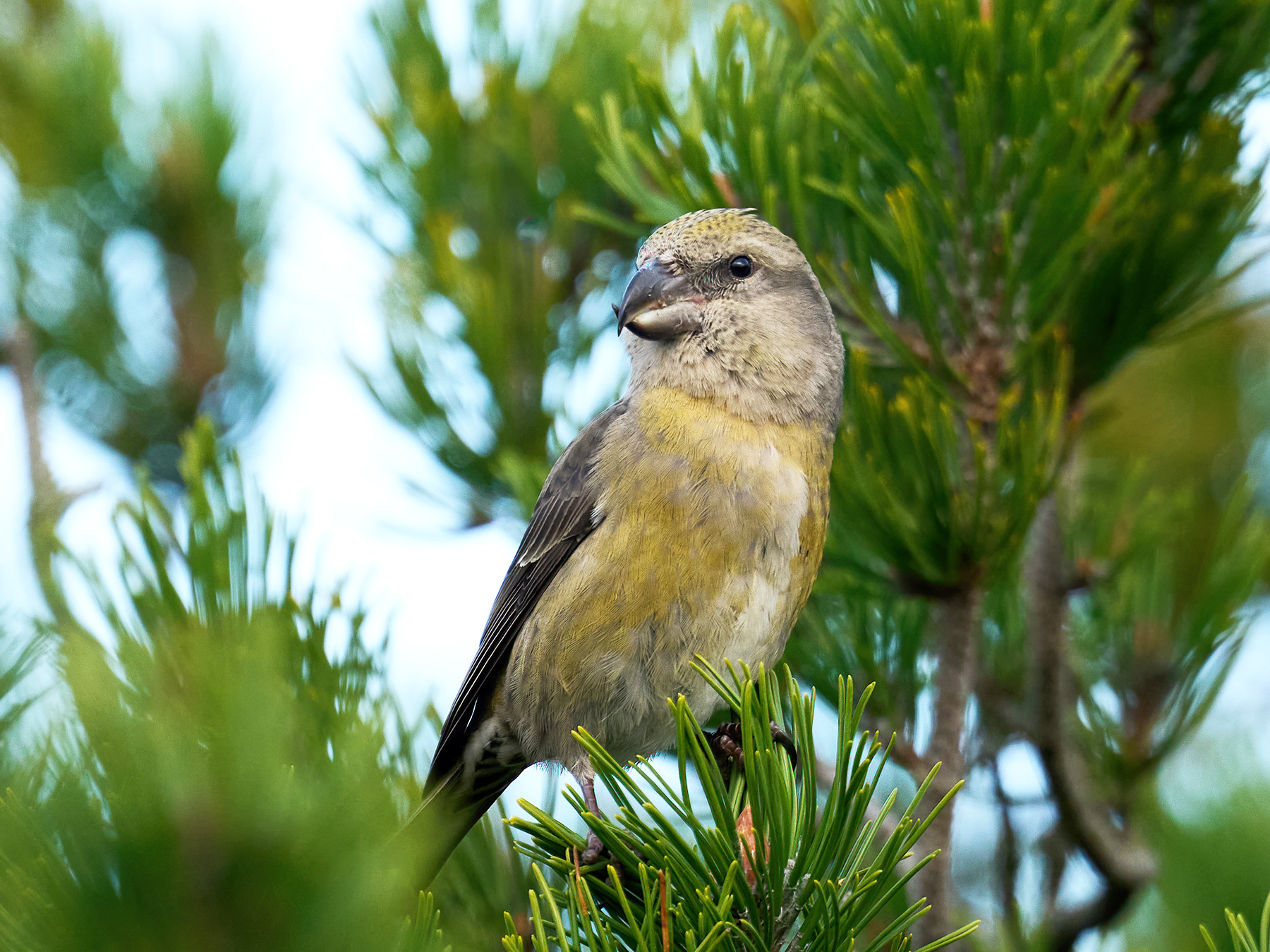
Parrot Crossbill guides
1 guidesQuick facts
- Length
- 16–18 cm
- Wingspan
- 27–30 cm
- Weight
- 40–53 g
- Lifespan
- 2–5 years · oldest recorded 6 years
- Family
- Finches
- Migration
- Partial migrant
- Global status (IUCN)
- Least Concern
- World population
- 848,000 - 3,120,000 mature individuals
- Population trend
- Stable
- Scientific name
- Loxia pytyopsittacus
Sources
4- 1BirdLife International. 2016. Loxia pytyopsittacus. The IUCN Red List of Threatened Species 2016: e.T22720638A88651987. Source (opens in a new tab)
- 2BirdLife International. 2016. Loxia pytyopsittacus. The IUCN Red List of Threatened Species 2016: e.T22720638A88651987. Source (opens in a new tab)
- 3BirdLife International. 2016. Loxia pytyopsittacus. The IUCN Red List of Threatened Species 2016: e.T22720638A88651987. Source (opens in a new tab)
- 4Fransson, T., Kolehmainen, T., Kroon, C., Jansson, L. & Wenninger, T., EURING list of longevity records for European birds (2010) Source (opens in a new tab)

Checked by
Nathan Cope, founder and editor
Nathan founded Birdfact and leads its writers and contributors in the UK, the US and Canada. He has watched and studied birds for more than ten years, and checks every article and species guide before it’s published.