
Oriental Honey-buzzard
Crested Honey Buzzard, Eastern Honey Buzzard, Asiatic Honey Buzzard, Oriental Honey Buzzard · Pernis ptilorhynchus
By the Birdfact teamChecked by Nathan Cope
On this page12 sections
How to recognise it
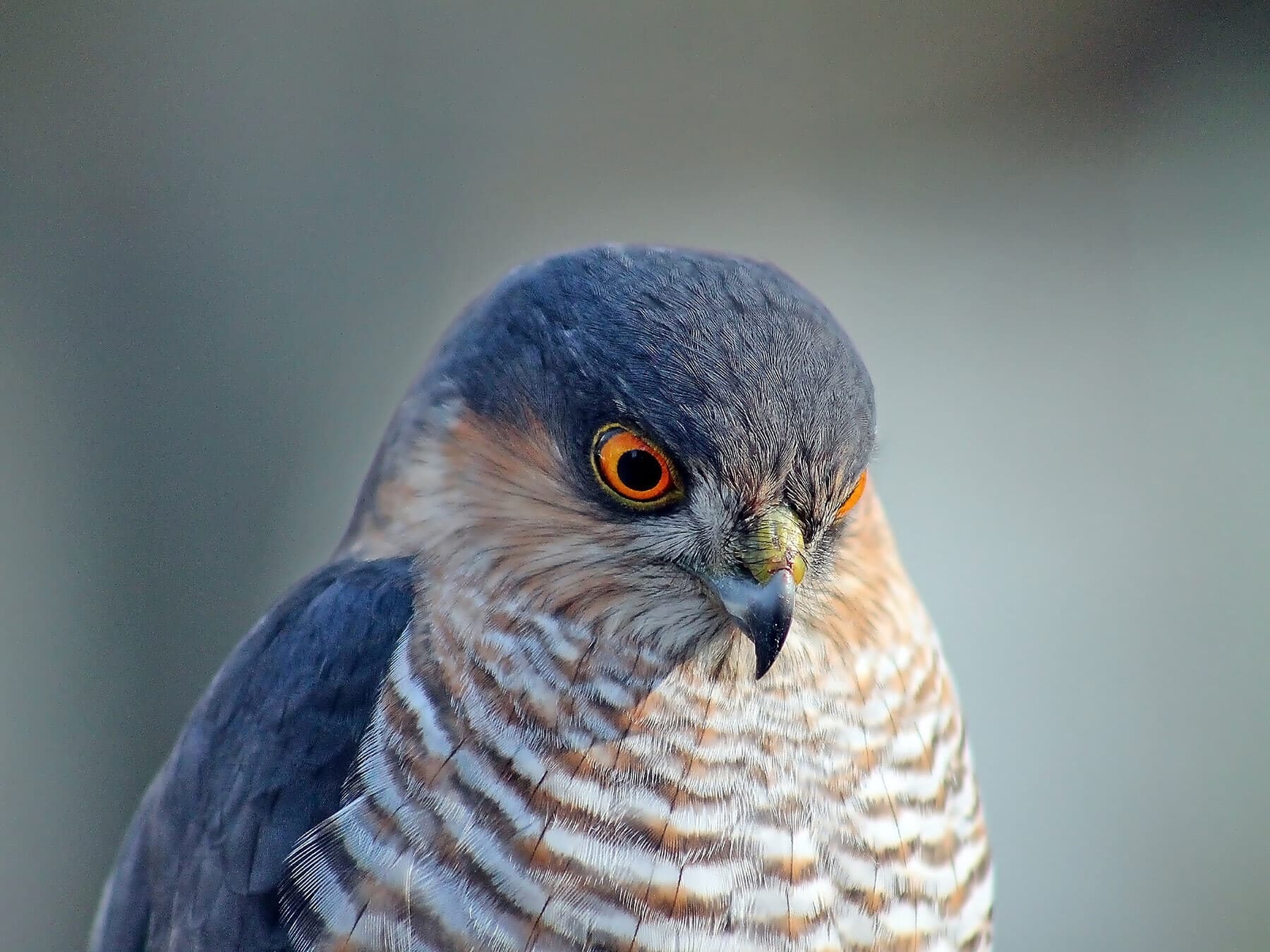
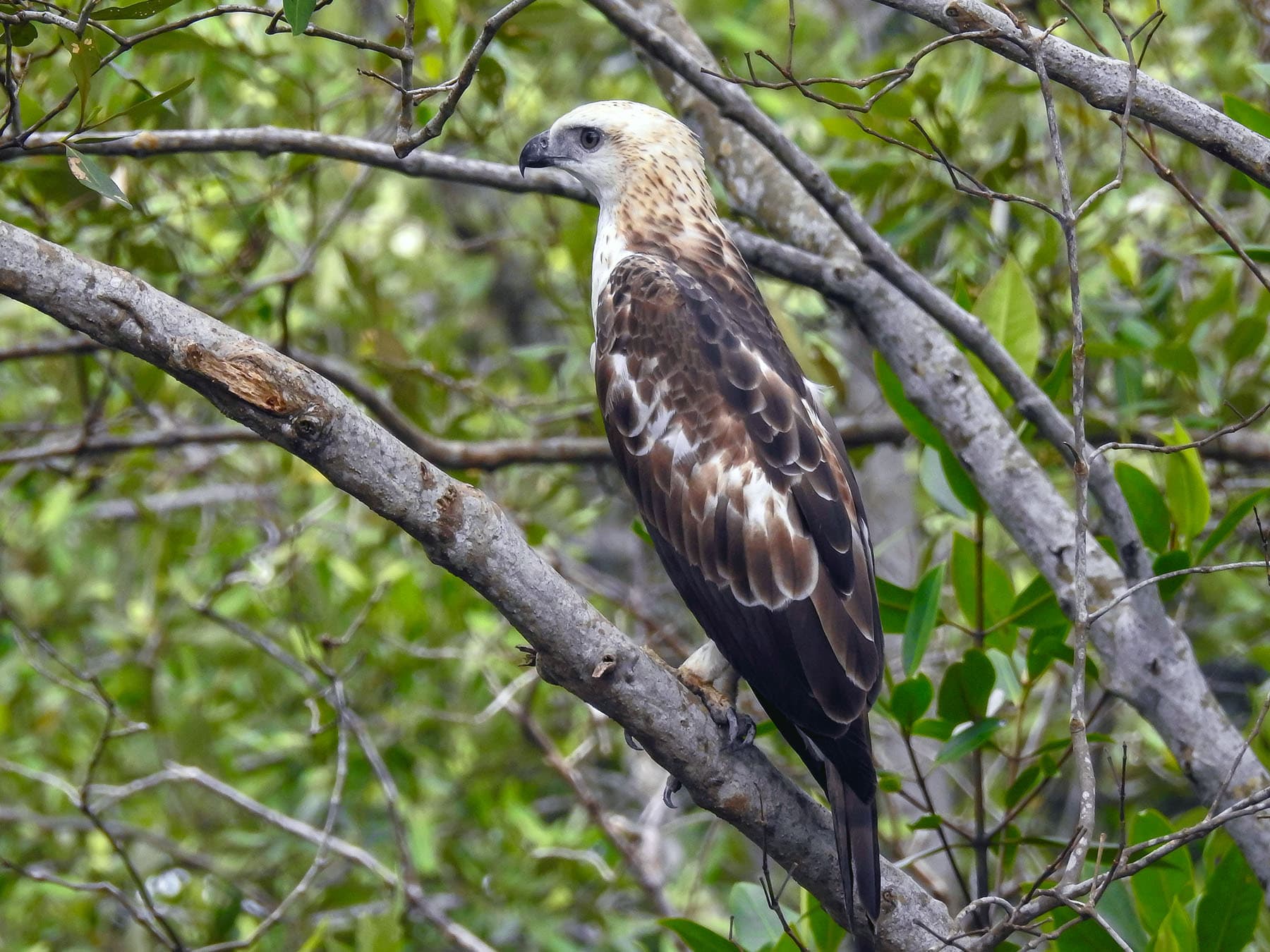
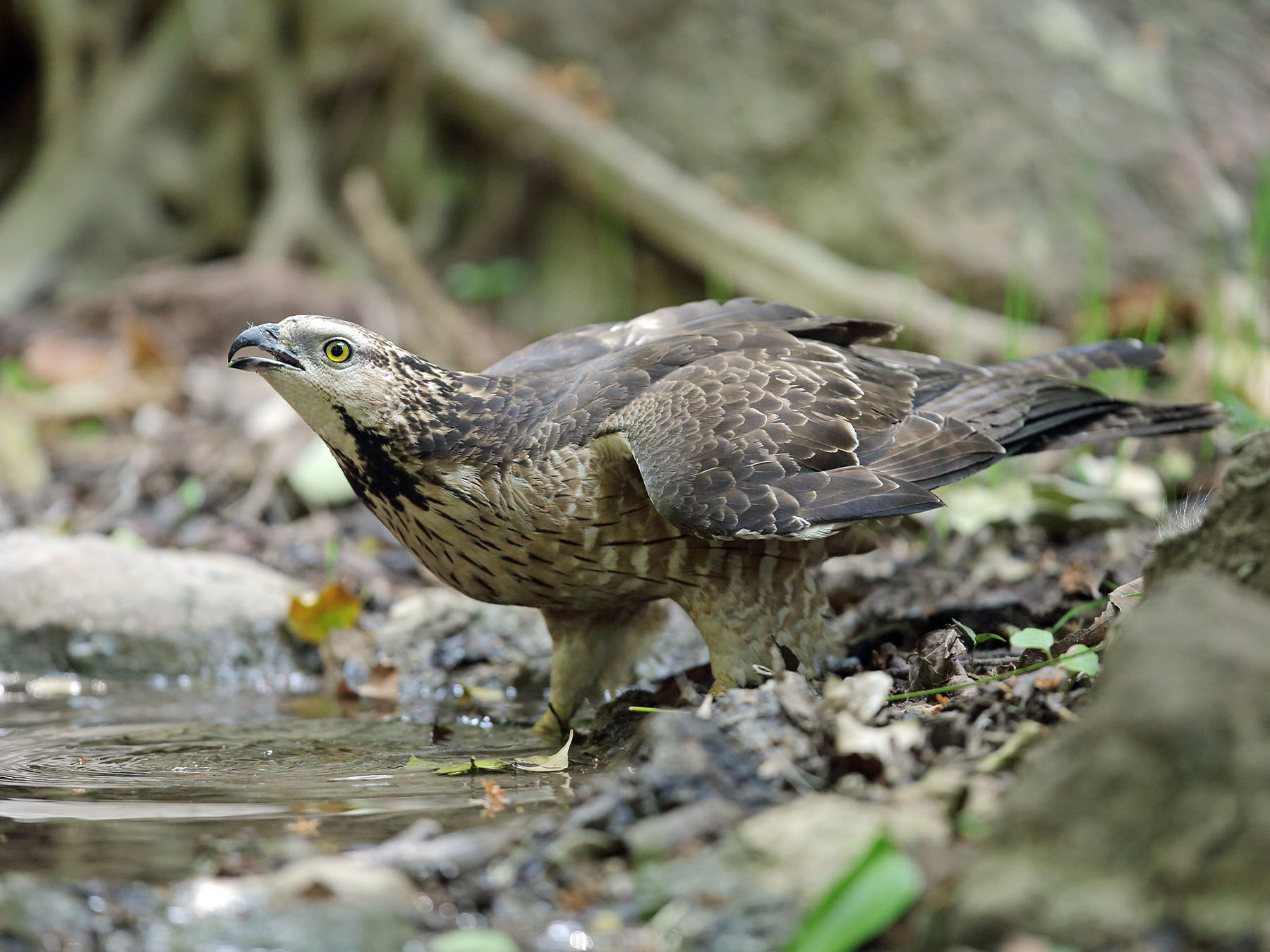
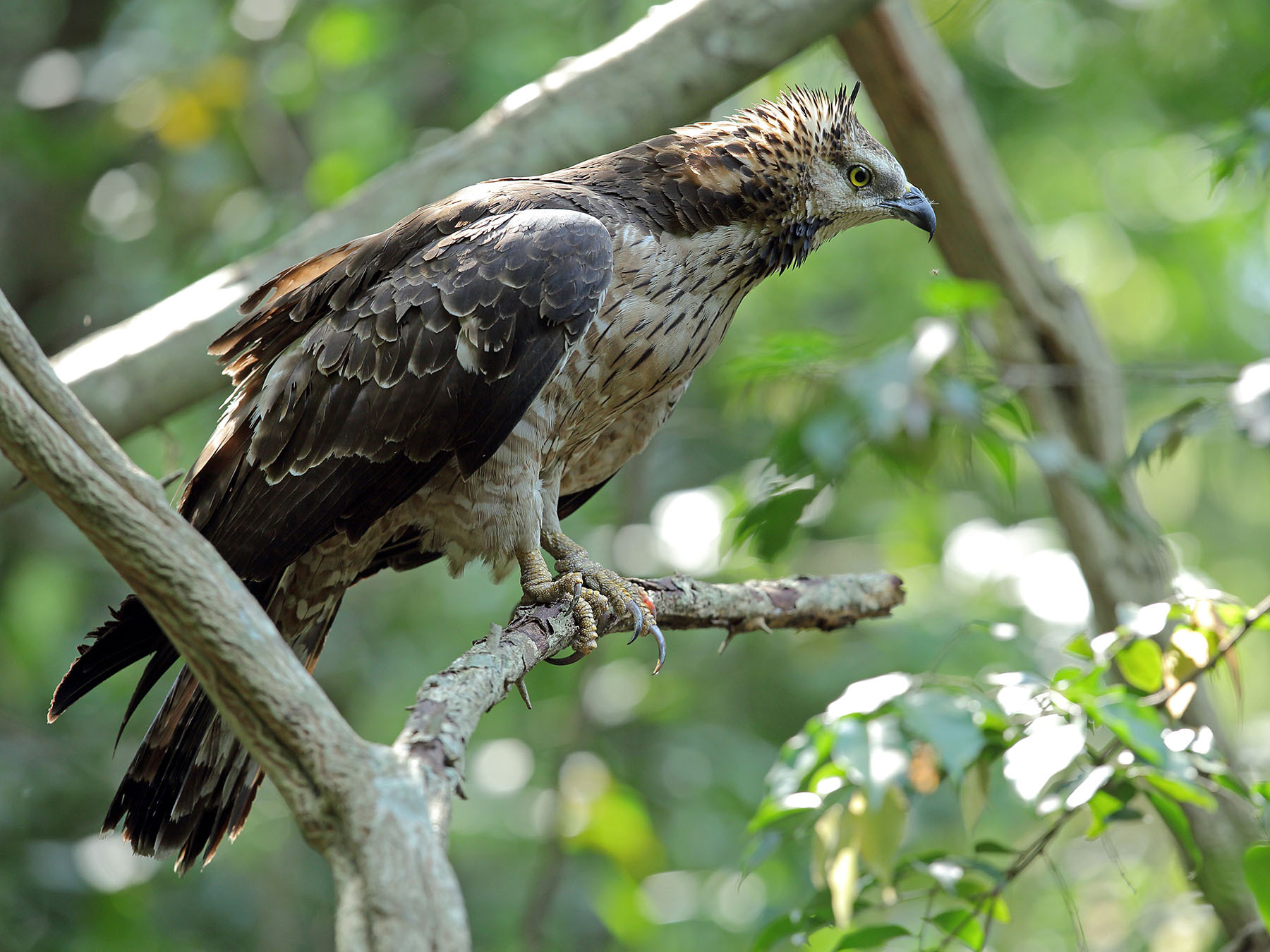
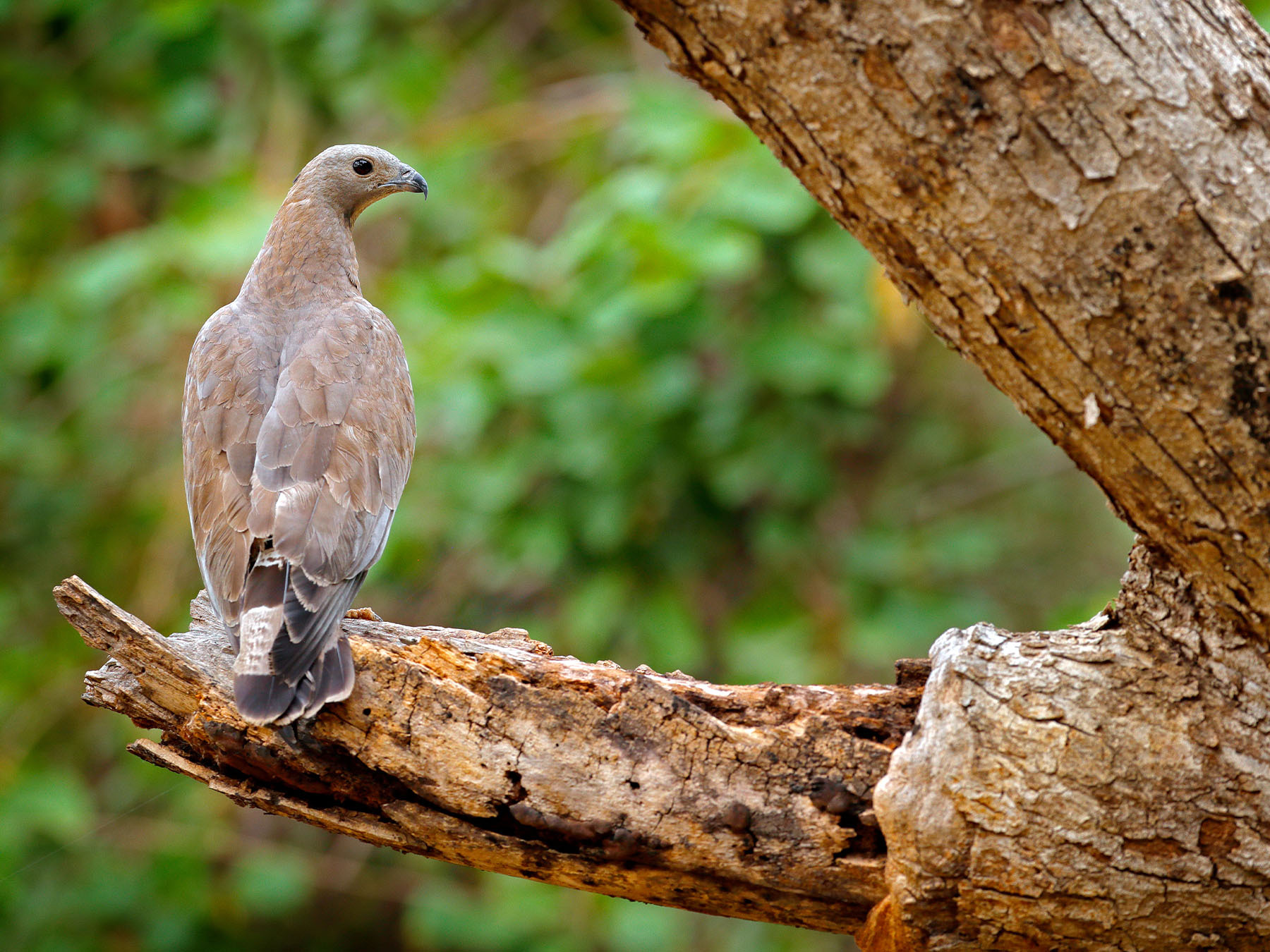
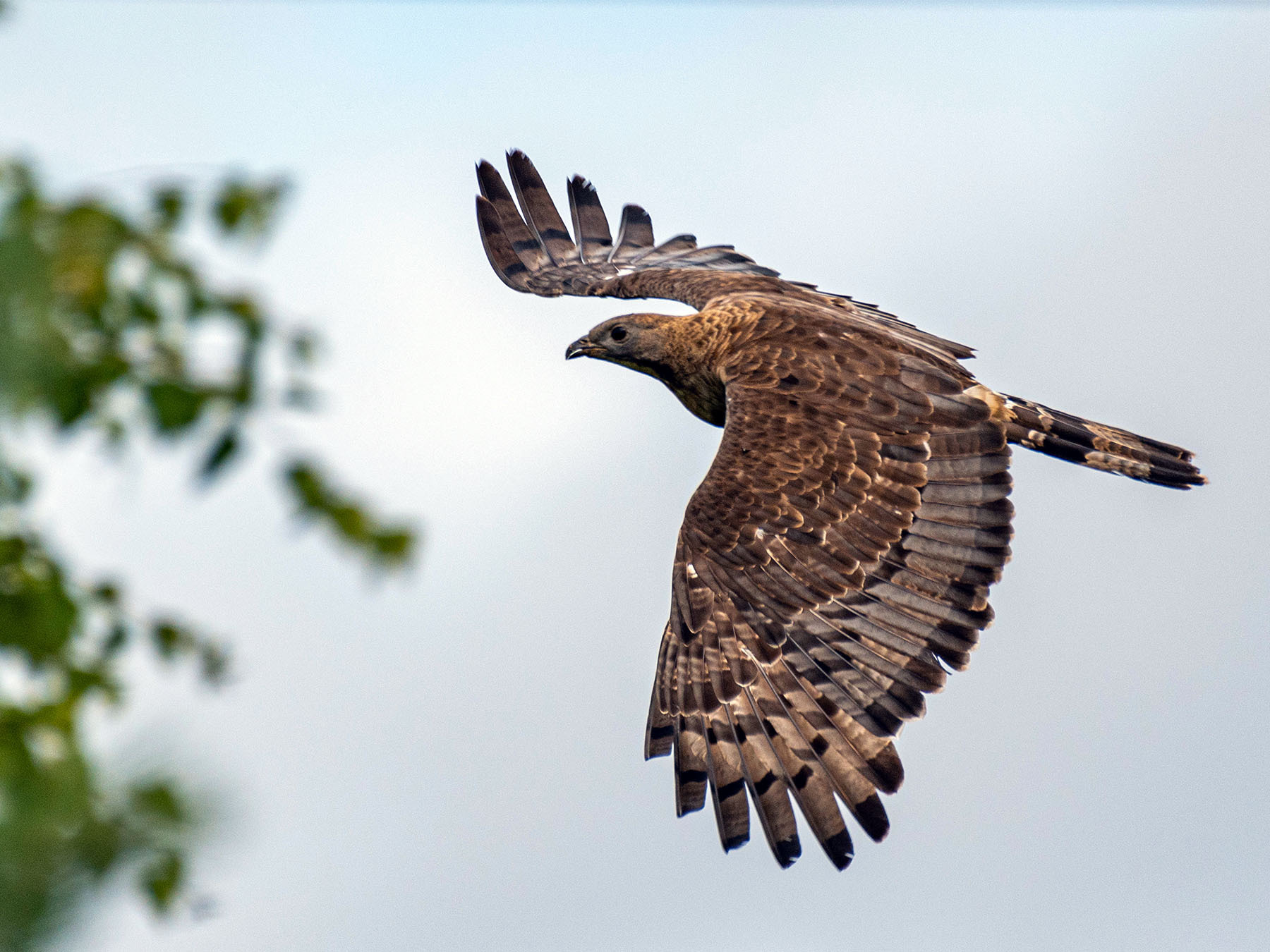
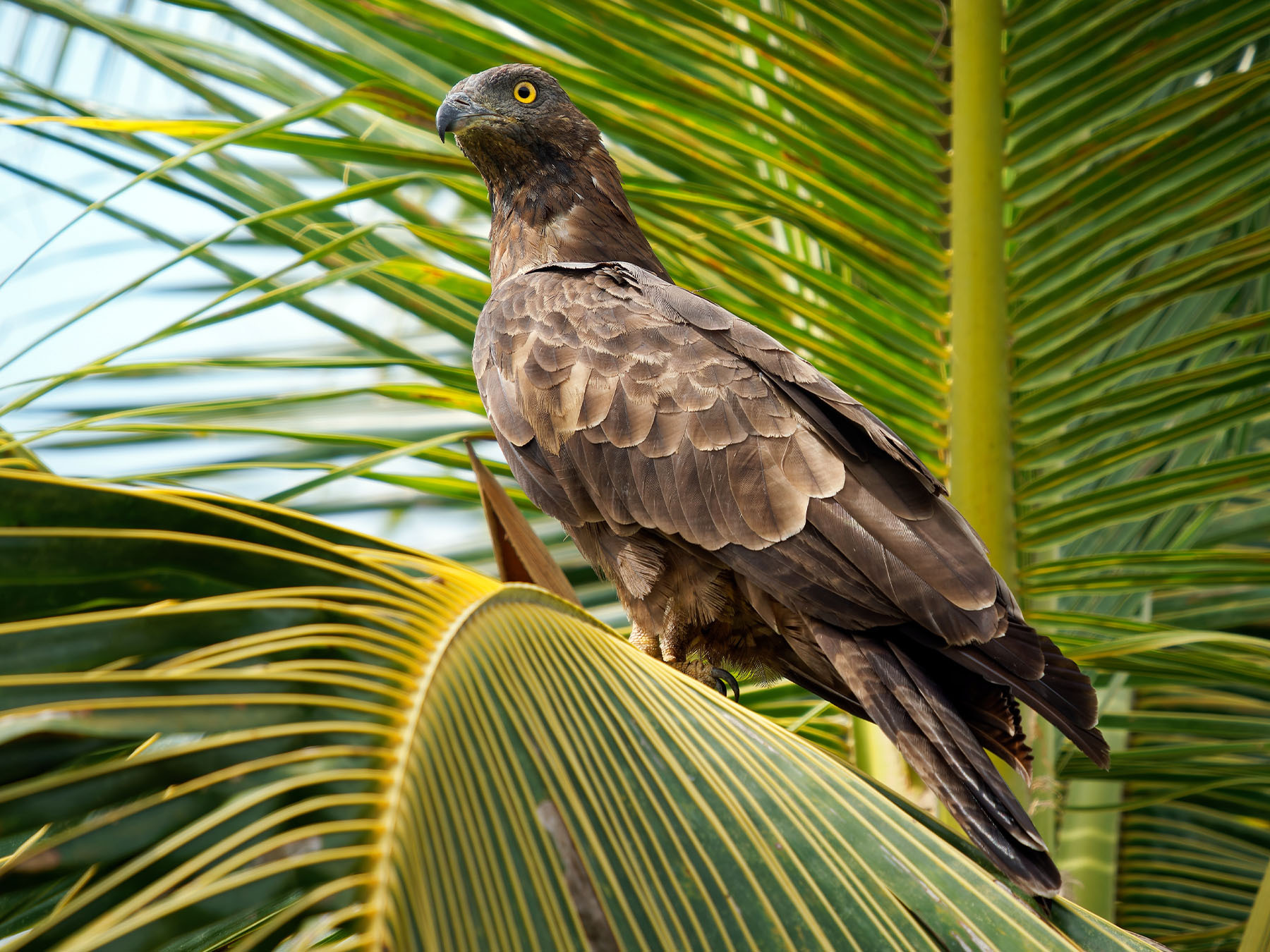
The Oriental Honey-buzzard is a large raptor. Males are typically lighter than females. Its appearance is quite variable, with plumage ranging from pale to dark brown. A distinctive feature is its crest, which varies in length depending on the subspecies.
This species shows considerable variation across its range, with different populations showing distinct characteristics in size, colouring, and crest development.
While generally brown in colour, individuals can show various patterns of barring on their underparts, and some may display a distinctive dark marking on their chests.
Its size
Adults- Length
- 52–68 cm
- Wingspan
- 115–155 cm
- Weight
- 750–1500 g
Its song and calls
The Oriental Honey-buzzard is generally quiet but becomes more vocal during the breeding season. Its call is a high-pitched, drawn-out whistle, often described as 'pee-yew' or 'pee-oo'.
During courtship, pairs may engage in a series of rapid, piping calls.
When and where to see it
The Oriental Honey-buzzard is not recorded regularly in the UK, Ireland, the United States or Canada.
United States: recorded in 1 of the 6 years. Too few years to count as a regular visitor.
Worldwide: recorded regularly in 42 countries
Countries where it was recorded in at least 3 of the 6 years 2019–2024. Linked countries have their own bird list.
Europe (1)
Africa (1)
Asia (39)
- Bahrain
- Bangladesh
- Bhutan
- Brunei
- Cambodia
- China
- Georgia
- Hong Kong SAR China
- India
- Indonesia
- Iran
- Israel
- Japan
- Jordan
- Kazakhstan
- Kuwait
- Kyrgyzstan
- Laos
- Lebanon
- Macao SAR China
- Malaysia
- Mongolia
- Myanmar (Burma)
- Nepal
- Oman
- Pakistan
- Palestinian Territories
- Philippines
- Qatar
- Saudi Arabia
- Singapore
- South Korea
- Sri Lanka
- Taiwan
- Thailand
- Timor-Leste
- Turkey
- United Arab Emirates
- Vietnam
Oceania (1)
Data: EOD – eBird Observation Dataset (Cornell Lab of Ornithology), accessed via GBIF.org, CC BY 4.0. Records from 2019–2024, aggregated and filtered by Birdfact. How these lists are made
Tips for seeing it
- Look for them soaring high in the sky with flat wings
- Observe near forested areas, especially during migration seasons
- Listen for their high-pitched, whistling calls
- Watch for their distinctive head-bobbing behaviour when perched
What it eats
The Oriental Honey-buzzard primarily feeds on the larvae and combs of bees and wasps. They also consume other insects, small vertebrates, and occasionally fruits.
Their specialised face feathers and scale-like head plumage protect them from stings as they raid nests of social insects.
Nesting and breeding
Breeding typically occurs from April to August, varying by region. Oriental Honey-buzzards form monogamous pairs and engage in aerial displays during courtship.
Nests are constructed high in trees, often near the trunk or a main fork. The nest is a platform of sticks lined with green leaves. Females usually lay 2 eggs, which are white with brown markings.
Both parents participate in incubation, which lasts about 30-35 days. The young fledge after 40-45 days but may remain dependent on their parents for several more weeks.
Behaviour
Oriental Honey-buzzards are known for their unique feeding behaviour, using their specialised feathers around the face to protect against bee stings while raiding nests.
They are often seen soaring on thermals with flat wings, occasionally performing slow, deep wingbeats. These birds are generally solitary but may gather in small groups during migration.
Conservation
While the Oriental Honey-buzzard is currently listed as Least Concern, it faces threats from habitat loss and degradation in parts of its range.
Conservation efforts focus on protecting forested areas and monitoring populations, particularly along migration routes.
Similar birds
Often mistaken for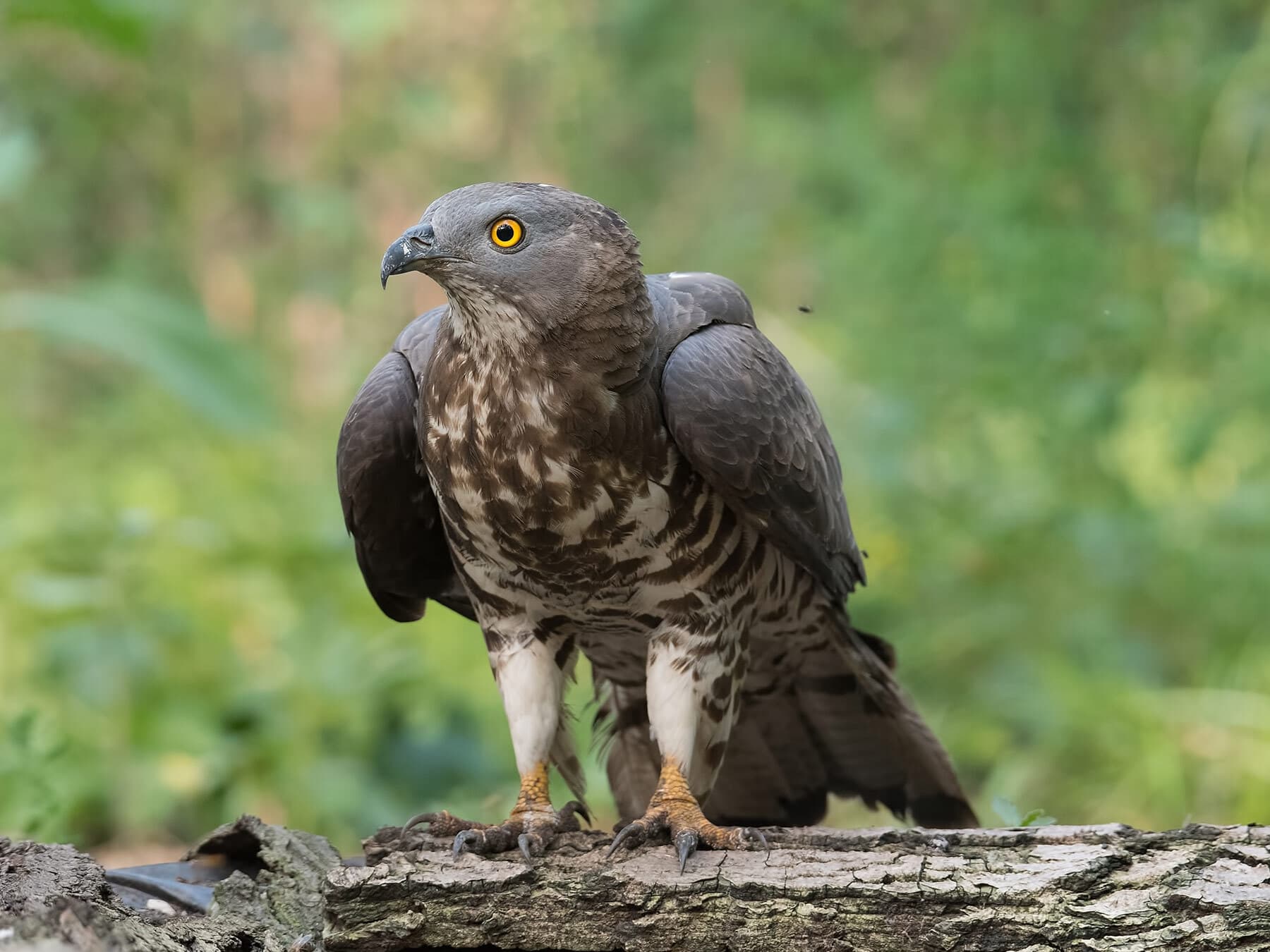
More photos
6 photos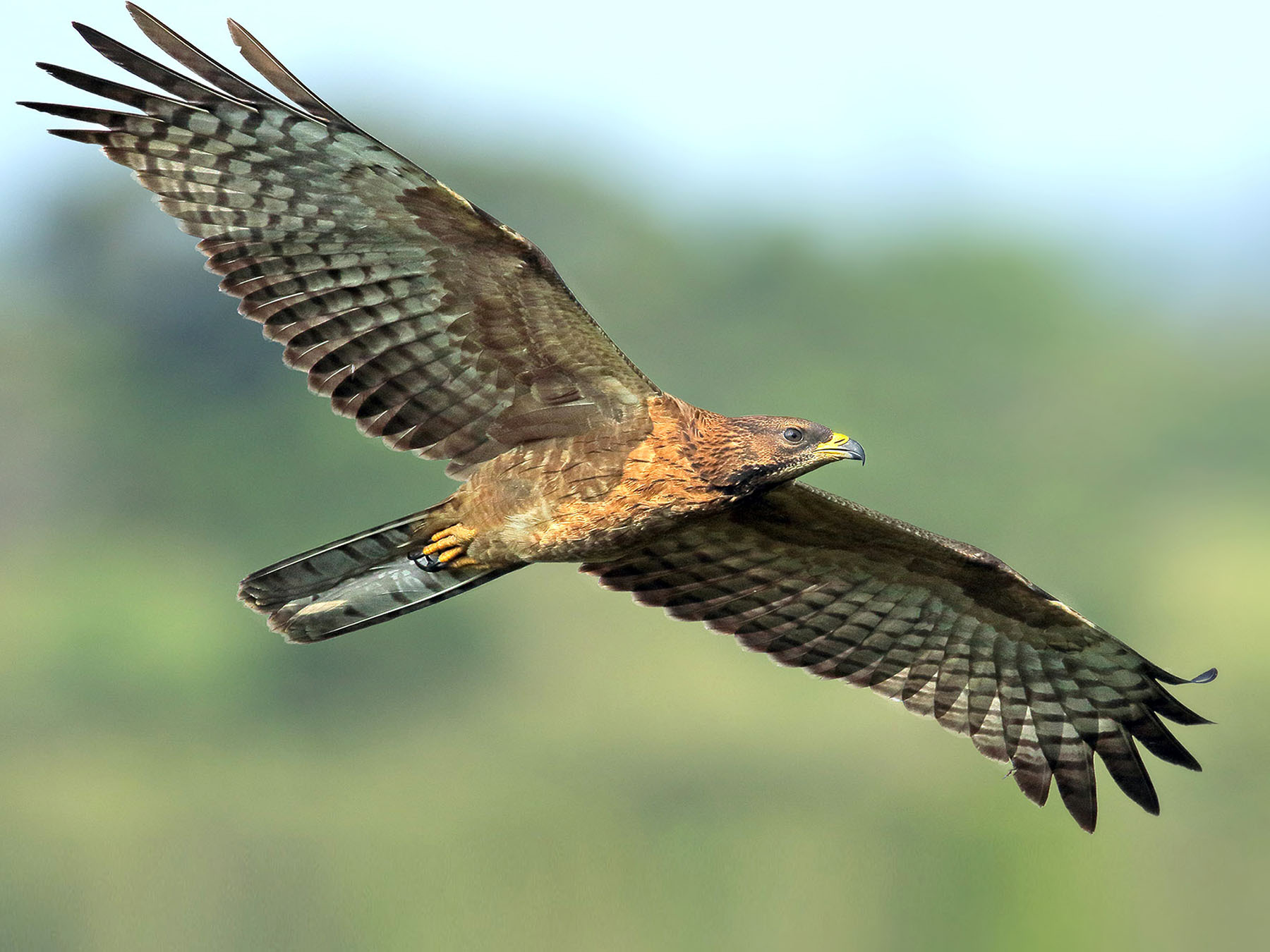
Quick facts
- Length
- 52–68 cm
- Wingspan
- 115–155 cm
- Weight
- 750–1500 g
- Lifespan
- 8–10 years
- Family
- Hawks & Eagles
- Migration
- Partial migrant
- Global status (IUCN)
- Least Concern
- World population
- 66,666 - 666,666 mature individuals
- Population trend
- Decreasing
- Also called
- Crested Honey Buzzard, Eastern Honey Buzzard, Asiatic Honey Buzzard, Oriental Honey Buzzard
- Scientific name
- Pernis ptilorhynchus
Sources
3- 1BirdLife International. 2021. Pernis ptilorhynchus. The IUCN Red List of Threatened Species 2021: e.T22694995A199637824. Source (opens in a new tab)
- 2Global Forest Watch (2021)
- 3BirdLife International. 2021. Pernis ptilorhynchus. The IUCN Red List of Threatened Species 2021: e.T22694995A199637824. Source (opens in a new tab)

Checked by
Nathan Cope, founder and editor
Nathan founded Birdfact and leads its writers and contributors in the UK, the US and Canada. He has watched and studied birds for more than ten years, and checks every article and species guide before it’s published.