


Nightjar
European Nightjar, Eurasian Nightjar · Caprimulgus europaeus
By the Birdfact teamChecked by Nathan Cope
On this page14 sections
How to recognise it
The Nightjar is a distinctive bird but rarely seen clearly in the light of day. Continue reading for more Nightjar appearance and identification tips.
What do Nightjars look like?
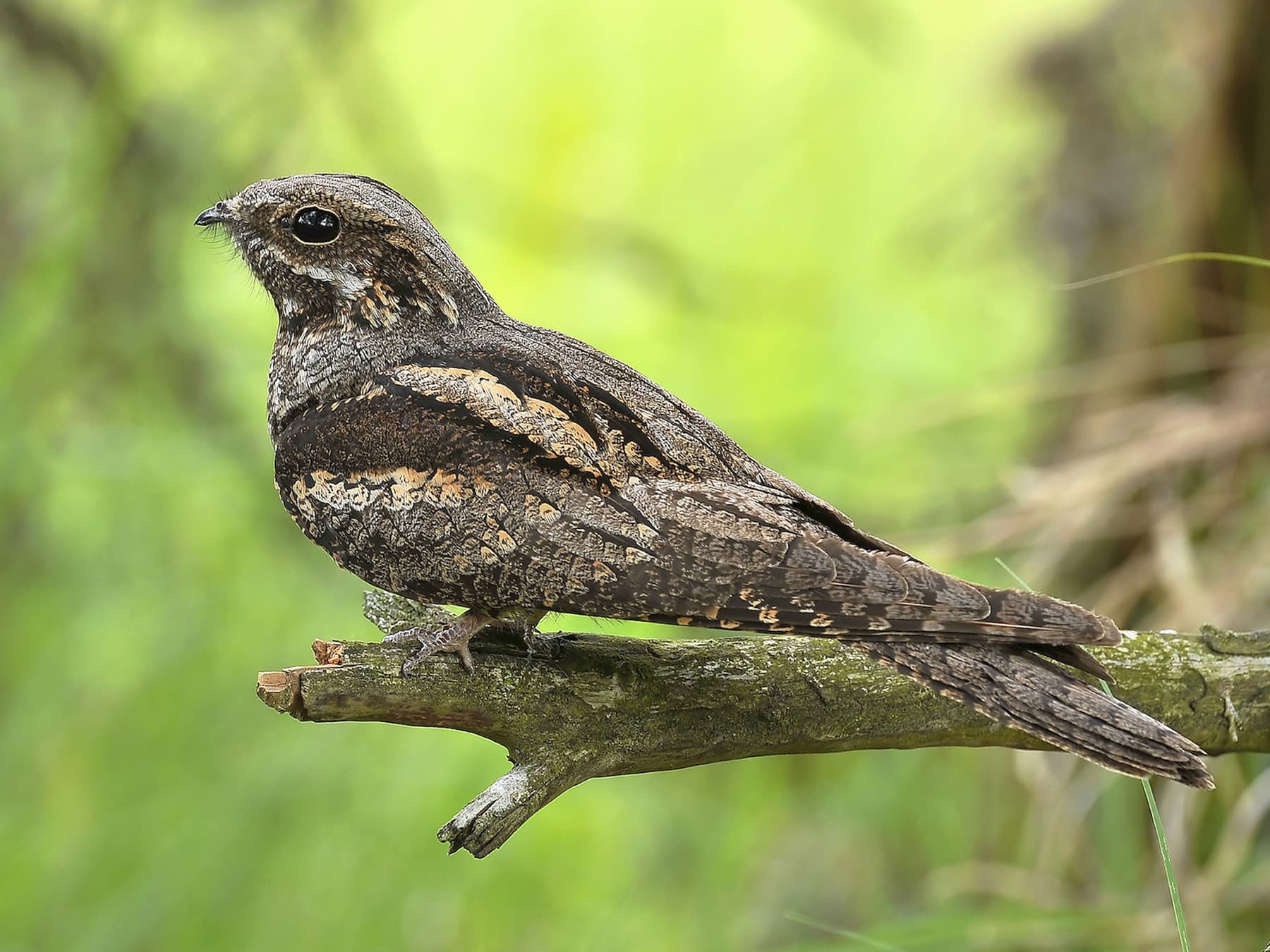
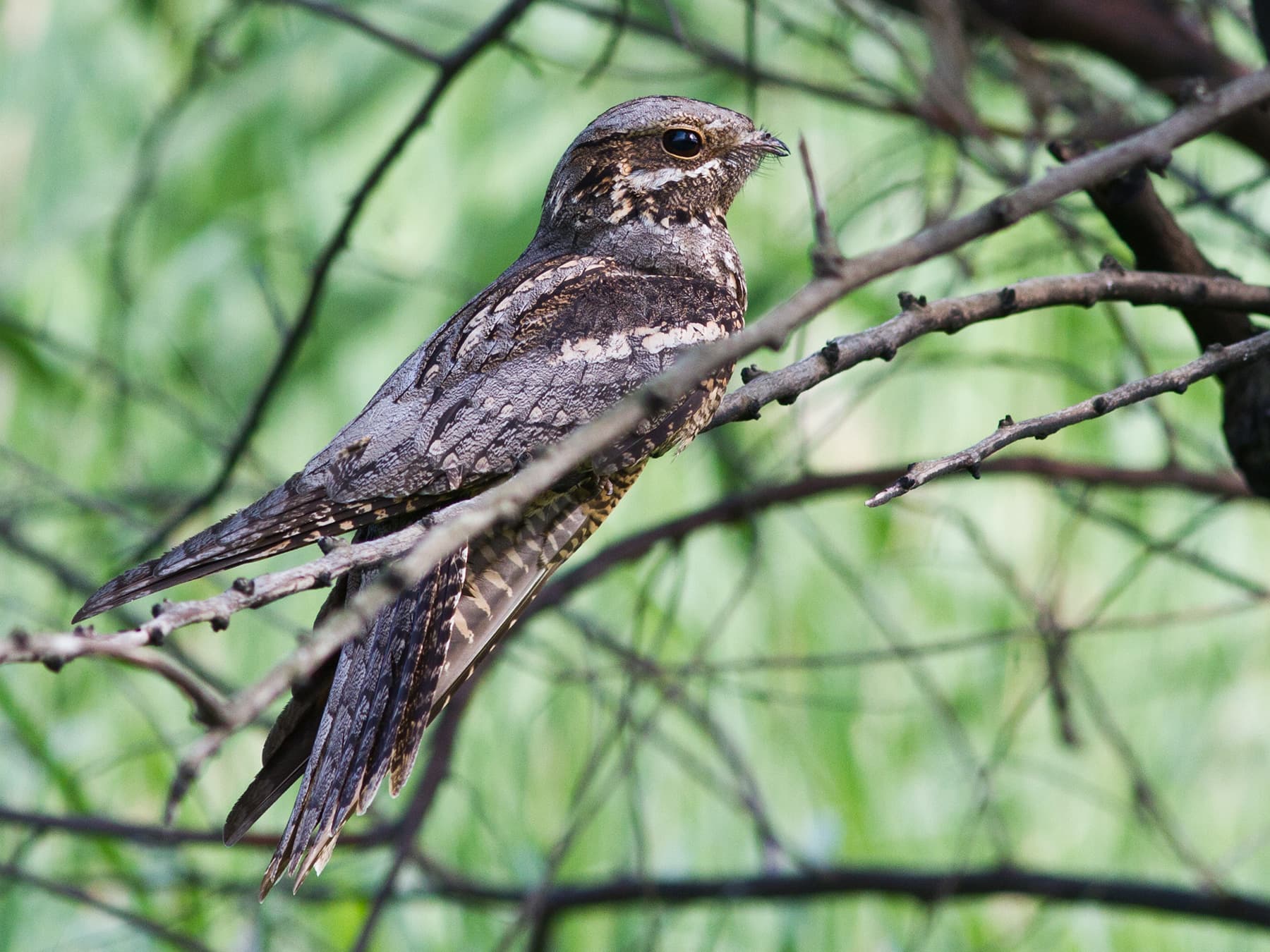
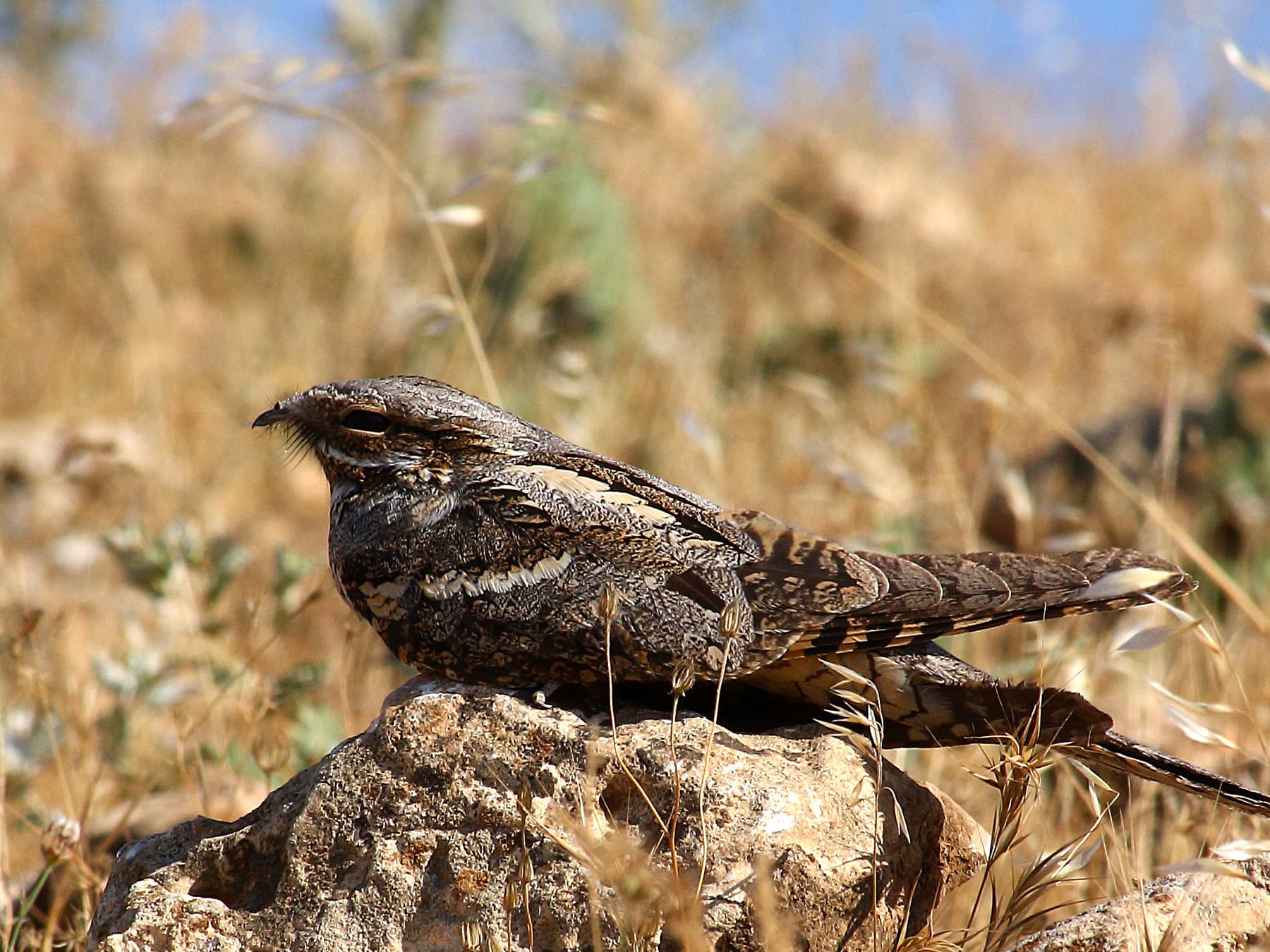
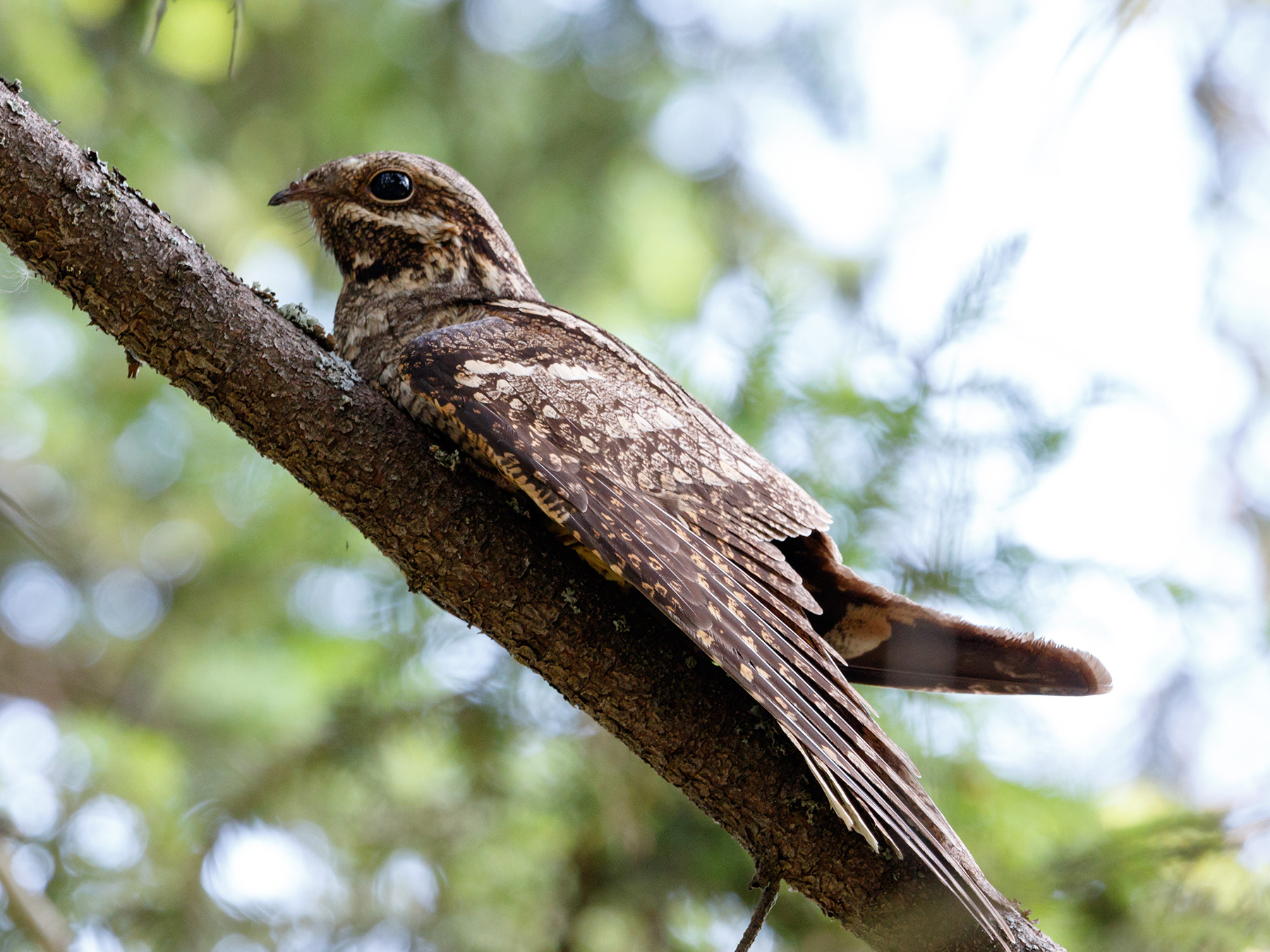
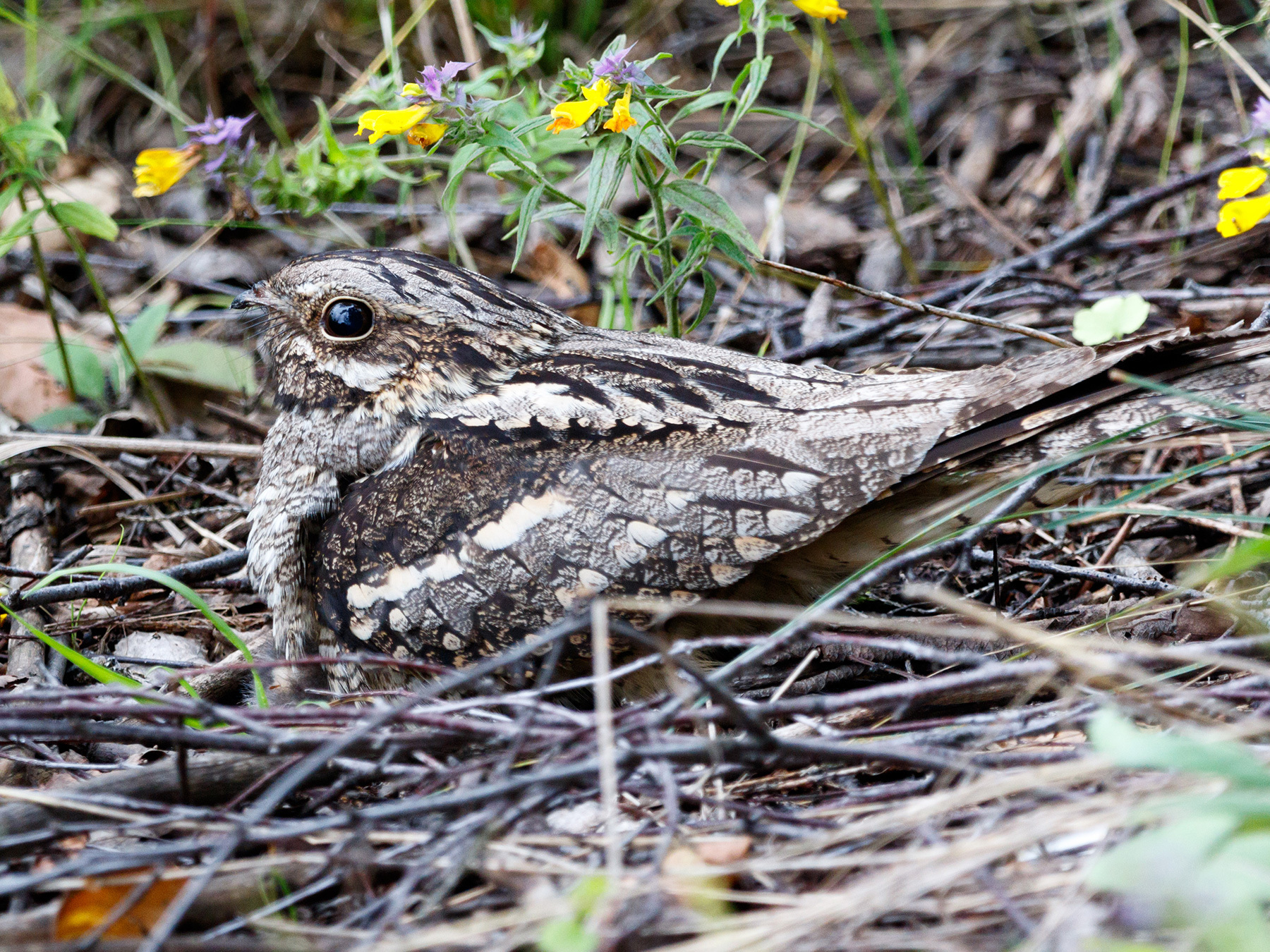
Nightjars are Cuckoo-like birds with long wings and tails. They have very short legs, which creates the impression that perched birds are lying on their belly. Nightjars appear hawk-like in silhouette and fly slowly, with long periods of gliding interspersed with a few wingbeats.
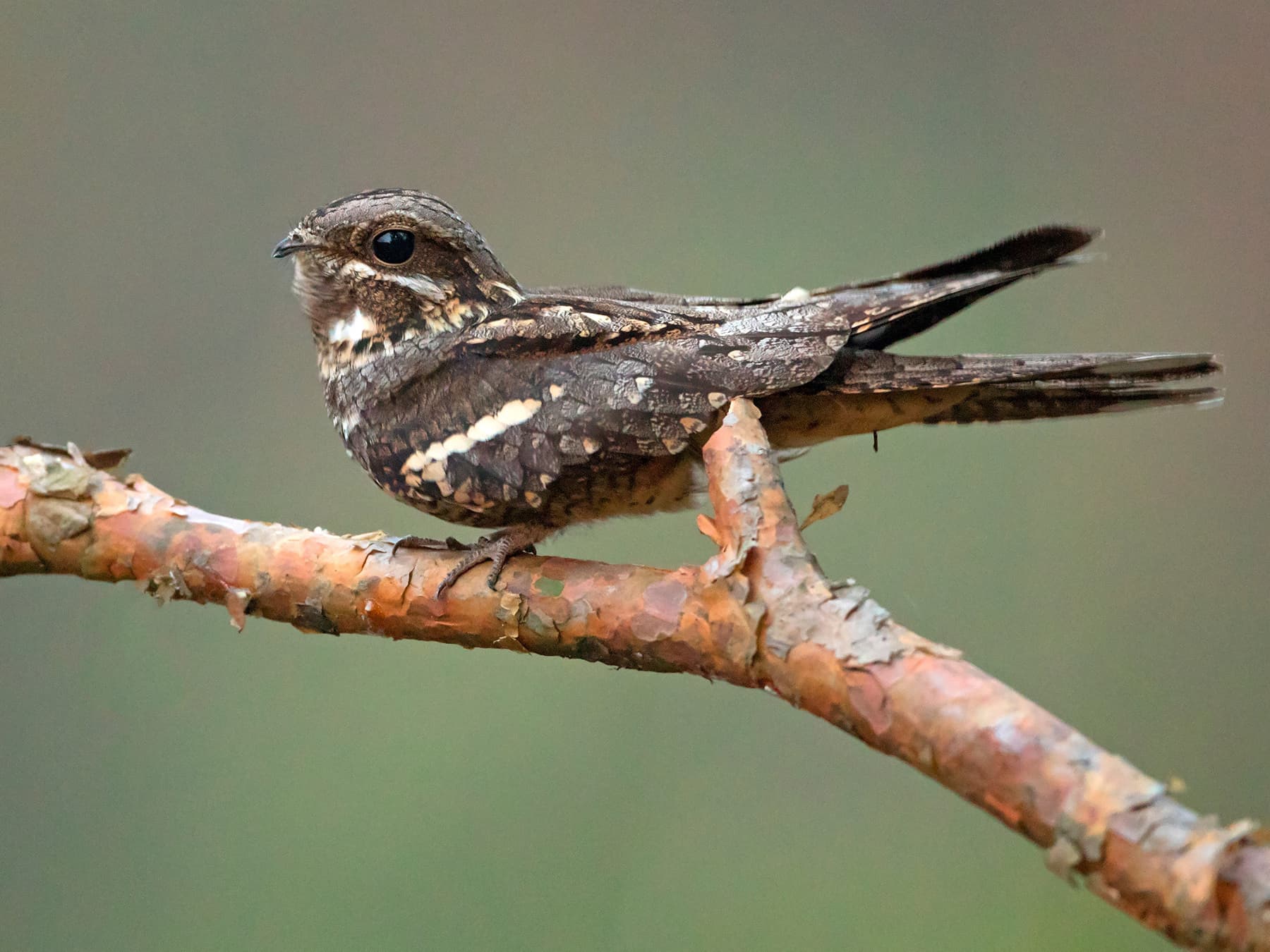
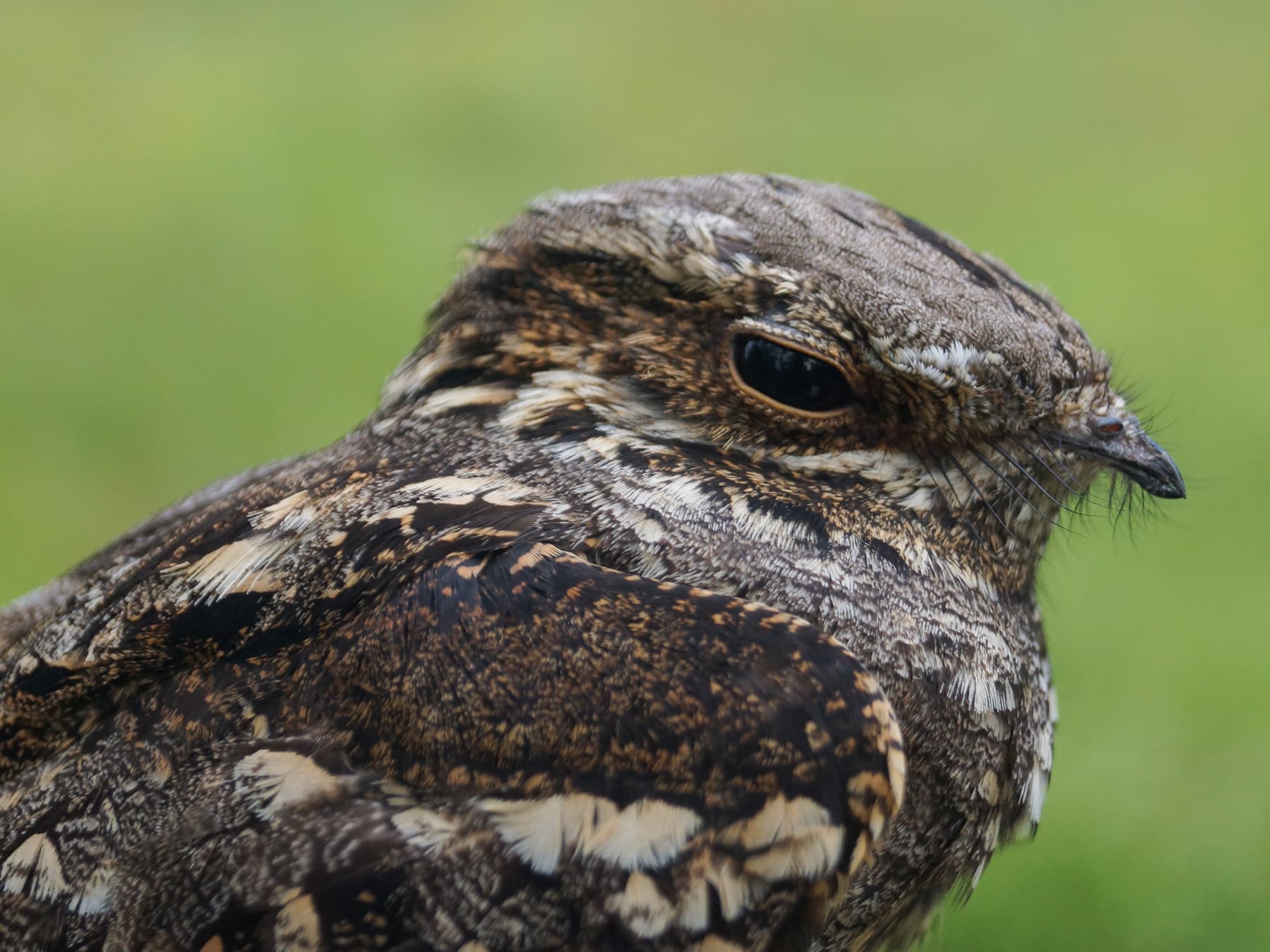
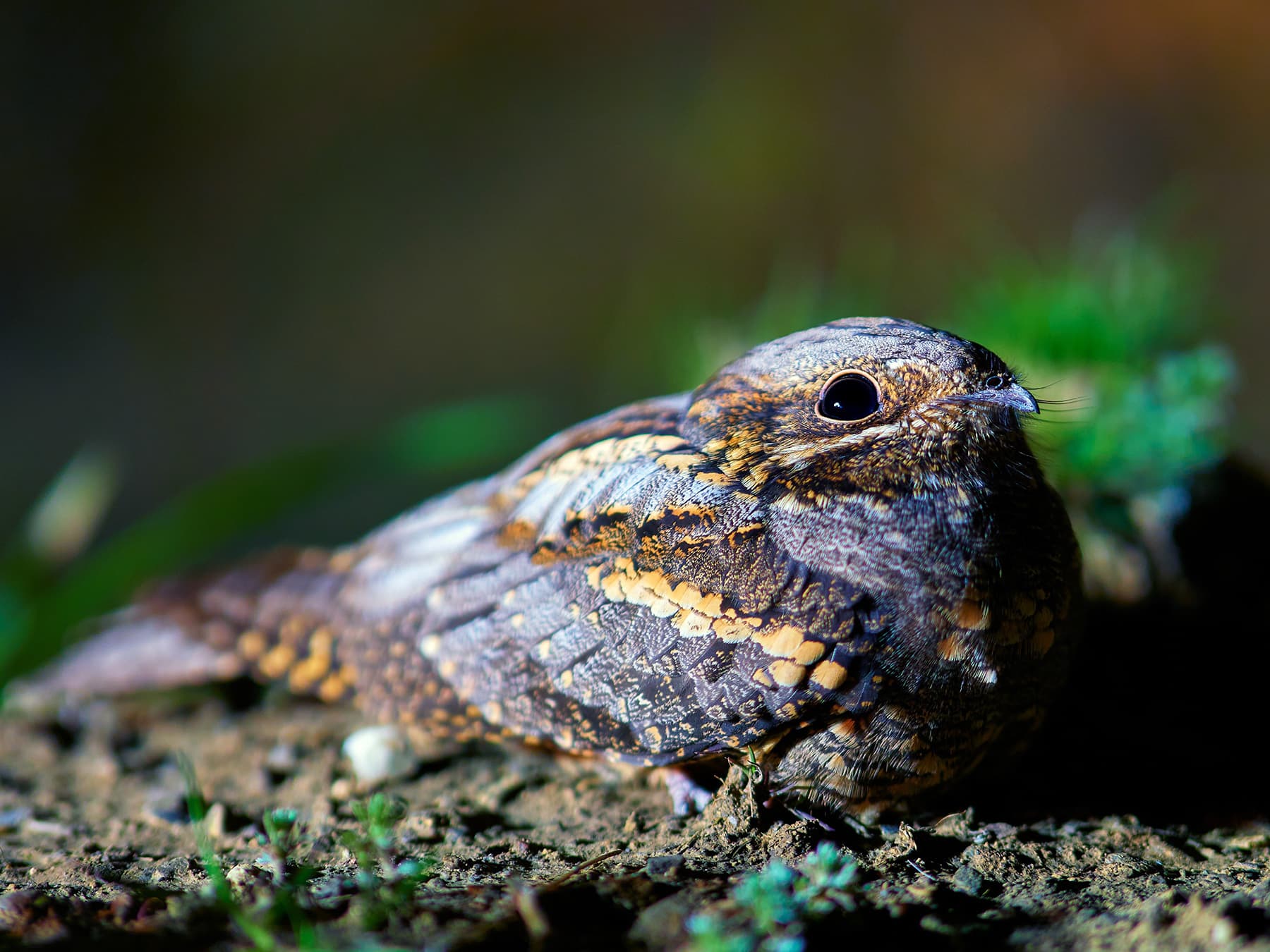
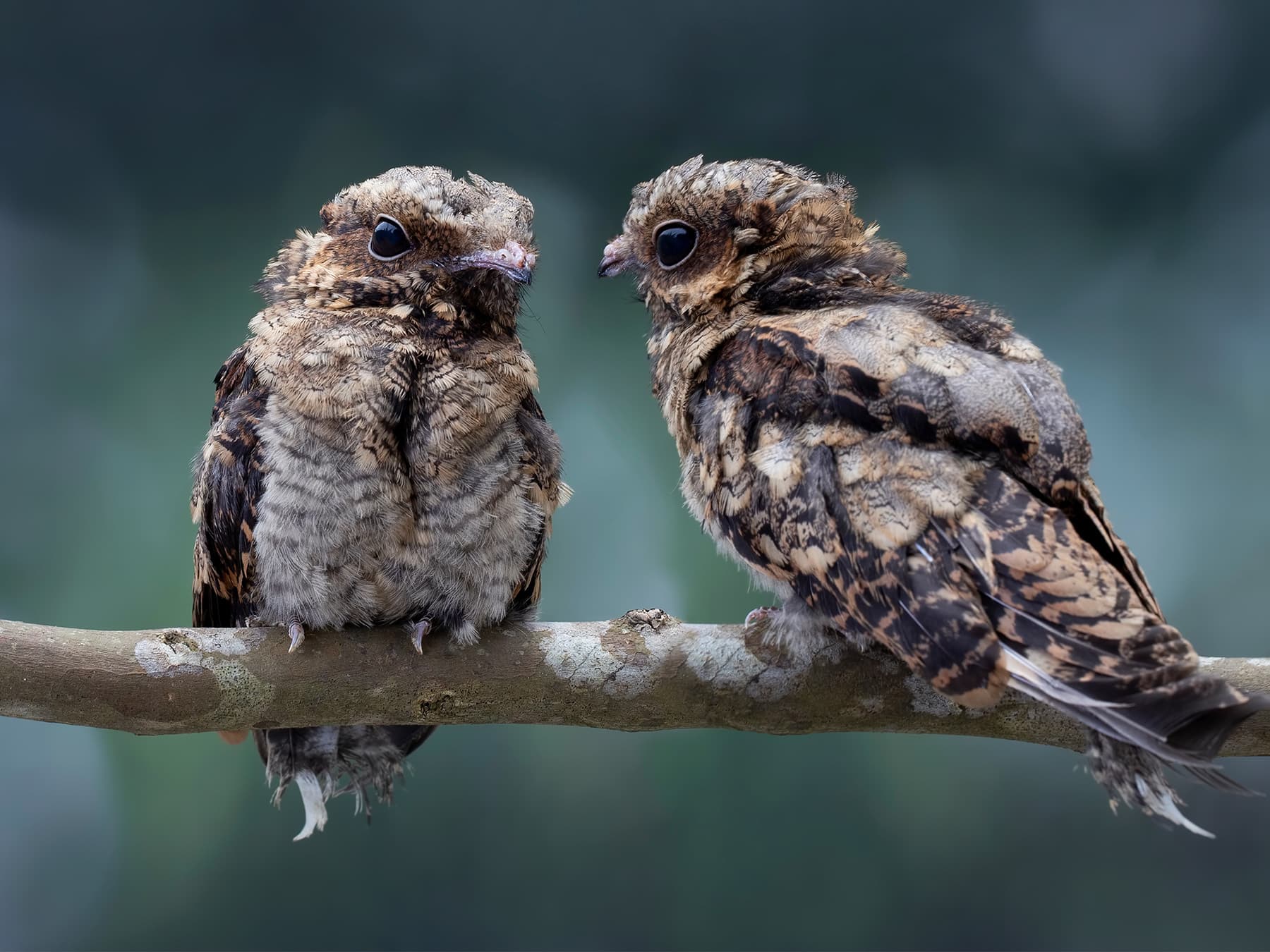
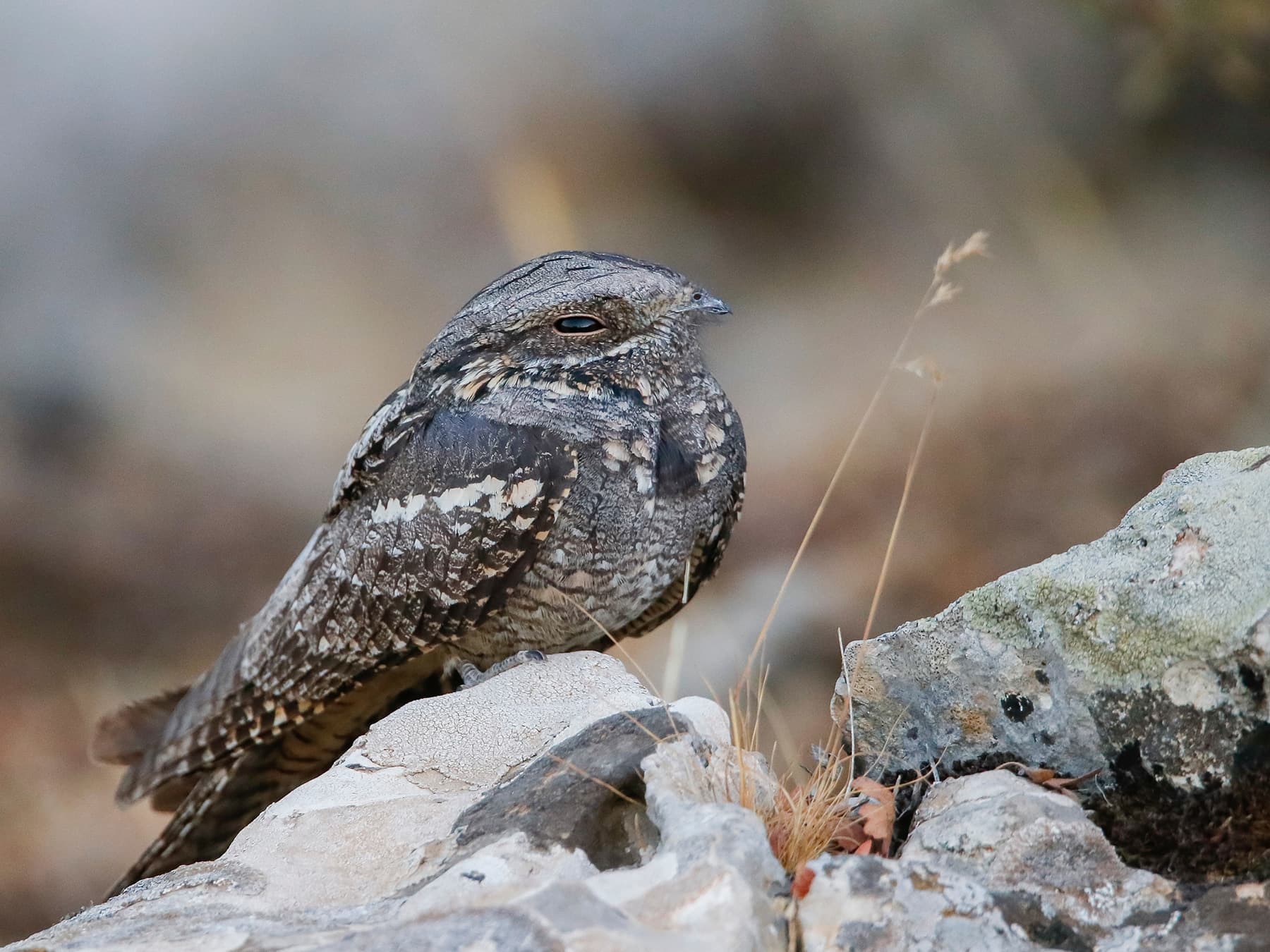
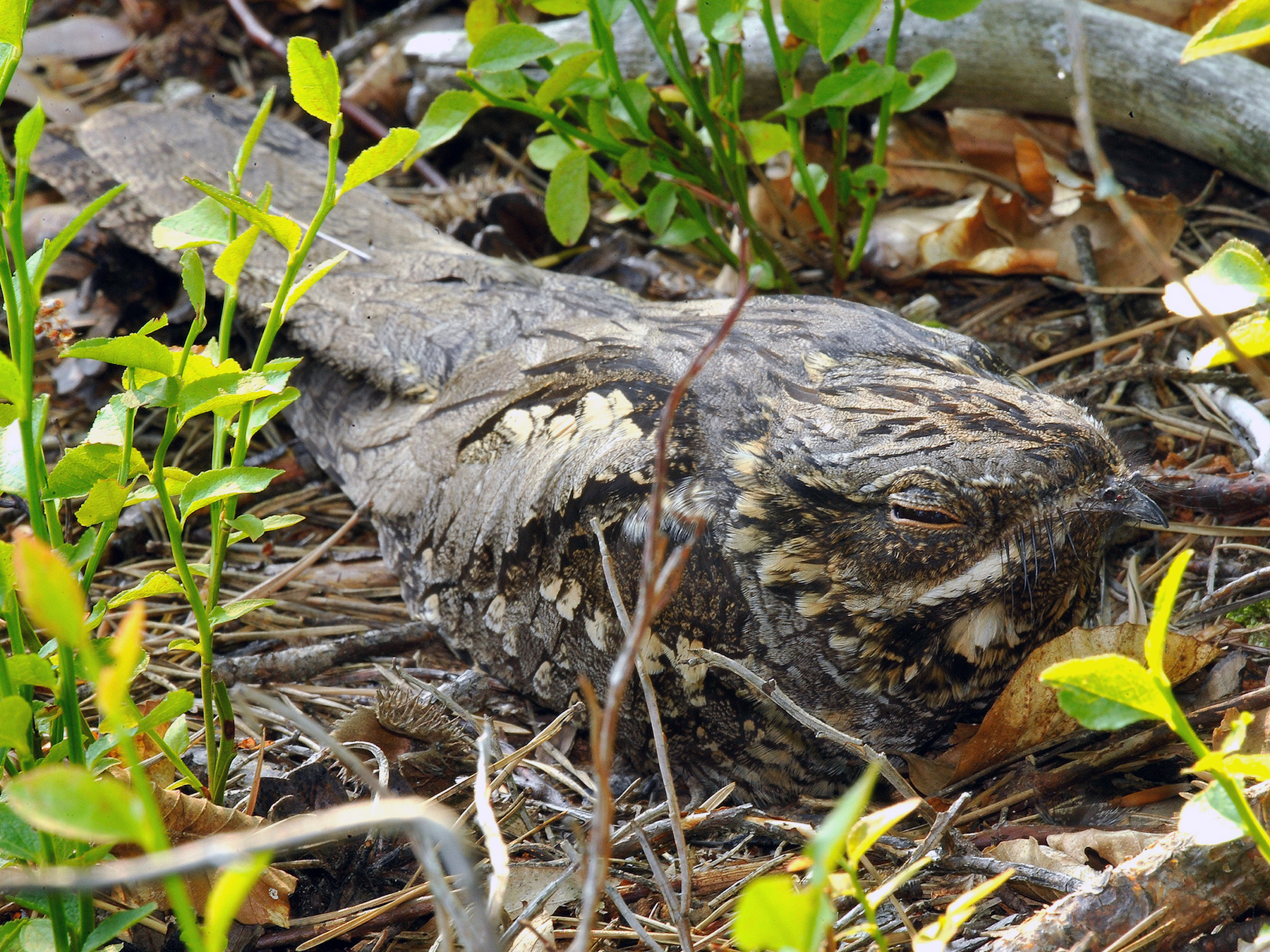
Good light reveals the Nightjar's astonishing camouflage. These birds are marked in grey and brown, creating a bark-like texture. They have huge black eyes and a strange, short bill surrounded by hair-like bristles. Their most distinctive plumage features are barred primary and tail feathers and cream-white stripes on the chin and wing.
Nightjars are sexually dimorphic, and the most obvious differences are seen in flight. Male Nightjars have a white spot on either side of their tail tip and white spots towards the end of the wings. Female Nightjars lack these prominent markings. Juveniles are similar to females but paler than adults.
Its size
Adults- Length
- 24–28 cm
- Wingspan
- 52–60 cm
- Weight
- 51–101 g
Its song and calls
The Nightjar has an unusual and distinctive call. Their cryptic and nocturnal habits make them easier to hear than see.
What sound does a Nightjar make?
The most commonly heard Nightjar vocalisation is an insect-like churring. This strange sound is the male's song and is usually heard in the early evening and before dawn. Both sexes produce a variety of frog-like contact calls and hiss when threatened.
- Song0:00 / 0:25
Recorded in Bourgogne-Franche-Comté, France · July 2025
- Call0:00 / 0:51
Recorded in Surrey, England
Aubrey John Williams / The British Library Board · Wikimedia Commons · CC BY-SA 4.0
When and where to see it
OctoberMostly absent
Most recorded in October
- 1. Shetland Islandsunder 0.1%
- 2. East Riding of Yorkshireunder 0.1%
- 3. Dorsetunder 0.1%
Each dot is a county, state or province: the bigger and darker, the larger the bird’s share of that place’s bird records that month. Grey dots: no regular records. The ringed point is the centre of the bird’s records this month; the arrow shows how it moved since last month, and the dashed loop its path through the year. “Arrivals” colours places where it becomes regular this month (orange) or is in its last regular month (grey). GBIF eBird Observation Dataset, 2019–2024. Map data: Natural Earth, US Census Bureau; place centres © OpenStreetMap contributors.
In your area
See when the Nightjar is recorded in your county, state or province.
How often the Nightjar turns up in the UK through the year, from birdwatchers' records.
United Kingdom
Summer visitor · regularly May–Aug · most records in June
Show as a table
| Month | United Kingdom |
|---|---|
| January | – |
| February | – |
| March | – |
| April | <0.001% |
| May | 0.034% (regular) |
| June | 0.069% (regular) |
| July | 0.033% (regular) |
| August | 0.012% (regular) |
| September | 0.003% |
| October | <0.001% |
| November | – |
| December | – |
Recorded regularly in
Worldwide: recorded regularly in 72 countries
Countries where it was recorded in at least 3 of the 6 years 2019–2024. Linked countries have their own bird list.
Europe (36)
Africa (13)
Asia (23)
- Armenia
- Azerbaijan
- China
- Cyprus
- Georgia
- India
- Iran
- Iraq
- Israel
- Jordan
- Kazakhstan
- Kuwait
- Kyrgyzstan
- Lebanon
- Mongolia
- Oman
- Pakistan
- Palestinian Territories
- Qatar
- Saudi Arabia
- Turkey
- United Arab Emirates
- Uzbekistan
Data: EOD – eBird Observation Dataset (Cornell Lab of Ornithology), accessed via GBIF.org, CC BY 4.0. Records from 2019–2024, aggregated and filtered by Birdfact. How these lists are made
The Nightjar’s Distribution is limited by its habitat preferences in the United Kingdom. Read this section to learn where to look for this remarkable bird.
What is the habitat of a Nightjar?
In the UK, Nightjars inhabit moorland, heathland, and, increasingly, recently harvested pine forestry areas. They can also be found in open or dense woodland with clearings and glades.
What is the range of a Nightjar?
The Eurasian Nightjar has an extensive distribution in Europe, Asia, and Africa. There are several subspecies, but only C. e. europaeus is a regular visitor to the UK. They have a patchy distribution in England, Wales, and southern Scotland.
Where do Nightjars live?
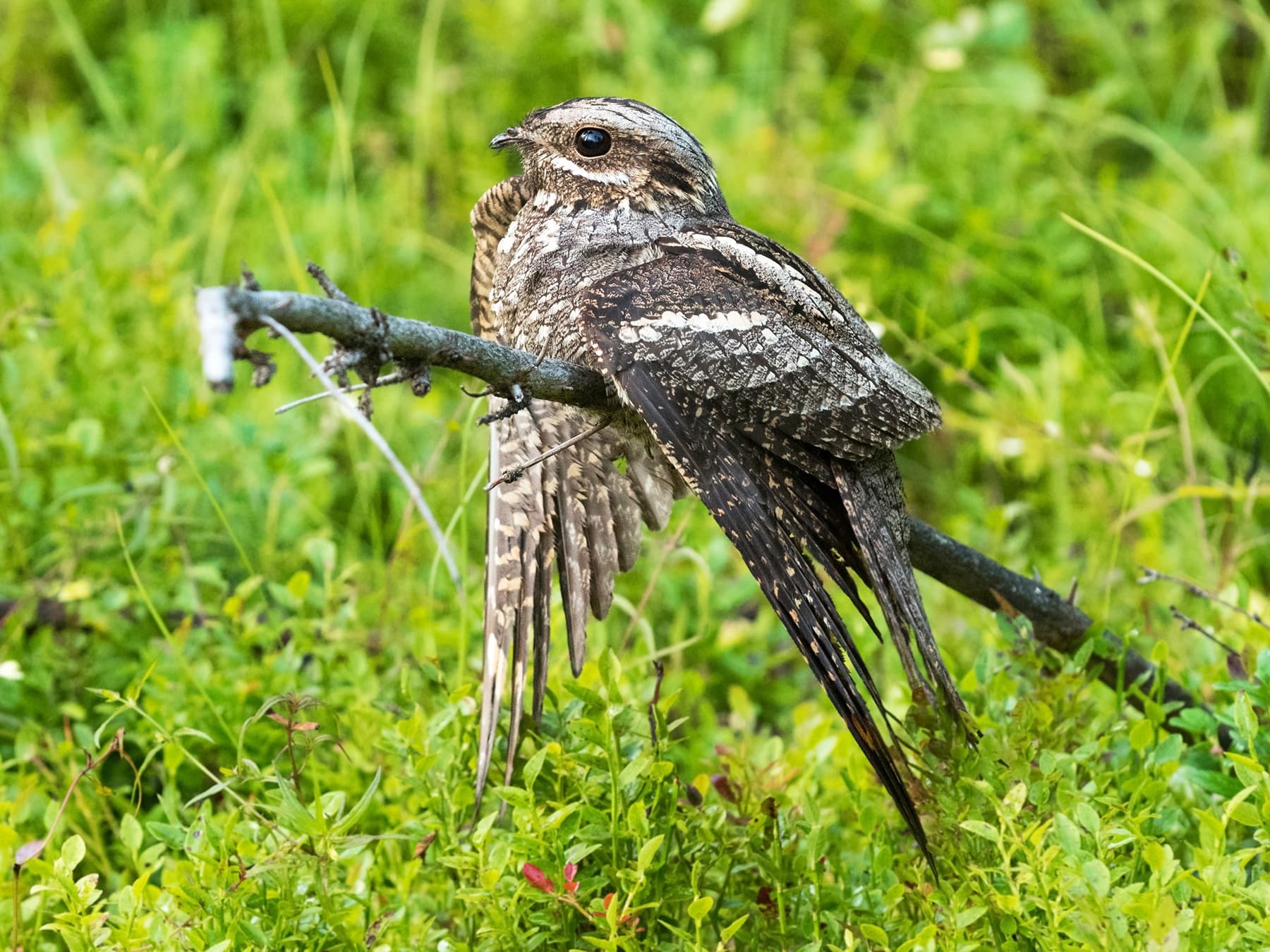
Nightjars live in territories of about two to thirty hectares (5 - 80 acres). They spend most of their time perched motionless on the ground or a suitable perch and hunt in flight when conditions permit, slowly flying back and forth over open habitats in search of their insect prey.
How rare are Nightjars?
Nightjars can be surprisingly common in suitable habitats. However, these habitats are limited, and their nocturnal habits make them difficult to see.
Where can you see Nightjars in the UK?
Nightjars are most common in the south of England. Look for them at dusk or dawn in open habitats like heathland, and listen for the long, churring call of the male. Nightjars are most often seen flying buoyantly while hunting. You may also see these birds perched prominently while singing.
The following locations hold Nightjars in the summer:
- New Forest, Hampshire
- Gwaith Powdwr Nature Reserve, Penrhyndeudraeth, Wales
- RSPB Minsmere, Suffolk
Migration
Do Nightjars migrate?
Nightjars are summer visitors to the United Kingdom and elsewhere in the Northern Hemisphere, usually arriving in April and May. Most leave in Autumn (August to October) and make the long journey south to overwinter in East and Southern Africa.
Are Nightjars native to the UK?
Nightjars are a native species in the United Kingdom. However, they are breeding migrants and present only for the warmer spring and summer months.
Tips for seeing it
- Listen for their distinctive churring call at dusk in woodland clearings or heathlands
- Look for their silhouette against the night sky as they hunt for insects
- Search for them roosting on tree branches during the day, where they sit motionless and camouflaged
- In the UK, visit heathlands and young forestry plantations from May to August
What it eats
What do Nightjars eat?
Nightjars eat a variety of flying insects, including moths and beetles. They hunt their prey in flight, which is an impressive feat in low light.
Of course, these specialised birds are highly adapted for this hunting technique, with excellent eyesight and stiff rictal bristles surrounding their large mouth, increasing their chance of snatching their prey out of the air. Even so, these birds confine their hunting to dusk, dawn, and moonlit nights.
What do baby Nightjars eat?
Baby Nightjars eat flying insects, caught and delivered by both parents.
Nesting and breeding
Where do Nightjars nest?
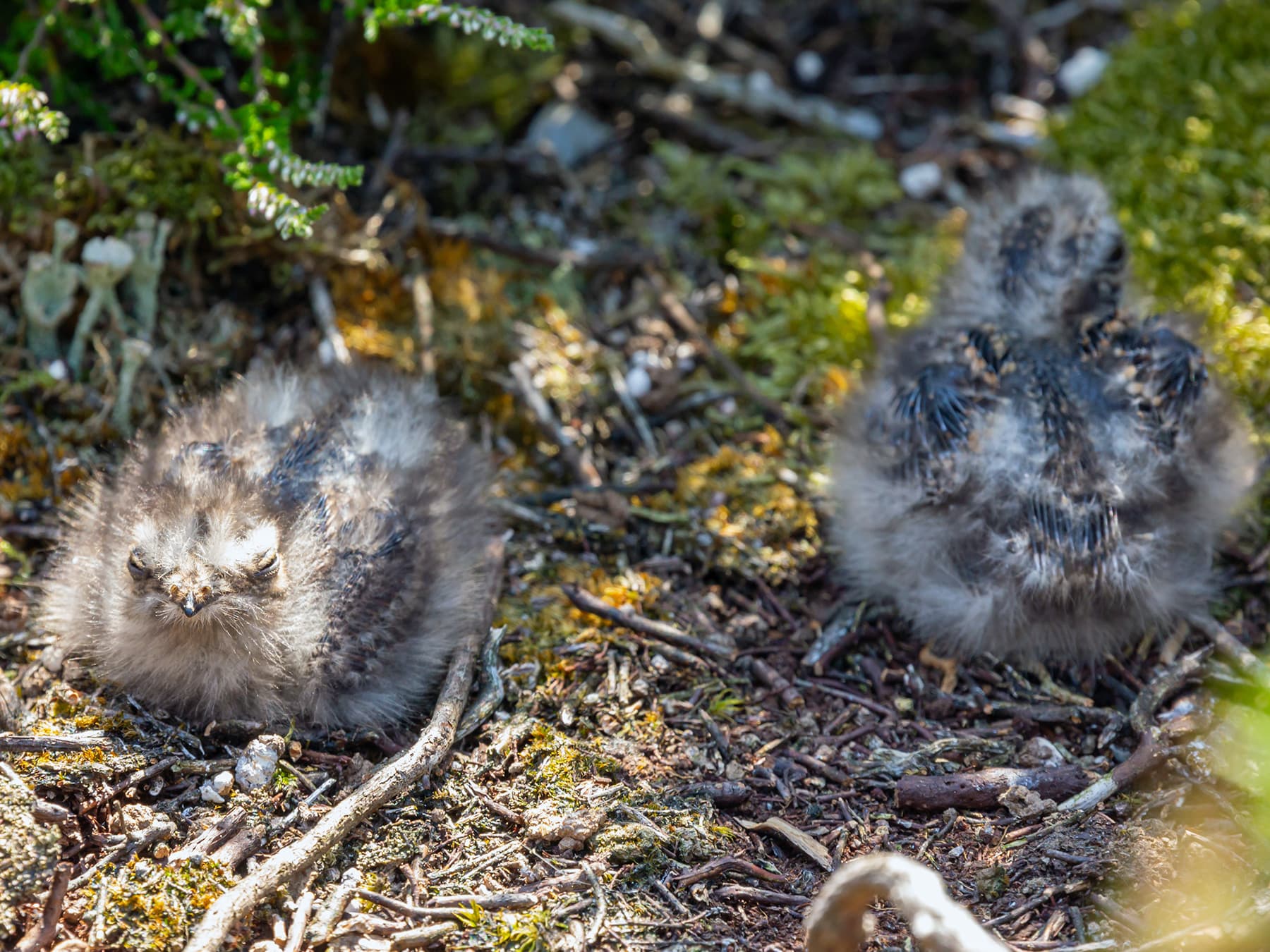
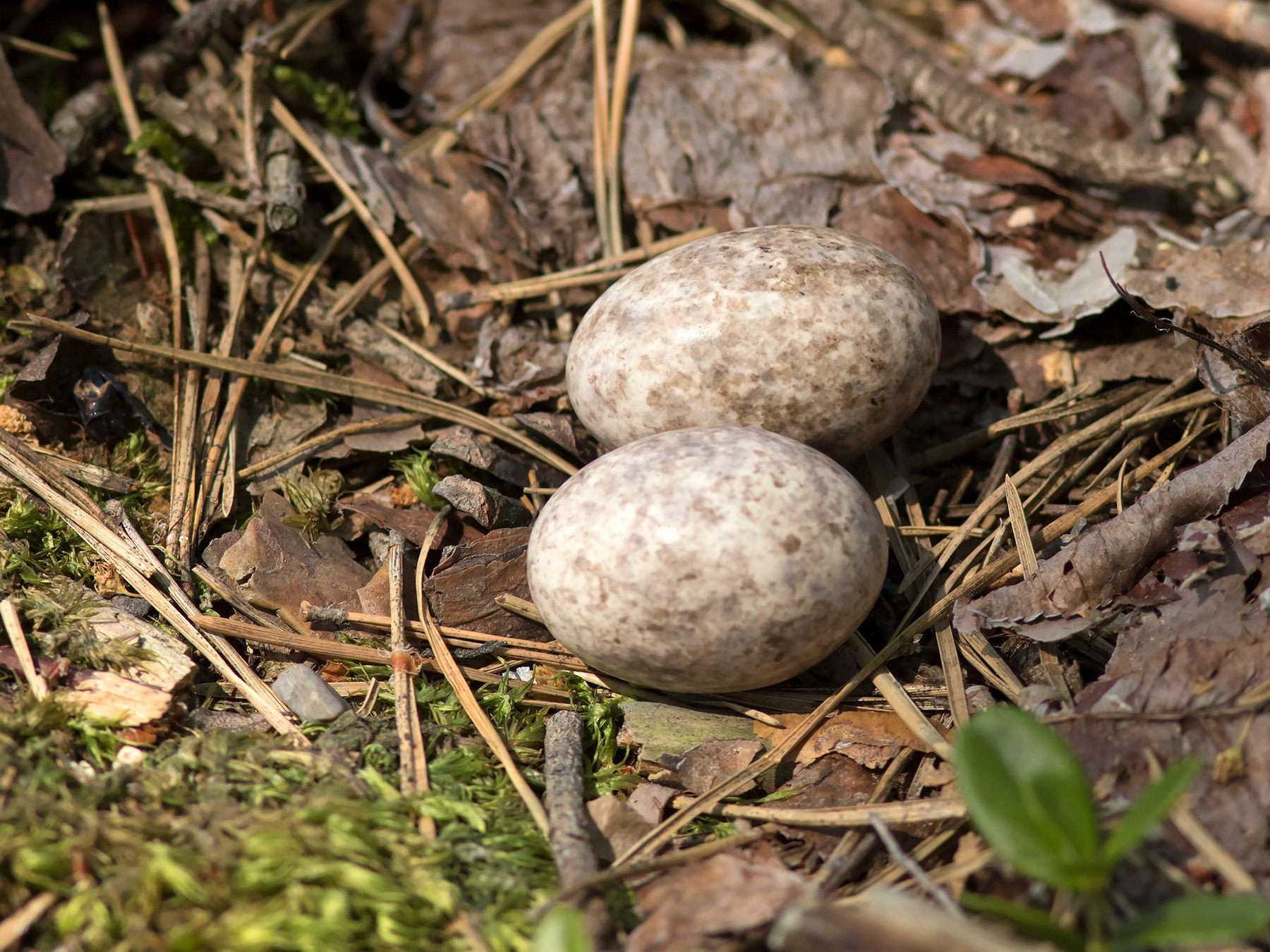
Nightjars nest on the ground in pine plantations and heathland. The site may be in the open, beneath, or between vegetation. They do not build a nest but simply lay their eggs directly on the soil or fallen leaf litter.
What do Nightjar eggs look like?
Nightjars lay two heavily camouflaged eggs, each measuring 32 millimetres long and 22 millimetres wide. The eggs are cream or greyish and covered in darker spots to resemble the ground around them.
Do Nightjars mate for life?
Nightjars are usually socially monogamous in the breeding season, although they may switch partners for second broods. Some species are known to mate for life, but this is not necessarily the case in Eurasian Nightars.
Behaviour
Are Nightjars aggressive?
Nightjars may behave aggressively during the breeding season when males establish and defend territories. Vocalisations are usually an effective way of maintaining their invisible boundaries, but physical posturing and even fighting may sometimes occur.
Where do Nightjars sleep at night?
Nightjars are nocturnal birds. They sleep during the day on the ground or in vegetation, often crouched horizontally on a level branch or dead wood. They are extremely difficult to spot when roosting, although they are often flushed and seen briefly as they fly away.
Can you see Nightjars during the day?
It is possible to see Nightjars during the day, but their incredible camouflage makes spotting them very difficult while they roost.
Lifespan and predators
Nightjars have a relatively long life expectancy, although ground nesting puts their young at increased predation risk. Continue reading to learn more about the threats and conservation status of these unusual nocturnal birds.
How long do Nightjars live?
Nightjars have an average lifespan of approximately four years. The oldest known individual lived for twelve years and one month.
What are the predators of Nightjars?
Nightjar eggs and chicks are especially vulnerable to hedgehogs, weasels, foxes and corvids like Magpies, Jays, and Crows. Adults may fall prey to Hen Harriers, Goshawks, and various other birds of prey in the United Kingdom.
Are Nightjars protected?
Nightjars are protected in the UK by the Wildlife and Countryside Act of 1981.
Are Nightjars endangered?
Nightjars are assessed as a 'Least Concern' species at a global level and have an amber conservation status in the United Kingdom. The species declined by over 50% in the late 1900s but recovered well around the turn of the century to be removed from the red list.
Conservation
While listed as Least Concern globally, Nightjar populations have declined in parts of Europe due to habitat loss.
Conservation efforts focus on maintaining and restoring suitable breeding habitats, particularly heathlands and young woodland areas.
How big are Nightjars?
Nightjars are roughly the size of a Blackbird when perched, although they have an impressive wingspan when seen in flight.
Length
Adult Nightjars measure 24.5 to 28 centimetres between the tail and bill.
Weight
Males are particularly variable in weight, with records between 51 and 101 grams. Females weigh 67 to 95 grams.
Wingspan
The Nightjar has a large wingspan of 57 to 64 centimetres.
More photos
5 photos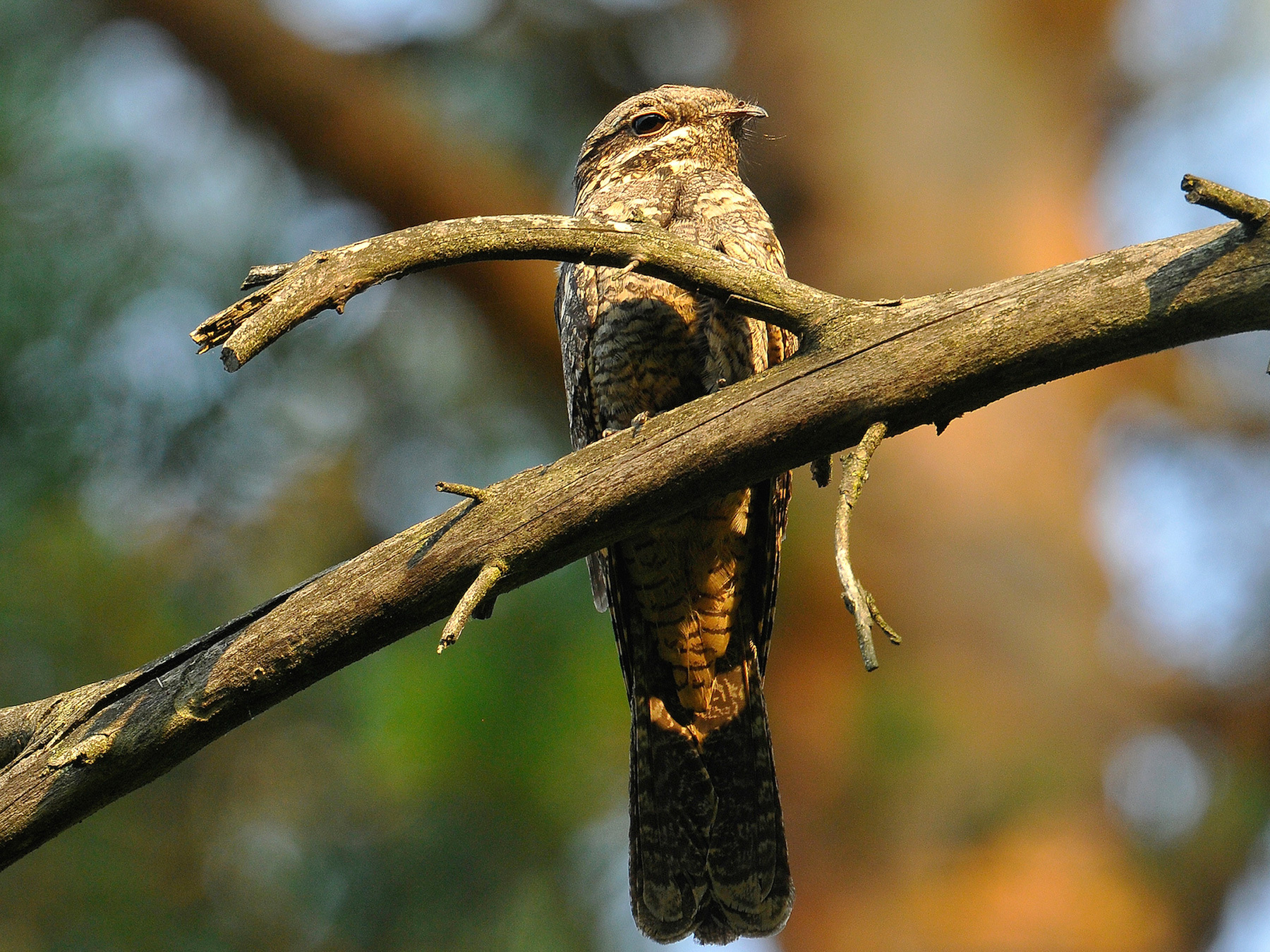
Quick facts
- Length
- 24–28 cm
- Wingspan
- 52–60 cm
- Weight
- 51–101 g
- Lifespan
- 4–8 years · oldest recorded 12.1 years
- Family
- Nightjars
- Migration
- Long-distance Migrant
- Global status (IUCN)
- Least Concern
- World population
- 3,000,000 - 6,000,000 mature individuals
- Population trend
- Decreasing
- Also called
- European Nightjar, Eurasian Nightjar
- Scientific name
- Caprimulgus europaeus
Questions
4Why are they called Nightjars?
The derivation of the word Nightjar is believed to stem from their nocturnal habits and sometimes jarring vocalisations. Birds from this family are also known as Goatsuckers and Nighthawks in other parts of the world.
What is the myth about Nightjars?
Nightjars were long believed to drink goats' milk, leaving the unfortunate animal blind. The myth lives on in the Nightjar's generic name (Caprimulgus), which translates as 'goat' 'milk'. Of course, these birds do not really drink milk. The association probably arose when the birds were seen hunting in the vicinity of livestock, which may attract or disturb flying insects.
Is a Nightjar a bird of prey?
The Nightjar is not a bird of prey. They may be predators, but they lack the talons and hooked bill of a true raptor or bird of prey. Instead, Nightjars catch their prey directly in their large mouths.
Is the Nightjar a bird or an owl?
Nightjars are not related to owls. They are part of the Caprimulgidae family, a group of birds containing over 90 species on every continent except Antarctica.
Sources
4- 1BirdLife International. 2016. Caprimulgus europaeus. The IUCN Red List of Threatened Species 2016: e.T22689887A86103675. Source (opens in a new tab)
- 2del Hoyo et al. (1999)
- 3BTO Ringing Data (2012) Source (opens in a new tab)
- 4BirdLife International. 2016. Caprimulgus europaeus. The IUCN Red List of Threatened Species 2016: e.T22689887A86103675. Source (opens in a new tab)

Checked by
Nathan Cope, founder and editor
Nathan founded Birdfact and leads its writers and contributors in the UK, the US and Canada. He has watched and studied birds for more than ten years, and checks every article and species guide before it’s published.