


Metallic Starling
Shining Starling · Aplonis metallica
By the Birdfact teamChecked by Nathan Cope
On this page12 sections
How to recognise it
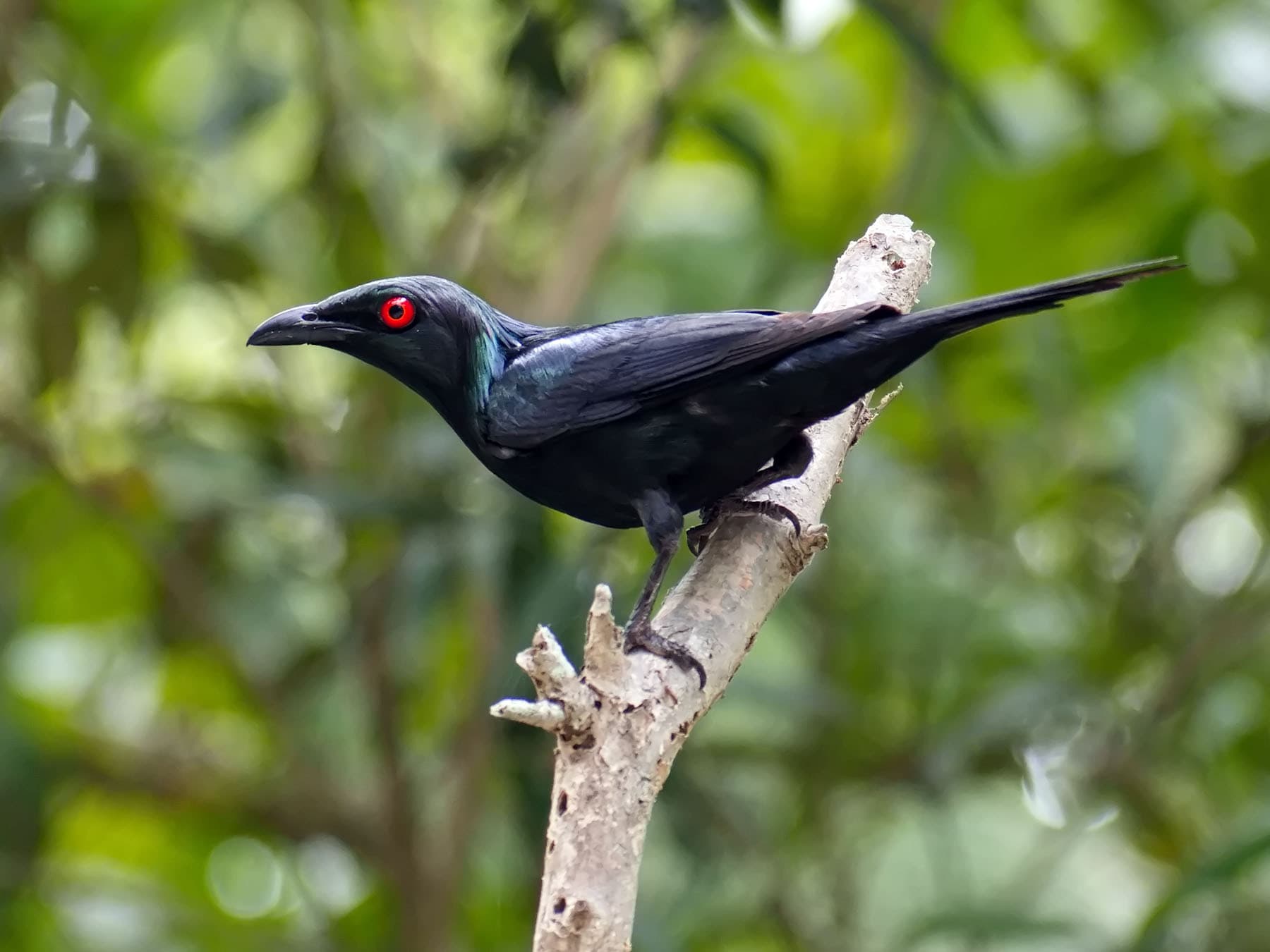
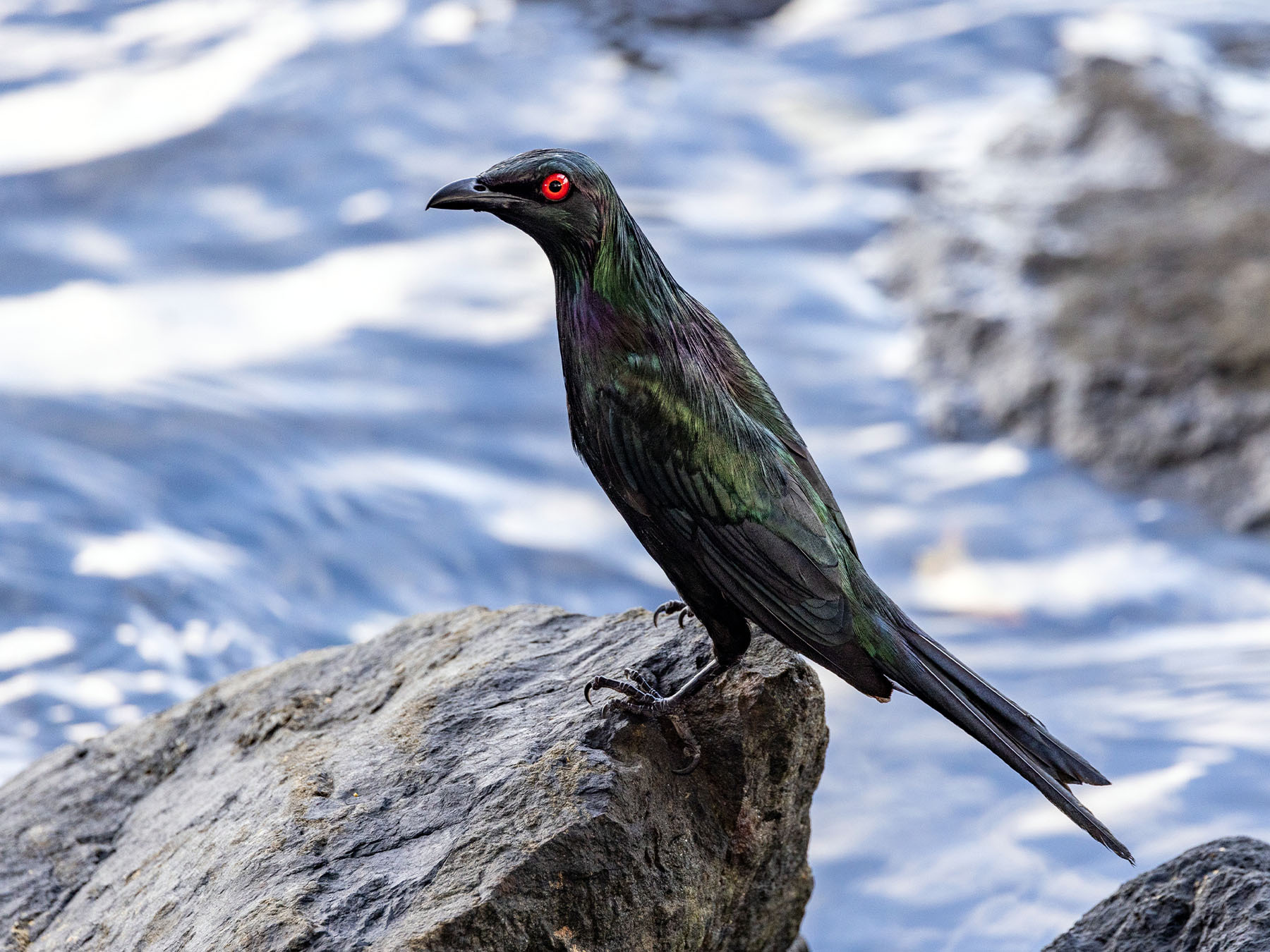
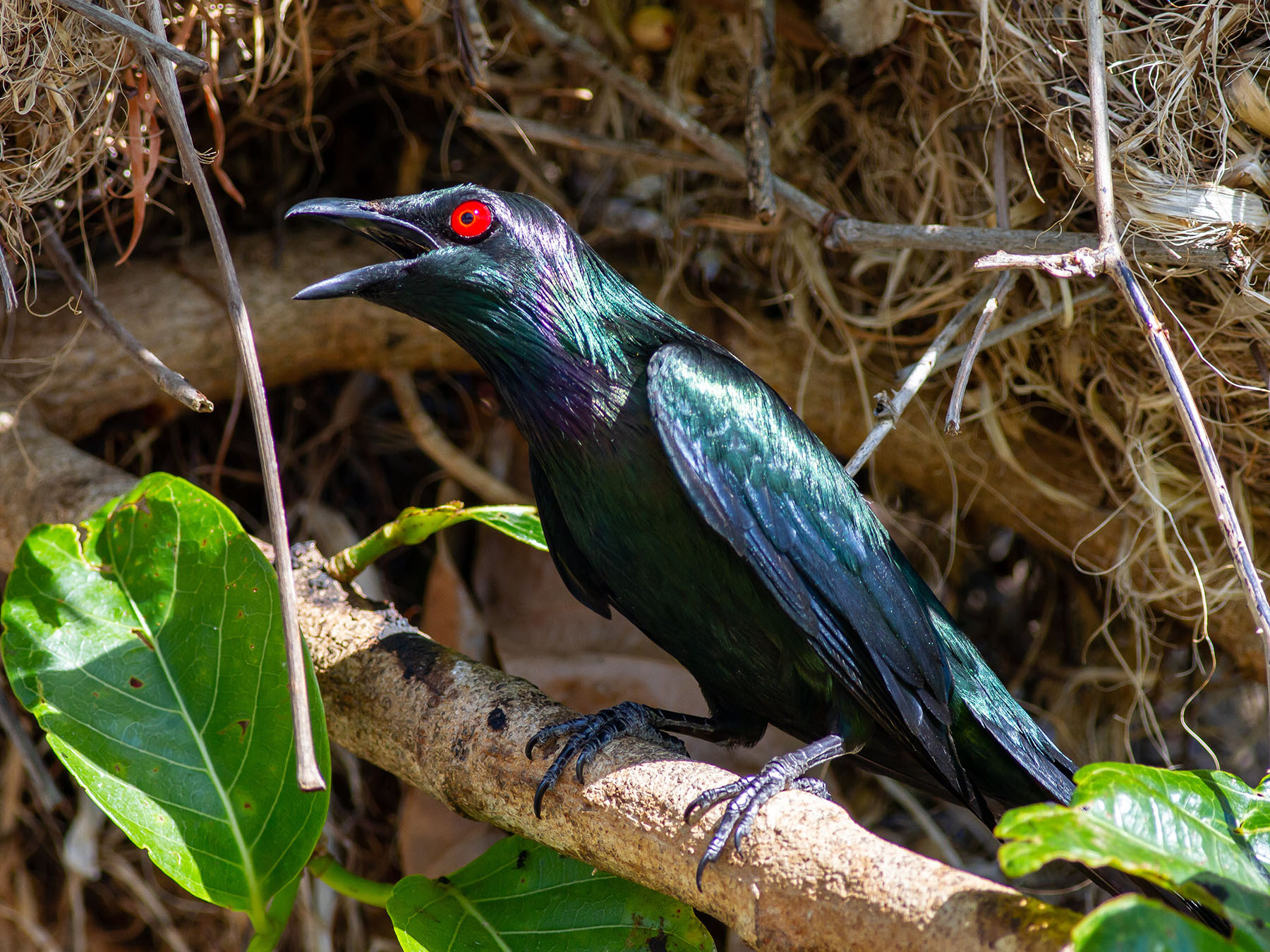
The Metallic Starling is a small, glossy black bird with red eyes and a striking iridescent sheen that reflects green and purple hues in sunlight. Its body is sleek and compact, with a short tail and pointed wings, giving it an aerodynamic profile.
Both males and females share similar plumage, with adults displaying the characteristic metallic sheen. Juveniles have a duller, sooty-brown appearance before developing their adult plumage.
Its size
Adults- Length
- 22–25 cm
- Wingspan
- 38–42 cm
- Weight
- 60–80 g
Its song and calls
Metallic Starlings are vocal birds with a diverse repertoire. Their calls include a variety of chattering, whistling, and warbling sounds. In large flocks, they create a cacophony of metallic 'tink-tink' notes and high-pitched whistles.
During the breeding season, males produce more melodious warbling songs to attract mates.
When and where to see it
The Metallic Starling is not recorded regularly in the UK, Ireland, the United States or Canada.
Worldwide: recorded regularly in 4 countries
Countries where it was recorded in at least 3 of the 6 years 2019–2024. Linked countries have their own bird list.
Asia (1)
- Indonesia
Oceania (3)
- Australia
- Papua New Guinea
- Solomon Islands
Data: EOD – eBird Observation Dataset (Cornell Lab of Ornithology), accessed via GBIF.org, CC BY 4.0. Records from 2019–2024, aggregated and filtered by Birdfact. How these lists are made
Tips for seeing it
- Look for large, noisy flocks in rainforest canopies
- Listen for their distinctive chattering and whistling calls
- Observe their acrobatic flight patterns during dawn and dusk
- Search for their communal nesting sites in tall trees
- In Australia, check mangrove areas and coastal forests
What it eats
Metallic Starlings are primarily frugivorous, feeding on a variety of fruits, especially figs. They supplement their diet with insects, particularly during breeding season.
These birds play a crucial role in seed dispersal within their forest habitats, contributing to ecosystem health.
Nesting and breeding
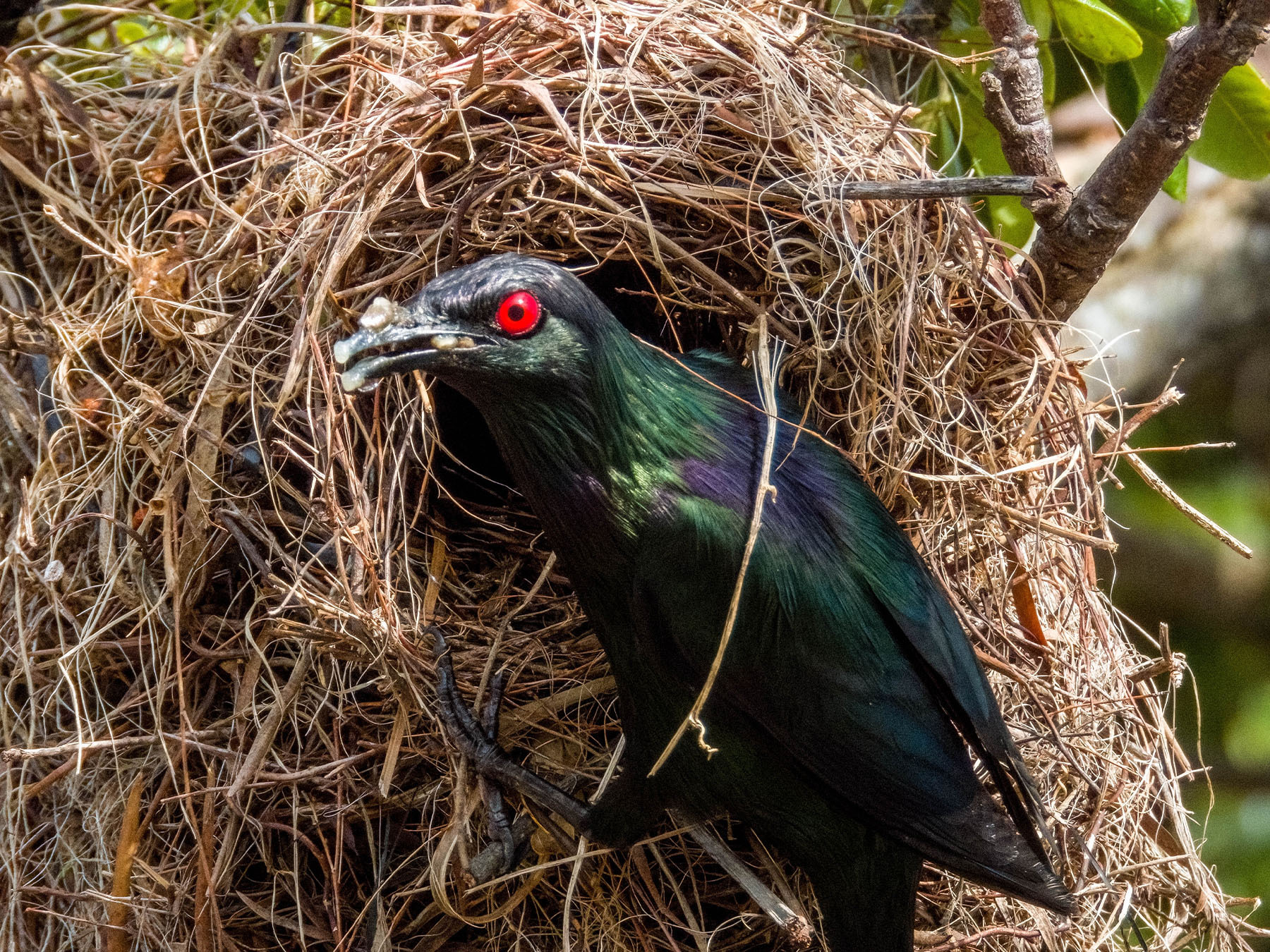
Breeding occurs during the wet season, typically from October to March. Metallic Starlings form monogamous pairs within their larger colonies. They construct large, globular nests made of twigs, leaves, and vines, often suspended from the outer branches of tall trees.
Females typically lay 2-3 pale blue eggs with brown speckles. Both parents share incubation duties, which last about 14 days. The eggs are oval-shaped and have a smooth, slightly glossy surface.
Nestlings are altricial and remain in the nest for approximately 18-21 days before fledging. Parents continue to feed and care for the young for several weeks after they leave the nest.
Behaviour
Metallic Starlings are highly social birds, often seen in large, noisy flocks. They exhibit acrobatic flight patterns, swooping and wheeling in tight formations.
These birds are known for their communal nesting habits, with multiple pairs building nests in close proximity, sometimes forming large breeding colonies.
Conservation
While the Metallic Starling is currently listed as Least Concern, it faces localised threats from habitat loss due to deforestation.
Conservation efforts focus on protecting rainforest habitats and monitoring population trends, particularly in areas where their range overlaps with human development.
Similar birds
Often mistaken for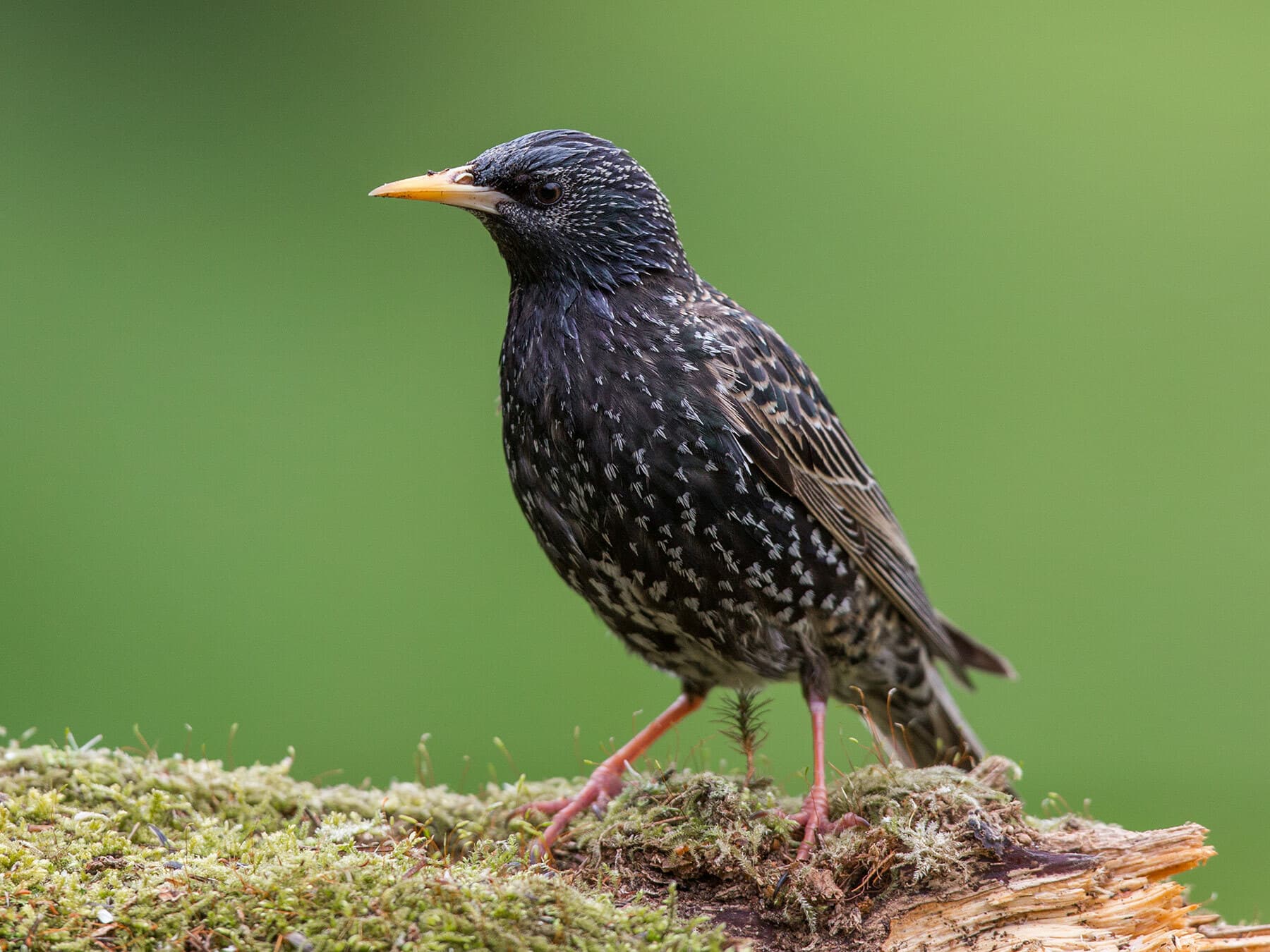
More photos
4 photos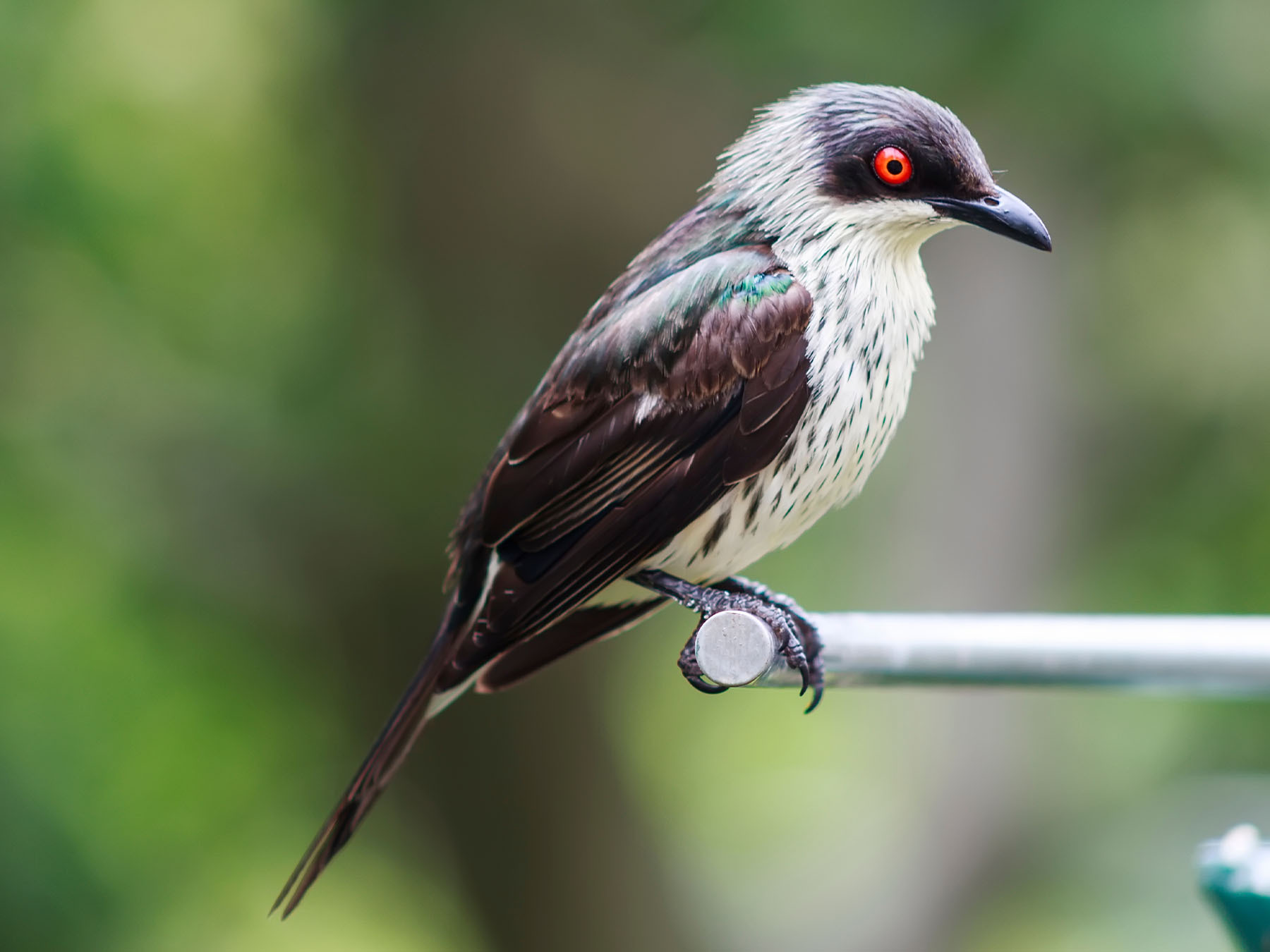
Quick facts
- Length
- 22–25 cm
- Wingspan
- 38–42 cm
- Weight
- 60–80 g
- Lifespan
- 2 years · oldest recorded 1.8 years
- Family
- Starlings & Mynas
- Migration
- Resident
- Global status (IUCN)
- Least Concern
- World population
- Not quantified, but common across range
- Population trend
- Decreasing
- Also called
- Shining Starling
- Scientific name
- Aplonis metallica
Sources
4- 1BirdLife International. 2020. Aplonis metallica (errata version published in 2022). The IUCN Red List of Threatened Species 2020: e.T181767865A216246490. Source (opens in a new tab)
- 2BirdLife International. 2020. Aplonis metallica (errata version published in 2022). The IUCN Red List of Threatened Species 2020: e.T181767865A216246490. Source (opens in a new tab)
- 3G. Dutson in litt. (2020)
- 4ABBBS - Australian Bird and Bat Banding Scheme Source (opens in a new tab)

Checked by
Nathan Cope, founder and editor
Nathan founded Birdfact and leads its writers and contributors in the UK, the US and Canada. He has watched and studied birds for more than ten years, and checks every article and species guide before it’s published.