


Manx Shearwater
Manx, Manks Shearwater · Puffinus puffinus
By the Birdfact teamChecked by Nathan Cope
On this page13 sections
How to recognise it
What do Manx Shearwaters look like?
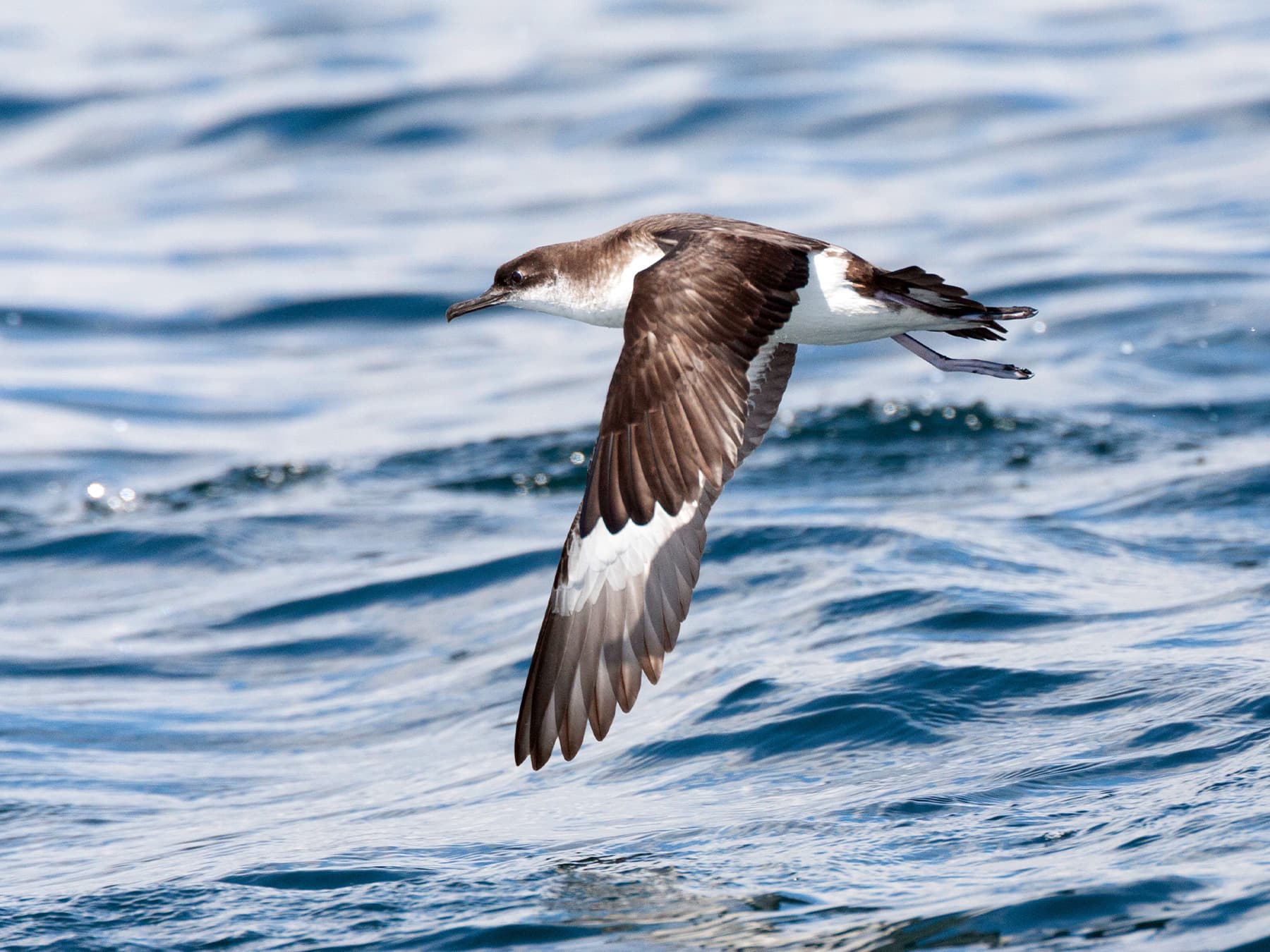
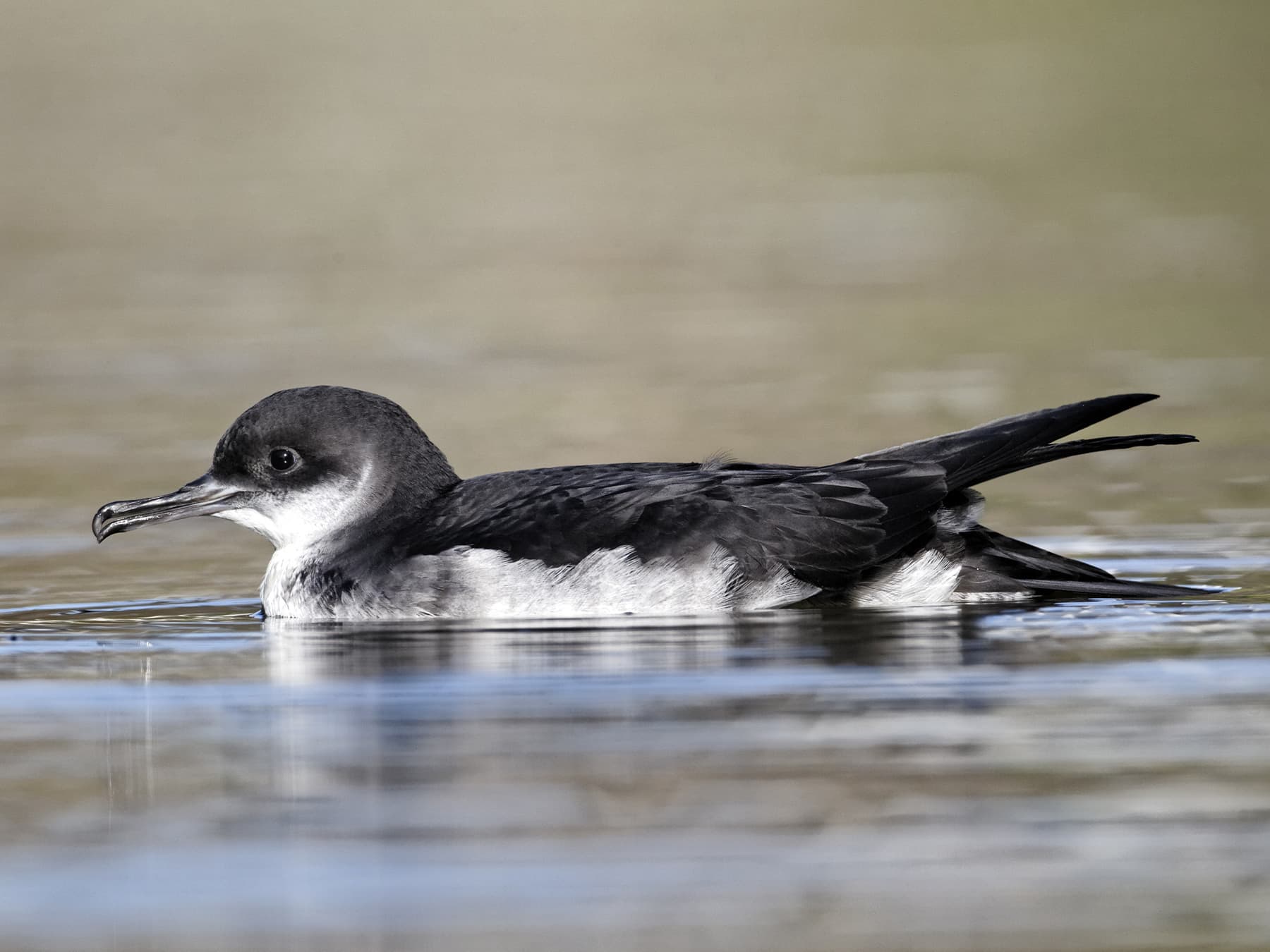
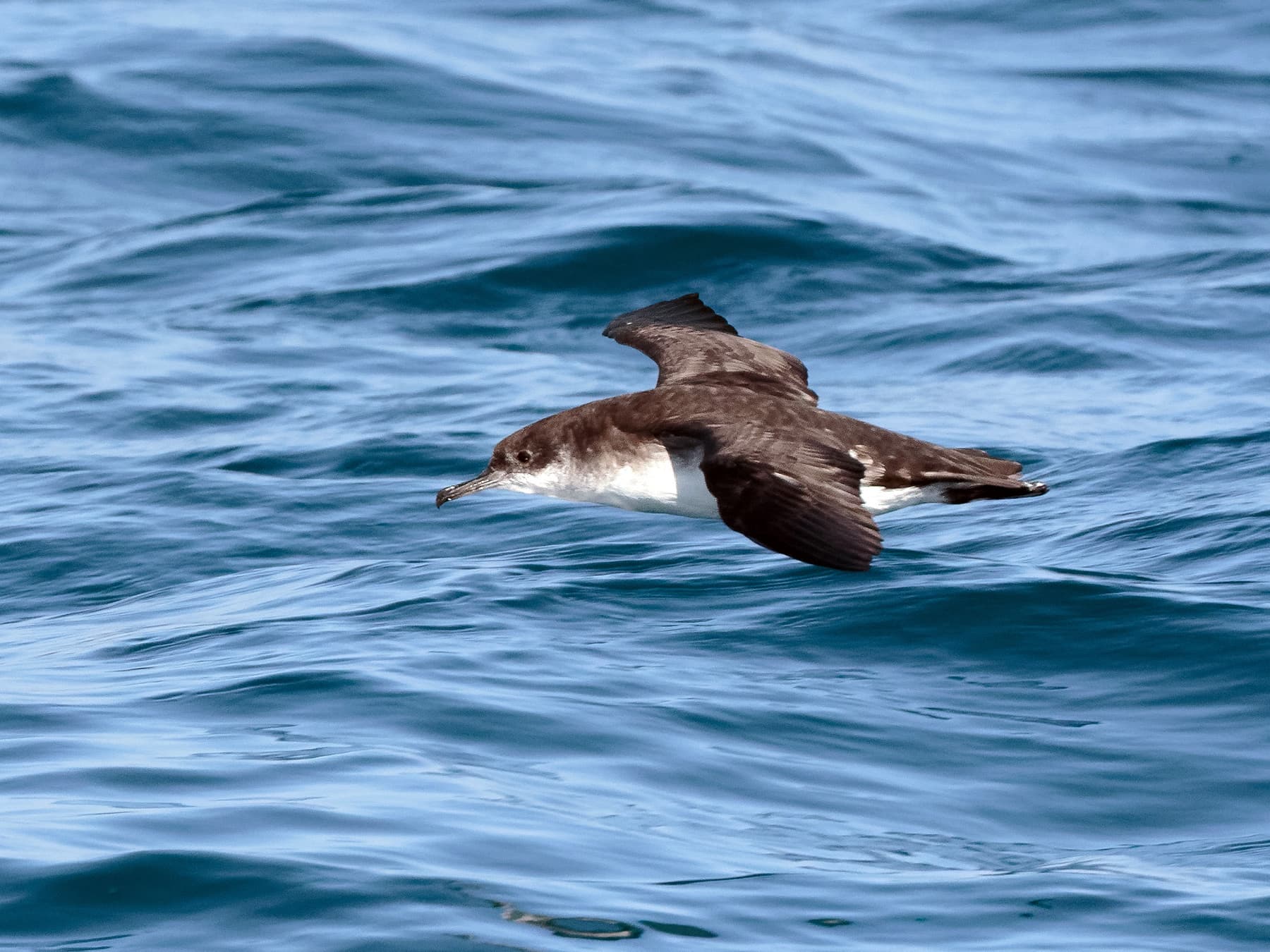
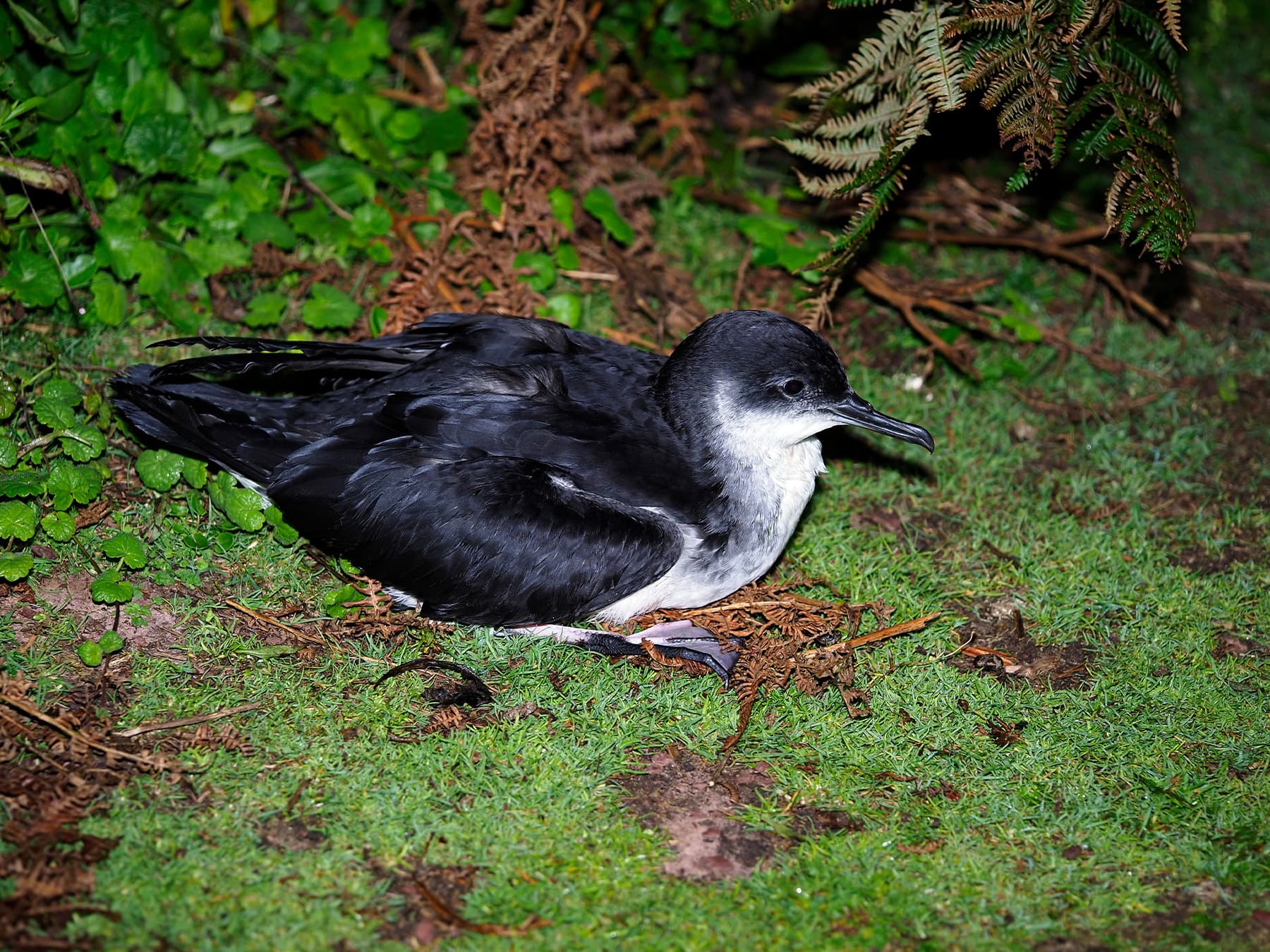
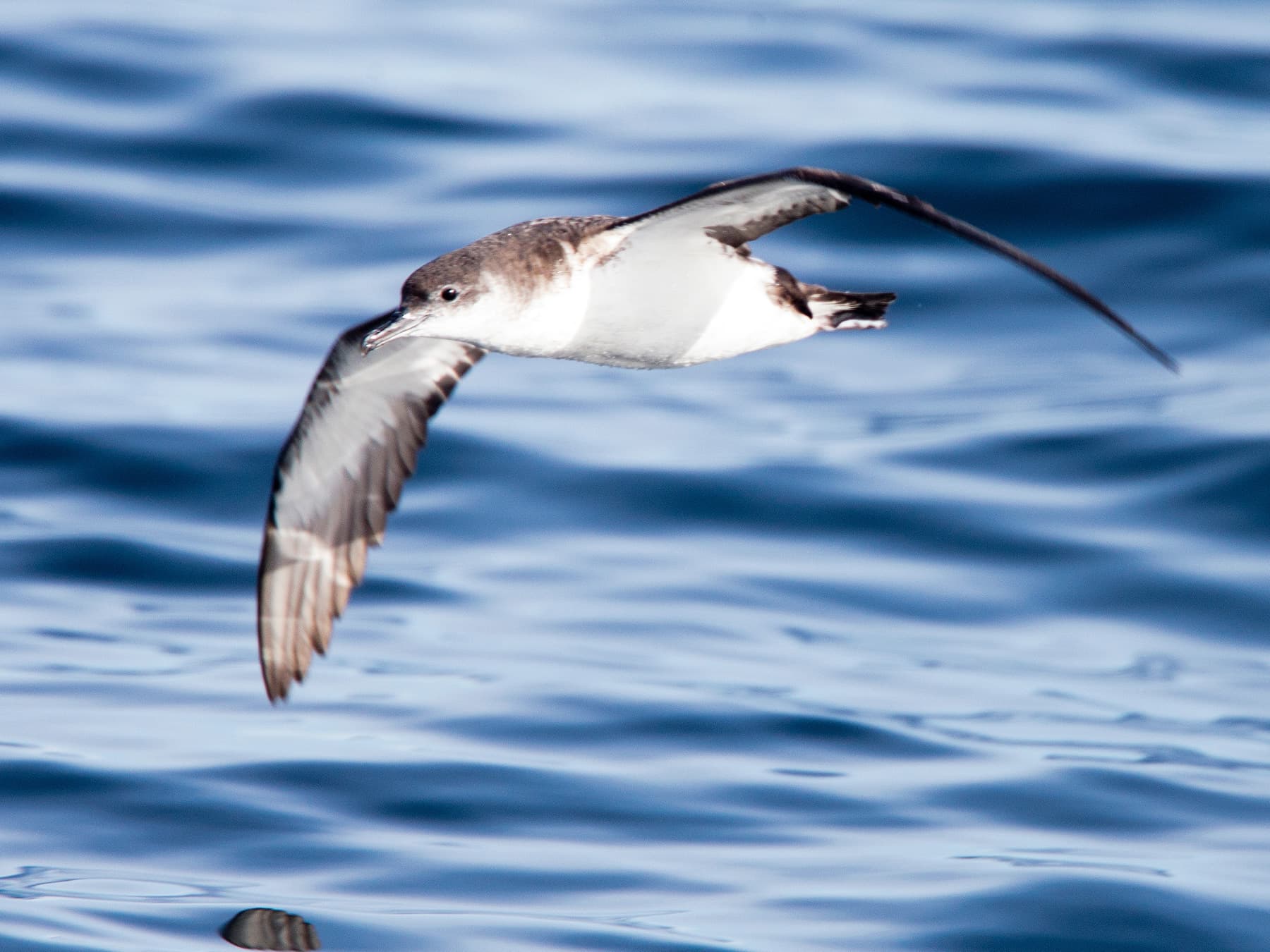
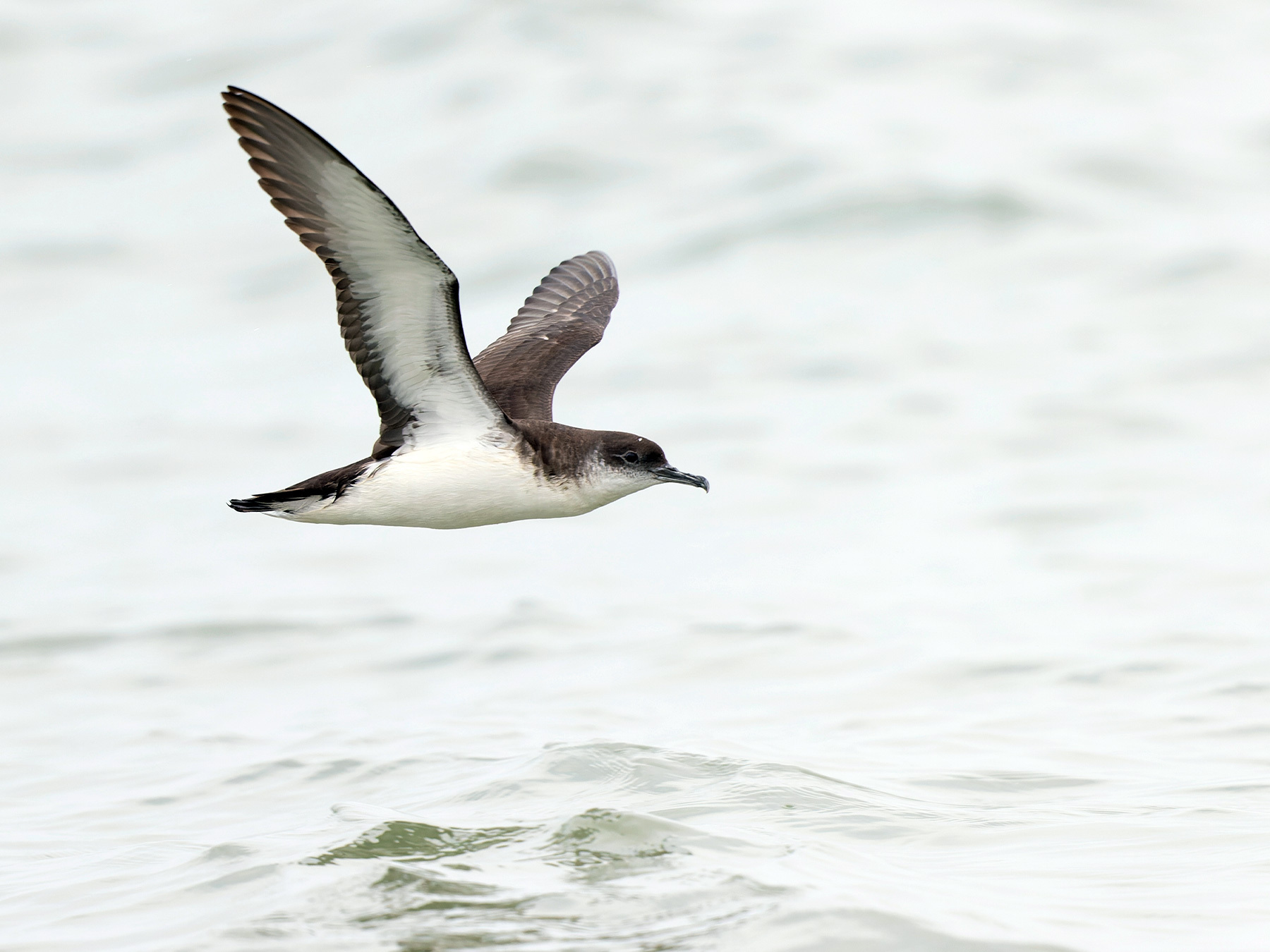
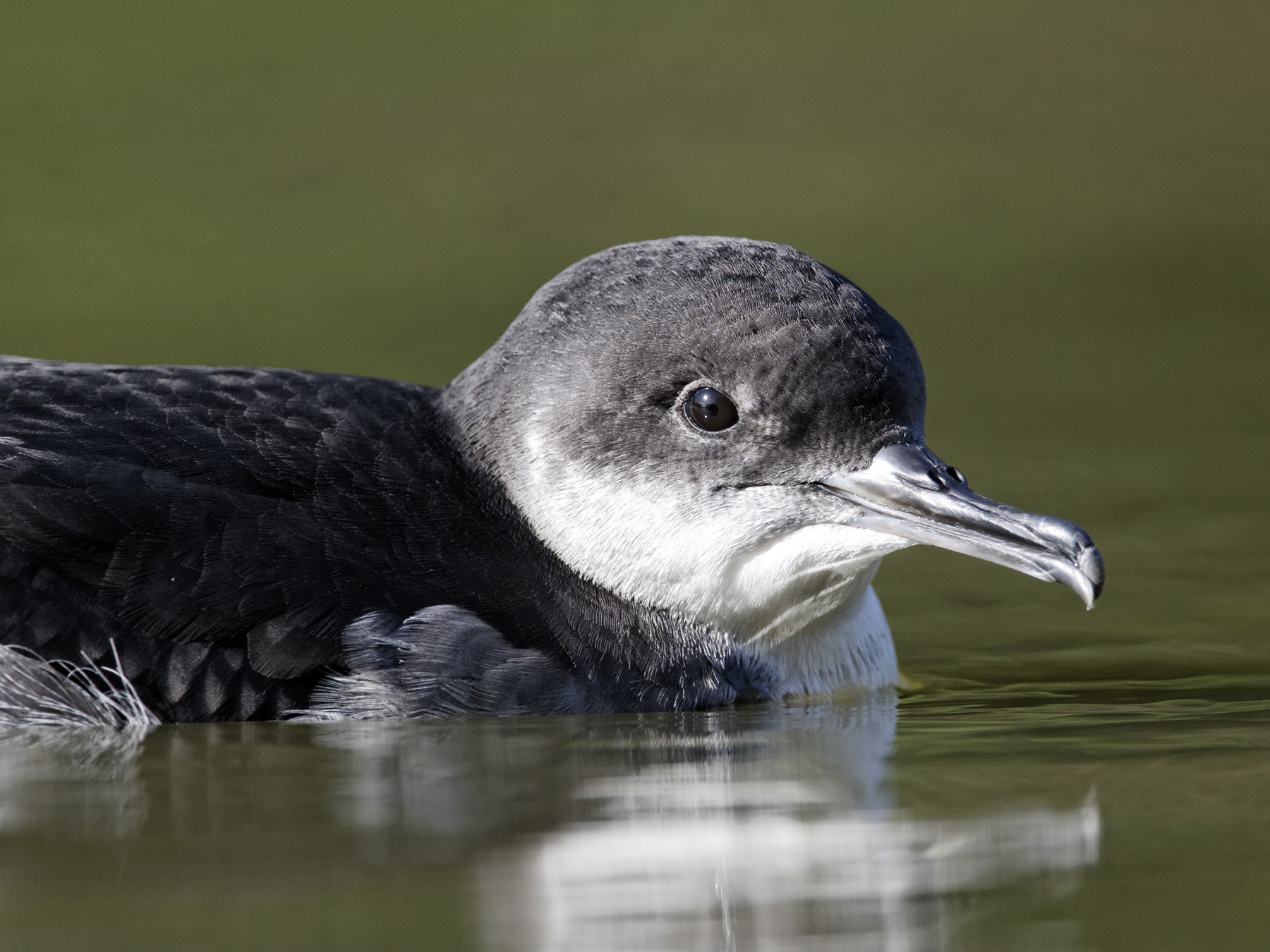
The Manx Shearwater is a medium-sized black and white seabird with very long, narrow wings. They have a thin black bill with a hooked tip and large webbed feet for swimming. They are completely black above and pure white below, with black edges around the underside of their pointed wings.
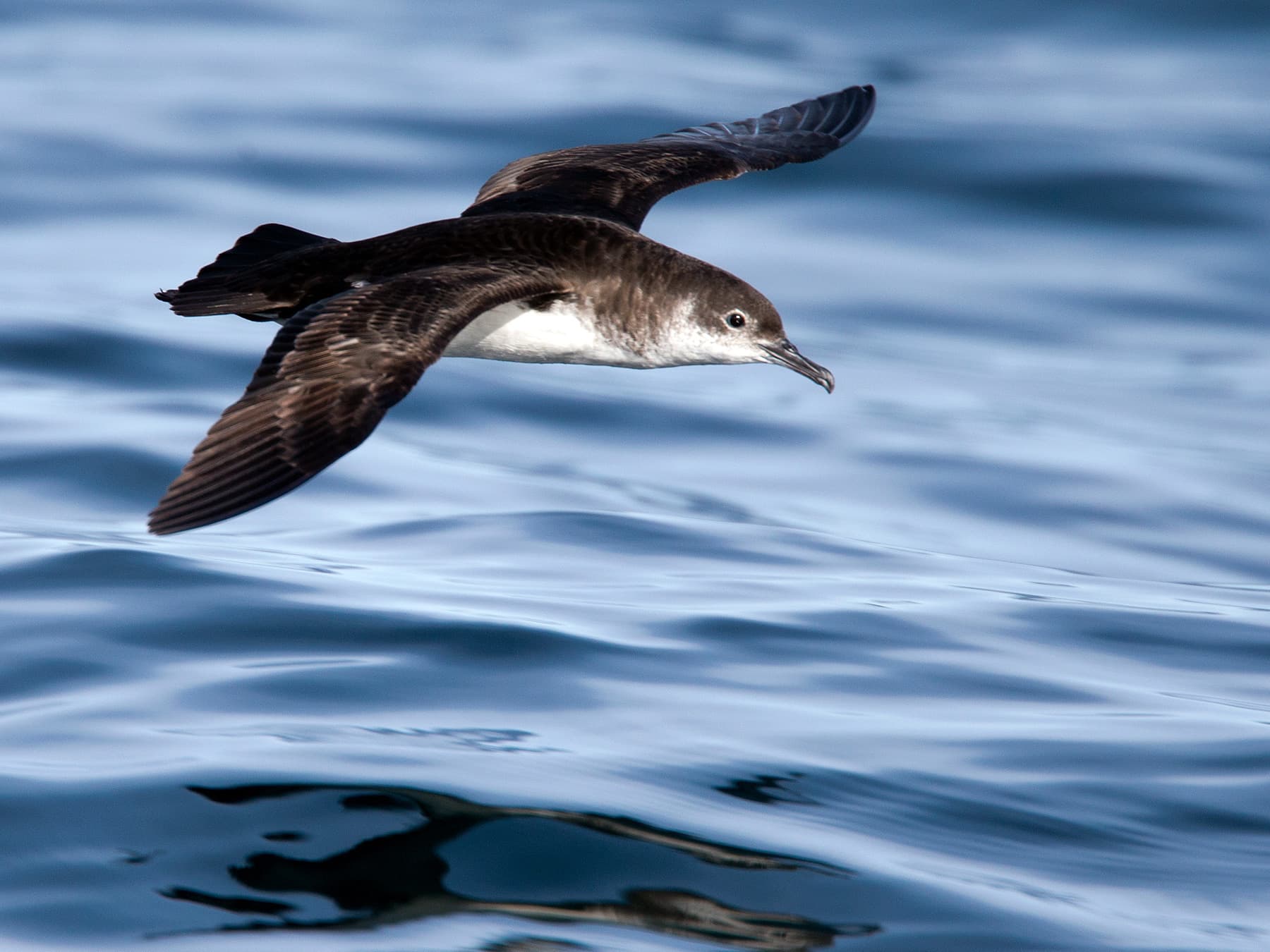
Manx Shearwaters are most often seen in flight when their lengthy wings and low, stiff-winged flight interspersed with gliding are helpful for identification. The sexes look alike throughout the year, although females are slightly smaller on average. Juveniles have similar plumage to adults.
These birds can be confused with a few similar species, including the Audubon, Balearic, and Great Shearwaters.
How big are Manx Shearwaters?
Length
Manx Shearwaters have a body length of 12 to 15 inches or 30 to 38 centimeters.
Weight
They weigh about 14 ounces or 400 grams on average, although their mass varies between 12 and 20 ounces (350 - 575 g).
Wingspan
Manx Shearwaters have an impressive wingspan of 30 to 35 inches or 76 to 89 centimeters.
Its size
Adults- Length
- 30–38 cm
- Wingspan
- 71–83 cm
- Weight
- 350–575 g
Its song and calls
What sound does a Manx Shearwater make?
Manx Shearwaters produce various wailing, crowing, and cooing calls on dark nights, either from their nest burrows or while flying above the colony. They are usually silent in the non-breeding season.
- Song0:00 / 1:19
Recorded in Pembrokeshire, Wales
Lawrence Shove / The British Library Board · Wikimedia Commons · CC BY-SA 4.0
When and where to see it
OctoberLeaving
Most recorded in October
- 1. Pembrokeshire0.74%
- 2. Waterford0.35%
- 3. Cornwall0.31%
- 4. Sligo0.27%
- 5. Orkney Islands0.25%
Each dot is a county, state or province: the bigger and darker, the larger the bird’s share of that place’s bird records that month. Grey dots: no regular records. The ringed point is the centre of the bird’s records this month; the arrow shows how it moved since last month, and the dashed loop its path through the year. “Arrivals” colours places where it becomes regular this month (orange) or is in its last regular month (grey). GBIF eBird Observation Dataset, 2019–2024. Map data: Natural Earth, US Census Bureau; place centres © OpenStreetMap contributors.
In your area
See when the Manx Shearwater is recorded in your county, state or province.
How often the Manx Shearwater turns up in the UK, Ireland, the United States and Canada through the year, from birdwatchers' records.
United Kingdom
Summer visitor · regularly Mar–Nov · most records in August
Ireland
Summer visitor · regularly Mar–Oct · most records in August
United States
Summer visitor · regularly Feb–Dec · most records in August
Canada
Passage migrant · regularly Jun–Oct · most records in August
Show as a table
| Month | United Kingdom | Ireland | United States | Canada |
|---|---|---|---|---|
| January | 0.002% | <0.001% | <0.001% | – |
| February | 0.003% | 0.002% | 0.002% (regular) | <0.001% |
| March | 0.010% (regular) | 0.044% (regular) | <0.001% (regular) | <0.001% |
| April | 0.027% (regular) | 0.15% (regular) | <0.001% (regular) | <0.001% |
| May | 0.045% (regular) | 0.28% (regular) | 0.001% (regular) | <0.001% |
| June | 0.077% (regular) | 0.40% (regular) | 0.002% (regular) | 0.001% (regular) |
| July | 0.13% (regular) | 0.57% (regular) | 0.005% (regular) | 0.006% (regular) |
| August | 0.17% (regular) | 0.68% (regular) | 0.010% (regular) | 0.010% (regular) |
| September | 0.11% (regular) | 0.32% (regular) | 0.004% (regular) | 0.009% (regular) |
| October | 0.043% (regular) | 0.10% (regular) | 0.002% (regular) | <0.001% (regular) |
| November | 0.012% (regular) | 0.010% | 0.002% (regular) | <0.001% |
| December | 0.005% | 0.006% | 0.002% (regular) | <0.001% |
Recorded regularly in
Worldwide: recorded regularly in 30 countries
Countries where it was recorded in at least 3 of the 6 years 2019–2024. Linked countries have their own bird list.
Europe (15)
- Belgium
- Denmark
- Faroe Islands
- France
- Guernsey
- Iceland
- Ireland
- Isle of Man
- Jersey
- Netherlands
- Norway
- Portugal
- Spain
- Sweden
- United Kingdom
Africa (4)
- Cape Verde
- Morocco
- Senegal
- South Africa
North America (6)
Data: EOD – eBird Observation Dataset (Cornell Lab of Ornithology), accessed via GBIF.org, CC BY 4.0. Records from 2019–2024, aggregated and filtered by Birdfact. How these lists are made
What is the habitat of a Manx Shearwater?
Manx Shearwaters are marine birds that hunt over the open ocean, typically within the shallow waters of the continental shelf when breeding and overwintering but also over deep pelagic areas during migration. They nest on islands and coastal headlands, usually in low-vegetated or grassy habitats with suitable soils for burrowing.
What is the range of a Manx Shearwater?
Manx Shearwaters are widespread on both sides of the Atlantic Ocean. They occur from Greenland in the north to the coastlines of South Africa and Argentina in the south.
Adults breed at scattered localities in the Northern Hemisphere around the coasts of the United Kingdom, France, Iceland, and the Faeroe Islands, and south to the Canary and Azores Islands. Smaller numbers breed off Newfoundland and occasionally further south in the United States.
Where do Manx Shearwaters live?
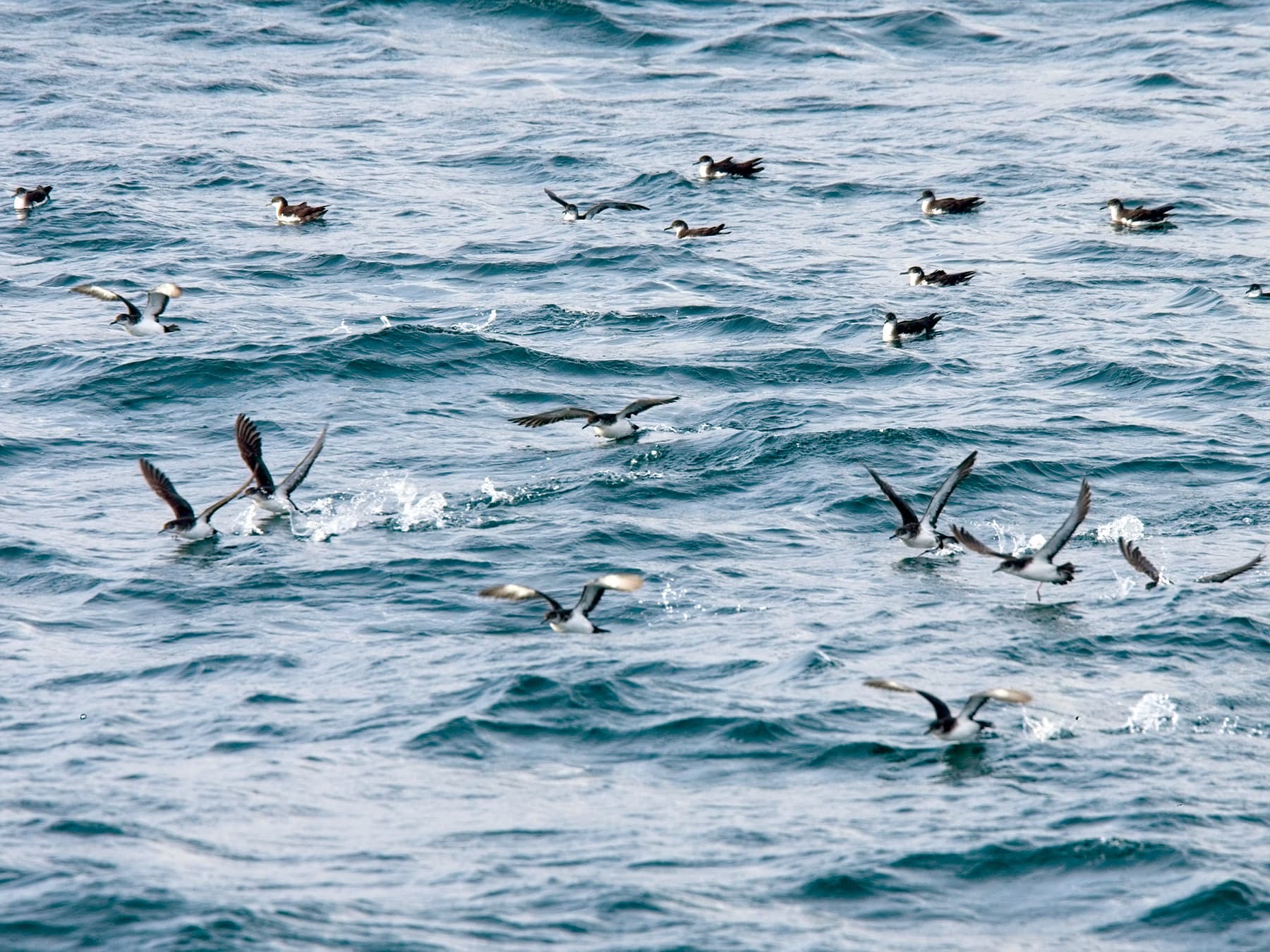
Manx Shearwaters spend most of their lives out at sea. They are masters of the sea and the skies but downright clumsy on land, only coming ashore after dark to nest.
How rare are Manx Shearwaters?
Manx Shearwaters are fairly common seabirds of the Atlantic, although their offshore foraging and nocturnal nesting habits make them difficult to observe from land.
Where can you see Manx Shearwaters in the US?
Manx Shearwaters occur widely off the east coast of the United States, from Maine to Florida, although they are rarely seen from the shore. They are most common in the Northeast from spring to fall.
Where can you see Manx Shearwaters in the UK?
Bardsey, Skokholm, and Skomer Islands off Wales, and Rum Island off the west coast of Scotland are the most important breeding sites for Manx Shearwaters in the United Kingdom.
They are difficult to spot on land since they only return to their nests at night, but large numbers gather offshore before dark. Birdwatchers may also spot migrating birds from high vantage points along the west coast in spring and summer, especially when onshore winds bring them closer to shore.
Migration
Do Manx Shearwaters migrate?
Manx Shearwaters are highly migratory seabirds that return to nest at the same site throughout their lives. Adults and fledglings begin to leave their breeding grounds in late summer and travel fast, covering hundreds of miles each day. They arrive at wintering grounds off the east coast of South America in October and stay until about February before beginning the return trip.
Tips for seeing it
- Look for Manx Shearwaters from coastal headlands during spring and autumn migrations
- Observe their characteristic flight pattern: low over the waves with stiff wings
- Join pelagic birdwatching trips for the best chance to see them at sea
- They are difficult to spot on land since they only return to their nests at night, but large numbers gather offshore before dark
- You may be able to spot them from high vantage points along the west coast of the UK in spring and summer, especially when onshore winds bring them closer to shore
- In the UK, visit breeding colonies on islands like Skomer or Rum at night to hear their eerie calls
What it eats
What do Manx Shearwaters eat?
Manx Shearwaters eat fish, squid, and crustaceans, which they catch on the surface or by swimming underwater. Small schooling fish (about 6 in/15 cm long) like herring, pilchards, and sprats are their regular prey.
What do Manx Shearwater chicks eat?
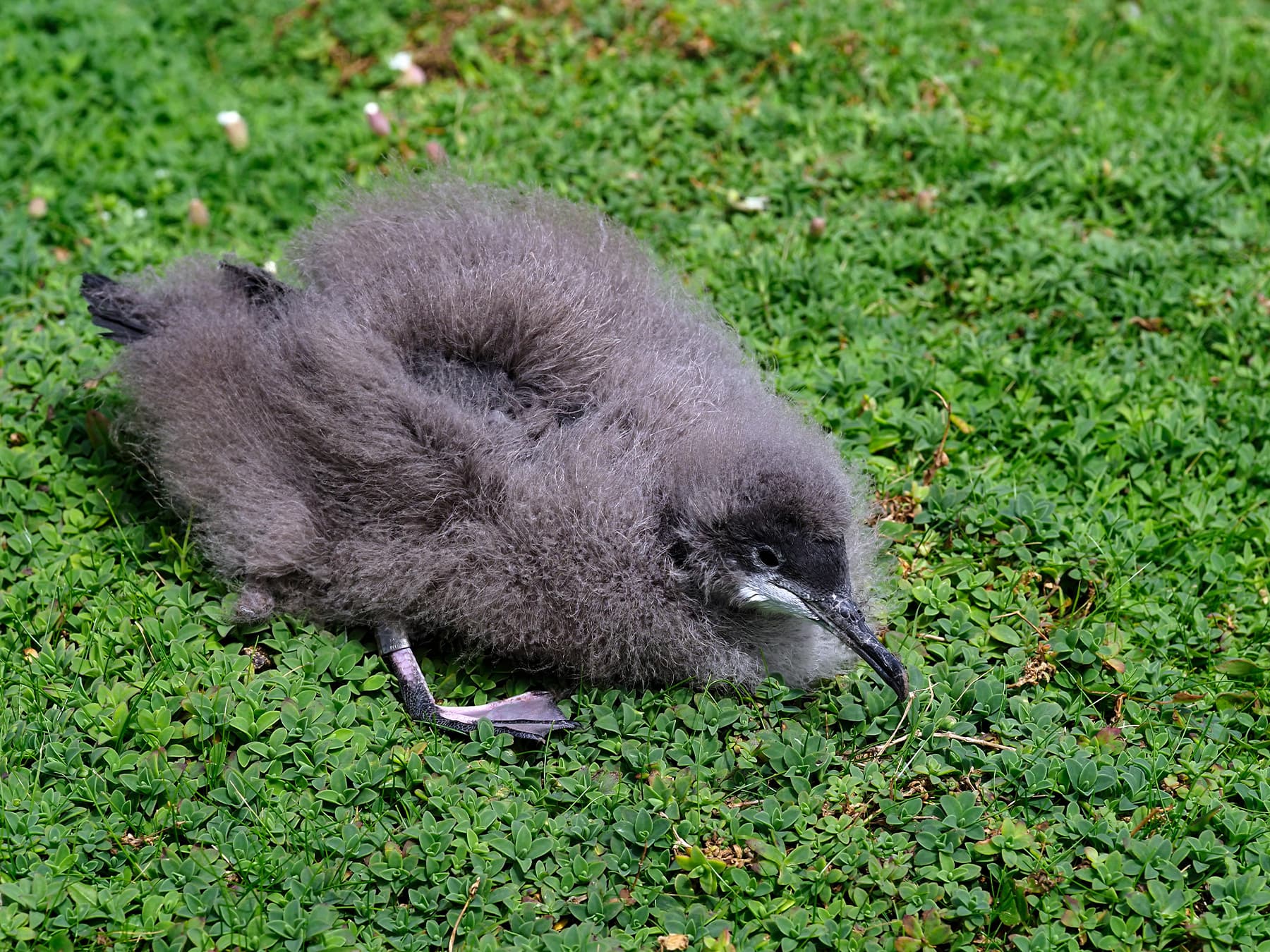
Manx Shearwater chicks eat regurgitated fish provided by both parents. Adults travel long distances to forage, and these partially digested meals may be sourced over 200 miles away from the nest.
Nesting and breeding
Where do Manx Shearwaters nest?
Manx Shearwaters nest underground in burrows they dig themselves, in old rabbit burrows, or under boulders. Both partners excavate by loosening the soil with their bills and shoveling it out with their feet. They may line the nest chamber with plant material or simply lay their eggs on bare soil.
When do Manx Shearwaters nest?
Manx Shearwaters nest between April and October, with peak egg-laying in May and June. The eggs take 51 days to hatch on average, and both partners share incubation duties in shifts that last several days at a time. The chick fledges the nest after about 69 days and leaves the area of the colony.
What do Manx Shearwater eggs look like?
Manx Shearwater eggs are large and dull white, measuring approximately 60 millimeters long and 41 millimeters across. They lay just one egg per year, and older females lay larger eggs than younger birds.
Do Manx Shearwaters mate for life?
Manx Shearwaters are monogamous and form lasting pair bonds. These long-lived birds may mate for life, although some divorce after unsuccessful breeding attempts. Pairs will return to nest in the same burrow year after year.
Behaviour
Are Manx Shearwaters aggressive?
Manx Shearwaters are generally gregarious and peaceful, although they can be aggressive when claiming a nesting site.
Where do Manx Shearwaters sleep at night?
Manx Shearwaters sleep out on the water while floating.
Lifespan and predators
How long do Manx Shearwaters live?
Manx Shearwaters are remarkably long-lived birds. Their estimated life expectancy varies between 15 and 29 years, although some individuals have lived for over 50 years in the wild.
What are the predators of Manx Shearwaters?
Manx Shearwaters nest on remote islands with few predators because they are virtually defenseless on land. Their eggs and chicks are highly vulnerable to rats, and accidental introductions of these rodents have practically wiped out some colonies.
Adults are most vulnerable to other birds, so they avoid coming to shore until after sunset. The following species are known to predators:
- Herring Gull
- Great Black-backed Gull
- Lesser Black-backed Gull
- Great Skua
- Peregrine Falcon
- Common Buzzard
- Golden Eagle
Are Manx Shearwaters protected?
Manx Shearwaters are protected by the Migratory Bird Treaty Act in the United States and the Wildlife and Countryside Act in the United Kingdom.
Are Manx Shearwaters endangered?
Manx Shearwaters are a ‘Least Concern’ species on the IUCN Red List, with an estimated population of 680,000 to 790,000 individuals.
Conservation
While currently listed as Least Concern, Manx Shearwaters face threats from introduced predators on breeding islands, light pollution, and marine pollution.
Conservation efforts focus on predator control in breeding colonies and reducing plastic waste in oceans. Climate change impacts on marine ecosystems are a growing concern for this species.
More photos
3 photos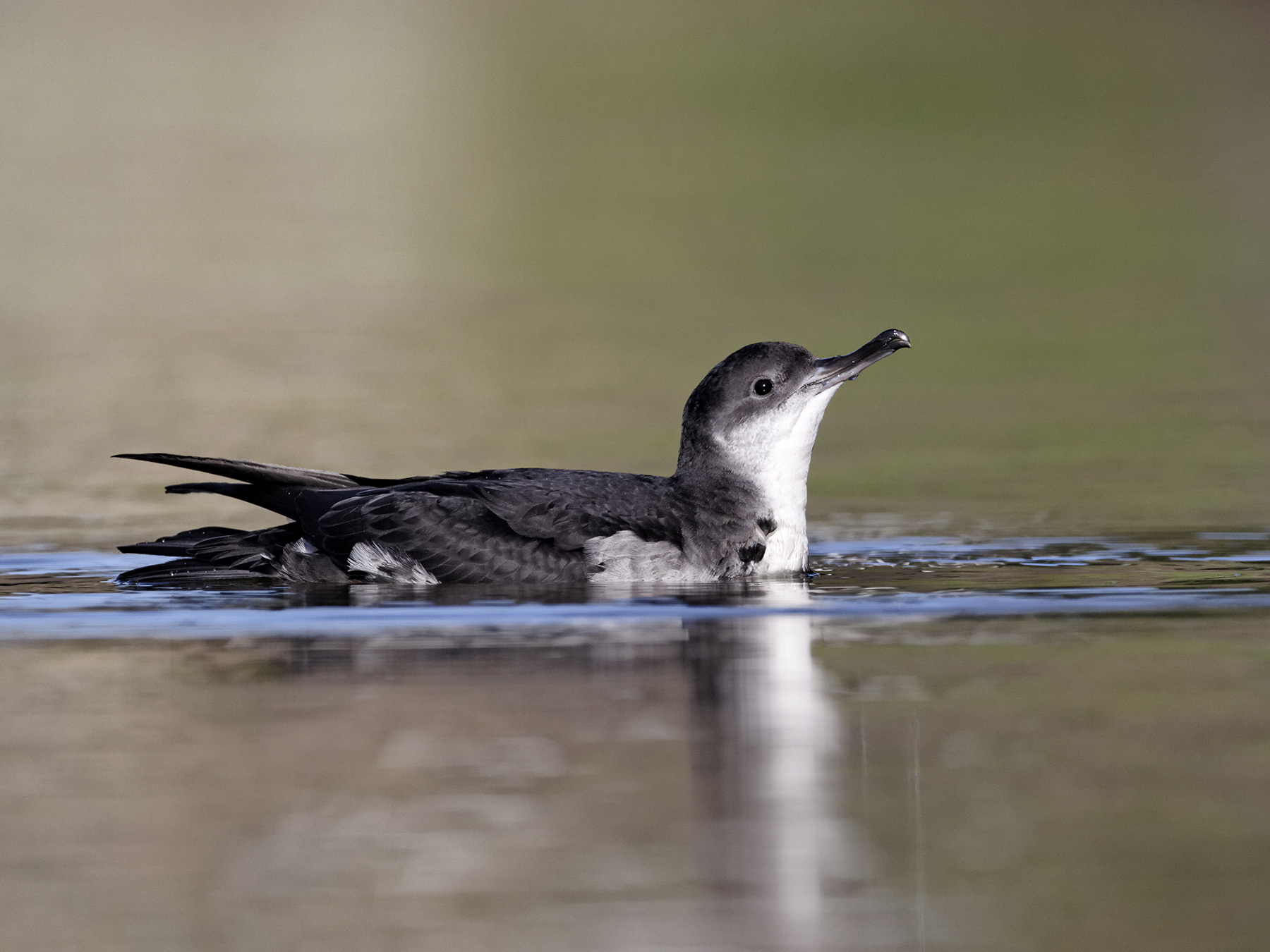
Quick facts
- Length
- 30–38 cm
- Wingspan
- 71–83 cm
- Weight
- 350–575 g
- Lifespan
- 25–50 years
- Family
- Petrels & Shearwaters
- Migration
- Long-distance Migrant
- Global status (IUCN)
- Least Concern
- World population
- 1,026,000 - 1,177,500 individuals
- Population trend
- Unknown
- Also called
- Manx, Manks Shearwater
- Scientific name
- Puffinus puffinus
Questions
2Why are Manx Shearwaters so-called?
Manx Shearwaters are named after the Isle of Man, where they once bred in great numbers. They still nest there, although the original colony collapsed after a wrecked ship introduced rats to the island over two centuries ago.
Is a Manx Shearwater a Puffin?
The Manx Shearwater is not a Puffin, although its scientific name (Puffinus puffinus) certainly creates that impression! Shearwaters are from the Procellariidae family, while Puffins are from the Alcidae family.
Sources
2- 1BirdLife International. 2018. Puffinus puffinus. The IUCN Red List of Threatened Species 2018: e.T22698226A132636603. Source (opens in a new tab)
- 2BirdLife International. 2018. Puffinus puffinus. The IUCN Red List of Threatened Species 2018: e.T22698226A132636603. Source (opens in a new tab)

Checked by
Nathan Cope, founder and editor
Nathan founded Birdfact and leads its writers and contributors in the UK, the US and Canada. He has watched and studied birds for more than ten years, and checks every article and species guide before it’s published.