
Mandarin Duck
Chinese Duck · Aix galericulata
By the Birdfact teamChecked by Nathan Cope
On this page14 sections
How to recognise it
What do Mandarin Ducks look like?
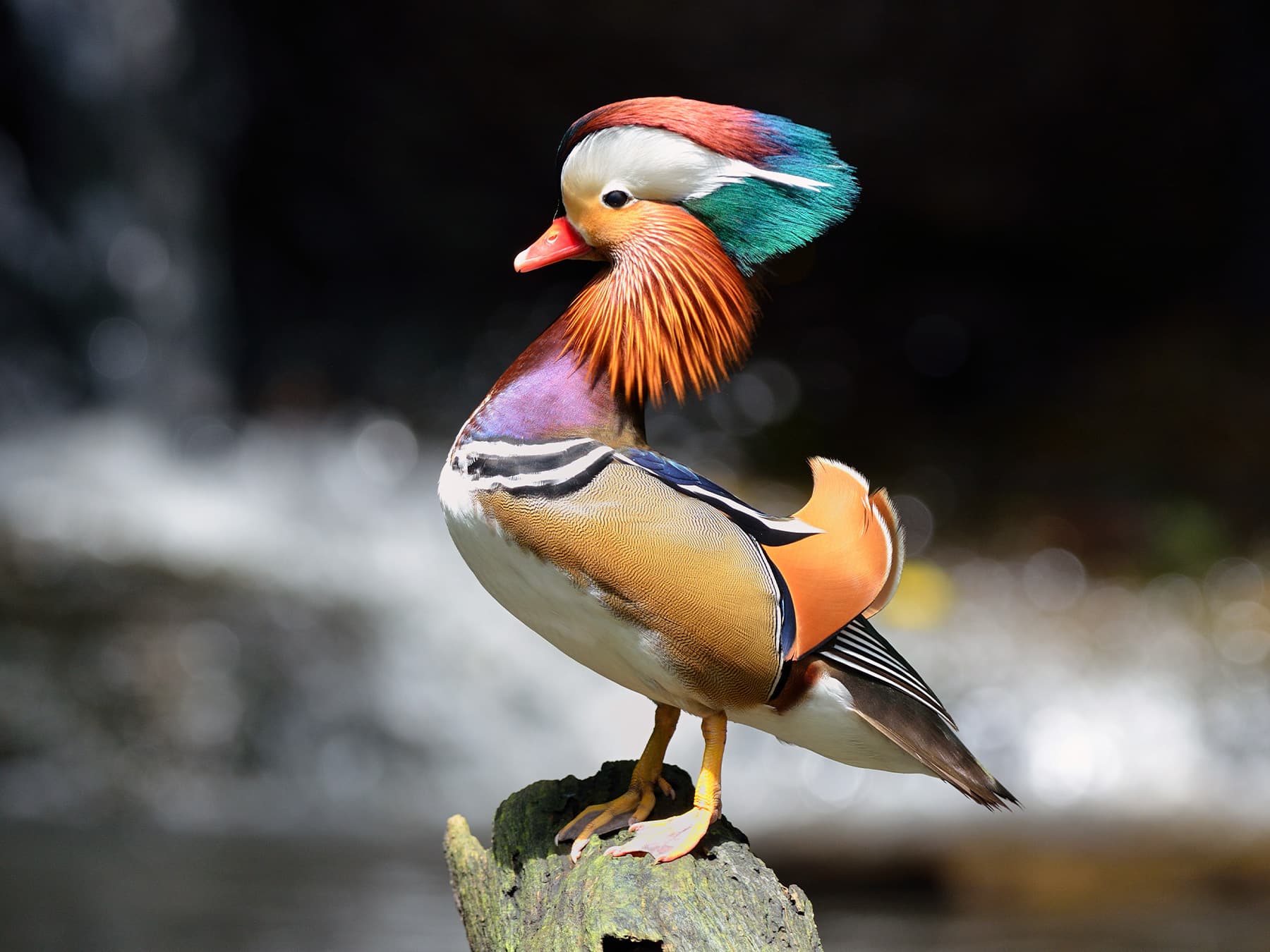
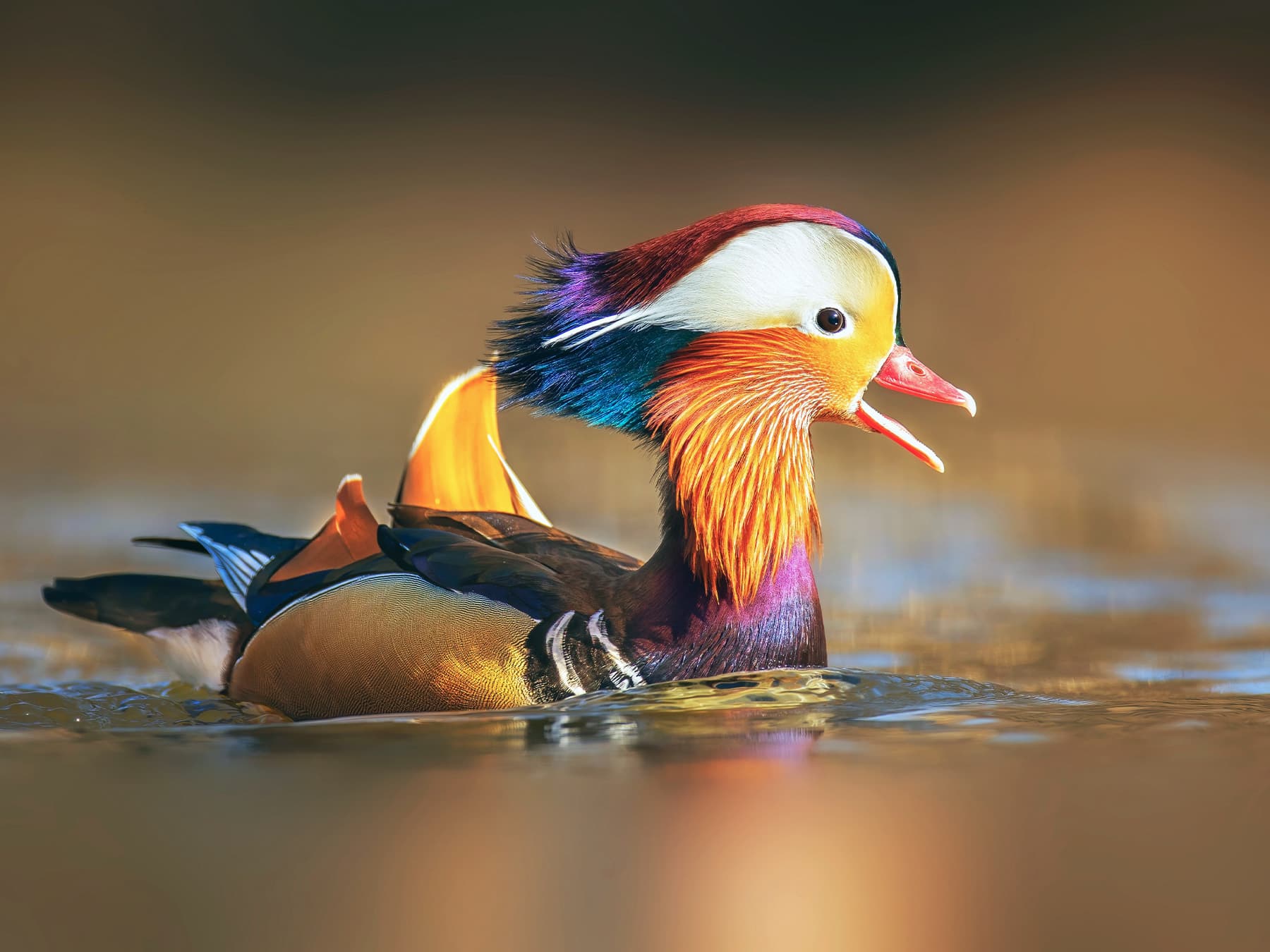
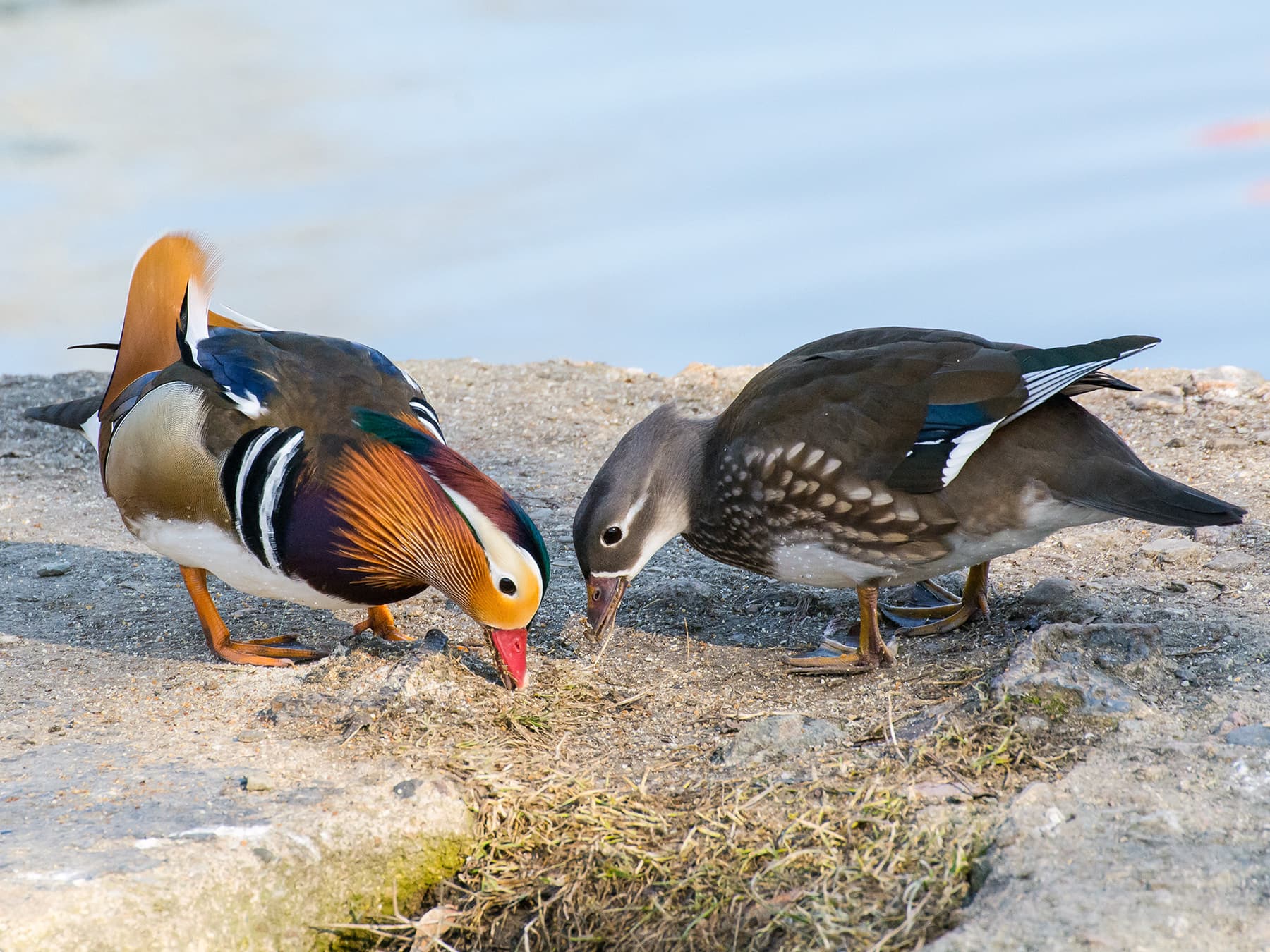
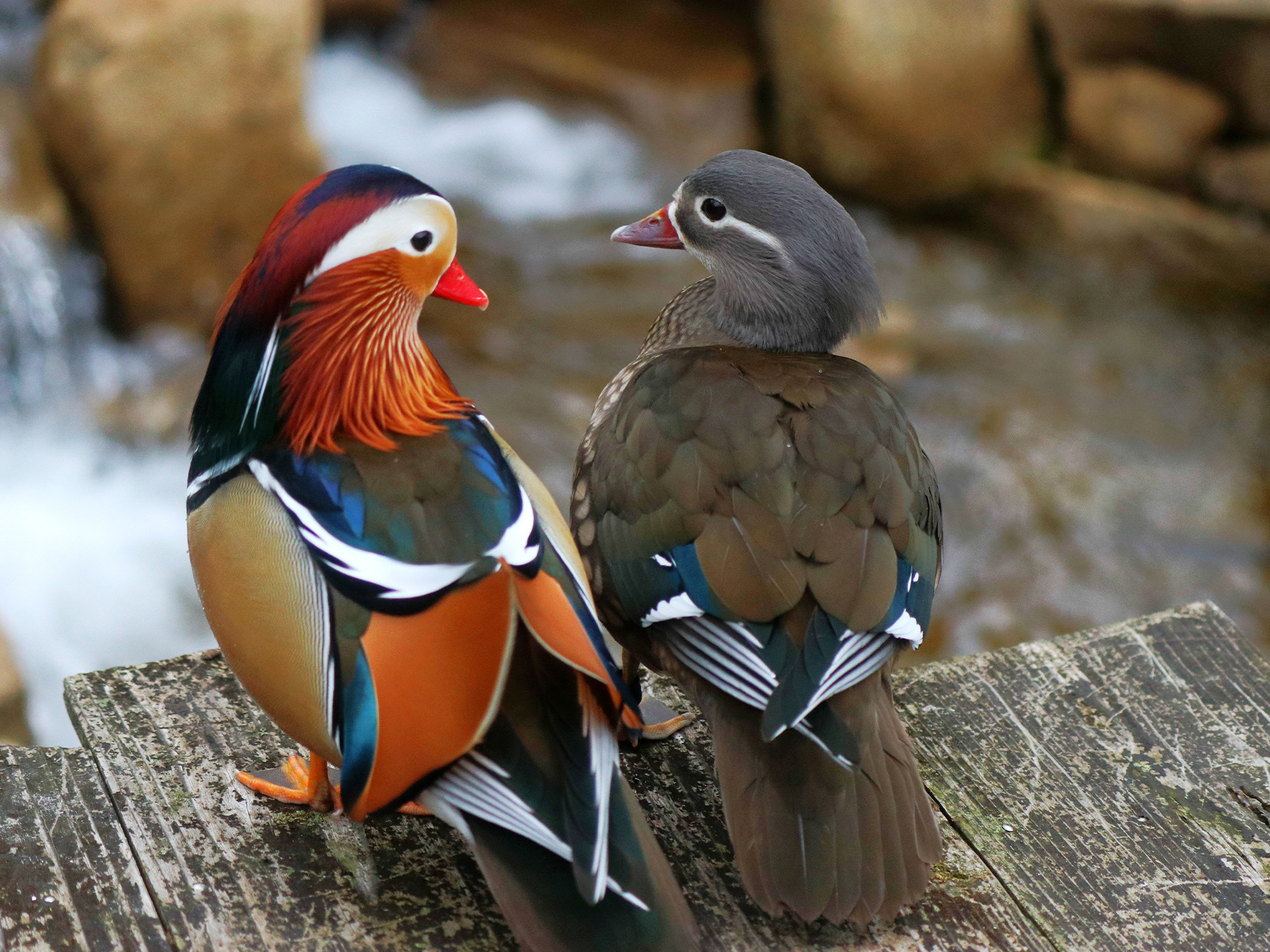
Mandarin Ducks rank easily as one of the world’s most distinctive and extravagant bird species. They show strong sexual dimorphism, and as is common among waterfowl, the male is the fairer sex. These are small, upright ducks with shortish necks and bills. They have orange legs with webbed feet and clawed toes.
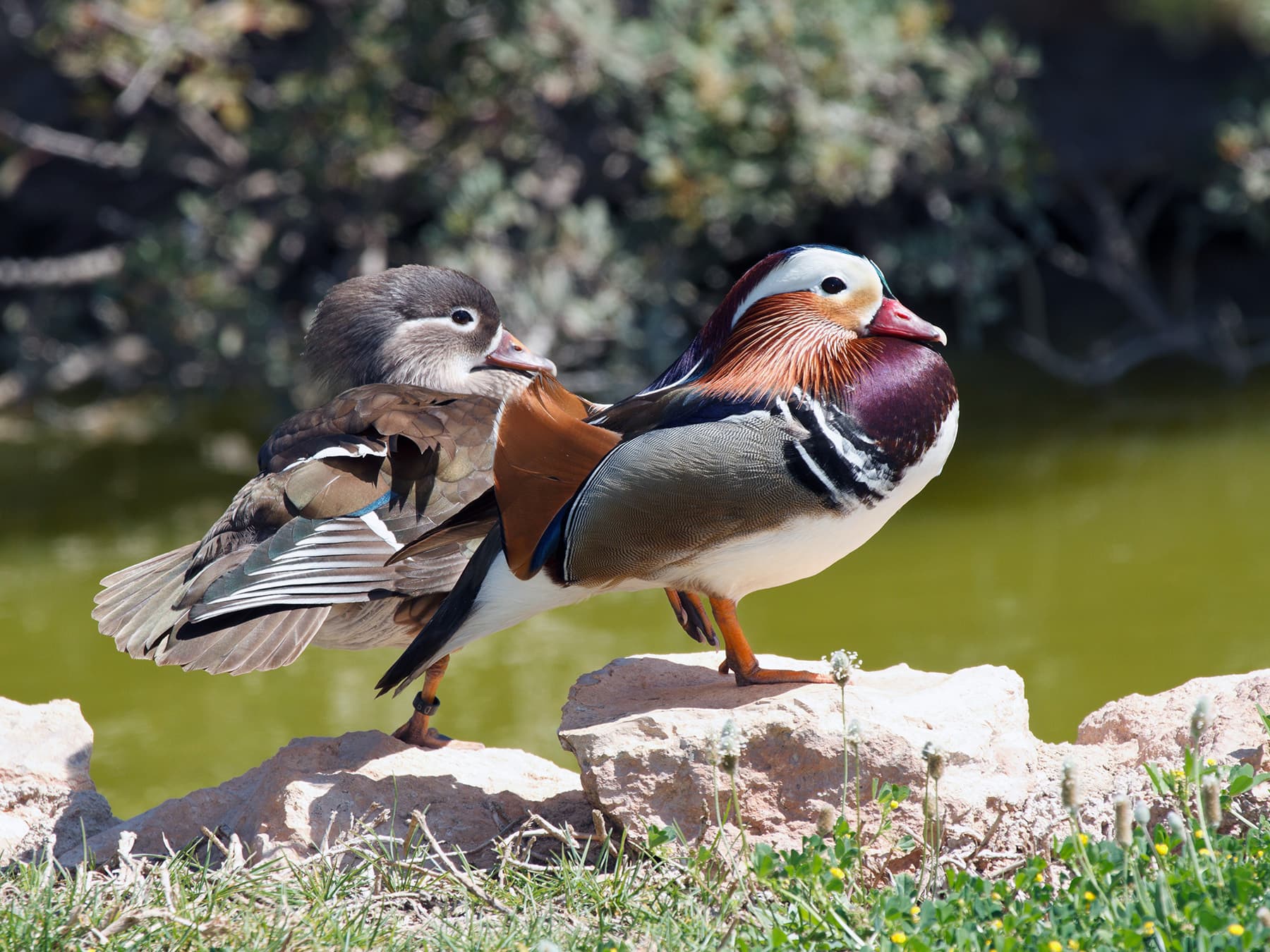
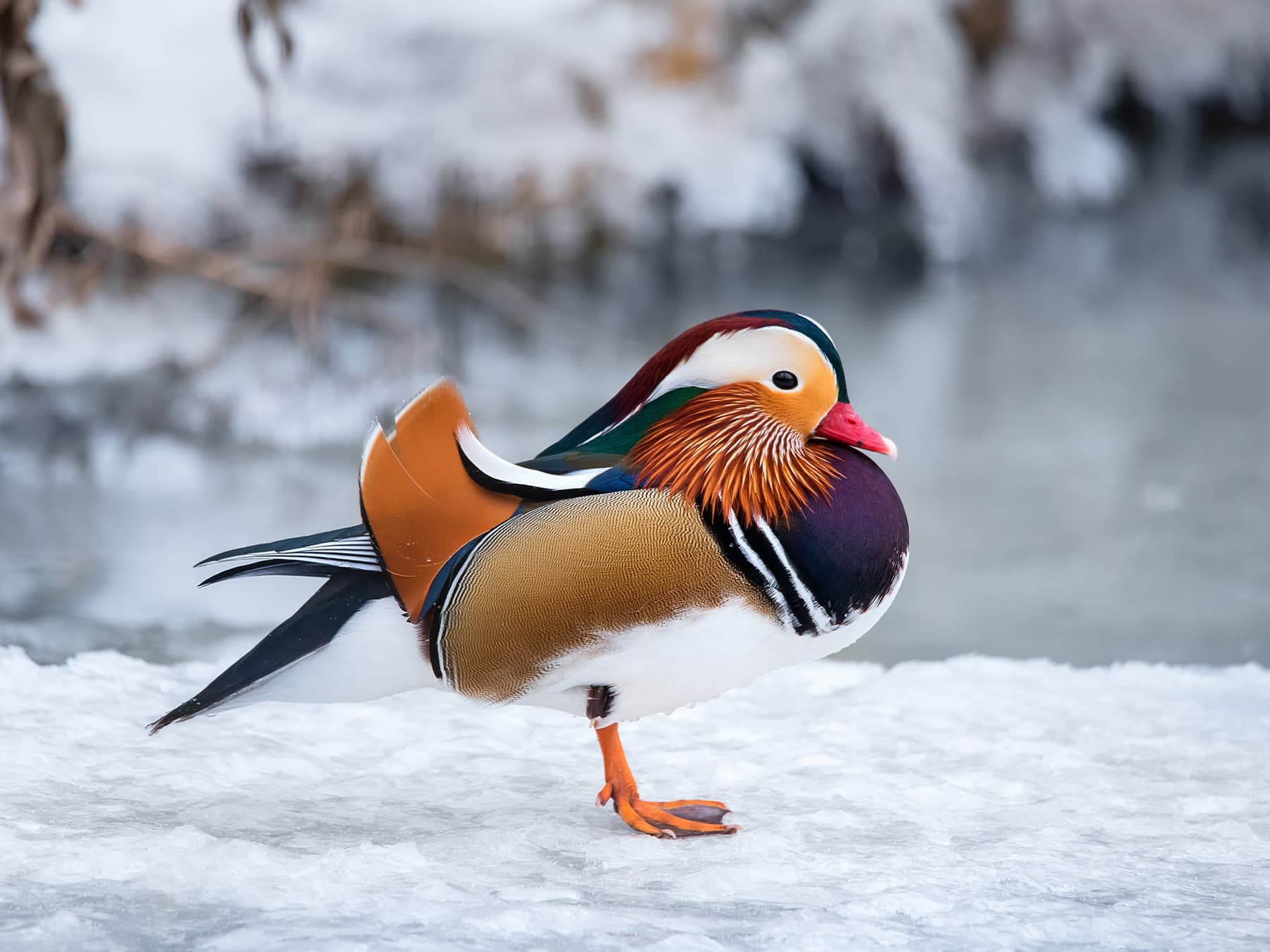
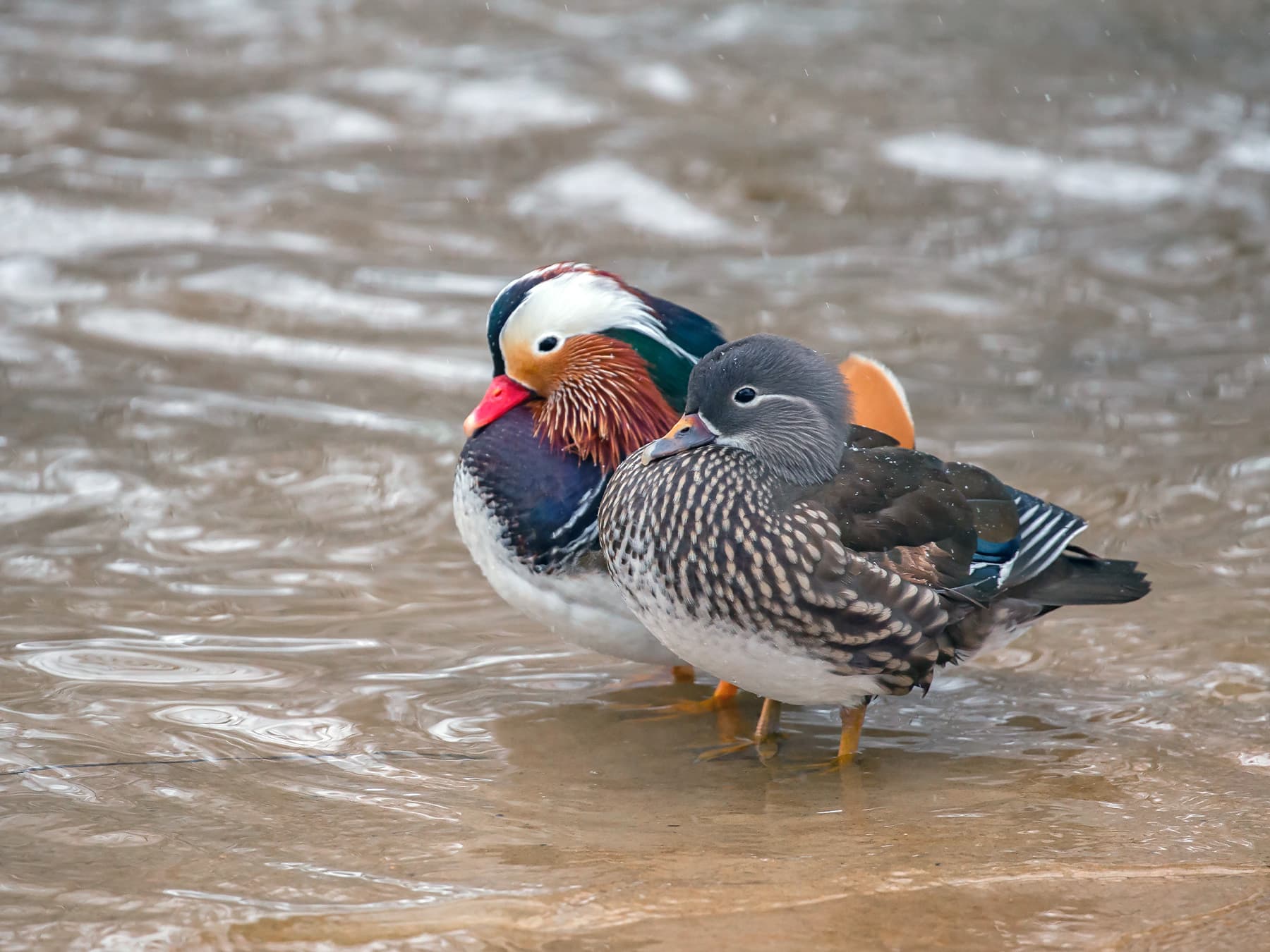
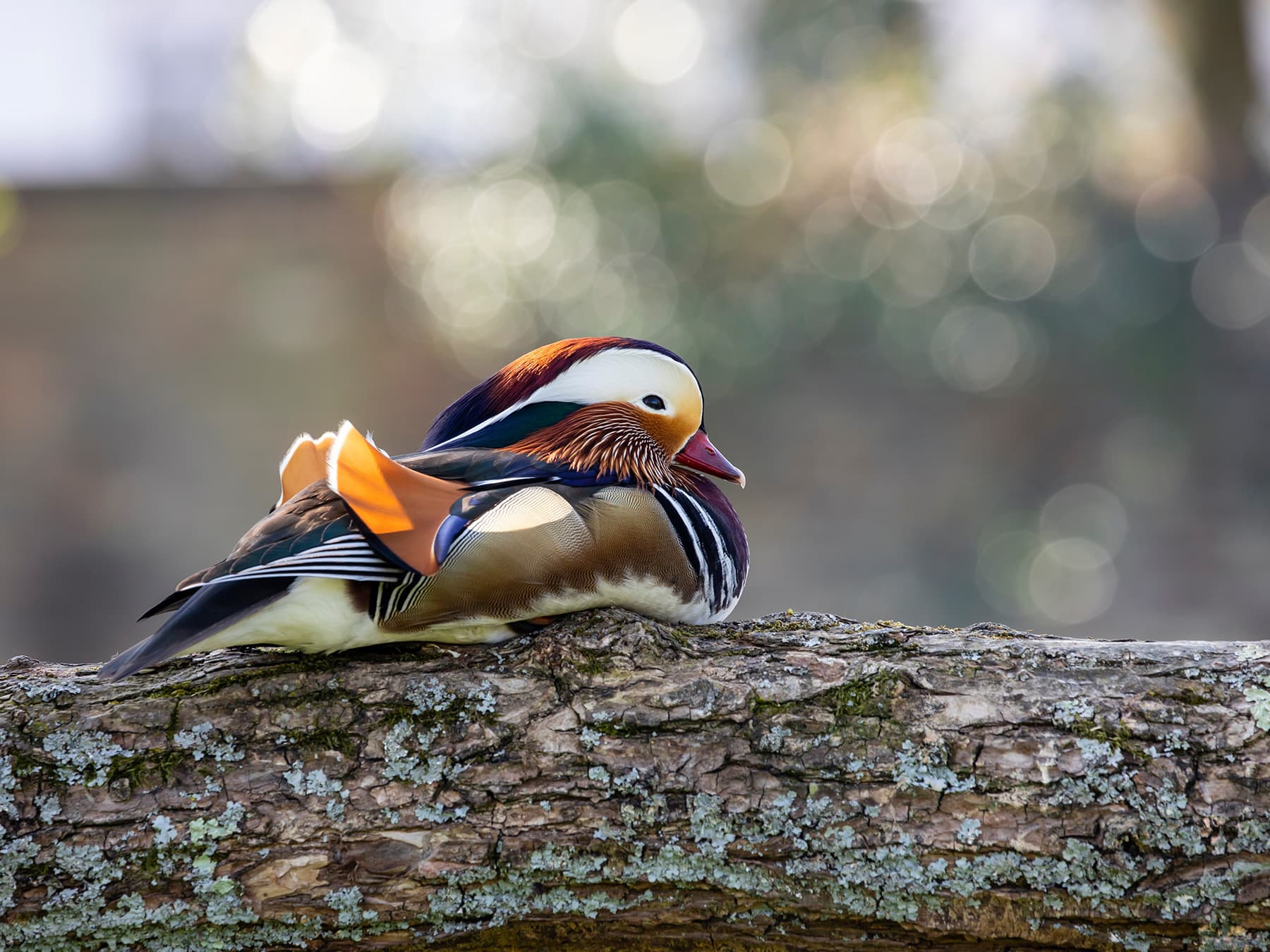
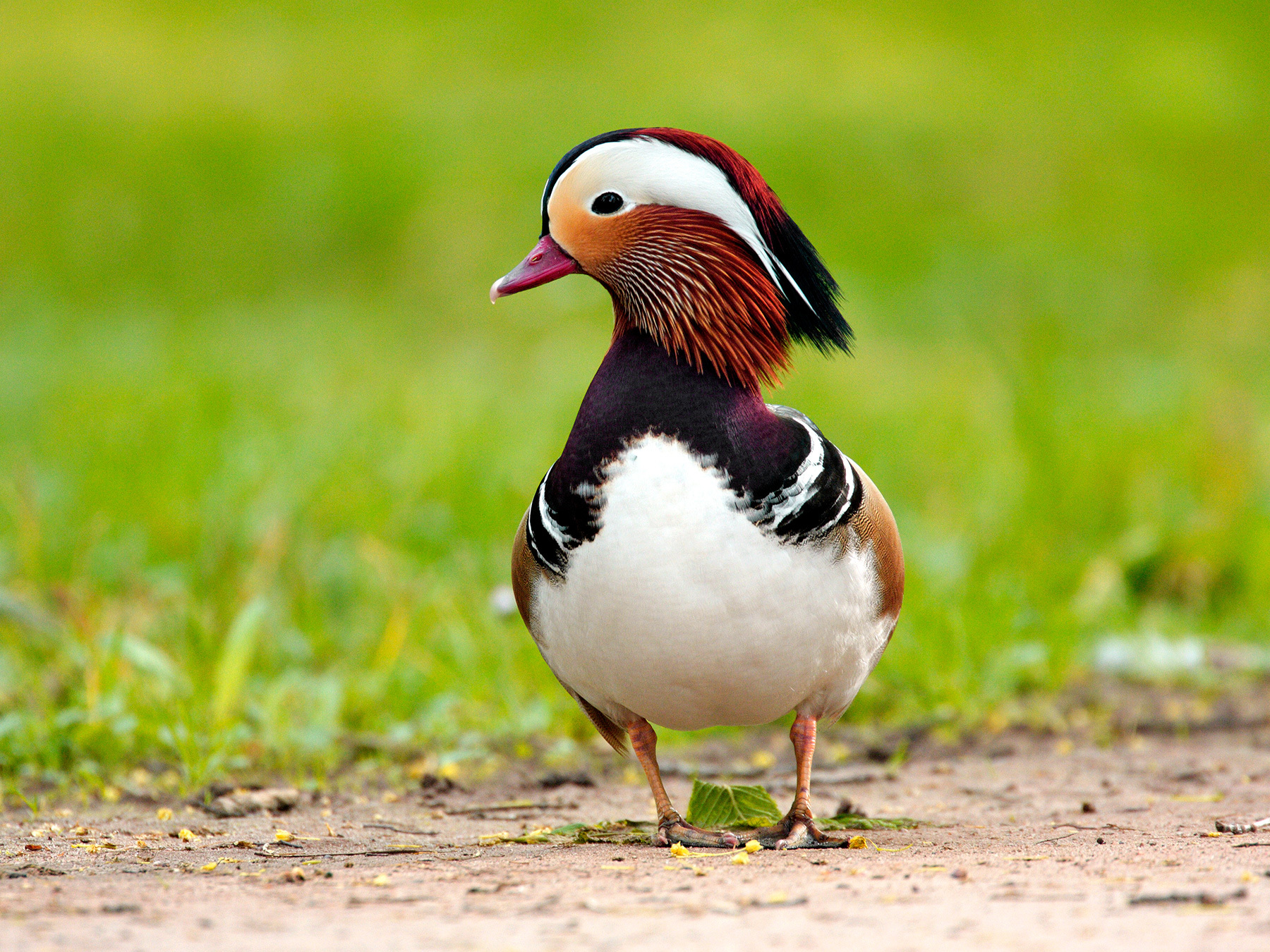
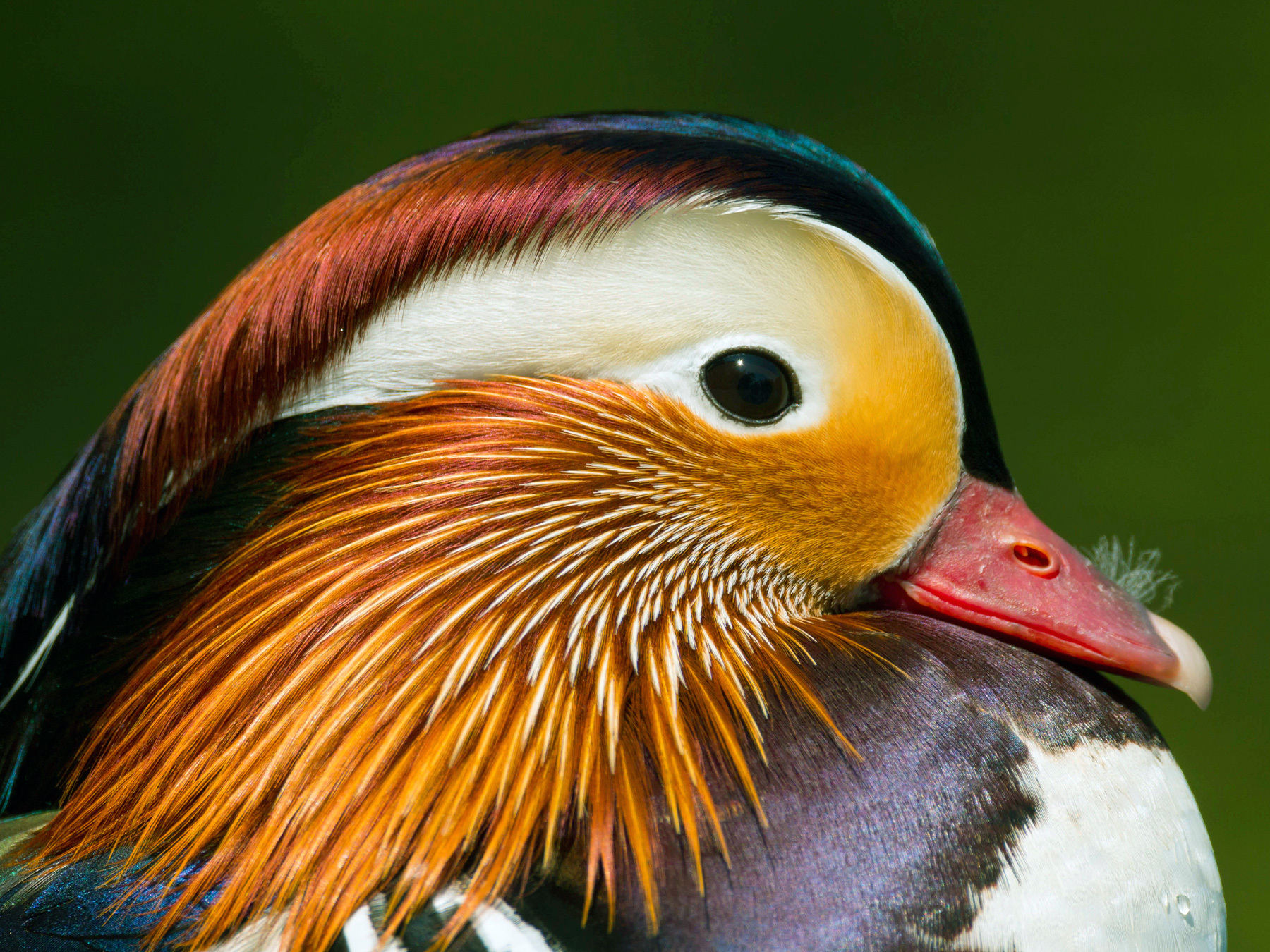
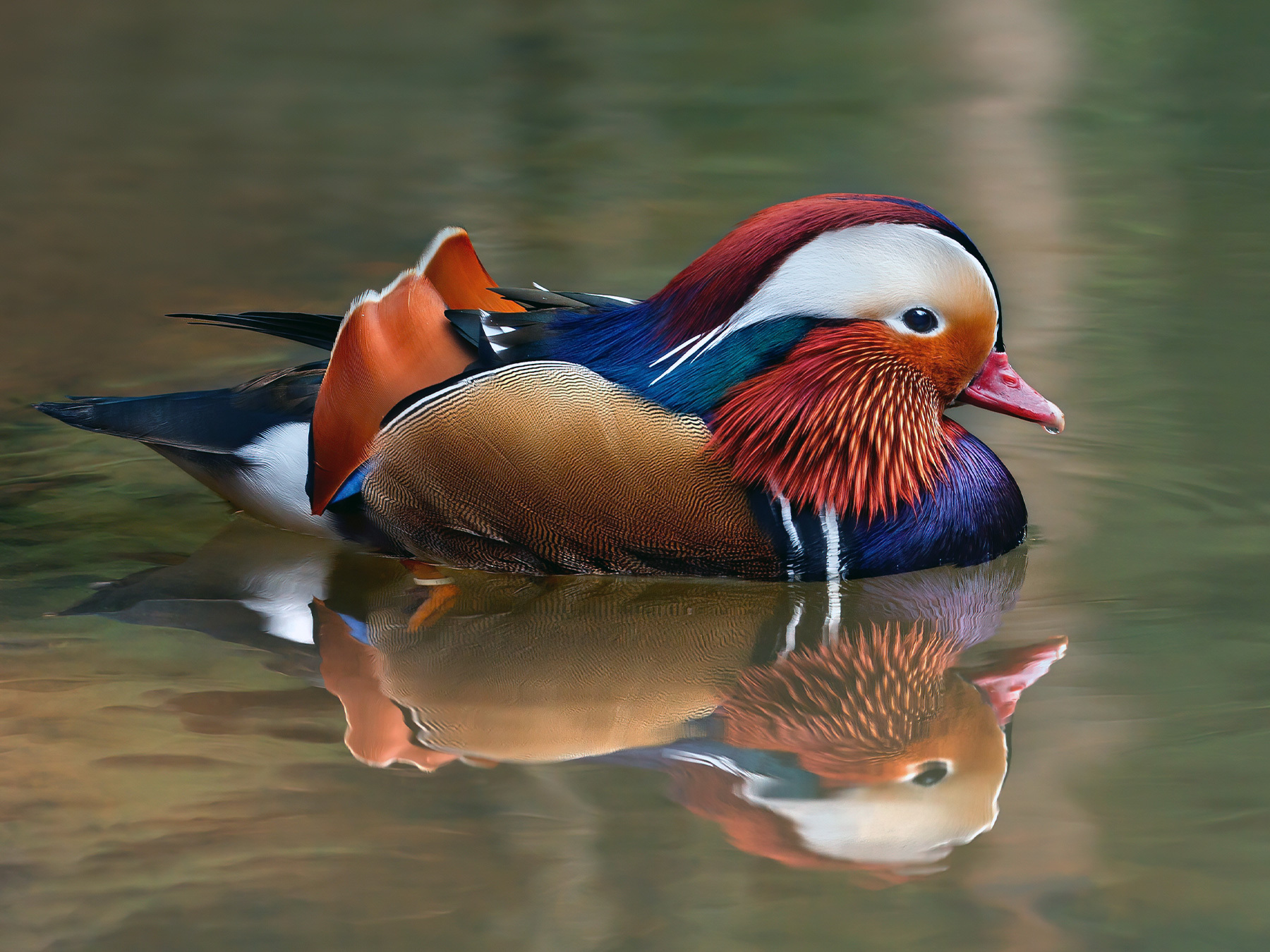
Males in breeding plumage are covered in an eclectic mix of colors, ranging from pastel peach to metallic violet. Each area of their body seemingly displays a different shade, and the boundaries between each are clearly defined. They have unusual upturned feathers on either side of their lower backs that resemble orange shark fins.
The feathers on the head and neck are dense, creating the appearance of an outsized head, and pointed rufous plumage extends from their cheeks like a bushy red beard. They also have long crown feathers that run down the nape like slicked-back hair and can be raised to form a colorful backward-facing crest.
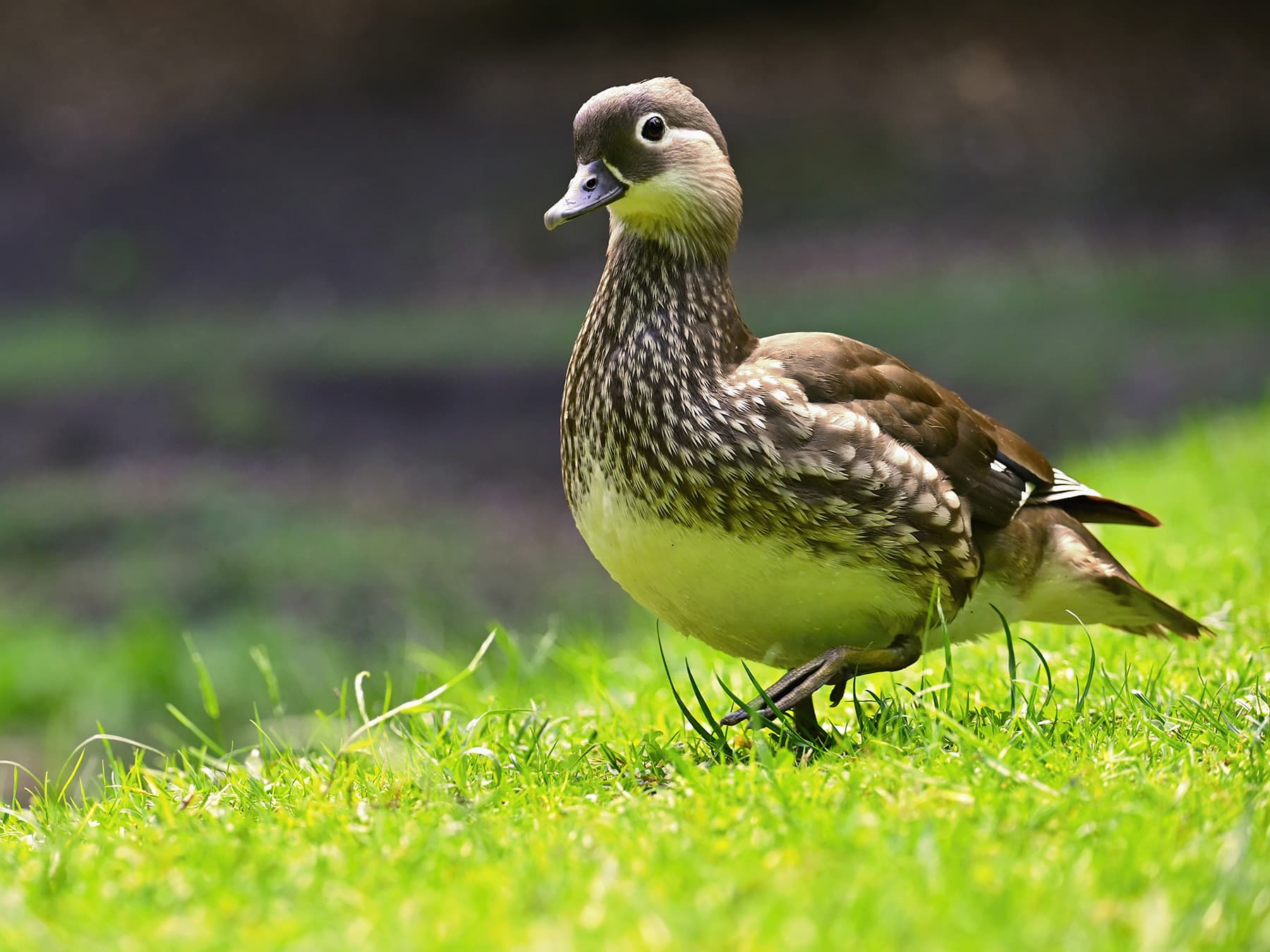
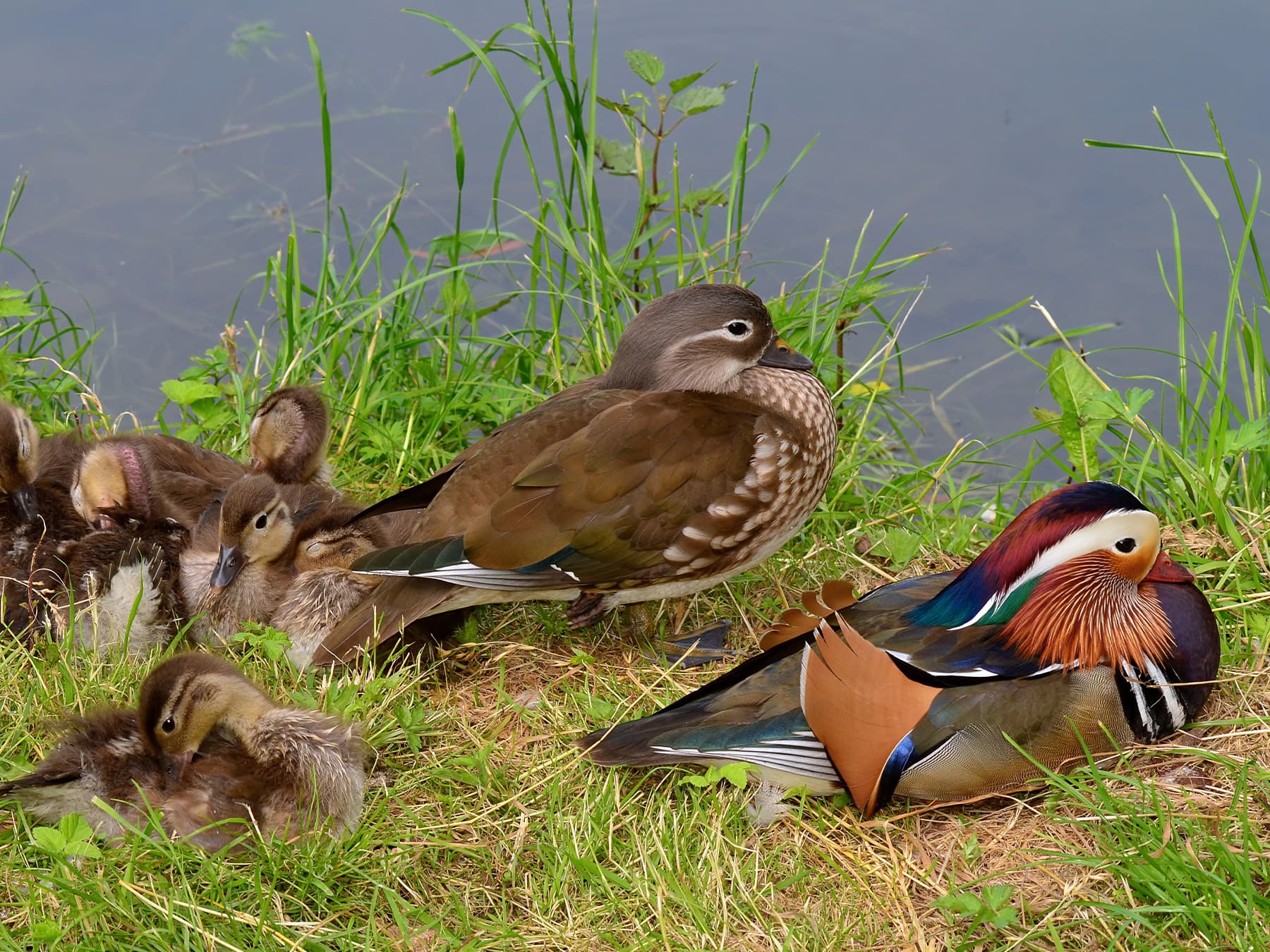
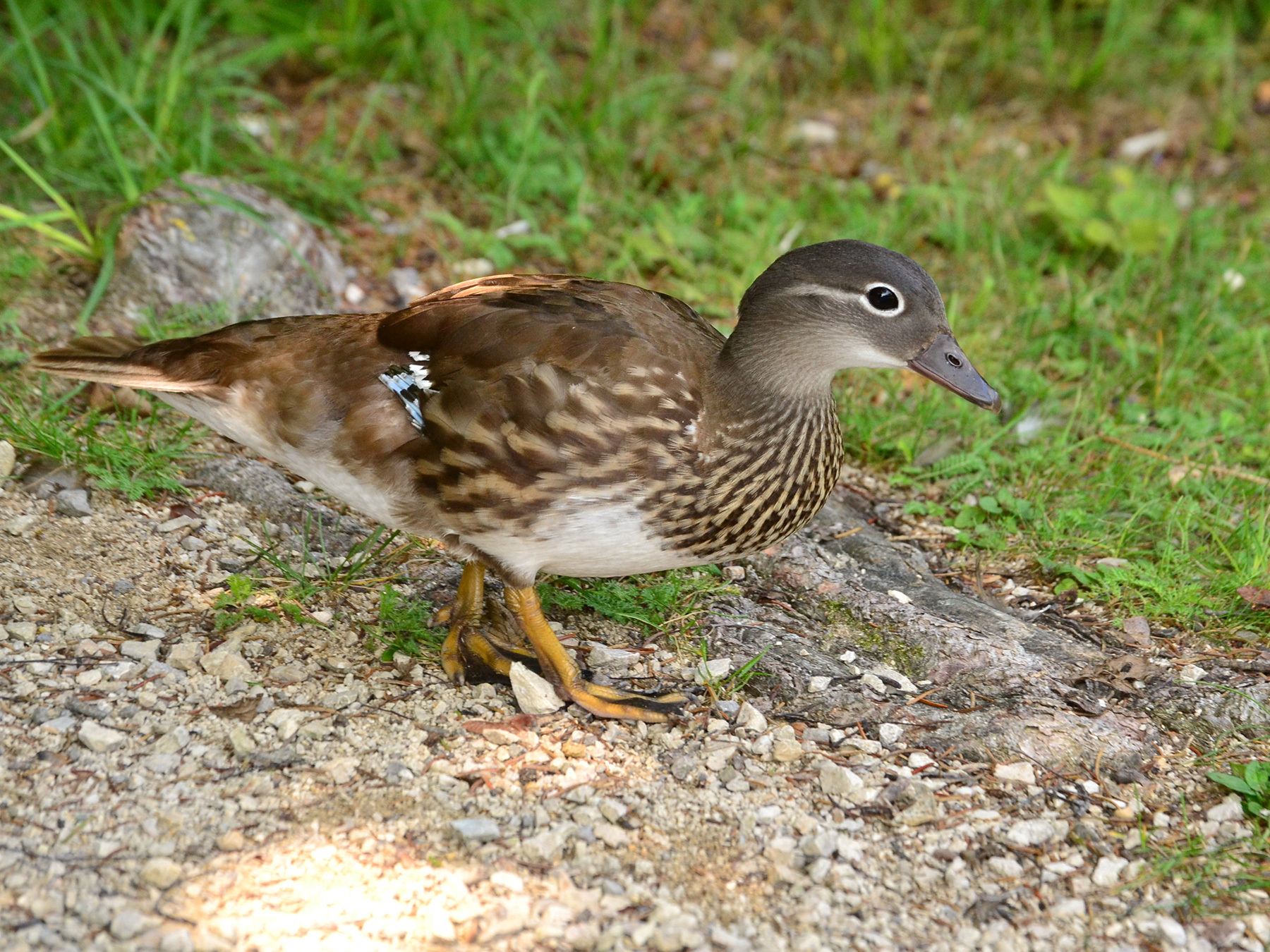
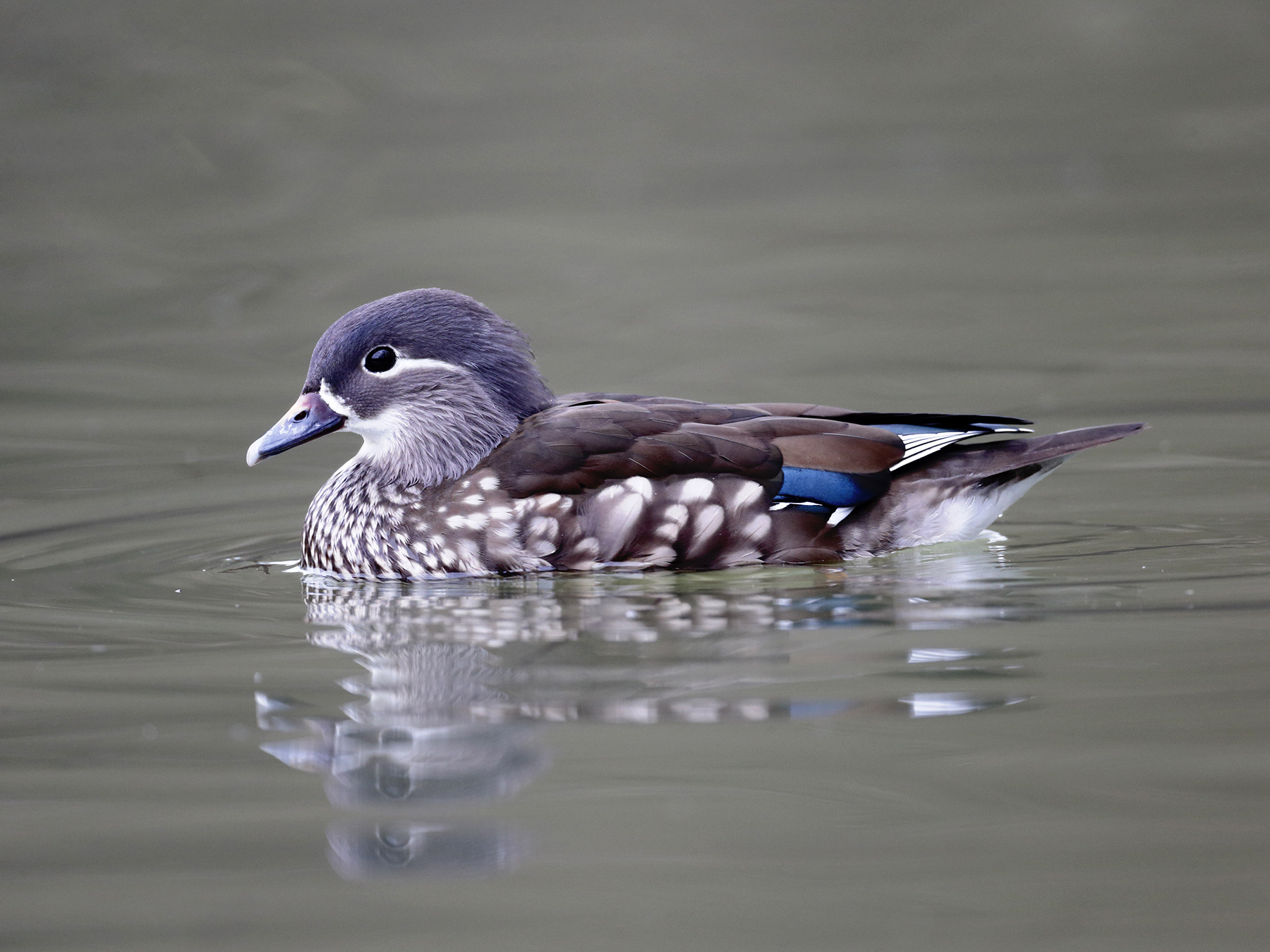
Female Mandarin Ducks are much more understated - they do not need the burden of showy plumage to attract a partner. They are most likely to be confused with the female Wood Duck. Identifying features include an all-brown back and a pure white belly. Their flanks are brown with large white spots, and they have a hint of red at the base of their bill. Their head is brown, with a white chin, and they have a thin white ring around each eye that runs back toward the nape.
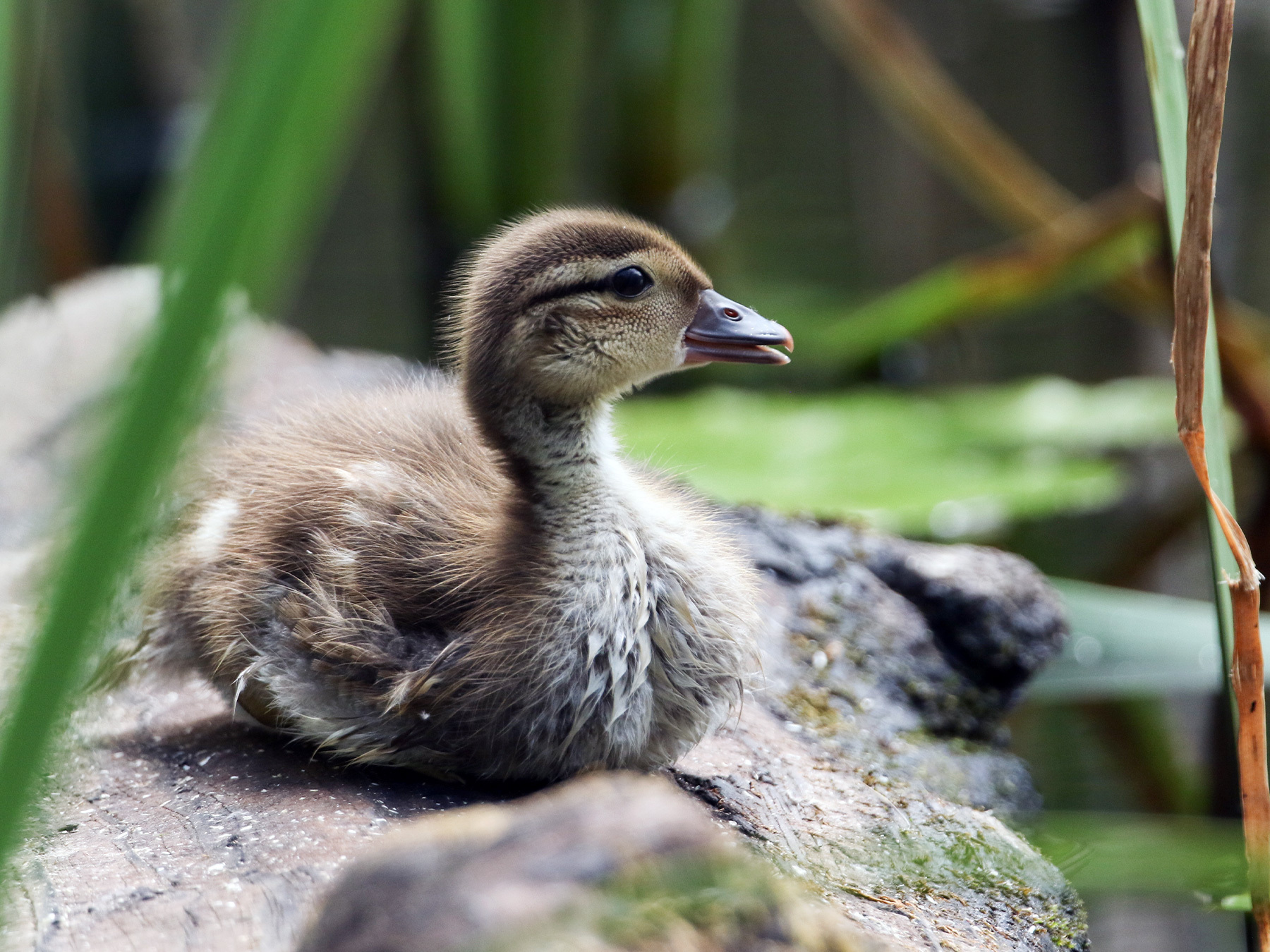
Young ducklings start life with a covering of downy brown and golden feathers. Older juveniles look a lot like adult females, although they are less clearly spotted and duller overall.
How big are Mandarin Ducks?
Mandarin Ducks are small waterfowl, about half the weight of a Mallard. Females are smaller than males.
Length
Adults typically measure between 16 and 19 inches long or 41 to 49 centimeters.
Weight
They weigh 15 to 24 ½ ounces or 0.43 to 0.69 kilograms.
Wingspan
These birds have a 26.7 to 29.1 inch (68 - 74 cm) wingspan.
Its size
Adults- Length
- 41–49 cm
- Wingspan
- 65–75 cm
- Weight
- 400–750 g
Its song and calls
What sound does a Mandarin Duck make?
Mandarin ducks are relatively quiet waterfowl, although males produce a weak, cricket-like whistled note during courtship. Females make sharper ‘ack’ and ‘ket’ notes.
When and where to see it
OctoberIn season
Most recorded in October
- 1. Berkshire0.30%
- 2. Herefordshire0.26%
- 3. Derbyshire0.25%
- 4. Leicestershire0.24%
- 5. Kildare0.20%
Each dot is a county, state or province: the bigger and darker, the larger the bird’s share of that place’s bird records that month. Grey dots: no regular records. The ringed point is the centre of the bird’s records this month; the arrow shows how it moved since last month, and the dashed loop its path through the year. “Arrivals” colours places where it becomes regular this month (orange) or is in its last regular month (grey). GBIF eBird Observation Dataset, 2019–2024. Map data: Natural Earth, US Census Bureau; place centres © OpenStreetMap contributors.
In your area
See when the Mandarin Duck is recorded in your county, state or province.
How often the Mandarin Duck turns up in the UK, Ireland, the United States and Canada through the year, from birdwatchers' records.
United Kingdom
Resident · all year · most records in April
Ireland
Resident · regularly Sep–Jul · most records in February
United States
Winter visitor · all year · most records in January
Canada
Winter visitor · regularly Sep–Apr · most records in January
Show as a table
| Month | United Kingdom | Ireland | United States | Canada |
|---|---|---|---|---|
| January | 0.082% (regular) | 0.013% (regular) | 0.002% (regular) | 0.005% (regular) |
| February | 0.088% (regular) | 0.015% (regular) | 0.002% (regular) | 0.004% (regular) |
| March | 0.13% (regular) | 0.009% (regular) | 0.001% (regular) | <0.001% (regular) |
| April | 0.14% (regular) | 0.005% (regular) | <0.001% (regular) | 0.001% (regular) |
| May | 0.11% (regular) | 0.010% (regular) | <0.001% (regular) | <0.001% |
| June | 0.082% (regular) | 0.006% (regular) | <0.001% (regular) | <0.001% |
| July | 0.095% (regular) | 0.004% (regular) | <0.001% (regular) | <0.001% |
| August | 0.081% (regular) | 0.002% | <0.001% (regular) | <0.001% |
| September | 0.060% (regular) | 0.007% (regular) | <0.001% (regular) | <0.001% (regular) |
| October | 0.052% (regular) | 0.013% (regular) | 0.001% (regular) | <0.001% (regular) |
| November | 0.062% (regular) | 0.009% (regular) | 0.002% (regular) | 0.001% (regular) |
| December | 0.072% (regular) | 0.012% (regular) | 0.002% (regular) | 0.002% (regular) |
Recorded regularly in
Worldwide: recorded regularly in 46 countries
Countries where it was recorded in at least 3 of the 6 years 2019–2024. Linked countries have their own bird list.
Europe (29)
Asia (14)
North America (3)
Data: EOD – eBird Observation Dataset (Cornell Lab of Ornithology), accessed via GBIF.org, CC BY 4.0. Records from 2019–2024, aggregated and filtered by Birdfact. How these lists are made
What is the habitat of a Mandarin Duck?
Mandarin Ducks prefer quiet freshwater bodies like ponds, lakes, and rivers with plenty of vegetation in and around the water.
What is the range of a Mandarin Duck?
Native to the Far East in Russia, China, Japan, Korea, and Taiwan, Mandarin Ducks are popular ornamental birds all over the world, and established feral populations occur in both North America and Western Europe.
Where do Mandarin Ducks live?
Mandarin Ducks are ‘all-terrain’ waterfowl that spend their time on the water, on land, or even perched in trees. These birds are partial migrants in their native range, where they have no problem covering hundreds of miles or more in flight.
How rare are Mandarin Ducks?
Wild Mandarin Ducks are a rare sighting in North America, although escaped birds do show up from time to time. A few small feral populations in various states offer the most reliable chance of spotting these spectacular waterfowl out in the wild.
With a wild population of over 14,000 Mandarin Ducks, birdwatchers in the United Kingdom have a much better chance of spotting these beautiful birds.
Where can you see Mandarin Ducks in the US?
Zoos and private bird collections are the easiest places to find Mandarin Ducks in most parts of the United States. However, there are small free-flying populations in California and North Carolina.
Where can you see Mandarin Ducks in Canada?
Apart from the odd sighting in British Columbia and Quebec, Mandarin Ducks are rare birds in Canada. However, they are popular ornamental waterfowl, so escaped individuals could turn up just about anywhere.
Where can you see Mandarin Ducks in the UK?
Mandarin Ducks are fairly common and widespread in the United Kingdom, particularly from central to south and eastern England. There are also isolated populations in Scotland, Northern Ireland, and the Republic of Ireland.
Migration
Do Mandarin Ducks migrate?
Mandarin Ducks migrate in their native range, moving between Russia and northeastern China in the summer and southeastern China in the winter. They do not usually migrate within North America or Europe.
Are Mandarin Ducks native to the US?
Mandarin Ducks are not native to the United States of America. Feral populations of these ornamental waterfowl originated from escaped captive birds, but fortunately, they do not seem to be affecting the native nesting Wood Ducks.
Are Mandarin Ducks native to the UK?
Mandarin Ducks are not native to the United Kingdom. The local population has been established since the 1900s and has its roots in escaped or released birds brought over from its native range in the Far East.
Tips for seeing it
- Look for Mandarin Ducks in wooded ponds and streams
- Listen for their characteristic whistle-like call
- Observe early morning or late evening when they're most active
- In the UK, check ornamental ponds in parks and gardens
- Use binoculars to spot their distinctive plumage in dense vegetation
What it eats
What do Mandarin Ducks eat?
Mandarin Ducks are omnivores that feed on land and in the water. They eat everything from seeds and acorns to frogs and small fish. These dabbling ducks do not dive but will upend to feed on aquatic plants growing under the water.
What do Mandarin Duck chicks eat?
Mandarin Ducklings are precocial and feed themselves with small insects caught on the ground.
Nesting and breeding
Where do Mandarin Ducks nest?
Mandarin Ducks are cavity nesters that use natural holes, woodpecker nests, or artificial nest boxes near water. They nest high above the ground, usually up to about 33 feet (10m). The poor ducklings must jump out of the nest, but they parachute down fairly gently, thanks to their downy feathers.
When do Mandarin Ducks nest?
Mandarin Ducks nest in the spring and summer, producing a single brood each year. They lay their eggs in April in the United Kingdom but may begin as late as July in their native China. The eggs hatch after roughly four weeks, and the young birds fledge about six weeks later.
What do Mandarin Duck eggs look like?
Mandarin ducks lay glossy, cream-colored eggs that measure 48 to 56 millimeters long and 36 to 38 millimeters wide. They lay a large, single brood that ranges from seven to more than twenty eggs.
Do Mandarin Ducks mate for life?
Mandarin Ducks form monogamous pair bonds in the winter, and the couple remains together until after the female has laid her eggs. Their close bond has inspired their reputation as a symbol of affection in various Asian cultures.
Behaviour
Are Mandarin Ducks aggressive?
Despite their eye-catching plumage, Mandarin Ducks are shy birds. However, they can stand up for themselves against larger duck species.
Where do Mandarin Ducks sleep at night?
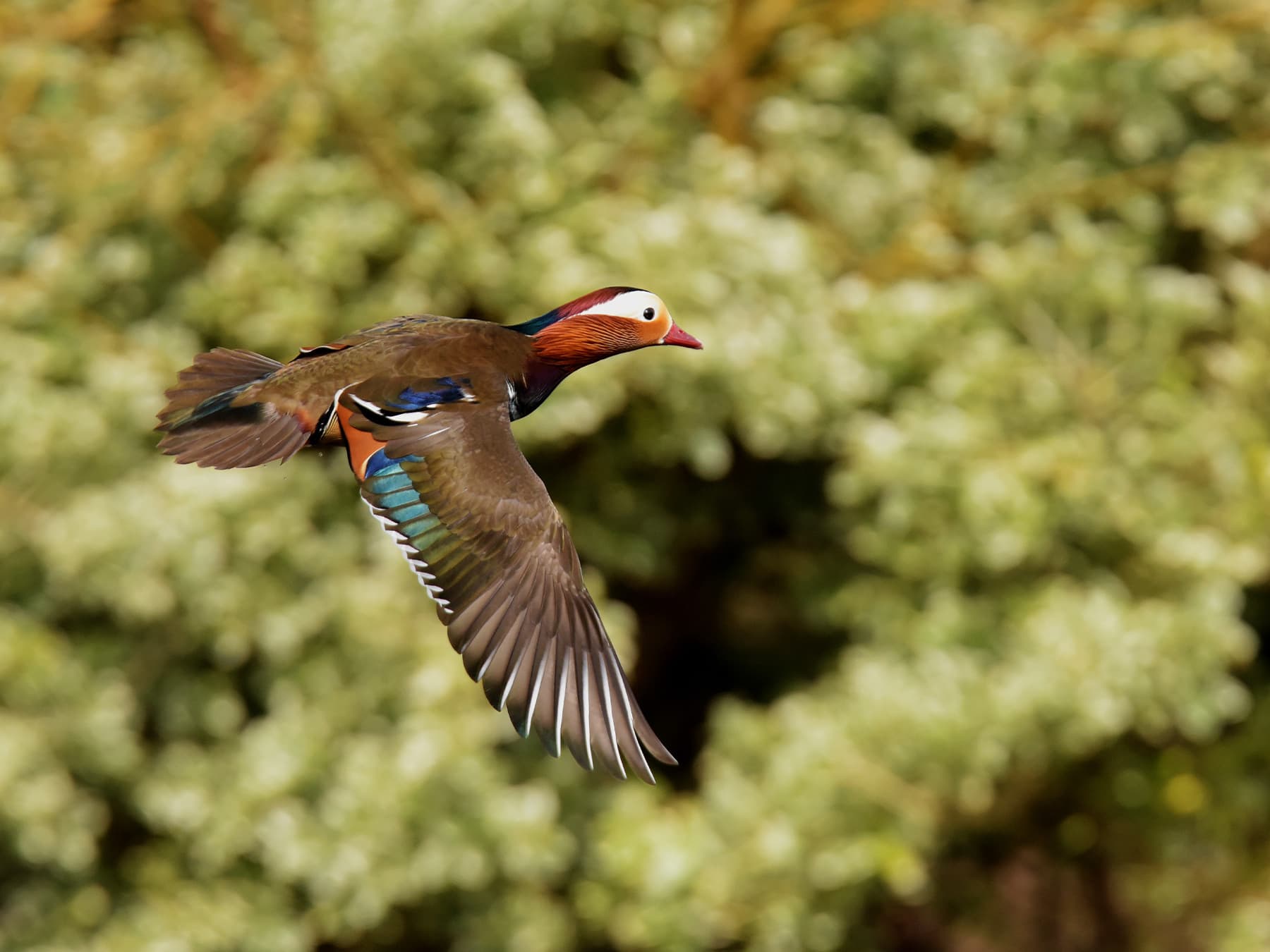
Mandarin Ducks are most active in the low light of dusk and dawn. They rest on the ground or on branches and are one of the few ducks that perch in trees, aided by their clawed feet and agile flight.
Lifespan and predators
How long do Mandarin Ducks live?
Mandarin ducks can live for about ten years. Captive birds usually have a longer lifespan if given good care.
What are the predators of Mandarin Ducks?
Mandarin Ducks are vulnerable to predators at each stage of their lifecycle. Mammals like mink and otters, and birds of prey like Goshawks and large owl species are their major enemies.
Are Mandarin Ducks protected?
Mandarin Ducks are non-native species in the United States and the United Kingdom. They are not included in the Migratory Bird Treaty Act in the US but are protected by the Wildlife and Countryside Act in the UK. These birds are a second-class protected species in China and are protected by the Wildlife Conservation Act in Taiwan.
Are Mandarin Ducks endangered?
Mandarin Ducks are not endangered, although their native wild population is thought to be in decline. The species has a ‘Least Concern’ status on the IUCN Red List.
Conservation
While the Mandarin Duck is not globally threatened, its native populations in East Asia have declined due to habitat loss and hunting.
In contrast, introduced populations in Europe, particularly in the UK, have thrived, creating a unique conservation scenario.
More photos
8 photos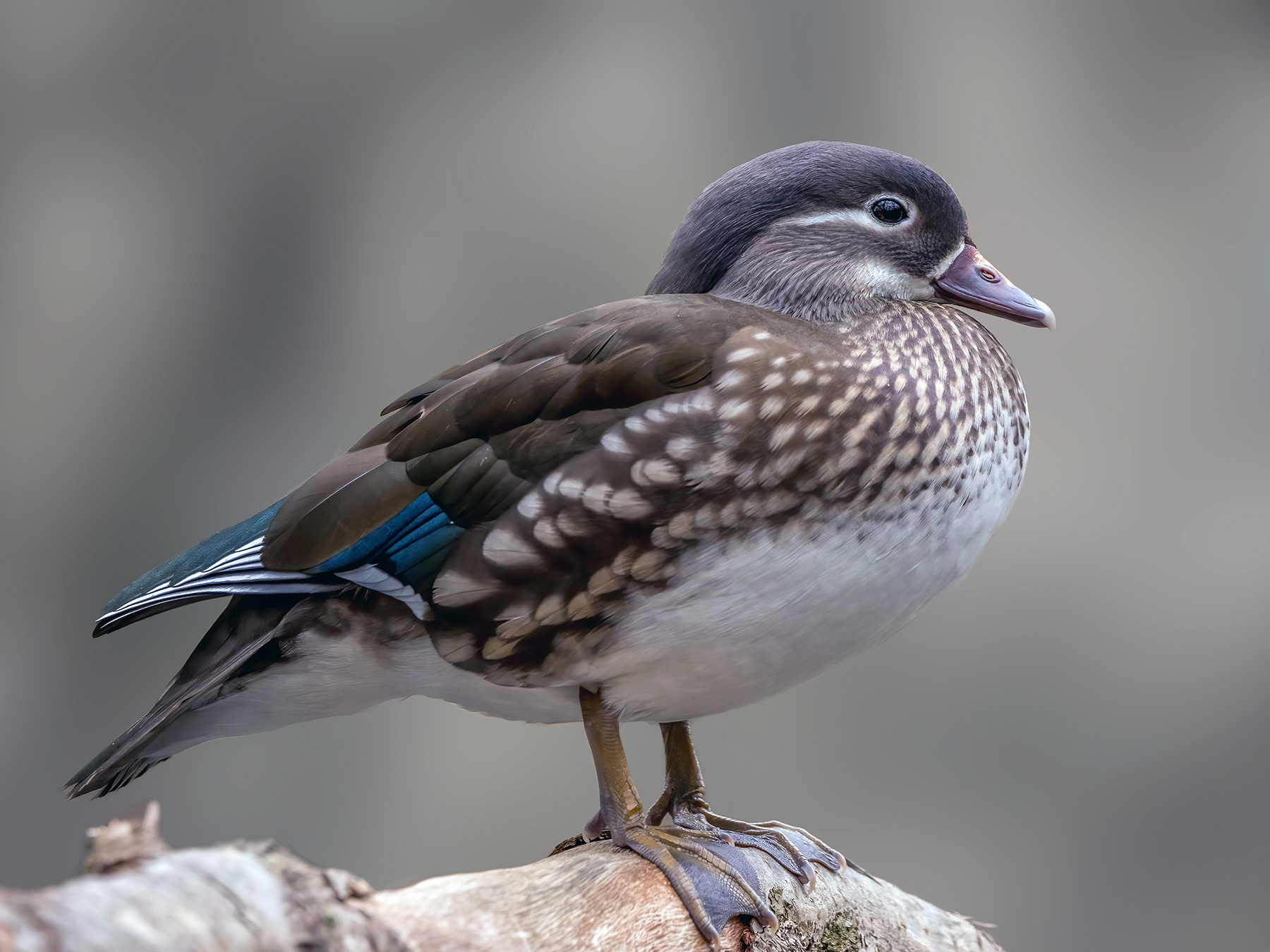
Mandarin Duck guides
6 guides- Female Mandarin Ducks (Identification Guide)
- What Do Ducks Eat? (Full Diet, Feeding, Habits + Behavior)
- Do Ducks Migrate (All You Need To Know)
- How Long Do Ducks Live? An In-depth Guide of Duck Lifespan
- Baby Ducks (Ducklings): Complete Guide with Pictures
- What is a Group of Ducks Called? Discover the Collective Nouns for Ducks
Quick facts
- Length
- 41–49 cm
- Wingspan
- 65–75 cm
- Weight
- 400–750 g
- Lifespan
- 6–9 years · oldest recorded 10.4 years
- Family
- Ducks, Geese & Swans
- Migration
- Partial migrant
- Global status (IUCN)
- Least Concern
- World population
- 65,000 - 66,000 individuals
- Population trend
- Decreasing
- Also called
- Chinese Duck
- Scientific name
- Aix galericulata
Questions
2Can a Mandarin Duck mate with a Mallard?
Many ducks and geese hybridize freely with similar species, although the Mandarin Duck is an exception. Even though the two often occur together, this species does not cross-breed with the common Mallard.
What is so special about Mandarin Duck?
The Mandarin Duck ranks high among the world’s most spectacular waterfowl. Males in breeding plumage are prized for their beauty, but these birds are also a traditional symbol of fidelity and devotion.
Sources
4- 1BirdLife International. 2018. Aix galericulata. The IUCN Red List of Threatened Species 2018: e.T22680107A131911544. Source (opens in a new tab)
- 2Wetlands International (2006)
- 3Wetlands International (2006)
- 4BTO longevity records: maximum age from a ringed bird, 10 years, 4 months, 25 days (set in 1999), BirdFacts: Mandarin Duck (1999) Source (opens in a new tab)

Checked by
Nathan Cope, founder and editor
Nathan founded Birdfact and leads its writers and contributors in the UK, the US and Canada. He has watched and studied birds for more than ten years, and checks every article and species guide before it’s published.