


Little Gull
Little Mew Gull · Hydrocoloeus minutus
By the Birdfact teamChecked by Nathan Cope
On this page14 sections
How to recognise it
What do Little Gulls look like?
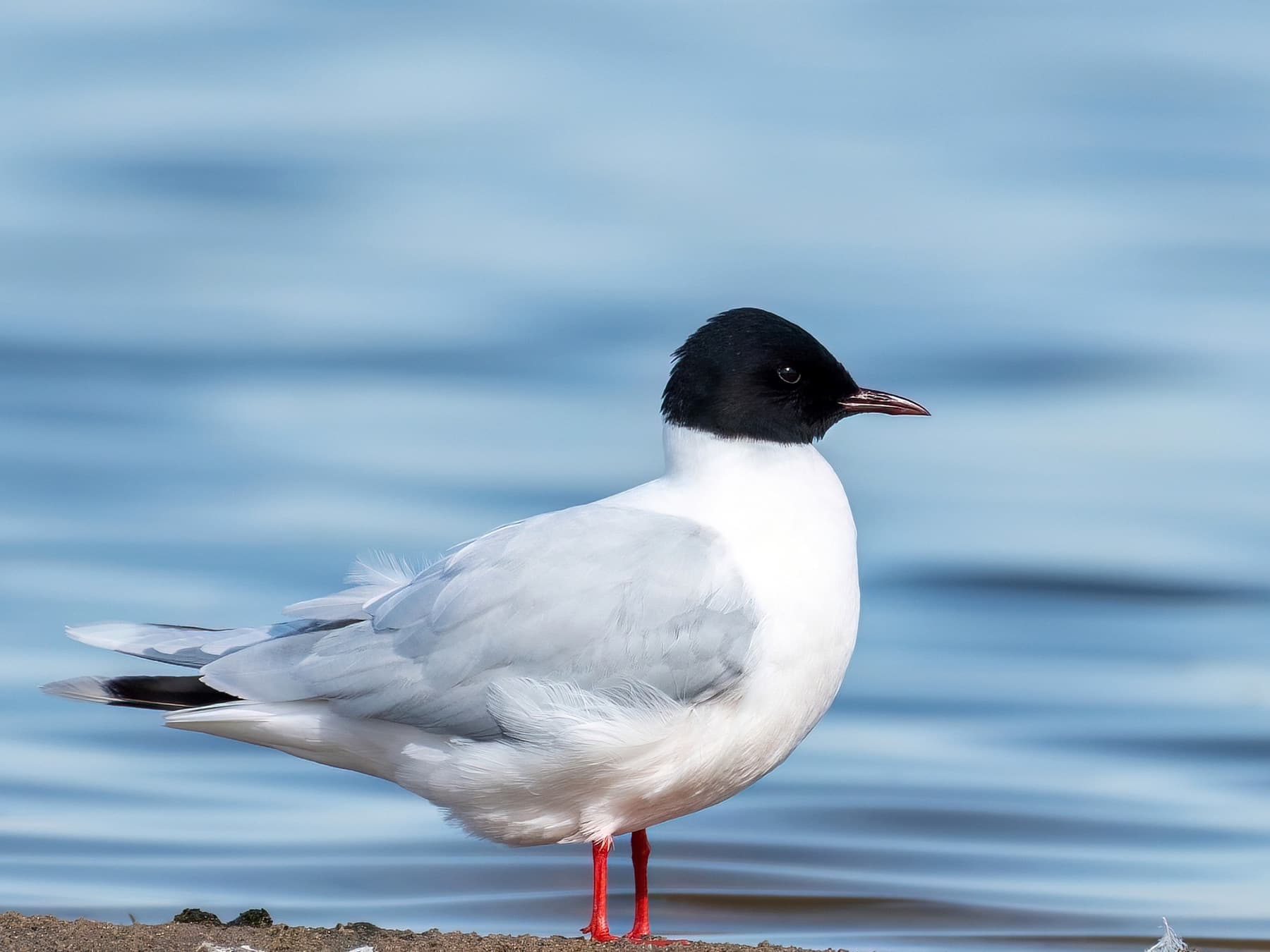
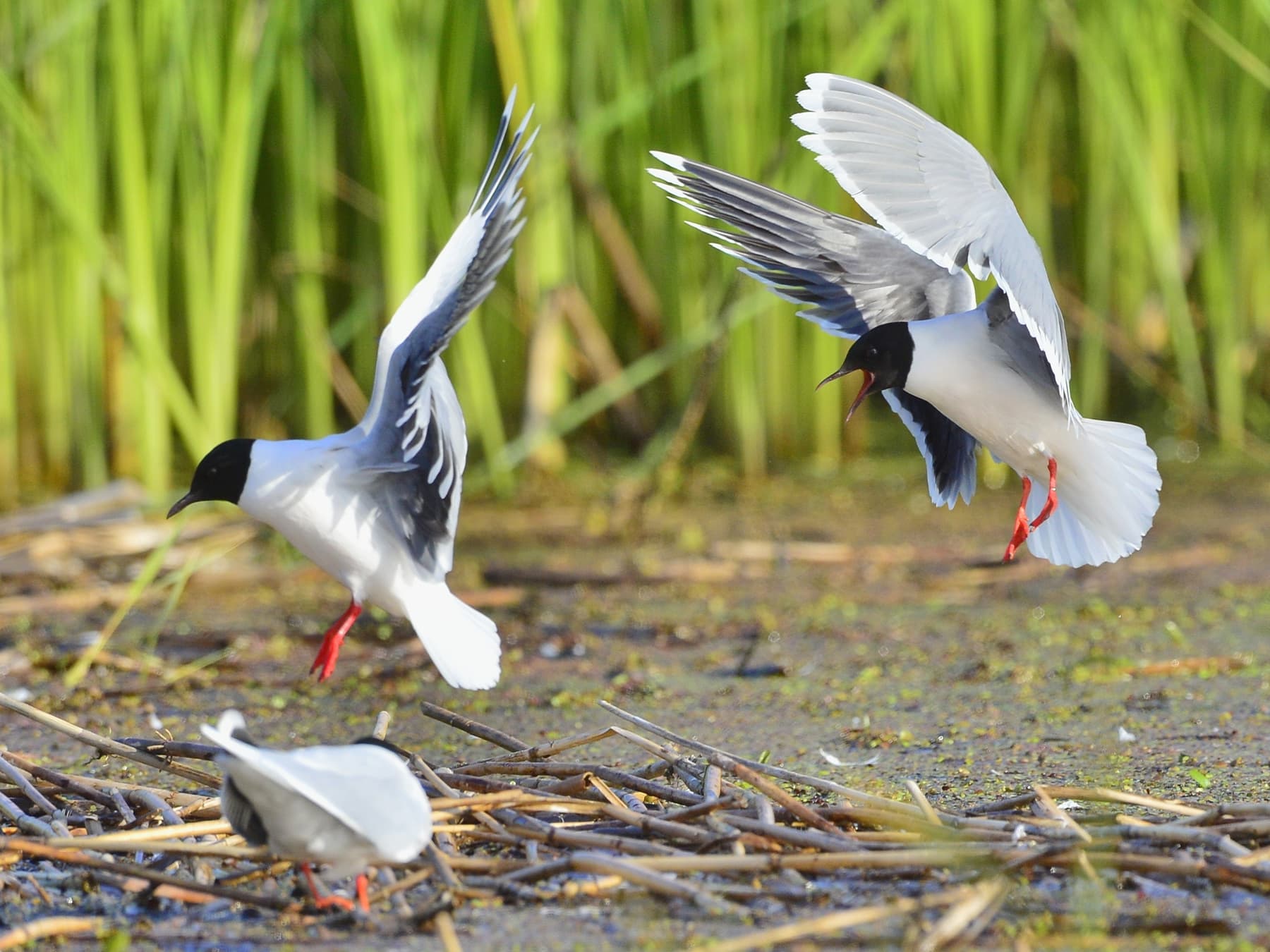
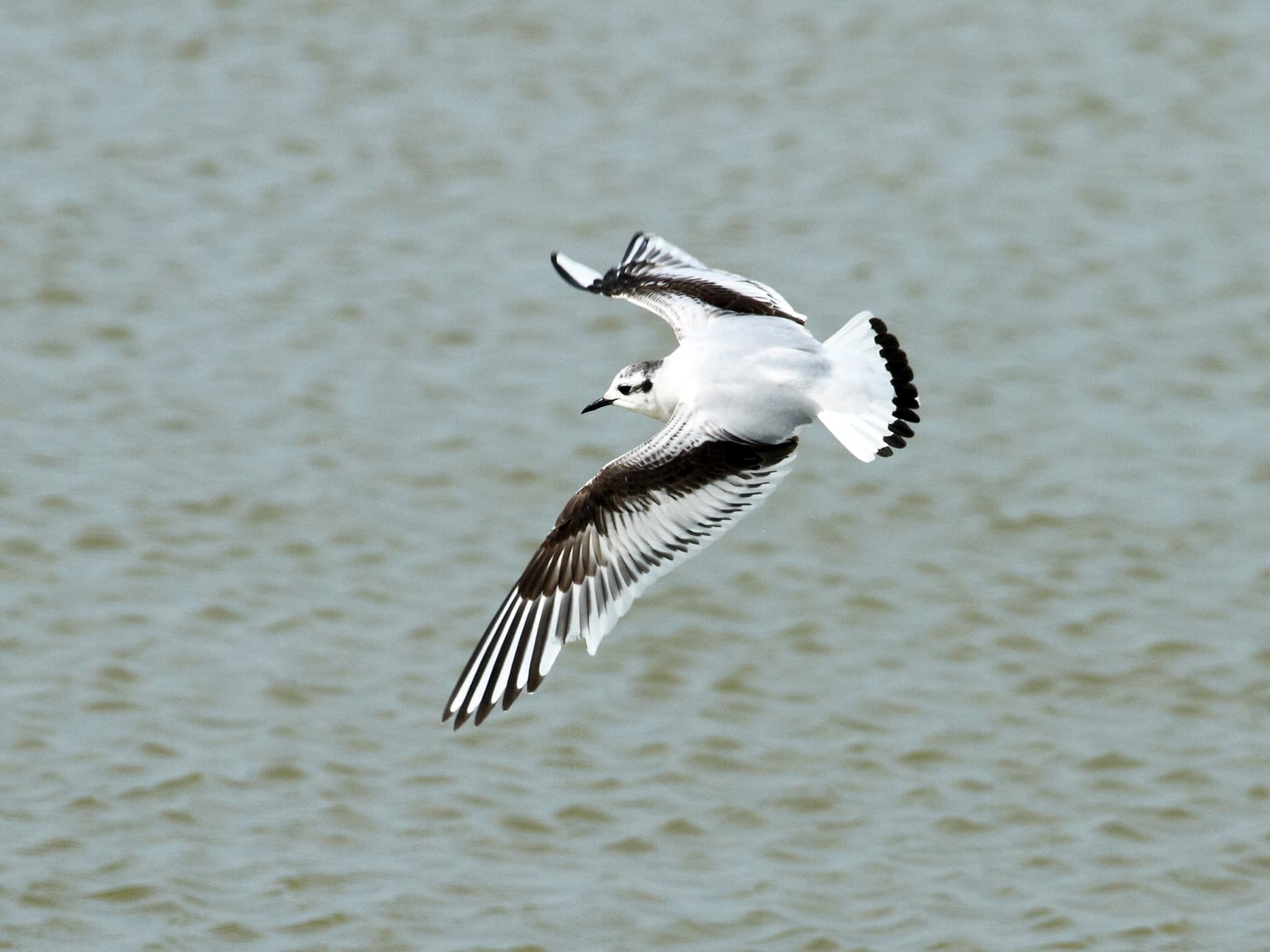
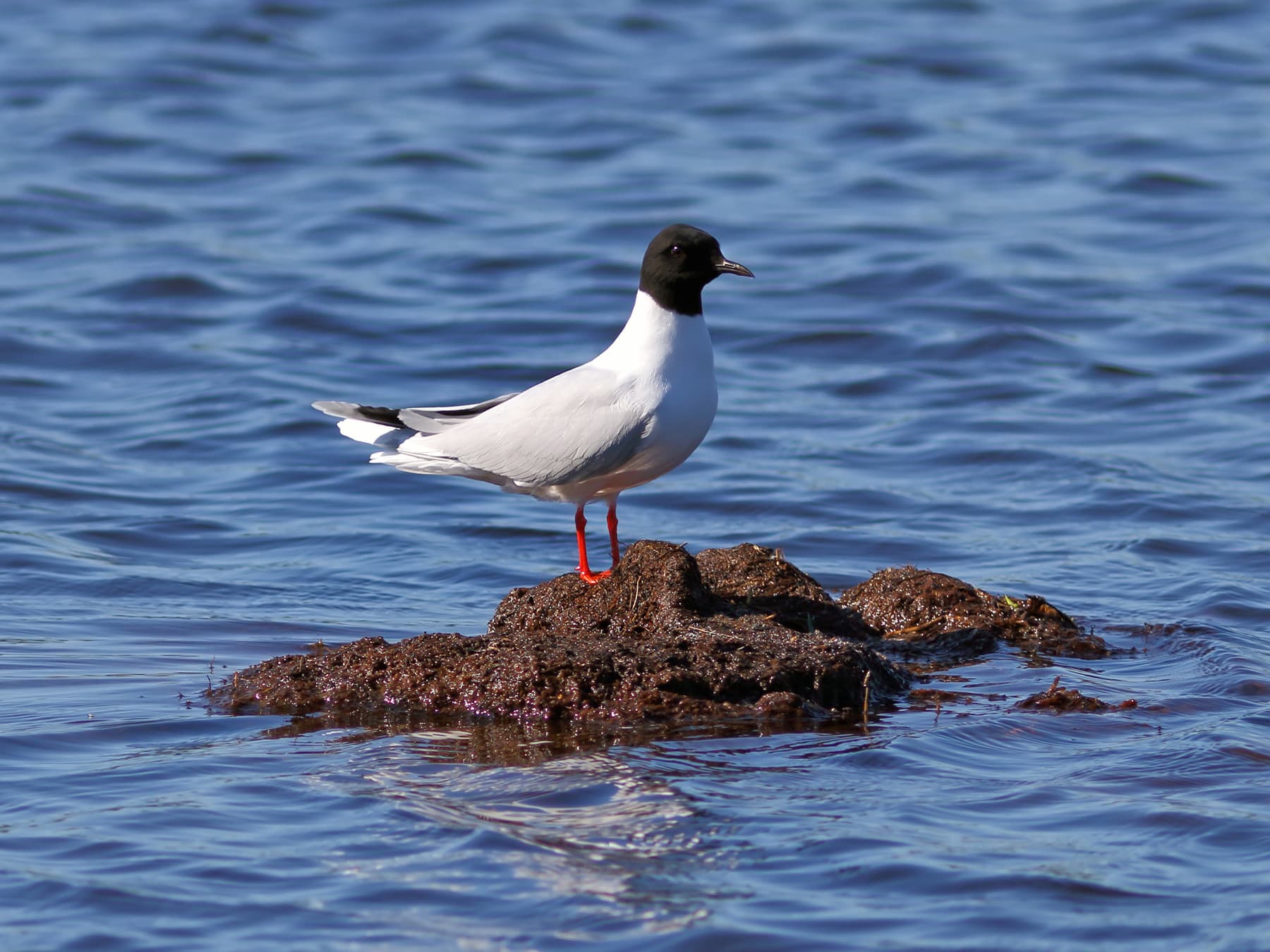
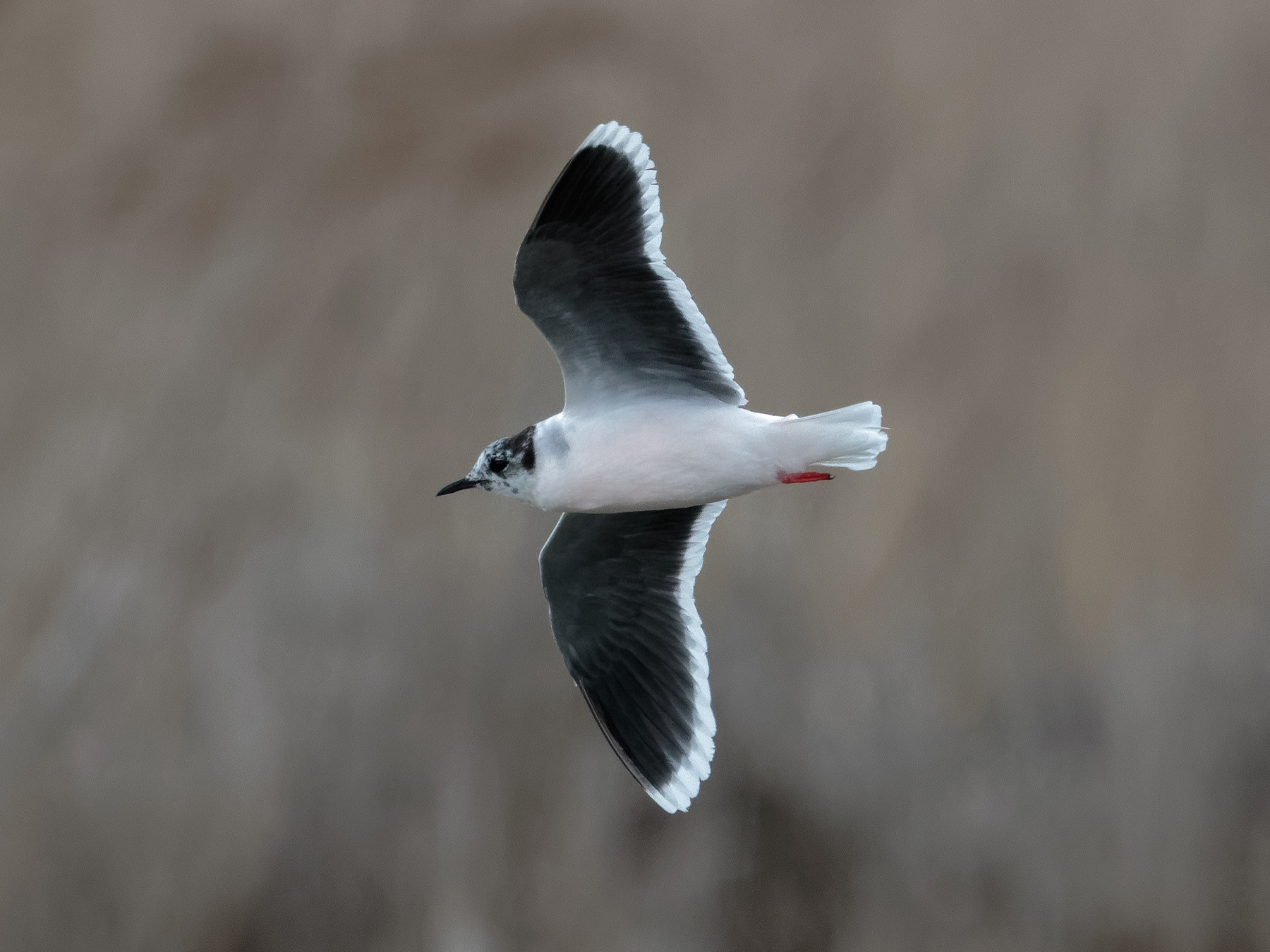
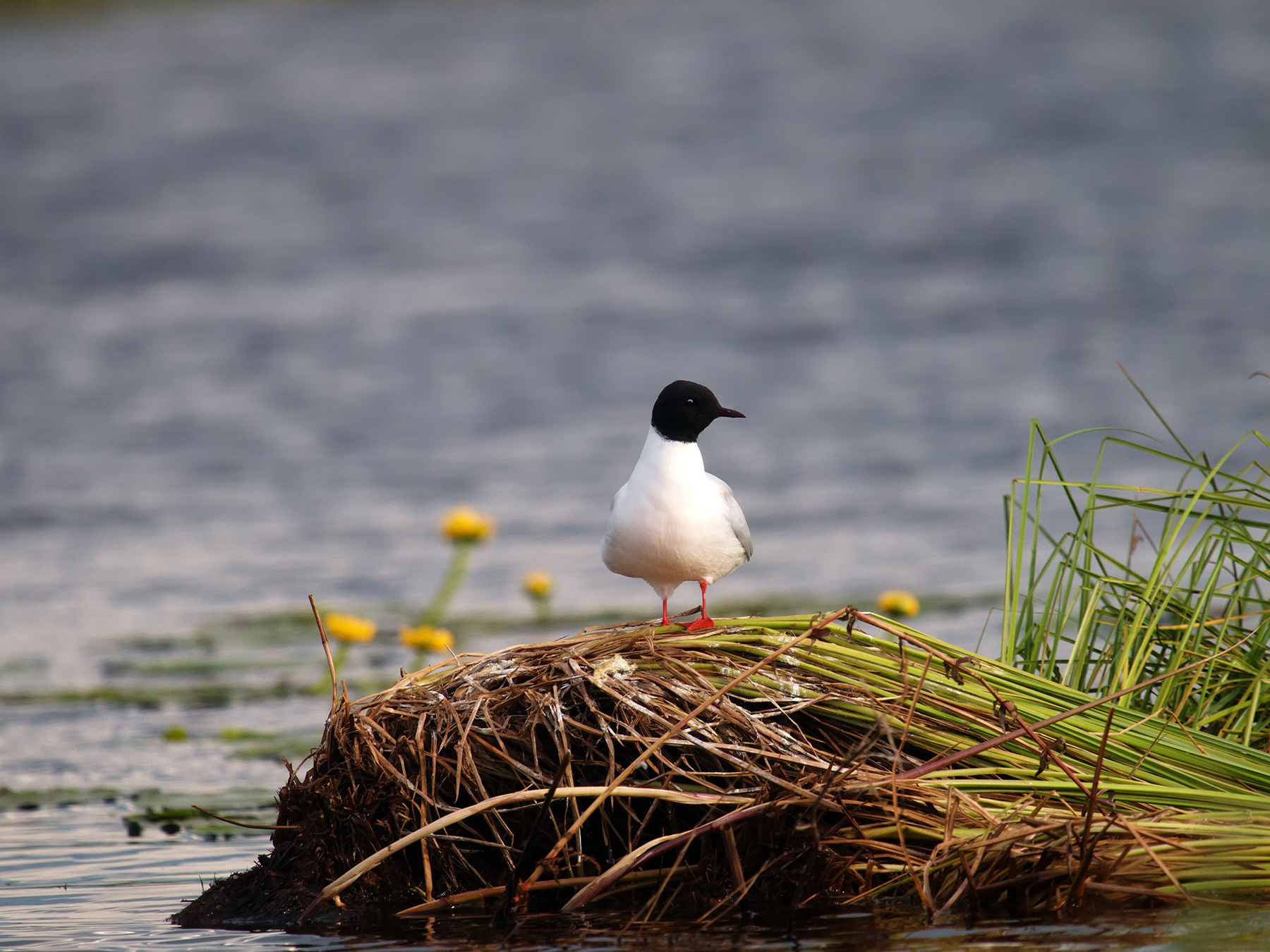
Little gulls have two distinct plumages, depending on the season. In breeding plumage, they have black heads, white underparts that may be tinged with a peach wash, and a pale grey back, wings and tail. The wings are edged with white at the rear, and the underside is dark grey. The feet are a deep red, and the eyes and bill are dark.
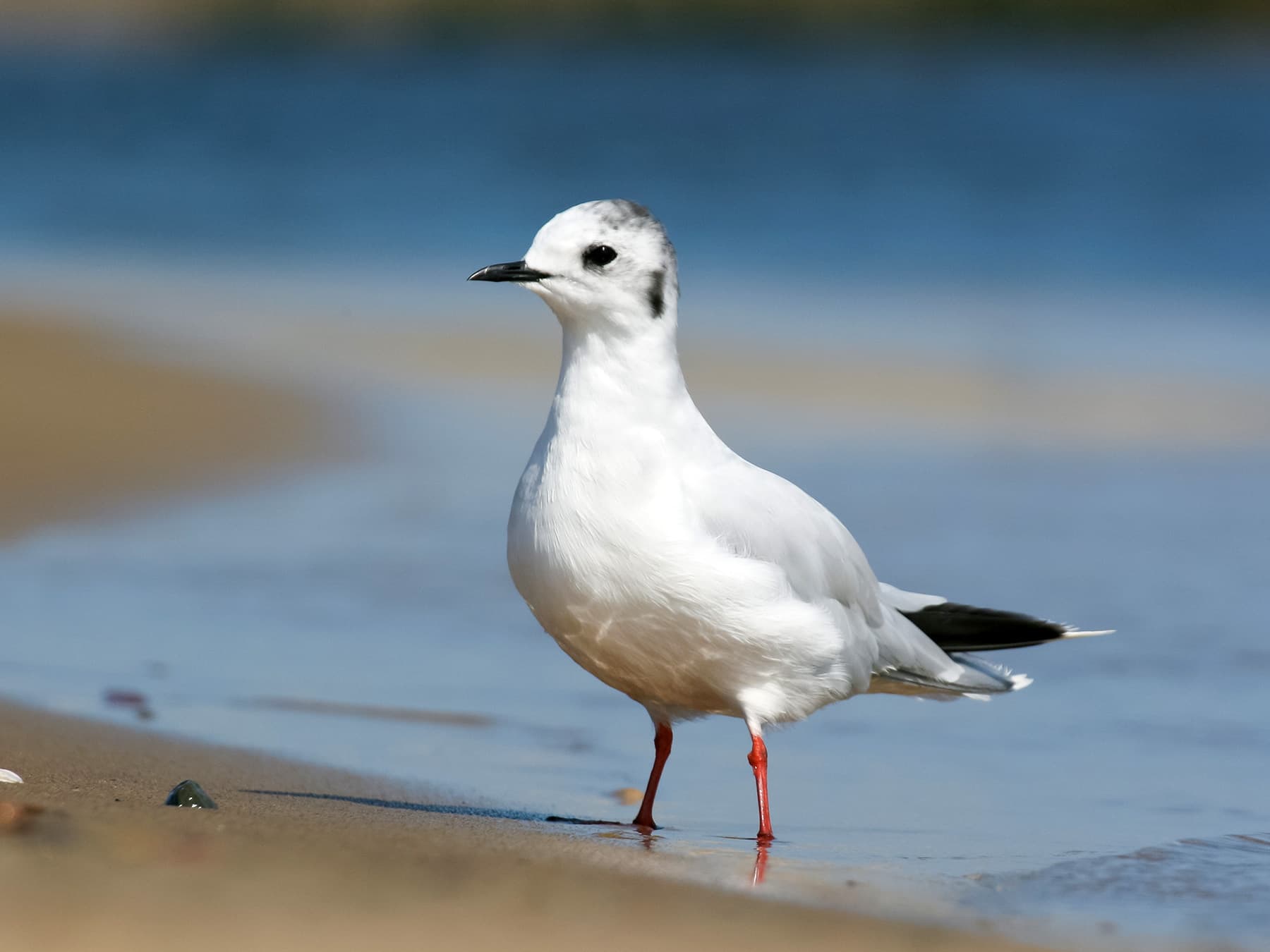
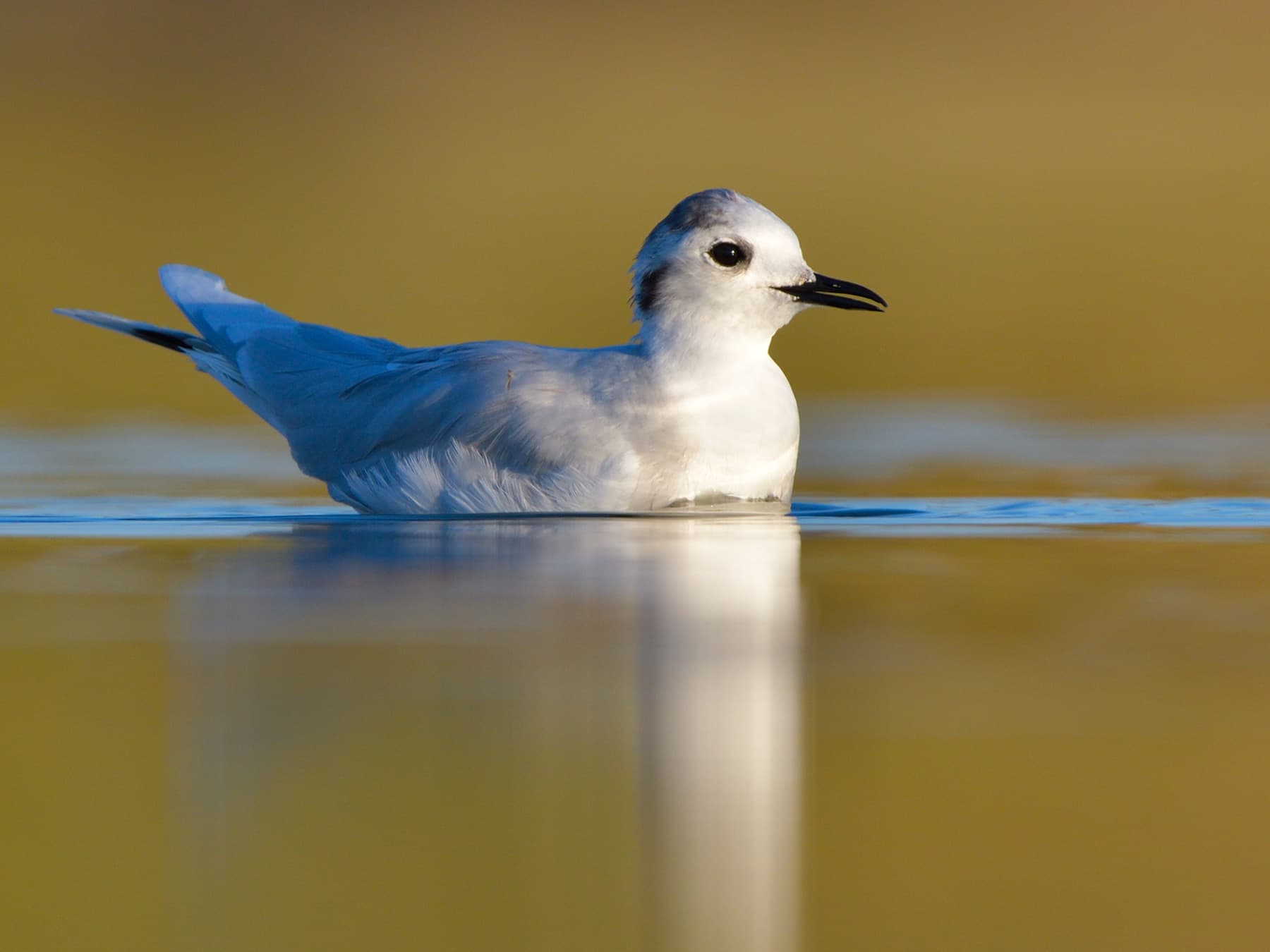
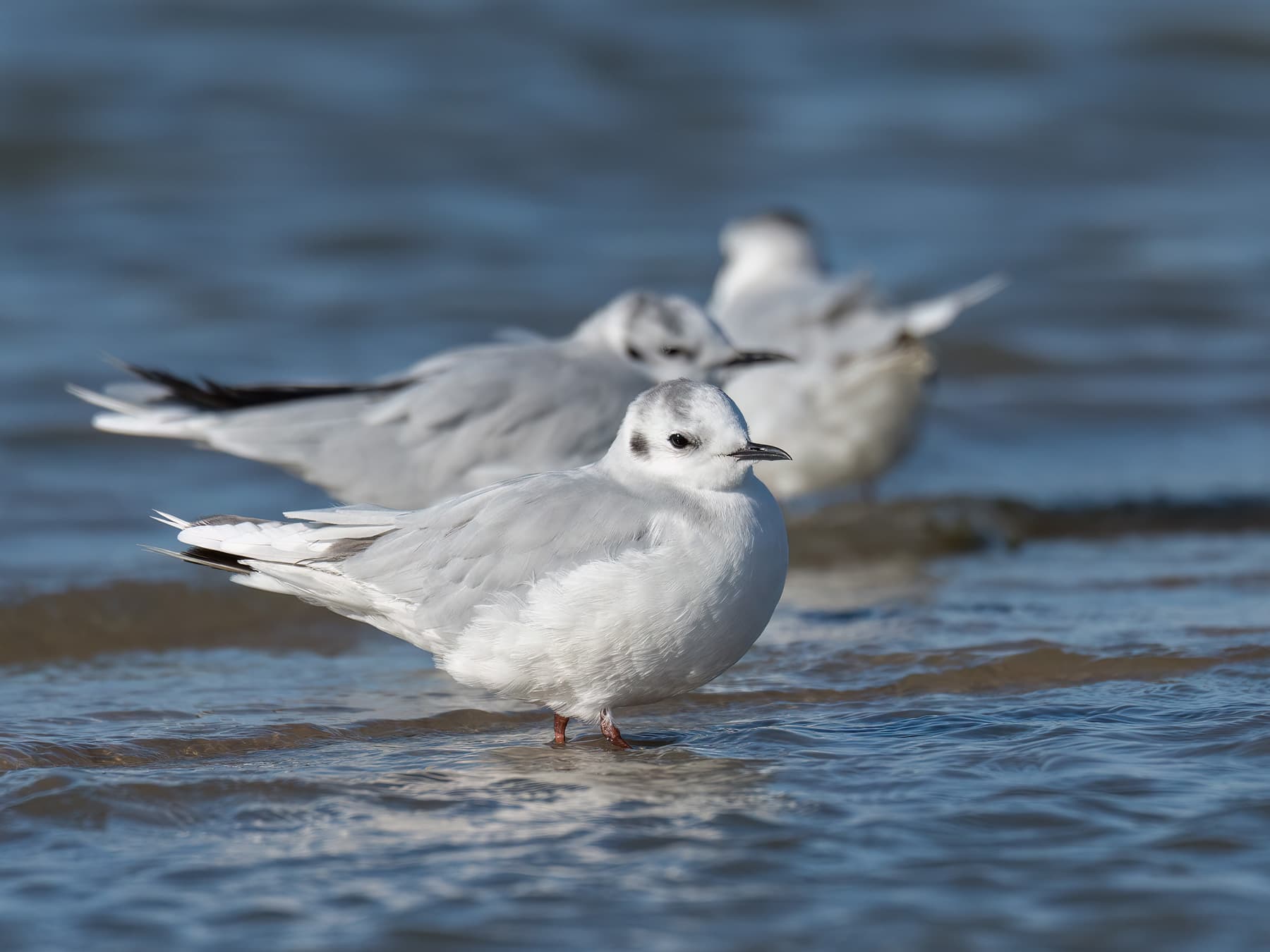
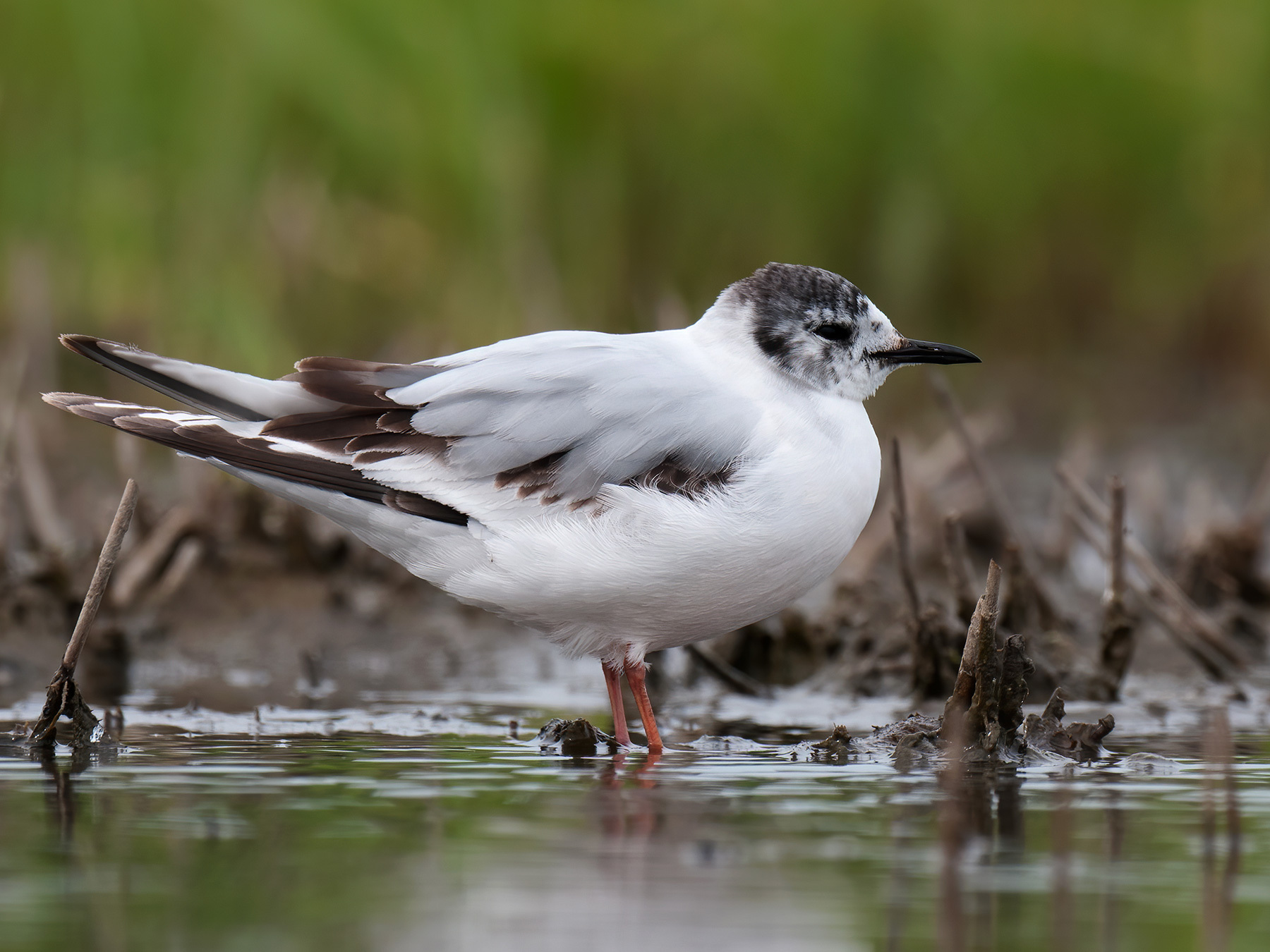
When displaying the non-breeding plumage, the black head feathers recede and are replaced with a small sooty cap at the rear, with a darker black spot beside the eye.
Female and male little gulls are alike in both winter and summer plumage, but the sexes can be identified by size, as males are larger and slightly heavier than females.
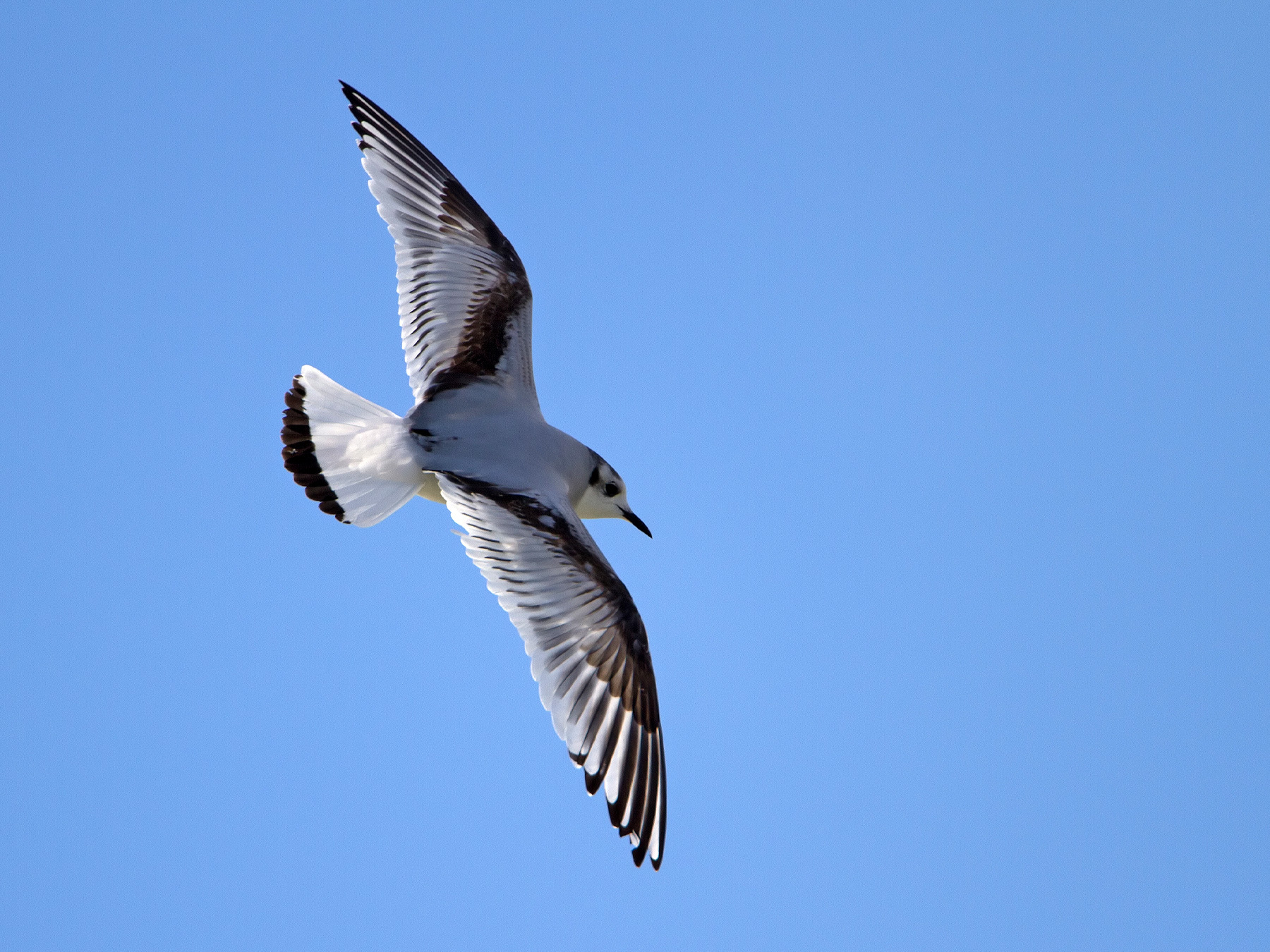
In their first winter, young little gulls have a wide black stripe across each wing that forms a W-shape that is visible in flight. By three years, juvenile birds gain their full adult plumage and cannot be told apart from older birds.
How big are Little Gulls?
Little gulls are the smallest gulls worldwide, less than half the size of the great black-backed gull and around two-thirds the size of the similar-looking black-headed gull. Males are slightly larger than females.
- Length: 25 cm to 27 cm (9.8 in to 10.6 in)
- Wingspan: 70 cm to 78 cm (27.6 in to 30.7 in)
- Weight: 85 g to 150 g (3 oz to 5.3 oz)
Its size
Adults- Length
- 25–30 cm
- Wingspan
- 61–78 cm
- Weight
- 68–162 g
Its song and calls
What sound does a Little Gull make?
Little gulls have a fairly large vocal array, mostly consisting of sharp, short, high-pitched notes, including “kee”, “kih”, “tuk”, “kuu”, and “ki-deer”. A harsh, squawking “ka-tee, ka-tee, ka-tee”, with a rising second note, is heard as a contact call on land, water and in the air.
When and where to see it
OctoberIn season
Most recorded in October
- 1. Fife0.42%
- 2. Tyne and Wear0.40%
- 3. Northumberland0.20%
- 4. Antrim0.19%
- 5. East Lothian0.18%
Each dot is a county, state or province: the bigger and darker, the larger the bird’s share of that place’s bird records that month. Grey dots: no regular records. The ringed point is the centre of the bird’s records this month; the arrow shows how it moved since last month, and the dashed loop its path through the year. “Arrivals” colours places where it becomes regular this month (orange) or is in its last regular month (grey). GBIF eBird Observation Dataset, 2019–2024. Map data: Natural Earth, US Census Bureau; place centres © OpenStreetMap contributors.
In your area
See when the Little Gull is recorded in your county, state or province.
How often the Little Gull turns up in the UK, Ireland, the United States and Canada through the year, from birdwatchers' records.
United Kingdom
Summer visitor · all year · most records in July
Ireland
Resident · all year · most records in February
United States
Resident · all year · most records in November
Canada
Resident · all year · most records in December
Show as a table
| Month | United Kingdom | Ireland | United States | Canada |
|---|---|---|---|---|
| January | 0.008% (regular) | 0.015% (regular) | 0.002% (regular) | 0.009% (regular) |
| February | 0.007% (regular) | 0.074% (regular) | 0.002% (regular) | 0.002% (regular) |
| March | 0.022% (regular) | 0.046% (regular) | 0.001% (regular) | 0.003% (regular) |
| April | 0.056% (regular) | 0.064% (regular) | <0.001% (regular) | 0.004% (regular) |
| May | 0.033% (regular) | 0.031% (regular) | 0.001% (regular) | 0.008% (regular) |
| June | 0.034% (regular) | 0.019% (regular) | 0.001% (regular) | 0.008% (regular) |
| July | 0.062% (regular) | 0.023% (regular) | <0.001% (regular) | 0.006% (regular) |
| August | 0.054% (regular) | 0.031% (regular) | <0.001% (regular) | 0.008% (regular) |
| September | 0.049% (regular) | 0.030% (regular) | 0.002% (regular) | 0.016% (regular) |
| October | 0.054% (regular) | 0.031% (regular) | <0.001% (regular) | 0.012% (regular) |
| November | 0.052% (regular) | 0.032% (regular) | 0.003% (regular) | 0.015% (regular) |
| December | 0.012% (regular) | 0.019% (regular) | 0.002% (regular) | 0.016% (regular) |
Recorded regularly in
Worldwide: recorded regularly in 52 countries
Countries where it was recorded in at least 3 of the 6 years 2019–2024. Linked countries have their own bird list.
Europe (38)
Asia (10)
- Azerbaijan
- China
- Cyprus
- Georgia
- Iran
- Israel
- Kazakhstan
- Lebanon
- Mongolia
- Turkey
North America (2)
Data: EOD – eBird Observation Dataset (Cornell Lab of Ornithology), accessed via GBIF.org, CC BY 4.0. Records from 2019–2024, aggregated and filtered by Birdfact. How these lists are made
What is the habitat of a Little Gull?
In winter, little gulls spend several months in coastal areas with muddy and sandy beaches, as well as on estuaries and deltas. Some may remain a short distance out at sea, rarely coming inland and feeding solely on fish found in the open ocean waters.
During the breeding season, nests are built in marshland habitats, often some distance inland, or on sandbanks, reedbeds, and in river valleys with a fair amount of vegetation cover.
What is the range of a Little Gull?
In Europe and Asia, little gulls breed in three regions. In north-eastern Europe ( from the Netherlands, around the Baltic Sea, and in Finland, Estonia, Latvia, and north-west Russia. In western Siberia, breeding occurs between the Ural River and the Ob River. Further east, in eastern Siberia, little gulls breed in the region from Lake Baikal east to the Sea of Okhotsk.
In North America, some small-scale breeding has previously occurred in the Great Lakes-St Lawrence River region and also on the shores of Hudson Bay. Less than 70 documented nesting sites have been reported in North America, and none used regularly since the 1980s.
In winter, migration occurs with breeding birds dispersing into the Atlantic, Mediterranean, Black, Caspian, and North seas, as well as parts of coastal north-eastern United States, eastern China and southern Japan.
Where do Little Gulls live?
The main breeding area for little gulls is found in Central Asia, where no specific information is available for individual populations. Europe’s breeding little gulls number between 23,700 and 45,200 pairs, most of which are located in Russia and Finland, with smaller numbers in Sweden, Norway and the Baltic States.
North American records of little gulls are patchy, and less than 300 birds have been recorded in winter in recent years’ Christmas bird counts in Canada.
How rare are Little Gulls?
Little gulls are not the most frequently spotted gull species at beaches, with larger gulls far more dominant. However, sightings in the UK are not highly unusual, especially during migration passage, when up to 700 individuals are recorded each spring. Only between 400 and 800 little gulls spend winter months in waters around the UK coast.
In North America, little gull records and sightings are much more scarce, with under 70 breeding pairs ever recorded, and none regularly since the 1980s, so spotting one would rank as a bit of a coup.
Where can you see Little Gulls in the UK?
Passage sightings offer the best chance of spotting a little gull in the UK, with up to 700 individuals making temporary stopovers around Britain’s coastline post-breeding and in early spring. In late summer, a key area for sightings is between Tayside and Yorkshire on the eastern coast of Scotland and England. In spring, sightings are reported on the west coast, around the Irish Sea.
Where can you see Little Gulls in the US?
Little gull sightings in the US are rare and unpredictable, with the species turning up as an occasional winter vagrant more than as a breeding bird in recent years.
Where can you see Little Gulls in Canada?
Breeding occurred at a handful of Canadian sites between the 1960s and 1980s, located on the southern shores of Hudson Bay and in the Great Lakes-St Lawrence River basin. Almost half of these were in Ontario, and recent records are sporadic.
Migration
Do Little Gulls migrate?
After breeding, little gulls leave their nesting grounds and spend winters mainly at sea, foraging in Atlantic waters, as well as in parts of the Baltic, North, Caspian, Black and Mediterranean seas, with some records much further afield, including the Nile Delta, India and South East Asia. They return to their breeding grounds in early spring, arriving in late April or early May.
Why do Little Gulls migrate?
Having raised their young on land in the steppe landscapes of northern Russia, Canada and parts of northern and eastern Europe, a change of habitat and foraging grounds is needed during winter, when their diet turns primarily to fish caught far out at sea.
Insect life needed during breeding is no longer vital for survival and is in shorter supply due to harsh weather conditions. Fish availability in coastal areas they head to is abundant and sustains them through the winter until the breeding time arrives once more.
Tips for seeing it
- Look for Little Gulls in coastal areas or large inland lakes, especially during migration.
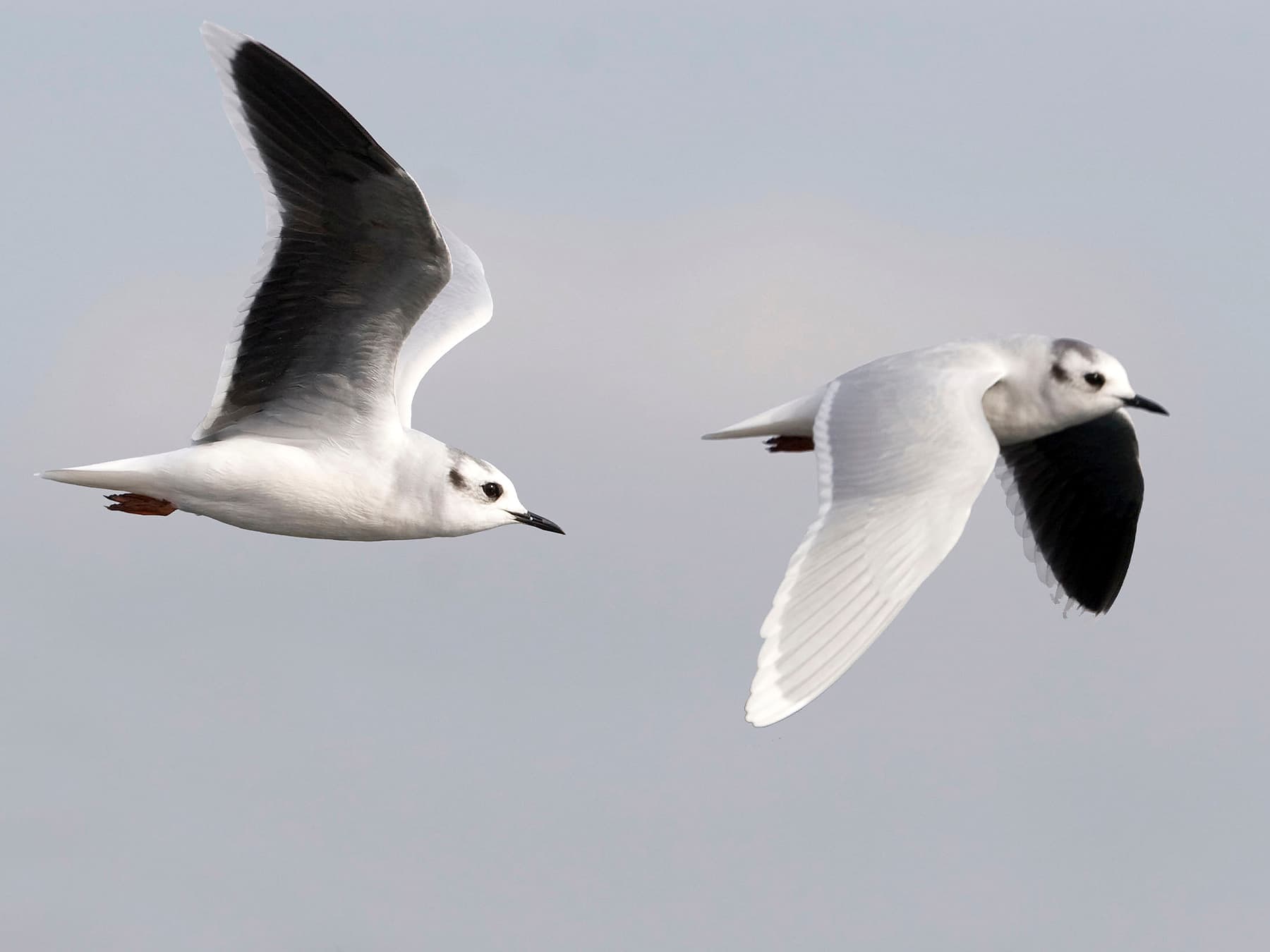
- Observe their distinctive black underwings in flight, a key identifying feature.
- Watch for their tern-like feeding behaviour, hovering and dipping into the water.
- In North America, check for them among flocks of Bonaparte's Gulls.
What it eats
What do Little Gulls eat?
Insects, including dragonflies, beetles and midges, are the main prey of little gulls during the breeding season. Small fish and aquatic invertebrates are also eaten and become more important in their diet during winter months.
What do Little Gull chicks eat?
Little gull chicks are initially fed on a diet of insects by both parents, in particular midges, mayflies and dragonflies.
Nesting and breeding
Where do Little Gulls nest?
Nest sites are commonly selected at freshwater marshes or on marshy riverbanks. Floating nests may be built, using a raft of plant matter, cattails, reeds and other marshy vegetation.
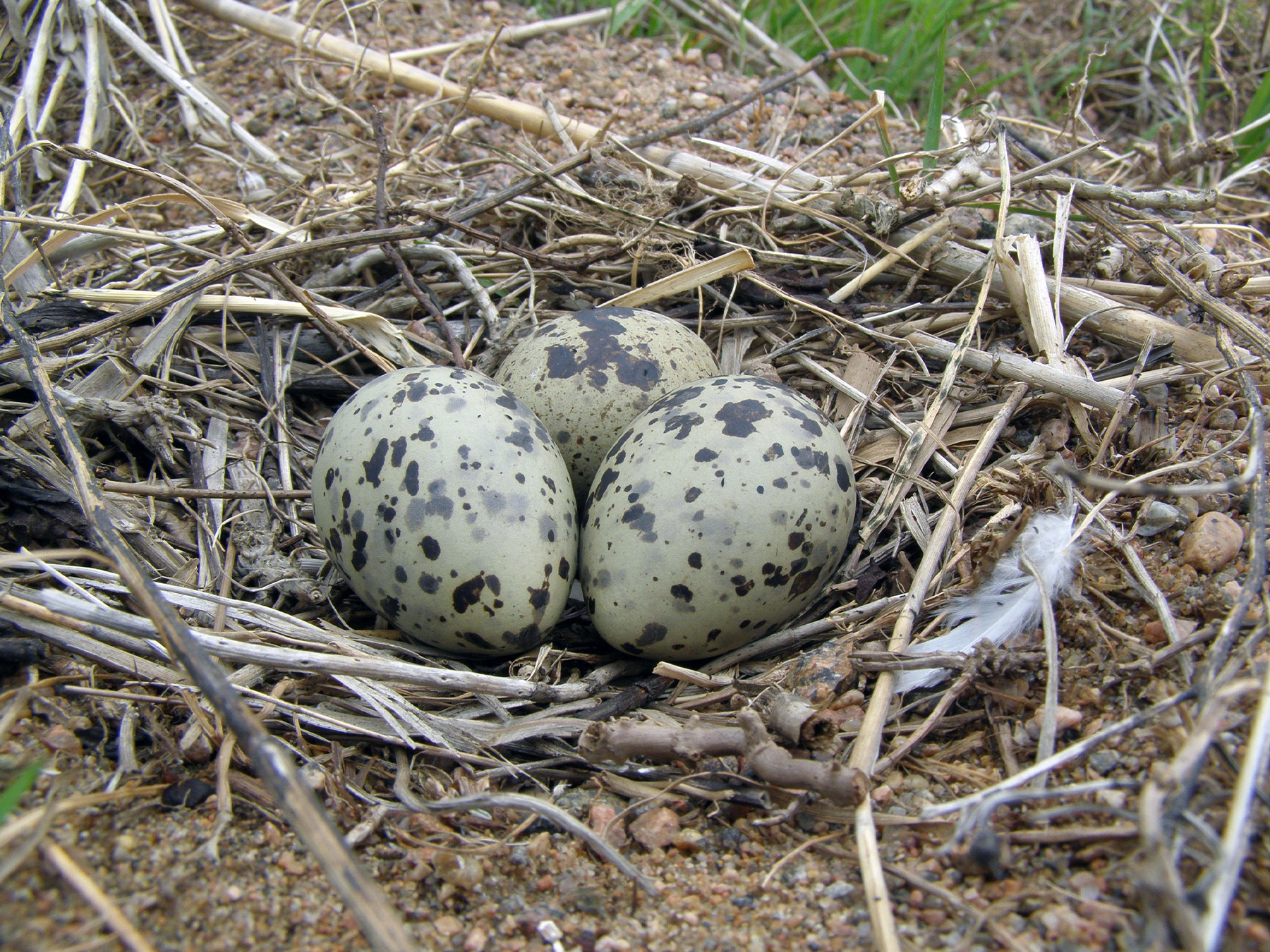
Alternatively, nests built on land are usually a basic scrape on the ground, which is added to during the course of incubation, gradually becoming a bulky structure of reeds and other aquatic plant matter. Attempts are usually made to conceal the nest site using nearby vegetation as cover.
When do Little Gulls nest?
Spring arrivals on breeding grounds begin from May onwards, with breeding beginning within the first few weeks. Eggs are most commonly laid in late May or early June. Incubation, by both the male and female in turn, takes around 24 days.
What do Little Gull eggs look like?
A typical clutch consists of 2 to 3 eggs, each measuring 42 mm by 30 mm. Eggs are buff-olive in colour, marked with some dark grey blotches and scrawls.
Do Little Gulls mate for life?
Little gull pairs remain together for life, forming long-term bonds in the spring of their first breeding seasons. They arrive on breeding grounds together each year and may be assisted when raising young by any non-breeding birds, but pairs are monogamous and no extra-pair breeding occurs.
Behaviour
Are Little Gulls aggressive?
Some hostility is observed at nest sites, with male little gulls more aggressive than females. No territorial behaviour is shown when feeding, but when defending a nest or young against predators, both the male and female will use loud vocal screeches and posturing to deter intruders.
Where do Little Gulls sleep?
Daytime roosting sites are commonly found on large expanses of open ground, where large numbers of other gull species may gather together. These include beaches, mudflats, lawns and airports.
Lifespan and predators
How long do Little Gulls live?
The oldest ringed little gull was recorded at 10 years and 11 months. The average expected lifespan for this species is unknown but thought to be lower than that of larger gull species. Maturity is reached at 3 years, which is when first-time breeding is thought to occur.
What are the predators of Little Gulls?
In breeding areas, adult little gulls are preyed upon by great horned owls and peregrine falcons. Muskrats, water snakes, and weasels may target eggs and young birds, while other, larger seabirds, including Franklin’s gulls, black-headed gulls, and herring gulls, are also a common threat.
Are Little Gulls protected?
In the UK, little gulls are registered as a Schedule I species under the Wildlife and Countryside Act, 1981, which protects them against being knowingly killed, injured, or taken into captivity, with additional protection against the disturbance of their eggs, young and nest sites.
Are Little Gulls endangered?
Little gulls are rated as a species of least concern globally, with a population of up to 270,000 individuals, and are considered to be stable and increasing in some areas. In the UK, little gulls have been awarded Green status on the British Birds of Conservation Concern list.
Conservation
While currently listed as Least Concern, Little Gulls face threats from habitat loss in their breeding areas and oil spills in their wintering grounds. Climate change may also affect their breeding success and distribution patterns. Conservation efforts focus on protecting wetland habitats and reducing marine pollution.
More photos
6 photos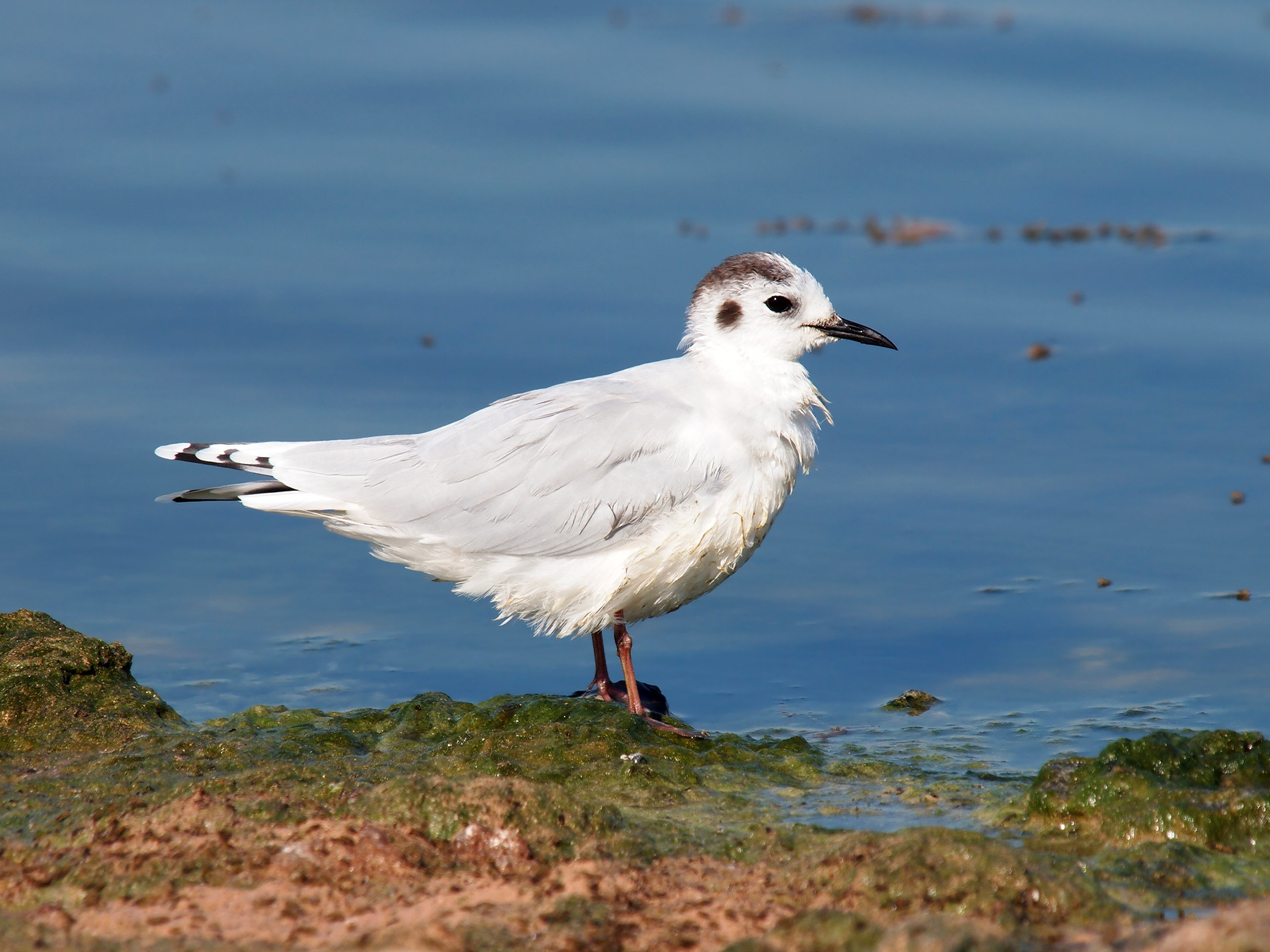
Little Gull guides
6 guides- What Do Seagulls Actually Eat? Diet Secrets of These Clever Scavengers
- Do Seagulls Migrate? (All You Need To Know)
- Baby Seagulls: All You Need to Know (with Pictures)
- Seagull Nesting Secrets: Unveiling the Hidden Sanctuaries by the Sea
- What is a Group of Seagulls Called? (Complete List + Why?)
- How Long Do Seagulls Live?
Quick facts
- Length
- 25–30 cm
- Wingspan
- 61–78 cm
- Weight
- 68–162 g
- Lifespan
- 11–15 years · oldest recorded 10.9 years
- Family
- Gulls & Terns
- Migration
- Long-distance Migrant
- Global status (IUCN)
- Least Concern
- World population
- 97,000 - 270,000 individuals
- Population trend
- Increasing
- Also called
- Little Mew Gull
- Scientific name
- Hydrocoloeus minutus
Questions
1What’s the difference between a little gull and a black-headed gull?
Although fairly alike in appearance, both in winter and summer plumages, there are some key differences that help to tell the two species apart.
Little gulls are significantly smaller, around two-thirds of the size of black-headed gulls. In summer, the hood of a little gull is blacker and more extensive than that of the black-headed gull, which is browner and smaller. The underwings of a black-headed gull are pale, while in little gulls it is a much darker grey.
Sources
4- 1BirdLife International. 2018. Hydrocoloeus minutus. The IUCN Red List of Threatened Species 2018: e.T22694469A132554081. Source (opens in a new tab)
- 2Delany & Scott (2006)
- 3Wetlands International (2006)
- 4BTO longevity records: maximum age from a ringed bird, 10 years, 11 months, 12 days (set in 1991), BirdFacts: Little Gull (1991) Source (opens in a new tab)

Checked by
Nathan Cope, founder and editor
Nathan founded Birdfact and leads its writers and contributors in the UK, the US and Canada. He has watched and studied birds for more than ten years, and checks every article and species guide before it’s published.