


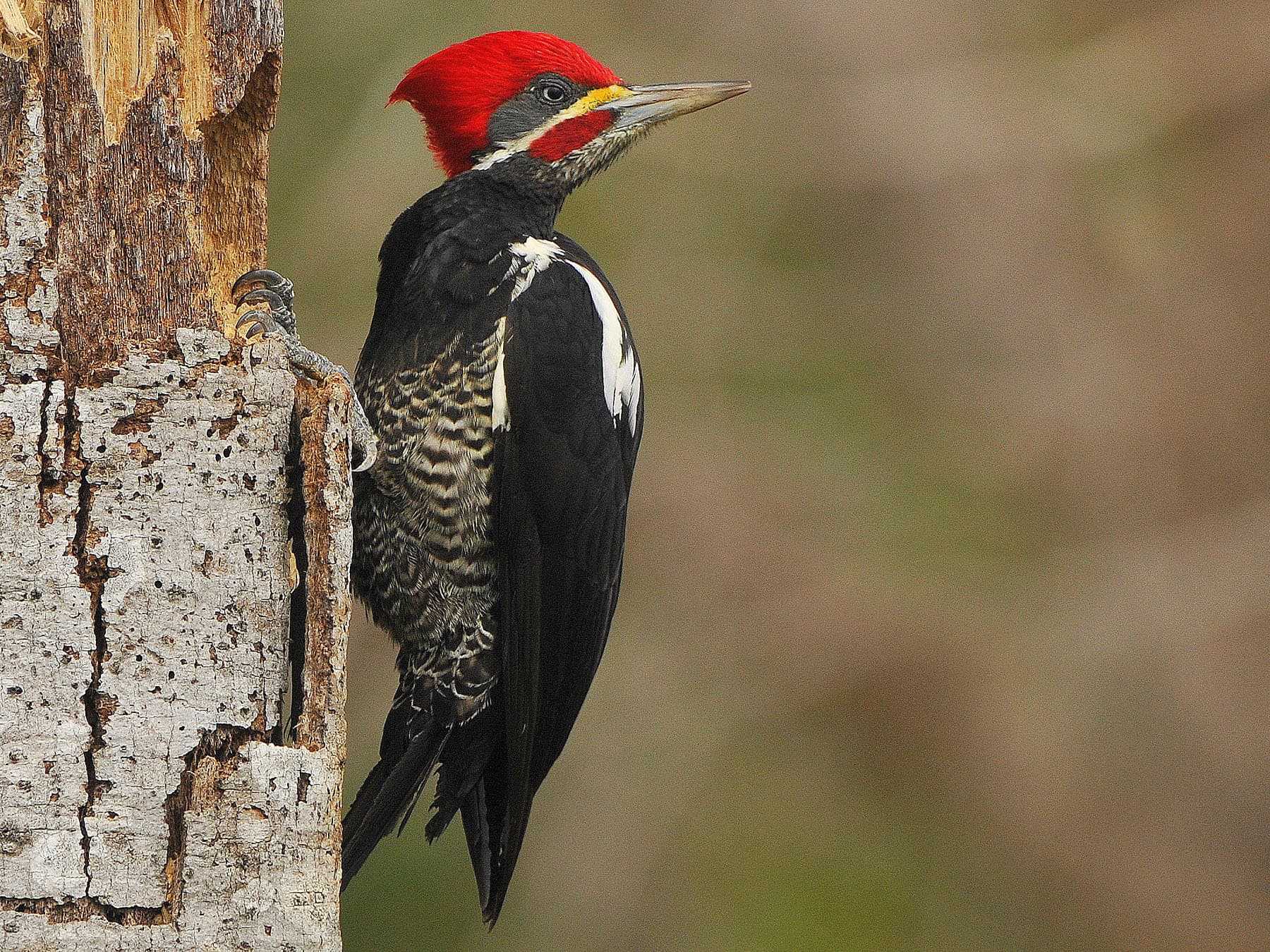
Lineated Woodpecker
Dryocopus lineatus
By the Birdfact teamChecked by Nathan Cope
On this page12 sections
How to recognise it
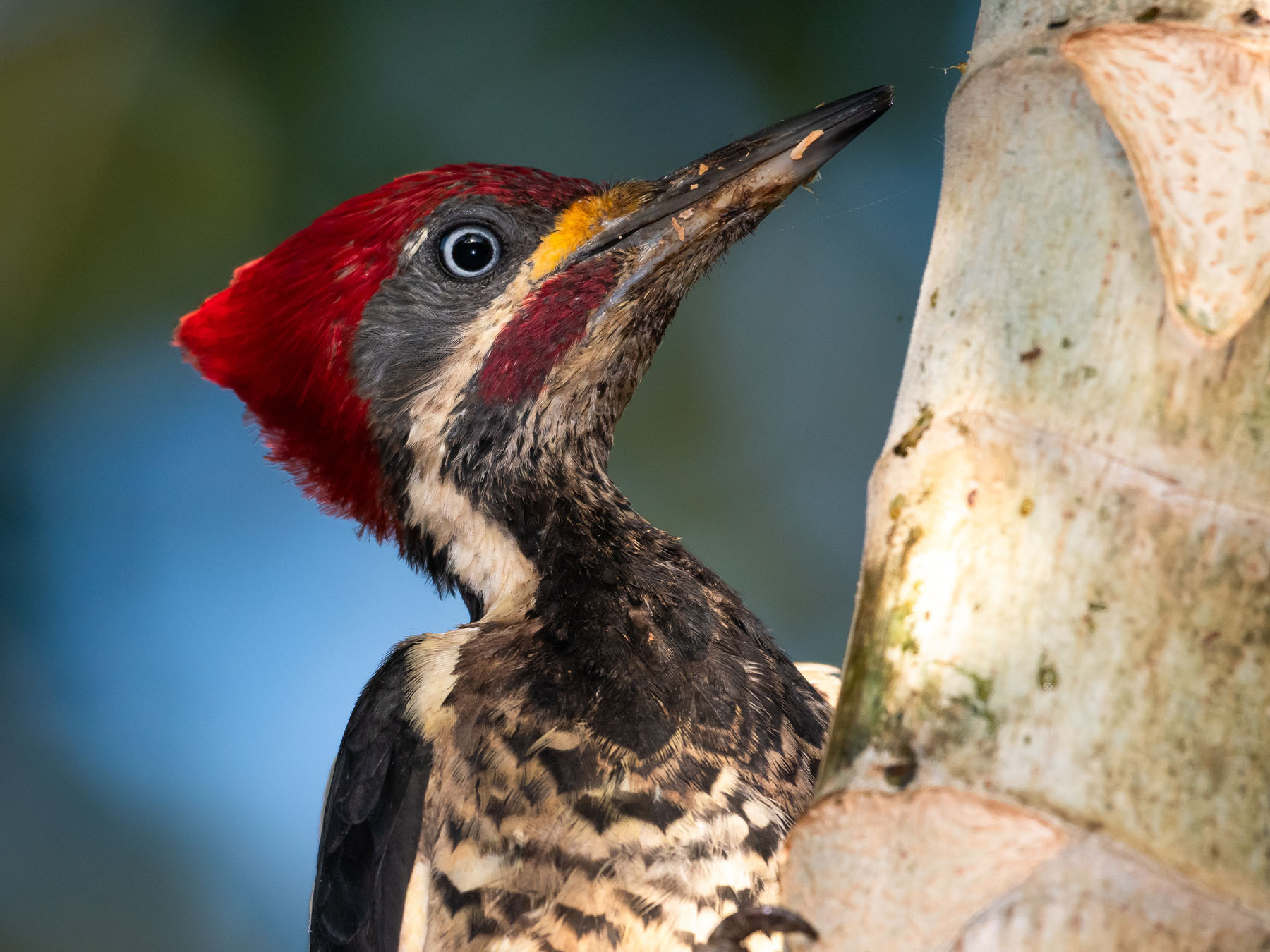
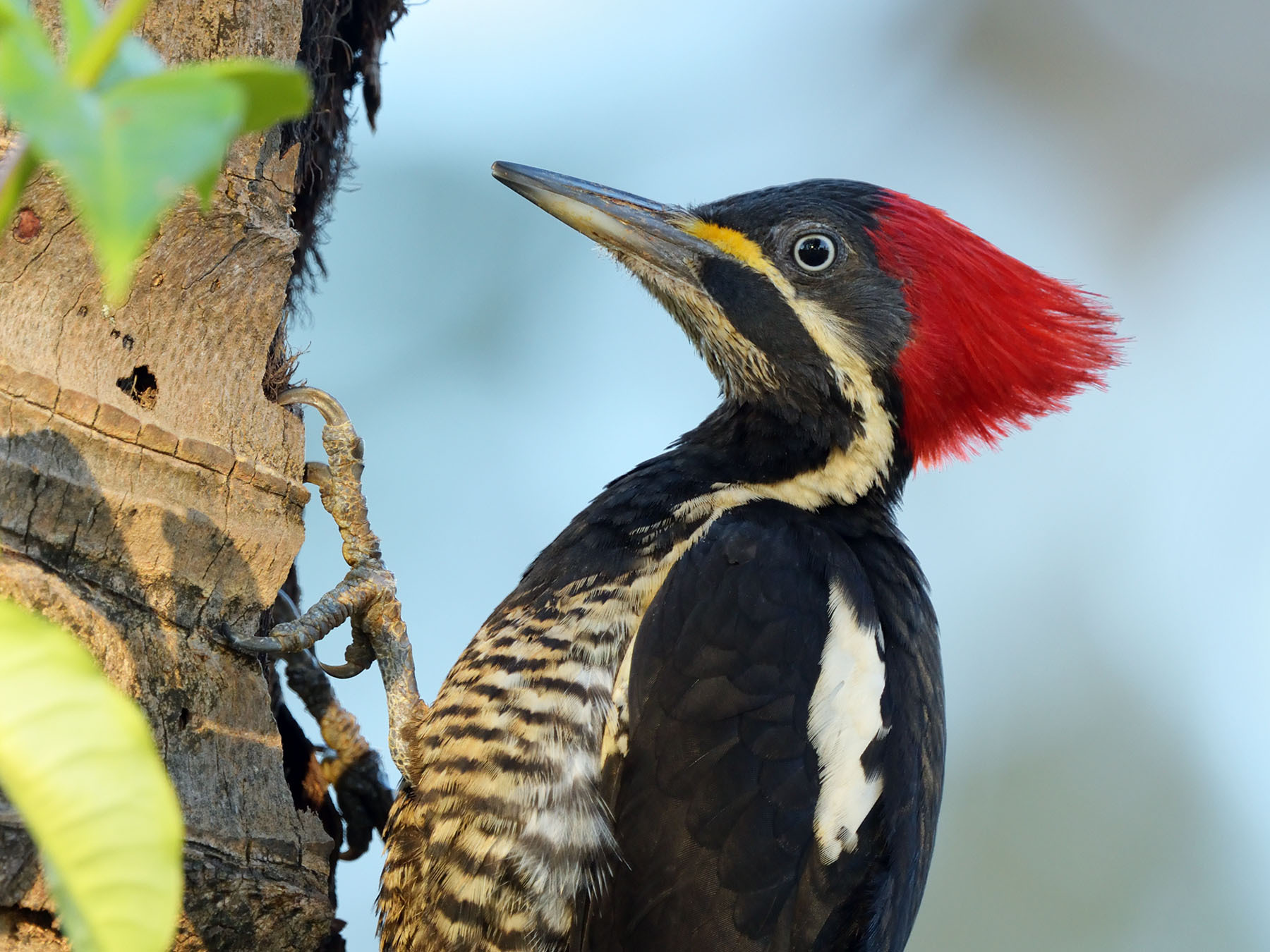
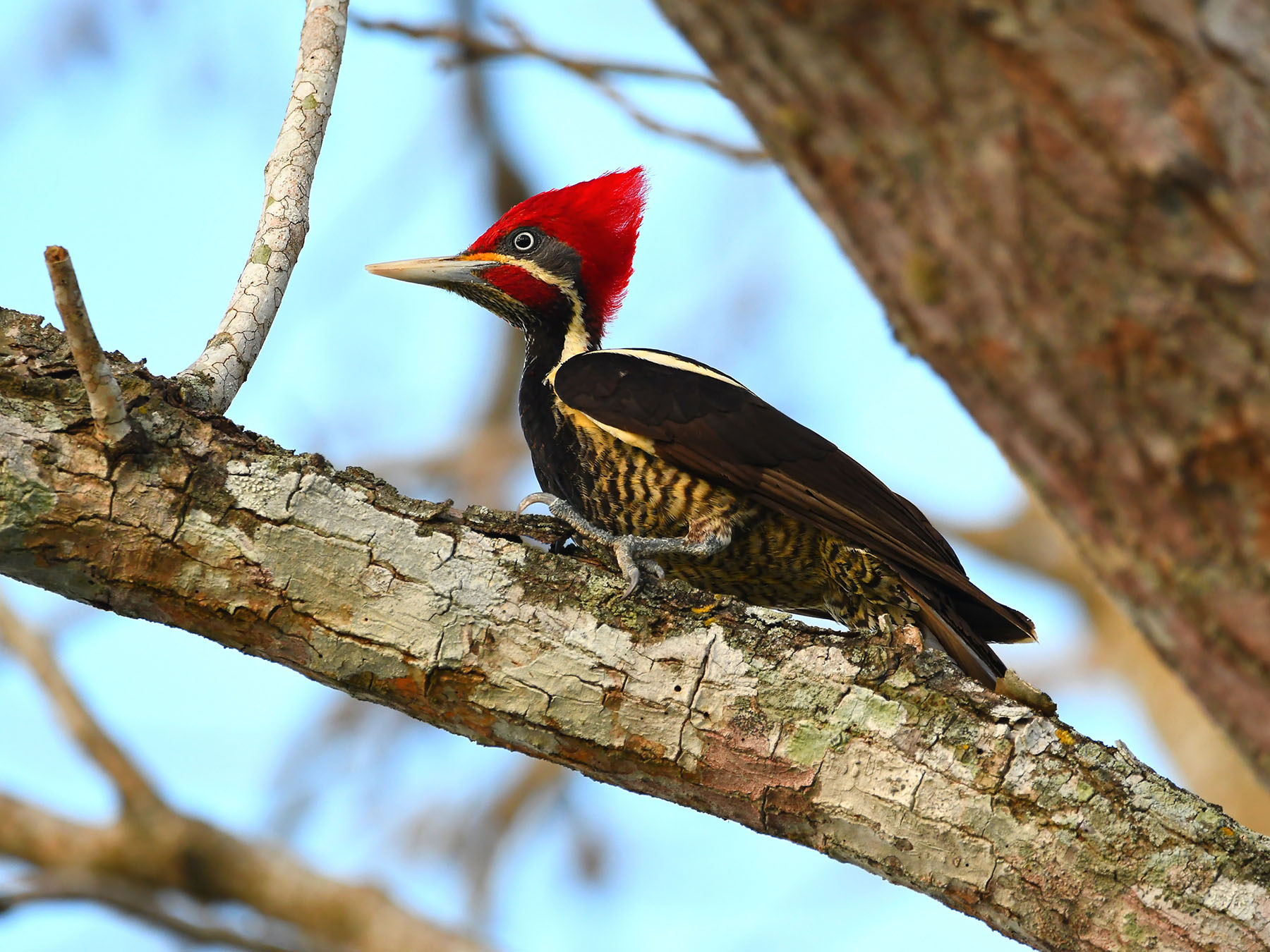
The Lineated Woodpecker is a striking, large woodpecker with bold black and white plumage. Its most distinctive features include a bright red crest, white stripes on the face and neck, and a long, chisel-like bill.
Males have a red malar stripe (mustache) and a fully red crest, while females lack the malar stripe and have a black forehead. Both sexes display black wings with white barring and a white line down the back.
Its size
Adults- Length
- 32–38 cm
- Wingspan
- 49–58 cm
- Weight
- 180–280 g
Its song and calls
The Lineated Woodpecker has a loud, far-carrying call often described as a series of ringing 'wik-wik-wik' or 'kweek-kweek-kweek' notes.
Their drumming is powerful and resonant, consisting of rapid bursts that can last several seconds. During territorial displays, they may produce a softer, wicka-wicka-wicka sound.
- Call0:00 / 0:58
Recorded in Napo: Mushullakta, Ecuador · October 2005
When and where to see it
The Lineated Woodpecker is not recorded regularly in the UK, Ireland, the United States or Canada.
Worldwide: recorded regularly in 20 countries
Countries where it was recorded in at least 3 of the 6 years 2019–2024. Linked countries have their own bird list.
Data: EOD – eBird Observation Dataset (Cornell Lab of Ornithology), accessed via GBIF.org, CC BY 4.0. Records from 2019–2024, aggregated and filtered by Birdfact. How these lists are made
Tips for seeing it
- Listen for their loud, resonant drumming on trees
- Look for their distinctive black and white plumage with red crest in forested areas
- Observe dead trees or snags, where they often forage
- Watch for their undulating flight pattern between trees
What it eats
Lineated Woodpeckers primarily feed on wood-boring insects, especially beetle larvae and ants. They use their strong bills to excavate deep into tree trunks and branches to extract prey.
Their diet also includes fruits, nuts, and occasionally small vertebrates, demonstrating their adaptability as foragers.
Nesting and breeding
Breeding pairs of Lineated Woodpeckers typically form long-term bonds. The breeding season varies across their range but often coincides with the dry season in tropical areas. Both males and females participate in nest excavation, creating large cavities in dead trees or snags.
Females usually lay 2-3 white eggs in the nest cavity. Both parents incubate the eggs for about 14-16 days. The altricial chicks are born naked and blind, requiring extensive parental care.
Both parents feed and care for the nestlings, which fledge after approximately 28-30 days. The young may remain with their parents for several weeks after fledging, learning essential foraging skills.
Behaviour
Lineated Woodpeckers are often seen foraging on tree trunks and large branches, using their powerful bills to excavate insects. They are typically found in pairs, maintaining year-round territories.
These woodpeckers are known for their loud drumming on trees, which serves as both a territorial signal and a means of communication.
Conservation
The Lineated Woodpecker is currently listed as Least Concern by the IUCN. However, like many forest-dwelling species, it faces threats from habitat loss due to deforestation in parts of its range.
Conservation efforts focus on preserving large tracts of mature forest, which are crucial for this species' survival.
Similar birds
Often mistaken for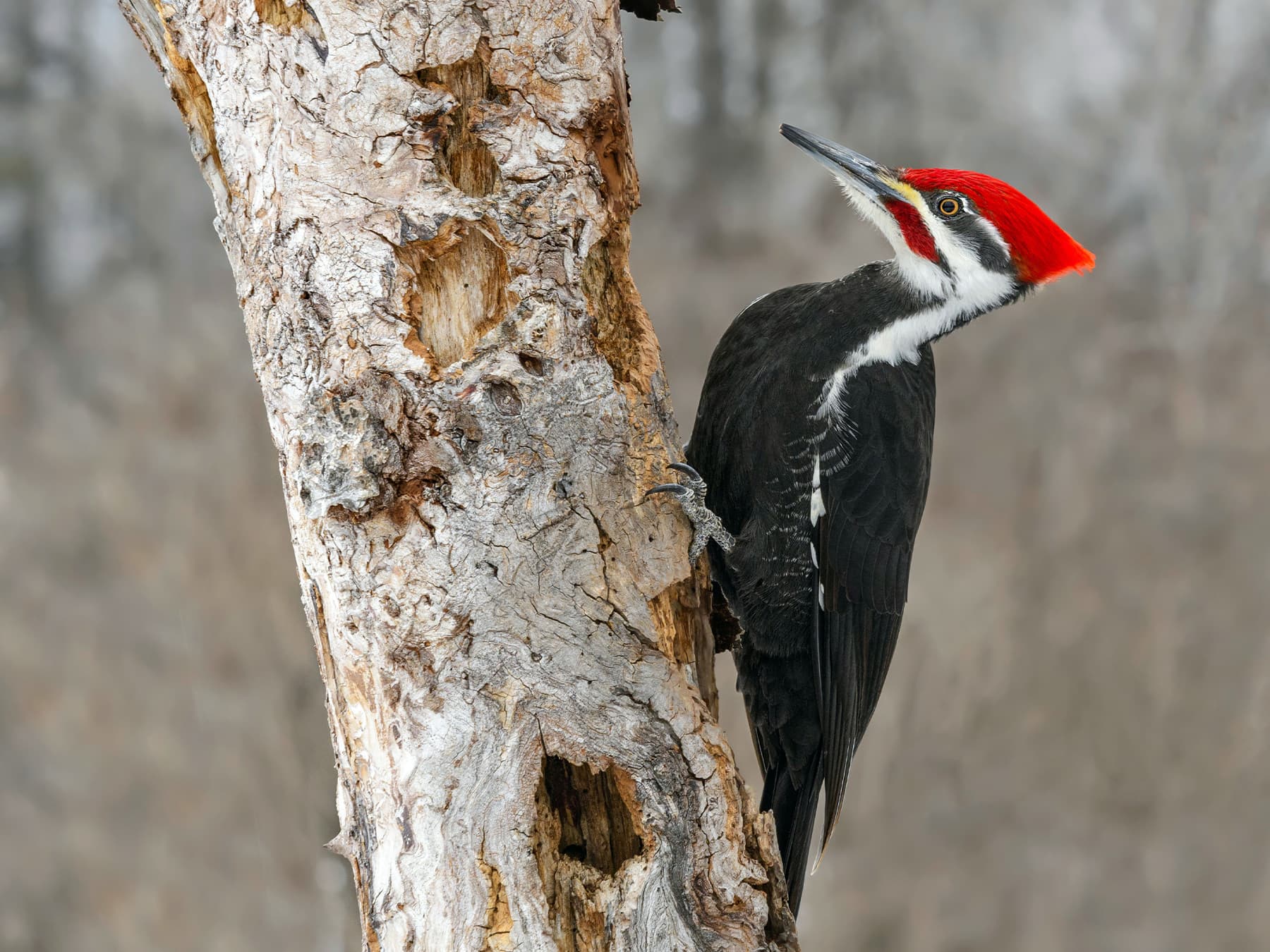
More photos
4 photos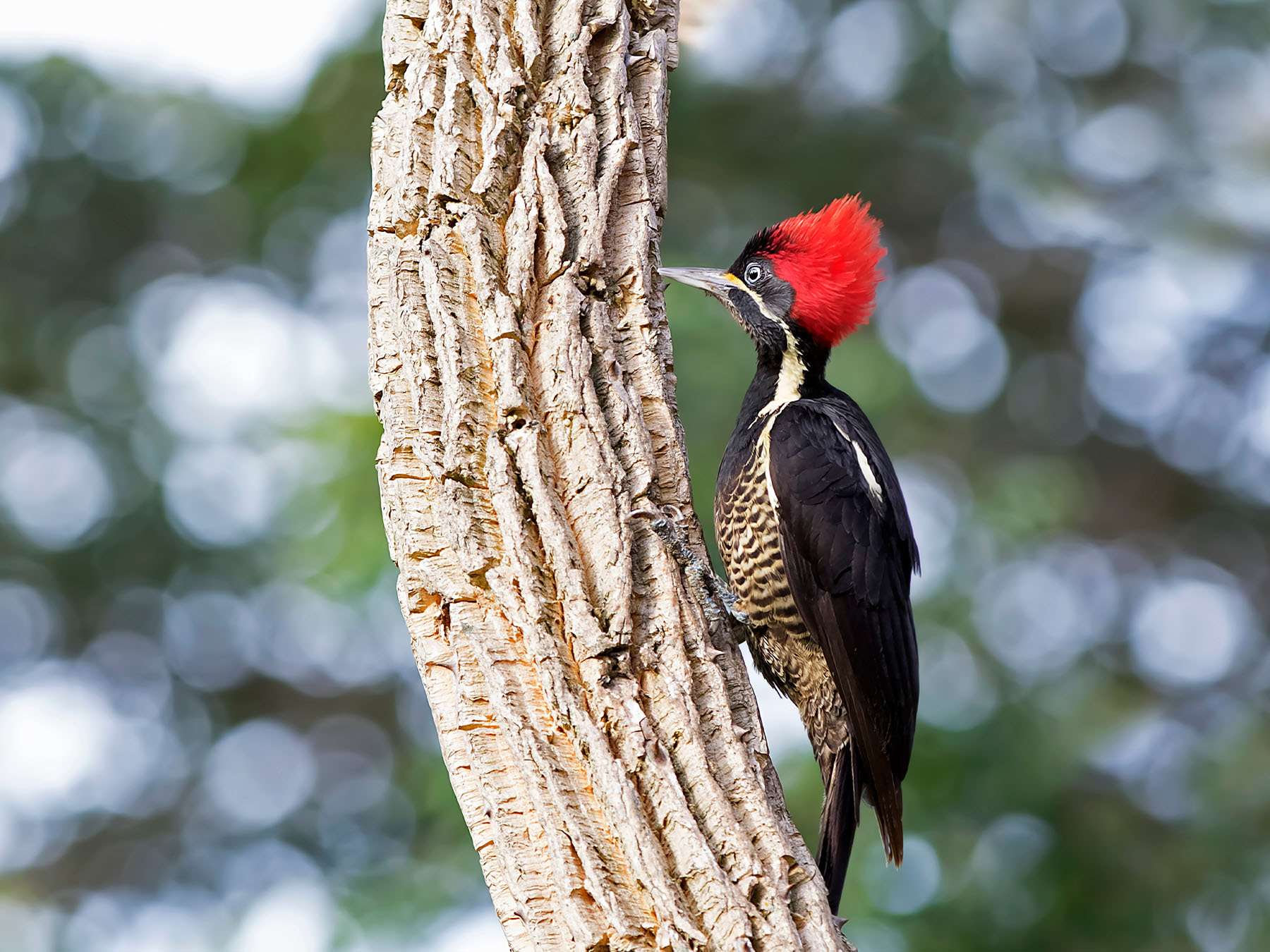
Quick facts
- Length
- 32–38 cm
- Wingspan
- 49–58 cm
- Weight
- 180–280 g
- Lifespan
- 10–15 years
- Family
- Woodpeckers
- Migration
- Resident
- Global status (IUCN)
- Least Concern
- World population
- 5,000,000 - 50,000,000 individuals
- Population trend
- Overall population stable, but some local fluctuations
- Scientific name
- Dryocopus lineatus
Sources
3- 1BirdLife International. 2016. Hylatomus lineatus. The IUCN Red List of Threatened Species 2016: e.T22726489A94923540. Source (opens in a new tab)
- 2del Hoyo et al. (2002)
- 3Partners in Flight (2019)

Checked by
Nathan Cope, founder and editor
Nathan founded Birdfact and leads its writers and contributors in the UK, the US and Canada. He has watched and studied birds for more than ten years, and checks every article and species guide before it’s published.