


Ladder-backed Woodpecker
Cactus Woodpecker · Dryobates scalaris
By the Birdfact teamChecked by Nathan Cope
On this page14 sections
How to recognise it
What do Ladder-backed Woodpeckers look like?
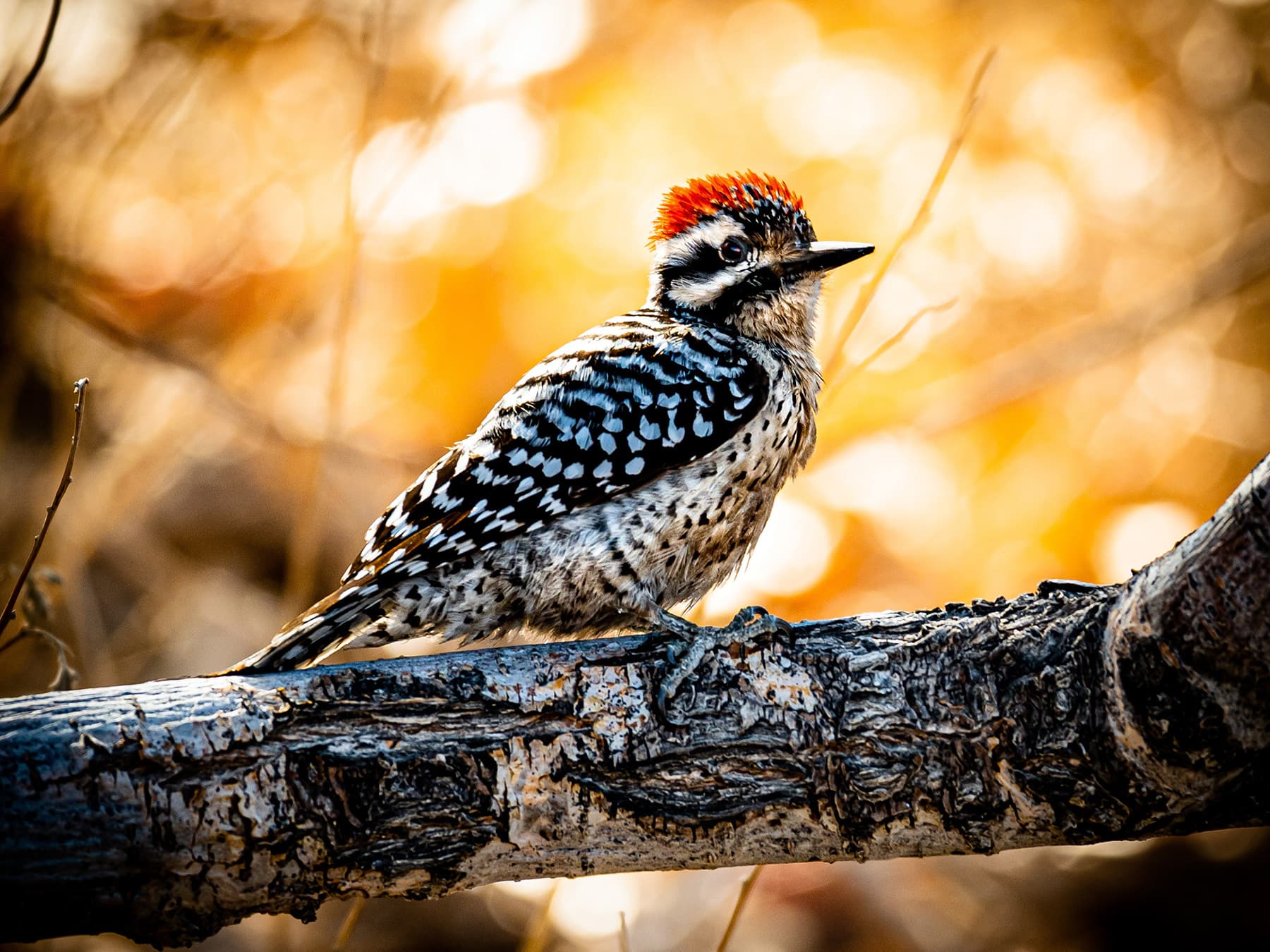
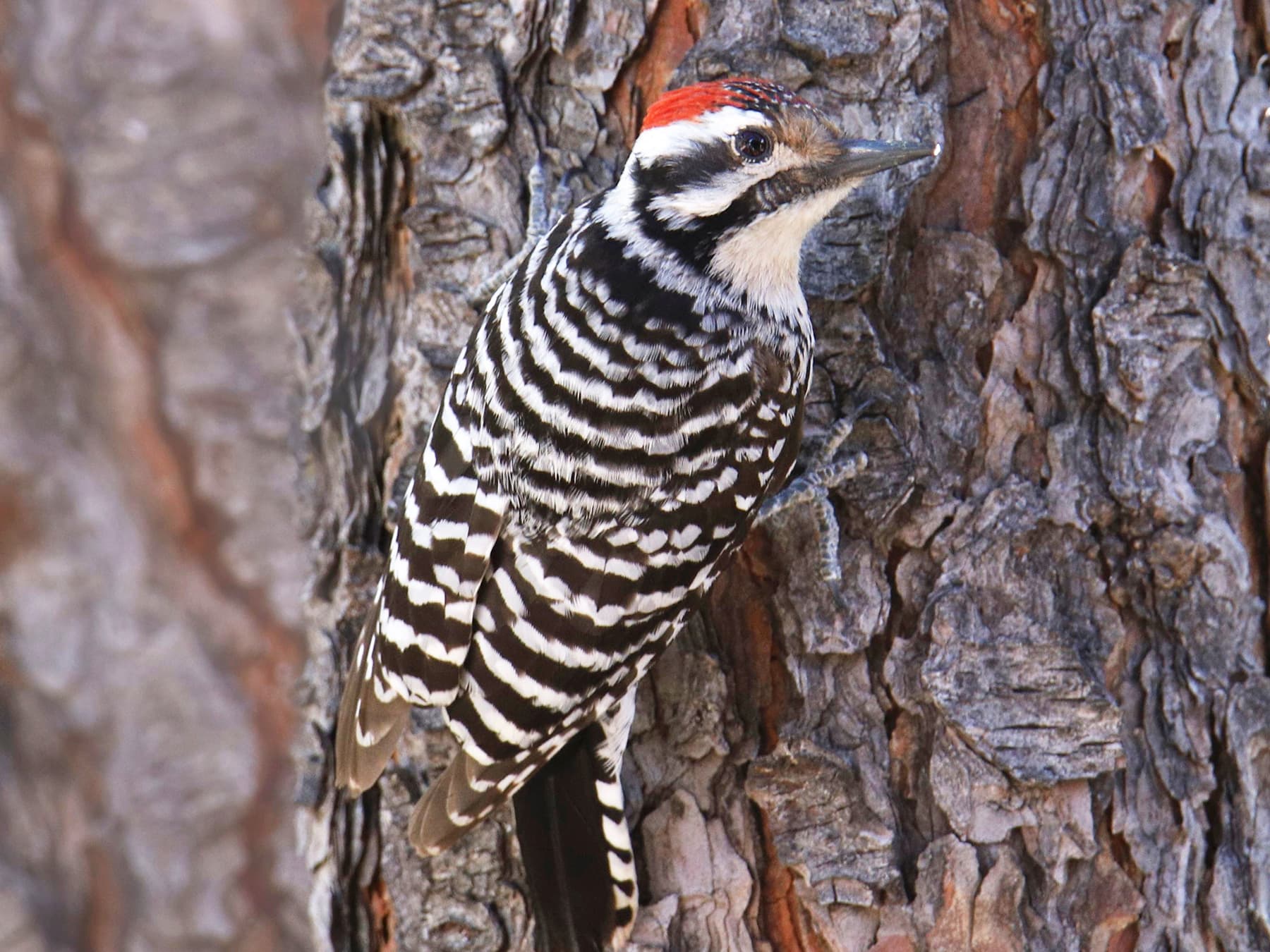
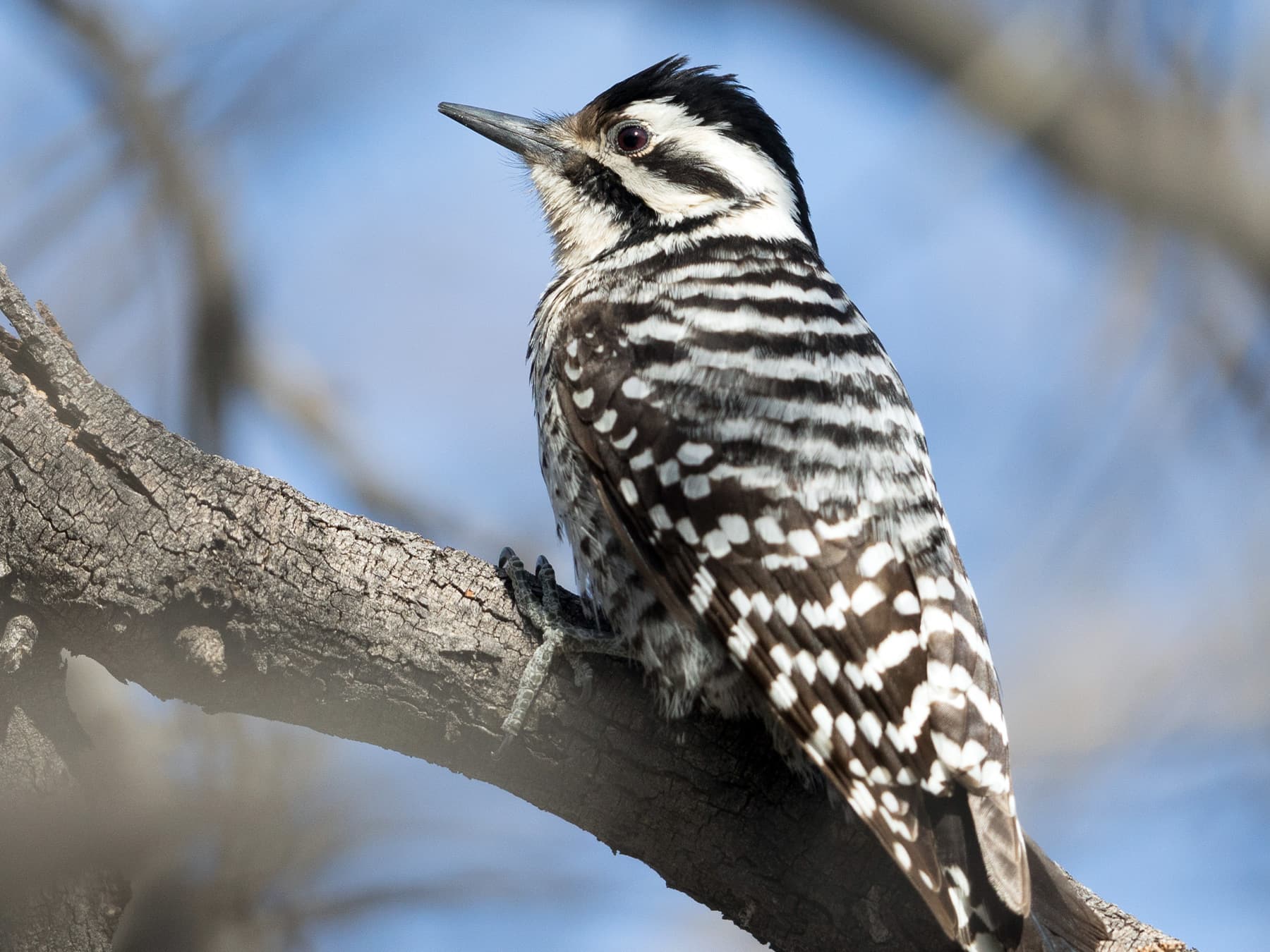
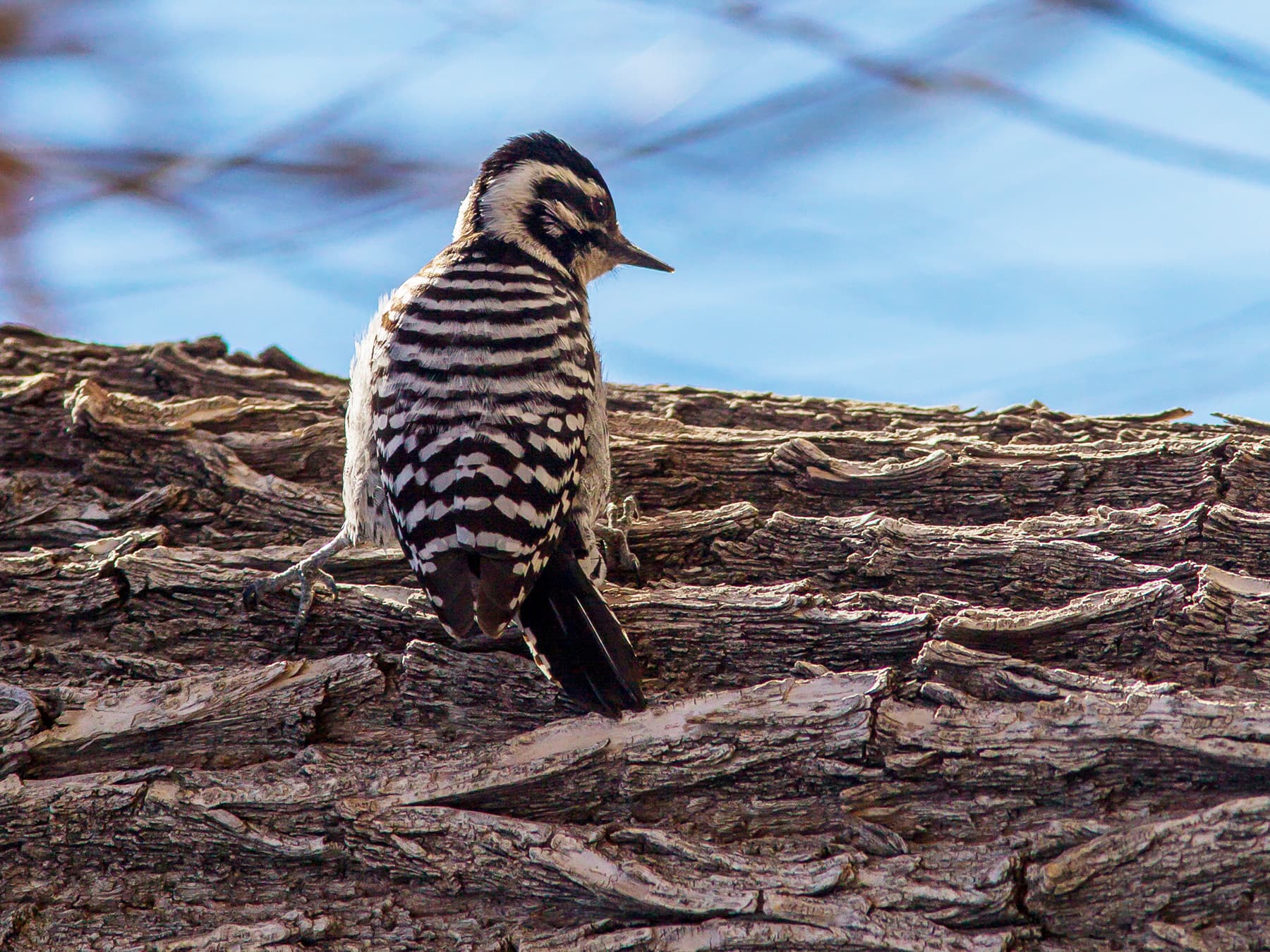
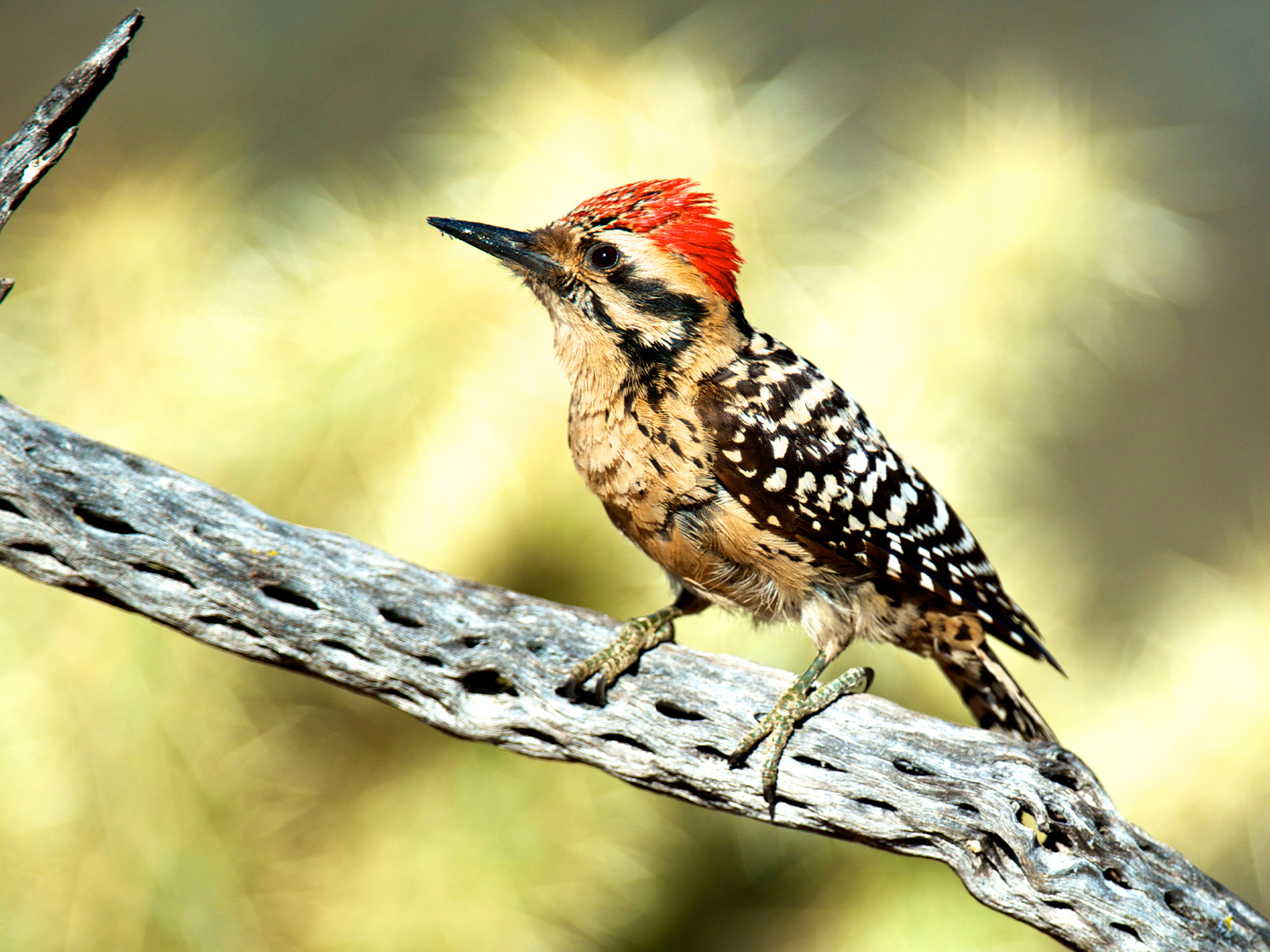
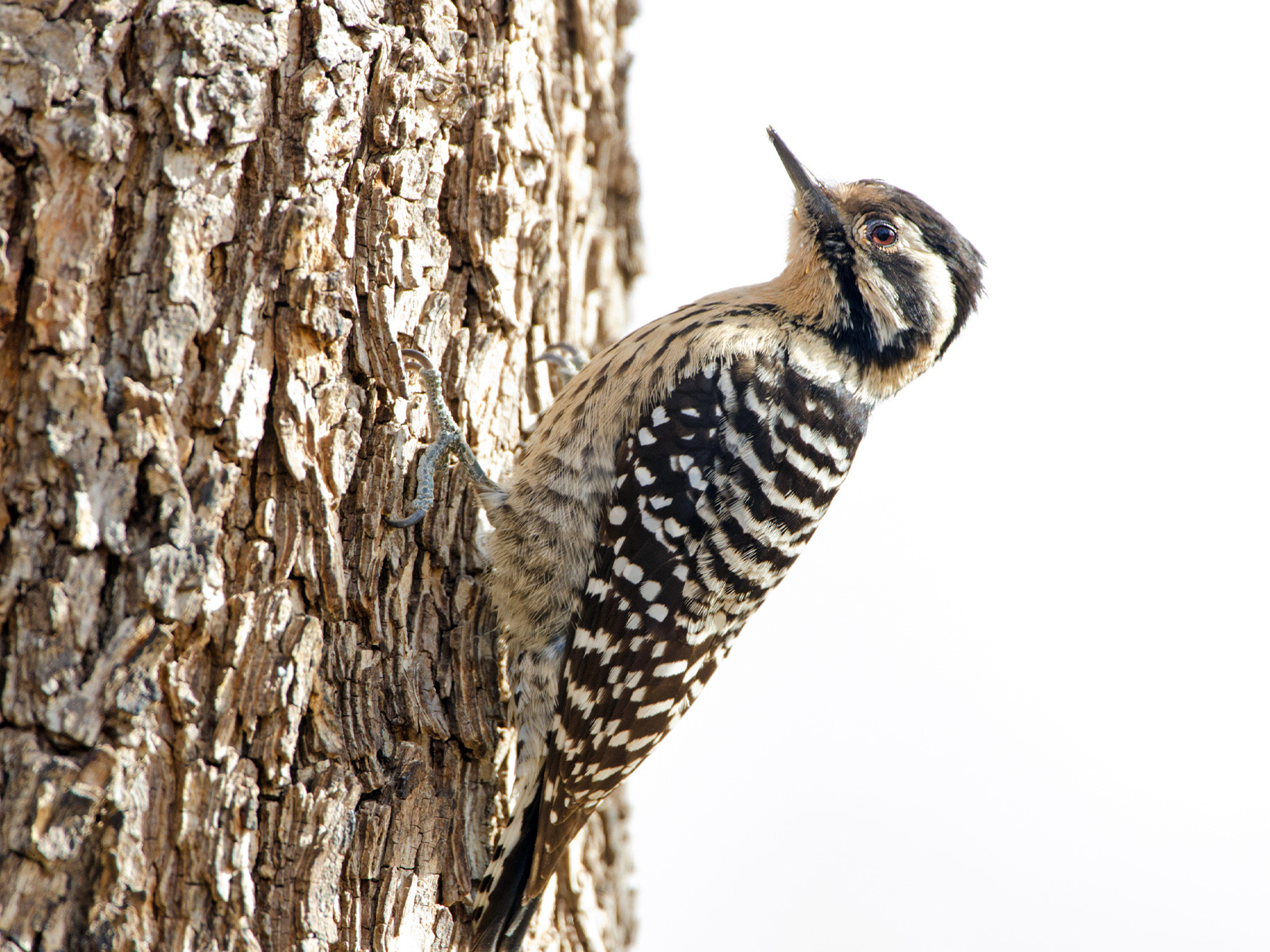
Ladder-backed woodpeckers are named for their distinctively patterned backs, which feature black and white barred markings that resemble the rungs of a ladder.
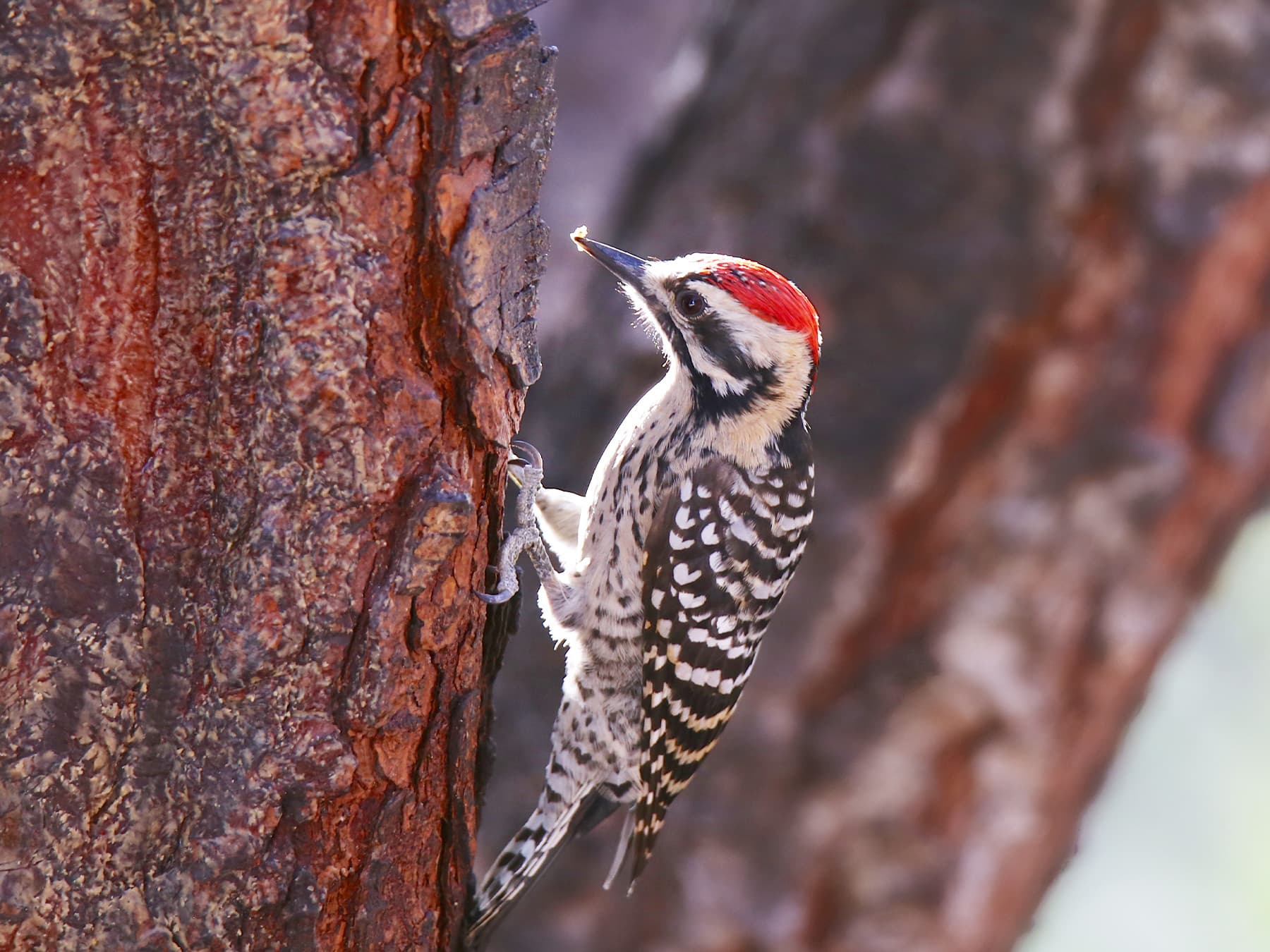
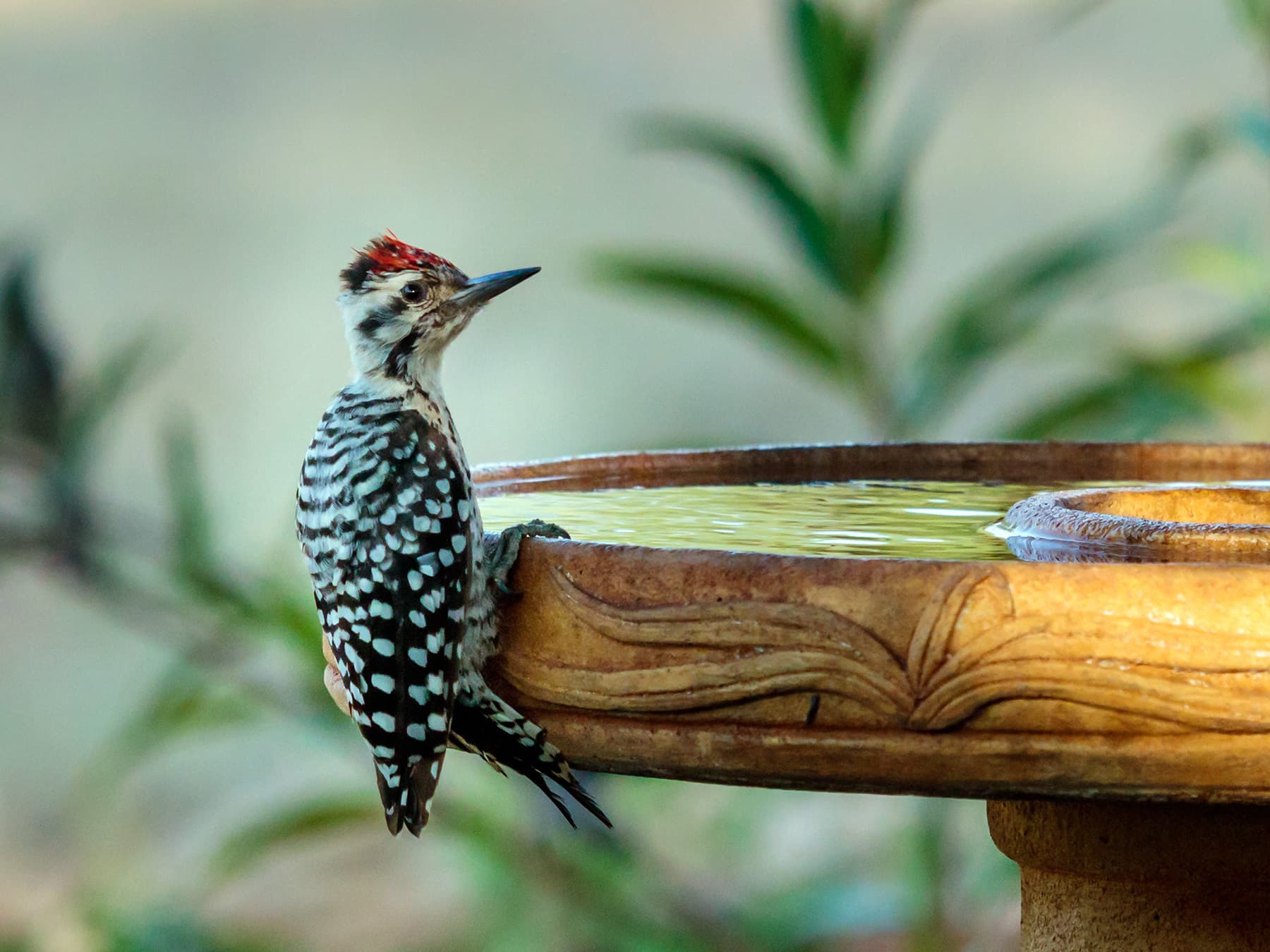
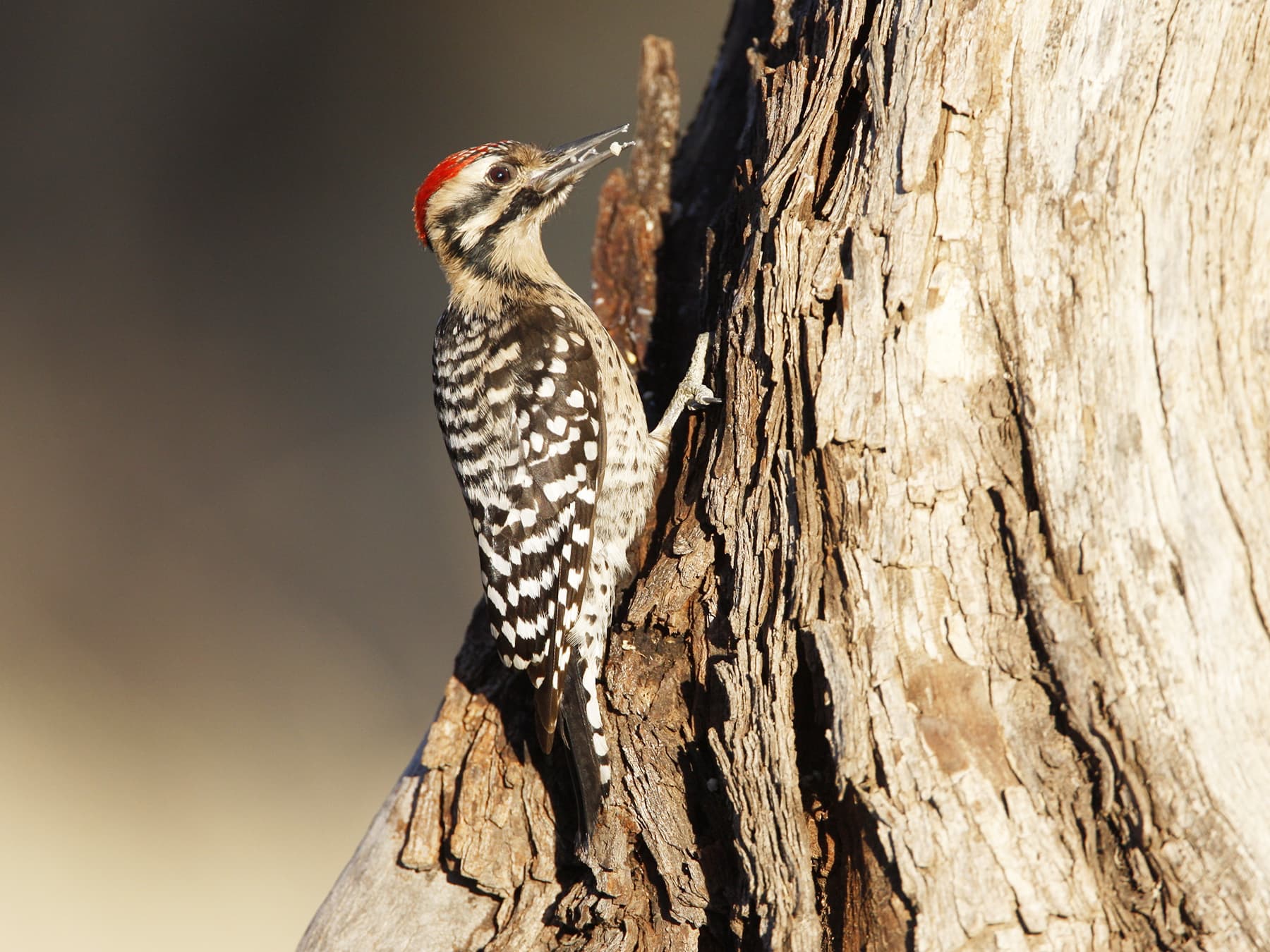
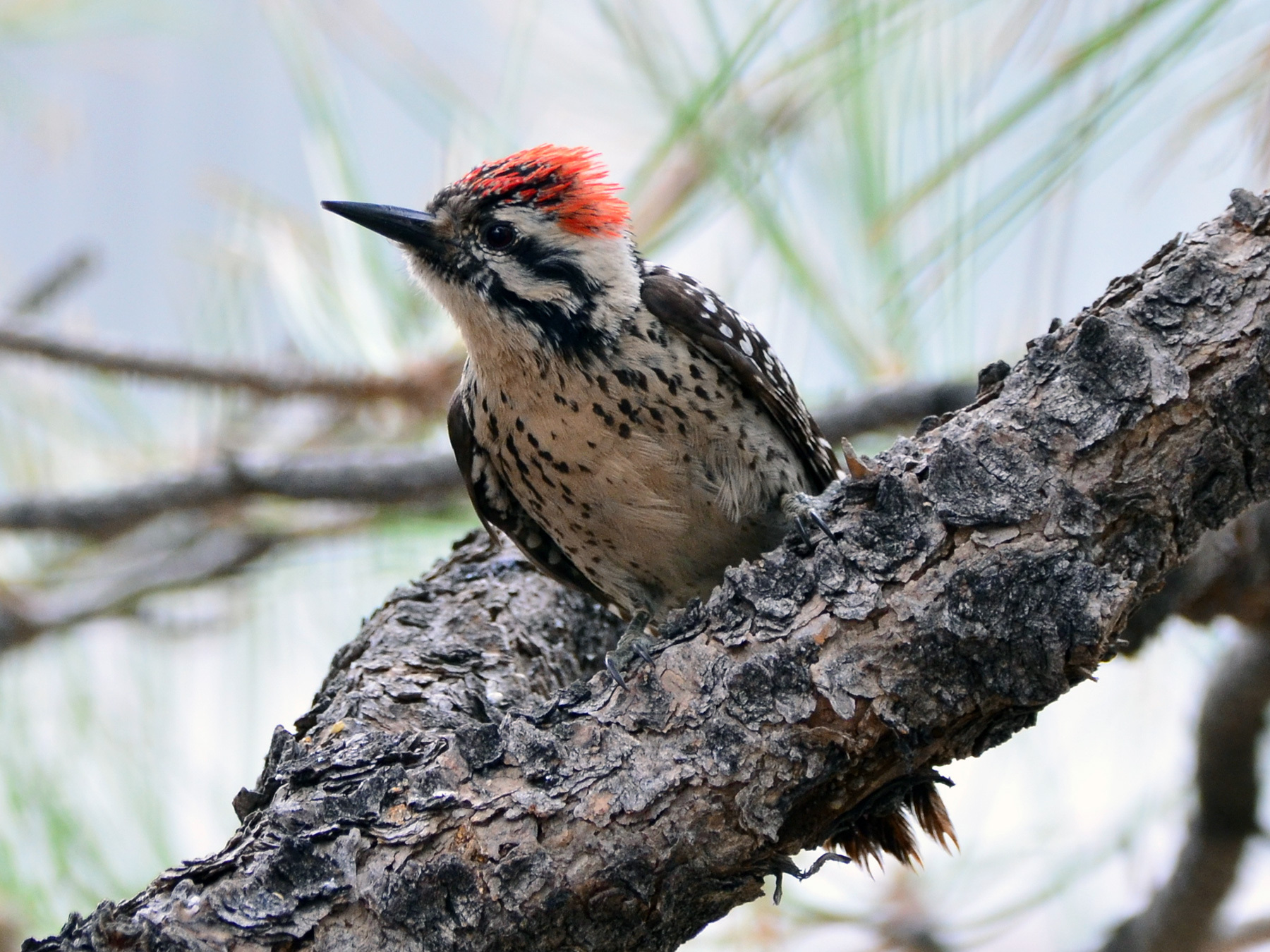
Males have a bright red cap that extends from above the eyes to the back of the head, with white and black speckling to the forehead. The face is buff-white with black markings next to the eye and across the cheek. The flanks and upper breast are heavily spotted with black dots, and the underparts are unmarked and an off-white color.
The ladder-backed woodpecker’s bill is horn-colored, with buff nasal tufts above it. Legs are pale greenish-gray, and eyes are a deep reddish-brown.
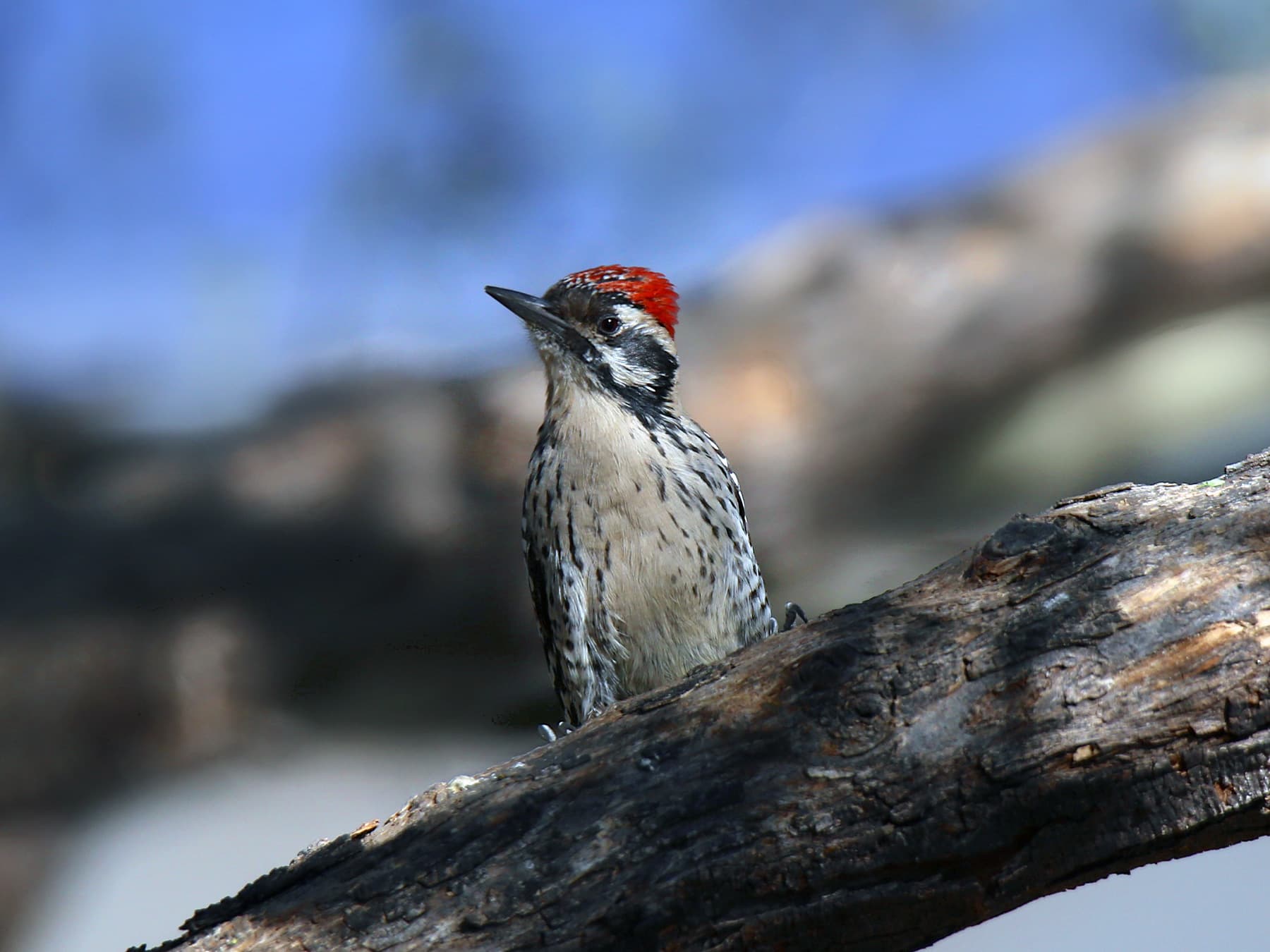
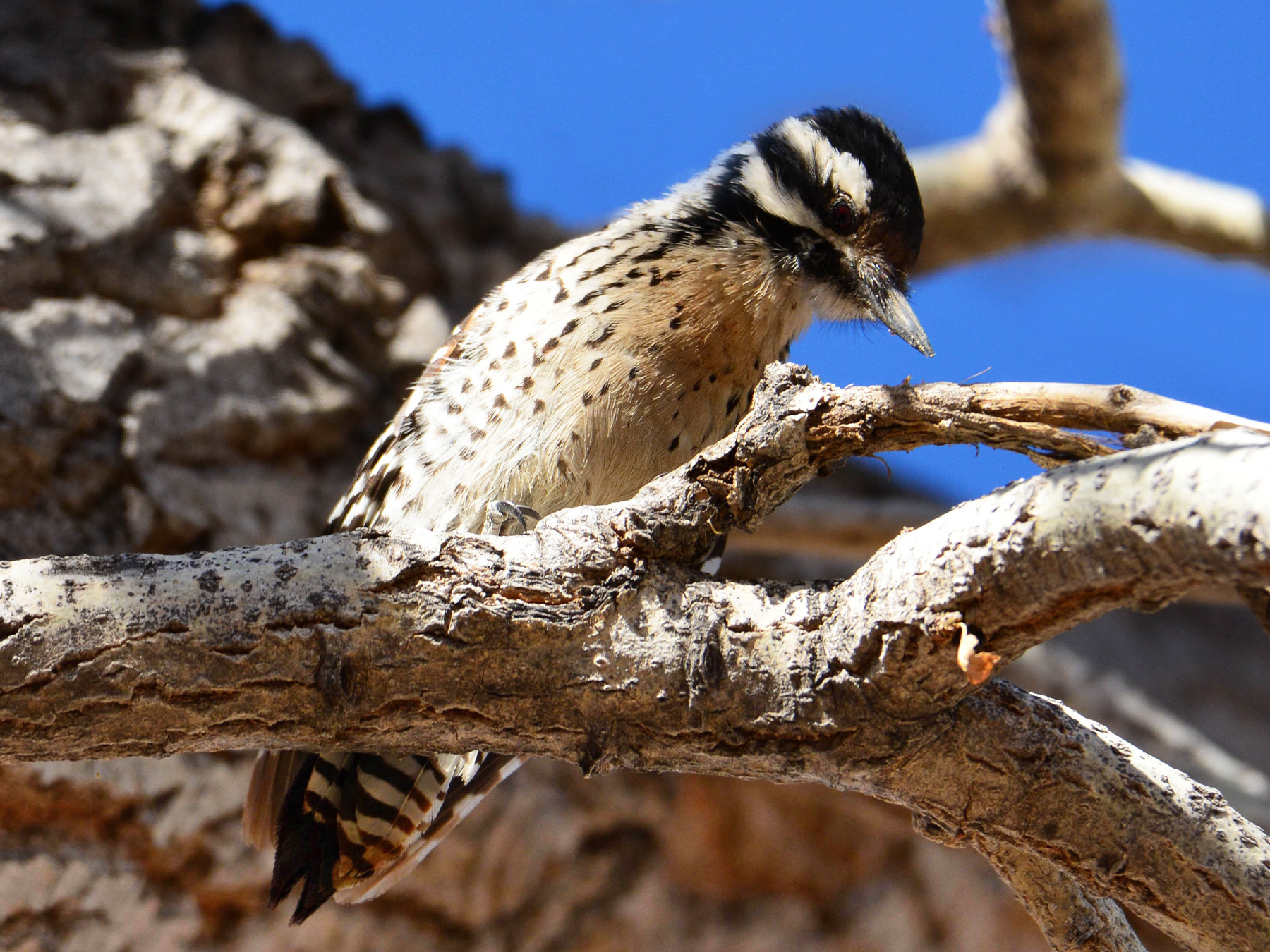
Females have identical back and wing markings to males, with extensive black and white barring, and the same black speckling on the flanks and breast. The key difference between the sexes is that females lack any red coloring, and their crown is solid black instead of the vibrant crimson of males.
Juvenile birds are similar to females in coloring, although have a duller wash to their plumage, with a brownish tinge to the white markings. In young males, some red-edged feathering on the forehead may be barely visible.
How big are Ladder-backed Woodpeckers?
Classed as one of the smallest woodpecker species, the ladder-backed woodpecker is roughly the same size as a bluebird. There is no difference in size between males and females.
- Length: 16 cm to 18 cm ( 6.3 in to 7.1 in)
- Wingspan: 33 cm (13 in)
- Weight: 21 g to 48 g (0.7 oz to 1.7 oz)
Its size
Adults- Length
- 16–19 cm
- Wingspan
- 33–36 cm
- Weight
- 21–35 g
Its song and calls
What sound does a Ladder-backed Woodpecker make?
Relatively quiet and inconspicuous birds, ladder-backed woodpeckers can be heard making a short, high-pitched ‘pik’ call and a whinnying call that descends in pitch. Drumming is only really heard between February and April when they are heard hammering against trunks and branches at a rate of around 30 taps per second.
- Call0:00 / 0:14
Recorded in Texas, United States · March 2024
When and where to see it
OctoberHere all year
Most recorded in October
- 1. Arizona1.1%
- 2. New Mexico1.0%
- 3. Texas0.67%
- 4. Nevada0.30%
- 5. Utah0.11%
Each dot is a county, state or province: the bigger and darker, the larger the bird’s share of that place’s bird records that month. Grey dots: no regular records. The ringed point is the centre of the bird’s records this month; the arrow shows how it moved since last month, and the dashed loop its path through the year. “Arrivals” colours places where it becomes regular this month (orange) or is in its last regular month (grey). GBIF eBird Observation Dataset, 2019–2024. Map data: Natural Earth, US Census Bureau; place centres © OpenStreetMap contributors.
In your area
See when the Ladder-backed Woodpecker is recorded in your county, state or province.
How often the Ladder-backed Woodpecker turns up in the United States through the year, from birdwatchers' records.
United States
Resident · all year · most records in December
Show as a table
| Month | United States |
|---|---|
| January | 0.14% (regular) |
| February | 0.14% (regular) |
| March | 0.13% (regular) |
| April | 0.10% (regular) |
| May | 0.060% (regular) |
| June | 0.061% (regular) |
| July | 0.074% (regular) |
| August | 0.100% (regular) |
| September | 0.083% (regular) |
| October | 0.084% (regular) |
| November | 0.14% (regular) |
| December | 0.15% (regular) |
Worldwide: recorded regularly in 7 countries
Countries where it was recorded in at least 3 of the 6 years 2019–2024. Linked countries have their own bird list.
North America (7)
- Belize
- El Salvador
- Guatemala
- Honduras
- Mexico
- Nicaragua
- United States
Data: EOD – eBird Observation Dataset (Cornell Lab of Ornithology), accessed via GBIF.org, CC BY 4.0. Records from 2019–2024, aggregated and filtered by Birdfact. How these lists are made
What is the habitat of a Ladder-backed Woodpecker?
Arid climates, with desert scrubland, thorny vegetation, and mesquite grasslands offer ladder-backed woodpeckers an ideal habitat in which to thrive. The species is present from sea level to elevations of up to 2600 m (8500 ft). Landscapes with wooded canyons and pine-oak forests are also favored, particularly those with rivers or streams.
What is the range of a Ladder-backed Woodpecker?
The distribution range of ladder-backed woodpeckers is confined to an area in the south of the United States, spreading from southern California to the west as far east as central Texas. To the north, small populations are found in desert areas in the southeastern corner of Colorado and in northwestern Arizona and southeastern Nevada.
To the south, ladder-backed woodpeckers are found throughout Mexico, and in parts of Belize, El Salvador, and Honduras, with Nicaragua forming the southern limit of its range.
Where do Ladder-backed Woodpeckers live?
Around 1.2 million ladder-backed woodpeckers are estimated to live in the United States, with southeastern Arizona and southern and south-central Texas home to the highest concentrations.
How rare are Ladder-backed Woodpeckers?
The global population of ladder-backed woodpeckers is estimated at 5.9 million mature individuals, and within much of their large distribution range they are relatively widespread and common. Because of their habitat requirements of arid landscapes and reliance on desert vegetation, sightings further north and east are scarce and highly unusual.
Where can you see Ladder-backed Woodpeckers in the US?
Confined to the extreme southwestern corner of the US, ladder-backed woodpeckers are only resident in California, Arizona, Nevada, New Mexico, Texas, and Colorado, as well as in small areas of Utah, Oklahoma, Kansas, and Colorado.
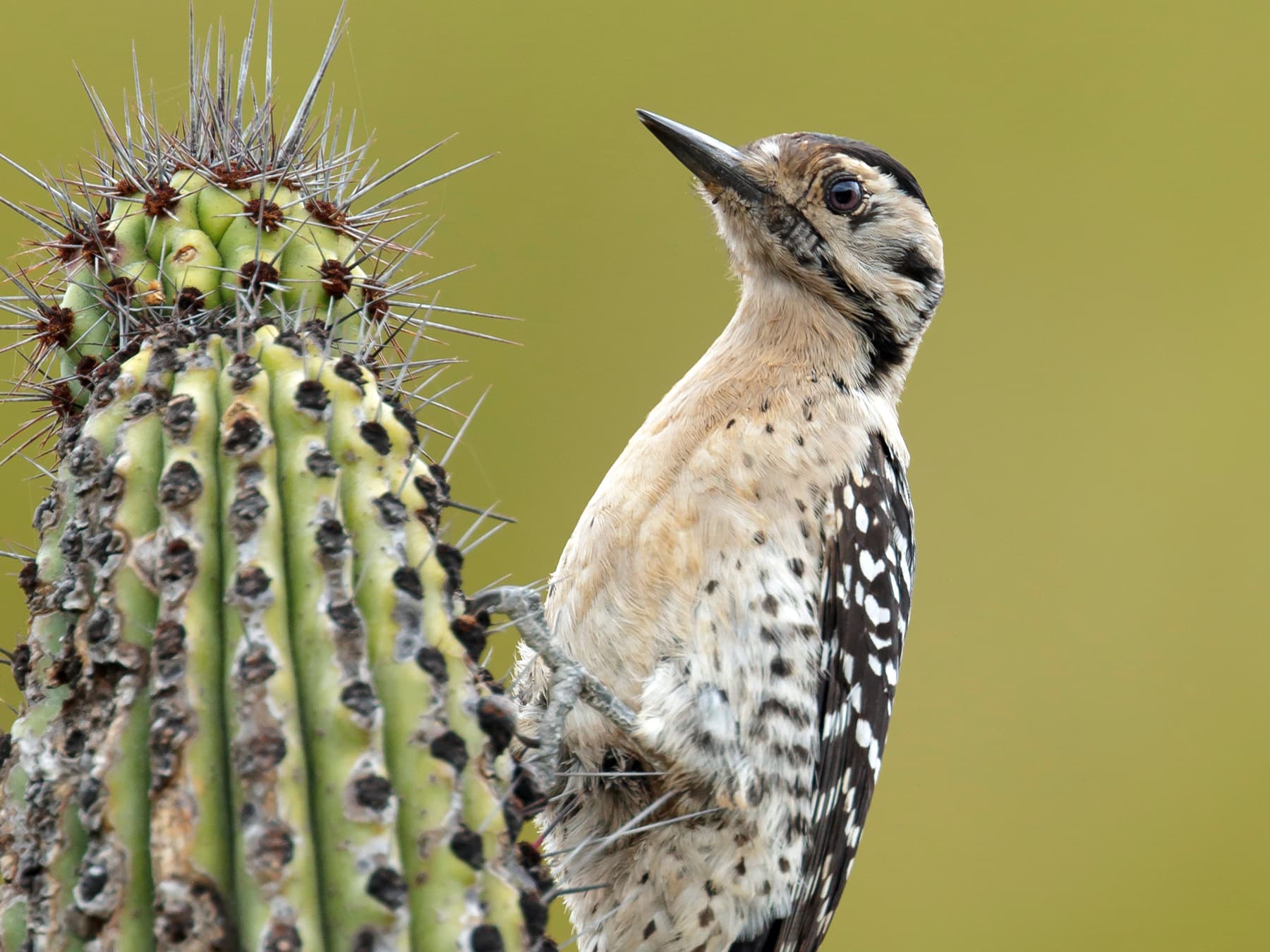
Desert landscapes and thorny forests are preferred. In southern California areas with agave or Joshua trees offer the best chances of a sighting, while in Arizona ladder-backed woodpeckers are most commonly spotted in regions with mesquite, acacia, hackberry, and walkingstick cactus.
Where can you see Ladder-backed Woodpeckers in Canada?
Ladder-backed woodpeckers are not found in Canada, and no records exist of regular or vagrant visitors. If you see a small black-and-white woodpecker in Canada, it’s highly unlikely to be a ladder-backed, and closer inspection is recommended for a more accurate identification.
Migration
Do Ladder-backed Woodpeckers migrate?
Ladder-backed woodpeckers are a non-migratory species and are resident in the same territories all year round.
Are Ladder-backed Woodpeckers native to the US?
Ladder-backed woodpeckers live in the southwestern United States all year round but are not found elsewhere in the country outside of this region. The species is also widespread throughout the arid landscapes of Mexico and populations are scattered across the northernmost parts of Central America.
Tips for seeing it
- Look for them in arid habitats with scattered trees or cacti
- Listen for their sharp 'peek' call or rapid drumming
- Observe their distinctive ladder-like back pattern when perched
- Check for their presence on utility poles in desert areas
What it eats
What do Ladder-backed Woodpeckers eat?
A ladder-backed woodpecker’s diet is primarily insect-based, with beetles, leafworms, ants, and larvae, which it mainly gleans from leaves, but also forages on the ground and occasionally extracts from tree trunks by drilling. Cactus fruits are also sometimes eaten.
What do Ladder-backed Woodpecker chicks eat?
Ladder-backed woodpecker nestlings are almost exclusively fed on a diet of larvae, delivered by both parents to the nest cavity until they fledge.
Nesting and breeding
Where do Ladder-backed Woodpeckers nest?
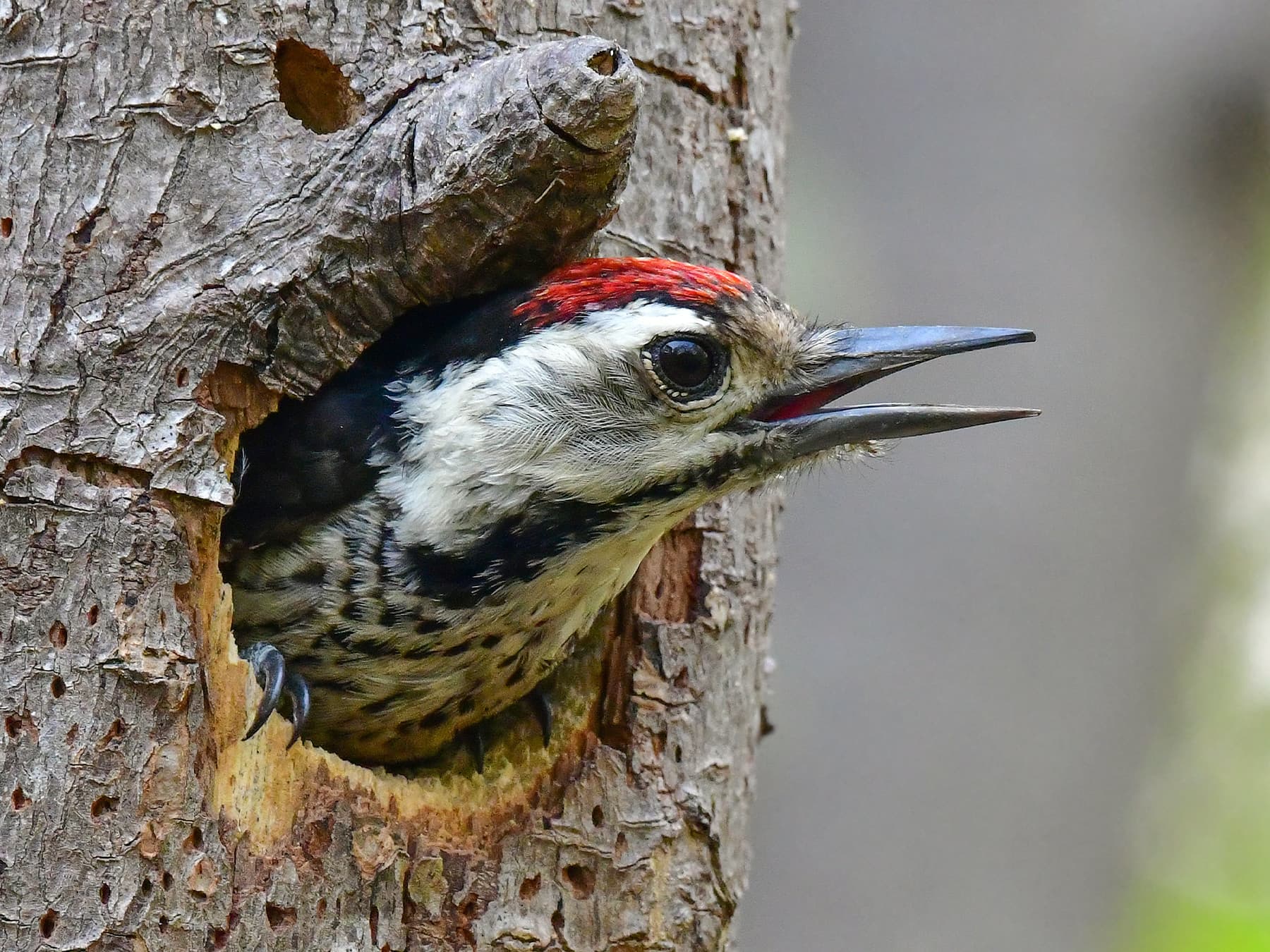
A cavity-nesting species, the ladder-backed woodpecker excavates its own nest chambers in larger trees, such as Joshua, willow, cottonwood, walnut and oak. Walkingstick cactus, Mojave and chaparral yucca, and giant agave stalks may also be used, with typical nest heights between 0.6 m to 9 m (2 ft and 30 ft) above ground level.
A cavity with an opening of 3 cm to 4 cm (1.3 in to 1.6 in) is drilled out by the male, with feathers used as a lining but no additional nesting material added.
When do Ladder-backed Woodpeckers nest?
Eggs are usually laid between April and June, with late March and early July clutches recorded on rare occasions. Incubation is shared between the male and female, and although precise information about the duration is unknown, eggs are thought to hatch after between 13 and 14 days. One sole brood is raised each year.
What do Ladder-backed Woodpecker eggs look like?
Between four and six creamy white eggs are laid by the female ladder-backed woodpecker, although some clutches may contain as few as 2 or as many as 7 eggs. The eggs, which have no markings or speckling, measure 2 cm by 1.5 cm (0.8 in by 0.6 in).
Do Ladder-backed Woodpeckers mate for life?
Ladder-backed woodpecker pairs form in late winter or early spring, and pairs remain together for the duration of the breeding season. Longer-term bonds have been recorded, with pairs raising young together in successive years.
Behaviour
Are Ladder-backed Woodpeckers aggressive?
Confrontations are observed between rival males, as well as between ladder-backed woodpeckers and Nuttall’s woodpeckers. Aggressive behavior takes the form of bill pointing, head bobbing and swinging, and wing flicking. They may also undertake a brief ‘moth-like’ flight, hovering over their opponent as a form of intimidation.
Where do Ladder-backed Woodpeckers sleep at night?
Roosting cavities are used by ladder-backed woodpeckers, each occupied overnight by a single bird. Former nests may be used or new cavities drilled out.
Lifespan and predators
How long do Ladder-backed Woodpeckers live?
Little is known about the average lifespan of ladder-backed woodpeckers, although banding records indicate that the oldest known individual survived to 4 years and 6 months. Anecdotal accounts of observations of the same female ladder-backed woodpecker over a 7-and-a-half-year period also exist. Breeding occurs for the first time at one year of age.
What are the predators of Ladder-backed Woodpeckers?
Bull and gopher snakes are likely raiders of ladder-backed woodpeckers’ nest cavities, and hawks and falcons are among the predators of young and mature birds.
Are Ladder-backed Woodpeckers protected?
The Migratory Birds Treaty Act of 1918 offers protection to ladder-backed woodpeckers, their young, nest sites, and eggs. Under this legislation, it is a federal offense to kill, injure, trade, or trap a ladder-backed woodpecker or to interfere with its nest site.
Are Ladder-backed Woodpeckers endangered?
Currently, there are no threats to the future survival of ladder-backed woodpeckers and they are rated as a species of least concern globally. Habitats they thrive in are usually not overly populated or potentially useful for agriculture, which limits the presence of humans and has allowed the species to thrive with relatively few external interruptions.
Conservation
While currently listed as Least Concern, Ladder-backed Woodpeckers face localized threats from habitat loss due to urban development and agricultural expansion.
Conservation efforts focus on preserving desert and woodland habitats, particularly in areas with mature cacti and trees essential for nesting.
Similar birds
Often mistaken for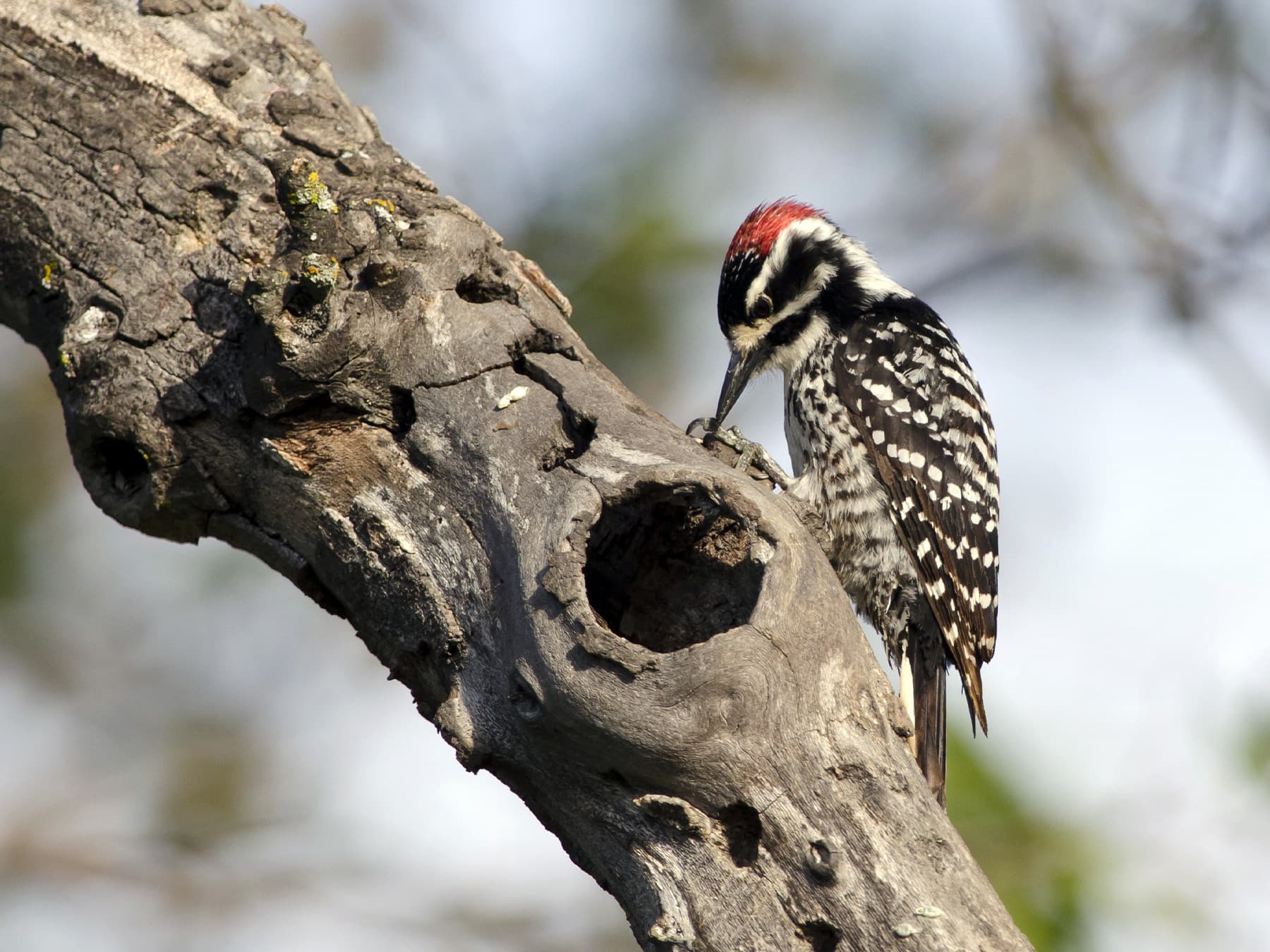
More photos
5 photos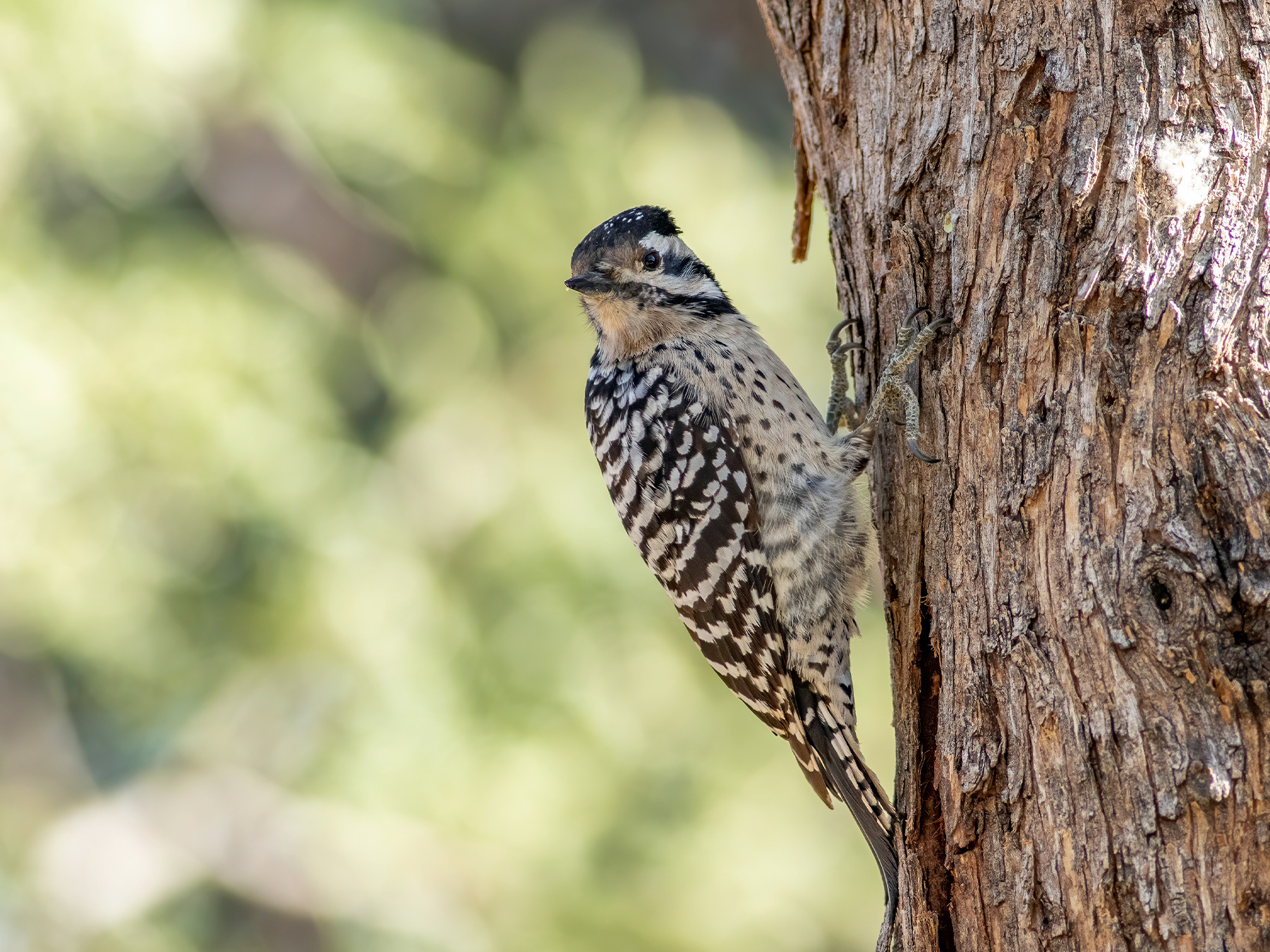
Quick facts
- Length
- 16–19 cm
- Wingspan
- 33–36 cm
- Weight
- 21–35 g
- Lifespan
- 4–6 years
- Family
- Woodpeckers
- Migration
- Resident
- Global status (IUCN)
- Least Concern
- World population
- Unknown
- Population trend
- Stable
- Also called
- Cactus Woodpecker
- Scientific name
- Dryobates scalaris
Questions
5What attracts Ladder-backed Woodpeckers?
In the northern parts of their range, ladder-backed woodpeckers may be attracted to backyard suet feeders when insects are not as widely available. Mealworms and sunflower seeds are also readily taken.
As their diet is highly dependent on insects, a suitable environment with plenty of beetles, ants, and their larvae will attract woodpeckers, as well as trees and succulent plants for foraging and nesting.
What trees do Ladder-backed Woodpeckers prefer?
The most common trees ladder-backed woodpeckers choose to build nesting cavities in include Joshua Tree, willow, cottonwood, oak, walnut, hackberry, and pine. Chaparral and Mojave yucca and agave are also popular.
Do Ladder-backed Woodpeckers harm trees?
Generally, cavities drilled into trees by ladder-backed woodpeckers do not cause extensive damage to trees or tree trunks, and healthy trees can withstand these with no lasting impact. As woodpeckers play a significant part in controlling insect populations, the benefits of their presence usually outweigh any negatives.
Do Ladder-backed Woodpeckers go to bird feeders?
In winter, ladder-backed woodpeckers may visit backyard feeders to forage for mealworms, black oil sunflower seeds, suet, and peanut butter. Such sightings are more common in the north of the range where winter conditions may have more of an impact on insect populations.
What is the difference between a ladder-backed woodpecker and a Nuttall's woodpecker?
Ladder-backed woodpeckers and Nuttall’s woodpeckers are very alike in appearance, however, some key features help distinguish between the two species.
Ladder-backed woodpeckers have a lot less black on their head and upper back. The red crown of a ladder-backed woodpecker begins at the forehead, and extends to the back of the head, while in Nuttall’s woodpeckers, the red cap is further back.
The barred markings on a ladder-backed woodpecker’s back continue up to its neck, while in Nuttall’s woodpeckers, the striped patterning ends on the upper back.
Sources
2- 1BirdLife International. 2017. Dryobates scalaris (amended version of 2016 assessment). The IUCN Red List of Threatened Species 2017: e.T22681152A118587827. Source (opens in a new tab)
- 2Breeding Bird Survey and/or Christmas Bird Count: Butcher and Niven (2007)

Checked by
Nathan Cope, founder and editor
Nathan founded Birdfact and leads its writers and contributors in the UK, the US and Canada. He has watched and studied birds for more than ten years, and checks every article and species guide before it’s published.