


Nuttall's Woodpecker
Nuttall Woodpecker · Dryobates nuttallii
By the Birdfact teamChecked by Nathan Cope
On this page13 sections
How to recognise it
What do Nuttall's Woodpeckers look like?
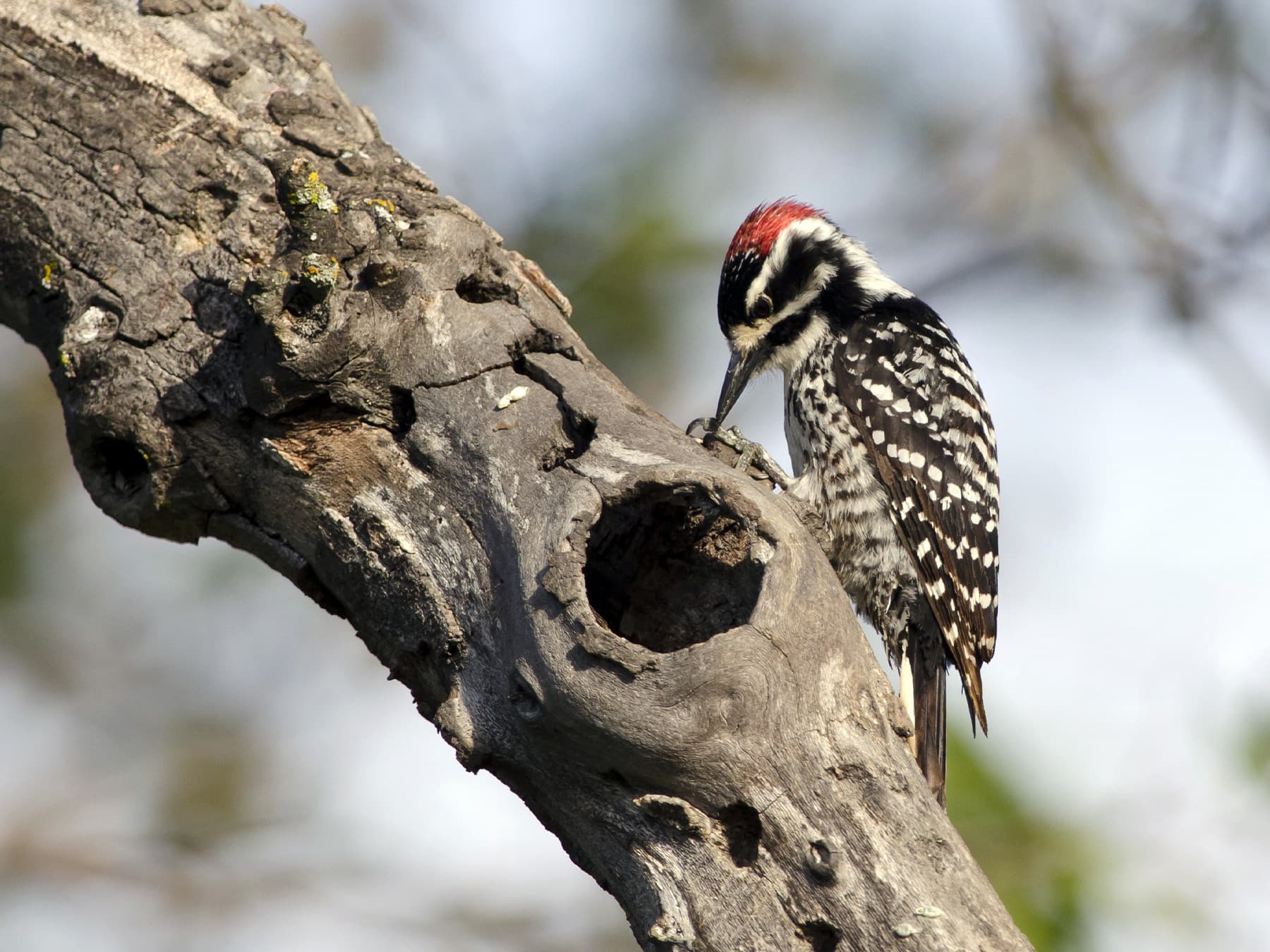
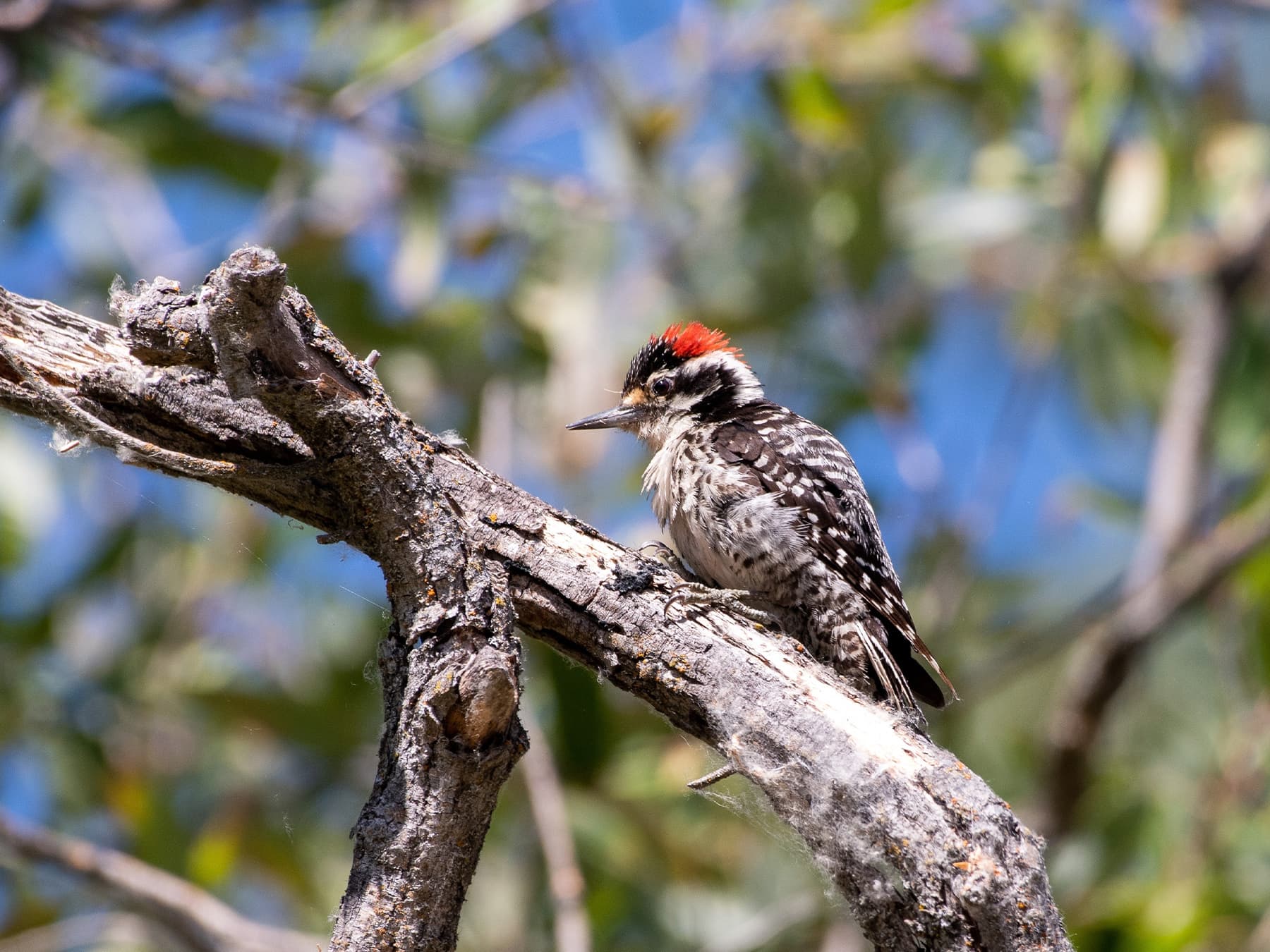
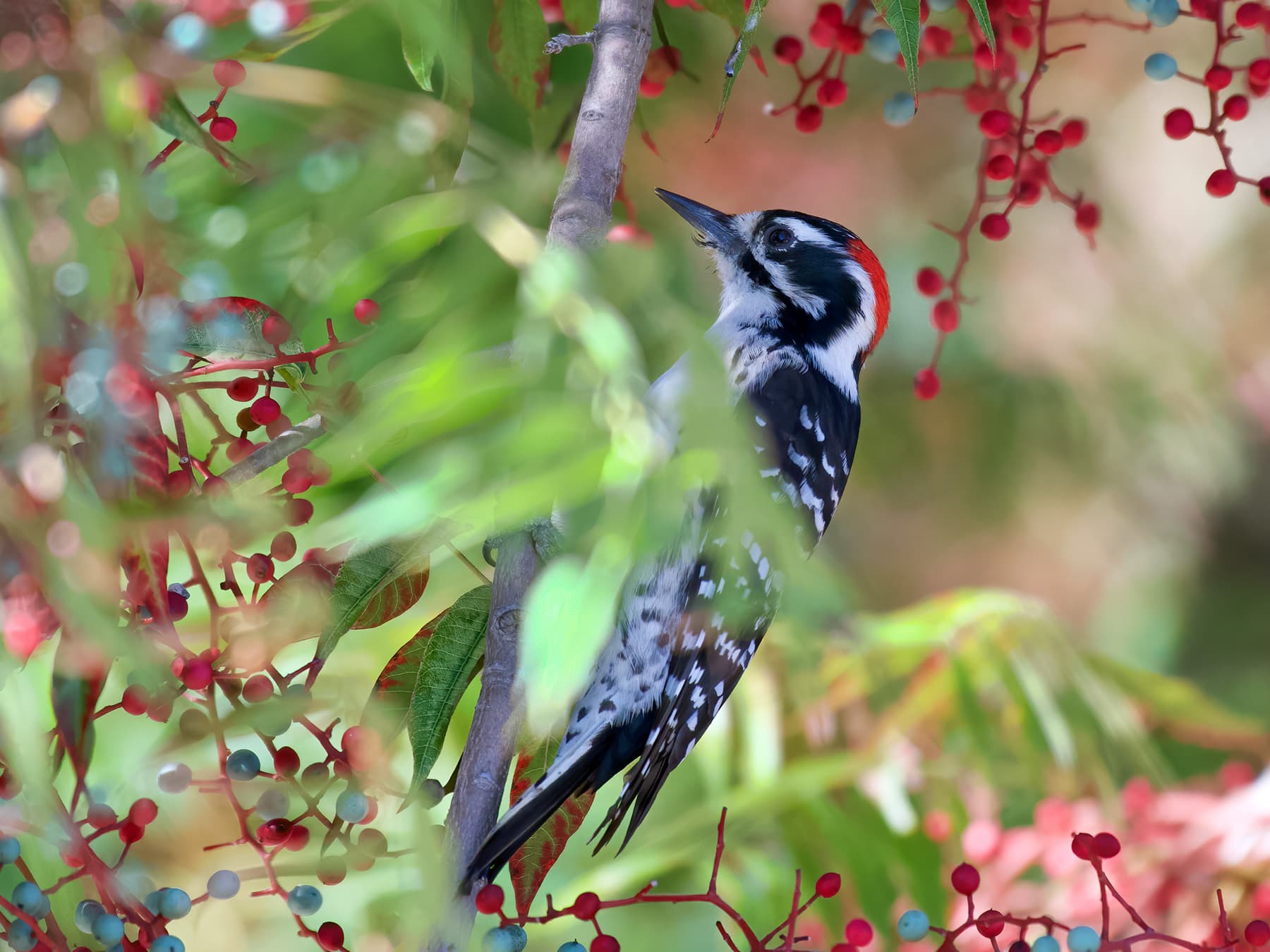
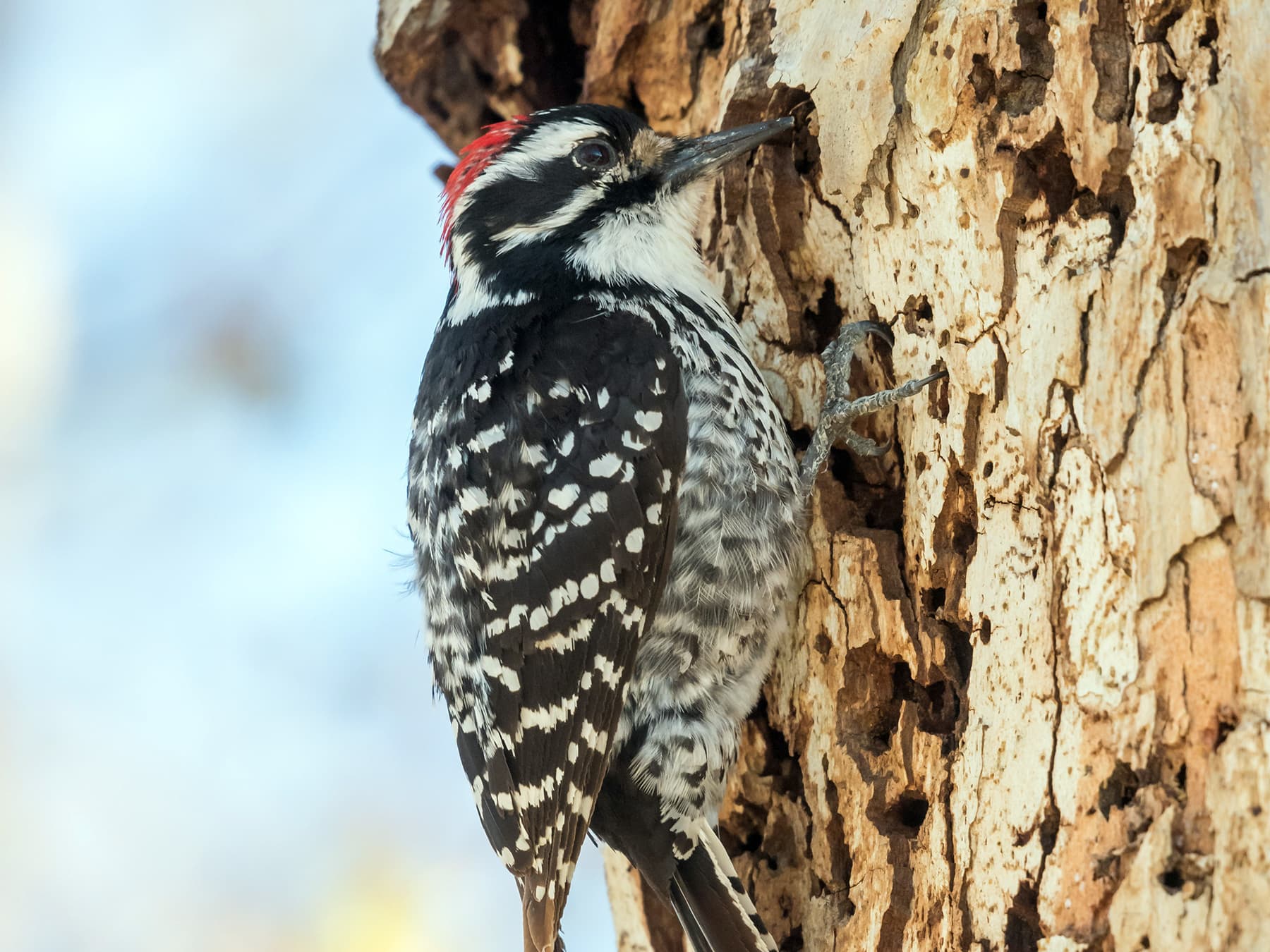
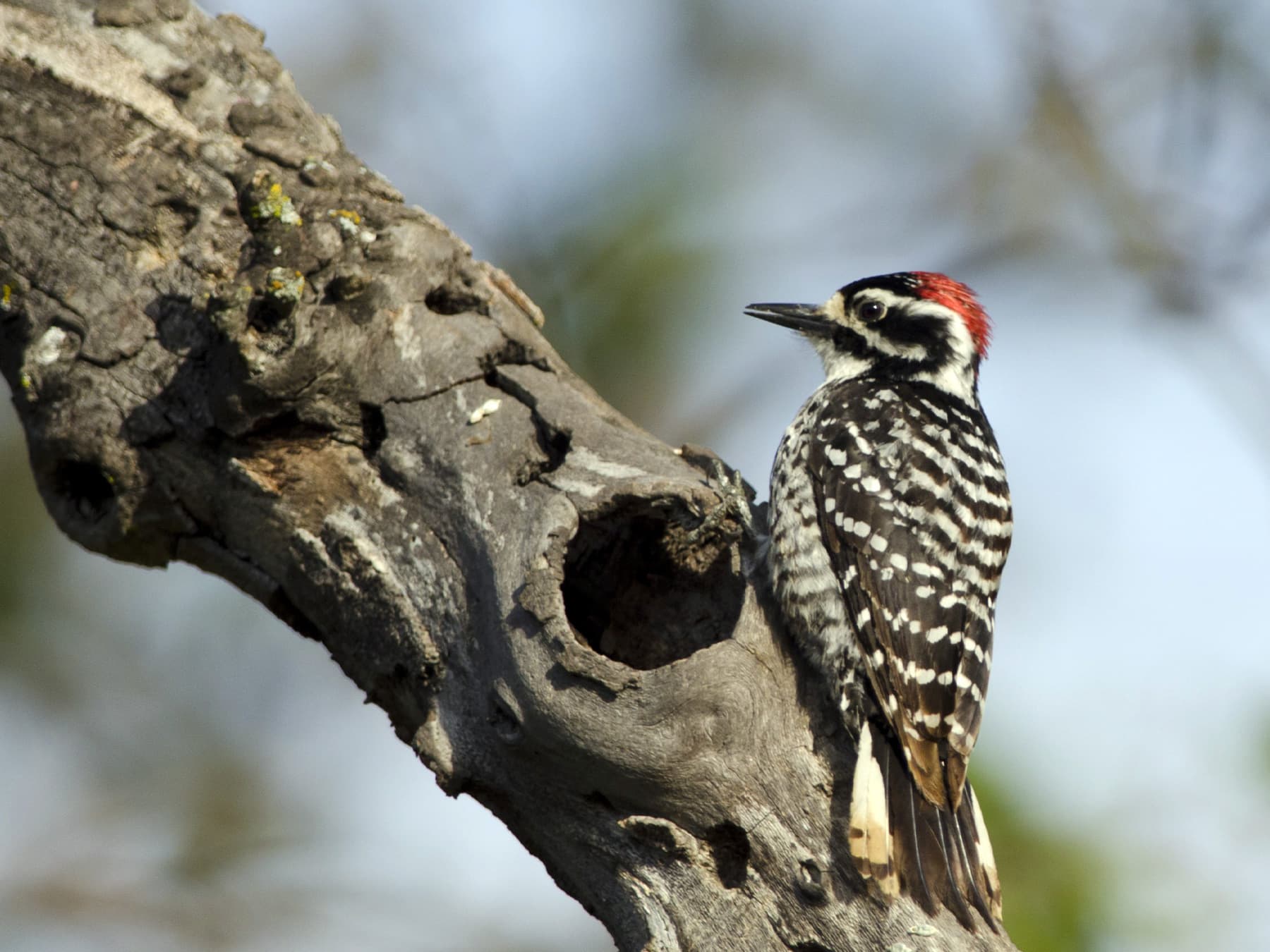
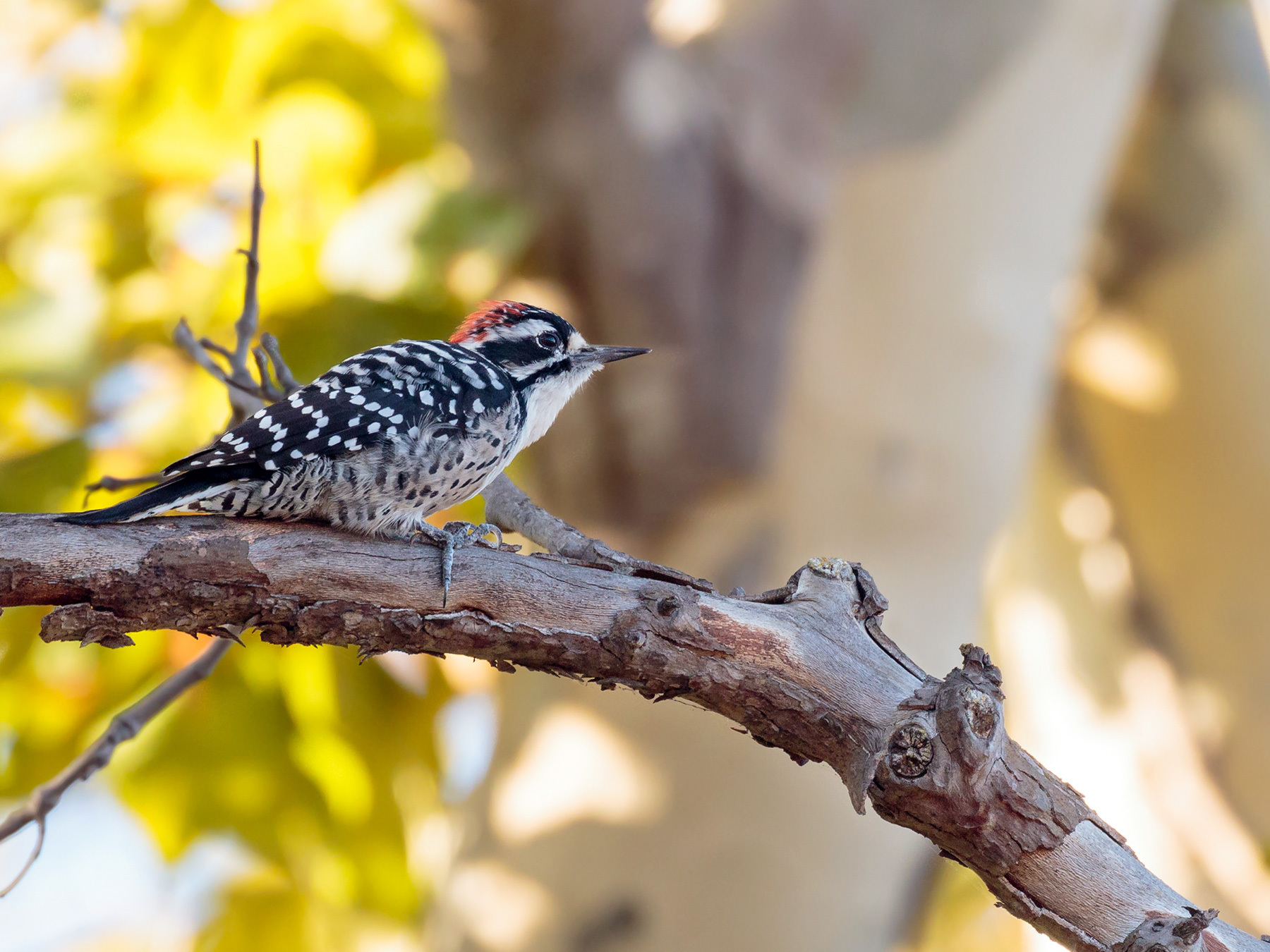
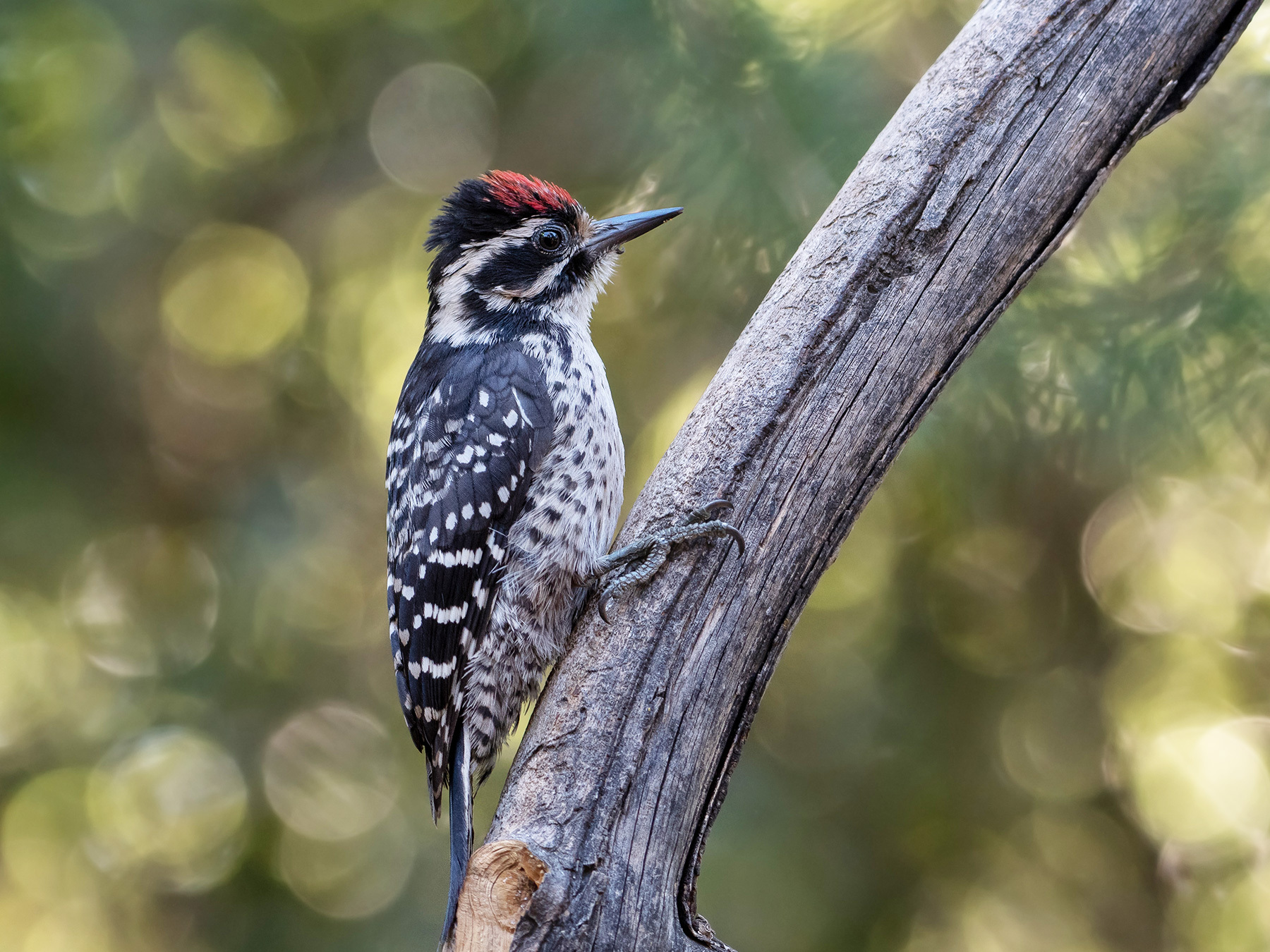
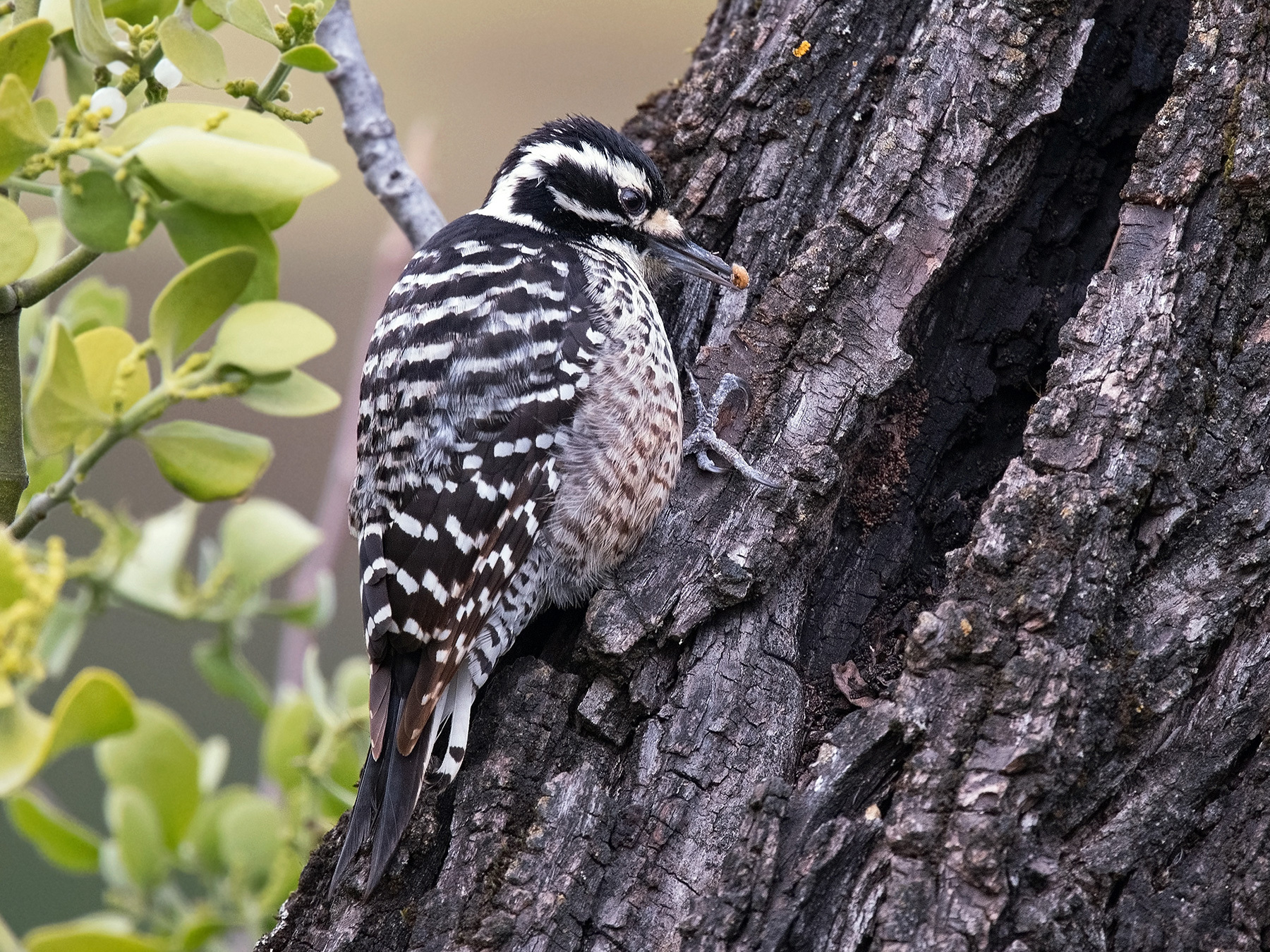
Nuttall’s woodpeckers are mainly black and white, with a red cap on the rear of the head in males. Facial markings include a black forehead, speckled with white, black cheeks with white and black stripes below, and a white chin, throat, and breast. Above the bill, white nasal tufts can be seen.
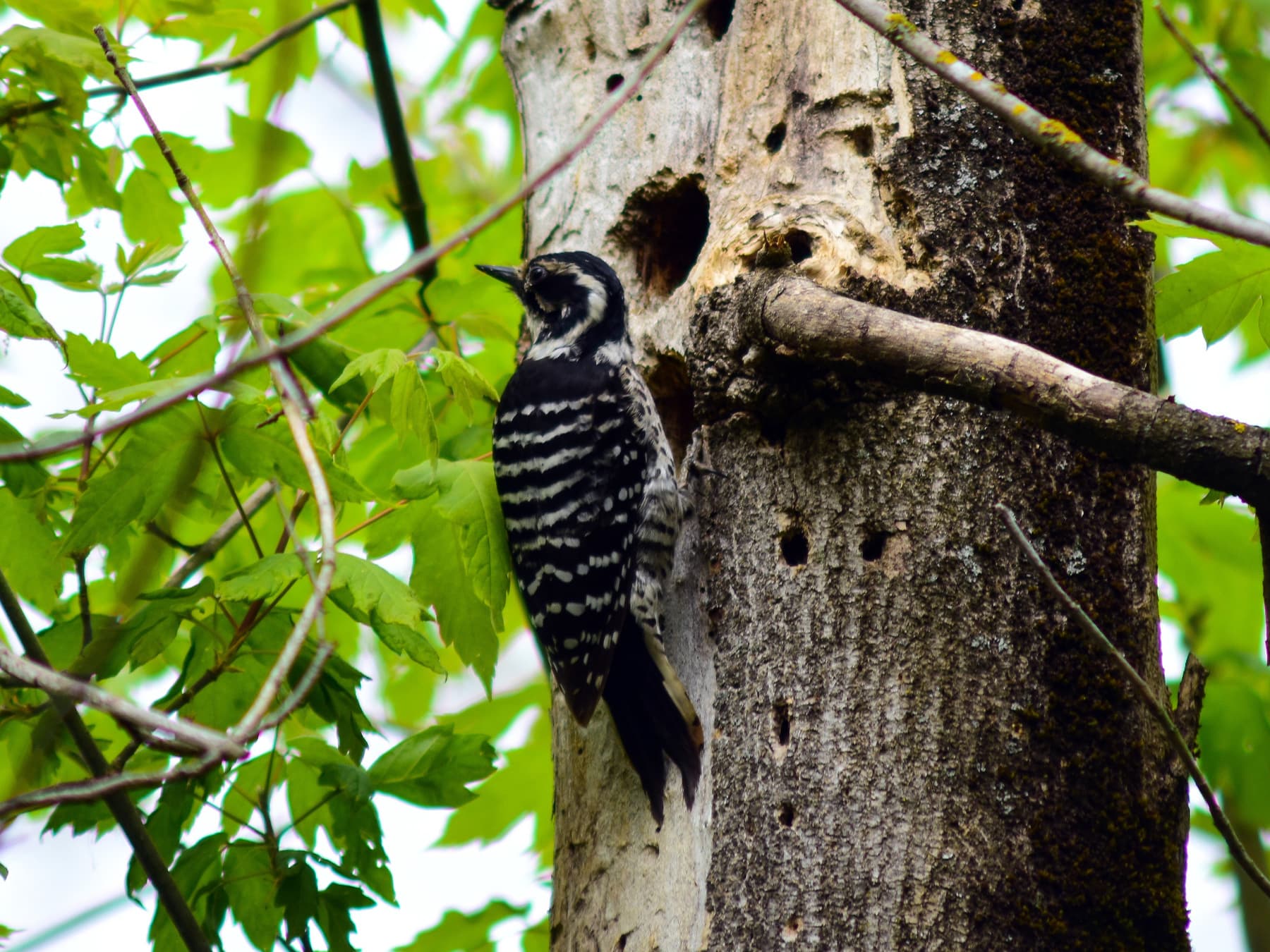
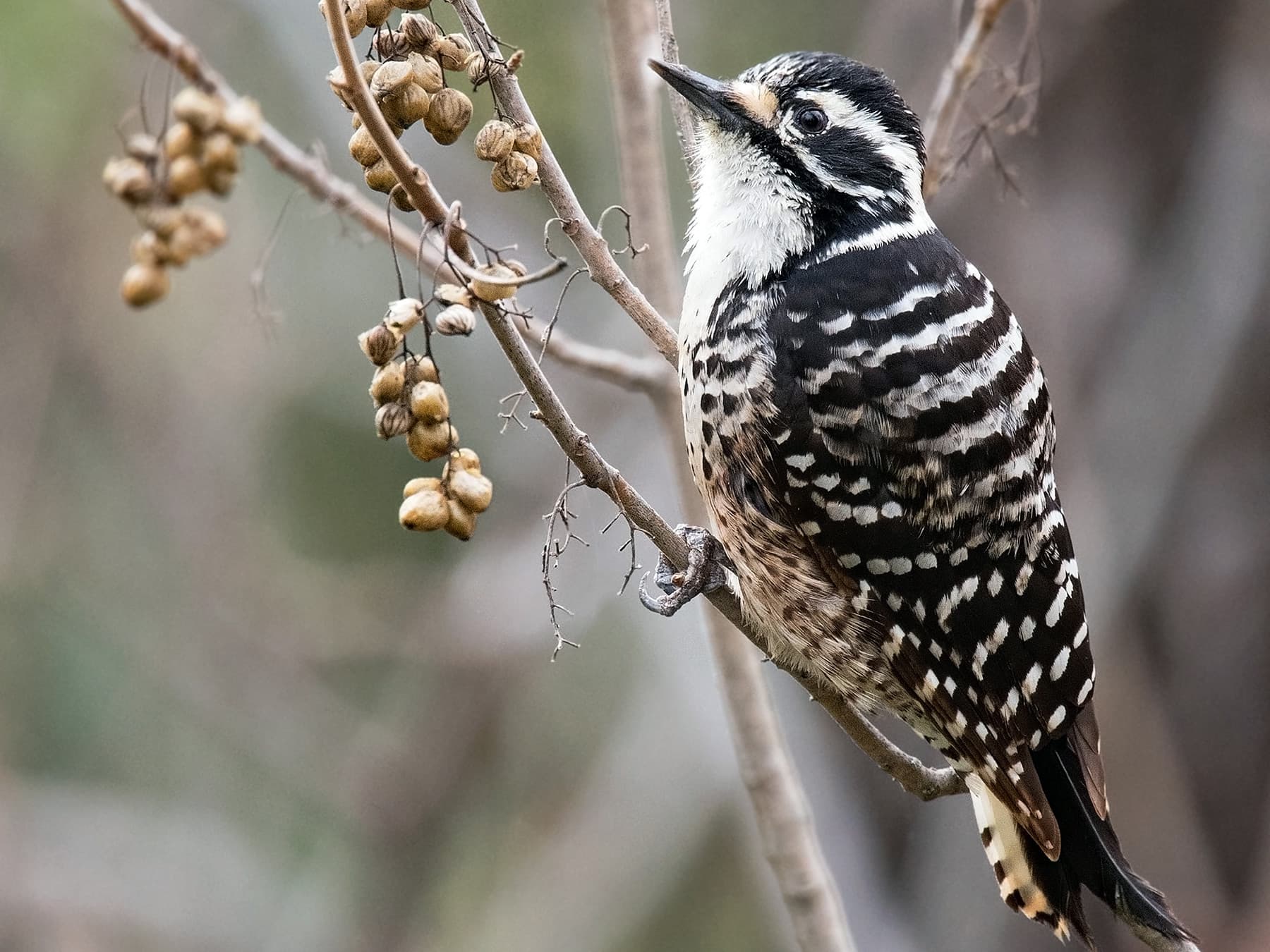
The back of the neck is solid black, above distinctive narrow black and white barring down the back. Wings are heavily barred with white markings and the tail has white outer feathers. The flanks are white, dotted with black spots, which are also present on the sides of the upper breast.
In adult Nuttall’s woodpeckers, the bill is gray and eyes are dark reddish, and feet and legs are a dark olive-gray.
Nuttall’s woodpeckers may be confused in the field with other similar species including the downy and ladder-backed woodpeckers, and occasionally where there are overlaps in range and both species are present, hybridization may occur.
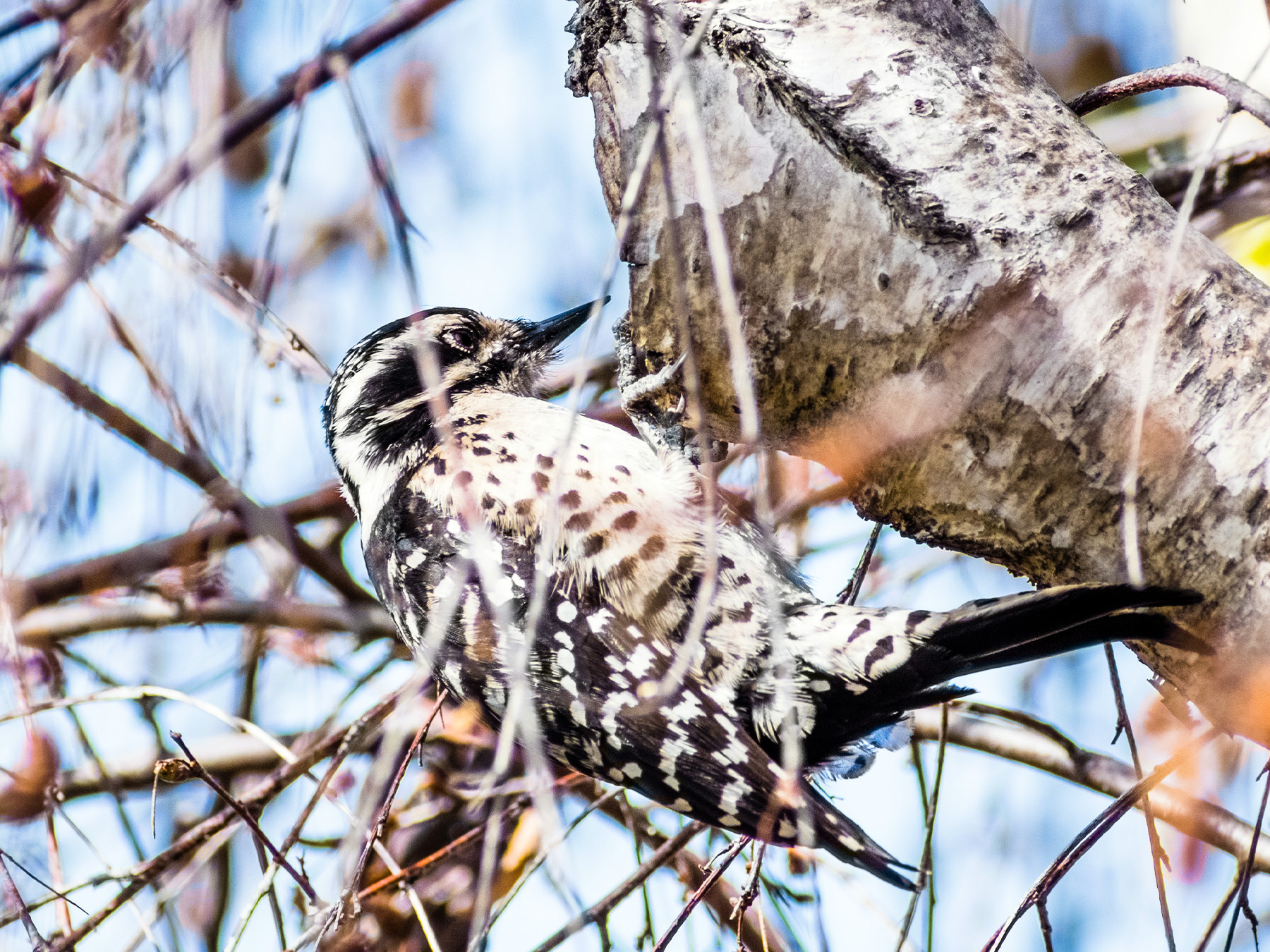
Overall very similar to males, female Nuttall’s woodpeckers lack any bright red coloring, with a solid black cap. A faint reddish wash may be visible on the heads of some females. Aside from this key distinguishing feature, females and males are alike, sharing the same black and white barred and speckled markings.
Juvenile males have a prominent reddish-orange patch on the forecrown, marked with white speckling. On reaching maturity, this patch has receded and is replaced by black and white speckling at the front, with red only present towards the rear of the head. Young birds have grayish underparts and the white markings on their back and wings are brighter than those of adult birds.
How big are Nuttall's Woodpeckers?
One of North America’s smaller woodpecker species, the Nuttall’s woodpecker is larger than a downy woodpecker. Compared to other familiar backyard birds, it would slot in between the smaller sparrow and the larger robin in terms of size. Both sexes are the same size, falling in the range below:
- Length: 16 cm to 18 cm (6.3 in to 7.1 in)
- Wingspan: 33 cm to 41 cm (13 in to 16 in)
- Weight: 30 g to 45 g (1.1 oz to 1.6 oz)
Its size
Adults- Length
- 16.5–18 cm
- Wingspan
- 33–36 cm
- Weight
- 30–45 g
Its song and calls
What sound does a Nuttall's Woodpecker make?
Contact calls that are regularly heard when announcing their arrival at a feeding site or active nest include a loud metallic rattle. A short, sharp ‘pik’ call is used in communication with a mate, as well as with other individual birds.
- Call0:00 / 0:04
Recorded in California, United States · September 2012
When and where to see it
How often the Nuttall's Woodpecker turns up in the United States through the year, from birdwatchers' records.
United States
Resident · all year · most records in December
Show as a table
| Month | United States |
|---|---|
| January | 0.14% (regular) |
| February | 0.14% (regular) |
| March | 0.12% (regular) |
| April | 0.094% (regular) |
| May | 0.064% (regular) |
| June | 0.097% (regular) |
| July | 0.12% (regular) |
| August | 0.13% (regular) |
| September | 0.15% (regular) |
| October | 0.14% (regular) |
| November | 0.14% (regular) |
| December | 0.16% (regular) |
Worldwide: recorded regularly in 2 countries
Countries where it was recorded in at least 3 of the 6 years 2019–2024. Linked countries have their own bird list.
North America (2)
Data: EOD – eBird Observation Dataset (Cornell Lab of Ornithology), accessed via GBIF.org, CC BY 4.0. Records from 2019–2024, aggregated and filtered by Birdfact. How these lists are made
What is the habitat of a Nuttall's Woodpecker?
Oak woodlands are the preferred habitat of Nuttall’s woodpeckers, particularly in locations near streams and rivers, although any land with tree cover may also be considered. Recently, the species has become more widespread in suburban areas and has adapted well to surviving in populated environments.
What is the range of a Nuttall's Woodpecker?
Nuttall’s woodpeckers are native to the westernmost regions of California, from near the northern border with Oregon, southwards through the western portion of the state, and extending just across the Mexican border into a tiny expanse of northwestern Baja California.
Where do Nuttall's Woodpeckers live?
Apart from an isolated population in the extreme northwestern corner of the Mexican state of Baja California, all Nuttall’s woodpeckers live in the US state of California. Regions with the highest recorded figures of the species include the Coastal Mountains region and El Dorado, Monterey, and Sutter counties.
How rare are Nuttall's Woodpeckers?
Within their western Californian range, Nuttall’s woodpeckers are not uncommon, although sightings outside of this region are practically non-existent. Some overlap does occur with the range of the very similar ladder-backed woodpecker, which is far more numerous. The entire population of Nuttall’s woodpeckers is estimated at around 650,000.
Where can you see Nuttall's Woodpeckers in the US?
California is the only US location in which Nuttall’s woodpeckers are established, with only the rarest accounts of individual vagrant birds in other states. Within California, populations are concentrated in the west of the state, with the woodlands of the Coastal Range home to the largest share.
Migration
Do Nuttall's Woodpeckers migrate?
Nuttall’s woodpeckers are non-migratory and remain in their native territories all year round. They rarely stray outside of western California, although reports of vagrant individuals in Oregon and Nevada have been recorded on rare occasions.
Are Nuttall's Woodpeckers native to the US?
Almost the entire global population of Nuttall’s woodpeckers are resident in the US state of California, where they are year-round residents. A small number are present in the area immediately across the Mexican border, in northwestern Baja California.
Tips for seeing it
- Look for Nuttall's Woodpeckers in oak woodlands and riparian areas
- Listen for their sharp 'pik' call or rapid drumming on trees
- Observe their distinctive black and white barred pattern as they move along tree trunks
- Check bird feeders, especially those offering suet
What it eats
What do Nuttall's Woodpeckers eat?
The chief element of a Nuttall’s woodpecker’s diet is invertebrates, especially beetles (wood borers and click beetles), and their larvae, with caterpillars, ants, and bugs also important. Insects are caught by probing and tapping into the bark, as well as gleaned from leaves and the surface of the trunk and branches.
Nuts, seeds, fruits, and berries – blackberries, elderberries, and the seeds of poison oaks – are also eaten, particularly in winter months. Despite a preference for living in oak woodlands, acorns are relatively unimportant in their diet.
What do Nuttall's Woodpecker chicks eat?
The initial diet of Nuttall’s woodpecker hatchlings comprises larvae and caterpillars, with insects introduced as they mature. Parental feeding continues for around 2 weeks after young Nuttall’s woodpeckers fledge.
Nesting and breeding
Where do Nuttall's Woodpeckers nest?
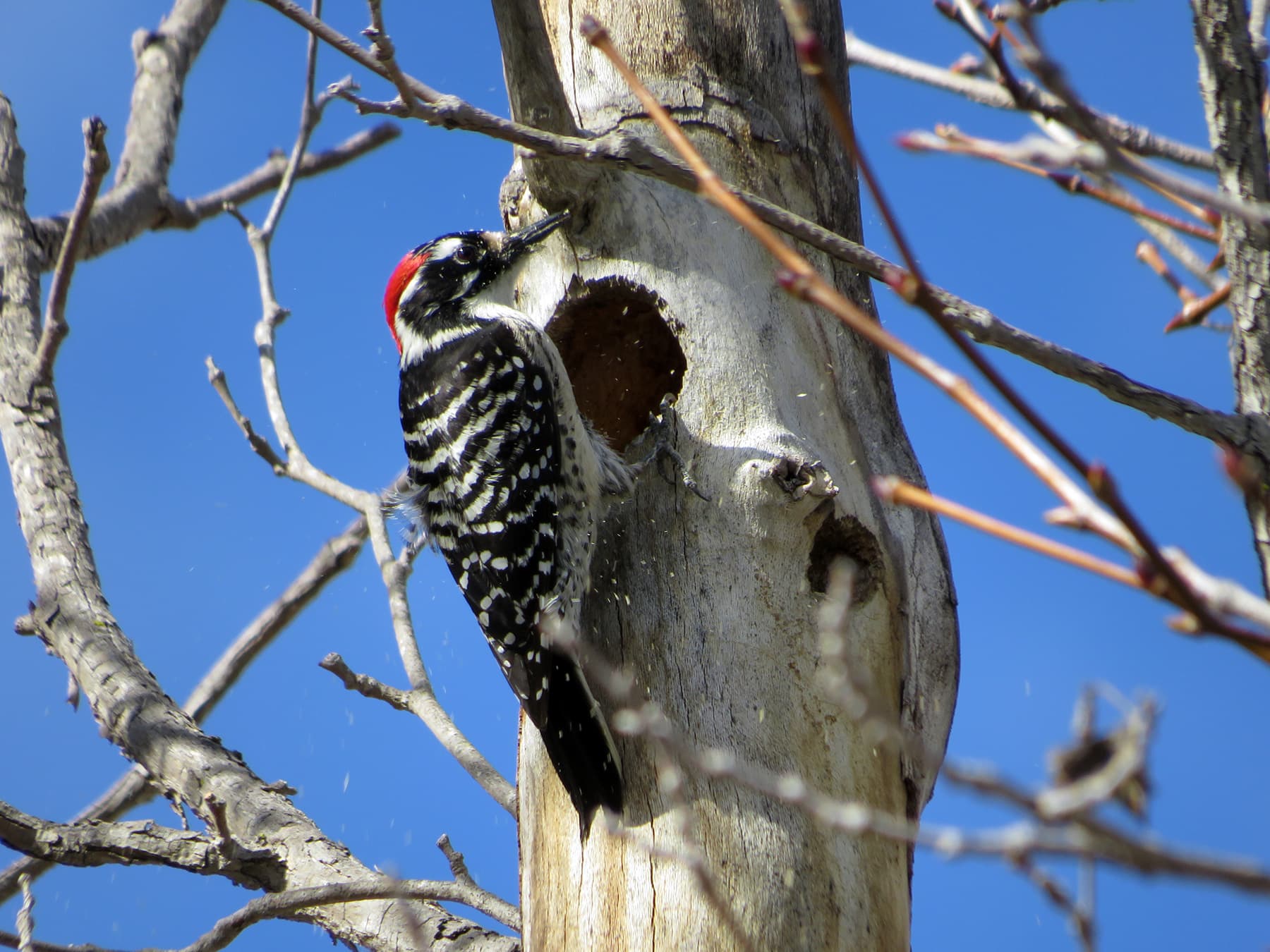
Nuttall’s woodpeckers nest in cavities they excavate themselves in soft wood, such as dead or decaying tree trunks, around 5 m (16 ft) above ground level. Males do the majority of the chiseling work with minimal assistance from the female.
When do Nuttall's Woodpeckers nest?
Pairs form between January and March, and work begins on the earliest nest cavity excavations in late March. Eggs are laid from late March onwards, although April and May are the peak laying months. Both parents share incubation, which lasts for 14 days, with overnight brooding always by the male.
What do Nuttall's Woodpecker eggs look like?
A typical clutch laid by a Nuttall’s woodpecker consists of between 2 and 6 eggs, with 4 to 5 eggs most common. Eggs are creamy white in color, with no patterning on the shell, and measure 22 mm by 17 mm (0.9 in by 0.7 in).
Do Nuttall's Woodpeckers mate for life?
Nuttall’s woodpeckers are monogamous during the breeding season, pairing up early in the year. Once young have fledged and become independent, mates are no longer strongly bonded but remain loosely associated until the following breeding season.
It’s unknown how many pairs reunite the following year, although as no winter movement to alternative territories takes place, it is not especially unusual for a former pair to breed together again in the future.
Behaviour
Are Nuttall's Woodpeckers aggressive?
Drumming contests between rival Nuttall’s woodpeckers have been known to quickly escalate into physical interactions, particularly evident between males from territories alongside each other. Confrontations can include aggressive posturing, wing spreading, and crest raising, leading to chasing and attacking.
Where do Nuttall's Woodpeckers sleep at night?
While nesting, males remain in the nest cavity overnight, initially while incubating the eggs and for the first 10 days after hatchlings emerge. Females roost in cavities away from the nest site. Once breeding is complete, males also roost singly in cavities.
Lifespan and predators
How long do Nuttall's Woodpeckers live?
Nuttall’s woodpeckers breed for the first time at the age of one. On average they are thought to live for between four and seven years, with the oldest recorded individual reaching 8 years 9 months.
What are the predators of Nuttall's Woodpeckers?
Little conclusive evidence exists about the kind of predators that are the biggest threat to Nuttall’s woodpeckers. Snakes are believed to raid their nest cavities for unhatched eggs.
Are Nuttall's Woodpeckers protected?
The Migratory Bird Treaty Act of 1918 safeguards Nuttall’s woodpeckers against a number of potentially damaging and harmful human activities, including being killed, injured, and captured for sale. The Act also protects their eggs, nest site, and young from being destroyed.
Are Nuttall's Woodpeckers endangered?
Rated a species of least concern, there are no immediate threats to the future survival or stability of the global population of Nuttall’s woodpeckers.
Conservation
While Nuttall's Woodpecker is currently listed as Least Concern, it faces threats from habitat loss due to urban development and agricultural expansion.
Conservation efforts focus on preserving oak woodlands and riparian corridors in California, which are crucial for this species' survival.
More photos
5 photos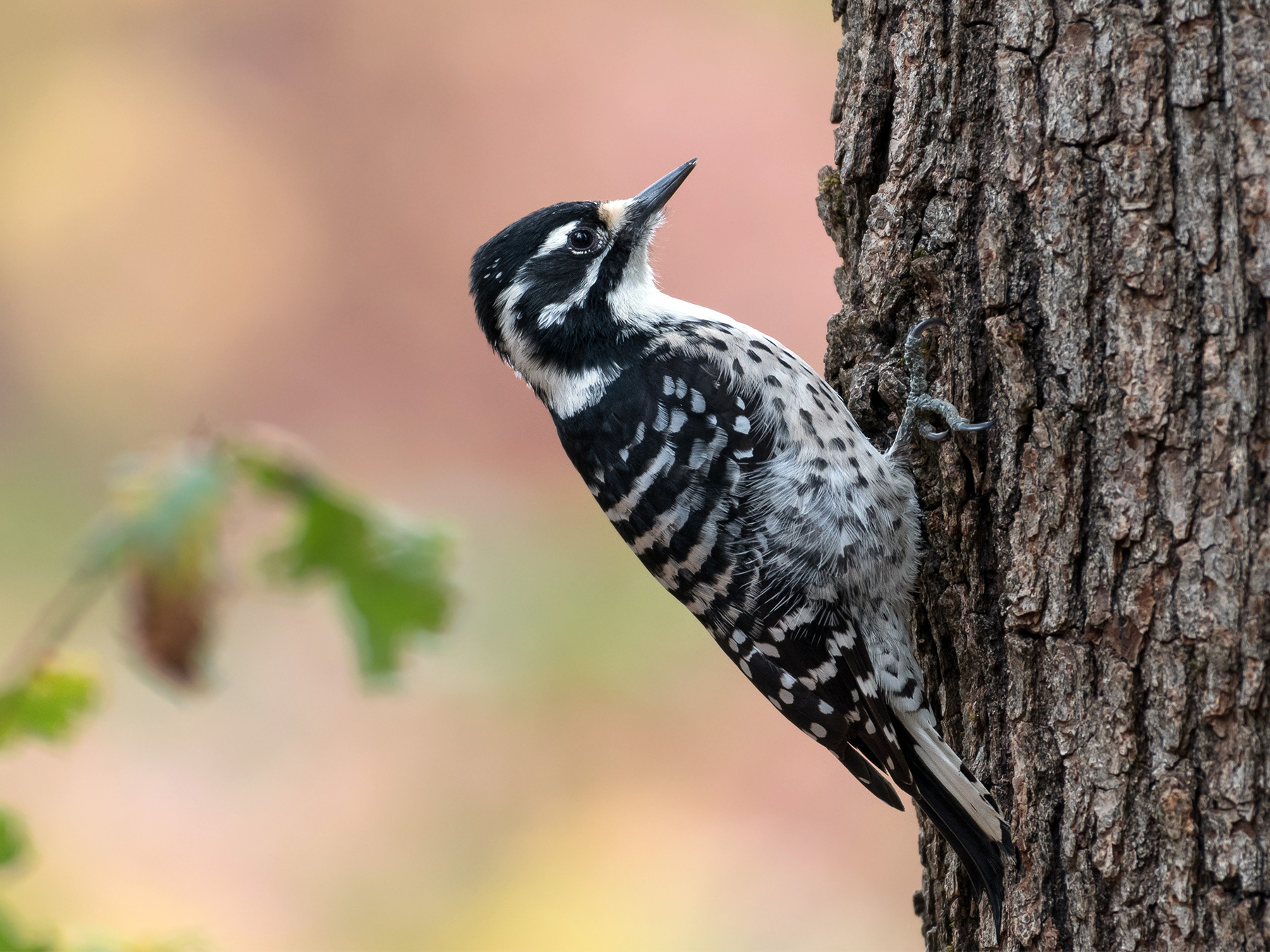
Quick facts
- Length
- 16.5–18 cm
- Wingspan
- 33–36 cm
- Weight
- 30–45 g
- Lifespan
- 4–7 years · oldest recorded 7 years
- Family
- Woodpeckers
- Migration
- Resident
- Global status (IUCN)
- Least Concern
- World population
- 850,000 mature individuals
- Population trend
- Increasing
- Also called
- Nuttall Woodpecker
- Scientific name
- Dryobates nuttallii
Questions
5What attracts Nuttall's Woodpeckers?
Mature oak trees are a key factor in attracting Nuttall’s woodpeckers, as the species does well in environments where this type of tree is dominant. Hanging suet feeders as well as peanuts supplied on tray feeders may help to entice a hungry Nuttall’s woodpecker to your yard as winter approaches.
What trees do Nuttall's Woodpeckers prefer?
Although they do not depend on acorns as a major element of their diet, Nuttall’s woodpeckers thrive in oak woodlands. Nests are built in soft decaying wood, with other common tree choices including cottonwood, willow, and sycamore.
Do Nuttall's Woodpeckers harm trees?
Nuttall’s woodpeckers drill out a nesting cavity in the soft wood of a tree that is already dead or dying, so are usually not the instigator of any damage. They only use a cavity once, so their handiwork benefits many other secondary cavity-nesting species that do not have the ability to excavate their own nests.
Wood-boring beetles are one of the primary prey of Nuttall’s woodpeckers. With the presence of the woodpeckers, insect populations are kept controlled and the ecosystem remains balanced.
Do Nuttall's Woodpeckers go to bird feeders?
Despite being naturally at home in woodland settings, Nuttall’s woodpeckers have become more widespread in suburban areas in recent years and are no strangers to backyard feeders. When visiting gardens, they are particularly partial to suet enriched with dried insects.
What is the difference between a downy woodpecker and a Nuttall's woodpecker?
From a distance, downy woodpeckers and Nuttall’s woodpeckers look incredibly similar, but on closer inspection, there are some notable differences. The bill of a downy woodpecker is much shorter. Nuttall’s woodpeckers have a more extensive red crown; in downy woodpeckers, red is limited to a small patch on the rear of the head.
Black-and-white barring is an identifying feature on the back of a Nuttall’s woodpecker, ending in a solid black patch on the nape. In downy woodpeckers, this is replaced by a white streak in the center of the back, with no prominent barring.
Sources
4- 1BBL - Longevity Records of North American Birds
- 2BirdLife International. 2016. Dryobates nuttallii. The IUCN Red List of Threatened Species 2016: e.T22681149A92894366. Source (opens in a new tab)
- 3Breeding Bird Survey and/or Christmas Bird Count: Butcher a. (2007)
- 4Partners in Flight (2022) Source (opens in a new tab)

Checked by
Nathan Cope, founder and editor
Nathan founded Birdfact and leads its writers and contributors in the UK, the US and Canada. He has watched and studied birds for more than ten years, and checks every article and species guide before it’s published.