


Hoopoe
Eurasian Hoopoe, Common Hoopoe · Upupa epops
By the Birdfact teamChecked by Nathan Cope
On this page15 sections
How to recognise it
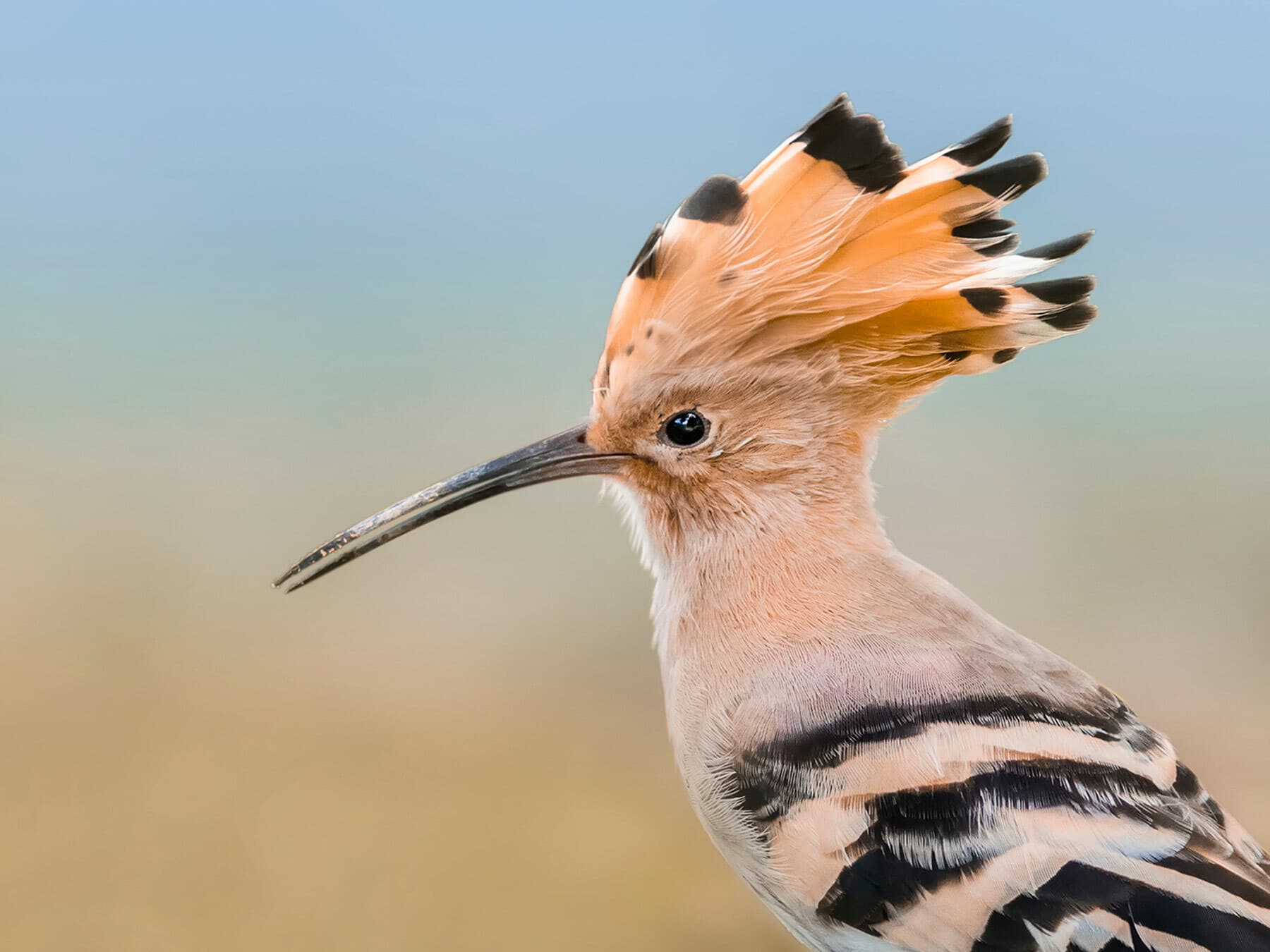
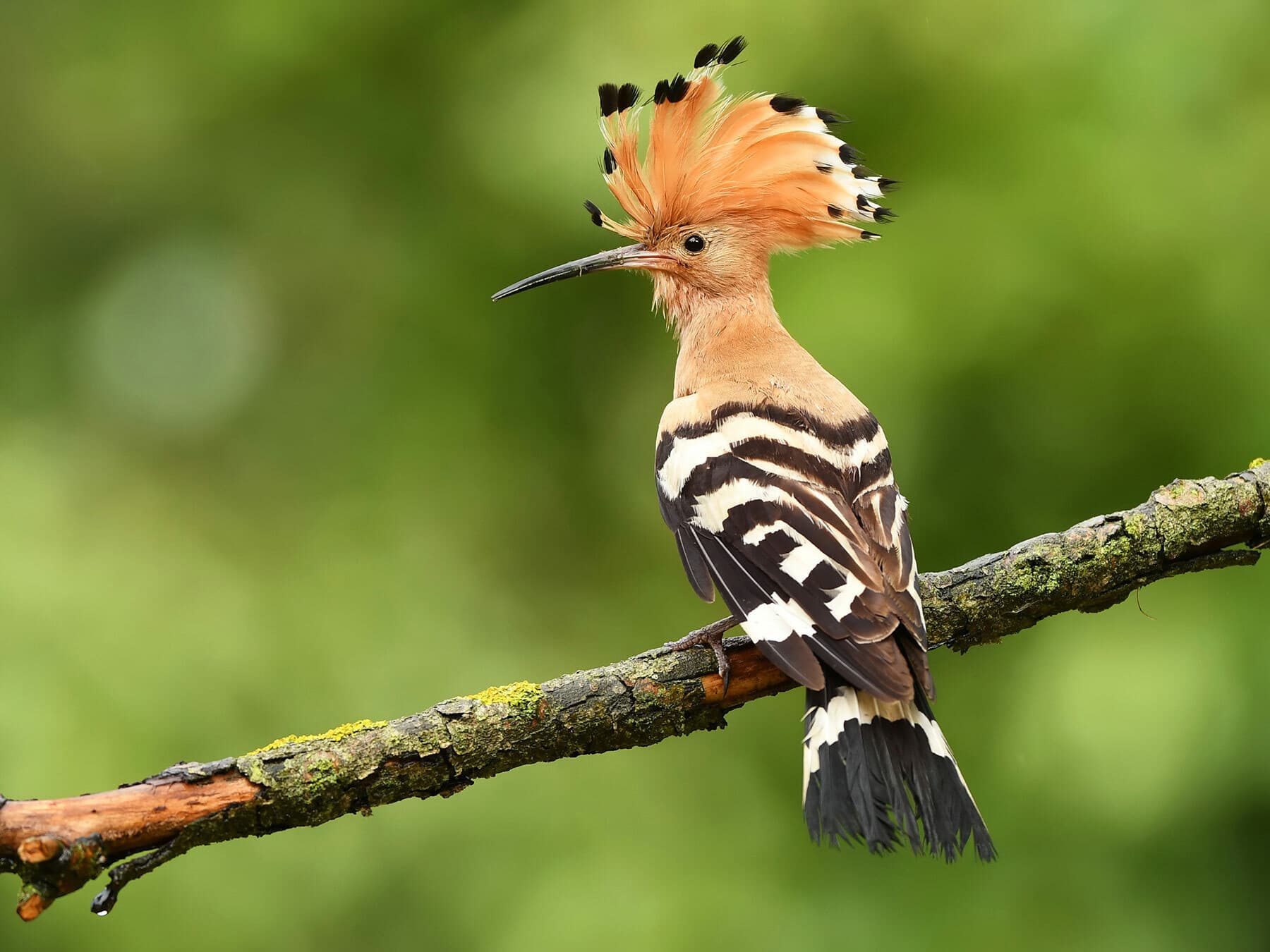
The Hoopoe is a striking bird with a pinkish-brown body, black and white striped wings, and a distinctive fan-like crest. Its long, curved bill is perfect for probing the ground for insects. The crest usually lies flat but raises when the bird is excited or alarmed.
Both sexes look similar, with juveniles appearing duller. The Hoopoe's plumage remains consistent year-round, with no seasonal changes.
Its size
Adults- Length
- 25–32 cm
- Wingspan
- 44–48 cm
- Weight
- 46–89 g
Its song and calls
Similar to the cuckoo the hoopoe gets its name from its call. A soft, low resonant poo – poo – poo or hoo – hoo – hoo sound repeated often.
- Song0:00 / 1:26
Recorded in Normandie, France · June 2024
- Call0:00 / 0:07
When and where to see it
OctoberPeak season
Most recorded in October
- 1. Swansea0.84%
- 2. Warwickshire0.13%
- 3. West Yorkshire0.11%
- 4. Wexfordunder 0.1%
- 5. Aberdeenunder 0.1%
Each dot is a county, state or province: the bigger and darker, the larger the bird’s share of that place’s bird records that month. Grey dots: no regular records. The ringed point is the centre of the bird’s records this month; the arrow shows how it moved since last month, and the dashed loop its path through the year. “Arrivals” colours places where it becomes regular this month (orange) or is in its last regular month (grey). GBIF eBird Observation Dataset, 2019–2024. Map data: Natural Earth, US Census Bureau; place centres © OpenStreetMap contributors.
In your area
See when the Hoopoe is recorded in your county, state or province.
How often the Hoopoe turns up in the UK and Ireland through the year, from birdwatchers' records.
United Kingdom
Passage migrant · regularly Feb–Nov · most records in October
Ireland
Scarce · most records in October
Show as a table
| Month | United Kingdom | Ireland |
|---|---|---|
| January | <0.001% | – |
| February | 0.001% (regular) | – |
| March | <0.001% (regular) | <0.001% |
| April | 0.005% (regular) | 0.004% |
| May | 0.005% (regular) | 0.001% |
| June | 0.002% (regular) | – |
| July | – | – |
| August | <0.001% (regular) | 0.002% |
| September | 0.005% (regular) | 0.008% |
| October | 0.012% (regular) | 0.008% |
| November | 0.002% (regular) | 0.002% |
| December | <0.001% | – |
Recorded regularly in
Worldwide: recorded regularly in 114 countries
Countries where it was recorded in at least 3 of the 6 years 2019–2024. Linked countries have their own bird list.
Europe (39)
- Albania
- Austria
- Belarus
- Belgium
- Bosnia & Herzegovina
- Bulgaria
- Croatia
- Czechia
- Denmark
- Estonia
- Finland
- France
- Germany
- Gibraltar
- Greece
- Hungary
- Ireland
- Italy
- Kosovo
- Latvia
- Lithuania
- Malta
- Moldova
- Montenegro
- Netherlands
- North Macedonia
- Norway
- Poland
- Portugal
- Romania
- Russia
- Serbia
- Slovakia
- Slovenia
- Spain
- Sweden
- Switzerland
- Ukraine
- United Kingdom
Africa (34)
Asia (41)
- Afghanistan
- Armenia
- Azerbaijan
- Bahrain
- Bangladesh
- Bhutan
- Cambodia
- China
- Cyprus
- Georgia
- Hong Kong SAR China
- India
- Iran
- Iraq
- Israel
- Japan
- Jordan
- Kazakhstan
- Kuwait
- Kyrgyzstan
- Laos
- Lebanon
- Macao SAR China
- Malaysia
- Mongolia
- Myanmar (Burma)
- Nepal
- Oman
- Pakistan
- Palestinian Territories
- Qatar
- Saudi Arabia
- South Korea
- Sri Lanka
- Taiwan
- Tajikistan
- Thailand
- Turkey
- United Arab Emirates
- Uzbekistan
- Vietnam
Data: EOD – eBird Observation Dataset (Cornell Lab of Ornithology), accessed via GBIF.org, CC BY 4.0. Records from 2019–2024, aggregated and filtered by Birdfact. How these lists are made
Although hoopoes rarely breed in the UK up to 100 birds may arrive in April and May during their migration from sub-Saharan Africa. They are normally only found along the south coast of England as single birds alone, resting and feeding before recommencing their long journey to their breeding grounds in the warm climes of southern Europe. If you are lucky you may also see a hoopoe on its return to Africa during September to October. Spain has by far the largest European population of hoopoes.
Signs and Spotting tips
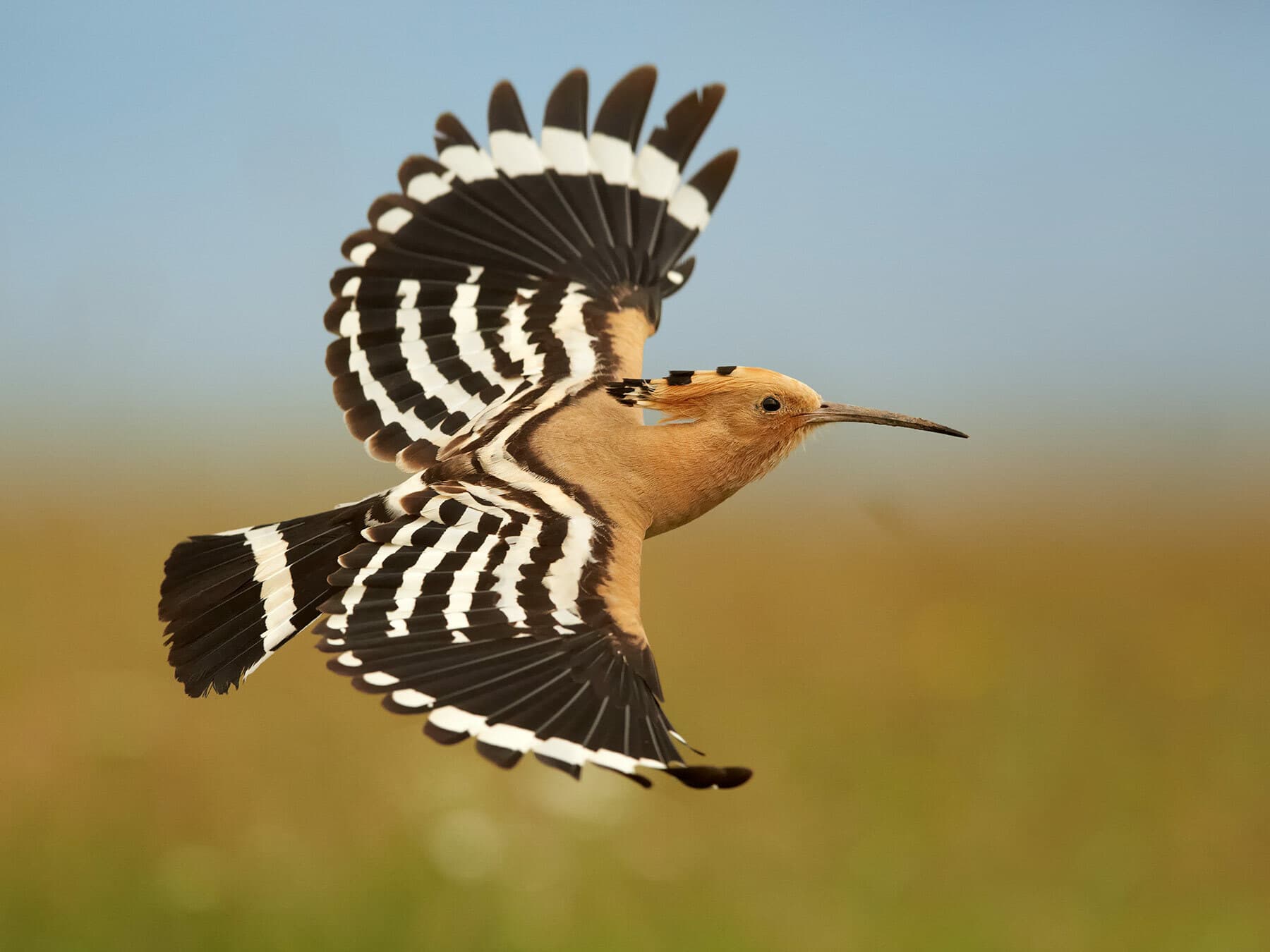
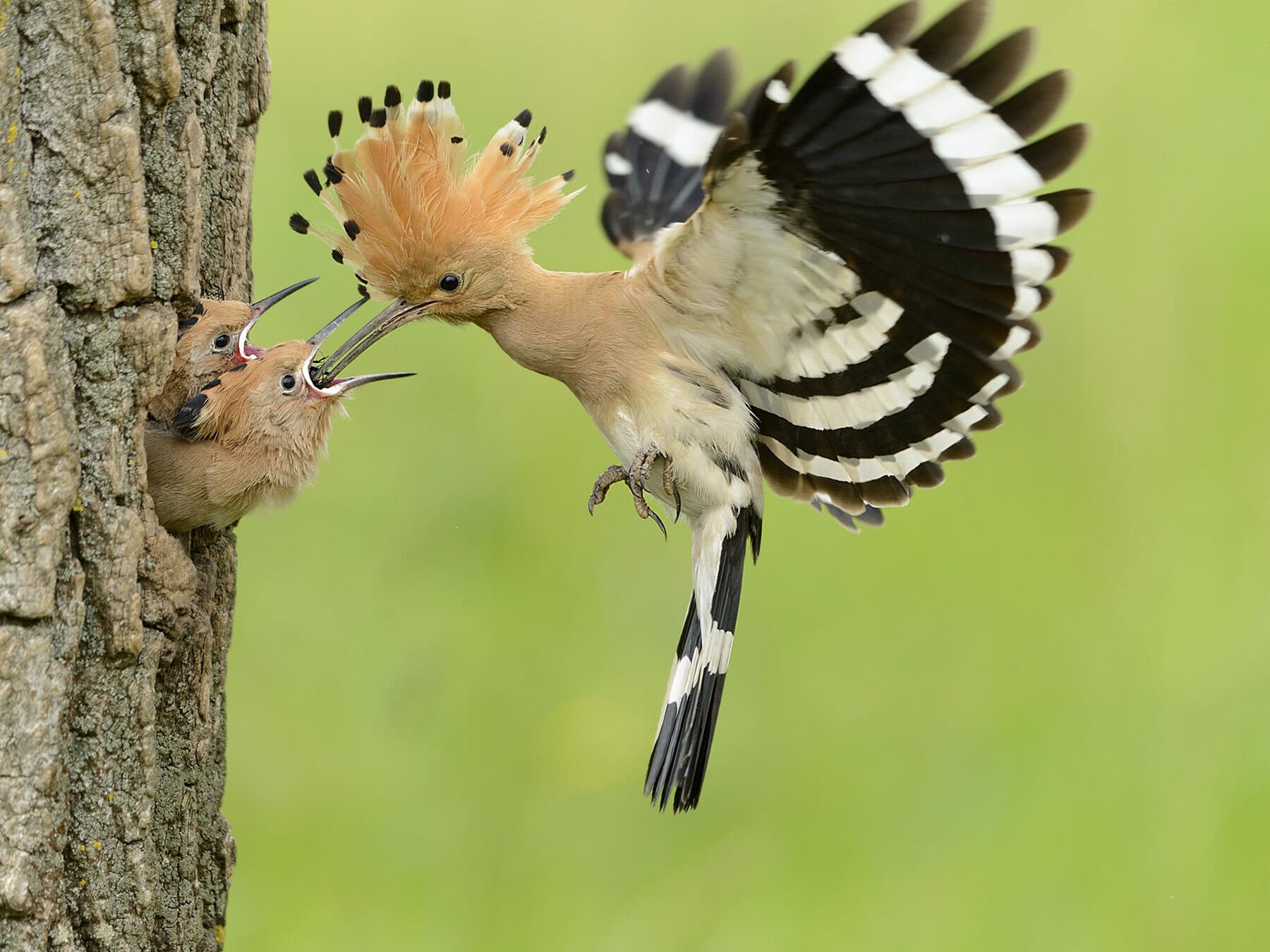
Difficult to spot whilst ground feeding around hedges and tall grasses they can be spectacular in flight particularly when the late spring sunshine catches the bands of startling white feathers surrounded by black. Often when landing hoopoes will momentarily raise their fan-shaped crest. When nesting they prefer crevices or holes in vertical cliffs, walls or trees. Hoopoes can often be found laying on the ground sunbathing!
What it eats
The hoopoe is predominantly a ground feeder foraging for insects, spiders, grubs, seeds and even small frogs. Occasionally it will also feed on berries.
For a more in-depth guide to the diet of a hoopoe, check out this article.
Nesting and breeding
You are very unlikely to find hoopoes breeding within the UK; it has been reported that as few as ten pairs have bred on our shores over the past 200 years.
Behaviour
Hoopoes are often seen walking or running on the ground, using their long bills to probe for food. They are generally solitary birds but may form small groups outside the breeding season. When threatened, Hoopoes can produce a foul-smelling secretion as a defence mechanism.
Lifespan and predators
The life span of the hoopoe varies from between 5 to 10 years.
Conservation
While the Hoopoe is listed as Least Concern globally, it faces localised threats from habitat loss and pesticide use. In some European countries, conservation efforts focus on providing nesting boxes and preserving traditional farmland habitats to support Hoopoe populations.
What does a Hoopoe look like?
A hoopoe has a pinkish-brown/beige body with black and white striped wings which are broad and rounded in flight. It has a pinky-brown crest on its head with black tips and whilst normally laid flat, is very prominent when displayed fully erect. It has a broad white band on the outer part of the wing with black wing tips and a small white rump. Its short dark legs and slightly curved bill are ideal for foraging for grubs and other food directly off the ground. Whilst surprisingly difficult to spot whilst on the ground, in flight it transforms into an exotic bird with dazzling wing patterns with its wings closing only halfway and in a wave like pattern similar to a butterfly. Juveniles tend to be duller in colour.
Similar birds
Often mistaken for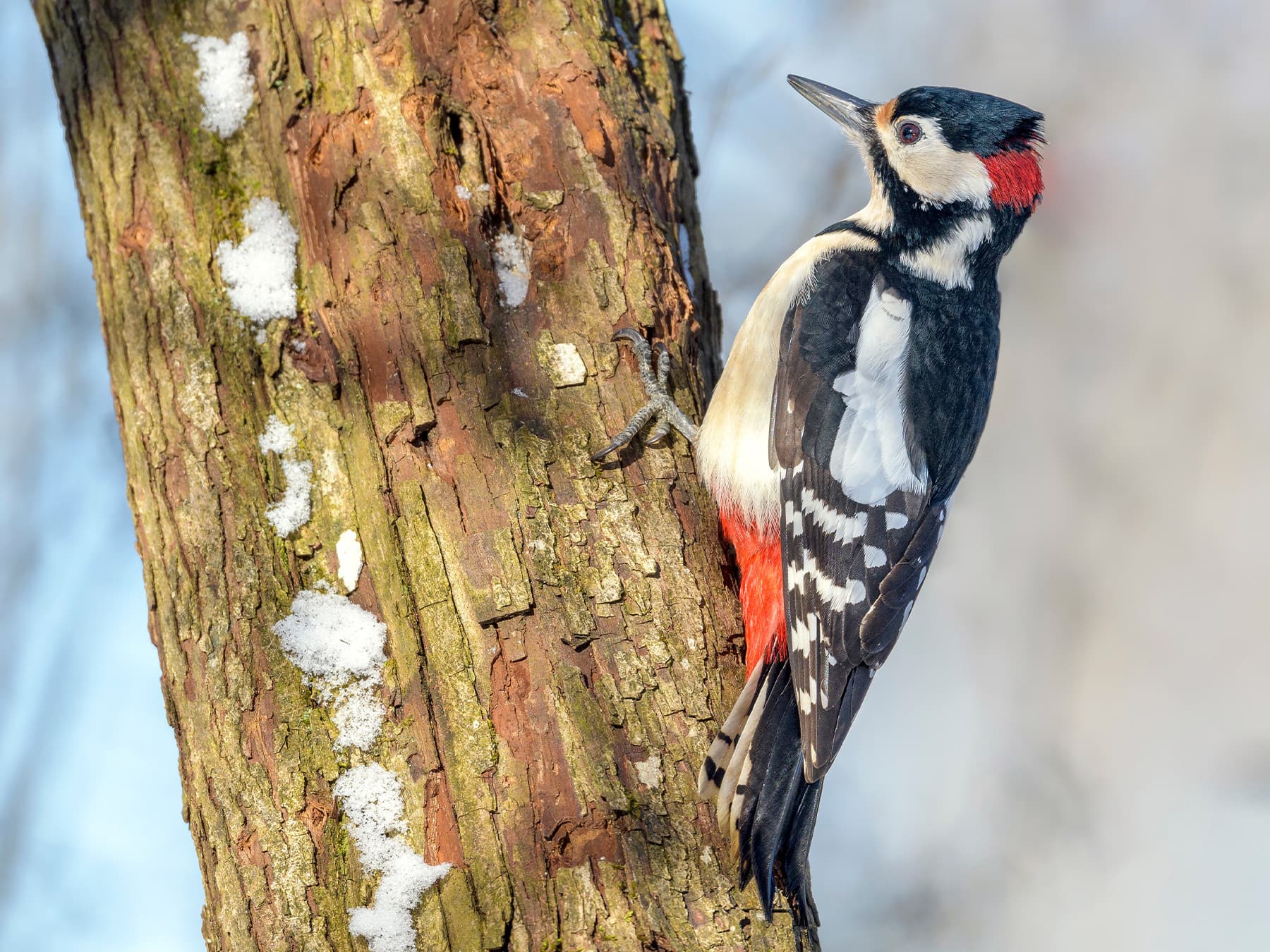
More photos
2 photos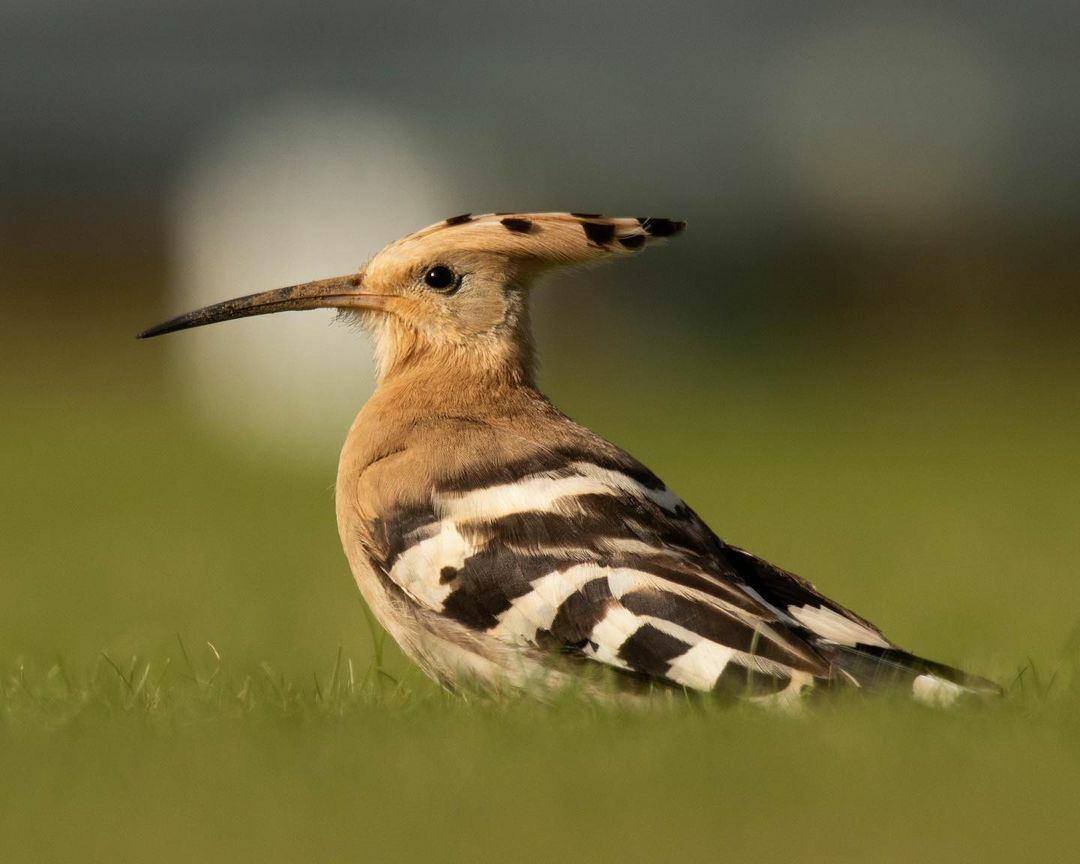
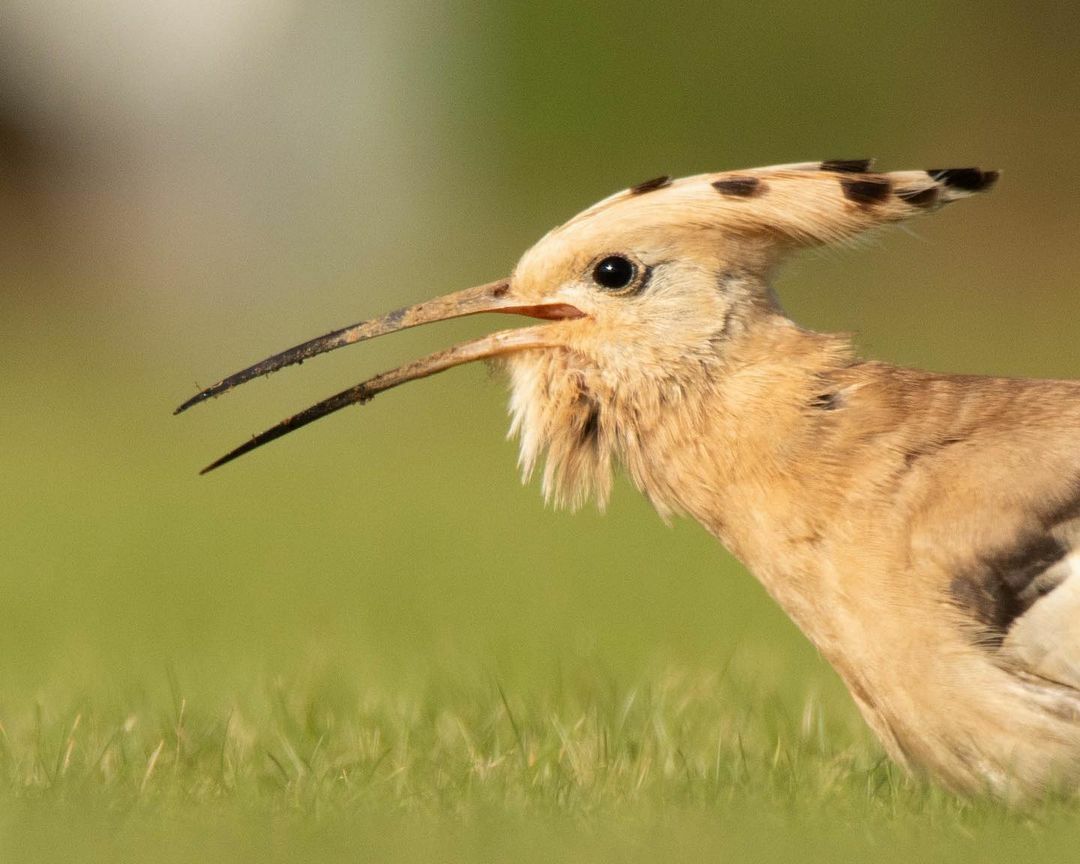
Hoopoe guides
1 guidesQuick facts
- Length
- 25–32 cm
- Wingspan
- 44–48 cm
- Weight
- 46–89 g
- Lifespan
- 10–15 years
- Family
- Hoopoes
- Migration
- Partial migrant
- Global status (IUCN)
- Least Concern
- World population
- 2,600,000 - 5,530,000 mature individuals
- Population trend
- Decreasing
- Also called
- Eurasian Hoopoe, Common Hoopoe
- Scientific name
- Upupa epops
Sources
3- 1BirdLife International. 2020. Upupa epops. The IUCN Red List of Threatened Species 2020: e.T22682655A181836360. Source (opens in a new tab)
- 2del Hoyo et al. (2001)
- 3BirdLife International. 2020. Upupa epops. The IUCN Red List of Threatened Species 2020: e.T22682655A181836360. Source (opens in a new tab)

Checked by
Nathan Cope, founder and editor
Nathan founded Birdfact and leads its writers and contributors in the UK, the US and Canada. He has watched and studied birds for more than ten years, and checks every article and species guide before it’s published.