


Griffon Vulture
Eurasian Griffon · Gyps fulvus
By the Birdfact teamChecked by Nathan Cope
On this page15 sections
How to recognise it
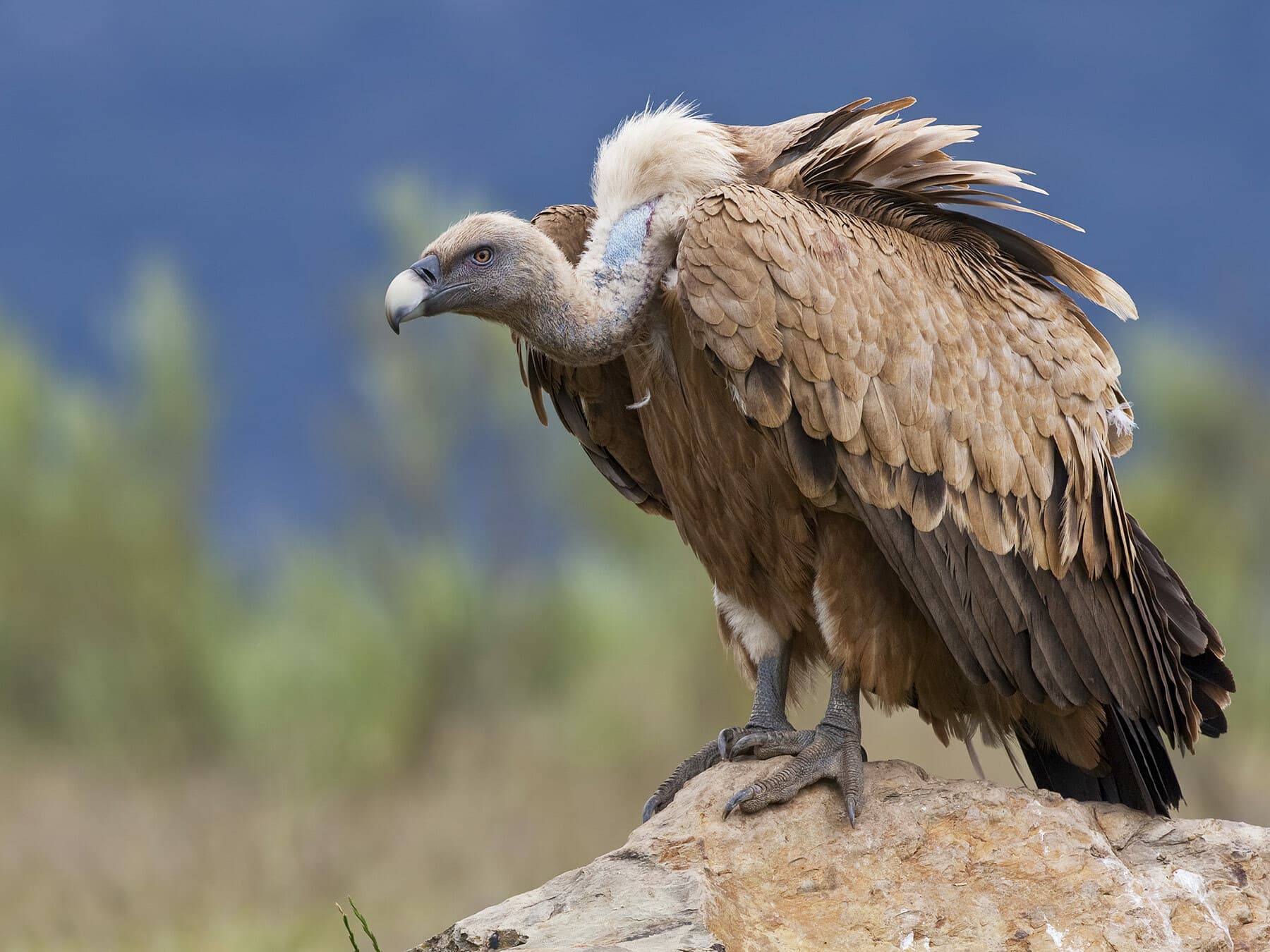
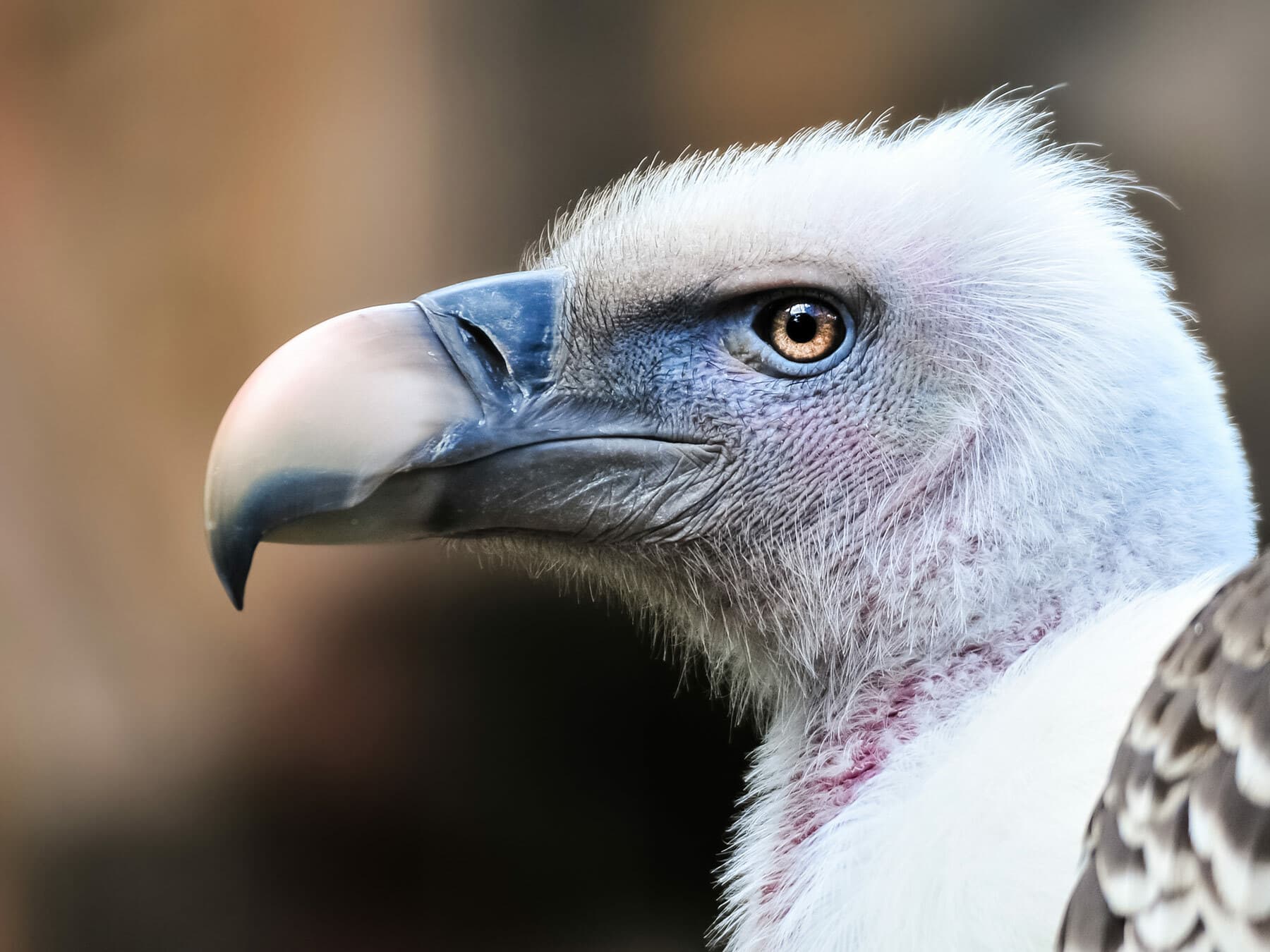
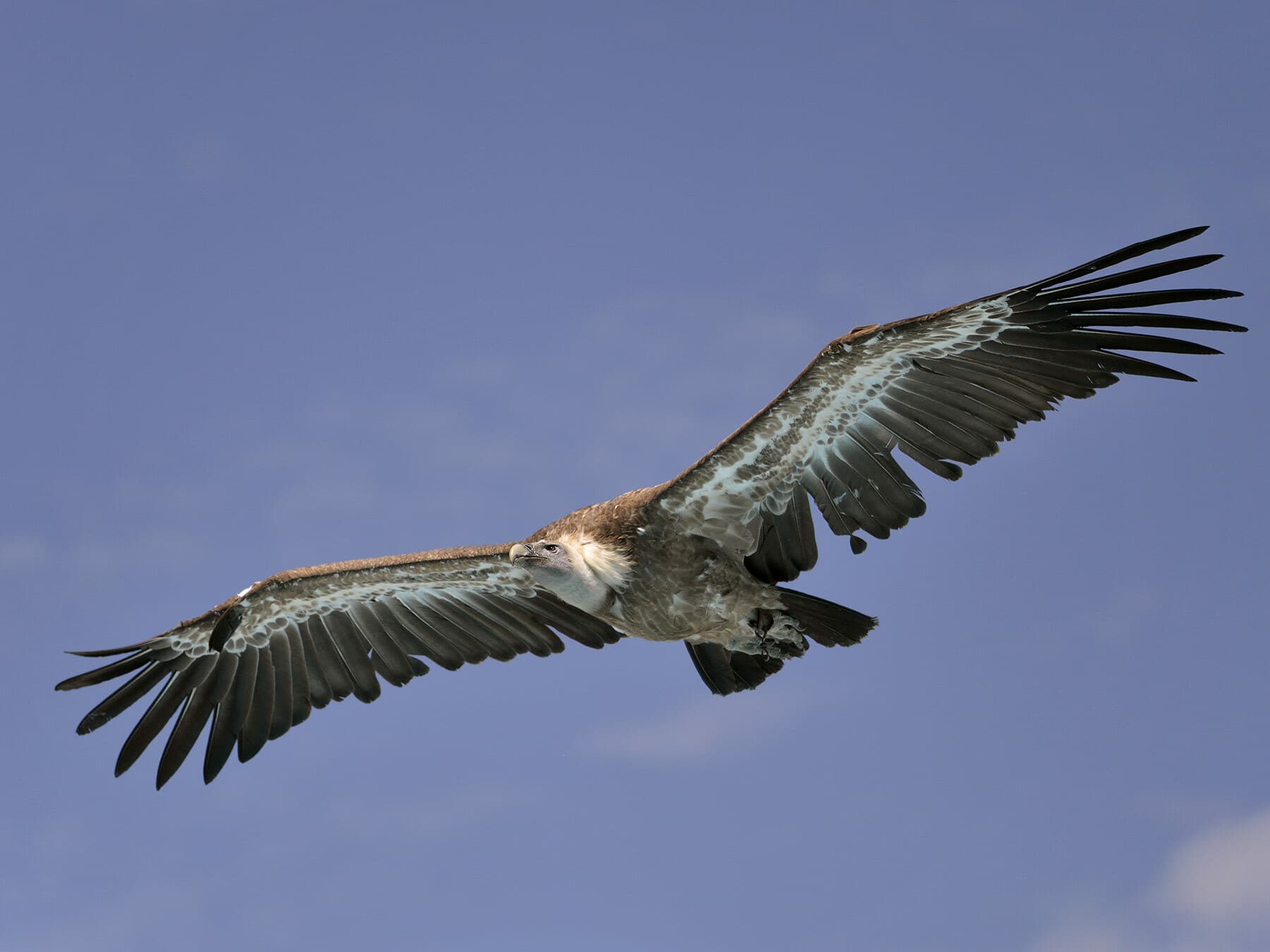
The Griffon Vulture is a massive bird of prey with a pale buff-brown body and contrasting dark flight feathers. Its broad wings and short, square tail are adaptations for soaring. The bird's small, bare head and long neck are covered in white down, while a distinctive ruff of feathers encircles the base of the neck, like a collar.
Juveniles have darker plumage and a more pronounced ruff. There is little difference between males and females, though females are slightly larger. The bird's pale colouration may darken with age.
Its size
Adults- Length
- 93–122 cm
- Wingspan
- 230–280 cm
- Weight
- 6000–11300 g
Its song and calls
Noisy when feeding or close to its nest, issuing loud hisses and cackles, often in threat, the griffon is otherwise a fairly quiet bird.
- Recording0:00 / 1:06
When and where to see it
The Griffon Vulture is not recorded regularly in the UK, Ireland, the United States or Canada.
Worldwide: recorded regularly in 46 countries
Countries where it was recorded in at least 3 of the 6 years 2019–2024. Linked countries have their own bird list.
Europe (20)
- Andorra
- Austria
- Belgium
- Bulgaria
- Croatia
- Denmark
- France
- Germany
- Gibraltar
- Greece
- Italy
- Netherlands
- North Macedonia
- Portugal
- Russia
- Serbia
- Slovenia
- Spain
- Switzerland
- Ukraine
Asia (21)
- Armenia
- Azerbaijan
- Cyprus
- Georgia
- India
- Iran
- Iraq
- Israel
- Jordan
- Kazakhstan
- Kuwait
- Kyrgyzstan
- Lebanon
- Nepal
- Oman
- Pakistan
- Palestinian Territories
- Saudi Arabia
- Tajikistan
- Turkey
- Uzbekistan
Data: EOD – eBird Observation Dataset (Cornell Lab of Ornithology), accessed via GBIF.org, CC BY 4.0. Records from 2019–2024, aggregated and filtered by Birdfact. How these lists are made
The highest density of griffons can be found in countries bordering the Mediterranean, particularly in Spain and the neighbouring Mallorca and Menorca. They can also be seen in north and sub-Saharan Africa and throughout Asia, including the Middle East. Juvenile birds in particular are migratory with many overwintering in Africa.
Signs and Spotting tips
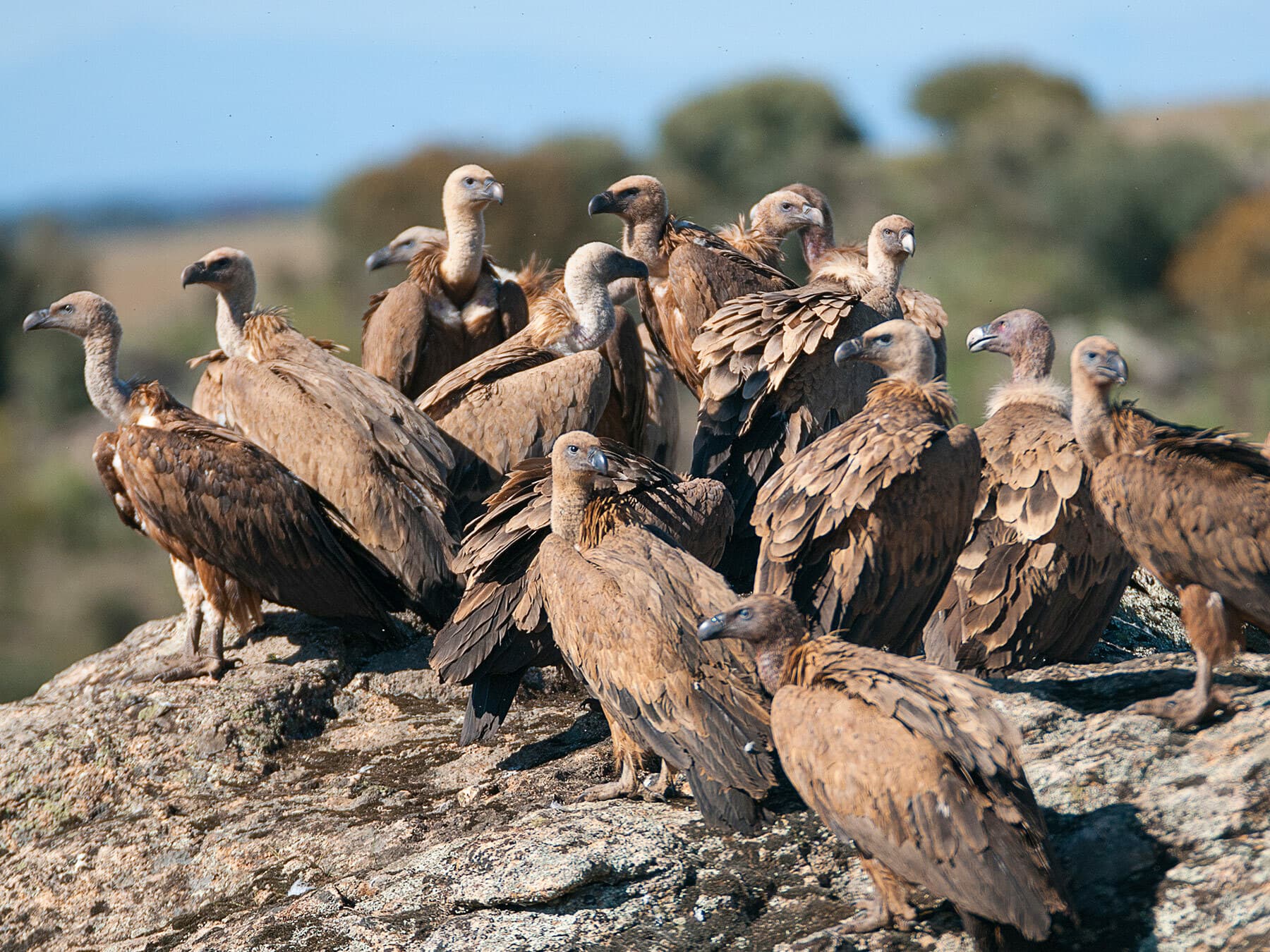
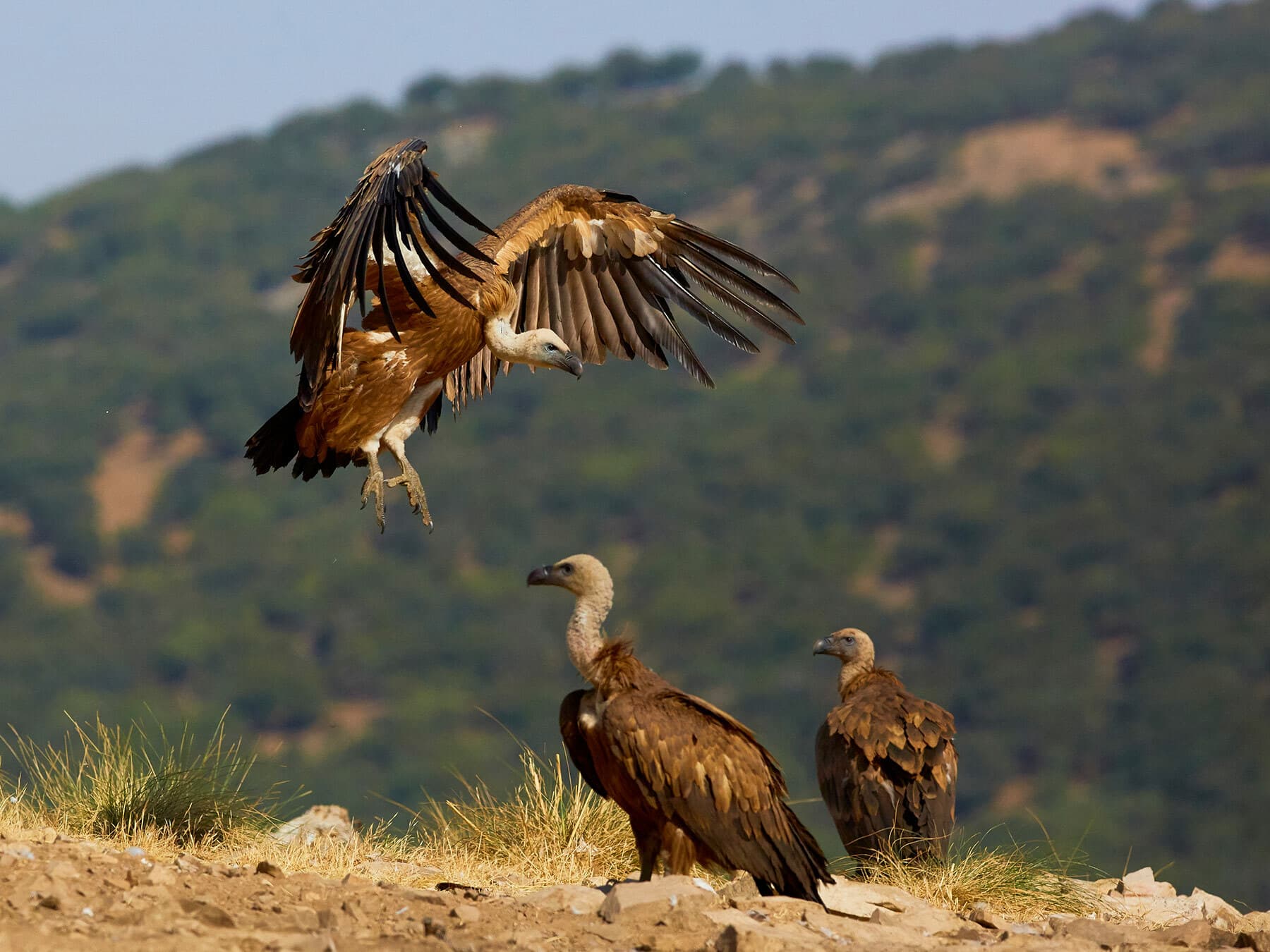
Griffon vultures prefer large open spaces from cliffs and gorges to mountain regions or lowland terraces. Superb in flight they catch thermal air currents and can soar for great distances. Often seen high in the air circling on a thermal looking out for food and being watched by and watching other griffon vultures for signs of carrion having been sighted. Once one bird sights a likely meal and descends to feed others follow immediately. Their preference for a diet of viscera means they can often be spotted with their heads and long necks deep inside the body cavity of a carcass, emerging with their white heads and necks suitably attired in blood and gore.
What it eats
One of natures champion recyclers the Eurasian griffon eats carrion. In particular it enjoys internal organs and muscles from dead sheep, cows, goats and deer etc. It will sometimes attack sick or injured live animal and when food is scarce it often scavenges at municipal dumps.
Nesting and breeding
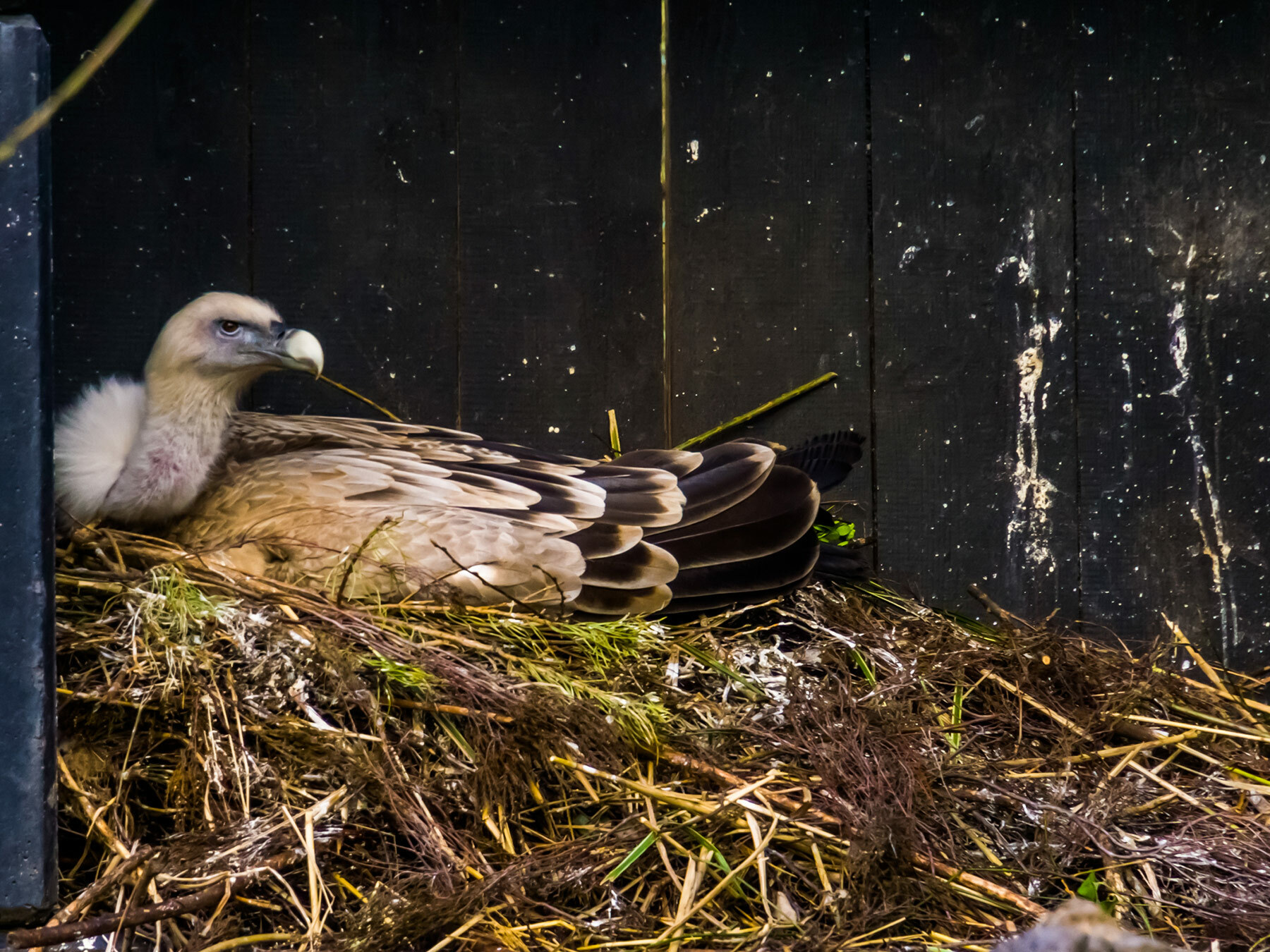
Adults generally pair for life and during breeding nest with others of their species in small colonies of up to twenty pairs although in the past, colonies with well over one hundred breeding pairs have been recorded. Nests are basic and normally on a bare ledge or in a small cave on a cliff face. Between December to March one egg is laid and incubated by both parents for between fifty to fifty eight days. Chicks are fed by both adults and fledge at around one hundred and twenty days after hatching. Parents will often continue to feed fledged young for another three months.
Behaviour
Griffon Vultures are highly social, often roosting and feeding in large groups. They spend much of their day soaring on thermals, using their keen eyesight to locate carrion.
These birds are remarkably silent, communicating mainly through body language and hisses when gathered around a carcass.
Lifespan and predators
In the wild, life expectancy is up to twenty five years although in captivity records show birds surviving well into their thirties.
Conservation
While currently listed as Least Concern, Griffon Vultures face threats from habitat loss, poisoning, and collisions with wind turbines. Conservation efforts focus on protecting nesting sites, establishing feeding stations, and reducing the use of harmful veterinary drugs in livestock that can poison vultures.
What does a Griffon Vulture look like?
One of Europe’s largest birds the griffon vulture is impressive and a master in the air. Adult birds are identical with a white head, neck and ‘feathery’ ruff-like collar. The feathers on the head and neck are short with the ruff just above the nape highlighting the long neck of the bird. The back and upperwing coverts are a bold buff brown with the flight feathers and tail being a much darker brown. The underwing coverts are a mid brown with two lighter buff coloured narrow bands stretching from the scapulars to the alula (also known as the bastard wing where the feathers of the bird’s ‘thumb’ protrude). The belly is a chestnut brown and all other areas of the underwing are a dark brown. In flight the wingtips are deeply fingered. Juveniles are similar to adults although the collar is brown and the back is darker in colour.
Similar birds
Often mistaken for
More photos
2 photos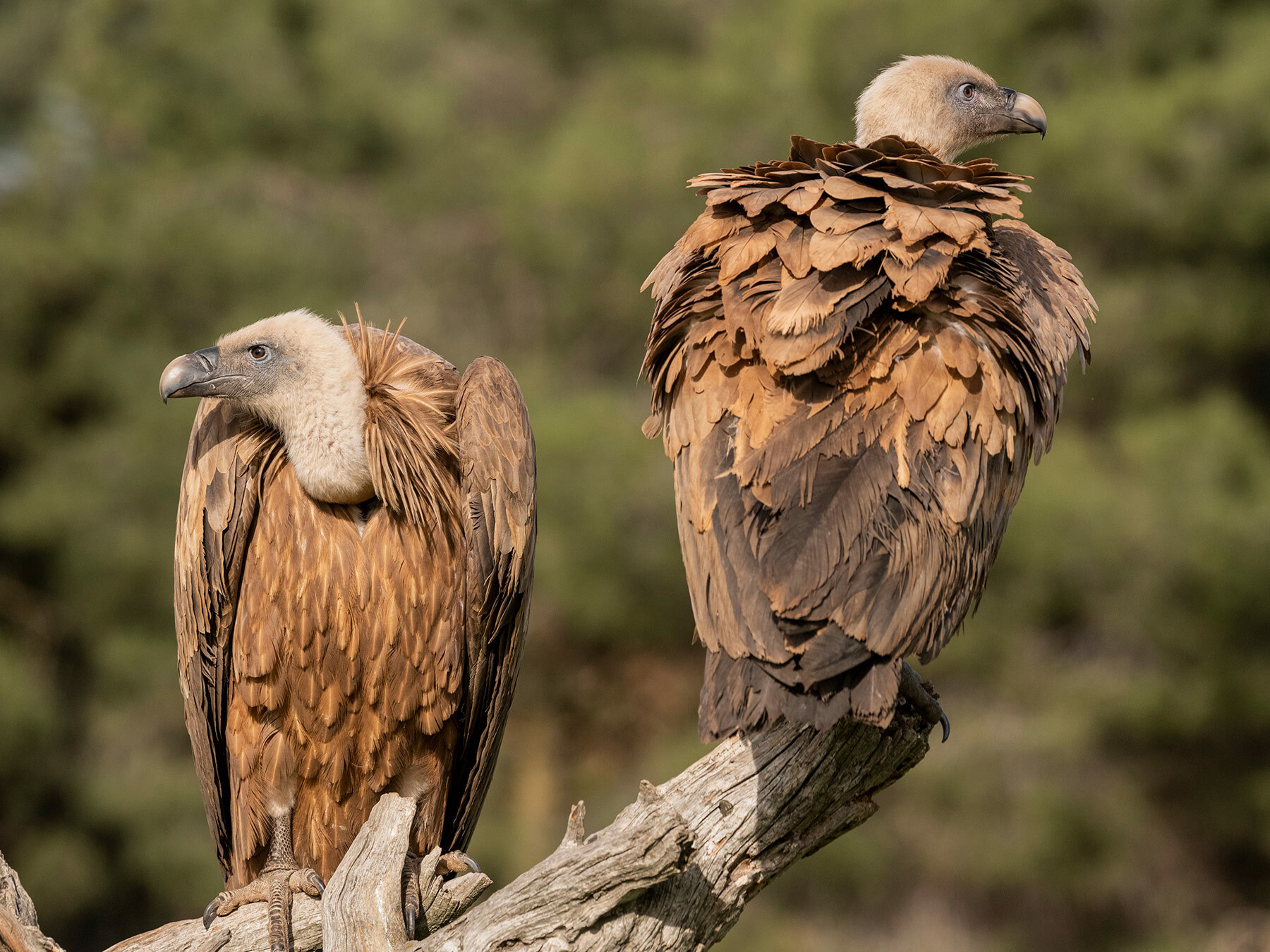
Griffon Vulture guides
1 guidesQuick facts
- Length
- 93–122 cm
- Wingspan
- 230–280 cm
- Weight
- 6000–11300 g
- Lifespan
- 30–40 years
- Family
- Hawks & Eagles
- Migration
- Partial migrant
- Global status (IUCN)
- Least Concern
- World population
- 80,000 - 900,000 mature individuals
- Population trend
- Increasing
- Also called
- Eurasian Griffon
- Scientific name
- Gyps fulvus
Sources
3- 1BirdLife International. 2021. Gyps fulvus. The IUCN Red List of Threatened Species 2021: e.T22695219A157719127. Source (opens in a new tab)
- 2BirdLife International. 2021. Gyps fulvus. The IUCN Red List of Threatened Species 2021: e.T22695219A157719127. Source (opens in a new tab)
- 3BirdLife International. 2021. Gyps fulvus. The IUCN Red List of Threatened Species 2021: e.T22695219A157719127. Source (opens in a new tab)

Checked by
Nathan Cope, founder and editor
Nathan founded Birdfact and leads its writers and contributors in the UK, the US and Canada. He has watched and studied birds for more than ten years, and checks every article and species guide before it’s published.