


Cinereous Vulture
Eurasian Black Vulture, Monk Vulture · Aegypius monachus
By the Birdfact teamChecked by Nathan Cope
On this page15 sections
How to recognise it
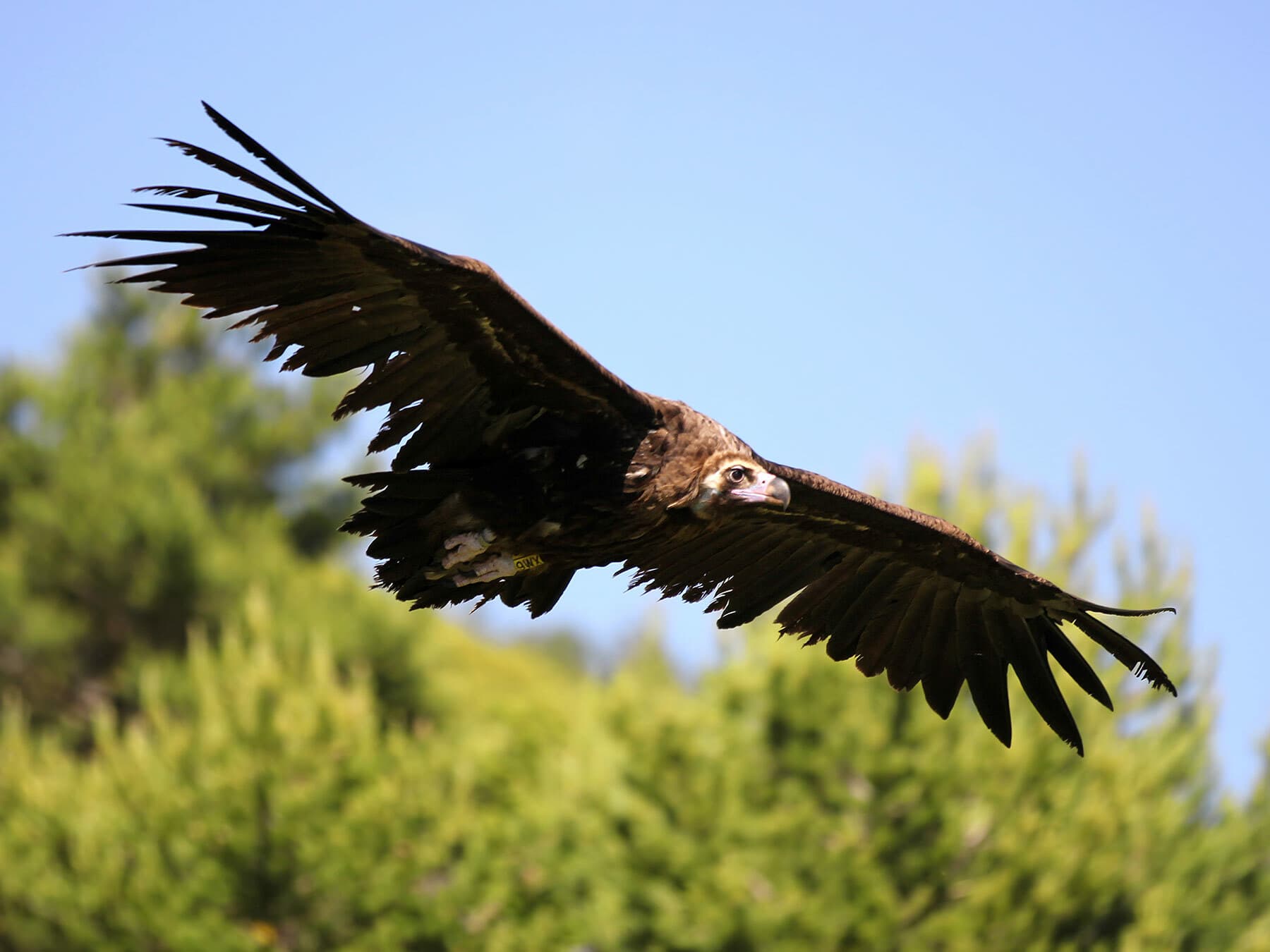
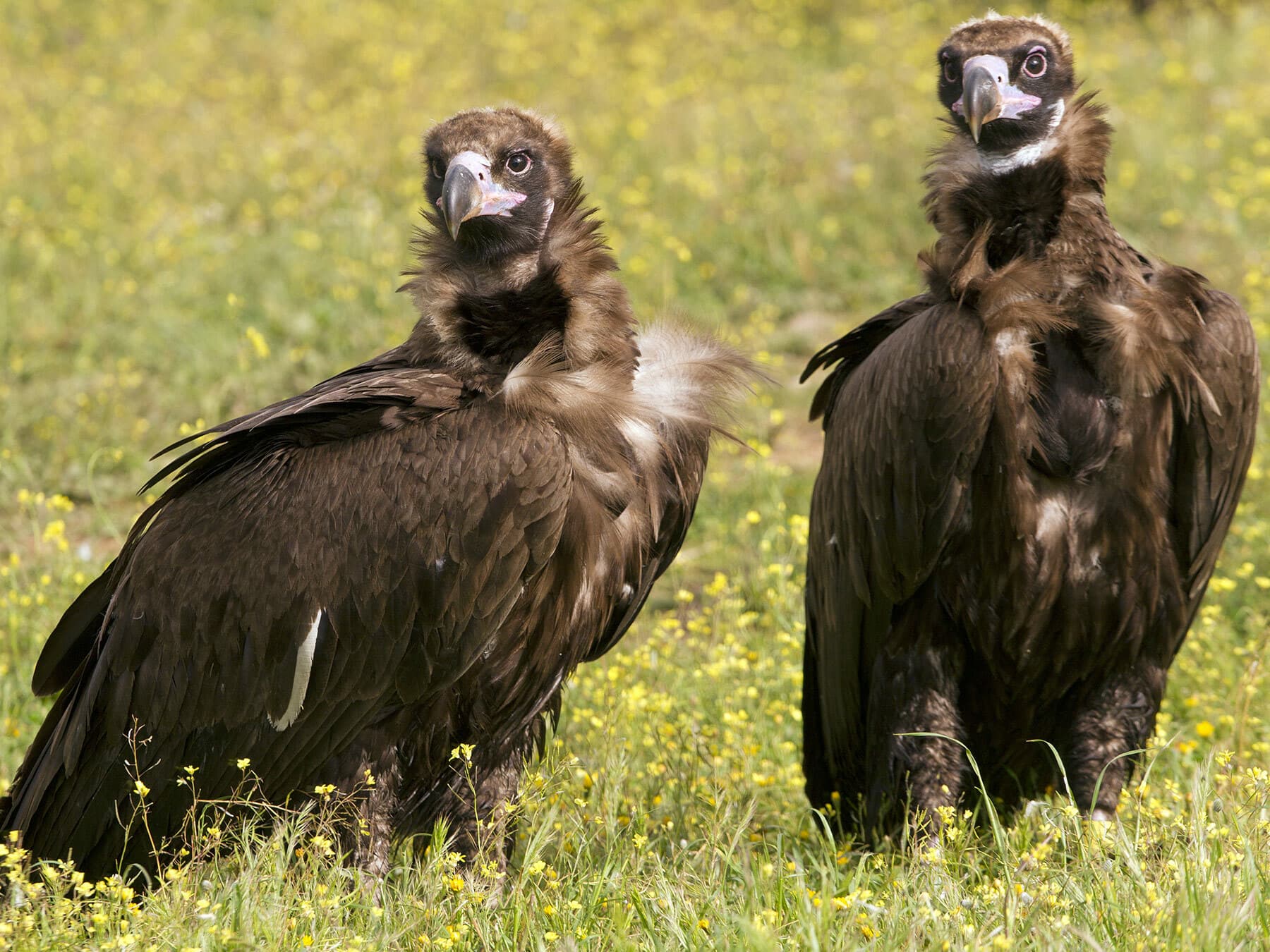
The Cinereous Vulture is a massive bird of prey characterised by its dark brown to black plumage, which gives it a sombre, monk-like appearance.
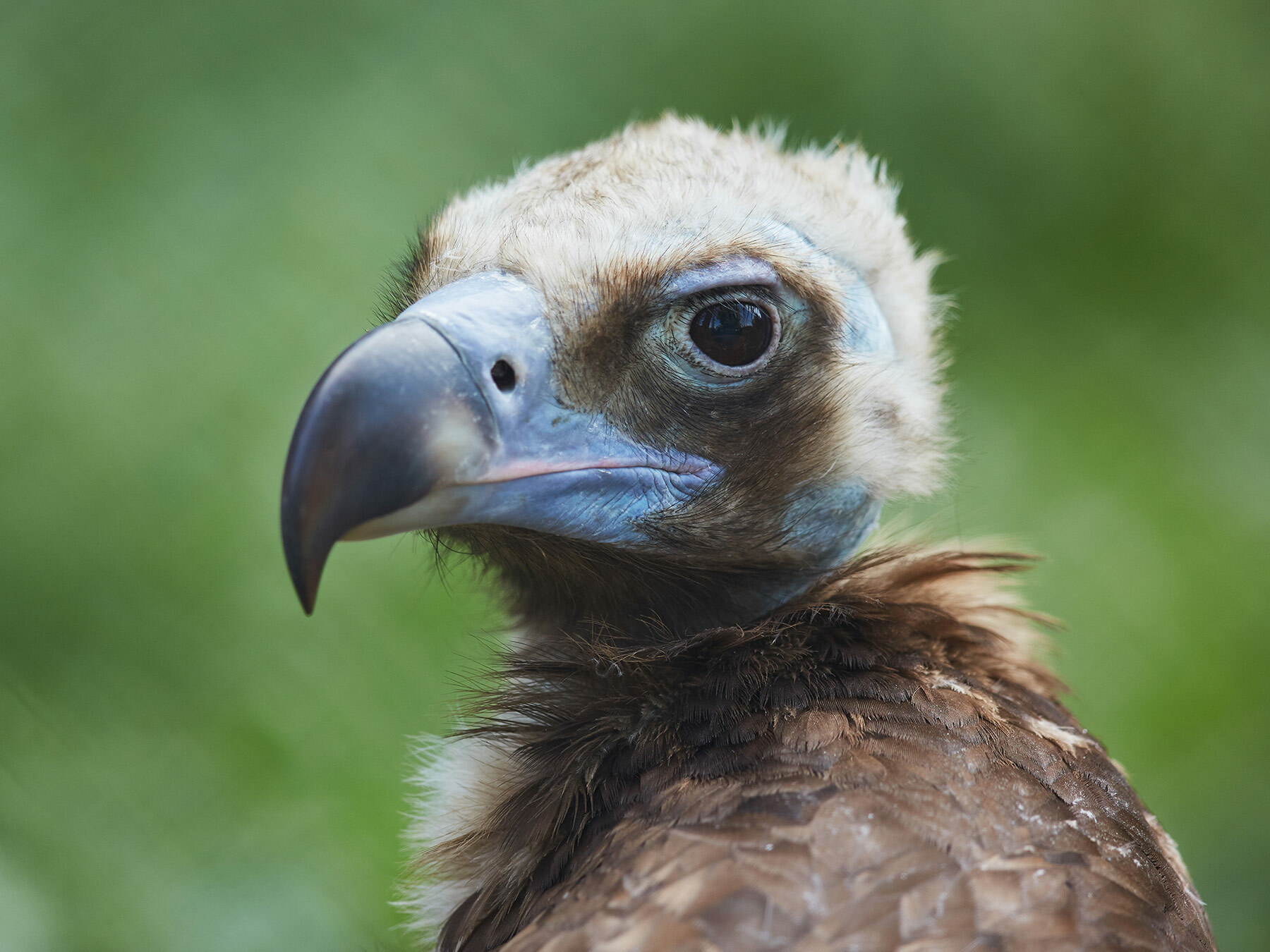
Unlike many other vultures, its head is covered in fine, dark feathers, and it has a distinctive hooked pale beak and bluish-grey skin around the eyes and neck.
Both sexes are similar in appearance, with females being larger and heavier. Juveniles are slightly darker than adults and may have a more reddish-brown tinge to their feathers. They gradually develop the adult colouration over several years.
Its size
Adults- Length
- 98–120 cm
- Wingspan
- 250–295 cm
- Weight
- 7000–14000 g
Its song and calls
A relatively silent bird that tends to vocalise with hisses and grunts when feeding.
- Call0:00 / 0:06
Recorded in Aveyron, France · June 2024
When and where to see it
The Cinereous Vulture is not recorded regularly in the UK, Ireland, the United States or Canada.
Worldwide: recorded regularly in 29 countries
Countries where it was recorded in at least 3 of the 6 years 2019–2024. Linked countries have their own bird list.
Asia (19)
- Afghanistan
- Armenia
- Azerbaijan
- Bhutan
- China
- Georgia
- India
- Iran
- Israel
- Kazakhstan
- Kuwait
- Kyrgyzstan
- Mongolia
- Nepal
- Pakistan
- South Korea
- Tajikistan
- Turkey
- Uzbekistan
Data: EOD – eBird Observation Dataset (Cornell Lab of Ornithology), accessed via GBIF.org, CC BY 4.0. Records from 2019–2024, aggregated and filtered by Birdfact. How these lists are made
Whilst often hunting in large areas with sparse vegetation the cinereous vulture also moves around forested areas of hills and mountains and frequently nests in trees high in the treeline of rugged wildernesses in Central Asia. Within Europe it mainly occupies Portugal, Spain, the Balearics and southern France from where it very rarely migrates. Travelling east it is also found in the Caucasus, the Middle East, Indian sub-continent, Siberia, Mongolia and north eastern China. Some juvenile birds will migrate to north east Africa to overwinter.
Signs and Spotting tips
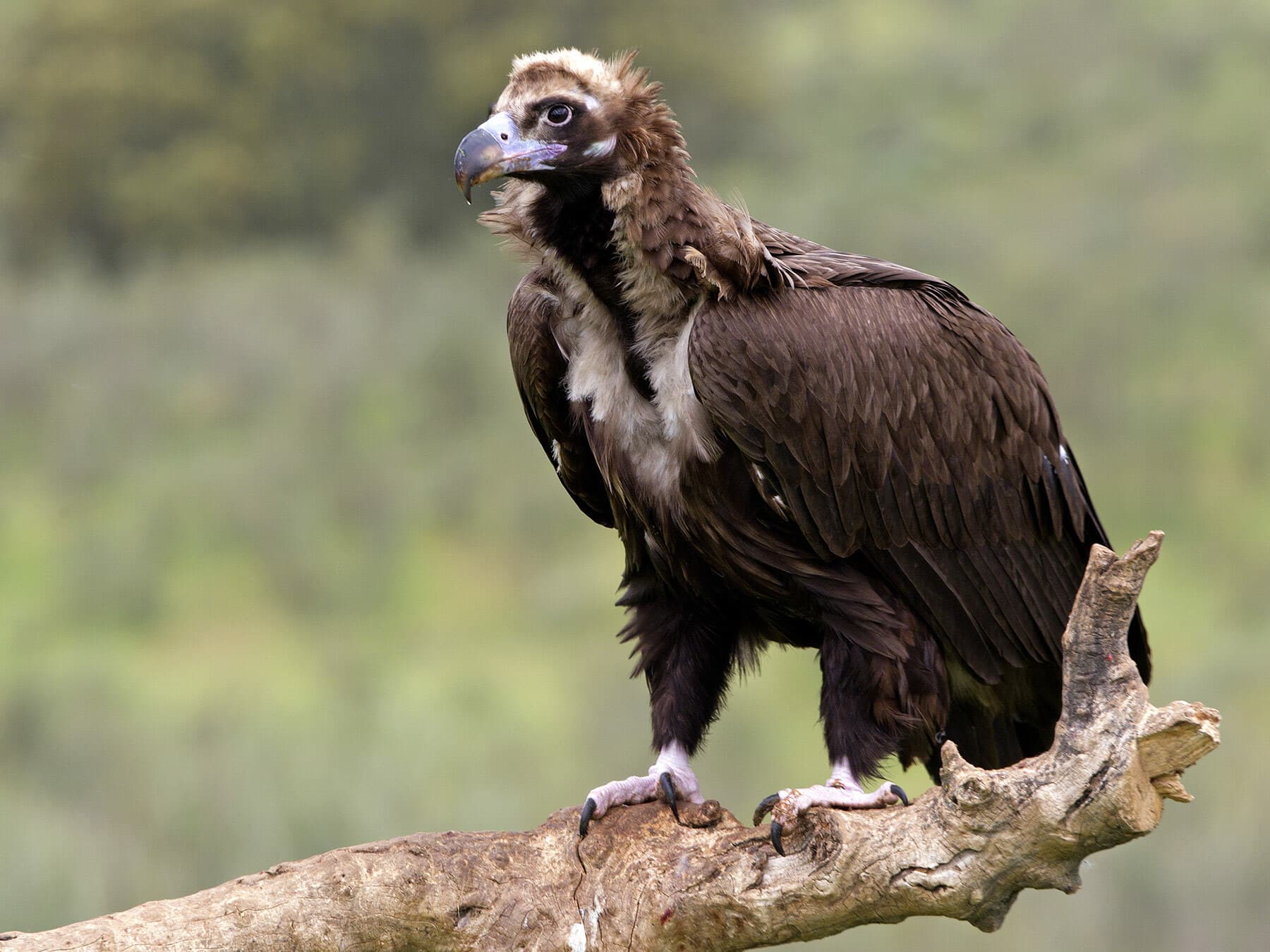
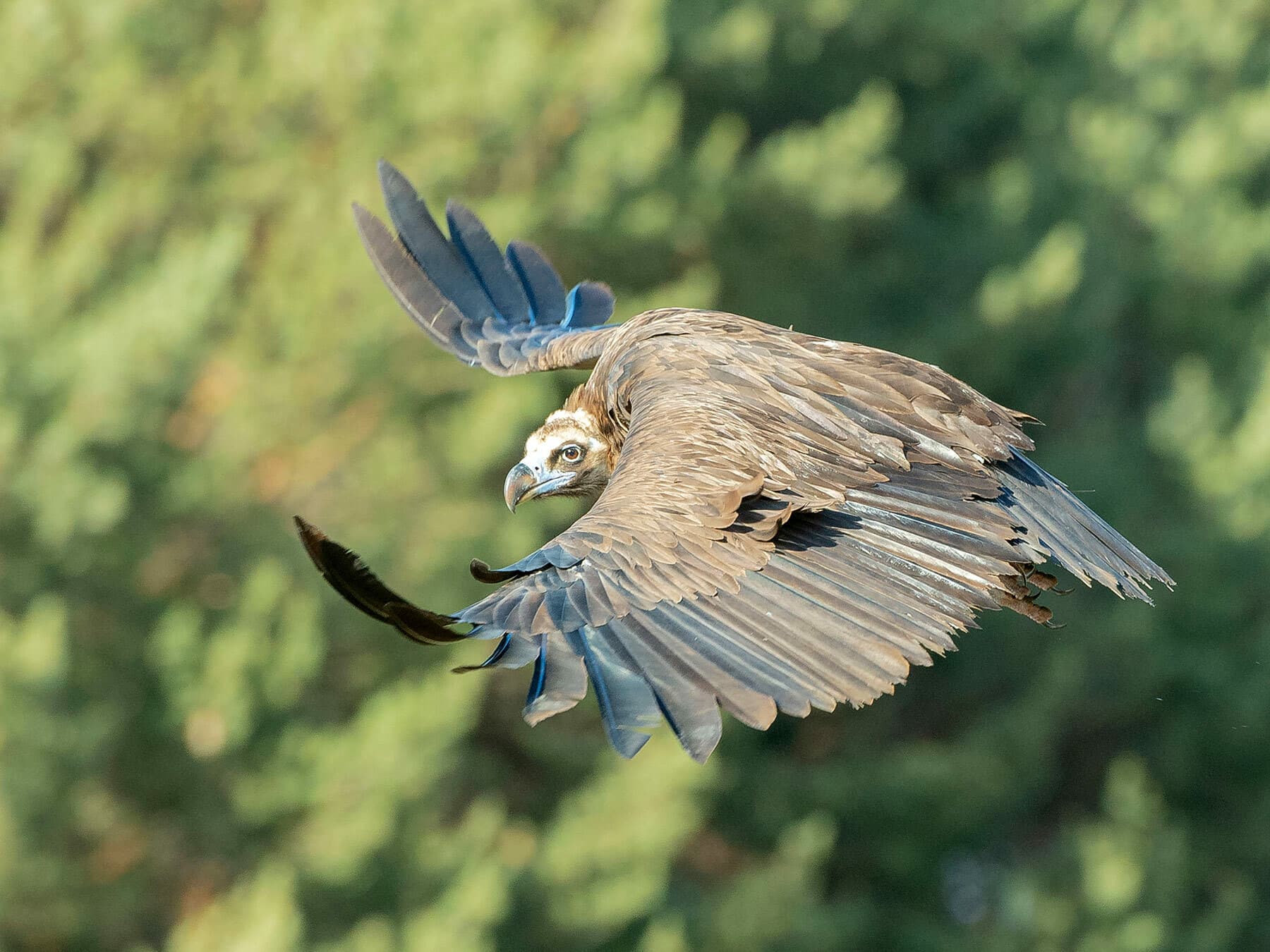
Like the griffon vulture the cinereous is also a master of the air using thermals in order to soar effortlessly around the skies seeking prey. Unlike the former it is however a fairly solitary bird and often feeds alone. Its outspread wings tend to be flat as opposed to ‘V’ shaped whilst soaring and the overall wing shape when viewed from below is broad and rectangular. It is one of the worlds heaviest birds capable of flight with the female able to reach thirty one pounds or fourteen kilograms in weight. Unsurprisingly it therefore requires a large wing area to enable flight and wing spans of over ten feet are not uncommon.
What it eats
As with most vultures, the cinereous vulture is a scavenger, rarely taking live prey but concentrating on carrion including medium to large carcasses, although it will also take dead rabbits. Unlike other species of vulture, it often feeds alone.
Nesting and breeding
During the breeding season large nests constructed from sticks and small branches are built in flat topped trees where one brood consisting of just one egg is laid between February to April, dependant upon geographical location. Again, dependent upon region, incubation averages fifty four to fifty six days with fledging taking place anytime between ninety five and one hundred and twenty days. It is not unusual for adult birds of breeding age to skip a season and not produce an egg.
Behaviour
Cinereous Vultures are often solitary but may gather in small groups at carcasses. They soar effortlessly on thermal currents, using their keen eyesight to locate food.
These birds are generally silent, communicating through body language and hissing when competing for food.
Lifespan and predators
The lifespan of a cinereous vulture is up to twenty five years although in captivity a specimen has been recorded as achieving thirty nine years of age.
Conservation
The Cinereous Vulture faces threats from habitat loss, poisoning, and collisions with power lines.
Conservation efforts focus on protecting nesting sites, establishing feeding stations, and educating communities about the importance of these scavengers in ecosystem health.
What does a Cinereous Vulture look like?
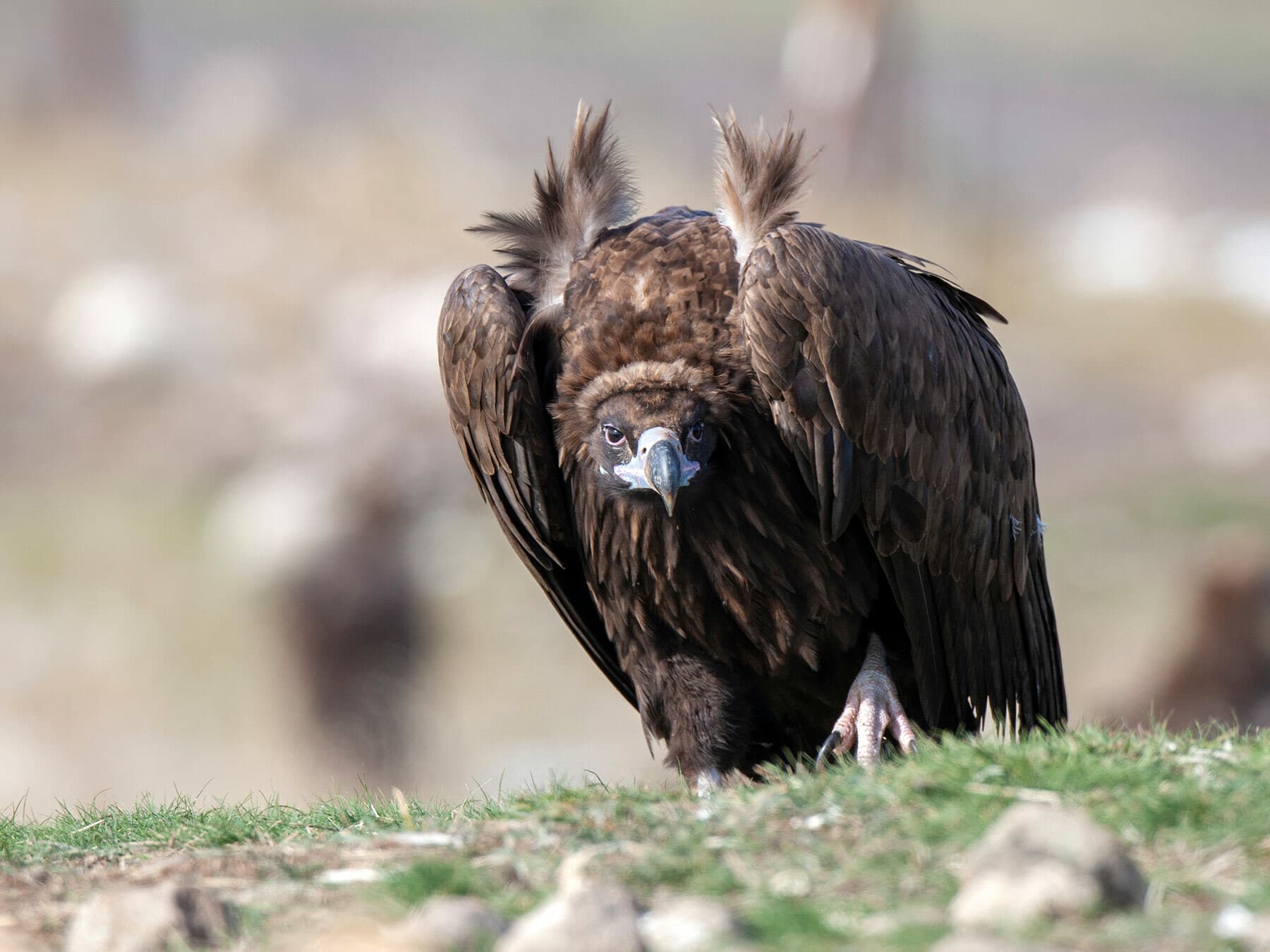
Although appearing mainly black, particularly from a distance, the cinereous vulture is predominantly brown in colour. The head appears bald although it may be covered in a black feathery down with a black mask around the eye. Otherwise the face is pale morphing into a black chin and throat. The neck ruff is pale brown with underlying white feathers. The bill is large and hooked with a greyish blue colour from the base to just past the nares (nostrils) where it changes to a dark grey black. The feet are pale, almost white in colour. Breast, belly, tail and underwing areas are all dark brown as is the back, upper tail and upperwing areas. The underwing coverts are a very dark brown and in flight the primary feathers are deeply fingered. Female adults are slightly larger and heavier than males whilst juveniles are blacker overall.
Similar birds
Often mistaken for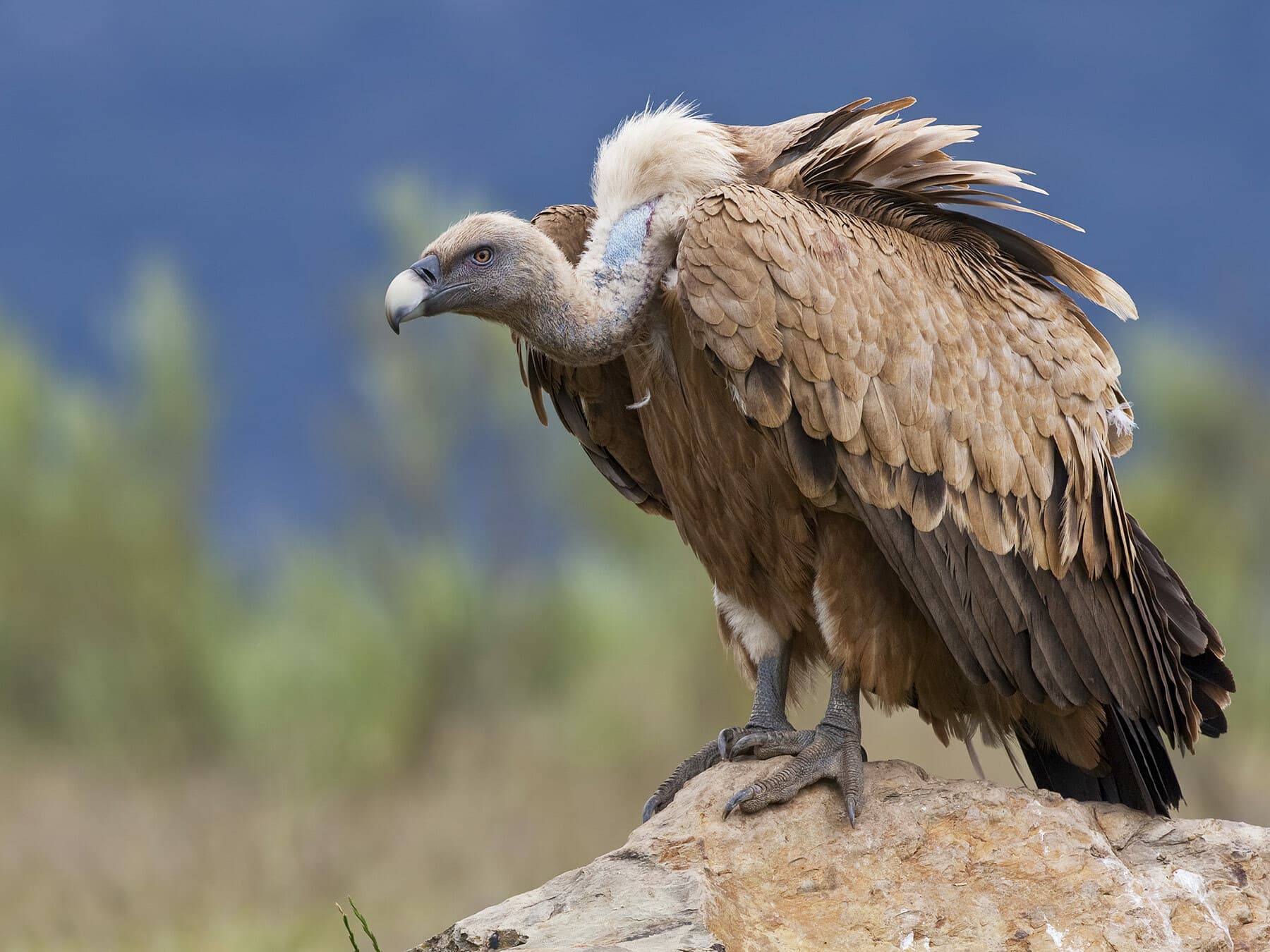
More photos
2 photos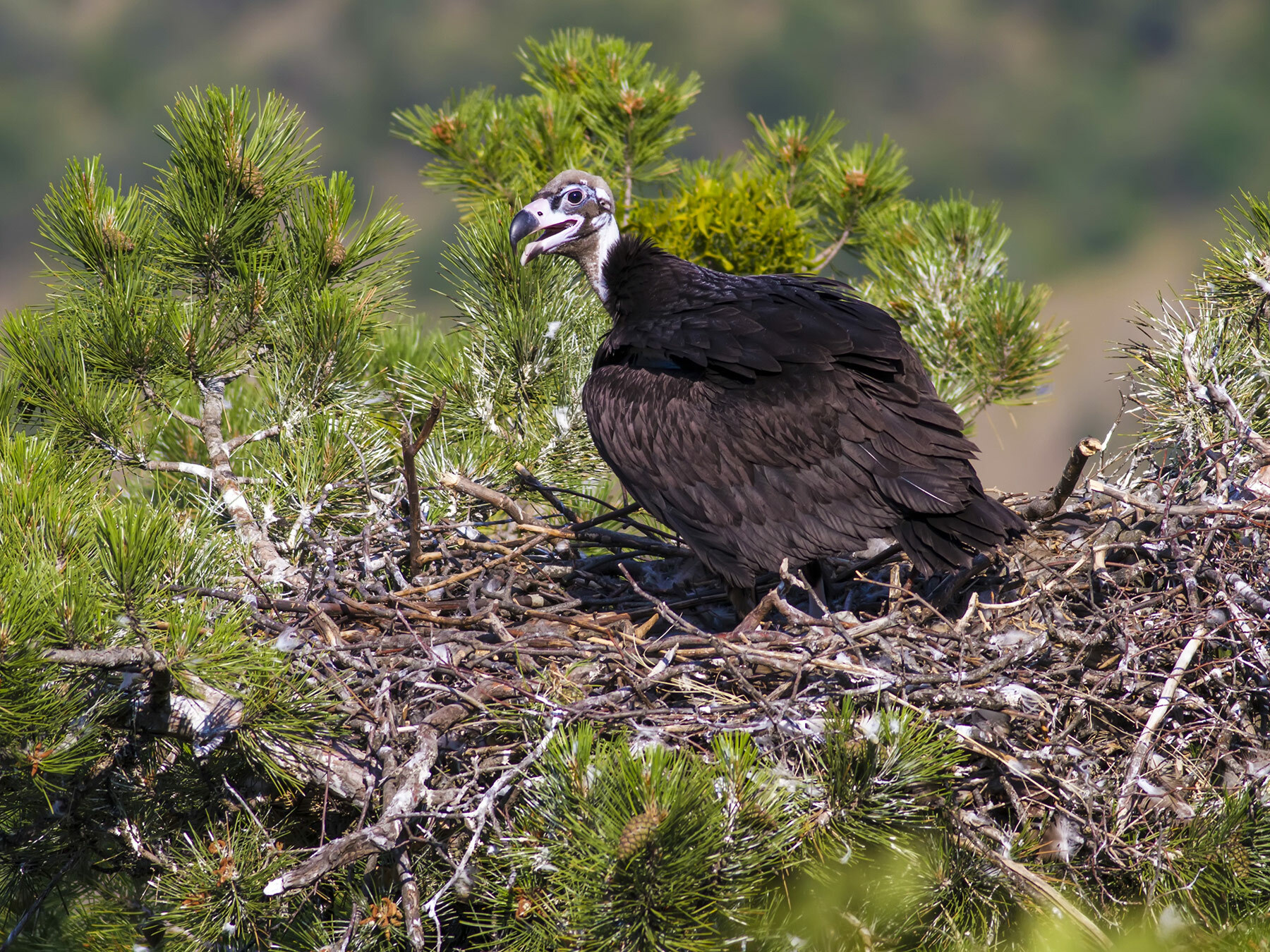
Cinereous Vulture guides
2 guidesQuick facts
- Length
- 98–120 cm
- Wingspan
- 250–295 cm
- Weight
- 7000–14000 g
- Lifespan
- 20–25 years · oldest recorded 39 years
- Family
- Hawks & Eagles
- Migration
- Partial migrant
- Global status (IUCN)
- Near Threatened
- World population
- 16,800 - 22,800 mature individuals
- Population trend
- Decreasing
- Also called
- Eurasian Black Vulture, Monk Vulture
- Scientific name
- Aegypius monachus
Sources
4- 1BirdLife International. 2021. Aegypius monachus. The IUCN Red List of Threatened Species 2021: e.T22695231A154915043. Source (opens in a new tab)
- 2BirdLife International. 2021. Aegypius monachus. The IUCN Red List of Threatened Species 2021: e.T22695231A154915043. Source (opens in a new tab)
- 3BirdLife International. 2021. Aegypius monachus. The IUCN Red List of Threatened Species 2021: e.T22695231A154915043. Source (opens in a new tab)
- 4Carey and Judge, Longevity Records: Life Spans of Mammals, Birds, Amphibians, Reptiles, and Fish (2000) Source (opens in a new tab)

Checked by
Nathan Cope, founder and editor
Nathan founded Birdfact and leads its writers and contributors in the UK, the US and Canada. He has watched and studied birds for more than ten years, and checks every article and species guide before it’s published.