


Great Skua
Bonxie · Stercorarius skua
By the Birdfact teamChecked by Nathan Cope
On this page13 sections
How to recognise it
What do Great Skuas look like?
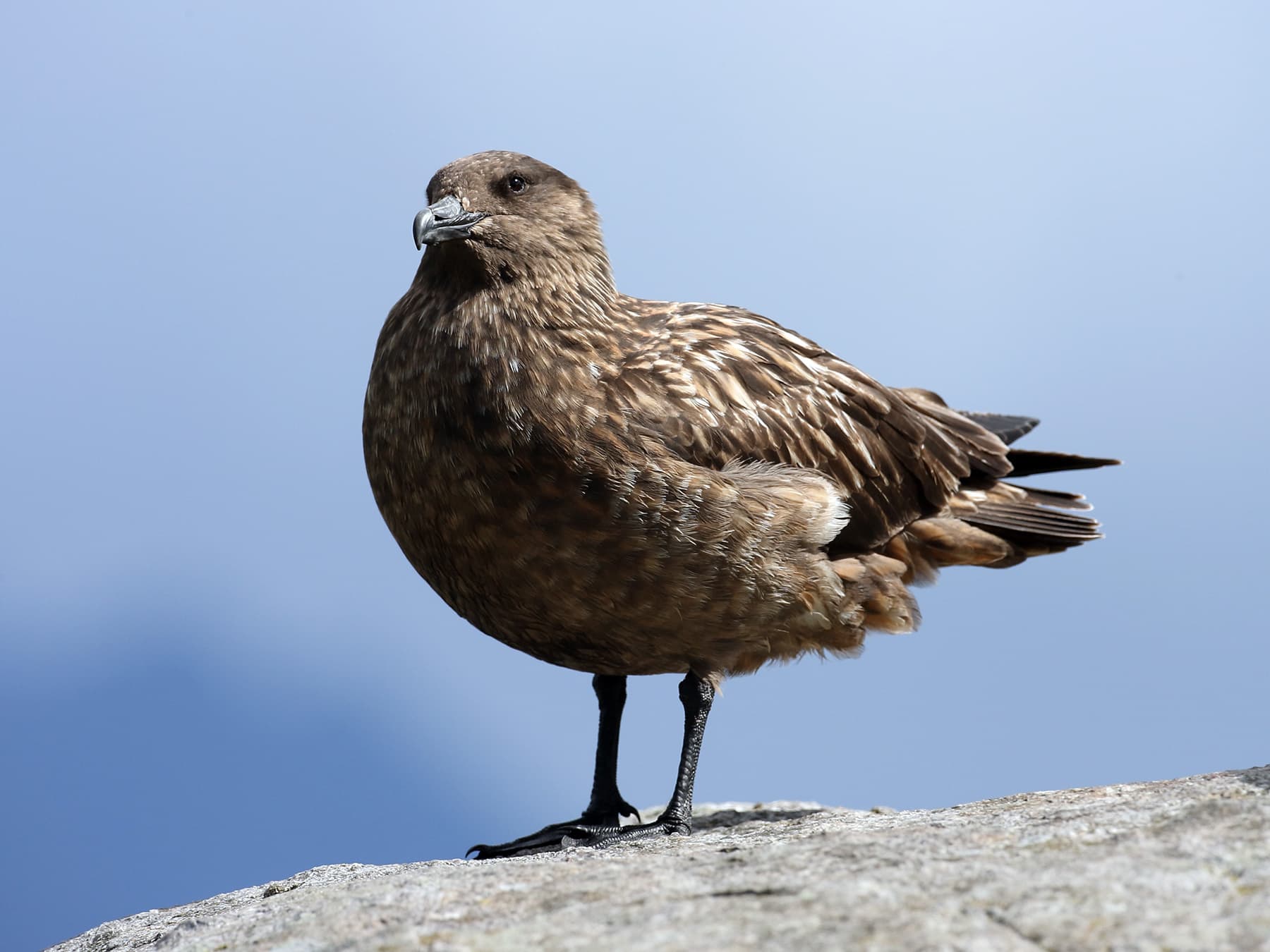
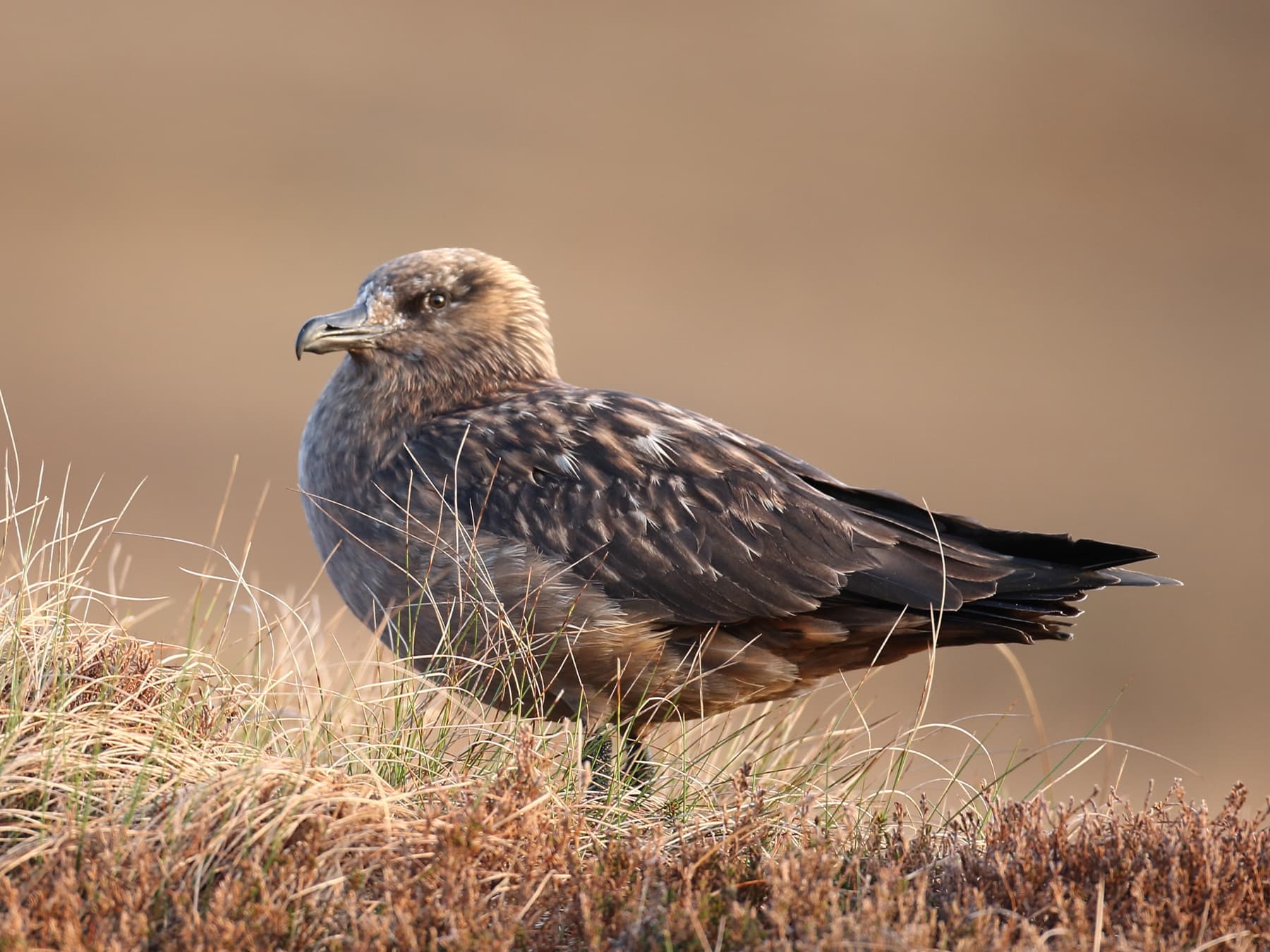
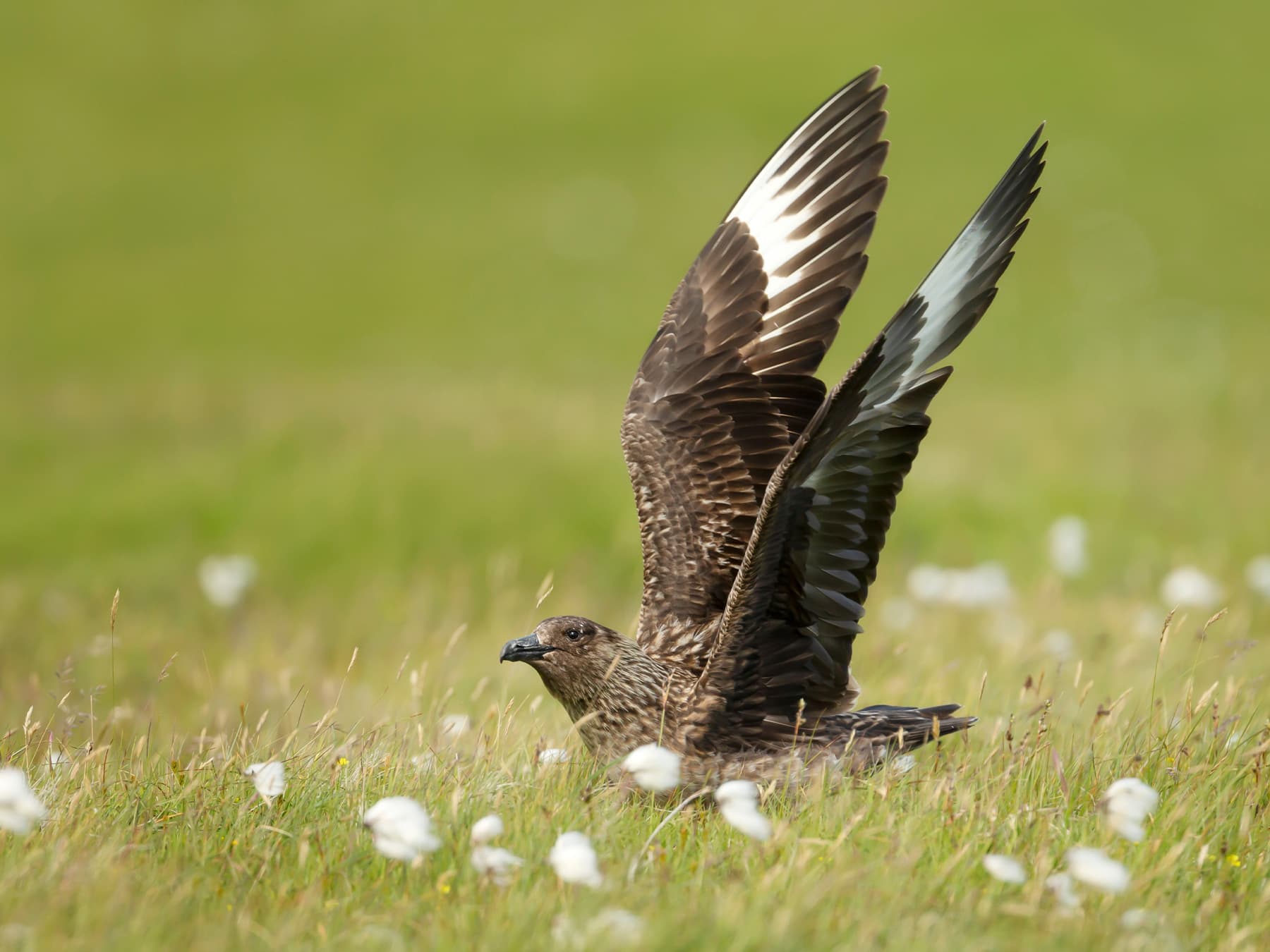
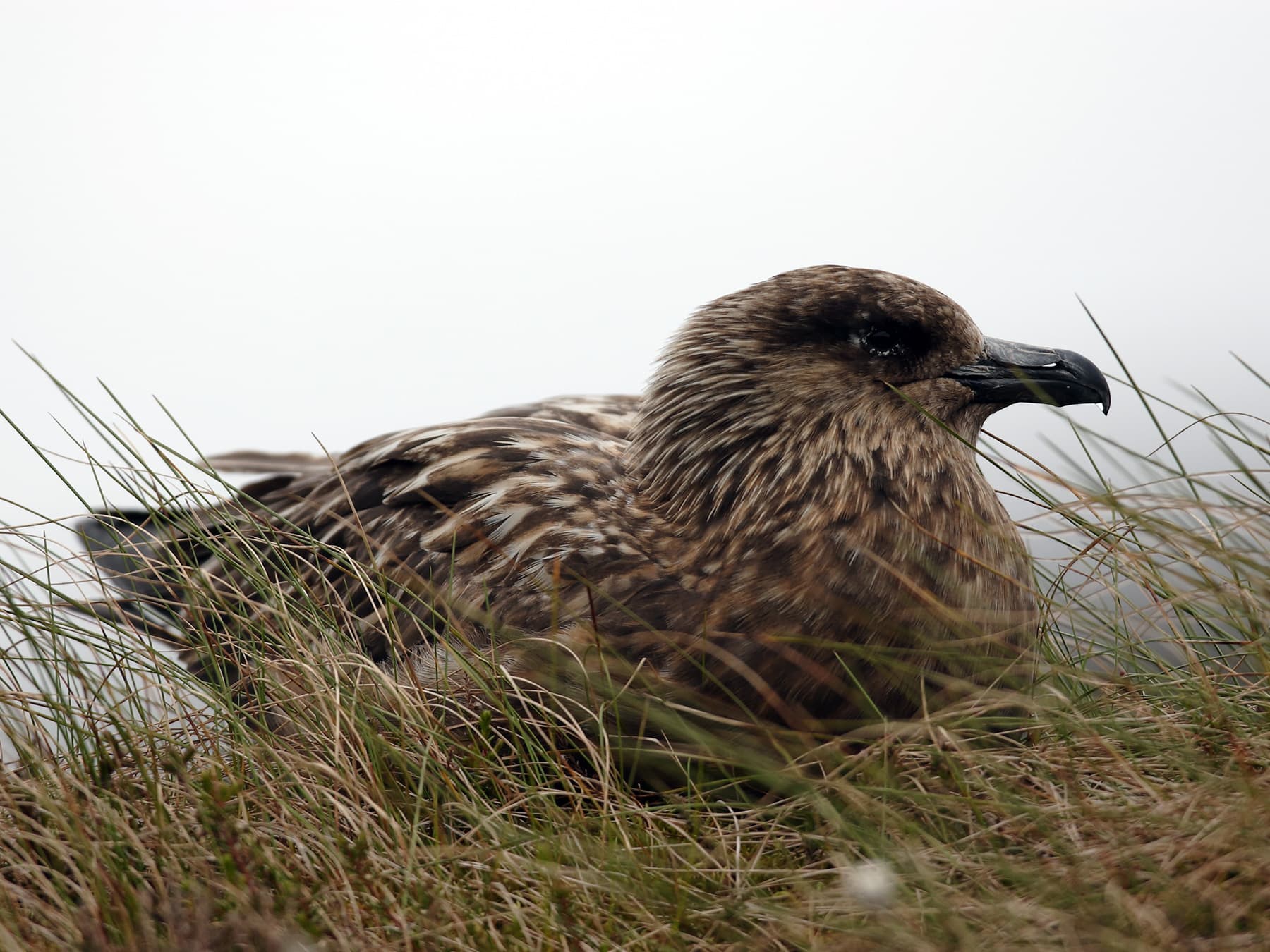
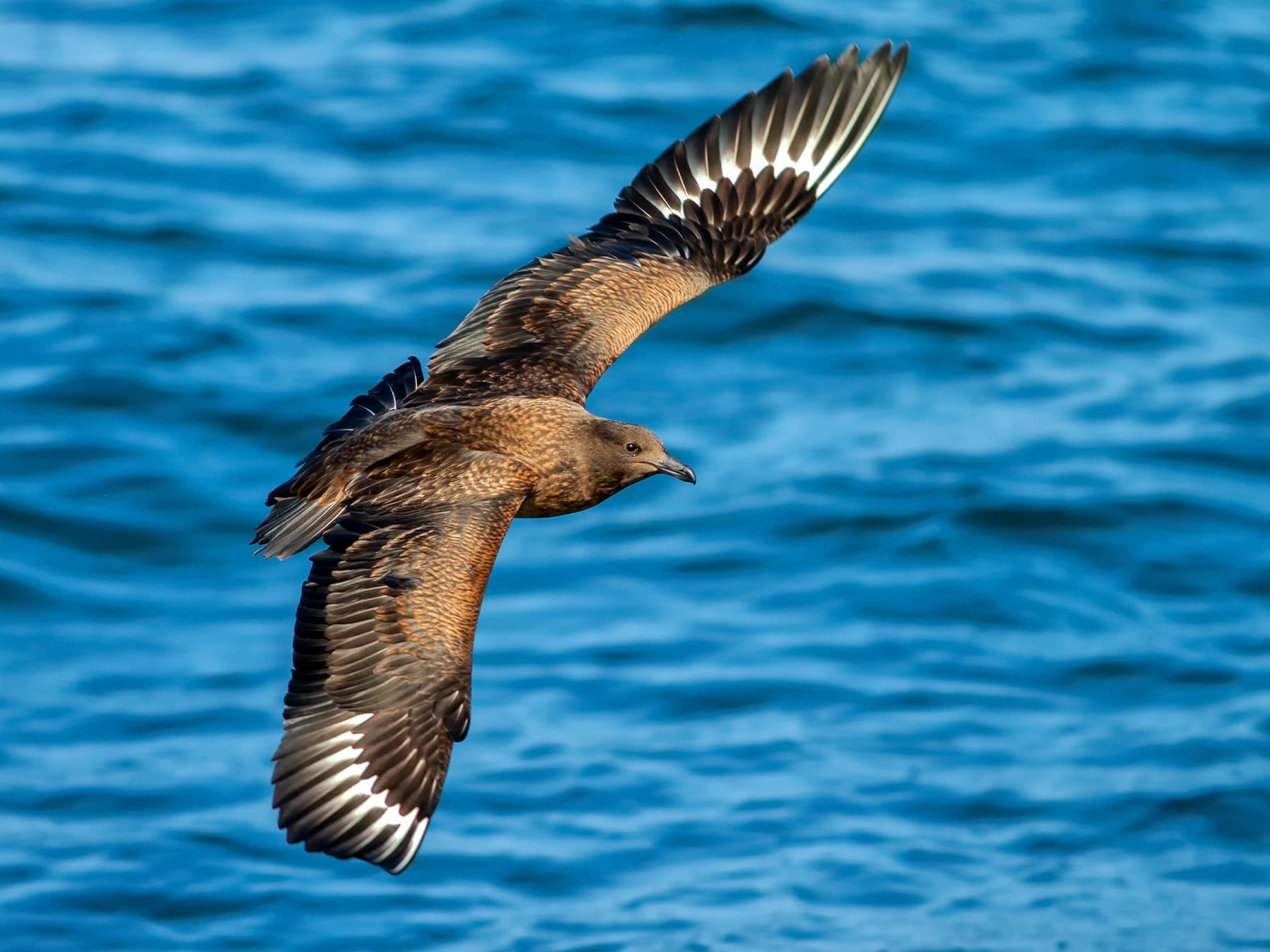
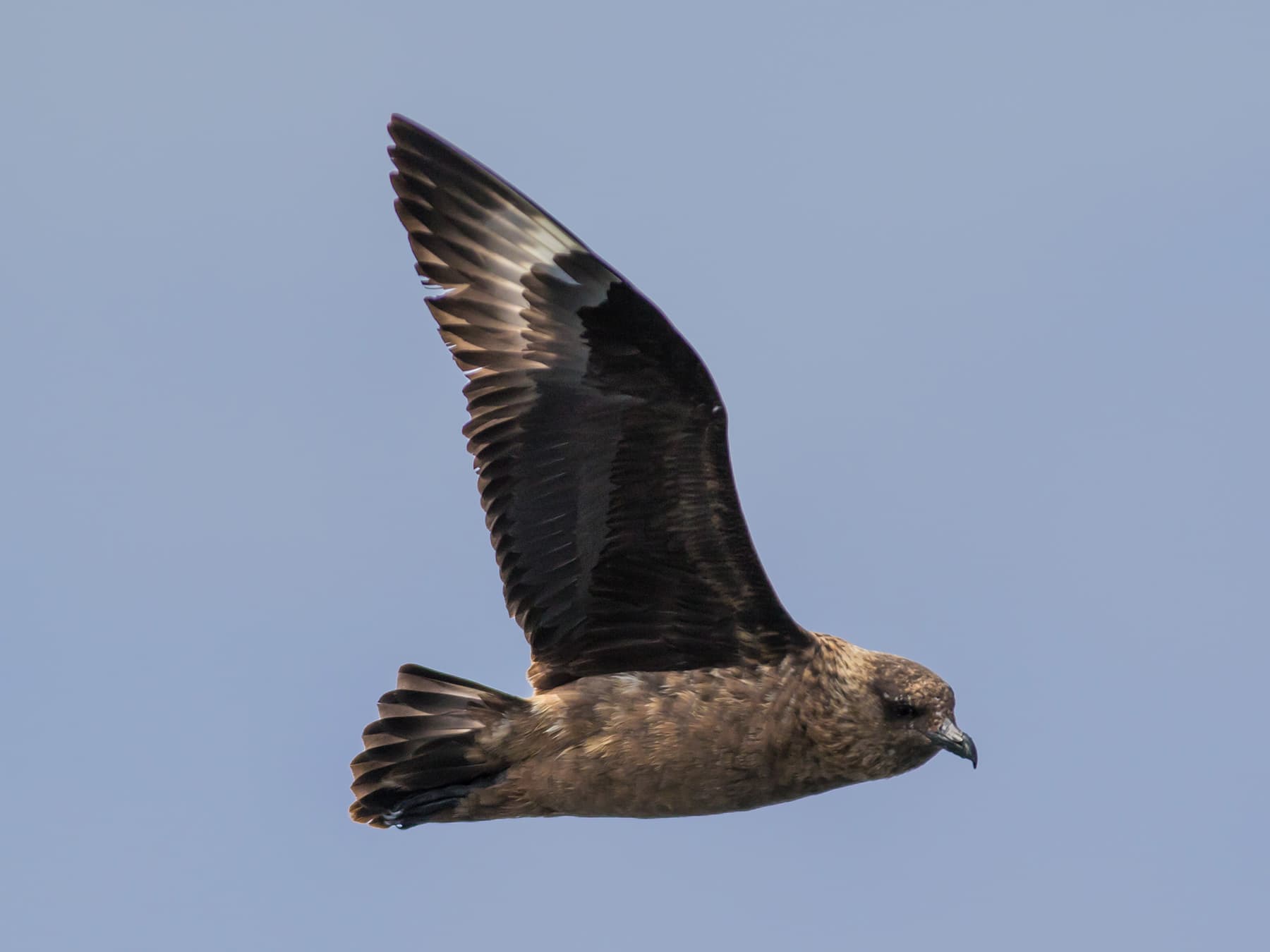
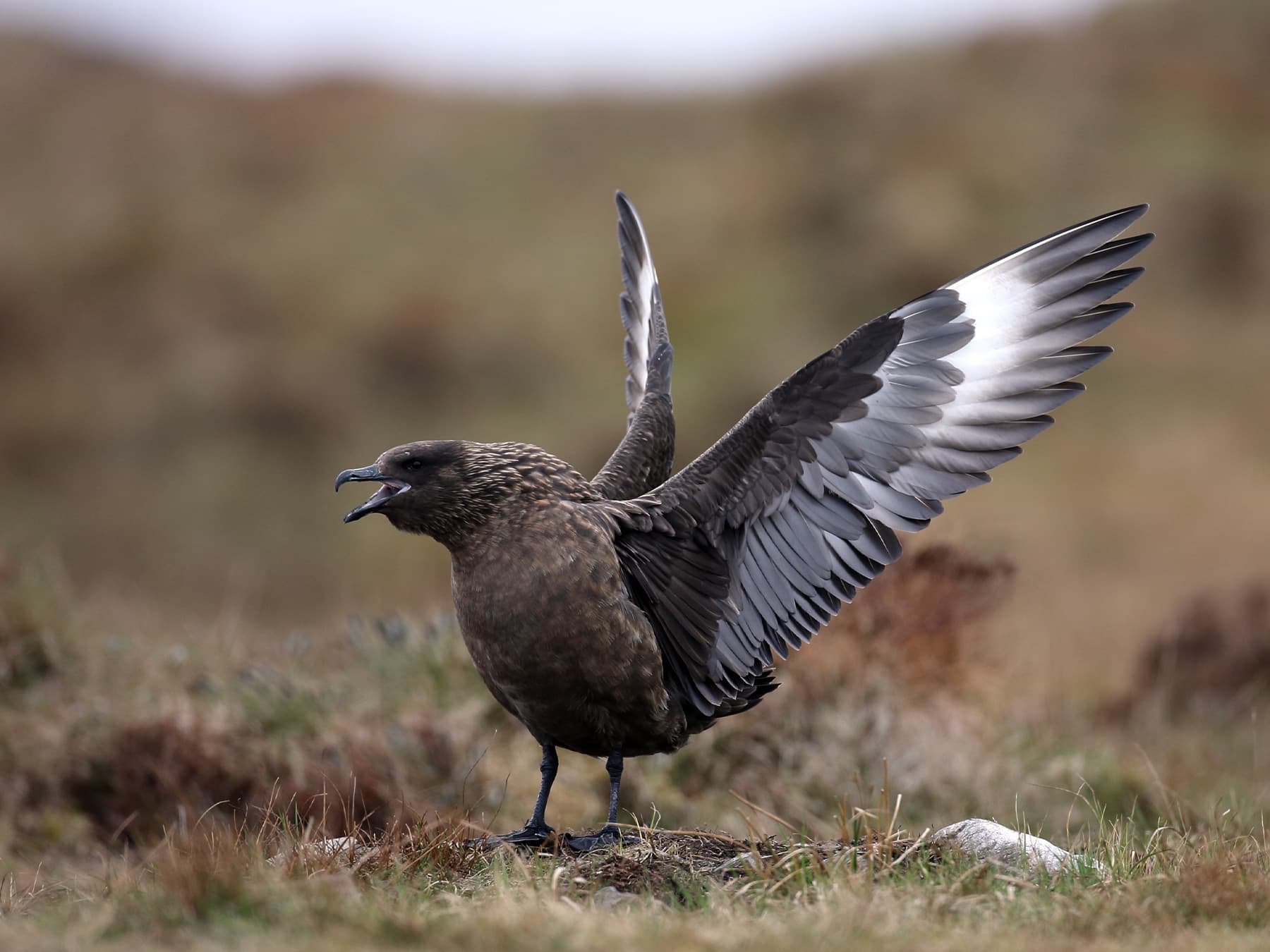
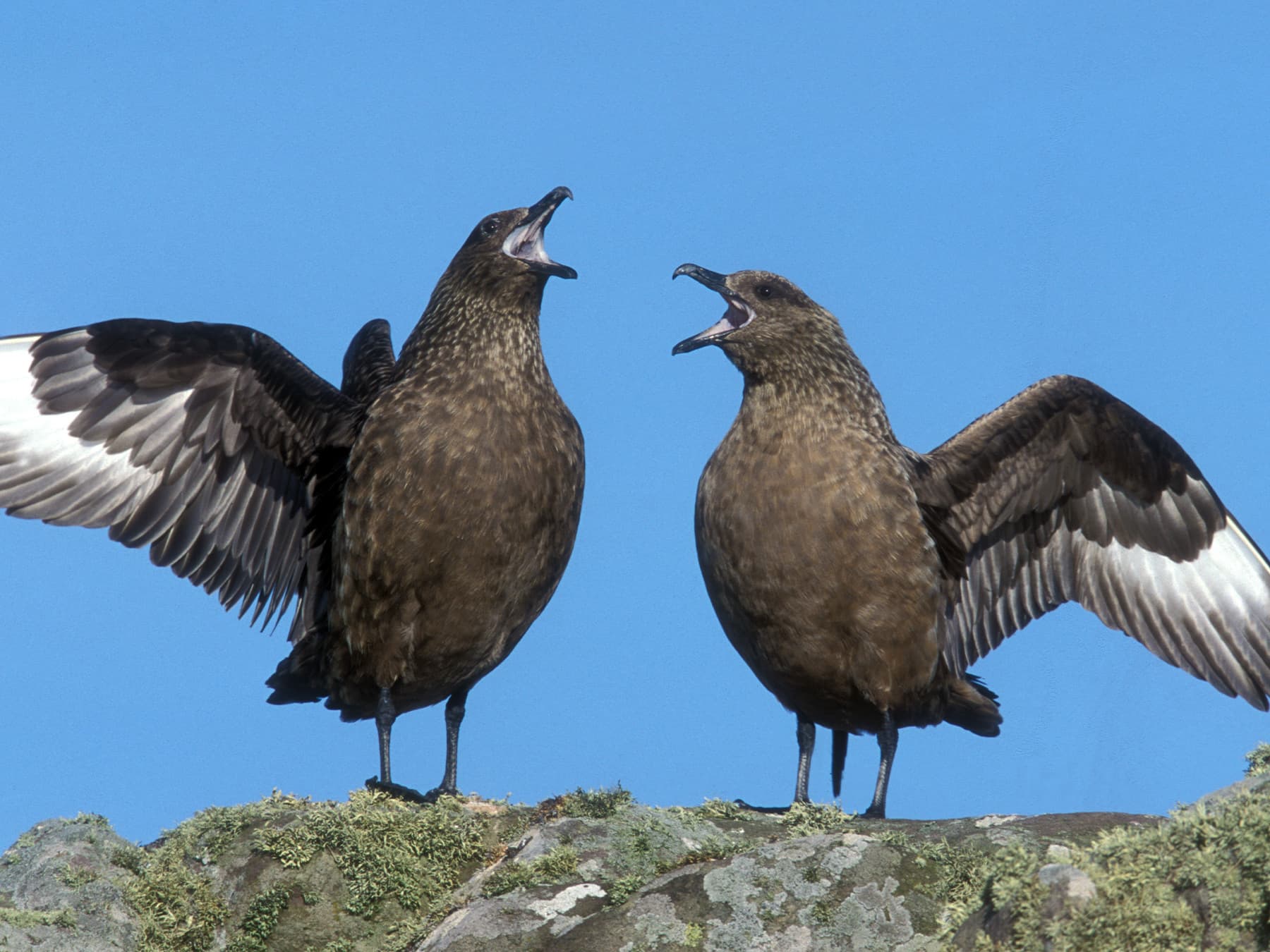
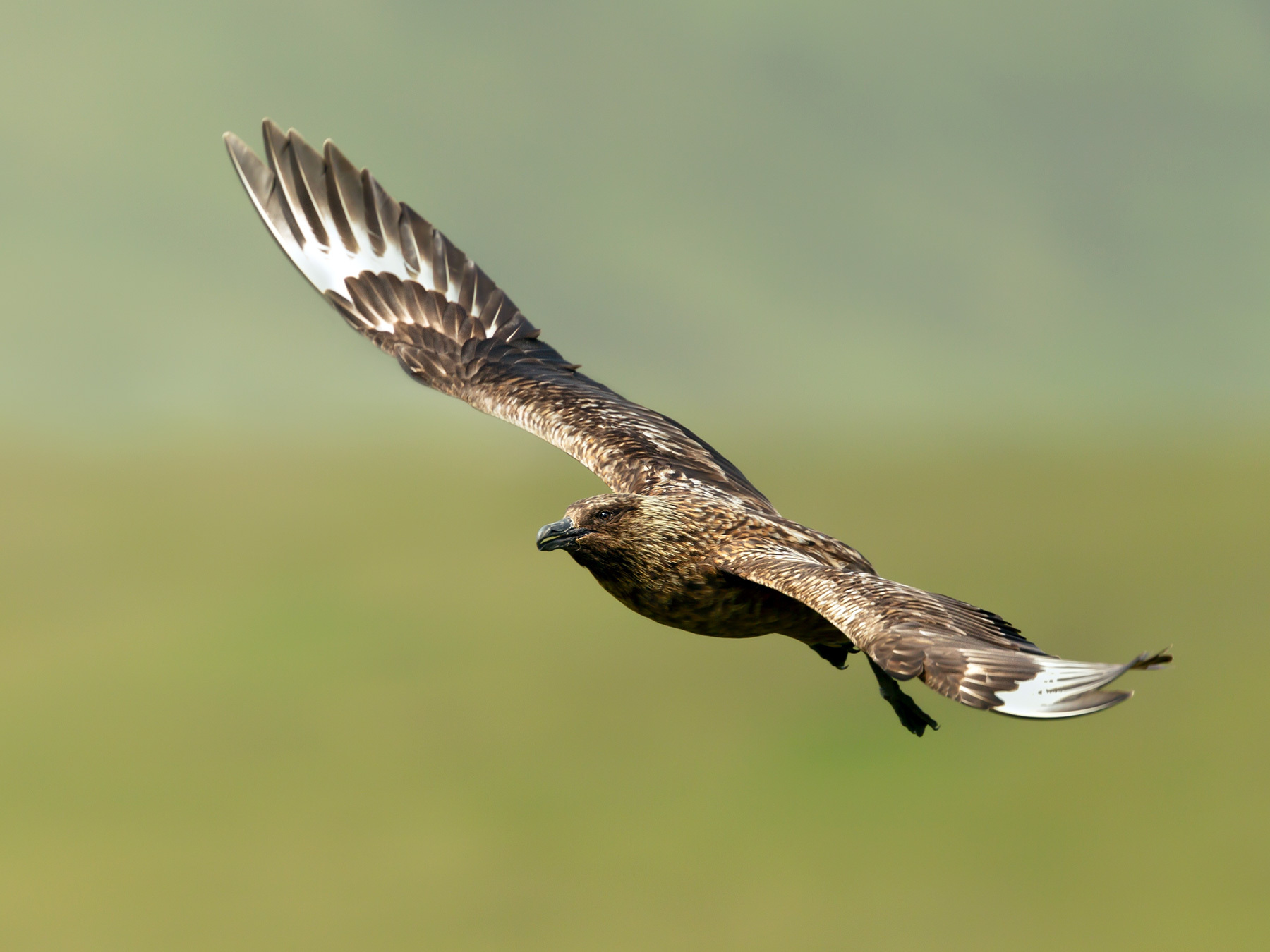
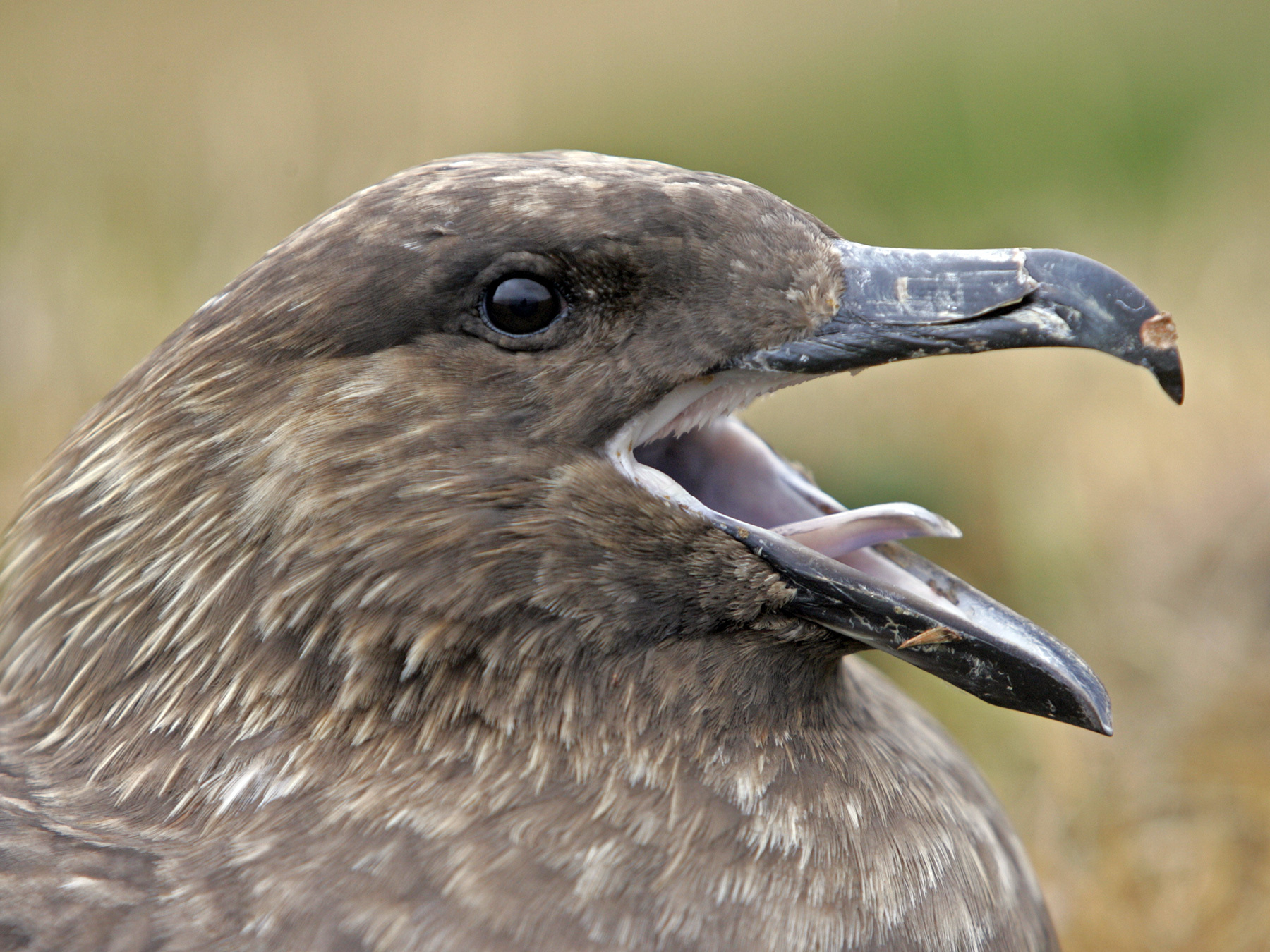
The Great Skua is a large, stocky, gull-like seabird with dark plumage and a black bill and legs. They appear almost black at a distance, but a closer view reveals dark brown plumage with black, white and yellowish streaks. Flying birds show distinct white wing bars at the base of the primaries.
Females and males look alike, but juveniles are darker than adults and have more uniform plumage without obvious streaking.
Great Skuas could be confused with other Skua species, although they are the largest and heaviest species likely to be encountered in the Northern Hemisphere. They also resemble the dark juvenile plumage of Larus gulls like Glaucous, Lesser black-backed, and Herring Gulls.
How big are Great Skuas?
Length
Great Skuas are large but stocky and compact seabirds with a total length of 53 to 58 centimetres or about 21 to 23 inches.
Weight
Their body weight varies between approximately 1.1 and 2 kilograms or two and a half to four and a half pounds.
Wingspan
Great Skuas are powerful in flight, with wingspans of 125 to 140 centimetres or 49 to 55 inches. This is fairly short relative to similar-sized gulls.
Its size
Adults- Length
- 50–58 cm
- Wingspan
- 125–140 cm
- Weight
- 1200–1800 g
Its song and calls
What sound does a Great Skua make?
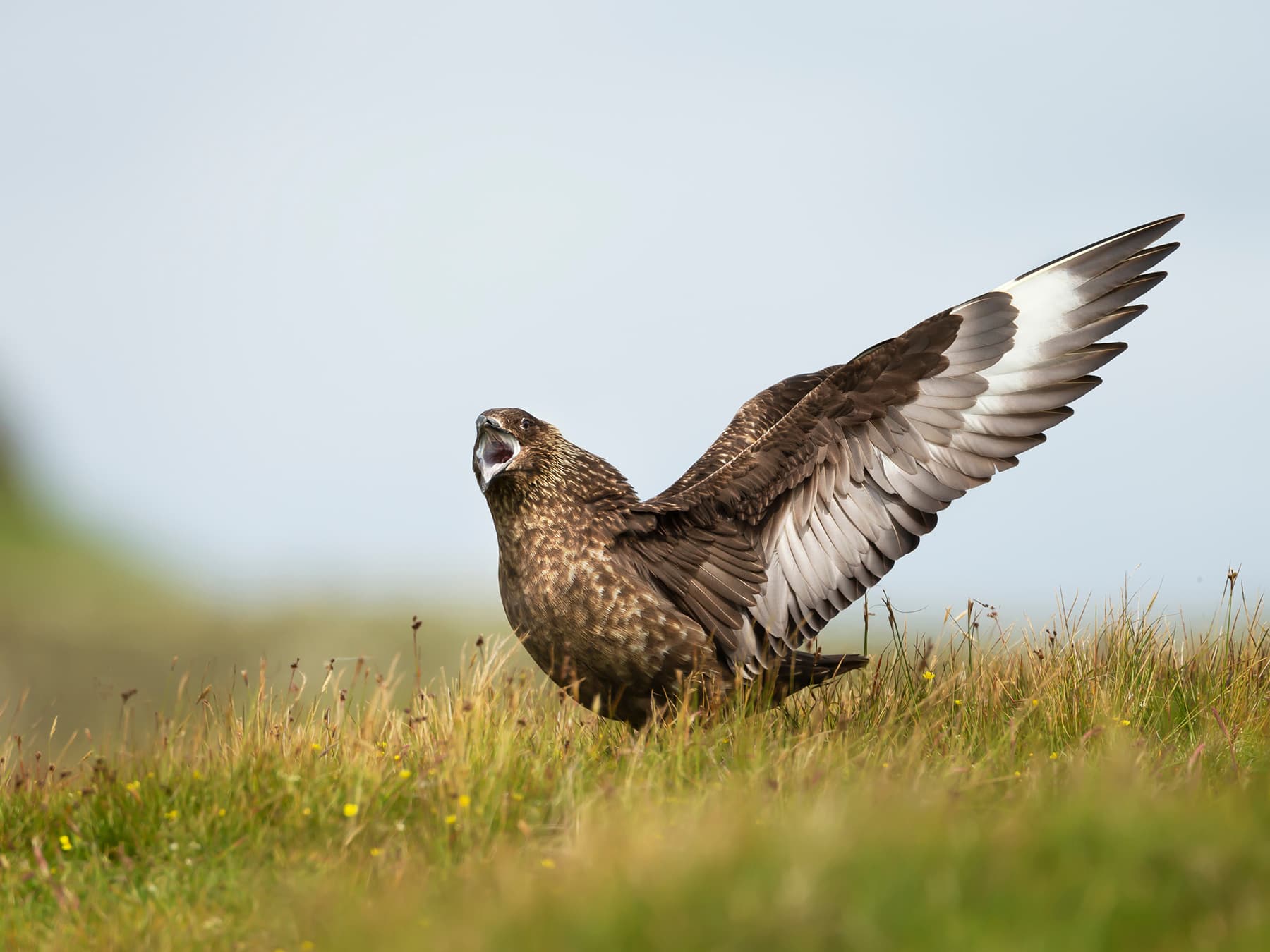
Great Skuas make a variety of harsh, gull-like calls, including a barking ‘Uk-uk-uk.’ They also produce low-pitched croaking calls and cries when attacking intruders at the nest. They are generally silent out at sea in the non-breeding season.
When and where to see it
OctoberLeaving
Most recorded in October
- 1. Pembrokeshire0.43%
- 2. Sligo0.34%
- 3. Shetland Islands0.33%
- 4. Orkney Islands0.25%
- 5. Waterford0.23%
Each dot is a county, state or province: the bigger and darker, the larger the bird’s share of that place’s bird records that month. Grey dots: no regular records. The ringed point is the centre of the bird’s records this month; the arrow shows how it moved since last month, and the dashed loop its path through the year. “Arrivals” colours places where it becomes regular this month (orange) or is in its last regular month (grey). GBIF eBird Observation Dataset, 2019–2024. Map data: Natural Earth, US Census Bureau; place centres © OpenStreetMap contributors.
In your area
See when the Great Skua is recorded in your county, state or province.
How often the Great Skua turns up in the UK, Ireland and Canada through the year, from birdwatchers' records.
United Kingdom
Summer visitor · regularly Feb–Dec · most records in August
Ireland
Summer visitor · regularly May–Oct · most records in August
Canada
Passage migrant · regularly Aug–Sep · most records in September
Show as a table
| Month | United Kingdom | Ireland | Canada |
|---|---|---|---|
| January | 0.005% | <0.001% | <0.001% |
| February | 0.006% (regular) | 0.001% | – |
| March | 0.004% | 0.005% | – |
| April | 0.021% (regular) | 0.013% | – |
| May | 0.051% (regular) | 0.018% (regular) | – |
| June | 0.078% (regular) | 0.024% (regular) | – |
| July | 0.069% (regular) | 0.092% (regular) | – |
| August | 0.11% (regular) | 0.28% (regular) | <0.001% (regular) |
| September | 0.10% (regular) | 0.13% (regular) | 0.001% (regular) |
| October | 0.044% (regular) | 0.062% (regular) | <0.001% |
| November | 0.024% (regular) | 0.006% | <0.001% |
| December | 0.012% (regular) | 0.001% | – |
Recorded regularly in
Worldwide: recorded regularly in 25 countries
Countries where it was recorded in at least 3 of the 6 years 2019–2024. Linked countries have their own bird list.
Europe (19)
- Belgium
- Denmark
- Faroe Islands
- France
- Germany
- Gibraltar
- Guernsey
- Iceland
- Ireland
- Isle of Man
- Netherlands
- Norway
- Poland
- Portugal
- Russia
- Spain
- Svalbard & Jan Mayen
- Sweden
- United Kingdom
Africa (3)
- Morocco
- Senegal
- Western Sahara
North America (3)
- Canada
- Greenland
- St Pierre & Miquelon
Data: EOD – eBird Observation Dataset (Cornell Lab of Ornithology), accessed via GBIF.org, CC BY 4.0. Records from 2019–2024, aggregated and filtered by Birdfact. How these lists are made
What is the habitat of a Great Skua?
Great Skuas are pelagic seabirds that spend the winter over offshore waters or nearer the coast along the continental shelf. They come to shore to nest in spring on treeless coastal islands and open moorlands.
What is the range of a Great Skua?
Great Skuas are restricted mainly to the Atlantic Ocean, north of the equator. They may be seen off the coasts of Svalbard, Northern Europe, the United Kingdom, Iceland, Greenland, Canada, the United States, and North Africa.
Where do Great Skuas live?
Great Skuas live in marine environments of the North Atlantic Ocean, often far from the nearest land, although they must come to shore each spring to breed. These faithful migrants return to the same place to nest each year and visit the same regions each winter. They are comfortable in the air, on water, and on land.
How rare are Great Skuas?
Great Skuas are scarce birds with a world population of just 30,000 to 34,999 individuals. Their entire population breeds in Europe, where they may be locally common in the nesting season.
Where can you see Great Skuas in the UK?
Great Skua can be seen in late spring and summer around their breeding grounds on the Shetland and Orkney Islands and around the northern and western coasts of Scotland. They may be seen almost anywhere off the coast of the UK during their spring and autumn migrations, although they are rare in winter.
Where can you see Great Skuas in Canada?
The best place to see Great Skuas in Canada is around the Grand Banks off Newfoundland, particularly in winter when non-breeding birds migrate from Iceland.
Where can you see Great Skuas in the US?
Great Skuas can be seen offshore of the United States’ northeast coast in winter. They may be seen as far south as North Carolina, although sightings are more likely off the coasts of Maine and Massachusetts in New England.
Migration
Do Great Skuas migrate?
Adult Great Skuas migrate between spring and summer breeding grounds in northern Europe and overwintering grounds as far afield as North America. Individuals that nest in the United Kingdom generally migrate south to the Mediterranean and off the shore of Northwest Africa, while Icelandic breeders head west to overwinter off Canada and the Northeast of the United States.
Why do Great Skuas migrate?
Great Skuas migrate between ideal nesting grounds in the summer and rich feeding grounds in the winter. Their breeding territory in northern Europe provides safe nesting sites and an abundance of other nesting seabirds to feed their chicks. Each of their various overwintering areas in the Atlantic and Mediterranean offers healthy prey fish populations and numerous fishing boats to scavenge from.
Tips for seeing it
- Look for Great Skuas near seabird colonies, especially in the North Atlantic.
- Observe their distinctive flight pattern: powerful and direct with deep wing beats.
- Listen for their harsh, gull-like calls, especially when defending territory.
- In the UK, visit Shetland or Orkney Islands during summer for the best chances of spotting them.
What it eats
What do Great Skuas eat?
Great Skuas are fierce predators, aggressive thieves, and opportunistic scavengers. They can catch their own fish, although they often scavenge around fishing vessels or intimidate Gannets and other seabirds into surrendering their prey. They also hunt other seabirds like Kittiwakes and Puffins.
The Great Skua diet includes:
- Small pelagic fish
- Discarded fish entrails and by-catch
- Squid
- Carrion, both on land and in the water
- Adult sea birds, their eggs, and chicks
What do Great Skua chicks eat?
Great Skua chicks are fed by regurgitation. Fish and the flesh and organs of other seabirds and their eggs are the most important components of their diet.
Nesting and breeding
Where do Great Skuas nest?
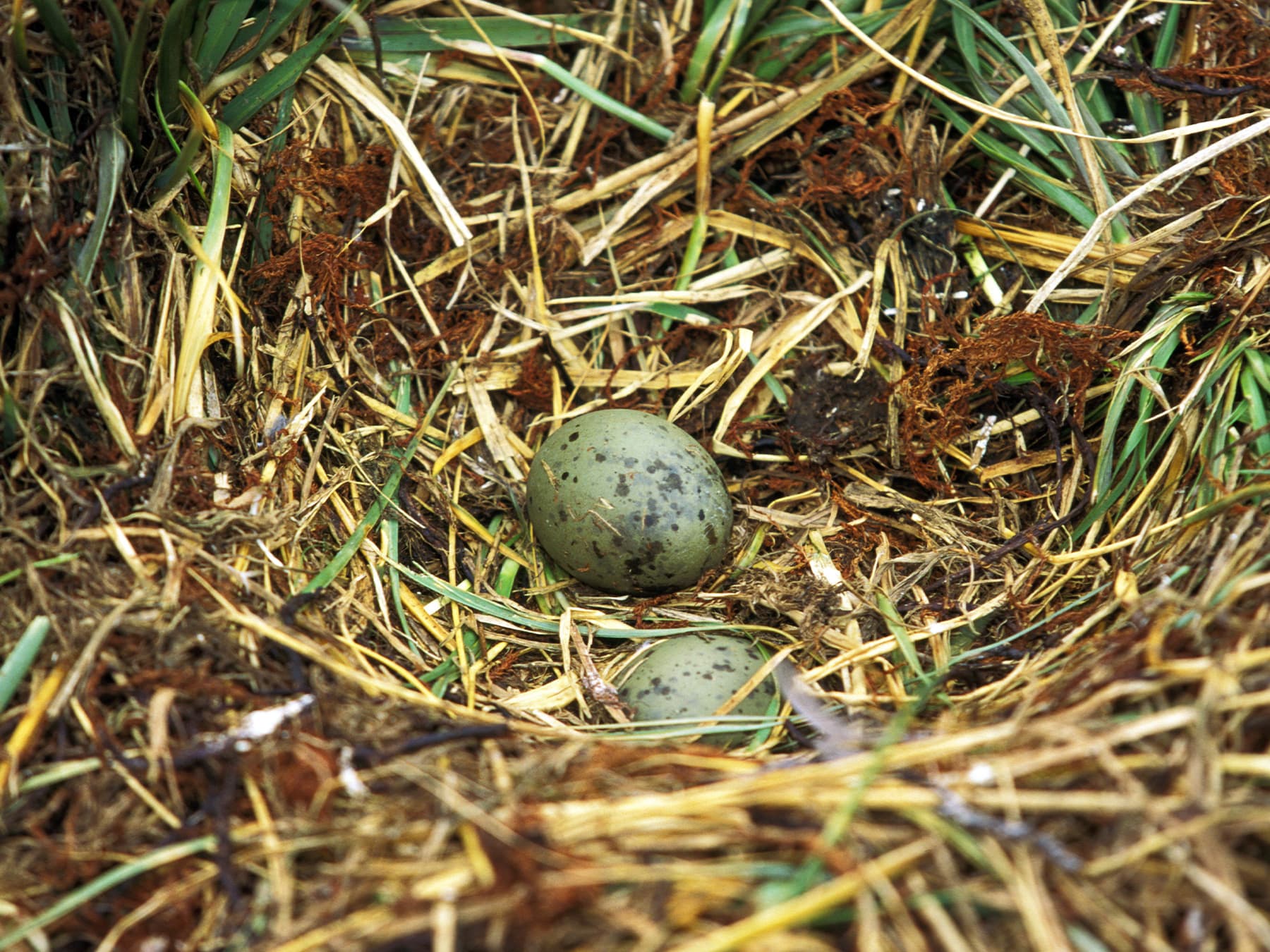
Great Skuas nest on coastal moorland and islands where human disturbance is low. They nest in groups, ranging from a few scattered pairs to loose colonies of several thousand. The nest is a grass-lined scrape on the ground on flat terrain with low vegetation cover.
Most of the population breeds in the following areas:
- Iceland
- Scotland
- Northern Ireland
- Republic of Ireland
- Faroe Islands
- Norway
- Northern Russia
When do Great Skuas nest?
Great Skuas nest from early May to late June. These long-lived seabirds first breed when they are seven or eight years old.
What do Great Skua eggs look like?
Great Skuas lay two olive-coloured eggs with darker spots. Their eggs are large, measuring approximately 70 millimetres long and 50 millimetres wide.
Do Great Skuas mate for life?
Great Skuas are thought to mate for life. These territorial birds return year after year to nest within about a kilometre of where they hatched.
Behaviour
Are Great Skuas aggressive?
Great Skuas are highly aggressive toward other birds, earning them the nickname ‘pirate of the seas’. They will intimidate other birds into giving up their food or kill and eat other seabirds small enough to overpower. These birds are quite fearless when defending their nests and will not hesitate to divebomb intruders, including humans.
Lifespan and predators
How long do Great Skuas live?
Great Skuas are long-lived birds with a maximum recorded lifespan of 38 years and an average life expectancy of about 15 years.
What are the predators of Great Skuas?
Adult Great Skuas are apex predators among seabirds with few natural enemies. Large birds of prey, like the Golden Eagle and White-tailed Eagle, are potential predators at nest sites.
Are Great Skuas protected?
Great Skuas in the United Kingdom are protected by the Wildlife and Countryside Act 1981.
Are Great Skuas endangered?
Great Skuas are not endangered, although they do have an amber conservation status in the United Kingdom. These seabirds are listed as ‘Least Concern’ on the IUCN Red List and are believed to have a stable population trend.
Conservation
While currently listed as Least Concern, Great Skuas face threats from climate change affecting their breeding habitats and food availability. Overfishing can reduce their prey species, and they are vulnerable to marine pollution, particularly oil spills.
Conservation efforts focus on protecting their breeding sites and maintaining healthy marine ecosystems.
More photos
3 photos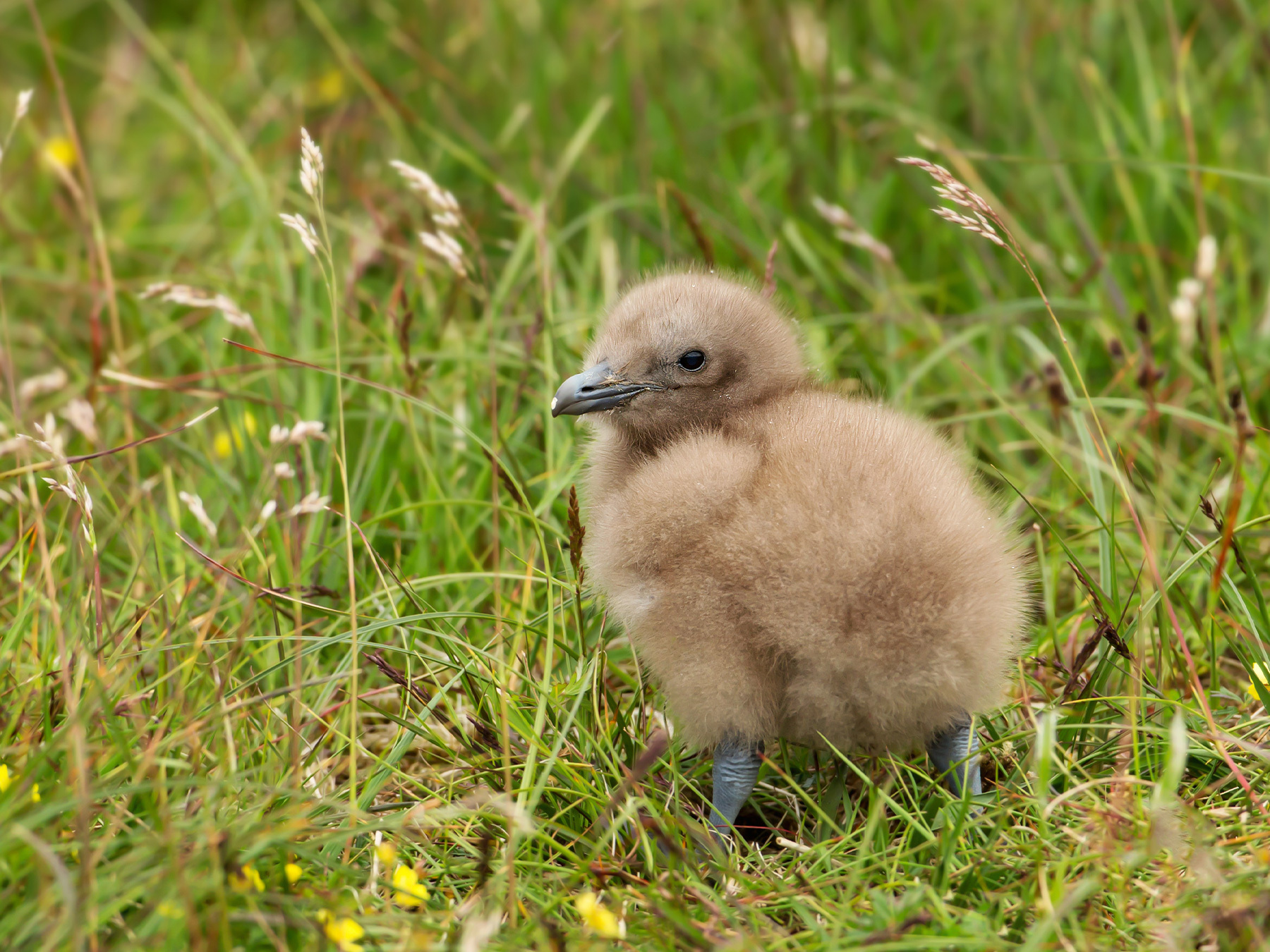
Quick facts
- Length
- 50–58 cm
- Wingspan
- 125–140 cm
- Weight
- 1200–1800 g
- Lifespan
- 20–30 years
- Family
- Skuas & Jaegers
- Migration
- Partial migrant
- Global status (IUCN)
- Least Concern
- World population
- 30,000 - 34,999 mature individuals
- Population trend
- Stable
- Also called
- Bonxie
- Scientific name
- Stercorarius skua
Questions
2Why is a Great Skua called a Bonxie?
Great Skuas are traditionally known as Bonxies in Scotland, although the derivation of this quaint Norse word is unclear. Some sources suggest it may mean ‘dumpy’, which is a fitting description for these solidly-built seabirds.
What’s the difference between an Arctic Skua and a Great Skua?
The Arctic Skua (Stercorarius parasiticus) and Great Skua (S. skua) are the two most common Skua species off the UK coast, although they are easily separated by size. The elegant and agile Arctic Skuas (also known as Parasitic Jaegers) are much smaller birds with long, pointed wings and tails.
Sources
3- 1BirdLife International. 2018. Catharacta skua. The IUCN Red List of Threatened Species 2018: e.T22694160A132532556. Source (opens in a new tab)
- 2BirdLife International. 2018. Catharacta skua. The IUCN Red List of Threatened Species 2018: e.T22694160A132532556. Source (opens in a new tab)
- 3BirdLife International. 2018. Catharacta skua. The IUCN Red List of Threatened Species 2018: e.T22694160A132532556. Source (opens in a new tab)

Checked by
Nathan Cope, founder and editor
Nathan founded Birdfact and leads its writers and contributors in the UK, the US and Canada. He has watched and studied birds for more than ten years, and checks every article and species guide before it’s published.