


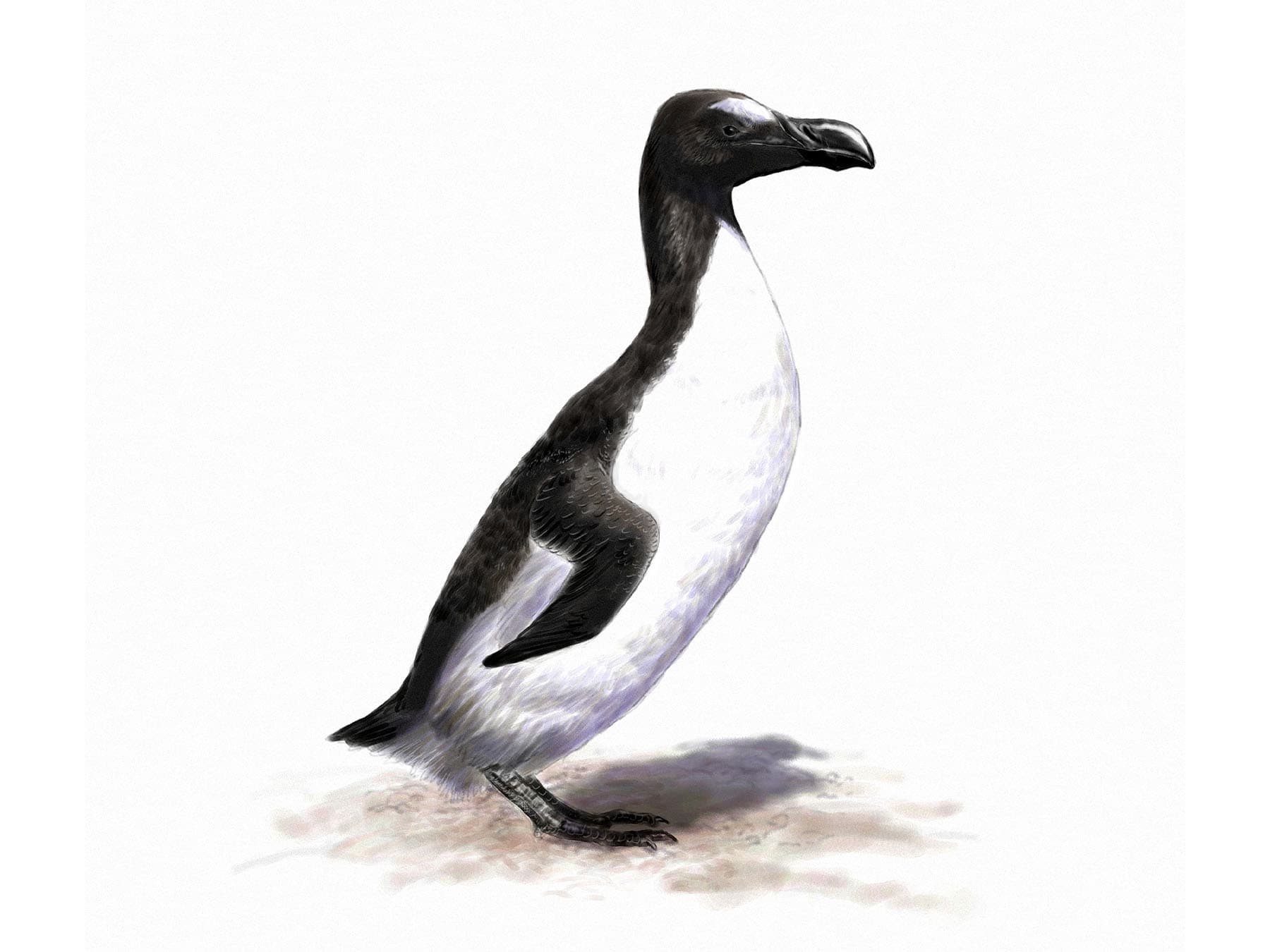
Great Auk
Garefowl · Pinguinus impennis
By the Birdfact teamChecked by Nathan Cope
On this page12 sections
How to recognise it
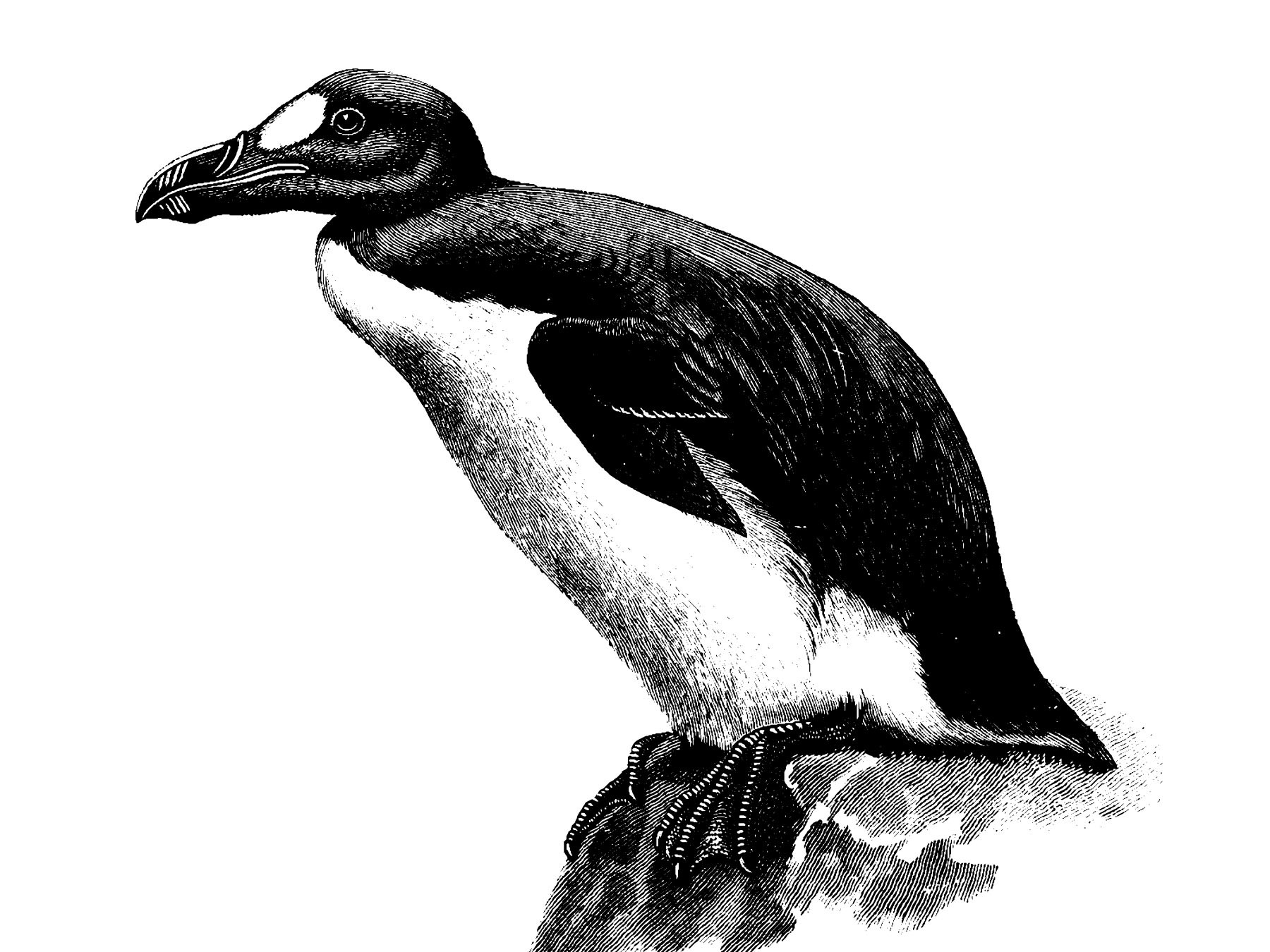
The Great Auk was a large, flightless seabird with a black back and white underparts. It had a large, curved beak and small wings adapted for swimming. Adults stood about 75-85 cm tall and weighed 4-5 kg.
During the breeding season, adults developed a white patch over each eye and white grooves on their bills. Juveniles had a more mottled appearance with smaller bills.
Its size
Adults- Length
- 75–85 cm
- Wingspan
- 70–75 cm
- Weight
- 4000–5000 g
Its song and calls
Historical accounts suggest that Great Auks produced low croaking and gurgling sounds. On breeding grounds, they were reported to make a variety of grunts and low croaks, possibly used for communication within the colony and between mates.
When and where to see it
Tips for seeing it
As the Great Auk is extinct, it cannot be observed in the wild. However, birdwatchers can:
- Visit museums with Great Auk specimens
- Explore historical breeding sites in the North Atlantic
- Learn about conservation efforts for related species
- Study historical accounts and illustrations
What it eats
Great Auks primarily fed on fish, particularly capelin and Atlantic menhaden. They were also known to consume crustaceans and marine worms. These birds could dive to depths of up to 100 meters to catch their prey.
Nesting and breeding
Great Auks formed monogamous pairs and bred in dense colonies on remote, rocky islands. The breeding season typically began in May or June.
Females laid a single egg directly on a bare rock or in a shallow depression. The egg was pyriform (pear-shaped) and had intricate patterns of brown and black markings on a white or yellowish background.
Both parents shared incubation duties for about 6 weeks. After hatching, the chick was tended by both parents until it was ready to leave the nesting site, typically after 2-3 weeks.
Behaviour
Great Auks were excellent swimmers, using their wings to propel themselves underwater in pursuit of fish. On land, they moved awkwardly in an upright posture. They were known to be social birds, gathering in large colonies during the breeding season.
Conservation
The Great Auk became extinct in the mid-19th century due to excessive hunting for its meat, eggs, and feathers.
Its demise is a stark reminder of human impact on wildlife and has influenced modern conservation efforts for seabirds and other vulnerable species.
Similar birds
Often mistaken for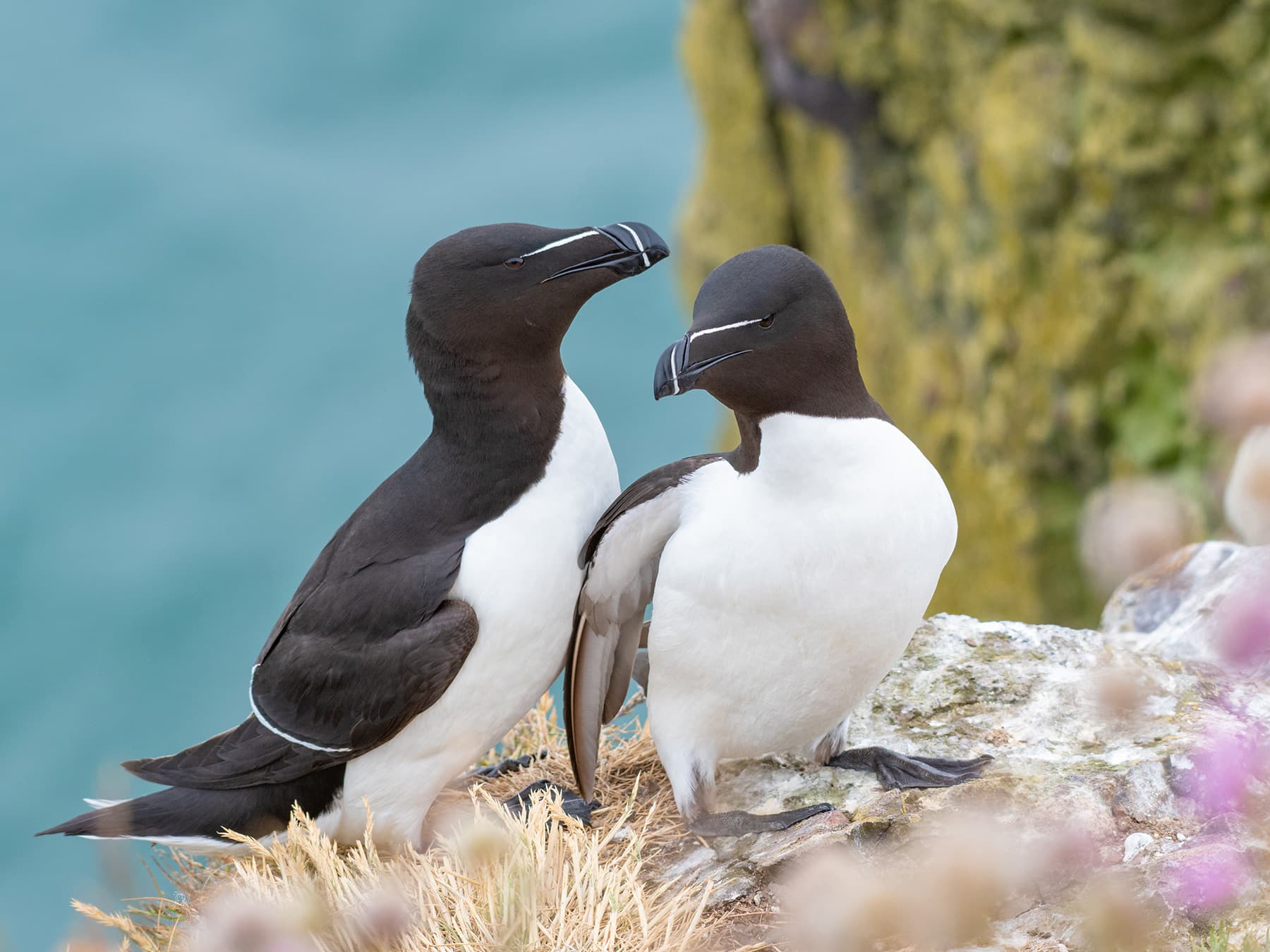
More photos
2 photos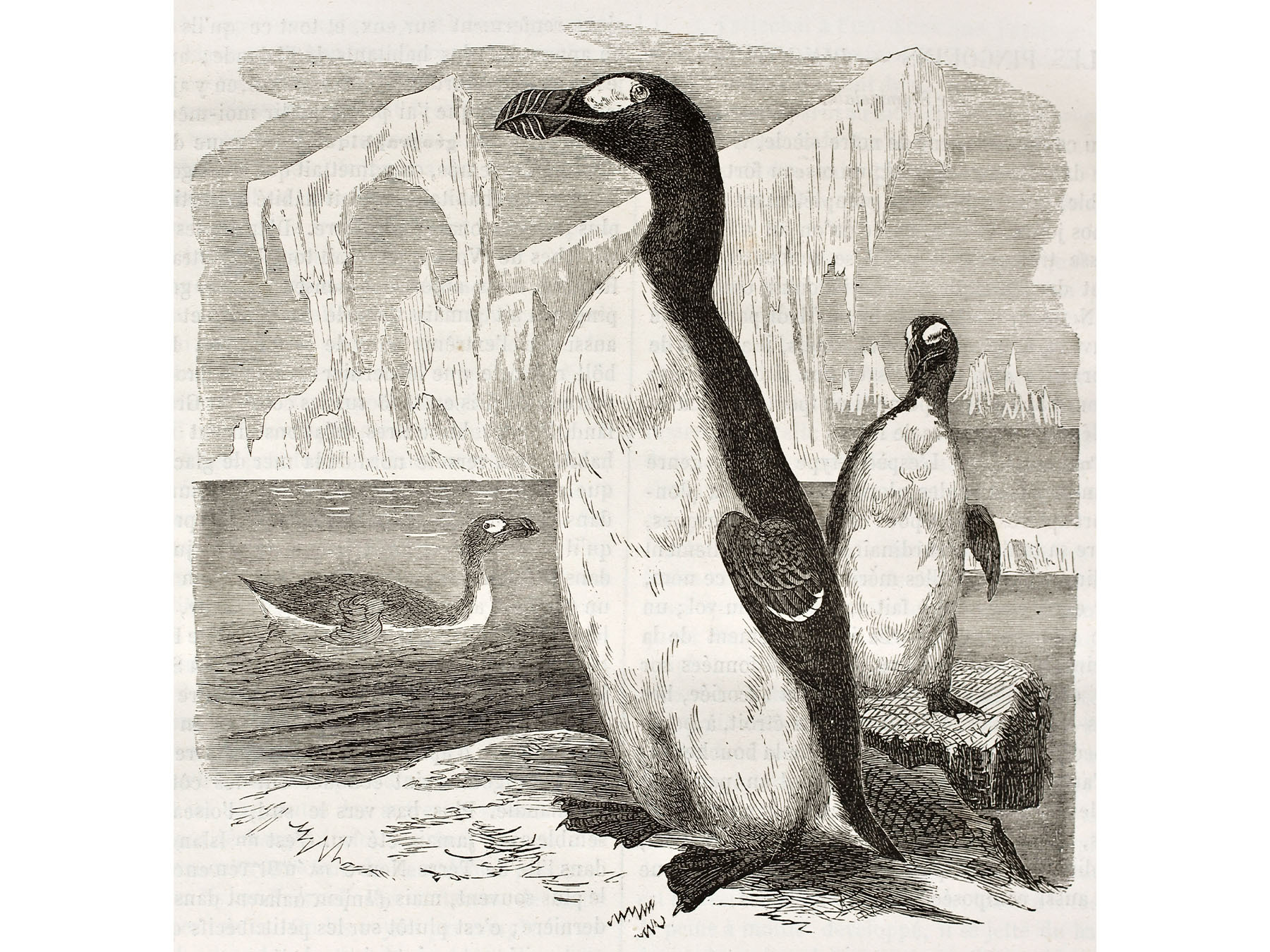
Quick facts
- Length
- 75–85 cm
- Wingspan
- 70–75 cm
- Weight
- 4000–5000 g
- Lifespan
- 20–25 years
- Family
- Auks & Puffins
- Migration
- Partial migrant
- Global status (IUCN)
- Extinct
- World population
- 0 (Extinct)
- Population trend
- The species became extinct in the mid-19th century
- Also called
- Garefowl
- Scientific name
- Pinguinus impennis
Sources
1- 1BirdLife International. 2021. Pinguinus impennis. The IUCN Red List of Threatened Species 2021: e.T22694856A205919631. Source (opens in a new tab)

Checked by
Nathan Cope, founder and editor
Nathan founded Birdfact and leads its writers and contributors in the UK, the US and Canada. He has watched and studied birds for more than ten years, and checks every article and species guide before it’s published.