
Gouldian Finch
Lady Gouldian Finch, Rainbow Finch · Chloebia gouldiae
By the Birdfact teamChecked by Nathan Cope
On this page12 sections
How to recognise it
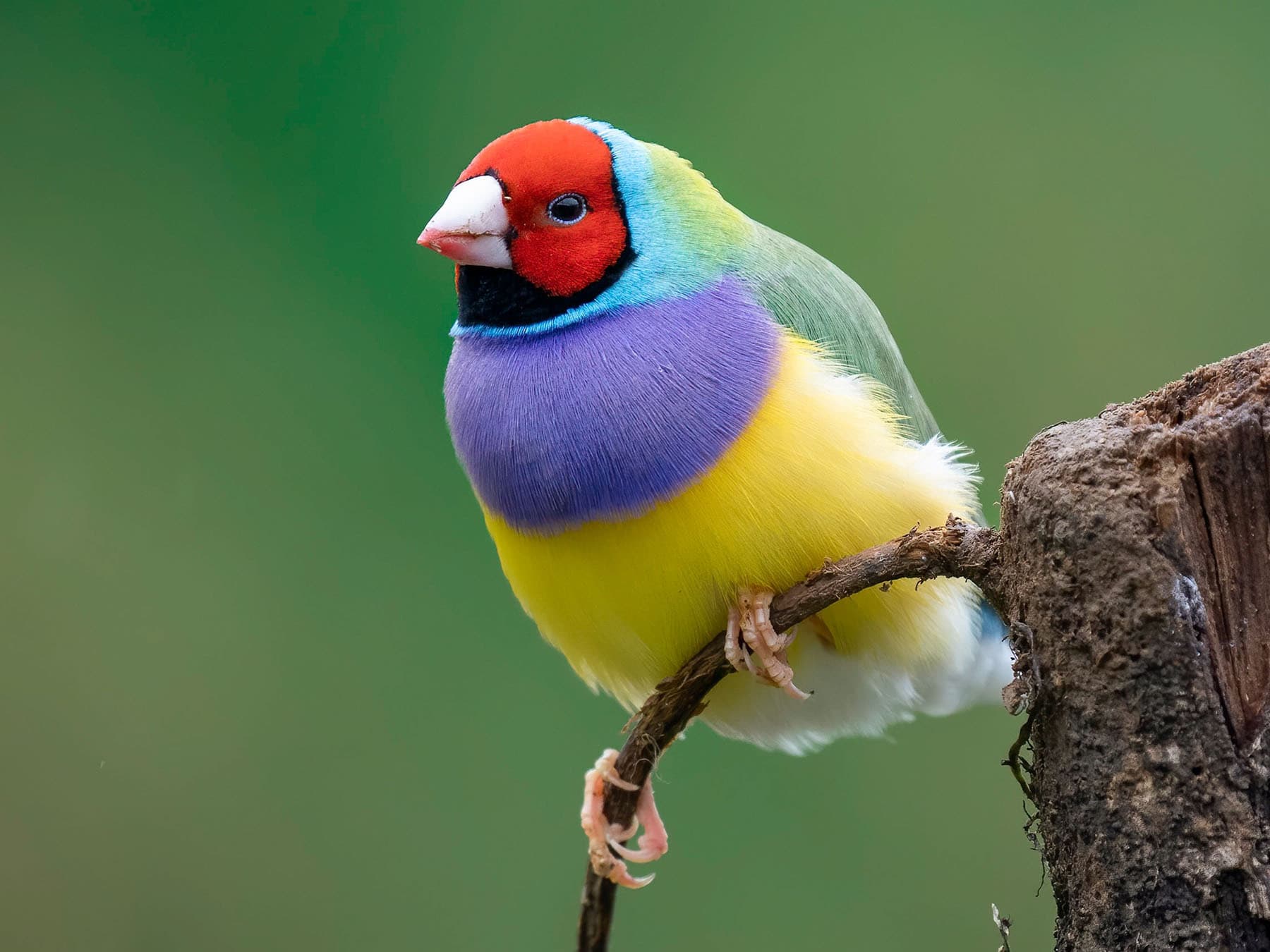
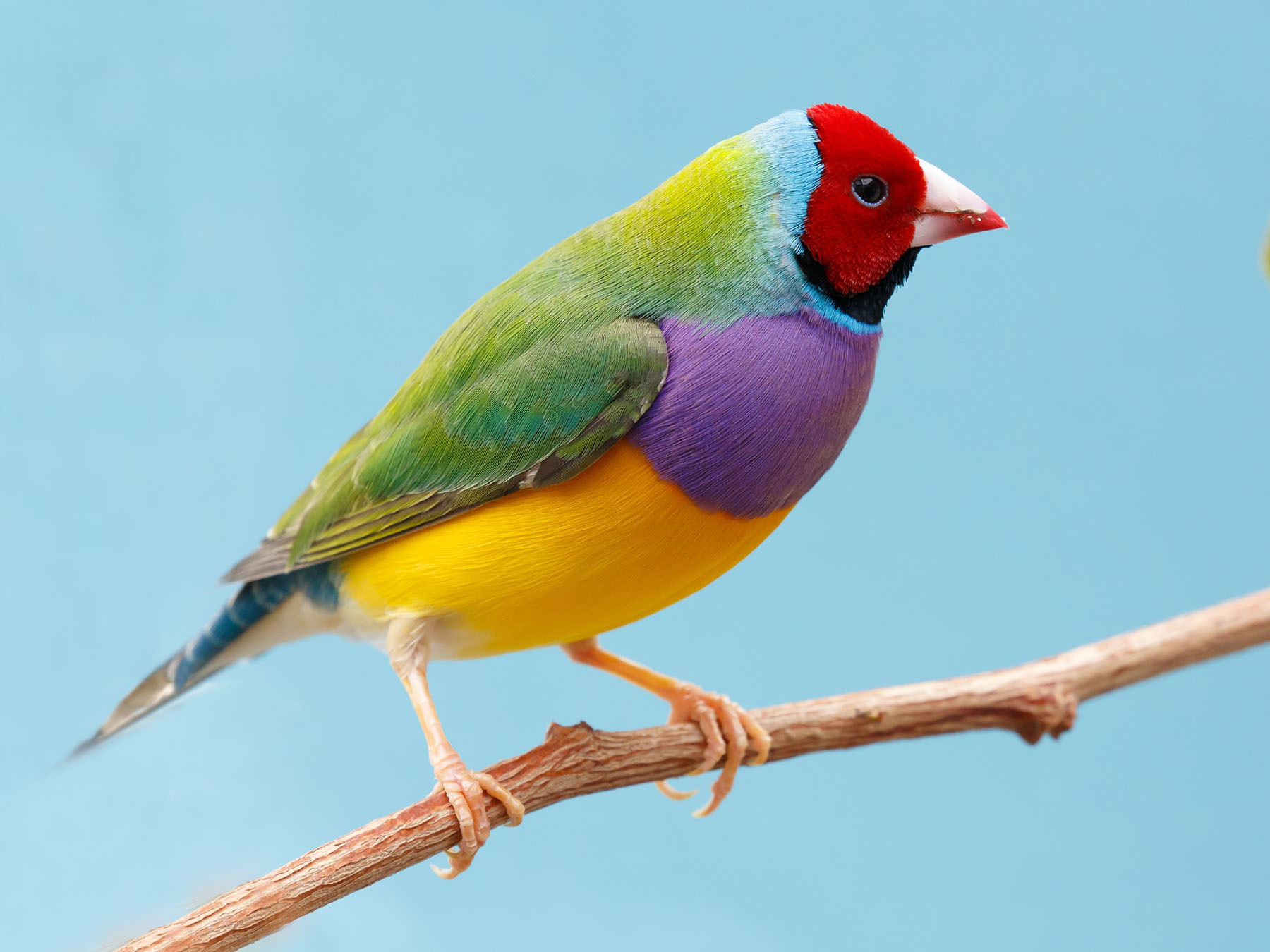
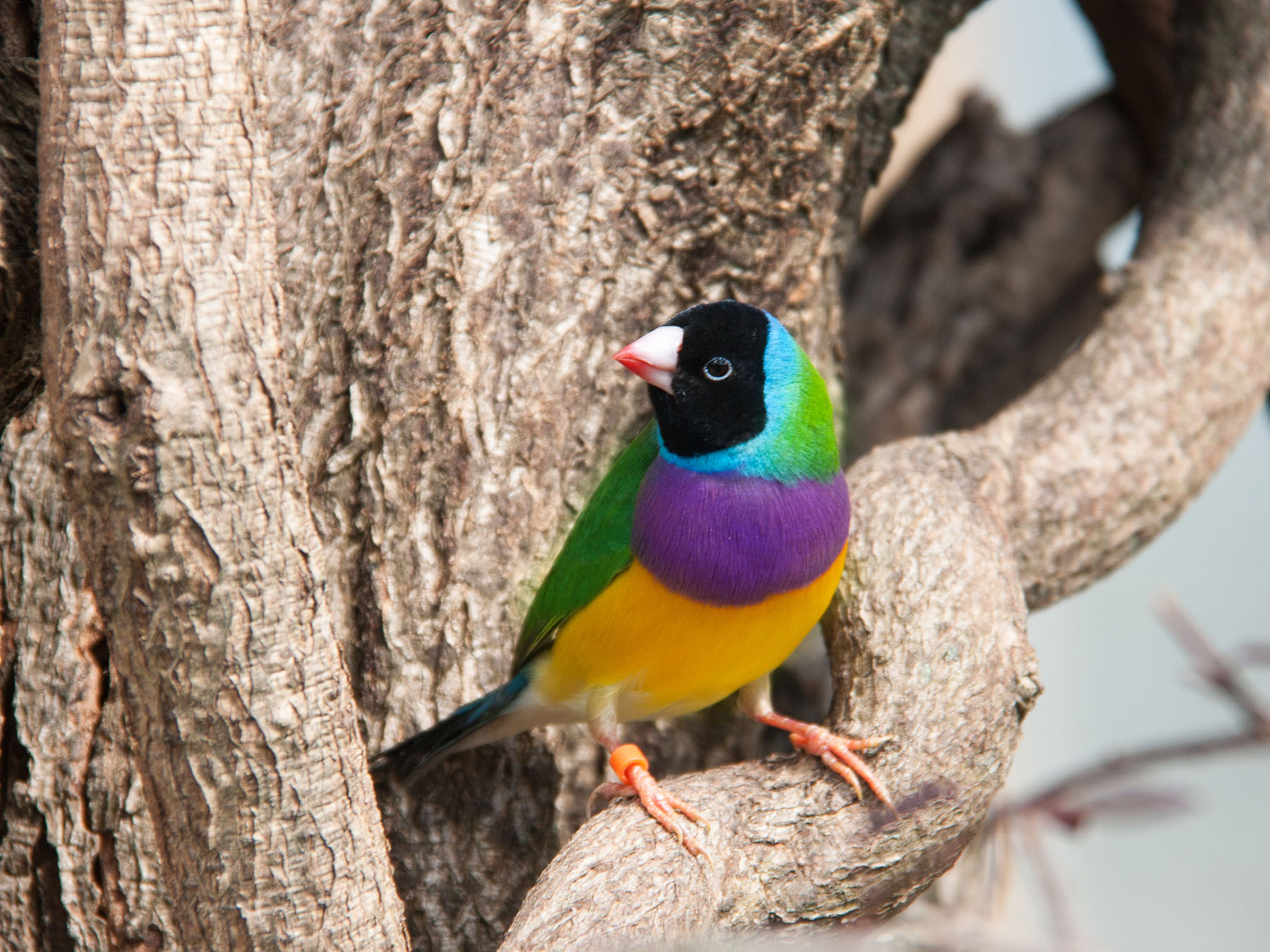
The Gouldian Finch is a strikingly colourful bird known for its vibrant plumage. Males display a rainbow of colours, with a bright red or black head, green back, purple chest, and yellow underparts. Their wings are adorned with blue and black feathers.
Females are generally less vibrant, with pale green or yellow heads. Juveniles have dull olive-grey plumage, gradually developing adult colours as they mature. All birds have a distinctive white beak, often with a reddish tip.
Its size
Adults- Length
- 13–14 cm
- Wingspan
- 13–15 cm
- Weight
- 14–20 g
Its song and calls
Gouldian Finches have a soft, pleasant vocalisation consisting of quiet twitters and whistles. Their song is a series of rapid, high-pitched notes often described as 'ssit-ssit-ssit' or 'tseee-tseee-tseee'.
During courtship, males produce a more elaborate, warbling song to attract females.
When and where to see it
The Gouldian Finch is not recorded regularly in the UK, Ireland, the United States or Canada.
United States: recorded in 3 of the 6 years. Too few years to count as a regular visitor.
Worldwide: recorded regularly in 1 country
Countries where it was recorded in at least 3 of the 6 years 2019–2024. Linked countries have their own bird list.
Oceania (1)
Data: EOD – eBird Observation Dataset (Cornell Lab of Ornithology), accessed via GBIF.org, CC BY 4.0. Records from 2019–2024, aggregated and filtered by Birdfact. How these lists are made
Tips for seeing it
- Look for Gouldian Finches near water sources in savanna habitats
- Listen for their soft, melodious whistles and twitters
- Observe them in the early morning or late afternoon when they're most active
- Use binoculars to spot their vibrant colours from a distance
- In Australia, visit northern tropical areas for the best chance of sightings
What it eats
Gouldian Finches primarily feed on grass seeds, particularly sorghum and spinifex. During the breeding season, they supplement their diet with insects and their larvae, providing additional protein.
They have a unique adaptation in their beak structure that allows them to efficiently husk and consume small seeds.
Nesting and breeding
Breeding typically occurs from February to August, during the late rainy season and early dry season. Gouldian Finches form monogamous pairs and engage in elaborate courtship displays, including bowing and tail quivering.
Nests are built in tree hollows or tall grass tussocks, constructed from grass stems and lined with soft materials. Females lay 4-8 white eggs per clutch.
Incubation lasts about 12-14 days, and both parents share duties. The chicks fledge after approximately 20 days but continue to be fed by their parents for several weeks after leaving the nest.
Behaviour
Gouldian Finches are social birds, often seen in small flocks outside the breeding season. They are primarily ground feeders, hopping along the savanna floor to forage for seeds.
During the day's heat, they seek shelter in the shade of trees or shrubs, becoming more active in the cooler morning and evening hours.
Conservation
Although listed as Least Concern, the Gouldian Finch faces threats due to habitat loss and degradation.
Conservation efforts focus on protecting and restoring their native grassland habitats in northern Australia. Captive breeding programs also contribute to maintaining population numbers and genetic diversity.
Similar birds
Often mistaken for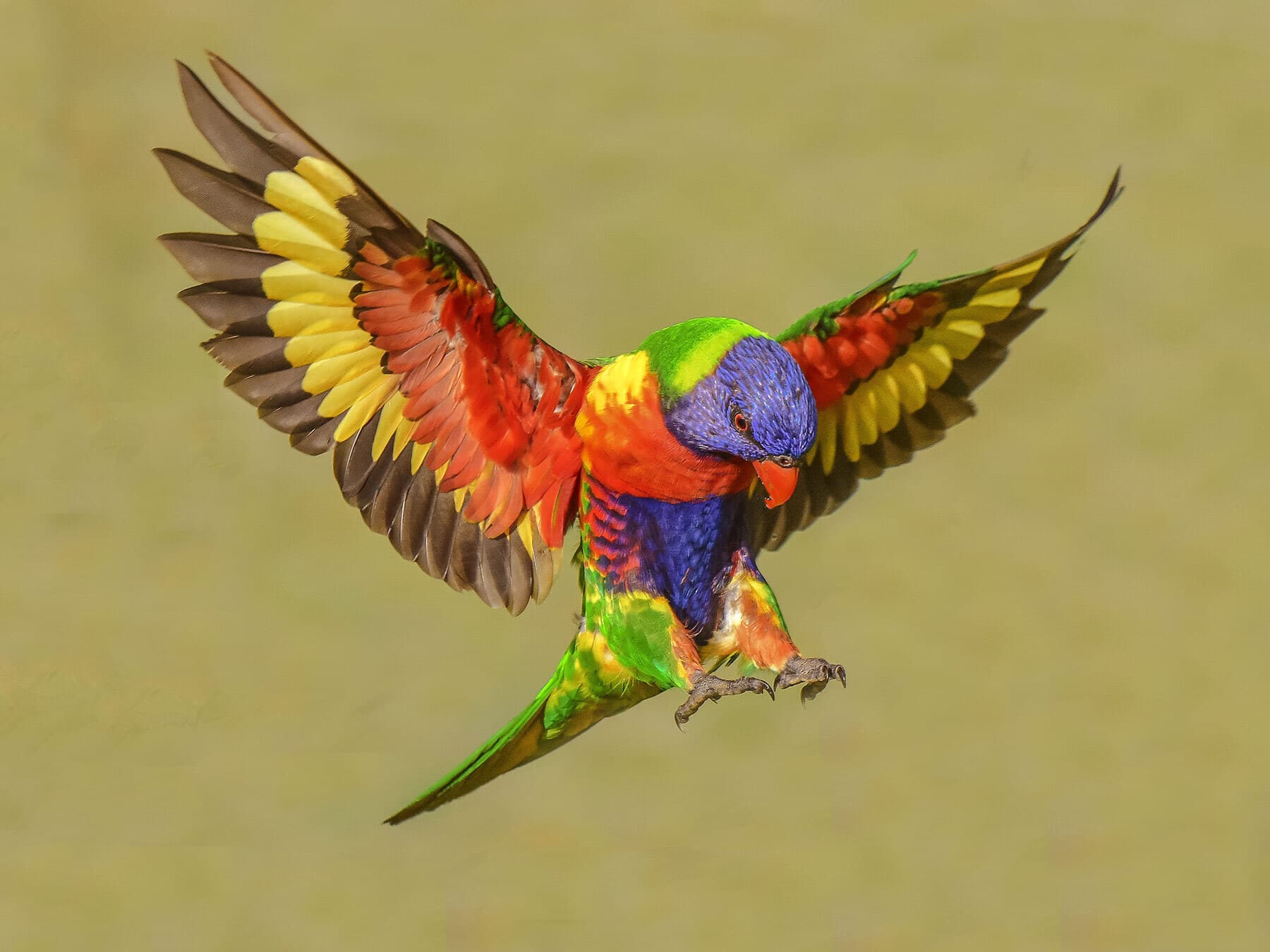
More photos
3 photos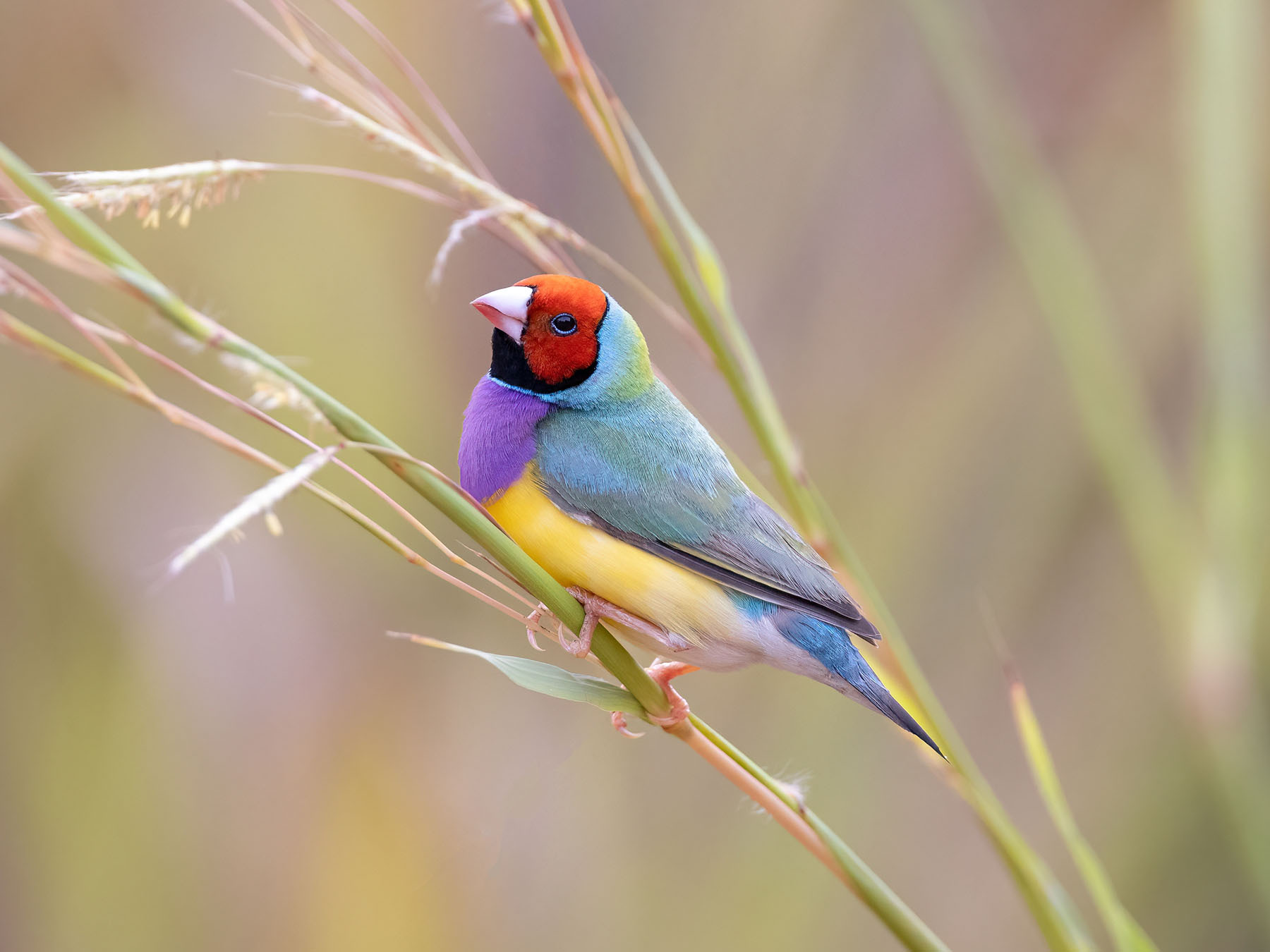
Quick facts
- Length
- 13–14 cm
- Wingspan
- 13–15 cm
- Weight
- 14–20 g
- Lifespan
- 5–8 years
- Family
- Waxbills & Finches
- Migration
- Resident
- Global status (IUCN)
- Least Concern
- World population
- 25,000 mature individuals
- Population trend
- Stable
- Also called
- Lady Gouldian Finch, Rainbow Finch
- Scientific name
- Chloebia gouldiae
Sources
3- 1BirdLife International. 2022. Chloebia gouldiae. The IUCN Red List of Threatened Species 2022: e.T22719744A211561819. Source (opens in a new tab)
- 2BirdLife Australia (2020)
- 3BirdLife International. 2022. Chloebia gouldiae. The IUCN Red List of Threatened Species 2022: e.T22719744A211561819. Source (opens in a new tab)

Checked by
Nathan Cope, founder and editor
Nathan founded Birdfact and leads its writers and contributors in the UK, the US and Canada. He has watched and studied birds for more than ten years, and checks every article and species guide before it’s published.