
Gilded Flicker
Flicker dorado · Colaptes chrysoides
By the Birdfact teamChecked by Nathan Cope
On this page14 sections
How to recognise it
What do Gilded Flickers look like?
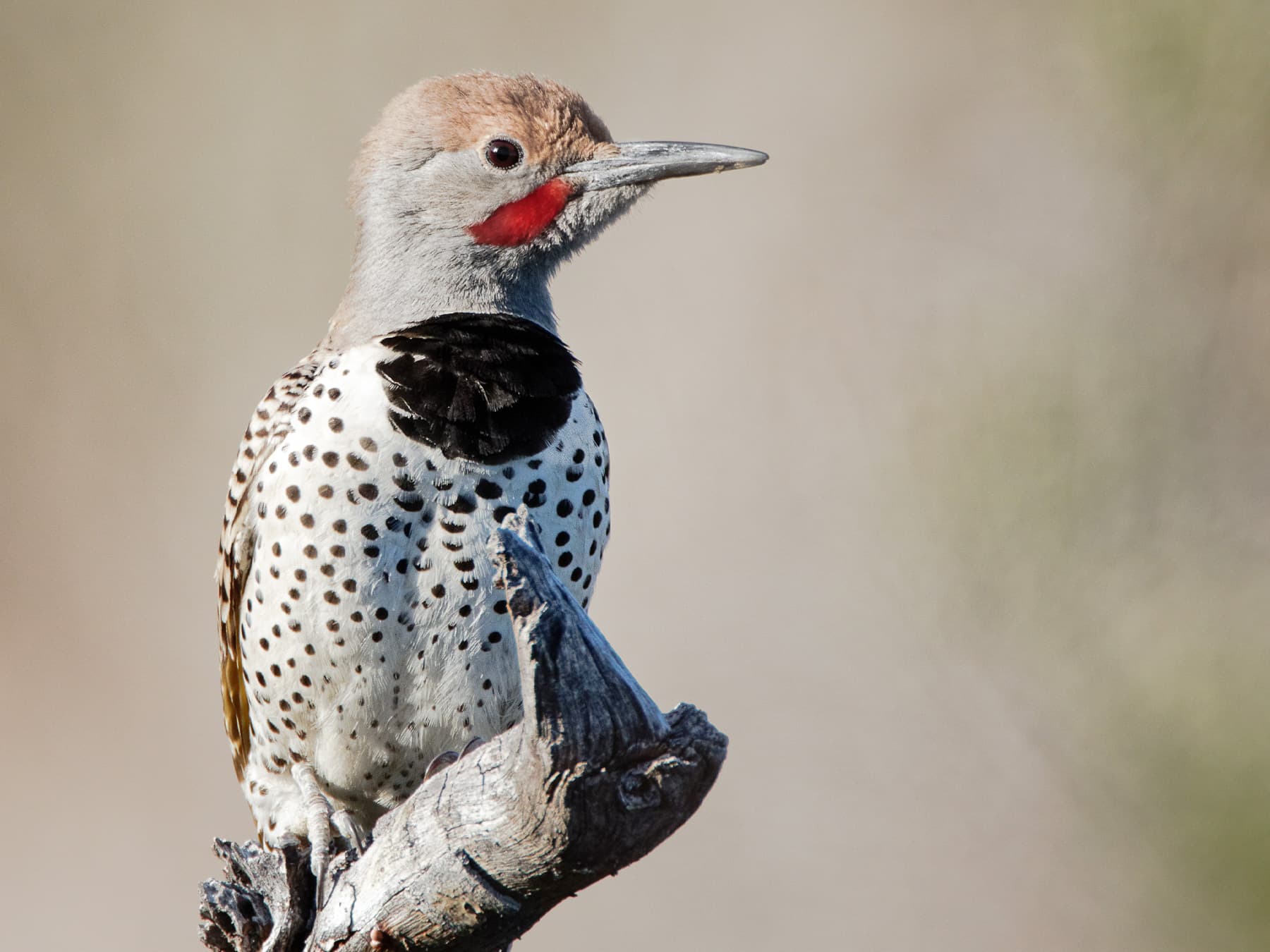
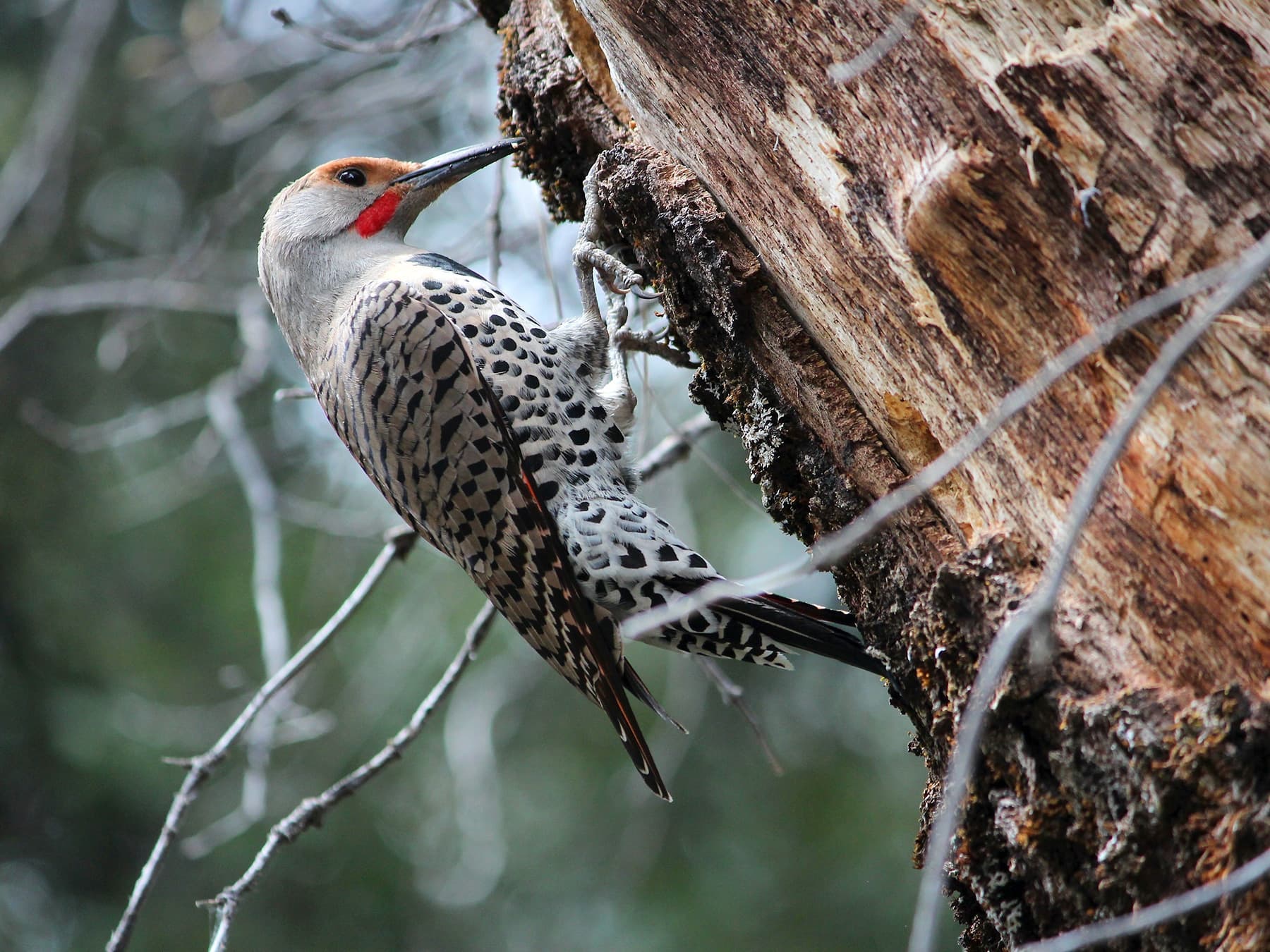
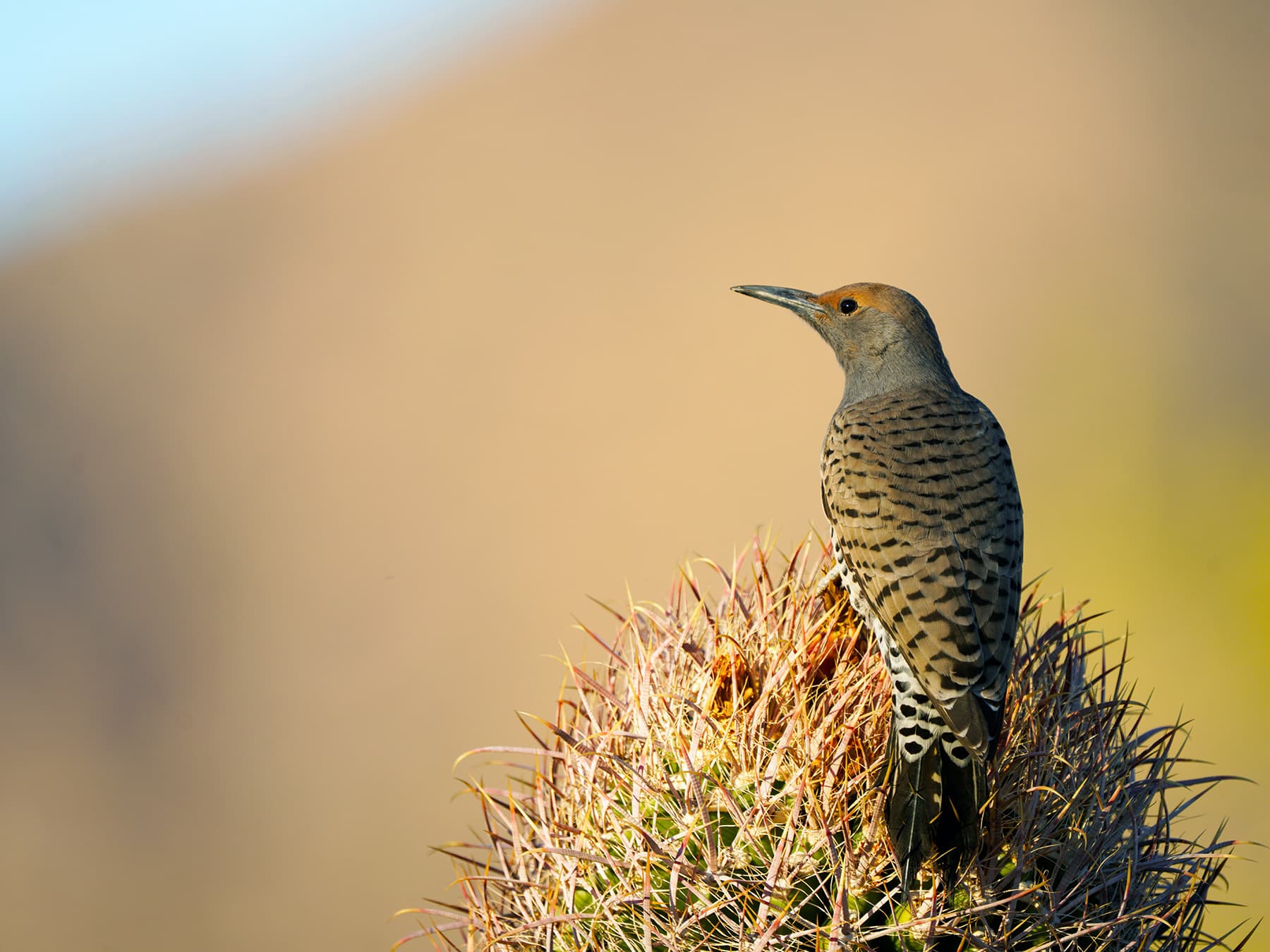
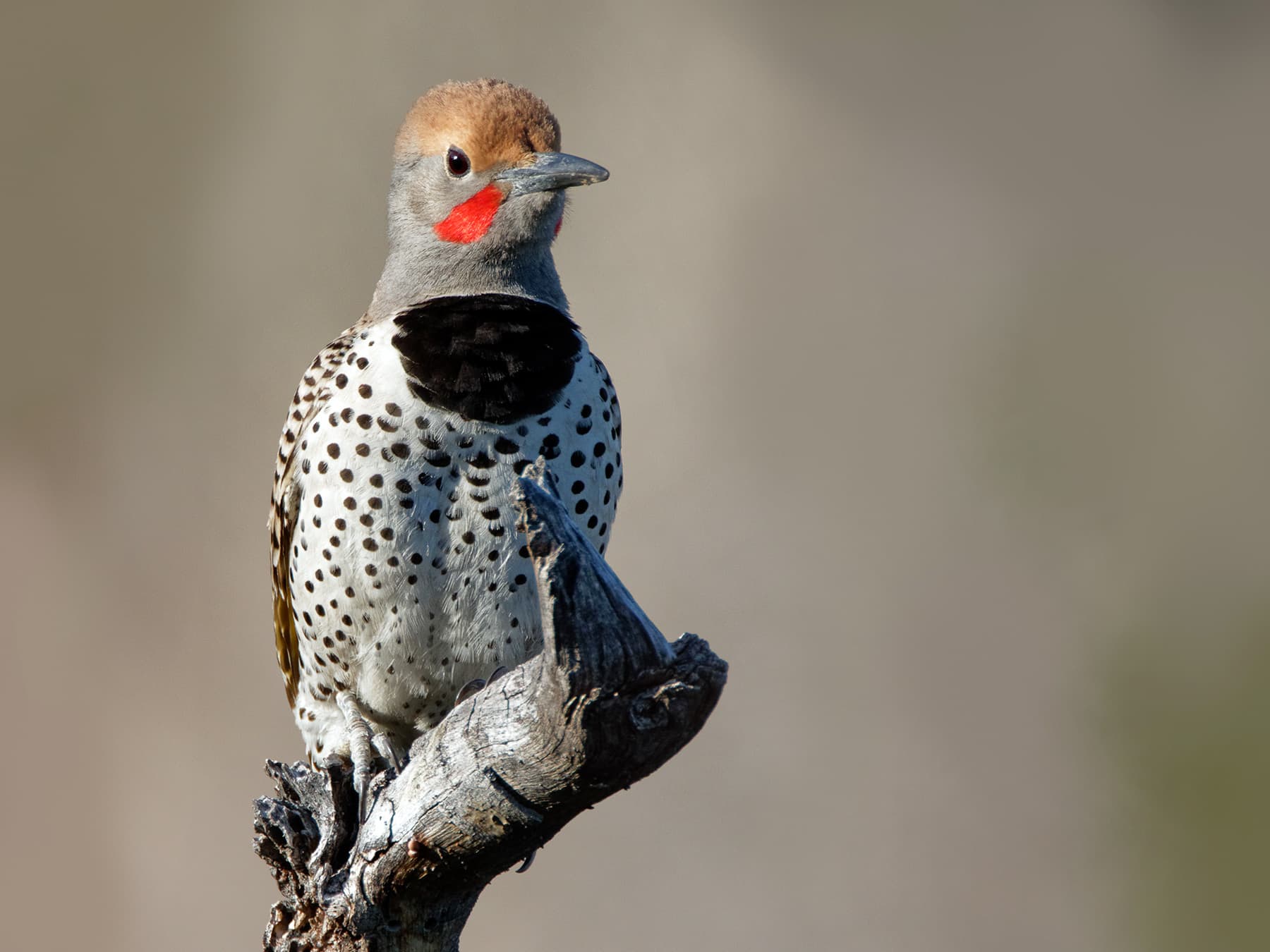
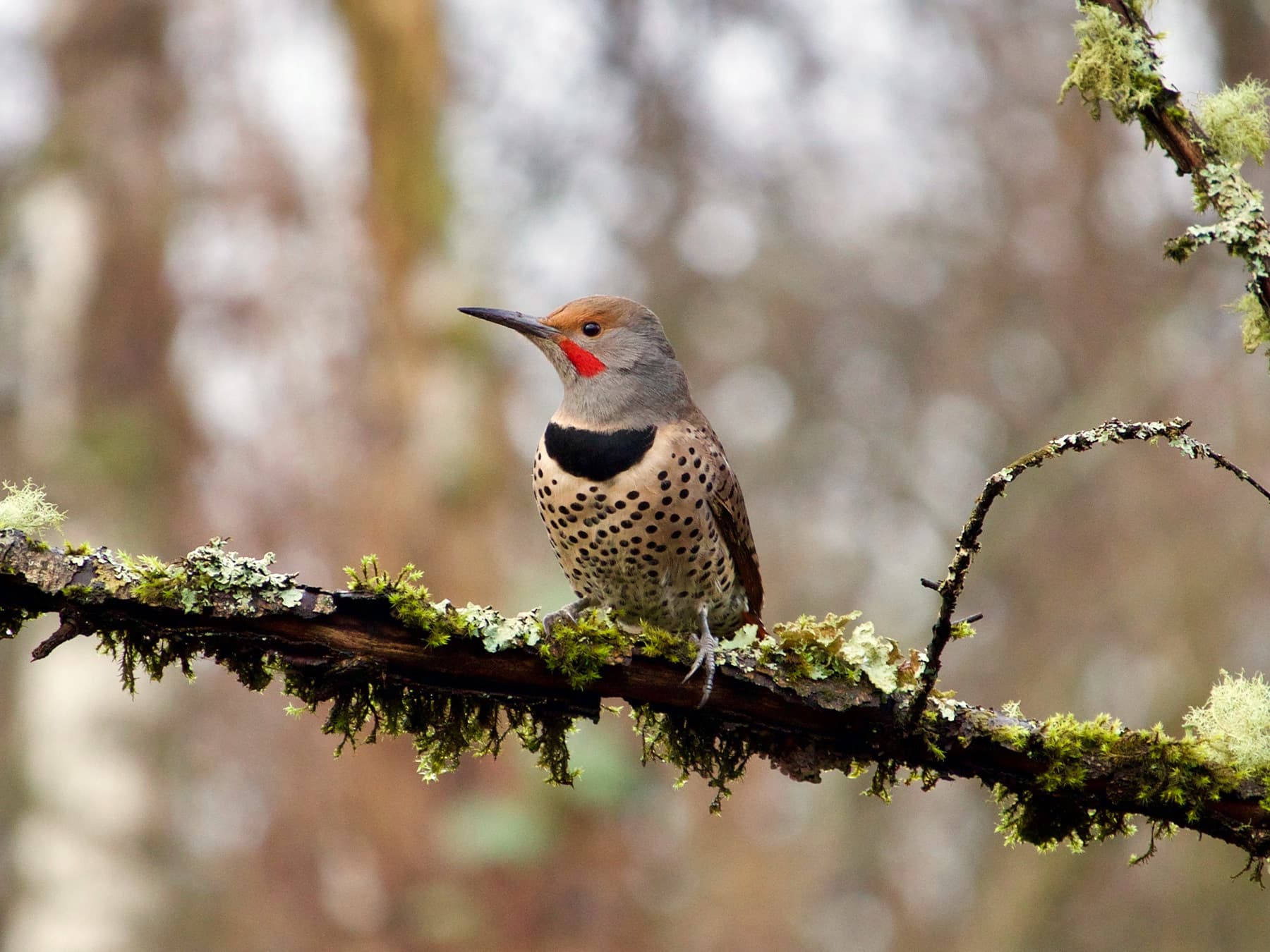
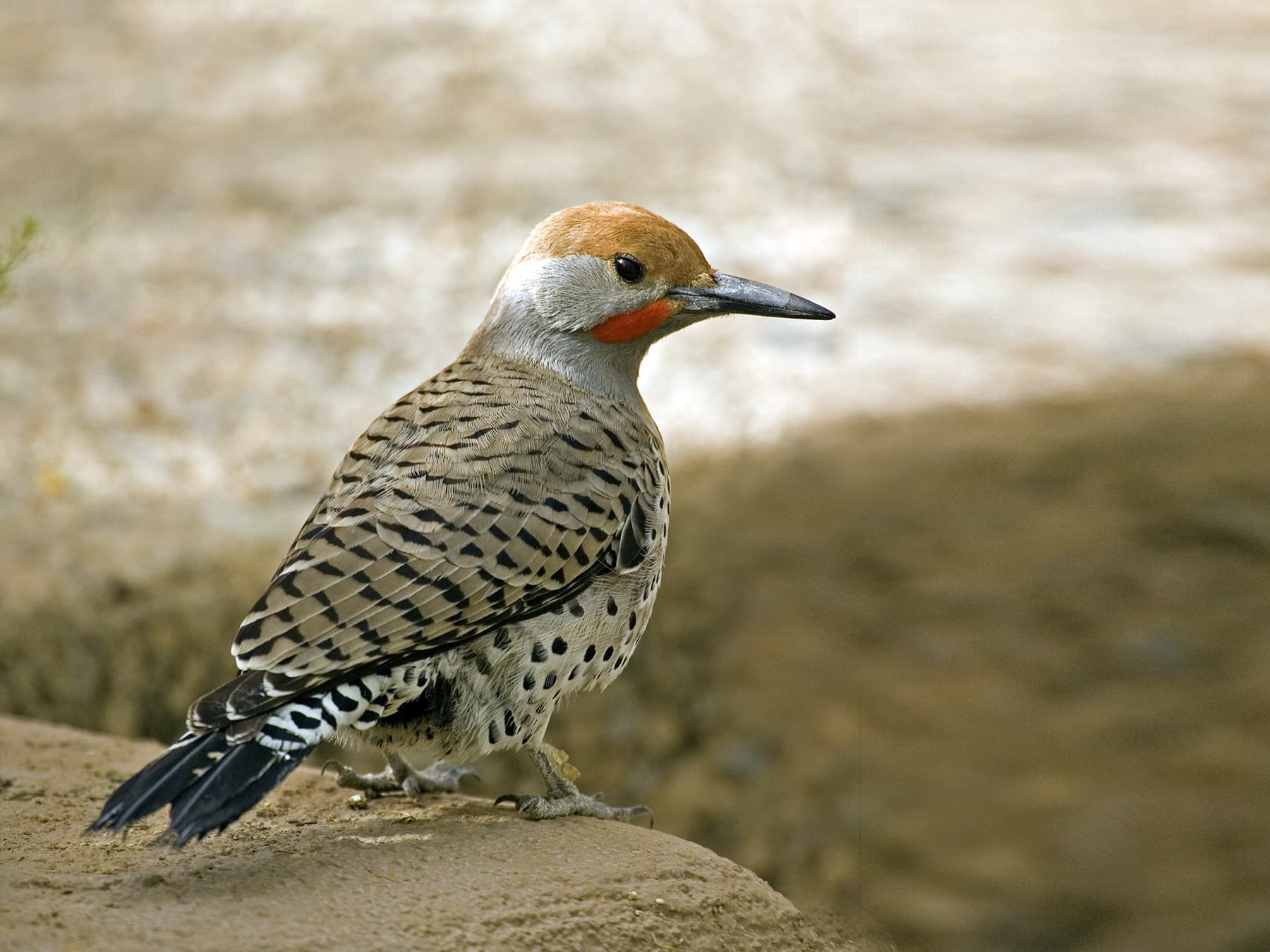
Gilded flickers are sandy brown with darker brown barring on their wings and back, which provides effective camouflage against the desert floor. Their breast and belly are off-white, spotted with black markings, with a large crescent-shaped black bib on the upper breast.
The edges and underside of the wings are bright yellow, which is a distinguishing feature in flight, as is a large white rump patch. The tail is black, edged with gold
Facial markings include a rusty-brown cap, which extends into a gray-brown nape. The lower face is pale gray, with a distinctive red cheek stripe in males. The bill is brown, darkening to black during the breeding season and the eyes are a deep reddish brown.
Female gilded flickers can be told apart from males due to the absence of the red facial stripe. Otherwise, males and females are alike in both coloring and size.
Juvenile gilded flickers have similar markings to adults, but the coloring is less bold. The cheek stripe and black bib may be visible, but far less obvious, and they are altogether less vibrant.
How big are Gilded Flickers?
Smaller than their northern counterparts, gilded flickers are relatively large members of the woodpecker family. There is no difference in size or weight between the sexes.
- Length: 29 cm to 30 cm (11 in to 12 in)
- Wingspan: 46 cm (18 in)
- Weight: 100 g to 110 g (3.9 oz)
Its size
Adults- Length
- 28–31 cm
- Wingspan
- 43–48 cm
- Weight
- 95–130 g
Its song and calls
What sound does a Gilded Flicker make?
A ‘wik-ka’ call can frequently be heard as a contact call, during territory formation and during courtship early in the breeding season. A loud, high-pitched ‘kik-kik-kik’ call carries across long distances and is a familiar sound in Sonoran Desert landscapes. They are also known to tap or drum on metal objects, including telegraph posts or fence poles.
When and where to see it
OctoberHere all year
Most recorded in October
- 1. Arizona0.27%
- 2. Nevadaunder 0.1%
- 3. Californiaunder 0.1%
Each dot is a county, state or province: the bigger and darker, the larger the bird’s share of that place’s bird records that month. Grey dots: no regular records. The ringed point is the centre of the bird’s records this month; the arrow shows how it moved since last month, and the dashed loop its path through the year. “Arrivals” colours places where it becomes regular this month (orange) or is in its last regular month (grey). GBIF eBird Observation Dataset, 2019–2024. Map data: Natural Earth, US Census Bureau; place centres © OpenStreetMap contributors.
In your area
See when the Gilded Flicker is recorded in your county, state or province.
How often the Gilded Flicker turns up in the United States through the year, from birdwatchers' records.
United States
Resident · all year · most records in March
Show as a table
| Month | United States |
|---|---|
| January | 0.011% (regular) |
| February | 0.012% (regular) |
| March | 0.012% (regular) |
| April | 0.007% (regular) |
| May | 0.005% (regular) |
| June | 0.005% (regular) |
| July | 0.007% (regular) |
| August | 0.011% (regular) |
| September | 0.008% (regular) |
| October | 0.008% (regular) |
| November | 0.010% (regular) |
| December | 0.011% (regular) |
Worldwide: recorded regularly in 2 countries
Countries where it was recorded in at least 3 of the 6 years 2019–2024. Linked countries have their own bird list.
North America (2)
Data: EOD – eBird Observation Dataset (Cornell Lab of Ornithology), accessed via GBIF.org, CC BY 4.0. Records from 2019–2024, aggregated and filtered by Birdfact. How these lists are made
What is the habitat of a Gilded Flicker?
The dry climate of the Sonoran Desert is crucial to the survival of gilded flickers, and they are strongly associated with landscapes with dense concentrations of saguaro and Mexican giant cardon cacti, in which they build their nest cavities. In northern parts of their range, gilded flickers may occasionally nest in deciduous trees alongside streams, particularly cottonwood, and willow.
What is the range of a Gilded Flicker?
Gilded flickers are only found in the desert landscapes of the extreme southwestern US and north western Mexico. Central Arizona forms the upper and eastern extent of their range, with occasional and rarer records in southwestern Canada and the southern tip of Nevada.
To the south, the range extends over the border with Mexico along the entire length of Baja California and over a small area of northwestern Mexico.
Where do Gilded Flickers live?
The total estimated population of the species is 770,000, of which 240,000 individuals live in the United States and the rest in Mexico.
Within the US, gilded flickers are limited to a region in the southwestern corner of the country, encompassing central and southwestern Arizona and smaller patches of southern Nevada and southeastern California. Arizona is home to the majority of gilded flickers in the US, with Pima, Pinal, and La Paz counties recording the highest numbers.
How rare are Gilded Flickers?
Gilded flickers are a common species in the Sonoran Desert, particularly in south-central Arizona. They are also relatively widespread in riverside groves and desert landscapes across their range, and their habit of nesting in cavities drilled out in giant saguaro cacti makes them fairly easy to spot in landscapes with desert vegetation.
Where can you see Gilded Flickers in the US?
The Sonoran Desert offers the best chances of sighting a gilded flicker in the United States. Look among the giant saguaro and giant Cardon cactus vegetation in south-central Arizona.
Where can you see Gilded Flickers in Canada?
Gilded flickers are a southern species and are never found as far north as Canada. They thrive in desert climates and do not usually stray beyond central Arizona, making a Canadian sighting extremely unlikely.
Migration
Do Gilded Flickers migrate?
Gilded flickers are a non-migratory species, remaining in the same territories all year round with no significant annual movement patterns noted before or after breeding.
Are Gilded Flickers native to the US?
Gilded flickers are resident in the southwestern corner of the US and their range spreads across the border into Baja California and northwestern Mexico. They are year-round residents found, mainly in Arizona, but also present in the southeastern region of California and southern border areas of Nevada.
Tips for seeing it
- Look for Gilded Flickers near saguaro cacti, where they often nest
- Listen for their distinctive 'wicka-wicka-wicka' call
- Observe ground areas in desert landscapes for foraging behavior
- Visit desert regions of Arizona and southeastern California for the best chances of spotting
What it eats
What do Gilded Flickers eat?
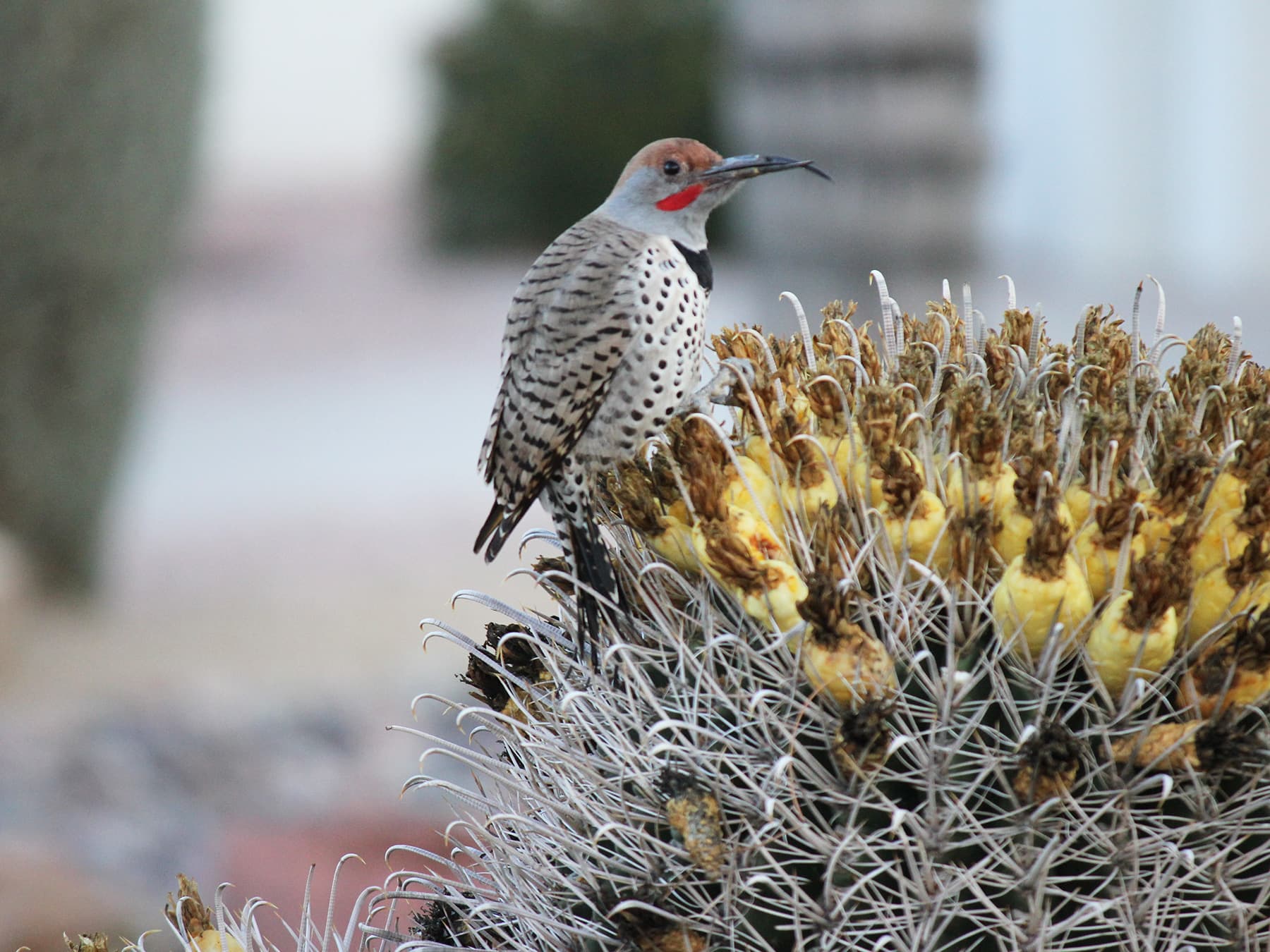
The diet of gilded flickers is mainly based on insects, especially ants, which they forage from the desert floor, probing into anthills. Beetles, termites, caterpillars, and larvae are also common. They also eat cactus fruits, flowers, and seeds, particularly in winter.
What do Gilded Flicker chicks eat?
Young gilded flickers are fed by their parents, who regurgitate ants and ant larvae into their bills.
Nesting and breeding
Where do Gilded Flickers nest?
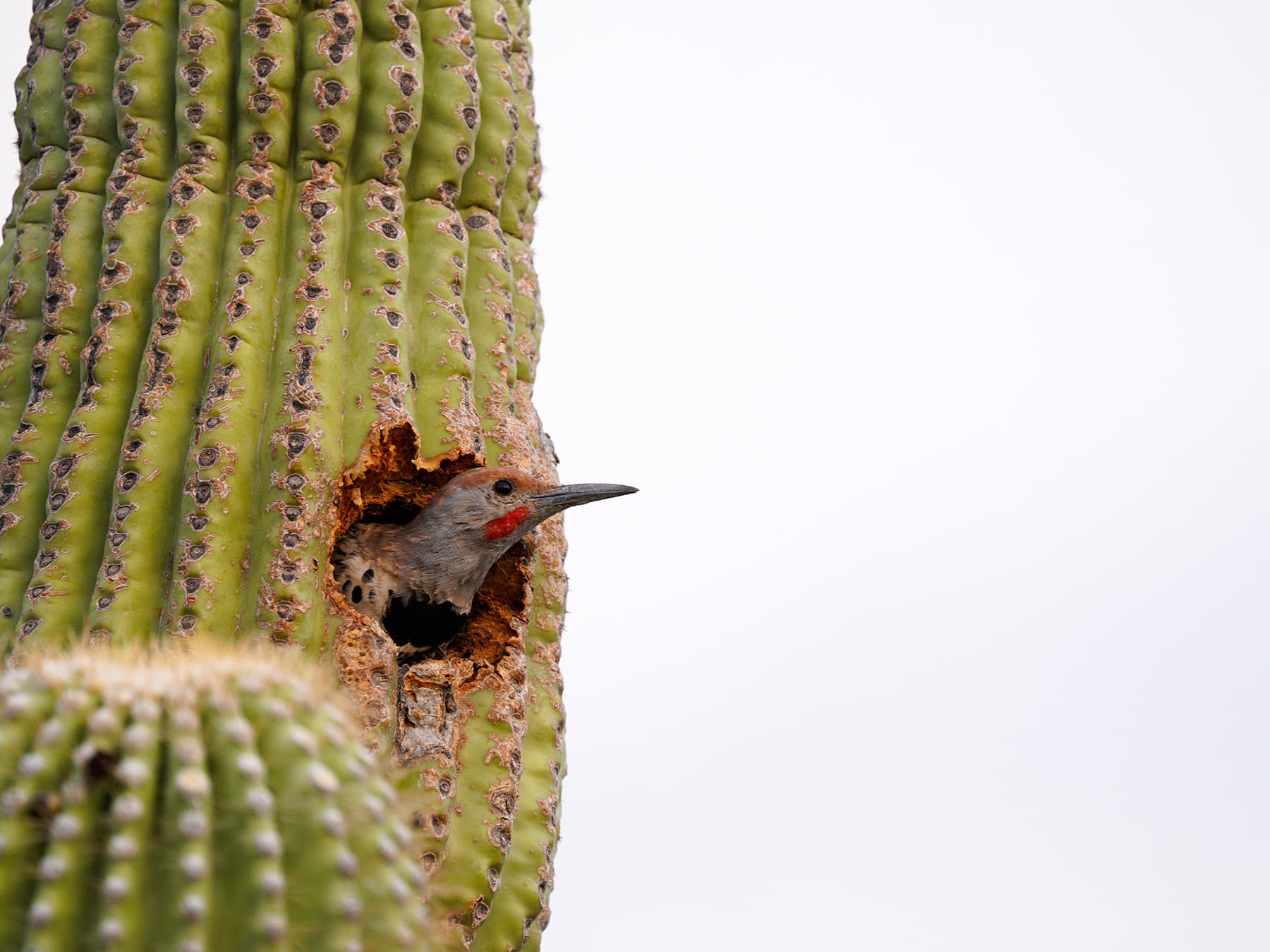
The most usual nesting spots for gilded flickers are cavities excavated in giant saguaro cacti. These nests account for around 90 percent of all gilded flickers’ nests. Where a suitable saguaro cannot be found, they may use trees in riverside woodlands, especially cottonwoods and willows.
A nest cavity is drilled out near the top of the saguaro cactus, and no additional lining is used. Nests are usually around 6 m (20 ft) above ground level and pairs work together to excavate the chamber.
When do Gilded Flickers nest?
Nest construction begins early in the year before temperatures rise. Eggs are laid in April, with incubation believed to be around 11 to 12 days. There is a lack of verified data on exact timings, due to the species’ preference for remote nesting sites, which limits observation of nests and nesting behavior.
Both males and females take turns to incubate, with males’ incubating overnight and during part of the day. Fledging takes place after around 4 weeks.
What do Gilded Flicker eggs look like?
Gilded flicker eggs are pure white, and measure 29 mm by 21 mm (1.1 in by 0.8 in). A typical clutch contains around 4 eggs.
Do Gilded Flickers mate for life?
We don’t know much about the pair bonds formed by gilded flickers and how long they last. They are believed to choose a mate early in the year, with pairs observed in February. One brood is raised together in a typical season.
Behaviour
Are Gilded Flickers aggressive?
During the breeding season, both male and female gilded flickers will aggressively defend their nest cavity against threats. Calls, drumming, and hostile posturing are used to claim a territorial boundary.
Lifespan and predators
How long do Gilded Flickers live?
Little confirmed data is available for the average lifespan of gilded flickers, but the oldest recorded individual, identified from a banding program, was 6 years and 4 months.
What are the predators of Gilded Flickers?
Gilded flickers face competition from European starlings for nest sites, but the flickers are usually the victors in any conflict. Natural predators include snakes, lizards, rodents, hawks and ravens, and squirrels.
Are Gilded Flickers protected?
The Migratory Bird Treaty Act of 1918 protects gilded flickers, their eggs, nests, and their young. This legislation makes it a federal offense to kill, injure, capture, or trade individual birds without a licence.
Are Gilded Flickers endangered?
Population declines are evident and habitat is increasingly lost to development or brush fires. The US population declined by 54 percent between 1970 and 2014. However, due to the much larger and more stable population to the south in Mexico, gilded flickers are classified as a species of least concern globally.
Conservation
While currently listed as Least Concern, Gilded Flickers face threats from habitat loss due to urban development and agricultural expansion in desert areas.
Conservation efforts focus on preserving saguaro cactus forests and educating the public about the importance of maintaining desert ecosystems.
Similar birds
Often mistaken for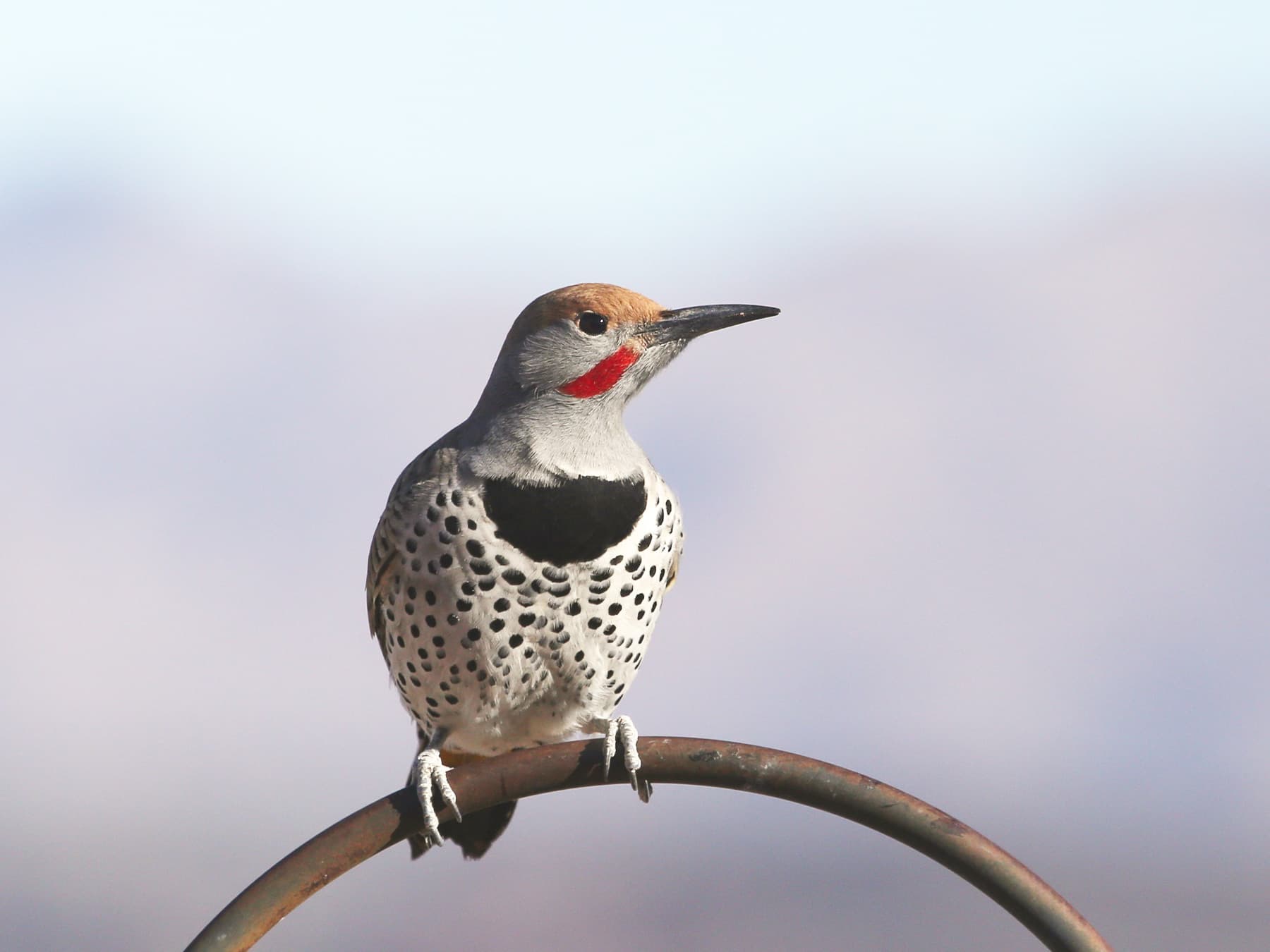
More photos
1 photos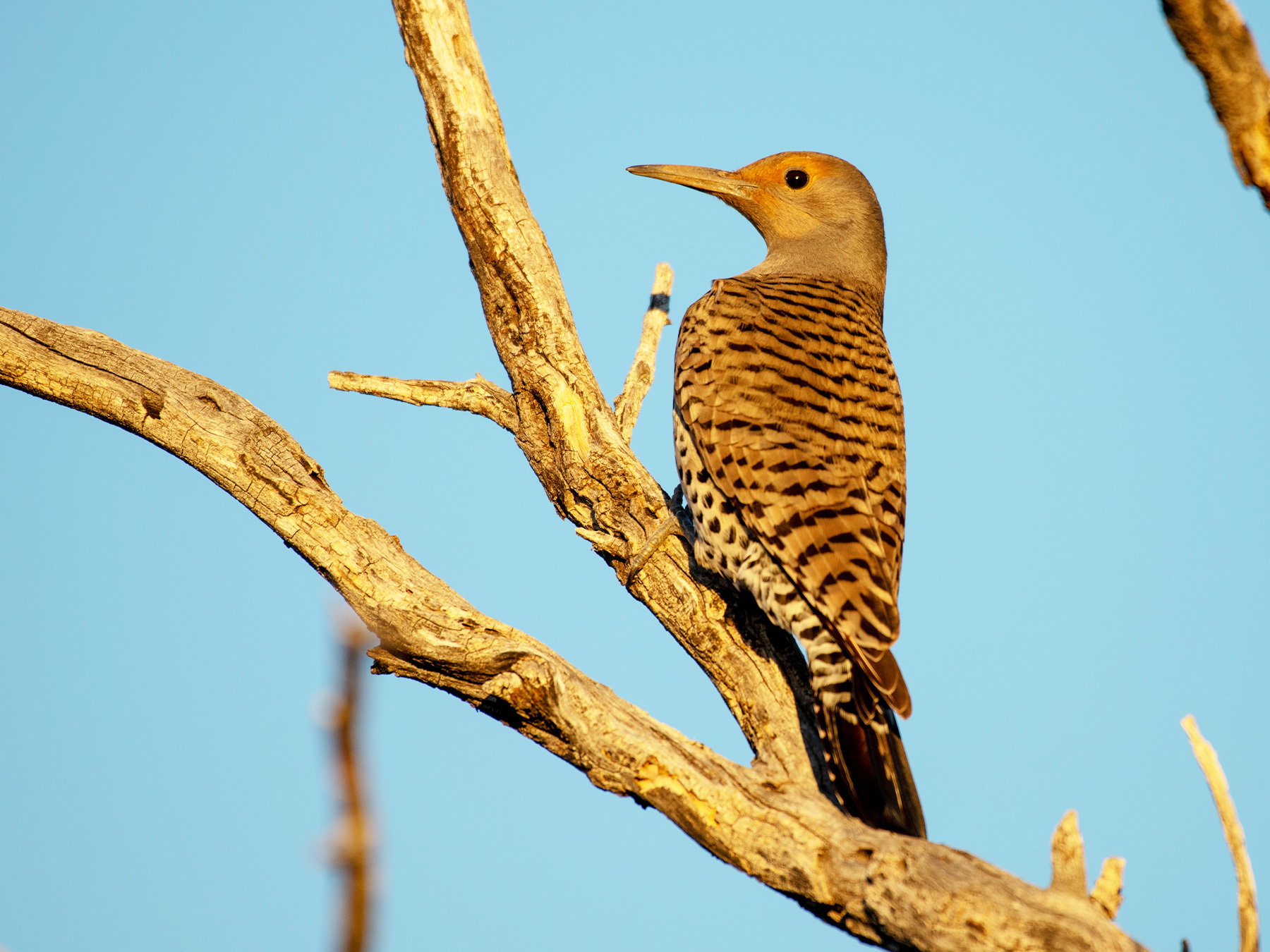
Quick facts
- Length
- 28–31 cm
- Wingspan
- 43–48 cm
- Weight
- 95–130 g
- Lifespan
- 5–7 years
- Family
- Woodpeckers
- Migration
- Resident
- Global status (IUCN)
- Least Concern
- World population
- 770,000 mature individuals
- Population trend
- Decreasing
- Also called
- Flicker dorado
- Scientific name
- Colaptes chrysoides
Questions
6What attracts Gilded Flickers?
Desert landscapes with dense clusters of tall, succulent plants, especially giant saguaro, are key to attracting gilded flickers. Remote locations far from human habitation and intervention are preferred.
What trees do Gilded Flickers prefer?
Trees are not the most common nesting choices for gilded flickers, which prefer to hollow out nesting chambers in desert plants, in particular giant saguaro and Mexican cardon cacti. Occasionally deciduous trees in watersheds may be used when no alternative sites are available.
Do Gilded Flickers harm trees?
Gilded flickers’ main nesting spots are in giant saguaro and Mexican giant cardon cacti. Trees are rarely used, except when no suitable cacti are available. Nest cavities may be occasionally excavated in cottonwood and willow trees, but any damage is not usually extensive.
Do Gilded Flickers go to bird feeders?
Gilded flickers feed primarily on insects and due to their preferred habitat being far from human habitation, they are unlikely to visit a backyard feeder.
What is the difference between a Northern Flicker and a Gilded Flicker?
Northern and gilded flickers are similar in many ways, including appearance and behavior. As their name suggests, northern flickers have a more northerly distribution range, that extends across most of Canada and the entire United States. There is some overlap in the southwest with the range of gilded flickers, and occasionally hybridization between the two occurs.
Northern flickers are larger and heavier than gilded flickers and are more widely studied. The two species are fairly similar in coloring, although the yellow-shafted northern flicker has a gray cap with a red patch on the rear of the head, and a black moustache stripe, while the red-shafted group northern flickers have a brownish cap and darker gray cheeks than the gilded flicker.
What is the difference between a Gilded Flicker and a Gila Woodpecker?
Gila woodpeckers are significantly smaller than gilded flickers, and their plumage is quite different, featuring mainly black and white barring compared to the light and dark browns of a gilded flicker. Gila woodpeckers also have an unmarked gray-white face and males have a small red cap.
Both inhabit the same desert landscapes of the southwestern US and northwestern Mexico, but telling the two species apart shouldn’t be too difficult.
Sources
3- 1BirdLife International. 2016. Colaptes chrysoides. The IUCN Red List of Threatened Species 2016: e.T22681290A92900551. Source (opens in a new tab)
- 2BirdLife International. 2016. Colaptes chrysoides. The IUCN Red List of Threatened Species 2016: e.T22681290A92900551. Source (opens in a new tab)
- 3Partners in Flight (2024) Source (opens in a new tab)

Checked by
Nathan Cope, founder and editor
Nathan founded Birdfact and leads its writers and contributors in the UK, the US and Canada. He has watched and studied birds for more than ten years, and checks every article and species guide before it’s published.