


Garganey
Spatula querquedula
By the Birdfact teamChecked by Nathan Cope
On this page15 sections
How to recognise it
What do Garganey look like?
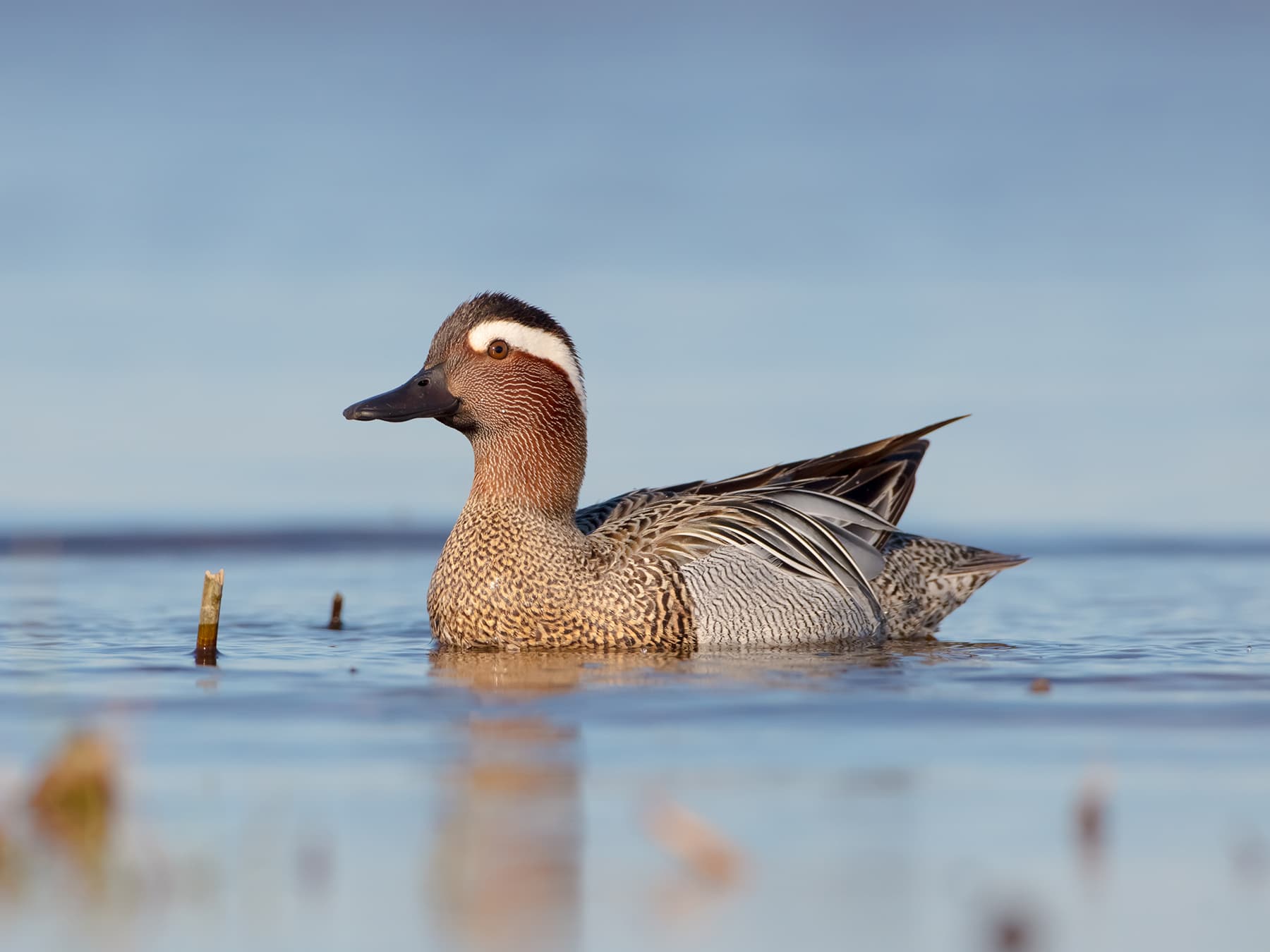
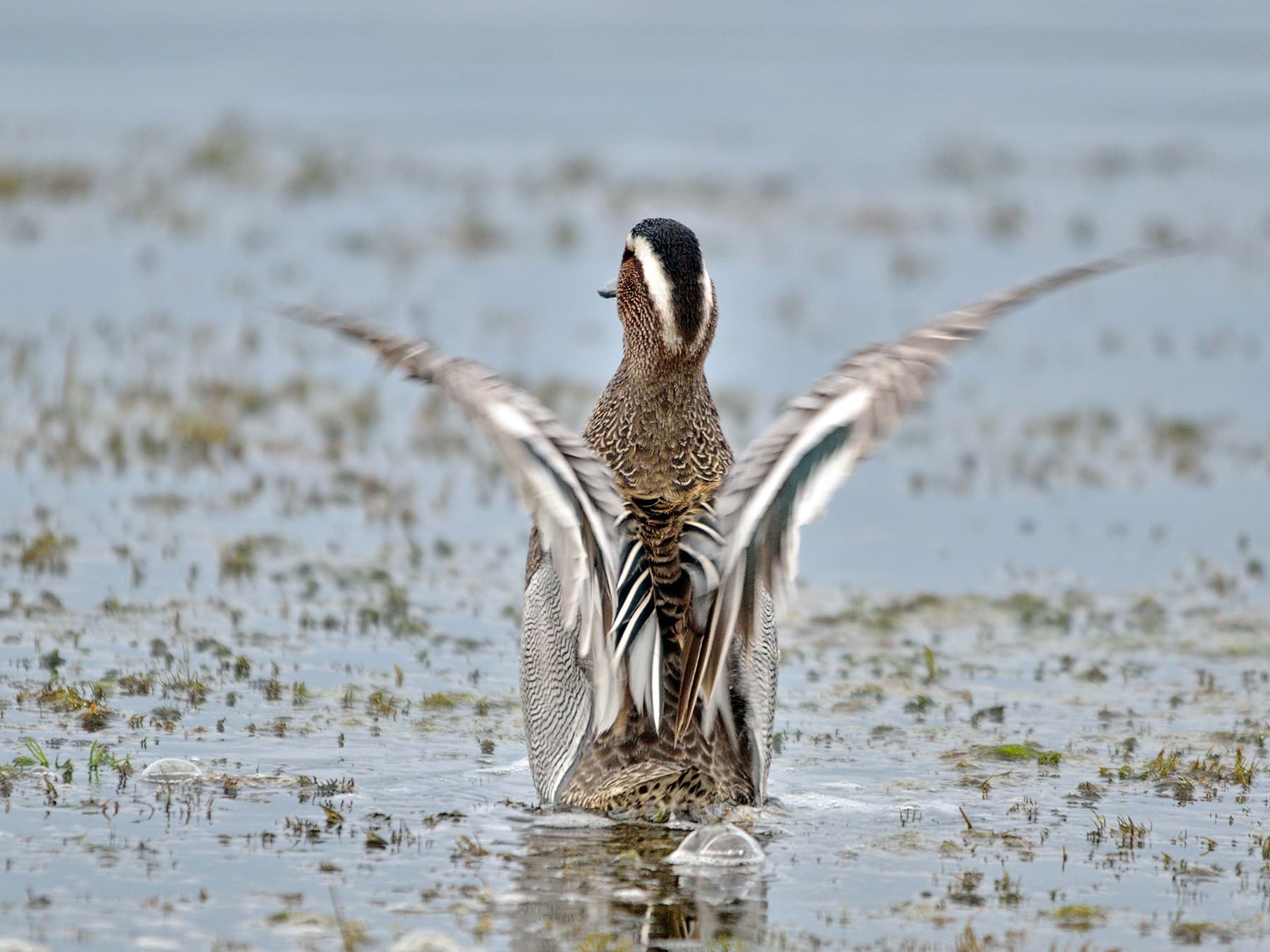
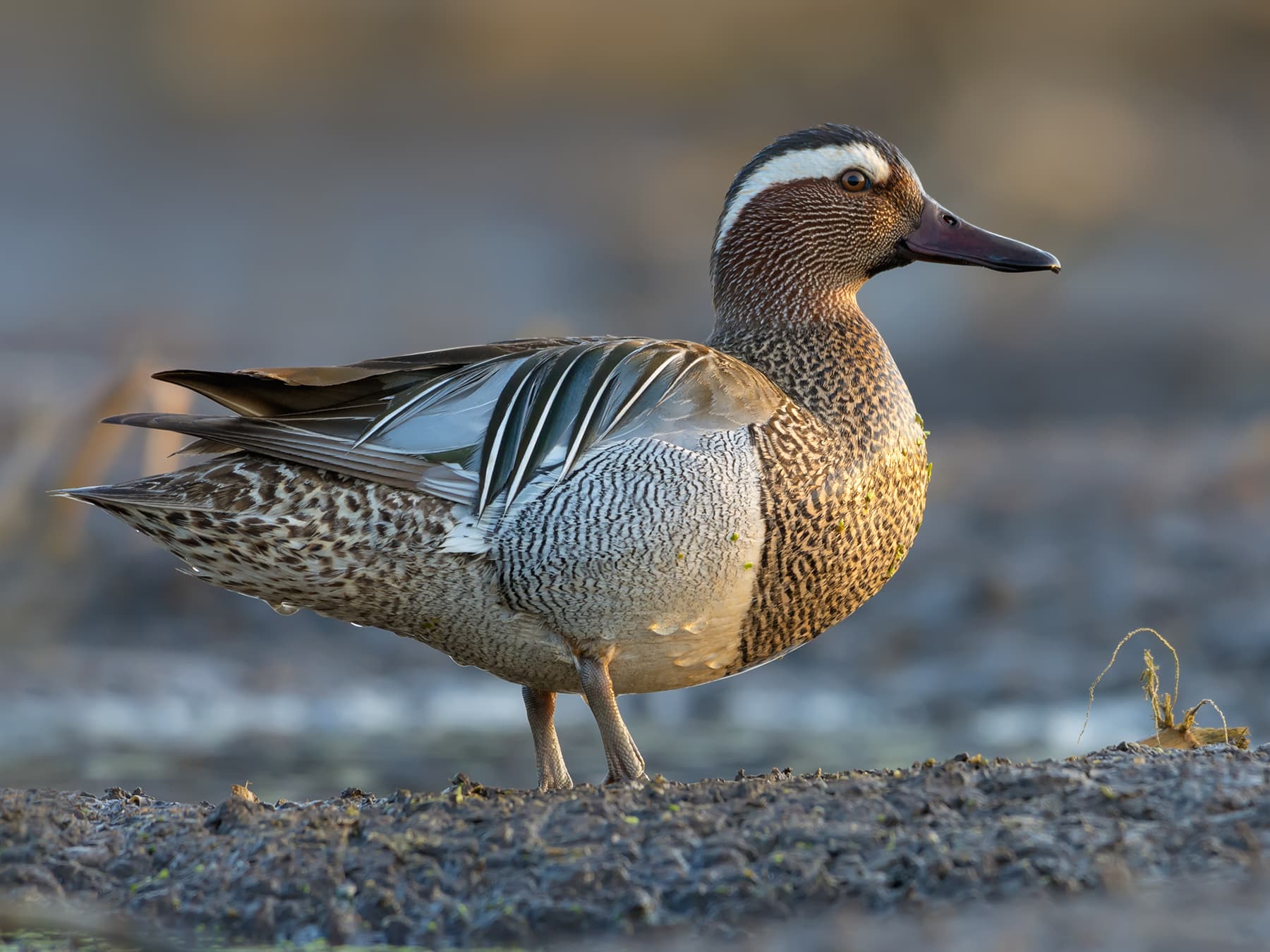
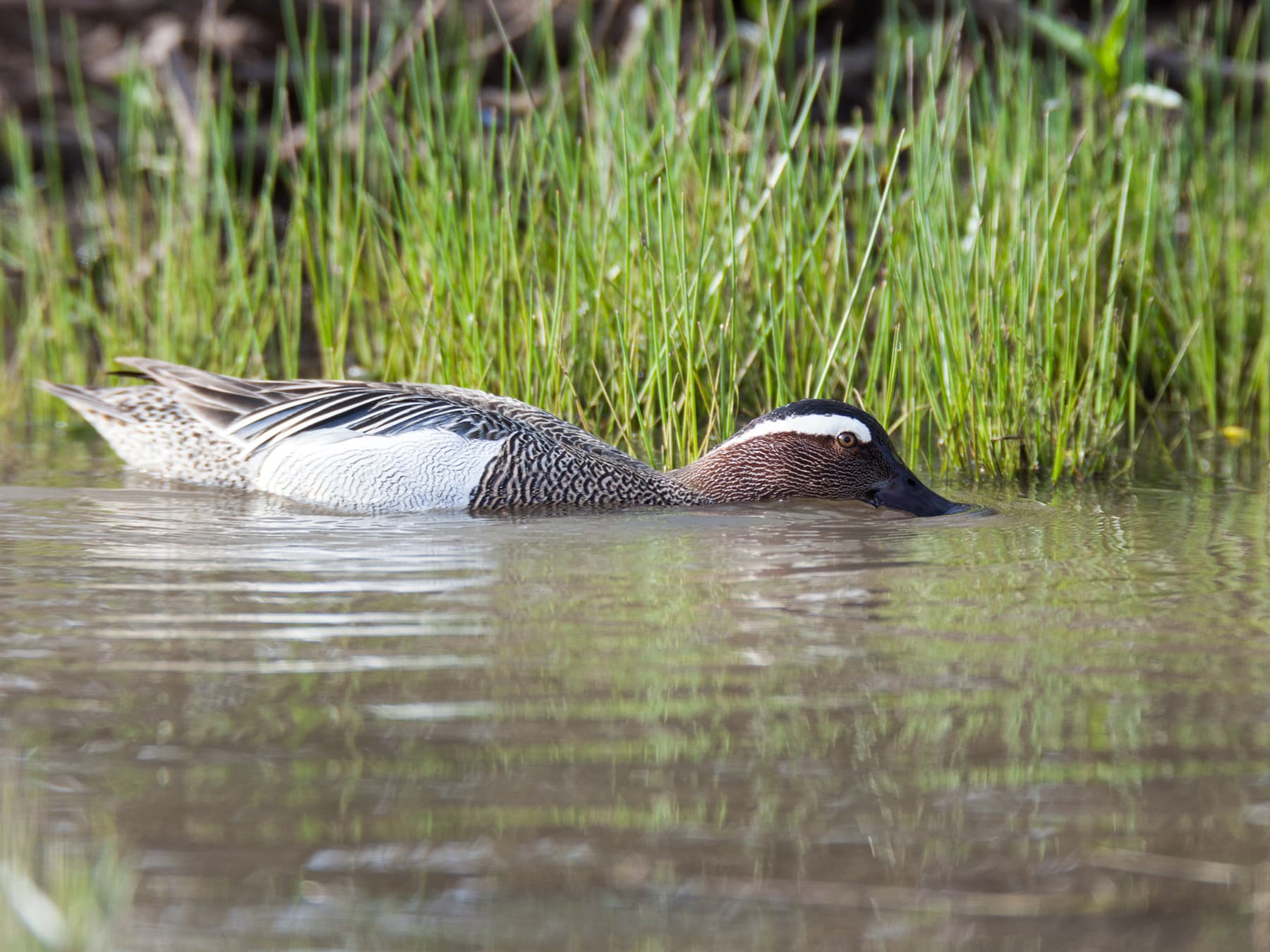
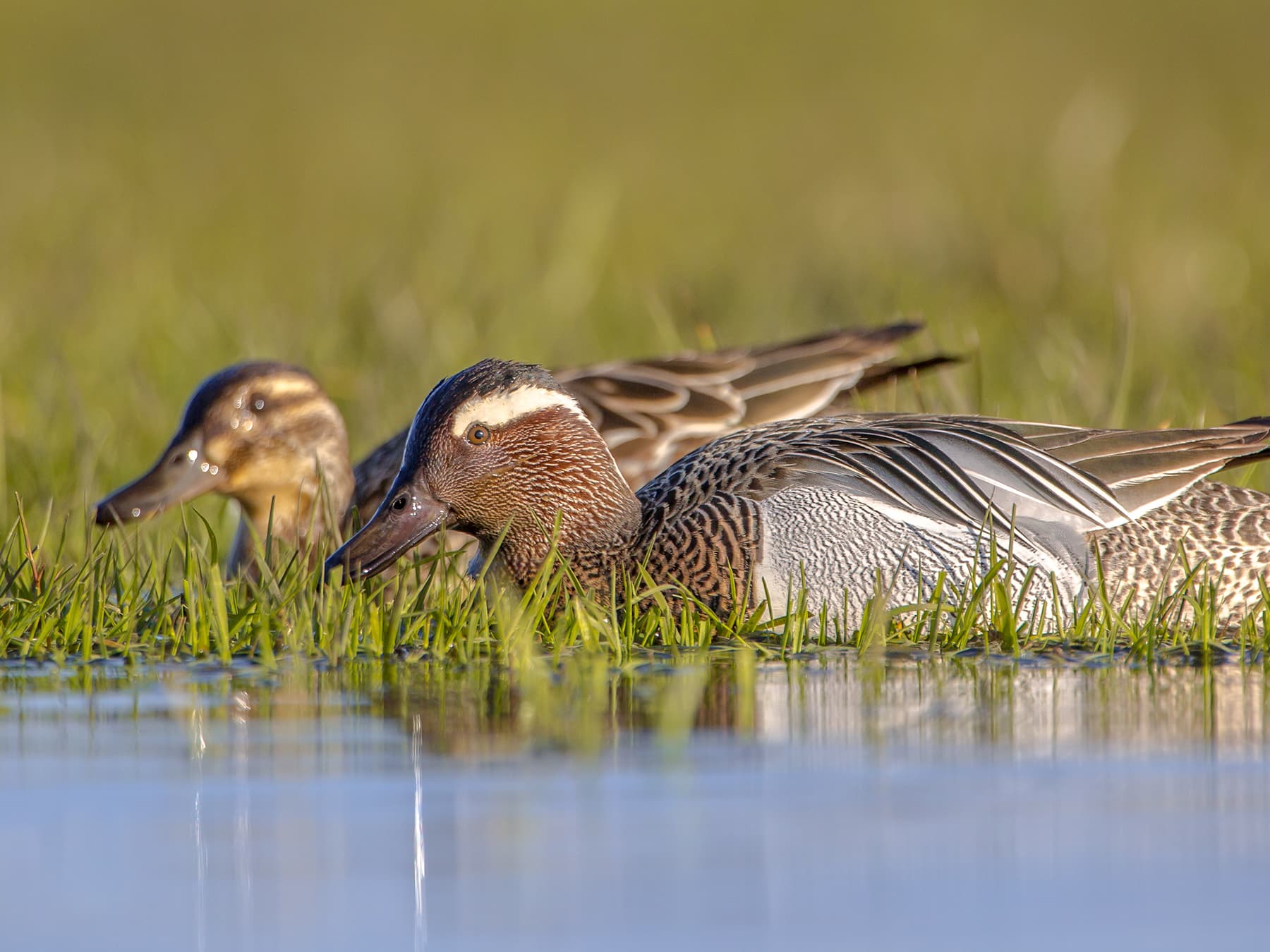
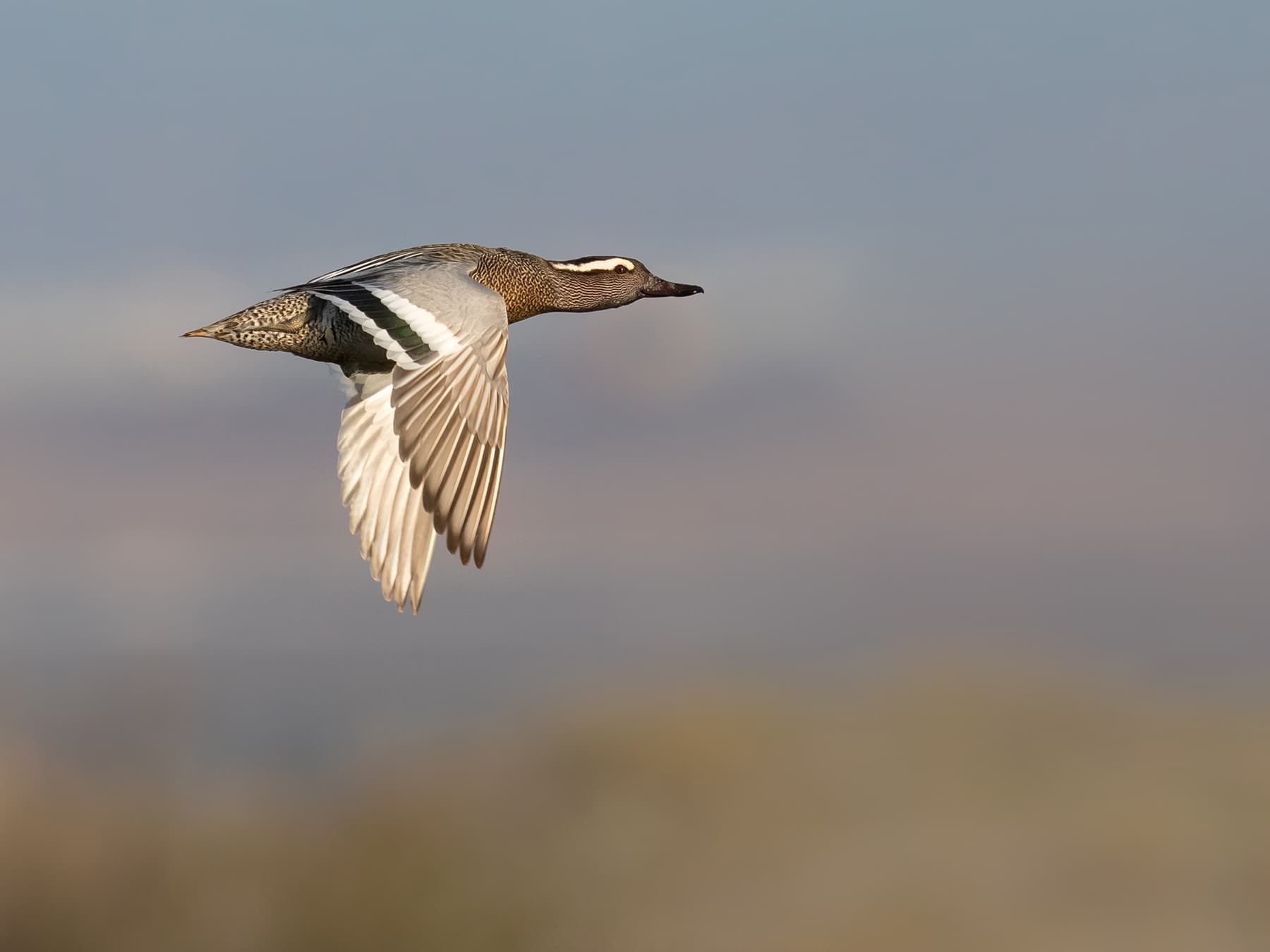
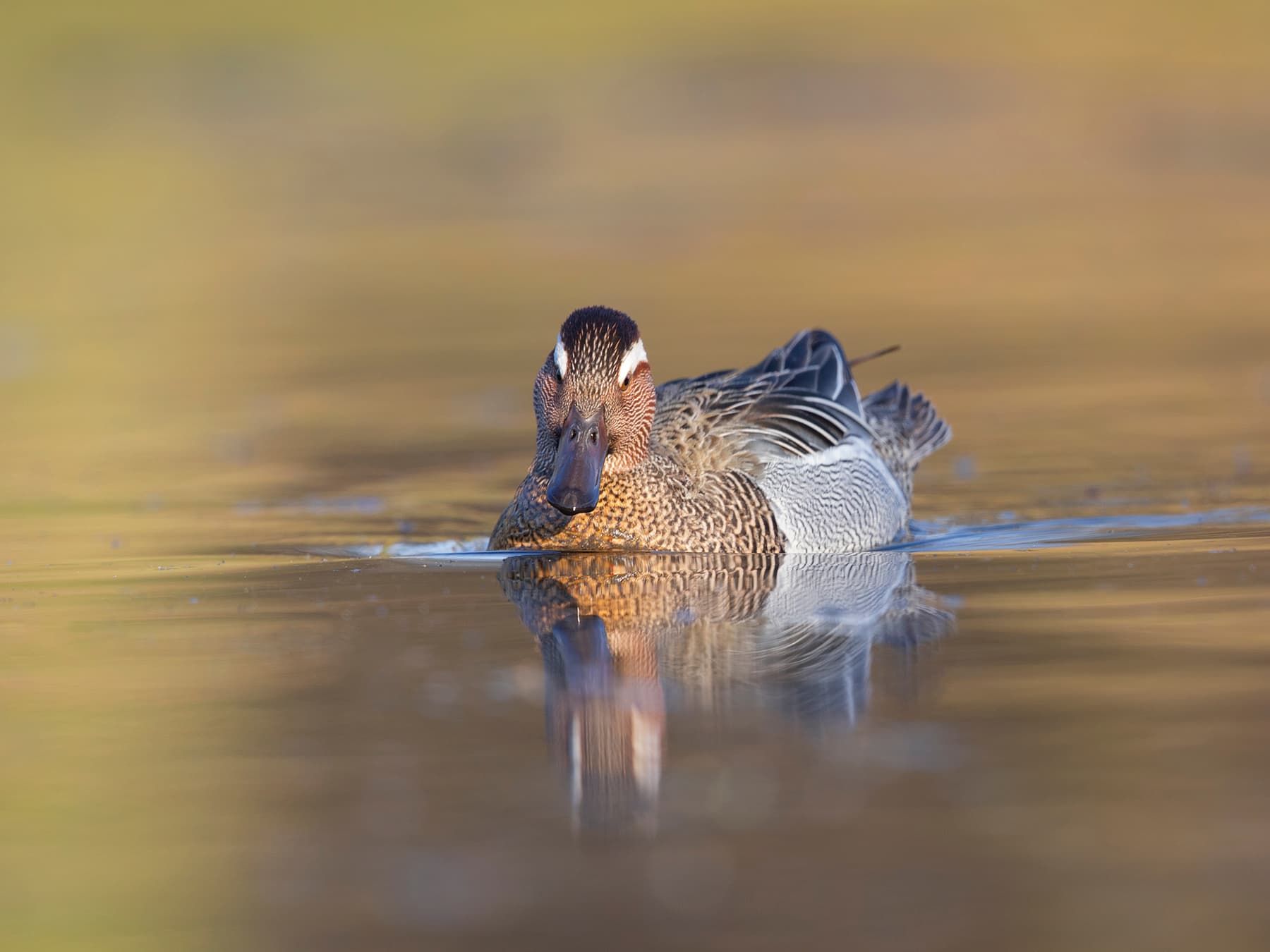
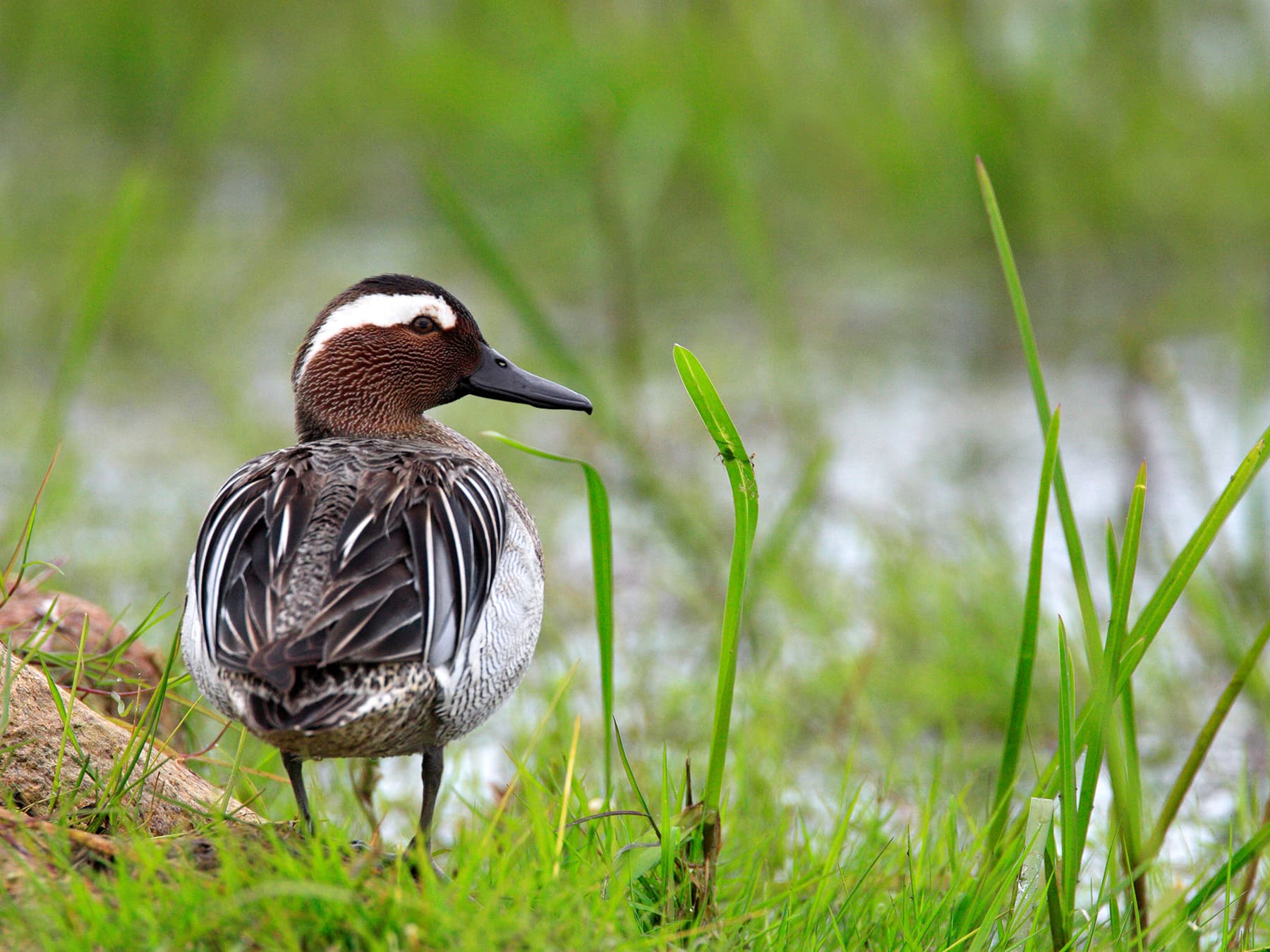
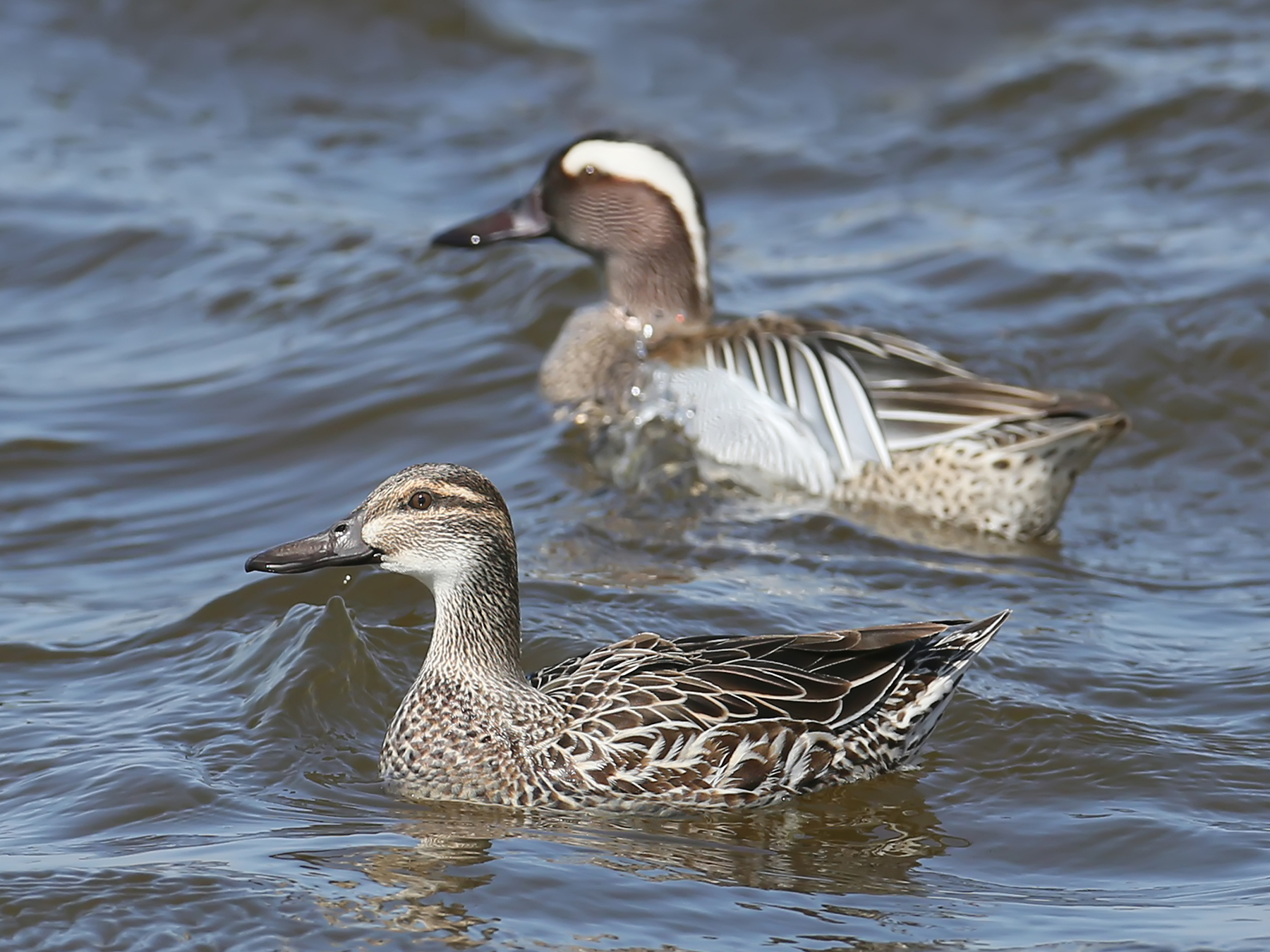
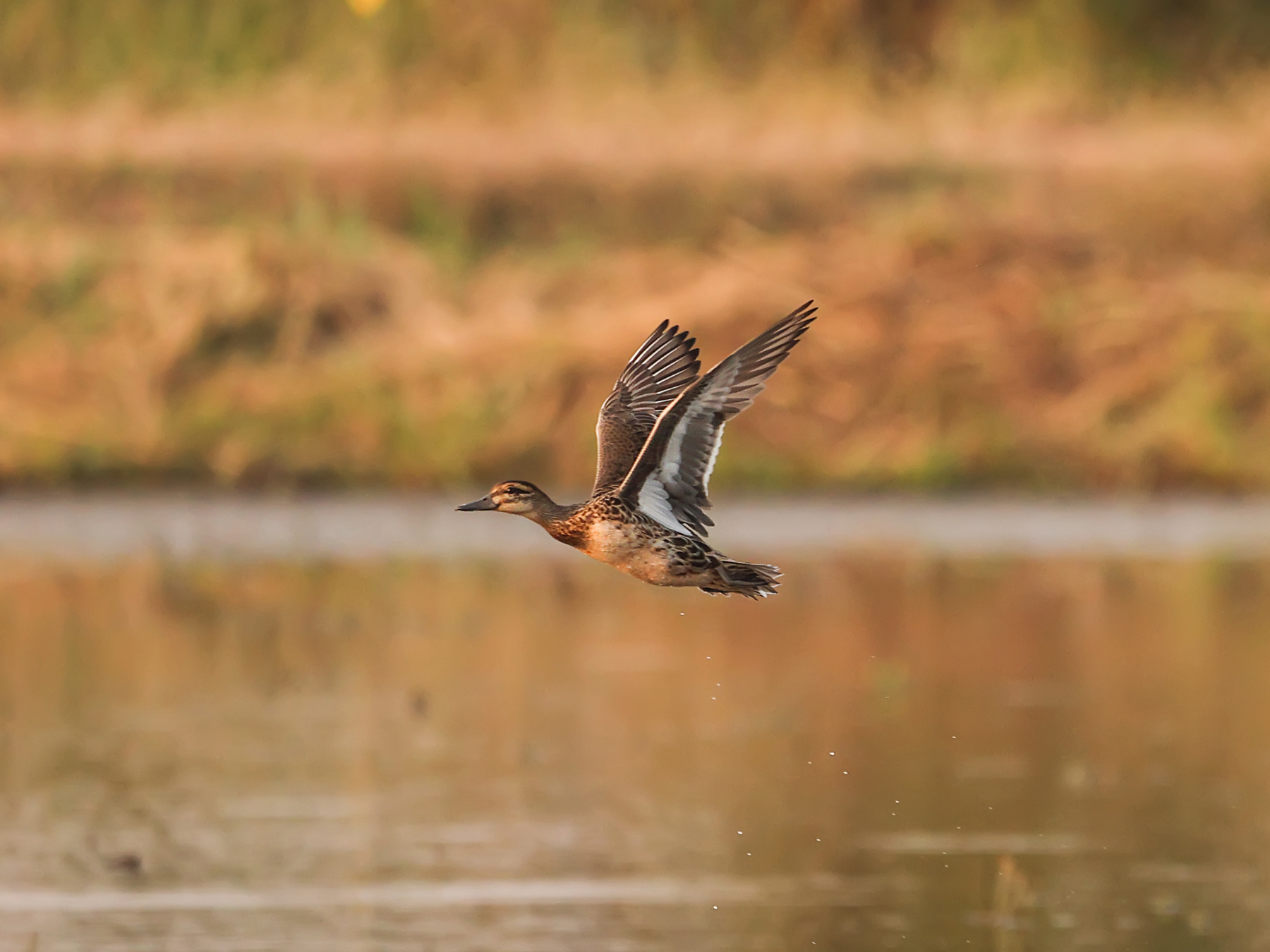
During the breeding season, the markings of a male garganey make them relatively easy to distinguish from other birds, with a bold curved white stripe above the eye, a chestnut-red face and mottled chestnut breast, and a darker crown. The rest of their body is flecked brown, changing to grey upper wings and flanks. Their wings feature a grey-blue patch, bordered in white, which is visible in flight.
Once breeding is complete they moult into an eclipse plumage, which is less distinctive and muted, with tones of grey and pale brown, with a pale white throat and coloured wing bar.
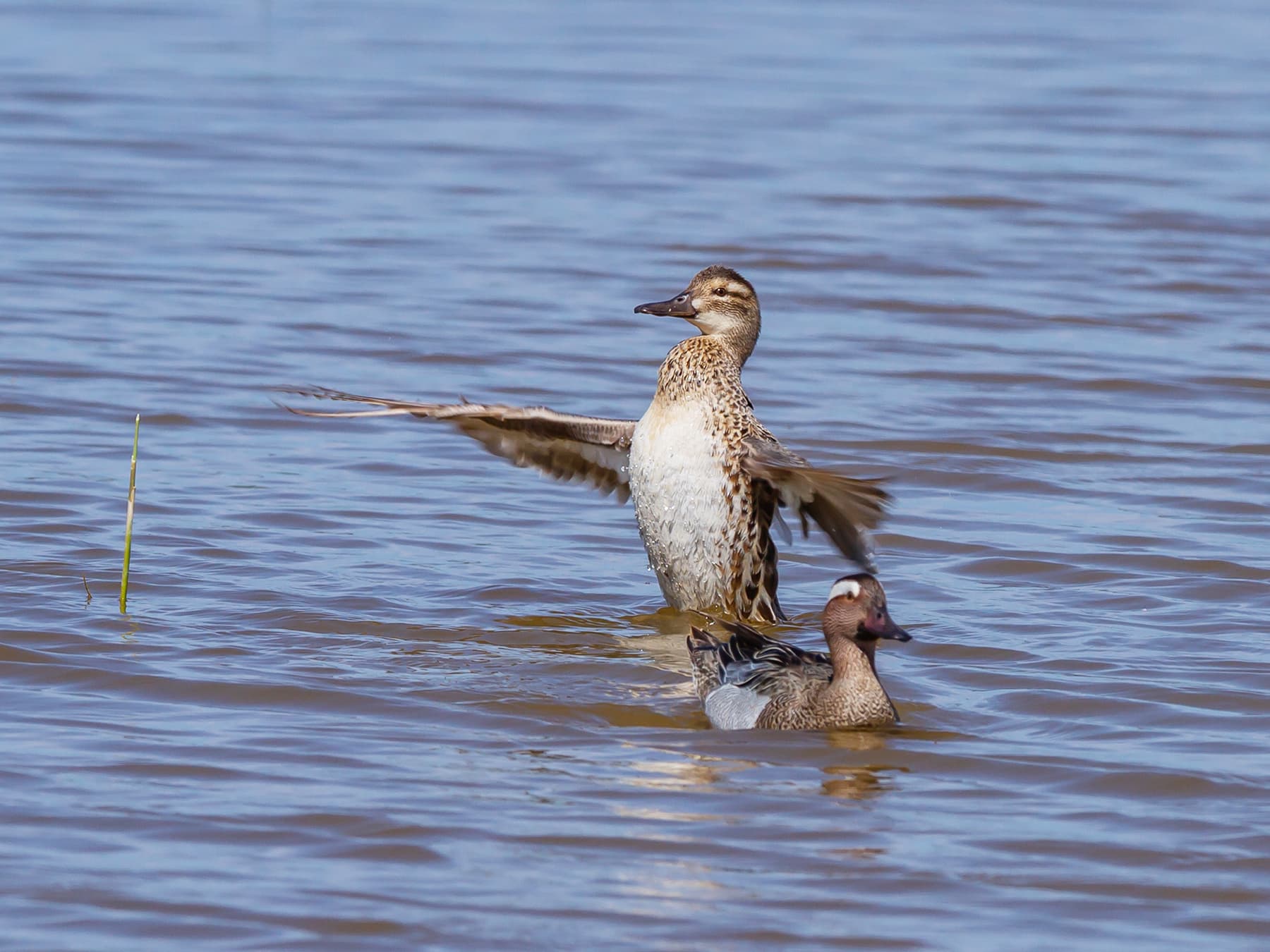
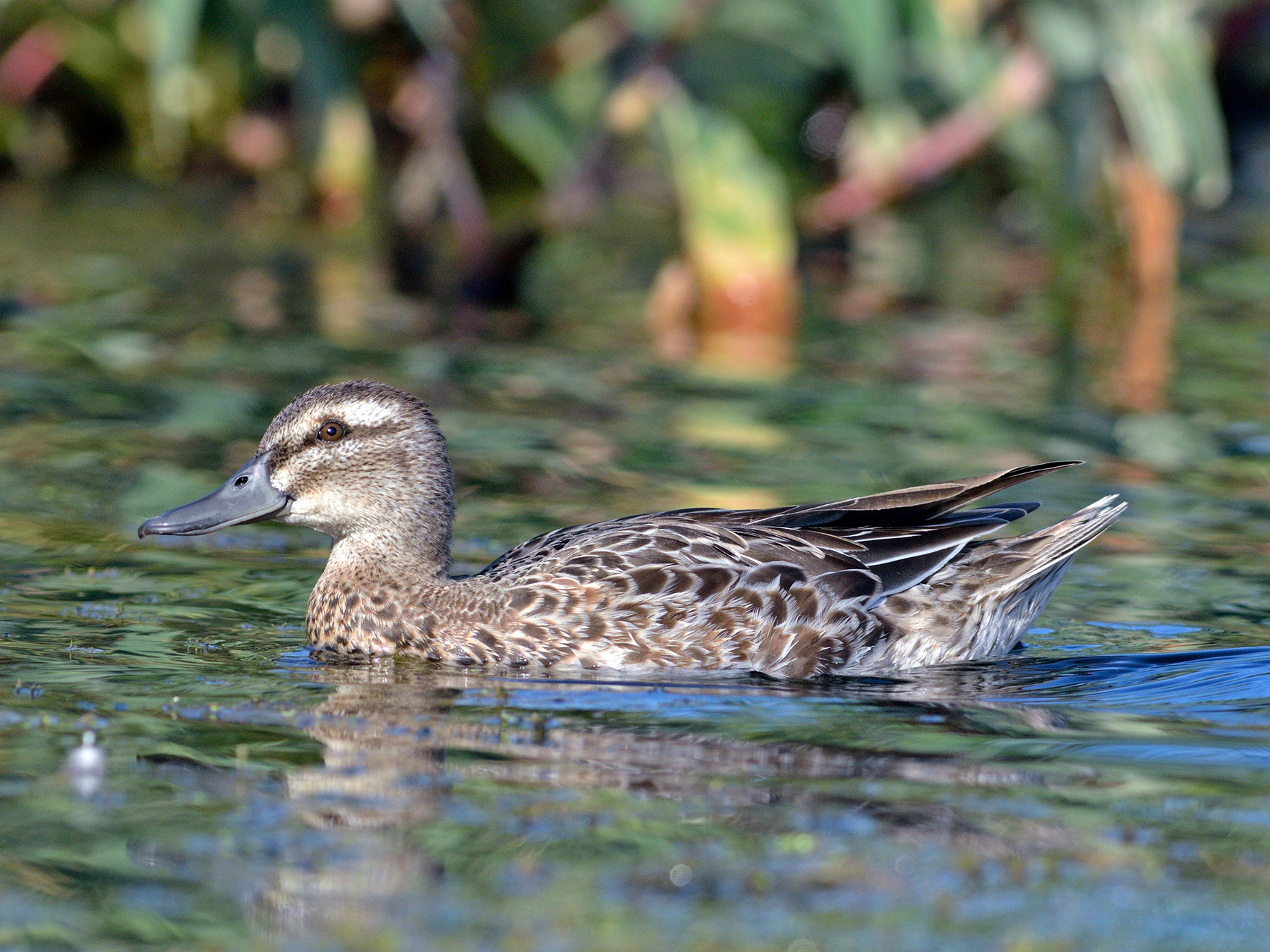
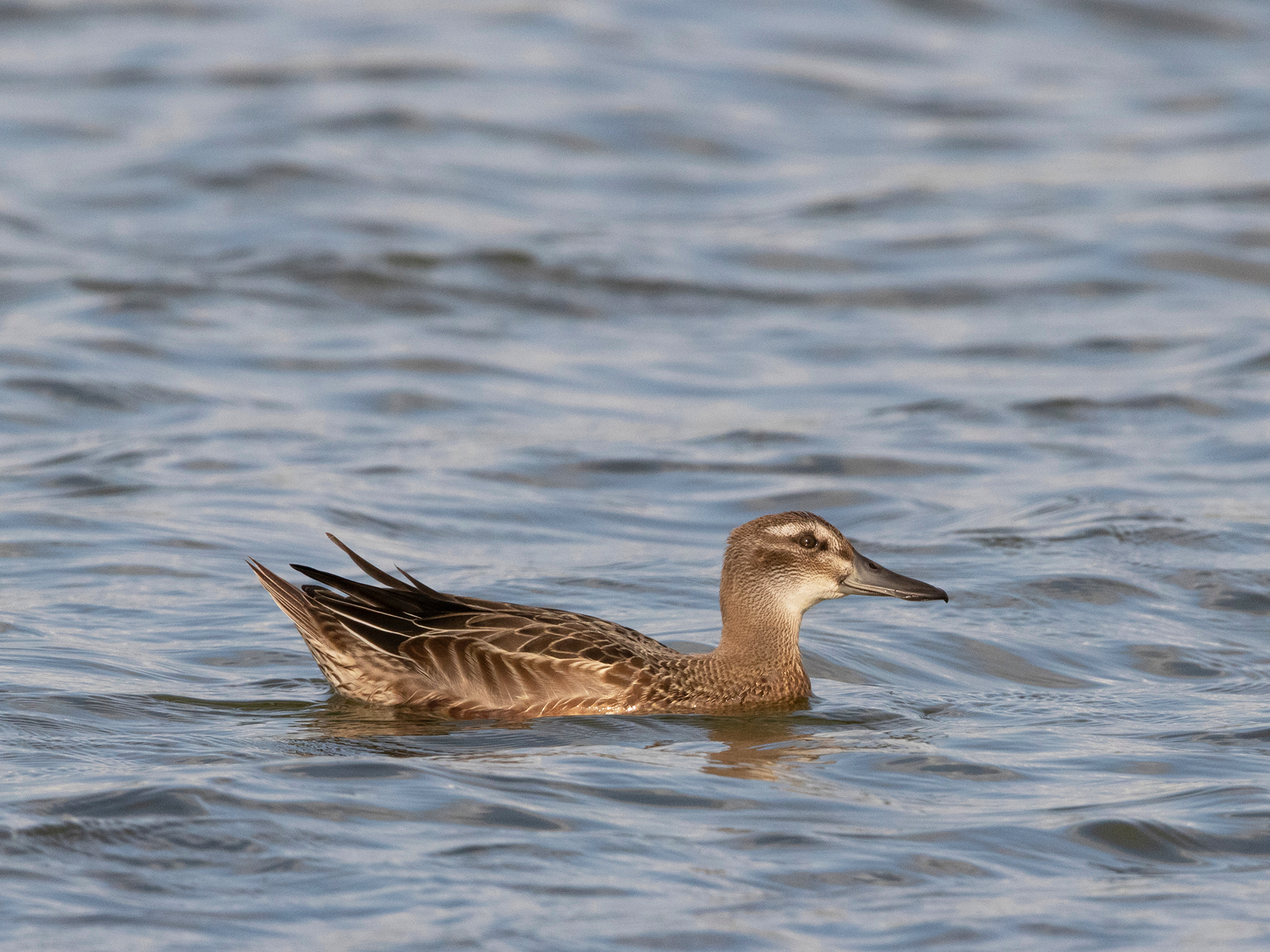
Females are less conspicuous, and easily confused with female teals, with a mostly brown with buff and darker brown scaling. Their facial markings include a darker brown crown, golden brown stripes above and below the eye, and a darker brown stripe from the eye to the back of the head. Their upper wings are grey-brown and they have the same long grey beak as the male garganey.
Juvenile gargeney are similar to females, but have less obvious markings, and have more speckling on their bellies.
Its size
Adults- Length
- 37–41 cm
- Wingspan
- 63–69 cm
- Weight
- 240–500 g
Its song and calls
What sound does a Garganey make?
Garganey are a relatively non-vocal species, with females being particularly quiet, only uttering a low-pitched quack when taking off.
Males have a more distinctive crackling call, especially heard during the mating season.
- Song0:00 / 0:12
Recorded in Bretagne, France · April 2022
When and where to see it
OctoberLeaving
Most recorded in October
- 1. Conwy0.20%
- 2. Bedfordshire0.12%
- 3. Carlow0.11%
- 4. Flintshireunder 0.1%
- 5. Rutlandunder 0.1%
Each dot is a county, state or province: the bigger and darker, the larger the bird’s share of that place’s bird records that month. Grey dots: no regular records. The ringed point is the centre of the bird’s records this month; the arrow shows how it moved since last month, and the dashed loop its path through the year. “Arrivals” colours places where it becomes regular this month (orange) or is in its last regular month (grey). GBIF eBird Observation Dataset, 2019–2024. Map data: Natural Earth, US Census Bureau; place centres © OpenStreetMap contributors.
In your area
See when the Garganey is recorded in your county, state or province.
How often the Garganey turns up in the UK, Ireland and the United States through the year, from birdwatchers' records.
United Kingdom
Summer visitor · regularly Mar–Oct · most records in April
Ireland
Passage migrant · regularly Apr–Oct · most records in August
United States
Winter visitor · regularly Sep–Jun · most records in March
Show as a table
| Month | United Kingdom | Ireland | United States |
|---|---|---|---|
| January | <0.001% | 0.005% | <0.001% (regular) |
| February | 0.002% | 0.004% | <0.001% (regular) |
| March | 0.041% (regular) | 0.006% | 0.001% (regular) |
| April | 0.086% (regular) | 0.019% (regular) | <0.001% (regular) |
| May | 0.073% (regular) | 0.028% (regular) | <0.001% (regular) |
| June | 0.027% (regular) | 0.008% (regular) | <0.001% (regular) |
| July | 0.032% (regular) | 0.004% | <0.001% |
| August | 0.078% (regular) | 0.033% (regular) | <0.001% |
| September | 0.048% (regular) | 0.020% (regular) | <0.001% (regular) |
| October | 0.014% (regular) | 0.016% (regular) | <0.001% (regular) |
| November | 0.002% | – | <0.001% (regular) |
| December | <0.001% | – | <0.001% (regular) |
Recorded regularly in
Worldwide: recorded regularly in 95 countries
Countries where it was recorded in at least 3 of the 6 years 2019–2024. Linked countries have their own bird list.
Europe (41)
- Albania
- Austria
- Belarus
- Belgium
- Bosnia & Herzegovina
- Bulgaria
- Croatia
- Czechia
- Denmark
- Estonia
- Finland
- France
- Germany
- Greece
- Hungary
- Iceland
- Ireland
- Italy
- Jersey
- Kosovo
- Latvia
- Lithuania
- Luxembourg
- Malta
- Moldova
- Montenegro
- Netherlands
- North Macedonia
- Norway
- Poland
- Portugal
- Romania
- Russia
- Serbia
- Slovakia
- Slovenia
- Spain
- Sweden
- Switzerland
- Ukraine
- United Kingdom
Asia (40)
- Armenia
- Azerbaijan
- Bangladesh
- Bhutan
- Brunei
- Cambodia
- China
- Cyprus
- Georgia
- Hong Kong SAR China
- India
- Iran
- Israel
- Japan
- Jordan
- Kazakhstan
- Kuwait
- Kyrgyzstan
- Laos
- Lebanon
- Malaysia
- Mongolia
- Myanmar (Burma)
- Nepal
- Oman
- Pakistan
- Palestinian Territories
- Philippines
- Qatar
- Saudi Arabia
- South Korea
- Sri Lanka
- Taiwan
- Tajikistan
- Thailand
- Turkey
- United Arab Emirates
- Uzbekistan
- Vietnam
- Yemen
North America (1)
Oceania (1)
Data: EOD – eBird Observation Dataset (Cornell Lab of Ornithology), accessed via GBIF.org, CC BY 4.0. Records from 2019–2024, aggregated and filtered by Birdfact. How these lists are made
What is the habitat of a Garganey?
Breeding grounds favoured by garganey are usually inland lakes, freshwater marshes, swampy meadows, flooded ditches and shallow wetlands with plenty of aquatic vegetation.
Wintering grounds are located along coasts and estuaries, as well as further inland at reservoirs and rice paddies.
What is the range of a Garganey?
The breeding range of a garganey extends from parts of Ireland and the British Isles in the west, parts of southern Sweden, Finland and sub-Arctic Russia in the north, and throughout Central Asia into Mongolia and the extreme north-eastern regions of China in the east.
Parts of southern Europe, including northern Italy and Greece form the southern extent of their range.
Garganey are fully migratory, and spend winters in sub-Saharan Africa, India, and south-east Asia, as far south as Malaysia.
Where do Garganey live?
Estimates state that there are up to 1.1 million garganey pairs breeding in Europe each year, with the vast majority heading to Russia.
Other countries with large breeding populations include Ukraine, Lithuania, Poland, Germany, Finland and Latvia.
How rare are Garganey?
Garganey are rare visitors to the UK with only around 100 breeding pairs arriving each spring, and departing for their African wintering grounds by October at the latest.
Some migratory birds may be seen in passage over coastal regions of the extreme north-west of Scotland, but a sighting is definitely not an everyday occurrence.
Where can you see Garganey in the UK?
In the UK, around 100 breeding pairs of garganey visit each year and these are usually more likely to be found in central and southern England.
In northern regions, including the east coast of Scotland and the Western Isles passage sightings have also been occasionally observed.
Migration
Do Garganeys migrate?
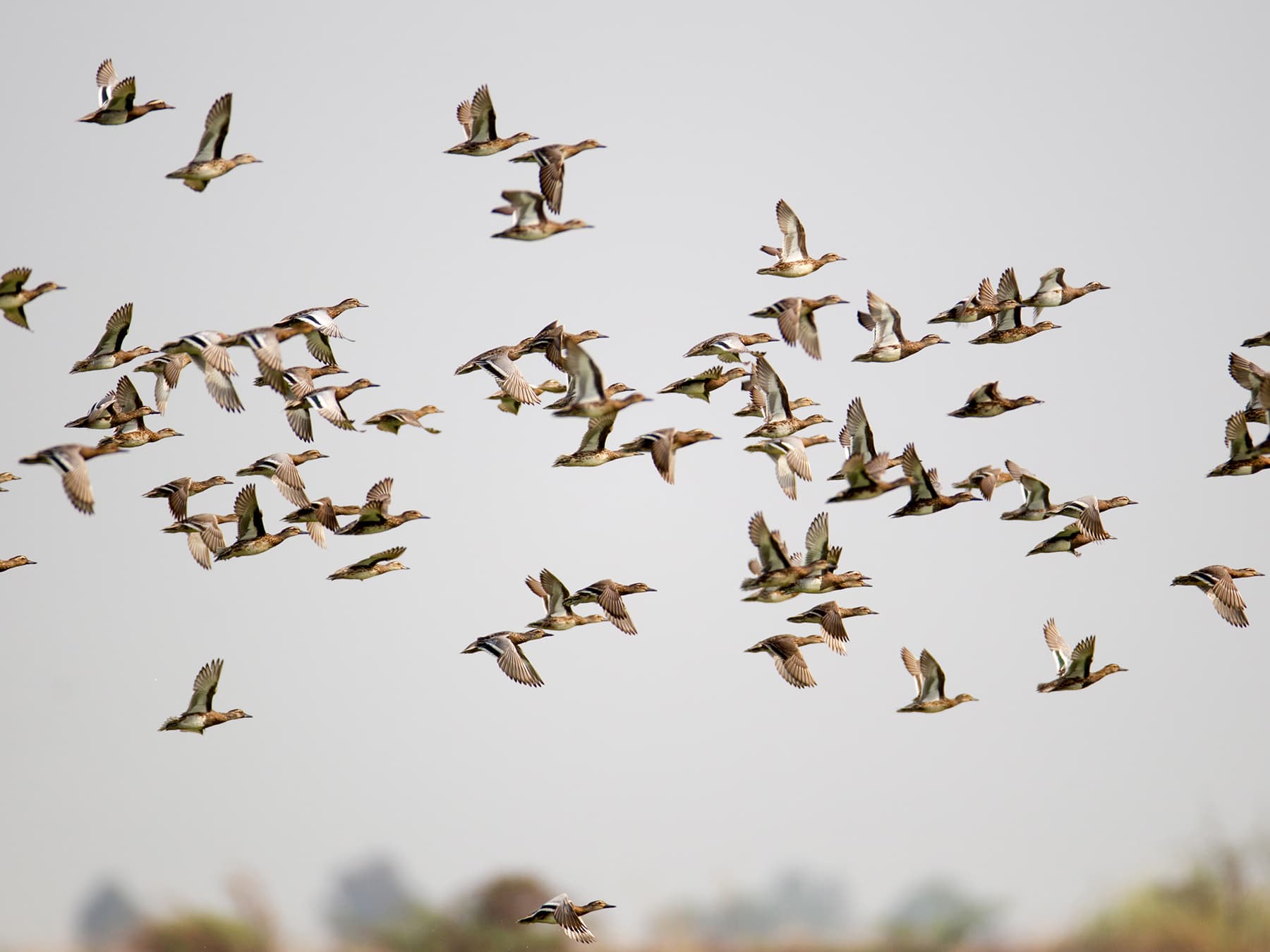
Garganey are a fully migratory species, with breeding grounds across northern Europe, Russia, and Central Asia.
Once breeding is complete, all garganey depart for their wintering grounds, which are found across central Africa, India and Bangladesh, and into south-east Asia.
Are Garganey native to the UK?
Garganey visit the UK to breed, but are not resident all year round. Arrivals begin from March onwards, and by October (often much earlier), the latest birds have left for their wintering grounds in sub-Saharan Africa.
Tips for seeing it
- Look for Garganeys in shallow freshwater habitats during spring and autumn migration.
- Listen for the male's distinctive 'rattle' call during breeding season.
- Observe their swift, erratic flight pattern and blue-grey wing patches for identification.
- In the UK, check coastal wetlands and inland reservoirs during passage periods.
What it eats
What do Garganey eat?
Garganey are mainly nocturnal feeders, foraging for insects, crustaceans and plant matter from the water’s surface or by dabbling just below.
Molluscs and insects are the chief food taken in spring, with more crustaceans taken as summer arrives. In autumn and winter, their diet is mainly plant-based, with seeds from pondweed, dock, wild rice and sedges and grasses common.
What do baby Garganey eat?
Initially, the diet of baby garganey is animal-based, with small insects and their larvae the main foods.
Nesting and breeding
Where do Garganey nest?
Meadows are a typical nest location chosen by garganey pairs, fairly close to water, but occasionally can be up to 150 m (500 ft) away.
Nests are shallow scrapes in the ground, under rushes or tall grasses, lined with plant materials and some feathers.
When do Garganey nest?
Garganey begin to arrive on their breeding grounds from March onwards, with nesting beginning in April. May is the peak laying month, with the latest clutches being occasionally hatched in July. One brood is raised each year.
What do Garganey eggs look like?
A typical clutch contains between 8 and 11 pale straw-coloured eggs, with no surface markings. Eggs measure 46 mm by 33 mm (1.8 in by 1.3 in), and are incubated by the female alone for 21 to 23 days, during which time the male continues to guard the site.
Females raise their young alone, with males departing for moulting grounds.
Do Garganeys mate for life?
Pairing occurs early in the season, on wintering grounds, and most garganey arrive on their breeding grounds already paired. The pair bond lasts until incubation, with the female hatching the eggs alone and raising young without any intervention from the male. Some pairings may resume ahead of the following breeding season.
Behaviour
Are Garganey aggressive?
A relatively social species, garganey either nest in single pairs or groups of up to 6 to 7 pairs.
Males defend the nest site from predators, and can be noisy and aggressive in this role.
Where do Garganey sleep at night?
Garganey sleep for short periods during the day and night on the water, and are more active at night, foraging for food on the water’s surface.
Lifespan and predators
How long do Garganey live?
The oldest recorded garganey lived to 14 years and 6 months. First time breeding occurs at one year. Survival is also thought to be greater among males than females.
What are the predators of Garganey?
Data from Latvian records that the leading predator of garganey nests is the American mink. Depending on location, other predators include crocodiles, red foxes, and raccoons.
Are Garganey protected?
In England and Wales, garganey are listed as Schedule I birds under the Wildlife and Countryside Act, 1981, which gives their eggs, nest sites, and young extra protection against being disturbed or destroyed.
Additionally, the Act makes it illegal for garganey to be knowingly killed, injured or taken into captivity.
Are Garganey endangered?
In the UK, garganey have Amber status on the British Birds of Conservation Concern List, but across their European range they are considered common to abundant and are a species of least concern.
Habitat loss is a concern due to the reclamation of wetlands and the destruction of nest sites by farming practices such as mowing.
Avian influenza is also a common threat to garganey.
Conservation
While listed as Least Concern globally, Garganey populations face threats from habitat loss and degradation, particularly in breeding and wintering areas.
Conservation efforts focus on protecting and restoring wetland habitats across their range, including important stopover sites along migration routes.
How big are Garganey?
Garganey are medium-sized ducks, slightly smaller than mallards and larger than teals.
Males are frequently larger than females, with both sexes falling within the following ranges for weight, length and wingspan:
- Length: 37 cm to 41 cm (14.6 in to 16.1 in )
- Wingspan: 60 cm to 63 cm (23.6 in to 24.8 in)
- Weight: 250 g to 450 g (8.8 oz to 15.9 oz)
More photos
5 photos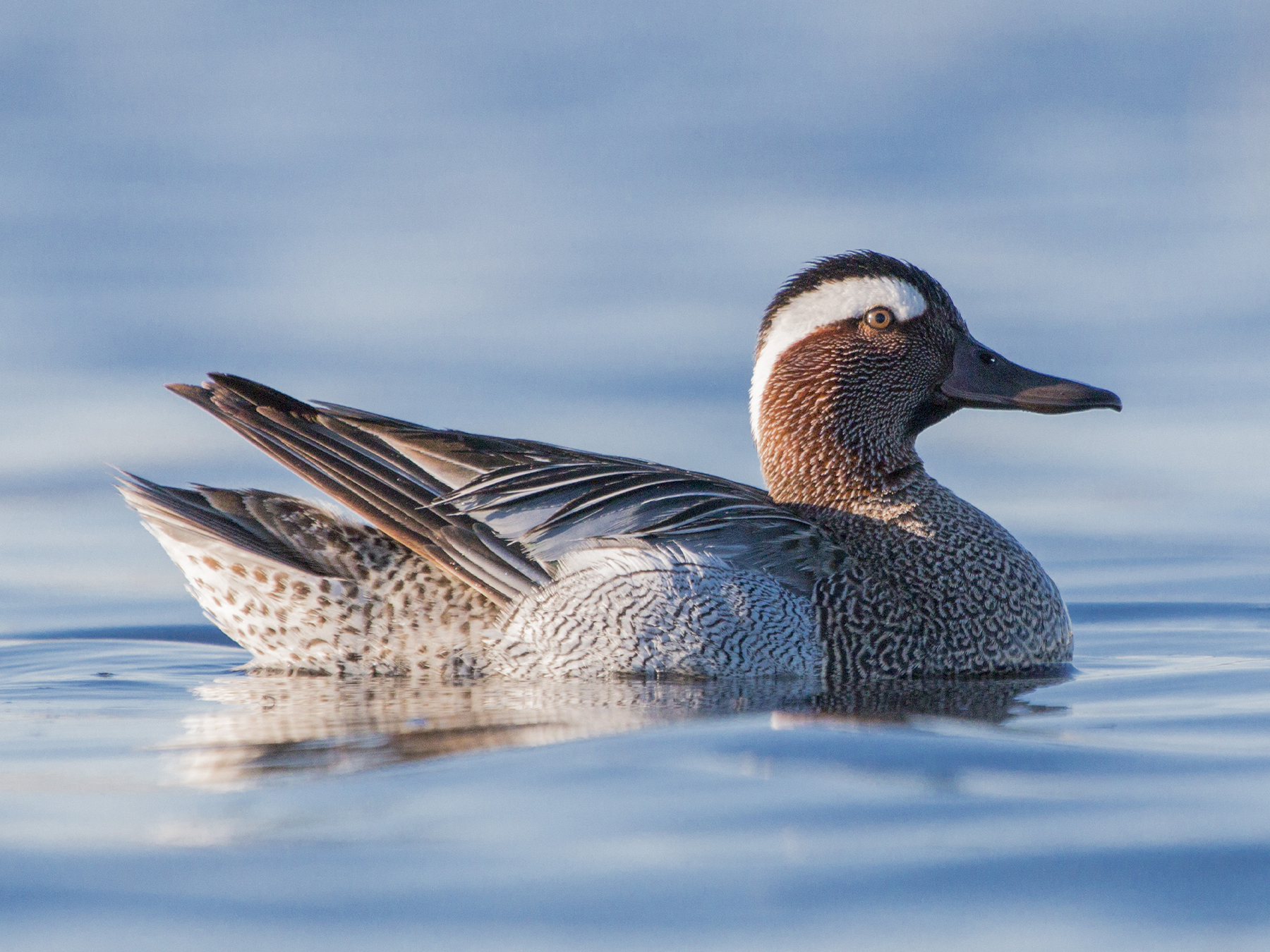
Garganey guides
4 guidesQuick facts
- Length
- 37–41 cm
- Wingspan
- 63–69 cm
- Weight
- 240–500 g
- Lifespan
- 5–10 years
- Family
- Ducks, Geese & Swans
- Migration
- Long-distance Migrant
- Global status (IUCN)
- Least Concern
- World population
- 2,600,000 - 2,800,000 mature individuals
- Population trend
- Decreasing
- Scientific name
- Spatula querquedula
Questions
2How do you pronounce Garganey?
The species name is pronounced as it is written ‘gah-gen-nee’.
How many Garganey are there in the UK?
Estimates state that between 95 and 120 pairs of garganey arrive in the UK to breed each year.
Sources
3- 1BirdLife International. 2016. Spatula querquedula. The IUCN Red List of Threatened Species 2016: e.T22680313A86016410. Source (opens in a new tab)
- 2Wetlands International (2015)
- 3Wetlands International (2015)

Checked by
Nathan Cope, founder and editor
Nathan founded Birdfact and leads its writers and contributors in the UK, the US and Canada. He has watched and studied birds for more than ten years, and checks every article and species guide before it’s published.