


Fulmar
Northern Fulmar · Fulmarus glacialis
By the Birdfact teamChecked by Nathan Cope
On this page12 sections
How to recognise it
What do fulmars look like?
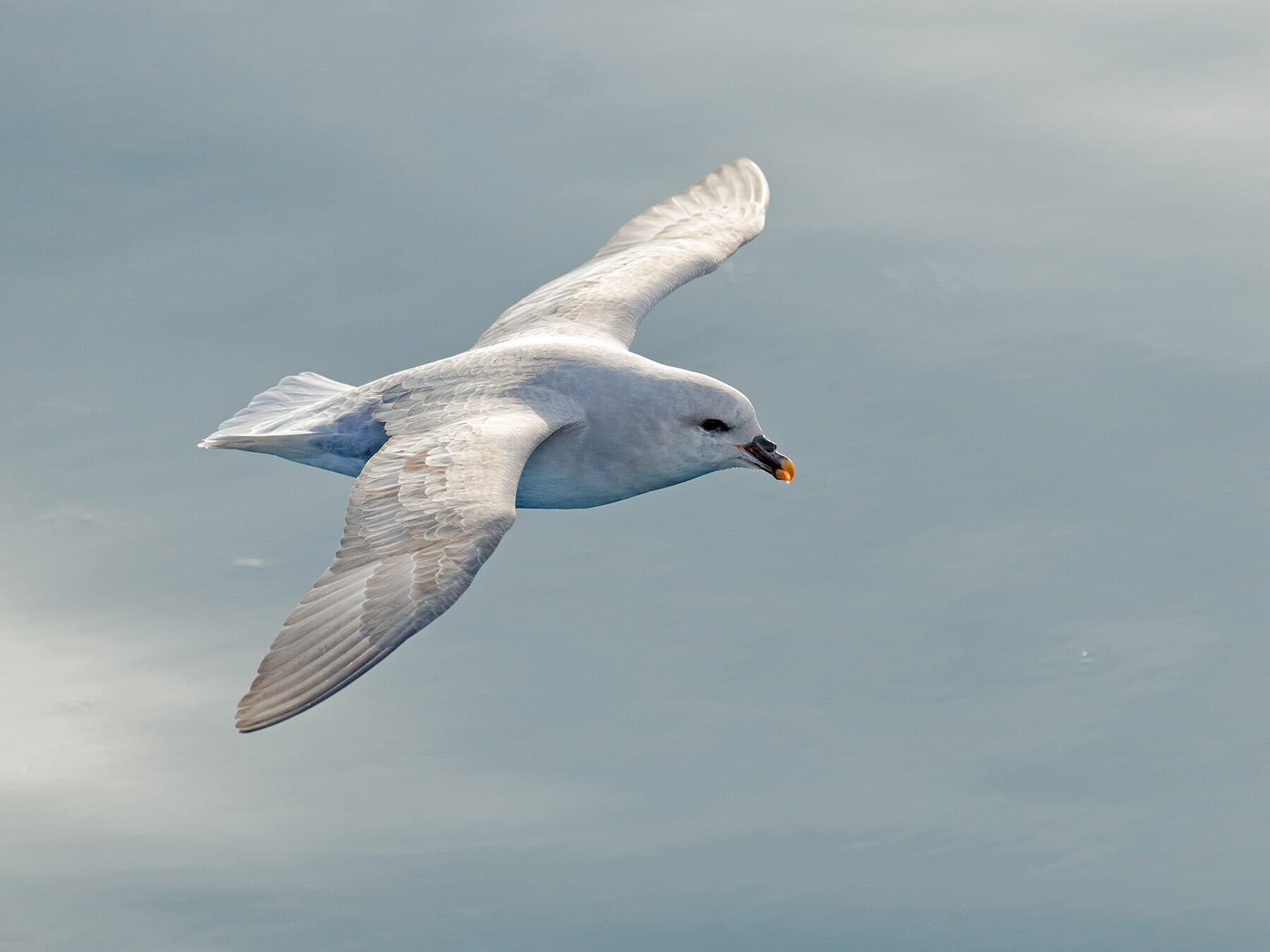
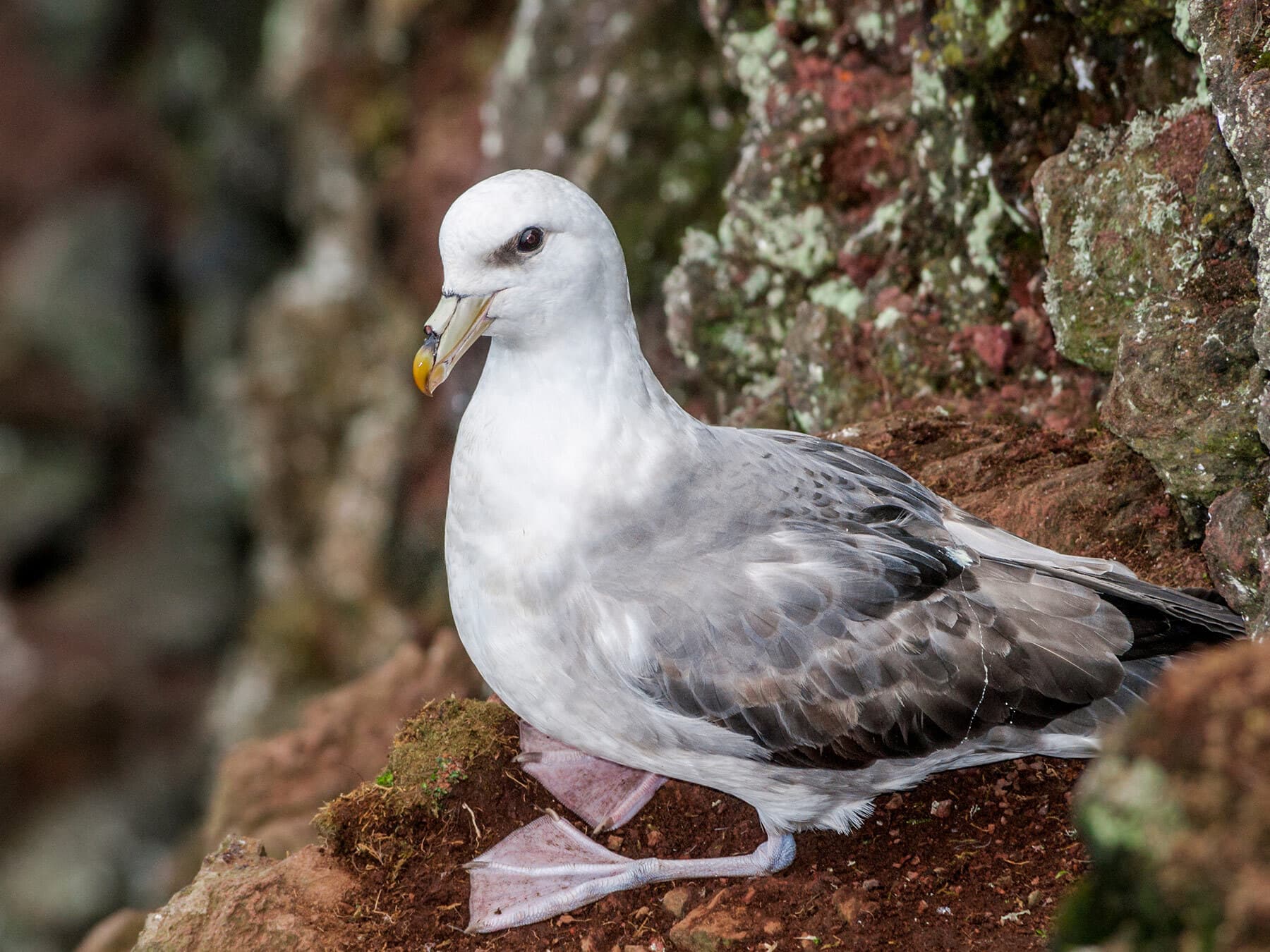
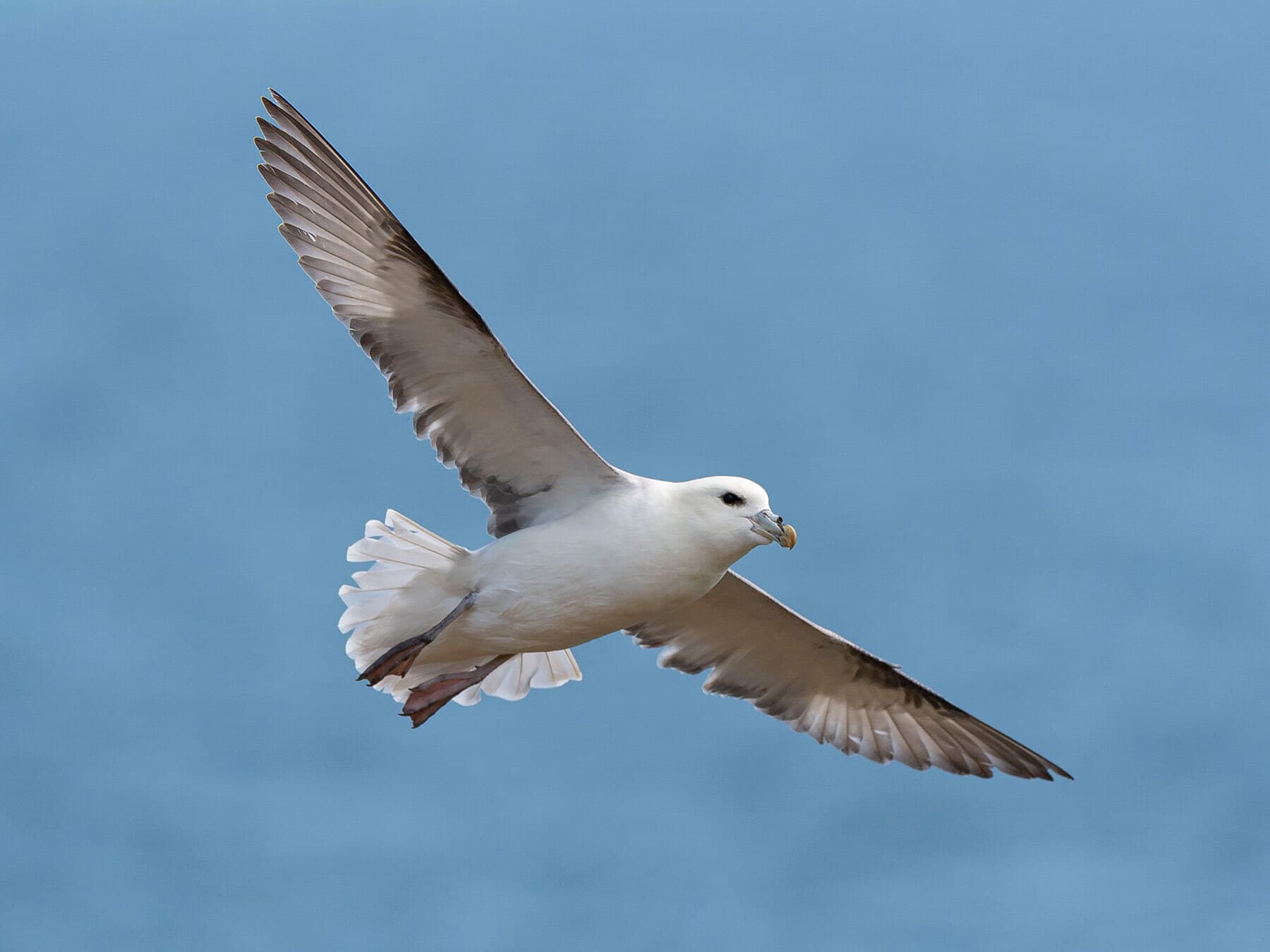
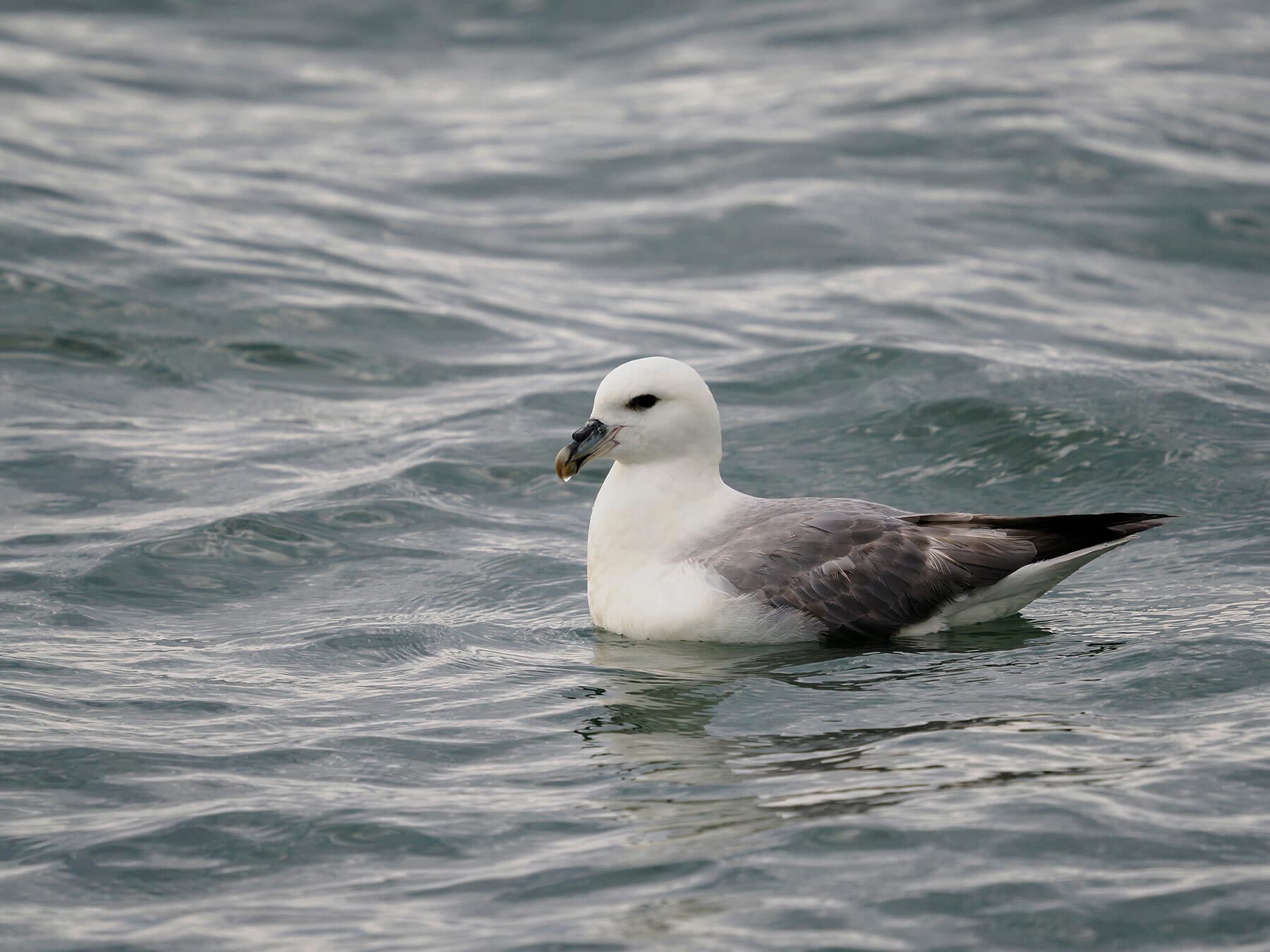
Fulmars are medium-sized seabirds with stout bodies, wide heads, short necks, and a large wingspan. Various colour morphs exist, ranging from mostly white with a lighter grey back to dark, sooty grey all over.
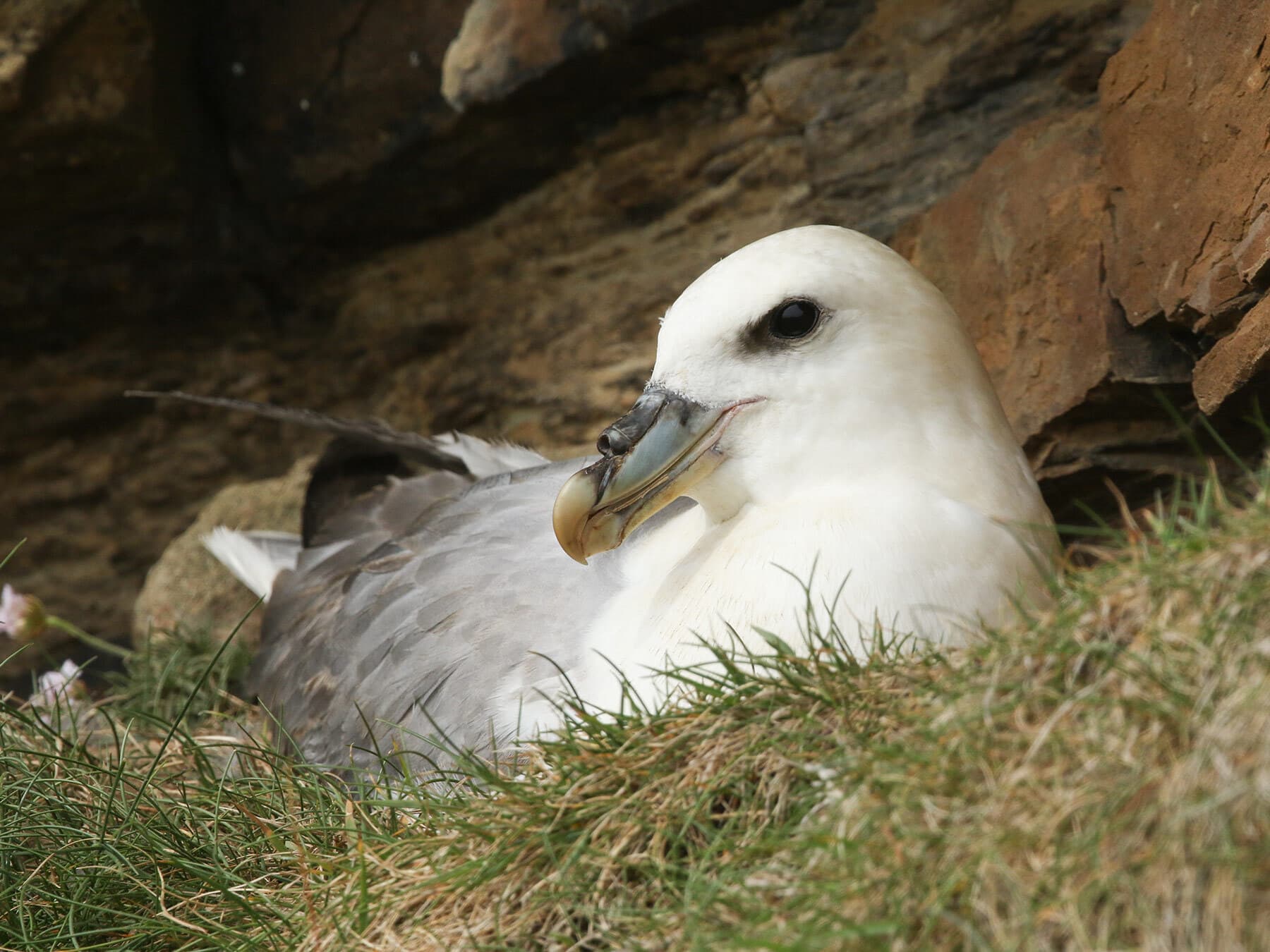
Fulmars belong to the petrel family of seabirds, also known as tubenoses and have two nasal tubes or nostrils at the top of their strong, hooked bill. Their bill is yellow, with the tubelike structures are also yellow but a darker shade. Fulmars’ eyes are dark brown and their legs and feet are pink.
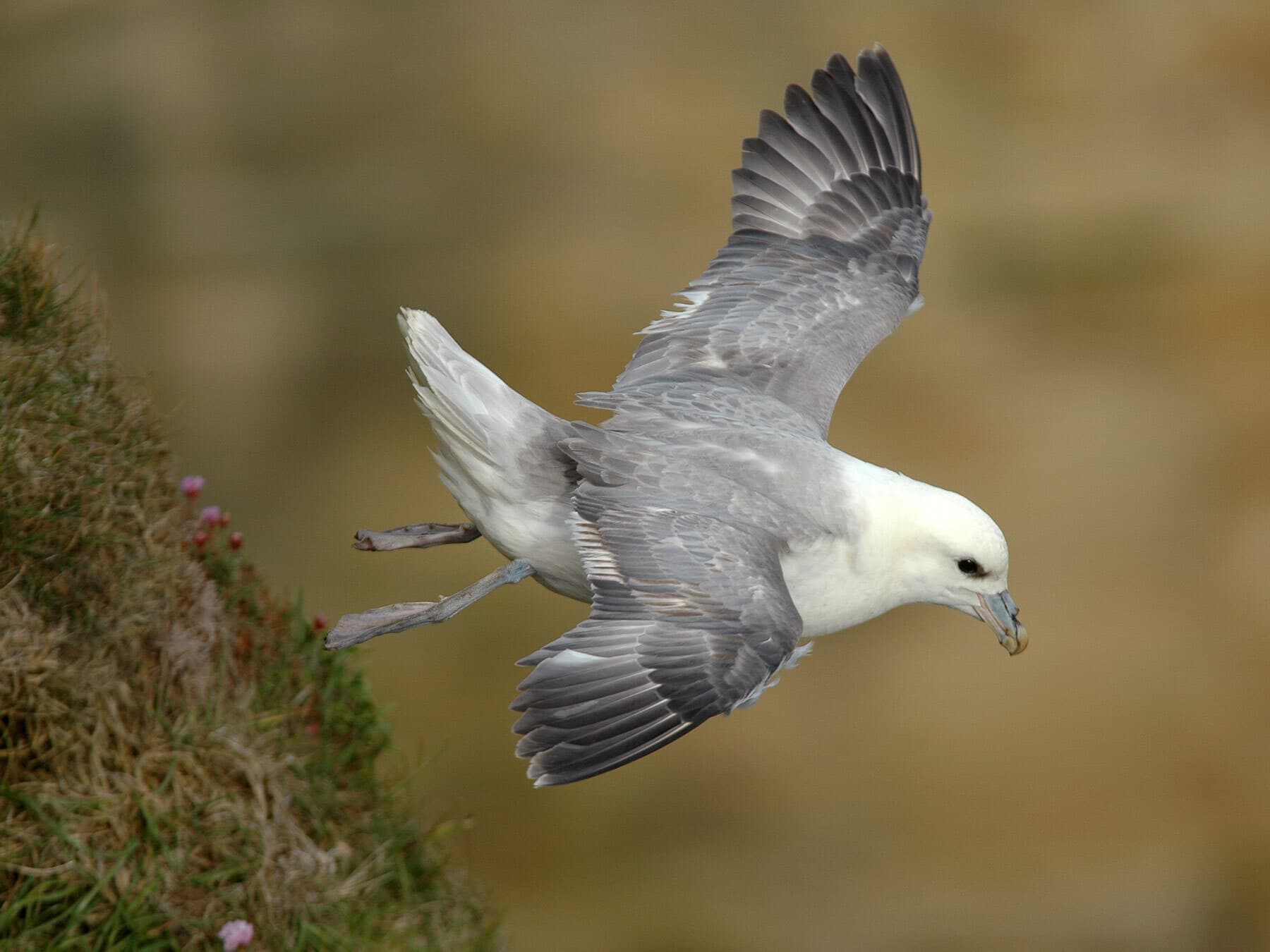
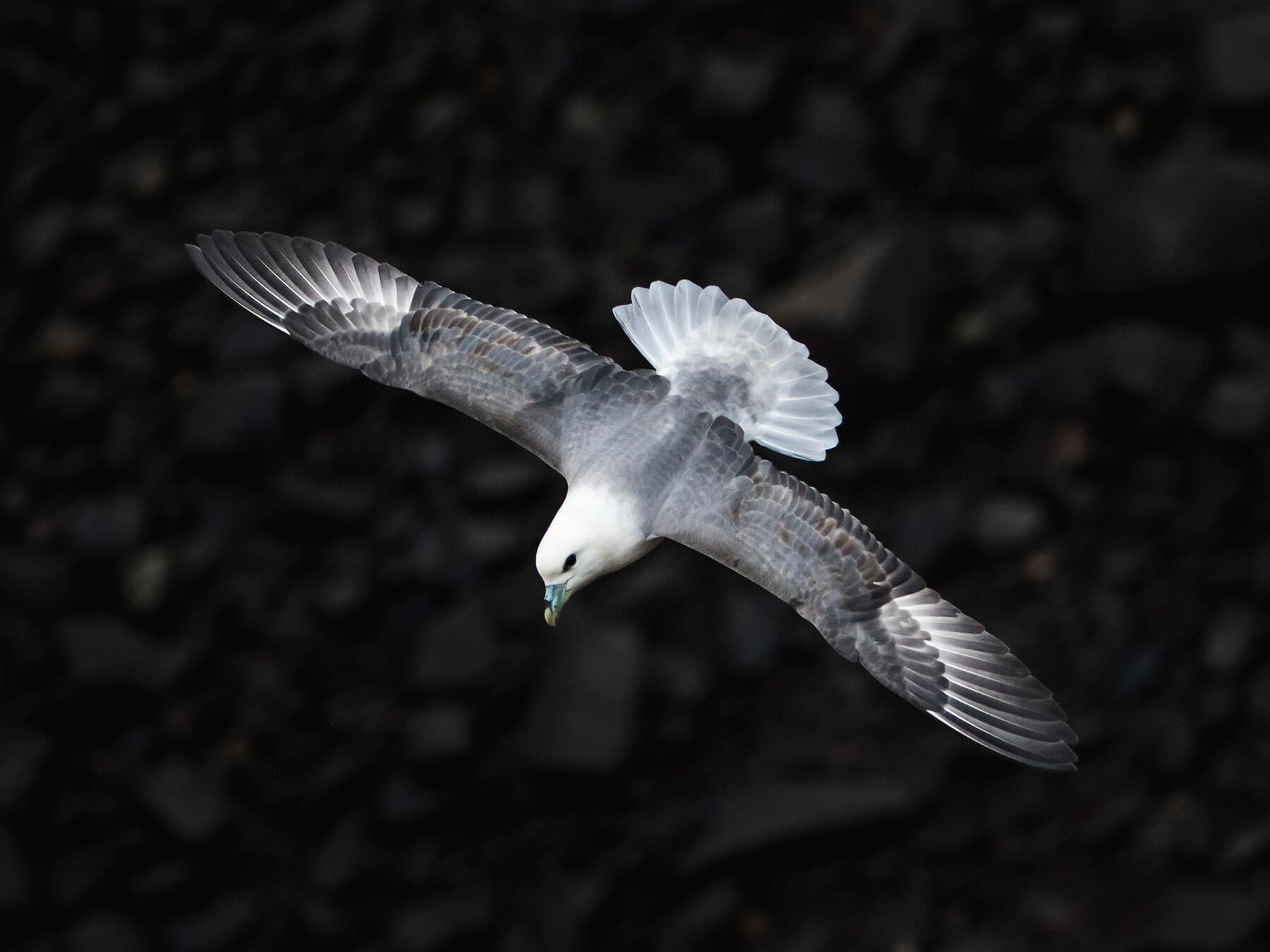
In flight, fulmars are relatively easy to identify, gliding and banking close to the ocean surface with stiff, outstretched wings. From a distance they resemble shearwaters, but up close can be distinguished by their wing size and flight style.
Females and males are virtually identical, although males may be marginally heavier than females. Geographical location may also have an impact on the size and weight of individual birds.
Juvenile birds, once fledged, are indistinguishable from adults.
How big are fulmars?
Fulmars are around the same size as medium gulls, but have a much wider wingspan. The average measurements for males and females fall within the same range, with some lighter males recorded alongside heavier and larger females.
The typical range of measurements for adult fulmars are as follows:
- Length: 45 to 50 cm (17.7 to 19.7 in)
- Wingspan: 102 to 112 cm (40.2 to 44.1 in)
- Weight: 450 to 1,000 g (15.9 to 35.3 oz)
Its size
Adults- Length
- 45–50 cm
- Wingspan
- 101–117 cm
- Weight
- 450–1000 g
Its song and calls
What sound does a fulmar make?
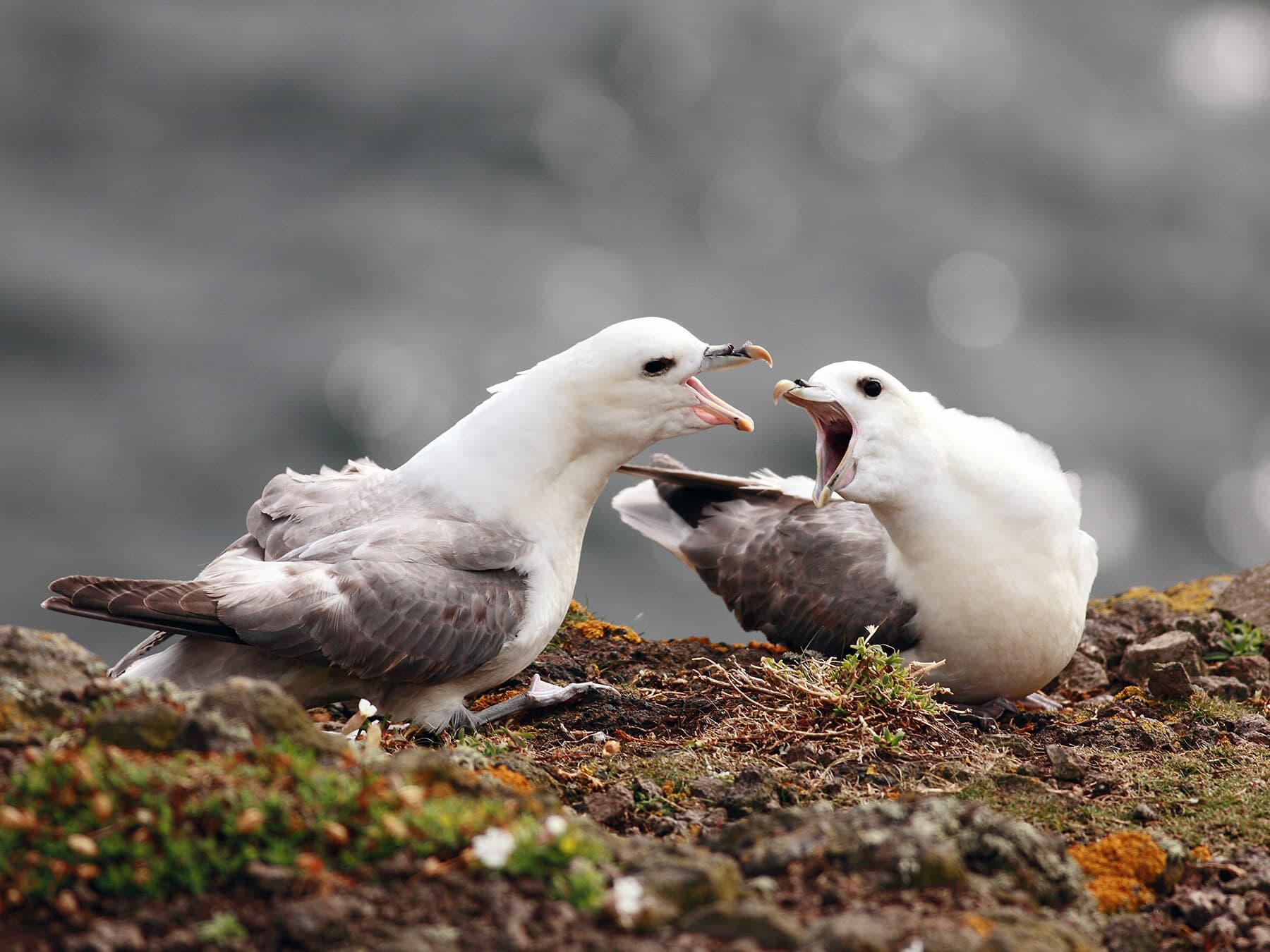
When hunting at sea, fulmars are generally silent if they are solitary, but noisy, cackling calls may be heard between foraging flocks over the waves.
Explosive cackling sounds can be heard when birds return to inland colonies. Lively, constant chattering and food-begging calls from hatchlings can be heard at colonies during daylight, but as light fades, nests fall silent.
- Recording0:00 / 0:47
Recorded in Pembrokeshire, Wales
Lawrence Shove / The British Library Board · Wikimedia Commons · CC BY-SA 4.0
When and where to see it
OctoberLeaving
Most recorded in October
- 1. Shetland Islands1.2%
- 2. Orkney Islands0.76%
- 3. Clare0.36%
- 4. Pembrokeshire0.34%
- 5. Waterford0.29%
Each dot is a county, state or province: the bigger and darker, the larger the bird’s share of that place’s bird records that month. Grey dots: no regular records. The ringed point is the centre of the bird’s records this month; the arrow shows how it moved since last month, and the dashed loop its path through the year. “Arrivals” colours places where it becomes regular this month (orange) or is in its last regular month (grey). GBIF eBird Observation Dataset, 2019–2024. Map data: Natural Earth, US Census Bureau; place centres © OpenStreetMap contributors.
In your area
See when the Fulmar is recorded in your county, state or province.
How often the Fulmar turns up in the UK, Ireland, the United States and Canada through the year, from birdwatchers' records.
United Kingdom
Resident · all year · most records in June
Ireland
Summer visitor · regularly Dec–Oct · most records in August
United States
Resident · all year · most records in October
Canada
Summer visitor · regularly Mar–Dec · most records in September
Show as a table
| Month | United Kingdom | Ireland | United States | Canada |
|---|---|---|---|---|
| January | 0.093% (regular) | 0.074% (regular) | 0.003% (regular) | <0.001% |
| February | 0.10% (regular) | 0.099% (regular) | 0.006% (regular) | <0.001% |
| March | 0.11% (regular) | 0.19% (regular) | 0.003% (regular) | 0.001% (regular) |
| April | 0.15% (regular) | 0.29% (regular) | 0.004% (regular) | <0.001% (regular) |
| May | 0.20% (regular) | 0.45% (regular) | 0.005% (regular) | 0.001% (regular) |
| June | 0.28% (regular) | 0.52% (regular) | 0.006% (regular) | 0.004% (regular) |
| July | 0.24% (regular) | 0.61% (regular) | 0.010% (regular) | 0.007% (regular) |
| August | 0.28% (regular) | 0.78% (regular) | 0.017% (regular) | 0.011% (regular) |
| September | 0.17% (regular) | 0.29% (regular) | 0.019% (regular) | 0.016% (regular) |
| October | 0.055% (regular) | 0.063% (regular) | 0.020% (regular) | 0.006% (regular) |
| November | 0.065% (regular) | 0.038% | 0.019% (regular) | 0.003% (regular) |
| December | 0.083% (regular) | 0.050% (regular) | 0.010% (regular) | 0.002% (regular) |
Recorded regularly in
Worldwide: recorded regularly in 23 countries
Countries where it was recorded in at least 3 of the 6 years 2019–2024. Linked countries have their own bird list.
Europe (17)
- Belgium
- Denmark
- Faroe Islands
- France
- Germany
- Guernsey
- Iceland
- Ireland
- Isle of Man
- Jersey
- Netherlands
- Norway
- Russia
- Spain
- Svalbard & Jan Mayen
- Sweden
- United Kingdom
Asia (1)
North America (5)
Data: EOD – eBird Observation Dataset (Cornell Lab of Ornithology), accessed via GBIF.org, CC BY 4.0. Records from 2019–2024, aggregated and filtered by Birdfact. How these lists are made
What is the habitat of a fulmar?
Fulmars are found mainly over ice-covered Arctic waters but while they do sometimes extend further south to more temperate ocean waters, they are not found over warm or tropical waters. When at sea, fulmars are rarely seen more than 100 km (60 mi) from shore. During breeding season, they form large colonies on rocky cliffs and islands up to 1 km inland, but typically close to the water or coast.
What is the range of a fulmar?
Northern fulmars are found throughout the northern Atlantic and Arctic oceans in the northern hemisphere. They occur as far south as Cape Cod, Massachusetts in the western Atlantic Ocean, the British Isles in the eastern Atlantic, Japan in the western Pacific Ocean and on rare occasions as far south as California in the eastern Pacific.
Where do fulmars live?
Fulmar colonies can be found on cliffs scattered around coastlines on the North Atlantic, North Pacific, and Arctic oceans. In the United States, the only breeding sites of fulmars are in Alaska, on the Pribilof Islands and the islands of Semidi, Chagulak, Hall, and Saint Matthew. Canadian colonies are mainly within the Arctic Circle.
How rare are fulmars?
With a population of between 14 and 30 million birds, fulmars really cannot be considered rare, although because of their preferred isolated habitat in landscapes that are largely undisturbed by human habitation they are not commonly sighted. As they spend a large proportion of their time at sea, it is highly uncommon for fulmars to be spotted inland.
Where to see fulmars in the UK
The UK’s fulmar breeding colonies are concentrated on Scotland’s Northern Isles and along its north coast. Hirta, Dun, Soay and Stacs in the St Kilda archipelago are leading breeding grounds, with further sizeable populations on Foula and Fair Isle in the Shetland Islands.
Where to see fulmars in the US
North American fulmar-spotting sites include Andrews Point (Cape Ann) and Race Point (Cape Cod), Massachusetts. Breeding colonies are naturally established in isolated regions and the best chance of seeing fulmars is when the birds are feeding over coastal areas.
Migration
Do fulmars migrate?
Fulmars are not migratory birds in the most traditional sense of the word. However, they leave their nesting grounds once their young have fledged and spend extended periods of the year at sea, before returning inland the following year ahead of breeding. Fulmars display strong nest fidelity and seek out their previously used nest to reuse year after year.
How did the fulmar get its name?
The name ‘fulmar’ comes from the Old Norse word ‘Fúlmár’ which means ‘foul-mew’, referencing the disgusting-smelling oil that is sprayed by the birds when they feel under threat from predators.
What type of bird is a fulmar?
Fulmars are similar in size and appearance to gulls, but are in the petrel family of tube-nosed seabirds.
Can fulmars walk?
Fulmars can walk, but not very far and not very gracefully! As is the case with many members of the petrel family, fulmars do not spend much time at all on their feet and the short hops they do make are awkward and clumsy.
How many fulmars are in the wild?
It’s hard to conclusively and accurately count fulmar numbers due to the extensive periods birds spend at sea, including non-breeding individuals during the breeding season.
The global population of fulmars is estimated at around 20 million individuals, with around 7 million breeding pairs.
Between 3.2 and 3.8 million pairs breed in Europe. The UK population consists of around 500,000 breeding pairs, and swells to between 1.6 to 1.8 million birds off UK shores during winter months.
The North American population of fulmars was estimated at between 2.2 and 3 million individuals in 2004, of which about 80 percent are in Alaska, 20% in the Canadian Arctic, and around 0.01% in British Columbia, Newfoundland, and Labrador.
Tips for seeing it
- Look for Fulmars gliding low over the sea with stiff wings
- Observe coastal cliffs during the breeding season for nesting birds
- Note the distinctive tube-shaped nostril on the bill
- Watch for their habit of following fishing boats for discards
- In the UK, check popular sites like Bempton Cliffs or Orkney Islands
What it eats
What do fulmars eat?
Fulmars are pelagic (meaning they live entirely at sea) outside of the breeding season. Their diet consists primarily of fish, squid, crustaceans and eels. Fish waste, including discarded offal from trawlers, is a major source of food. Birds have also been seen eating remains of seals, whales, walruses and even other seabirds. Fulmars catch their prey on or just below the ocean surface.
What do baby fulmars eat?
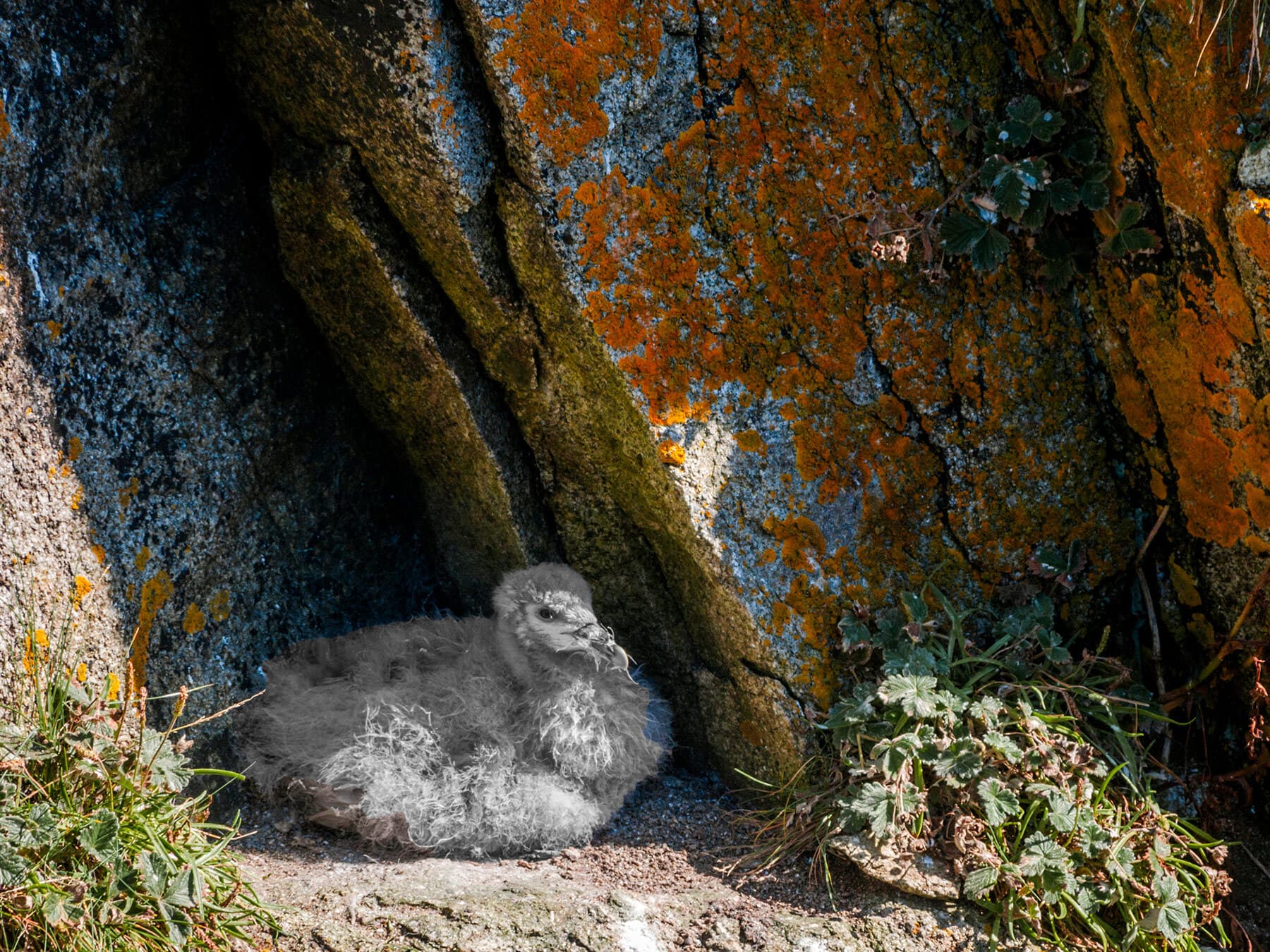
Baby fulmars are fed semi-digested food mixed with an oily substance regurgitated by both parents. The diet of fulmar hatchlings consists mainly of fish, especially Arctic cod and often jellyfish.
Nesting and breeding
Where do fulmars nest?
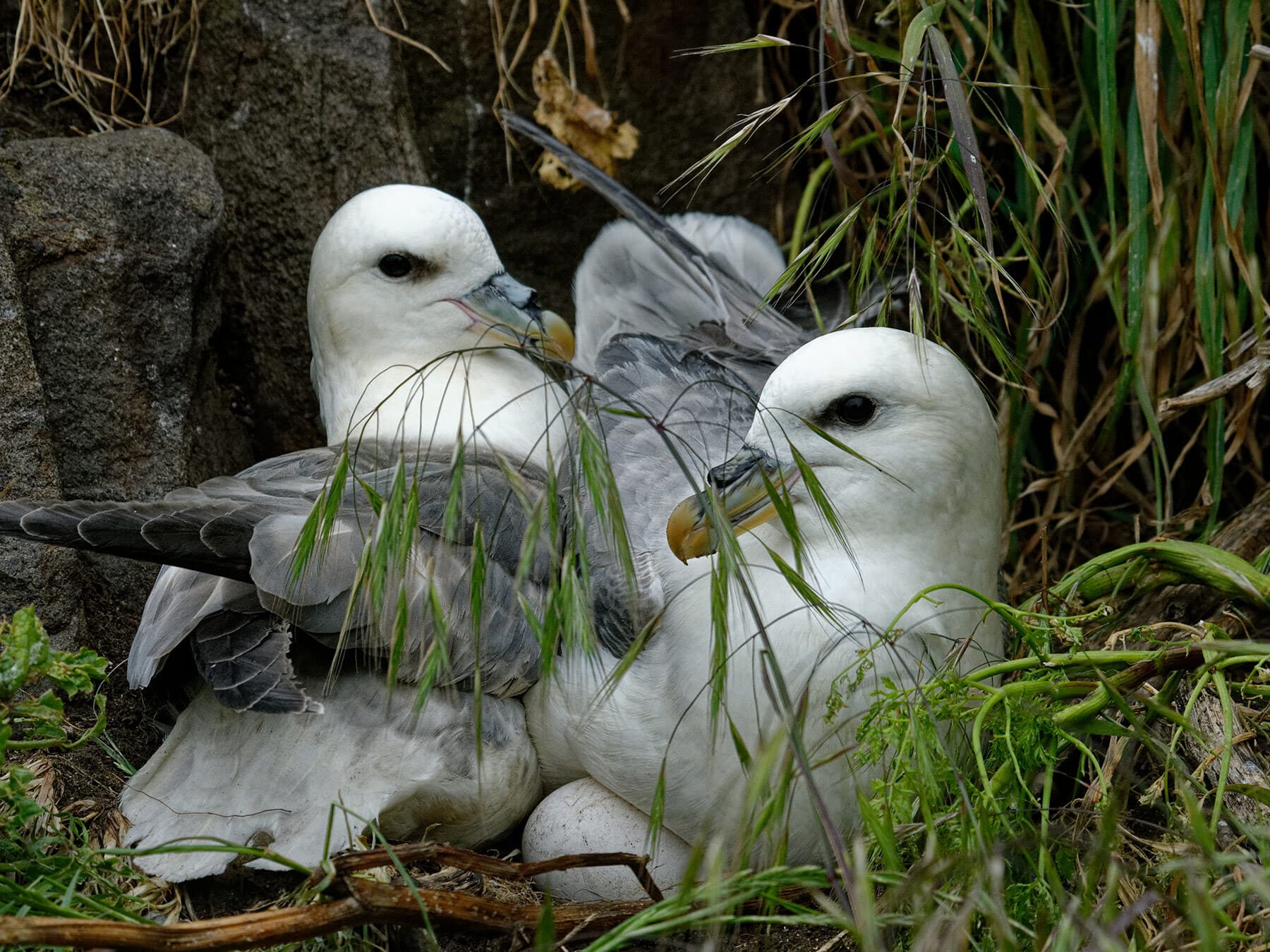
Fulmars only come inland to nest, and reuse the same nesting site year after year. Nests are rather basic and rudimentary, sometimes just using a bare rock ledge or clifftop scrape. This may be roughly lined with seaweed or grass.
Colonies consist of nests between 1 and 2 m apart, with hundreds of pairs breeding alongside each other.
What do fulmar eggs look like?
As is the norm for cliff-nesting birds, fulmar eggs are plain white and pointed in shape, an adaptation that prevents eggs from rolling off cliff edges.
Fulmars breed for the first time between 6 and 12 years old, and females lay one sole egg in May each year.
Incubation is shared between males and females, with both partners taking extended turns, for up to 10 or 11 days, while the other partner heads off to sea in search of food. Young hatch after around 50 days, and are ready to fledge around 10 weeks after hatching.
Do fulmars mate for life?
Fulmars are monogamous birds and will return to the same breeding sites and pair up with the same partner year after year. If a mate dies, they will find another inexperienced bird, and continue to use their previous nest site for future breeding attempts.
Behaviour
Are fulmars aggressive?
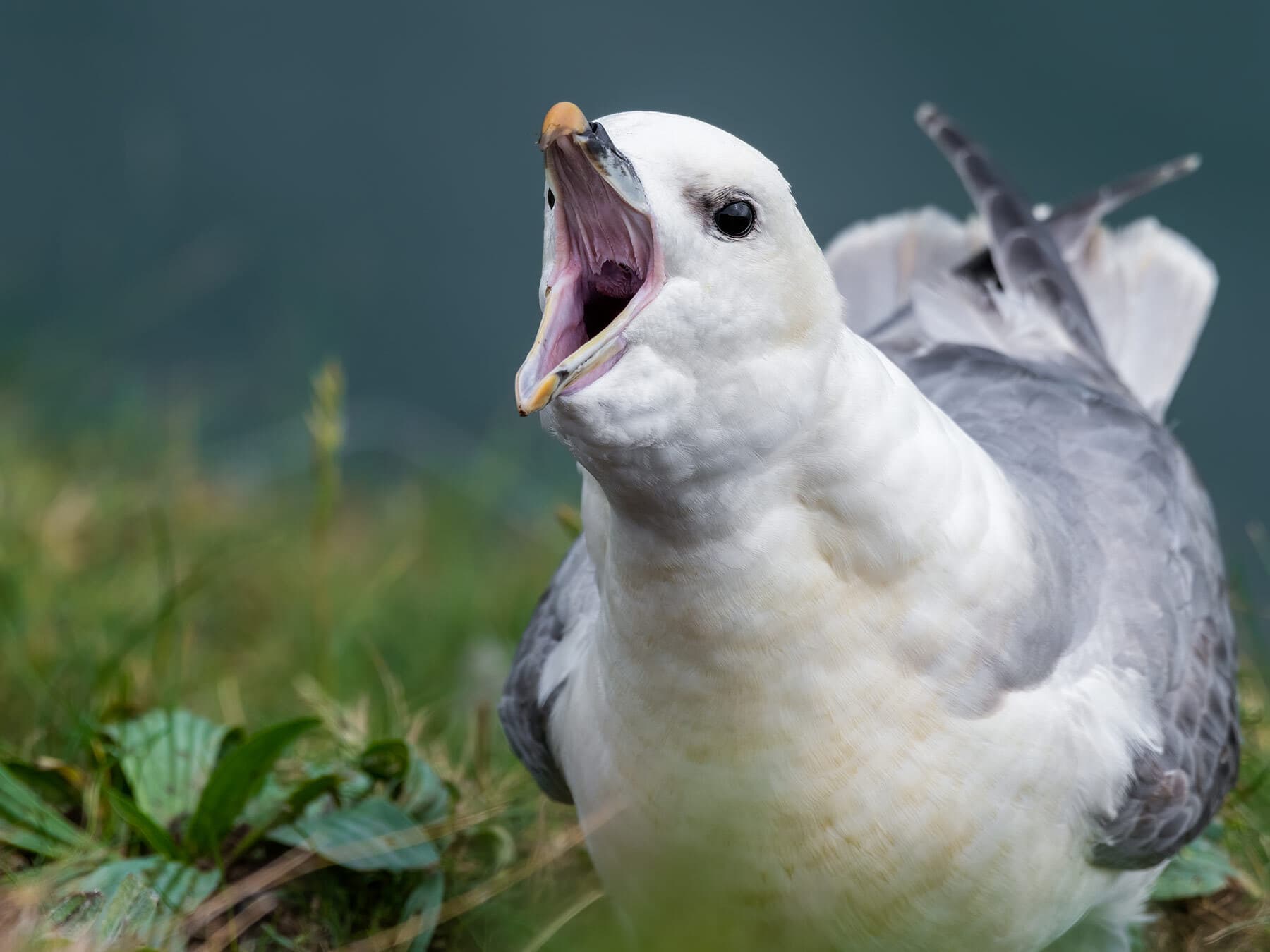
Fulmars are territorial over their individual nests, but generally social birds who live alongside each other noisily and with little confrontation or aggression. When external intruders threaten their breeding sites, they respond with an instinctive projectile spray of oil from their stomachs, which is an effective method of protecting their eggs and young from predators.
Lifespan and predators
How long do fulmars live?
Fulmars are among the longest-lived wild birds, with their average lifespan quoted variously as between 30 and 44 years, although it is believed that they can live up to 60 years.
Fulmars reach maturity between 6 and 12 years and may defer breeding for the first time until they are between 8 and 10. Breeding continues into advanced age, with individuals noted to be breeding even beyond 50 years on rare occasions.
What are the predators of fulmars?
Fulmars have a unique defence mechanism when predators approach their nesting sites. They spit out a revolting-smelling oil to deter any potential intruders from coming too close, or to immobilize the wings of any predatory birds that attempt to raid their nests.
The oil is produced in part of a fulmar’s stomach called the proventriculus, and can also serve as an energy-rich food source to fuel long flights.
Some predators, including skuas, Arctic and red foxes, rats, and squirrels, do occasionally manage to successfully sneak past the oily projectile vomiting and take fulmar hatchlings and unhatched eggs.
Are fulmars protected?
Fulmars are classified as an amber species on the UK Birds of Conservation Concern Red List. They are also protected under the UK’s WIldlife and Countryside Act 1981. Fulmars in the US are safeguarded under the Migratory Bird Treaty Act.
Are fulmars endangered?
Fulmars are rated as a species of least concern globally, with the species undergoing a population revival in recent years with numbers of breeding pairs increasing significantly from an estimated 2.1 million in 2002 to 7 million in 2021.
Future threats to the species may come in the form of plastic pollution, increasingly ingesting plastic fragments when foraging at sea. Around 90 percent of birds in a recent survey were found to have microplastics in their stomach contents.
Conservation
While currently listed as Least Concern, Fulmars face threats from plastic pollution and oil spills. They often ingest plastic debris, mistaking it for food. Conservation efforts focus on reducing marine pollution and protecting breeding sites on coastal cliffs.
Fulmar guides
1 guidesQuick facts
- Length
- 45–50 cm
- Wingspan
- 101–117 cm
- Weight
- 450–1000 g
- Lifespan
- 30–50 years
- Family
- Petrels & Shearwaters
- Migration
- Partial migrant
- Global status (IUCN)
- Least Concern
- World population
- 6,760,000 - 7,000,000 mature individuals
- Population trend
- Increasing
- Also called
- Northern Fulmar
- Scientific name
- Fulmarus glacialis
Sources
3- 1BirdLife International. 2018. Fulmarus glacialis. The IUCN Red List of Threatened Species 2018: e.T22697866A132609419. Source (opens in a new tab)
- 2BirdLife International. 2018. Fulmarus glacialis. The IUCN Red List of Threatened Species 2018: e.T22697866A132609419. Source (opens in a new tab)
- 3BirdLife International. 2018. Fulmarus glacialis. The IUCN Red List of Threatened Species 2018: e.T22697866A132609419. Source (opens in a new tab)

Checked by
Nathan Cope, founder and editor
Nathan founded Birdfact and leads its writers and contributors in the UK, the US and Canada. He has watched and studied birds for more than ten years, and checks every article and species guide before it’s published.