


Crested Myna
Chinese Starling · Acridotheres cristatellus
By the Birdfact teamChecked by Nathan Cope
On this page12 sections
How to recognise it
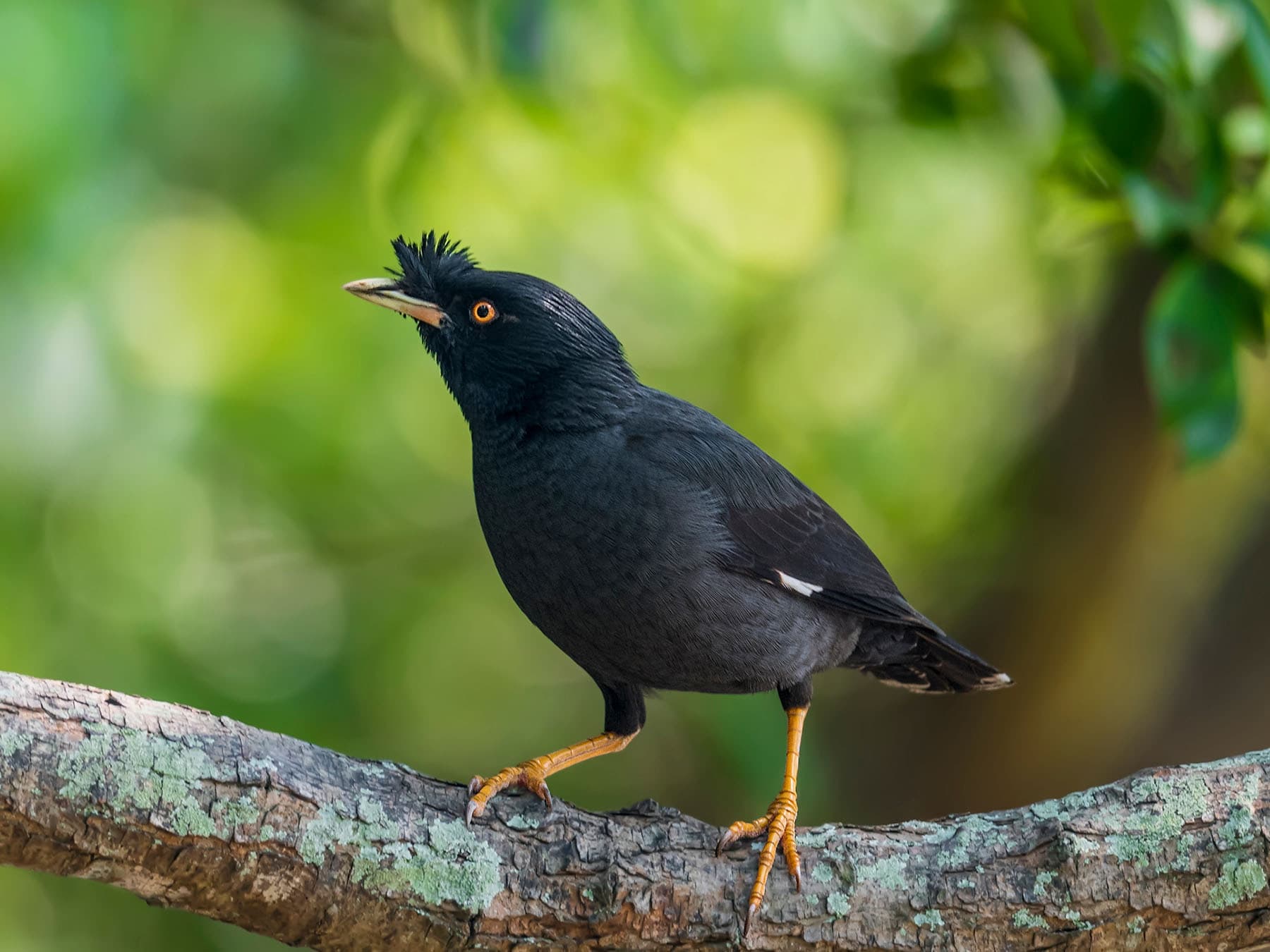
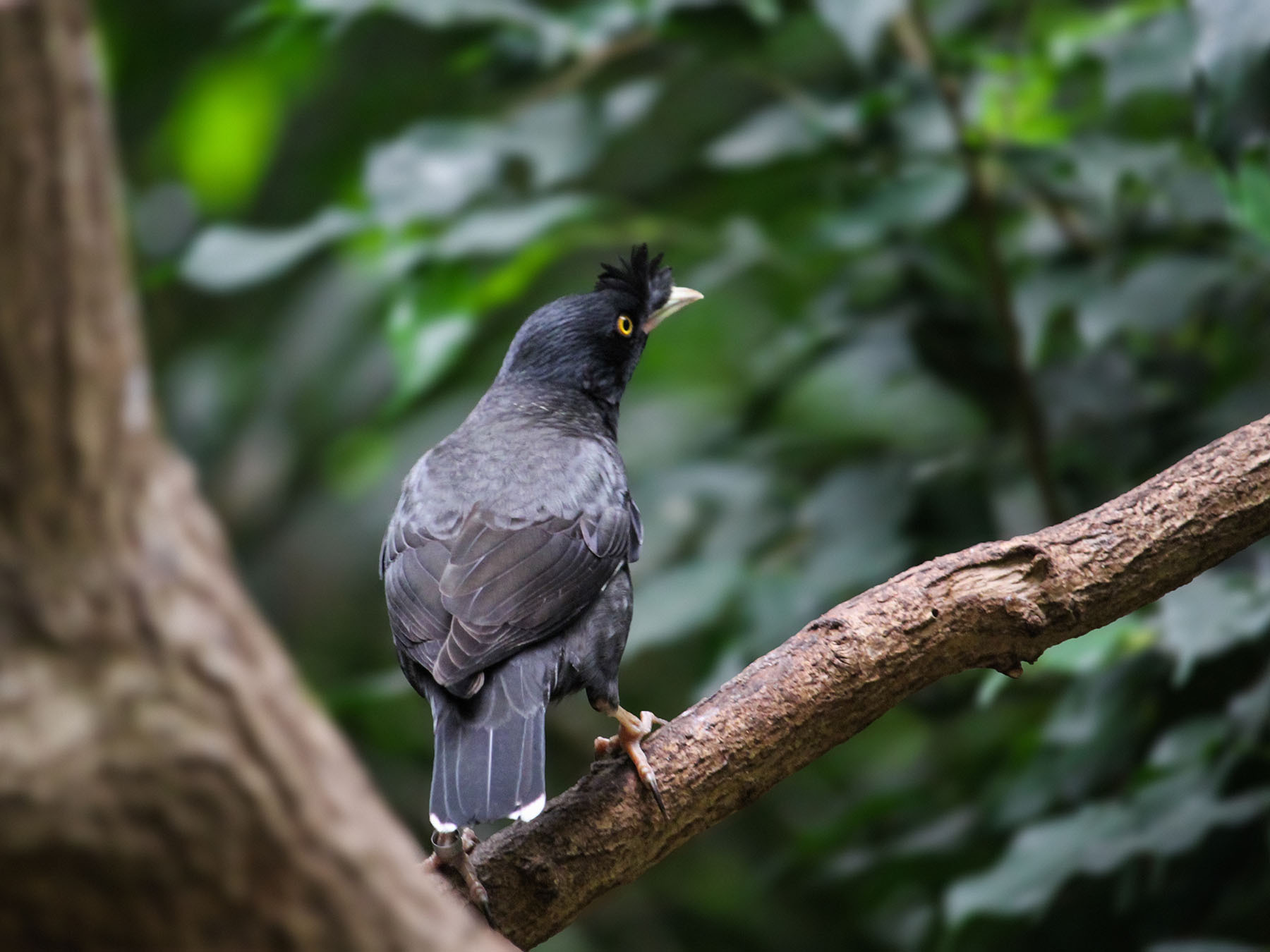
The Crested Myna is a striking bird with glossy black plumage covering most of its body. Its most distinctive feature is a prominent crest of feathers on its forehead, giving it a mohawk-like appearance. The bird has a bright yellow beak and legs, contrasting sharply with its dark body.
White patches on the wings become visible during flight, and a small white patch can be seen at the base of the tail. Both males and females look similar, although males tend to be larger, and females have less pronounced crests. Juveniles appear duller and also have a less pronounced crest.
Its size
Adults- Length
- 24–27 cm
- Wingspan
- 42–48 cm
- Weight
- 110–140 g
Its song and calls
Crested Mynas are known for their varied and complex vocalisations. Their repertoire includes whistles, chatters, and warbles, often mimicking other bird species and even human-made sounds.
Their calls can be described as a mix of melodious notes and harsher, more grating sounds, sometimes resembling a 'kree-kree' or 'chee-chee' sound.
When and where to see it
The Crested Myna is not recorded regularly in the UK, Ireland, the United States or Canada.
Worldwide: recorded regularly in 10 countries
Countries where it was recorded in at least 3 of the 6 years 2019–2024. Linked countries have their own bird list.
Data: EOD – eBird Observation Dataset (Cornell Lab of Ornithology), accessed via GBIF.org, CC BY 4.0. Records from 2019–2024, aggregated and filtered by Birdfact. How these lists are made
Tips for seeing it
- Look for Crested Mynas in urban parks, gardens, and agricultural areas
- Listen for their distinctive calls, which include whistles and chattering sounds
- Observe their behaviour near fruiting trees or in open grassy areas where they forage
- Watch for their characteristic head-bobbing walk on the ground
What it eats
Crested Mynas are omnivorous, with a diet consisting of insects, fruits, and seeds. They are opportunistic feeders, often seen foraging on the ground for invertebrates or picking fruits from trees.
In urban areas, they may also scavenge for human food scraps, demonstrating their adaptability to various food sources.
Nesting and breeding
Crested Mynas typically breed between March and August, with some variation depending on location. They form monogamous pairs and often return to the same nesting sites year after year. These birds are cavity nesters, utilising tree holes, building crevices, or nest boxes.
The nest is constructed with a variety of materials, including grass, leaves, and feathers. Females usually lay 4-5 pale blue eggs, which both parents incubate for about 13-14 days. The eggs are oval-shaped and have a smooth, slightly glossy surface.
After hatching, both parents care for the chicks, which fledge after approximately 22-24 days. The young birds may remain with their parents for several weeks after leaving the nest, learning essential foraging skills.
Behaviour
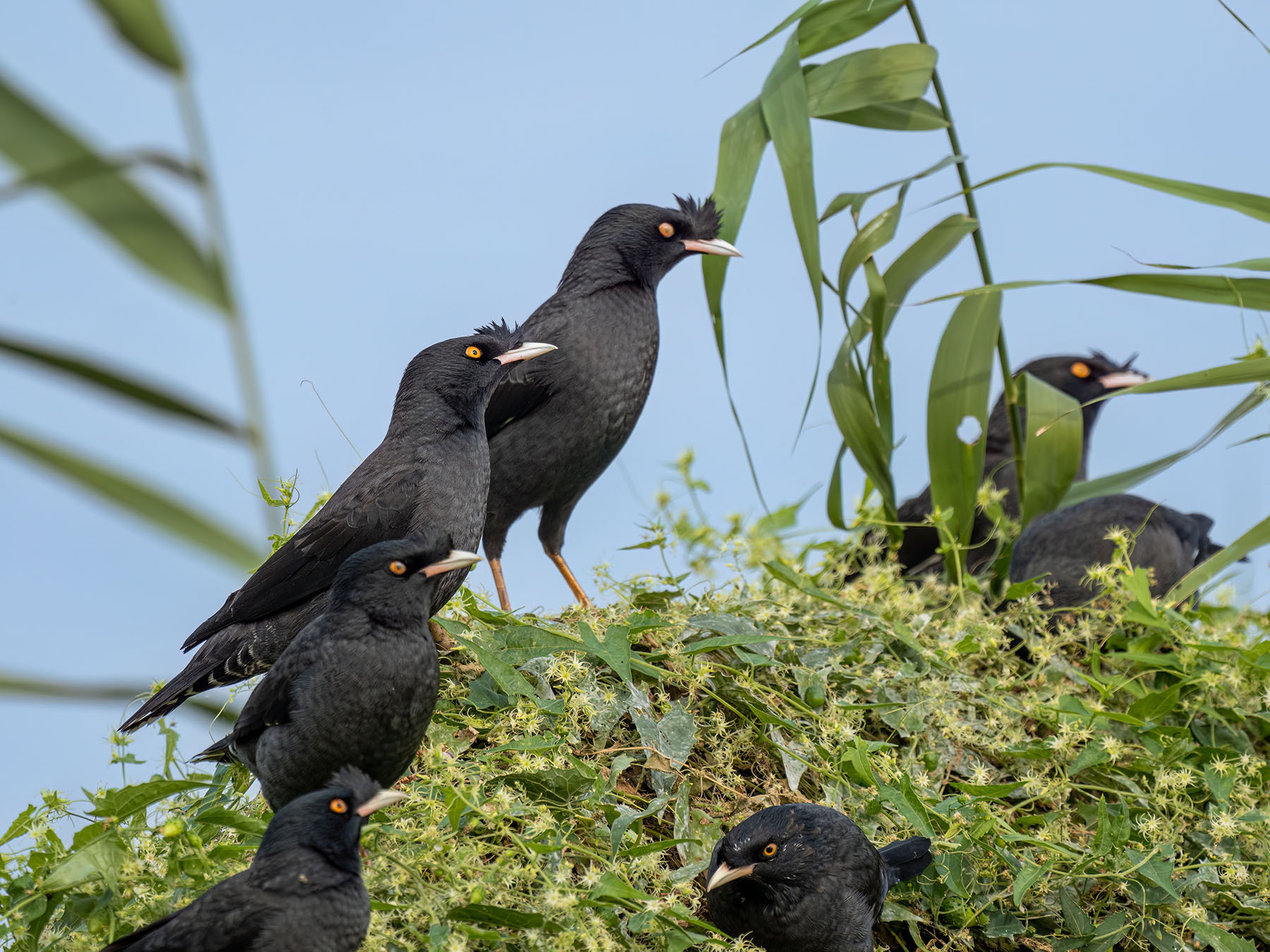
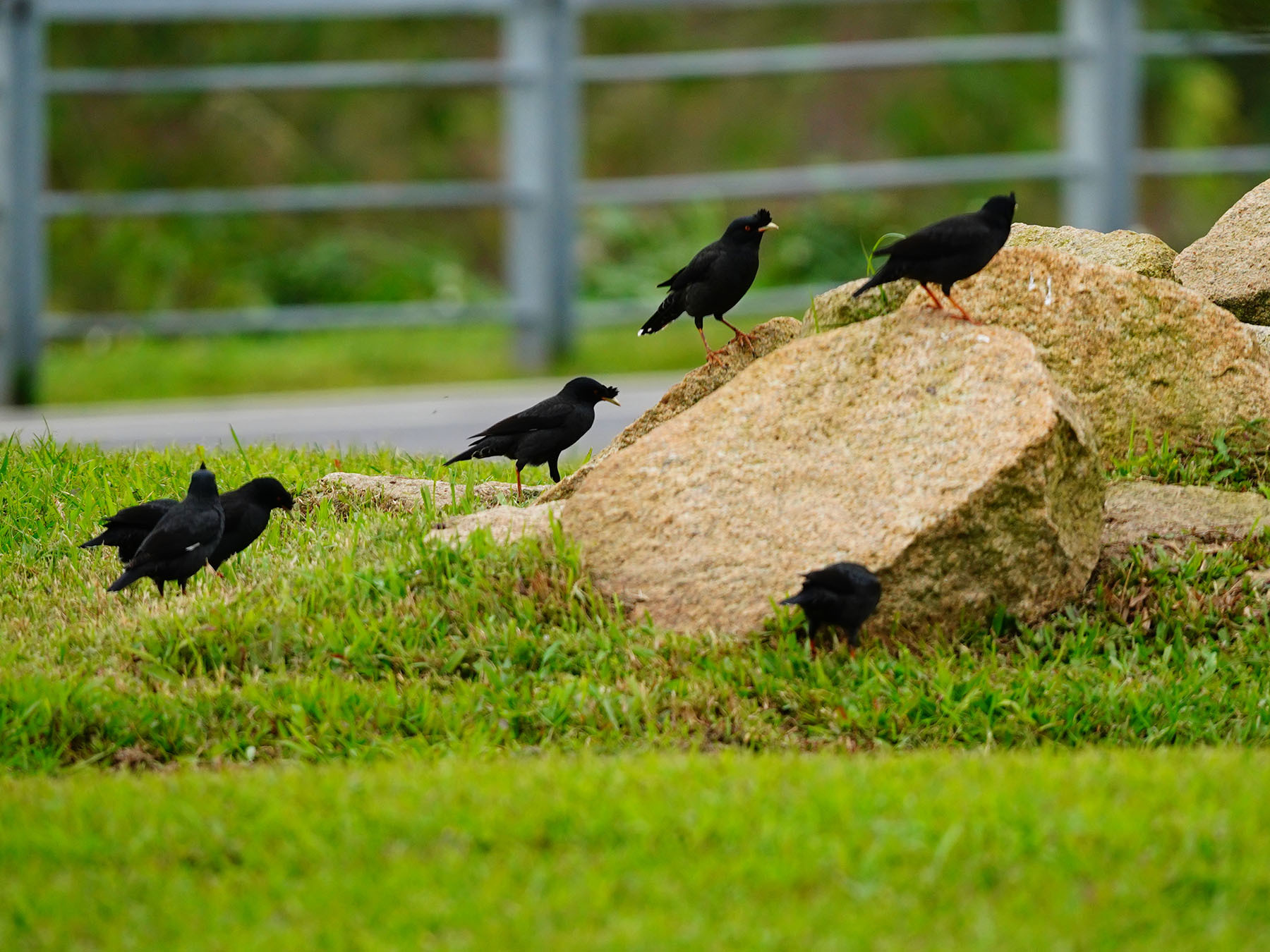
Crested Mynas are highly social birds, often seen in pairs or small flocks. They have a confident, upright posture when walking on the ground, frequently bobbing their heads.
These birds are known for their adaptability. They thrive in urban environments, foraging for food in parks, gardens, and even near human habitations.
Conservation
The Crested Myna is listed as Least Concern by the IUCN due to its large range and stable population.
However, in some areas where it has been introduced, such as Vancouver, Canada, efforts have been made to control its population to protect native bird species. Habitat loss in its native range remains a potential concern.
Similar birds
Often mistaken for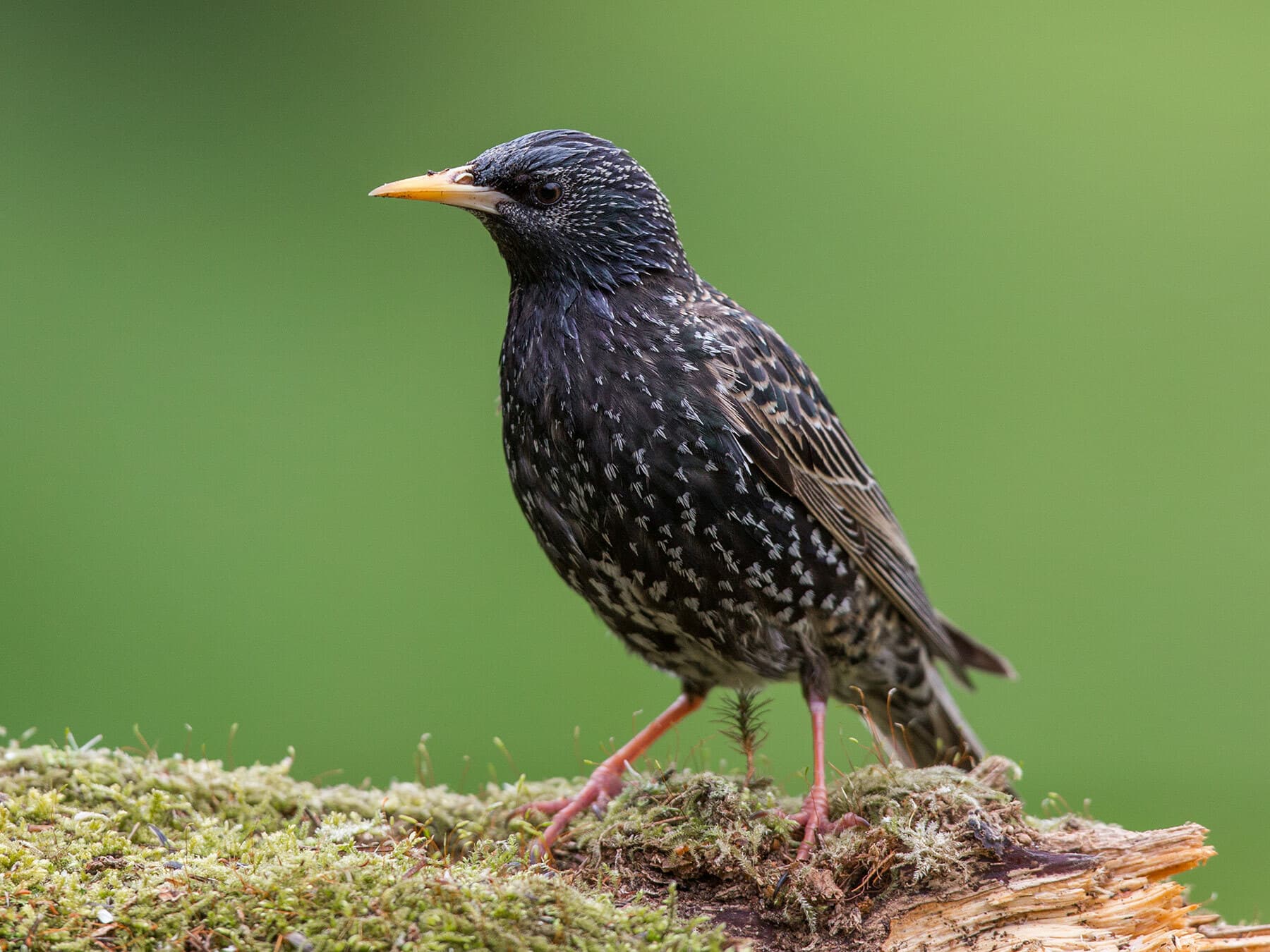
More photos
4 photos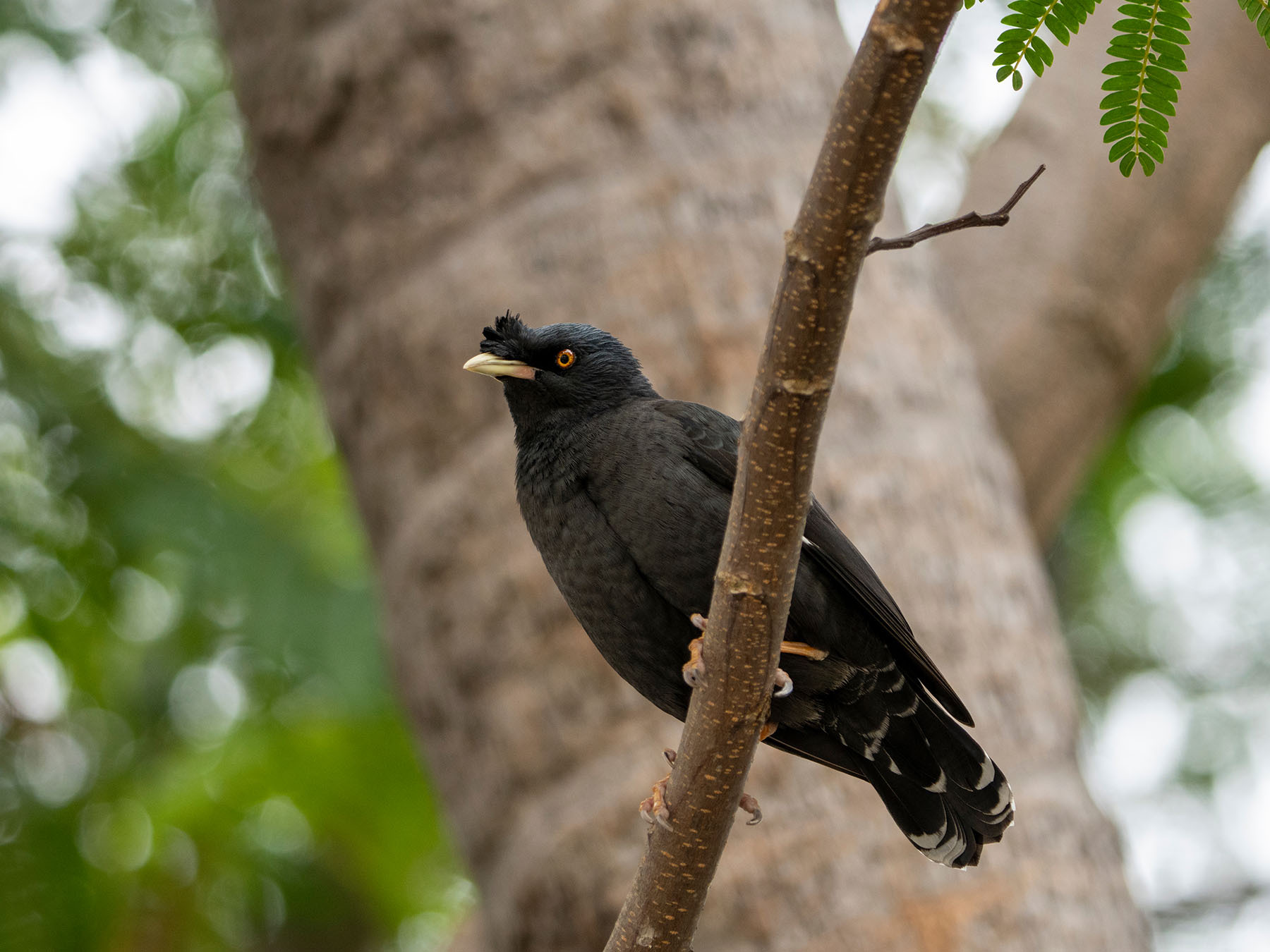
Quick facts
- Length
- 24–27 cm
- Wingspan
- 42–48 cm
- Weight
- 110–140 g
- Lifespan
- 11 years · oldest recorded 13 years
- Family
- Starlings & Mynas
- Migration
- Resident
- Global status (IUCN)
- Least Concern
- World population
- Not quantified, but common throughout its range
- Population trend
- Stable
- Also called
- Chinese Starling
- Scientific name
- Acridotheres cristatellus
Sources
4- 1BirdLife International. 2024. Acridotheres cristatellus. The IUCN Red List of Threatened Species 2024: e.T22710946A263931625. Source (opens in a new tab)
- 2BirdLife International. 2024. Acridotheres cristatellus. The IUCN Red List of Threatened Species 2024: e.T22710946A263931625. Source (opens in a new tab)
- 3Feare and Craig (1998)
- 4Flower, Furter notes on the duration of life in animals. IV. Birds, Proc Zool Soc London, Ser. A:195-235 (1938)

Checked by
Nathan Cope, founder and editor
Nathan founded Birdfact and leads its writers and contributors in the UK, the US and Canada. He has watched and studied birds for more than ten years, and checks every article and species guide before it’s published.