


Corncrake
Landrail · Crex crex
By the Birdfact teamChecked by Nathan Cope
On this page13 sections
How to recognise it
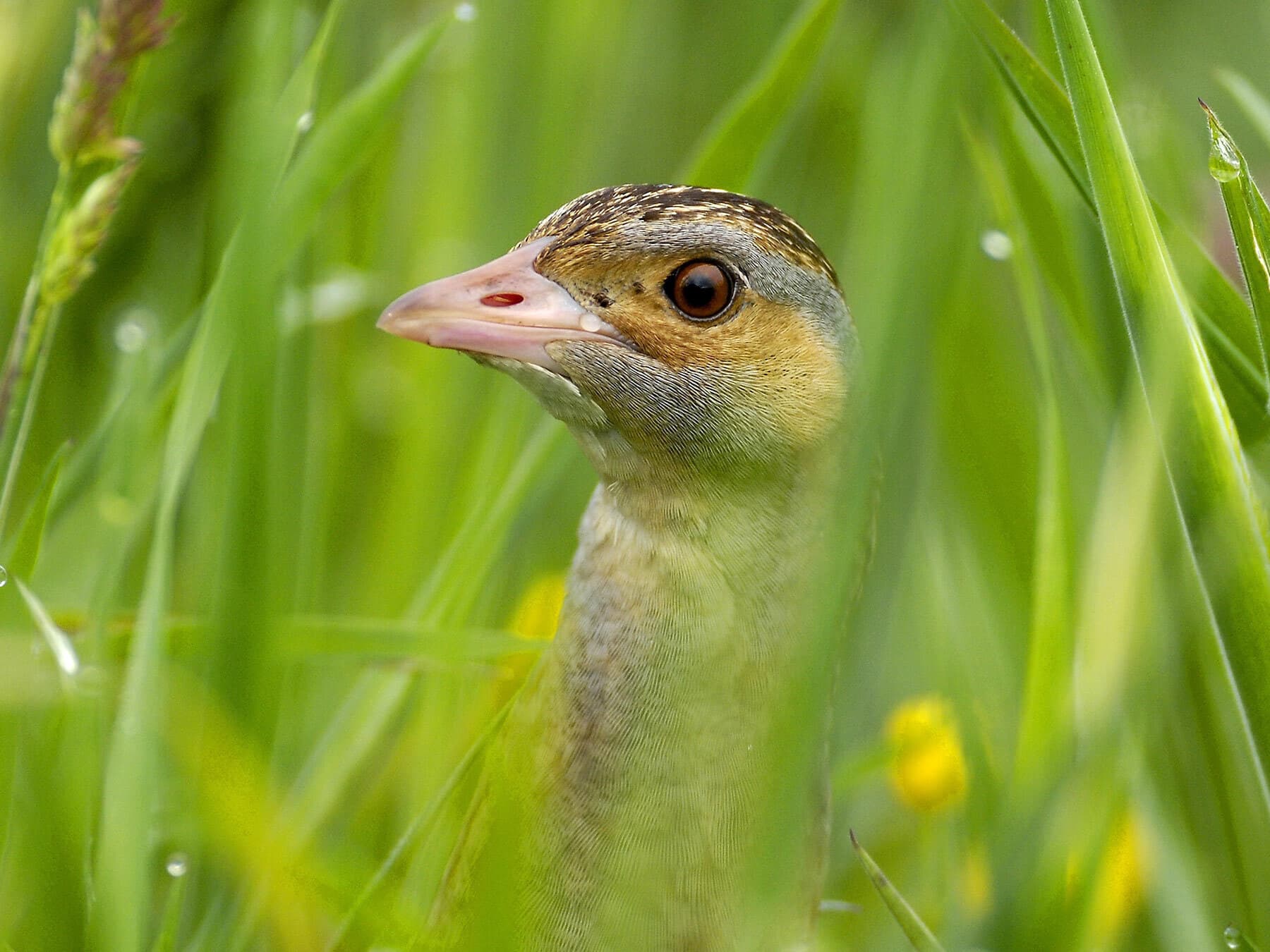
The Corncrake is a medium-sized bird with a compact body, short neck, and strong legs. Its plumage is predominantly brown and buff, with black streaks on the upperparts and barred flanks. The wings show chestnut patches in flight.
Both sexes look similar, with males slightly larger. Juveniles resemble adults but have a duller, less defined pattern. The bird's cryptic colouration provides excellent camouflage in tall grass.
Its size
Adults- Length
- 22–30 cm
- Wingspan
- 42–53 cm
- Weight
- 125–210 g
Its song and calls
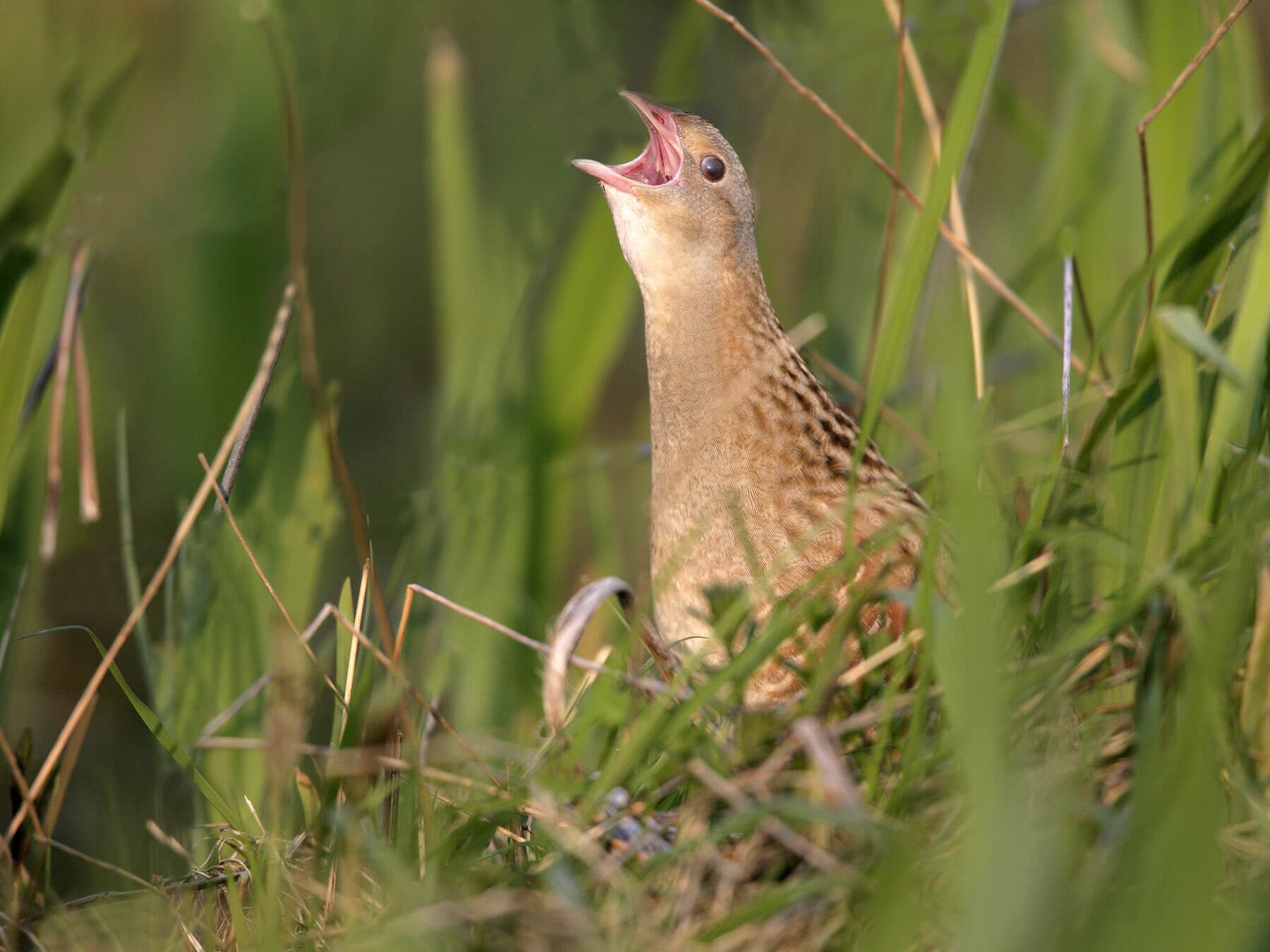
The corncrake is a shy, secretive bird with a very distinctive call which easily identifies it once heard. The voice is a loud, rasping, medium pitched and repetitive, ‘crrrek – crrrek’ similar to a fast moving football rattle or wooden ratchet, and is unmistakeable.
- Song0:00 / 1:01
Recorded in Östergötland County, Sweden · May 2025
- Call0:00 / 0:16
Recorded in Ústí nad Labem Region, Czech Republic · May 2026
When and where to see it
OctoberMostly absent
Most recorded in October
- 1. Eilean Siarunder 0.1%
- 2. Orkney Islandsunder 0.1%
- 3. Corkunder 0.1%
- 4. Galwayunder 0.1%
- 5. Shetland Islandsunder 0.1%
Each dot is a county, state or province: the bigger and darker, the larger the bird’s share of that place’s bird records that month. Grey dots: no regular records. The ringed point is the centre of the bird’s records this month; the arrow shows how it moved since last month, and the dashed loop its path through the year. “Arrivals” colours places where it becomes regular this month (orange) or is in its last regular month (grey). GBIF eBird Observation Dataset, 2019–2024. Map data: Natural Earth, US Census Bureau; place centres © OpenStreetMap contributors.
In your area
See when the Corncrake is recorded in your county, state or province.
How often the Corncrake turns up in the UK and Ireland through the year, from birdwatchers' records.
Ireland
Summer visitor · regularly Apr–Aug · most records in June
Show as a table
| Month | Ireland |
|---|---|
| January | – |
| February | – |
| March | – |
| April | 0.005% (regular) |
| May | 0.042% (regular) |
| June | 0.044% (regular) |
| July | 0.027% (regular) |
| August | 0.003% (regular) |
| September | <0.001% |
| October | 0.001% |
| November | – |
| December | – |
Recorded in United Kingdom, but eBird withholds many records of this sensitive species to protect it, so no months are shown.
Recorded regularly in
Worldwide: recorded regularly in 49 countries
Countries where it was recorded in at least 3 of the 6 years 2019–2024. Linked countries have their own bird list.
Europe (30)
Africa (6)
Asia (13)
- Armenia
- China
- Georgia
- Iran
- Israel
- Jordan
- Kazakhstan
- Kuwait
- Kyrgyzstan
- Lebanon
- Palestinian Territories
- Saudi Arabia
- Turkey
Data: EOD – eBird Observation Dataset (Cornell Lab of Ornithology), accessed via GBIF.org, CC BY 4.0. Records from 2019–2024, aggregated and filtered by Birdfact. How these lists are made
Breeding regions for the corncrake encompass north and northwest Europe including Scotland and Ireland’s north east coast, through western and central Asia and pockets of north west China. They are migratory, overwintering in south eastern countries on the African continent including Tanzania and the DRC, extending south into South Africa.
Signs and Spotting tips
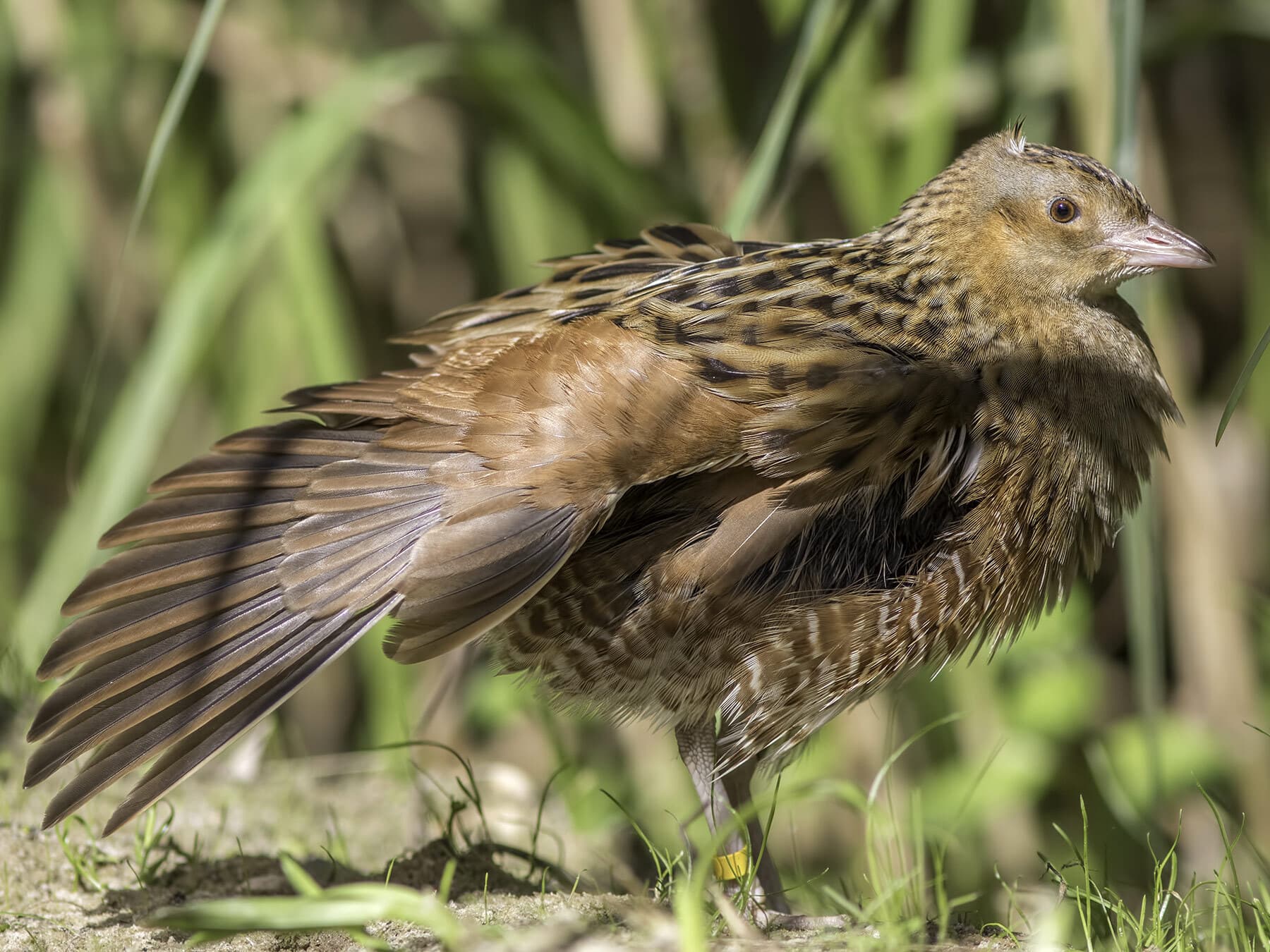
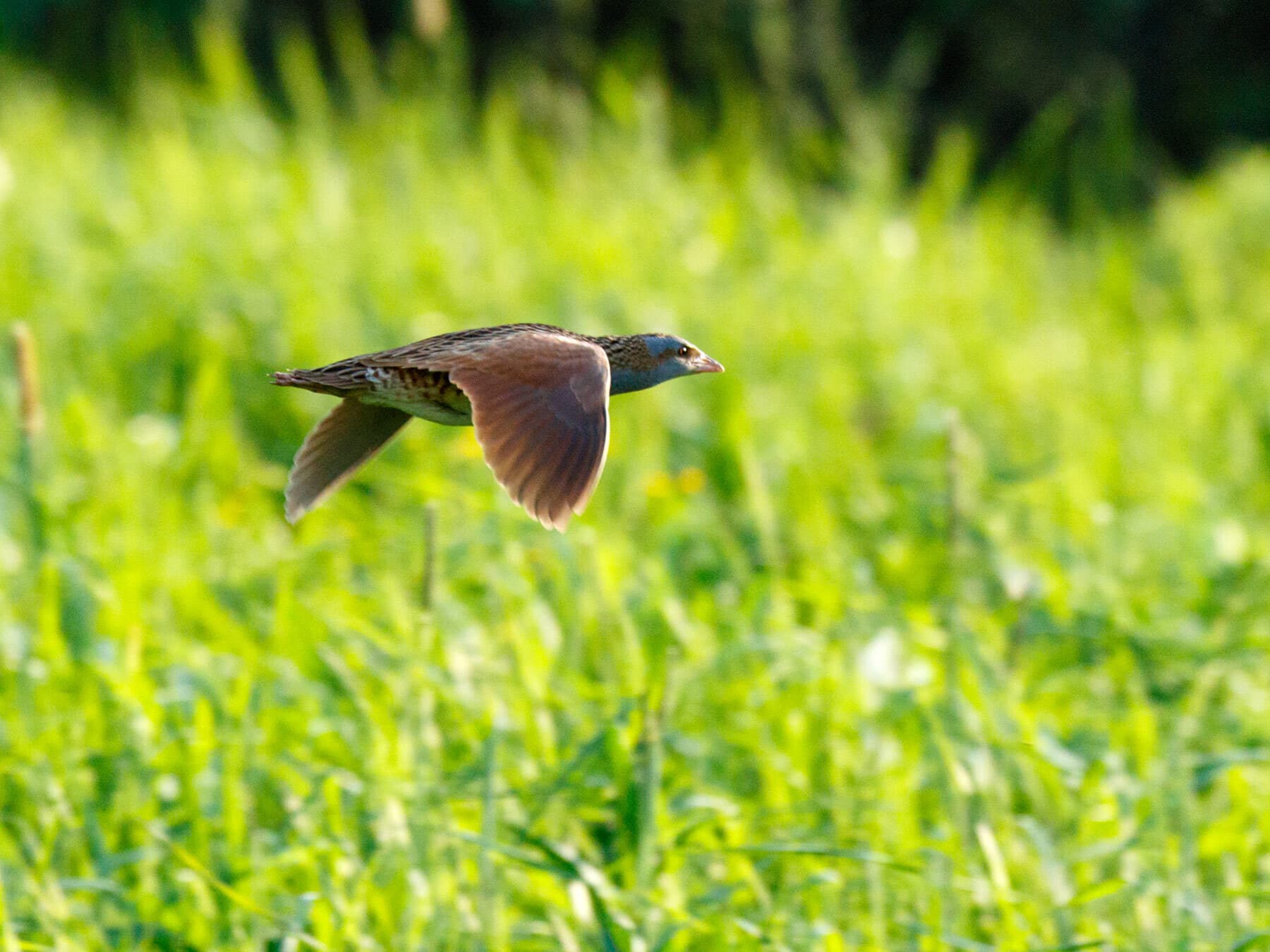
Being timid, corncrakes prefer to hide in tall grasses and vegetation in farmland and meadows and particularly favour hay fields during the mating season. They generally stay in family groups and in flight are conspicuous by their short tails, long trailing legs and rufous wings. As previously discussed, the call of the corncrake is almost unique and the best indication that they are present.
What it eats
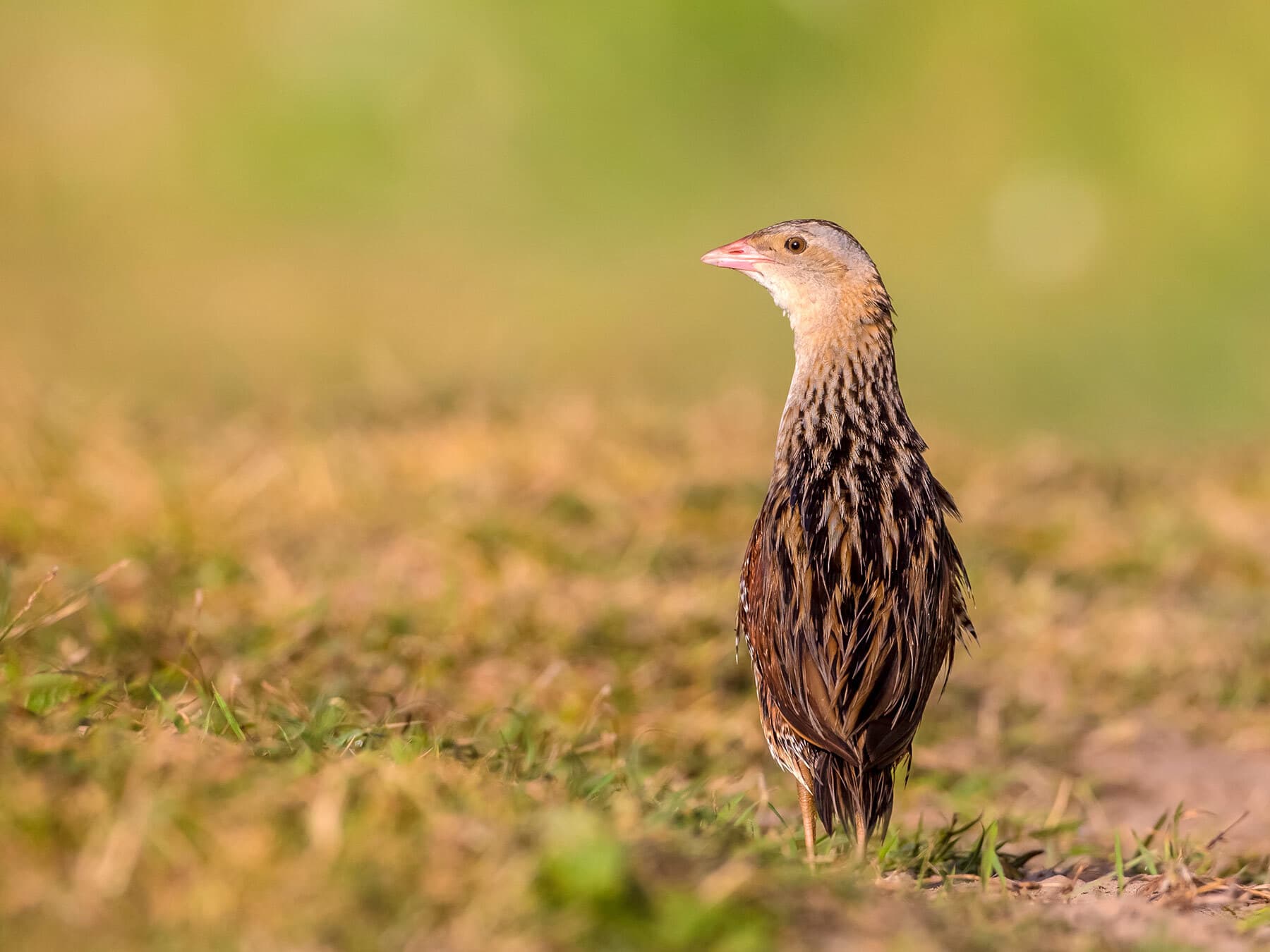
Predominantly a ground forager the corncrake feeds on seeds and grasses in addition to insects, spiders, termites and beetles.
Nesting and breeding
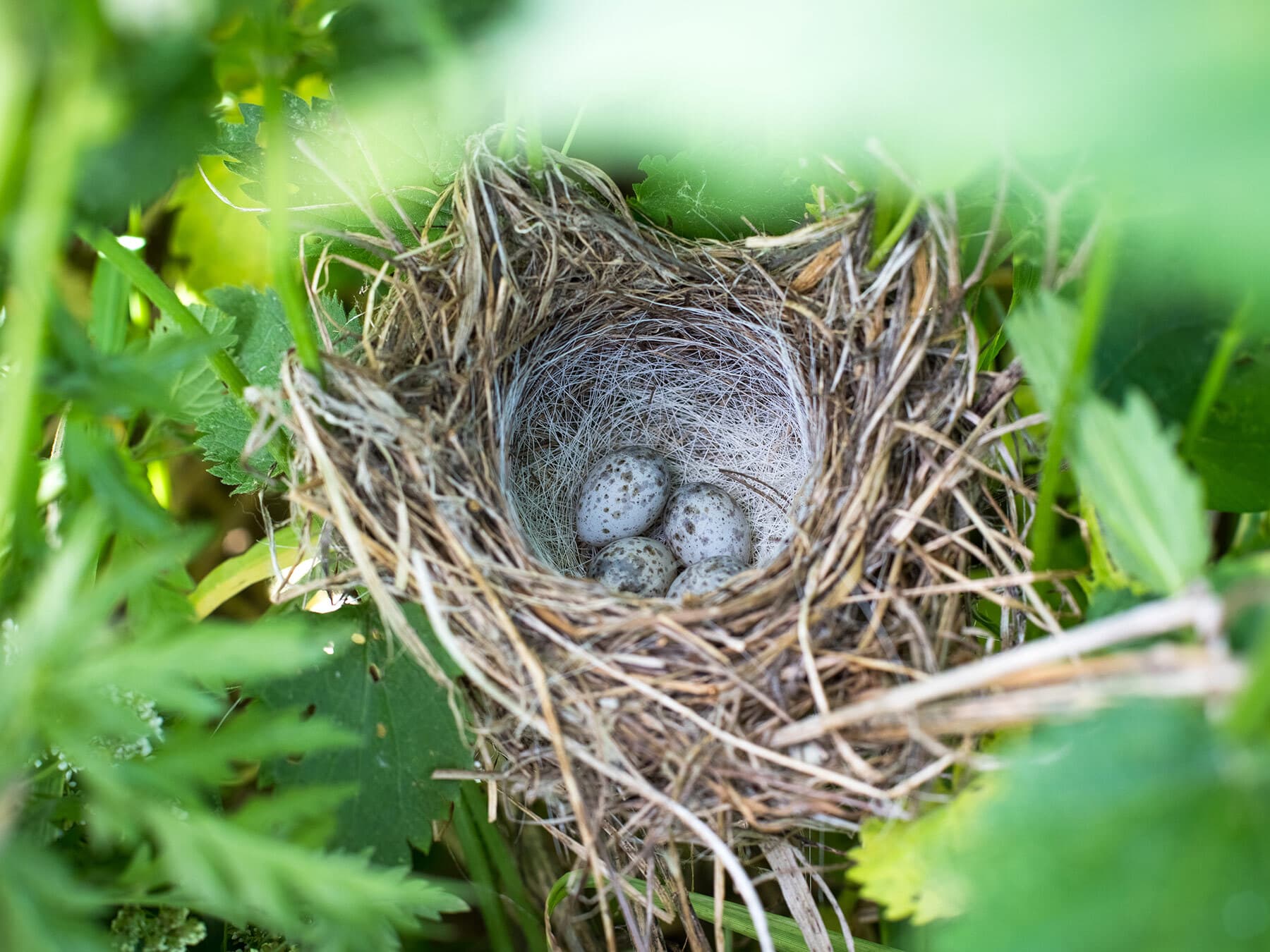
The breeding season extends from April through until August when either a shallow scrape or small cup shaped nest is constructed on the ground, amongst dense vegetation, using leaves and grasses. Often a cover of grass is built over the top of the nest to camouflage it from attack. One or two broods of 6 – 14 buff coloured eggs, with light brown blotches, are laid annually at a rate of one egg per day and incubated by the female alone, for up to nineteen days. Frequently the male deserts the female half way through the egg production period and finds another mate with whom to breed as well. Upon hatching, the young are precocial, that is to say they are almost immediately independent and able to feed and fend for themselves with the minimum of parental care. Fledging takes place up to five and a half weeks later.
Behaviour
Corncrakes are secretive and rarely seen, preferring to run through dense vegetation rather than fly. They are most active at dawn and dusk when males can be heard calling to establish territories and attract mates. During migration, they become more gregarious, often gathering in small groups.
Lifespan and predators
Predation rates amongst chicks can be high but on reaching one year of age birds can be expected to live for a further five or six years.
Conservation
Despite its 'Least Concern' status globally, the Corncrake has experienced significant declines in parts of its range, particularly in Western Europe. Conservation efforts focus on maintaining suitable breeding habitats and implementing bird-friendly mowing practices in agricultural areas.
What does a Corncrake look like?
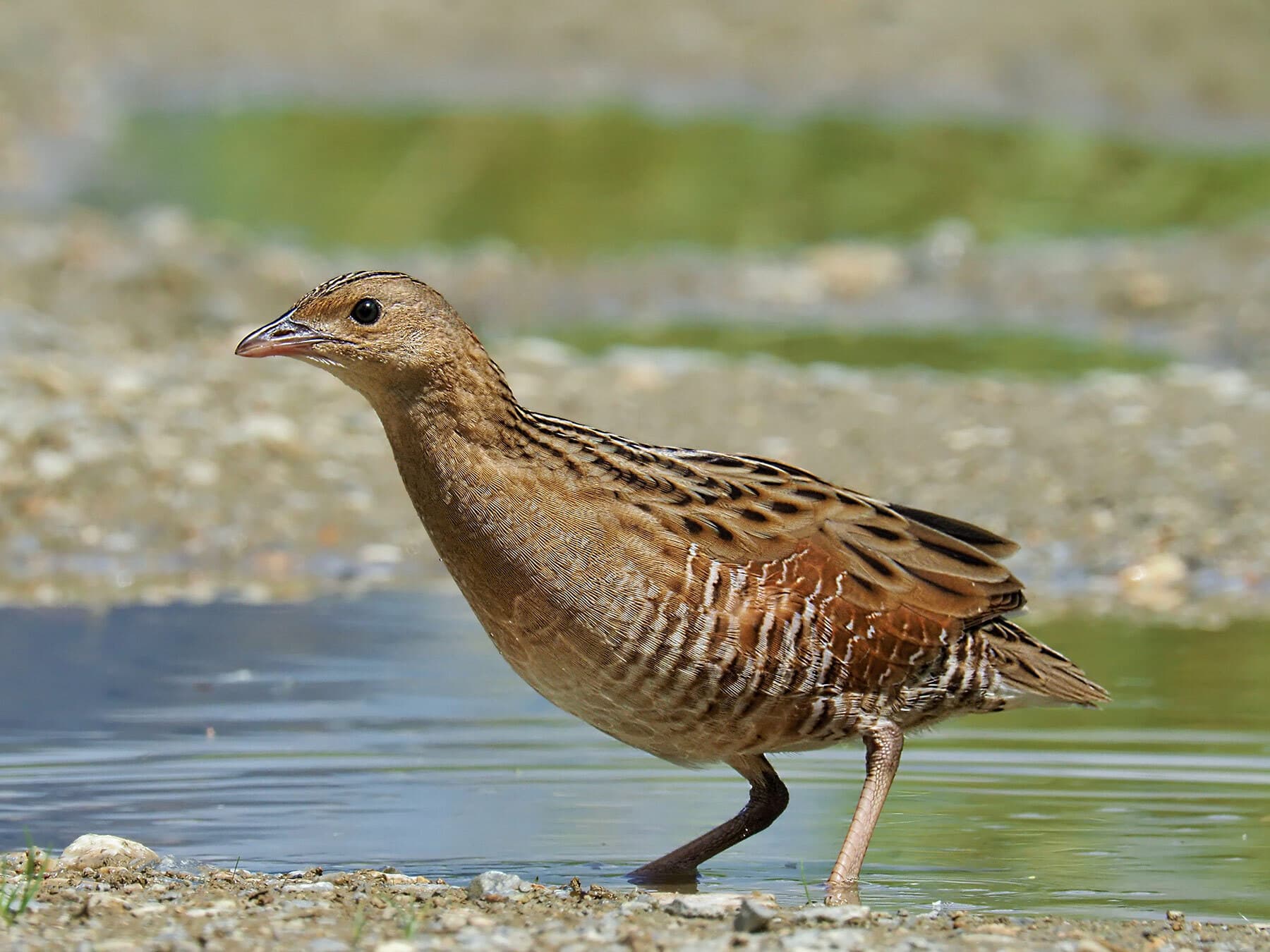
Adult corncrakes are relatively small, being only slightly larger than a blackbird. The male has a tawny coloured back, overlaid with black streaks and rufous wings with darker brown flight feathers. The crown is similar to the upper body colour and patternation whilst the supercilium, throat and chin are light grey with a buff coloured stripe running through the eyes from the base of the upper mandible, across the cheeks towards the scapulars. The breast, belly and vent are light grey and flanks are a mottled grey brown with white and brown bars. The bill is short, stout and pinkish grey and the eyes dark brown. The long legs and large feet are a browny pink. The adult female is similar to the male but with less grey on the upper body and more brown colouration overall.
Similar birds
Often mistaken for
Quick facts
- Length
- 22–30 cm
- Wingspan
- 42–53 cm
- Weight
- 125–210 g
- Lifespan
- 5–7 years
- Family
- Rails & Coots
- Migration
- Long-distance Migrant
- Global status (IUCN)
- Least Concern
- World population
- 3,000,000 - 7,000,000 mature individuals
- Population trend
- Stable
- Also called
- Landrail
- Scientific name
- Crex crex
Sources
3- 1BirdLife International. 2016. Crex crex. The IUCN Red List of Threatened Species 2016: e.T22692543A86147127. Source (opens in a new tab)
- 2BirdLife International. 2016. Crex crex. The IUCN Red List of Threatened Species 2016: e.T22692543A86147127. Source (opens in a new tab)
- 3BirdLife International. 2016. Crex crex. The IUCN Red List of Threatened Species 2016: e.T22692543A86147127. Source (opens in a new tab)

Checked by
Nathan Cope, founder and editor
Nathan founded Birdfact and leads its writers and contributors in the UK, the US and Canada. He has watched and studied birds for more than ten years, and checks every article and species guide before it’s published.