


Common Potoo
Grey Potoo, Poor-me-one · Nyctibius griseus
By the Birdfact teamChecked by Nathan Cope
On this page12 sections
How to recognise it
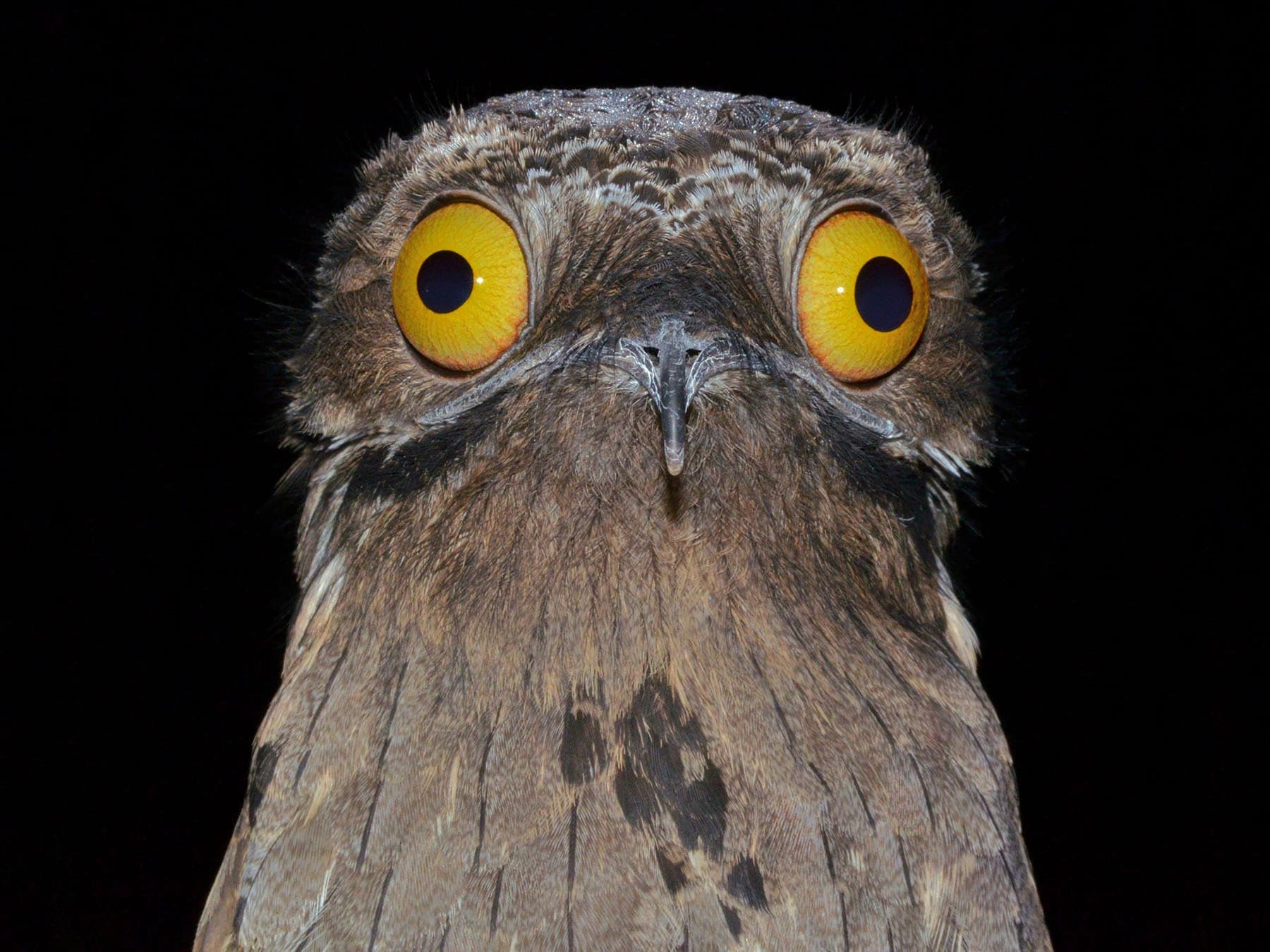
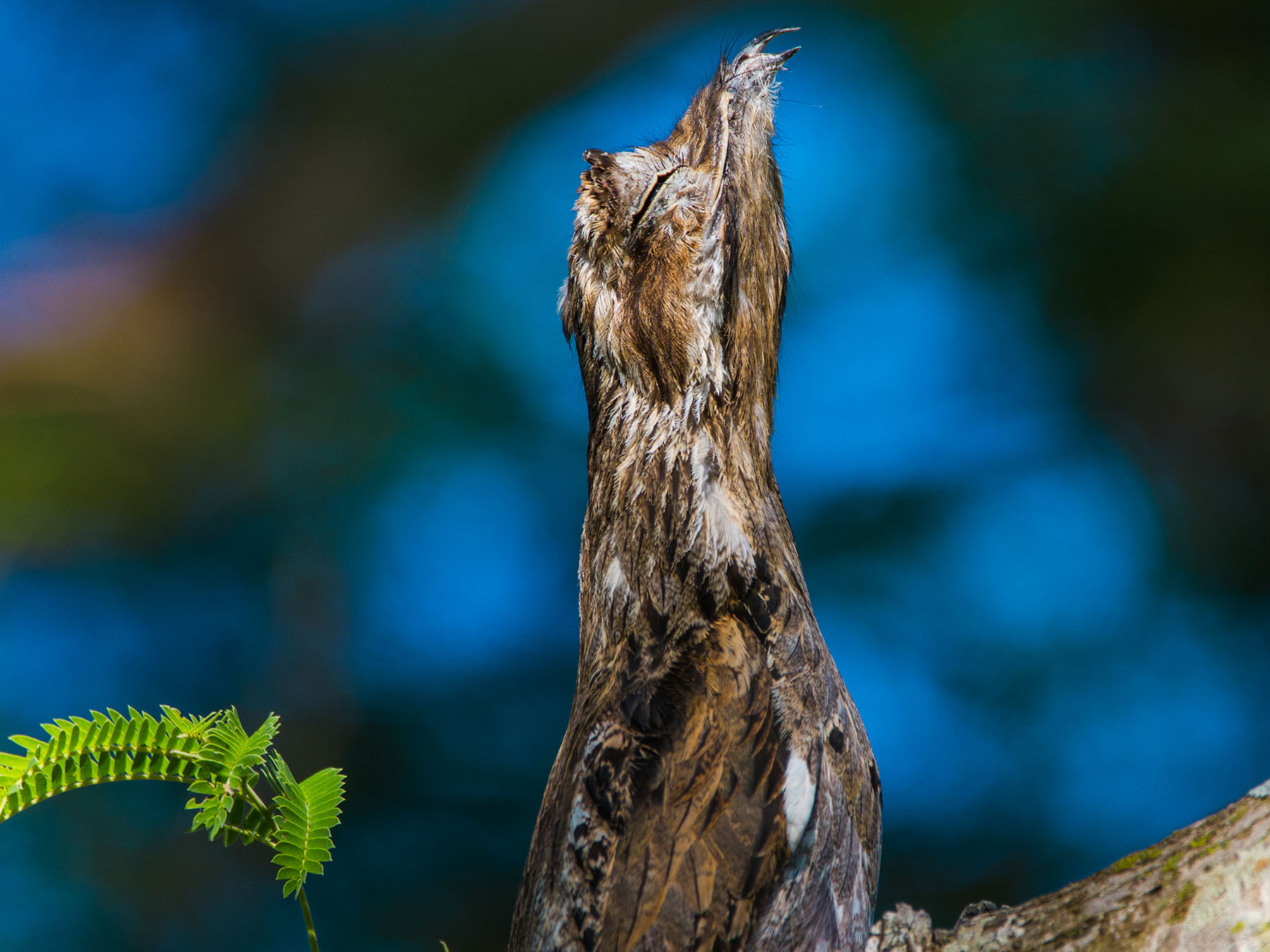
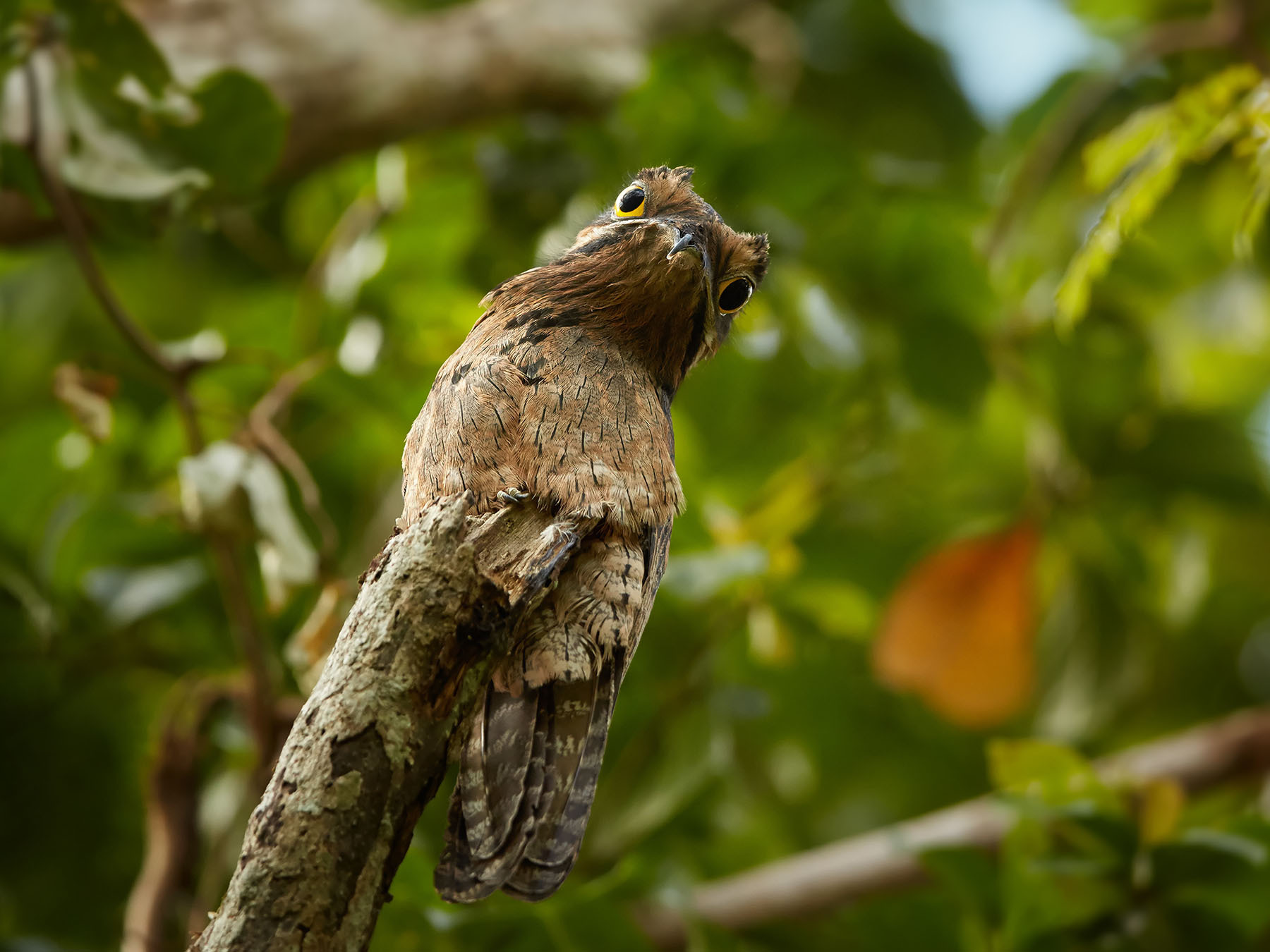
The Common Potoo is a medium-sized nocturnal bird with cryptic plumage. Its mottled grey-brown colouration, complete with darker streaks and spots, provides excellent camouflage against tree bark. Large, yellow eyes and a wide, frog-like mouth are distinctive features.
Both sexes look similar, with no significant seasonal plumage changes. Juveniles resemble adults but may have a slightly paler, fluffier appearance.
Its size
Adults- Length
- 33–38 cm
- Wingspan
- 79–91 cm
- Weight
- 160–380 g
Its song and calls
The Common Potoo's call is a haunting, descending whistle often described as 'poor-me-one'. This mournful sound, typically heard at night, consists of 4-5 notes that drop in pitch.
During the day, they may emit soft grunts or barks when disturbed.
- Song0:00 / 0:08
Recorded in Napo: km 11.6 Narupa-Loreto road, Ecuador · July 2004
When and where to see it
The Common Potoo is not recorded regularly in the UK, Ireland, the United States or Canada.
Worldwide: recorded regularly in 16 countries
Countries where it was recorded in at least 3 of the 6 years 2019–2024. Linked countries have their own bird list.
North America (4)
- Costa Rica
- Nicaragua
- Panama
- Trinidad & Tobago
Data: EOD – eBird Observation Dataset (Cornell Lab of Ornithology), accessed via GBIF.org, CC BY 4.0. Records from 2019–2024, aggregated and filtered by Birdfact. How these lists are made
Tips for seeing it
- Look for Potoos at night using a spotlight; their eyes reflect light
- During the day, scan tree branches for bird-shaped 'stumps'
- Listen for their distinctive, haunting call after sunset
- Check known perches repeatedly, as they often return to the same spots
What it eats
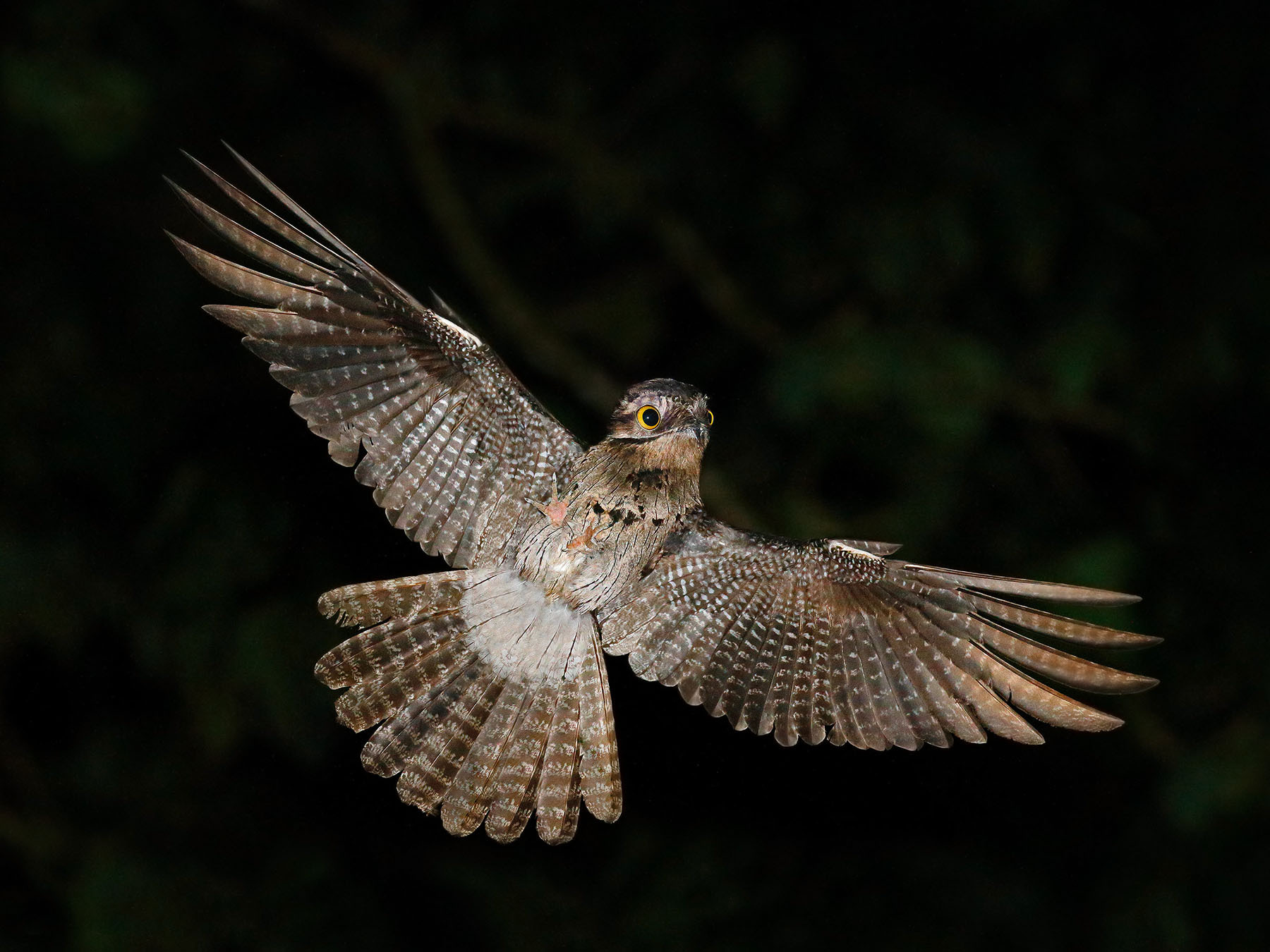
Common Potoos are insectivores, primarily feeding on flying insects such as moths, beetles, and flying termites.
They hunt by sitting motionless on a perch, then swooping out to catch prey in flight with their large mouths. Occasionally, they may consume small bats or birds.
Nesting and breeding
The breeding season varies by region but often coincides with the dry season. During this time, Common Potoos form monogamous pairs. They do not build traditional nests, instead laying a single egg directly on a branch or tree stump.
The egg is white with brown and lilac spots, blending perfectly with the bark. Both parents take turns incubating the egg, which lasts about 30 days.
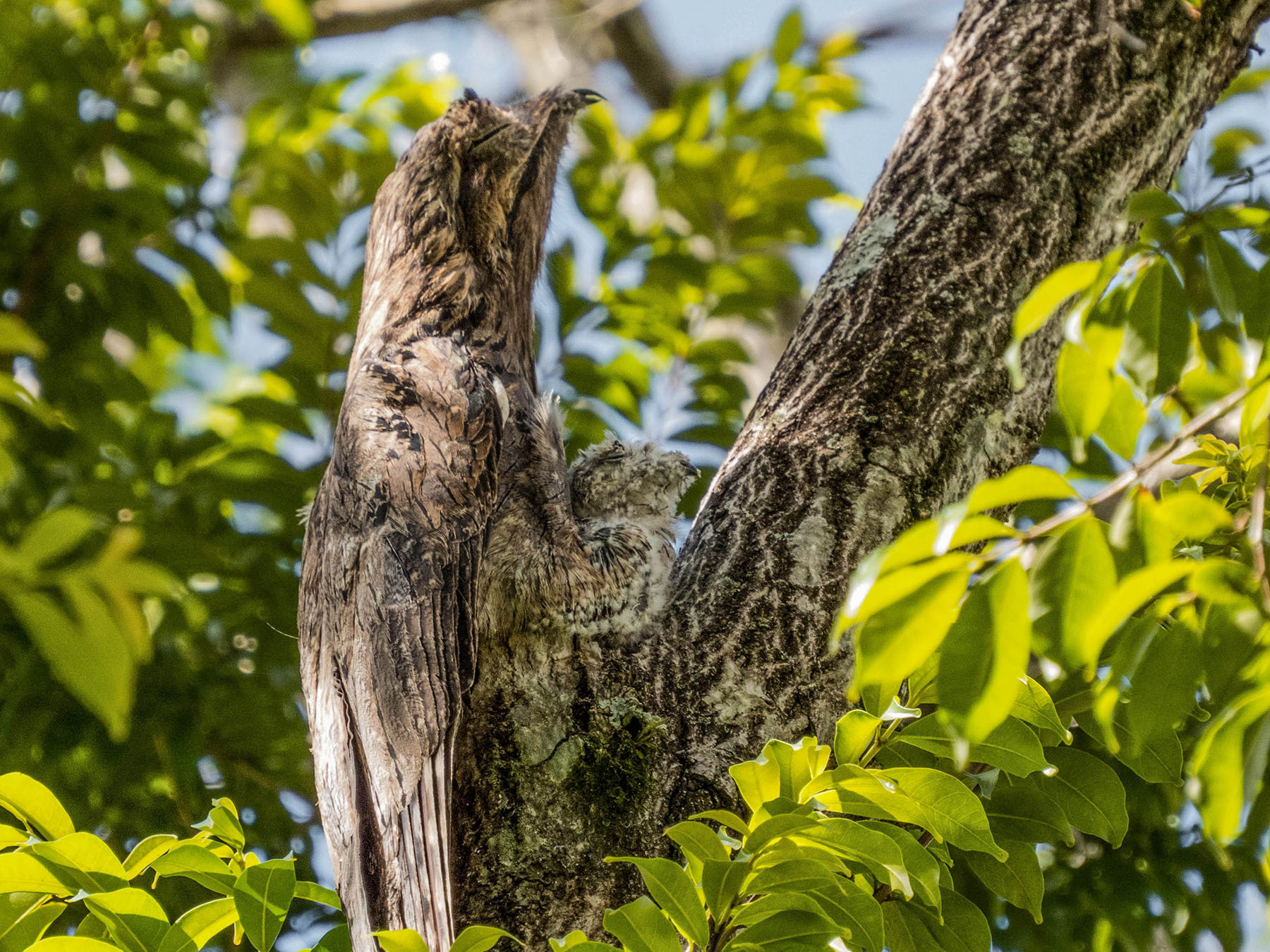
After hatching, the chick is cared for by both parents. It develops slowly, remaining in the nesting spot for about 40-50 days before fledging. Young Potoos can fly short distances at about two months old.
Behaviour
Common Potoos are masters of camouflage, often perching motionless on tree stumps or branches during the day, mimicking broken branches. At night, they become active, flying out to catch insects.
These solitary birds are rarely seen in groups except during breeding season.
Conservation
While the Common Potoo is listed as Least Concern by the IUCN, habitat loss due to deforestation poses a threat in parts of its range.
Conservation efforts focus on protecting tropical and subtropical forests, which are crucial for this species' survival.
Similar birds
Often mistaken for
More photos
5 photos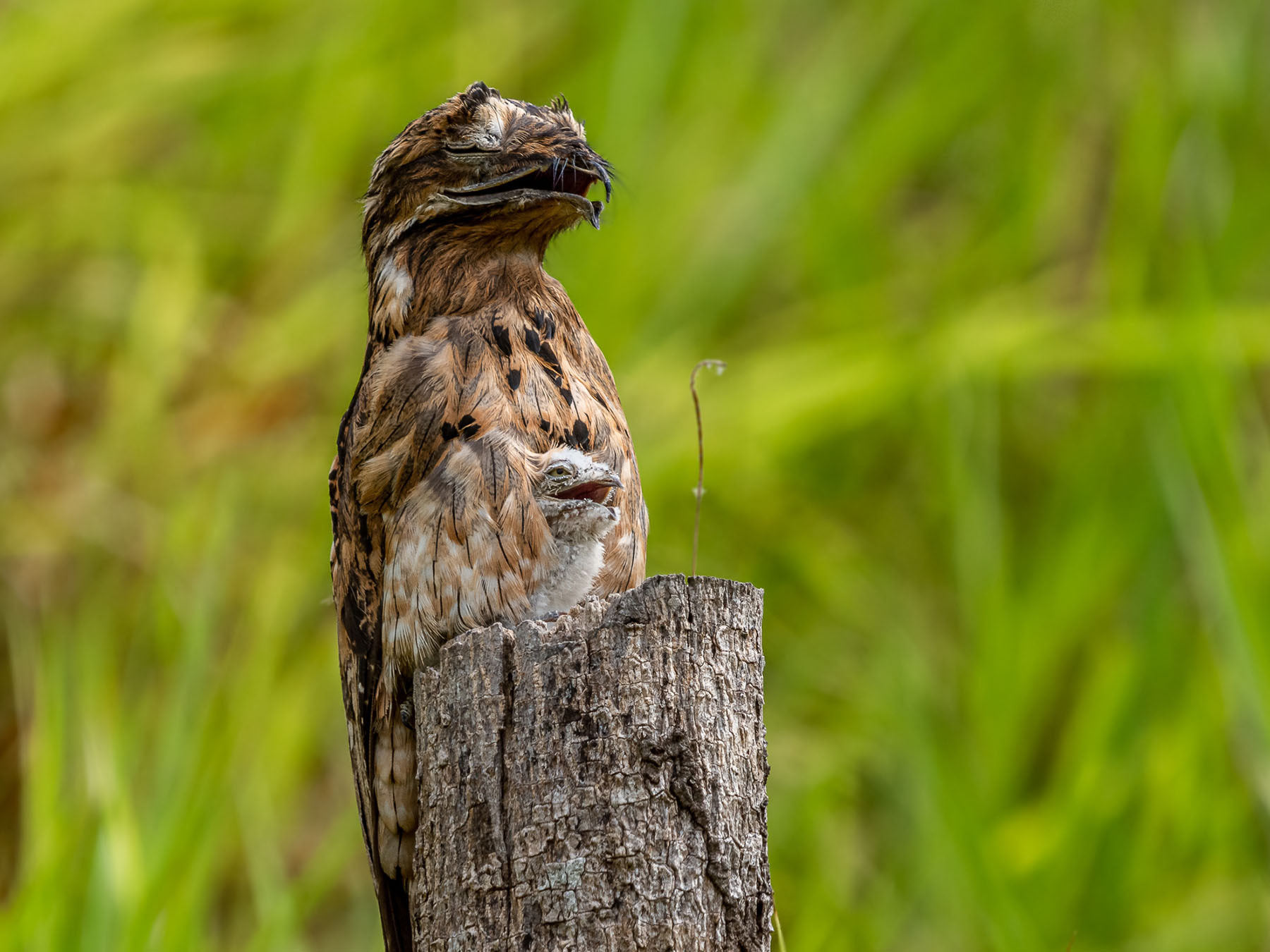
Quick facts
- Length
- 33–38 cm
- Wingspan
- 79–91 cm
- Weight
- 160–380 g
- Lifespan
- 10–15 years
- Family
- Potoos
- Migration
- Resident
- Global status (IUCN)
- Least Concern
- World population
- 500,000 - 4,999,999 mature individuals
- Population trend
- Decreasing
- Also called
- Grey Potoo, Poor-me-one
- Scientific name
- Nyctibius griseus
Sources
3- 1BirdLife International. 2020. Nyctibius griseus. The IUCN Red List of Threatened Species 2020: e.T22689646A163600335. Source (opens in a new tab)
- 2Partners in Flight (2019)
- 3Partners in Flight (2019)

Checked by
Nathan Cope, founder and editor
Nathan founded Birdfact and leads its writers and contributors in the UK, the US and Canada. He has watched and studied birds for more than ten years, and checks every article and species guide before it’s published.