


Chestnut Munia
Black-headed Munia · Lonchura atricapilla
By the Birdfact teamChecked by Nathan Cope
On this page12 sections
How to recognise it
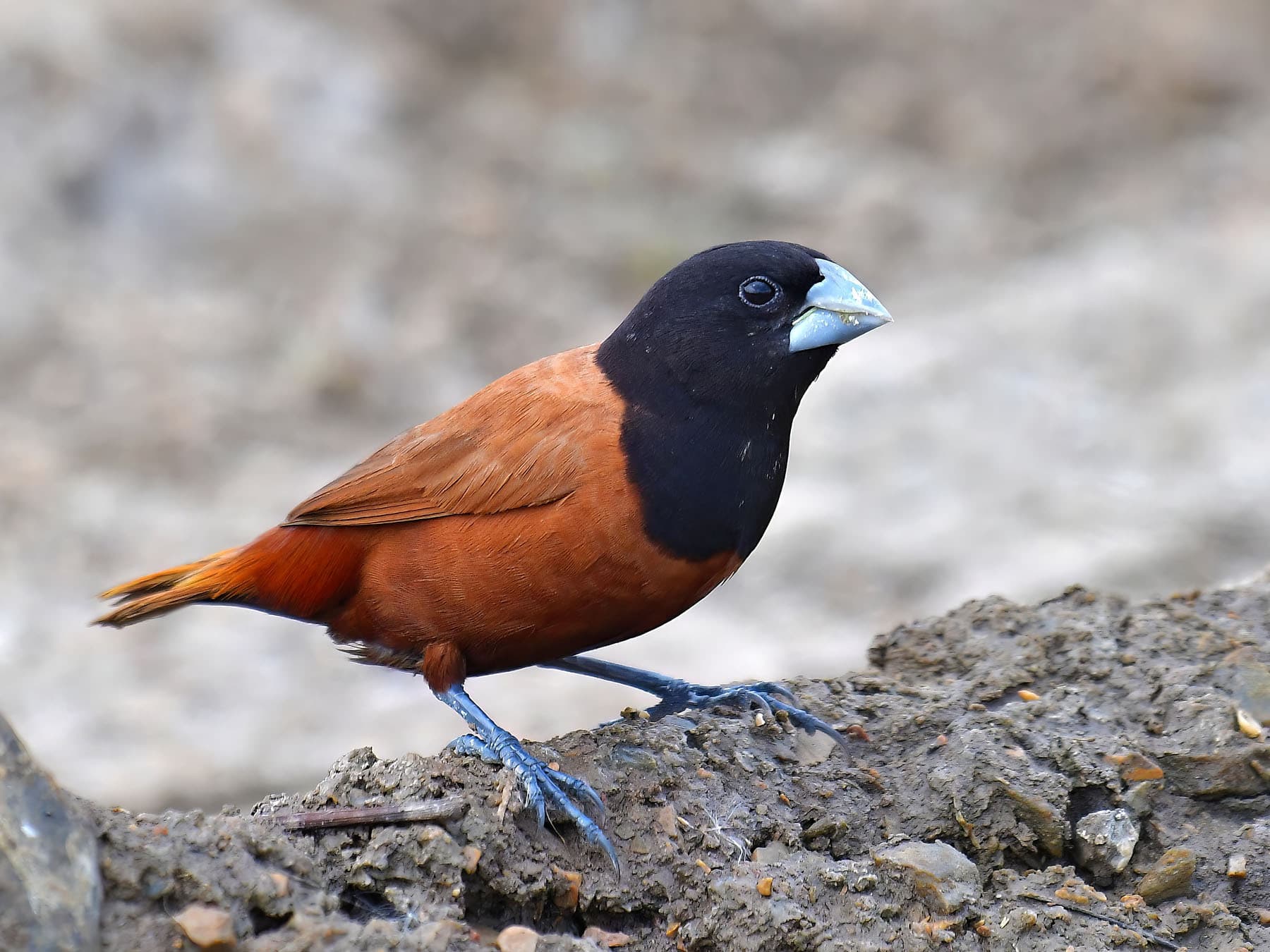
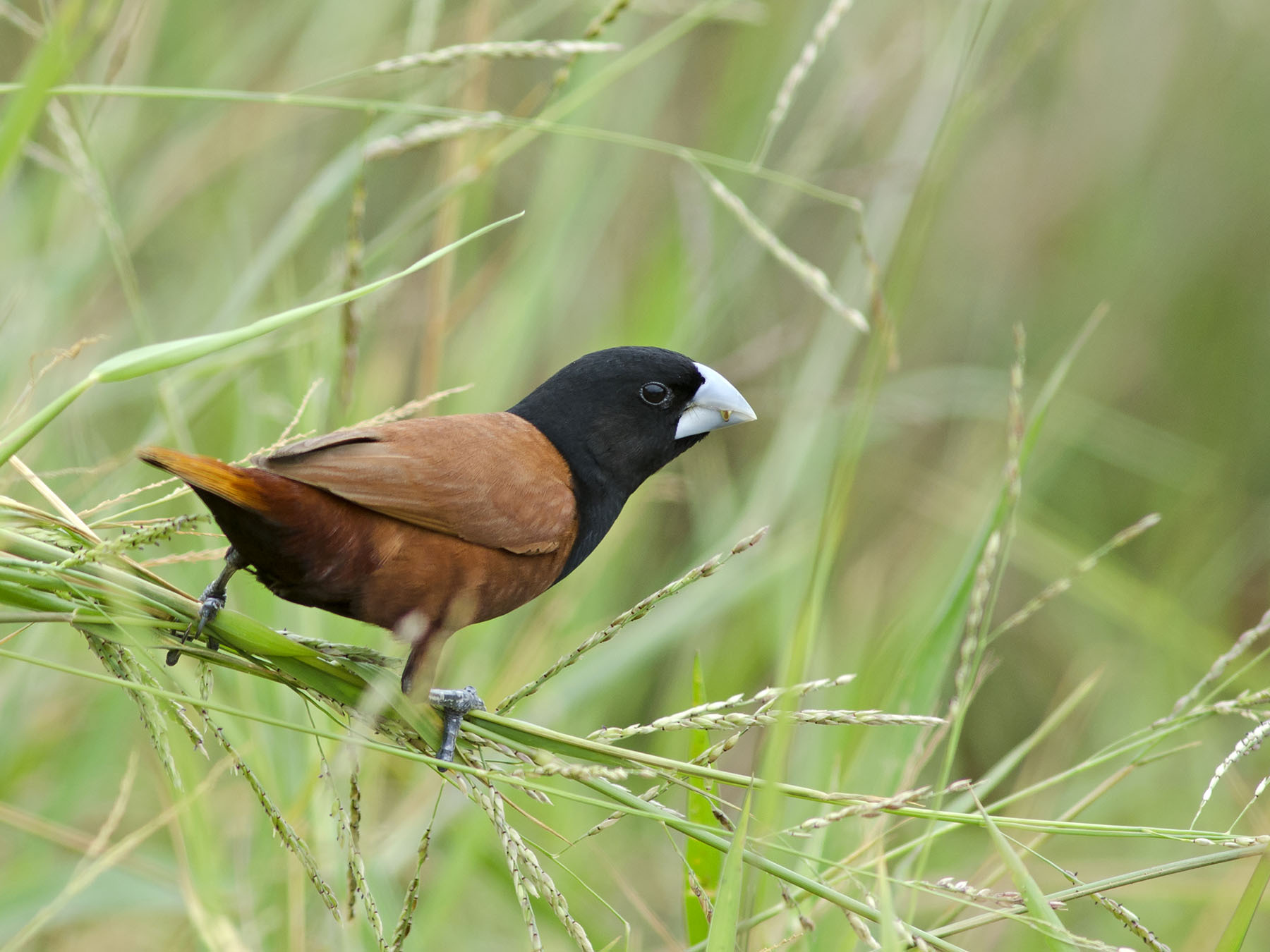
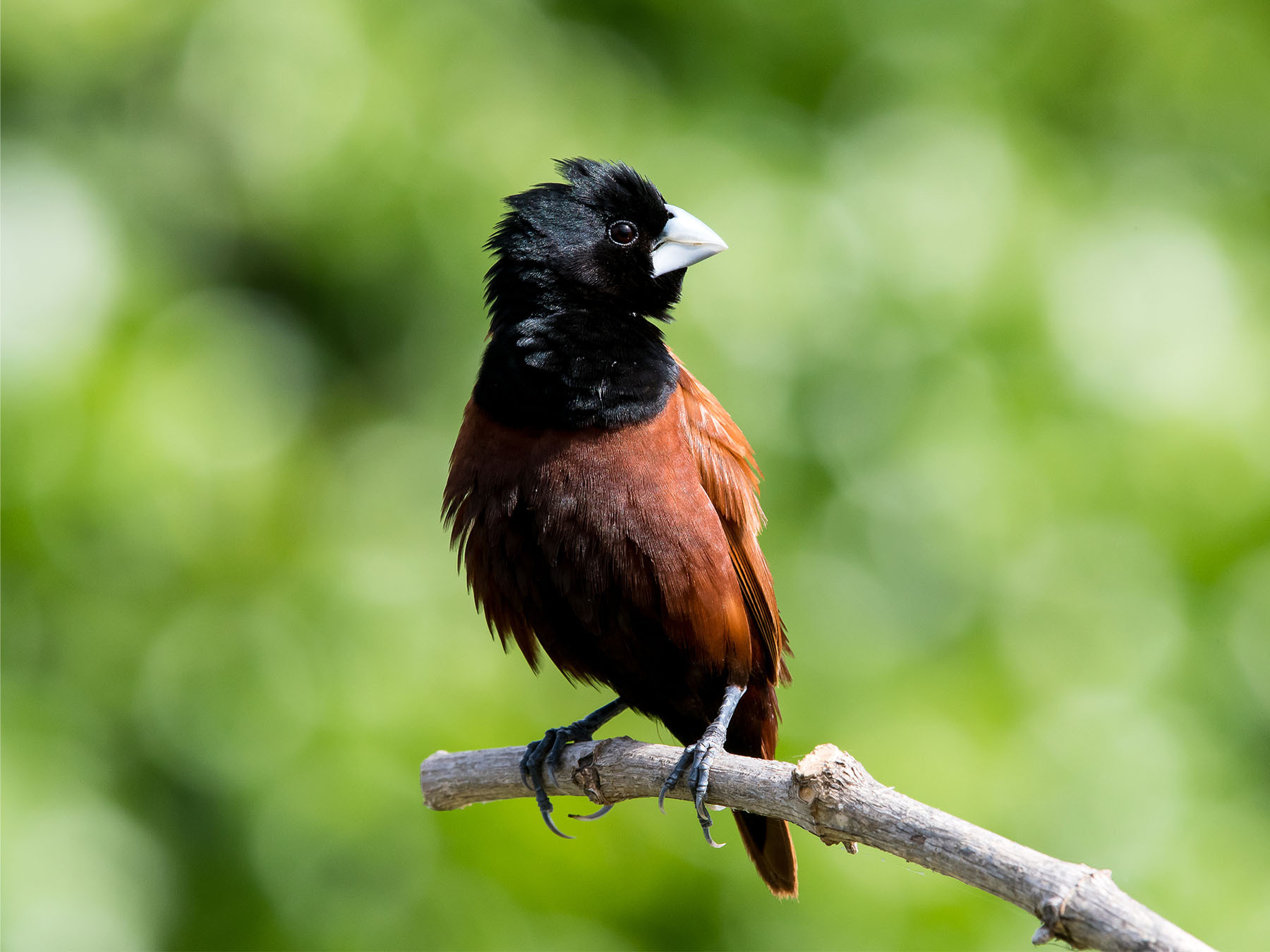
The Chestnut Munia is a small, stocky finch with a distinctive appearance. Its head is glossy black, contrasting sharply with a rich chestnut-brown body and wings. The rump and tail are a darker brown, while the belly and undertail coverts are white, creating a striking tricolour effect.
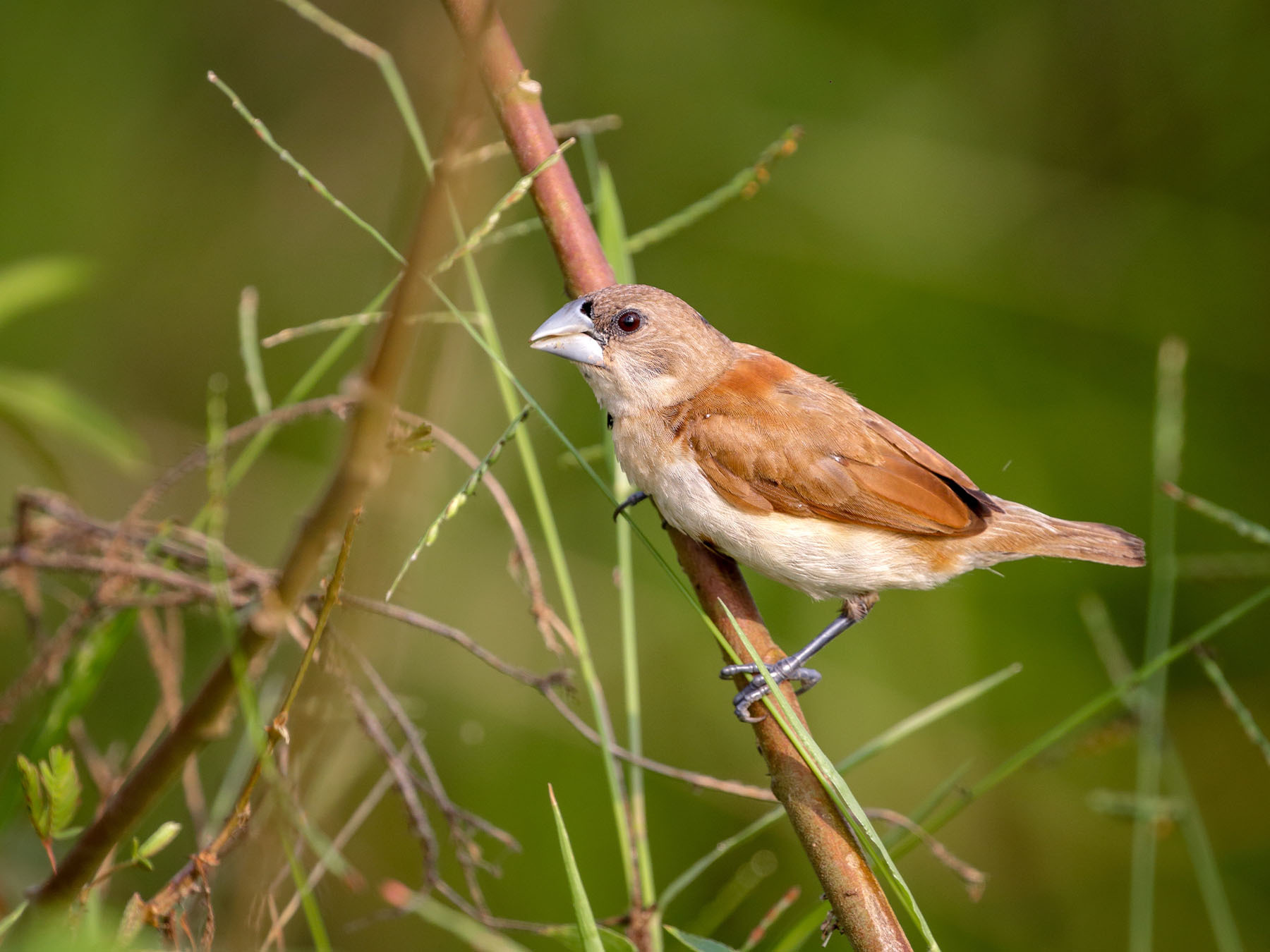
Both males and females share this colouration, making them difficult to distinguish visually. Juveniles have duller plumage, lacking the black head and showing an overall pale brown colouration until they moult into adult plumage.
Its size
Adults- Length
- 10–11 cm
- Wingspan
- 14–16 cm
- Weight
- 10–14 g
Its song and calls
Chestnut Munias have a variety of soft, musical calls. Their most common vocalisation is a gentle 'chit-chit-chit' or 'tee-tee-tee' often heard as they forage or fly.
During courtship, males produce a more elaborate song, a series of warbling notes that sound like 'chee-wee-chee-wee-chee'.
When and where to see it
How often the Chestnut Munia turns up in the United States through the year, from birdwatchers' records.
United States
Resident · all year · most records in February
Show as a table
| Month | United States |
|---|---|
| January | 0.003% (regular) |
| February | 0.003% (regular) |
| March | 0.003% (regular) |
| April | 0.002% (regular) |
| May | <0.001% (regular) |
| June | 0.002% (regular) |
| July | 0.002% (regular) |
| August | 0.002% (regular) |
| September | 0.002% (regular) |
| October | 0.003% (regular) |
| November | 0.002% (regular) |
| December | 0.003% (regular) |
Worldwide: recorded regularly in 23 countries
Countries where it was recorded in at least 3 of the 6 years 2019–2024. Linked countries have their own bird list.
Asia (17)
North America (3)
South America (1)
Oceania (2)
- Palau
- Vanuatu
Data: EOD – eBird Observation Dataset (Cornell Lab of Ornithology), accessed via GBIF.org, CC BY 4.0. Records from 2019–2024, aggregated and filtered by Birdfact. How these lists are made
Tips for seeing it
- Look for flocks in open grasslands, rice paddies, and agricultural areas
- Listen for their soft, musical chirping calls as they forage
- Observe their behavior near seeding grasses or cultivated grains
- Check for nests in dense vegetation or tall grasses
What it eats
The Chestnut Munia primarily feeds on small seeds from grasses and cultivated grains. It shows a particular fondness for rice, millet, and other cereal crops.
During the breeding season, it supplements its diet with small insects and spiders, providing additional protein for growing chicks.
Nesting and breeding
The breeding season for Chestnut Munias varies by region but often coincides with the local rainy season. During courtship, pairs form strong bonds and engage in mutual preening and soft vocalisations.
Nests are large, domed structures of woven grass, typically placed in dense vegetation or tall grass. The female lays 4-6 small white eggs in a clutch.
Both parents share incubation duties for about 14 days. After hatching, chicks remain in the nest for approximately 21 days before fledging. Parents continue to feed and care for the young for several weeks after they leave the nest.
Behaviour
Chestnut Munias are highly social birds, often seen in flocks of 10 to 30 individuals, sometimes mixing with other Munia species. They have a distinctive bouncy flight pattern, alternating between rapid wing beats and brief glides.
They move through grass stems with agility when foraging, using their strong beaks to extract seeds.
Conservation
While the Chestnut Munia is listed as Least Concern by the IUCN, it faces localised threats from habitat loss due to agricultural intensification and urbanisation.
In some areas, trapping for the pet trade has impacted populations, prompting calls for better regulation and monitoring of wild bird capture.
Similar birds
Often mistaken for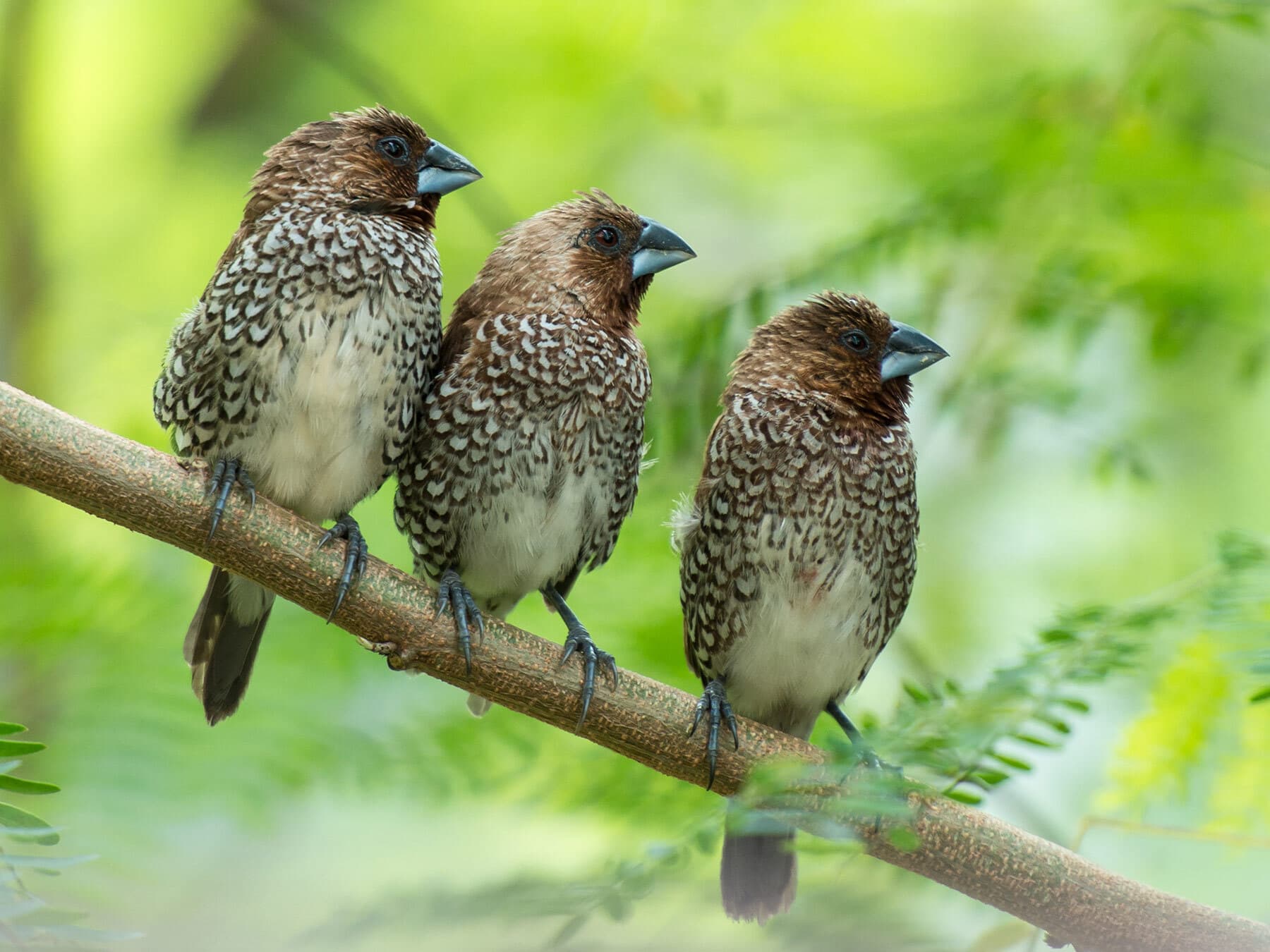
More photos
4 photos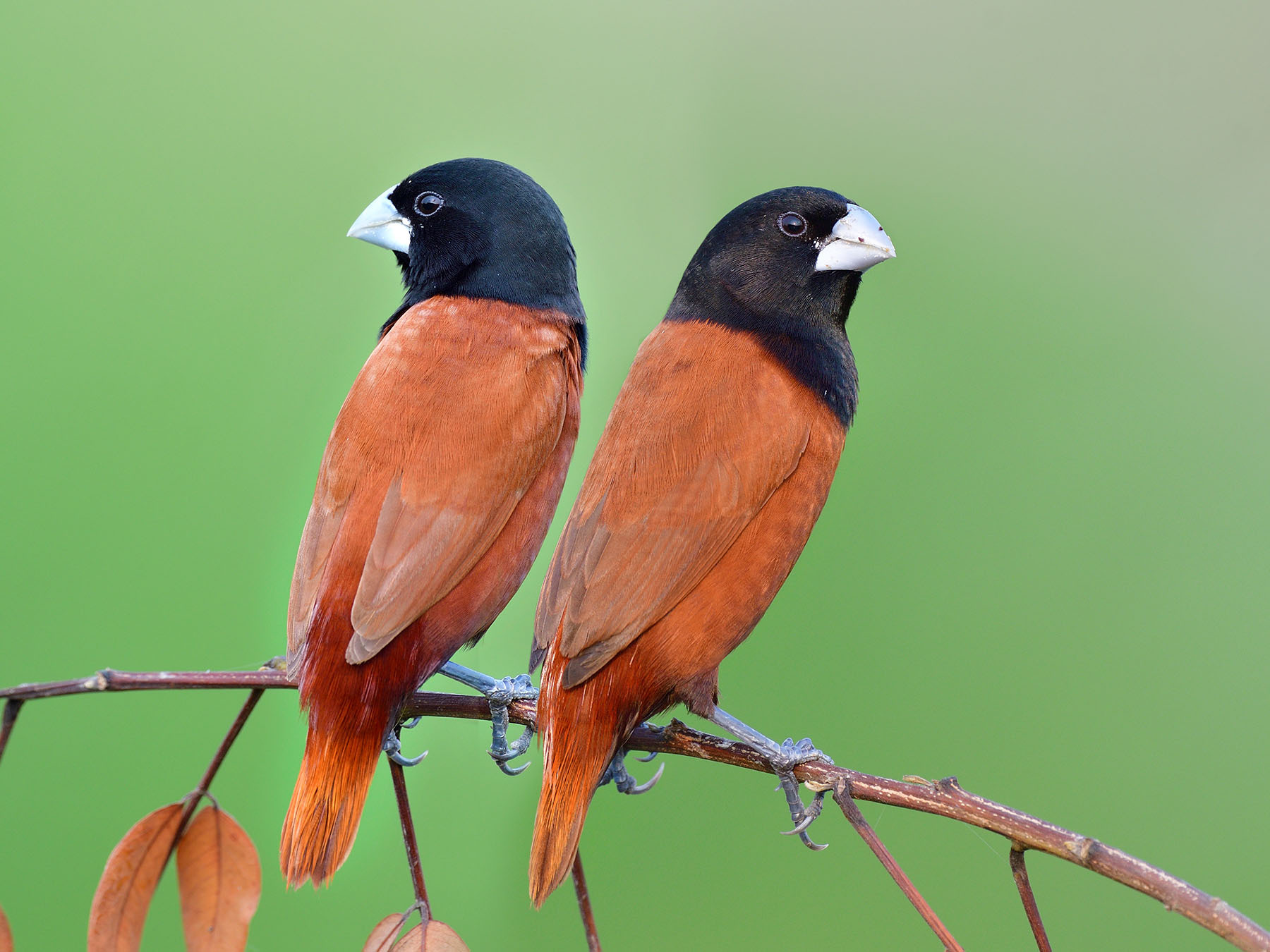
Quick facts
- Length
- 10–11 cm
- Wingspan
- 14–16 cm
- Weight
- 10–14 g
- Lifespan
- 5–7 years
- Family
- Waxbills & Finches
- Migration
- Resident
- Global status (IUCN)
- Least Concern
- World population
- Not quantified, but locally common
- Population trend
- Population appears stable
- Also called
- Black-headed Munia
- Scientific name
- Lonchura atricapilla
Sources
3- 1BirdLife International. 2016. Lonchura atricapilla. The IUCN Red List of Threatened Species 2016: e.T22729138A95007301. Source (opens in a new tab)
- 2BirdLife International. 2016. Lonchura atricapilla. The IUCN Red List of Threatened Species 2016: e.T22729138A95007301. Source (opens in a new tab)
- 3Clement (1999)

Checked by
Nathan Cope, founder and editor
Nathan founded Birdfact and leads its writers and contributors in the UK, the US and Canada. He has watched and studied birds for more than ten years, and checks every article and species guide before it’s published.