


Cape Starling
Cape Glossy Starling · Lamprotornis nitens
By the Birdfact teamChecked by Nathan Cope
On this page12 sections
How to recognise it
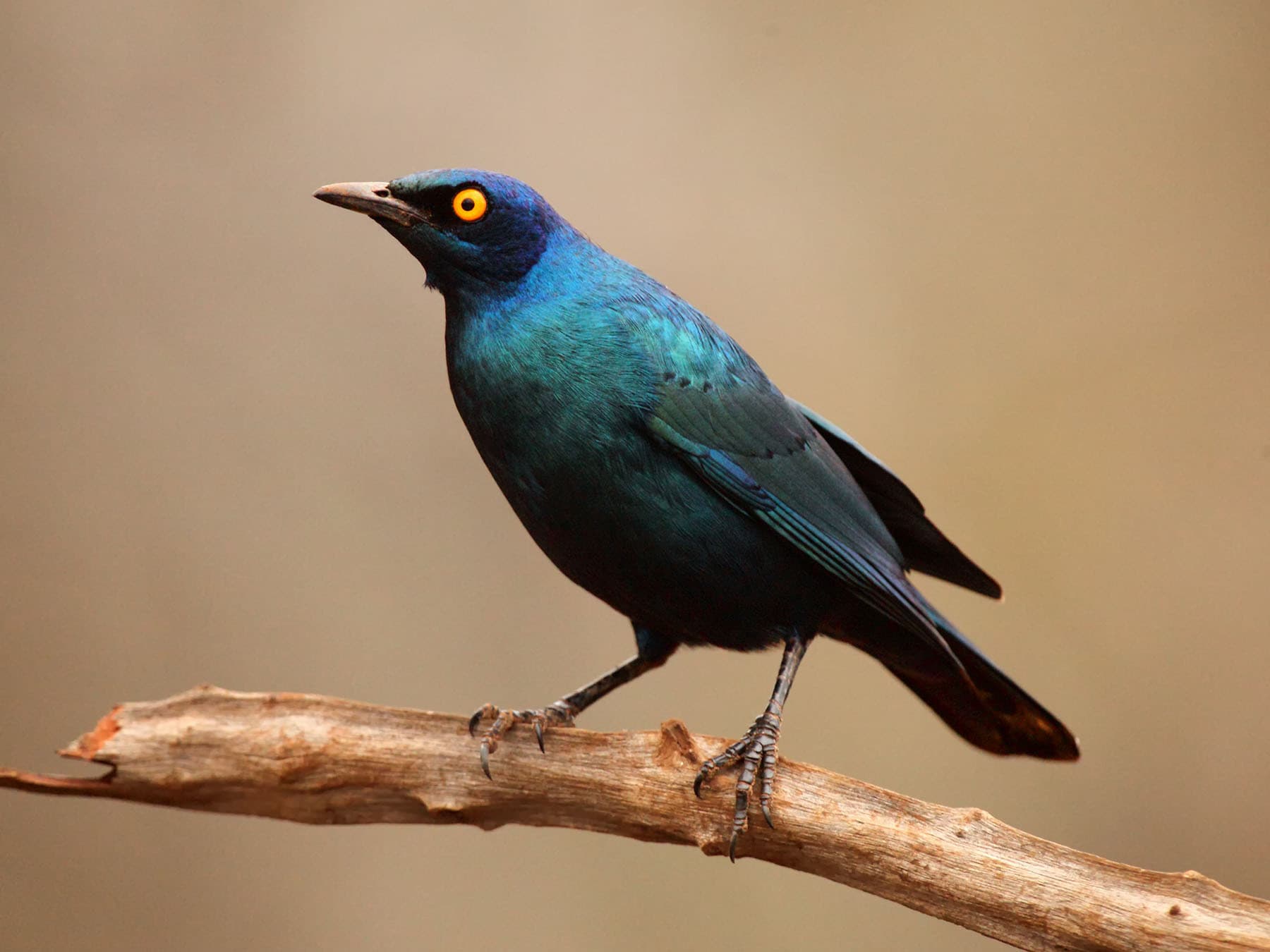
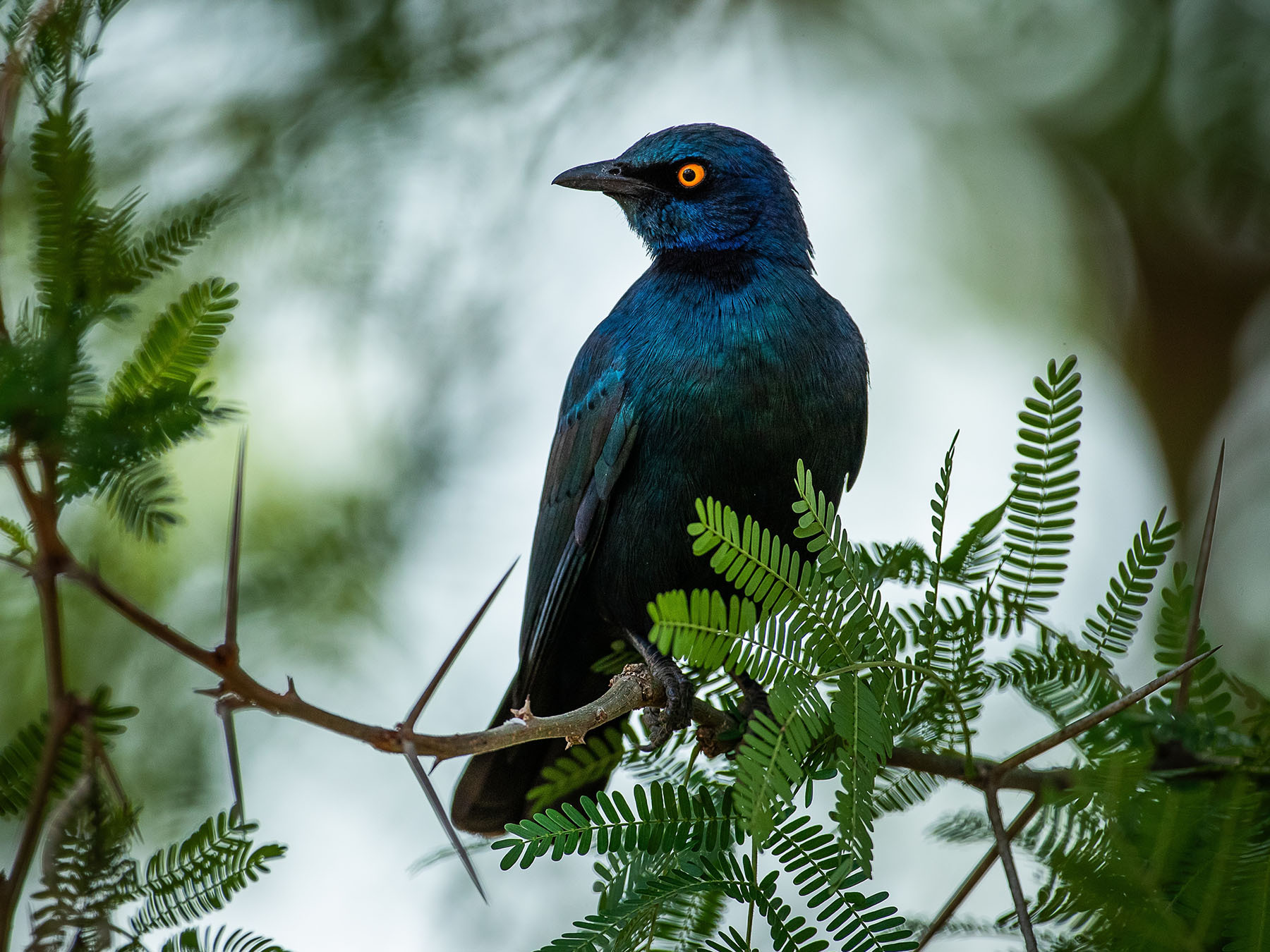
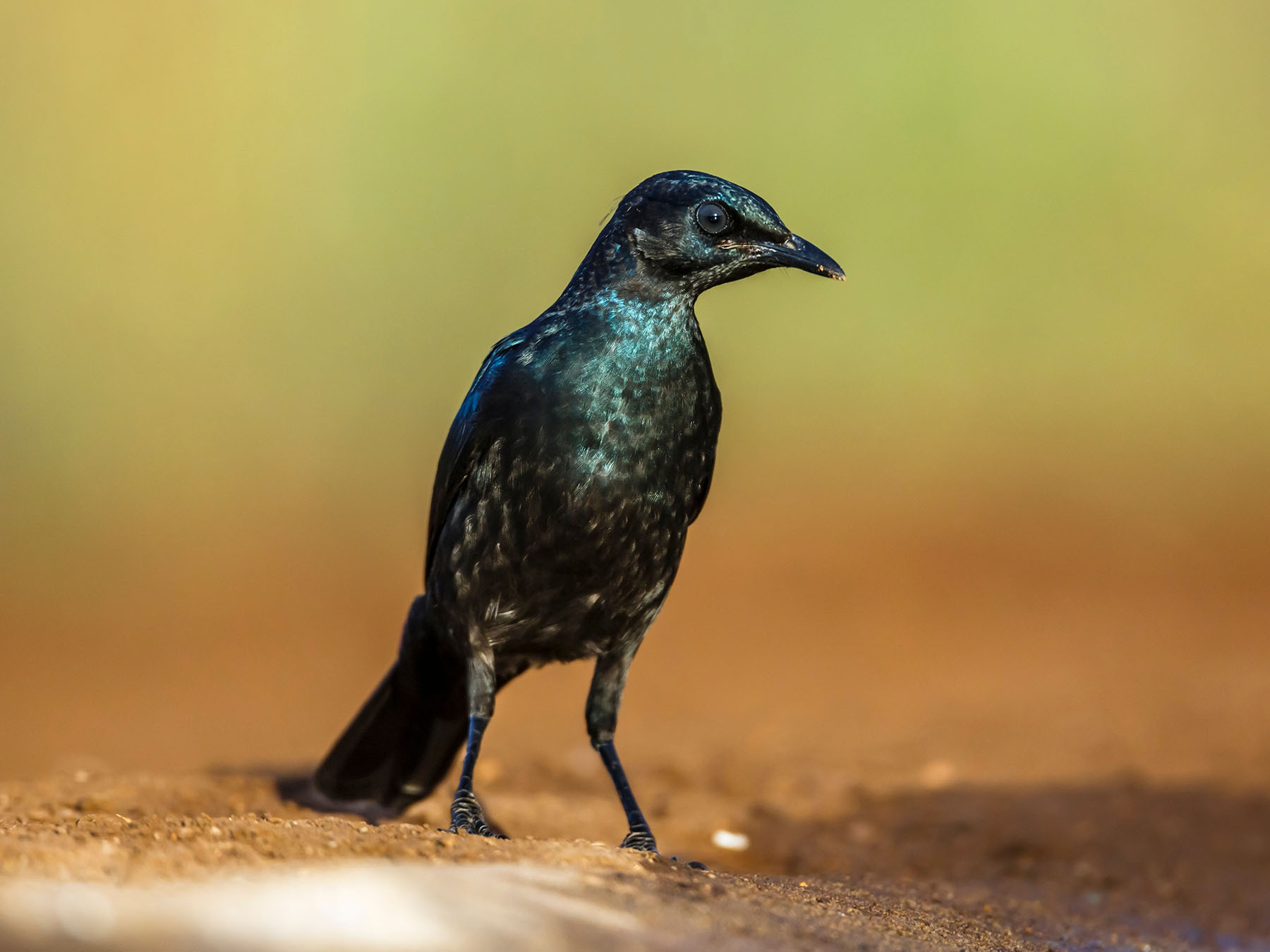
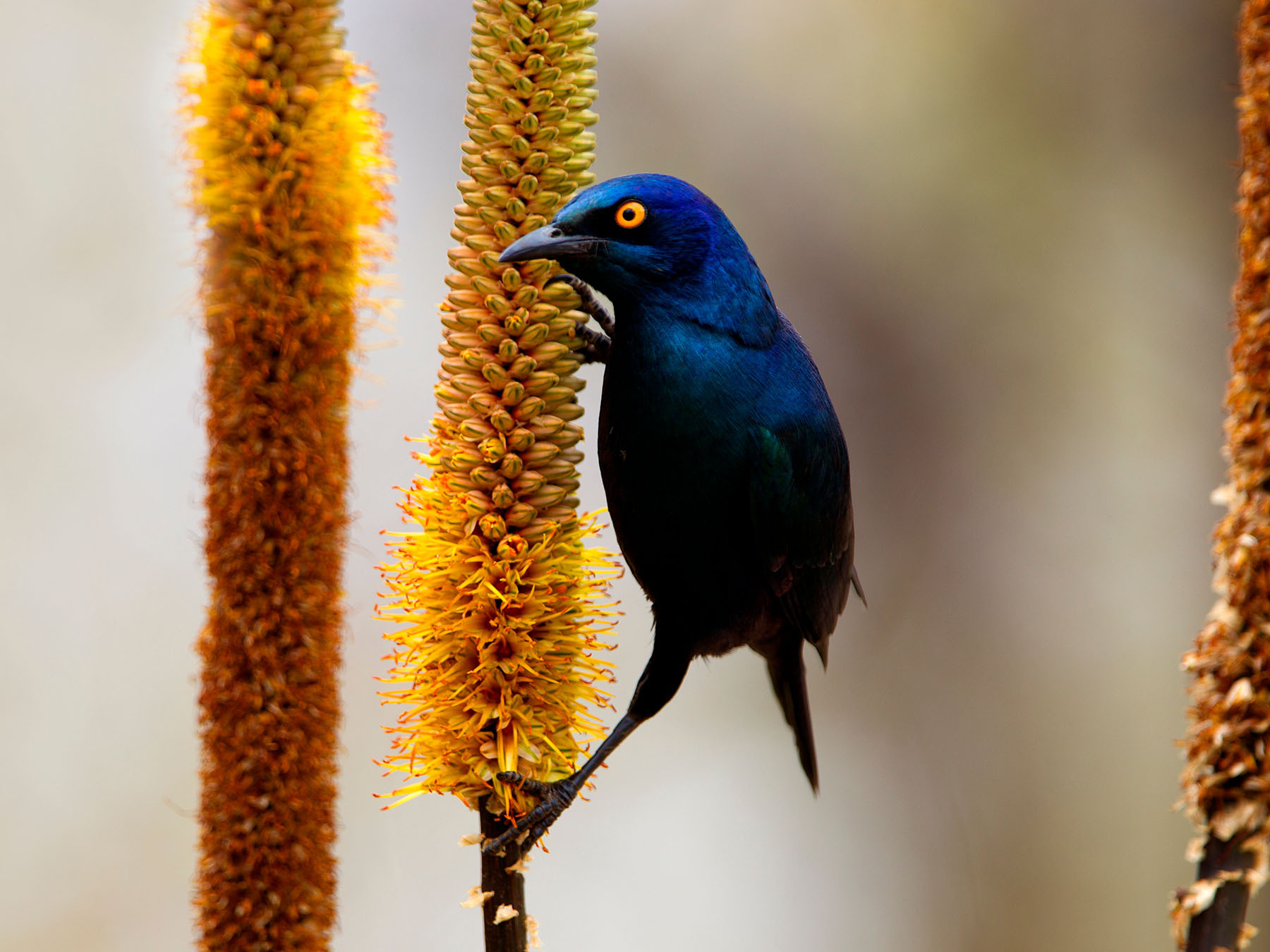
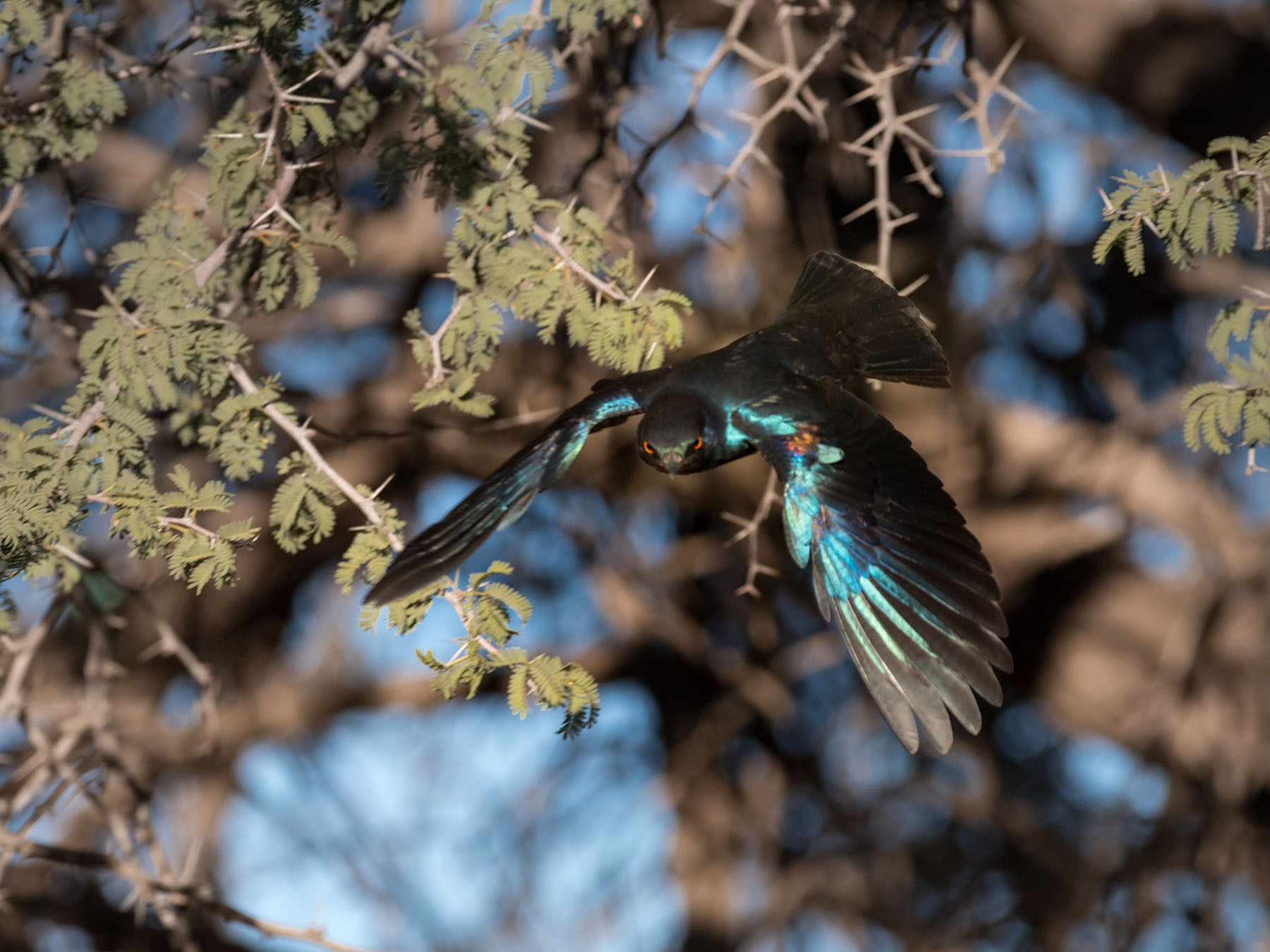
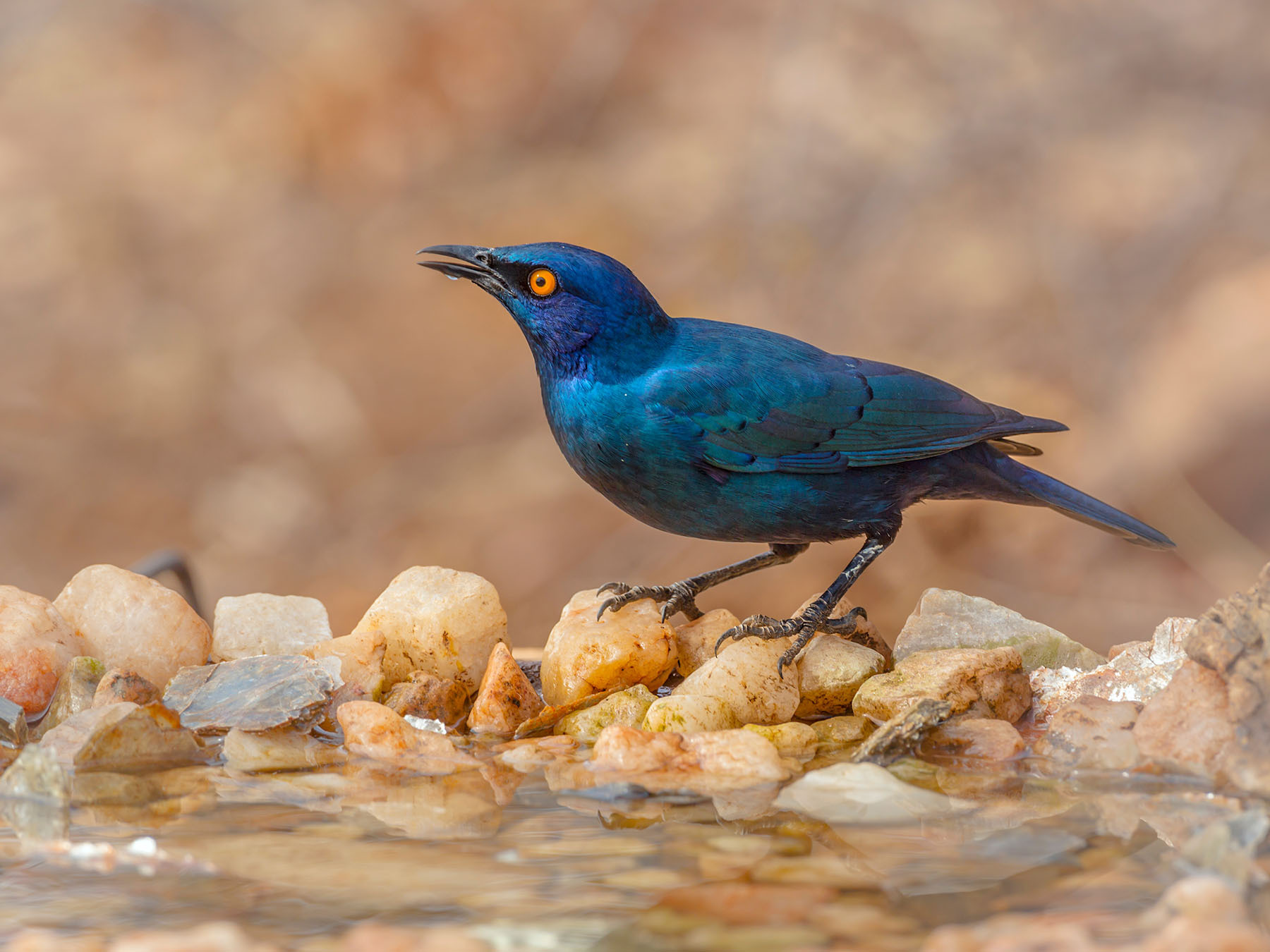
The Cape Starling is a medium-sized bird with striking iridescent plumage. Its feathers shimmer with a metallic blue-green sheen, often appearing purple in certain light conditions. The body is sleek and compact, with a relatively long tail.
Adults have bright yellow eyes that contrast sharply with their dark plumage. Juveniles are duller, with a more brownish tint and darker eyes, gradually developing adult colouration as they mature.
Its size
Adults- Length
- 25–28 cm
- Wingspan
- 40–45 cm
- Weight
- 80–100 g
Its song and calls
Cape Starlings are known for their diverse vocal repertoire. Their calls include a variety of whistles, warbles, and chattering sounds.
They often mimic other bird species and even make mechanical noises. A common call is a high-pitched 'wee-wee-wee' or a melodious 'tswee-tswee-tswee'.
- Call0:00 / 0:04
When and where to see it
The Cape Starling is not recorded regularly in the UK, Ireland, the United States or Canada.
Worldwide: recorded regularly in 8 countries
Countries where it was recorded in at least 3 of the 6 years 2019–2024. Linked countries have their own bird list.
Africa (8)
- Angola
- Botswana
- Eswatini
- Mozambique
- Namibia
- South Africa
- Zambia
- Zimbabwe
Data: EOD – eBird Observation Dataset (Cornell Lab of Ornithology), accessed via GBIF.org, CC BY 4.0. Records from 2019–2024, aggregated and filtered by Birdfact. How these lists are made
Tips for seeing it
- Look for large flocks in open woodland areas and near human settlements
- Listen for their varied vocalisations, including whistles and chattering calls
- Observe their iridescent plumage, which changes colour depending on the angle of light
- Check fruiting trees, where they often gather to feed
What it eats
Cape Starlings are omnivorous, with a diet of fruits, insects, and small invertebrates. They often forage on the ground, probing the soil with their beaks.
These birds are also known to follow large mammals, feeding on insects disturbed by their movement.
Nesting and breeding
Cape Starlings typically breed during the warmer months, from September to March. They form monogamous pairs and often return to the same nesting sites year after year.
Nests are built in tree cavities, rock crevices, or man-made structures. The female lays 2-5 pale blue eggs with brown speckles. Both parents participate in nest building and incubation.
The incubation period lasts about 13-15 days, with chicks fledging after approximately 22-28 days. Parents continue to feed the young for several weeks after they leave the nest.
Behaviour
Cape Starlings are highly social birds, often seen in large flocks. They have a distinctive undulating flight pattern and are known for their agile movements on the ground.
These birds are vocal and frequently engage in communal roosting, creating impressive aerial displays before settling for the night.
Conservation
The Cape Starling is currently listed as Least Concern by the IUCN. Its adaptability to human-modified environments and wide distribution contribute to its stable population.
However, like many birds, it faces challenges from habitat loss and climate change, particularly in more arid regions of its range.
Similar birds
Often mistaken for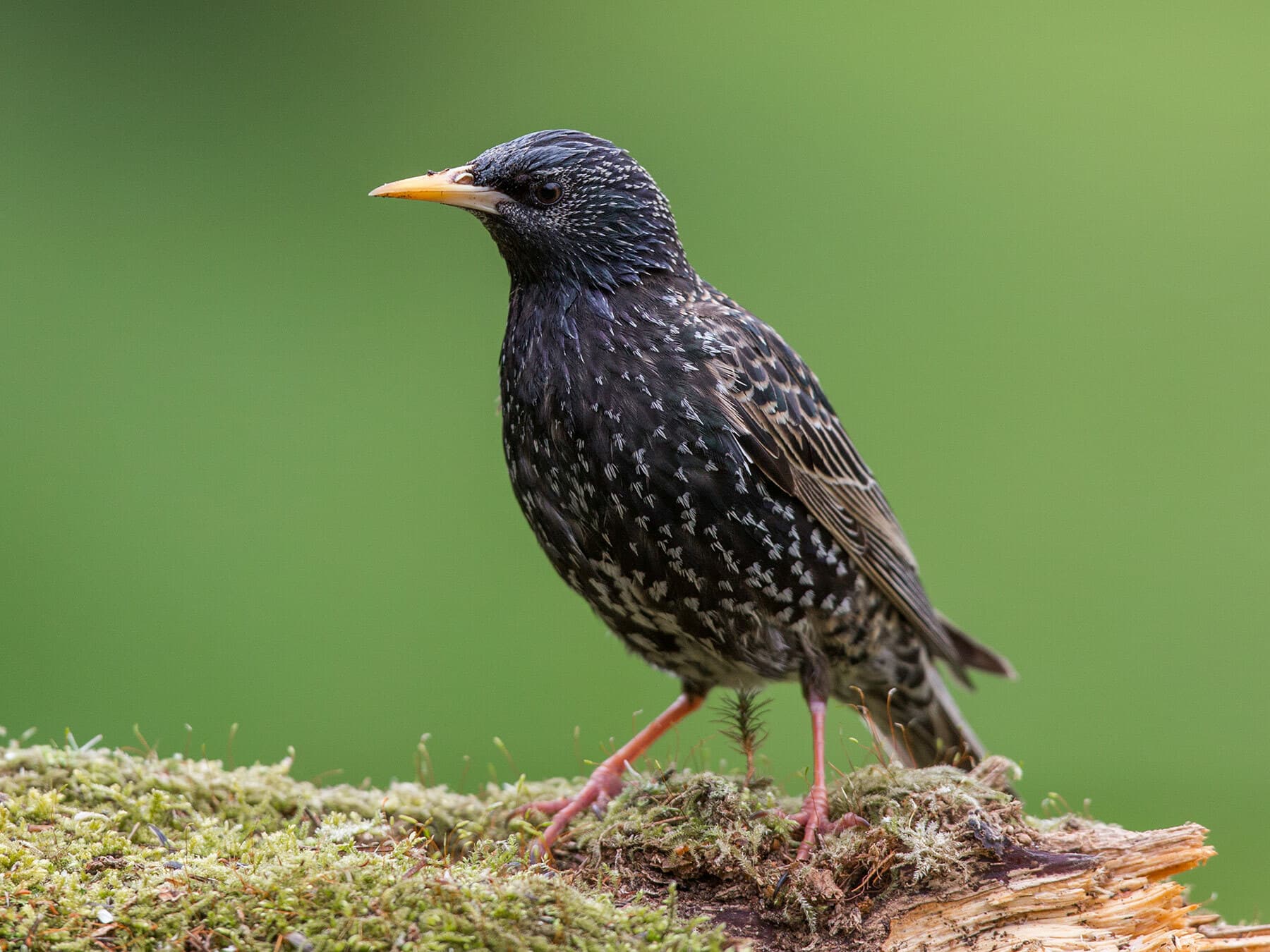
More photos
6 photos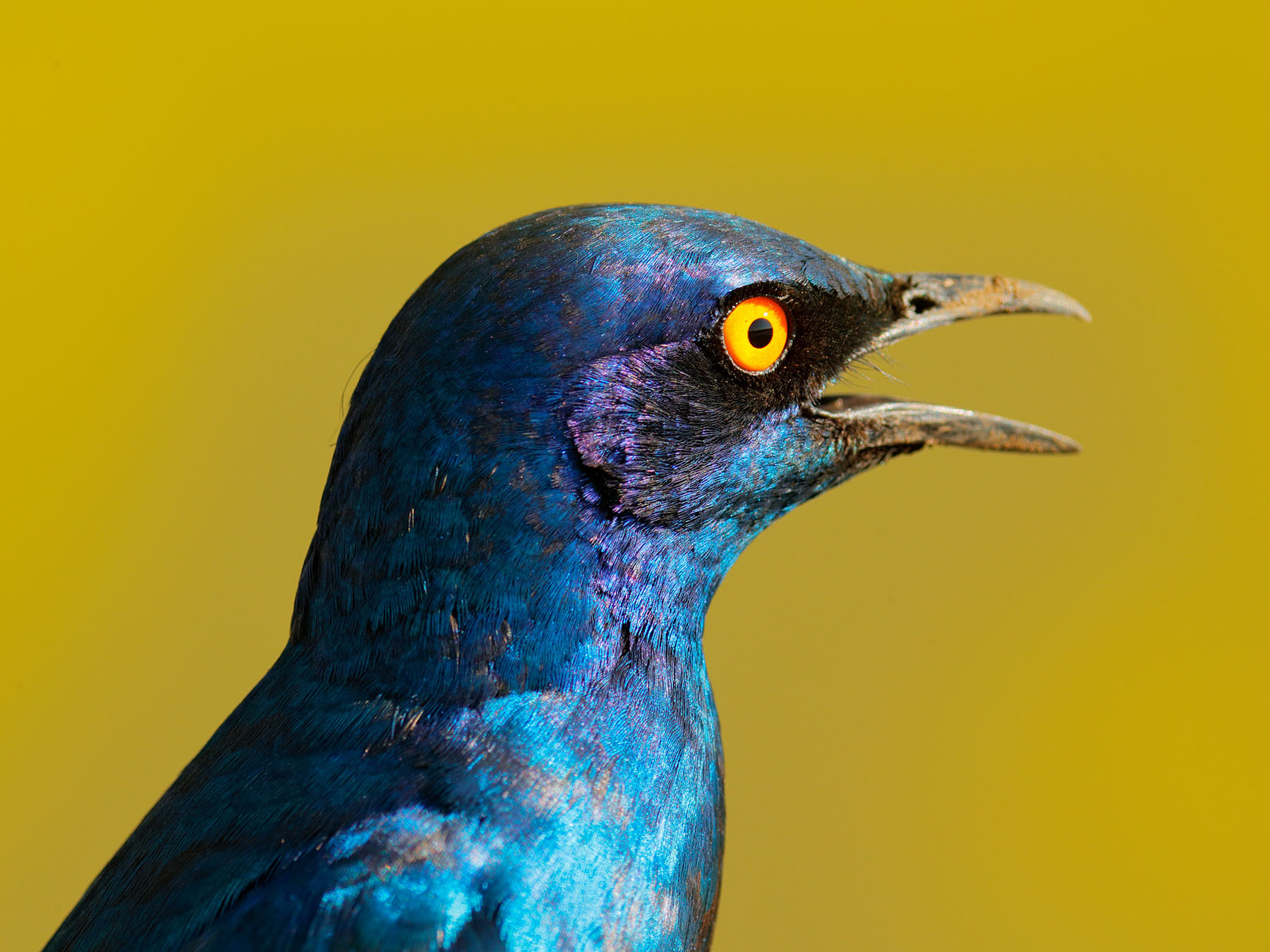
Quick facts
- Length
- 25–28 cm
- Wingspan
- 40–45 cm
- Weight
- 80–100 g
- Lifespan
- 2–5 years
- Family
- Starlings & Mynas
- Migration
- Resident
- Global status (IUCN)
- Least Concern
- World population
- Not quantified, but widespread and common in much of range
- Population trend
- Stable
- Also called
- Cape Glossy Starling
- Scientific name
- Lamprotornis nitens
Sources
3- 1BirdLife International. 2018. Lamprotornis nitens. The IUCN Red List of Threatened Species 2018: e.T22710675A132089574. Source (opens in a new tab)
- 2BirdLife International. 2018. Lamprotornis nitens. The IUCN Red List of Threatened Species 2018: e.T22710675A132089574. Source (opens in a new tab)
- 3Feare and Craig (1998)

Checked by
Nathan Cope, founder and editor
Nathan founded Birdfact and leads its writers and contributors in the UK, the US and Canada. He has watched and studied birds for more than ten years, and checks every article and species guide before it’s published.