


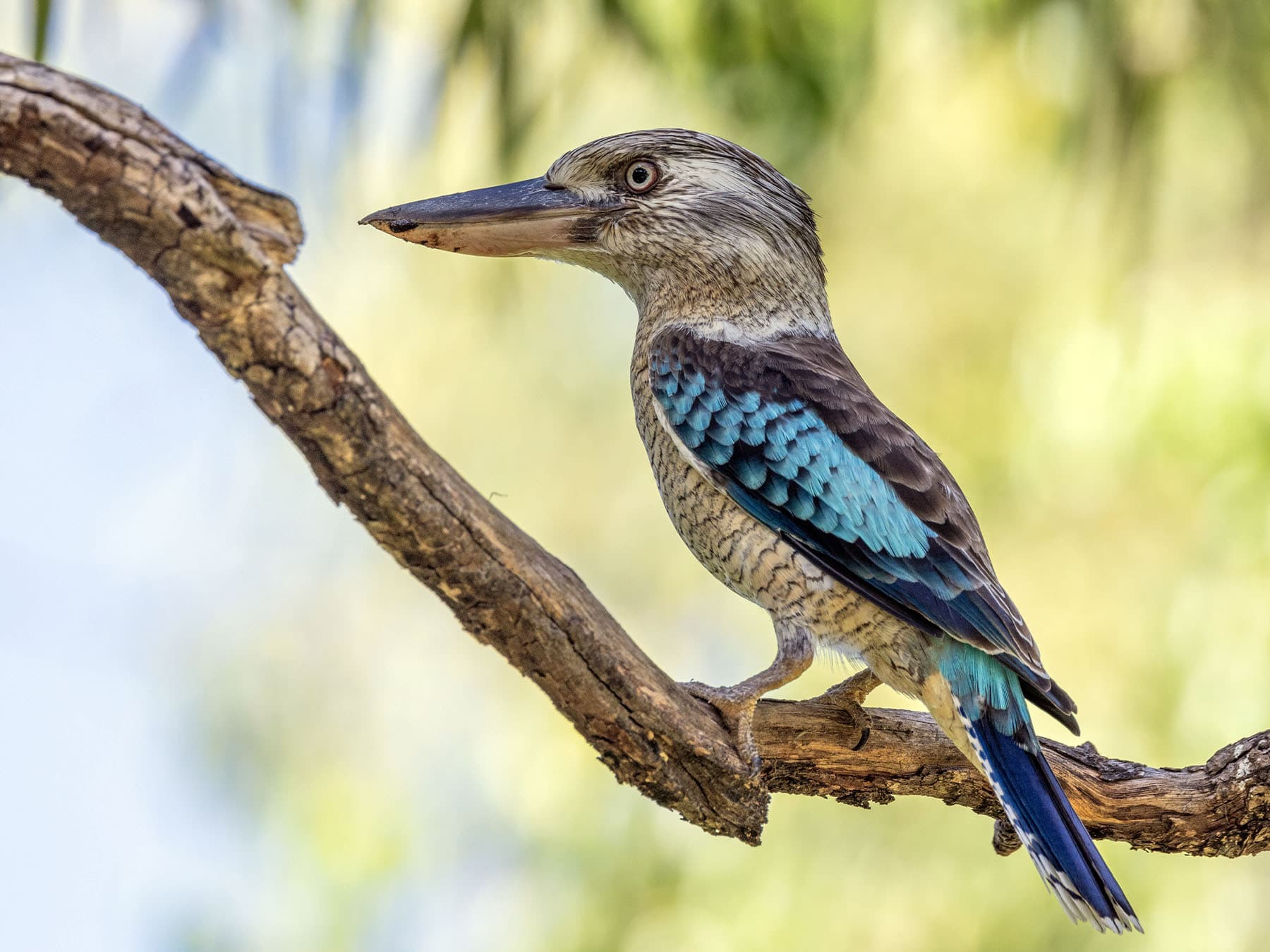
Blue-winged Kookaburra
Leach's Kookaburra, Barking Jackass · Dacelo leachii
By the Birdfact teamChecked by Nathan Cope
On this page12 sections
How to recognise it
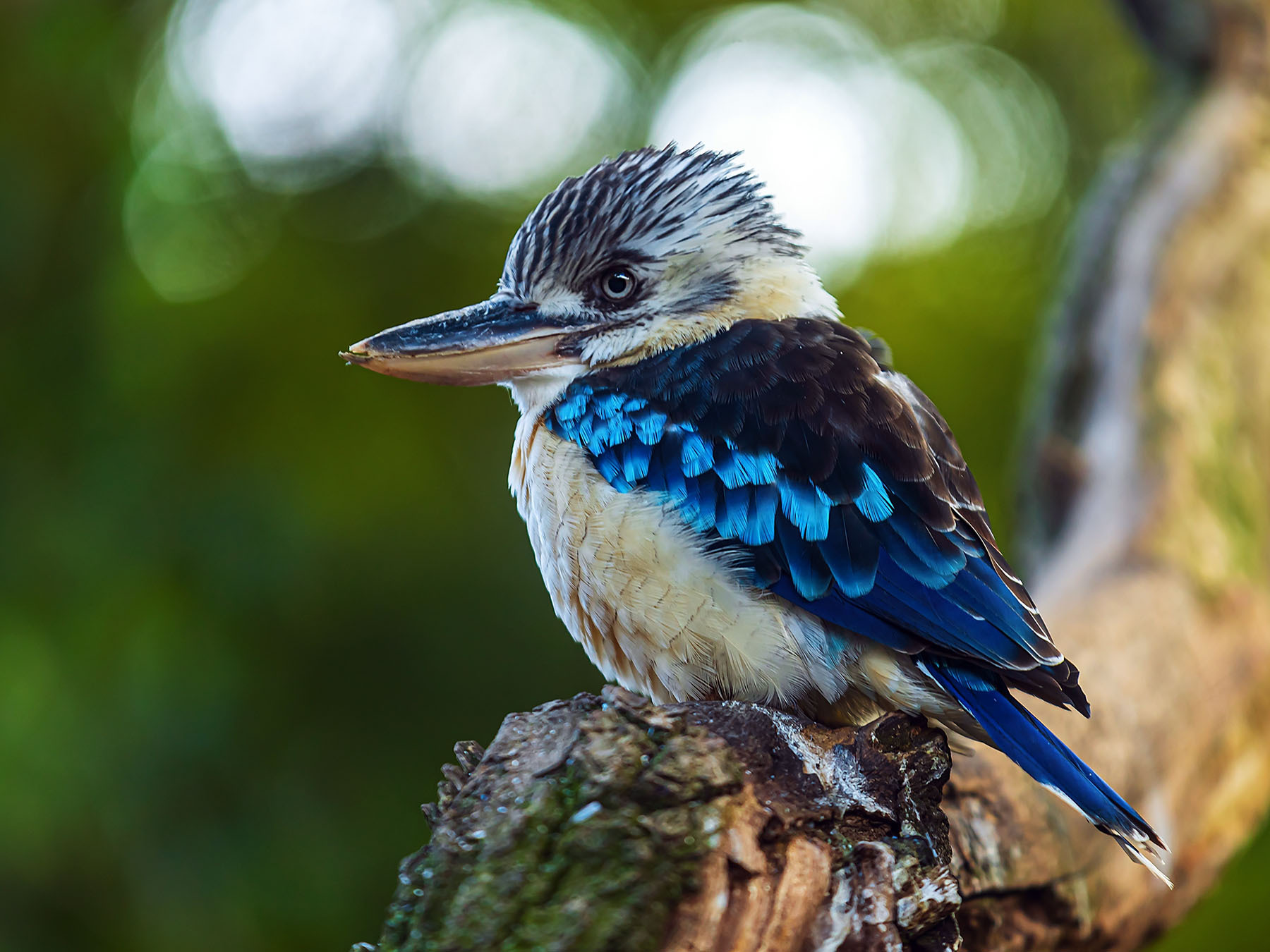
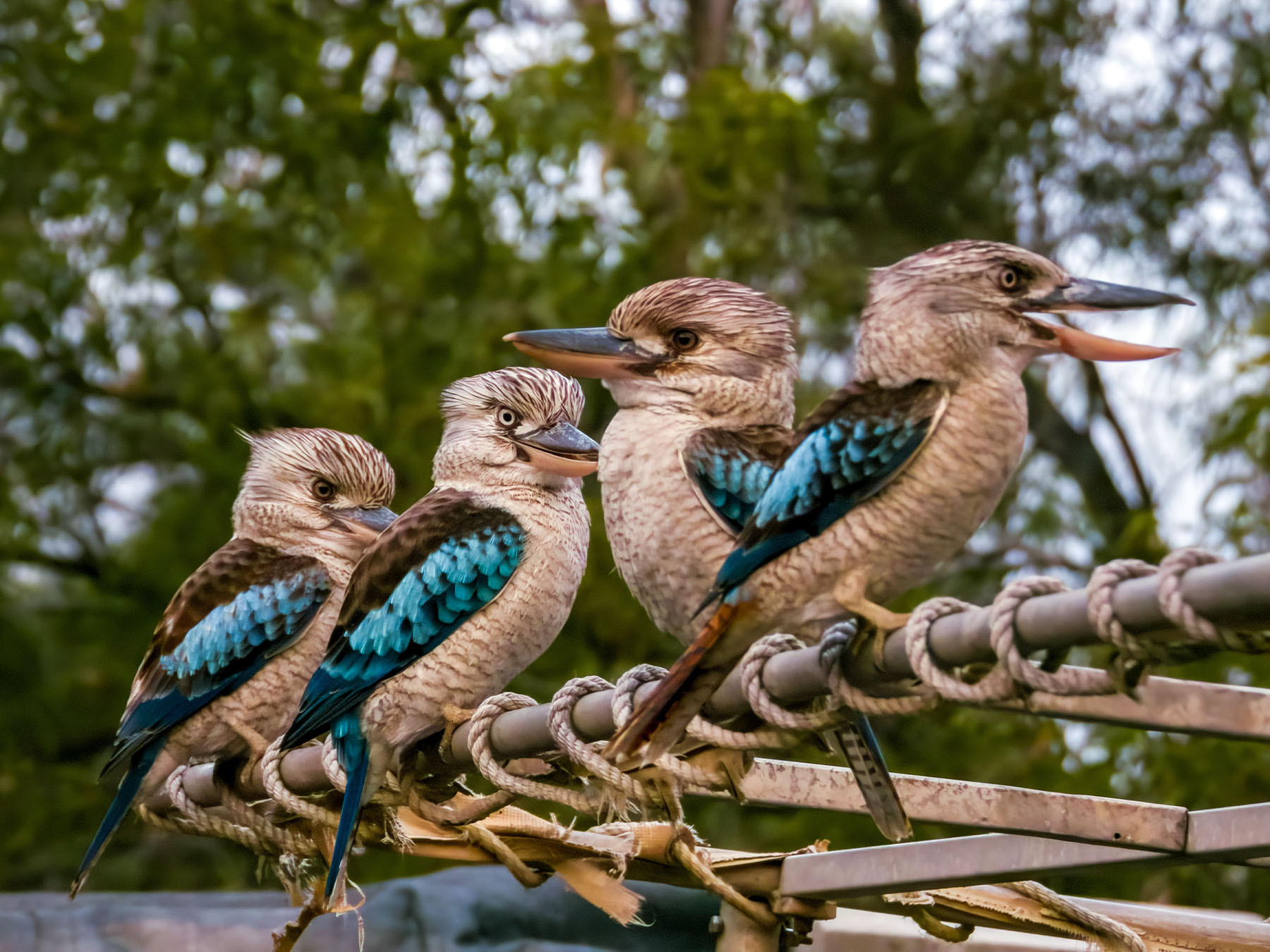
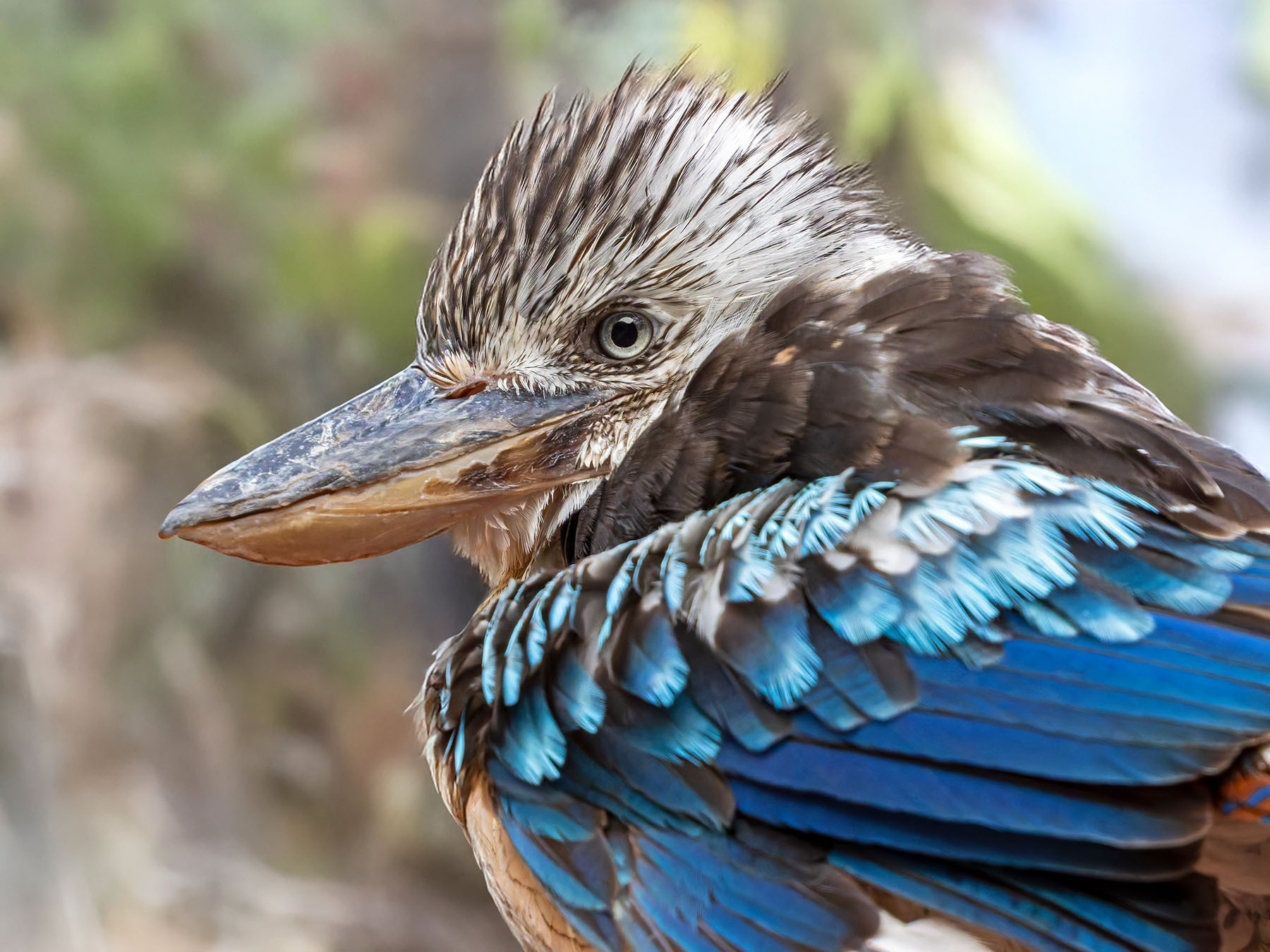
The Blue-winged Kookaburra is a large kingfisher, measuring 38-41 cm in length. It features a pale head, distinctive white or very pale yellow eyes, and vibrant blue wings and rump. The bill is two-toned, with a darker upper part and creamy-yellow lower part.
Males and females look similar overall but can be distinguished by their tails - males have blue tails with white outer feathers, while females have reddish-brown tails with blue-black barring. Both have white underparts, though males show subtle grey markings.
Juveniles resemble adults but have paler crowns and show brown edges on their breast feathers.
Its size
Adults- Length
- 38–41 cm
- Wingspan
- 60–65 cm
- Weight
- 250–370 g
Its song and calls
The Blue-winged Kookaburra's call is a distinctive, raucous laugh, similar to but higher-pitched than that of the Laughing Kookaburra.
Their vocalisations often start with a sharp 'kook-kook' followed by a descending series of 'kook-kook-kook-kook-kook' notes, creating a cackling effect that carries far in their open habitats.
- Call0:00 / 0:52
Recorded in Western Australia, Australia · August 2019
When and where to see it
The Blue-winged Kookaburra is not recorded regularly in the UK, Ireland, the United States or Canada.
Worldwide: recorded regularly in 2 countries
Countries where it was recorded in at least 3 of the 6 years 2019–2024. Linked countries have their own bird list.
Oceania (2)
Data: EOD – eBird Observation Dataset (Cornell Lab of Ornithology), accessed via GBIF.org, CC BY 4.0. Records from 2019–2024, aggregated and filtered by Birdfact. How these lists are made
Tips for seeing it
- Look for them perched on open branches in woodland edges and savannahs
- Listen for their distinctive laughing call, especially at dawn and dusk
- Observe near water sources, where they often hunt for prey
- In Australia, check woodland areas in the northern and eastern parts of the country
What it eats
Blue-winged Kookaburras are carnivorous, feeding primarily on small reptiles, insects, and occasionally small mammals.
They are known for their hunting technique of dropping onto prey from a perch, using their strong bill to catch and kill their quarry before consuming it whole.
Nesting and breeding
Blue-winged Kookaburras form monogamous pairs and breed during the dry season, typically from August to January. They often nest in tree hollows or termite mounds, which they may excavate or enlarge to suit their needs.
The female usually lays 2-3 white, rounded eggs in the nest chamber. Both parents share incubation duties, which last for about 26-28 days.
After hatching, the chicks remain in the nest for approximately 36 days before fledging. The parents continue to feed and care for the young birds for several weeks after they leave the nest.
Behaviour
Blue-winged Kookaburras are often seen perched on exposed branches, scanning for prey. They typically hunt by sitting still and swooping down to catch food on the ground.
These birds are social and can be found in small family groups, often engaging in communal roosting at night.
Conservation
While the Blue-winged Kookaburra is currently listed as Least Concern, it faces localised threats from habitat loss due to land clearing and bushfires.
Conservation efforts focus on preserving its woodland habitats and monitoring population trends across its range.
Similar birds
Often mistaken for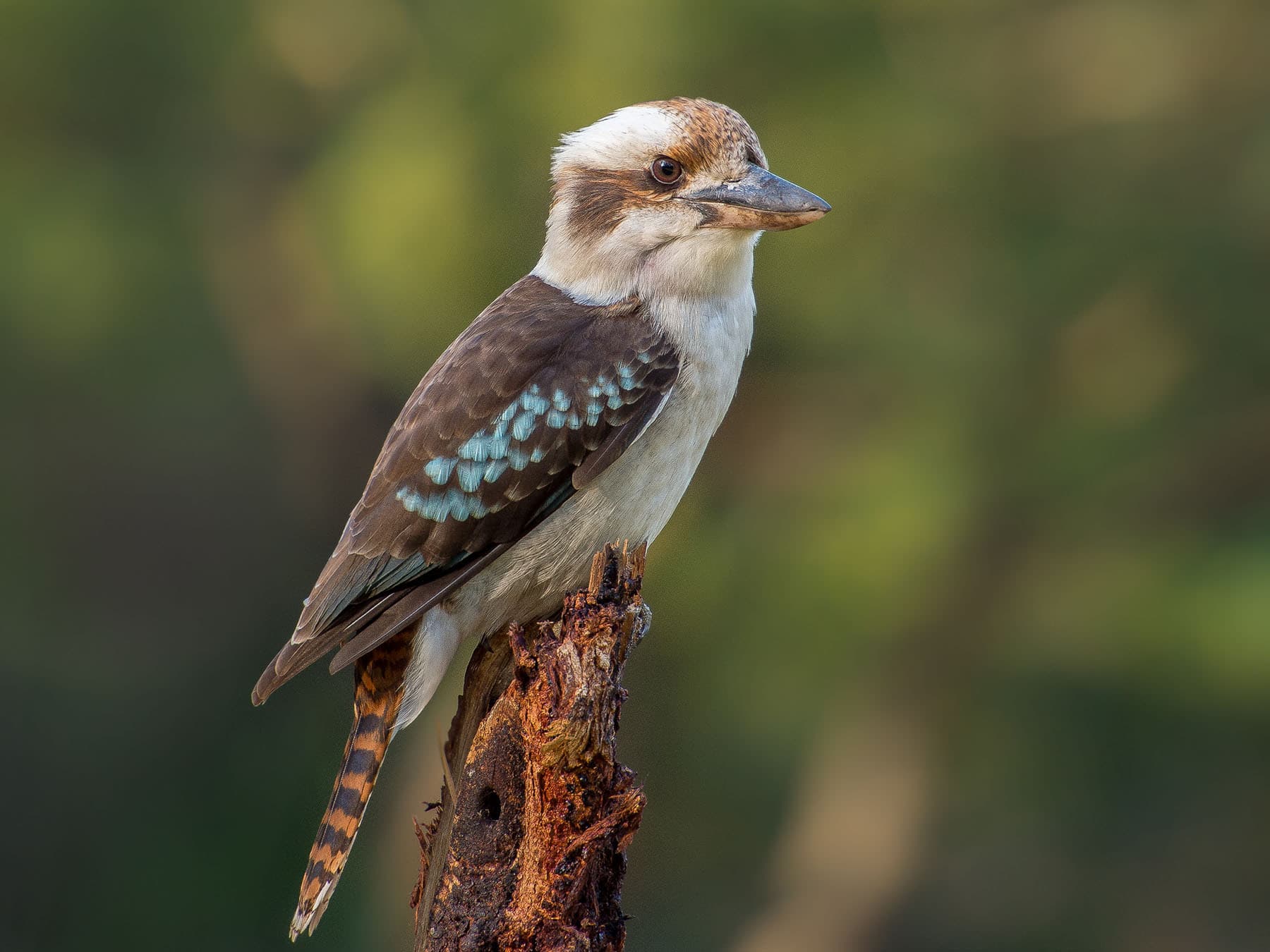
More photos
4 photos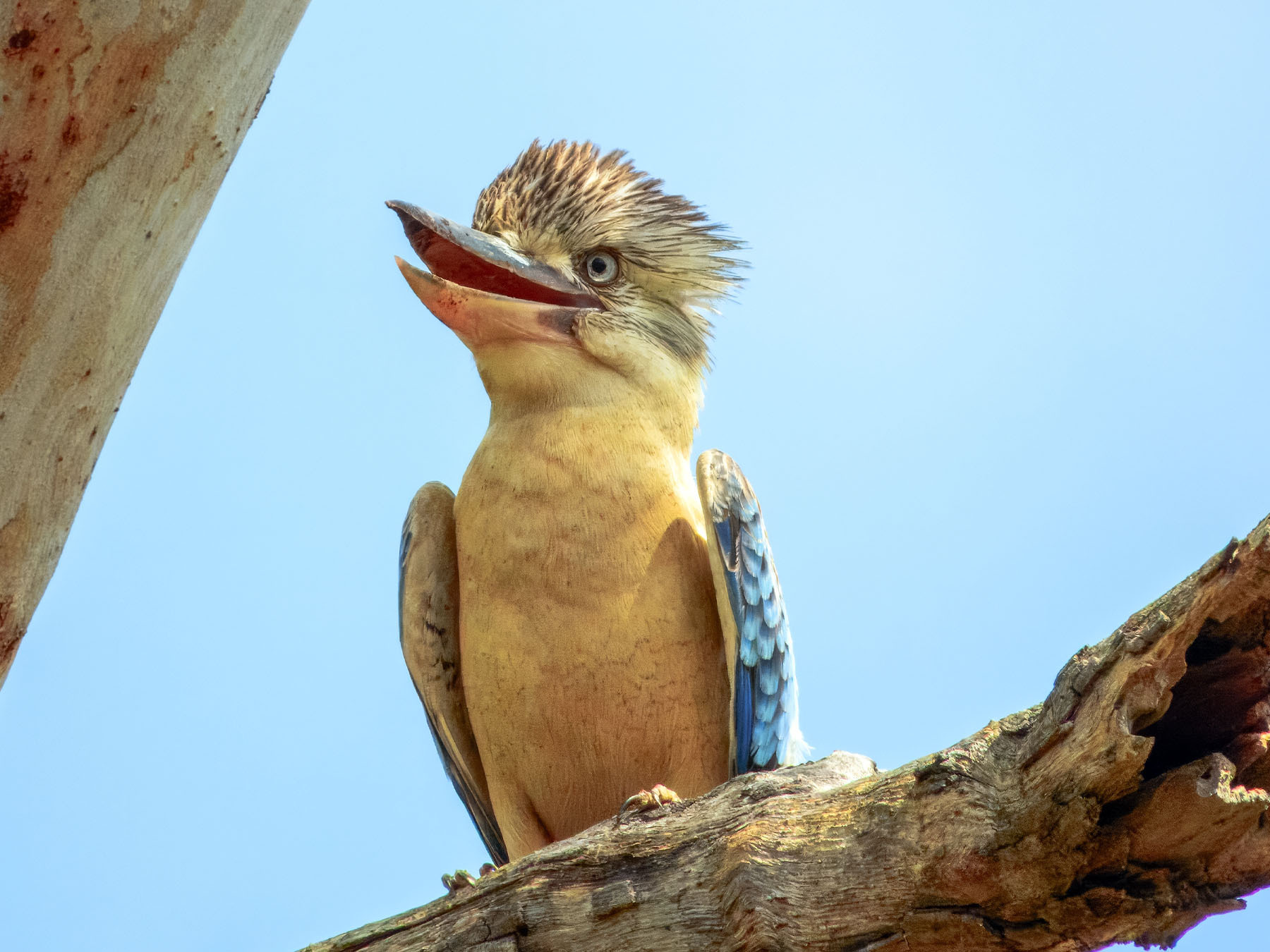
Quick facts
- Length
- 38–41 cm
- Wingspan
- 60–65 cm
- Weight
- 250–370 g
- Lifespan
- 10–15 years · oldest recorded 20 years
- Family
- Kingfishers
- Migration
- Resident
- Global status (IUCN)
- Least Concern
- World population
- Not quantified, but fairly common across range
- Population trend
- Decreasing
- Also called
- Leach's Kookaburra, Barking Jackass
- Scientific name
- Dacelo leachii
Sources
3- 1BirdLife International. 2024. Dacelo leachii. The IUCN Red List of Threatened Species 2024: e.T22683193A264113265. Source (opens in a new tab)
- 2BirdLife International. 2024. Dacelo leachii. The IUCN Red List of Threatened Species 2024: e.T22683193A264113265. Source (opens in a new tab)
- 3del Hoyo et al. (2001)

Checked by
Nathan Cope, founder and editor
Nathan founded Birdfact and leads its writers and contributors in the UK, the US and Canada. He has watched and studied birds for more than ten years, and checks every article and species guide before it’s published.