


Laughing Kookaburra
Laughing Jackass · Dacelo novaeguineae
By the Birdfact teamChecked by Nathan Cope
On this page12 sections
How to recognise it
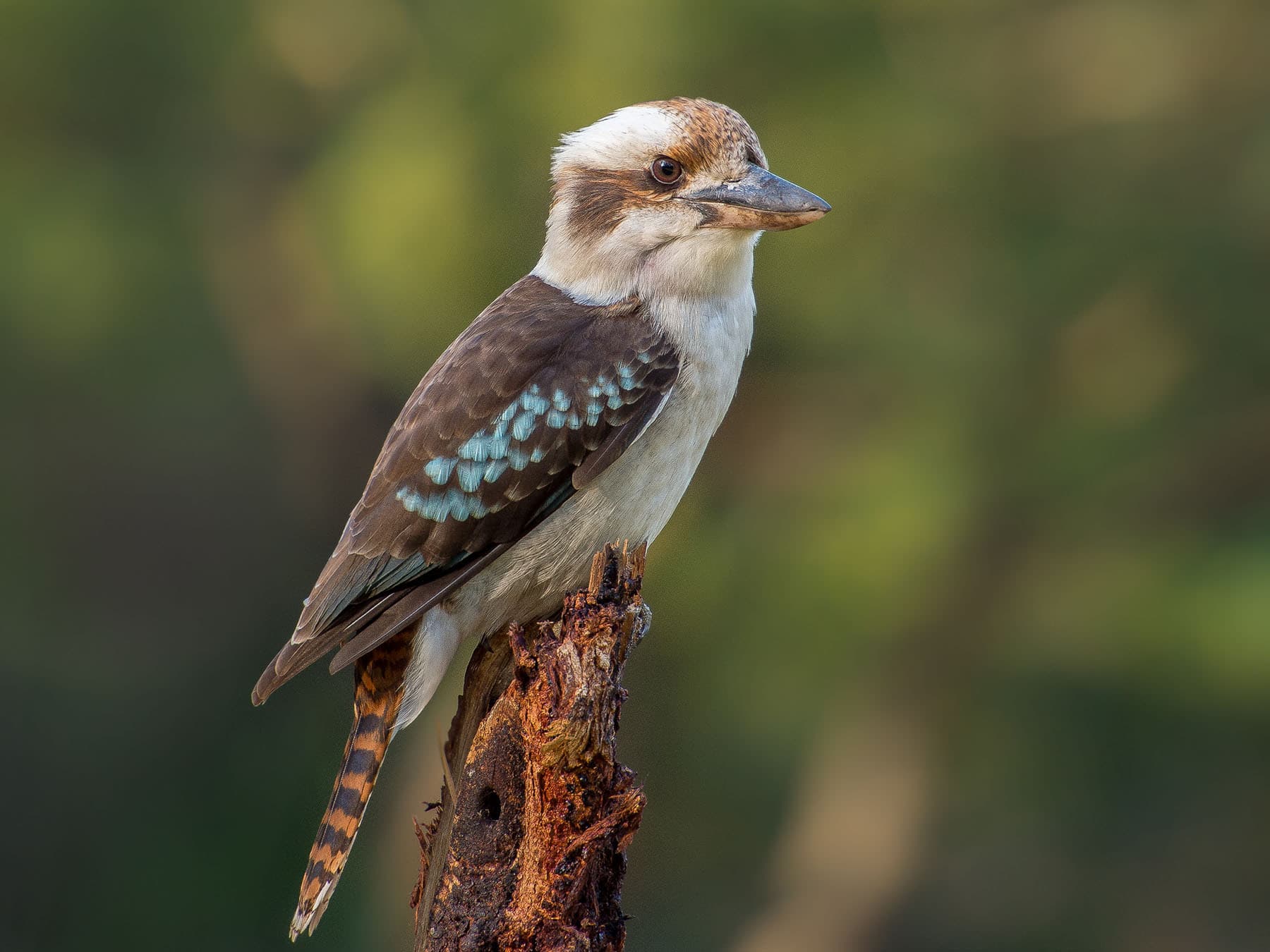
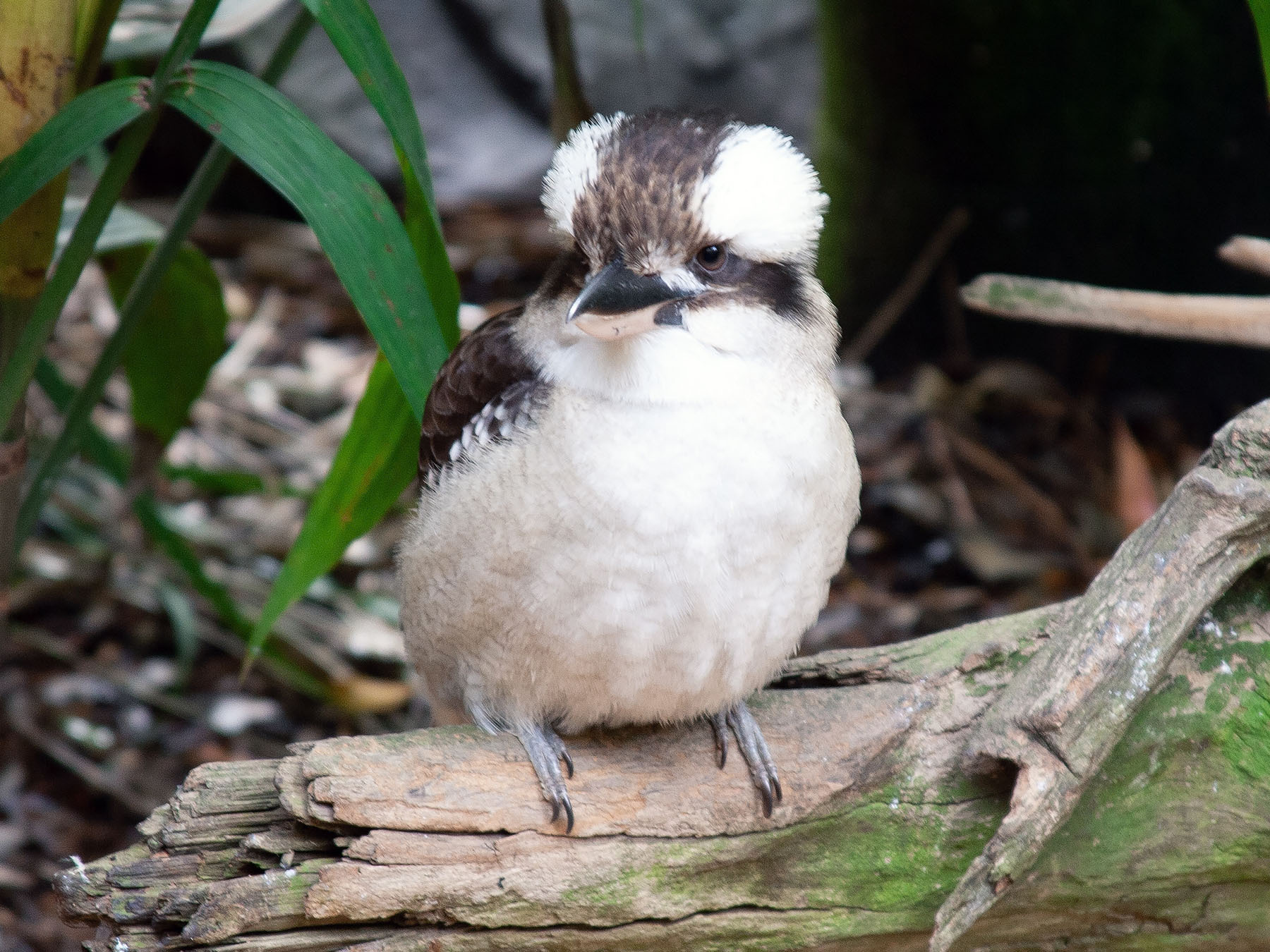
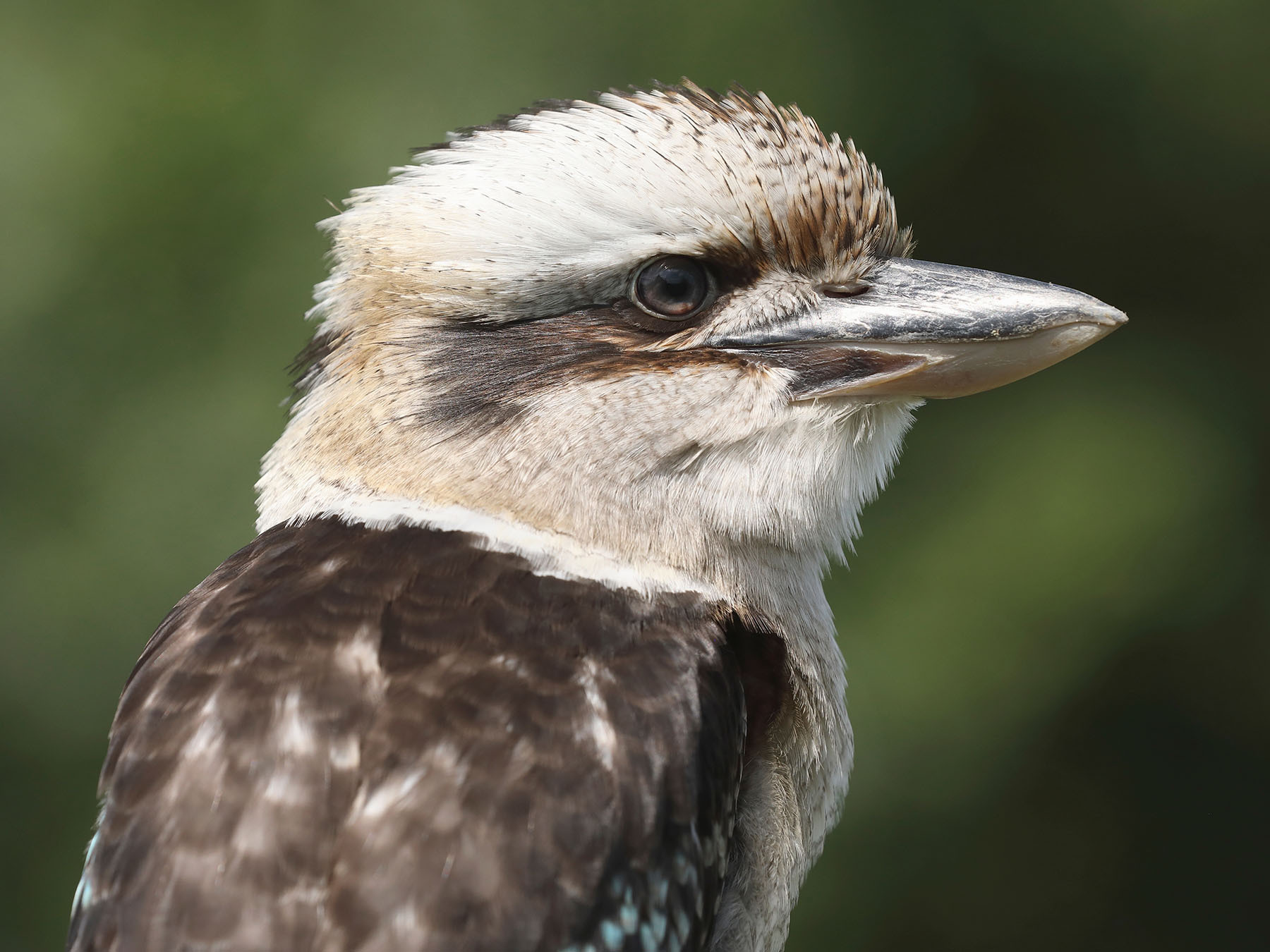
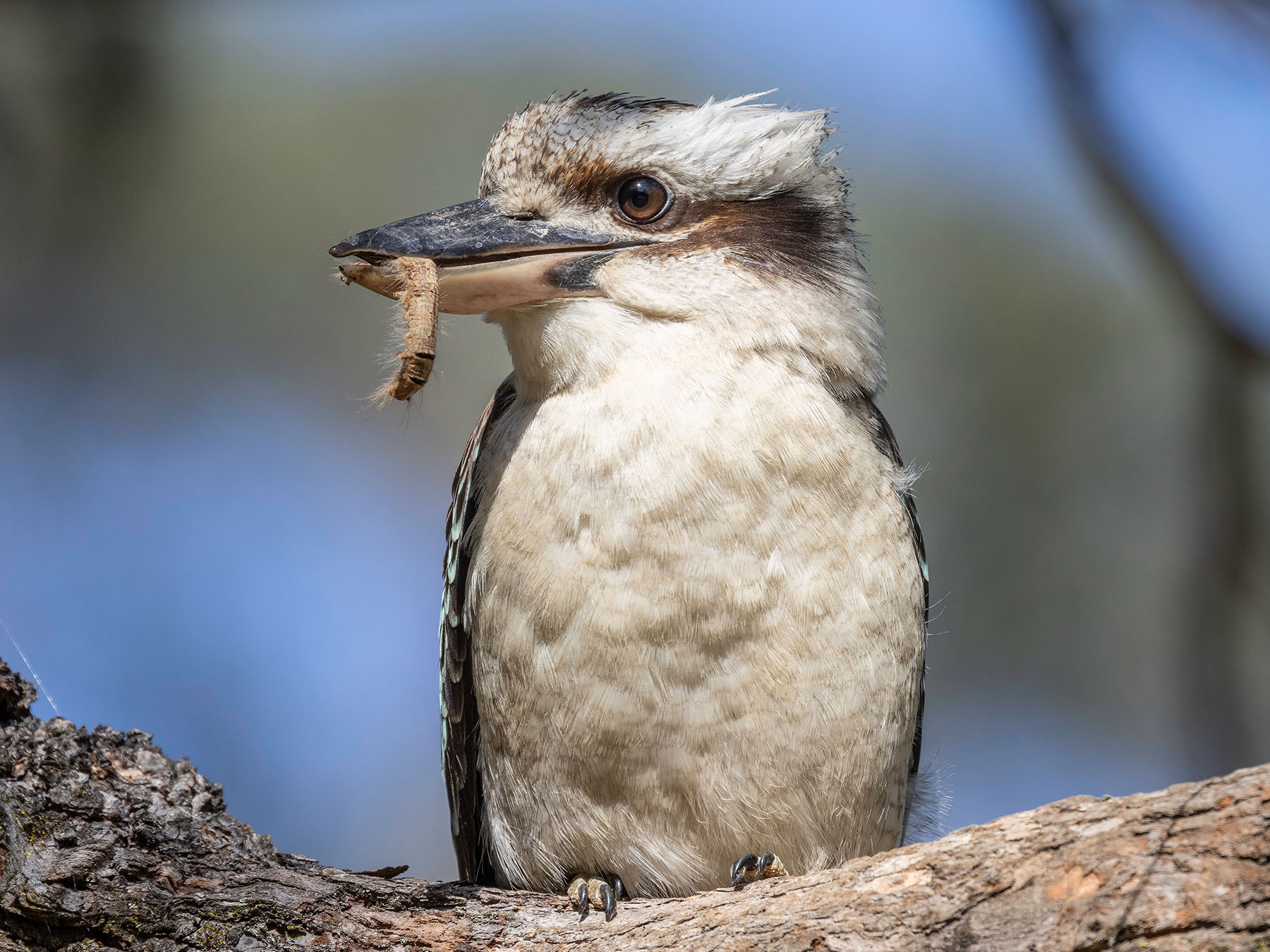
The Laughing Kookaburra is a large, stocky bird with a distinctive oversized head and strong, dagger-like bill. Its upperparts are predominantly brown with blue-tinged wings, while the underparts are white with subtle brown barring.
Females are usually larger and have less blue on the rump than males. Otherwise, both sexes look similar, with a dark brown eye stripe and blue-tinged tail feathers. Juveniles resemble adults but have a paler bill and less defined markings.
Its size
Adults- Length
- 41–47 cm
- Wingspan
- 61–66 cm
- Weight
- 190–465 g
Its song and calls
The Laughing Kookaburra's call is one of the most distinctive bird sounds in Australia.
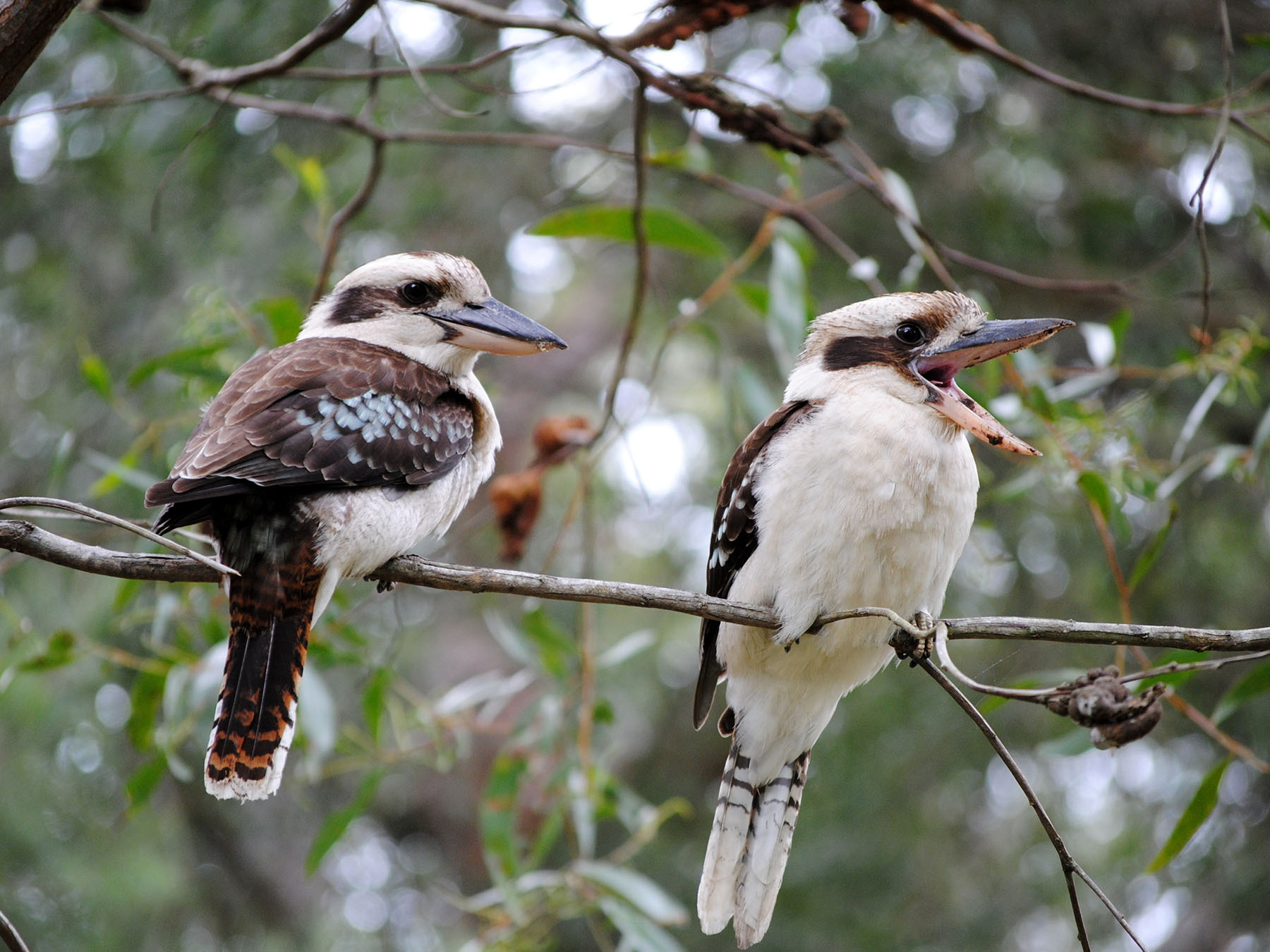
Their famous 'laugh' is a loud, raucous 'kook-kook-kook-ka-ka-ka' that often starts low and rises to a high-pitched, maniacal cackle. This call is typically used to mark territory and can often be heard at dawn and dusk.
- Recording0:00 / 0:39
When and where to see it
The Laughing Kookaburra is not recorded regularly in the UK, Ireland, the United States or Canada.
United Kingdom: recorded in 1 of the 6 years. Too few years to count as a regular visitor.
Worldwide: recorded regularly in 2 countries
Countries where it was recorded in at least 3 of the 6 years 2019–2024. Linked countries have their own bird list.
Oceania (2)
Data: EOD – eBird Observation Dataset (Cornell Lab of Ornithology), accessed via GBIF.org, CC BY 4.0. Records from 2019–2024, aggregated and filtered by Birdfact. How these lists are made
Tips for seeing it
- Listen for their distinctive laughing call, especially at dawn and dusk
- Look for them perched on high vantage points in open woodlands
- Observe their hunting behaviour near open grassy areas
- In Australia, check parks and suburban areas where they're often found
What it eats
Laughing Kookaburras are carnivorous, feeding primarily on snakes, lizards, small mammals, and large insects.
They use their strong beak to catch and kill prey, often beating larger items against branches before swallowing them whole. They also occasionally eat fish and nestling birds.
Nesting and breeding
Laughing Kookaburras form monogamous pairs and breed cooperatively, with offspring from previous years helping to raise new chicks. The breeding season typically occurs from August to January in Australia.
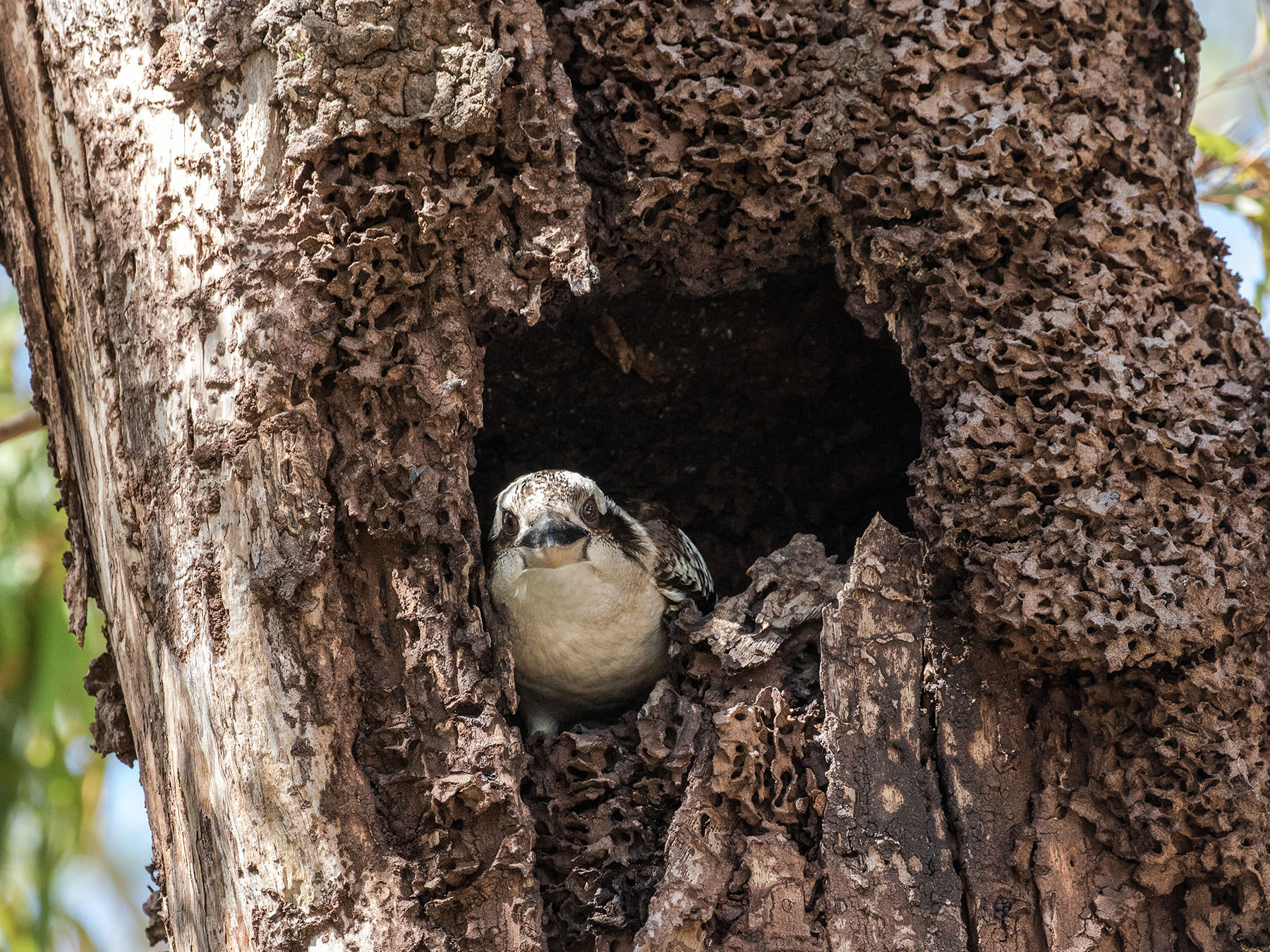
Nests are built in tree hollows, termite mounds, or occasionally in artificial nest boxes. The female lays 2-4 white eggs, which both parents and helpers incubate for about 24-26 days.
Chicks fledge after about 32-40 days but may remain with their parents for several months, learning essential hunting skills before becoming independent.
Behaviour
Laughing Kookaburras are known for their territorial behaviour, often perching prominently on tree branches or power lines. They hunt by sitting motionless, then swooping down to catch prey.
These birds are social, living in family groups and engaging in cooperative breeding.
Conservation
While the Laughing Kookaburra is listed as Least Concern, habitat loss and fragmentation pose potential threats. In some areas, they face competition from introduced species.
Conservation efforts focus on maintaining suitable woodland habitats and monitoring population trends.
More photos
6 photos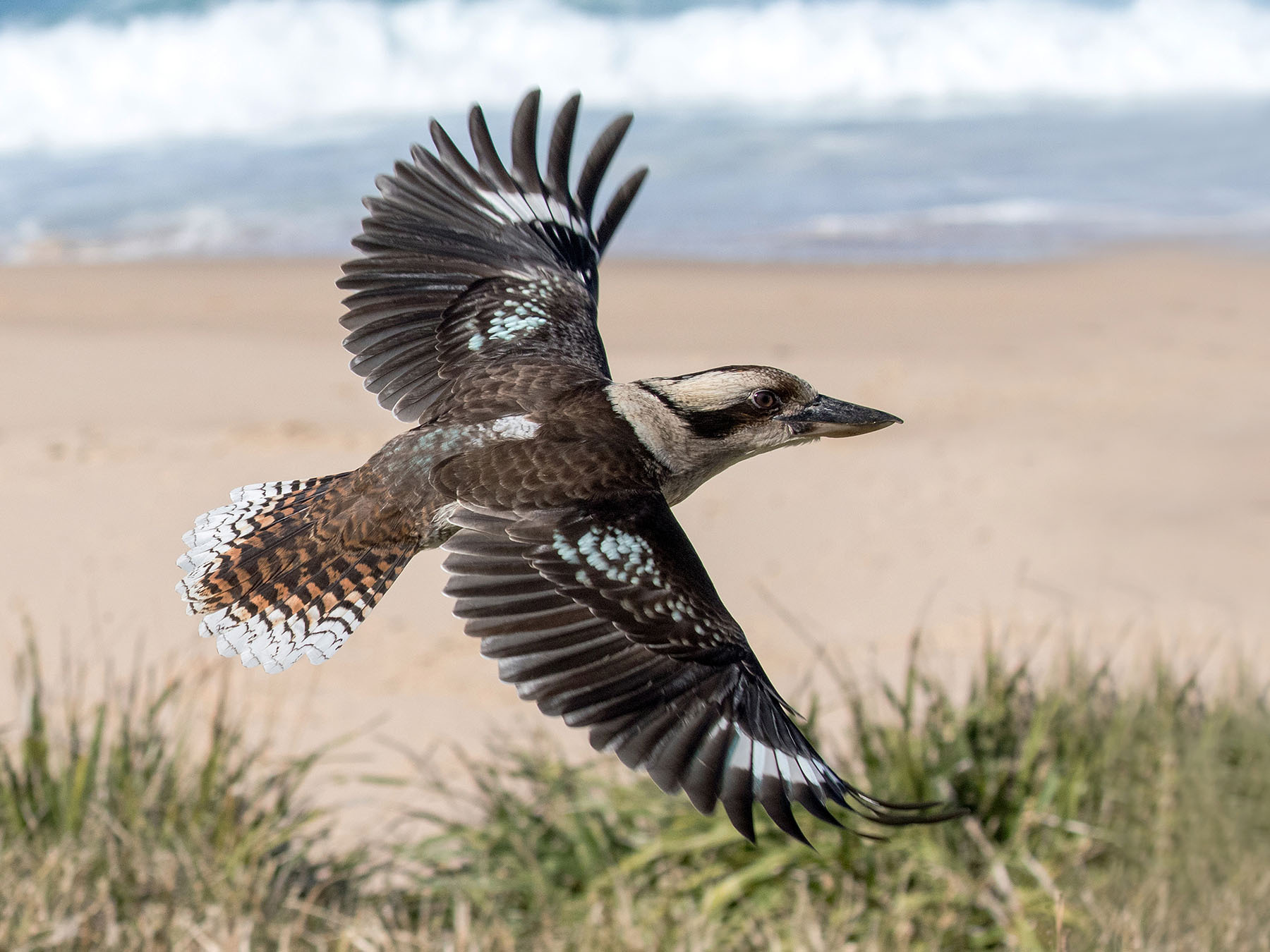
Laughing Kookaburra guides
1 guidesQuick facts
- Length
- 41–47 cm
- Wingspan
- 61–66 cm
- Weight
- 190–465 g
- Lifespan
- 10–15 years · oldest recorded 26.8 years
- Family
- Kingfishers
- Migration
- Resident
- Global status (IUCN)
- Least Concern
- World population
- 65,000,000 individuals
- Population trend
- Decreasing
- Also called
- Laughing Jackass
- Scientific name
- Dacelo novaeguineae
Sources
4- 1BirdLife International. 2024. Dacelo novaeguineae. The IUCN Red List of Threatened Species 2024: e.T22683189A253968941. Source (opens in a new tab)
- 2BirdLife International. 2024. Dacelo novaeguineae. The IUCN Red List of Threatened Species 2024: e.T22683189A253968941. Source (opens in a new tab)
- 3Woodall (2019)
- 4Ricklefs, Intrinsic aging-related mortality in birds, J Avian Biol, 31:103-111 (2000)

Checked by
Nathan Cope, founder and editor
Nathan founded Birdfact and leads its writers and contributors in the UK, the US and Canada. He has watched and studied birds for more than ten years, and checks every article and species guide before it’s published.