


Balearic Shearwater
Baldriga balear (Catalan) · Puffinus mauretanicus
By the Birdfact teamChecked by Nathan Cope
On this page13 sections
How to recognise it
What do Balearic Shearwaters look like?
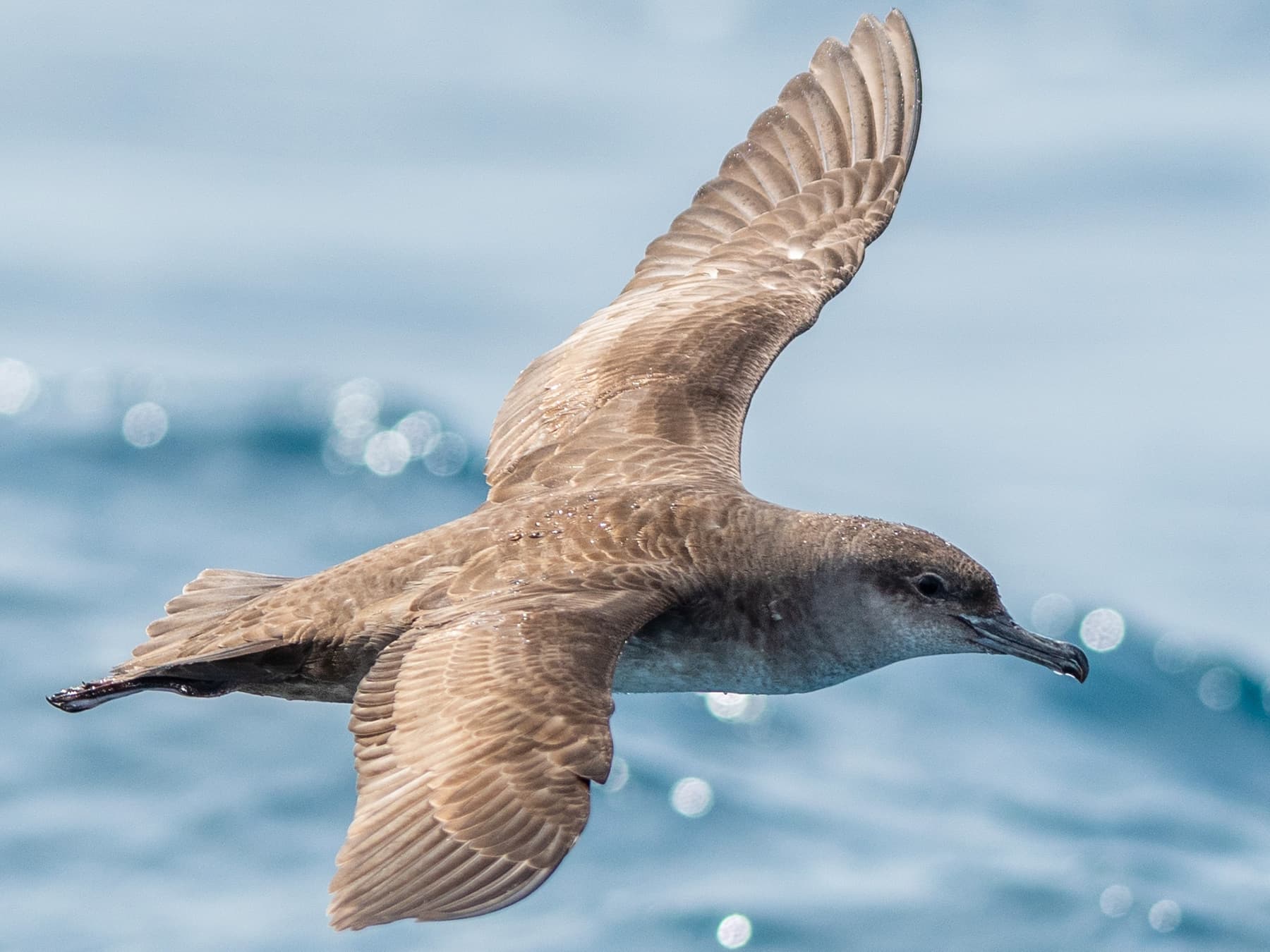
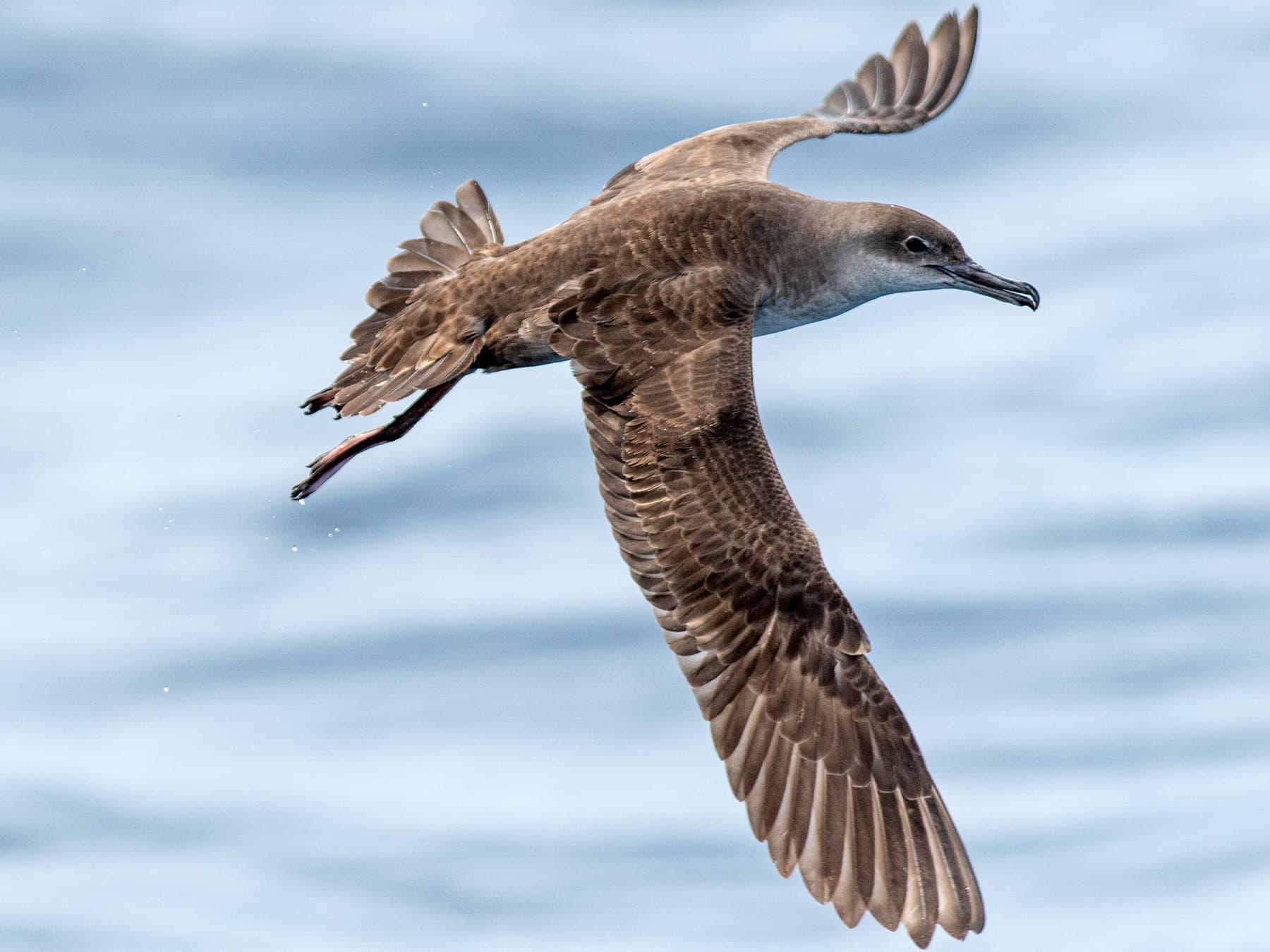
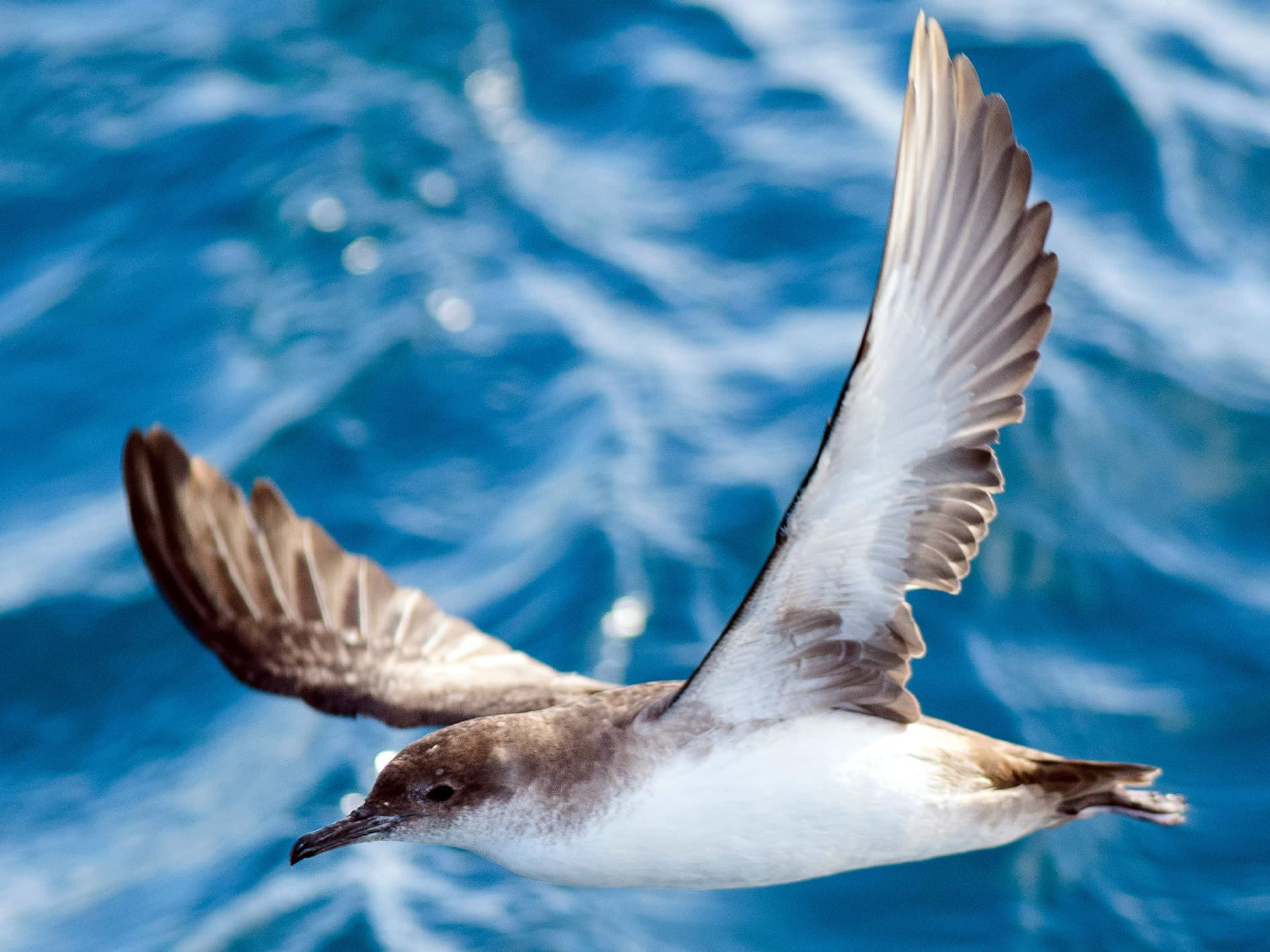
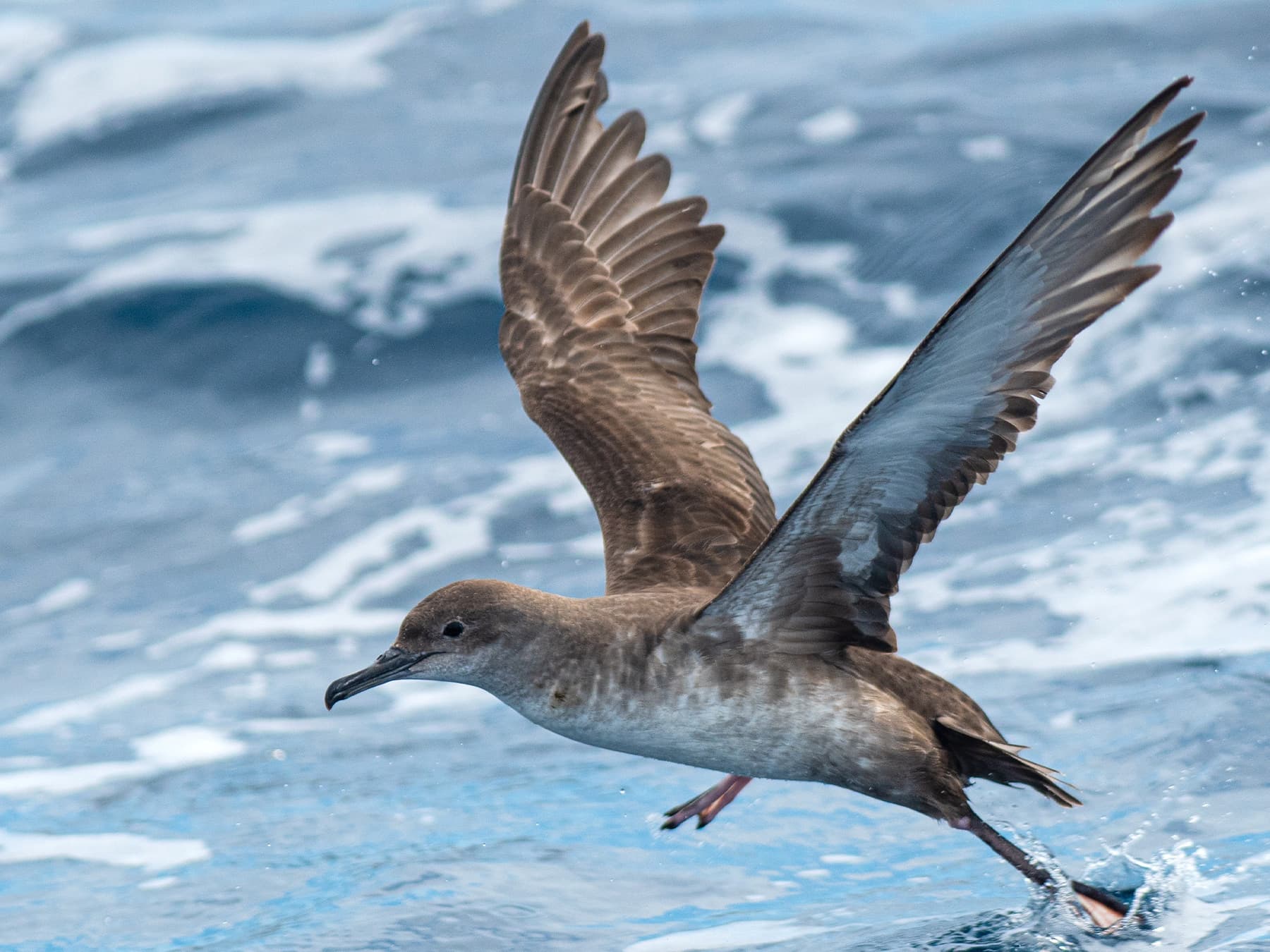
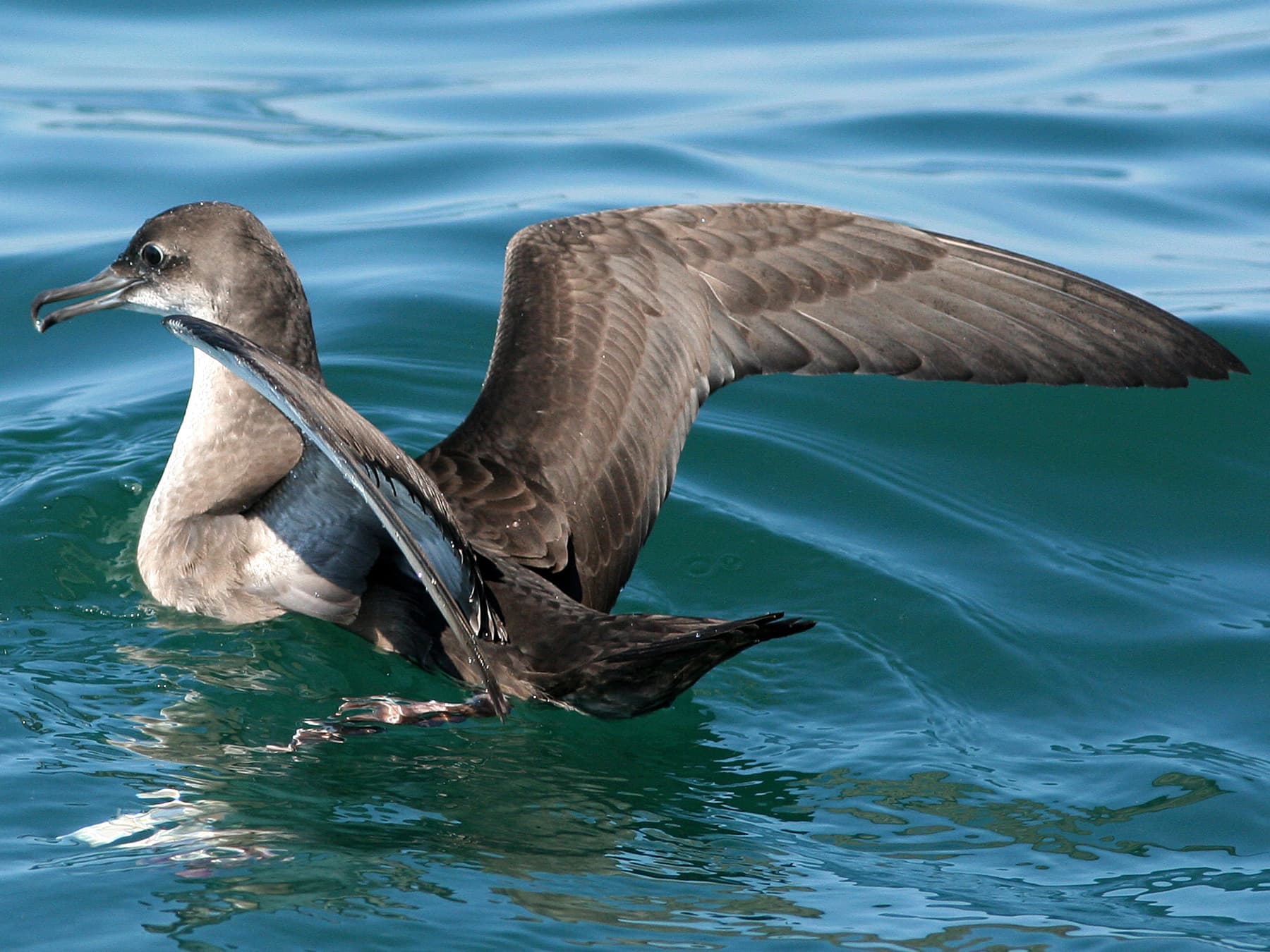
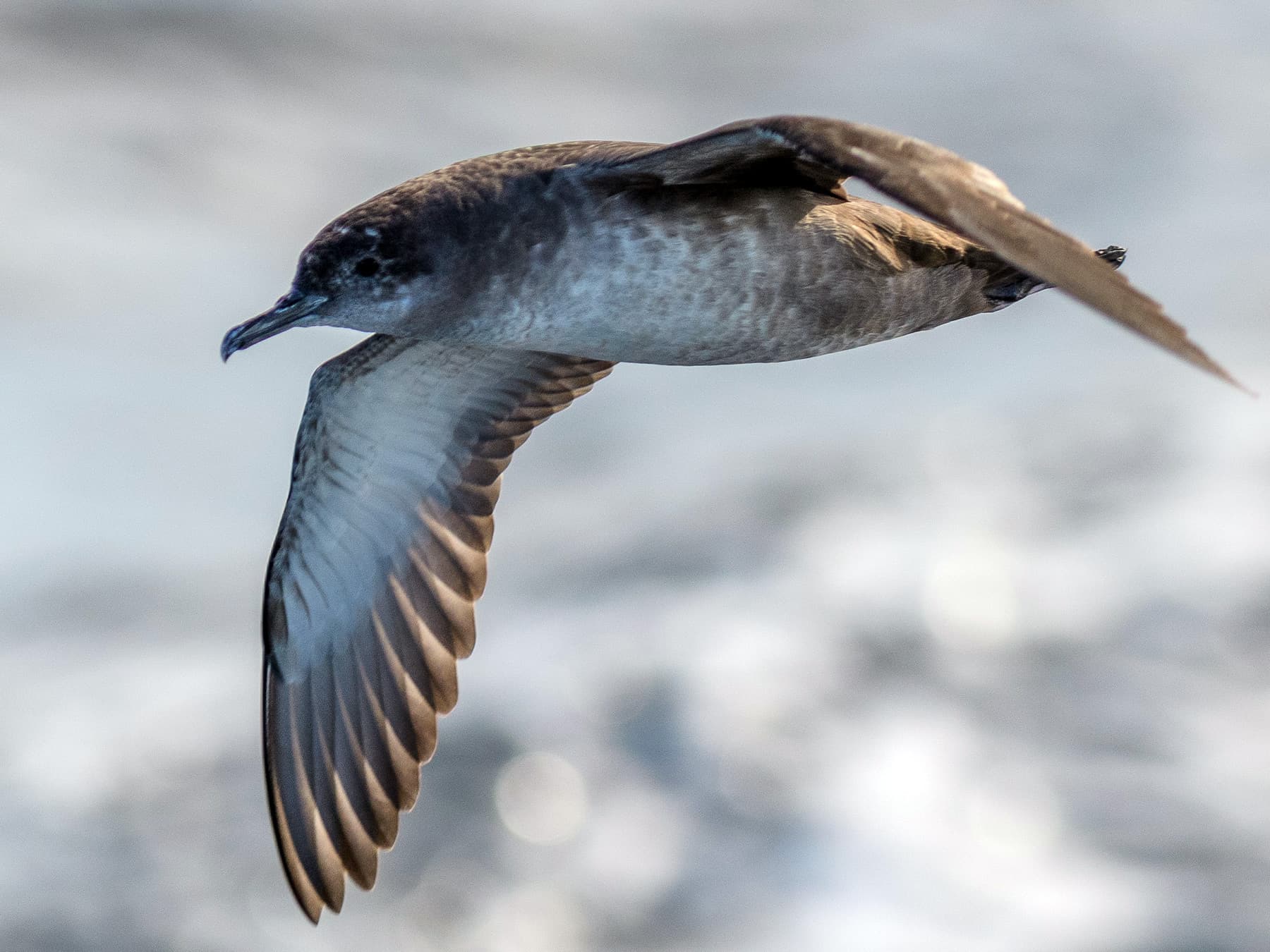
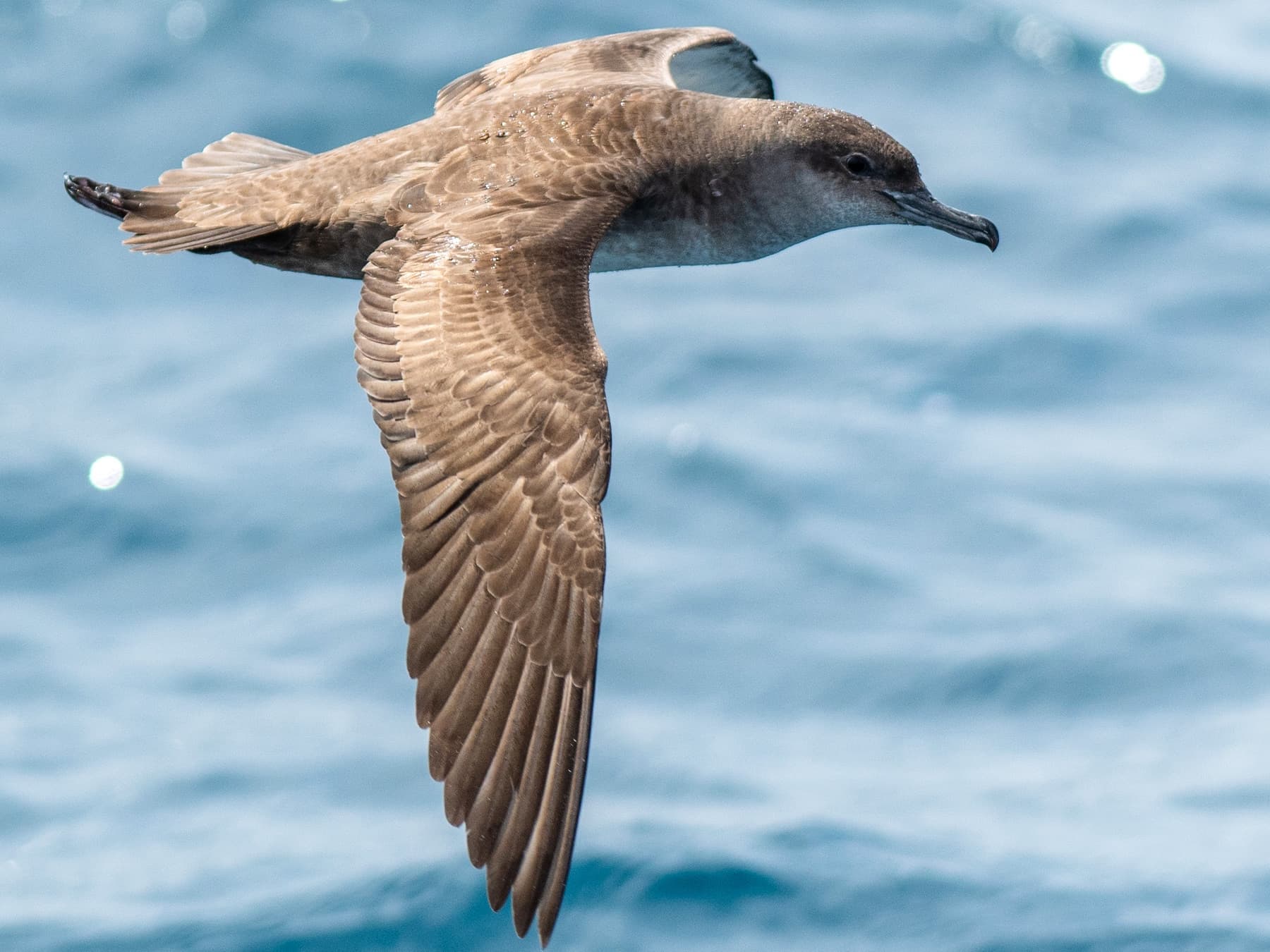
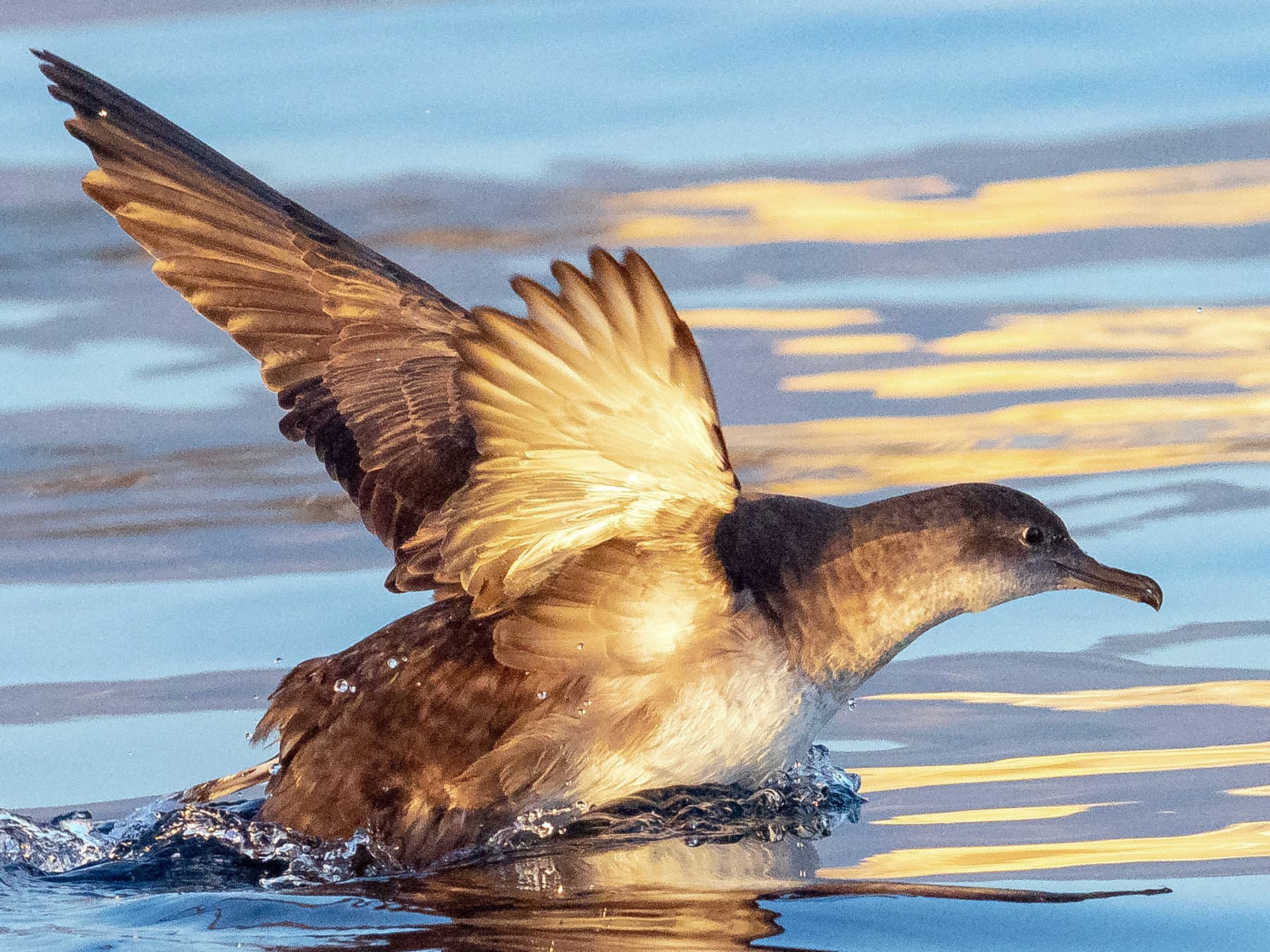
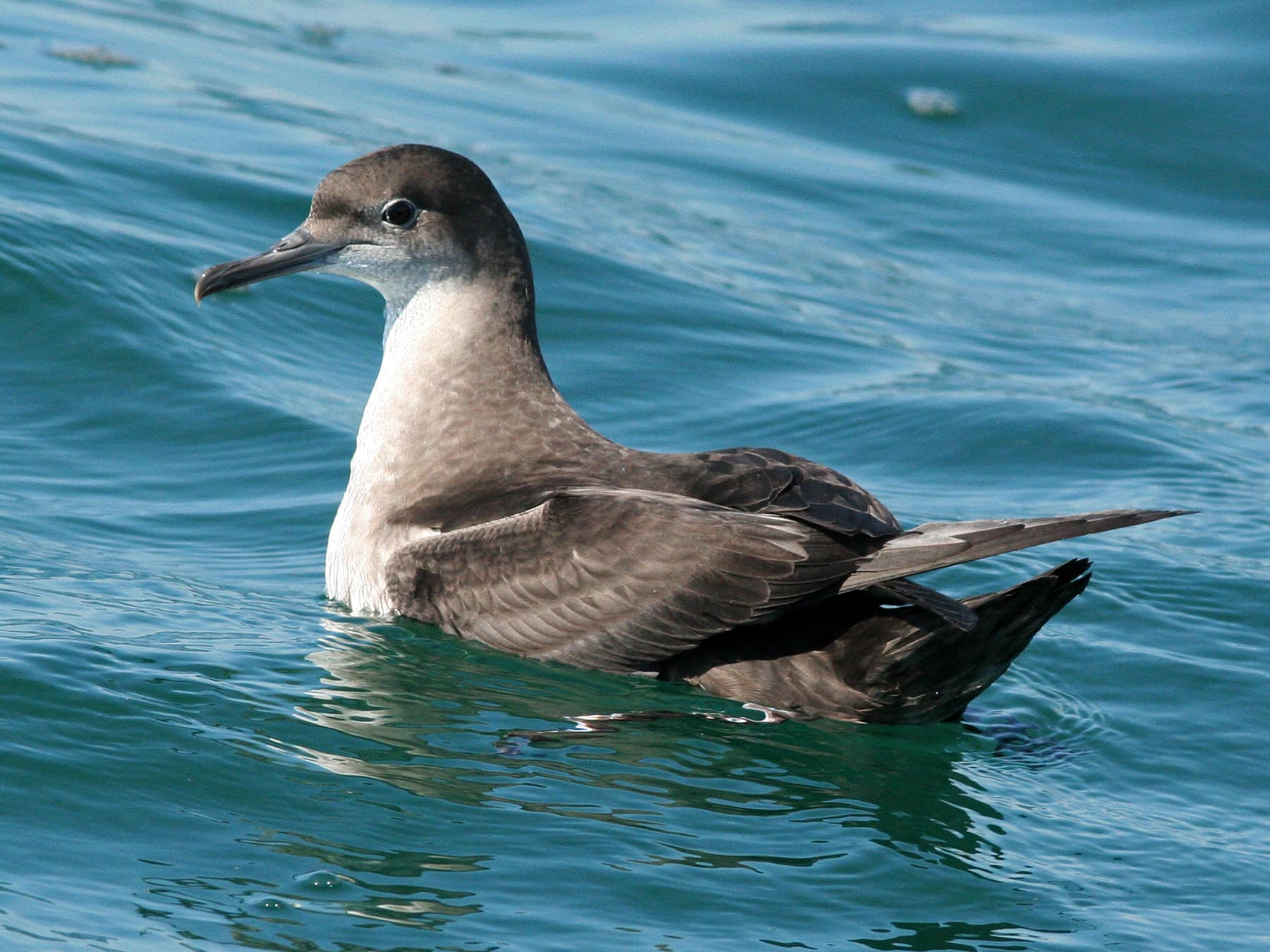
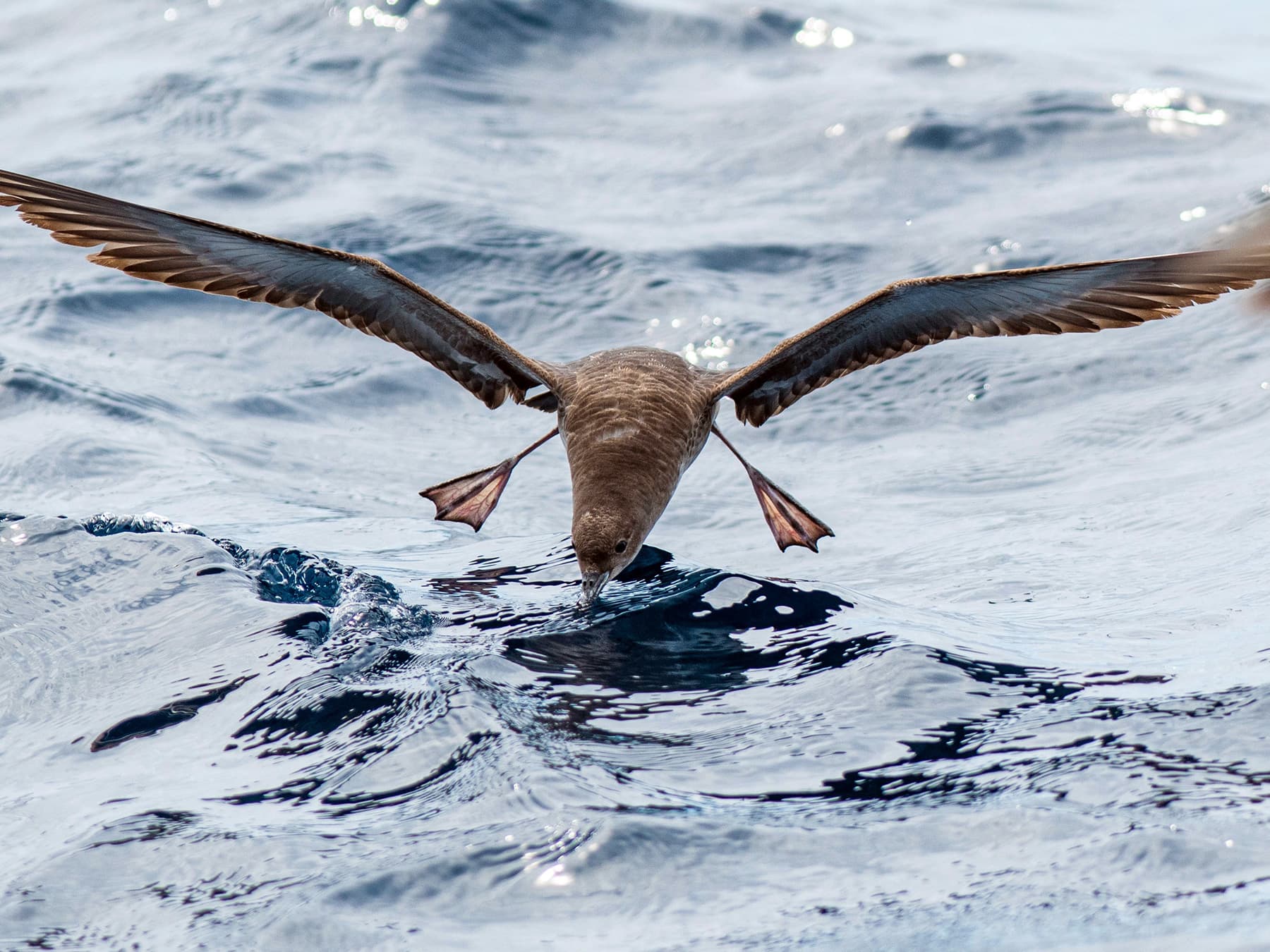
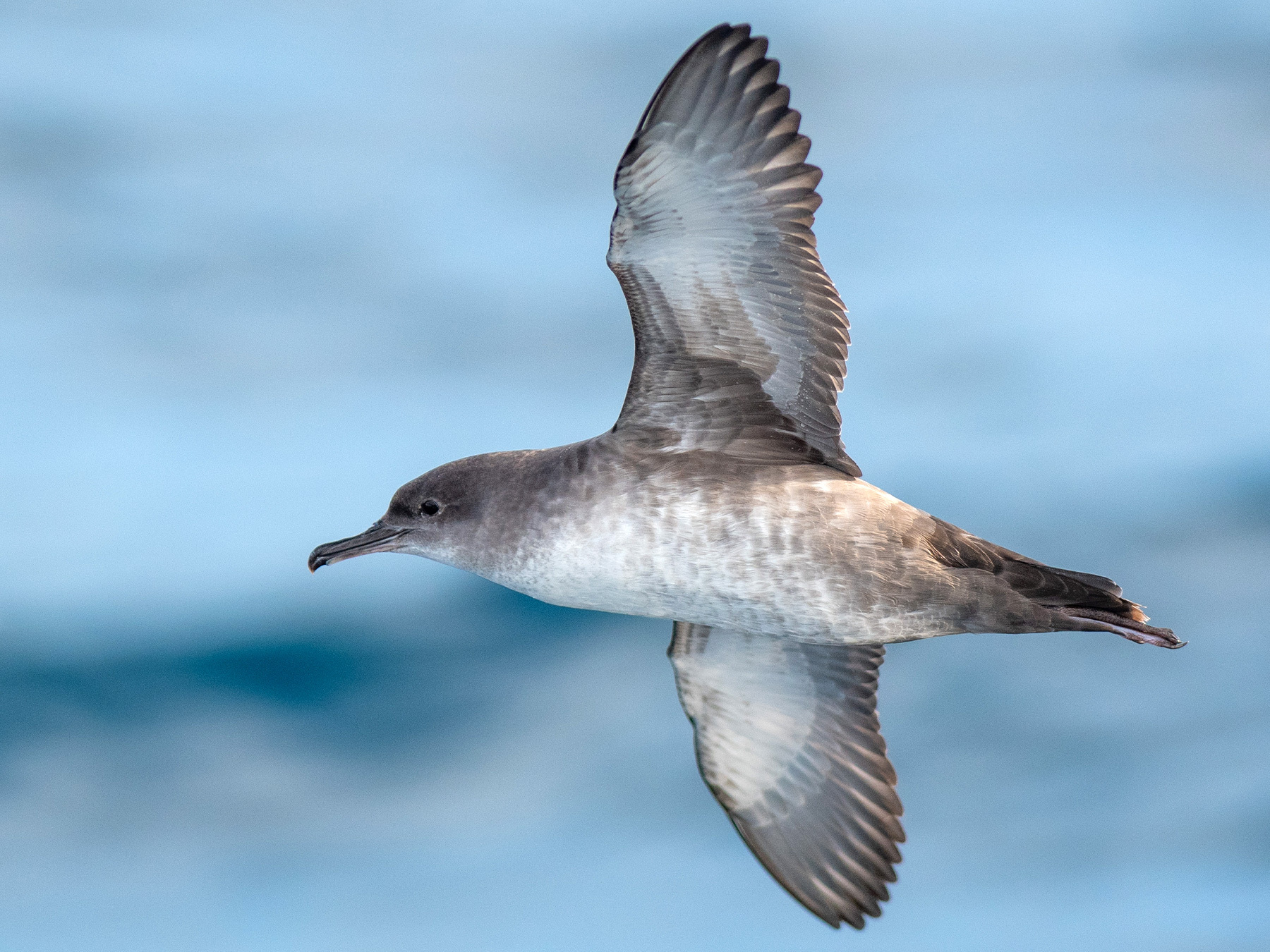
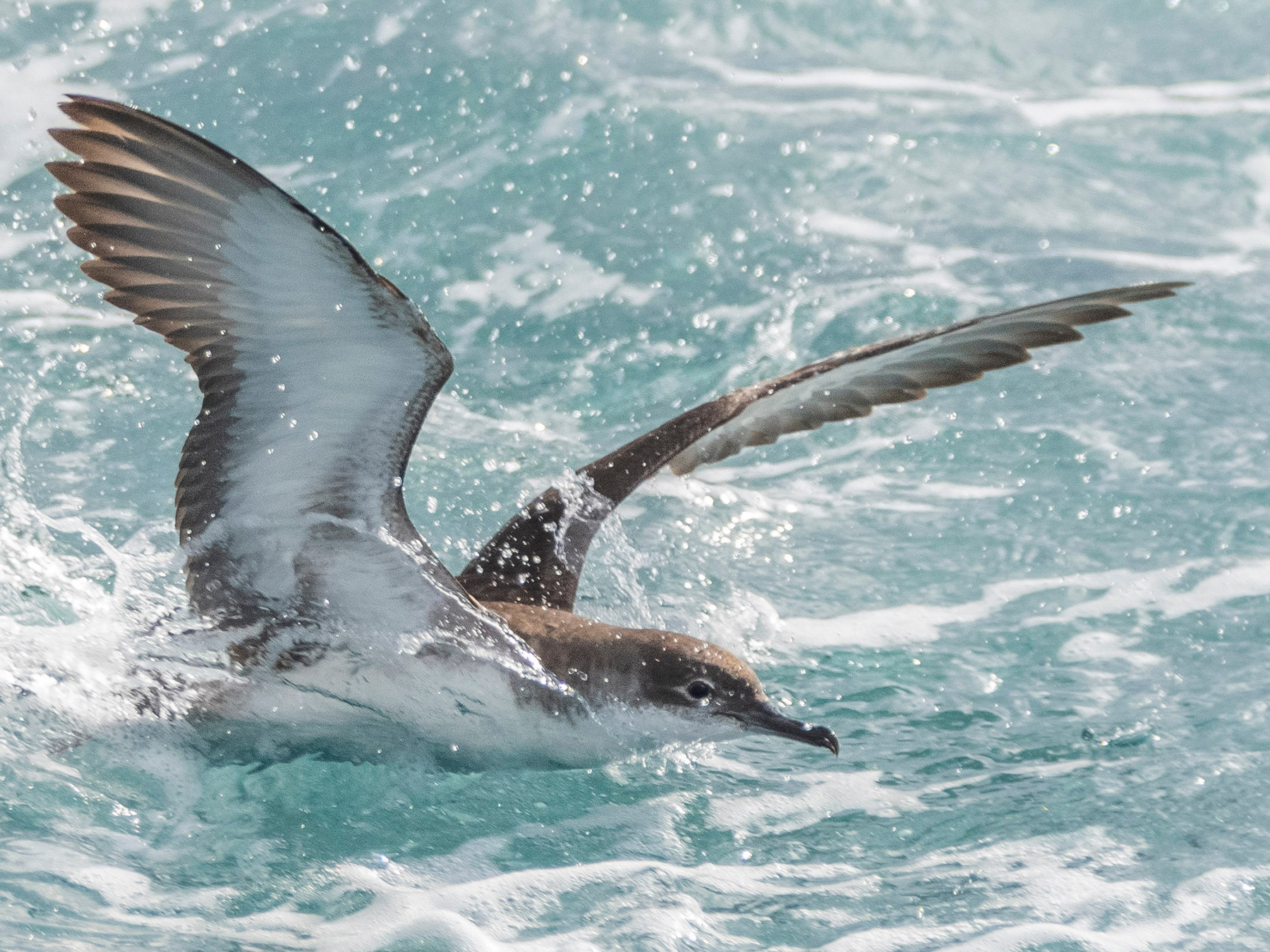
Balearic Shearwaters are medium-sized seabirds with dark grey upperparts and grey-brown underparts. In some birds, buff-white markings are visible on the throat, breast and belly. Balearic shearwaters have ash-grey and white underwings, which are marked with dark diagonal bars. Their bills are dark and their legs and feet are pinkish with dark, scattered markings.
Both sexes look alike, although males are usually fractionally larger in size and weight.
Juvenile Balearic shearwaters are similar in appearance to adults but can be distinguished in their first summer by the darker colour of their fresh, unworn plumage.
How big are Balearic Shearwaters?
Balearic shearwaters are larger than their close relative the Manx shearwater. Females are marginally smaller and lighter in weight than males, although there may be some overlap between larger females and smaller males.
- Length: 34 cm to 39 cm (13.4 in to 15.4 in)
- Wingspan: 83 cm to 93 cm (32.7 in to 36.6 in)
- Weight: 472 g to 565 g (16.6 oz to 19.9 oz)
Its size
Adults- Length
- 35–40 cm
- Wingspan
- 85–90 cm
- Weight
- 480–535 g
Its song and calls
What sound does a Balearic Shearwater make?
Balearic shearwaters are silent at sea, and can only be heard calling when at their breeding colonies. Their call is a two-note cry, which is shorter in length in females than males, and can sound like a raucous cackle when heard among other pairs on breeding grounds.
When and where to see it
OctoberLeaving
Most recorded in October
- 1. Cornwall0.15%
- 2. Pembrokeshire0.10%
- 3. Dorsetunder 0.1%
- 4. Devonunder 0.1%
- 5. Gwyneddunder 0.1%
Each dot is a county, state or province: the bigger and darker, the larger the bird’s share of that place’s bird records that month. Grey dots: no regular records. The ringed point is the centre of the bird’s records this month; the arrow shows how it moved since last month, and the dashed loop its path through the year. “Arrivals” colours places where it becomes regular this month (orange) or is in its last regular month (grey). GBIF eBird Observation Dataset, 2019–2024. Map data: Natural Earth, US Census Bureau; place centres © OpenStreetMap contributors.
In your area
See when the Balearic Shearwater is recorded in your county, state or province.
How often the Balearic Shearwater turns up in the UK and Ireland through the year, from birdwatchers' records.
United Kingdom
Passage migrant · regularly Jul–Oct · most records in August
Ireland
Passage migrant · regularly Aug–Sep · most records in August
Show as a table
| Month | United Kingdom | Ireland |
|---|---|---|
| January | <0.001% | – |
| February | <0.001% | – |
| March | <0.001% | – |
| April | <0.001% | – |
| May | <0.001% | 0.002% |
| June | 0.002% | – |
| July | 0.011% (regular) | 0.004% |
| August | 0.035% (regular) | 0.081% (regular) |
| September | 0.028% (regular) | 0.017% (regular) |
| October | 0.012% (regular) | <0.001% |
| November | 0.001% | – |
| December | <0.001% | – |
Recorded regularly in
Worldwide: recorded regularly in 10 countries
Countries where it was recorded in at least 3 of the 6 years 2019–2024. Linked countries have their own bird list.
Data: EOD – eBird Observation Dataset (Cornell Lab of Ornithology), accessed via GBIF.org, CC BY 4.0. Records from 2019–2024, aggregated and filtered by Birdfact. How these lists are made
What is the habitat of a Balearic Shearwater?
Breeding grounds favoured by Balearic shearwaters are found on rocky islets and offshore islands. Coastal landscapes, including isolated cliffs, are sometimes used as nest sites, although burrows, caves, and crevices are preferred. Winters are generally spent offshore, with birds rarely coming inland.
What is the range of a Balearic Shearwater?
Balearic shearwaters breed exclusively in the Mediterranean’s Balearic Islands, dispersing only temporarily post-breeding to spend the late summer and early autumn along the Atlantic coasts.
Summer sightings are regularly reported in southwestern Europe, including coastal areas of mainland Spain, Portugal, France, the southwestern UK, and parts of northwestern Morocco.
Balearic shearwaters return to the Mediterranean in autumn, and spend winters foraging offshore in the same waters they use when breeding.
Where do Balearic Shearwaters live?
Spain’s Balearic Islands, after which the species is named, are the sole breeding grounds of Balearic shearwaters. The majority breed in Mallorca, with colonies there home to an estimated 900 pairs each year, while sizeable colonies are also found at Formentera (712 pairs), Ibiza (650 pairs), Menorca (405 pairs), and Cabrera (475 pairs).
How rare are Balearic Shearwaters?
Up to 2,000 sightings of Balearic shearwaters are reported off the British coastlines each year, although these are limited to the late summer months of July to September. The European population is estimated at around 3,142 pairs, making it one of Europe’s rarest breeding birds.
Where can you see Balearic Shearwaters in the UK?
Balearic shearwaters are regularly seen as passage visitors in the late summer, straying briefly from their northern migrations from breeding grounds to the Bay of Biscay.
Sightings are most common along the southern coast of England, in Dorset, Devon, and Cornwall, as well as on the west coast of Wales. Further north, visiting Balearic shearwaters can also occasionally be spotted along the North Sea coast.
Migration
Do Balearic Shearwaters migrate?
Balearic shearwaters do not migrate in the traditional sense but stray briefly from their breeding grounds once they have raised their young, before returning to spend winters offshore at their usual breeding locations.
They breed only in the Balearic Islands, but post-breeding many head for the Bay of Biscay on the Atlantic Ocean, and are regularly spotted further afield, around the coasts of the North Sea, or into the southern Mediterranean as far south as north-western Morocco.
Are Balearic Shearwaters native to the UK?
Occasional summer visitors to UK waters, Balearic shearwaters are not native to the UK and are rarely spotted inland. Sightings are most common between July and September when they return to waters near their breeding grounds to forage offshore during winter months until breeding begins again the following spring.
Tips for seeing it
- Look for them during 'sea watching' sessions from coastal headlands, especially in late summer and autumn.
- Focus on their distinctive low, gliding flight pattern close to the water.
- Watch for flocks feeding in areas of upwelling or where fish shoals are present.
- In the UK, the best viewing opportunities are often off the southwest coast.
What it eats
What do Balearic Shearwaters eat?
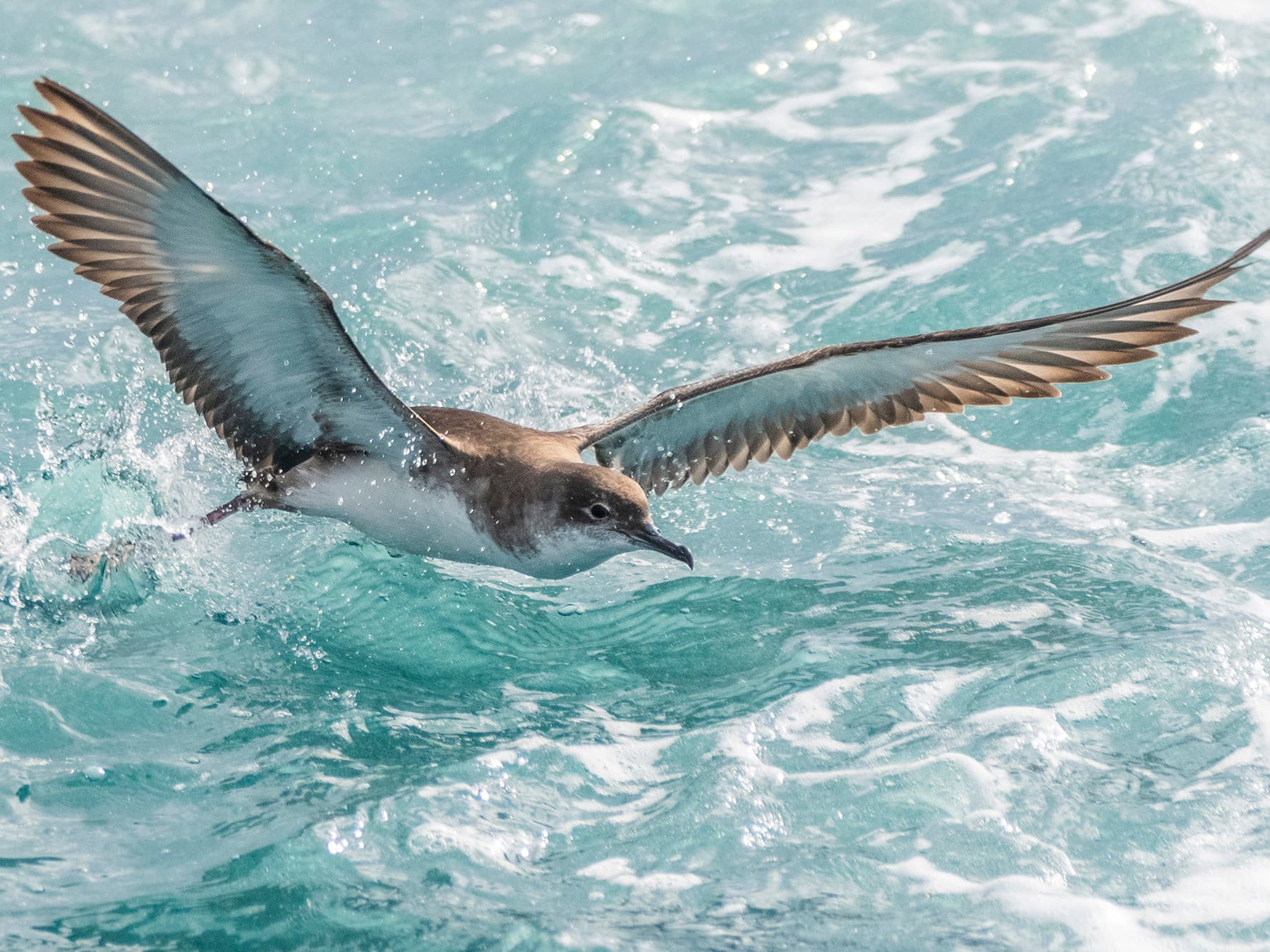
Pelagic fish, from open marine waters, form the bulk of a Balearic shearwater’s diet, with anchovies, sprats, and sardines among the most common prey. Squid, molluscs, and crustaceans are also frequently eaten. Prey is located by eye, and caught by plunging into the waves.
What do Balearic Shearwater chicks eat?
Anchovies are the main fish fed to young Balearic shearwaters by their parents for the first 15 days of their life.
Nesting and breeding
Where do Balearic Shearwaters nest?
Balearic shearwaters breed in burrows, caves and crevices on rocky islets and remote coastal cliffs. Some sparse plant material may be added.
Nests are usually only visited at night to lower the risk of predation. Colonies are typically fairly small, with loose gatherings of individual nests up to a few hundred pairs nesting in the same area. Balearic shearwaters show strong fidelity to nesting sites and pairs return to the same colonies year after year.
When do Balearic Shearwaters nest?
Balearic shearwaters lay their eggs from late February at the earliest, but more usually from early to mid-March. After laying, the female heads off to sea for up to two days, so the initial incubation falls to the male, after which pairs take it in turns.
Incubation is believed to last for around 50 to 52 days, and chicks hatch in late April to early May. Adult Balearic shearwaters depart from their colonies from late June onwards, a few days before chicks are ready to fledge.
What do Balearic Shearwater eggs look like?
Balearic shearwaters lay one white egg, measuring 61 mm by 42 mm (2.4 in by 1.7 in).
Do Balearic Shearwaters mate for life?
Balearic shearwaters form long-term pairs, and return together to breed at the same colonies they have used in previous years. ‘Sabbatical years’ are sometimes reported, when pairs do not breed.
Behaviour
Are Balearic Shearwaters aggressive?
Balearic shearwaters are a sociable species, nesting in fairly close proximity to each other and feeding in large groups at sea. Territorial behaviour is not observed, and little time is spent on land.
Where do Balearic Shearwaters sleep at night?
During the breeding season, Balearic shearwaters are active at night, visiting their burrows after darkness falls to draw as little attention as possible to their nest sites.
Lifespan and predators
How long do Balearic Shearwaters live?
Breeding is possible from 3 years onwards, although 6 years is more common. The average lifespan for Balearic shearwaters is around 12 years, with older individuals recorded occasionally, including one that reached 23 years.
What are the predators of Balearic Shearwaters?
Peregrine falcons are common predators of both adult and young Balearic shearwaters. Introduced predators are a major factor in the declining population of the species, with black and brown rats, feral cats, and common genets the leading threats.
Are Balearic Shearwaters protected?
Balearic shearwaters are protected under the Wildlife and Countryside Act, of 1981, which makes it illegal to kill, injure or take them into captivity.
Due to the critically endangered status of the species, conservation action plans for Balearic shearwaters were approved by Spain, in 2005, and France, in 2020. Special Protection Areas have been designated to safeguard the species’ coastal breeding grounds in Spain, Portugal, and France.
Are Balearic Shearwaters endangered?
Balearic shearwaters are rated as a critically endangered species globally and have Red status on the British Birds of Conservation Concern list. Numbers are declining rapidly and it is feared that up to 90 percent of the current population level could be lost within three generations.
Why are Balearic shearwaters endangered?
Balearic shearwaters have a relatively small breeding population and significant declines in numbers are reported each year.
Low survival rates are caused by predators attacking breeding colonies (particularly rats, cats, and other introduced predators) and birds becoming trapped at coastal fisheries and dying as by-catch. It’s predicted that unless urgent conservation action is implemented, the species could become extinct in about 60 years’ time.
Conservation
The Balearic Shearwater is critically endangered due to multiple threats. These include predation by introduced mammals at breeding sites, accidental bycatch in fishing gear, and climate change impacts on their marine habitat.
Urgent conservation efforts are underway to protect breeding colonies and reduce at-sea mortality.
More photos
3 photos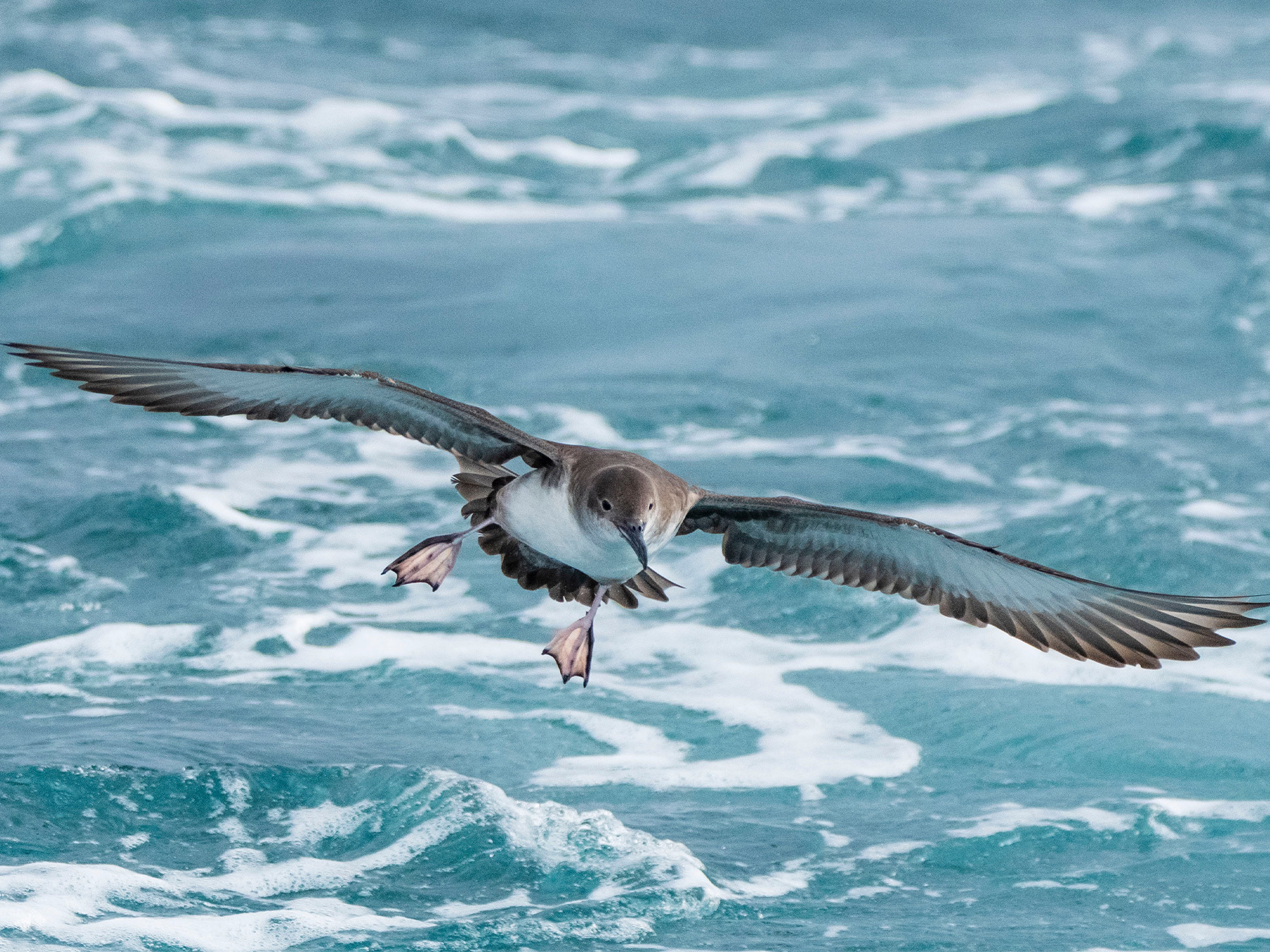
Quick facts
- Length
- 35–40 cm
- Wingspan
- 85–90 cm
- Weight
- 480–535 g
- Lifespan
- 12 years · oldest recorded 23 years
- Family
- Petrels & Shearwaters
- Migration
- Long-distance Migrant
- Global status (IUCN)
- Critically Endangered
- World population
- 19,000 mature individuals
- Population trend
- Decreasing
- Also called
- Baldriga balear (Catalan)
- Scientific name
- Puffinus mauretanicus
Questions
2What is the difference between Manx shearwater and Balearic shearwater?
Manx shearwaters and Balearic shearwaters are very similar in appearance; however, there are a few subtle differences that make it possible to tell them apart.
Balearic shearwaters are larger than Manx shearwaters, and their plumage is lighter and less contrasting. Their calls are also slightly higher in pitch. Manx shearwaters are far more abundant, with more than 300,000 pairs breeding on coastal islands around the UK.
What is the population of Balearic shearwaters?
The breeding population of Balearic shearwaters is officially estimated at 3,142 pairs. With breeding usually not occurring until 6 years, this number is swelled by a large population of non-breeding individuals, giving an overall estimate of between 24,000 and 26,500 birds.
Sources
3- 1BirdLife International. 2018. Puffinus mauretanicus. The IUCN Red List of Threatened Species 2018: e.T22728432A132658315. Source (opens in a new tab)
- 2BirdLife International. 2018. Puffinus mauretanicus. The IUCN Red List of Threatened Species 2018: e.T22728432A132658315. Source (opens in a new tab)
- 3BirdLife International. 2018. Puffinus mauretanicus. The IUCN Red List of Threatened Species 2018: e.T22728432A132658315. Source (opens in a new tab)

Checked by
Nathan Cope, founder and editor
Nathan founded Birdfact and leads its writers and contributors in the UK, the US and Canada. He has watched and studied birds for more than ten years, and checks every article and species guide before it’s published.