
Australian King-parrot
King Parrot · Alisterus scapularis
By the Birdfact teamChecked by Nathan Cope
On this page13 sections
How to recognise it
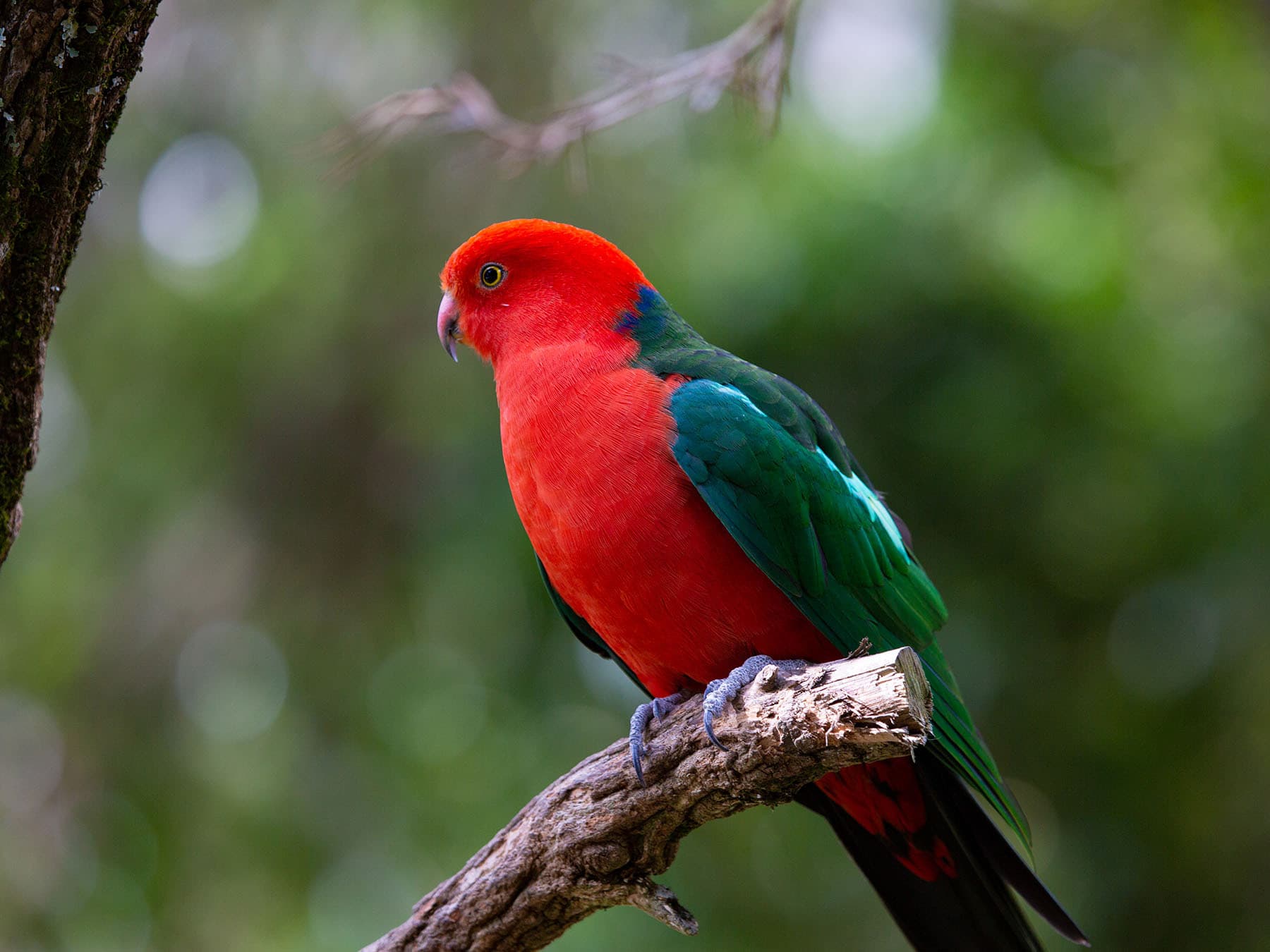
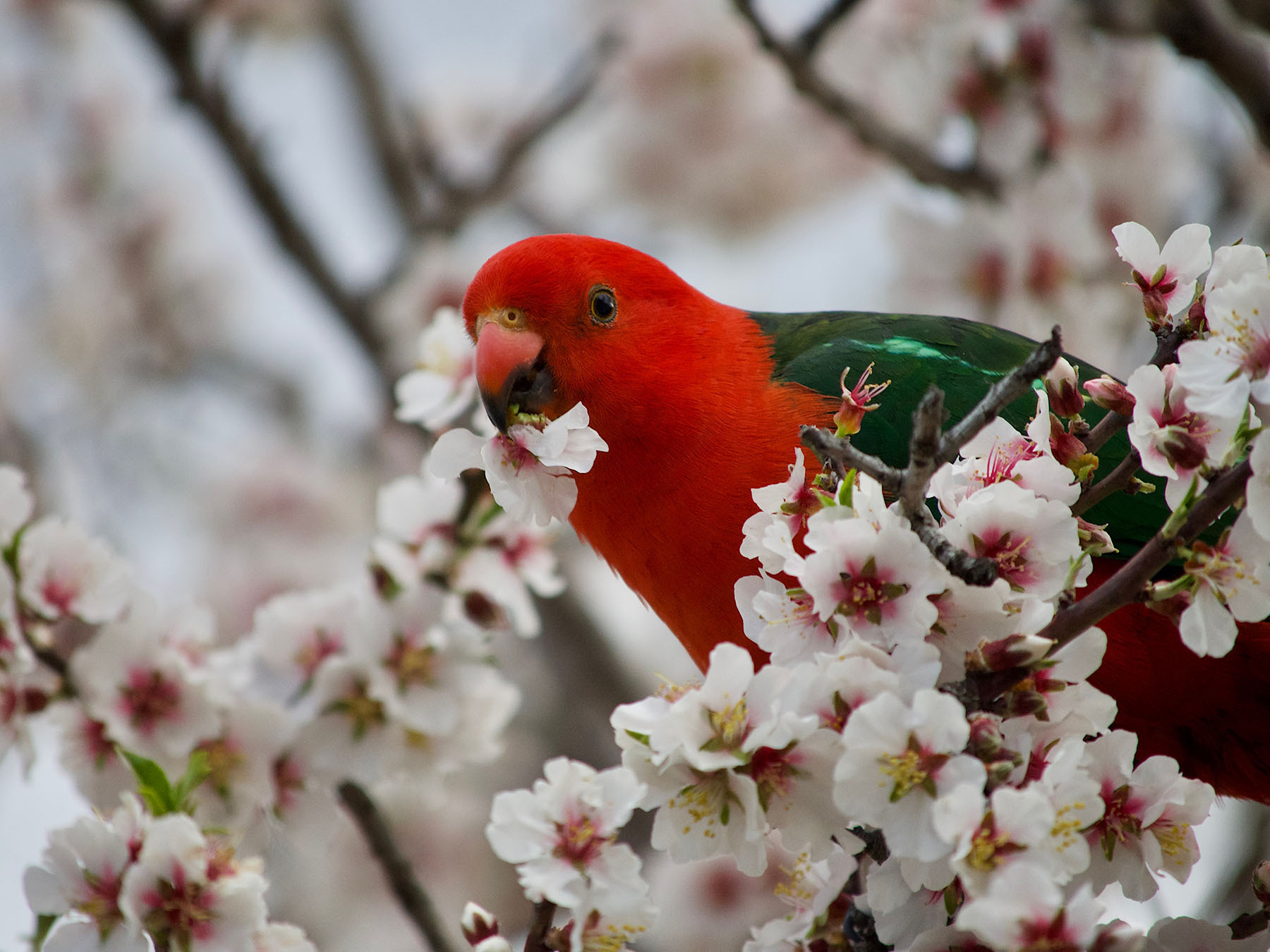
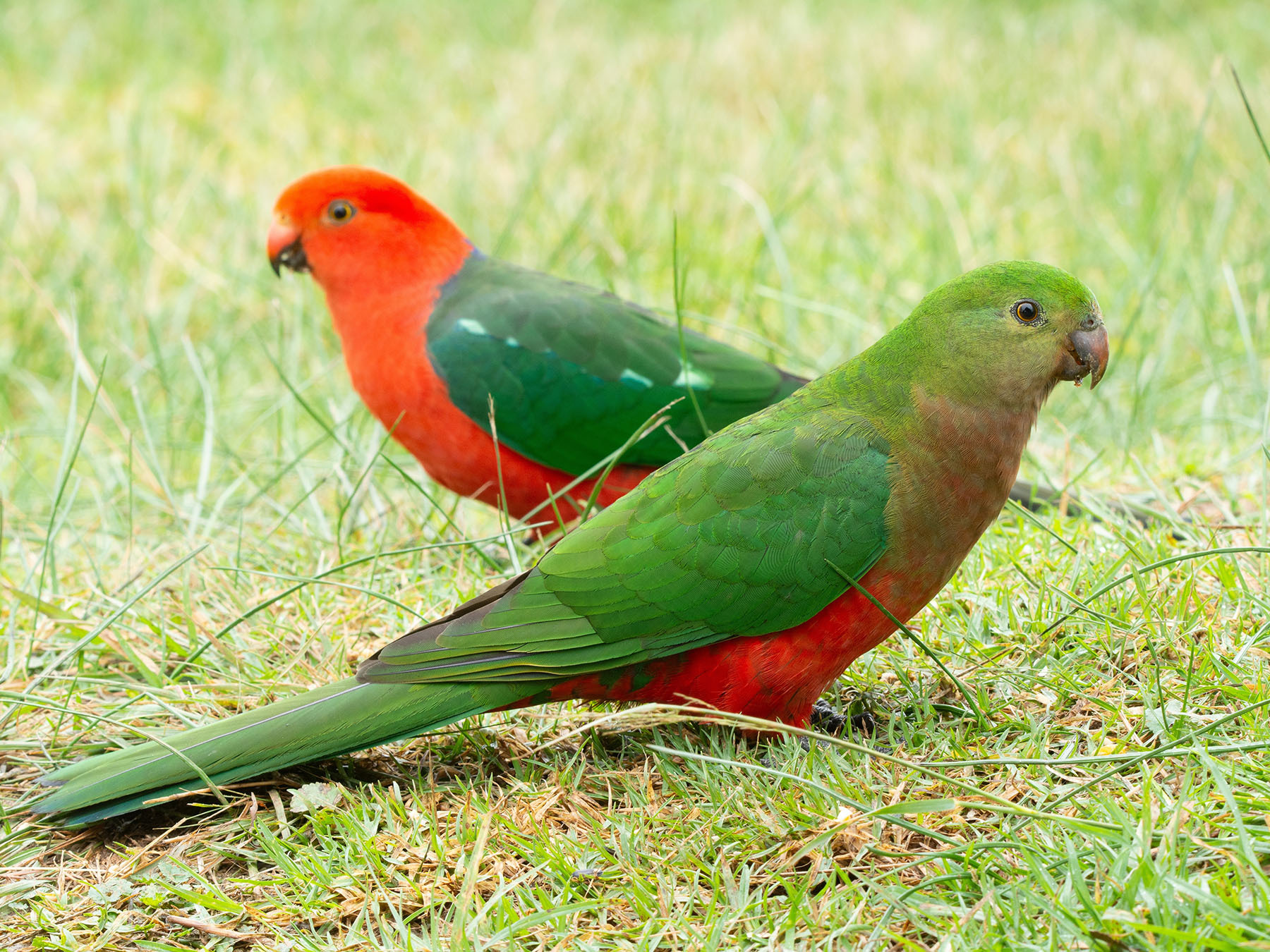
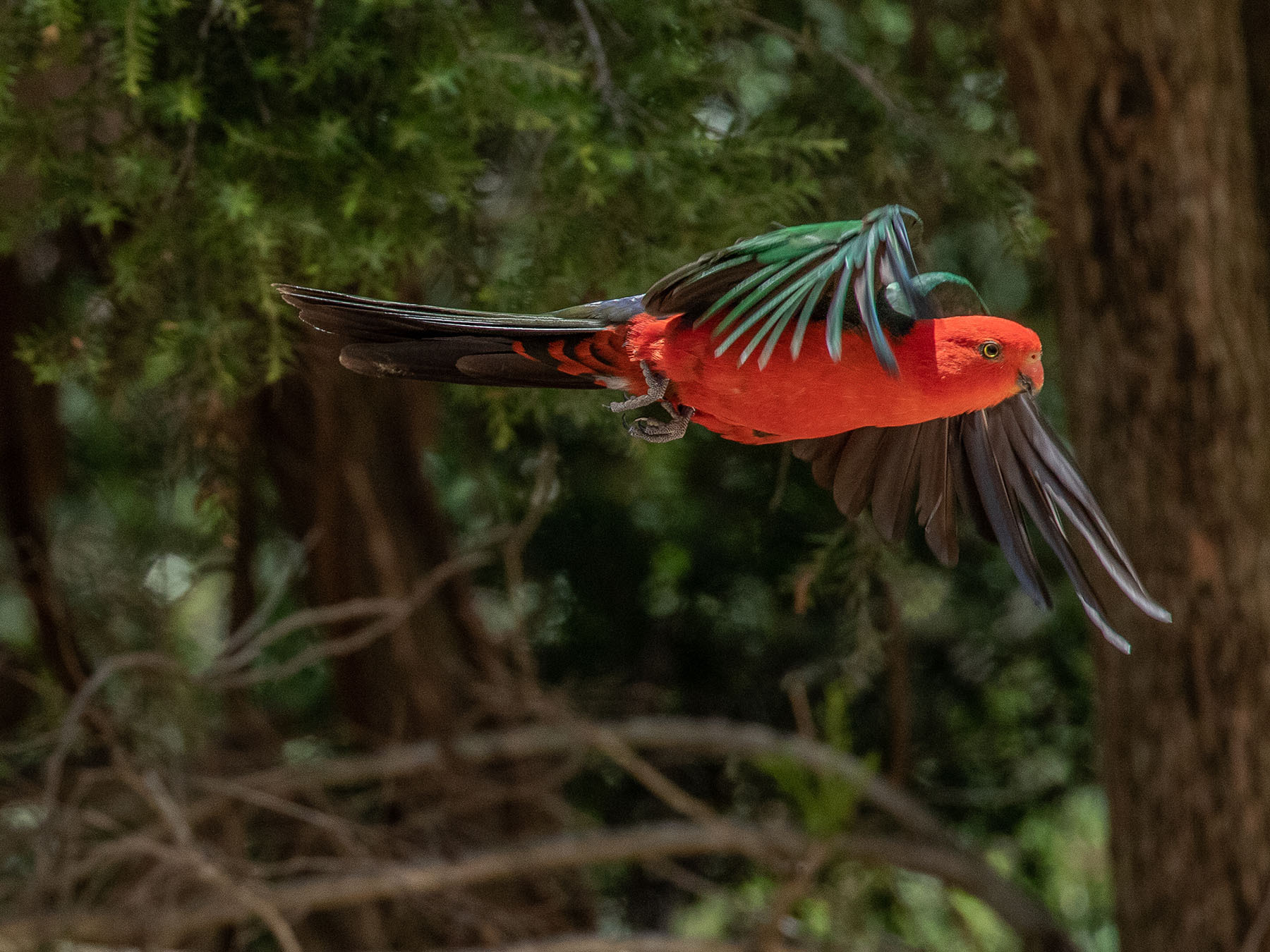
The Australian King-parrot is a striking medium-sized parrot with vibrant plumage. Males display a brilliant scarlet head, breast, and underparts, contrasting sharply with their bright green back, wings, and tail. A blue band on the nape adds a distinctive touch.
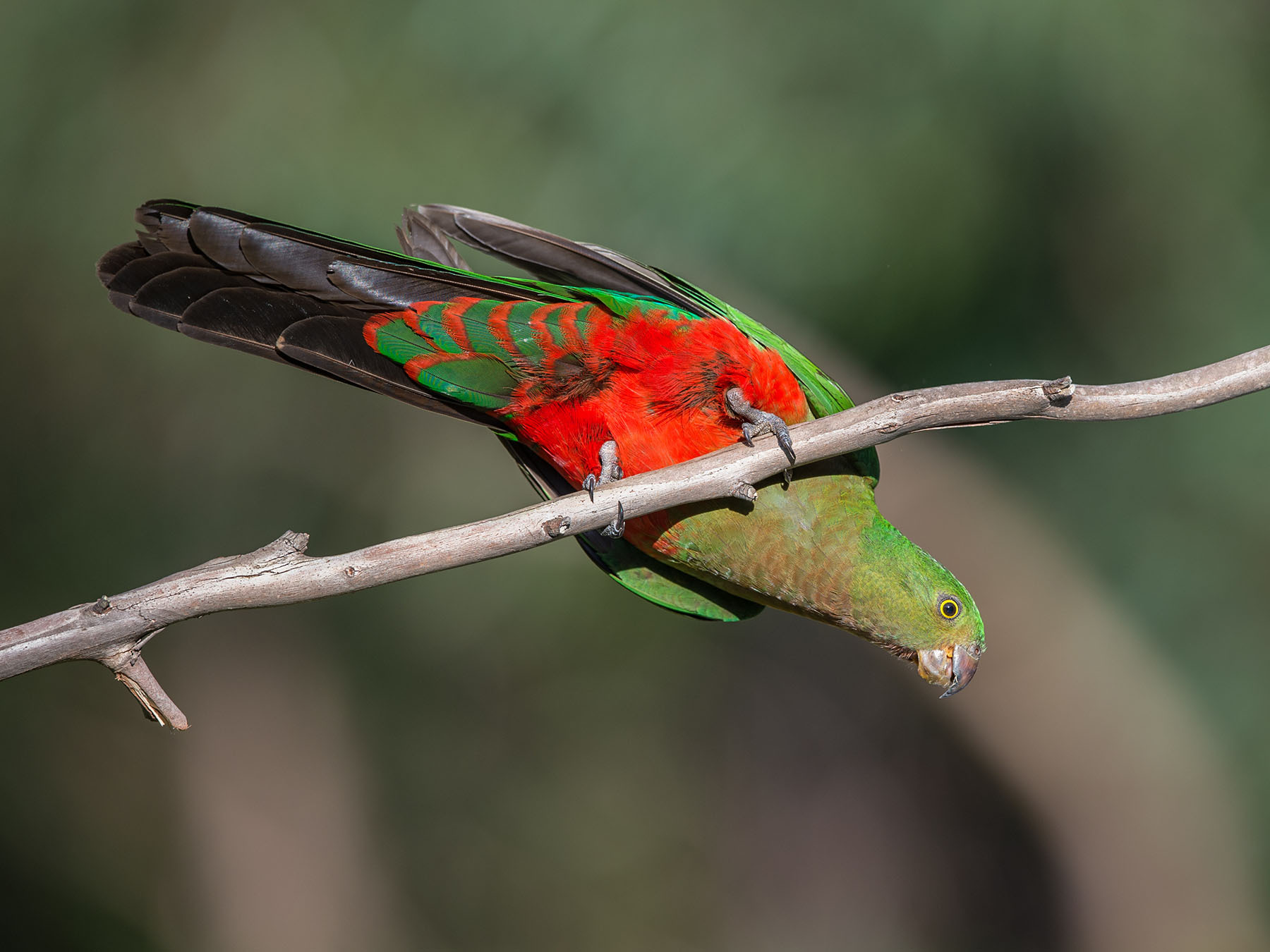
Females are less vibrant and differ markedly, with a predominantly green body and red belly. Both sexes have a large, curved red bill and grey legs. Juveniles resemble females but have a brown beak that gradually turns red as they mature.
Its size
Adults- Length
- 40–43 cm
- Wingspan
- 50–55 cm
- Weight
- 200–330 g
Its song and calls
The Australian King-parrot's call is a distinctive, high-pitched 'kwik-kwik' or 'kree-kree'. They also produce a variety of softer whistles and chatters when communicating within their group.
During flight, they often emit a sharp, metallic 'zzik-zzik' sound. Their vocalisations are generally less raucous than those of many other parrot species.
When and where to see it
The Australian King-parrot is not recorded regularly in the UK, Ireland, the United States or Canada.
Worldwide: recorded regularly in 1 country
Countries where it was recorded in at least 3 of the 6 years 2019–2024. Linked countries have their own bird list.
Oceania (1)
Data: EOD – eBird Observation Dataset (Cornell Lab of Ornithology), accessed via GBIF.org, CC BY 4.0. Records from 2019–2024, aggregated and filtered by Birdfact. How these lists are made
Tips for seeing it
- Look for them in tall eucalyptus forests and rainforest edges
- Listen for their distinctive, high-pitched 'kwik-kwik' call
- Observe feeding behaviour in the early morning or late afternoon
- Check for pairs, as they often mate for life
- In suburban areas, watch for them visiting bird feeders
What it eats
Australian King-parrots primarily feed on seeds, fruits, and blossoms from native trees. They have a particular fondness for eucalyptus seeds, figs, and berries.
These parrots use their strong beaks to crack open tough seed pods and extract kernels. In some areas, they may also visit gardens to feed on cultivated fruits and seeds.
Nesting and breeding
Australian King-parrots typically breed between September and January. Courtship involves males displaying to females with head-bobbing and tail-fanning behaviours. These birds are monogamous and often pair for life.
Nests are usually located in hollow tree trunks or large branches, often in eucalyptus trees. The female lays 3-6 white, rounded eggs on a bed of decayed wood at the bottom of the hollow.
Incubation lasts about 20 days, with the female primarily responsible. Both parents care for the chicks, who fledge after approximately 5 weeks but may remain with them for several months after leaving the nest.
Behaviour
Australian King-parrots are typically seen in pairs or small family groups. They move through the canopy with agile, undulating flight patterns.
These birds are often observed quietly foraging for seeds and fruits, using their strong beaks to crack open tough shells. During the breeding season, males engage in courtship displays, fanning their tails and bobbing their heads to attract females.
Conservation
While the Australian King-parrot is currently listed as Least Concern, it faces localised threats from habitat loss due to deforestation and urbanisation. Climate change may also impact their distribution in the future.
Conservation efforts focus on preserving and restoring their native forest habitats, particularly in eastern Australia.
Similar birds
Often mistaken for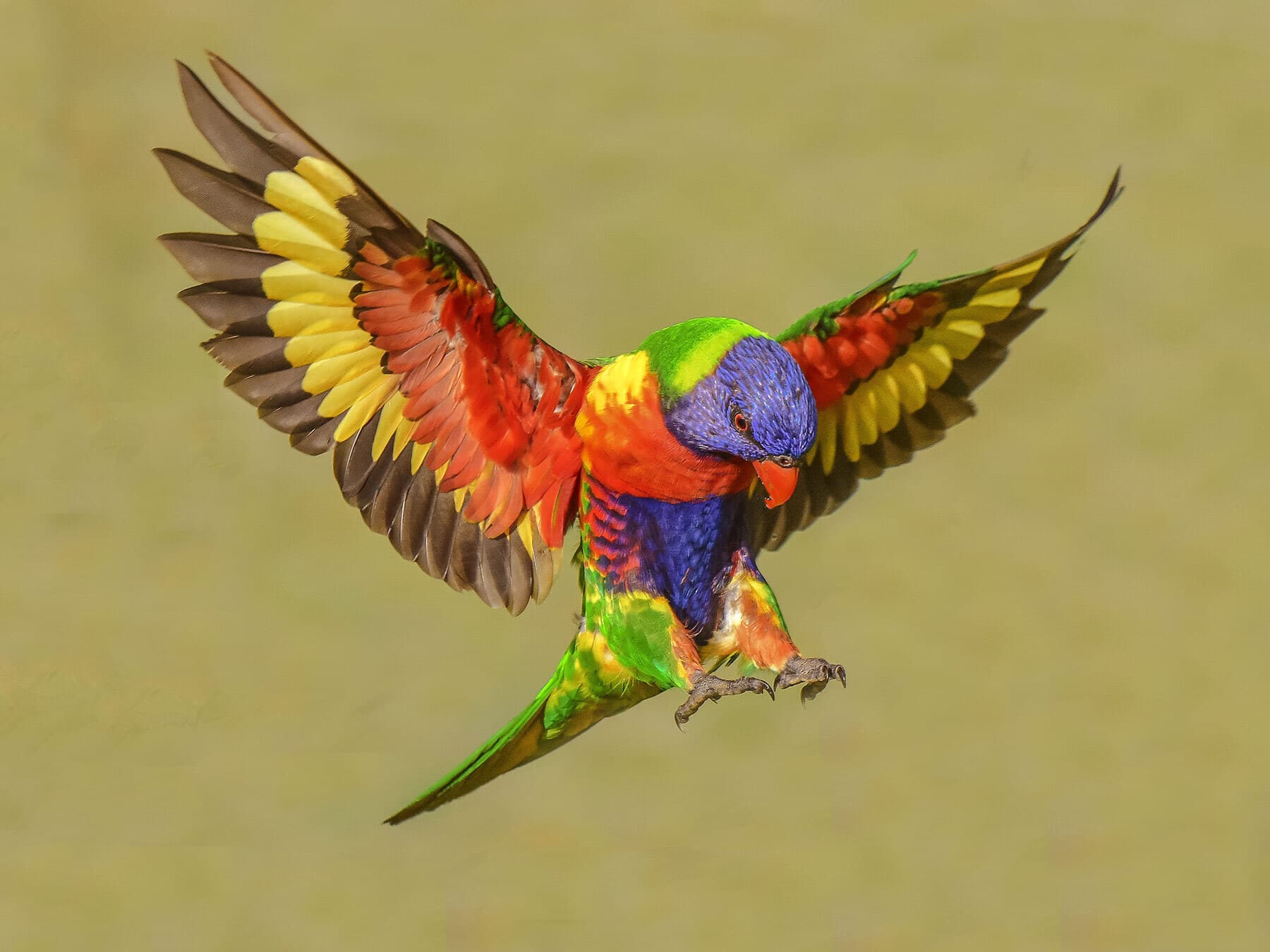
More photos
5 photos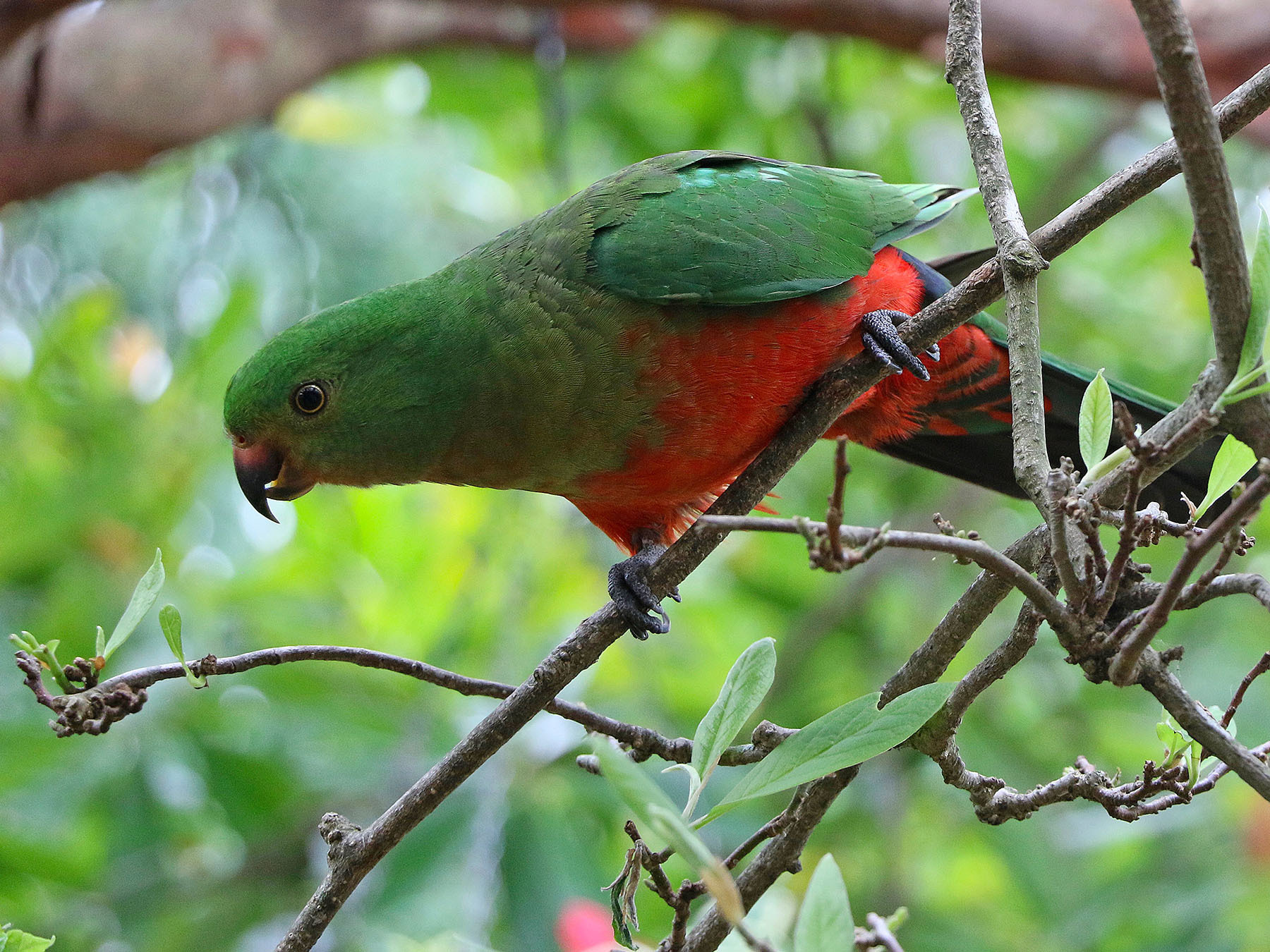
Australian King-parrot guides
1 guidesQuick facts
- Length
- 40–43 cm
- Wingspan
- 50–55 cm
- Weight
- 200–330 g
- Lifespan
- 25 years · oldest recorded 26.6 years
- Family
- Parrots
- Migration
- Resident
- Global status (IUCN)
- Least Concern
- World population
- Not quantified, but generally common but lost from cleared and afforested areas
- Population trend
- Decreasing
- Also called
- King Parrot
- Scientific name
- Alisterus scapularis
Sources
4- 1BirdLife International. 2024. Alisterus scapularis. The IUCN Red List of Threatened Species 2024: e.T22685046A254008554. Source (opens in a new tab)
- 2BirdLife International. 2024. Alisterus scapularis. The IUCN Red List of Threatened Species 2024: e.T22685046A254008554. Source (opens in a new tab)
- 3del Hoyo et al. (1997)
- 4Brouwer et al., Longevity records for Psittaciformes in captivity, Int Zoo Yb, 37:299-316 (2000)

Checked by
Nathan Cope, founder and editor
Nathan founded Birdfact and leads its writers and contributors in the UK, the US and Canada. He has watched and studied birds for more than ten years, and checks every article and species guide before it’s published.