
Arctic Jaeger
Parasitic Jaeger, Arctic Skua · Stercorarius parasiticus
By the Birdfact teamChecked by Nathan Cope
On this page13 sections
How to recognise it
What do Parasitic Jaegers look like?
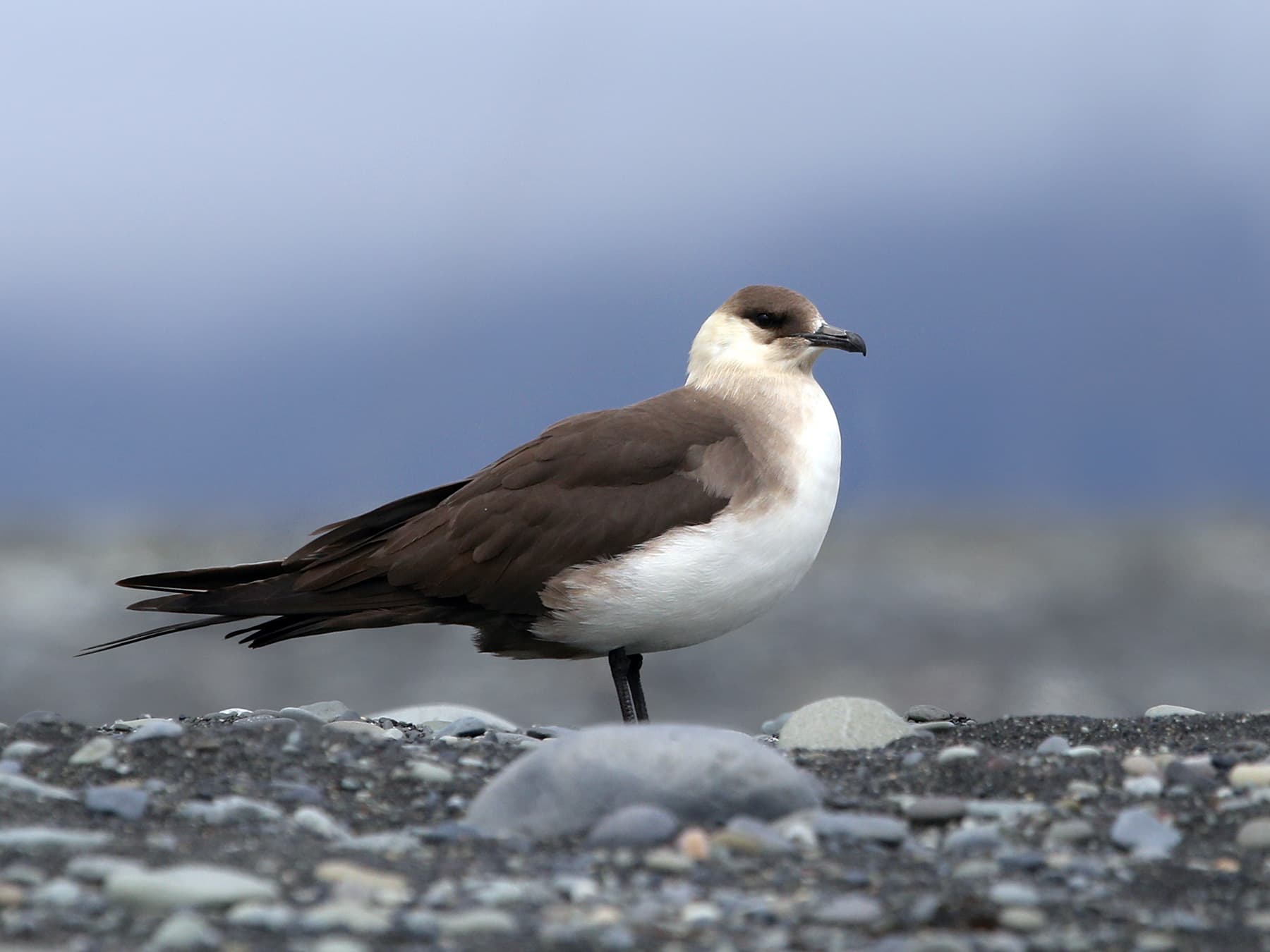
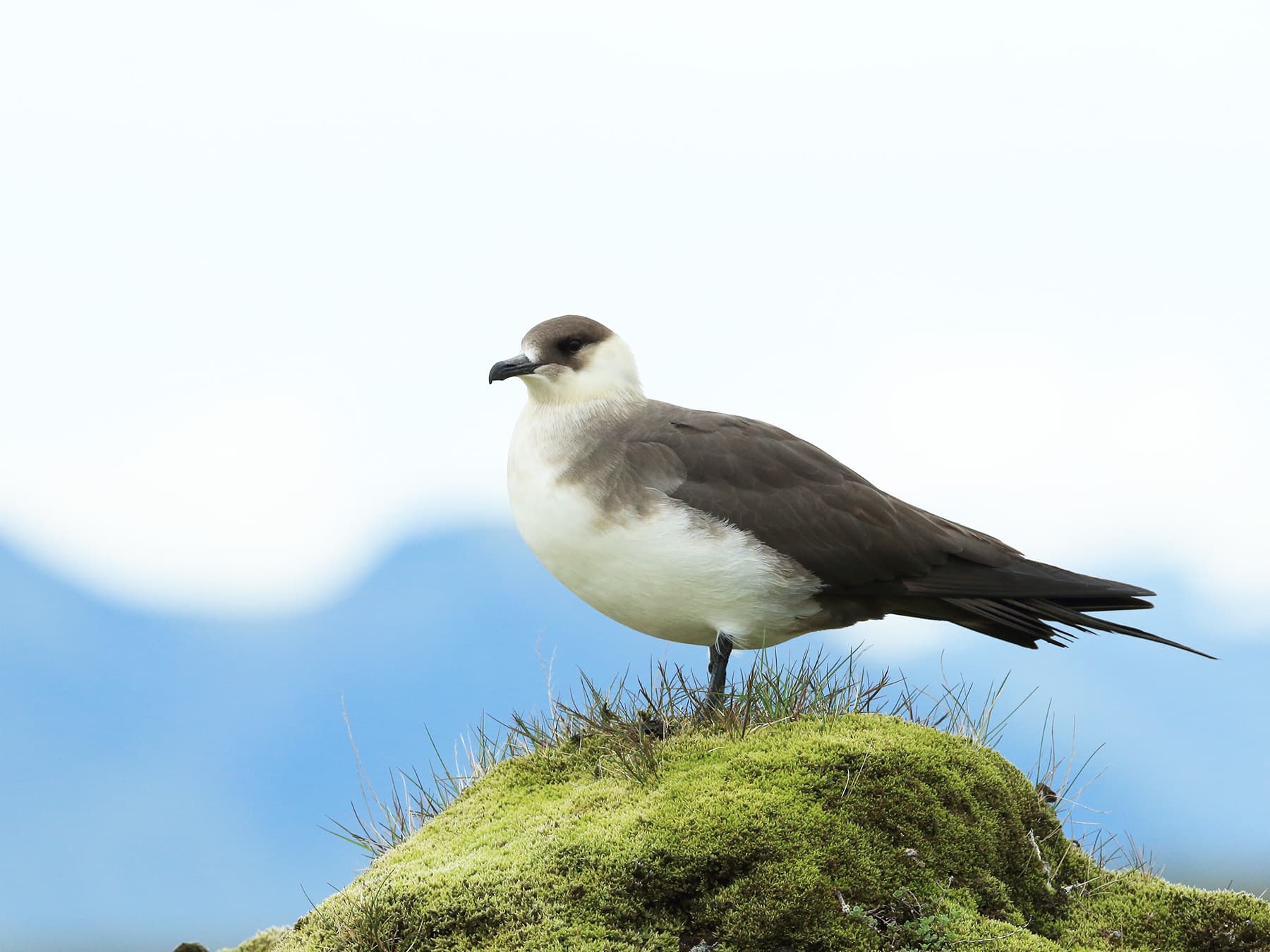
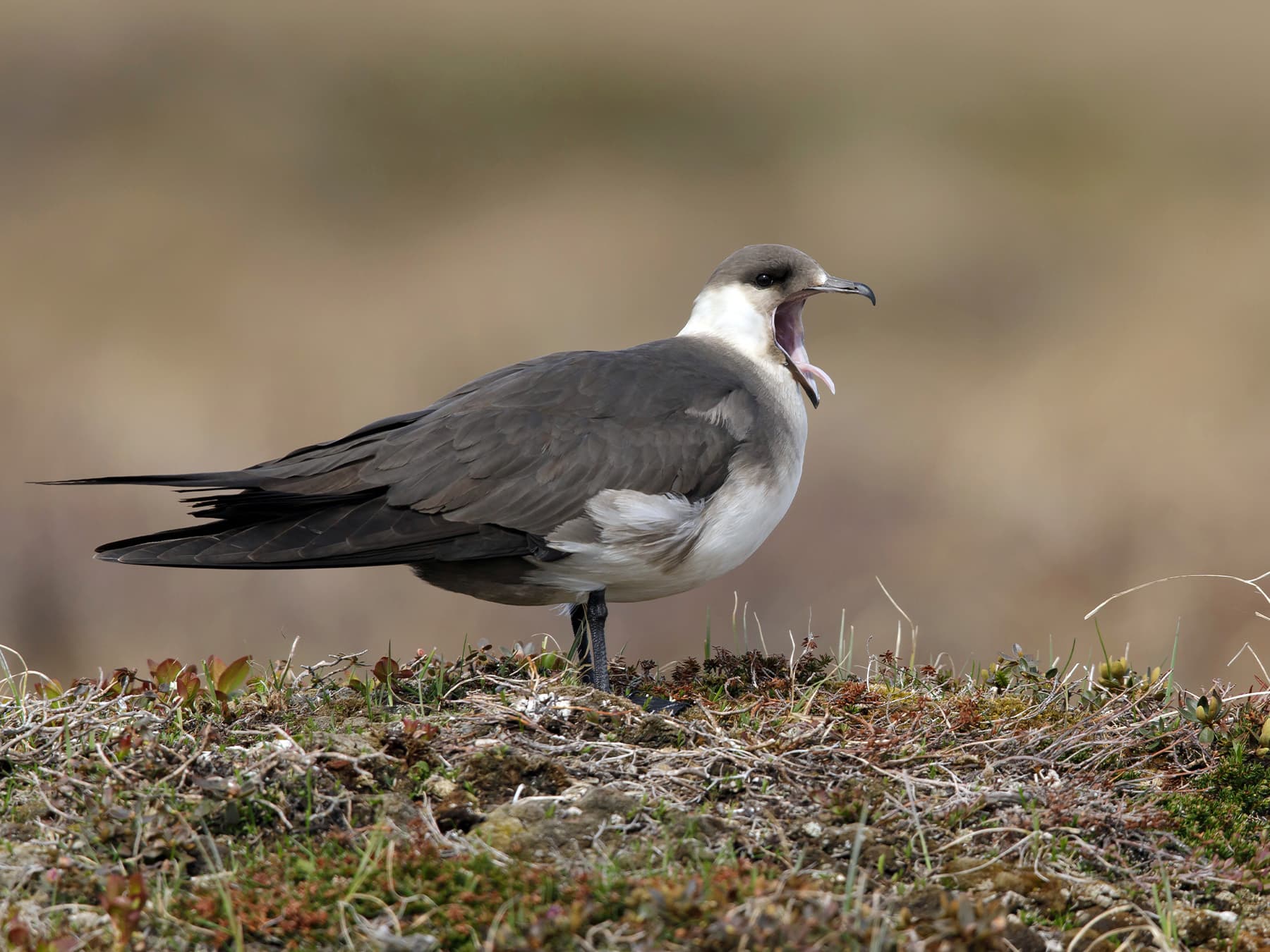
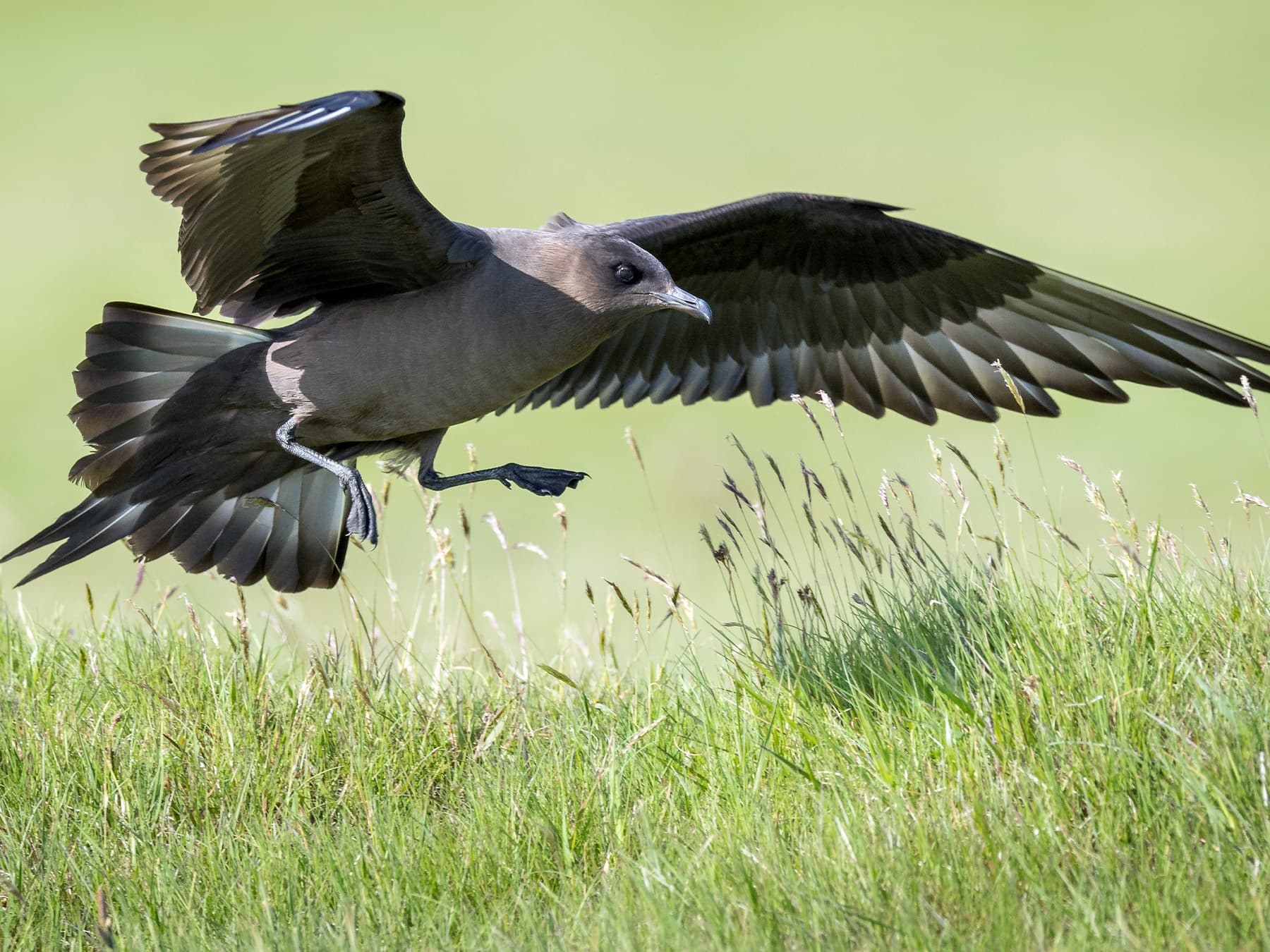
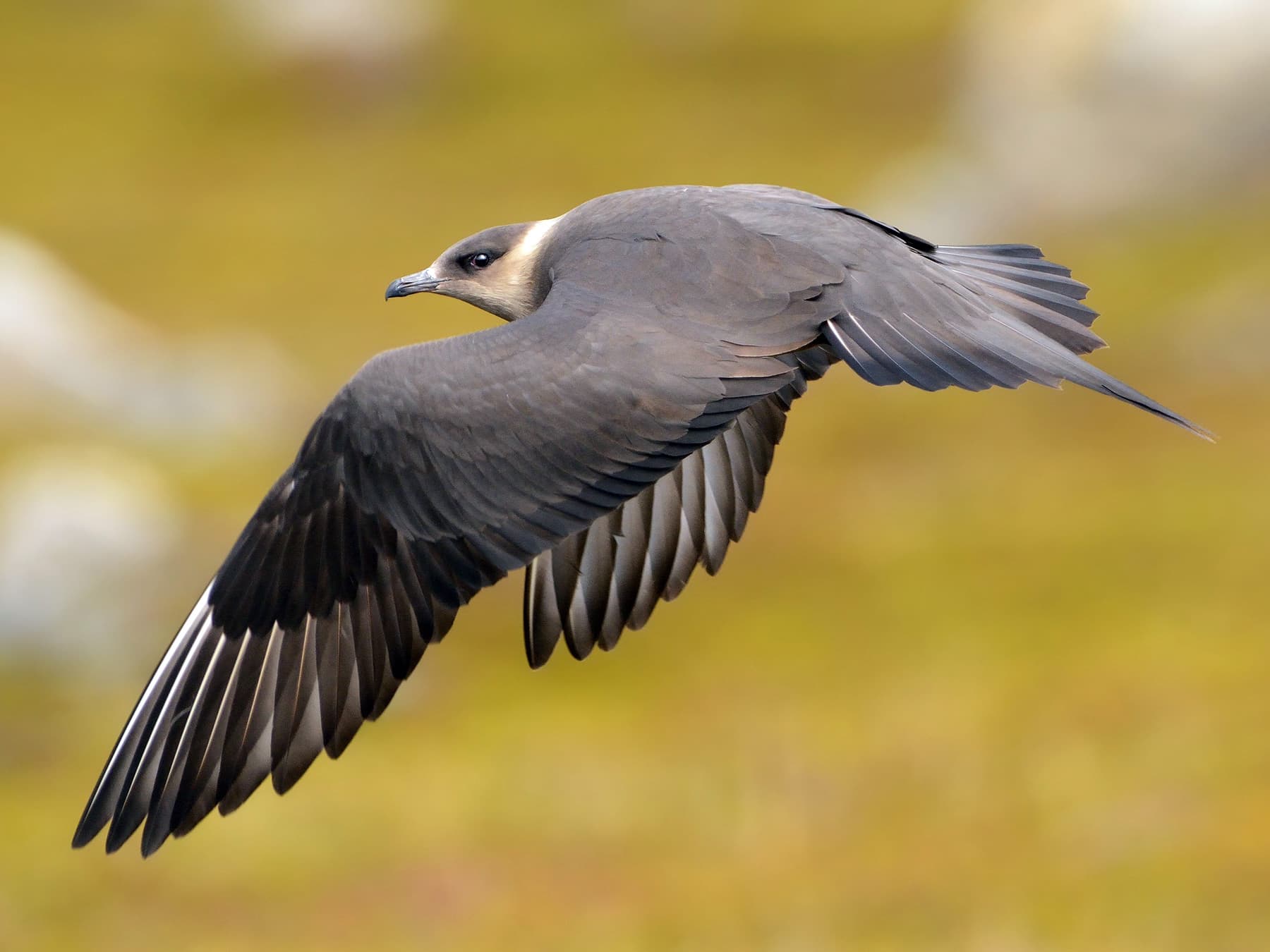
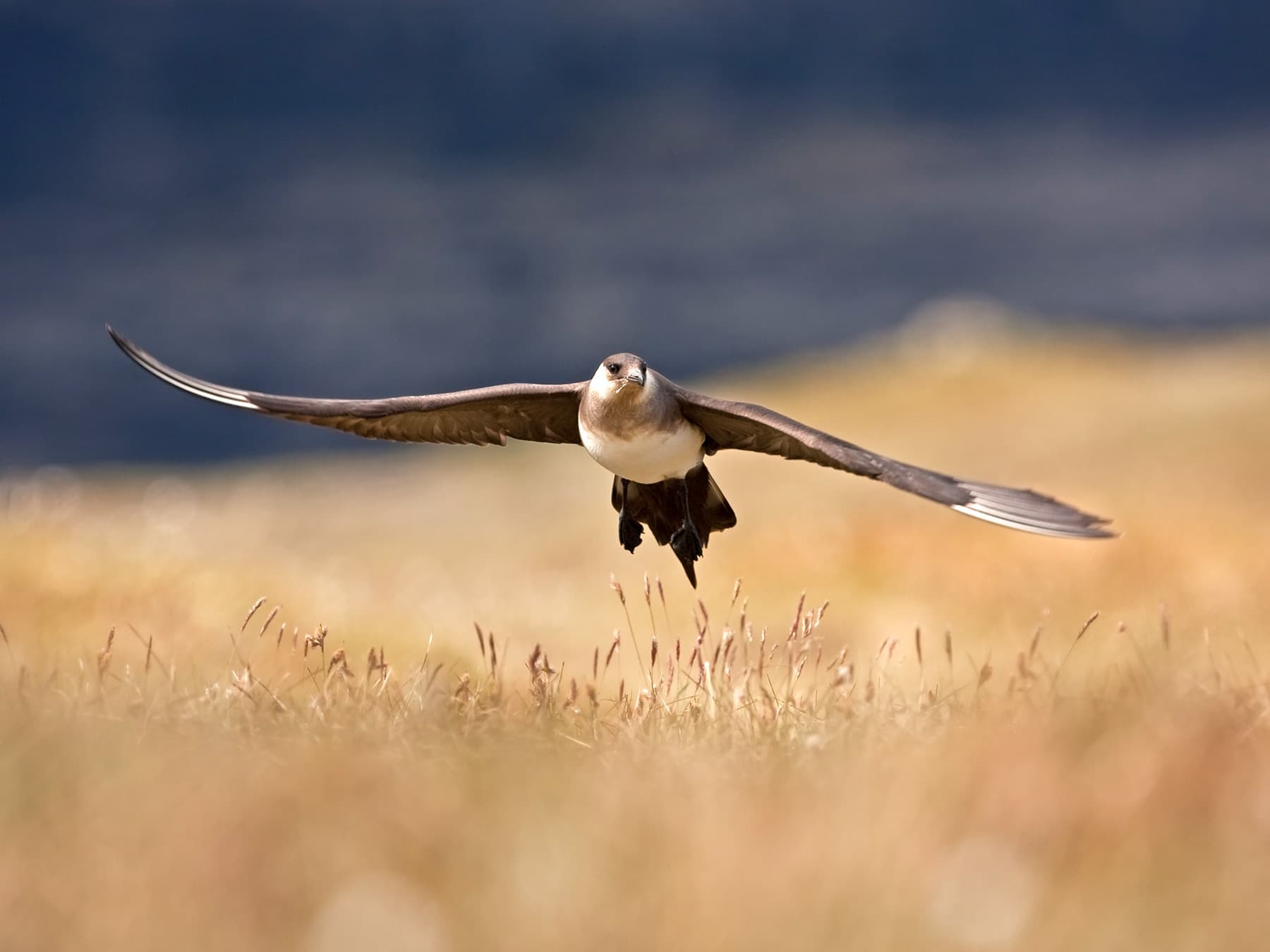
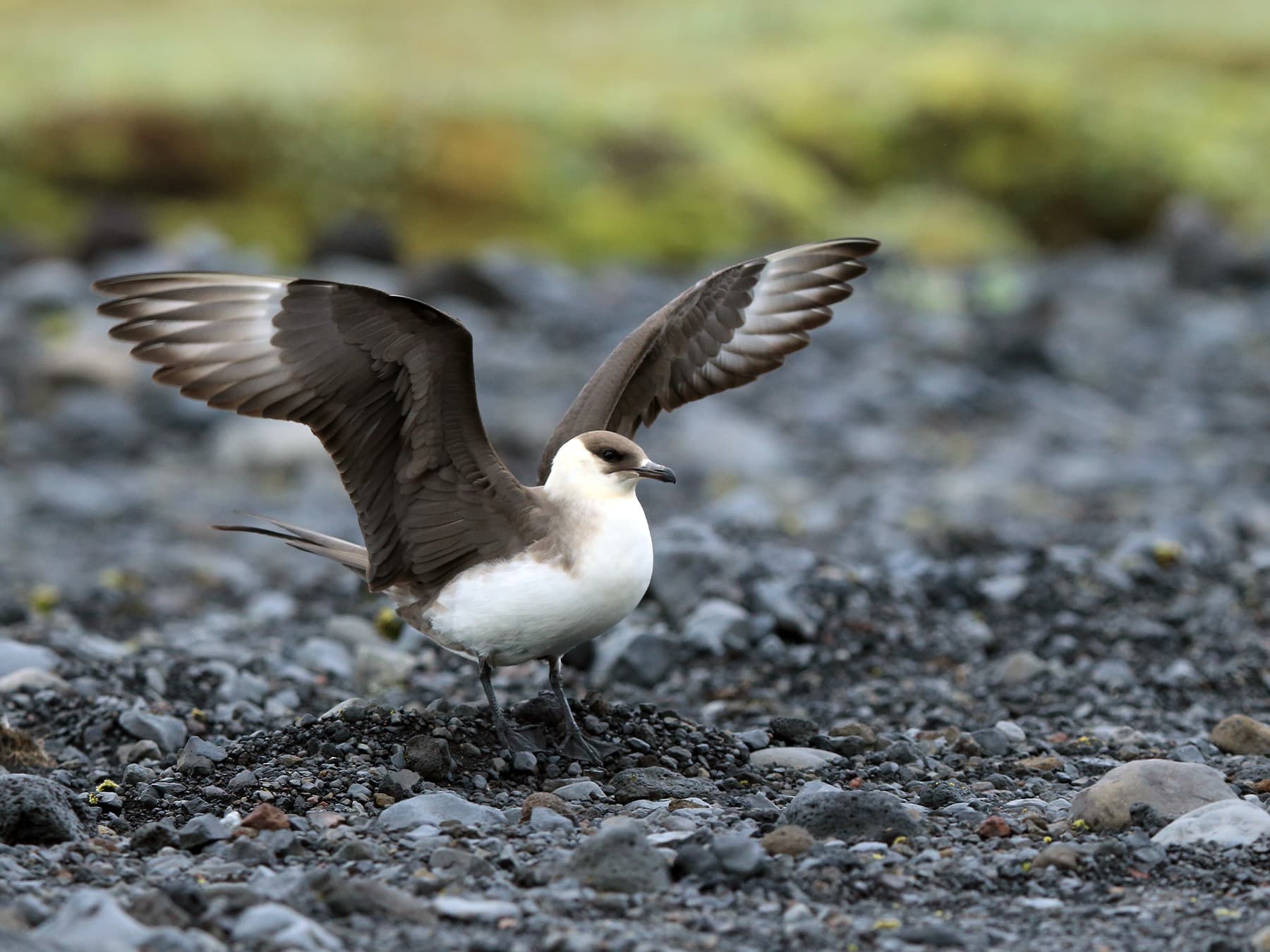
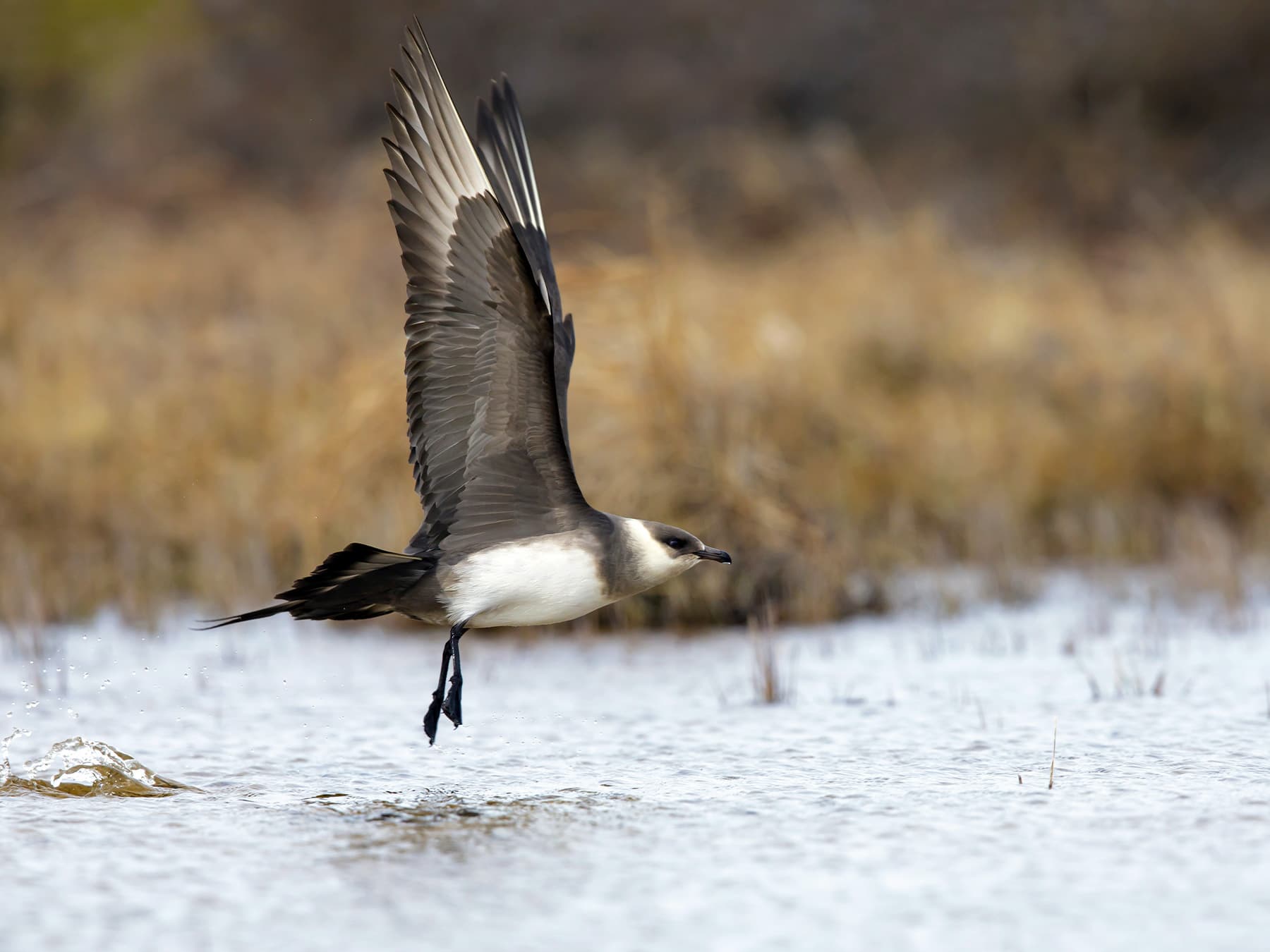
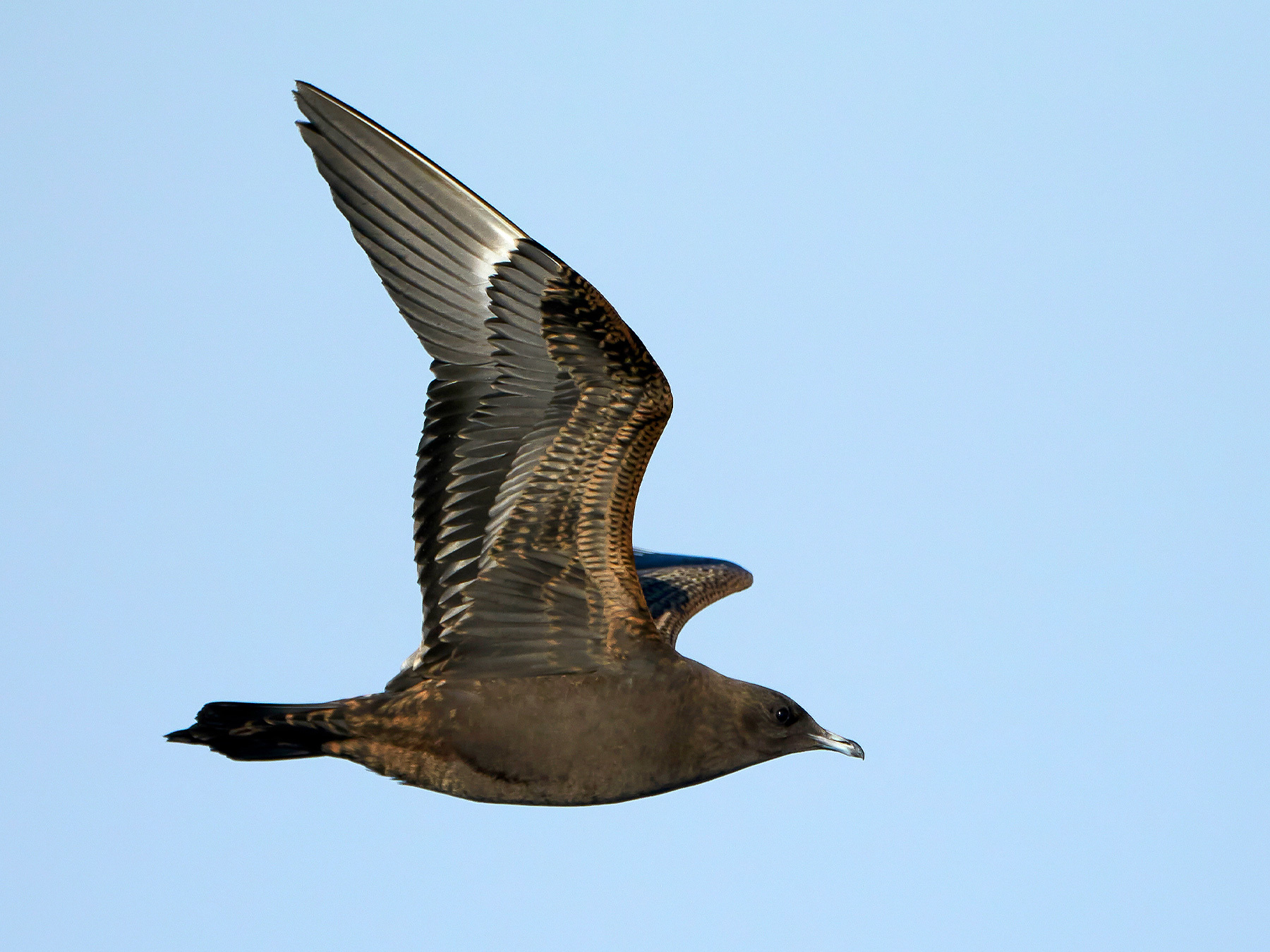
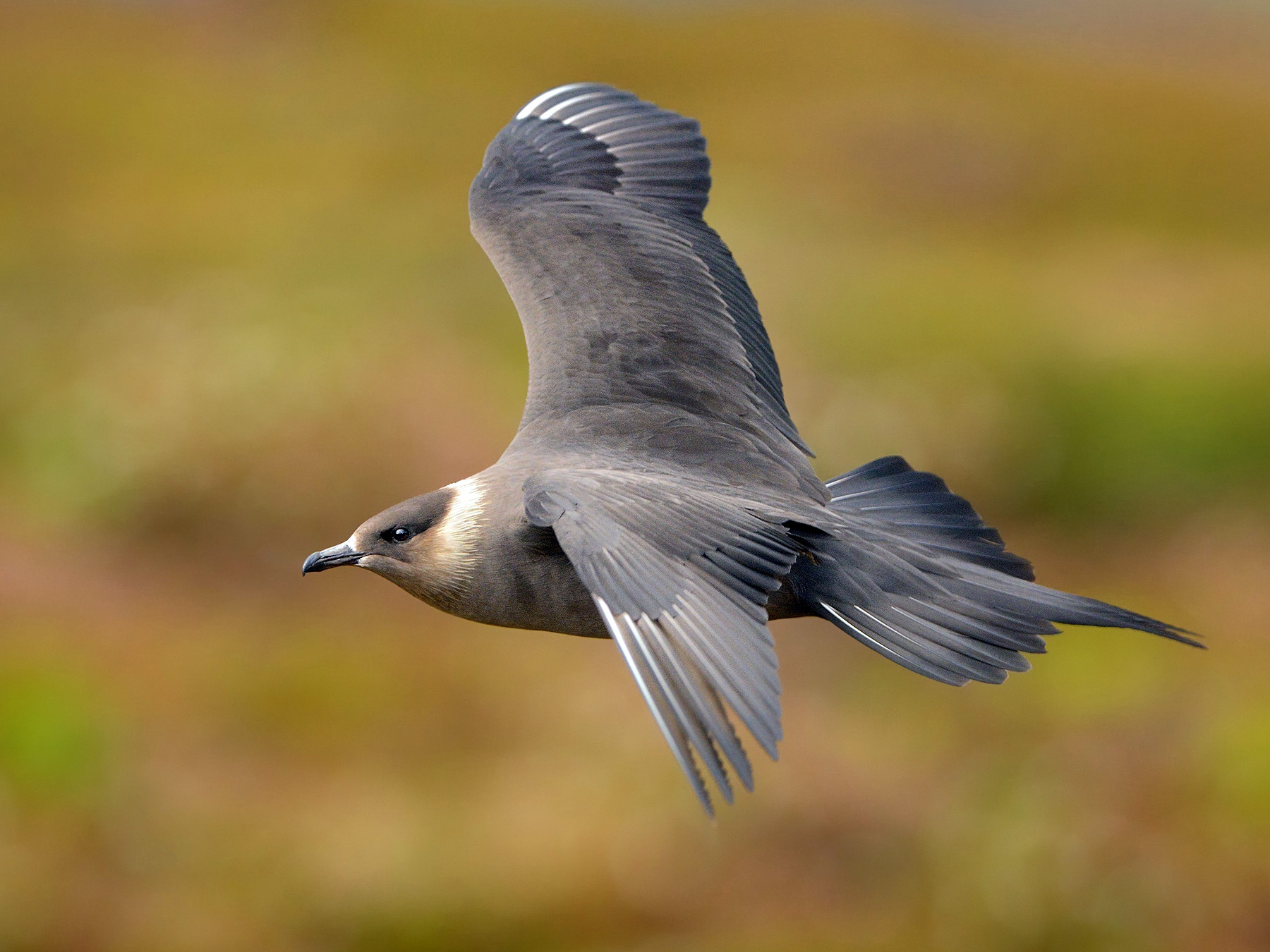
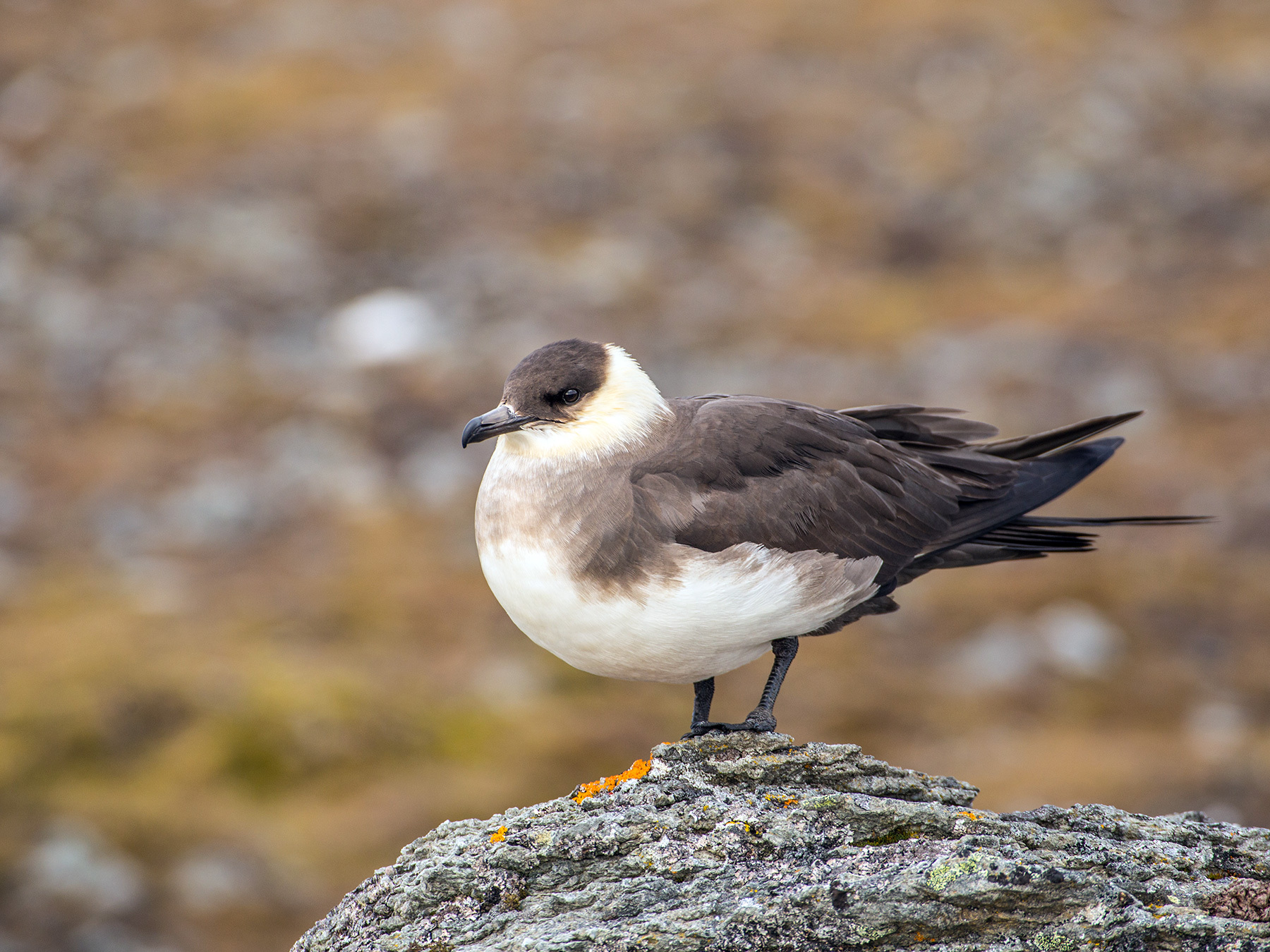
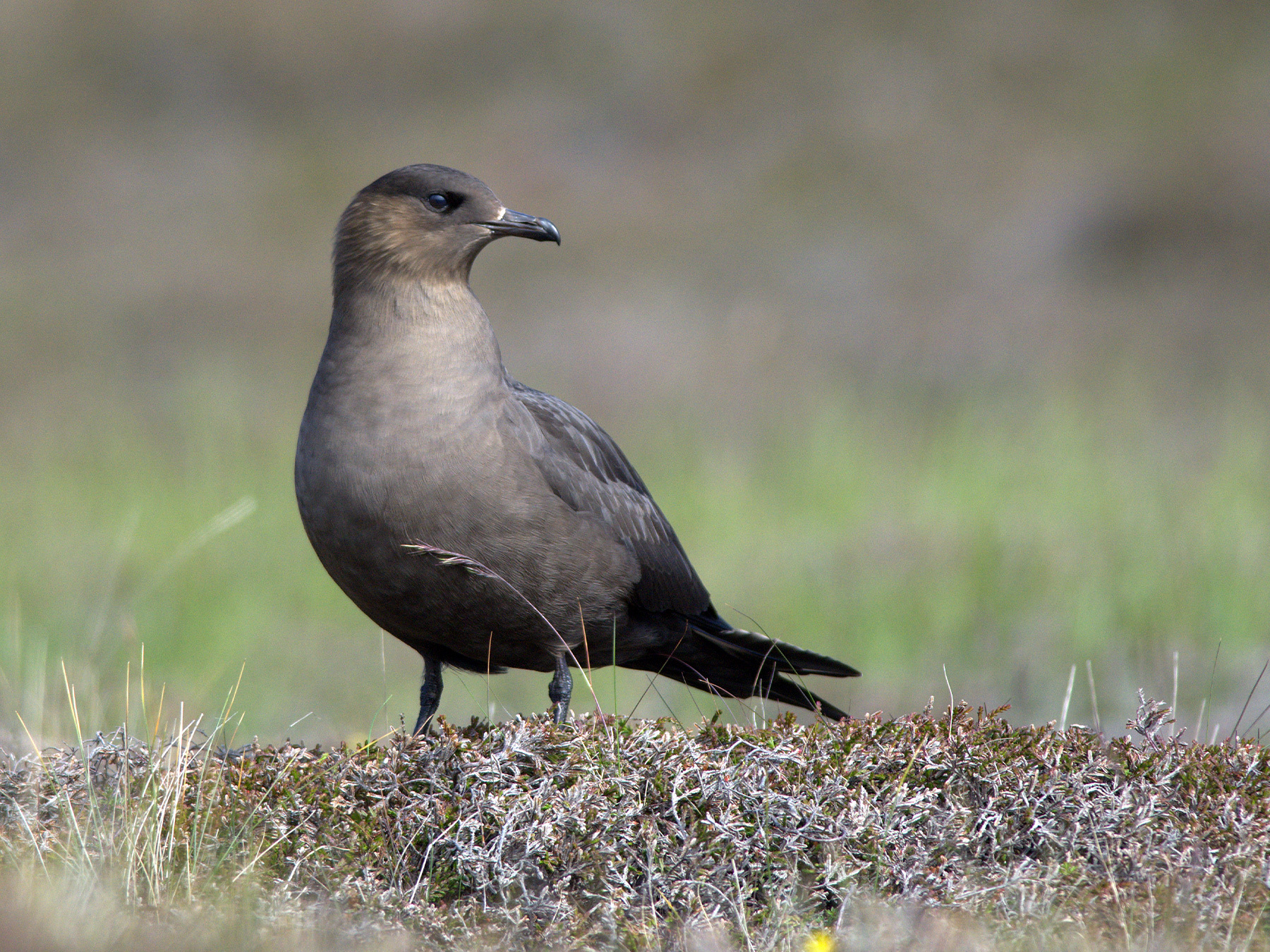
The Parasitic Jaeger is a medium-sized, gull-like seabird with long, angular wings and a broad, fan-shaped tail complete with two elongated central feathers. These birds occur in a dark, all-brown morph and a light morph with whitish underparts and heads, and a dark cap and chest band.
Both morphs have dark-gray to black bills, legs, and webbed feet. Paler or whitish bases to the primary feathers near the wing tips are visible in flight.
Both sexes have the same plumage, although female Parasitic Jaegers are typically 15 to 20 percent larger than males. Juveniles are difficult to identify accurately. They have variable barred, brownish plumage but lack the long middle tail feathers (rectrices) of adults.
Parasitic Jaegers are most easily confused with the smaller Long-tailed Jaeger/Skua and the larger Pomarine Jaeger/Skua. They are also superficially similar to the darker juvenile plumages of some gulls.
How big are Parasitic Jaegers?
Length
Adult Parasitic Jaegers typically measure 16½ to 18 inches or 41 to 47 centimeters.
Weight
Male Parasitic Jaegers are smaller than females. Most males weigh 13.4 to 14.8 ounces (380 - 420 grams), while females are usually 16.2 - 18 ounces (460 - 510 grams).
Wingspan
These birds have long, pointed wings and a wingspan of 42½ - 46½ inches or 108 to 118 centimeters.
Its size
Adults- Length
- 41–46 cm
- Wingspan
- 110–125 cm
- Weight
- 300–600 g
Its song and calls
What sound does a Parasitic Jaeger make?
Parasitic Jaegers produce a ‘long call’ on land or in flight that consists of three or four (sometimes up to twelve) rising nasal notes. They are usually silent away from their breeding grounds.
- Call0:00 / 0:18
Recorded in Manitoba, Canada · June 2010
When and where to see it
OctoberLeaving
Most recorded in October
- 1. Pembrokeshire0.33%
- 2. Fife0.30%
- 3. Falkirk0.27%
- 4. Angus0.20%
- 5. Kent0.19%
Each dot is a county, state or province: the bigger and darker, the larger the bird’s share of that place’s bird records that month. Grey dots: no regular records. The ringed point is the centre of the bird’s records this month; the arrow shows how it moved since last month, and the dashed loop its path through the year. “Arrivals” colours places where it becomes regular this month (orange) or is in its last regular month (grey). GBIF eBird Observation Dataset, 2019–2024. Map data: Natural Earth, US Census Bureau; place centres © OpenStreetMap contributors.
In your area
See when the Arctic Jaeger is recorded in your county, state or province.
How often the Arctic Jaeger turns up in the UK, Ireland, the United States and Canada through the year, from birdwatchers' records.
United Kingdom
Summer visitor · regularly Apr–Nov · most records in September
Ireland
Passage migrant · regularly Jul–Oct · most records in August
United States
Summer visitor · regularly May–Feb · most records in September
Canada
Summer visitor · regularly May–Nov · most records in September
Show as a table
| Month | United Kingdom | Ireland | United States | Canada |
|---|---|---|---|---|
| January | <0.001% | – | 0.002% (regular) | <0.001% |
| February | <0.001% | – | 0.003% (regular) | – |
| March | 0.001% | <0.001% | 0.001% | – |
| April | 0.014% (regular) | 0.011% | 0.001% | <0.001% |
| May | 0.032% (regular) | 0.013% | 0.006% (regular) | 0.004% (regular) |
| June | 0.048% (regular) | 0.011% | 0.016% (regular) | 0.014% (regular) |
| July | 0.067% (regular) | 0.046% (regular) | 0.007% (regular) | 0.012% (regular) |
| August | 0.14% (regular) | 0.30% (regular) | 0.017% (regular) | 0.016% (regular) |
| September | 0.15% (regular) | 0.19% (regular) | 0.040% (regular) | 0.053% (regular) |
| October | 0.055% (regular) | 0.057% (regular) | 0.024% (regular) | 0.027% (regular) |
| November | 0.014% (regular) | 0.001% | 0.009% (regular) | 0.004% (regular) |
| December | 0.002% | – | 0.003% (regular) | <0.001% |
Recorded regularly in
Worldwide: recorded regularly in 83 countries
Countries where it was recorded in at least 3 of the 6 years 2019–2024. Linked countries have their own bird list.
Europe (31)
Africa (7)
Asia (20)
North America (14)
Oceania (2)
Data: EOD – eBird Observation Dataset (Cornell Lab of Ornithology), accessed via GBIF.org, CC BY 4.0. Records from 2019–2024, aggregated and filtered by Birdfact. How these lists are made
What is the habitat of a Parasitic Jaeger?
Parasitic Jaegers generally inhabit coastal marine areas in the winter, particularly in habitats that support high numbers of seabirds that they can steal from. They breed in grassland, moorland, and tundra in the Arctic.
What is the range of a Parasitic Jaeger?
Parasitic Jaegers breed across the Arctic and northernmost shores of North America, Europe, and Asia. They overwinter predominantly around the coast of South America, Southern Africa, Australia, and New Zealand. They are widespread in the Atlantic and Pacific oceans on migration and some birds travel long distances over land.
Where do Parasitic Jaegers live?
Parasitic Jaegers are usually seen in flight, often chasing other sea birds. They are swift and agile on the wing, flying low and fast or high into the air in hot pursuit. They are comfortable on the water too, where they swim well with their webbed feet but never dive. Parasitic Jaegers usually only spend time on land when nesting, although they are known to roost on the shore in some areas.
How rare are Parasitic Jaegers?
The Parasitic Jaeger is generally uncommon, although it has a huge distribution and occurs in good numbers. The world population is estimated at 400,00 to 600,000 individuals.
Where can you see Parasitic Jaegers in the US?
Parasitic Jaegers are common summer breeding birds along Alaska’s north and west coasts and on the Aleutian Islands. They can be seen off the coast of the Lower 48 on migration to and from their breeding grounds, and some overlanding birds also stop at the Great Lakes in the fall.
Where can you see Parasitic Jaegers in Canada?
Parasitic Jaegers breed in the tundra of northern Canada. They also occur in low numbers off the west coast of Canada between May and October during migration, when they may be seen both offshore and in coastal waters. Overland migrants are seen on Lake Ontario and the Lower St. Lawrence River.
Where can you see Arctic Skuas in the UK?
Arctic Skuas can be seen virtually anywhere off the United Kingdom Coastline during their migration in the spring and autumn when they follow flocking seabirds like Terns. They can also be seen around breeding areas in northern Scotland and the surrounding Shetland and Orkney Islands in the summer.
Migration
Do Parasitic Jaegers migrate?
Parasitic Jaegers are long-distance migrants. Adults nest in the far north (Arctic and lower latitudes) and migrate across the equator to enjoy the Southern Hemisphere summer.
Are Parasitic Jaegers native to North America?
Parasitic Jaegers are a native breeding species in Alaska and Northern Canada. They occur off both the east and west coasts as migrants to and from their overwintering grounds around South America.
Are Arctic Skuas native to the UK?
Arctic Skuas occur naturally in the United Kingdom. They nest in the north of Scotland and occur as passage migrants further south during the autumn and spring.
Tips for seeing it
- Look for Arctic Jaegers along coastlines during migration periods
- Observe their distinctive flight pattern with rapid wingbeats and glides
- Watch for their kleptoparasitic behaviour as they chase other seabirds
- In the UK, visit northern Scotland or the Shetland Islands during summer for breeding populations
What it eats
What do Parasitic Jaegers eat?
Parasitic Jaegers are largely carnivorous birds that eat both live and dead prey. They are infamous for stealing food (kleptoparasitism) from other birds, harassing species like gulls in the air until they regurgitate their last meal, which the nimble Jaeger snatches mid-air or from the water below.
These fast-flying birds also prey on adult and nestling birds and their eggs, including songbirds such as the Snow Bunting, shorebirds like Sanderling, seabirds, and the young of wildfowl like the Common Eider. They also feed on carrion and catch mammals like Lemmings and Ground Squirrels.
Nesting and breeding
Where do Parasitic Jaegers nest?
Parasitic Jaegers nest on the ground at a site chosen by the male. Their nest is little more than a depression, created with the breast and feet. They may add some plant material, such as grass, moss, or twigs, but some birds simply lay their eggs on bare rock.
When do Parasitic Jaegers nest?
Parasitic Jaegers nest in the late spring and summer, with egg laying beginning between mid-May and mid-June, depending on location. Eggs hatch after 24 to 29 days, and chicks fledge after about a month. The young birds remain in their parent's territory for another two or three weeks.
What do Parasitic Jaeger eggs look like?
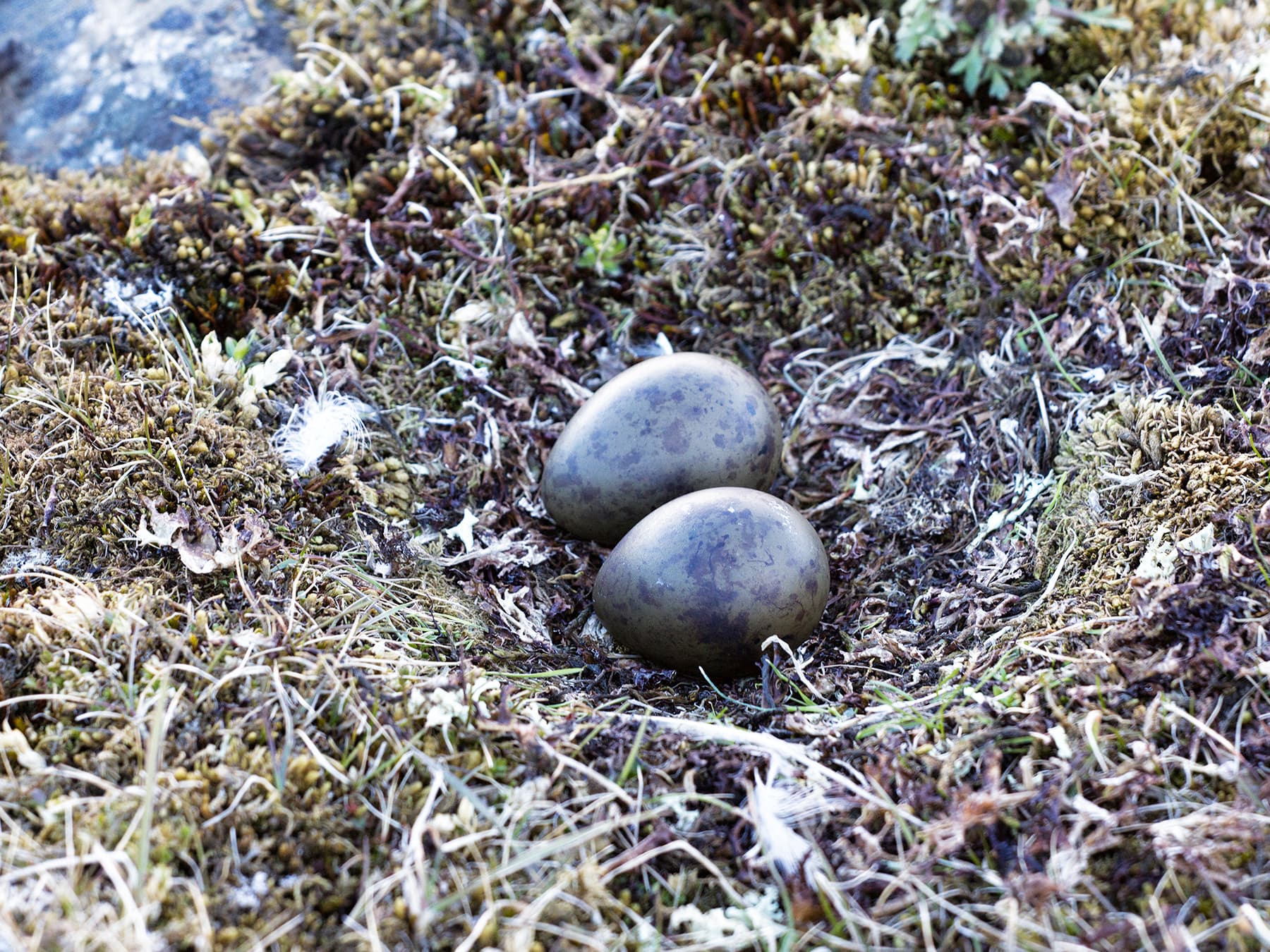
Parasitic Jaegers usually lay two (1 - 3) spotted and blotched olive brown to grayish eggs, each measuring approximately 57 x 41 mm.
Do Parasitic Jaegers mate for life?
Parasitic Jaegers may mate for several consecutive years, although pairs do split, particularly if the partnership is new and they fail to reproduce. In such cases, the male usually retains the nesting colony, and the female seeks a new partner.
Behaviour
Are Parasitic Jaegers aggressive?
Parasitic Jaegers are highly aggressive birds. They are real bullies of the bird world, intimidating and harassing other birds into surrendering their hard-caught meals. They are also aggressive toward their own kind and any potential enemies in the nesting season when they will swoop in at intruders and strike them with their feet.
Lifespan and predators
How long do Parasitic Jaegers live?
Parasitic Jaegers are known to live up to 33 years, although the typical lifespan of an adult is about 12 years. These birds first breed when they are three to seven years old.
What are the predators of Parasitic Jaegers?
Adult Parasitic Jaegers have few natural predators, although Great Skuas are known enemies. Their eggs and young are most vulnerable to Ravens, Great Skua, Arctic Foxes, and Mink.
Are Parasitic Jaegers protected?
Parasitic Skuas are protected under the Migratory Bird Treaty Act in the United States and the Migratory Birds Convention Act in Canada. They are also protected by the Wildlife and Countryside Act in the United Kingdom.
Are Parasitic Jaegers endangered?
Parasitic Jaegers are a ‘Least Concern’ species on the IUCN Red List, and their population is considered stable. However, these birds are endangered in Europe and have a Red conservation status in the United Kingdom, where they nest in low numbers.
Conservation
While currently listed as Least Concern, Arctic Jaegers face threats from climate change affecting their Arctic breeding grounds. Ocean pollution and overfishing can impact their food sources.
Conservation efforts focus on protecting breeding habitats and maintaining healthy marine ecosystems.
More photos
5 photos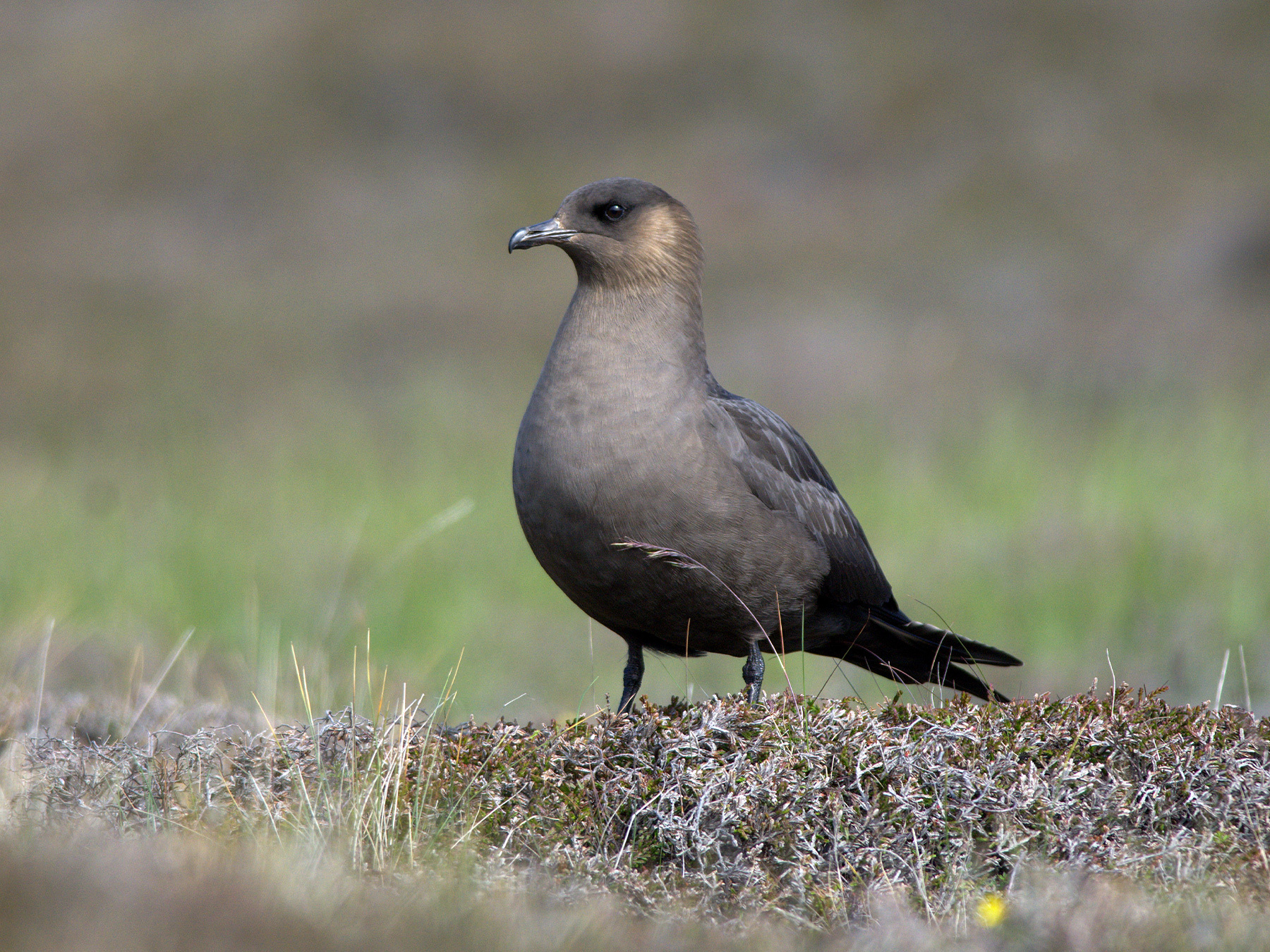
Quick facts
- Length
- 41–46 cm
- Wingspan
- 110–125 cm
- Weight
- 300–600 g
- Lifespan
- 12 years · oldest recorded 31.1 years
- Family
- Skuas & Jaegers
- Migration
- Long-distance Migrant
- Global status (IUCN)
- Least Concern
- World population
- 400,000 - 560,000 mature individuals
- Population trend
- Stable
- Also called
- Parasitic Jaeger, Arctic Skua
- Scientific name
- Stercorarius parasiticus
Questions
2Is a Parasitic Jaeger an omnivore?
Parasitic Jaegers are largely carnivorous, although they do eat some berries on their summer breeding grounds. Birds and their eggs and fish stolen from other seabirds are their most important food sources.
Is a Parasitic Jaeger a primary or secondary consumer?
Parasitic Jaegers are tertiary consumers on the food chain. These birds eat some plant material, some animals that eat plants, and some animals that eat other animals.
Sources
4- 1BirdLife International. 2018. Stercorarius parasiticus. The IUCN Red List of Threatened Species 2018: e.T22694245A132535550. Source (opens in a new tab)
- 2BirdLife International. 2018. Stercorarius parasiticus. The IUCN Red List of Threatened Species 2018: e.T22694245A132535550. Source (opens in a new tab)
- 3BirdLife International. 2018. Stercorarius parasiticus. The IUCN Red List of Threatened Species 2018: e.T22694245A132535550. Source (opens in a new tab)
- 4Fransson et al., EURING list of longevity records for European birds (2010) Source (opens in a new tab)

Checked by
Nathan Cope, founder and editor
Nathan founded Birdfact and leads its writers and contributors in the UK, the US and Canada. He has watched and studied birds for more than ten years, and checks every article and species guide before it’s published.