


Aquatic Warbler
Acrocephalus paludicola
By the Birdfact teamChecked by Nathan Cope
On this page13 sections
How to recognise it
What do Aquatic Warblers look like?
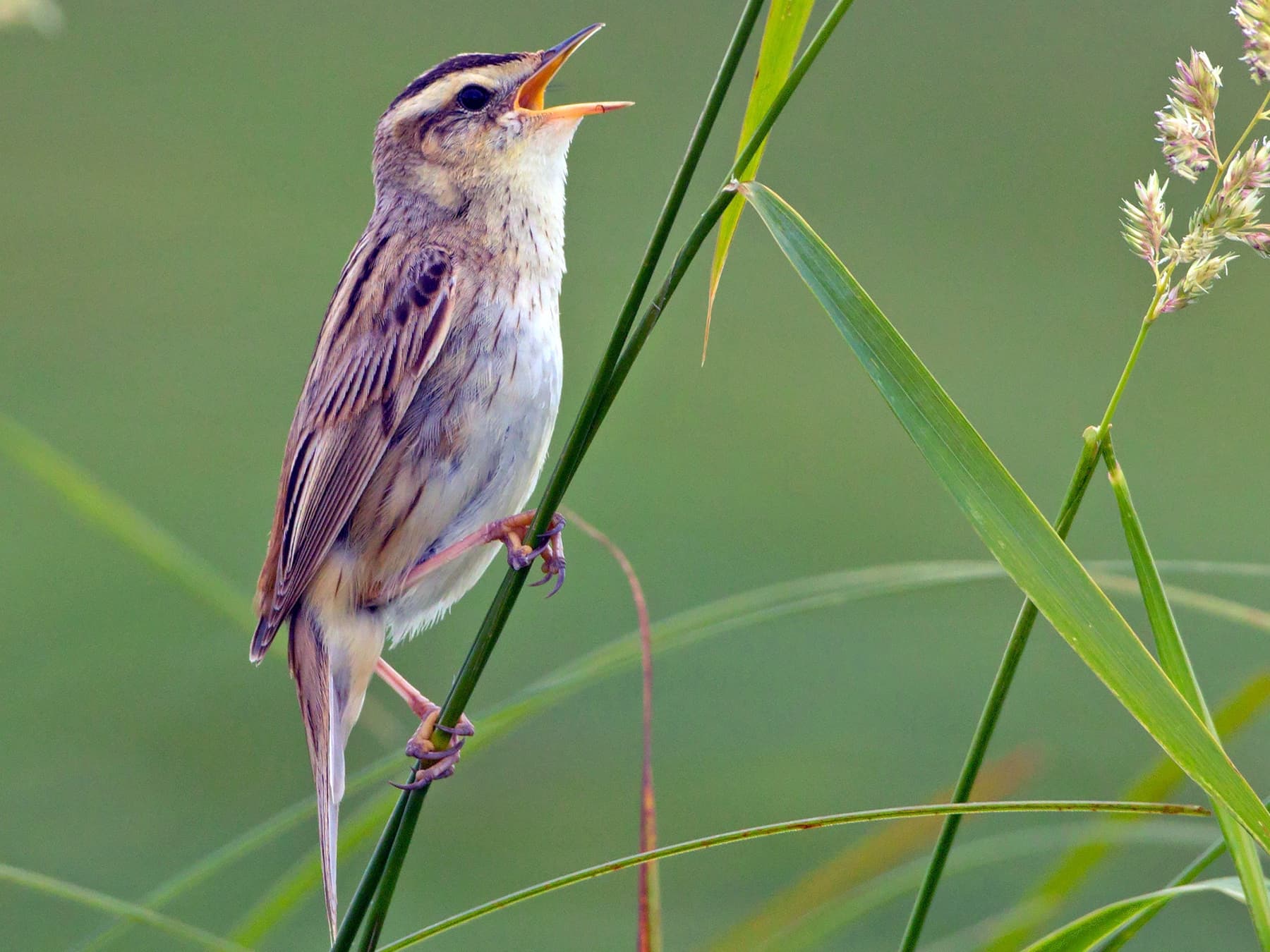
Aquatic warblers are rather secretive songbirds, well-camouflaged against their preferred sedge and reedbed habitats.
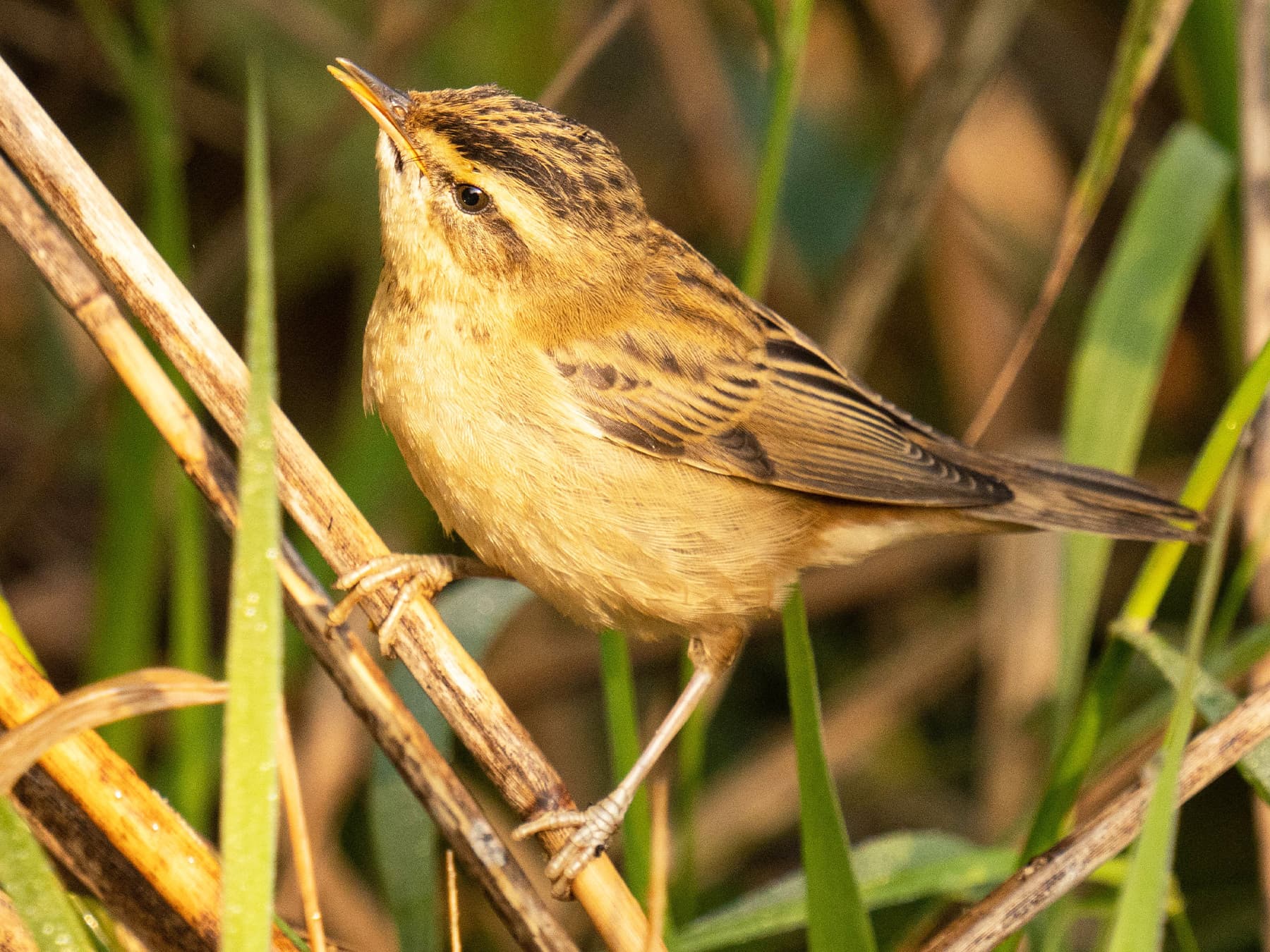
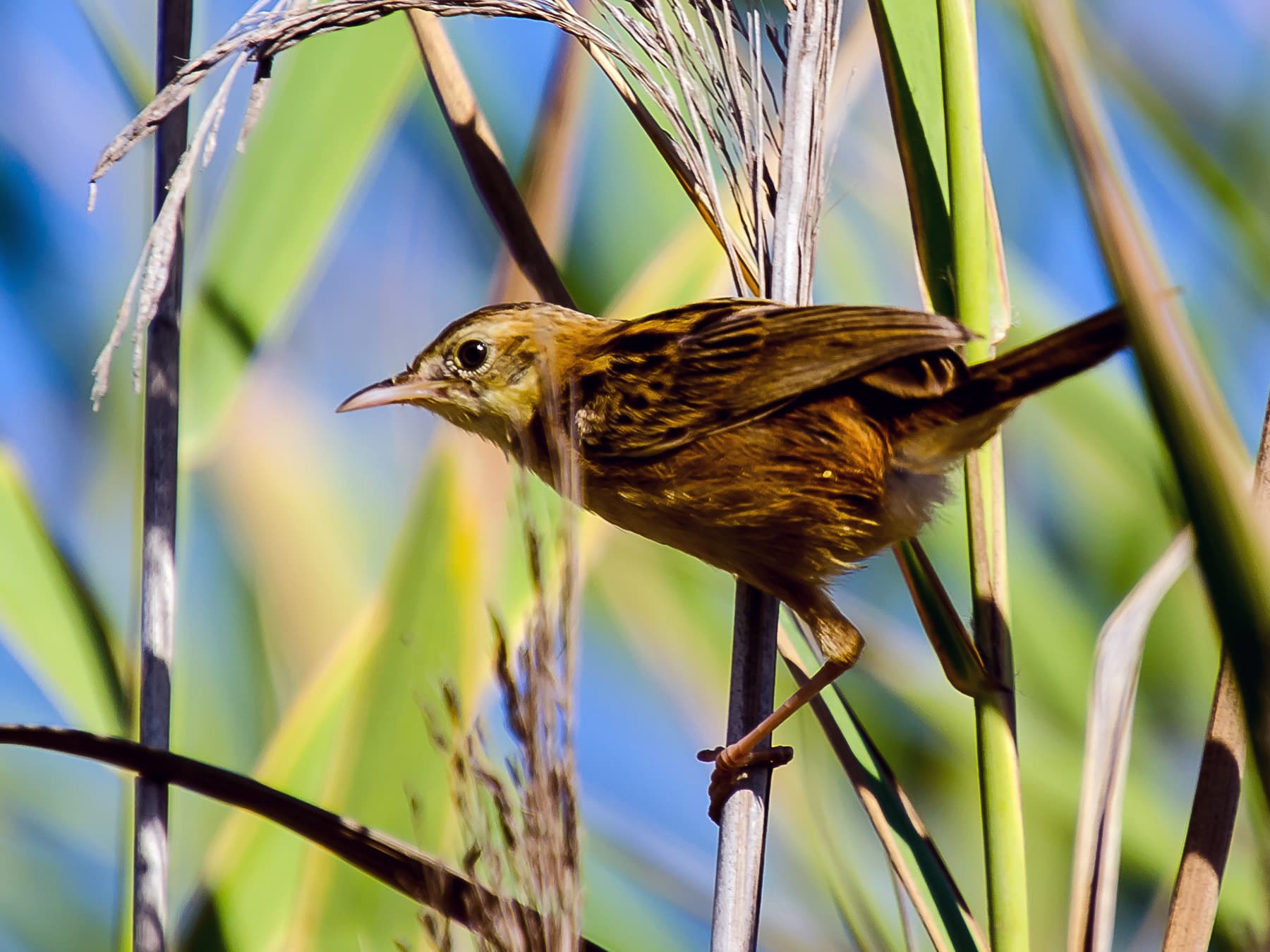
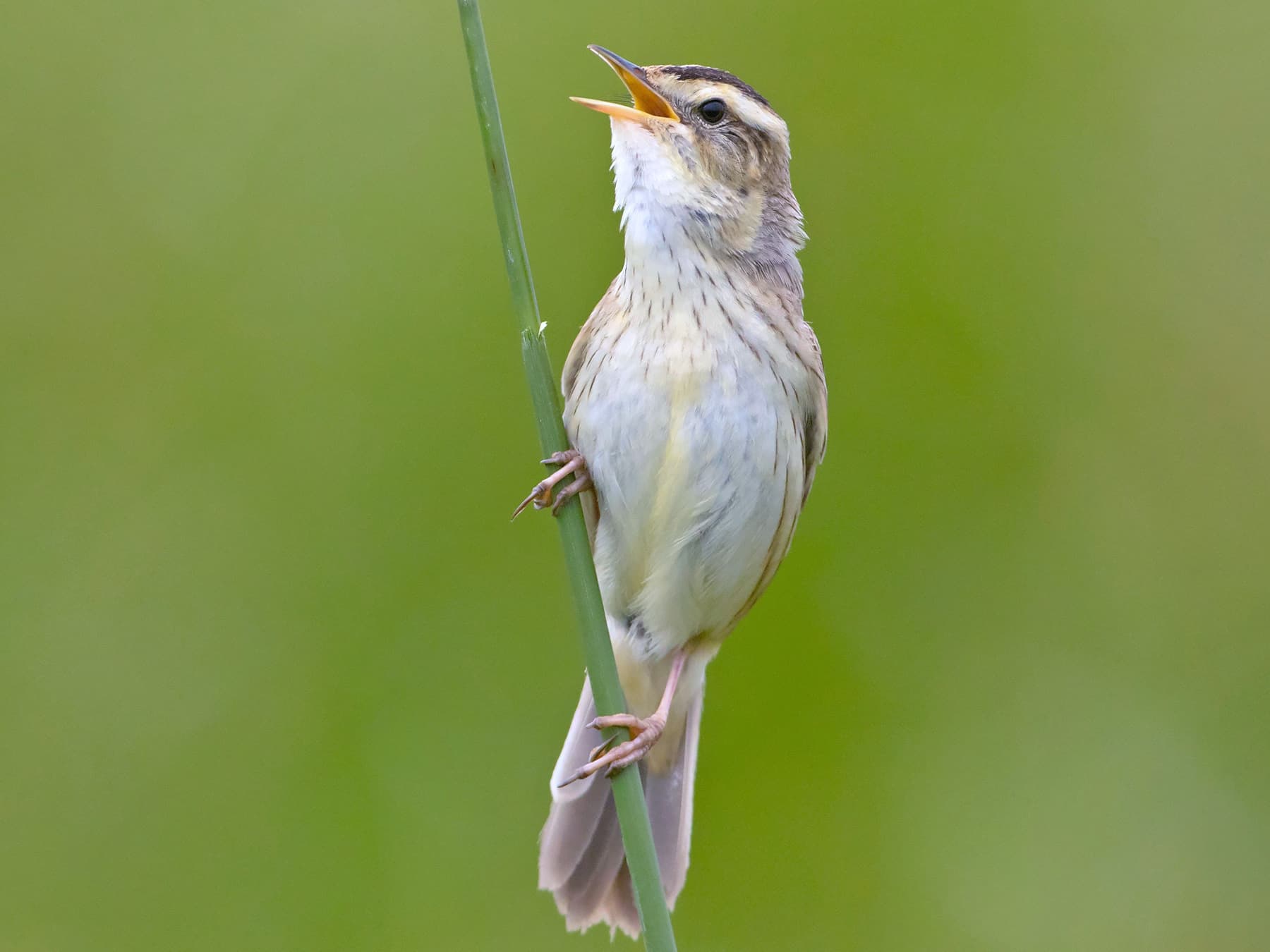
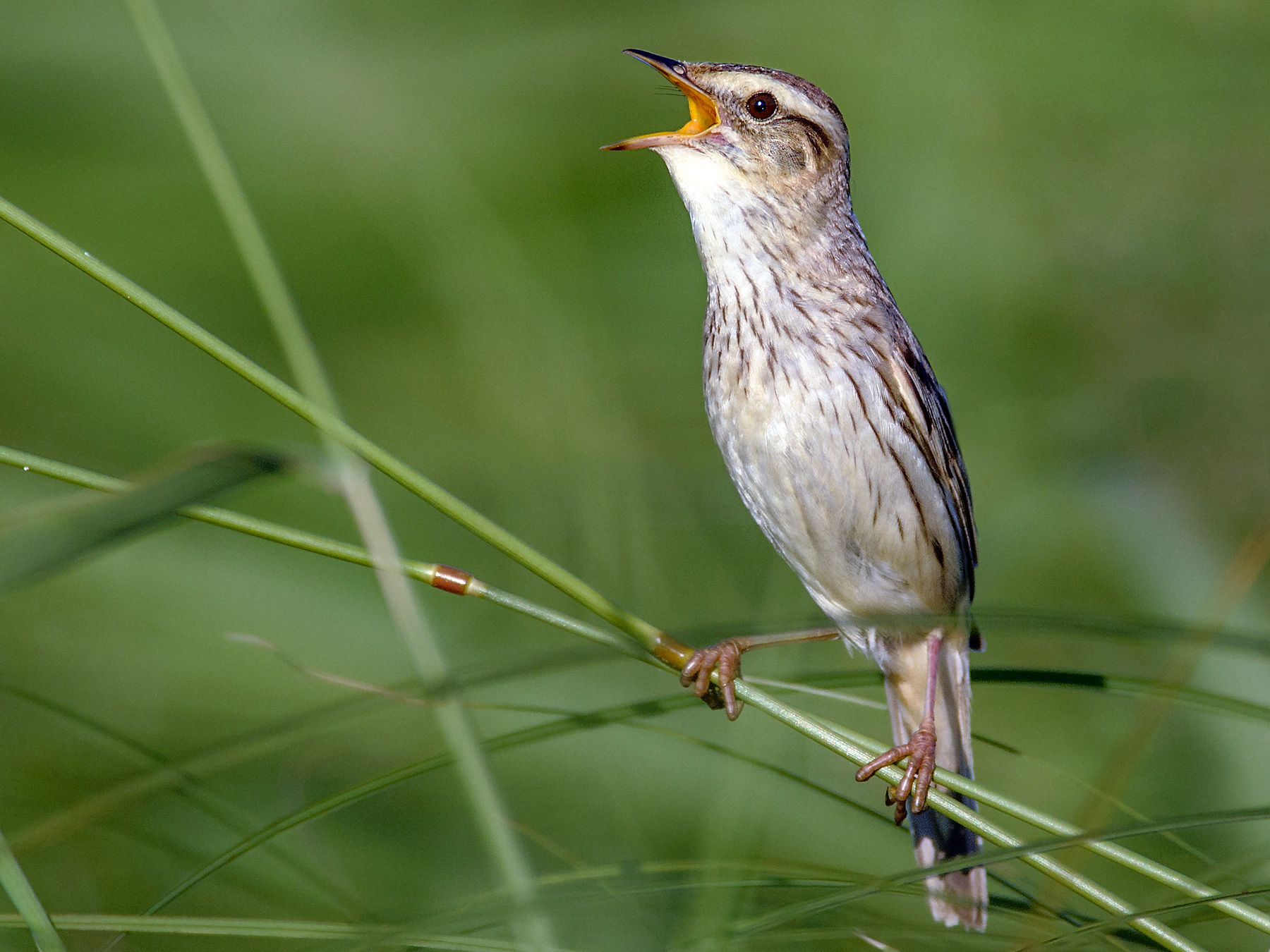
They have a striped crown with a pale line through the centre and prominent dark markings on either side. Facial markings include a distinctive pale eyebrow, a darker brown stripe next to the eye, and yellowish cheeks.
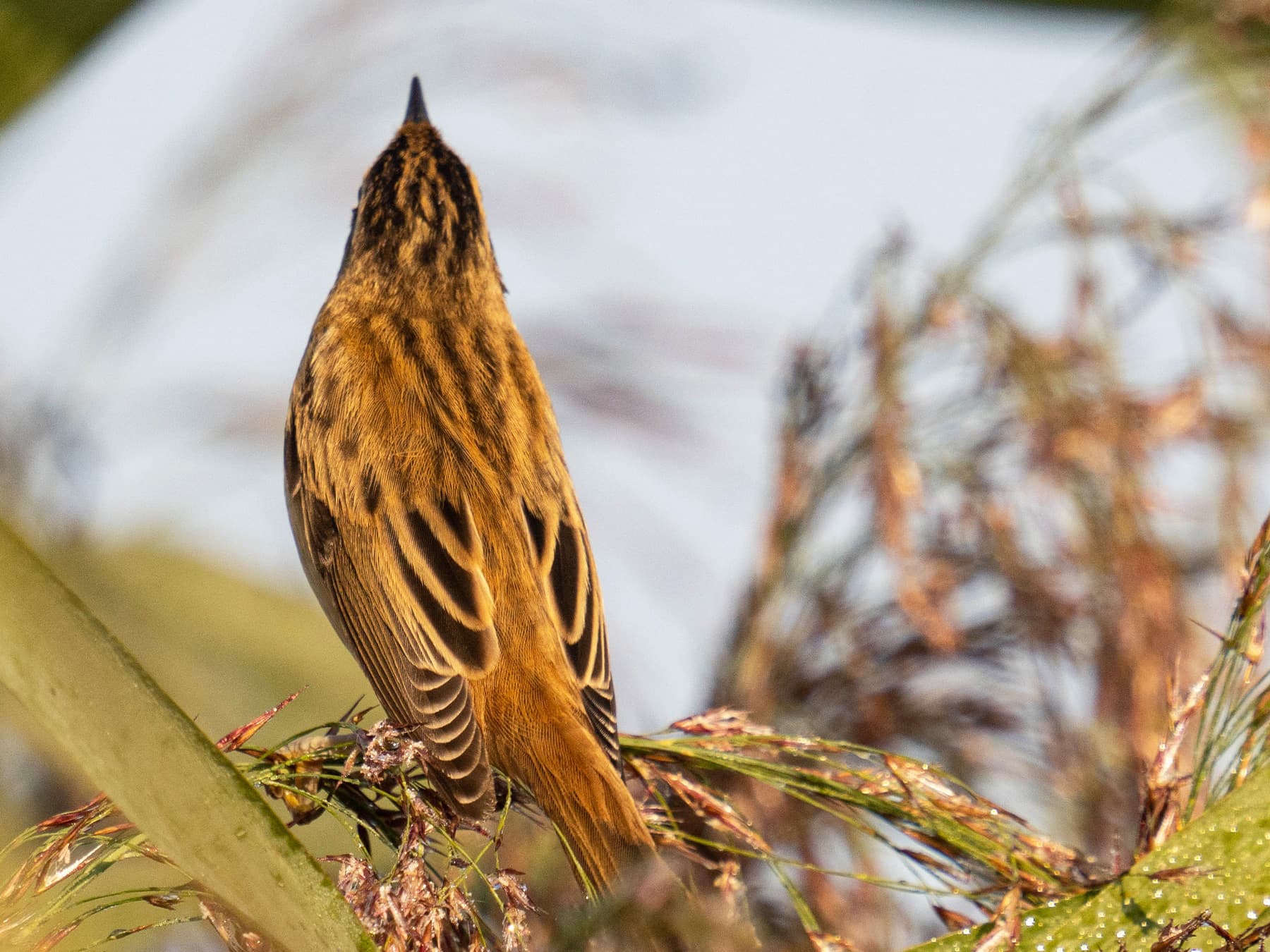
Their upperparts are olive-brown, heavily streaked with much darker black-brown, and their underparts are pale, with fine streaky yellow-brown markings, particularly on the flanks and breast. Aquatic warblers have yellowish-pink legs and a pointed black-brown bill.
Males and females are identical in appearance, although males have slightly longer wings than females, and are marginally heavier.
Juvenile aquatic warblers are similar to adults in colouring, although the breast of young birds lacks the streaky markings seen in adult birds.
How big are Aquatic Warblers?
Aquatic warblers are medium-sized members of the warbler family, around the same size as a reed warbler and a sedge warbler. Males and females are the same size, although in females, wings may be slightly shorter.
- Length: 13 cm (5.1 in)
- Wingspan: 16.5 cm to 19.5 cm (6.5 in to 7.7 in)
- Weight: 10 g to 14 g (0.4 oz to 0.5 oz)
Its size
Adults- Length
- 12–13 cm
- Wingspan
- 17–19 cm
- Weight
- 10–13 g
Its song and calls
What sound does an Aquatic Warbler make?
The song of an aquatic warbler is rapid and chattering, followed by a series of whistles and frequently heard from perches and in flight. Calls are churring ‘chuk’ notes.
- Song0:00 / 0:11
Recorded in Volyn Oblast, Ukraine · June 2025
- Call0:00 / 0:53
Recorded in Normandie, France · August 2024
When and where to see it
How often the Aquatic Warbler turns up in the UK through the year, from birdwatchers' records.
United Kingdom
Passage migrant · regularly Aug · most records in August
Show as a table
| Month | United Kingdom |
|---|---|
| January | – |
| February | – |
| March | – |
| April | – |
| May | – |
| June | – |
| July | – |
| August | 0.002% (regular) |
| September | 0.002% |
| October | – |
| November | – |
| December | – |
Recorded regularly in
Worldwide: recorded regularly in 12 countries
Countries where it was recorded in at least 3 of the 6 years 2019–2024. Linked countries have their own bird list.
Europe (11)
Africa (1)
- Senegal
Data: EOD – eBird Observation Dataset (Cornell Lab of Ornithology), accessed via GBIF.org, CC BY 4.0. Records from 2019–2024, aggregated and filtered by Birdfact. How these lists are made
What is the habitat of an Aquatic Warbler?
During the breeding season, aquatic warblers prefer open marshy, lowland landscapes, for example, fen mires with some sedge cover and scattered willow bushes. A water depth of between 1 cm and 10 cm (0.4 in and 4 in) is required by the species, and flooded grasslands and short reedbeds alongside slow-flowing rivers may also be used.
Constant management of habitats by humans is important to provide the suitable conditions this species needs for breeding, for example, well-timed mowing and the removal of old biomass.
In winter, aquatic warblers head to wetland environments in West Africa, particularly marshlands and shallow sedges, and reedbeds.
What is the range of an Aquatic Warbler?
Breeding grounds of aquatic warblers are limited to areas of north-east Germany, Poland, Lithuania, Belarus, Ukraine, and a tiny isolated population in western Siberia. Winters are spent in West Africa, south of the Sahara from Senegal to Ghana.
Where do Aquatic Warblers live?
There are less than 60 known breeding sites for aquatic warblers, which are spread across Poland, Belarus, Ukraine, Lithuania, and a handful in Western Siberia. Poland and Belarus are home to the largest number of pairs.
How rare are Aquatic Warblers?
The European population of aquatic warblers is estimated at between 12,000 and 20,000 pairs and has been recognised as Europe’s rarest songbird species. Each year, only around 42 sightings are reported in the UK, with passage migrants spotted in coastal regions en route to their West African wintering grounds.
Where can you see Aquatic Warblers in the UK?
Passage sightings are limited to the south coast of England, with around 40 birds arriving in August at scattered coastal sites before continuing on to their winter grounds in West Africa. Cornwall and Devon are particularly popular spots, with Marazion Marsh, Cornwall and Radipole Lake, and Lodmoor in Dorset reporting visiting birds each year.
Migration
Do Aquatic Warblers migrate?
Aquatic warblers are migratory, with breeding largely concentrated in a small area of east-central Europe and lasting for only around four months.
At the end of the breeding season, aquatic warblers disperse, heading east and southeast across Europe towards warmer wintering grounds in western sub-Saharan Africa, where the largest portion of the year is spent.
Are Aquatic Warblers native to the UK?
No aquatic warbler pairs breed in the UK and the species is only seen as a rare passage migrant in August each summer, with birds making brief and temporary stopovers along the south coast of England on their way to winter territories in Senegal, Mali and Ghana.
Tips for seeing it
- Listen for their distinctive song, especially at dawn and dusk
- Look for movement in dense reedbeds and sedges
- Visit known breeding sites from May to July
- Be patient and quiet; these birds are shy and easily disturbed
What it eats
What do Aquatic Warblers eat?
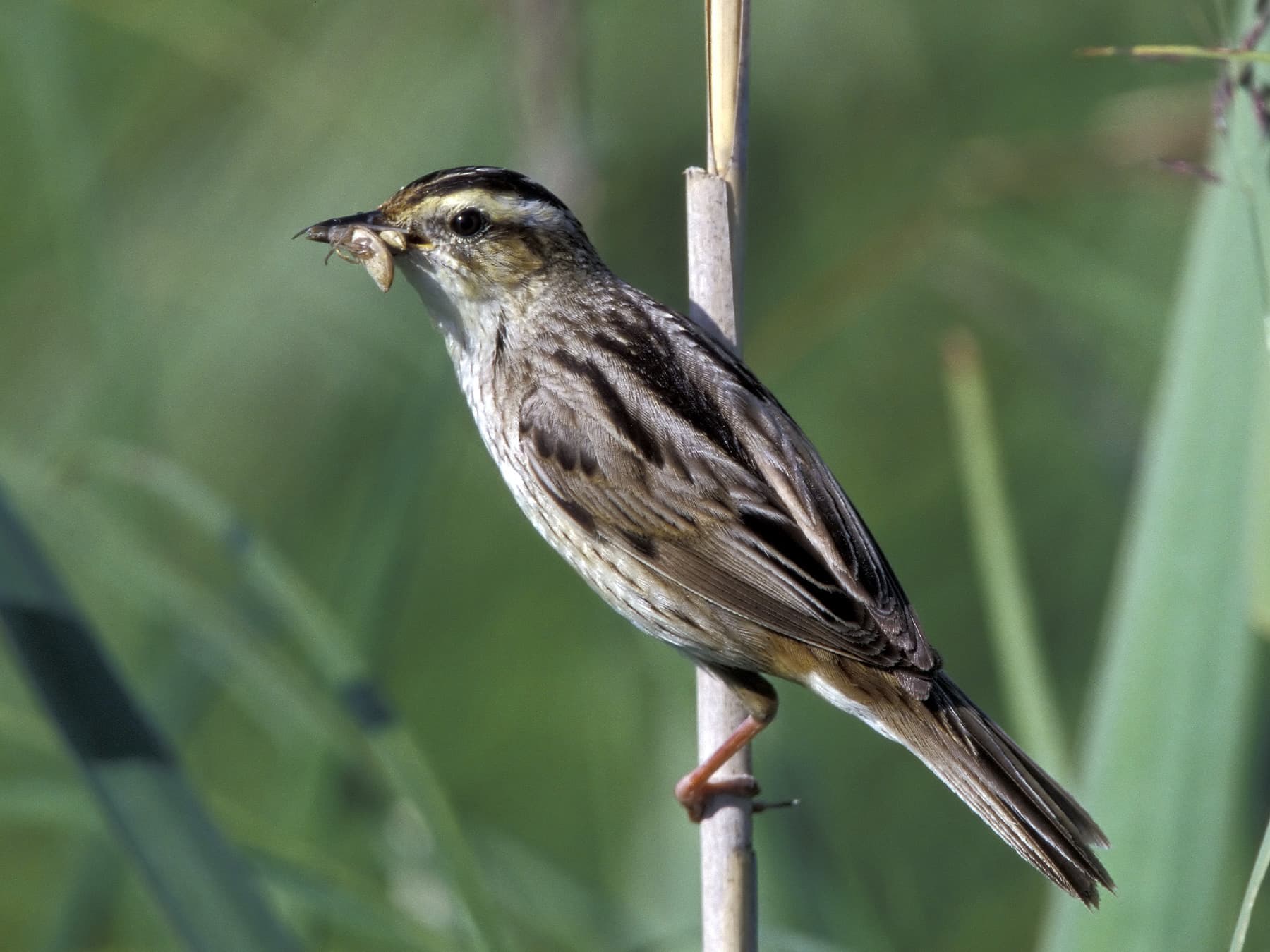
Aquatic warblers are insectivores, with caterpillars, dragonflies, spiders, larvae, grasshoppers, earwigs, and water snails being the main elements of their diet.
They are mainly ground foragers, finding insects in sedges and marsh close to the nest when breeding. In late summer, their diet may be supplemented with small berries.
What do Aquatic Warbler chicks eat?
Young aquatic warblers are fed on large insects and their larvae by their parents.
Nesting and breeding
Where do Aquatic Warblers nest?
Nest sites are built between 3 cm and 30 cm (2 in and 12 in) above ground level in swampy marshes, with nests often constructed beneath the shelter of dead sedges and bent reeds. A cup of grass, stems, leaves, spiders’ webs, and soft plant matter is woven, then lined with softer plant down.
When do Aquatic Warblers nest?
Aquatic warblers arrive back on their European breeding grounds in early May, with the first clutches usually being laid in mid-May. Second broods, usually with different mates, are common and are usually laid between late June and early July.
Incubation, which takes 12 to 15 days, is solely undertaken by the female, and parental care of the young before fledging up to 16 days after hatching, is also down to the female alone.
What do Aquatic Warbler eggs look like?
Aquatic warblers lay between 3 and 6 brown eggs, which are spotted with greyish-yellow markings. The eggs are tiny, measuring 17 mm by 13 mm (0.7 in by 0.3 in).
Do Aquatic Warblers mate for life?
Aquatic warblers do not form long-term pairs and both males and females mate with numerous different partners during the course of a breeding season. Chicks from a single brood are usually fathered by several different birds.
Behaviour
Are Aquatic Warblers aggressive?
Males defend small territories in the breeding season but are not known to be especially aggressive or confrontational, and in winter, no territorial behaviour is displayed.
Lifespan and predators
How long do Aquatic Warblers live?
Little is known about the typical and maximum life expectancy of aquatic warblers, but it is thought that they breed for the first time at one year old, and live for around 2 and a half years on average.
What are the predators of Aquatic Warblers?
Shrews are among the main predators of aquatic warblers, regularly destroying their nests and attacking their eggs and young. Marsh harriers prey on adult aquatic warblers as well as their chicks.
Are Aquatic Warblers protected?
In the UK, aquatic warblers are protected under the Wildlife and Countryside Act, of 1981, which legislates against the species being killed, injured, or taken into captivity.
Additionally, aquatic warblers have officially protected status in Poland, Belarus, Germany, and Hungary, with the most important breeding sites in these countries found within legally protected areas. Djoudj National Park in Senegal, a leading wintering ground for aquatic warblers, is also a protected site.
Are Aquatic Warblers endangered?
Globally, aquatic warblers are classified as a vulnerable species, due to their low and declining numbers and the concentration of breeding grounds limited to such a small geographic area.
In the 20th century, breeding was more widespread across Western Europe, but the species no longer breeds in France, Belgium, Netherlands, Austria, or Italy.
Why is the Aquatic Warbler endangered?
Habitat loss is a critical factor in the decline of aquatic warblers and their vulnerable conservation status. Drainage of wetlands for peat extraction and agricultural clearance has led to a contraction of breeding grounds, while early mowing of agricultural fields destroys a number of nests each year.
Conservation
The Aquatic Warbler faces severe habitat loss due to wetlands drainage and changes in land use. International conservation efforts focus on protecting and restoring suitable breeding habitats, particularly in Eastern Europe, where most of the population now breeds.
Similar birds
Often mistaken for
More photos
2 photos
Quick facts
- Length
- 12–13 cm
- Wingspan
- 17–19 cm
- Weight
- 10–13 g
- Lifespan
- 2–3 years
- Family
- Reed Warblers
- Migration
- Long-distance Migrant
- Global status (IUCN)
- Vulnerable
- World population
- 18,000 - 29,000 mature individuals
- Population trend
- Decreasing
- Scientific name
- Acrocephalus paludicola
Sources
3- 1BirdLife International. 2022. Acrocephalus paludicola. The IUCN Red List of Threatened Species 2022: e.T22714696A176687364. Source (opens in a new tab)
- 2BirdLife International. 2022. Acrocephalus paludicola. The IUCN Red List of Threatened Species 2022: e.T22714696A176687364. Source (opens in a new tab)
- 3BirdLife International. 2022. Acrocephalus paludicola. The IUCN Red List of Threatened Species 2022: e.T22714696A176687364. Source (opens in a new tab)

Checked by
Nathan Cope, founder and editor
Nathan founded Birdfact and leads its writers and contributors in the UK, the US and Canada. He has watched and studied birds for more than ten years, and checks every article and species guide before it’s published.